Year-round

Mushrooms

Various species

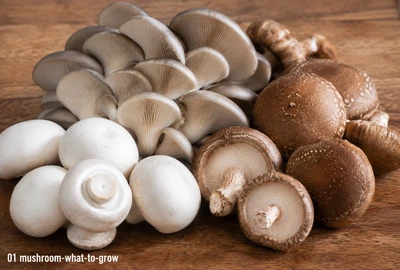
A heap of cultivated mushrooms on a wooden board: grey oyster clusters at the back, brown shiitake and chestnut caps on the right and white button mushrooms at the front
Open the full interactive mushrooms guide โ†’

โšก Quick start

  • Grow kits are the easiest start โ€” just add water and wait
  • Keep substrate moist but not waterlogged
  • Ideal temperature 12โ€“18ยฐC for most species
  • Harvest by twisting and pulling โ€” do not cut with a knife
  • Soak grow bags or logs in cold water to trigger a new flush
  • Spent substrate makes excellent compost
๐ŸŒฑ SowYear-round (indoors)
๐ŸŒพ HarvestYear-round
โ˜€ PositionShade / indoors
๐Ÿ“ SpacingN/A
DifficultyEasy

โšก Quick facts

Difficulty
Easy
Crop type
Fungi
Position
Shade or indoors
Soil
Substrate / Log / Straw
Container friendly
Yes
Greenhouse recommended
No
Outdoor suitable
Logs only
Frost hardy
Yes (logs)

01 About

Mushrooms are one of the most rewarding crops you can grow at home โ€” no outdoor space needed, no sunlight required, and a harvest in as little as two weeks from a grow kit. The 12th most consumed fresh produce in the UK.

02 What to Grow

A heap of cultivated mushrooms on a wooden board: grey oyster clusters at the back, brown shiitake and chestnut caps on the right and white button mushrooms at the front

Home mushroom growing splits into three easy starting methods. Ready-to-fruit grow kits are the simplest โ€” a pre-colonised block of substrate that just needs air, light misting, and 10โ€“14 days to produce a first flush. Spawn-and-substrate growing (mixing grain spawn through pasteurised straw or sawdust in a grow bag) costs less per harvest and lets you choose your own species mix, but takes longer to colonise before fruiting. Log-grown varieties such as shiitake are the slowest route โ€” plug spawn inserted into hardwood logs takes 6โ€“12 months to colonise โ€” but a single log will crop for several years once established. All three methods need the same basic conditions: cool, humid, indirect light, and consistently damp (not wet) growing medium.

03 Varieties

The number of varieties shown for each crop is based on UK consumption data (2025/26) โ€” the more popular the crop, the more variety choices we include.

๐Ÿ„ Quick-Growing Varieties

The easiest and fastest to grow โ€” ready in days to weeks from a kit or compost substrate.

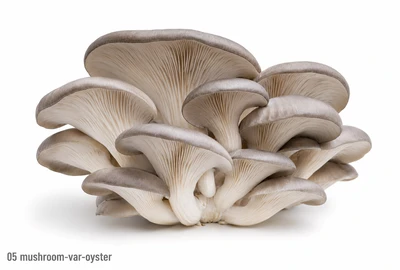
Oyster mushroom: a cluster of soft grey-beige fan-shaped caps with pale gills running down into short stems, on a white background

Oyster

Oyster

The classic beginner mushroom. Mild flavour, grows fast in clusters.
  • Beginners
  • Container
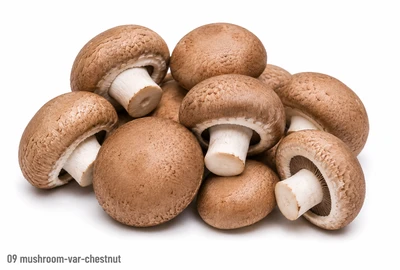
Chestnut mushroom: a pile of round brown-capped mushrooms with pale stems, one turned over to show the gills

Chestnut

Button/Brown

Stronger flavour than white button. Grows in compost-based substrate.
  • Beginners
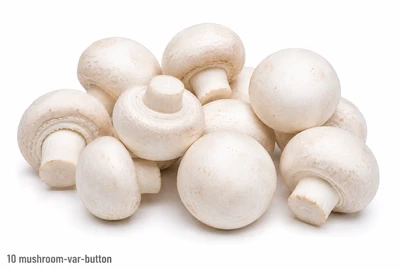
Button mushroom: a pile of small round white mushrooms with short pale stems, on a white background

Button

Button

The classic. Mild flavour, high yield. Grows in casing compost.

  • Beginners

๐Ÿชต Log & Substrate Varieties

Slower to establish but produce for years on end.
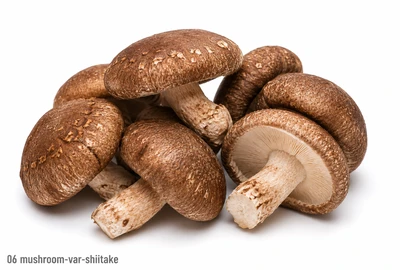
Shiitake mushroom: a group of broad dark brown caps with pale cracked patches and cream gills, on a white background

Shiitake

Log/Substrate

Rich, earthy flavour. Grows on hardwood logs or sawdust blocks.
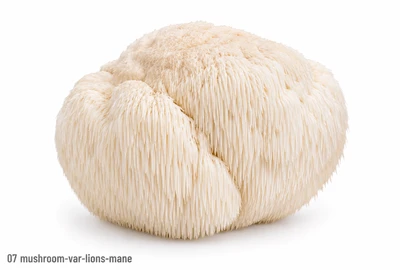
Lion's Mane mushroom: a single rounded cream-white cluster covered in short soft hanging spines, on a white background

Lion's Mane

Substrate

Unusual cascading white body. Mild, seafood-like flavour.
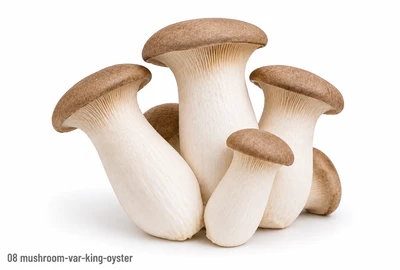
King Oyster mushroom: a group of thick, meaty white stems topped with small tan caps, on a white background

King Oyster

Substrate

Large, meaty stems. Excellent texture for cooking.
  • Container

04 Where to Source

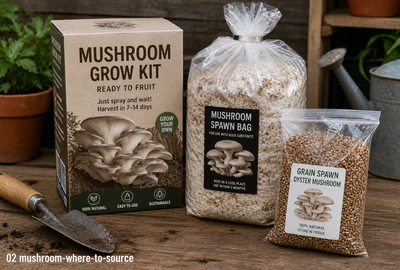
A mushroom grow kit box, a bag of mushroom spawn mixed through bulk substrate and a small bag of grain spawn, laid out on a potting bench with a hand trowel and watering can

Mushroom growing kits, grain spawn, and pre-inoculated substrate bags are the three usual starting points and are all sold ready to use โ€” no seed sowing involved. Kits give the fastest, most reliable result for a first attempt.
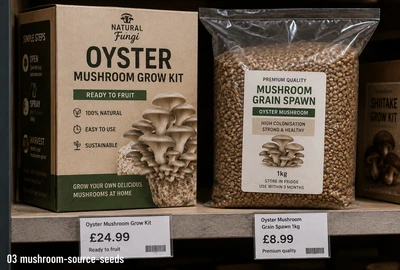
A shop shelf with an oyster mushroom grow kit box beside a large clear bag of grain spawn, each with a printed price card beneath

๐Ÿ“ฌ Specialist Growing Kits Online

Ready-to-fruit kits (oyster, shiitake, lion's mane) are widely sold online and need nothing more than air, light misting, and patience. The most reliable route for a first attempt.
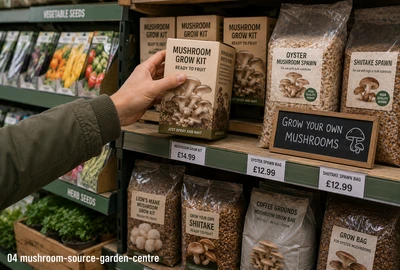
A hand lifting a mushroom grow kit from a garden-centre shelf stocked with more kits, grain spawn bags, a coffee-grounds grow bag and a chalkboard sign reading Grow Your Own Mushrooms, with vegetable

๐Ÿช Garden Centres

A growing number of garden centres now stock mushroom kits and grain spawn alongside seed racks, especially in autumn and spring.

Timing tip: Order seeds in January and February. Popular varieties sell out quickly. Garden centres and markets are a reliable backup from April onwards.

05 Sowing โ€” How To

Growing from spawn rather than a ready-made kit costs less per harvest and lets you choose your own species, but takes longer to reach fruiting than a kit.
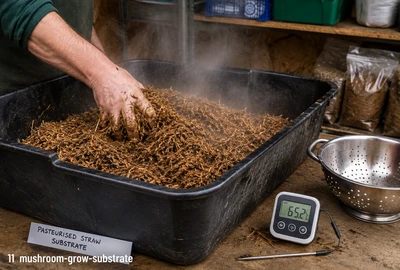
  1. A hand working steaming pasteurised straw in a black tray, with a digital probe thermometer, a metal colander and a handwritten label reading pasteurised straw substrate

    Prepare substrate

    Pasteurise straw or sawdust substrate in hot water, then drain and cool to room temperature before use.
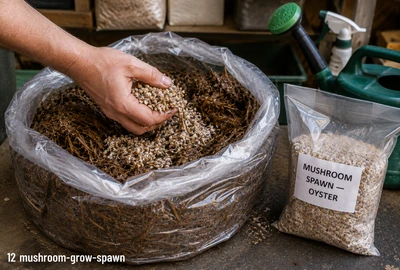
  2. A hand mixing pale grain spawn through damp chopped straw inside a clear grow bag, with a small bag of oyster spawn, a spray bottle and a watering can nearby

    Mix in spawn

    Break up grain spawn and mix thoroughly through the cooled substrate in a clean grow bag.
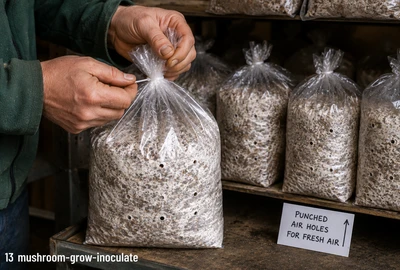
  3. A hand tying the neck of a clear bag packed with spawn-mixed substrate, with air holes punched in its sides, a row of similar bags behind and a small note about punched air holes

    Seal and label

    Seal the bag with a few small air holes punched in, and label with species and date.
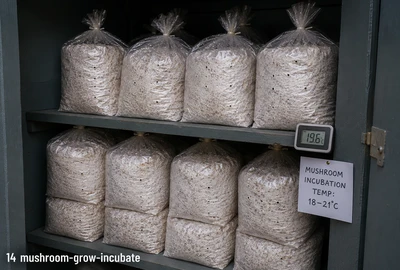
  4. Two shelves of clear bags of white, fully colonised substrate in a dark cupboard, with a small digital thermometer and a note giving the incubation temperature of 18 to 21 degrees

    Incubate in the dark

    Store in a dark, cool cupboard around 18โ€“21ยฐC while the mycelium colonises the substrate fully white.
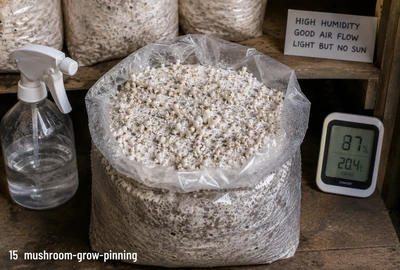
  5. A clear grow bag cut open at the top to show pale, grainy white substrate, with a spray bottle and a humidity and temperature gauge reading 87 percent beside it, and a sign asking for high humidity an

    Cut and mist for pinning

    Once fully colonised, cut the bag open and begin misting โ€” tiny white pins will start to form within days.
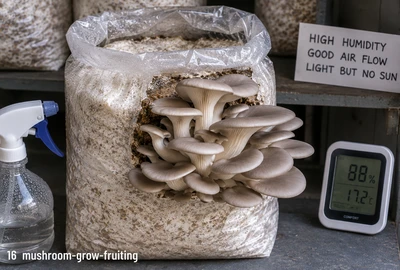
  6. A grow bag with a cluster of grey oyster mushrooms growing out of a slit in its side, with a spray bottle and a humidity gauge reading 88 percent beside it, and a sign asking for high humidity, good a

    Move to fruiting conditions

    Keep humid and in indirect light until a full cluster develops from the opening.
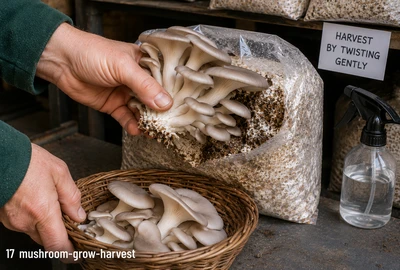
  7. A hand twisting a cluster of grey oyster mushrooms away from a grow bag, with more harvested mushrooms in a wicker basket, a spray bottle and a sign reading harvest by twisting gently

    Harvest

    Twist and lift clusters gently rather than cutting โ€” this reduces the stump left behind and encourages a second flush.
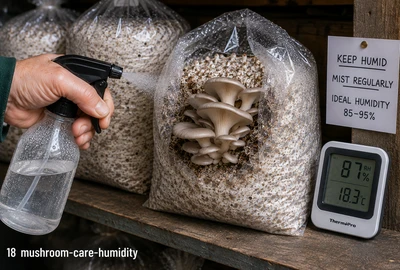
06 Ongoing Care

A hand misting a grow bag with a spray bottle while oyster mushrooms grow from its side, with a humidity gauge reading 87 percent and a sign advising regular misting and an ideal humidity of 85 to 95

๐Ÿ’ง Humidity

Fruiting mushrooms need 85โ€“90% humidity. Mist the growing area lightly two or three times a day rather than soaking the substrate โ€” a hygrometer takes the guesswork out of this.
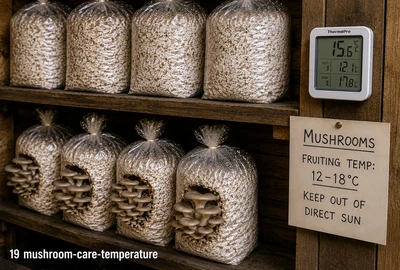
Two shelves of grow bags, some full of white substrate and some with oyster mushrooms growing from them, with a wall thermometer reading 15.6 degrees and a sign giving a fruiting temperature of 12 to

๐ŸŒก๏ธ Temperature

Most kitchen-grown species fruit best at 12โ€“18ยฐC. Warmer conditions speed growth but can produce thinner, faster-ageing mushrooms; keep out of direct sun and away from radiators.
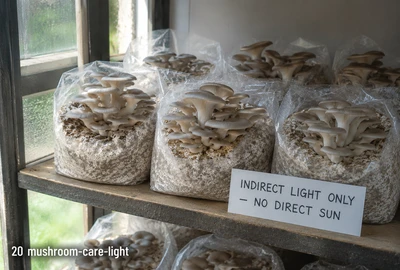
Grow bags of oyster mushrooms on a wooden shelf beside a window, with a sign reading indirect light only, no direct sun

๐Ÿ’ก Light

Mushrooms don't need light to grow, but indirect daylight helps them form properly shaped caps rather than pale, leggy stems reaching for a light source. Avoid direct sun, which dries the substrate out quickly.

07 Watch Out For

Warning

Green or black mould (Trichoderma) is the main contamination risk โ€” green patches on substrate mean the block is compromised. Remove immediately and sterilise everything it touched. Fungus gnats are attracted to moist substrate โ€” use yellow sticky traps and ensure good airflow.
08 Storage & Preserving

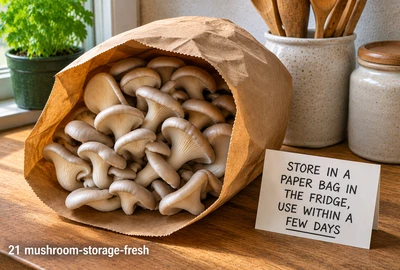
Oyster mushrooms spilling from a brown paper bag on a kitchen counter, with a note advising to store in a paper bag in the fridge and use within a few days

๐Ÿงบ Fresh Storage

Store in a paper bag in the fridge for up to 5 days. Never use plastic โ€” it traps moisture and causes rapid deterioration.
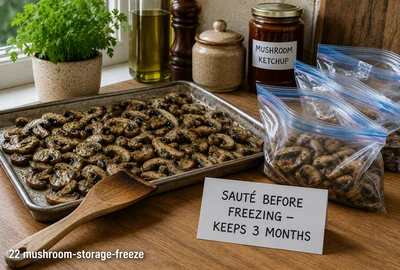
A tray of sautรฉed sliced mushrooms beside freezer bags of cooked mushrooms and a jar of mushroom ketchup, with a note saying to sautรฉ before freezing, keeps 3 months

โ„๏ธ Freezing

Sautรฉ briefly in butter before freezing. Raw mushrooms turn slimy. Frozen cooked mushrooms keep for 3 months.
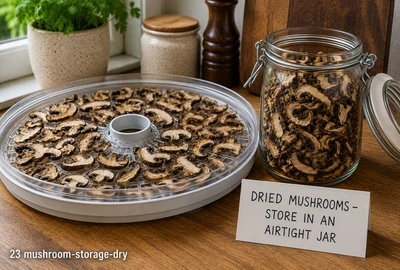
Thin mushroom slices laid out on the trays of a round food dehydrator, beside a glass jar of dried slices and a note saying to store dried mushrooms in an airtight jar

โ˜€๏ธ Drying

Slice thinly and dry at 50ยฐC for 4โ€“6 hours. Dried mushrooms keep for a year and intensify in flavour.
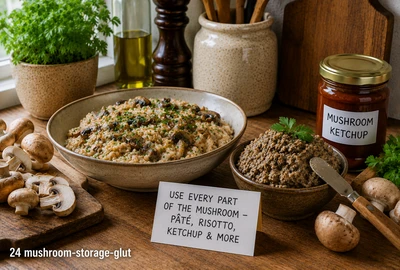
A kitchen bench with a bowl of mushroom risotto, a bowl of mushroom pรขtรฉ, a jar of mushroom ketchup and whole and sliced mushrooms, with a note about using every part of the mushroom

๐Ÿณ Cooking a Glut

Make mushroom pรขtรฉ, soup or risotto. Mushroom ketchup is a classic preservation. Duxelles freezes excellently.

09 Expert Tips

๐Ÿ’ก Contamination is the main enemy. Sterilise all equipment with boiling water before use and work quickly when opening grow bags or inoculating substrate.

๐Ÿ’ก The trigger for a new flush is a cold shock โ€” soak the substrate in cold water for 4โ€“8 hours or move the block outside on a cool night. This mimics the autumn rain that triggers fruiting in the wild.

10 Common Mistakes

โš  Setting Up

  • Using tap water with chlorine โ€” let it stand overnight or use filtered water
  • Opening the grow bag before pins are clearly visible โ€” this collapses humidity too soon
  • Growing in direct sunlight โ€” indirect light is ideal
  • Contamination from dirty tools โ€” always sterilise before handling

โš  Ongoing Care

  • Overwatering โ€” mist lightly twice a day; damp not waterlogged
  • Harvesting too late โ€” mushrooms left to open fully drop spores and yield drops
  • Discarding spent substrate โ€” excellent garden compost or use for a second flush outdoors
  • Skipping the cold soak between flushes โ€” this is the key trigger for repeat fruiting

11 See Also

Open the full interactive mushrooms guide โ†’Browse all 91 crops