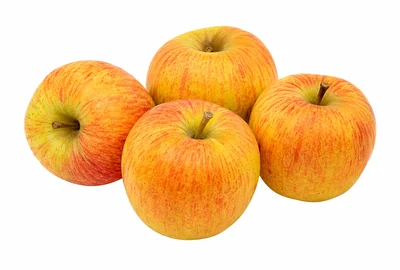
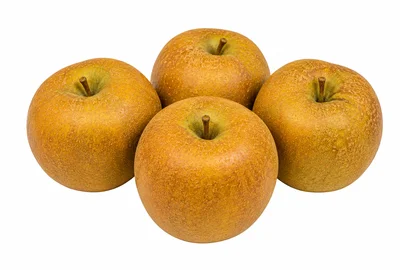
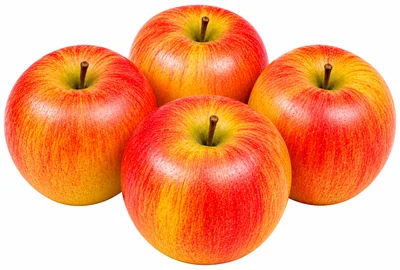
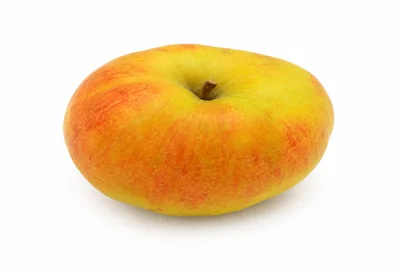
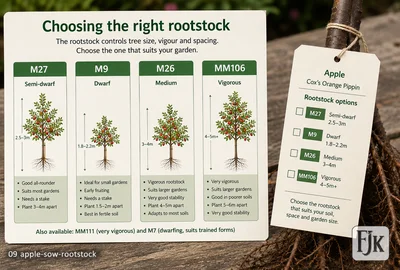
Choose rootstock carefully — M27 for pots, M9 for small gardens, MM106 for standard garden trees
Most apples need a pollination partner — check flowering groups before buying; group 3 is the most compatible
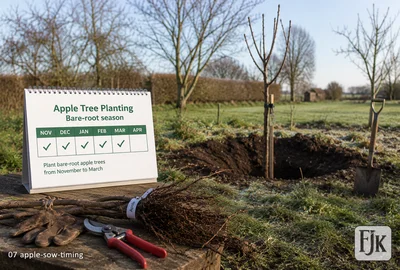
Plant bare-root trees November–March; stake firmly and tie loosely — the stem must flex slightly
Prune in winter to an open goblet shape; remove crossing, dead, and diseased branches each year
Thin fruitlets in June to one per cluster for larger, better-quality apples
🌱 SowPlant bare-root Nov–Mar · Container Sep–May
🌾 HarvestAug–Nov (variety dependent)
☀ PositionFull sun, sheltered from late frost
📐 Spacing1.8–6m (rootstock dependent)
DifficultyModerate
⚡ Quick facts
Sow
Plant bare-root Nov–Mar · Container-grown Sep–May
Plant
Nov–Mar (bare-root) · Sep–May (container)
Harvest
Aug–Nov (varies enormously by variety)
Position
Full sun — minimum 6 hours. Avoid frost pockets
Spacing
1.8m (M27) to 6m (MM106) — see rootstock table
Height
1.5m (M27) to 5m+ (MM106)
Hardiness
Fully hardy — but blossom killed by frost below -2°C
Lifespan
30–100 years depending on rootstock
Difficulty
Moderate
01 About
The most important fruit tree in the British kitchen garden. A single well-chosen apple on a dwarfing rootstock will produce 10–20kg of fruit per year for 30+ years from a space no larger than a shed door. The key decisions — rootstock, pollination group, and harvest season — take 10 minutes to get right and pay dividends for a lifetime.
02 Rootstock Guide
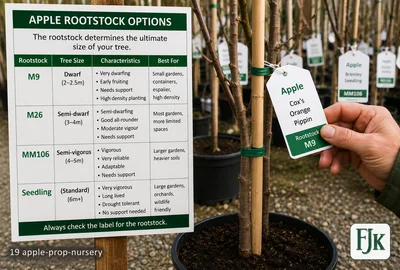
The rootstock controls the ultimate size of the tree. Choose it first — before the variety. All sizes below are approximate and depend on soil and management.
Apples rootstocks
Rootstock
Size
Height
Spacing
Suitable for
Support & notes
M27
Very dwarf
1.5–2m
1.2–1.5m
Container · Very small garden · Cordon
Permanent stake essential — Needs very fertile, well-watered soil. Poor on thin soils.
M9
Dwarf
2–3m
2.5–3m
Cordon · Espalier · Small garden · Intensive orchards
Permanent stake essential — Most widely used commercial rootstock. Needs good soil and irrigation.
M26
Semi-dwarf
3–4m
3.5–4m
Bush · Spindle · Most gardens
Stake for first 5 years — Best all-round choice for UK gardens. Performs well on most soils.
MM106
Semi-vigorous
4–5m
5–6m
Half-standard · Bush · Fan · Large garden
Stake for 3 years — Good on poorer soils. More drought tolerant than dwarfing stocks.
MM111
Vigorous
5–8m
7–9m
Standard · Half-standard · Orchard
Minimal after establishment — For traditional orchards. Long-lived. Not suitable for small gardens.
Pollination groups
Group 1 — Very early flowering — early April. Very few varieties. Difficult to pollinate in most UK gardens. Pollinate with groups 1 or 2.
Group 2 — Early flowering — early to mid-April. Pollinate with groups 1, 2 or 3.
Group 3 — Mid-season flowering — mid to late April. The largest group. Pollinate with groups 2, 3, or 4. Most triploids here.
Group 4 — Mid-late flowering — late April to early May. Pollinate with groups 3, 4, or 5.
Group 5 — Late flowering — early to mid-May. Fewer varieties. Pollinate with groups 4 or 5.
Group T — Triploid — produces very little viable pollen. Needs two pollinators, not one.
Training forms
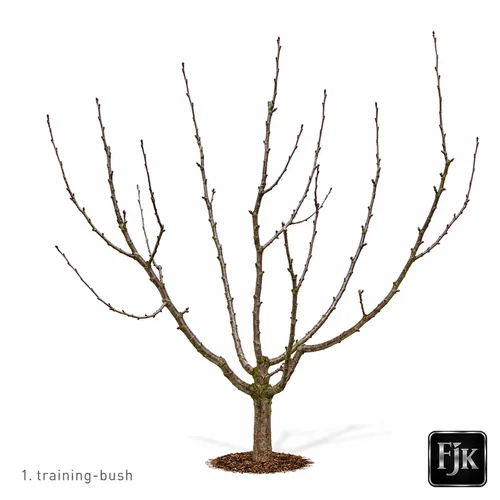
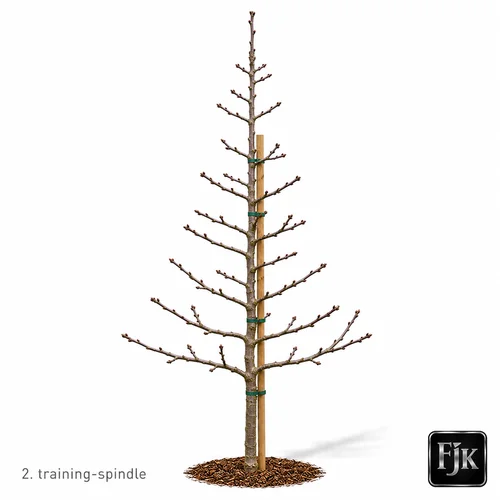
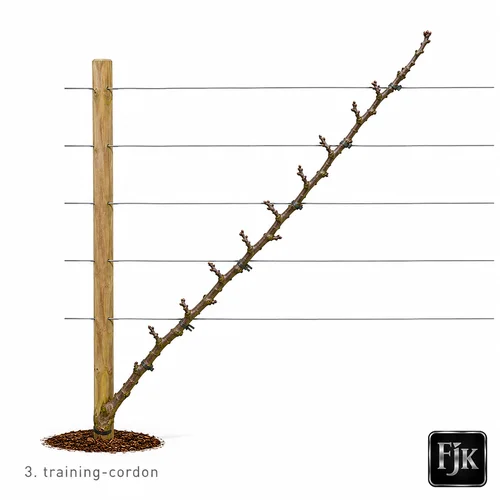
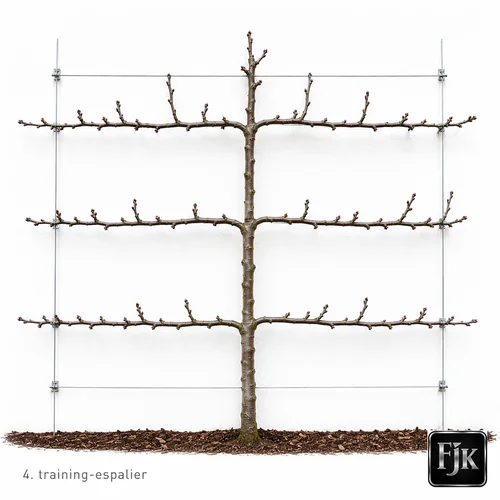
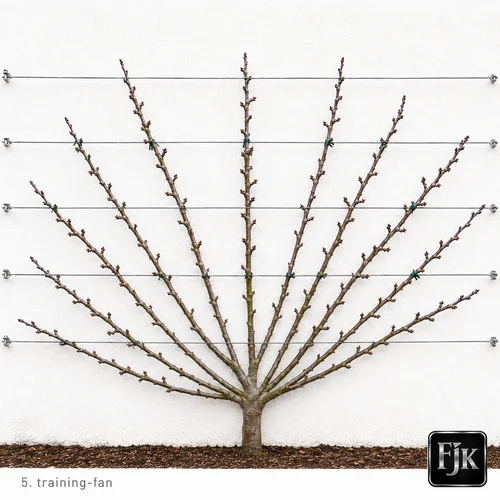
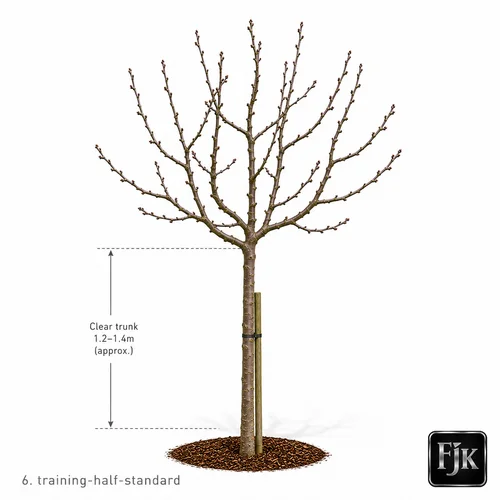
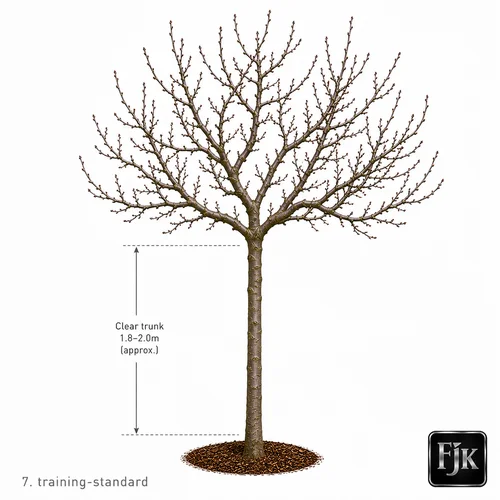
bushspindlecordonespalierfanhalf-standardstandard
03 Varieties
The number of varieties shown for each crop is based on UK consumption data (2025/26) — the more popular the crop, the more variety choices we include.
Classic Dessert Apples
Cox's Orange Pippin
Dessert · Mid-season
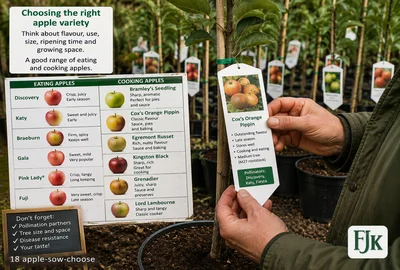
The gold standard of English dessert apples. Superb, complex, aromatic flavour unmatched by any other variety when eaten fresh from the tree. Demanding — susceptible to scab, mildew, and canker — but the flavour reward justifies the effort. Best on M26. Pollination group 3.
Harvest
Oct
Flavour
Rich, aromatic, honeyed, complex
Fruit size
Medium
Yield
Medium
Disease resistance
Low
Rootstock
M26 / MM106
Form
Bush · Cordon · Espalier
Group 3
Egremont Russet
Dessert · Mid-season
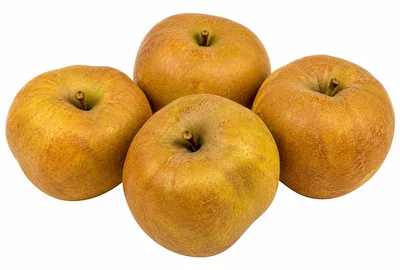
The finest russet apple. Dry, nutty, honeyed flavour with a suede-textured golden skin. Easier to grow than Cox and stores well through to December. AGM. Pollination group 2 — an excellent pollinator for group 3 varieties including Cox.
Harvest
Oct
Flavour
Nutty, honeyed, dry, distinctive
Fruit size
Medium
Yield
High
Disease resistance
Medium
Rootstock
M26 / MM106
Form
Bush · Cordon · Espalier
🏅 AGM
Group 2
Sunset
Dessert · Mid-season
Often described as an easier-to-grow Cox. Similar aromatic flavour, good disease resistance, and self-fertile — no second tree needed. AGM. Ideal first apple for small gardens or beginners wanting Cox-quality flavour without Cox-level difficulty.
Harvest
Oct
Flavour
Cox-like, sweet, aromatic
Fruit size
Medium
Yield
High
Disease resistance
Medium
Rootstock
M26 / M9
Form
Bush · Cordon · Espalier · Container
🏅 AGM
✓ Self-fertile
Group 3
🪴 Container
Ribston Pippin
A celebrated 18th-century heritage apple with exceptional complex flavour — considered one of the finest dessert apples ever raised in Britain. Medium-sized, greenish-yellow fruit flushed with orange-red. Rich, aromatic, nutty flesh with a distinctive Cox-like character. Parent of Cox's Orange Pippin. Ripens October, stores to December.
🏅 AGM
Heritage
⭐⭐ Flavour
Cox Parent
Kidd's Orange Red
A superb New Zealand-raised dessert apple combining the flavour qualities of Cox with more reliable cropping. Rich, sweet, aromatic flesh with a distinctive orange-red flush over a yellow-green skin. Parent of Gala. One of the finest flavoured dessert apples for UK gardens. Ripens late October, stores to Christmas.
🏅 AGM
⭐⭐ Flavour
Heritage
Gala Parent
Discovery
The most popular early-season dessert apple for UK gardens and commercial orchards. Bright red skin, crisp white flesh, and a refreshing raspberry-tinged flavour. Ready from mid-August — the first significant apple of the season. Best eaten straight from the tree. AGM and widely planted across the UK.
🏅 AGM
Early Season
Bright Red
⭐ Flavour
Early Dessert Apples
Discovery
Dessert · Early
One of the best early apples — bright scarlet, sweet, and refreshing with a hint of strawberry. Heavy-cropping and reliable. Does not store — pick and eat immediately for best flavour. AGM. Crops in August, before most other apples are ready. Excellent pollinator for other group 3 varieties.
Harvest
Aug
Flavour
Sweet, refreshing, strawberry notes
Fruit size
Medium
Yield
Very high
Disease resistance
Medium
Rootstock
M26 / MM106
Form
Bush · Half-standard
🏅 AGM
Group 3
James Grieve
Dessert/Cooking · Early
A true dual-purpose apple — excellent eating when ripe and an outstanding early cooking apple before full ripeness. Partly self-fertile, but crops better with a pollination partner. Heavy-cropping and reliable in most UK gardens, though prone to canker on heavy, wet soils. Very good pollinator for other varieties. Not suited to long storage — use within 2–3 weeks of picking.
Harvest
Aug–Sep
Flavour
Sharp-sweet, juicy, versatile
Fruit size
Large
Yield
High
Disease resistance
Medium
Rootstock
M26 / MM106
Form
Bush · Espalier
🏅 AGM
Group 3
Partly self-fertile
Scrumptious
Dessert · Early
One of the best self-fertile dessert apples for small gardens and containers. Very sweet, large fruits ripening in August. High disease resistance. AGM. Excellent choice for first-time apple growers or anyone wanting a reliable, heavy-cropping single-tree apple.
Harvest
Aug
Flavour
Very sweet, honeyed, mild
Fruit size
Large
Yield
High
Disease resistance
High
Rootstock
M9 / M26
Form
Bush · Cordon · Container
🏅 AGM
✓ Self-fertile
Group 3
🪴 Container
Late Dessert & Storing Apples
Blenheim Orange
Dessert/Cooking · Late
A historic variety with outstanding dual-purpose flavour. Triploid — needs two pollinators from groups 2–4. Very large, beautiful fruit with rich, nutty flavour. Stores until December. Best on a larger rootstock. A long-lived tree that improves with age.
Harvest
Oct–Nov
Flavour
Rich, nutty, aromatic
Fruit size
Very large
Yield
Medium
Disease resistance
Medium
Rootstock
MM106 / MM111
Form
Half-standard · Standard · Bush
🏅 AGM
Group T
Kidd's Orange Red
Dessert · Late
A Cox cross with outstanding flavour — some consider it superior. Aromatic, rich, pear-drop notes with a beautiful red-flushed skin. Stores well into December. Easier to grow than Cox. Pollination group 3.
Harvest
Oct–Nov
Flavour
Rich, aromatic, pear drops
Fruit size
Medium
Yield
Medium
Disease resistance
Medium
Rootstock
M26 / MM106
Form
Bush · Cordon
🏅 AGM
Group 3
Pixie
Dessert · Very Late
One of the latest-ripening and longest-storing dessert apples. Small, neat fruits that keep until February–March in cool storage. Sweet, nutty, rich flavour that improves in store. High disease resistance. AGM. Outstanding choice for extended storage.
Harvest
Nov
Flavour
Sweet, nutty, rich, keeps well
Fruit size
Small–Medium
Yield
High
Disease resistance
High
Rootstock
M9 / M26
Form
Bush · Cordon · Container
🏅 AGM
Group 4
🪴 Container
Cooking Apples
Bramley's Seedling
Cooking · Mid-season
The king of cooking apples — incomparable for pies, crumbles, and sauce. Collapses to a light, sharp purée when cooked. Triploid — needs two pollinators (groups 2–4). Very large fruits store well into March. The most commonly grown cooking apple in the UK by a wide margin. AGM.
Harvest
Oct
Flavour
Very sharp, collapse to fluff when cooked
Fruit size
Very large
Yield
Very high
Disease resistance
Medium
Rootstock
MM106 / MM111
Form
Half-standard · Bush · Espalier
🏅 AGM
Group T
Grenadier
Cooking · Early
The best early cooking apple — crops August–September when no other cookers are ready. Large, green, sharp fruits that cook excellently. Does not store — pick and use immediately. AGM. Provides cooking apples weeks before Bramley is ready.
Harvest
Aug–Sep
Flavour
Sharp, cooks to a good purée
Fruit size
Large
Yield
High
Disease resistance
Medium
Rootstock
M26 / MM106
Form
Bush · Cordon · Espalier
🏅 AGM
Group 3
Lord Derby
Cooking · Mid-Late
Self-fertile cooking apple — no second tree needed. Heavy-cropping, reliable, and disease resistant. Sharp flavour ideal for cooking. Can be used as a dessert apple when fully ripe. Good for northern gardens and exposed positions where other varieties struggle.
Harvest
Oct–Nov
Flavour
Sharp, good flavour when cooked
Fruit size
Large
Yield
Very high
Disease resistance
High
Rootstock
MM106
Form
Bush · Half-standard
✓ Self-fertile
Group 4
Newton Wonder
A large, handsome Victorian cooking apple with yellow-green skin handsomely flushed with red stripes. Combines the cooking qualities of Bramley with a richer, more complex flavour when used in pies and sauces. Slightly less acidic than Bramley — some consider the cooked flavour superior. Very late keeping — stores well into February.
Group 5
Heritage
Late Keeping
Large Fruit
Howgate Wonder
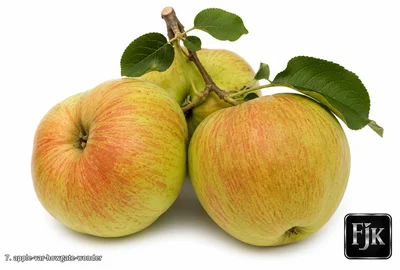
One of the largest cooking apples grown in the UK — fruits regularly reach tennis-ball size and can exceed 1kg. Pale yellow-green skin flushed with red. Mild cooking flavour, lower acidity than Bramley. Excellent for baking whole. A heritage variety of impressive ornamental and practical value.
🏅 AGM
Group 4
Heritage
Very Large Fruit
Low Acid
Annie Elizabeth
A Victorian cooking apple of outstanding keeping quality — stores in perfect condition into April. Pale yellow skin with a slight pink flush. Holds its shape when cooked, making it excellent for tarts. A dual-purpose apple: sharp when freshly picked but becomes sweet enough to eat raw by February. Heritage gem.
Group 4
Heritage
Exceptional Storage
Dual Purpose
Heritage & Cider Apples
Ribston Pippin
Dessert · Heritage · Late
One of the oldest named English apples (1688) and a parent of Cox. Exceptional, complex flavour — arguably finer than Cox on a good year. Triploid. Needs two group 3/4 pollinators. Susceptible to scab. For enthusiasts who want to grow living history.
Harvest
Oct
Flavour
Intense, nutty, complex — Cox parent
Fruit size
Medium
Yield
Medium
Disease resistance
Low
Rootstock
MM106
Form
Bush · Half-standard
🏅 AGM
Group T
Yarlington Mill
Cider · Late
The classic West Country bittersweet cider apple. Not palatable fresh — tannic and sharp — but produces a superb cider with excellent body and colour. Very heavy-cropping. Best grown as a half-standard or standard in a garden with space. Essential for serious home cider-making.
Harvest
Oct–Nov
Flavour
Bittersweet — classic Somerset cider
Fruit size
Medium
Yield
Very high
Disease resistance
High
Rootstock
MM106 / MM111
Form
Half-standard · Standard
Group 4
Ashmead's Kernel
Dessert · Heritage · Very Late
First recorded 1700, Gloucester. Considered by many apple experts the finest flavoured of all English dessert apples — sharper than Cox with an extraordinary aromatic, pear-drop intensity. Stores until February. Not pretty but one of the greatest flavour experiences in fruit growing.
Harvest
Nov
Flavour
Sharp, aromatic, pear-drop, outstanding
Fruit size
Medium
Yield
Medium
Disease resistance
Medium
Rootstock
MM106
Form
Bush · Cordon
🏅 AGM
Group 4
04 Where to Source
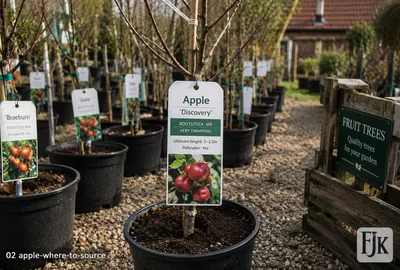
Apple trees are sold everywhere from garden centres to specialist fruit nurseries, as container-grown (plantable year-round) or bare-root (Nov–Mar, better value and far wider variety choice) stock. Classic varieties like Discovery and Egremont Russet are stocked almost universally; for less common or local heritage varieties, specialist fruit nurseries and an online plant-finder directory are the best starting points. Always check the rootstock is clearly labelled, since this determines the eventual tree size.
05 Planting Options
🌳 Bare-root (Nov–Mar)
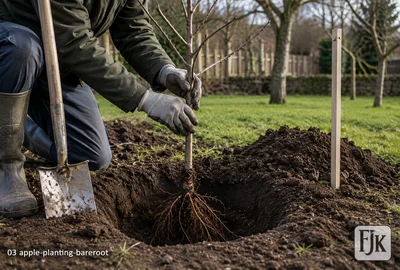
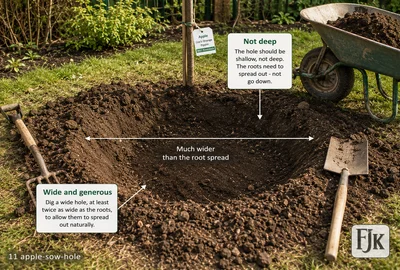
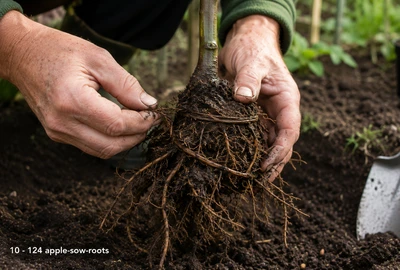
Plant bare-root trees November to March when dormant. Dig a wide, shallow hole, keep the graft union above soil level, stake at 45 degrees, firm well and mulch. Formative pruning at planting builds the framework for years ahead.
Choose rootstock and variety
Decide on rootstock first (M26 is the best all-round choice for most UK gardens), then choose variety based on use (dessert/cooking/dual), harvest season (early/mid/late), and pollination group. Ensure you have a compatible pollinator within 50m.
Prepare the site
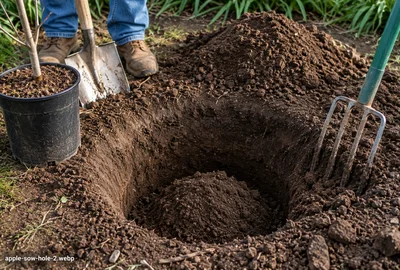
Dig a hole twice the width of the root system and the same depth. Incorporate well-rotted compost but avoid fresh manure touching the roots. Do not add fertiliser to the hole — wait until the tree is established.
Check the soil mark
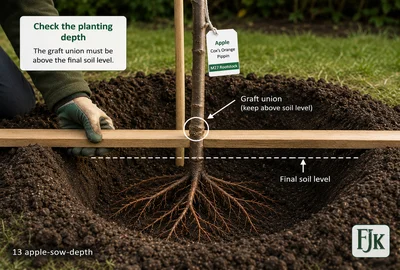
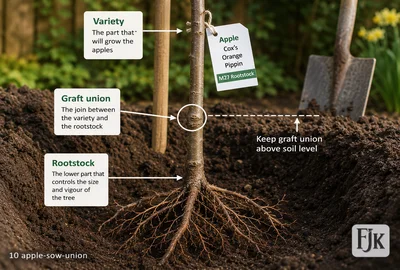
Bare-root trees have a clear soil mark on the stem showing their original planting depth. Plant at exactly this depth — the graft union (the knobbly join above the roots) must remain 10–15cm above soil level. Burying the union causes scion rooting and loss of dwarfing effect.
Stake correctly
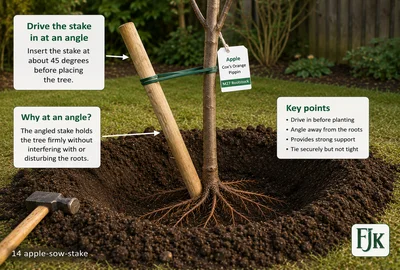
Drive the stake in at an angle (45 degrees) away from the prevailing wind before replacing soil — this avoids driving through the roots. The stake should reach two-thirds up the tree trunk. Use a rubber tree tie to avoid bark damage.
Firm and water in
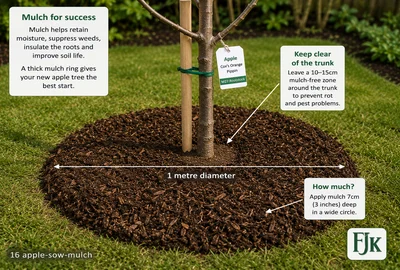
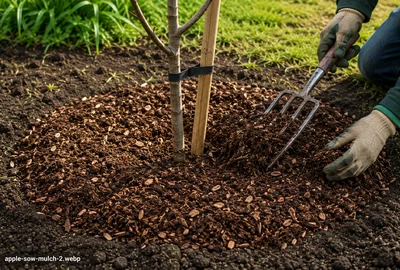
Replace soil in stages, firming with your heel at each layer to eliminate air pockets. Water thoroughly — a full 10–15 litres. Apply a mulch 5cm deep in a 1m circle around the base but keep it clear of the trunk to avoid collar rot.
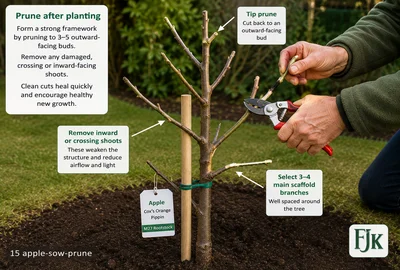
Formative pruning at planting
For bush and spindle forms, cut back the central leader by one third at planting to encourage branching. For cordons and espaliers, tie in and do not prune the leader. Remove any damaged or overcrowded branches.
🪴 Container-grown (Sep–May)
Container-grown trees can be planted September to May, with autumn and early spring being ideal. Water well after planting and keep consistently moist through the first summer — this is critical for establishment.
Best timing
Container-grown apple trees can be planted September to May. Autumn and early spring are still ideal — autumn allows roots to establish in warm soil before winter; spring plantings need more careful watering through their first summer. Avoid planting June–August when trees are in active growth.
Prepare the planting hole
Dig the hole the same depth as the container and twice as wide. Break up compacted subsoil with a fork. If drainage is poor, consider a raised planting mound — apples will not tolerate waterlogged roots.
Release root ball
Remove the container and gently tease out any circling roots. Circling roots left unreleased will eventually strangle the tree as the trunk expands. Make 3–4 vertical cuts with a knife around the outside of the root ball if very pot-bound.
Plant and stake
Position in the hole at the correct depth (graft union 10–15cm above soil). Backfill in stages, firming well. Install stake as per bare-root method. Water in thoroughly with 15 litres.
Mulch generously
A 5cm deep mulch of composted bark or garden compost in a 1m circle suppresses weeds, retains moisture, and regulates soil temperature. Essential for first-season establishment. Renew annually.
🏡 In a Container (Patio Apple)
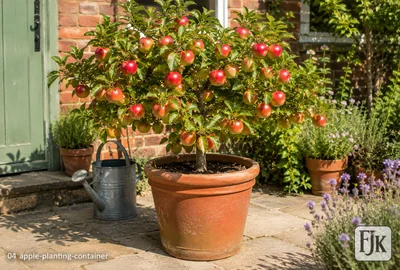
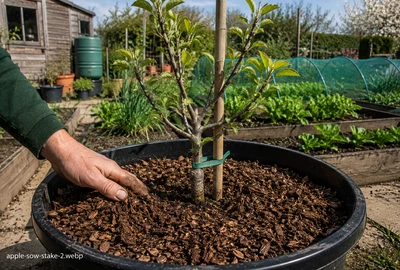
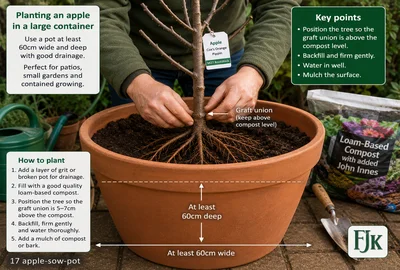
Patio apples on M27 or M9 rootstock thrive in large containers of loam-based compost. Use a pot at least 60cm wide and deep, ensure good drainage, and water consistently — container trees dry out faster than those in open ground.
Choose the right rootstock
M27 or M9 only for container growing. M27 stays very compact (1.5m) and is ideal for a patio pot. M9 grows to around 2.5m in a large container. Choose a self-fertile variety such as Scrumptious to avoid needing a second tree, or plant two varieties from compatible pollination groups.
Use a very large container
Minimum 60cm diameter and depth. Half-barrels, large terracotta urns, or purpose-built wooden planters all work well. Ensure multiple large drainage holes — waterlogged roots are fatal. Fill with John Innes No. 3 (not multi-purpose compost — it breaks down too fast).
Feed and water rigorously
Container apple trees must be fed with a balanced fertiliser in spring and a high-potash feed from flowering onwards. Water daily in summer — a container tree cannot access groundwater. Neglecting water during June–August causes premature fruit drop and poor development.
Repot every 3 years
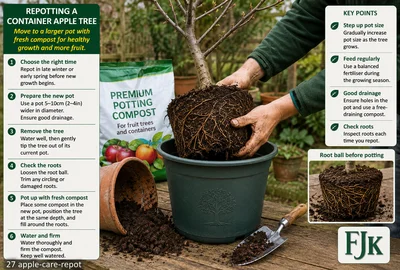
Every 3 years in late winter, lift the tree from its pot, trim the root ball by 20% with a sharp saw or knife, and replant in fresh John Innes No. 3. This prevents the tree becoming pot-bound and maintains vigour.
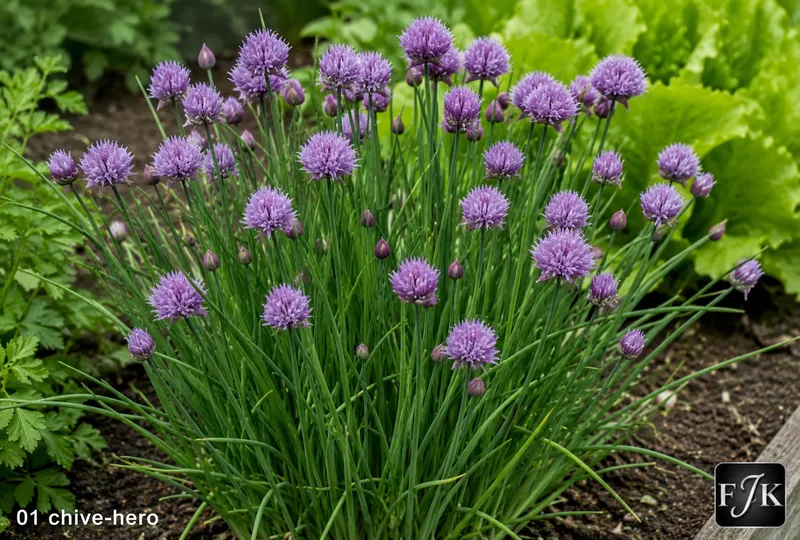
Planted at the base of apple trees, chives are thought to help deter aphids and improve scab resistance.
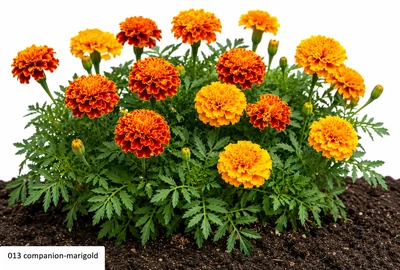
🌸 Marigold
Marigolds are thought to deter harmful nematodes in the soil around apple tree roots.
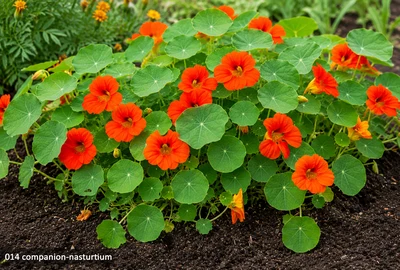
🌸 Nasturtium
Acts as a trap crop for aphids, drawing them away from the tree canopy.
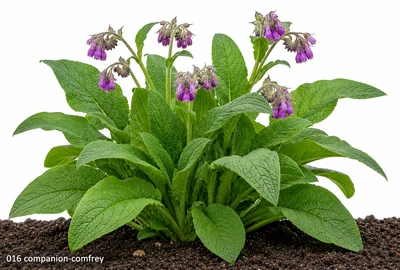
🌿 Comfrey
Comfrey leaves make an excellent mulch and liquid feed, and its flowers attract pollinators for blossom time.
❌ Keep apart
🌰 Walnut — Walnut trees release juglone, a natural toxin from their roots and fallen leaves, which can stunt or kill nearby apple trees. Keep well away from walnut root zones.
07 Sowing — How To
Order in advance
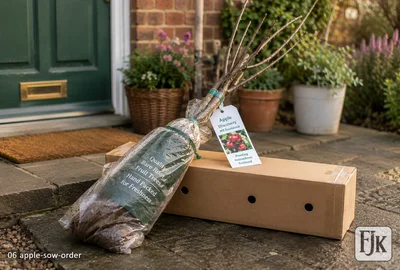
Order bare-root apple trees from specialist fruit nurseries in September–October for delivery from November. The best varieties and rootstocks sell out. Buying from a specialist gives access to hundreds of varieties unavailable in garden centres — choose varieties suited to your specific needs.
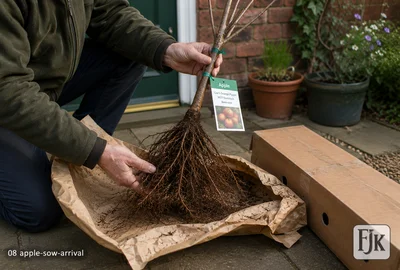
Plant immediately on arrival
Bare-root trees must be planted promptly. If soil is frozen or waterlogged on arrival, heel the tree into a bucket or large pot of compost to keep the roots moist until conditions improve. Never let bare roots dry out or sit in standing water.
Check graft union position
The graft union — the knobby joint between rootstock and scion — must end up 10–15cm above soil level. This is crucial. If the union is buried, the scion (upper tree) roots into the soil and the dwarfing effect of the rootstock is lost.
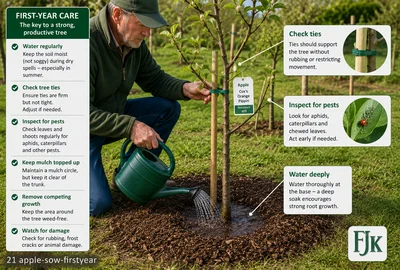
First-year care
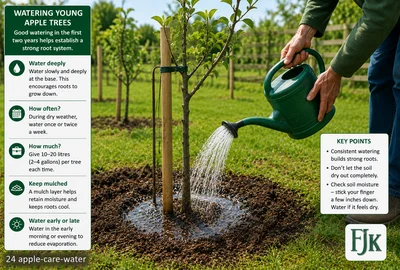
Keep well watered through the first growing season — the first summer is critical. Remove any fruit that sets in the first year to direct energy into root establishment. Apply a balanced fertiliser in spring (April) of the first year.
Regional sowing timing
Region
Sow / plant
Harvest
Notes
Scotland & Far North
Nov–Mar
Sep–Nov
Northern England
Nov–Mar
Sep–Nov
Midlands & Wales
Nov–Mar
Aug–Nov
Ireland & Isle of Man
Nov–Mar
Aug–Nov
South & SE England
Nov–Mar
Aug–Nov
South Coast & SW
Nov–Mar
Aug–Nov
08 Using a Propagator
Apple trees are not grown from seed (seedlings revert to wild, unpalatable types) and are not propagated in a propagator. They are grafted onto specific rootstocks at the nursery — a specialist process. Home gardeners buy grafted trees ready for planting. A propagator plays no part in apple growing.
Heated propagator
Not Applicable — Apple trees are grafted by specialist nurseries onto named rootstocks. This is not a home propagation task. Buy grafted trees from a reputable specialist fruit nursery. Avoid unnamed varieties from general garden centres where rootstock is often unknown.
Select a reputable specialist nursery
Order from a specialist fruit nursery — they can advise on the best variety and rootstock combination for your soil, space, and needs. They stock varieties unavailable in garden centres and can confirm rootstock. Order in early autumn for best selection.
Confirm pollination before ordering
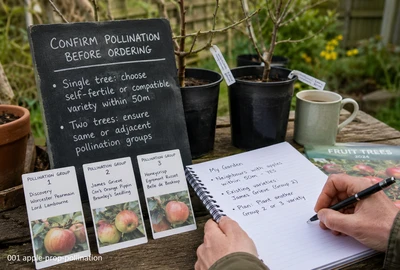
Before ordering, confirm your pollination group situation. If planting a single tree, choose a self-fertile variety or confirm a compatible variety within 50m. If planting two trees, ensure they are in the same or adjacent pollination groups.
09 Soil Requirements
pH
6.0–7.0
Best
Loam, Clay loam
Tolerates
Sandy loam, Clay
Avoid
Chalky, Waterlogged, Very sandy
💡 Deep, fertile, well-drained soil. Good moisture retention essential.
10 Ongoing Care
✂️ Pruning
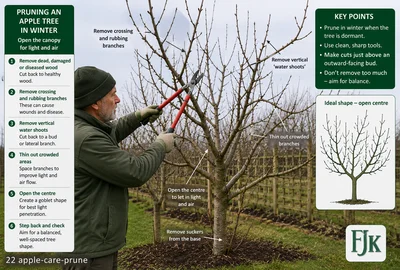
Winter pruning (December–February) shapes the tree and encourages fruiting. In years 1–3 (formative pruning), remove crossing, rubbing, and inward-growing branches to build an open, balanced framework. Once established, annual pruning maintains size and stimulates new fruiting spurs. The key rule: apples fruit on two-year-old and older wood — do not remove all young wood. For cordons and espaliers, summer pruning (July–August) is essential: cut side-shoots back to 3 leaves from the base to form fruiting spurs.
🌱 Feeding & Mulching
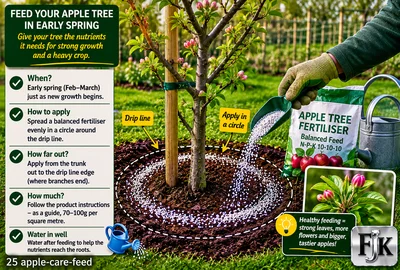
Apply a balanced general-purpose granular fertiliser in late February–March at 70g per square metre under the canopy. Follow with a mulch of well-rotted compost or bark 5–8cm deep in a 1m circle, keeping it clear of the trunk. Do not overfeed with nitrogen — this produces excessive leafy growth at the expense of fruit. Established trees in good soil may need no additional feeding beyond the mulch. Yellowing leaves between the veins indicate iron or magnesium deficiency — treat with a sequestered iron product or magnesium sulphate foliar feed.
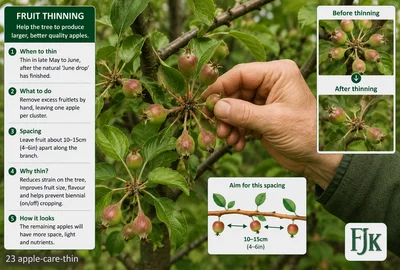
🍎 Thinning Fruit
After the natural June drop (when the tree sheds excess fruitlets), thin remaining fruits to one per cluster and one fruit every 10–15cm along the branch. Thinning feels counterintuitive but dramatically improves fruit size, quality, and flavour — and prevents biennial bearing (heavy and light years alternating). Use scissors or thumb-and-forefinger to remove the central fruitlet (the king fruit) from each cluster first — it is often misshapen. The remaining side fruitlets will develop into uniform, large fruits.
🐛 Pest & Disease Management
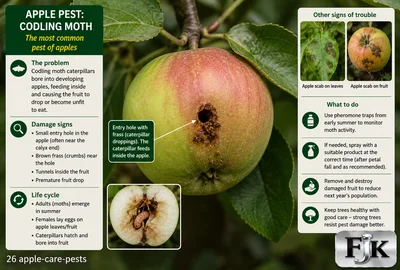
Apple scab (dark scabby patches on fruit and leaves) is the most common problem — it thrives in wet springs. Choose resistant varieties and clear fallen leaves in autumn. Apple canker (sunken, flaking bark) requires cutting out infected wood to healthy tissue and sealing cuts with wound paint. Codling moth larvae tunnel into developing fruit — use pheromone traps from May to monitor and disrupt mating. Woolly aphid (white cottony masses on bark) requires firm brushing with a stiff brush and a systemic insecticide if severe.
11 Watch Out For
Warning
Fireblight (Erwinia amylovora) is a bacterial disease causing shoots to wilt and blacken as if scorched. Infected wood must be pruned out to 60cm below visible symptoms and all tools sterilised between cuts with methylated spirit. Do not compost infected material — burn it or bin it.
🐛 Insects & pests
🌸 Woolly Aphid — White, cotton-wool-like patches on apple bark, branch joints, and wounds — highly distinctive
🟤 Scale Insect — Small brown or grey bumps on stems, branches, and the underside of leaves — the scale covers themselves
🌀 Tortrix Moth — Leaves rolled or tied together with fine silk threads — the caterpillar shelter; unfold carefully to reveal the pest
🐜 Aphids (Blackfly & Greenfly) — Curled, distorted, or stunted growing tips — aphids inject saliva that causes leaf curl to protect them
🍄 Diseases to watch
🌳 Apple & Pear Canker — Nectria canker (Neonectria ditissima) is the most serious fungal disease of apple and pear trees in the UK. It enters through wounds — particularly pruning cuts, leaf scars, and frost damage — and kills the bark in expanding elliptical lesions. Unchecked, a canker encircles a branch and kills everything above it.
🔥 Fire Blight — Fire blight (Erwinia amylovora) is a serious bacterial disease of apple and pear family plants that can kill entire trees rapidly. In England, Scotland and Wales, fire blight is no longer a notifiable disease, so you don't need to report it. On the Isle of Man it is still kept out, so report any suspected case to the island's government plant health service. In Northern Ireland, check with your local plant health service. The "fire" name describes the scorched appearance of infected shoots.
⬜ Powdery Mildew — Powdery mildew is caused by a range of related fungi, each specific to its host plant — courgette mildew cannot infect peas, and vice versa. The characteristic white powdery coating on leaf surfaces appears in warm, dry conditions (unlike downy mildew which prefers cool and wet). Rarely kills plants but severely reduces yield and plant vigour.
🩶 Botrytis (Grey Mould) — Botrytis cinerea (grey mould) is the most ubiquitous fungal pathogen in temperate gardens — present in virtually every garden soil and on plant debris. It becomes a disease only when conditions favour it: cool, humid, poorly ventilated environments with damaged or senescent plant tissue. In a greenhouse in autumn it can destroy an entire tomato or grape crop.
Full identification and treatment advice is in the Pests and Diseases sections.
12 Storage & Preserving
🍎 Fresh Storage (Cool & Dark)
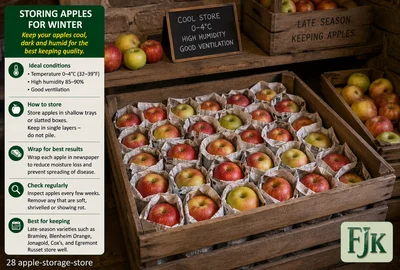
Late-season varieties (October pick) store for 2–5 months in the right conditions: cool (1–4°C), dark, slightly humid, and frost-free. A traditional apple store, unheated outhouse, or garage works well. Store each apple individually — wrap in newspaper or place in single layers in slatted trays. Never store damaged or bruised fruit. Check monthly and remove any showing rot immediately — one rotten apple truly does spoil the whole store. Early varieties (August–September) do not store and must be eaten within days of picking.
🧃 Juicing & Pressing
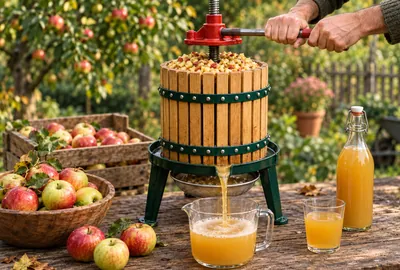
Apple juice from a mix of varieties is exceptional — far superior to shop-bought. Use a community apple press or hire a small press for larger quantities. Fresh juice keeps for only 3–4 days in the fridge; to keep it longer, freeze it in portions. Even a single tree typically produces enough surplus for several litres of juice. Mix cooking and dessert varieties for a balanced juice — pure cooking apple juice is too sharp.
🥧 Cooking, Freezing & Drying
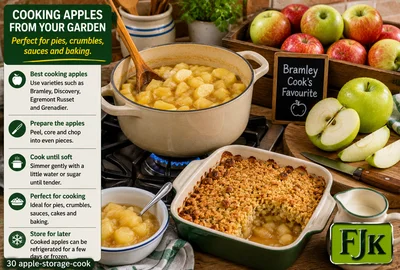
Cooking apples (Bramley, Grenadier) freeze well: peel, core, slice, and blanch for 2 minutes before freezing in portions. Dessert apples are better stored whole than frozen. Dried apple rings (core and slice thinly, dry in an oven at 60°C for 6–8 hours) keep for months and make an excellent snack.
13 Expert Tips
💡 Train as a cordon for small gardens
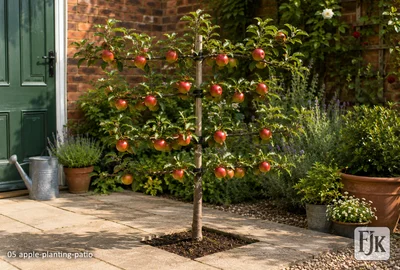
A cordon — a single-stemmed tree trained at 45 degrees against a fence or wire — is the most space-efficient way to grow apples in a small garden. Four to six cordons in 2m of fence width gives you four to six different varieties with a succession of harvest from August to November.
💡 Choose a self-fertile variety first
Plant a self-fertile variety (Scrumptious, Sunset) as your first tree if you are unsure about nearby pollinators — it will crop alone and also pollinate other varieties planted later.
💡 Bramley for cooking, Cox for eating
The best apple for cooking is almost always Bramley — it collapses to a light, fluffy purée when cooked. But for eating fresh, the finest flavour from a UK garden is Cox’s Orange Pippin — demanding to grow but incomparable when fresh off your own tree.