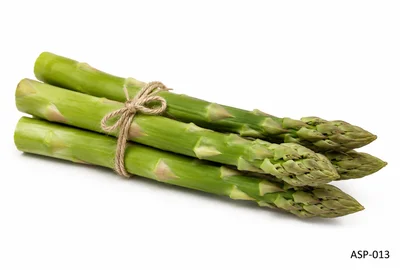
Gijnlim
All-male · Crowns
A heavy-cropping, early all-male variety. Its bright green spears are tipped with purple and are cut from spring into early summer.
- AGM
- Early
- Beginners
Asparagus officinalis
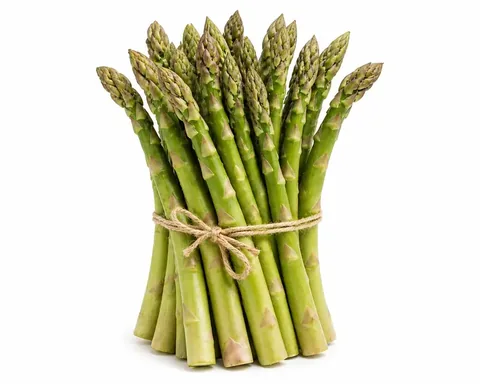
One of the finest vegetables you can grow. Asparagus asks for patience — nothing is cut in the first two years — but a well-made bed then crops every spring for about 20 years.
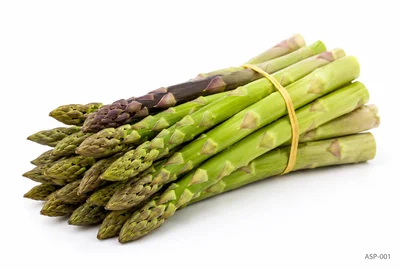
Male plants give more and better spears than female ones, so most crowns you can buy are all-male F1 hybrids such as Gijnlim, Mondeo and Guelph Millennium. For purple spears, try Pacific Purple, which is sweeter and more tender than a lot of green kinds, or Stewart's Purple. The heritage Connover's Colossal still gives a big crop, but as an older type it includes female plants.
The number of varieties shown for each crop is based on UK consumption data (2025/26) — the more popular the crop, the more variety choices we include.
All-male hybrids that direct all energy into spear production. The heaviest-cropping varieties for UK beds.
A heavy-cropping, early all-male variety. Its bright green spears are tipped with purple and are cut from spring into early summer.
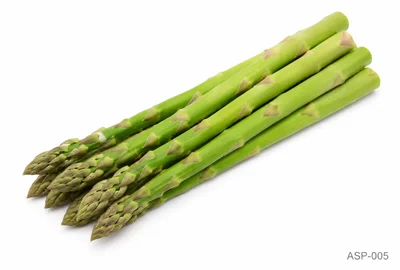
An all-male hybrid that crops early and heavily, with purple-tipped green spears of very good flavour. It also shows strong resistance to disease.
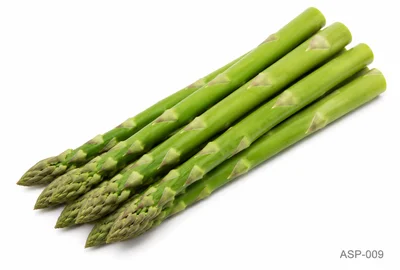
Bred in Canada for cool climates. An early-to-mid season variety giving good crops of thick spears, with sturdy fern that copes with poor weather. Bred as a male hybrid; only a very small share of plants carry some female flower parts.
Proven varieties for consistent cropping and good flavour across UK growing conditions.
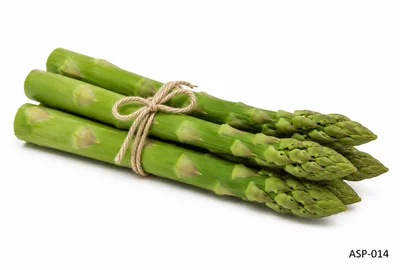
A dependable all-male variety that crops from mid to late season. Good yields of straight spears with fine flavour.
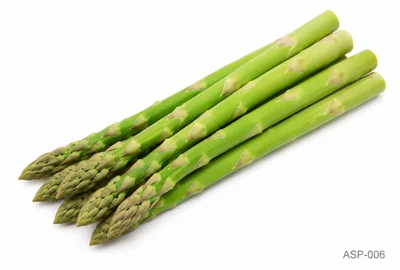
A strong-growing all-male variety from New Zealand. Heavy crops of thick, straight, evenly sized mid-green spears that are tender, free of strings and full of flavour. Crops fairly late in the season.
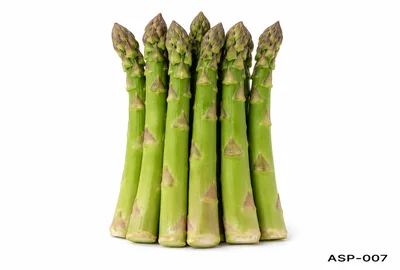
A vigorous all-male variety from Canada. Heavy crops of green, purple-tipped spears, cut from April to June. Copes especially well with cold, so a good pick for northern gardens, and grows in most soils.
Purple-speared, heritage, and flavour-first varieties for the asparagus enthusiast.
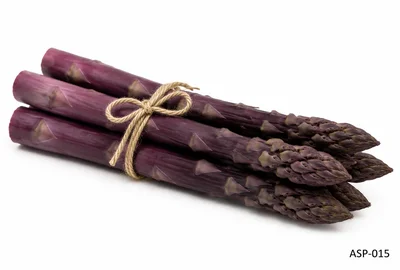
A heavy-cropping purple variety with stringless spears, deep purple over green. Sweeter and more tender than a lot of green kinds. Cooking dulls the colour, so serve raw or lightly steamed.
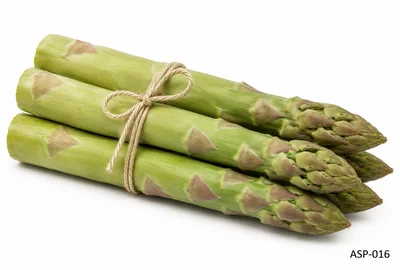
An old heritage variety that still gives a big crop. Its bright green spears are tipped purple. Not all-male, so some plants are female and set berries.
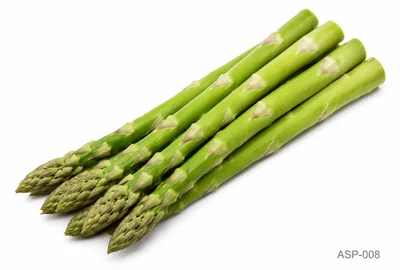
Plenty of tall, straight green spears, the tips and scales flushed purple. Ready to cut in late spring.
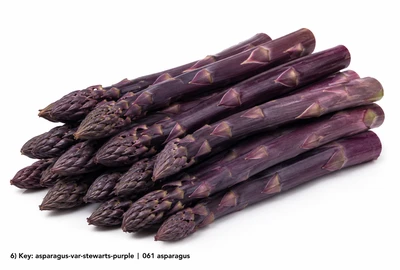
Rich, dark purple spears, thicker than most green kinds, with a mild, sweet taste. Cut from mid-spring into early summer. Not all-male — the odd plant sets a few red berries.
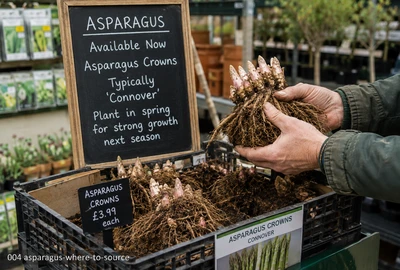
Most asparagus is started from one-year-old crowns. They are mostly bought online and arrive in March or April, and some larger garden centres stock them too. Crowns save a year over seed. Order early for the best pick of varieties.

Mail-order nurseries offer the widest range of named all-male varieties — including Gijnlim, Mondeo, Guelph Eclipse and Guelph Millennium — sent out as bare-root crowns, often five or ten to a pack, in March and April. Order ahead over winter. These are living plants, so get them in the ground on the day they come.
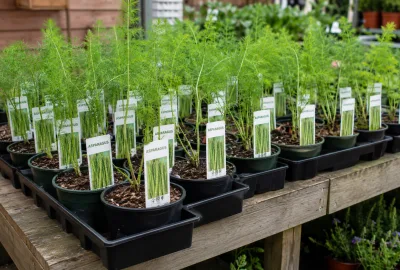
Larger garden centres sell asparagus crowns in spring. Check they are fresh and firm before buying — avoid any that are dry or shrivelled.
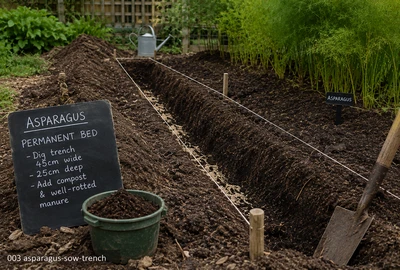
Asparagus needs a bed of its own that will keep cropping for some 20 years, so choose the spot with care: sheltered, well drained, and sunny if possible (light dappled shade is tolerated). Grow nothing else in the bed, and never put new plants where asparagus grew before. Clear every perennial weed, especially couch grass and bindweed, then work in a full bucket or more of well-rotted compost or manure for every square metre. Plant crowns in March, or on arrival: dig a trench about 20cm deep, make a 10cm ridge down the middle, spread the roots over it and cover until only the bud tips show. Do not harvest in years 1 and 2.
Suitable varieties: All varieties. All-male F1 varieties — Gijnlim, Mondeo, Guelph Millennium — are the usual choice for heavy crops. The heritage Connover's Colossal also crops well but includes female plants.
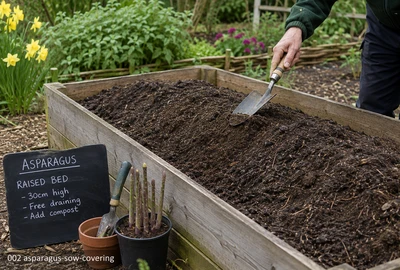
A raised bed is the answer on heavy clay, where water would otherwise sit around the crowns. Build it at least 30–40cm deep with good drainage underneath, and fill with a 50/50 mix of topsoil and grit or well-rotted compost. Once planted, treat it just like an open bed — it is still a home for the next 20 years or so.
Suitable varieties: All varieties. The improved drainage of a raised bed particularly benefits asparagus on heavy or clay soils where open ground planting regularly fails.
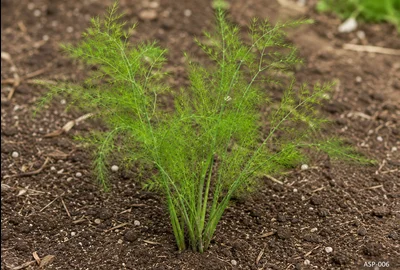
Seed costs far less than crowns but is slower: seed-raised plants need three years before the first cut, a year longer than crowns. Sow in February at 13–16°C, one seed to each module or small pot of seed compost. Keep the seedlings warm, bright and well watered, harden them off, and plant out in early June. Seed can also be sown outdoors in March or April in drills 2.5cm deep, rows 30–45cm apart, with seedlings thinned to 15cm; move them to their final spacing the following March.
Suitable varieties: Any variety sold as seed. Seed is much cheaper than crowns when filling a large bed.
Most people start asparagus from one-year-old crowns — seed-raised plants take a year longer to reach harvest. Plant crowns in March, or on the day they are delivered, in a permanent bed of their own. The hard part is patience: no spears are cut in years 1 and 2 while the plants settle in. The reward is a bed that crops for about 20 years.
Dig a trench about 20cm deep and 30cm wide. Fork over the bottom and mix in plenty of well-rotted compost. Along the middle, build a ridge of soil about 10cm high.
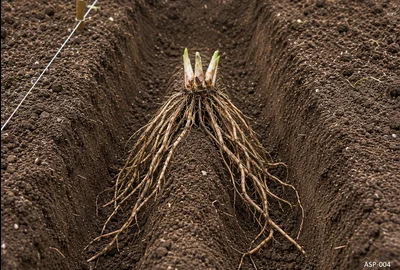
Sit each crown on top of the ridge, buds facing up, and fan the roots out down both sides. Handle them gently, as they snap easily. Space crowns 30–45cm apart, in rows 45cm apart, staggered between rows.
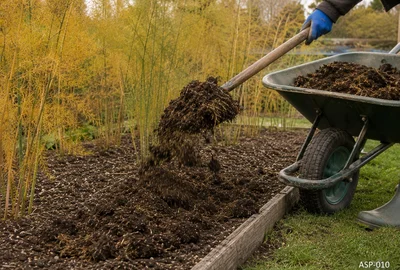
Ease soil back over the roots until only the tips of the buds show. Water well, then spread 5cm of well-rotted manure or compost along the row.
Let every shoot grow into feathery fern — do not cut a single spear. Water the new plants regularly through this first summer. When the fern yellows in autumn, cut it down to the ground.
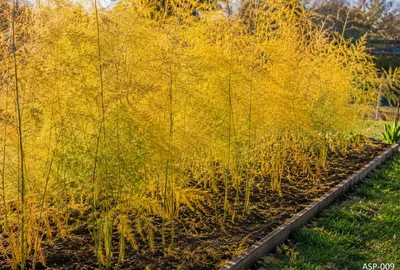
In year 2, do the same: let all the fern grow and cut it down once it yellows in autumn. Resist taking a few spears — it holds the plants back.
Once the yellow fern is cut down, keep the bed free of weeds over winter. In late winter, spread a thick mulch of compost or well-rotted manure to keep the soil moist and smother weed seedlings.
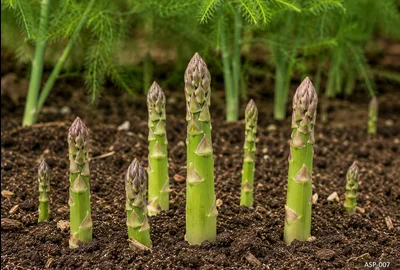
In year 3 the cutting can start: from mid-April, harvest for about six weeks, then let the rest grow into fern. From year 4 on, cut for about eight weeks each spring.
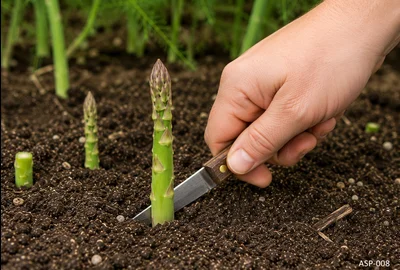
Cut each spear before it passes about 18cm tall — roughly finger-thick is ideal. Slice it with a sharp knife about 2.5cm under the soil. In warm spells they shoot up fast, so check every two or three days.
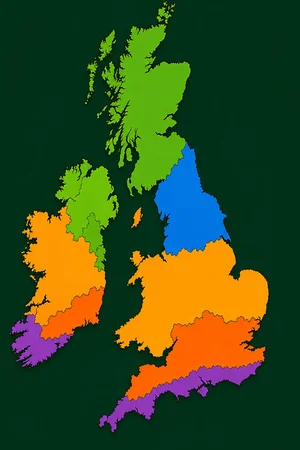
| Region | Sow / plant | Harvest | Notes |
|---|---|---|---|
| Scotland & Far North | Apr | May–Jun | Plant crowns in April once soil temperature rises. Harvest season: late May to mid-June from year 3 onwards · Apr (crown planting) |
| Northern England | Mar–Apr | Apr–Jun | Plant crowns March to April while still dormant. Harvest season: late April to mid-June from year 3 · Mar–Apr (crown planting) |
| Midlands & Wales | Mar–Apr | Apr–Jun | Plant in March to April. Season runs late April to mid-June from year 3. Mild autumns give longer fern-growing period · Mar–Apr (crown planting) |
| Ireland & Isle of Man | Mar–Apr | Apr–Jun | Plant in March to April. Cool spring conditions suit asparagus well. Season: late April to mid-June from year 3 · Mar–Apr (crown planting) |
| South & SE England | Mar–Apr | Apr–Jun | Earliest planting from mid-March. Season typically late April to mid-June. Sandy soils warm fastest — ideal in SE · Mar–Apr (crown planting) |
| South Coast & SW | Mar | Apr–Jun | Earliest UK season — harvest can begin late April in warm years. Plant in March for best establishment · Mar (crown planting) |
A propagator is only needed when growing from seed, which is sown under cover in February. Crowns — the usual starting point — go straight into a prepared bed.
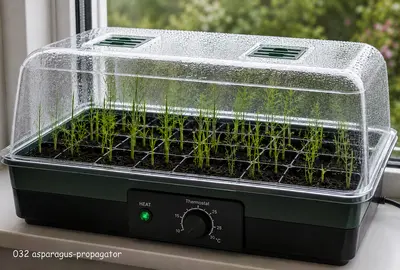
Set it to 13–16°C. Put one seed in each module or small pot of moist seed compost. Once the seedlings are up, keep them warm, bright and well watered, then harden them off ready to plant out in early June.
Without heat, sow a little later: from March, seed can go into an unheated propagator or cold frame, or straight outdoors in March or April. Germination will be slower and less even.
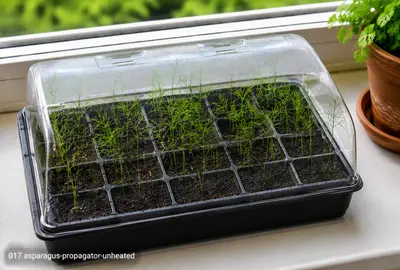
Standard unheated propagator — A lidded seed tray traps warmth and humidity around germinating seeds without electricity. Performance depends entirely on room temperature — best placed on a warm windowsill and used from March onwards. Replace the lid promptly after watering. Remove it completely the moment seedlings emerge to prevent damping off.
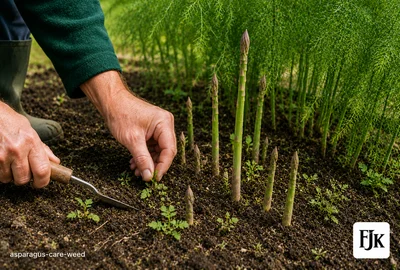
Keep the bed free of weeds. Asparagus roots run close to the surface, so pull weeds by hand (a hoe can slice into the roots), and never let weeds get a hold — big ones are hard to pull without damaging the crowns. If any plants carry orange-red berries they are female; pull up the seedlings they drop so they don't crowd the bed.
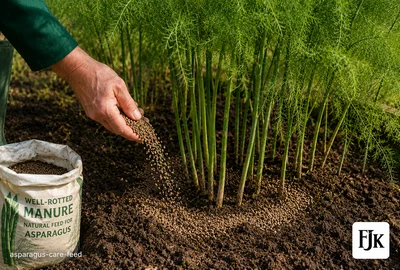
In most soils an established bed crops well without extra feed, as long as it is mulched every year. If growth looks weak, feed with a general fertiliser early in spring, ahead of the first spears. Mulch with well-rotted compost or manure in late winter.
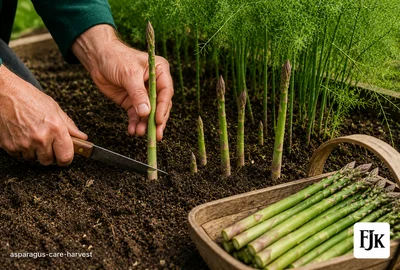
Leave newly planted crowns uncut for two full years. In year 3, cut from mid-April for about six weeks; from year 4, for about eight weeks. Take each spear before it passes about 18cm, slicing 2.5cm below the soil with a sharp knife, then let everything grow into fern.
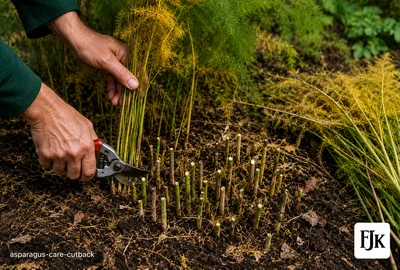
Asparagus fern grows tall over summer: put stakes along both sides of the row early and run twine between them (netting about 50cm up gives extra hold) so wind can't snap the stems and harm the crown. When the fern turns yellow in autumn, cut every stem down to ground level and clear the old stems away — this also gets rid of some overwintering asparagus beetles.
Watch for asparagus beetle from late spring. Adult beetles have black backs marked with six yellow spots and a reddish front; the grubs are greyish. Both feed on the fern. Pick them off by hand whenever you see them; a nematode biological control is also sold. A few beetles do little harm.
Full identification and treatment advice is in the Pests and Diseases sections.
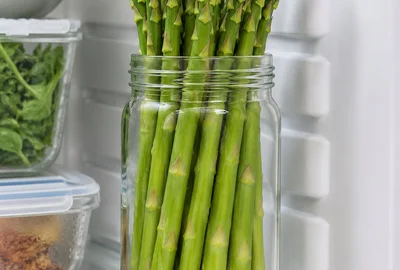
Asparagus tastes best eaten as soon after cutting as possible. Stand the spears upright in a jar with a little cold water in the fridge and use within 2–3 days. Wash only when ready to cook.
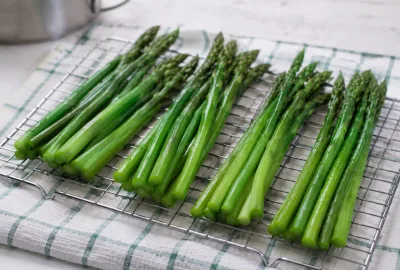
Blanch for 2–4 minutes depending on thickness (about 2 minutes for slim spears, 3 for middling ones, 4 for the fattest), cool in iced water and freeze in a single layer. Bag up once frozen. Best used within 6–8 months, in cooked dishes.
Planting one-year-old crowns rather than two-year-old crowns gives better long-term results. Older crowns are more likely to suffer transplant stress, take longer to establish, and often produce no better a first harvest. One-year crowns establish faster and outperform within 2–3 seasons.
Removing every trace of perennial weed from the asparagus bed before planting is more important than any other preparation. Couch grass and bindweed growing through an established crown are almost impossible to remove without lifting the entire bed. Take as long as needed to clear the ground thoroughly.
Stop harvesting spears by mid-June at the latest — even if some remain. Cutting after this point weakens the crown by preventing the fern from building carbohydrate reserves for next year. Restraint in June directly determines the quality and abundance of the following April's harvest.
A thick mulch of well-rotted compost or manure spread over the bed every late winter is the most useful single job. It keeps weeds down, holds in moisture and, in most soils, means no extra feeding is needed.