Outdoors, grow only UK-proven varieties against a south-facing wall — Boskoop Glory, Regent, and Solaris are the most reliable
Under glass, almost any variety excels — Muscat of Alexandria and Black Hamburg produce outstanding dessert grapes
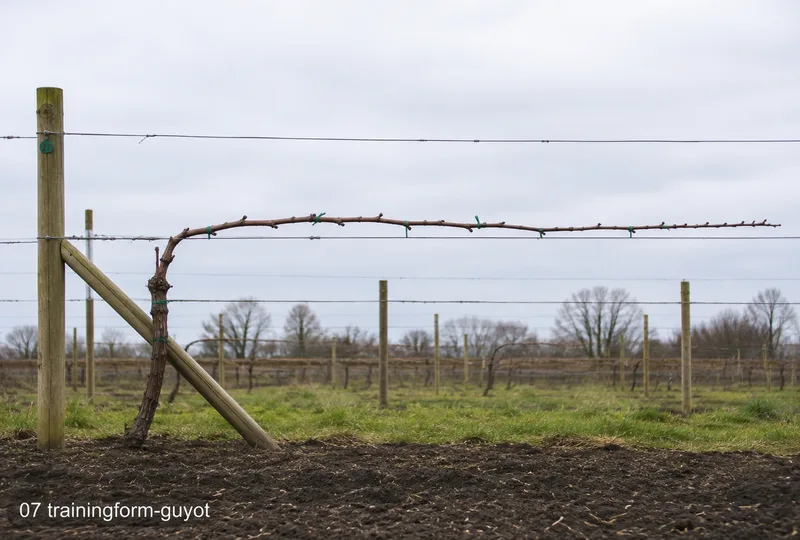
Plant in spring, train to a single rod (vertical stem) with horizontal side arms — the Guyot system works well outdoors
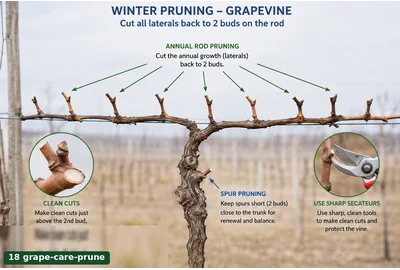
Outdoors: prune hard in December (not November — risk of bleeding); remove all growth to two buds from the main rod
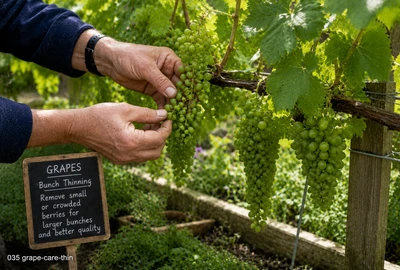
Thin grape bunches with long scissors in July, and thin individual berries within each bunch for larger, better-quality fruit
🌱 SowPlant bare-root Nov–Mar · Container Mar–May
🌾 HarvestSep–Oct (outdoor) · Aug–Sep (greenhouse)
☀ PositionFull sun, south-facing wall or greenhouse
📐 Spacing1.2–1.5m between vines
DifficultyChallenging
⚡ Quick facts
Sow
Plant bare-root Nov–Mar · Container Mar–May
Plant
Nov–Mar (bare-root) · Mar–May (container)
Harvest
Sep–Oct (outdoor) · Aug–Sep (greenhouse)
Position
South-facing wall in full sun (outdoor) · Unheated or heated greenhouse
Spacing
1.2–1.5m between vines · 2–3m for vigorous varieties
Height
Trained to 2–5m on wires or roof structure
Hardiness
Hardy (outdoor varieties) · Greenhouse varieties need frost-free winter
Lifespan
30–80 years
Difficulty
Challenging
01 About
Grapes are entirely achievable in the UK — the key is choosing the right variety for the right position. Outdoor dessert and wine grapes thrive against a south-facing wall in most of England and Wales. Greenhouse varieties produce spectacular, flavour-rich bunches that the outdoor climate cannot match. The vine itself is one of the most ornamental plants for wall and pergola training.
02 Rootstock Guide
The rootstock controls the ultimate size of the tree. Choose it first — before the variety. All sizes below are approximate and depend on soil and management.
Grapes rootstocks
Rootstock
Size
Height
Spacing
Suitable for
Support & notes
Own roots (standard outdoor)
Variable
Controlled by pruning
1.2–1.5m
All outdoor wall-trained vines
Wall wires essential — Most UK garden vines are grown on their own roots. Phylloxera is less of a problem in UK conditions than in continental vineyards.
Grafted on rootstock (some varieties)
More vigorous
As per training
As per training
Wine grape varieties · Commercial
Wire system essential — Some specialist varieties are available grafted onto phylloxera-resistant rootstocks. Own-rooted plants are more common and simpler for garden use.
Pollination groups
Group SF — Self-fertile — all common UK grape varieties are self-fertile and pollinated by wind. No hand pollination is needed.
Training forms
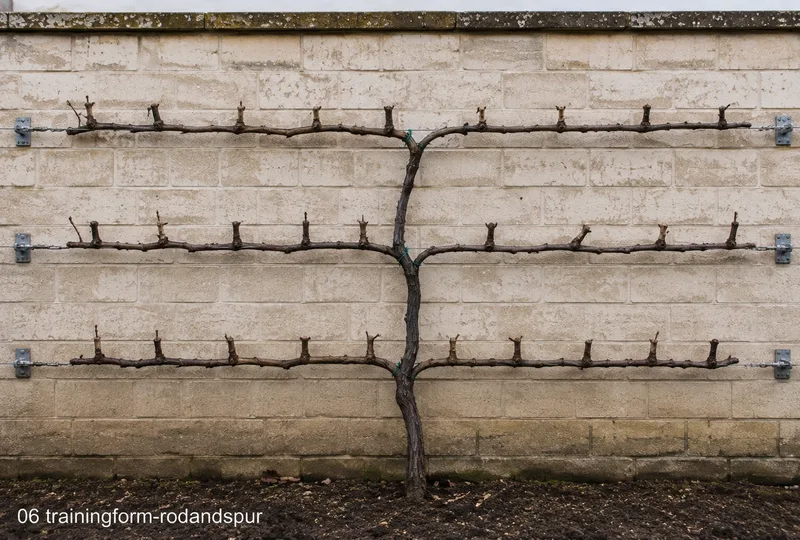
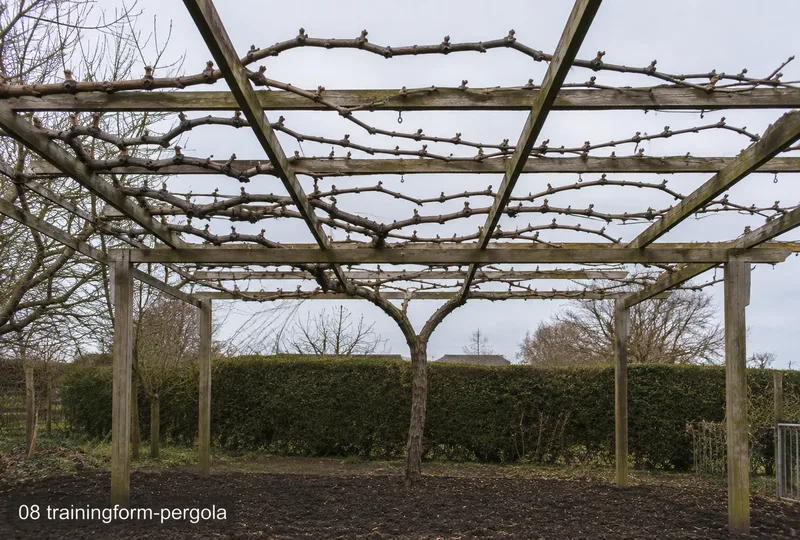
rod and spurguyotpergolaarch
03 Varieties
The number of varieties shown for each crop is based on UK consumption data (2025/26) — the more popular the crop, the more variety choices we include.
Outdoor Dessert
Boskoop Glory
Outdoor dessert · Blue-black
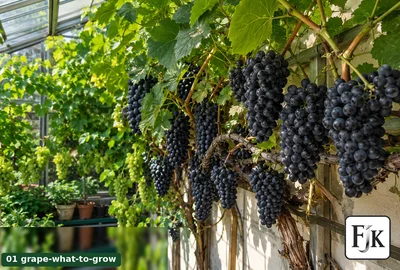
The most reliable outdoor dessert grape for UK gardens. Blue-black berries with rich, sweet flavour. Good disease resistance. Consistently productive on a south wall throughout England and Wales. The first choice for outdoor dessert grapes.
Harvest
Sep–Oct
Flavour
Rich, sweet, classic grape
Fruit size
Medium
Yield
High
Disease resistance
Good
🏅 AGM
✓ Self-fertile
🪴 Container
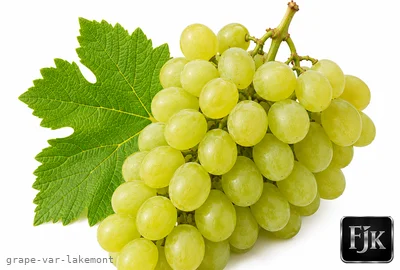
Lakemont
Outdoor dessert · White seedless
A seedless white grape producing good crops of sweet, mild berries. Particularly valued by families for its seedless quality. Good disease resistance. One of the most reliable white outdoor dessert grapes for UK conditions.
Harvest
Sep
Flavour
Sweet, mild, pleasant
Fruit size
Medium
Yield
High
Disease resistance
Good
🏅 AGM
✓ Self-fertile
🪴 Container
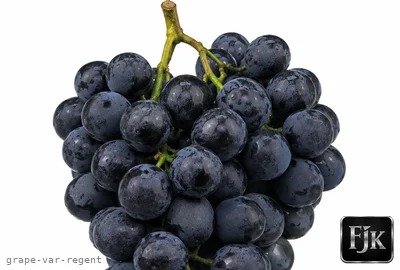
Regent
Outdoor dessert/wine · Dark red
Outstanding disease resistance — one of the most reliable outdoor grapes in wet UK summers. Large, dark red-blue berries with complex, wine-like flavour. Heavy crops. Excellent for both fresh eating and wine making. The best choice for difficult or wetter sites.
Harvest
Sep–Oct
Flavour
Rich, complex, wine-like
Fruit size
Medium
Yield
Very high
Disease resistance
Excellent
✓ Self-fertile
Outdoor Wine
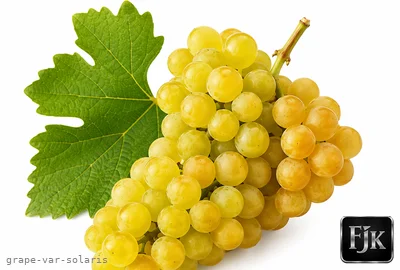
Solaris
Outdoor wine/dessert · White
The finest outdoor white wine grape for UK conditions. Very high sugar content even in cool summers. Good disease resistance. Also pleasant as a dessert grape. The primary recommendation for anyone wanting to make white wine from an outdoor UK vine.
Harvest
Sep
Flavour
High sugar, aromatic, complex
Fruit size
Small-medium
Yield
High
Disease resistance
Very good
✓ Self-fertile
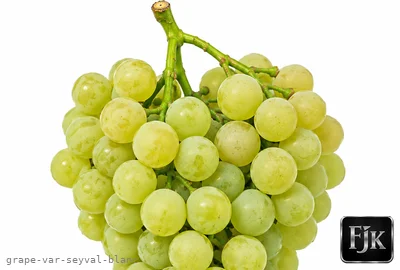
Seyval Blanc
Outdoor wine · White
The most widely grown outdoor white wine grape in English vineyards. Extremely productive, good disease resistance, and produces reliably acidic white wine with good character. Not a dessert grape but excellent for wine production. Very reliable across England and Wales.
Harvest
Sep–Oct
Flavour
Crisp, acidic, classic white wine
Fruit size
Small
Yield
Very high
Disease resistance
Very good
✓ Self-fertile
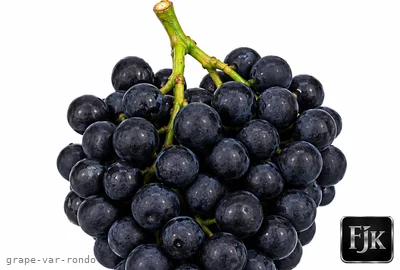
Rondo
Outdoor wine · Red/black
The most reliable outdoor red wine grape for UK conditions. Good disease resistance and consistently high colour extraction. Produces genuinely full-bodied red wine with good structure. The primary recommendation for red wine production in UK outdoor conditions.
Harvest
Sep
Flavour
Full-bodied red wine, good colour
Fruit size
Small
Yield
High
Disease resistance
Very good
✓ Self-fertile
Greenhouse Varieties
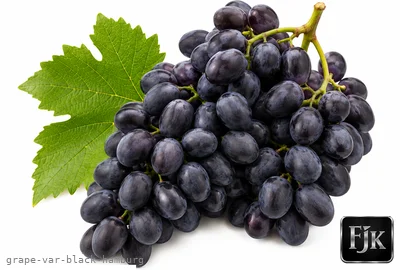
Black Hamburg
Greenhouse dessert · Blue-black
The classic English greenhouse grape, cultivated under glass in Britain since the 17th century. Large, juicy, blue-black berries with rich, sweet flavour. Very heavy crops in a warm greenhouse. The most widely grown greenhouse grape. Outstanding value in an unheated greenhouse.
Harvest
Aug–Sep
Flavour
Rich, sweet, outstanding — classic muscat
Fruit size
Large
Yield
Very high
Disease resistance
Good
✓ Self-fertile
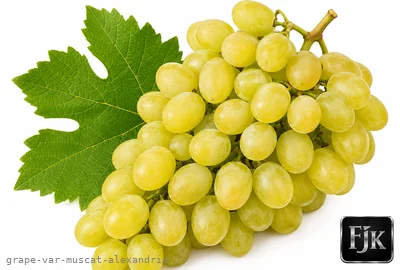
Muscat of Alexandria
Greenhouse dessert · White
Arguably the finest-flavoured dessert grape that can be grown in the UK — intensely aromatic, musky, and complex. Needs a heated greenhouse (minimum 10°C through winter) for best results. In a warm enough environment, it produces the most spectacular and flavourful grapes achievable in a British garden.
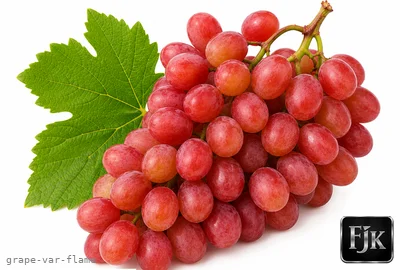
A seedless red grape that produces well under glass. Attractive red-flushed berries with good sweet flavour. Popular for greenhouse growing where the seedless quality is appreciated. Good crops in a warm greenhouse or polytunnel.
Harvest
Aug
Flavour
Sweet, mild, pleasant
Fruit size
Medium
Yield
High
Disease resistance
Good
✓ Self-fertile
04 Where to Source
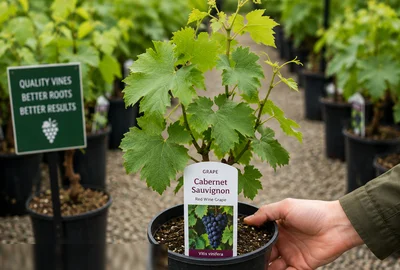
Grape vines are available as container-grown or bare-root (Nov–Mar) stock from specialist fruit and vine nurseries. Outdoor varieties suited to UK conditions — Boskoop Glory, Regent, Solaris — are the ones to look for if planting against a wall; greenhouse varieties such as Black Hamburg or Muscat of Alexandria are sold separately and should only be planted under glass. Own-root vines are standard for garden use.
05 Planting Options
🌿 Outdoor — South-facing Wall
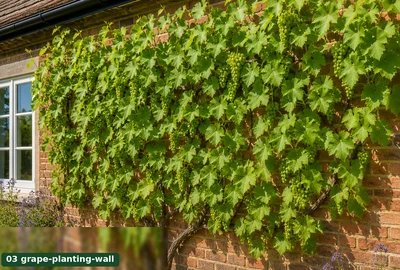
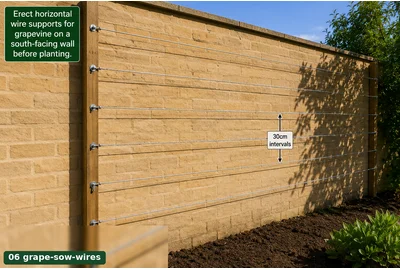
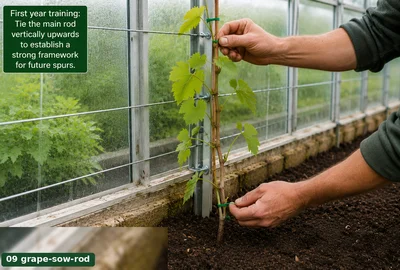
A south-facing wall gives outdoor grapes the reflected warmth they need to ripen reliably in the UK climate. Install horizontal wires at 30cm intervals using vine eyes, and plant bare-root vines 20-30cm from the wall base between November and March. In the first year, train a single vertical stem (the rod) up the wall and remove all sideshoots to concentrate the plant's energy into establishing this framework; from year two, allow one sideshoot every 30-45cm along the rod, stopped at two leaves beyond each flower truss. Annual winter pruning — cutting all lateral growth back to two buds from the main rod each December or January — keeps the vine productive and prevents it becoming an unmanageable tangle.
Fix wires at 30cm intervals
Install horizontal wires from 30cm to 2m above the wall. Use vine eyes screwed into the wall and 10–12 gauge galvanised wire. The wires must be taut and strong — a productive vine in full leaf carries considerable weight.
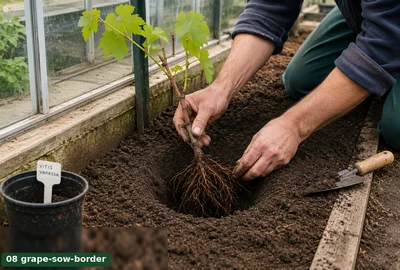
Plant bare-root Nov–Mar
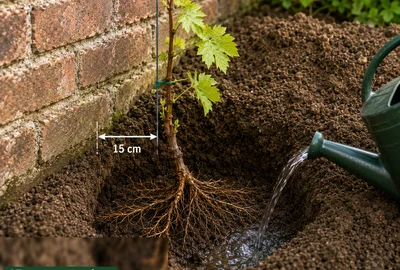
Plant at the base of the wall, 20–30cm from the wall surface. The planting hole needs no special enrichment — vines fruit best in lean soil. Plant at nursery depth, firm well, water in, and mulch with gravel.
Establish a single rod in year one
In year one, train a single vertical stem (the rod) up the wall, tying to the wires. Remove all sideshoots. This single-stem approach in year one establishes the permanent framework.
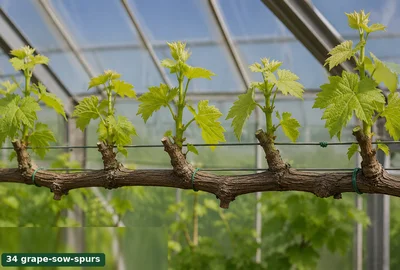
Develop spurs from year two
In year two, allow one sideshoot every 30–45cm along the rod. Each sideshoot is stopped at 2 leaves beyond the first developing bunch. In winter, cut each sideshoot back to 2 buds — these become the permanent fruiting spurs.
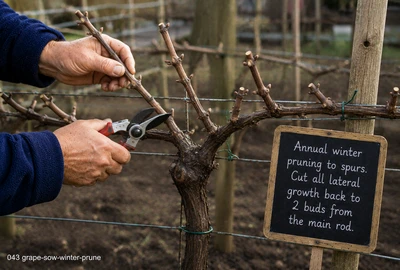
Annual winter pruning to spurs
Each winter (December–January, before sap rises), cut all lateral growth back to 2 buds from the main rod. This annual spur pruning is the most important maintenance task for the vine — it prevents the plant from outgrowing its space and channels energy into fruit production.
🏠 In a Greenhouse or Polytunnel
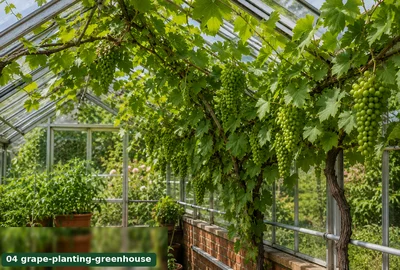
Under glass, grapes ripen more reliably and with better flavour than almost any outdoor UK site can offer. Plant in a prepared border inside the structure, or train a vine in from an outside root run through a hole in the base wall — a technique that keeps the vigorous root system away from the warmest growing area while still cropping under cover. Train the vine up and along wires run along the roof structure at 30cm intervals. Aggressive ventilation on warm days is essential: botrytis (grey mould) thrives in the still, humid conditions of a poorly ventilated greenhouse and can ruin a ripening crop very quickly.
Plant in the greenhouse border
Plant in a prepared border inside the greenhouse, or train a vine through a hole in the base of the greenhouse wall from a plant outside — this traditional method gives access to the larger soil volume outside while benefiting from greenhouse warmth.
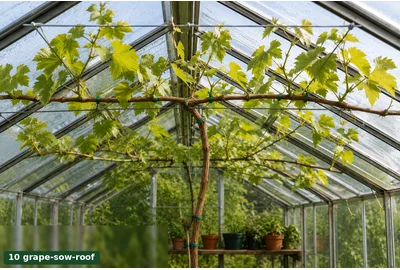
Train up and along the roof
Run wires along the roof structure at 30cm intervals and train the vine up the wall and along the roof. A single vine can eventually cover the entire roof of a standard 3x6m greenhouse.
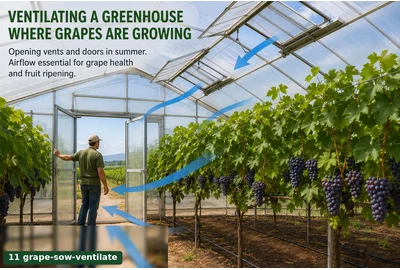
Ventilate aggressively in summer
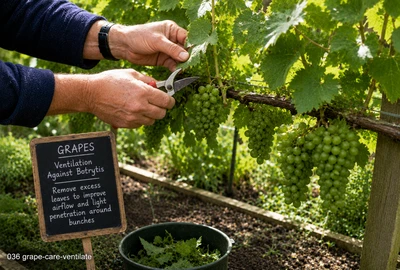
Open all vents and doors on warm days. Botrytis (grey mould) in confined greenhouse conditions is the biggest threat to grape bunches — maximum ventilation is the primary prevention.
06 Companion Planting
✅ Grow nearby
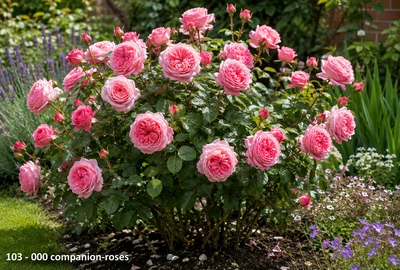
🌹 Roses
A traditional companion — shares similar disease susceptibility, so acts as an early-warning indicator.
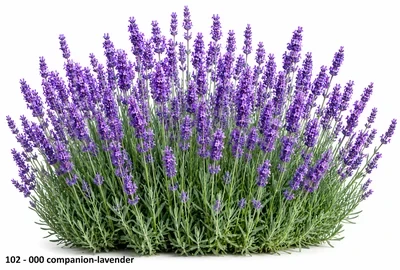
💜 Lavender
Attracts pollinators and adds a decorative, low-maintenance border nearby.
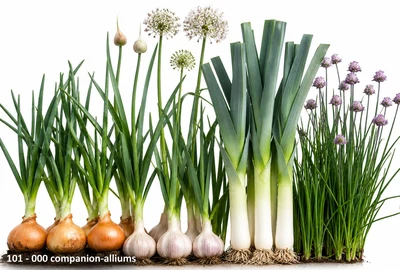
🧄 Alliums
Onion-family plants grown nearby are thought to help deter pests with their strong scent.
07 Sowing — How To
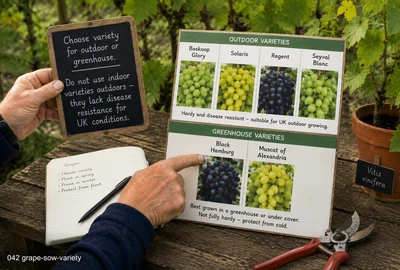
Choose variety for outdoor or greenhouse
Outdoor: Boskoop Glory, Solaris, Regent, Seyval Blanc. Greenhouse: Black Hamburg, Muscat of Alexandria. Do not use indoor varieties outdoors — they lack disease resistance for UK conditions.
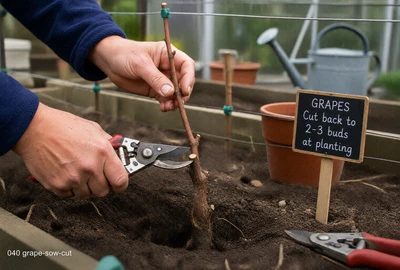
Cut back hard at planting
Cut the vine back to 2–3 buds after planting. This hard prune establishes strong root growth in year one without the drain of top growth. A vine cut back hard at planting establishes more strongly than one left intact.
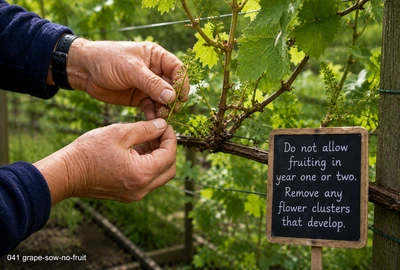
Do not allow fruiting in year one or two
Remove any flower clusters that develop in the first 2 years. The vine should spend its first 2 years building its root system and rod framework. Fruiting in year one weakens the plant and delays establishment.
Regional sowing timing
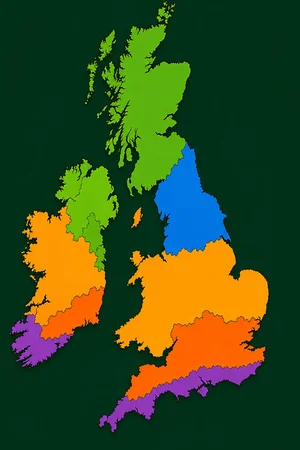
Region
Sow / plant
Harvest
Notes
Scotland & Far North
Nov–Mar
Sep–Oct
Northern England
Nov–Mar
Sep–Oct
Midlands & Wales
Nov–Mar
Sep–Oct
Ireland & Isle of Man
Nov–Mar
Sep–Oct
South & SE England
Nov–Mar
Sep–Oct
South Coast & SW
Nov–Mar
Sep–Oct
08 Using a Propagator
Vines propagate readily from hardwood cuttings in winter — one of the easiest fruit plants to propagate at home. A single cutting produces a rooted vine ready to plant within one growing season.
Heated propagator
Not Required — Vines root readily without heat from hardwood cuttings in winter.
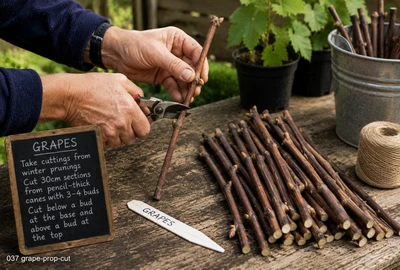
Take cuttings from winter prunings
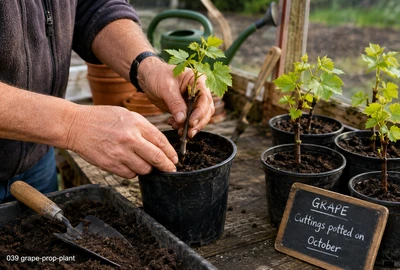
The annual winter pruning provides abundant cutting material. Cut 30cm sections from pencil-thick canes with 3–4 buds. Make the base cut just below a bud and the top cut just above a bud.
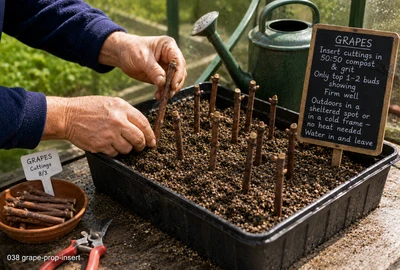
Insert in compost and grit
Push cuttings into 50:50 compost and grit with only the top 2 buds showing. Firm well. Outdoors in a sheltered spot or in a cold frame — no heat needed. Water in and leave.
Plant rooted cuttings in autumn
By October, successful cuttings have rooted and made vigorous growth. Pot on and overwinter in a cold frame, or plant directly into their permanent positions.
09 Soil Requirements
pH
6.0–7.5
Best
Sandy loam, Chalky
Tolerates
Loam
Avoid
Waterlogged, Acid, Rich heavy clay
💡 Free-draining, lean soil. Chalky, alkaline soils give excellent results. Too-rich soil means excess leafy growth.
10 Ongoing Care
✂️ Winter Pruning — The Annual Spur
Winter pruning is the most important annual task for vines and must be completed by Christmas or early January — before the sap rises and the vine bleeds from cuts. Cut all lateral growth back to 2 buds from the permanent rod. These 2 buds produce next year's fruiting laterals. The rod itself is extended by one section of growth each year until it reaches the top of the wall or structure. For greenhouse vines on the Guyot system, the management differs — in winter, cut the whole vine back to 2–3 strong young canes, which are then trained in as the new fruiting arms for the following season.
🍇 Bunch Thinning
In June and July, thin each bunch using fine-pointed scissors. Remove the smallest and most congested berries within each bunch to create space between individual grapes. This allows the remaining berries to develop to full size, improves air circulation within the bunch (dramatically reducing botrytis), and concentrates flavour. Also remove complete bunches if the vine has set more than it can ripen well — a young vine should carry no more than 3–4 bunches per rod in its first fruiting years.
🌿 Ventilation Against Botrytis
Botrytis (grey mould) is the greatest threat to grape bunches, particularly under glass. It spreads rapidly in humid, still air within dense leaf canopies. Prevention is primarily through: maximum ventilation on all warm days; leaf removal around developing bunches in August to allow air circulation and sun penetration; bunch thinning to prevent congestion within each cluster; and choosing disease-resistant outdoor varieties. Once botrytis appears in a bunch, it spreads to adjacent berries within days — remove and destroy affected bunches immediately.
🌿 Summer Lateral Management
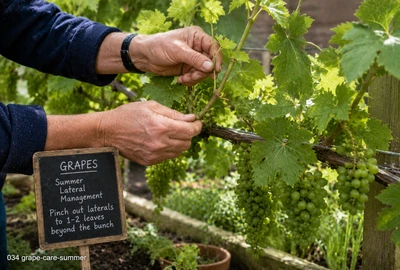
During summer, pinch out all sideshoots growing from the fruiting laterals to 1 leaf. Stop each fruiting lateral at 2 leaves beyond the last bunch. Remove any tendrils attaching to undesirable positions. Tie in growth regularly to the wires to keep the canopy open. Remove leaves shading the bunches in August — direct sun on the developing berries significantly improves sugar content and flavour. These summer tasks are time-consuming but critical for vine health and fruit quality.
11 Watch Out For
Warning
Powdery mildew coats leaves and berries with white powder — improve airflow, water at roots, and use sulphur spray if severe. Botrytis (grey mould) spreads rapidly in humid conditions — ventilate aggressively, thin bunches, remove leaves around fruit in August. Wasps attack ripening bunches — net if losses are severe. Vine weevil grubs can attack roots of container plants. Phylloxera (rare in UK garden conditions) attacks roots — use grafted plants on resistant rootstock if suspected.
🐛 Insects & pests
🕷 Spider Mite — Fine, silky webbing on the underside of leaves and between growing tips — the definitive identification sign
🤍 Mealybug — White, fluffy or mealy patches in leaf axils, stem joints, and under leaves — the insects themselves
🟤 Scale Insect — Small brown or grey bumps on stems, branches, and the underside of leaves — the scale covers themselves
🌀 Tortrix Moth — Leaves rolled or tied together with fine silk threads — the caterpillar shelter; unfold carefully to reveal the pest
🍄 Diseases to watch
🩶 Botrytis (Grey Mould) — Botrytis cinerea (grey mould) is the most ubiquitous fungal pathogen in temperate gardens — present in virtually every garden soil and on plant debris. It becomes a disease only when conditions favour it: cool, humid, poorly ventilated environments with damaged or senescent plant tissue. In a greenhouse in autumn it can destroy an entire tomato or grape crop.
⬜ Powdery Mildew — Powdery mildew is caused by a range of related fungi, each specific to its host plant — courgette mildew cannot infect peas, and vice versa. The characteristic white powdery coating on leaf surfaces appears in warm, dry conditions (unlike downy mildew which prefers cool and wet). Rarely kills plants but severely reduces yield and plant vigour.
🔵 Downy Mildew — Downy mildew is caused by oomycetes (water moulds) and is completely unrelated to powdery mildew despite the similar name. It thrives in cool, wet, humid conditions and is most damaging in spring and autumn. Each host plant has its own specific downy mildew species. Lettuce downy mildew can destroy an entire bed within days in the right conditions.
Full identification and treatment advice is in the Pests and Diseases sections.
12 Storage & Preserving
🍇 Fresh Eating
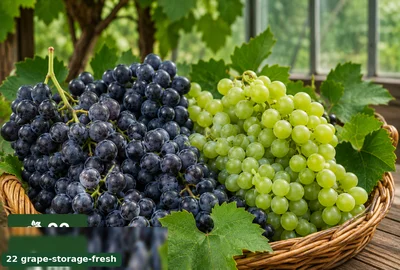
Homegrown grapes are far superior to shop-bought — fully ripened on the vine, intensely sweet, and aromatic. Harvest by cutting the whole bunch with scissors leaving a short stalk. Store refrigerated for up to 2 weeks. Greenhouse varieties (Black Hamburg, Muscat) have extraordinary muscat-like aromatic flavour when ripe — a completely different experience from commercial grapes.
🫙 Juice, Wine & Jelly
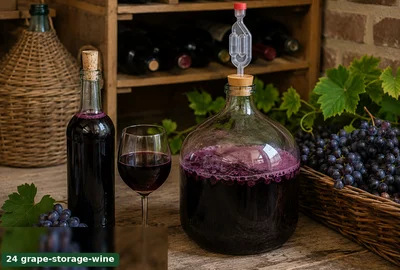
Outdoor wine grapes (Solaris, Seyval Blanc, Regent) produce genuine, drinkable wine in good UK years. Home winemaking requires a demijohn, airlock, yeast, and basic kit. Grape juice pressed from fresh bunches is outstanding — drink immediately or freeze in portions. Grape jelly from outdoor varieties makes a beautiful, clear preserve.
🟤 Dried Grapes (Raisins)
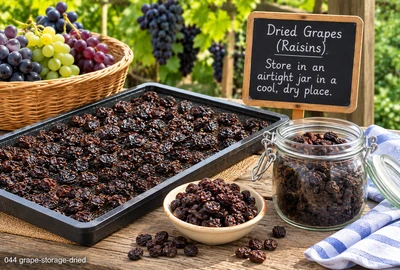
Small-berried outdoor varieties can be dried into raisins in a food dehydrator (65°C for 24–36 hours). The result is incomparably better than commercial raisins. A surplus harvest of outdoor grapes can produce enough to supply home baking needs through the year.
13 Expert Tips
💡 Outdoor grapes from Devon to Yorkshire
Modern disease-resistant outdoor varieties (Solaris, Regent, Boskoop Glory, Seyval Blanc) produce reliably good crops in most of England and Wales when trained on a south-facing wall. The south-east produces the best results but grapes on a south wall succeed as far north as Yorkshire in most years. Choose variety carefully — this is the key decision.
💡 Black Hamburg in an unheated greenhouse
Black Hamburg is a Victorian-era variety that produces magnificent large bunches of sweet, blue-black berries in an unheated greenhouse. It is self-fertile, vigorous, and completely reliable given the greenhouse environment. A single vine trained over a greenhouse roof provides enough grapes in a good year to eat fresh and make juice. It is the most rewarding greenhouse fruit plant available.
💡 The Guyot system for wine production
For outdoor wine grapes, the double Guyot system — used commercially across southern England — produces higher yields and better quality than the rod-and-spur method. Each winter, retain 2 strong young canes and train them horizontally in opposite directions. These bear this year's fruiting laterals. A central young shoot is trained vertically as next year's replacement cane. This renewal system keeps the vine perpetually young and productive.