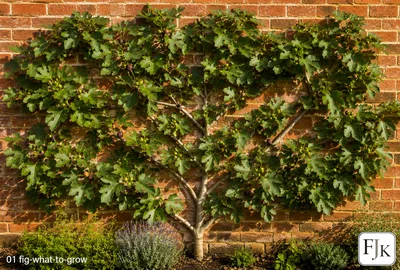
Against a south-facing wall with restricted roots, figs crop consistently and reliably in most UK gardens. The flavour of a sun-warm fig split from the branch in August — rich, honey-sweet, with jammy red flesh — cannot be matched by anything available in a shop. Two requirements are non-negotiable: full sun on a warm wall, and root restriction.
02 Rootstock Guide
The rootstock controls the ultimate size of the tree. Choose it first — before the variety. All sizes below are approximate and depend on soil and management.
Figs rootstocks
Rootstock
Size
Height
Spacing
Suitable for
Support & notes
Own roots (standard)
Vigorous without restriction
3–5m unrestricted
Root pit 60cm cube recommended
All wall-trained and container figs
Wall wires essential — Root restriction is mandatory for UK fruiting. Without it, the tree produces lush growth but no fruit.
Pollination groups
Group SF — Self-fertile — all common UK fig varieties set fruit without a pollinator. Figs in Mediterranean regions require a specific wasp (Blastophaga psenes) for pollination but UK-grown varieties are parthenocarpic — they develop fruit without pollination.
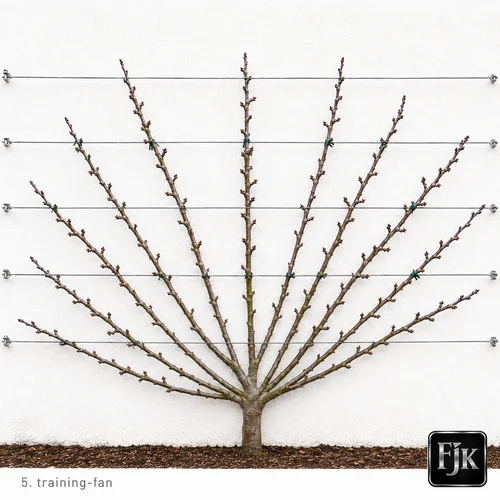
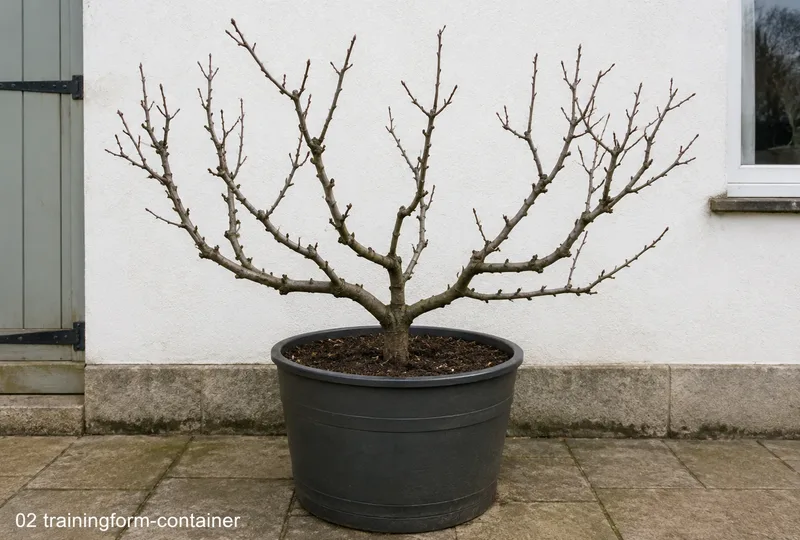
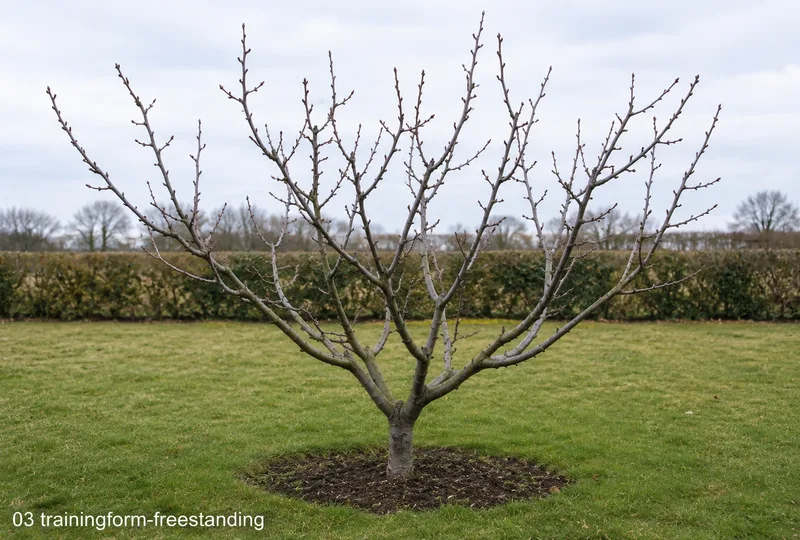
Training forms
fancontainerfree-standing
03 Varieties
The number of varieties shown for each crop is based on UK consumption data (2025/26) — the more popular the crop, the more variety choices we include.
Brown-skinned (Most Reliable)
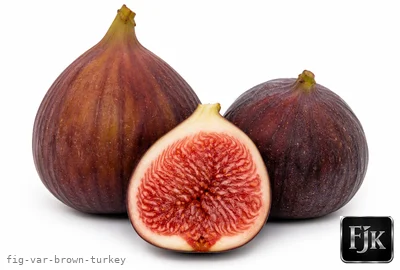
Brown Turkey
Brown · Main crop
The most widely grown and most reliable outdoor fig for the UK. Brown-purple skin with rich red flesh. Very heavy, consistent crops. Excellent cold hardiness. Crops well in most UK positions with adequate wall warmth and root restriction. The default choice. AGM.
Harvest
Aug–Sep
Flavour
Rich, sweet, classic fig
Fruit size
Large
Yield
Very high
Disease resistance
Excellent
🏅 AGM
✓ Self-fertile
🪴 Container
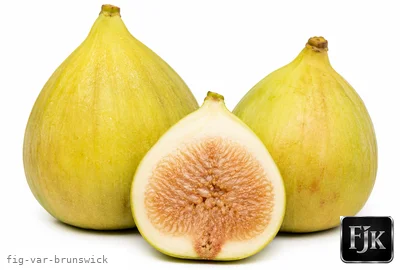
Brunswick
Brown-green · Main crop
Very hardy variety producing very large, green-brown fruit with excellent flavour. One of the most cold-tolerant figs — performs well in northern gardens that would be marginal for Brown Turkey. A strong second choice particularly for northern gardeners.
Harvest
Aug–Sep
Flavour
Very good, sweet, rich
Fruit size
Very large
Yield
High
Disease resistance
Very good
✓ Self-fertile
🪴 Container
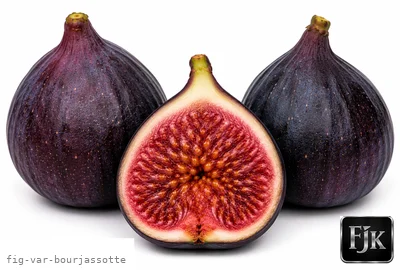
Bourjassotte Grise
Grey-brown · Main crop
Considered by many to be the finest-flavoured fig that can be grown in the UK. Grey-brown skin with exceptionally rich, honey-sweet flesh. Less prolific than Brown Turkey but the quality is noticeably superior. A connoisseur choice for those who prioritise flavour.
Harvest
Aug–Sep
Flavour
Outstanding — honey-rich, complex
Fruit size
Medium-large
Yield
High
Disease resistance
Good
✓ Self-fertile
🪴 Container
White & Green-skinned
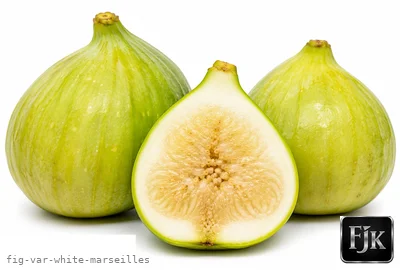
White Marseilles
Pale green · Early
Pale green skin with white-pink flesh and very sweet, mild, honey-like flavour — quite different from the richer, more complex flavour of dark-skinned varieties. Ripens slightly earlier than Brown Turkey. Excellent against a warm wall or in a container.
Harvest
Aug
Flavour
Very sweet, honey, mild, delicate
Fruit size
Large
Yield
High
Disease resistance
Good
✓ Self-fertile
🪴 Container
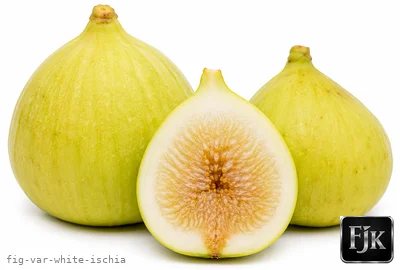
White Ischia
Green · Early
A pale green, early-ripening variety with sweet, mild flavour. Compact growth habit. Good for containers. Ripens early — useful for extending the fig season in cooler UK gardens where late varieties may not fully ripen before autumn.
Harvest
Aug
Flavour
Sweet, light, pleasant
Fruit size
Medium
Yield
High
Disease resistance
Good
✓ Self-fertile
🪴 Container
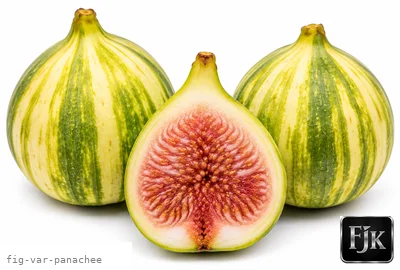
Panachée (Tiger Fig)
Striped · Mid
A striking ornamental variety with yellow and green striped skin and pale pink flesh. Unusual, attractive appearance. Flavour is mild and sweet rather than rich. Grown as much for its ornamental value as its fruit. A conversation piece in any garden.
Harvest
Aug–Sep
Flavour
Sweet, mild, distinctive
Fruit size
Medium
Yield
Moderate
Disease resistance
Moderate
✓ Self-fertile
🪴 Container
Dark & Specialist
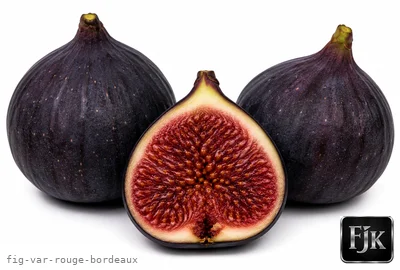
Rouge de Bordeaux
Dark purple · Main crop
Small, very dark purple-black fruit with intensely sweet, richly flavoured flesh. When fully ripe the flavour is arguably the most complex of any UK-grown fig. Needs maximum wall warmth to develop fully. A specialist choice for the most sheltered, warmest UK gardens.
Harvest
Aug–Sep
Flavour
Extraordinary — intensely sweet, rich, complex
Fruit size
Small-medium
Yield
High
Disease resistance
Moderate
✓ Self-fertile
🪴 Container
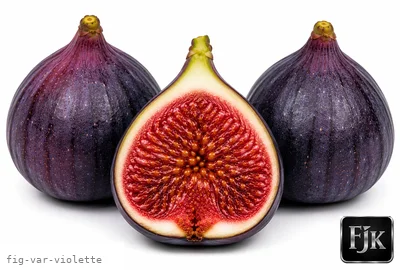
Violette de Bordeaux
Dark purple · Compact
Similar to Rouge de Bordeaux but slightly more productive and compact — well-suited to container growing. Very dark skin with rich red flesh. Outstanding flavour when fully ripe. One of the best choices for a large container on a sheltered south-facing patio.
Harvest
Aug–Sep
Flavour
Rich, sweet, excellent
Fruit size
Small-medium
Yield
High
Disease resistance
Good
✓ Self-fertile
🪴 Container
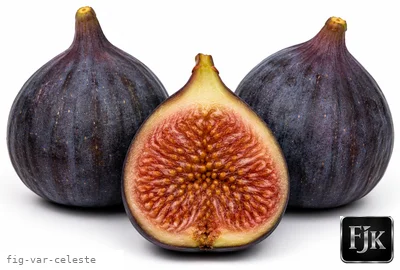
Celeste
Purple-brown · Hardy
An American-bred variety with excellent cold hardiness — one of the most reliable choices for gardens in northern England and Scotland where other varieties may struggle. Sweet, honey-like flavour. Good productivity. The best choice for cold or exposed gardens.
Harvest
Aug–Sep
Flavour
Very sweet, honey-like, mild
Fruit size
Medium
Yield
High
Disease resistance
Excellent
✓ Self-fertile
🪴 Container
04 Where to Source
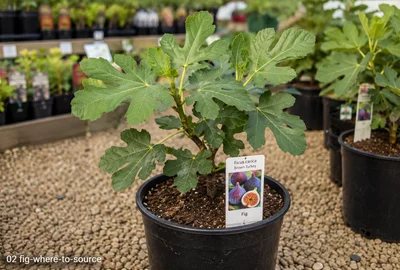
Figs are sold as container-grown plants year-round, since they establish easily from a pot at almost any time of year. Garden centres carry popular varieties like Brown Turkey, while specialist fruit nurseries offer a wider range including varieties better suited to cooler UK summers.
🏪 Garden Centres & Nurseries
Look for a sturdy, well-branched plant in a pot rather than a bare stick — figs can be slow to bush out from a single unbranched cutting.
Timing tip: Order seeds in January and February. Popular varieties sell out quickly. Garden centres and markets are a reliable backup from April onwards.
05 Planting Options
🌿 Fan-trained Against a South Wall (Essential Method)
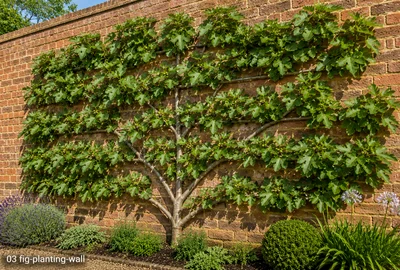
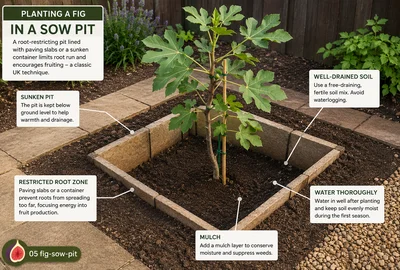
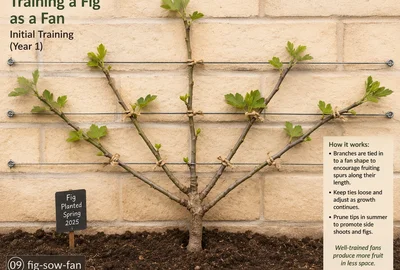
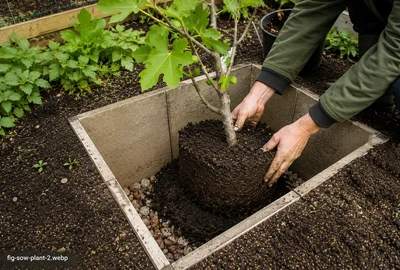
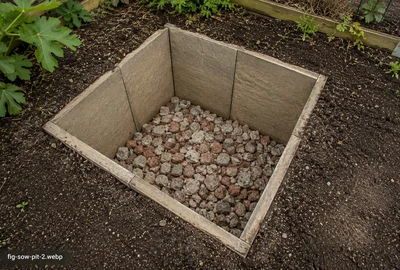
Restricting a fig's roots is essential in the UK climate — an unrestricted fig puts all its energy into leafy growth at the expense of fruit. Before planting, dig a 60cm cubed pit and line the sides with paving slabs or concrete blocks to physically contain the root run, then fix horizontal wires at 30cm intervals up the wall, since a mature fan will eventually spread 3-4m wide. Plant container-grown figs in April-June when the soil has warmed, and develop the fan from 4-6 strong shoots tied in at 15-20 degree intervals. The most important seasonal task comes in November: identify and protect the pea-sized embryo fruits at the tips of the current year's shoots, since these are what will ripen the following summer.
Construct the root restriction pit first
Before planting, dig a pit 60cm x 60cm x 60cm. Line the sides with paving slabs, concrete blocks, or brick — the bottom can remain open for drainage but should be filled with 25cm of rubble to restrict deep roots. Fill with a free-draining compost and topsoil mix. This pit is the fundamental requirement for fruiting.
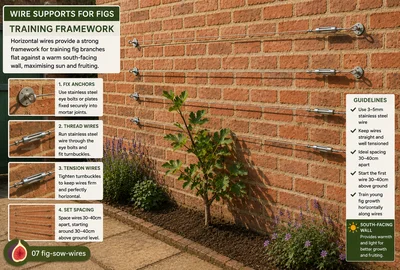
Fix wires at 30cm intervals
Install horizontal wires from 30cm to 2m above the wall. The fan will eventually spread 3–4m wide. Plant 20–30cm from the wall base in the constructed pit.
Plant in late spring (Apr–Jun)
Container-grown figs should be planted in April to June when the soil is warm. Bare-root figs can be planted in November to March but container-grown plants in warm soil establish significantly better.
Develop the fan framework
Select 4–6 strong shoots to form the main ribs of the fan and tie to canes at 15–20 degree intervals. Remove all other growth. Over subsequent years, extend the ribs and fill in sub-laterals to cover the wall space.
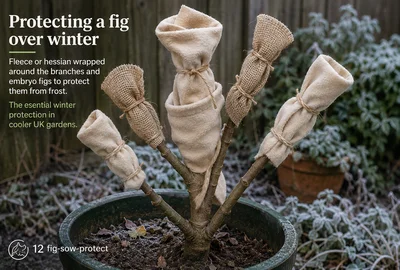
Protect embryo fruits in November
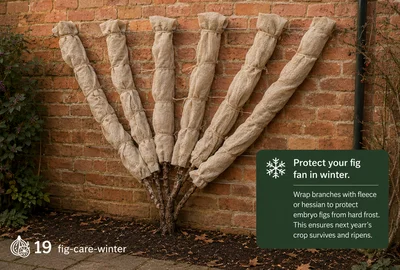
By November, look for pea-sized embryo fruits at the tips of this year's shoots — these are next summer's crop. Protect them through winter by loosely wrapping the fan with horticultural fleece or tucking straw between the branches. Uncover in March.
🪴 In a Large Container
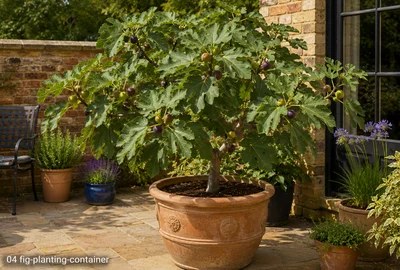
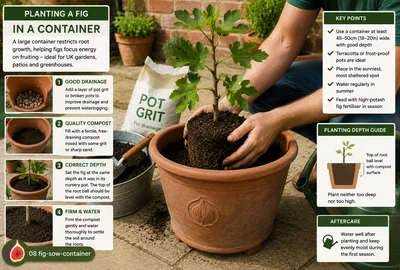
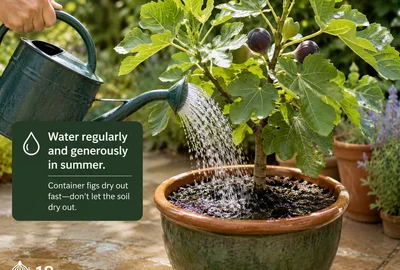
A large container gives a fig the same root restriction that the in-ground pit method achieves — the pot itself does the job, which makes this a simpler option where wall space or a dug pit isn't practical. Use a minimum 60-litre pot, larger where possible for stability, and position it against a south-facing wall in the warmest, most sheltered spot available. Water and feed consistently through summer — container figs need daily checking in hot weather — with a weekly balanced liquid feed to support the developing crop through to ripening.
Use a 60L+ container
The container itself provides root restriction. Use a minimum 60-litre pot — larger is better for stability and moisture retention. Terracotta or heavy plastic are ideal. Ensure multiple drainage holes.
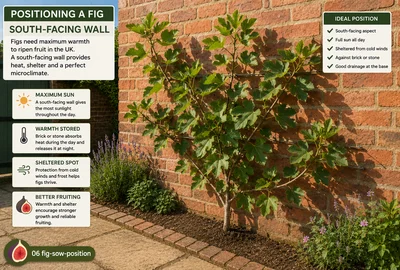
Position in the warmest spot
Place the container against a south-facing wall in the sunniest, most sheltered position available. Container figs can be moved under cover in winter (greenhouse, garage) to protect embryo fruits without the fleece wrapping needed for wall-trained trees.
Water and feed consistently
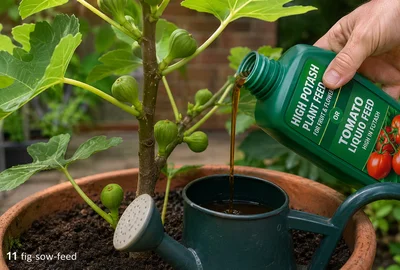
Container figs need regular watering in summer — daily checking in hot weather. Feed weekly with a balanced then high-potash fertiliser from June to August. Repot into fresh compost every 2–3 years without increasing container size.
06 Companion Planting
✅ Grow nearby
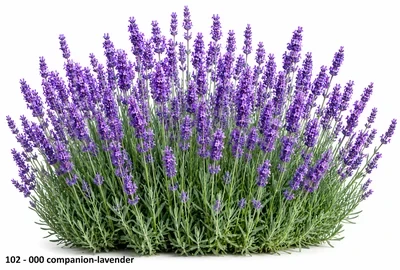
💜 Lavender
Attracts pollinators and adds a decorative, low-maintenance border nearby.
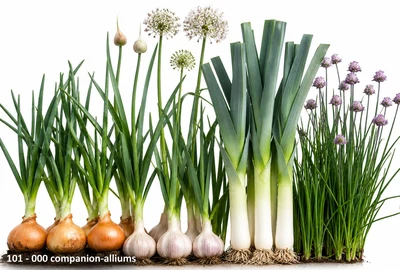
🧄 Alliums
Onion-family plants grown nearby are thought to help deter pests with their strong scent.
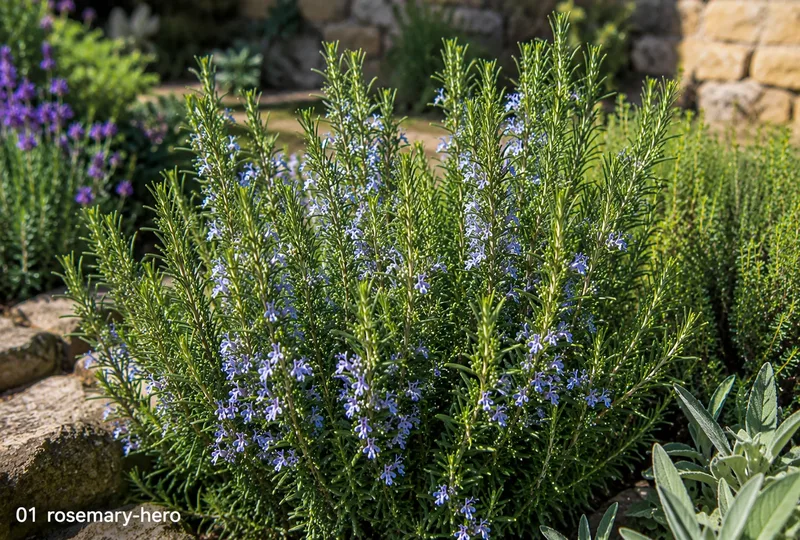
A hardy aromatic companion that shares similar sun and drainage requirements.
07 Sowing — How To
Plant in warm soil, spring preferred
Container-grown figs establish best when planted in spring (April–June) into warm soil. Construct the root restriction pit before planting. Bare-root figs are less reliable — buy container-grown stock.
Construct root restriction
The root pit or large container must be in place before or at planting. This is not an optional step — it is the difference between a fig that fruits and one that does not.
Regional sowing timing
Region
Sow / plant
Harvest
Notes
Scotland & Far North
Apr–Jun
Aug–Sep
Northern England
Apr–Jun
Aug–Sep
Midlands & Wales
Apr–Jun
Aug–Sep
Ireland & Isle of Man
Apr–Jun
Aug–Sep
South & SE England
Apr–Jun
Aug–Sep
South Coast & SW
Apr–Jun
Aug–Sep
08 Using a Propagator
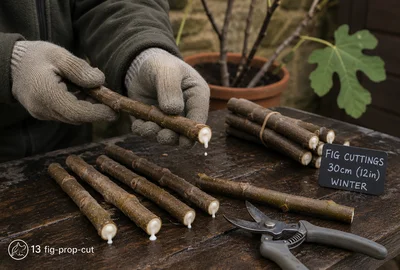
Figs propagate readily from cuttings — they are among the easiest fruit trees to propagate at home. Hardwood cuttings in winter or semi-ripe cuttings in summer both work well.
Heated propagator
Semi-ripe Cuttings (Summer) — In July–August, take 10–15cm semi-ripe cuttings from vigorous new growth. Remove lower leaves and insert in free-draining compost in a propagator or under a polythene bag. Root in 4–6 weeks at 20–25°C. Pot on when rooted and grow under protection through first winter.
Take cuttings from healthy growth
Choose vigorous shoots showing no pest or disease damage. Cuttings from well-established, fruiting plants carry the most reliable growing potential.
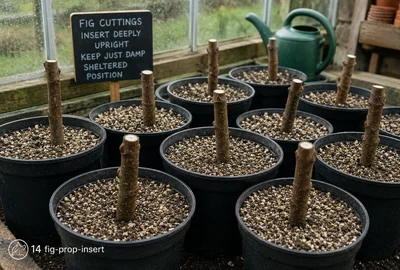
Insert in free-draining compost
Fig cuttings rot if compost is too wet. Use a 50:50 mix of compost and perlite or grit. Insert to half their depth. The milky sap (latex) at the cut end does not need to be removed.
Protect through first winter
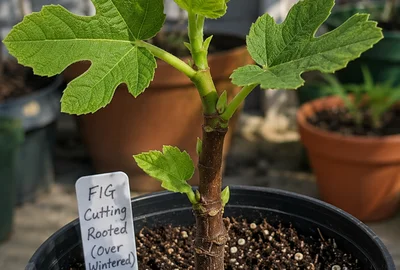
Rooted cuttings are not hardy in their first winter. Keep in a frost-free greenhouse, cold frame, or sheltered spot until spring. Plant into the permanent position the following April–June.
09 Soil Requirements
pH
6.0–7.5
Best
Sandy loam, Loam
Tolerates
Chalky, Stony
Avoid
Rich, Waterlogged, Heavy manured
💡 Poor to moderate fertility with restricted root run. Rich soil produces growth not fruit.
10 Ongoing Care
🟣 Understanding the UK Fruiting Cycle
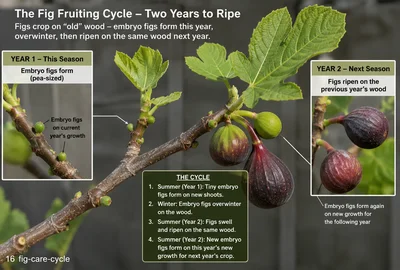
UK figs have a unique annual fruiting cycle that differs from Mediterranean growing. In late summer (August–September), tiny pea-sized embryo fruits develop at the tips of the current season's shoots. These overwinter on the tree and develop into the following summer's crop, ripening in August and September. Large, marble-sized fruits that develop in midsummer on the same shoots rarely ripen in the UK climate — these should be removed in October to direct energy into the surviving embryo fruits. Understanding this cycle is the key to managing UK figs successfully.
❄️ Winter Protection of Embryo Fruits
In October to November, identify the pea-sized embryo fruits at shoot tips — these are next summer's crop. They survive mild UK winters without protection on a warm wall but are damaged by temperatures below about -5°C. In cold districts, wrap the fan loosely with 2–3 layers of horticultural fleece from November to March. Do not wrap tightly — airflow prevents fungal disease. Container figs can be moved into an unheated garage or greenhouse for the winter, which provides complete frost protection with minimal effort. Remove all protection in March as growth begins.
✂️ May Pruning
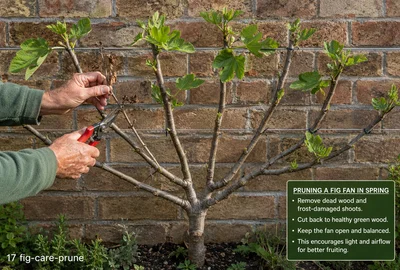
Prune figs in May — not earlier, when cut tips can be damaged by late frost, and not in winter, when cuts bleed sap copiously. In May, cut out any dead or frost-damaged wood. On wall-trained fans, pinch out the growing tips of all new sideshoots when they have produced 5–6 leaves — this encourages formation of the embryo fruits that will become next year's crop. Also remove any shoots growing directly into or away from the wall. Cut back 2–3 year old wood to a short stub to encourage fresh growth from the base.
💧 Watering and Feeding
Water wall-trained figs regularly through the growing season — the dry soil at the base of a wall means irrigation is needed even in normal UK summers. Water at the base rather than overhead. Feed with a balanced fertiliser in March and a high-potash feed from June to August. Do not over-feed with nitrogen — this produces excessive leafy growth at the expense of fruit. Container figs need daily checking in summer and weekly high-potash feeding from June until harvest.
11 Watch Out For
Warning
Fig sap (latex) irritates skin and eyes — wear gloves when pruning. Figwort weevil and scale insects can colonise established trees — treat with appropriate insecticide in spring. Birds and wasps take ripe figs — net the fan in August if losses are heavy. Frost damage to embryo fruits in harsh winters destroys the following year's crop — protect reliably in cold districts. Root restriction failure (roots escaping the pit) causes sudden vegetative growth and no fruit — inspect the pit edges annually.
🐛 Insects & pests
🤍 Mealybug — White, fluffy or mealy patches in leaf axils, stem joints, and under leaves — the insects themselves
🟤 Scale Insect — Small brown or grey bumps on stems, branches, and the underside of leaves — the scale covers themselves
🕷 Spider Mite — Fine, silky webbing on the underside of leaves and between growing tips — the definitive identification sign
🍄 Diseases to watch
🩶 Botrytis (Grey Mould) — Botrytis cinerea (grey mould) is the most ubiquitous fungal pathogen in temperate gardens — present in virtually every garden soil and on plant debris. It becomes a disease only when conditions favour it: cool, humid, poorly ventilated environments with damaged or senescent plant tissue. In a greenhouse in autumn it can destroy an entire tomato or grape crop.
Full identification and treatment advice is in the Pests and Diseases sections.
12 Storage & Preserving
🟣 Fresh (Use Within 2–3 Days)
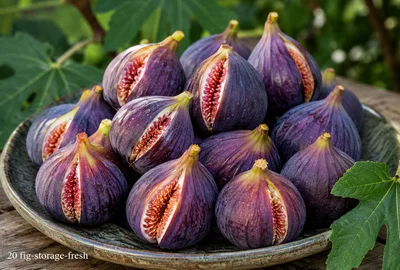
Fresh ripe figs are extremely perishable — deteriorating within 1–3 days at room temperature. Pick when the fruit drops slightly, the neck softens, the skin begins to crack, and a drop of nectar appears at the eye. Eat within 24 hours at room temperature for the full experience. Refrigerate for up to 3 days if needed. A fresh fig halved and eaten warm from the tree in August is one of the great sensory experiences of the kitchen garden.
🟤 Dried Figs
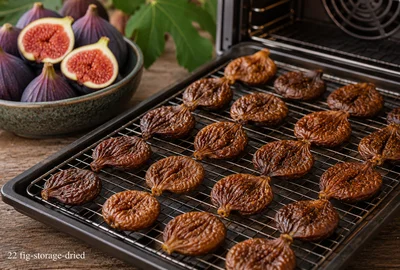
Surplus figs can be dried at home — either in a very low oven (50°C for 6–8 hours) or in a food dehydrator. They shrink dramatically and concentrate in flavour and sweetness. Dried homegrown figs are substantially better than commercial dried figs. They keep for 6–12 months in an airtight container. Halve before drying to reduce time and improve even drying.
🫙 Fig Jam & Preserves
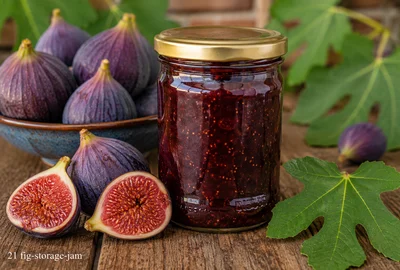
Fig jam is dark, rich, and very sweet — excellent with cheese, particularly blue and goat varieties. Fig chutney with red wine vinegar and spices is outstanding with charcuterie and cold meats. Follow a tested recipe.
13 Expert Tips
💡 The container fig on a south patio
A fig in a large container on a south-facing patio is the most practical approach for most UK gardens. The container provides automatic root restriction, the patio reflects maximum heat, and the pot can be moved under cover for winter embryo fruit protection. Choose Brown Turkey for the most reliable results.
💡 Two-year rhythm
Understanding the fig's two-year fruiting rhythm — embryo fruits formed this summer ripen next summer — makes management logical. Everything done in year one (protecting embryo fruits, pinching out shoots) is for next year's harvest. Patient, consistent management across two-year cycles produces reliable annual crops.
💡 Figs in mild-winter areas
In the far south-west of England, the Channel Islands, and parts of coastal Wales and Ireland, figs can be grown as free-standing shrubs or informal wall-trained plants with minimal winter protection. In these areas, two crops per season are occasionally possible in warm years.