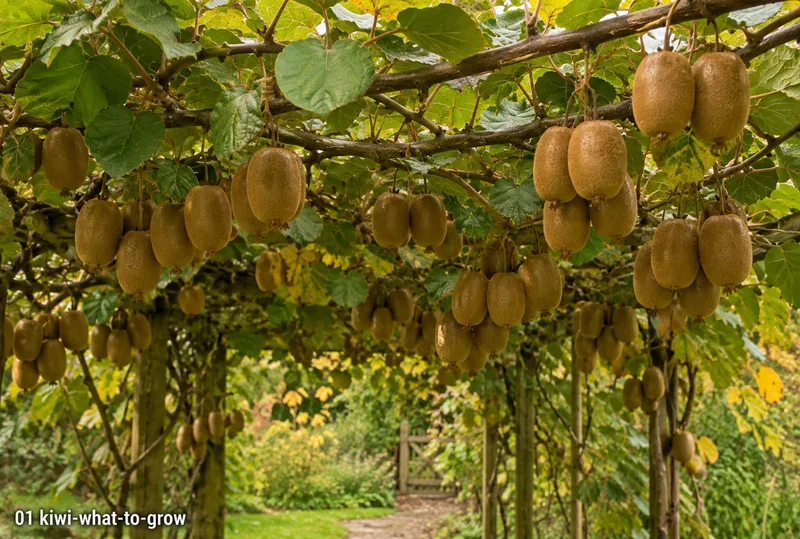
Kiwi fruit is grown in UK gardens more than most people realise. The hardy kiwi (Actinidia arguta) is fully frost-hardy, produces sweet grape-sized fruit directly from the vine, and grows vigorously in most UK regions. The standard supermarket kiwi (A. deliciosa) needs more shelter but succeeds against a south wall in the south. Both need very strong support — these are powerful, long-lived climbers.
02 Rootstock Guide
The rootstock controls the ultimate size of the tree. Choose it first — before the variety. All sizes below are approximate and depend on soil and management.
Kiwi Fruit rootstocks
Rootstock
Size
Height
Spacing
Suitable for
Support & notes
Own roots (standard)
Very vigorous
Managed by training and pruning
3–5m
All kiwi varieties
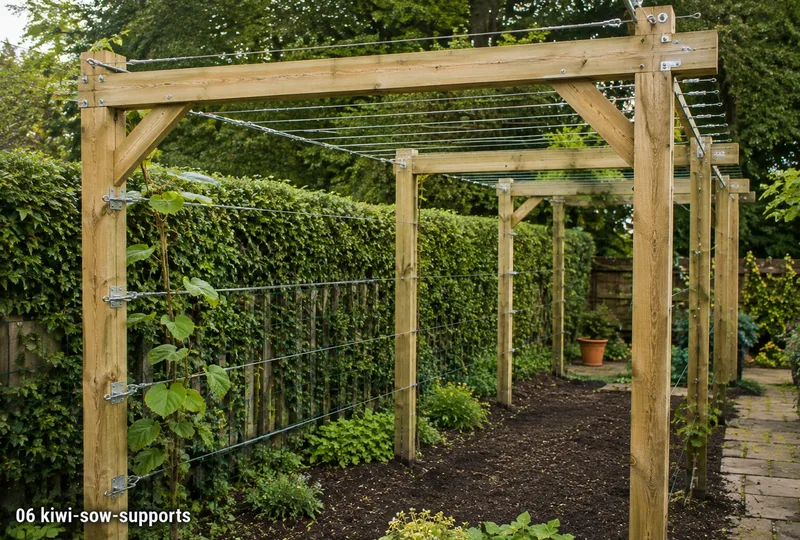
Heavy duty pergola or wire system — rated for 50kg+ — Kiwi vines are among the most vigorous of all garden plants. All support structures must be extremely robust before planting.
Pollination groups
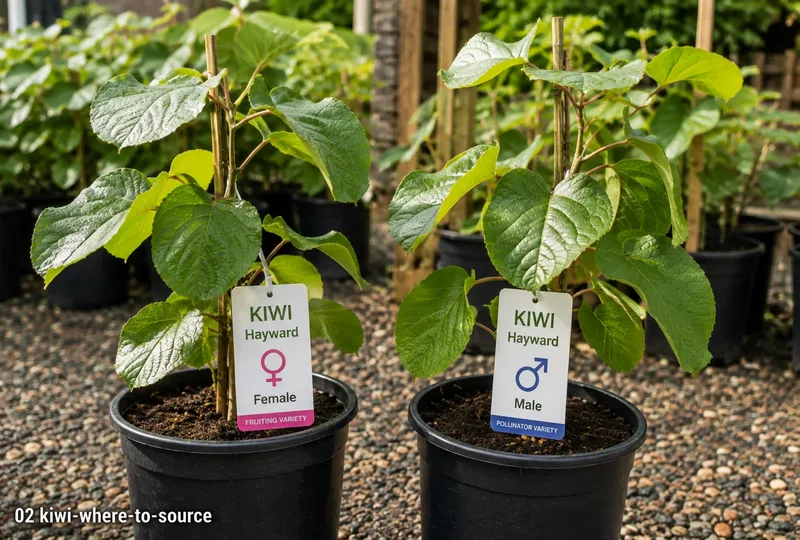
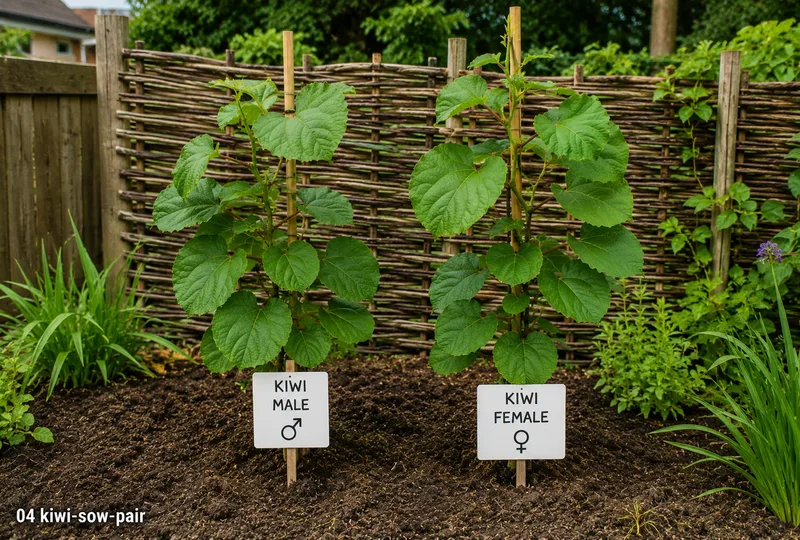
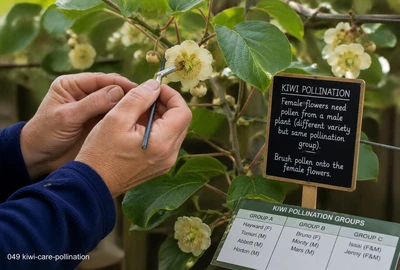
Group M/F — Most kiwis are dioecious — separate male and female plants are required. Plant one male per 6–8 females. Male plants produce no fruit but are essential for pollination.
Group SF — Self-fertile — Issai (A. arguta) and Jenny (A. deliciosa) are reliably self-fertile, making them the practical choice for most gardens where space for male and female plants is limited.
Training forms
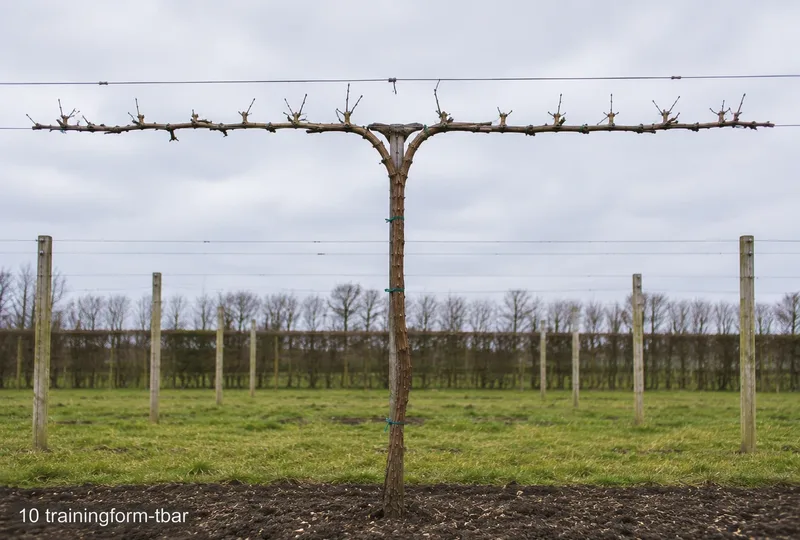
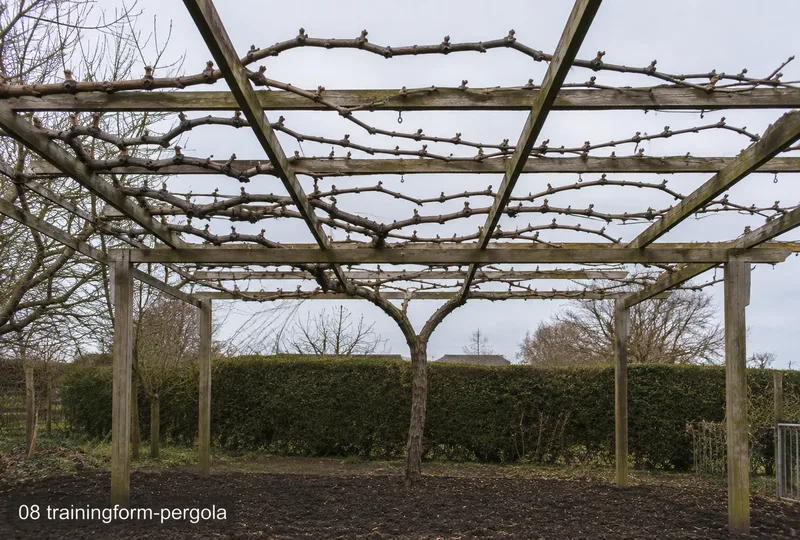
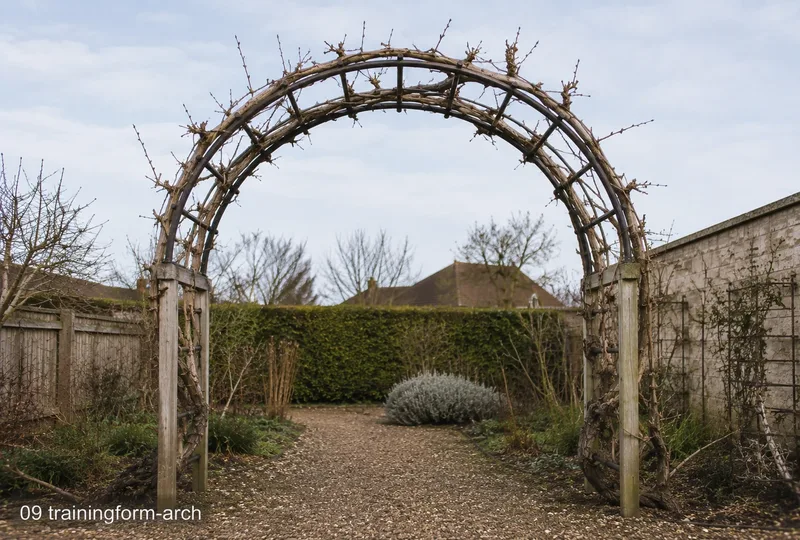
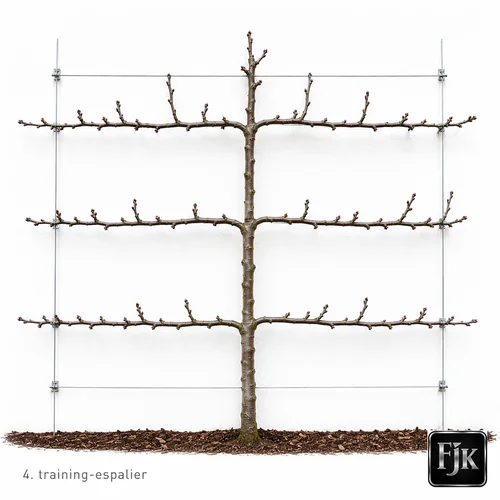
t-barpergolaarchespalier
03 Varieties
The number of varieties shown for each crop is based on UK consumption data (2025/26) — the more popular the crop, the more variety choices we include.
Hardy Kiwi (Actinidia arguta)
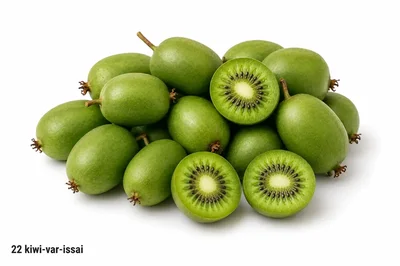
Issai
Self-fertile · Hardy kiwi
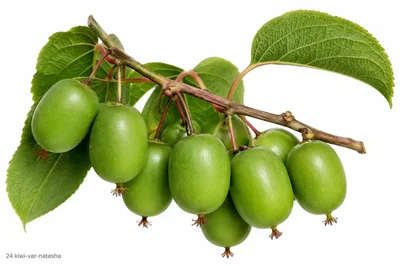
The most practical kiwi for UK gardens. Self-fertile, fully frost-hardy, smooth-skinned (no peeling), sweet fruits from year 3. Slightly smaller plant than standard kiwi. The first choice for any UK garden wanting kiwi fruit without complexity.
Harvest
Sep–Oct
Flavour
Very sweet, aromatic, intense
Fruit size
Small (grape-sized)
Yield
Very high
Disease resistance
Excellent
✓ Self-fertile
🪴 Container
Ken's Red
Female · Hardy kiwi
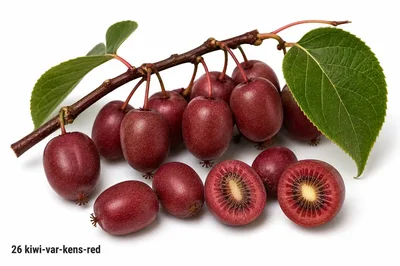
A hardy kiwi with unusually attractive red-flushed skin and excellent sweet flavour. Fully frost-hardy. Female plant — needs a male pollinator (any hardy kiwi male). Outstanding flavour and ornamental appearance make it a premium choice alongside a self-fertile Issai.
Harvest
Sep–Oct
Flavour
Excellent — sweet, complex, red-fleshed
Fruit size
Small-medium
Yield
High
Disease resistance
Very good
Weiki (A. arguta)
Female · Hardy kiwi
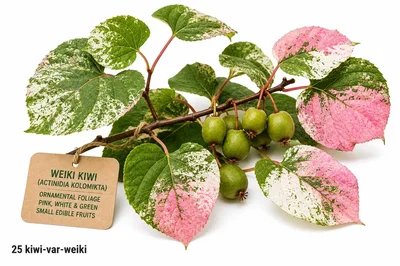
A hardy kiwi (Actinidia arguta) producing small, smooth-skinned, grape-sized fruits that are eaten whole — no peeling. Female — plant a male hardy kiwi nearby for pollination. Fully hardy. Sweet, aromatic fruit in September.
Harvest
Sep
Flavour
Small, sweet, pleasant
Fruit size
Very small
Yield
Moderate
Disease resistance
Good
Standard Kiwi (Actinidia deliciosa)
Hayward
Female · Standard kiwi
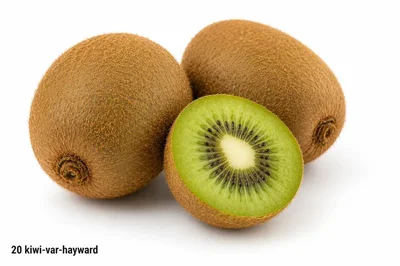
The world's most widely grown kiwi — the variety sold in every supermarket. Large, hairy, oval fruit with classic kiwi flavour. Female plant — needs a male (Tomuri). Needs a long warm growing season. Best against a south wall in the south-east or in a greenhouse elsewhere.
Harvest
Oct–Nov
Flavour
Classic supermarket kiwi, good quality
Fruit size
Large
Yield
High
Disease resistance
Good
Jenny
Self-fertile · Standard kiwi
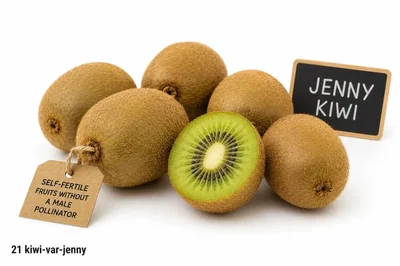
The self-fertile standard kiwi — produces Hayward-type fruit without a male plant. Slightly lower yield than Hayward with a male partner but adequate from a single plant. The practical choice for any south wall growing where only one plant can be accommodated.
Harvest
Oct–Nov
Flavour
Good kiwi flavour, slightly smaller than Hayward
Fruit size
Medium-large
Yield
Moderate
Disease resistance
Good
✓ Self-fertile
Tomuri
Male · Standard kiwi pollinator
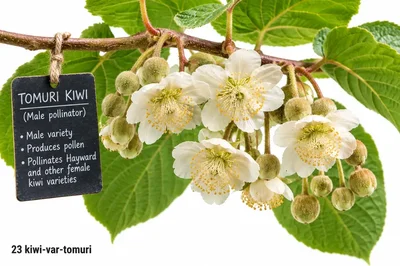
The standard male pollinator for Hayward and other A. deliciosa female varieties. No fruit produced — grown solely for pollen. One male is sufficient to pollinate 6–8 female plants. Essential if growing Hayward or other non-self-fertile standard kiwis.
Harvest
N/A (male)
Flavour
N/A — male plant, no fruit
Fruit size
N/A
Yield
N/A
Disease resistance
Good
Mini Kiwi & Specialist
Jumbo (A. arguta Jumbo)
Female · Large hardy kiwi
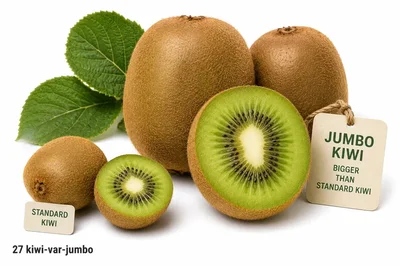
A hardy kiwi variety producing larger-than-usual smooth-skinned fruits — significantly bigger than standard A. arguta but with the same excellent sweet flavour. Fully frost-hardy. Female plant needing a male. Outstanding flavour at a useful size.
Harvest
Sep–Oct
Flavour
Very sweet, outstanding, larger fruit
Fruit size
Medium (large for A. arguta)
Yield
High
Disease resistance
Very good
Natasha (A. arguta)
Female · Hardy kiwi
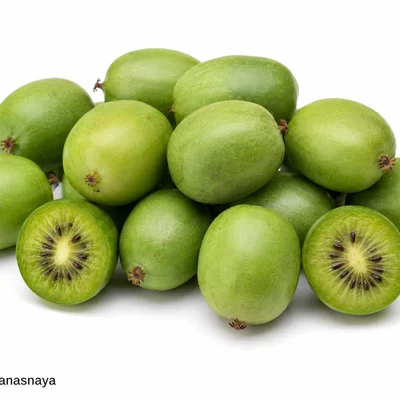
A high-yielding female hardy kiwi with good flavour and very heavy crops when cross-pollinated. Pairs well with Issai as a pollinator. Fully frost-hardy. Used commercially in some UK and European micro-kiwi production.
Harvest
Sep–Oct
Flavour
Sweet, mild, very good
Fruit size
Small-medium
Yield
Very high
Disease resistance
Good
Ananasnaya (A. arguta)
Female · Hardy kiwi
A hardy kiwi with a distinctive pineapple-like aromatic character — quite different from standard kiwi flavour. Fully frost-hardy. Female plant. Very sweet and strongly flavoured. Valued by enthusiasts for its unique flavour profile.
Harvest
Sep–Oct
Flavour
Pineapple-like, very sweet, distinctive
Fruit size
Small-medium
Yield
High
Disease resistance
Good
04 Where to Source
Kiwi plants are sold as container-grown stock from specialist fruit nurseries, with self-fertile Issai (hardy kiwi) the most widely available and most practical choice. Named male and female pairs of standard kiwi (Hayward with Tomuri) are less common and worth ordering ahead from a specialist supplier, particularly as both sexes must be confirmed correctly labelled.
05 Planting Options
🌿 Outdoor — Pergola or Strong Wall
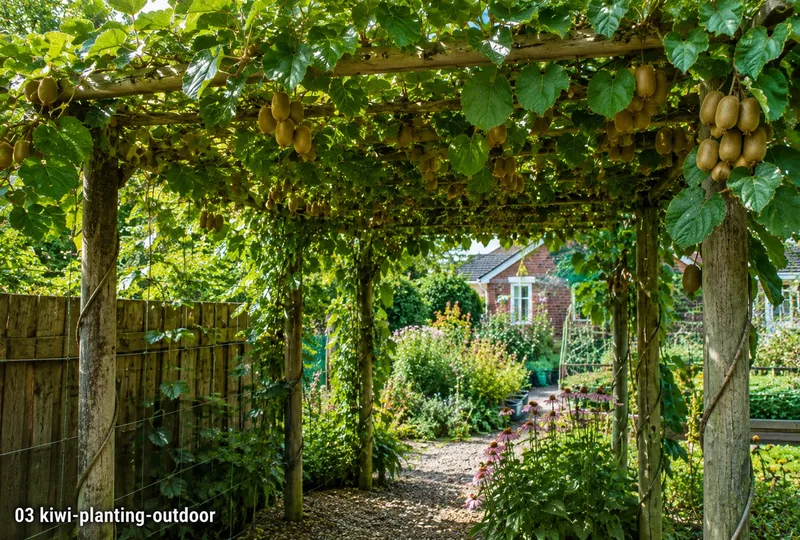
Kiwi is the most physically demanding fruit to accommodate in this guide — a mature vine becomes enormously heavy, so the whole planting decision really turns on the strength of the structure it will grow into. A purpose-built pergola or a heavy-duty wire system on substantial posts, rated to carry well over 50kg of fruiting vine, is essential from the outset, since retrofitting adequate support around an established plant is genuinely difficult. Choose a sheltered, sunny spot with rich, moisture-retentive soil (kiwis are notably less fussy about drainage than grapes) and plant in spring once the soil has warmed, training a single vertical stem in year one before building out the permanent horizontal framework over the following two years.
Install very strong supports BEFORE planting
This cannot be overstated — kiwi vines become extremely heavy. Install a purpose-built T-bar system, a heavy-duty pergola, or horizontal wires on massive posts rated to carry at least 50kg of fruiting vine. Retrofitting supports around an established kiwi is very difficult. Do this first.
Plant male and female, or choose self-fertile
For most gardens, choose a self-fertile variety (Issai for hardy kiwi, Jenny for standard kiwi). If planting male and female plants, space 3–5m apart and ensure the male is within range for wind pollination — or hand pollinate with a brush.
Plant in well-prepared, moisture-retentive ground
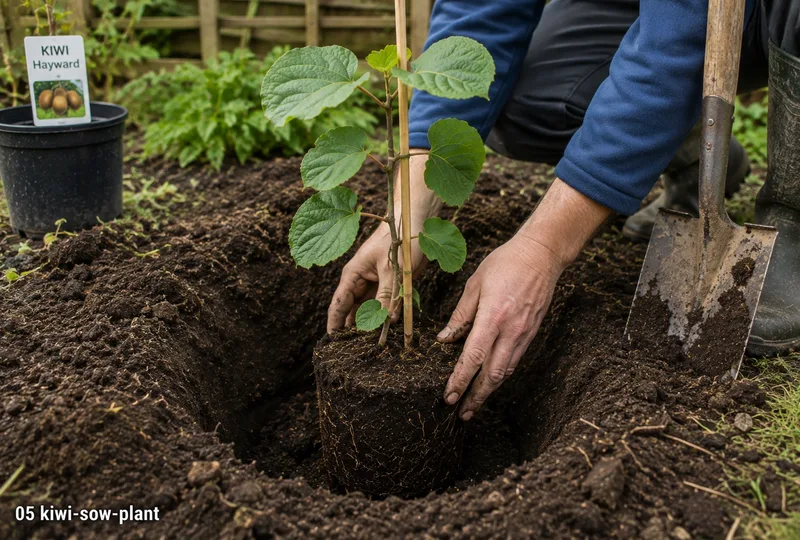
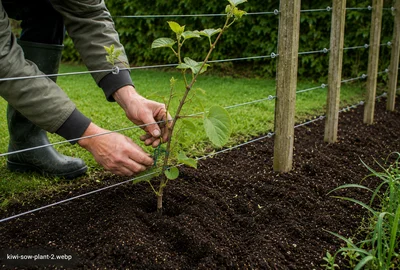
Dig in generous compost at planting. Unlike grapes, kiwis benefit from richer, more moisture-retentive soil. Plant in spring (April–June) when the soil is warm. Avoid heavy clay without significant improvement.
Establish the main framework in years one to three
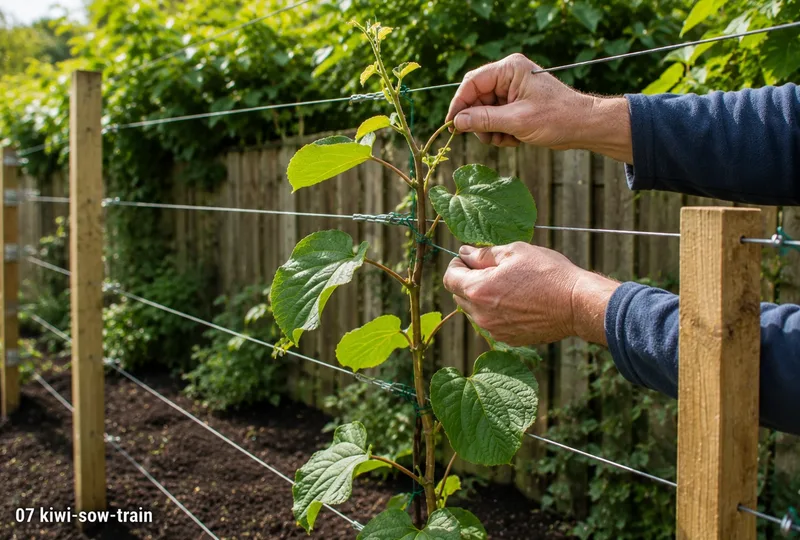
In the first year, train a single main stem vertically. In year two, allow 2–4 horizontal arms to develop at the desired height and tie to the wire framework. Fruiting laterals will develop from these permanent arms over subsequent years.
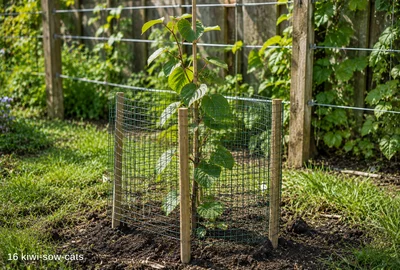
Protect young plants from cats
Cats are powerfully attracted to the roots and young shoots of kiwi plants. Young plants (first 2 years) must be protected with wire guards or barriers. Established plants are tough enough to withstand cat attention but seedlings can be destroyed.
06 Companion Planting
✅ Grow nearby
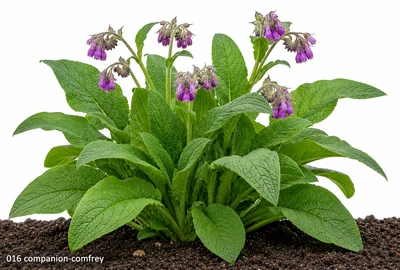
🌿 Comfrey
Deep roots mine nutrients from the subsoil; cut leaves make an excellent potassium-rich mulch.
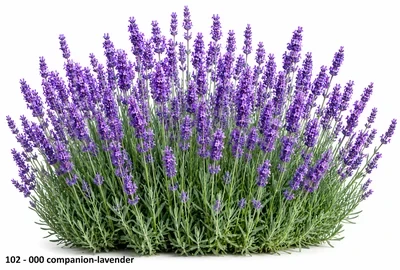
💜 Lavender
Attracts pollinators and adds a decorative, low-maintenance border nearby.
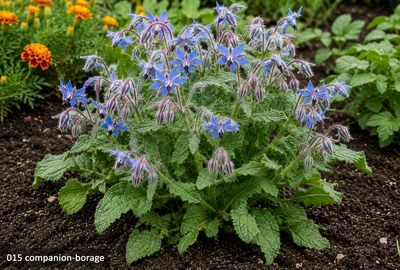
🌸 Borage
Attracts pollinators and beneficial insects, and is said to improve nearby fruit set.
07 Sowing — How To
Spring planting preferred
Container-grown kiwis planted in April–June establish well in warm soil. Bare-root plants can go in November–March when dormant. Supports must be in place before planting.
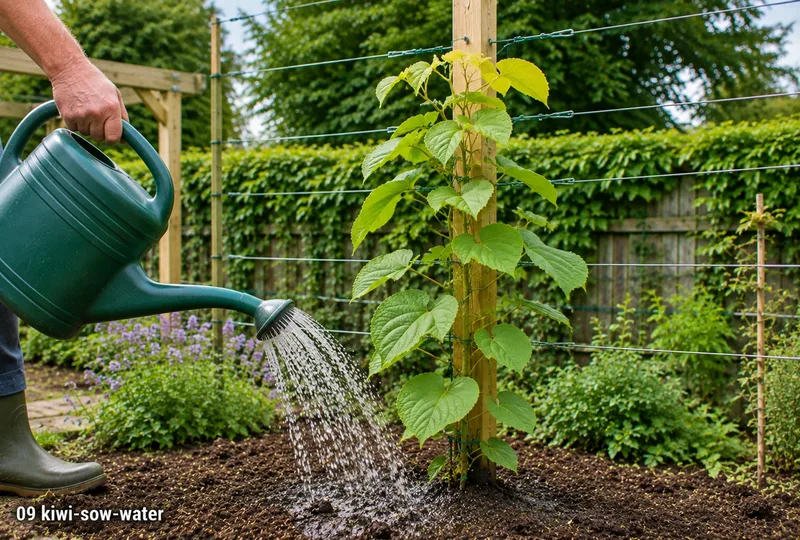
Water well through first summer
Kiwis are thirsty plants during establishment. Water regularly through the first growing season. Once established with a deep root system, they become more drought-tolerant.
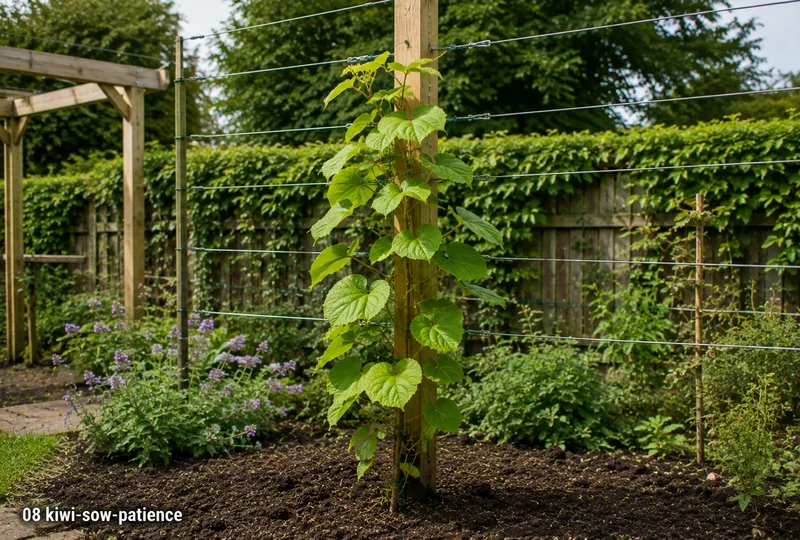
Expect 3–5 years to first crop
Kiwis take 3–5 years to produce a meaningful first crop. This is normal — patience is the primary requirement. Once established, yields increase dramatically year on year.
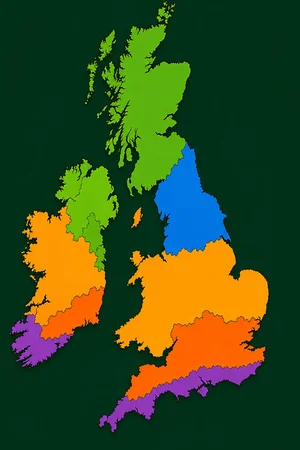
Regional sowing timing
Region
Sow / plant
Harvest
Notes
Scotland & Far North
Apr–Jun
Sep–Oct
Northern England
Apr–Jun
Sep–Oct
Midlands & Wales
Apr–Jun
Sep–Oct
Ireland & Isle of Man
Apr–Jun
Sep–Oct
South & SE England
Apr–Jun
Sep–Oct
South Coast & SW
Apr–Jun
Sep–Oct
08 Using a Propagator
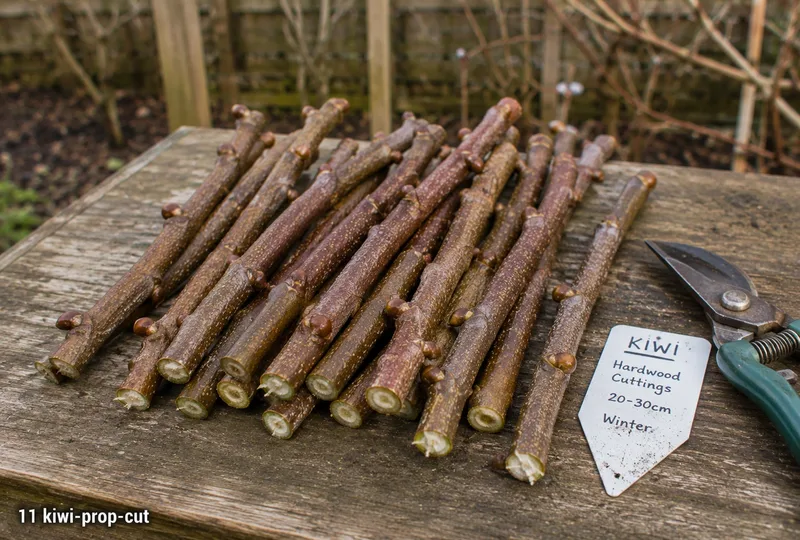
Kiwis can be propagated from semi-ripe cuttings in summer or hardwood cuttings in winter. For most gardeners, purchasing named-variety container plants from specialist nurseries is more practical, particularly for self-fertile varieties.
Heated propagator
Semi-ripe Cuttings — In July–August, take 10–15cm semi-ripe cuttings from non-fruiting shoots. Insert in 50:50 compost and perlite under a polythene cover or in a propagator at 20°C. Root in 6–8 weeks. Pot individually and overwinter in a frost-free greenhouse.
Take cuttings from healthy growth
For self-fertile varieties, any healthy shoot provides cuttings. For male plants, take cuttings from the confirmed male parent.
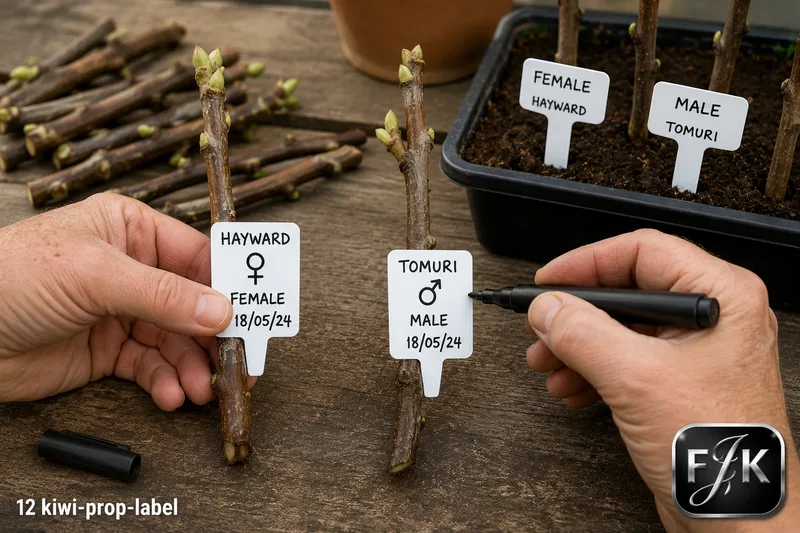
Label cuttings clearly
Male and female kiwi plants look identical as young plants. If propagating separate-sex plants, label every cutting clearly at the time of taking and maintain labels through potting stages.
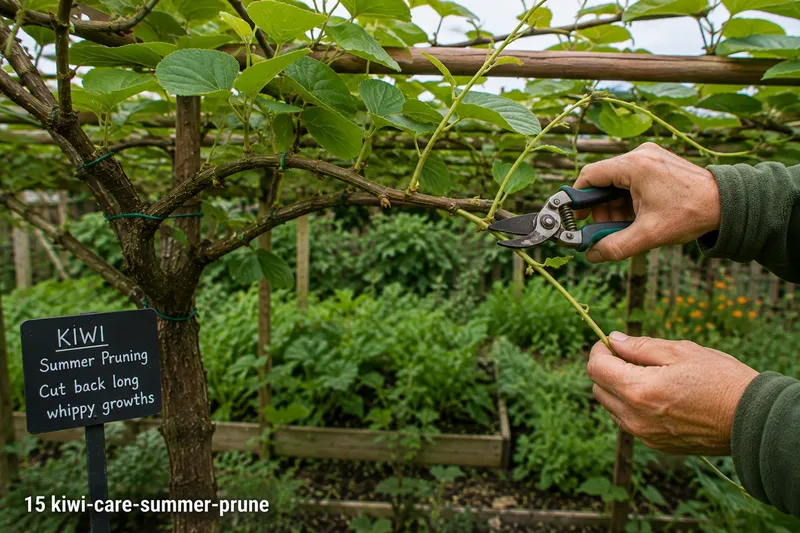
Summer pruning is essential to keep kiwi vines manageable and productive. In June–July, pinch out the growing tips of all fruiting laterals at 5–7 leaves beyond the last fruit. Also remove any vigorous non-fruiting shoots that are not needed for the permanent framework. Without summer pruning, kiwi vines produce enormous quantities of leafy growth that shades the developing fruit and makes the vine unmanageable within a few seasons. This is the most time-consuming aspect of kiwi management.
✂️ Winter Pruning
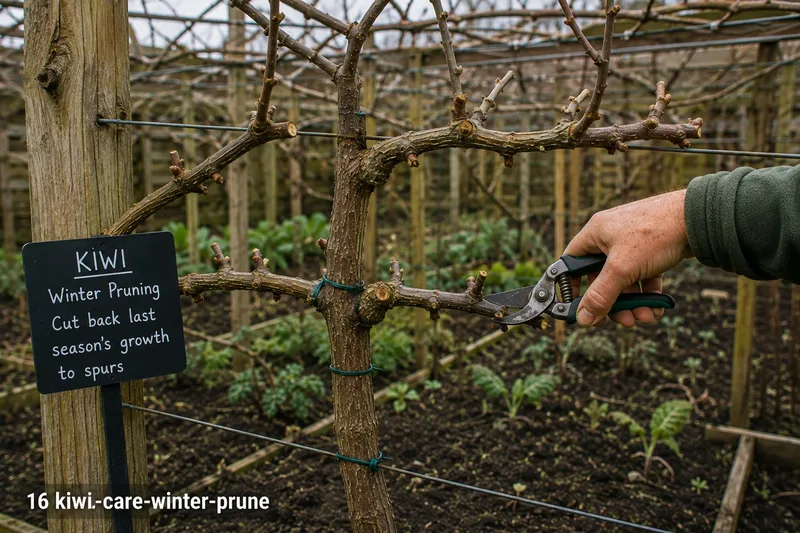
In winter (December–February), cut all the lateral growth back to 2–3 buds from the permanent arms. These buds produce the following year's fruiting laterals. Also remove any old, exhausted laterals that have fruited for 3 or more years — replace them with younger growth from the base of the permanent arms. The permanent arm framework itself is retained and extended annually until it reaches the limits of the support structure.
💧 Feeding & Watering
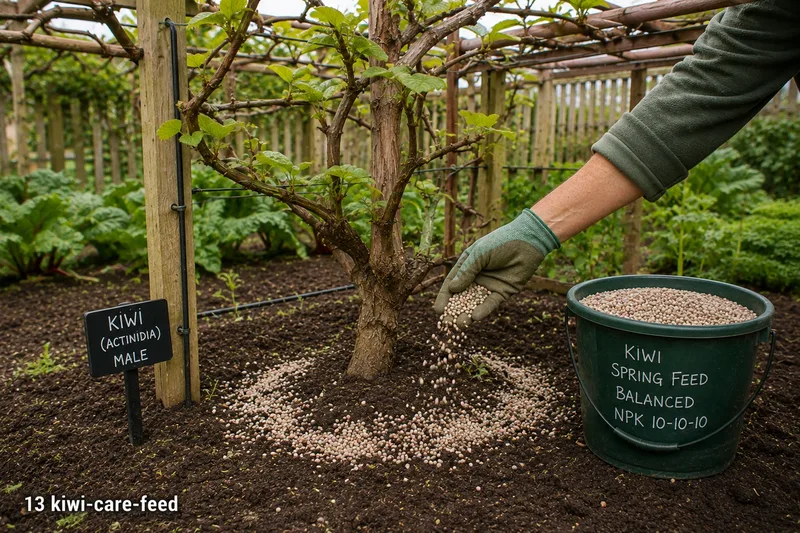
Kiwis are heavy feeders compared to most fruit plants. Apply a balanced fertiliser in early spring and a high-potash feed from flowering to fruit swell. Mulch generously with compost annually. Water regularly from flower to harvest during dry spells — inconsistent moisture causes fruit drop and reduces size. Established vines are more drought-tolerant but still benefit from watering in prolonged dry periods. Container kiwis need daily checking in summer.
🌸 Pollination
Self-fertile varieties (Issai, Jenny) set fruit without a pollinator and are the practical choice for most gardens. Where separate male and female plants are grown, bees normally accomplish adequate pollination. In cold springs when bee activity is low, hand pollination with a soft brush — collecting pollen from male flowers and transferring to female flowers (which have a prominent star-shaped stigma) at midday — significantly improves fruit set. Female flowers have both petals and a visible central style; male flowers have only stamens.
11 Watch Out For
Warning
Cats are powerfully attracted to kiwi roots (particularly of Actinidia) and can destroy young plants — protect with wire guards for the first 2 years. Kiwi vines can overwhelm weak structures within 3 years — supports must be very robust. Phytophthora root rot in waterlogged soil is rapidly fatal — ensure excellent drainage. Frost damage to new spring growth is possible in cold districts — fleece young growth if late frosts forecast.
🐛 Insects & pests
🟤 Scale Insect — Small brown or grey bumps on stems, branches, and the underside of leaves — the scale covers themselves
🤍 Mealybug — White, fluffy or mealy patches in leaf axils, stem joints, and under leaves — the insects themselves
🕷 Spider Mite — Fine, silky webbing on the underside of leaves and between growing tips — the definitive identification sign
🍄 Diseases to watch
🩶 Botrytis (Grey Mould) — Botrytis cinerea (grey mould) is the most ubiquitous fungal pathogen in temperate gardens — present in virtually every garden soil and on plant debris. It becomes a disease only when conditions favour it: cool, humid, poorly ventilated environments with damaged or senescent plant tissue. In a greenhouse in autumn it can destroy an entire tomato or grape crop.
Full identification and treatment advice is in the Pests and Diseases sections.
12 Storage & Preserving
🥝 Hardy Kiwi (A. arguta) — Eat Fresh
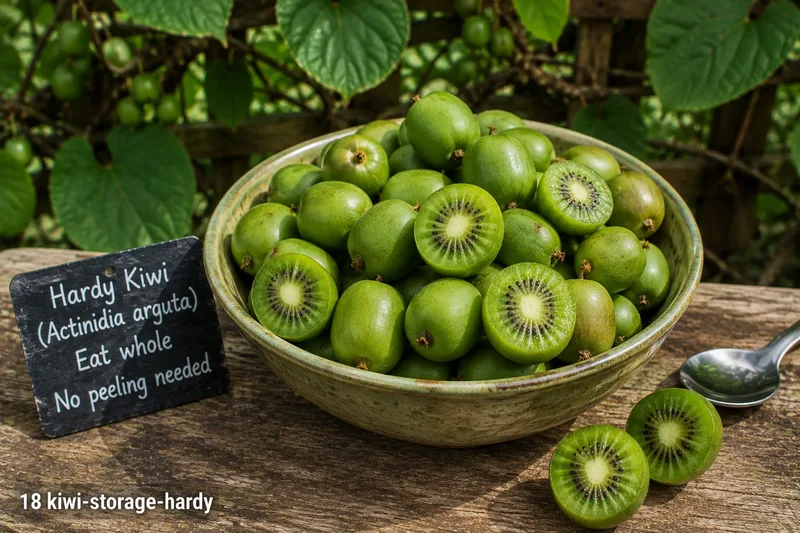
Hardy kiwi fruits (grape-sized, smooth-skinned, no need to peel) ripen directly on the vine in September–October. Eat when slightly soft to the touch — sweet, intensely aromatic, and much more flavourful than shop-bought. They keep for 2–3 weeks refrigerated. Eat the skin — it is thin and flavourful unlike standard kiwi.
🥝 Standard Kiwi — Harvest and Ripen
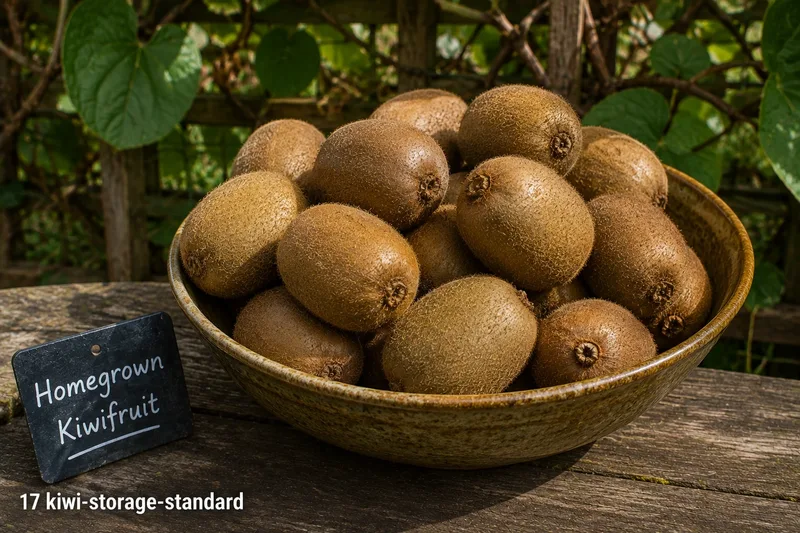
Harvest standard kiwis (A. deliciosa) in October–November before any frost, when still firm. Test ripeness by pressing near the stalk — the flesh should begin to yield slightly. Store cool (4°C) for up to 2 months. Ripen at room temperature for 3–7 days before eating. An ethylene-producing fruit (an apple or banana) in the same bag dramatically speeds ripening. Home-grown standard kiwis are substantially better than commercial ones when allowed to ripen fully.
❄️ Frozen & Preserved
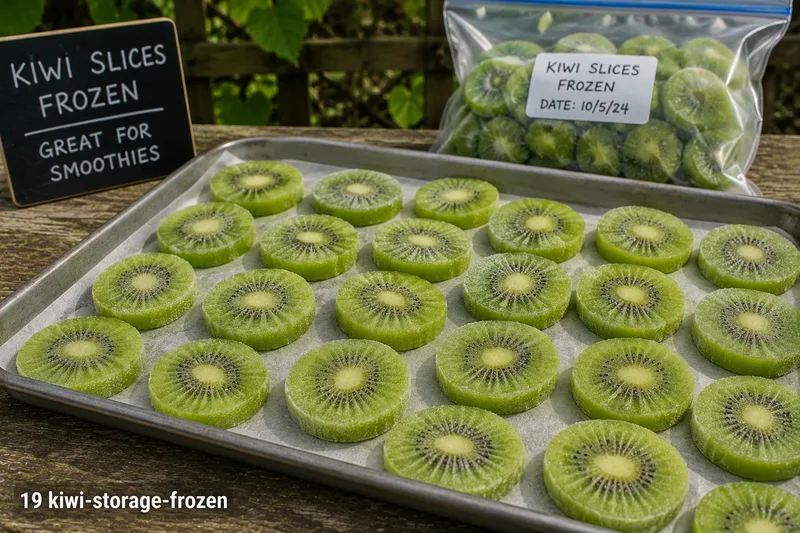
Peel and slice standard kiwis, or halve hardy kiwis. Freeze on a tray then bag. Use within 12 months. Kiwi jam and kiwi chutney are excellent uses for surplus crops. Kiwi contains actinidin, an enzyme that breaks down proteins — avoid using raw kiwi in gelatine-set desserts.
13 Expert Tips
💡 Issai is the practical UK choice
Issai (Actinidia arguta) is the one variety that transforms kiwi growing for most UK gardeners. It is fully frost-hardy to -25°C, self-fertile (no male plant needed), produces sweet, smooth-skinned, grape-sized fruits that require no peeling, and begins fruiting in year 3–4. It is genuinely straightforward in most UK regions on a strong pergola.
💡 The T-bar system
The most efficient support structure for kiwi is a T-bar system — strong posts with crossbars from which horizontal wires extend in both directions. This allows main arms to be trained along the wires with pendant fruiting laterals hanging below. The structure, once installed, lasts decades and supports the vine perfectly. It is the commercial standard for kiwi orchards worldwide.
💡 Hardy kiwi on a pergola
A mature Issai hardy kiwi on a well-built pergola is one of the most productive and ornamental features possible in a UK kitchen garden. The large, dramatic leaves provide dense shade through summer, the fragrant flowers appear in May, and the heavy crops of sweet small fruits in September exceed 20kg per vine in a good year. Plant, wait patiently for 4 years, and enjoy for decades.