Melons need a heated greenhouse or polytunnel in the UK — minimum 18°C to fruit reliably
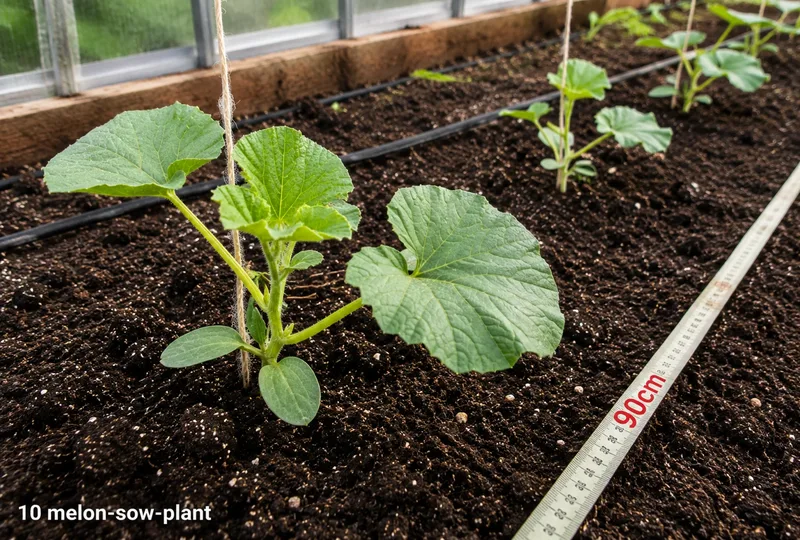
Sow indoors April at 21°C, one seed per pot; plant out into the greenhouse in May once nights stay above 15°C
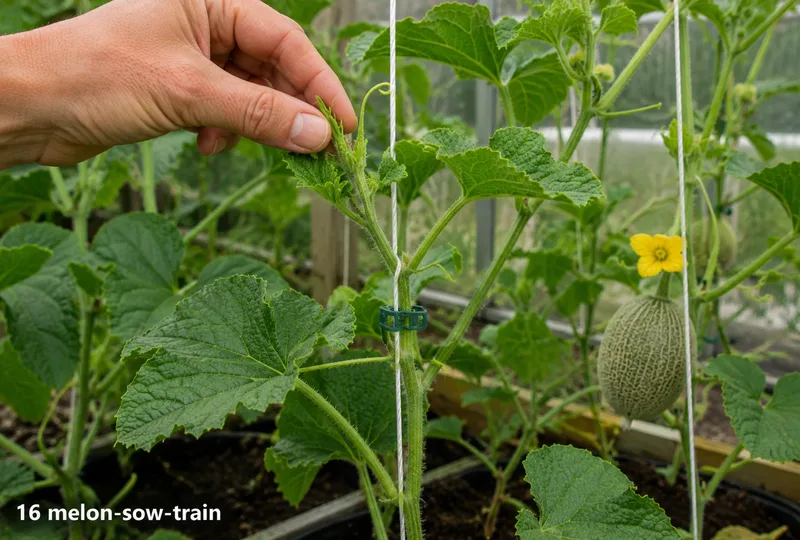
Train to a single vertical stem; pinch the growing tip at 1.5m and allow 4–5 lateral shoots to develop fruit
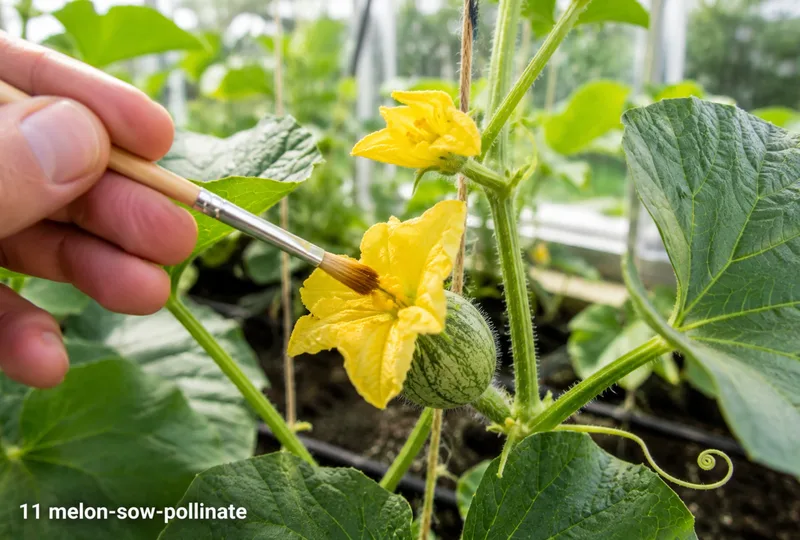
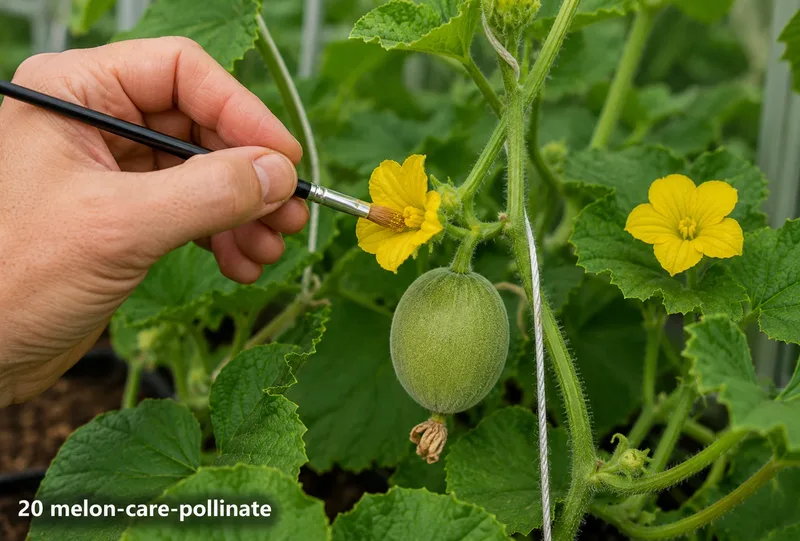
Pollinate by hand on a warm sunny morning — transfer pollen between open flowers with a soft brush
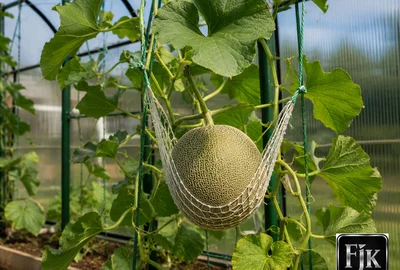
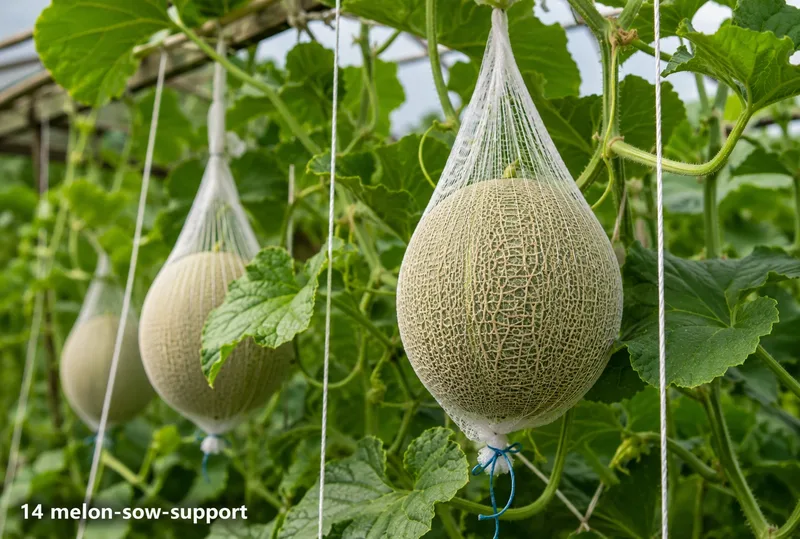
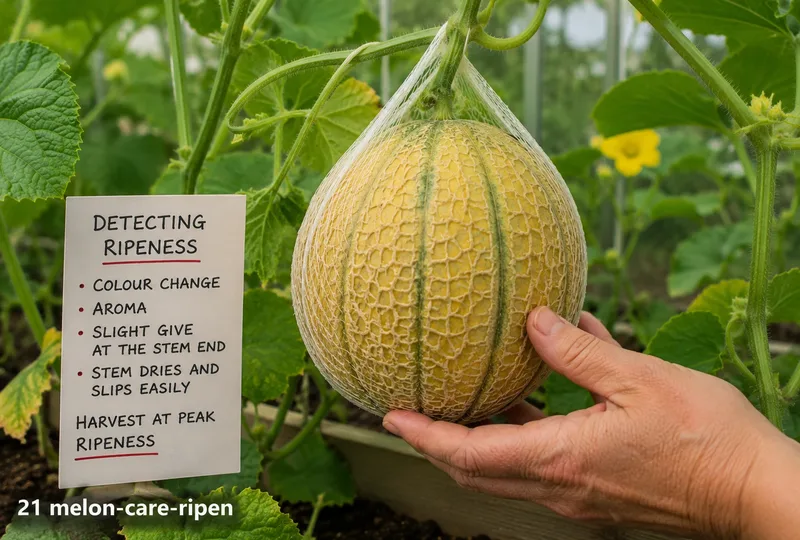
Support developing fruits in nets tied to the frame — the weight of a ripening melon will break the stem if unsupported
🌱 SowApr–May (indoors, heated)
🌾 HarvestAug–Sep
☀ PositionFull sun, unheated greenhouse or polytunnel
📐 Spacing90cm–1m
DifficultyChallenging
⚡ Quick facts
Sow
Apr–May (heated propagator, 20–25°C)
Plant
May–Jun (into warm greenhouse/polytunnel bed)
Harvest
Aug–Sep
Position
Unheated greenhouse or polytunnel in full sun — warmth is critical
Spacing
90cm–1m between plants
Height
Train vertically to 1.5–2m
Hardiness
Not frost hardy — greenhouse or polytunnel essential
Lifespan
Annual
Difficulty
Challenging
01 About
Growing your own melon is one of the ultimate kitchen garden challenges — and rewards. A perfectly ripened home-grown melon picked at the precise moment it is ready has an intensity of flavour and fragrance that no shop melon can approach. They need greenhouse or polytunnel conditions in the UK, but within those constraints, they are entirely achievable with the right variety and consistent management.
02 Varieties
The number of varieties shown for each crop is based on UK consumption data (2025/26) — the more popular the crop, the more variety choices we include.
Cantaloupe & Muskmelon
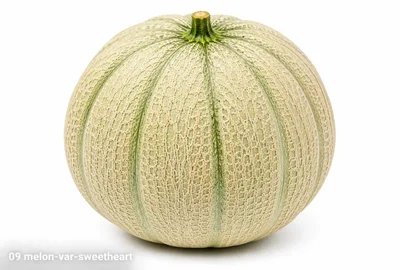
Sweetheart F1
Cantaloupe · Reliable
The most reliable UK greenhouse melon. Pale green ribbed skin with salmon-orange flesh. Very sweet, aromatic flavour. Consistently productive in UK conditions. The first choice for any UK melon grower.
Harvest
Aug–Sep
Flavour
Very sweet, aromatic, excellent
Fruit size
Medium (1–1.5kg)
Yield
High
Disease resistance
Good
✓ Self-fertile
🪴 Container
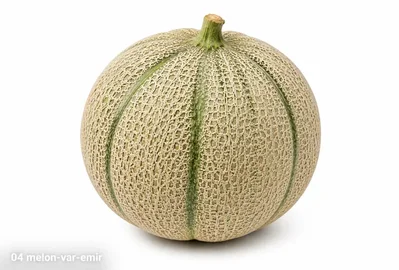
Emir F1
Cantaloupe · Early
One of the earliest and most reliable UK cantaloupe melons. Excellent for cooler UK summers when later varieties may not ripen. Good, sweet flavour. Orange flesh. A reliable choice for northern UK gardens with shorter growing seasons.
Harvest
Aug
Flavour
Sweet, good flavour, early
Fruit size
Small-medium (0.8–1.2kg)
Yield
High
Disease resistance
Good
🏅 AGM
✓ Self-fertile
🪴 Container
Blenheim Orange
Netted muskmelon · Heritage
A heritage British variety with an outstanding reputation for flavour — rich, aromatic salmon-pink flesh with genuine complexity. Needs more warmth than modern F1 varieties. In a warm summer or heated greenhouse, it produces extraordinary fruit. A connoisseur choice.
Harvest
Aug–Sep
Flavour
Outstanding — rich, aromatic, complex
Fruit size
Large (1.5–2.5kg)
Yield
Moderate
Disease resistance
Moderate
✓ Self-fertile
Galia & Honeydew
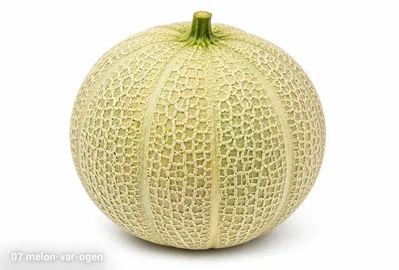
Ogen
Galia-type · Green flesh
An Israeli-bred Galia-type with pale green skin and very sweet green flesh. Excellent flavour. Reliable in UK polytunnels. One of the best varieties for polytunnel rather than greenhouse growing where temperatures are slightly lower.
Harvest
Aug–Sep
Flavour
Very sweet, refreshing, distinctive
Fruit size
Small-medium
Yield
High
Disease resistance
Good
🏅 AGM
✓ Self-fertile
🪴 Container
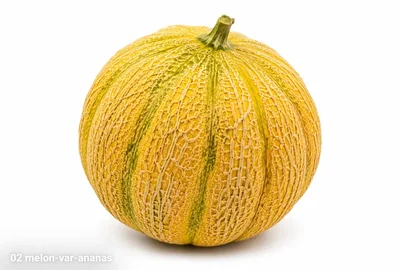
Ananas (Pineapple Melon)
Specialist · Aromatic
An heirloom variety with extraordinary aromatic intensity — the fragrance fills a room when ripe. Distinctive pineapple-like notes in the flavour. Needs a warm summer but produces memorable fruit. A specialist choice for experienced melon growers.
Harvest
Aug–Sep
Flavour
Intensely aromatic, pineapple-like, complex
Fruit size
Medium-large
Yield
Moderate
Disease resistance
Moderate
✓ Self-fertile
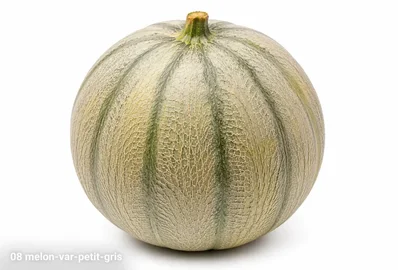
Petit Gris de Rennes
French heritage
A traditional French variety well-adapted to cooler climates. Small, round, grey-green skinned fruit with salmon-orange flesh. Very sweet. Earlier ripening than many varieties. A good choice for the UK's shorter growing season and reliable polytunnel growing.
Harvest
Aug
Flavour
Rich, sweet, classic French melon
Fruit size
Small-medium
Yield
High
Disease resistance
Moderate
✓ Self-fertile
🪴 Container
Casaba & Specialist
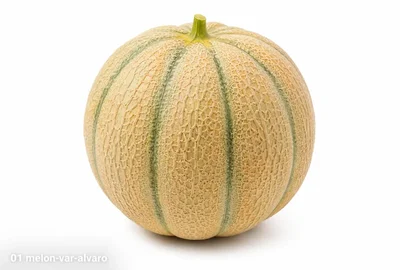
Alvaro F1
Charentais type · Orange flesh
A Charentais-type melon with the classic rich, aromatic flavour of French market melons. F1 hybrid giving reliable performance. Orange-fleshed, ribbed skin. Outstanding flavour when ripe. A premium choice for those who want the quality of a southern France melon from a UK greenhouse.
Harvest
Aug–Sep
Flavour
Outstanding — full Charentais character
Fruit size
Medium
Yield
High
Disease resistance
Good
🏅 AGM
✓ Self-fertile
🪴 Container
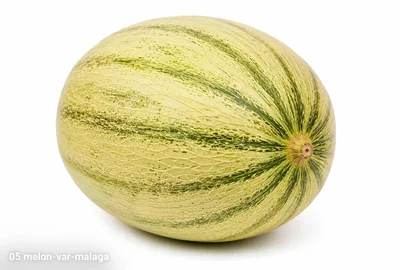
Malaga F1
Piel de Sapo type · Green flesh
A Spanish-type melon with green-white flesh and mild, sweet flavour. Keeps for 2–3 weeks after picking — much longer than cantaloupe types. Needs a long, warm growing season. Best in heated greenhouses or exceptional UK summers in the south.
Harvest
Sep
Flavour
Sweet, mild, long-keeping
Fruit size
Large
Yield
Moderate
Disease resistance
Good
✓ Self-fertile
Minnesota Midget
Small · Early
The earliest and most cold-tolerant melon variety available — bred in Minnesota for northern US growing conditions. Very small but sweet fruit. Compact plant. The most reliable choice for northern UK gardens and cooler greenhouse conditions where other varieties struggle to ripen.
Harvest
Aug
Flavour
Sweet, good for size
Fruit size
Very small (400–600g)
Yield
High
Disease resistance
Good
✓ Self-fertile
🪴 Container
03 Where to Source
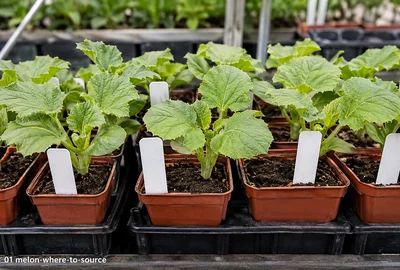
Melon seed is widely available from all major UK seed suppliers, with F1 varieties bred for cooler climates (Sweetheart F1, Alvaro F1) the most reliable choice for an unheated greenhouse or polytunnel. Minnesota Midget and other compact varieties suited to smaller spaces are best found through specialist or heirloom seed suppliers.
04 Planting Options
🏠 In a Greenhouse or Polytunnel
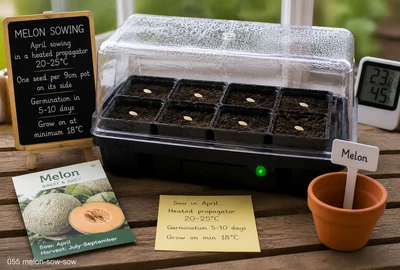
Sow in April in a heated propagator
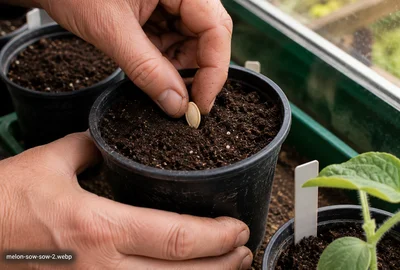
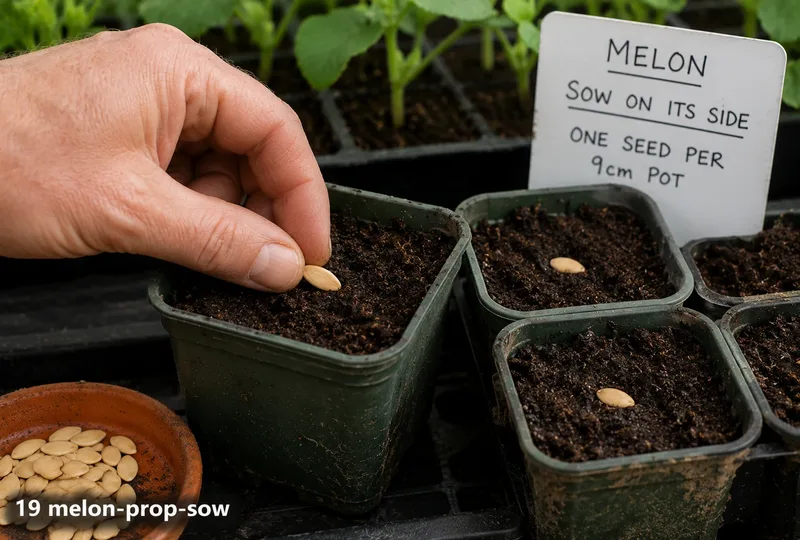
Sow one seed per 9cm pot on its side (reduces rotting) at 20–25°C. Germination in 5–10 days. Grow on at minimum 18°C. A heated propagator is strongly recommended — windowsill temperatures are often insufficient for reliable germination.
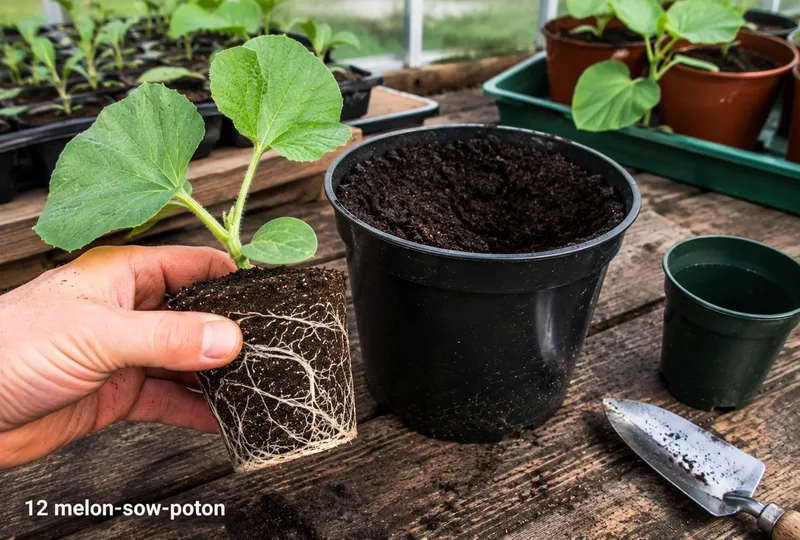
Pot on before planting out
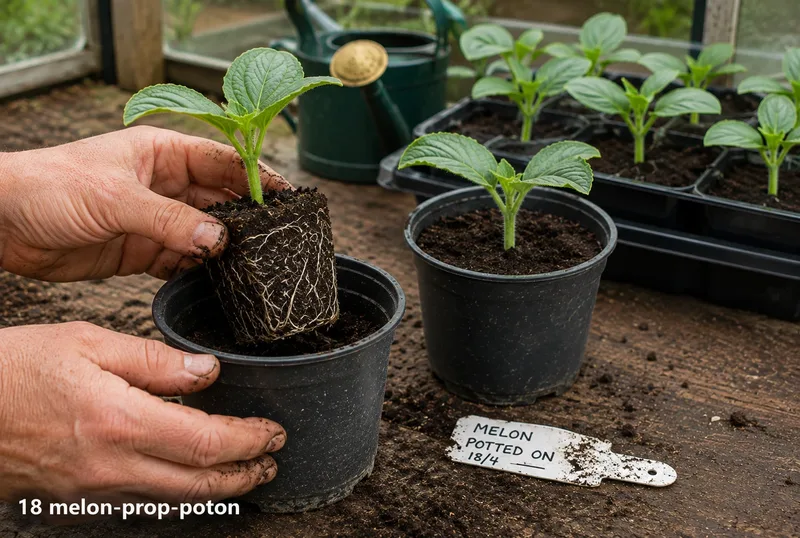
Pot on into a 15cm pot when roots fill the 9cm pot. Harden off gradually over 7–10 days before planting into the greenhouse. Never plant out if soil temperature is below 18°C.
Plant into fertile, well-drained beds
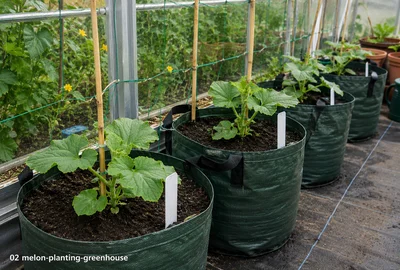
Plant 90cm apart into beds enriched with generous compost. Alternatively plant in 30L+ containers of compost-rich growing medium. Install vertical strings or canes for training.
Train vertically and pinch growing tip
Tie the main stem to a vertical string or cane. When 5–6 leaves have developed, pinch out the growing tip to encourage lateral (side) shoots — these carry the female flowers and fruit.
Hand pollinate female flowers
Female flowers have a tiny embryo melon behind the petals; male flowers have a plain stalk. Transfer pollen from male to female with a soft brush at midday when pollen flows freely. Pollinate all open female flowers on the same day for even fruit development.
Allow 2–4 fruits per plant and support each one
Allow 2 fruits per plant in the UK (4 in an ideal warm summer). Support each developing fruit in a net bag or stocking tied to the overhead framework — a ripe melon weighs 1–2kg and will break the stem without support.
Grown nearby in the greenhouse, basil is thought to repel aphids and whitefly.
🌸 Marigold
Marigolds are thought to deter nematodes and attract pollinators and predatory insects.
06 Sowing — How To
Sow on side in heated propagator
Place seed on its side in a 9cm pot of compost at 20–25°C. One seed per pot. Germination 5–10 days. Grow on at minimum 18°C night temperature.
Do not sow too early
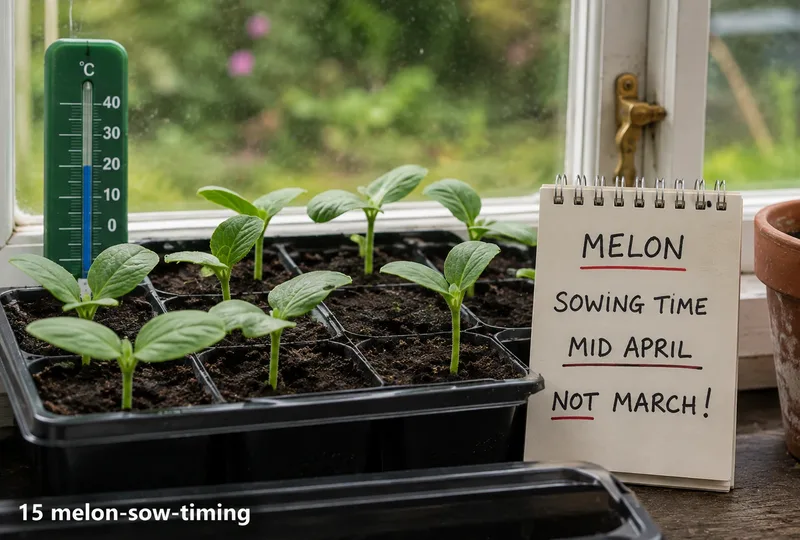
Mid-April is early enough. Plants sown too early in March become rootbound and stressed before greenhouse temperatures are adequate for planting out.
Regional sowing timing
Region
Sow / plant
Harvest
Notes
Scotland & Far North
Apr–May
Aug–Sep
Northern England
Apr–May
Aug–Sep
Midlands & Wales
Apr–May
Aug–Sep
Ireland & Isle of Man
Apr–May
Aug–Sep
South & SE England
Apr–May
Aug–Sep
South Coast & SW
Apr–May
Aug–Sep
07 Using a Propagator
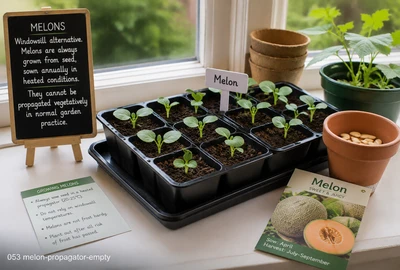
Melons are always grown from seed, sown annually in heated conditions. They cannot be propagated vegetatively in normal garden practice.
Heated propagator
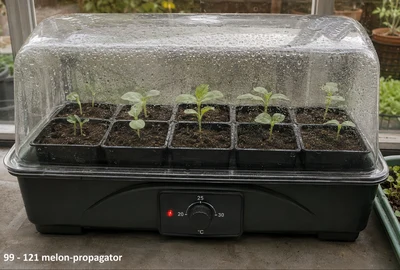
Heated Propagator Required — Sow in a heated propagator at 20–25°C. A propagator with a thermostat maintains the correct temperature regardless of ambient conditions. Without reliable heat, germination is slow and erratic.
Unheated propagator
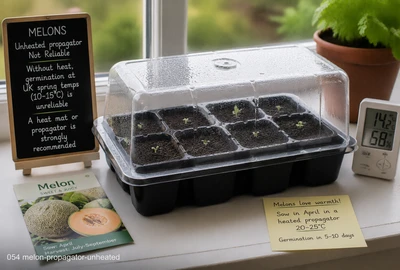
Not Reliable — Without a heated propagator, melon germination at UK spring temperatures (often 10–15°C on a windowsill) is unreliable. A heat mat or propagator is strongly recommended.
Standard unheated propagator — A lidded seed tray traps warmth and humidity around germinating seeds without electricity. Performance depends entirely on room temperature — best placed on a warm windowsill and used from March onwards. Replace the lid promptly after watering. Remove it completely the moment seedlings emerge to prevent damping off.
Sow on its side
Place the flat seed on its side rather than pointed end down — this prevents the seed sitting in a pocket of moisture which can cause rot. One seed per 9cm pot of fresh, moist compost.
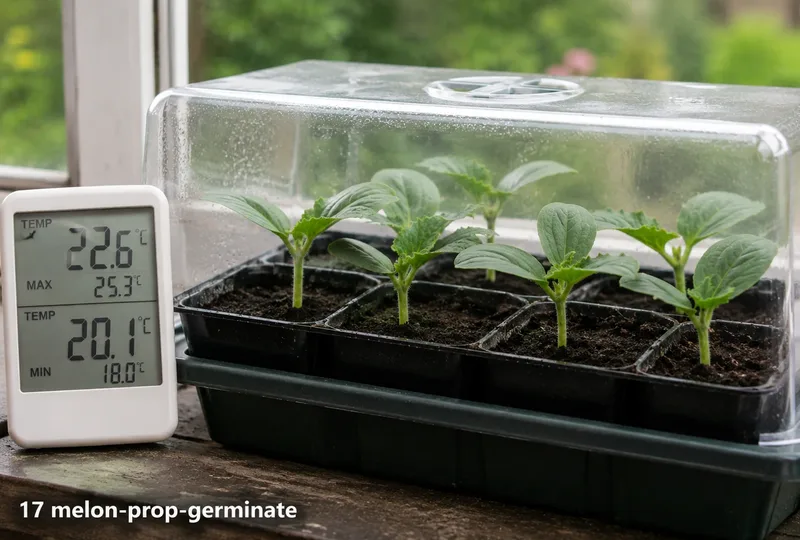
Maintain 20–25°C until germination
Check daily. Once the seed has germinated and the first true leaves appear, temperature can be reduced slightly to 18°C. Grow in maximum light to prevent etiolation (stretching).
Pot on carefully
Melon roots are sensitive to disturbance. Handle the root ball carefully when potting on. Never allow plants to become seriously pot-bound — pot on as soon as roots appear at the drainage holes.
Windowsill alternative: A bright south-facing windowsill can substitute from late February. Place a clear polythene bag loosely over the pot during germination. Remove immediately once seedlings appear.
08 Soil Requirements
pH
6.0–7.0
Best
Loam, Sandy loam
Tolerates
Clay loam
Avoid
Cold, Waterlogged, Sandy
💡 Rich, warm, moisture-retentive greenhouse soil or large containers.
09 Ongoing Care
🌸 Hand Pollination — Essential
Bees rarely visit greenhouse melons in adequate numbers for reliable pollination. Hand pollination is essential. Identify male flowers (slender stalk, no fruit behind) and female flowers (visible embryo melon behind petals). At midday when pollen is most freely shed, use a soft artist's brush to collect pollen from male flowers and transfer to the stigma of the female flowers. Pollinate all open female flowers at the same time — this ensures fruits develop at the same rate, making ripeness judgement more straightforward. One successful pollination session per flower cluster is usually sufficient.
🌡️ Temperature Management
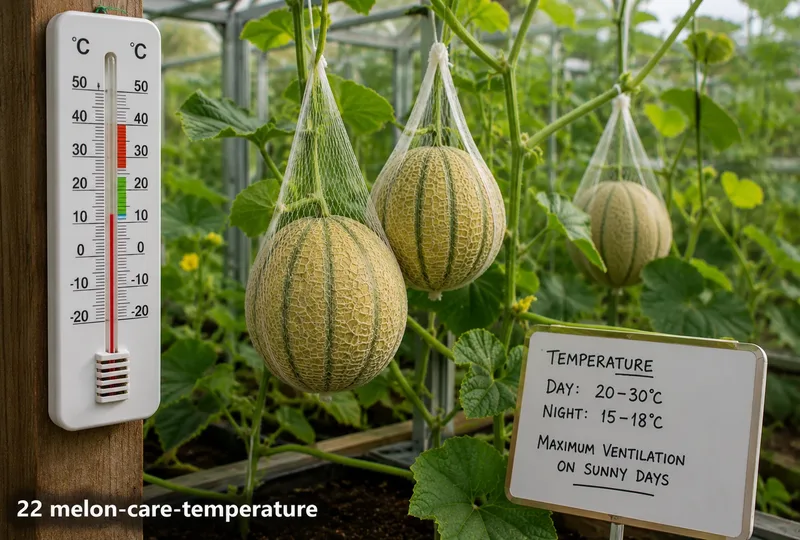
Consistent warmth is the single most important factor for melon success in the UK. Maintain a minimum night temperature of 18°C and a daytime target of 25–30°C. In practice, an unheated polytunnel or greenhouse achieves these temperatures in a warm UK summer from May onwards. In cool summers, supplementary heating is needed. Open ventilators during the hottest part of the day to prevent temperatures exceeding 35°C — above this, plants stop growing and flowers abort. A maximum-minimum thermometer inside the growing structure allows accurate temperature monitoring.
💧 Watering
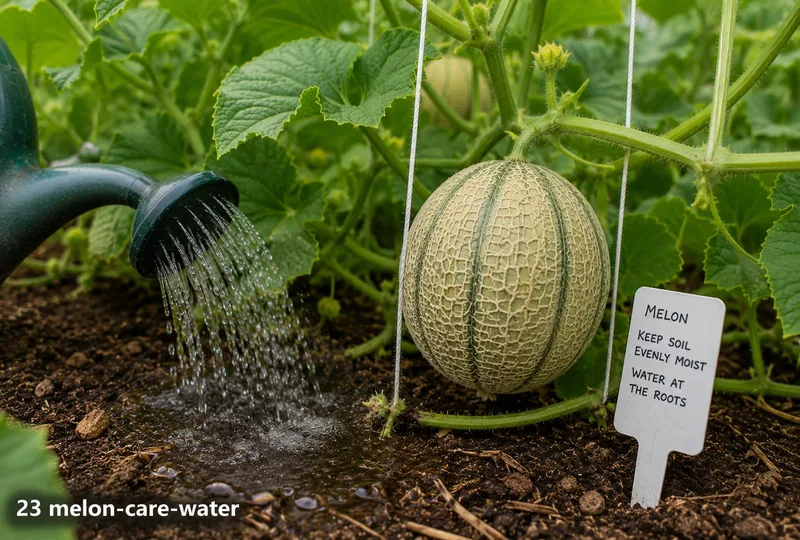
Water consistently at the base — never overhead, as wet foliage invites powdery mildew. Keep soil evenly moist but never waterlogged. Inconsistent watering causes fruit cracking and aborting. From fruit set, water regularly and feed weekly with a high-potash liquid fertiliser. In the 2 weeks before expected ripeness, reduce watering slightly to concentrate sugars in the developing fruit.
🍈 Detecting Ripeness
Judging melon ripeness is the most skilled aspect of growing them. Signs of readiness: an intense, sweet fragrance develops at the stalk end; the skin softens slightly to gentle finger pressure near the stalk; the stalk begins to crack and separate from the fruit naturally; the skin colour may change (variety-dependent). Do not rely on any single sign — use all of them together. A melon picked one week too early is disappointing; a perfectly ripe home-grown melon is one of the finest things a kitchen garden can produce.
10 Watch Out For
Warning
Powdery mildew coats leaves in white powder in warm, dry conditions — ensure good ventilation and water at the base. Aphids colonise shoot tips — treat with soap spray. Red spider mite thrives in hot, dry greenhouse conditions — mist the leaves or introduce predatory mites. Botrytis (grey mould) on fruits in humid conditions — improve ventilation and remove affected fruit immediately. Root rot from overwatering is rapidly fatal.
🐛 Insects & pests
🕷 Spider Mite — Fine, silky webbing on the underside of leaves and between growing tips — the definitive identification sign
🐜 Aphids (Blackfly & Greenfly) — Curled, distorted, or stunted growing tips — aphids inject saliva that causes leaf curl to protect them
🐌 Slugs & Snails — Silver slime trails on leaves, soil, and pots — often the first sign before damage is found
🍄 Diseases to watch
⬜ Powdery Mildew — Powdery mildew is caused by a range of related fungi, each specific to its host plant — courgette mildew cannot infect peas, and vice versa. The characteristic white powdery coating on leaf surfaces appears in warm, dry conditions (unlike downy mildew which prefers cool and wet). Rarely kills plants but severely reduces yield and plant vigour.
🌿 Mosaic Virus (TMV / CMV) — Tobacco mosaic virus (TMV) and Cucumber mosaic virus (CMV) are among the most widespread plant viruses affecting vegetable crops worldwide. TMV is extraordinarily stable — it can remain viable on contaminated hands and tools for years, and even survives in processed tobacco. There is no cure; infected plants must be destroyed.
🩶 Botrytis (Grey Mould) — Botrytis cinerea (grey mould) is the most ubiquitous fungal pathogen in temperate gardens — present in virtually every garden soil and on plant debris. It becomes a disease only when conditions favour it: cool, humid, poorly ventilated environments with damaged or senescent plant tissue. In a greenhouse in autumn it can destroy an entire tomato or grape crop.
Full identification and treatment advice is in the Pests and Diseases sections.
11 Storage & Preserving
🍈 Fresh (Eat at Peak Ripeness)
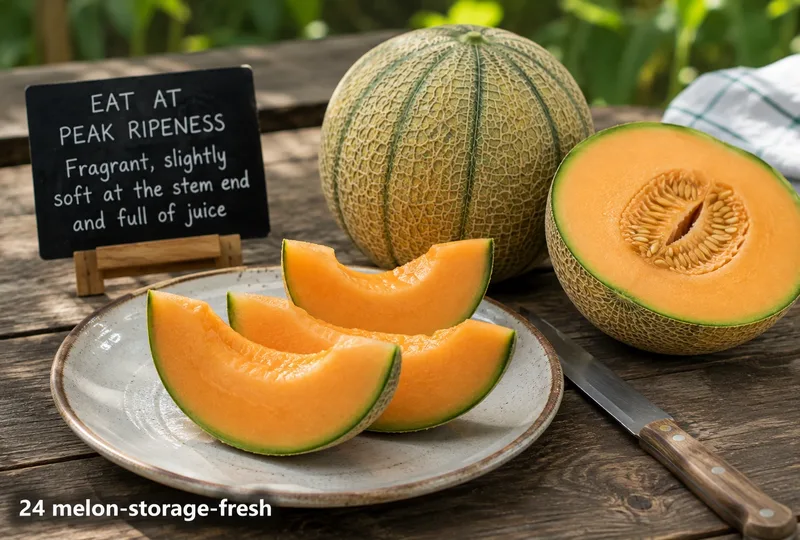
A home-grown melon at perfect ripeness should be eaten the same day or at most the following day. Once ripe, refrigerate for up to 3 days. Serve at room temperature — cold melon loses most of its fragrance. Cut open just before eating. The eating quality of a perfectly ripe home-grown melon versus any shop product is simply not comparable.
🍽️ Melon & Cured Ham
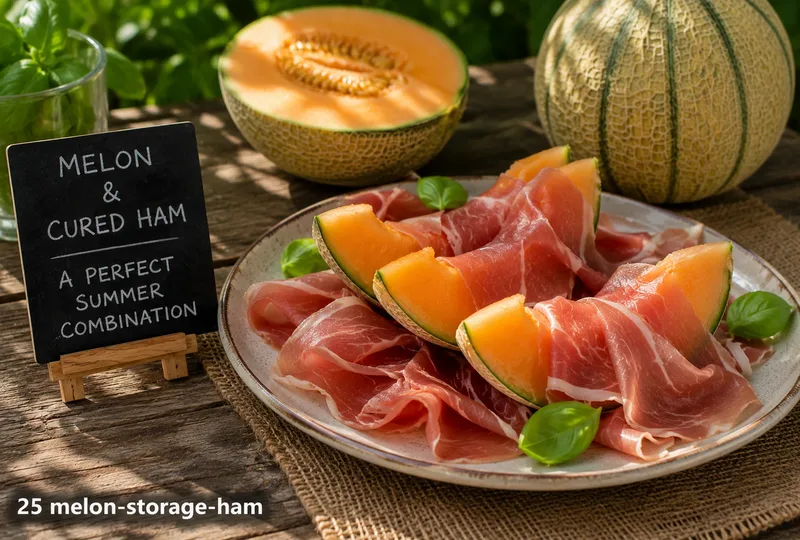
The classic Italian combination of ripe melon with thin-sliced cured ham (prosciutto, serrano, or similar) is perhaps the finest single use of a home-grown melon. The salty-sweet contrast suits any ripe variety. Serve at room temperature, never cold. Also outstanding: melon with feta and mint, melon sorbet, and chilled melon soup.
❄️ Frozen (Sorbet)
Surplus melon flesh can be puréed, sweetened with a little icing sugar and a squeeze of lime, and frozen as sorbet. Freeze in a shallow container and fork through regularly as it freezes to produce a granita, or churn in an ice cream maker. Melon sorbet from home-grown fruit captures the extraordinary fragrance even after freezing.
12 Expert Tips
💡 Sweetheart F1 is the reliable choice
For UK greenhouse and polytunnel growing, Sweetheart F1 consistently outperforms other varieties in reliability, earliness, and fruit quality. It is the first choice for anyone starting with melons.
💡 Restrict to 2 fruits
This advice appears multiple times because it is the single most important yield decision. Two large, perfectly ripened melons from a plant are infinitely more satisfying than four or six that never fully develop. Be decisive — remove excess fruits when small.
💡 The polytunnel advantage
A polytunnel provides better melon-growing conditions than a traditional greenhouse — the higher volume of air, greater soil area, and ability to control ventilation along the full length creates more uniform temperature conditions. In a warm UK summer, a polytunnel in a sunny, sheltered garden produces reliably excellent results.