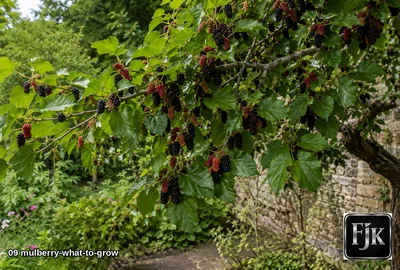
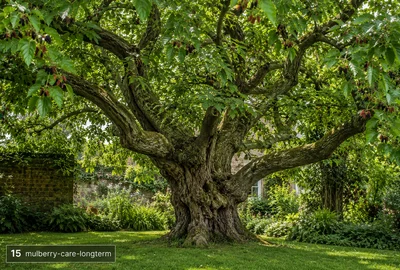
Mulberries are slow to establish — expect 5–7 years before a worthwhile crop; they then fruit prolifically for centuries
Morus nigra (black mulberry) is far superior in flavour to white mulberry — always choose black
Plant in a large, permanent sunny position — mulberries grow into substantial trees and cannot be moved once established
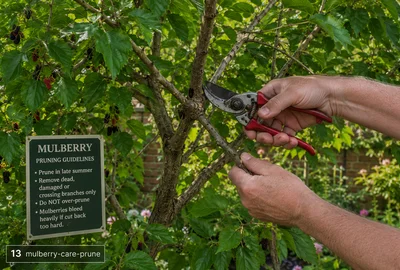
Virtually no pruning is required — remove dead or crossing branches in summer only; mulberries bleed heavily from winter pruning wounds
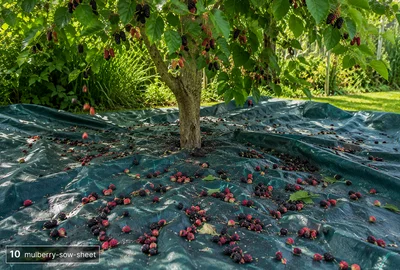
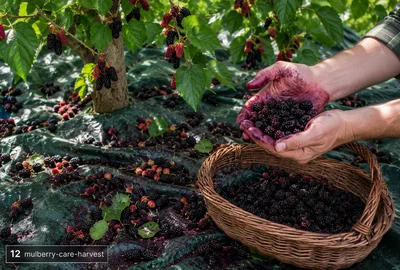
Lay a sheet under the tree at harvest — ripe mulberries fall at the slightest touch and the juice stains anything permanently
🌱 SowPlant container-grown May–Jun or bare-root Nov–Mar
🌾 HarvestAug–Sep
☀ PositionFull sun, sheltered, deep well-drained soil
📐 Spacing5–8m
DifficultyEasy
⚡ Quick facts
Sow
Plant container-grown May–Jun · Bare-root Nov–Mar
Plant
Nov–Mar (bare-root) · May–Jun (container)
Harvest
Aug–Sep
Position
Full sun, warm and sheltered — south aspect ideal
Spacing
5–8m (standard) · 4–5m (restricted or young)
Height
4–8m (mature) · 2–3m (young, slow)
Hardiness
Hardy when established · Young trees vulnerable to hard frost
Lifespan
100–400 years
Difficulty
Easy
01 About
The black mulberry is among the most magnificent fruit trees for a larger garden — slow-growing, long-lived (centuries rather than decades), and producing extraordinary dark fruit with a rich, complex, tart-sweet flavour that bears no resemblance to commercial berry products. Once established, it requires almost no management at all. The patience required to reach the first crop is entirely worthwhile.
02 Rootstock Guide
The rootstock controls the ultimate size of the tree. Choose it first — before the variety. All sizes below are approximate and depend on soil and management.
Mulberries rootstocks
Rootstock
Size
Height
Spacing
Suitable for
Support & notes
Own roots
Standard
4–8m at maturity
6–8m
All garden mulberries
Stake for first 10 years — Mulberries are almost always grown on their own roots. Growth is slow but the eventual tree is magnificent.
Pollination groups
Group SF — Self-fertile — all black mulberry varieties crop well without a partner.
Training forms
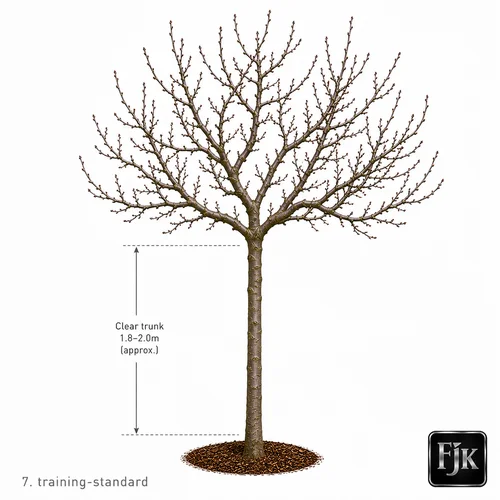
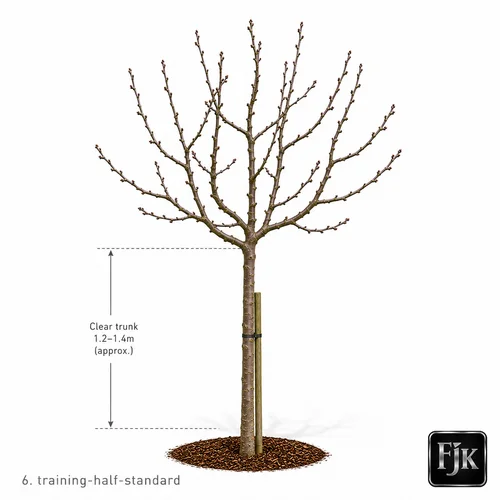
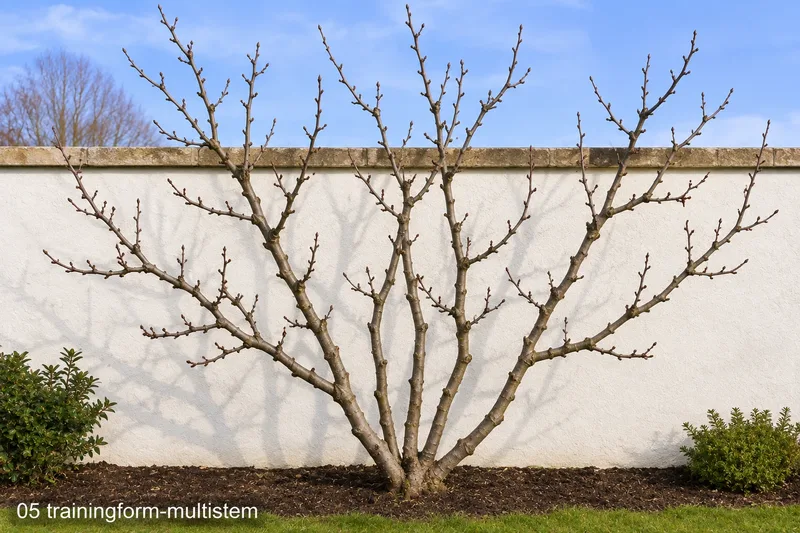
standardhalf-standardmulti-stem
03 Varieties
The number of varieties shown for each crop is based on UK consumption data (2025/26) — the more popular the crop, the more variety choices we include.
Black Mulberry (Morus nigra)
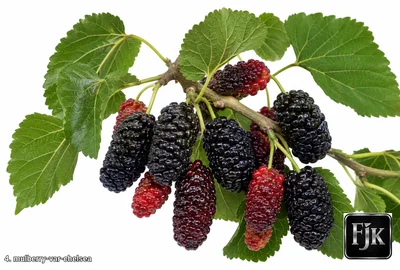
Chelsea
Black mulberry
The most widely recommended black mulberry for UK gardens. Fruits relatively early in the tree's life — often from year 3–4 after planting. Consistent, heavy crops of large, deep red-black fruit with rich, complex flavour. The standard choice. AGM.
Harvest
Aug–Sep
Flavour
Rich, tart-sweet, complex, extraordinary
Fruit size
Large
Yield
High
Disease resistance
Good
🏅 AGM
✓ Self-fertile
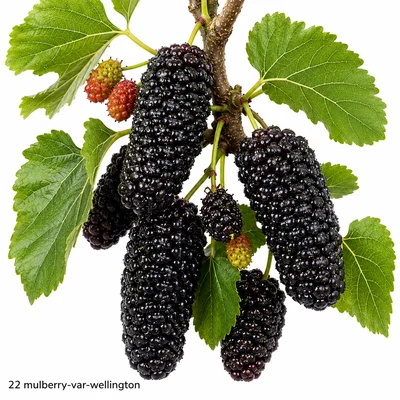
Wellington
Black mulberry
Produces the largest fruit of any common black mulberry variety. Very rich, complex flavour. A large, spreading, vigorous tree — needs ample space. Slower to begin fruiting than Chelsea. Valued for exceptional fruit size and flavour quality.
Harvest
Aug–Sep
Flavour
Very rich, large-fruited, outstanding
Fruit size
Very large
Yield
High
Disease resistance
Good
✓ Self-fertile
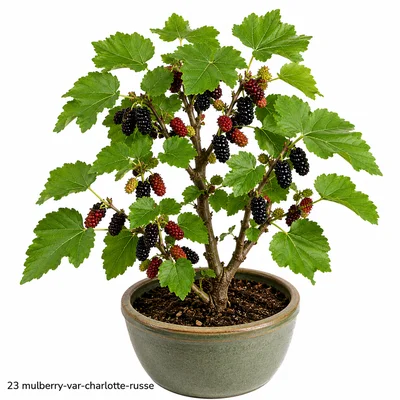
Charlotte Russe
Black mulberry · Compact
A more compact black mulberry — suitable for smaller gardens where the full spread of Wellington or Chelsea would be problematic. Good flavour and reliable yields. A practical choice where space is a constraint.
Harvest
Aug–Sep
Flavour
Rich, good quality
Fruit size
Medium-large
Yield
High
Disease resistance
Good
✓ Self-fertile
Early Fruiting Varieties
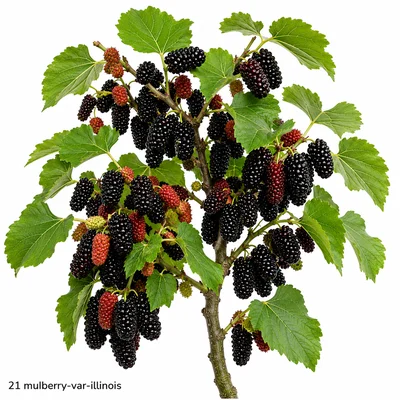
Illinois Everbearing
White × red hybrid
A hybrid mulberry (Morus alba × rubra) that fruits from seed much earlier than black mulberry — sometimes in year 2–3. Very long harvest season from July to September. Milder, sweeter flavour than black mulberry — less complex but very pleasant. A practical choice for those who want mulberries sooner.
Harvest
Jul–Sep
Flavour
Sweet, mild, pleasant — less complex than black
Fruit size
Large
Yield
Very high
Disease resistance
Very good
✓ Self-fertile
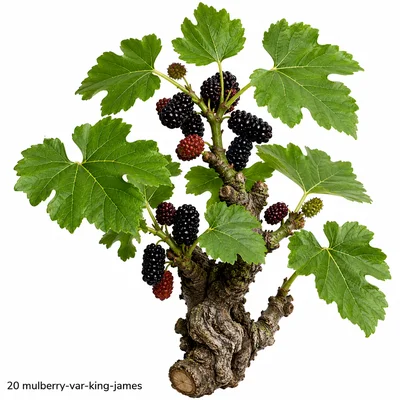
King James
Black mulberry
A heritage black mulberry variety associated with the Jacobean period when mulberry growing was actively promoted in England. Classic black mulberry flavour. Available from specialist heritage nurseries. A variety of historical interest as well as culinary quality.
Harvest
Aug–Sep
Flavour
Rich, classic black mulberry
Fruit size
Large
Yield
Good
Disease resistance
Good
🏅 AGM
✓ Self-fertile
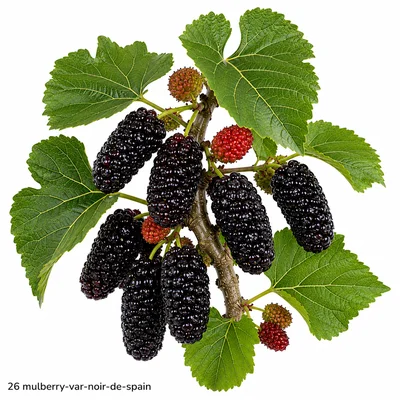
Large Black (Noir de Spain)
Black mulberry
A Spanish-origin black mulberry with very large fruit ripening late — into October in the south. Rich, complex flavour. Extends the mulberry season beyond most UK varieties. Needs a warm position to ripen fully in cooler UK gardens.
Harvest
Sep–Oct
Flavour
Very rich, late-season, complex
Fruit size
Very large
Yield
High
Disease resistance
Good
✓ Self-fertile
Container & Compact
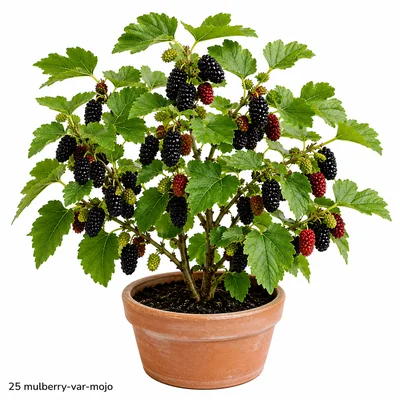
Mojo Berry
Compact black mulberry
A recently introduced very compact black mulberry variety bred for container growing and smaller gardens. Reaches only 1.5–2m. Good, sweet flavour. Fruits from year 2–3 in containers. A practical solution for gardens too small for a standard mulberry tree.
Harvest
Aug–Sep
Flavour
Sweet, rich, good
Fruit size
Medium
Yield
Moderate
Disease resistance
Good
✓ Self-fertile
🪴 Container
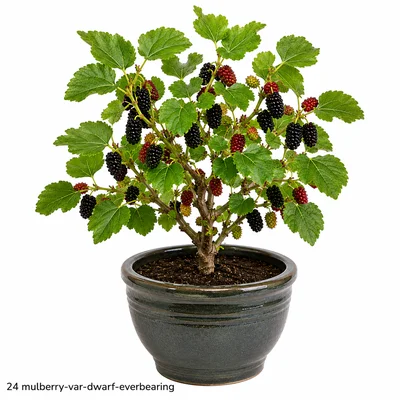
Dwarf Everbearing
Compact hybrid
A compact, container-suitable mulberry reaching 1.5–2m with a long fruiting season. Milder flavour than black mulberry. Good for patios and smaller spaces where the true black mulberry's eventual size would be unmanageable.
Harvest
Jul–Sep
Flavour
Sweet, mild, pleasant
Fruit size
Medium
Yield
Moderate
Disease resistance
Good
✓ Self-fertile
🪴 Container
04 Where to Source
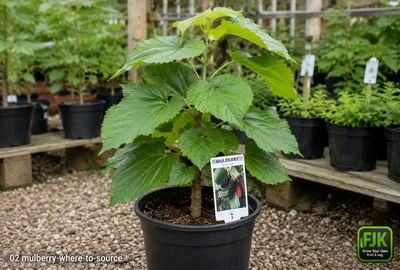
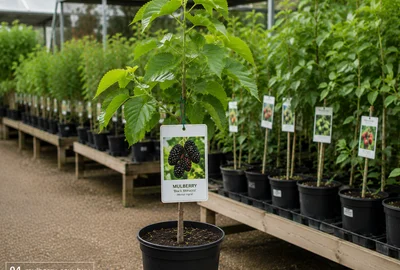
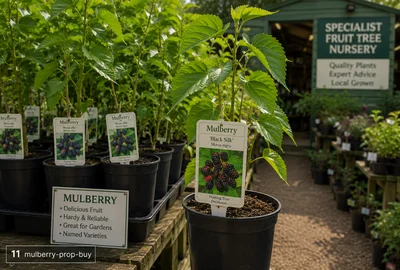
Container-grown black mulberry (Morus nigra) trees are sold by specialist fruit nurseries; bare-root stock is far less commonly available and establishes less reliably. Chelsea is the most widely stocked and most reliable early-fruiting variety. Buying the largest, most established container plant affordable is worthwhile — it noticeably shortens the years to a first meaningful crop.
05 Planting Options
🌳 Open Ground — Permanent Position
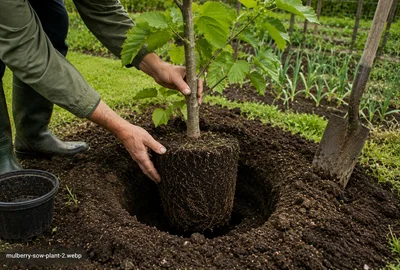
A mulberry is genuinely a hundred-year tree, so the planting position deserves more thought than almost any other fruit in the garden: full sun with shelter from cold winds, and enough space that it will never need moving or hard-pruning to fit. Container-grown trees establish better than bare-root stock — plant in May or June when the soil is warm, into a generous 60cm-wide, 50cm-deep hole with excellent drainage, since mulberries dislike waterlogged roots. Stake firmly for the first decade, since young trees are brittle and top-heavy relative to their root system at that stage. Once the tree is established and fruiting, laying a sheet or groundsheet under the canopy before harvest makes collecting the soft, easily-bruised fruit far more practical than picking by hand.
Choose the permanent position with great care
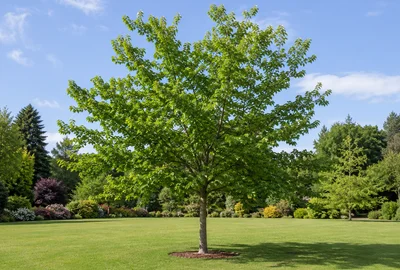
A mulberry is a 100-year tree. Choose a position in full sun with shelter from cold winds where the tree can spread without obstruction. Allow 6–8m in every direction for the mature canopy. This decision matters for a very long time.
Plant container-grown in late spring
Container-grown mulberries establish better than bare-root stock. Plant in May or June when the soil is warm. Mulberries are difficult to transplant successfully once established — plant in the permanent position from the start.
Dig a generous hole with good drainage
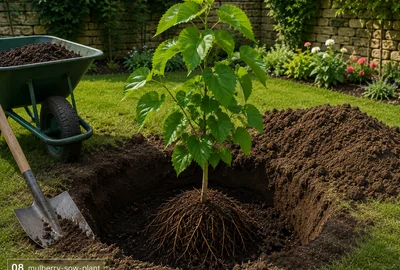
Dig a hole 60cm wide and 50cm deep. Incorporate generous compost. Ensure excellent drainage — mulberries resent waterlogging. The graft union (if present) should be 10–15cm above soil.
Stake for the first 10 years
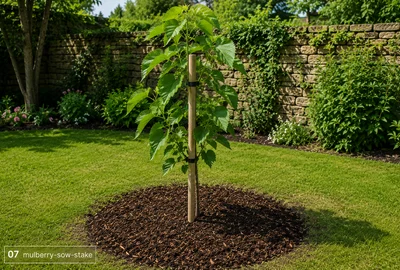
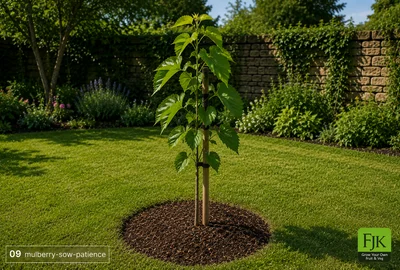
Young mulberry trees are brittle and top-heavy relative to their root system. Install a substantial stake and check it annually. Old trees eventually need main branches propped with forked supports as they spread and become laden with fruit.
Place a sheet under the tree before harvest
Lay an old sheet, tarpaulin, or groundsheet under the tree canopy before the harvest season begins. Ripe mulberries fall naturally — the sheet makes collection easy and avoids the staining of ground picking.
06 Companion Planting
✅ Grow nearby
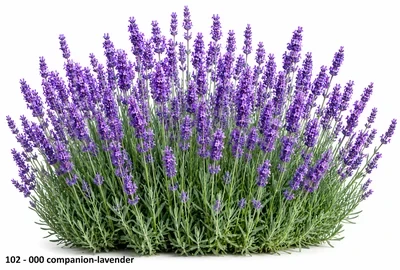
💜 Lavender
Attracts pollinators and adds a decorative, low-maintenance border nearby.
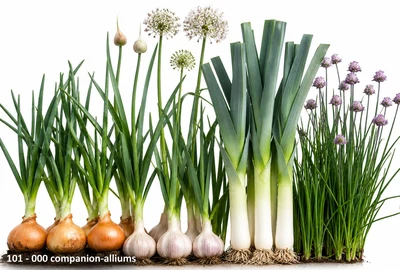
🧄 Alliums
Onion-family plants grown nearby are thought to help deter pests with their strong scent.
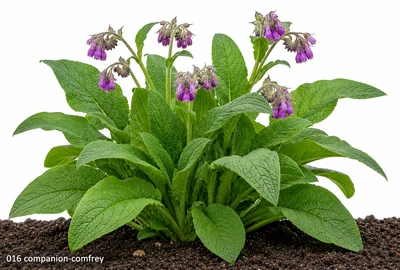
🌿 Comfrey
Deep roots mine nutrients from the subsoil; cut leaves make an excellent potassium-rich mulch.
07 Sowing — How To
Container-grown is strongly preferred
Bare-root mulberries are difficult to establish successfully. Buy a 2–3 year old container-grown plant from a specialist nursery for the best chance of establishment. Older plants with a larger root system establish even better.
Plant in warm soil, May–June
Warm soil is important for mulberry establishment. May and June are ideal. Water regularly through the first summer — drought in the first year causes severe setback.
Prepare for a 5-year wait
Most black mulberries take 3–5 years to produce their first significant crop after planting. The wait is entirely normal — it does not indicate a problem with the tree.
Regional sowing timing
Region
Sow / plant
Harvest
Notes
Scotland & Far North
May–Jun
Aug–Sep
Northern England
May–Jun
Aug–Sep
Midlands & Wales
May–Jun
Aug–Sep
Ireland & Isle of Man
May–Jun
Aug–Sep
South & SE England
May–Jun
Aug–Sep
South Coast & SW
May–Jun
Aug–Sep
08 Using a Propagator
Mulberries can be propagated from hardwood cuttings but this requires specialist technique and patience. Purchase container-grown plants from specialist nurseries for the most reliable establishment.
Heated propagator
Not Recommended — Purchase established plants. Home propagation from cuttings is possible but slow and unreliable compared to buying nursery-grown stock.
Buy established plants
For reliability, always purchase 2–3 year old container-grown black mulberry from a specialist nursery. The additional cost compared to propagating your own is entirely justified by the reduction in establishment time.
09 Soil Requirements
pH
6.0–7.5
Best
Loam, Clay loam
Tolerates
Sandy loam, Clay
Avoid
Waterlogged, Shallow chalk
💡 Deep, well-drained but moisture-retentive soil. Tolerates heavier soils well.
10 Ongoing Care
✂️ No Pruning Needed
Mulberries resent pruning and bleed sap copiously from any cut, especially in winter and spring. Routine pruning is unnecessary and actively harmful. Remove dead, damaged, or diseased wood only, and do this exclusively in summer (June–August) when wounds can seal quickly. Never prune in winter or spring when the tree is active with rising sap. Large old mulberry trees often need main limbs propped with forked timber supports as the spreading horizontal branches become heavy with age — this is normal management for old trees.
🫐 Harvesting (The Sheet Method)
Mulberries ripen unevenly over a period of 3–6 weeks in August and September and fall from the tree when fully ripe. The practical harvesting method is to lay an old sheet, groundsheet, or tarpaulin under the canopy before harvest season begins, and collect fallen fruit daily. This avoids the staining caused by picking from the tree and ensures only fully ripe fruit is collected. Shaking branches gently over the sheet accelerates collection. Only ripe (deep red-black, slightly soft) fallen fruit should be eaten — green or pale fruit is unripe and very astringent.
⚠️ Mulberry Stain Warning
The juice of black mulberry is one of the most powerful natural staining agents known — historically used as a fabric dye. It stains skin, clothing, and any surface it contacts. The stain does not wash out from fabric with any normal cleaning. Wear old clothes when harvesting or working near the tree. Place a sheet on the ground. Wash staining from skin immediately with cold water — warm water sets the stain. Accept that the hands and lower arms will be stained purple-red for several days during harvest season.
🌳 Long-term Management
Beyond the first decade of staking and establishment, black mulberries become one of the most self-sufficient fruiting trees available. Annual management consists of: collecting fallen fruit from the sheet during harvest season; removing any dead wood in summer; and supporting any limbs showing signs of structural strain with forked props. The tree will eventually develop a magnificent spreading, gnarled structure. Old mulberry trees are a significant horticultural heritage asset and should be managed carefully.
11 Watch Out For
Warning
Mulberry stains are permanent — plan accordingly for fallen fruit. The tree can be damaged by strong winds in its early years when the trunk is not yet robust — stake for at least 10 years. Birds take ripe mulberries but netting a mature mulberry is impractical — accept some bird loss as part of the harvest. Mulberry heart rot (fungal) can affect very old trees — seek specialist arboricultural advice for ancient specimens.
🐛 Insects & pests
🟤 Scale Insect — Small brown or grey bumps on stems, branches, and the underside of leaves — the scale covers themselves
🐜 Aphids (Blackfly & Greenfly) — Curled, distorted, or stunted growing tips — aphids inject saliva that causes leaf curl to protect them
🍄 Diseases to watch
🩶 Botrytis (Grey Mould) — Botrytis cinerea (grey mould) is the most ubiquitous fungal pathogen in temperate gardens — present in virtually every garden soil and on plant debris. It becomes a disease only when conditions favour it: cool, humid, poorly ventilated environments with damaged or senescent plant tissue. In a greenhouse in autumn it can destroy an entire tomato or grape crop.
⬜ Powdery Mildew — Powdery mildew is caused by a range of related fungi, each specific to its host plant — courgette mildew cannot infect peas, and vice versa. The characteristic white powdery coating on leaf surfaces appears in warm, dry conditions (unlike downy mildew which prefers cool and wet). Rarely kills plants but severely reduces yield and plant vigour.
Full identification and treatment advice is in the Pests and Diseases sections.
12 Storage & Preserving
🫐 Fresh (Use Same Day)
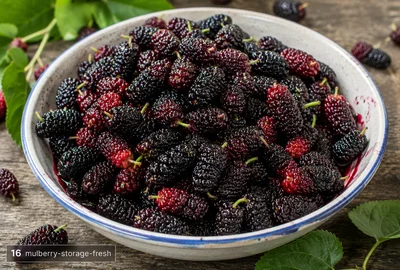
Ripe mulberries are extremely perishable — they deteriorate within hours of picking at room temperature. Refrigerate immediately after collection and use within 24 hours. The flavour is most intense fresh from the tree, still warm from the sun. A bowl of fresh black mulberries with cream is one of the finest seasonal desserts in the British garden calendar.
🫙 Jam, Cordial & Wine
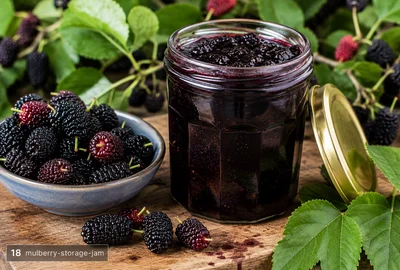
Mulberry jam is deep purple-black with a complex, wine-like, tart-sweet flavour unlike any other fruit. Mulberry cordial, mulberry gin, and mulberry wine are all outstanding uses for a large harvest. Follow a tested recipe.
❄️ Frozen
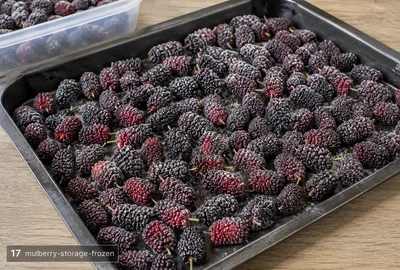
Mulberries freeze very well. Open freeze on a tray then bag. Use within 12 months. Frozen mulberries in crumbles, sauces, and ice cream are excellent. They lose none of their extraordinary flavour through freezing.
13 Expert Tips
💡 The tree of centuries
Unlike any other fruiting plant in the kitchen garden, a black mulberry tree planted today may still be producing fruit in 200 years. It is genuinely a gift to future generations. This long-term perspective — combined with the extraordinary flavour of the fruit — makes the mulberry a unique and profound horticultural choice.
💡 Chelsea is the best UK variety
Of the black mulberry varieties available in the UK, Chelsea (also sold as Chelsea Mulberry) is the most reliable for first fruiting, cropping consistency, and adaptation to British conditions. It crops earlier in the tree's life than most varieties and reliably produces good harvests even in average UK summers.
💡 Accept the stain
The impossibly deep purple-red juice that stains everything is not a problem to be managed — it is evidence of the extraordinary richness of the fruit. No commercial fruit produces anything comparable. Plan the garden accordingly (keep away from paved areas), wear old clothes at harvest, and embrace the brief seasonal spectacle of a loaded mulberry tree in August.