Full sun, sheltered — tolerates moist and heavy soil
Spacing
3.5–5m
Height
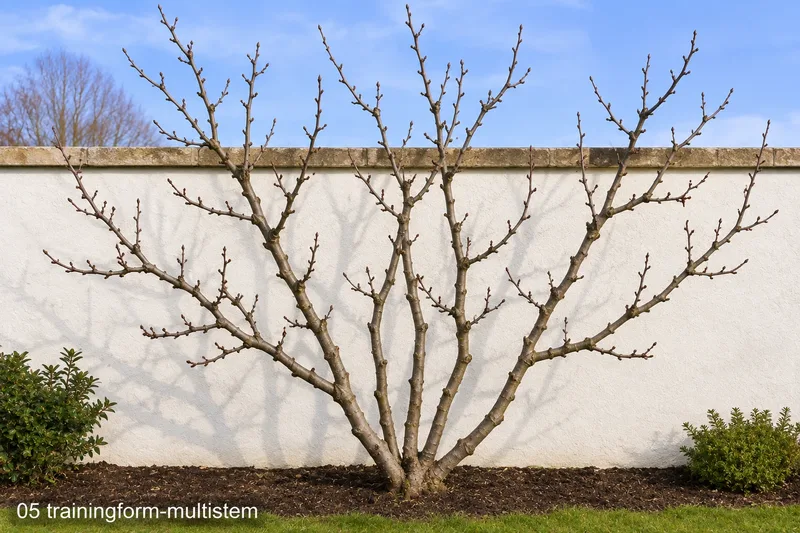
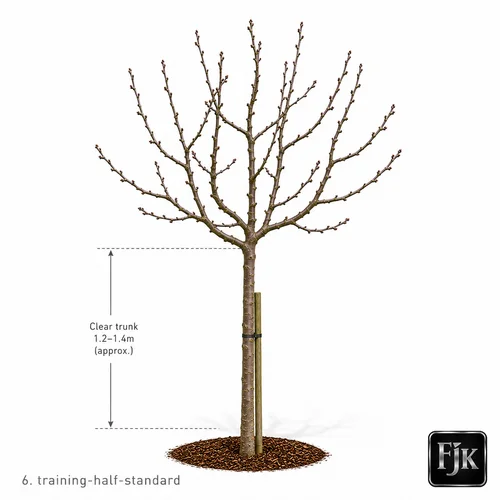
3–5m (multi-stem or half-standard)
Hardiness
Hardy — flowers late enough to avoid most spring frosts
Lifespan
50–100 years
Difficulty
Easy
01 About
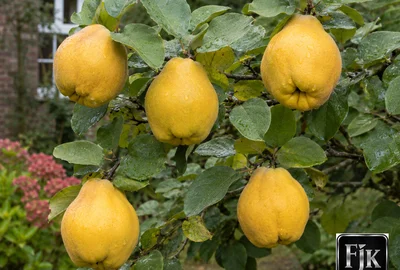
One of the most beautiful and underrated fruit trees in the British garden. Quince produces large, golden, intensely aromatic fruits in October and November — inedible raw but transformed into outstanding jelly, membrillo, and cheese by brief cooking. The tree itself is ornamental year-round: large white-pink flowers in May, architectural golden fruit in autumn, and excellent winter structure.
02 Rootstock Guide
The rootstock controls the ultimate size of the tree. Choose it first — before the variety. All sizes below are approximate and depend on soil and management.
Quinces rootstocks
Rootstock
Size
Height
Spacing
Suitable for
Support & notes
Quince A
Semi-vigorous
3–5m
4–5m
Multi-stem · Half-standard · Most gardens
Stake for 3–5 years — The standard rootstock for quince trees. Well-suited to most UK gardens and soils.
Own roots (some varieties)
Variable
Variable
Variable
Larger gardens
Stake initially — Some quince varieties are grown on their own roots — vigorous but long-lived. Less commonly available.
Pollination groups
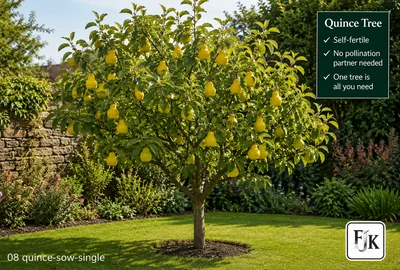
Group SF — Self-fertile — all common quince varieties set a full crop without a pollinator. A single tree is sufficient.
Training forms
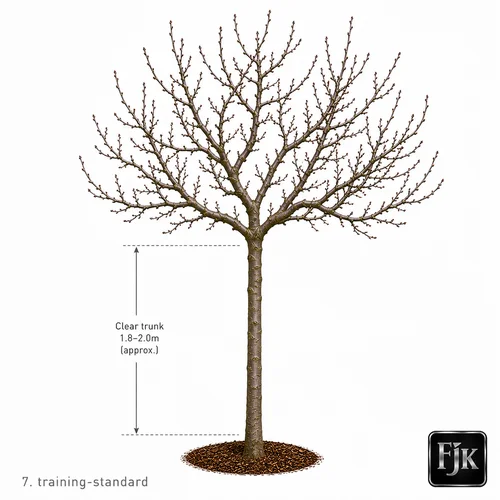
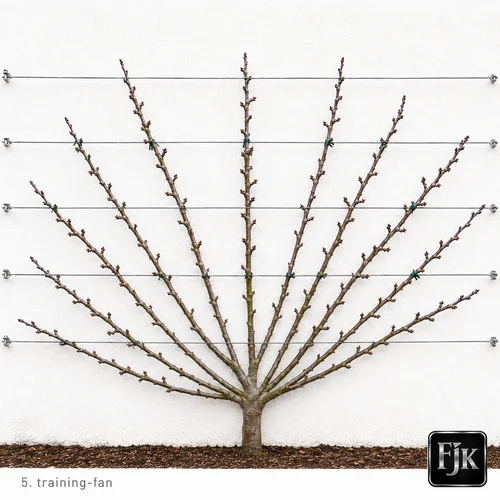
multi-stemhalf-standardstandardfan
03 Varieties
The number of varieties shown for each crop is based on UK consumption data (2025/26) — the more popular the crop, the more variety choices we include.
Large Fruited
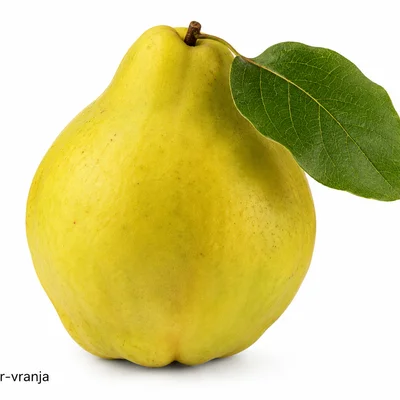
Vranja
Self-fertile · Late
The most vigorous and heaviest-cropping quince — producing very large, pear-shaped, golden fruit with outstanding aromatic flavour. The standard benchmark variety for UK gardens. Very productive once established. Not the most compact tree — allow adequate space.
Harvest
Oct–Nov
Flavour
Rich, aromatic, excellent for jelly
Fruit size
Very large
Yield
Very high
Disease resistance
Good
✓ Self-fertile
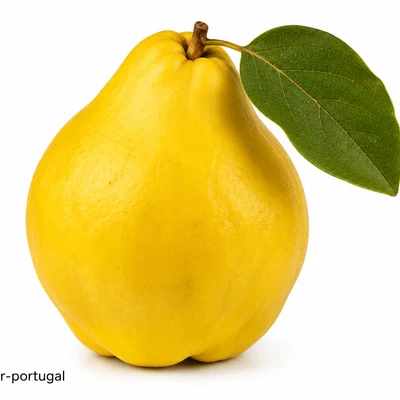
Portugal
Self-fertile · Early
The earliest-ripening quince — ready from late September. Very large, tomato-shaped (round) fruit rather than pear-shaped. Strong aromatic flavour. Less blight-resistant than Vranja but valued for the early harvest window and impressive fruit size.
Harvest
Sep–Oct
Flavour
Strong, aromatic, early
Fruit size
Very large
Yield
High
Disease resistance
Moderate
✓ Self-fertile
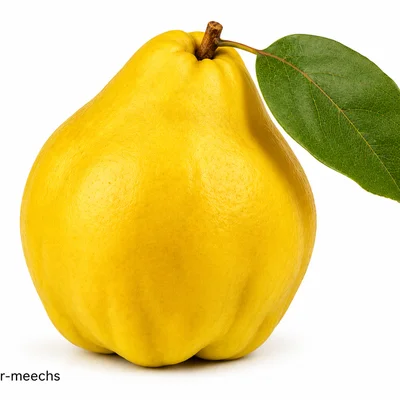
Meech's Prolific
Self-fertile · Mid
The most reliably heavy-cropping quince available. Pear-shaped, golden fruit with classic quince aromatic flavour. Very good blight resistance. The best choice where maximum yield is the priority.
Harvest
Oct
Flavour
Rich, classic, excellent for preserves
Fruit size
Large
Yield
Very high
Disease resistance
Good
✓ Self-fertile
Compact & Garden-friendly
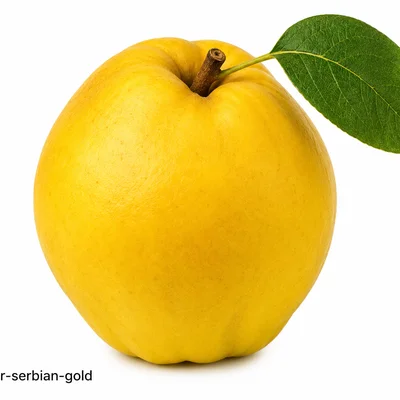
Serbian Gold
Self-fertile · Mid
A compact-habited quince suitable for smaller gardens — reaches 3m rather than the 5m+ of Vranja. Golden, round-pear shaped fruit with pleasantly aromatic flavour and good preserving quality. A practical choice for gardens where space limits a full-sized quince.
Harvest
Oct
Flavour
Sweet (for quince), aromatic
Fruit size
Large
Yield
High
Disease resistance
Good
🏅 AGM
✓ Self-fertile
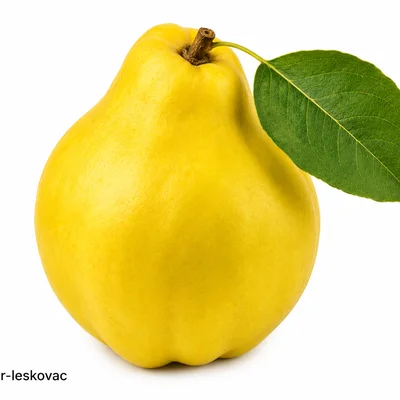
Leskovac
Self-fertile · Mid
A Balkan-origin variety producing very large, high-quality fruit with outstanding aromatic intensity — particularly good for membrillo and quince paste. Less widely available than Vranja but sought out by preservers for the quality of its fruit.
Harvest
Oct–Nov
Flavour
Aromatic, excellent for membrillo
Fruit size
Very large
Yield
High
Disease resistance
Good
✓ Self-fertile
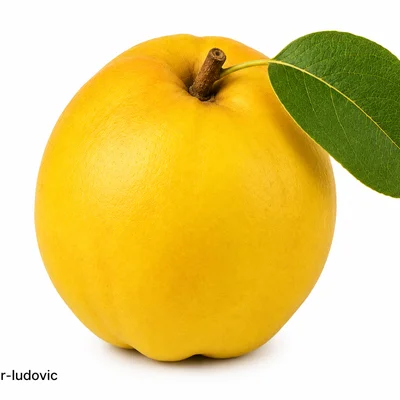
Ludovic
Self-fertile · Mid
A newer French variety with very good disease resistance and reliable heavy crops. Round-shaped fruit with good flavour. More disease-resistant than older varieties, making it a better choice for areas with persistent quince leaf blight problems.
Harvest
Oct
Flavour
Mild, aromatic, pleasant
Fruit size
Large
Yield
High
Disease resistance
Very good
✓ Self-fertile
Heritage & Specialist
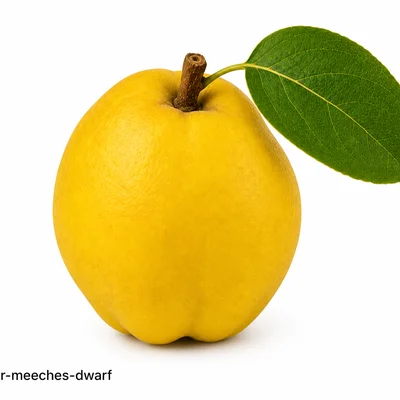
Meeches Prolific (Dwarf)
Self-fertile · Mid
A more compact form occasionally available from specialist nurseries. Suits smaller gardens and even very large containers. Same outstanding cropping characteristic as the standard form but in a more manageable size.
Harvest
Oct
Flavour
Classic quince, good quality
Fruit size
Medium-large
Yield
High
Disease resistance
Good
✓ Self-fertile
🪴 Container
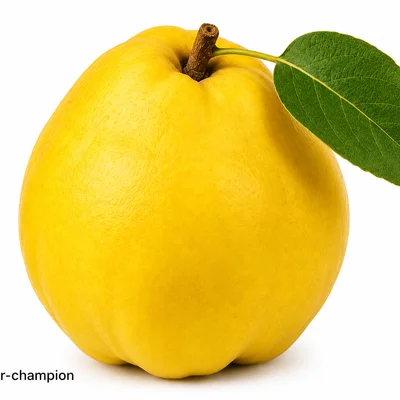
Champion
Self-fertile · Mid
An American-origin variety with slightly milder, sweeter flavour than European varieties — it can even be eaten raw when fully ripe in warm years. Large, round-pear shaped fruit. Less commonly available in the UK but worth seeking for growers wanting a milder-flavoured quince.
Harvest
Oct–Nov
Flavour
Mild, sweet (for quince), versatile
Fruit size
Large
Yield
High
Disease resistance
Good
✓ Self-fertile
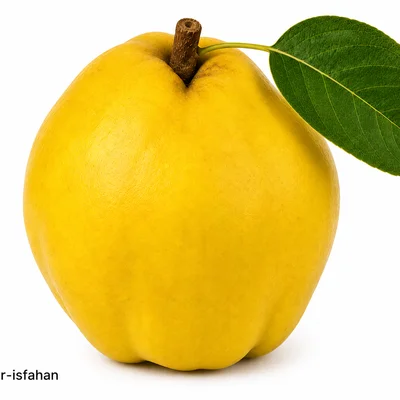
Isfahan
Self-fertile · Mid
A Central Asian variety with exceptionally intense, complex aromatic flavour — the most perfumed of all quince varieties. Particularly valued for jelly and membrillo where the aromatic intensity is the defining quality. Less productive than Vranja but unmatched for fragrance.
Harvest
Oct
Flavour
Intensely aromatic, complex
Fruit size
Medium-large
Yield
Moderate
Disease resistance
Moderate
✓ Self-fertile
04 Where to Source
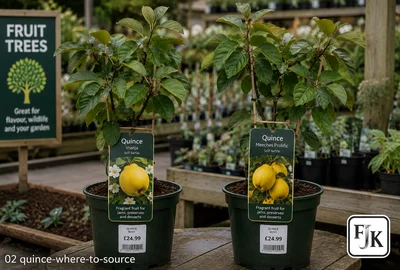
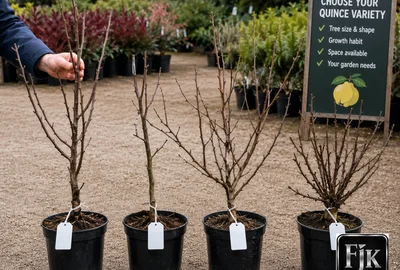
Quince trees are sold as container-grown or bare-root (Nov–Mar) stock by specialist fruit nurseries and some larger garden centres. Vranja, the most widely available variety, can be found relatively easily; less common types such as Meech's Prolific, Serbian Gold or Isfahan are best ordered from specialist online fruit nurseries. As a single self-fertile tree crops well alone, only one is needed.
05 Planting Options
🌳 As a Multi-stem or Half-standard
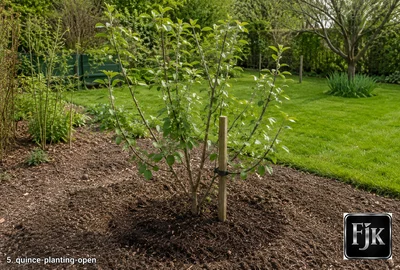
Quince flowers in May, later than apples and pears, which means it largely avoids the late frosts that catch earlier-flowering tree fruit — a warm, sheltered position still gives the best results. Quince also tolerates heavier, wetter soil than most tree fruit, so the planting hole needs less special drainage preparation than, say, an olive or apricot; dig a hole twice the root spread and work in well-rotted compost regardless. Stake at planting with the graft union sitting 10-15cm above soil level, and keep formative pruning minimal for the first three to four winters — just removing crossing and inward-growing branches to build an open, balanced shape. Crucially, quince fruit must be left on the tree until fully golden and aromatic, usually well into October — picked early, it never develops its characteristic flavour.
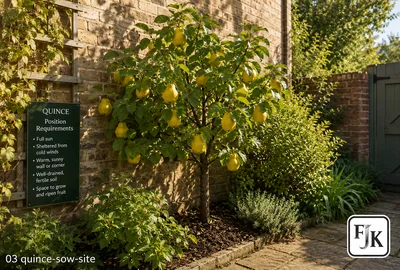
Choose a warm, sheltered position
Quince flowers in May — later than apples and pears — and avoids most late frosts. It produces best in warm, sheltered positions but tolerates more exposure than most tree fruits. It is one of the few trees that succeeds in slightly boggy, moisture-retentive ground.
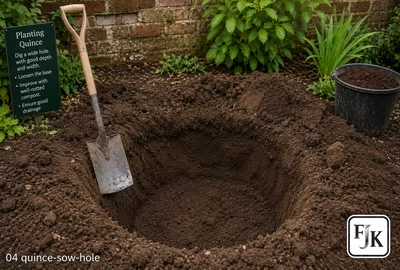
Prepare the planting hole
Dig a hole twice the root spread, incorporating well-rotted compost. Quince tolerates heavier, wetter soil than apples or pears and responds well to organic matter in the planting hole.
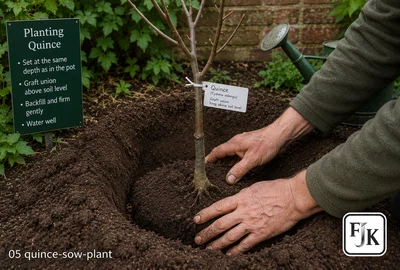
Plant and stake
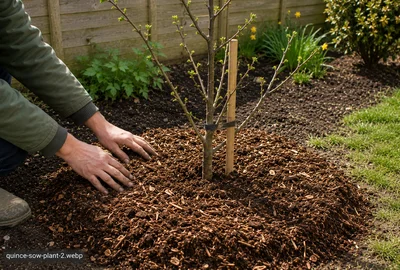
Plant at the same depth as the nursery mark, with the graft union 10–15cm above soil. Firm well, stake for the first 3–5 years, and water in with 15 litres. Mulch in a wide circle.
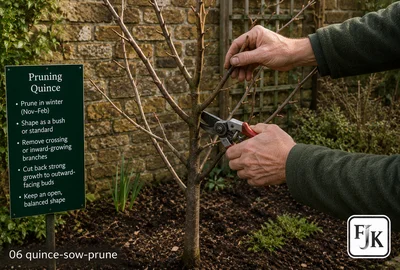
Minimal formative pruning
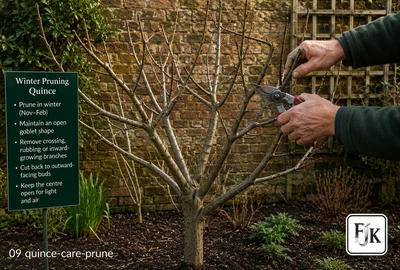
In the first 3–4 winters, remove crossing and inward-growing branches to develop an open, balanced framework. After this, quince requires very little annual pruning beyond removal of dead or diseased wood.
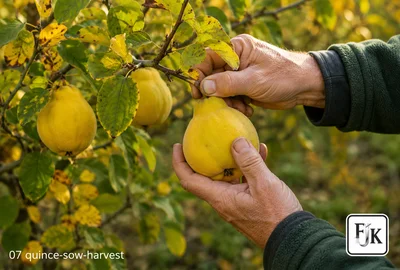
Leave fruit on the tree until fully golden
Quinces must stay on the tree until fully ripe — golden-yellow all over and very aromatic, usually October to November. Picking too early produces hard, flavourless fruit that does not set well in preserves.
06 Companion Planting
✅ Grow nearby
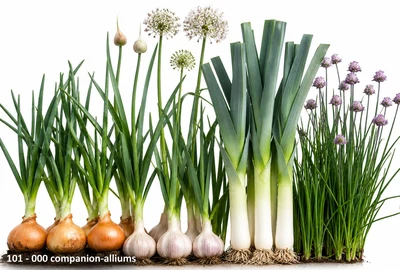
🧄 Alliums
Onion-family plants grown nearby are thought to help deter pests with their strong scent.
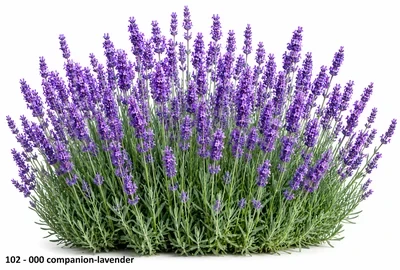
💜 Lavender
Attracts pollinators and adds a decorative, low-maintenance border nearby.
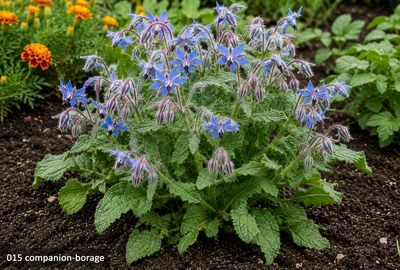
🌸 Borage
Attracts pollinators and beneficial insects, and is said to improve nearby fruit set.
07 Sowing — How To
Single tree is sufficient
All quince varieties are self-fertile — a single tree crops very well without a partner. Choose the variety primarily for fruit shape and yield.
Plant and minimal prune
Plant in dormancy, stake for first few years, mulch generously. Formative pruning is minimal compared to apples and pears.
Regional sowing timing
Region
Sow / plant
Harvest
Notes
Scotland & Far North
Nov–Mar
Oct–Nov
Northern England
Nov–Mar
Oct–Nov
Midlands & Wales
Nov–Mar
Oct–Nov
Ireland & Isle of Man
Nov–Mar
Oct–Nov
South & SE England
Nov–Mar
Oct–Nov
South Coast & SW
Nov–Mar
Oct–Nov
08 Using a Propagator
Quinces are propagated by specialist nurseries from cuttings or grafting. Purchase from fruit nurseries. A single self-fertile tree is all that is needed.
Heated propagator
Not Applicable — Purchase bare-root or container-grown trees from specialist nurseries.
Choose variety for fruit type
Vranja for large pear-shaped fruit. Meech's Prolific for heaviest crops. Portugal for earliest ripening. Serbian Gold for compact habit.
09 Soil Requirements
pH
6.0–7.0
Best
Loam, Clay loam
Tolerates
Clay, Sandy loam, Moisture-retentive
Avoid
Very sandy, Drought-prone
💡 Tolerates heavier, wetter soils than most fruit trees. Moisture-retentive is ideal.
10 Ongoing Care
✂️ Minimal Annual Pruning
Quince is one of the easiest tree fruits to manage — it requires very little annual pruning. In the first 3–4 winters after planting, remove only the most clearly crossing, rubbing, or inward-growing branches to develop an open-centred framework. After the framework is established, annual pruning is mainly limited to removing dead, damaged, or diseased wood and any shoots that are clearly congesting the centre. Unlike apples and pears, there is no complex spur system to manage. Unlike cherries and plums, winter pruning is safe. Quince is genuinely low-maintenance.
🍋 Harvesting at Peak Ripeness
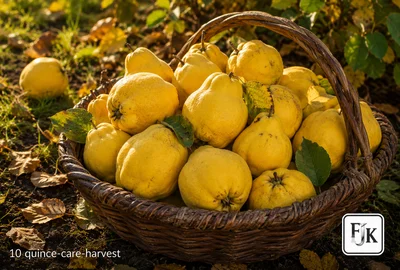
Leave quinces on the tree until fully golden — October to November. Even after leaves have fallen, the fruit should remain until fully ripe: the colour changes from pale green-yellow to deep golden, the skin becomes smooth, and the fruit is intensely aromatic. Pick by lifting and twisting gently. Handle carefully — quinces bruise easily and bruised areas deteriorate rapidly in store. Harvest in dry conditions and handle each fruit individually.
📦 Storing Quinces
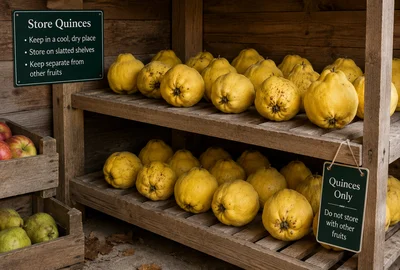
Store quinces in a cool, dark, frost-free place — a garage, shed, or cool pantry is ideal. Wrap individually in newspaper or place on slatted shelves with fruit not touching. Keep them completely separate from other stored fruit — the intense, wonderful quince perfume permeates apples, pears, and anything else stored nearby. Most varieties keep for 4–8 weeks in cool storage. Check weekly and process any that begin to soften promptly.
🌿 Quince Leaf Blight
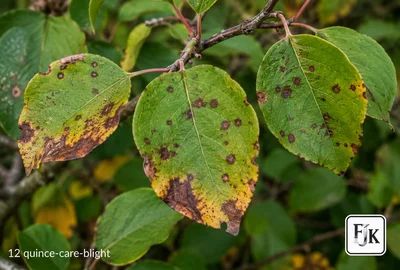
Quince leaf blight (Entomosporium maculatum) is the main disease affecting quince — it causes brown spots with red margins on leaves, eventually causing early leaf drop in wet summers. Repeated severe infections reduce tree vigour. Remove and destroy all affected leaves promptly — do not compost. Rake and remove all fallen leaves in autumn. Improve airflow around the tree with light pruning. Avoid overhead watering. Most quinces tolerate occasional blight without serious long-term damage.
11 Watch Out For
Warning
Quince leaf blight causes brown spots on leaves and early leaf fall in wet summers — collect and destroy all fallen leaves. Fireblight (shoots die back as if scorched, with a characteristic curved shepherd's crook) can affect quince — remove infected shoots 60cm below the infection in summer, sterilising tools between cuts, and never compost infected material. Codling moth affects quince as well as apples — use pheromone traps from May.
🐛 Insects & pests
🟤 Scale Insect — Small brown or grey bumps on stems, branches, and the underside of leaves — the scale covers themselves
🐜 Aphids (Blackfly & Greenfly) — Curled, distorted, or stunted growing tips — aphids inject saliva that causes leaf curl to protect them
🌀 Tortrix Moth — Leaves rolled or tied together with fine silk threads — the caterpillar shelter; unfold carefully to reveal the pest
🍄 Diseases to watch
🌳 Apple & Pear Canker — Nectria canker (Neonectria ditissima) is the most serious fungal disease of apple and pear trees in the UK. It enters through wounds — particularly pruning cuts, leaf scars, and frost damage — and kills the bark in expanding elliptical lesions. Unchecked, a canker encircles a branch and kills everything above it.
🔥 Fire Blight — Fire blight (Erwinia amylovora) is a serious bacterial disease of apple and pear family plants that can kill entire trees rapidly. In England, Scotland and Wales, fire blight is no longer a notifiable disease, so you don't need to report it. On the Isle of Man it is still kept out, so report any suspected case to the island's government plant health service. In Northern Ireland, check with your local plant health service. The "fire" name describes the scorched appearance of infected shoots.
Full identification and treatment advice is in the Pests and Diseases sections.
12 Storage & Preserving
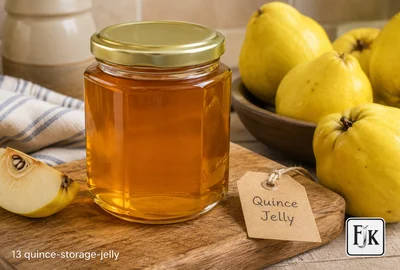
🫙 Quince Jelly
Quince jelly is one of the most beautiful and versatile of all fruit preserves — a clear, deep amber-rose jelly with a perfumed, complex flavour unlike anything commercial. It is outstanding with cheese, cold meats, and pâté. Follow a tested recipe.
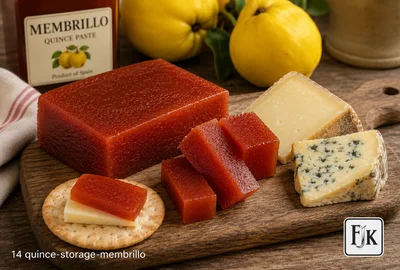
🟡 Membrillo (Quince Paste)
Membrillo is a firm, sliceable quince paste — the traditional Spanish accompaniment to Manchego cheese and a luxury product that sells for high prices. This is the finest use of homegrown quinces. Follow a tested recipe.
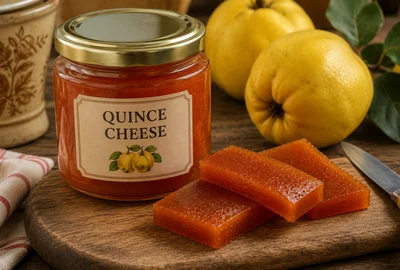
🫙 Quince Cheese & Compote
Quince cheese is a thick, firm preserve similar to membrillo but British in tradition. Quince compote — fruit cooked briefly with sugar and spices — provides an excellent sauce for game, pork, and duck. The unusual combination of sweetness and astringency makes quince one of the most interesting fruits for savoury cooking. Follow a tested recipe.
13 Expert Tips
💡 The most tolerant fruit tree
Quince succeeds in conditions that would fail most other tree fruits: heavy clay, moisture-retentive ground, slightly boggy areas, moderate shade, and exposed aspects. If you have a difficult spot in the garden where other fruit trees have struggled, quince is worth trying.
💡 Ornamental throughout the year
Quince earns its place in the kitchen garden on ornamental grounds alone. Large, white-flushed-pink flowers in May are among the most beautiful of any fruiting tree. The large, golden, woolly-skinned fruit in October is architecturally striking. The winter structure of the gnarled, multi-stemmed tree has character. Few fruiting plants are this decorative.
💡 Add to apple jelly for flavour
Even one or two quinces added to an apple jelly batch transform it completely — the quince perfume infuses the entire batch with aromatic complexity that apple alone cannot produce. A single quince added to a pan of cooking apples makes a dramatically superior result.