Pears flower earlier than apples and are more frost-sensitive — avoid frost pockets and choose a sheltered south-facing wall if possible
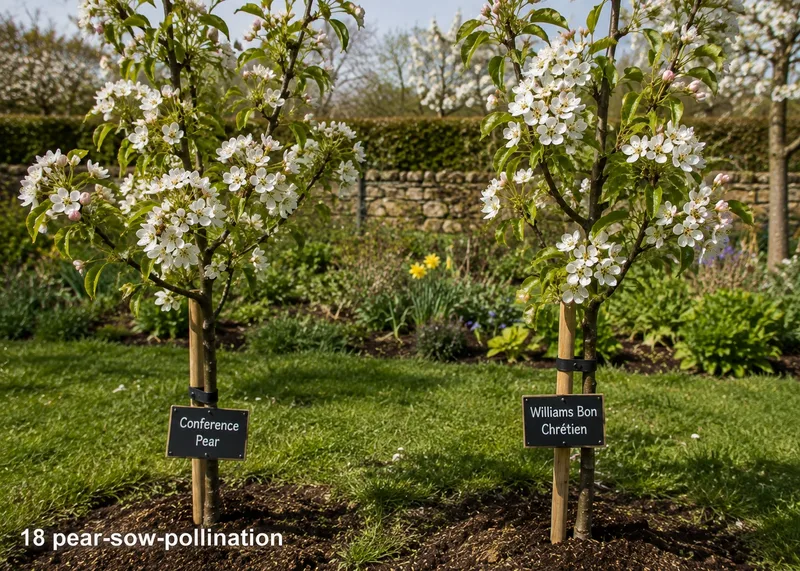
Most pears need two varieties for pollination — Conference is partially self-fertile but crops better with a partner
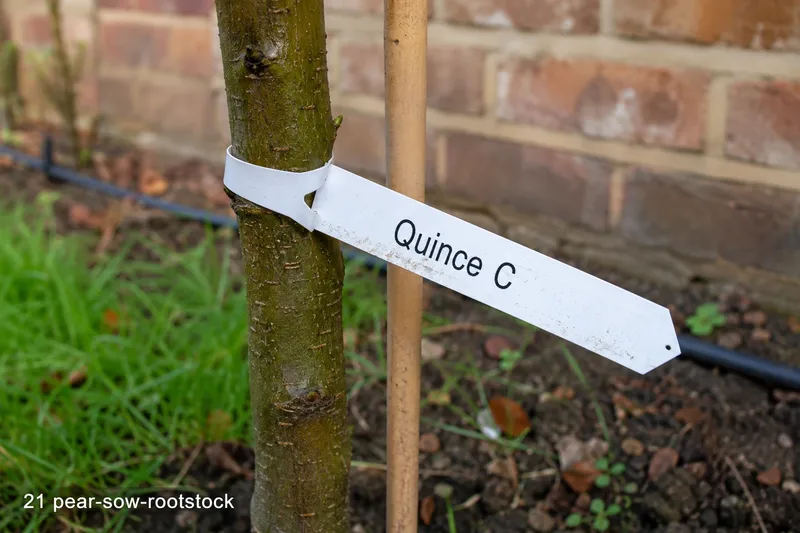
Plant on Quince A rootstock for a manageable garden tree; Quince C for containers
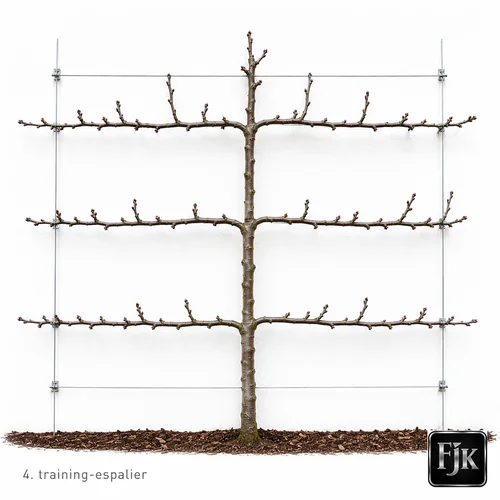
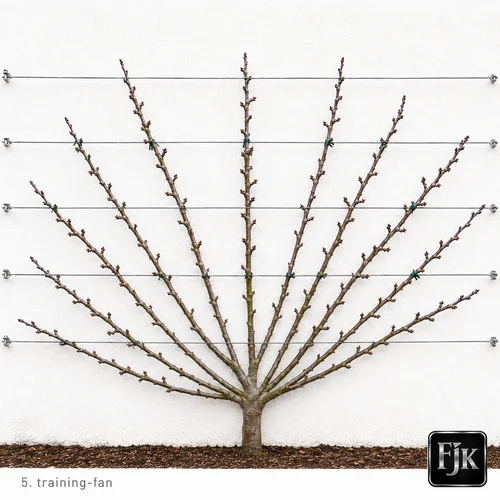
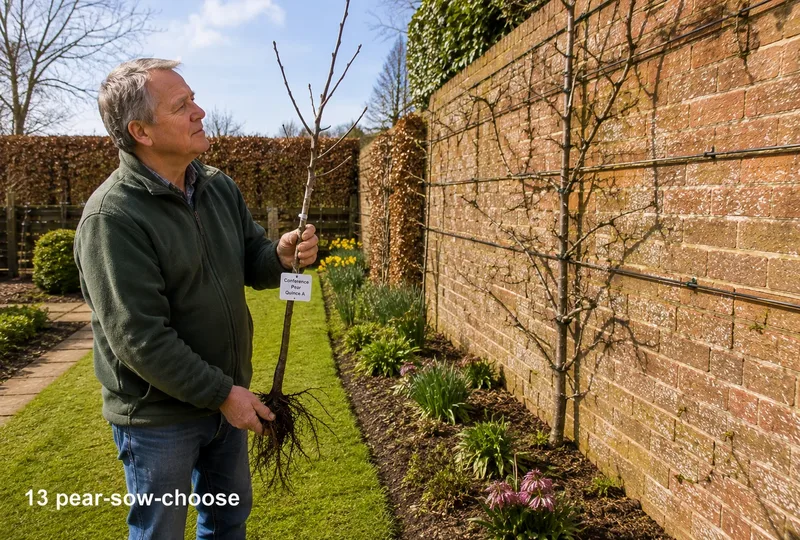
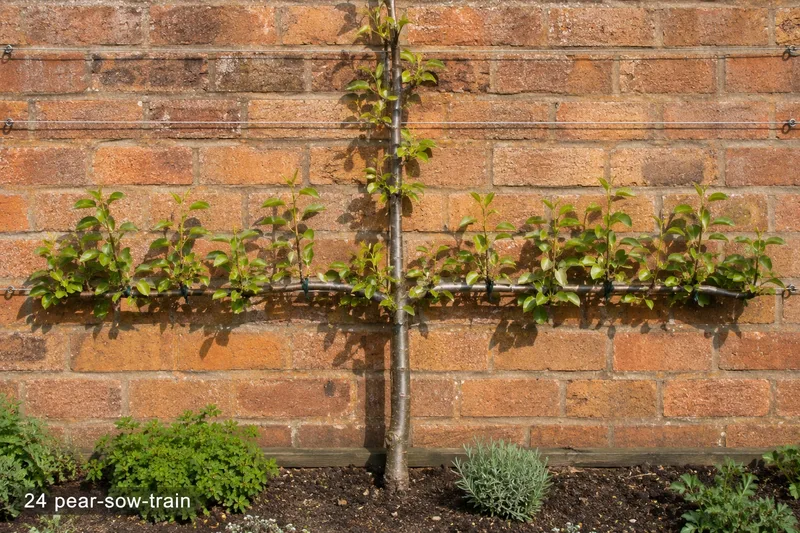
Train as a fan or espalier against a south-facing wall for the best fruit in the UK climate
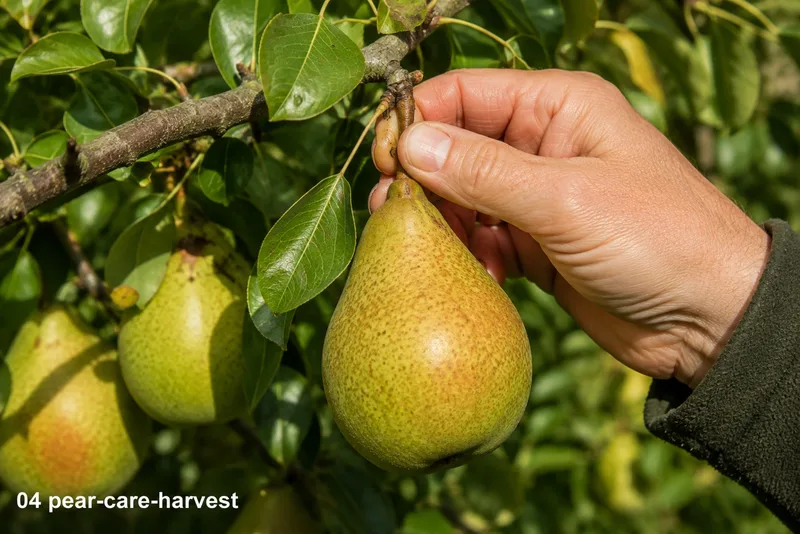
Pears are best picked before fully ripe — harvest when the fruit parts easily from the spur with an upward twist
🌱 SowPlant bare-root Nov–Mar · Container Sep–May
🌾 HarvestAug–Oct (variety dependent)
☀ PositionFull sun, warm and sheltered — south-facing wall ideal
📐 Spacing3–5m (rootstock dependent)
DifficultyModerate
⚡ Quick facts
Sow
Plant bare-root Nov–Mar · Container Sep–May
Plant
Nov–Mar (bare-root) · Sep–May (container)
Harvest
Aug–Oct (varies by variety)
Position
Full sun, warm, sheltered — south or south-west facing wall ideal
Spacing
3m (Quince C) to 5m (Quince A)
Height
3m (Quince C) to 5m (Quince A)
Hardiness
Hardy but flowers killed by frost below -2°C — blossom frost is the main risk
Lifespan
40–80 years
Difficulty
Moderate
01 About
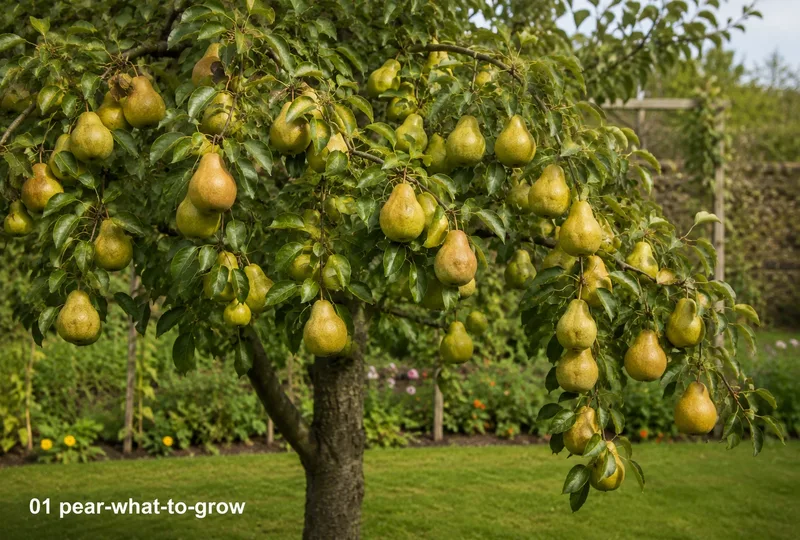
A laden pear tree in September is one of the great pleasures of the kitchen garden. Pears ask for more patience than apples — they take longer to establish and fruit, and demand a warm, sheltered position — but on a quince rootstock in a good spot they repay the wait for 50 years or more. The difference between a shop pear and a home-grown Conference ripened on the tree is profound.
02 Rootstock Guide
The rootstock controls the ultimate size of the tree. Choose it first — before the variety. All sizes below are approximate and depend on soil and management.
Pears rootstocks
Rootstock
Size
Height
Spacing
Suitable for
Support & notes
Quince C
Dwarfing
2.5–3m
2.5–3m
Cordon · Espalier · Fan · Small garden
Stake for 5 years — Best for small gardens. Needs fertile, well-prepared soil. Most widely used for garden pears.
Quince A
Semi-vigorous
4–5m
4–5m
Bush · Half-standard · Espalier · Larger garden
Stake for 3 years — More tolerant of poorer soils than Quince C. Better for less ideal sites.
Pyrodwarf
Dwarfing
2–3m
2–2.5m
Cordon · Very small garden
Permanent stake — Very dwarfing. Only suitable on very fertile, well-watered soil. Less commonly available.
Pear Seedling
Vigorous
6–9m
7–9m
Standard · Orchard · Large garden
Minimal after establishment — For traditional orchard trees. Long-lived. Not suitable for small gardens.
Pollination groups
Group 1 — Very early flowering — late March to early April. Very few UK varieties. Pollinate with groups 1 or 2.
Group 2 — Early flowering — early April. Pollinate with groups 1, 2, or 3.
Group 3 — Mid-season flowering — mid-April. The largest group. Pollinate with groups 2, 3, or 4.
Group 4 — Late flowering — late April to early May. Pollinate with groups 3 or 4.
Group S — Self-fertile — sets a reasonable crop without a pollinator, though yield is improved with cross-pollination.
Training forms
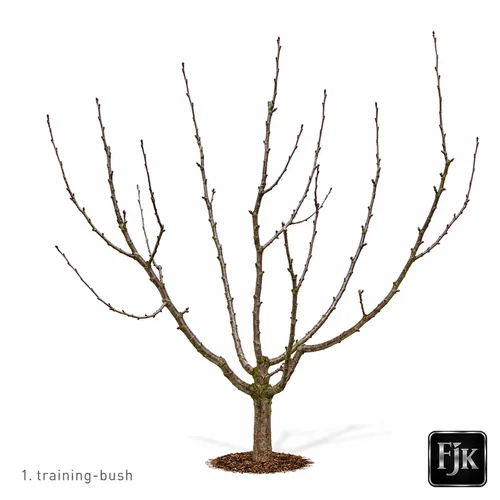
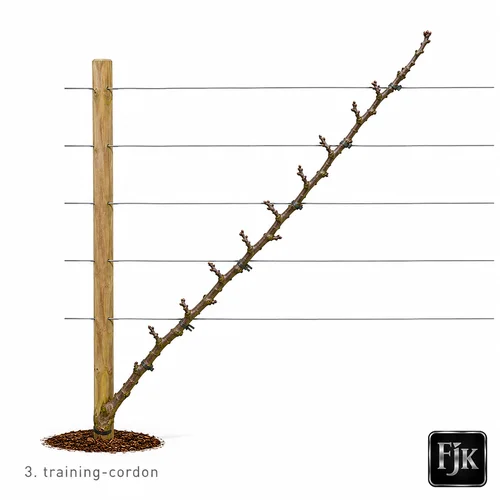
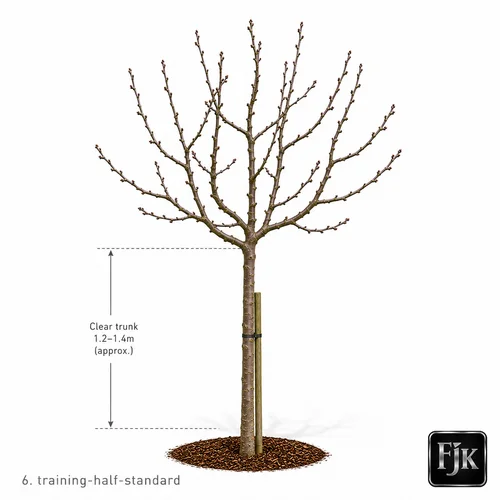
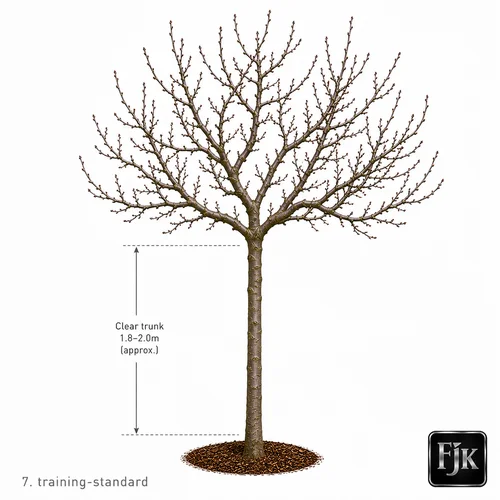
bushcordonespalierfanhalf-standardstandard
03 Varieties
The number of varieties shown for each crop is based on UK consumption data (2025/26) — the more popular the crop, the more variety choices we include.
Dessert — Early
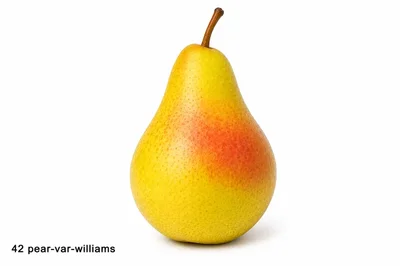
Williams' Bon Chrétien
Dessert · Early
The classic English dessert pear with an immediately recognisable rich, musky flavour. Ripens in August — the earliest significant dessert pear. Best eaten within days of picking at perfect ripeness. Requires a pollinator in group 3 (Conference, Concorde).
Harvest
Aug–Sep
Flavour
Classic, rich, musky — outstanding
Fruit size
Large
Yield
High
Disease resistance
Moderate
Group 3
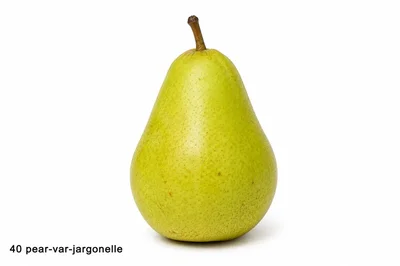
Jargonelle
Dessert · Very early
One of the earliest pears to ripen — ready from late July. Small to medium sized fruit with sweet, juicy, old-fashioned pear flavour. A triploid variety that needs two pollinators. Heritage variety with centuries of cultivation behind it.
Harvest
Jul–Aug
Flavour
Sweet, juicy, distinctive
Fruit size
Medium
Yield
Moderate
Disease resistance
Good
Group 2
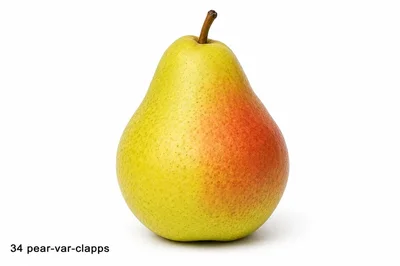
Clapp's Favourite
Dessert · Early
An American-bred early pear producing large, attractive, mild-sweet fruit in August. Heavy crops on a vigorous tree. Good for fresh eating. Susceptible to fireblight in some areas. Best in warmer UK gardens where the August harvest is reliably warm.
Harvest
Aug
Flavour
Mild, sweet, pleasant
Fruit size
Large
Yield
High
Disease resistance
Moderate
Group 3
Dessert — Mid Season
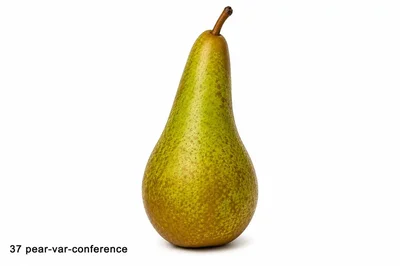
Conference
Dessert · Mid
The most reliable and widely grown pear in the UK. Partially self-fertile. Very heavy, consistent crops of long, green-russet fruit with rich, buttery flavour at peak ripeness. Good disease resistance. The benchmark choice for any garden. AGM.
Harvest
Sep–Oct
Flavour
Rich, sweet, buttery
Fruit size
Large
Yield
Very high
Disease resistance
Very good
🏅 AGM
✓ Self-fertile
Group 3
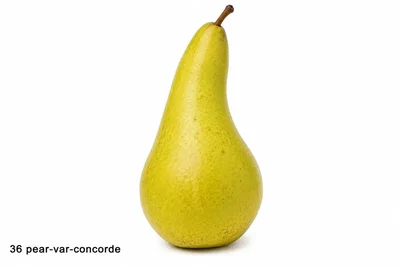
Concorde
Dessert · Mid
Self-fertile and crops from a young age — often producing fruit in year 2–3. Very sweet, smooth-textured fruit. Good disease resistance. An excellent choice for smaller gardens where only one tree is possible and earliness of cropping matters. AGM.
Harvest
Sep–Oct
Flavour
Very sweet, smooth, honeyed
Fruit size
Large
Yield
High
Disease resistance
Very good
🏅 AGM
✓ Self-fertile
Group 4
🪴 Container
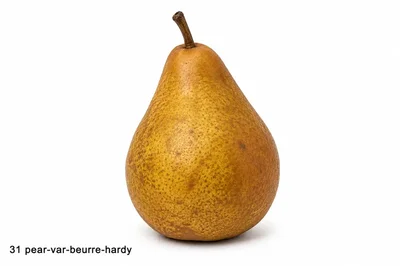
Beurré Hardy
Dessert · Mid
A French variety with a distinctive aromatic, rose-like flavour quite unlike most English pears. Large, russet-brown fruit. Reliable pollinator for Conference. Very good constitution and better than average tolerance of less-than-ideal conditions. Highly valued by pear connoisseurs.
Harvest
Sep
Flavour
Rich, aromatic, rose-scented
Fruit size
Large
Yield
High
Disease resistance
Good
🏅 AGM
Group 3
Dessert — Late
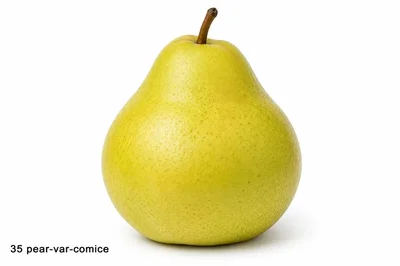
Doyenné du Comice
Dessert · Late
Widely regarded as the finest-flavoured pear in existence — the fruit served at the finest restaurants and sent as the most prestigious gift. Demands a warm, sheltered south-facing wall and fertile soil. In the right conditions, produces superb large fruit of incomparable quality. AGM. Needs Conference or Beurré Hardy as pollinator.
Harvest
Oct–Nov
Flavour
The finest pear flavour — butter-soft, honeyed, complex
Fruit size
Very large
Yield
Moderate
Disease resistance
Moderate
🏅 AGM
Group 4
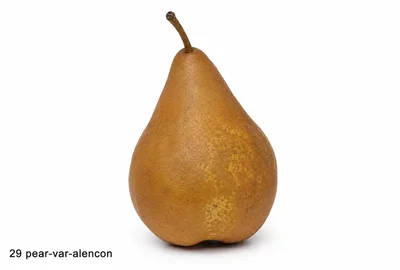
Doyenné d'Alençon
Dessert · Very late
One of the very latest pears, extending the season into November and December. Rich, complex flavour that develops in storage. Needs a warm site to ripen fully. Excellent for those who want to extend the pear season long after Conference and Comice are finished.
Harvest
Nov–Dec
Flavour
Rich, complex, warming
Fruit size
Large
Yield
Moderate
Disease resistance
Good
Group 4
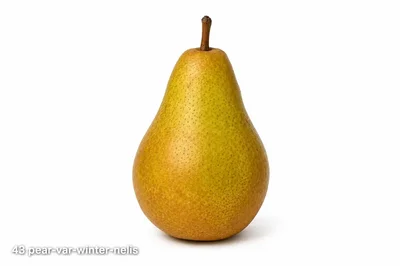
Winter Nelis
Dessert · Late
A late-keeping variety with distinctive spicy, sweet flavour. Small to medium fruit. Stores well into December. Good cropper on a warm wall. Useful for extending the dessert pear season well beyond the main October harvest.
Harvest
Nov–Dec
Flavour
Sweet, spicy, distinctive
Fruit size
Medium
Yield
High
Disease resistance
Good
Group 4
Cooking Pears
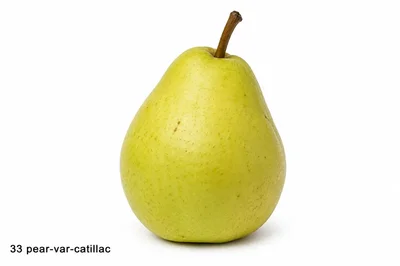
Catillac
Cooking · Very late
The premier cooking pear — very large fruit that is hard and astringent raw but turns a beautiful pink-red when cooked with sugar. Makes magnificent poached pears, tarts, and preserves. Vigorous tree, very heavy cropper. Keeps well in store. Requires a pollinator (group 4).
Harvest
Oct–Nov
Flavour
Sharp when raw · Turns rich pink when cooked
Fruit size
Very large
Yield
Very high
Disease resistance
Very good
Group 4
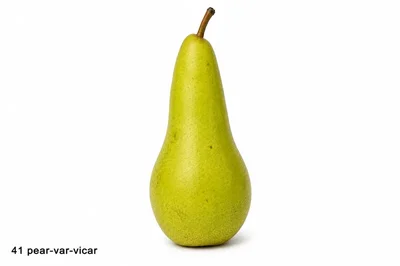
Vicar of Winkfield
Cooking · Late
A heritage cooking pear with long strung-out trusses of fruit. Large, long-necked, and keeps well in store through November and December. Cooks to a rich, sweet texture. An early-flowering variety (group 2) useful as pollinator for early dessert pears.
Harvest
Nov–Dec
Flavour
Crisp when raw · Rich when cooked
Fruit size
Large
Yield
High
Disease resistance
Good
Group 2
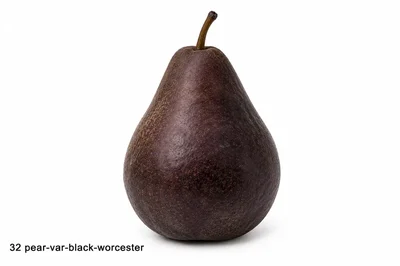
Black Worcester
Cooking · Late
A very old heritage variety dating to at least the 16th century, associated with the Worcester and Herefordshire perry-pear tradition. Dark-skinned, very hard fruit that stores through winter and cooks magnificently. Excellent disease resistance. An outstanding heritage tree for larger gardens.
Harvest
Oct–Dec
Flavour
Hard raw · Rich, warming when cooked
Fruit size
Large
Yield
High
Disease resistance
Excellent
Group 3
Self-fertile & Compact
Beth
Dessert · Early · Compact
A compact, self-fertile variety excellent for smaller gardens and even large containers. Crops reliably and abundantly from year 3. Sweet, juicy fruit in August–September. Good disease resistance. One of the best choices where space is limited. AGM.
Harvest
Aug–Sep
Flavour
Sweet, juicy, light
Fruit size
Medium
Yield
High
Disease resistance
Good
🏅 AGM
✓ Self-fertile
Group 3
🪴 Container
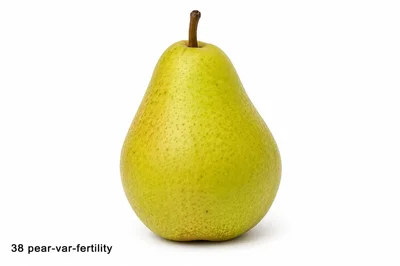
Fertility
Dessert · Mid · Self-fertile
Extremely self-fertile and a prolific cropper — one of the most reliable for gardens where only one tree is possible. Medium-sized fruit with pleasant flavour. Also an excellent pollinator for other pear varieties in group 3. Best known for its reliability rather than outstanding flavour.
Harvest
Sep
Flavour
Pleasant, mild, reliable
Fruit size
Medium
Yield
Very high
Disease resistance
Good
✓ Self-fertile
Group 3
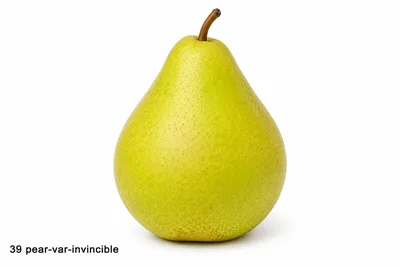
Invincible (Delwinor)
Dessert · Mid · Self-fertile
A newer self-fertile variety with excellent disease resistance and very good flavour. Large, attractive fruit. Crops reliably in cooler UK gardens. Named for its vigour and reliable performance. An increasingly popular choice for gardens where disease resistance and self-fertility are priorities.
Harvest
Sep–Oct
Flavour
Sweet, crisp, juicy
Fruit size
Large
Yield
High
Disease resistance
Excellent
✓ Self-fertile
Group 4
🪴 Container
04 Planting Options
🌳 Bare-root (Nov–Mar)
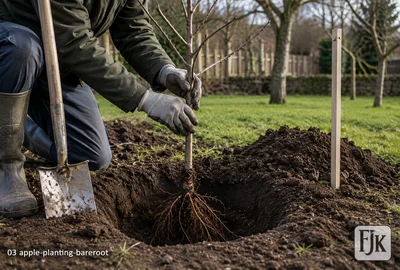
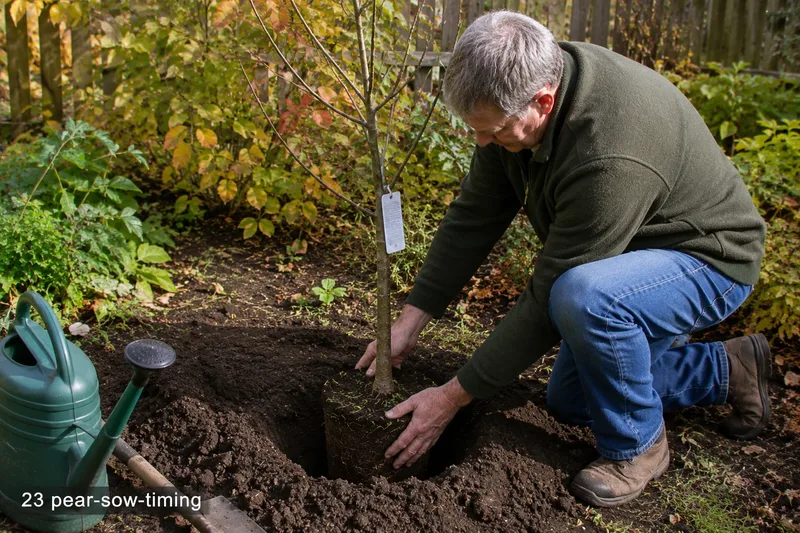
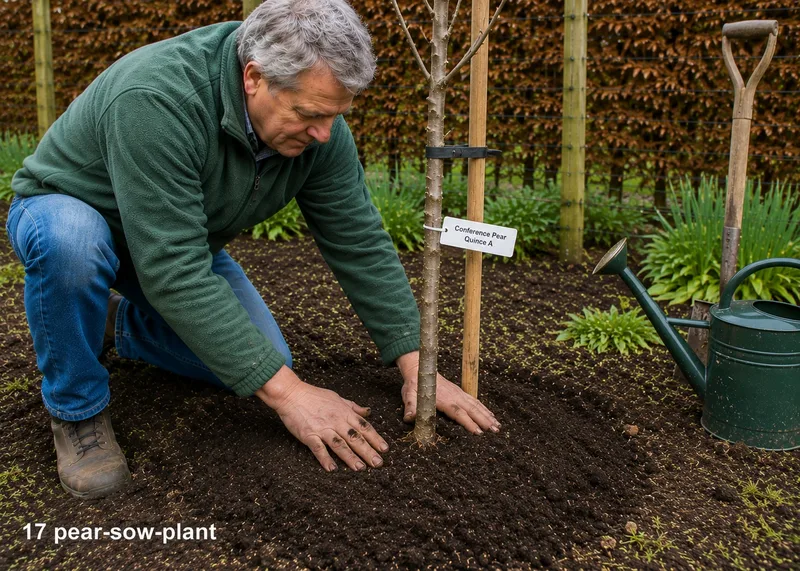
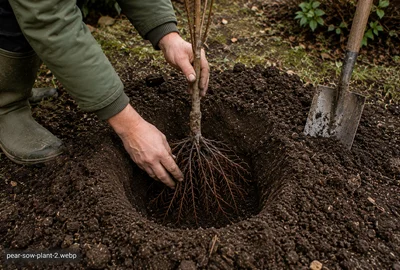
Plant bare-root trees November to March when dormant. Dig a wide, shallow hole, keep the graft union above soil level, stake at 45 degrees, firm well and mulch. Formative pruning at planting builds the framework for years ahead.
Choose rootstock and site
Select Quince C for most garden situations — it gives a manageable 3m tree that fruits from year 3–4. Quince A on poorer soils. Pears need the warmest, most sheltered spot you have — a south or south-west facing wall is the ideal position. Avoid frost pockets at all costs; late frost kills pear blossom completely.
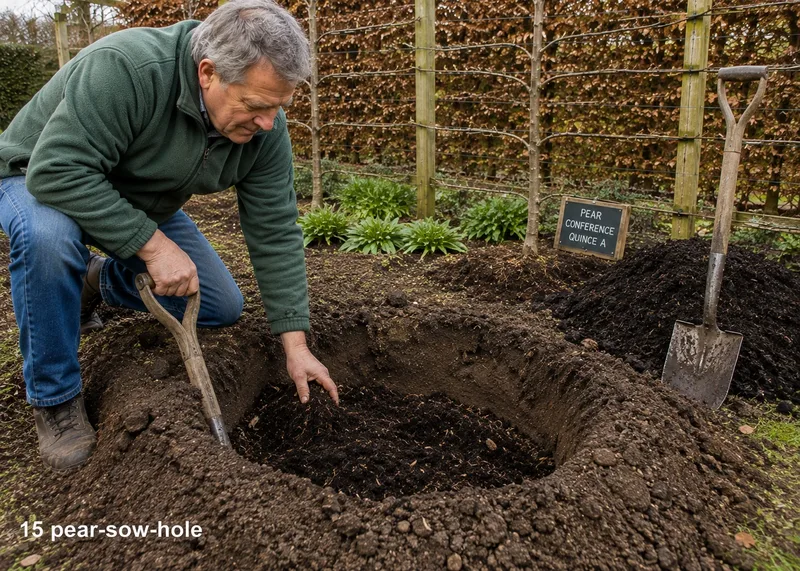
Prepare the planting hole
Dig a hole twice the width of the root system and the same depth. Incorporate well-rotted compost. Do not add fertiliser directly to the hole. On poor or thin soils, pears on Quince C struggle — improve soil significantly before planting or choose Quince A.
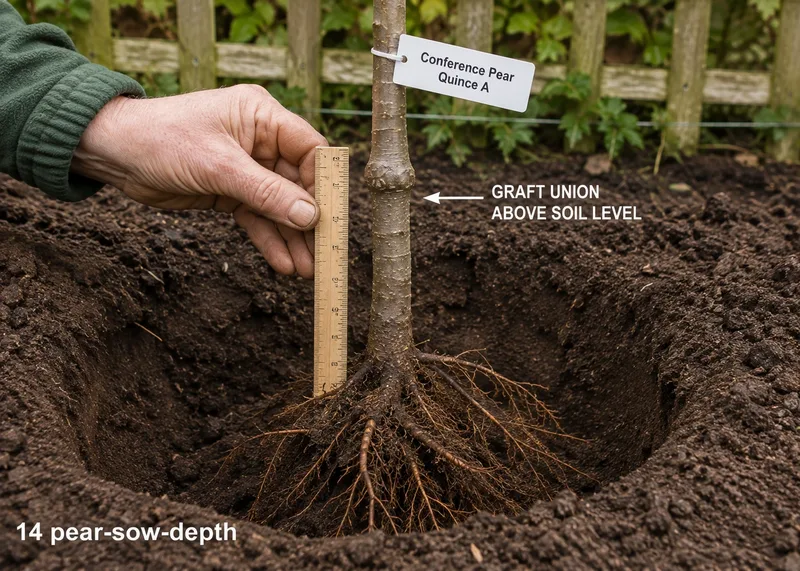
Plant at correct depth — check graft union
Plant at the same depth as the nursery mark. The graft union (the knobbly join above the roots) must remain 10–15cm above soil level. Burying the graft union allows the pear variety to root on its own roots, bypassing the rootstock and producing an excessively large, late-fruiting tree.
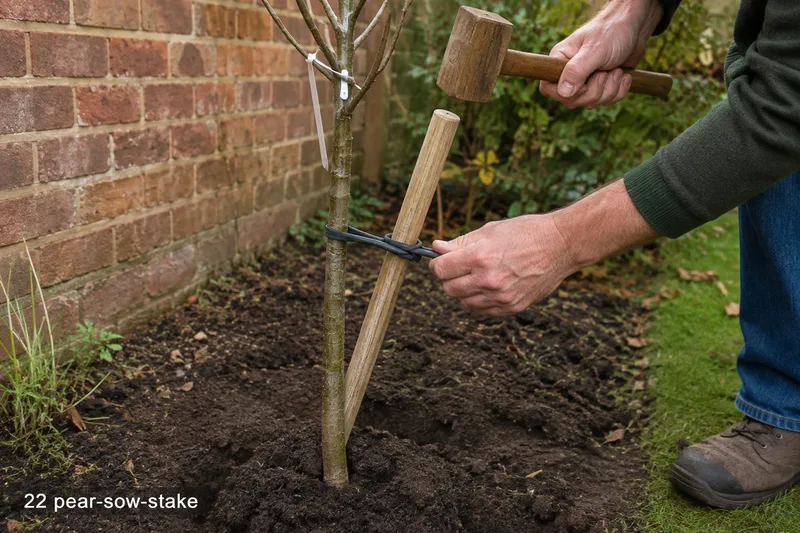
Stake and tie
Drive the stake in at 45 degrees before replacing soil. The stake prevents root rock in wind, which is the primary cause of establishment failure in young trees. Use a rubber tree tie adjusted as the tree grows.
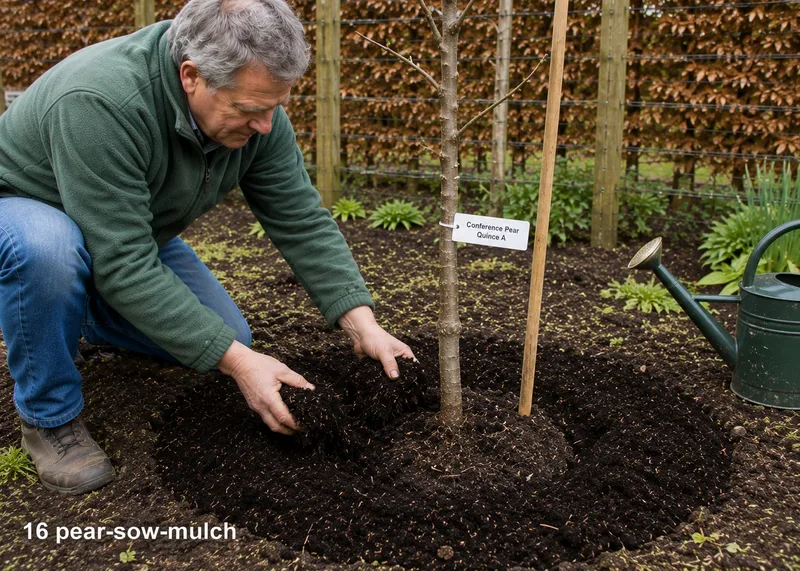
Firm, water and mulch
Replace soil in stages, firming well. Water with 15 litres. Apply a 5cm mulch in a 1m circle, keeping clear of the trunk. Mulch suppresses weeds that compete strongly with young trees in their first 3 years.
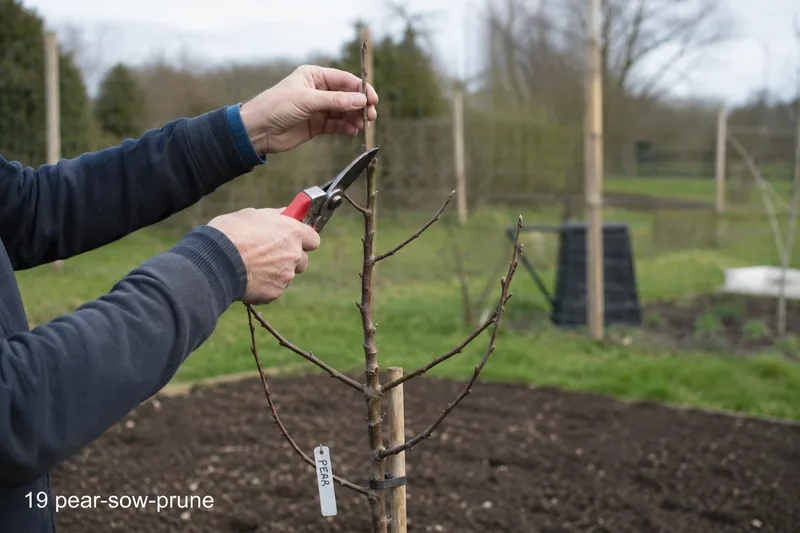
Formative pruning at planting
Shorten the central leader by a third to encourage branching. Remove any weak or crossing laterals. For espaliers and fans, tie in the framework branches and remove any that are not part of the planned training form.
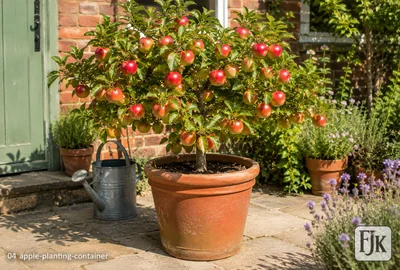
🪴 Container-grown (Sep–May)
Container-grown trees can be planted September to May, with autumn and early spring being ideal. Water well after planting and keep consistently moist through the first summer — this is critical for establishment.
Plant autumn or early spring for best results
Container pears can go in September to May. Autumn and early spring remain the best times — roots establish in moist, mild conditions before the tree faces its first growing season. Avoid planting May to August when trees are in active growth and drought risk is highest.
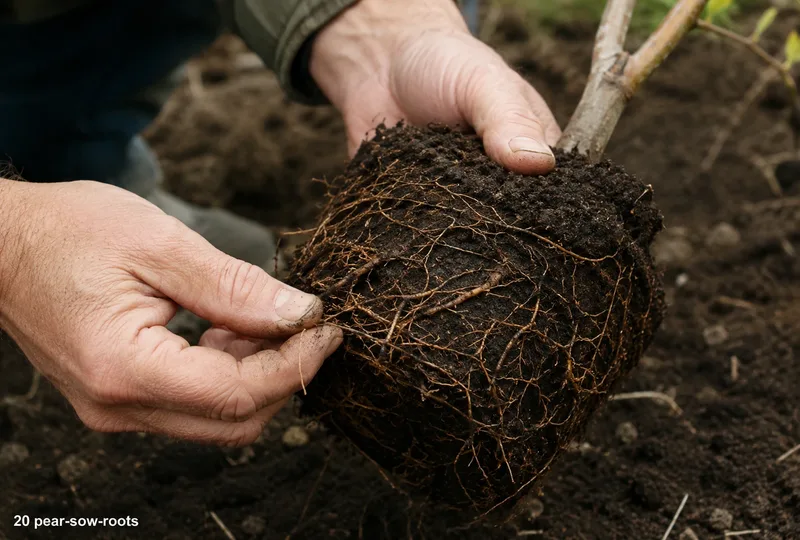
Release circling roots
Carefully tease out any circling roots from the root ball before planting. Circling roots that are left in place will eventually restrict the trunk as the tree grows, weakening and potentially killing it after many years.
Plant, stake, and mulch
As per bare-root planting — same depth, graft union above soil, stake at 45 degrees, firm well, water with 15 litres, and apply a generous mulch circle.
🌿 Wall-trained Espalier or Fan
Fix horizontal wires before planting
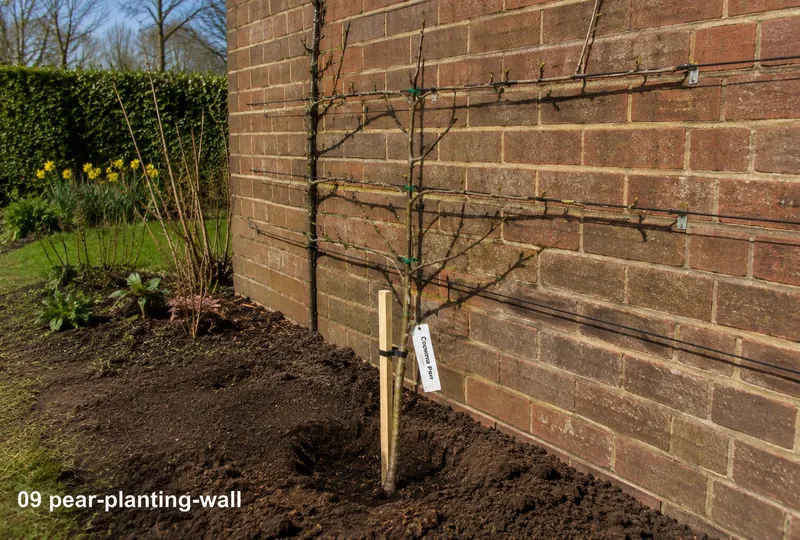
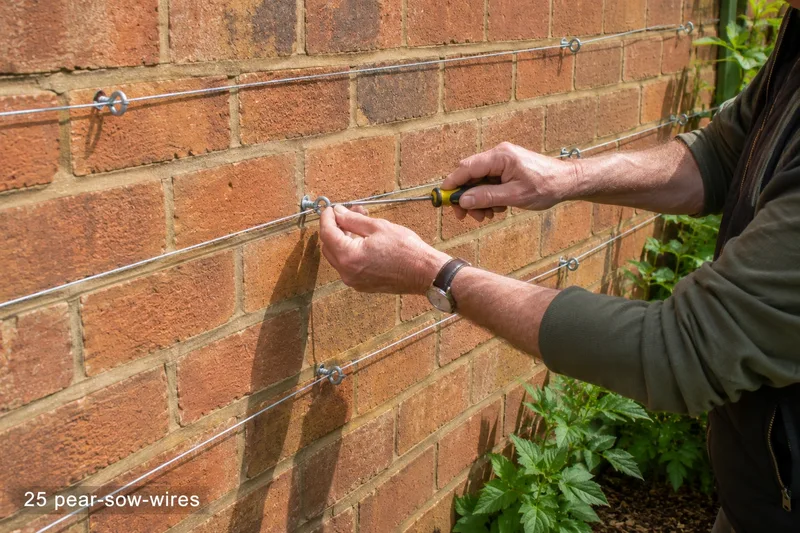
Attach horizontal wires to the wall at 40cm intervals from 40cm above ground to 1.8–2m. Use vine eyes and 10–12 gauge galvanised wire. Plant 20–30cm away from the wall base where soil moisture is better.
Choose Quince C rootstock
Wall-trained pears should always be on Quince C — the dwarfing effect and enhanced wall-warmth produce early fruiting, good fruit size, and manageable growth. Quince A on a wall produces excessive vigour that is difficult to control.
Train tiers progressively
Develop one pair of horizontal tiers per year. Do not rush the training — attempting two tiers at once produces weak, poorly anchored horizontal branches. Patience with formative training produces a structure that lasts 50 years.
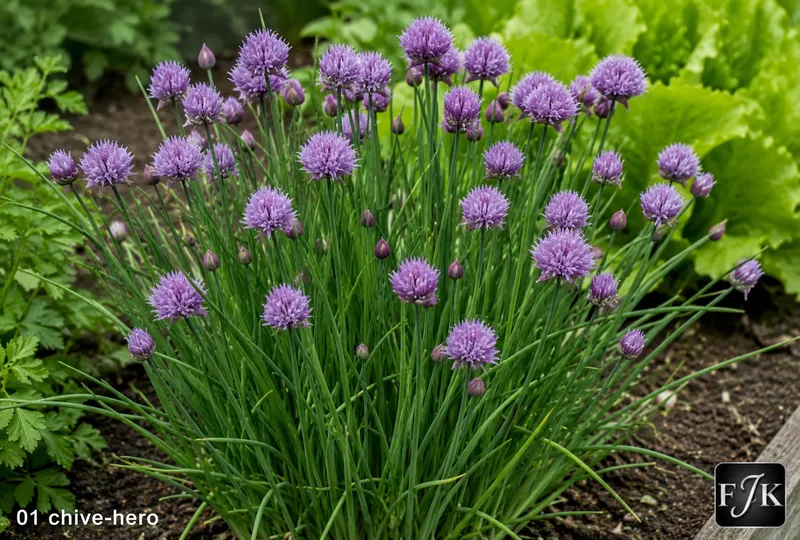
A mild allium companion said to help deter aphids and other pests with its strong scent.
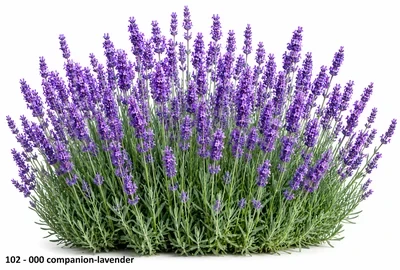
💜 Lavender
Attracts pollinators and adds a decorative, low-maintenance border nearby.
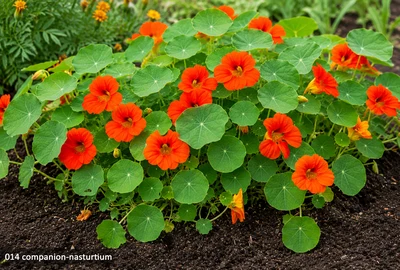
🌸 Nasturtium
Acts as a trap crop for aphids, drawing pests away from the main plant.
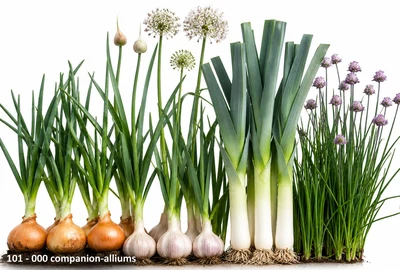
🧄 Alliums
Onion-family plants grown nearby are thought to help deter pests with their strong scent.
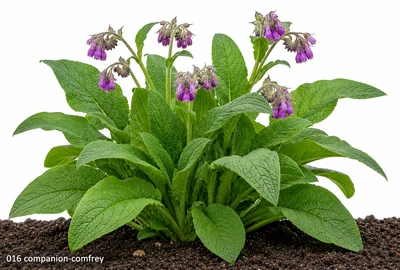
🌿 Comfrey
Deep roots mine nutrients from the subsoil; cut leaves make an excellent potassium-rich mulch.
06 Sowing — How To
Buy from a specialist nursery
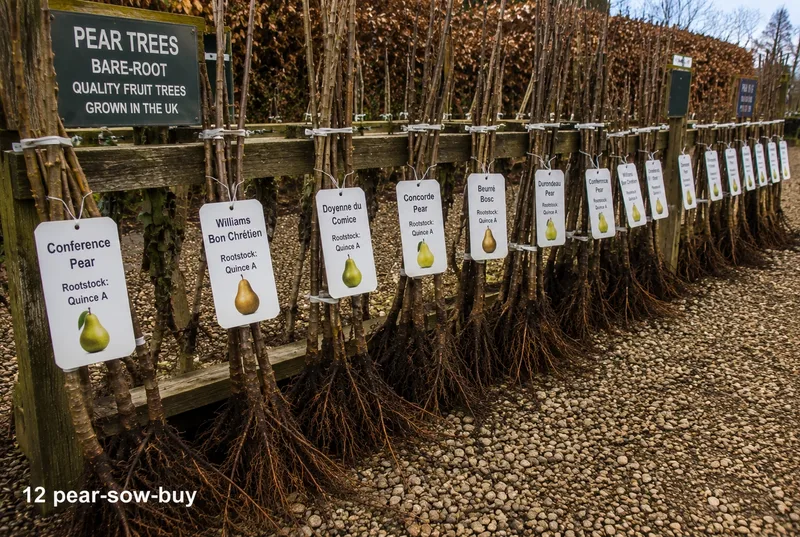
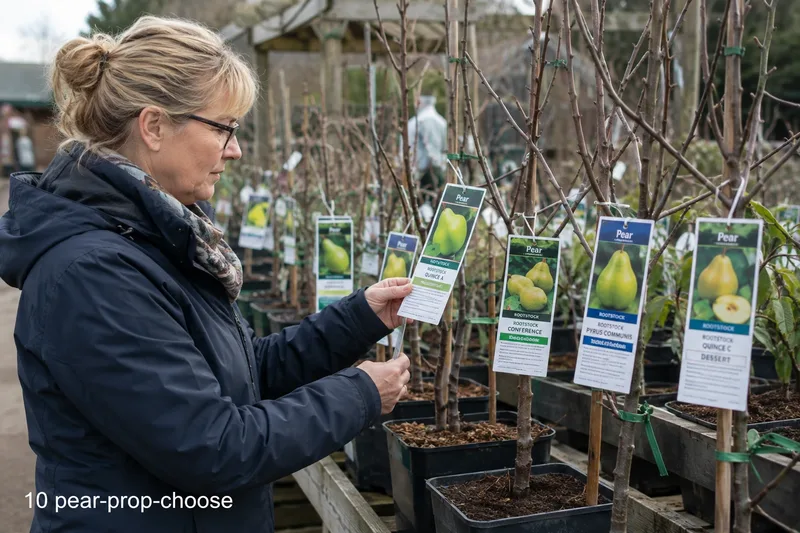
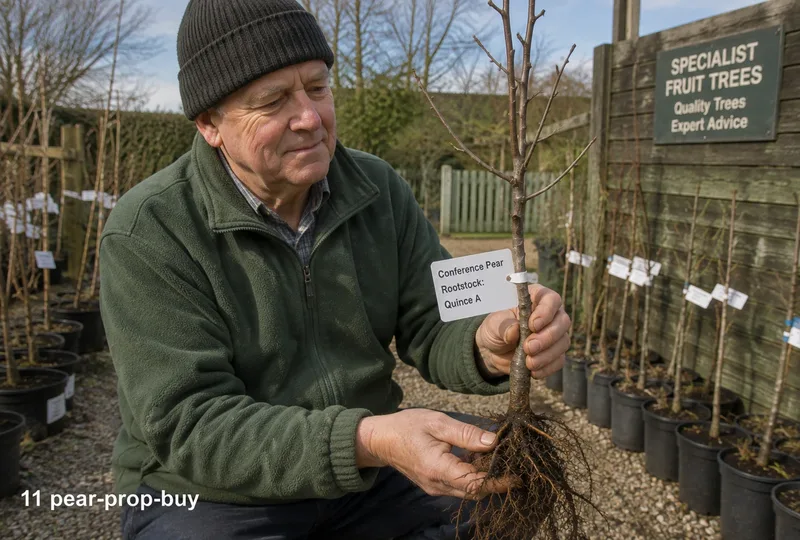
Pear trees are a long-term investment. Buy from a reputable specialist fruit nursery offering named varieties on specified rootstocks. Garden centre pears are often unlabelled or on vigorous seedling rootstocks — avoid these for small gardens.
Check pollination compatibility
Confirm your chosen variety has a compatible pollinator nearby. Conference is partially self-fertile and the easiest choice where only one tree is possible. All other pears benefit greatly from a compatible variety within 50m.
Plant Nov–Mar in dormancy
Plant any time while dormant. November to February is slightly preferable to March — the longer root establishment period before the first spring flush produces a stronger first growing season.
Regional sowing timing
Region
Sow / plant
Harvest
Notes
Scotland & Far North
Nov–Mar
Aug–Oct
Northern England
Nov–Mar
Aug–Oct
Midlands & Wales
Nov–Mar
Aug–Oct
Ireland & Isle of Man
Nov–Mar
Aug–Oct
South & SE England
Nov–Mar
Aug–Oct
South Coast & SW
Nov–Mar
Aug–Oct
07 Using a Propagator
Pears are not propagated by home gardeners — they are always grown as grafted trees combining a named variety (the scion) with a chosen rootstock. Grafting requires specialist skills and rootstock material. Buy trees from a specialist nursery.
Heated propagator
Not Applicable — Pear trees are grafted by specialist nurseries. Home propagation is not practical. Purchase named varieties on specified rootstocks.
Choose variety and rootstock
The two key decisions: rootstock (Quince C for most gardens) and variety (Conference for reliability, Doyenné du Comice for flavour, Williams' for August harvest). Make these decisions before purchasing.
Buy certified trees
Purchase trees from a nursery offering named varieties with rootstock information clearly stated. Trees without rootstock information are an unknown quantity for size and vigour.
08 Soil Requirements
pH
6.0–7.0
Best
Loam, Clay loam
Tolerates
Clay, Sandy loam
Avoid
Chalky, Waterlogged
💡 Deeper rooting than apples — needs deep, well-drained fertile soil.
09 Ongoing Care
✂️ Pruning Established Trees
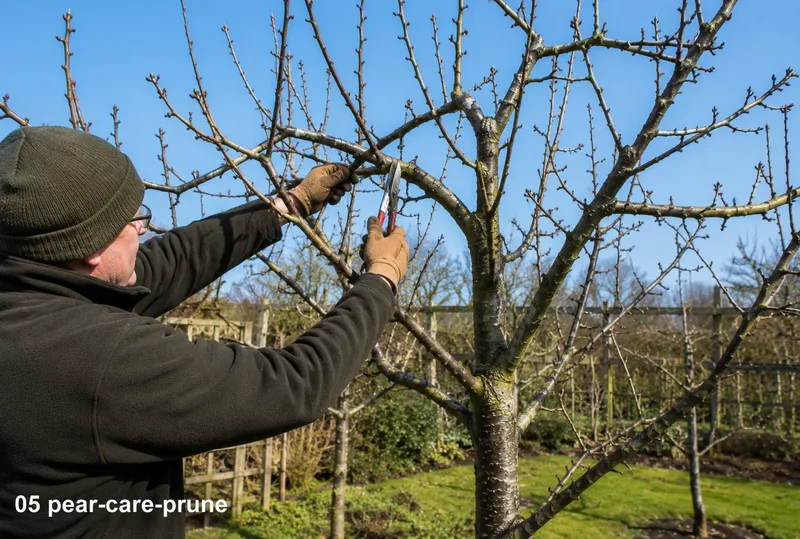
Established pears are pruned in two phases. In winter (November–February), remove crossing, rubbing, and crowded branches from the centre of the tree to maintain an open, airy structure. Also remove any vertical water shoots growing strongly upward from the main branches. In summer (July–August), shorten all sideshoots that are not required for the framework to 5–6 leaves — this summer pruning is particularly important for wall-trained espaliers and fans, directing energy into fruit bud formation rather than leafy growth. Pears fruit on spurs (short, knobbly fruiting systems on older wood) and should not be heavily thinned back — the spur system is the productive asset.
🍐 Harvesting at the Right Moment
Harvesting pears at the correct moment is the single most important factor in eating quality. Unlike apples, pears ripen from the inside out — by the time the outside feels soft and ripe, the core has often already turned brown and mealy. The correct technique: lift each fruit gently and twist slightly. A pear ready to pick separates from the spur cleanly with this movement. Pick when still firm, take indoors at room temperature, and check daily. Early varieties (Williams', Jargonelle) ripen within 3–5 days of picking. Mid-season varieties (Conference, Concorde) need 5–10 days. Check by pressing the flesh near the stalk — when it yields slightly to finger pressure, it is ready.
🌿 Fruit Thinning
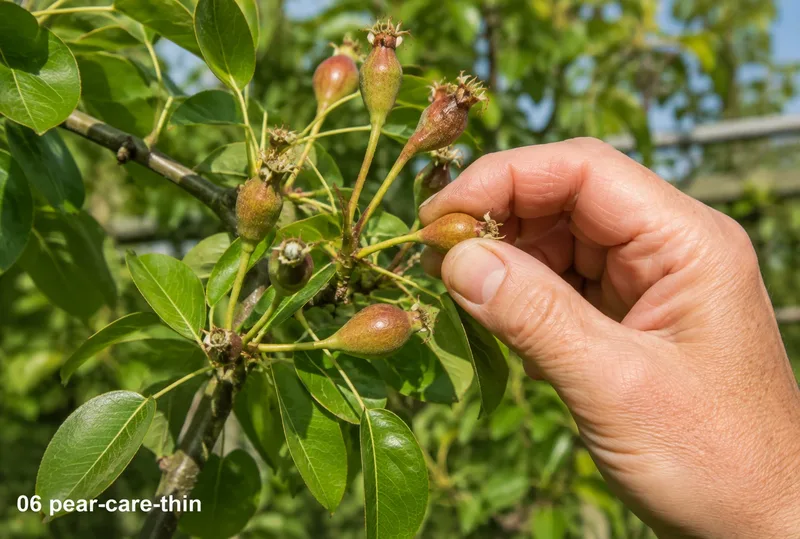
In June, pears naturally drop some fruitlets (the June drop). After this natural thinning, remove additional fruitlets by hand so that remaining fruits are spaced 10–15cm apart on the spur. Thinning is essential for large, well-flavoured pears — an unthinned cluster produces many small, flavourless fruits. Thin to one or at most two pears per spur. In a heavy crop year, thinning also prevents branch breakage under the weight of too much fruit.
❄️ Frost Protection
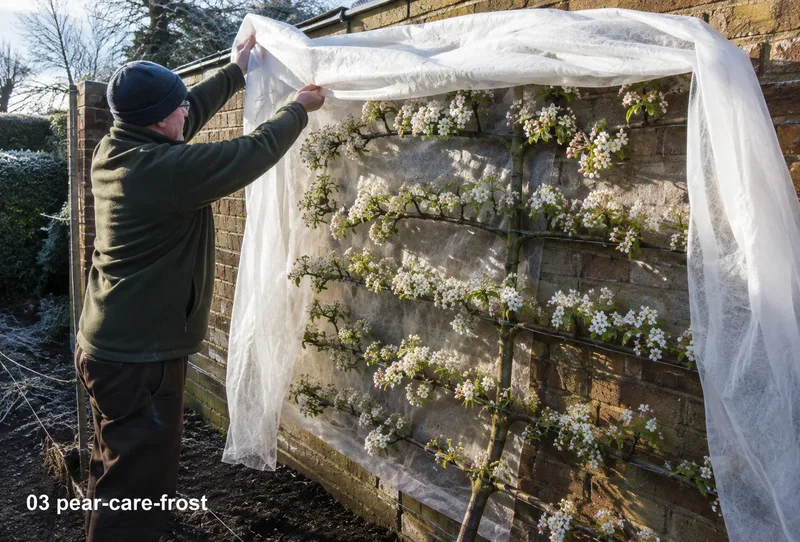
Pear blossom opens in March and April and is killed by temperatures below -2°C. In most UK gardens, late frosts are the single greatest threat to the pear crop. Wall-trained trees benefit from the thermal mass of the wall and can be protected by draping horticultural fleece over the tree on forecast frost nights — even a single layer makes a significant difference. Free-standing trees in frost pockets are very difficult to protect and may crop unreliably in many years. Position pears carefully at planting time — a frost-free site cannot be remedied later.
10 Watch Out For
Warning
Pear scab causes dark, cracked patches on fruit and olive-green spots on leaves — choose resistant varieties and collect fallen leaves. Fireblight is a serious bacterial disease causing shoots to die back as if scorched by fire — cut back 60cm below visible symptoms and sterilise tools between cuts, and never compost infected material. Pear midges cause fruitlets to blacken and fall in May — collect and burn fallen fruitlets. Codling moth causes maggoty fruit — use pheromone traps from May. Pear leaf blister mite causes red and green blisters on leaves — rarely serious, remove affected leaves.
🐛 Insects & pests
🌸 Woolly Aphid — White, cotton-wool-like patches on apple bark, branch joints, and wounds — highly distinctive
🟤 Scale Insect — Small brown or grey bumps on stems, branches, and the underside of leaves — the scale covers themselves
🌀 Tortrix Moth — Leaves rolled or tied together with fine silk threads — the caterpillar shelter; unfold carefully to reveal the pest
🐜 Aphids (Blackfly & Greenfly) — Curled, distorted, or stunted growing tips — aphids inject saliva that causes leaf curl to protect them
🍄 Diseases to watch
🌳 Apple & Pear Canker — Nectria canker (Neonectria ditissima) is the most serious fungal disease of apple and pear trees in the UK. It enters through wounds — particularly pruning cuts, leaf scars, and frost damage — and kills the bark in expanding elliptical lesions. Unchecked, a canker encircles a branch and kills everything above it.
🔥 Fire Blight — Fire blight (Erwinia amylovora) is a serious bacterial disease of apple and pear family plants that can kill entire trees rapidly. In England, Scotland and Wales, fire blight is no longer a notifiable disease, so you don't need to report it. On the Isle of Man it is still kept out, so report any suspected case to the island's government plant health service. In Northern Ireland, check with your local plant health service. The "fire" name describes the scorched appearance of infected shoots.
⬜ Powdery Mildew — Powdery mildew is caused by a range of related fungi, each specific to its host plant — courgette mildew cannot infect peas, and vice versa. The characteristic white powdery coating on leaf surfaces appears in warm, dry conditions (unlike downy mildew which prefers cool and wet). Rarely kills plants but severely reduces yield and plant vigour.
Full identification and treatment advice is in the Pests and Diseases sections.
11 Storage & Preserving
🍐 Ripening Indoors
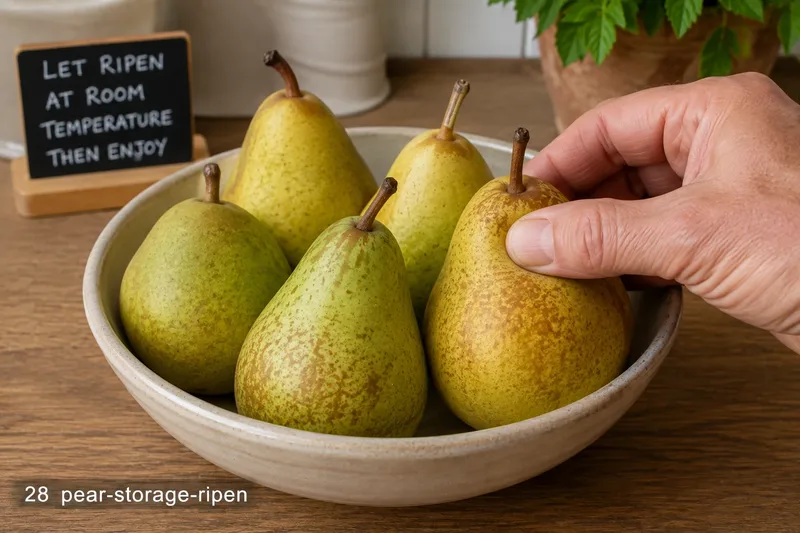
Pick pears firm and ripen at room temperature. Check daily by pressing near the stalk — the flesh should yield slightly when ready. Early varieties take 3–5 days; mid-season varieties 5–10 days; late varieties up to 3 weeks. Do not refrigerate until the pear is ripe — cold temperatures interrupt the ripening process and prevent the sugars from developing fully. Once ripe, refrigerate and eat within 2–3 days.
📦 Long-term Storage
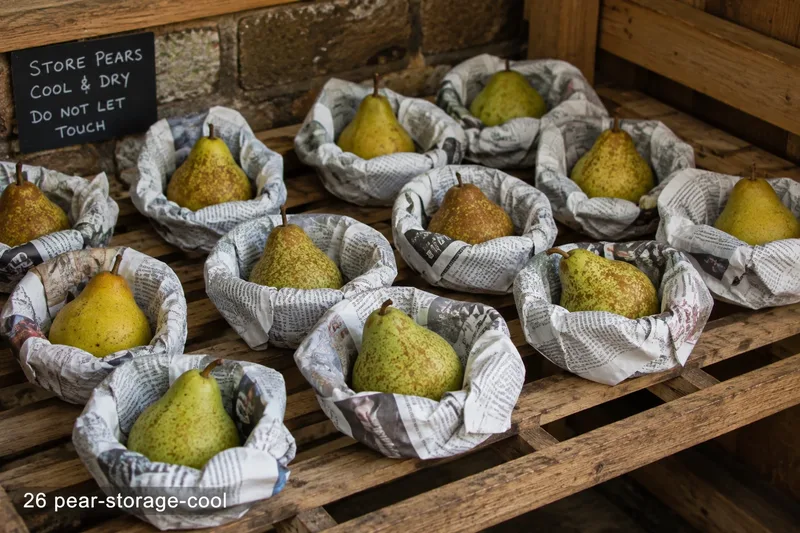
Late-season pears (October varieties and onwards) can be stored in a cool, frost-free shed or garage, wrapped individually in newspaper or stored on slatted shelves with fruit not touching. Check regularly — pears ripen unpredictably in storage and must be monitored more closely than apples. Conference stores until December; Doyenné du Comice stores until January in ideal cool conditions (4–7°C).
🫙 Poached & Preserves
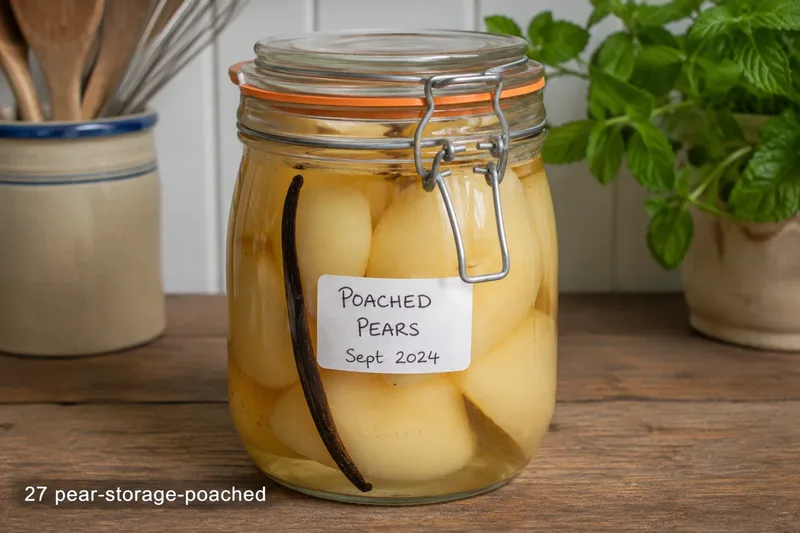
Pears that have over-ripened or bruised can be poached in light sugar syrup with vanilla, then kept in the fridge and eaten within a few days, or frozen. Pear chutney with ginger is an excellent preserve. Pear wine uses surplus fruit very effectively. Perry (pear cider) requires specific perry pear varieties — eating pears produce a poor perry.
12 Expert Tips
💡 Conference is the most reliable choice
For any garden where only one pear tree is possible, Conference is the unambiguous recommendation. It is partially self-fertile, crops reliably even in cool years, produces heavy yields, and stores well. The flavour is good if not transcendent. For a second tree that improves Conference yields through cross-pollination, Concorde or Comice are ideal partners.
💡 The espalier against a warm wall
A pear espalier against a south-facing wall is one of the most productive uses of wall space in the British garden. The wall warmth advances flowering and fruit ripening by 2–3 weeks, makes frost protection practical with a single fleece, and produces fruit quality that is simply not achievable from a free-standing tree in the same climate.
💡 Pears need patience
A bare-root pear on Quince C planted in November will produce its first significant crop in years 4–5. The temptation to allow fruiting too early weakens the tree structure. Remove any flowers in years 1–2 to direct energy into establishing a strong framework. The patience is worthwhile — a well-established pear tree is one of the most beautiful and productive features of any garden.