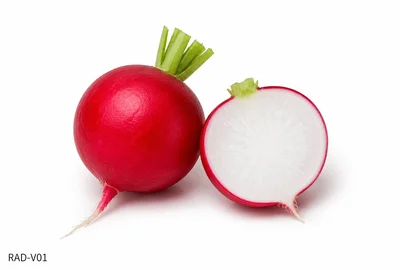
Cherry Belle
Round · Red
The classic round red salad radish. Bright scarlet skin, crisp white flesh, mild pleasant heat. Ready in just 3–4 weeks. One of the most reliable and widely grown radishes in the UK.
- Round
- Fast
- Beginners
- Classic
Raphanus sativus
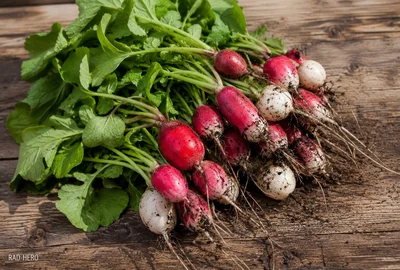
The fastest crop in the kitchen garden — summer varieties are ready in just 3–4 weeks from sowing. Radishes are ideal for filling gaps between slower crops, perfect for successional sowing, and one of the most satisfying vegetables for first-time and young growers. Beyond the familiar round red salad type, radishes include elegant French Breakfast types, striking coloured varieties, and the large, slow-growing winter radishes that keep well into autumn.
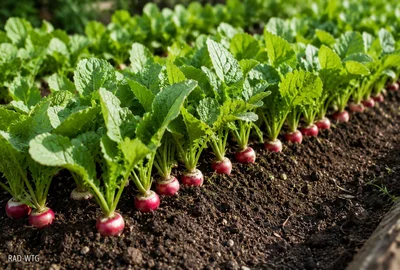
Radishes divide into two distinct groups: summer radishes and winter radishes. Summer types are small, fast-maturing roots harvested 3–4 weeks after sowing — these include the round red classics, elongated French Breakfast types, and a range of striking coloured varieties including purple, yellow, and the dramatic pink-fleshed Watermelon radish. Winter radishes are slower, larger, and much more substantial — including the long white Japanese Mooli, the ebony-skinned Black Spanish, and the pink-fleshed China Rose. Winter types are sown from July and harvested well into autumn.
The number of varieties shown for each crop is based on UK consumption data (2025/26) — the more popular the crop, the more variety choices we include.
The fastest and most familiar radishes. Sow from March to early June and again August to September. Ready in 3–4 weeks. Sow a few every 2–3 weeks for continuous supply rather than one large sowing.
The classic round red salad radish. Bright scarlet skin, crisp white flesh, mild pleasant heat. Ready in just 3–4 weeks. One of the most reliable and widely grown radishes in the UK.
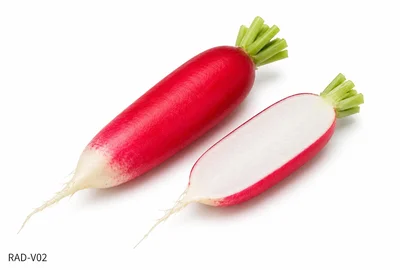
Elongated cylindrical roots with red upper skin fading to white at the tip. Tender, crisp flesh with a mild flavour when pulled young. Grows fast — ready in 3–4 weeks. Traditional to serve whole with good butter and salt.
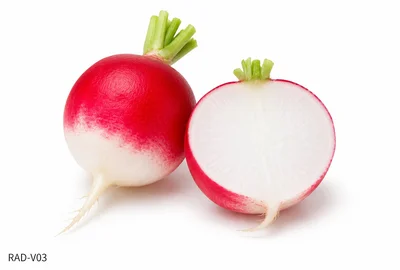
A striking bicolour radish — vivid scarlet top with a white base, making it one of the most attractive summer radishes when sliced. Crisp, mild flesh. Fast-maturing. AGM holder.
Striking varieties with yellow, purple, or pink skin — just as good to eat as red types and far more decorative. The Watermelon radish is one of the most spectacular vegetables in the kitchen garden.
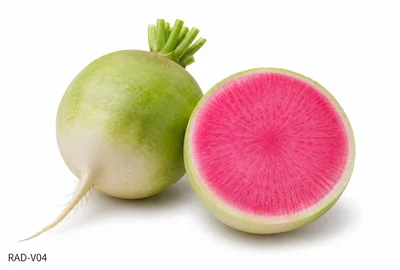
Remarkable radish with plain white skin concealing a vivid magenta-pink interior — the most spectacular-looking radish available. Larger and slower than summer types (4–5 weeks). Best sliced to reveal the extraordinary colour. Mild, sweet, crisp flesh.
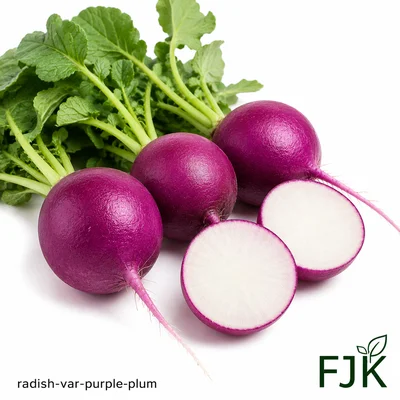
Vivid purple-skinned round radish with white crisp flesh. Striking appearance in salads with the purple skin retained on thin slices. Fast-maturing and mild in flavour. Excellent for adding colour to mixed plantings.
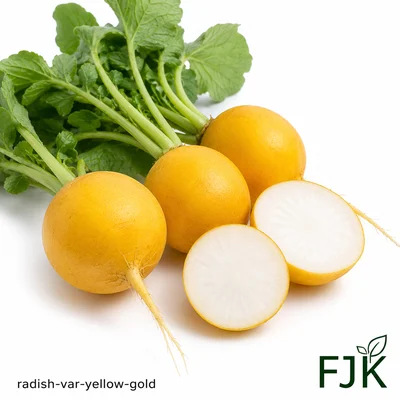
Cheerful golden-yellow round radish with crisp, white flesh. Unusually mild for a radish — less heat than red types, making it ideal for those who find standard radishes too sharp. Fast and easy. A conversation-starting crop.
Large, slow-growing radishes sown in July and harvested from October through to November. Store well after lifting. Very different in character from summer types — substantial roots with stronger flavour.
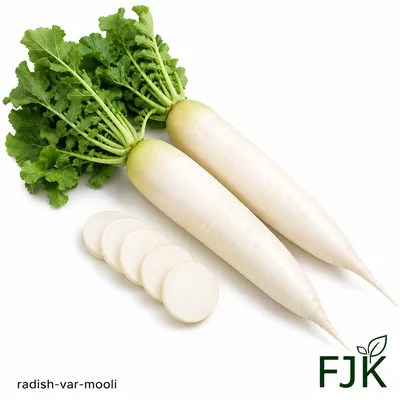
The long white Japanese radish — grows to 30–40cm in length. Mild, juicy flesh with a clean, refreshing flavour. The essential ingredient in Japanese pickling and Korean kimchi. Outstanding grated raw, pickled, or in stir-fries. Sow July for October harvest.
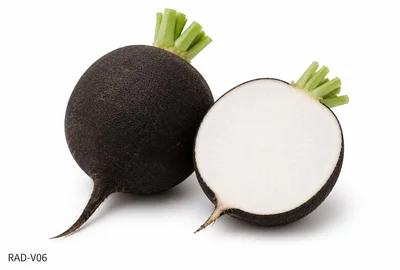
Dramatic ebony-black skin with stark white, peppery flesh inside. One of the oldest cultivated vegetables in Europe — grown since the 16th century. Strong, pungent flavour that mellows on cooking. Excellent roasted, pickled, or raw in thin slices.
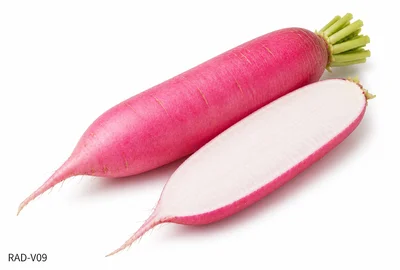
Cylindrical winter radish with attractive rose-pink skin and white flesh. Milder than Black Spanish. Stores well and pickles beautifully. Sow July–August for an October–November harvest. Excellent as a raw vegetable dipped in salt or pickled.
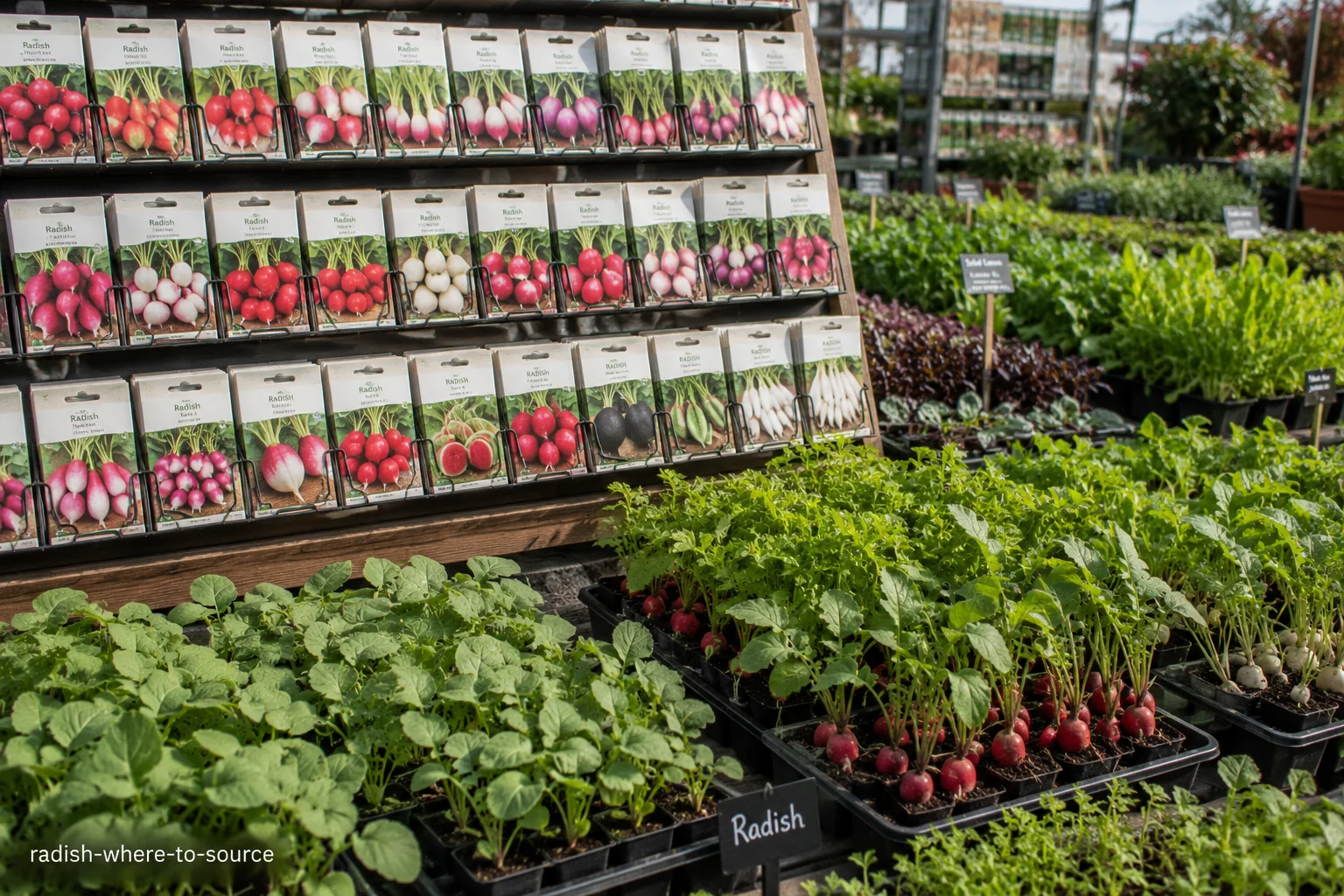
Radish seeds are among the most widely available and inexpensive vegetable seeds available. Summer varieties are sold in garden centres, supermarkets, and online from January. For the widest variety selection — including coloured, heritage, and winter radish types — online seed companies are the best source. Radish seed is cheap and germinates reliably; a single packet contains far more seed than most gardeners need in one year.
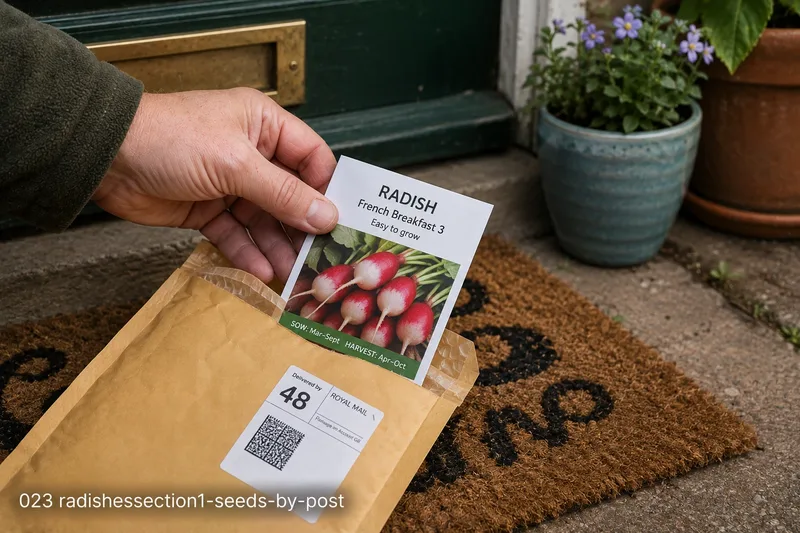
Online seed companies offer the widest variety range including coloured, heritage, and winter radish types. Radish seed is inexpensive and long-lived — a single packet sows many short rows. Order from January.
Garden centres stock summer radish seeds reliably from February. Standard red round and French Breakfast types are universally available. For winter radishes and unusual types, order online.
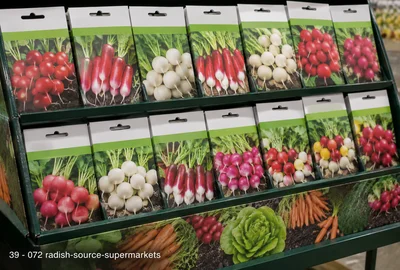
Basic summer radish varieties are often available in supermarkets from spring — convenient for a first sowing. For variety choice beyond the mainstream, specialist seed companies are a better source.
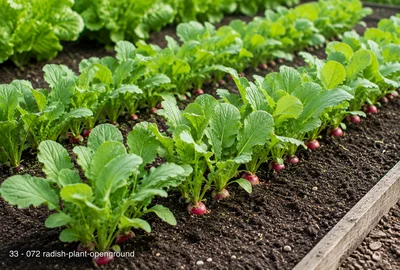
The standard method. Rake to a fine tilth, draw shallow drills 1cm deep and 15cm apart, sow thinly, cover and water. Sow short rows every 2–3 weeks for a continuous supply of summer radishes from March to October.
Suitable varieties: All varieties. The only practical method for radishes — they cannot be transplanted.
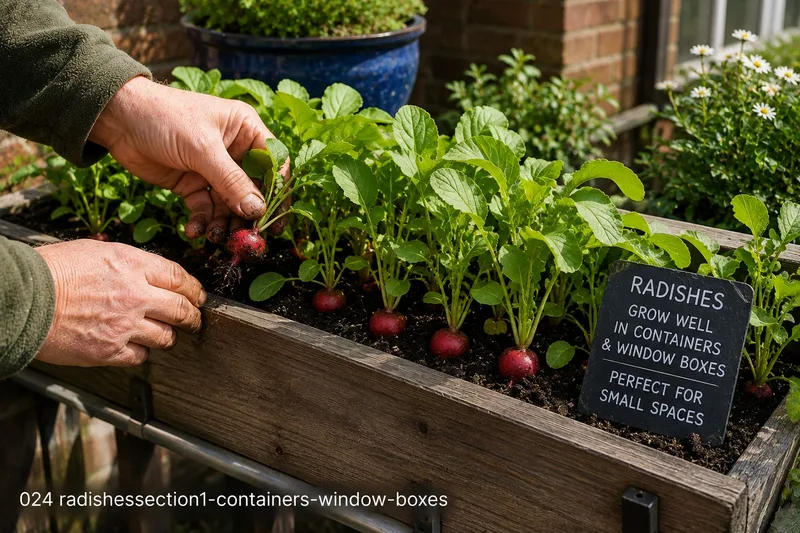
Radishes grow very well in containers, window boxes, and troughs — they need only 10–15cm depth and mature in 3–4 weeks. Fill with good peat-free compost, sow thinly, and water daily. An ideal first crop for children and beginners growing in limited space.
Suitable varieties: Summer round varieties are ideal for containers: French Breakfast, Cherry Belle, Sparkler. Winter radishes need deeper soil.
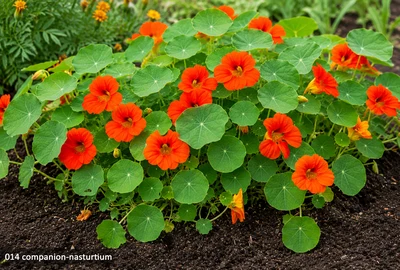
Nasturtiums attract blackfly away from radishes and other brassica-family crops. Effective trap crop when planted at the bed perimeter.
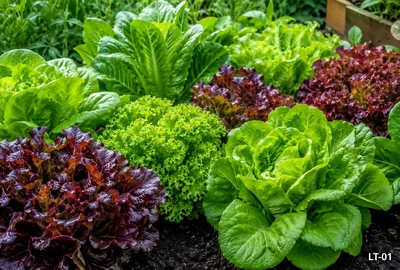
Classic catch crop combination — radishes mark the row and are harvested before lettuce needs the full space. Both prefer similar cool, moist conditions.
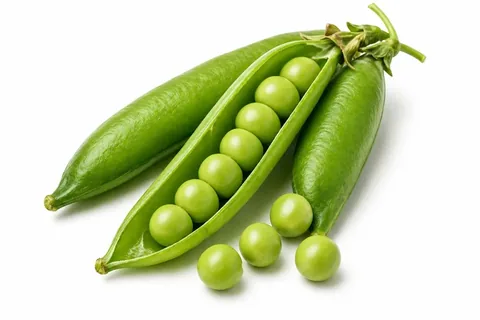
Radishes grow well between pea rows, making use of the shaded ground. Both are cool-season crops with complementary timing.
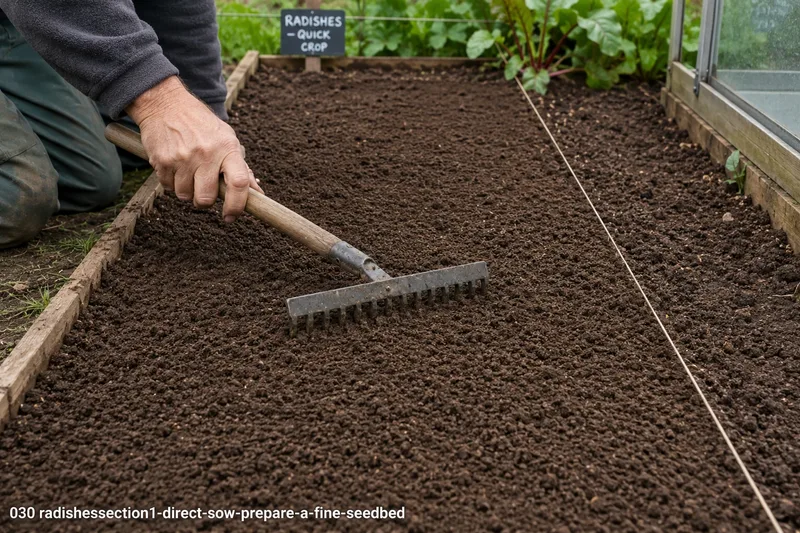
Rake the soil to a fine tilth — radishes need a light, crumbly surface for even germination and good root development. Remove stones. Avoid freshly manured or overly rich ground which promotes leafy growth at the expense of roots.
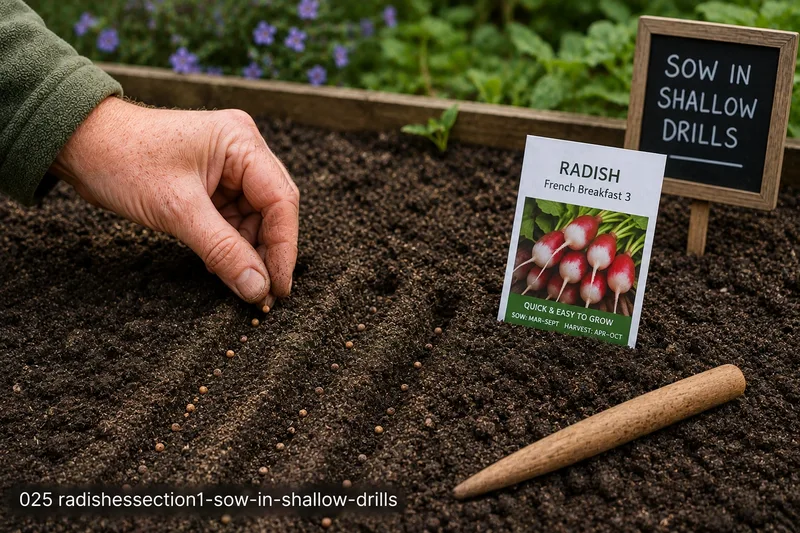
Make shallow drills 1cm deep and 15cm apart. Sow seeds thinly — 2–3cm between each seed. Radish seeds are medium-sized and easy to space. Sow a short row (20–30cm) rather than a full row — far more useful for continuous supply.
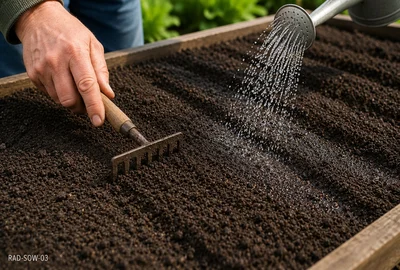
Cover the seeds with fine soil and firm lightly. Water gently with a fine rose. Label with variety and date — different varieties look identical as seedlings. Seeds germinate in 3–7 days.
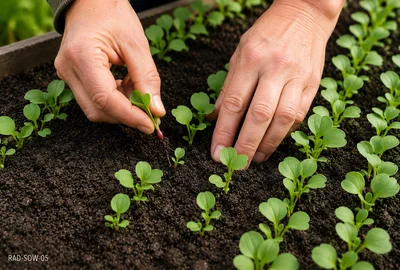
If seedlings are crowded (less than 2.5cm apart), thin to 5cm spacing by pulling or snipping alternate seedlings. Use thinnings in salads — they are edible.
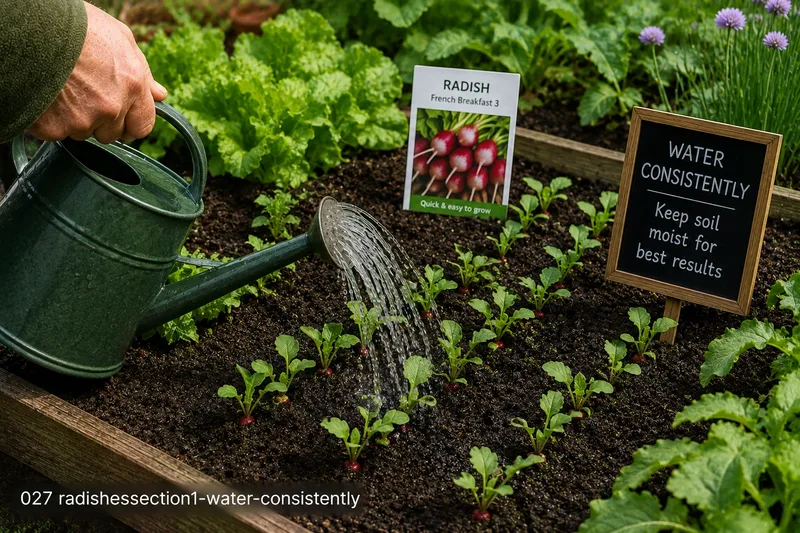
Water little and often in dry weather. Never let the soil dry out completely between waterings — inconsistent moisture causes pithy, hollow, over-hot roots. A light mulch between rows helps retain moisture.
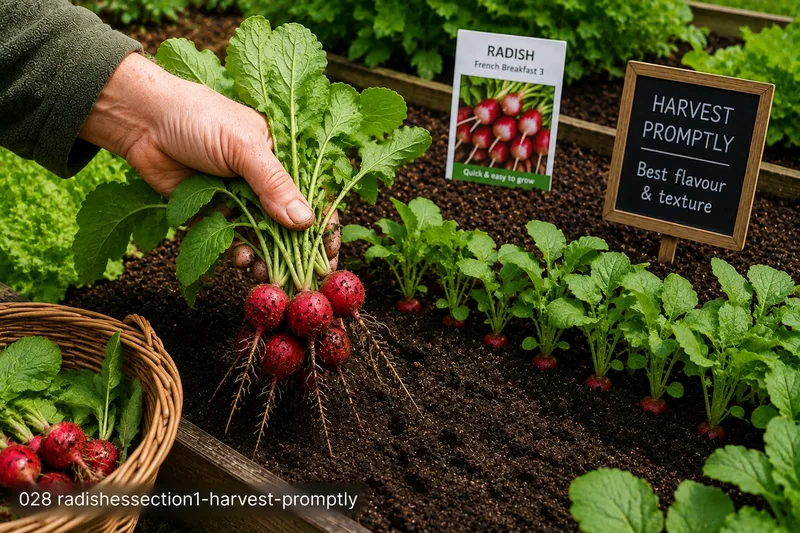
Summer radishes are ready in 3–4 weeks. Check by pushing the soil aside to see the root shoulder. Pull as soon as roots reach 2–4cm — never leave them in the ground too long.

| Region | Sow / plant | Harvest | Notes |
|---|---|---|---|
| Scotland & Far North | Apr–Aug | May–Sep | Apr–Jun, Aug–Sep |
| Northern England | Mar–Sep | Apr–Oct | Mar–Jun, Aug–Sep |
| Midlands & Wales | Mar–Sep | Apr–Oct | Mar–Jun, Aug–Sep |
| Ireland & Isle of Man | Mar–Sep | Apr–Oct | Mar–Jun, Aug–Sep |
| South & SE England | Mar–Oct | Apr–Nov | Mar–Jun, Aug–Oct |
| South Coast & SW | Mar–Oct | Apr–Nov | Mar–Jun, Aug–Oct |
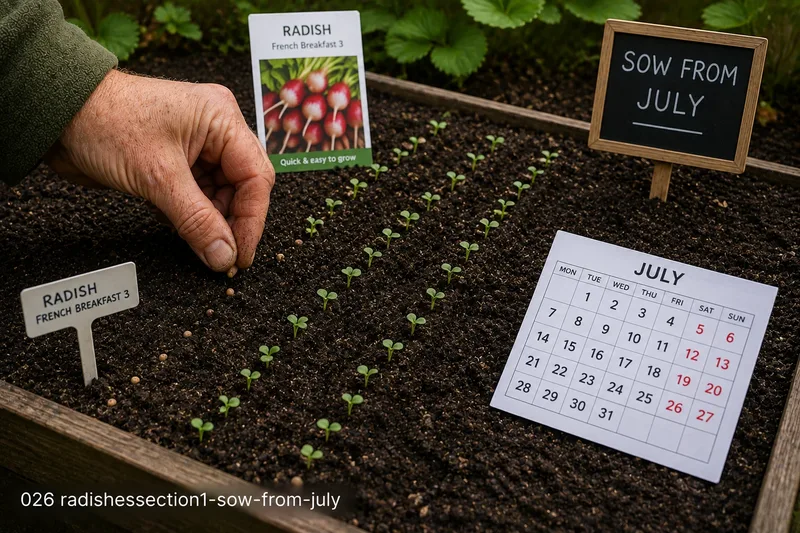
Winter radishes (Mooli, Black Spanish, China Rose) are sown from July to early August. Earlier sowing causes bolting; later sowing gives insufficient time before frosts. Make drills 2cm deep and 25–30cm apart.
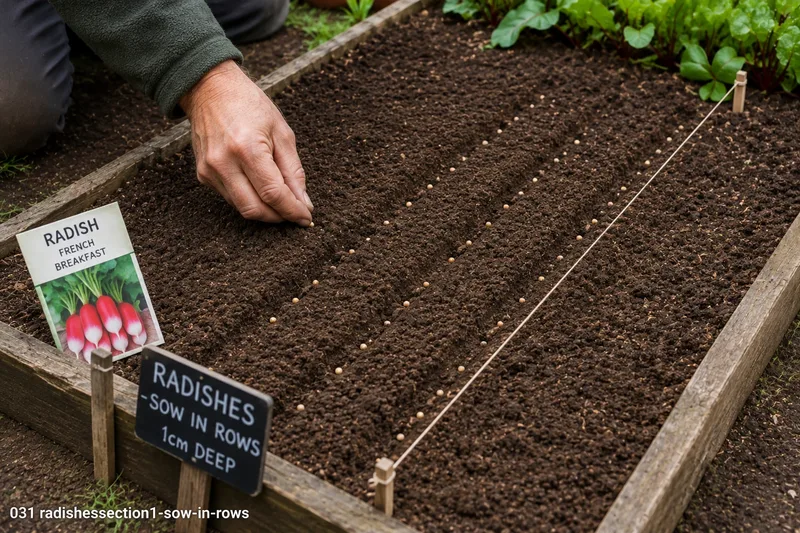
Space winter radish seeds 5–8cm apart in the drill — they develop much larger roots than summer types and need more space. Thin to 15–20cm when seedlings are established.
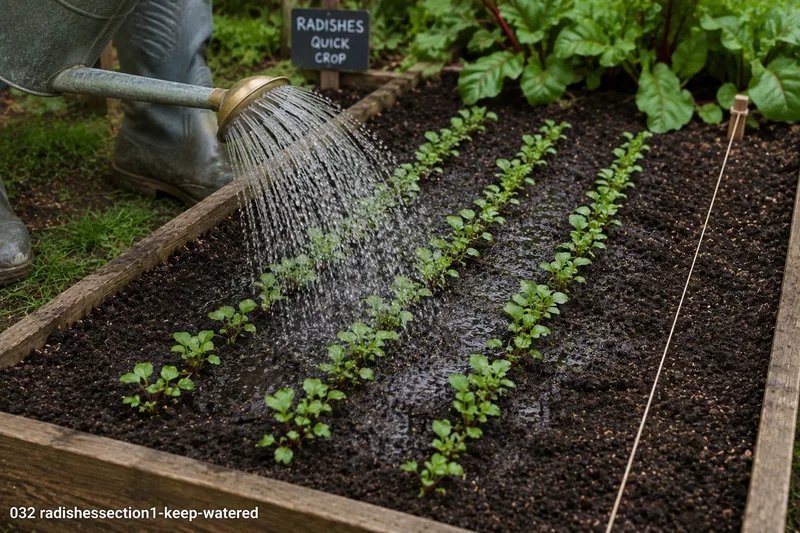
Water regularly through the dry summer months. Winter radishes develop slowly — they need 8–10 weeks to reach full size. Mulch around plants in August to conserve moisture and suppress weeds.
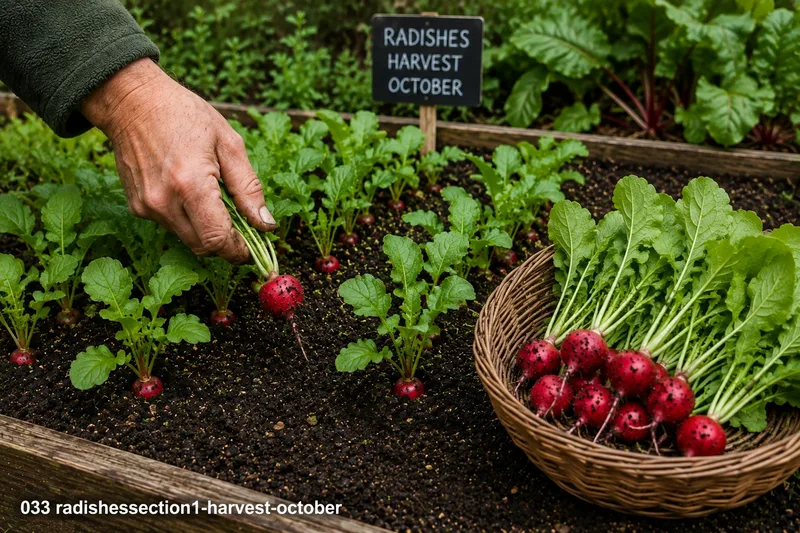
Lift winter radishes from October onwards before hard frosts. They store well in barely damp sand in a cool shed for several weeks after lifting.
| Region | Sow / plant | Harvest | Notes |
|---|---|---|---|
| Scotland & Far North | Jul | Sep–Oct | Jul |
| Northern England | Jul–Aug | Oct–Nov | Jul–Aug |
| Midlands & Wales | Jul–Aug | Oct–Nov | Jul–Aug |
| Ireland & Isle of Man | Jul–Aug | Oct–Nov | Jul–Aug |
| South & SE England | Jul–Aug | Oct–Dec | Jul–Aug |
| South Coast & SW | Jul–Aug | Oct–Dec | Jul–Aug |
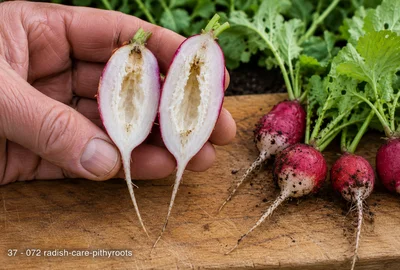
Consistent moisture is the single most important factor in growing good radishes. Irregular watering — particularly a dry spell followed by heavy rain or irrigation — causes roots to become pithy, hollow, and unpleasantly hot. In dry weather, water little and often rather than leaving the soil to dry out between sessions. A light mulch between rows helps retain moisture without excluding air.
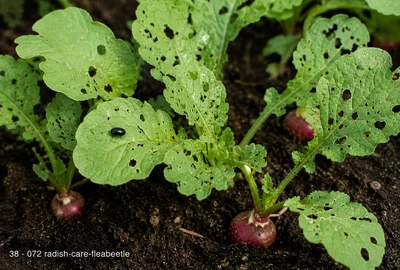
Flea beetle is the main pest of radishes — tiny black beetles that pepper leaves with small holes, particularly in hot dry weather. Young seedlings are most vulnerable; established plants tolerate light damage. The most effective protection is fine insect-proof mesh or horticultural fleece laid immediately after sowing and kept in place until plants are growing strongly. Keep the plot well-watered — dry conditions favour beetle activity.
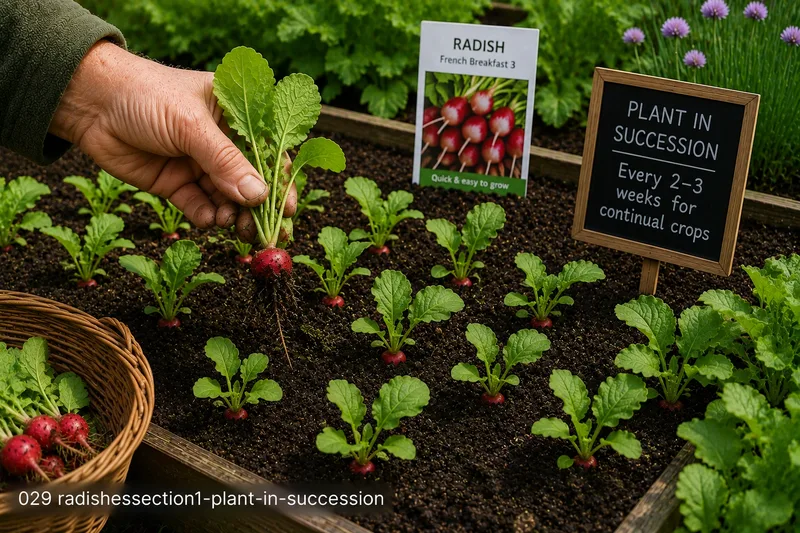
Summer radishes mature in 3–4 weeks and deteriorate rapidly if left in the ground — they become pithy, hollow, and split. The key to a continuous supply is sowing a short row (10–20 seeds) every 2–3 weeks from March to September rather than one large sowing. Avoid sowing in the peak of summer heat (July) as plants bolt before forming usable roots; resume sowing from August for a reliable autumn harvest.
Flea beetle creates tiny round holes in leaves — worst in hot, dry weather and on young seedlings. Grow under fine insect-proof mesh or horticultural fleece as the most effective protection. Keep plants well watered as dry conditions favour beetle activity. Clubroot can affect radishes (same family as brassicas) in infected soil — rotate the crop and lime acidic soil. Do not eat large quantities of raw radish seed pods if pregnant.
Full identification and treatment advice is in the Pests and Diseases sections.
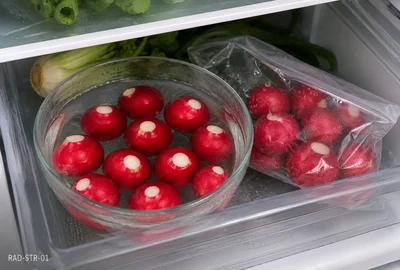
Remove the tops before refrigerating — the leaves draw moisture out of the roots rapidly, causing them to go soft and limp. Store in a bag with a lightly damp cloth in the fridge crisper drawer. Summer radishes keep 1–2 weeks refrigerated. Radish tops (leaves) are edible and can be used in stir-fries and soups — use them within 2–3 days.
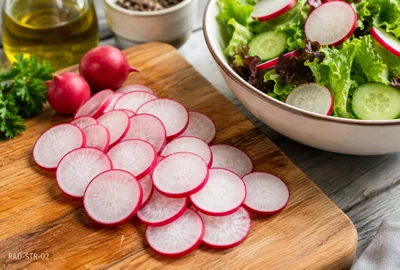
Summer radishes are at their absolute peak within an hour of pulling from the ground. Rinse, slice or leave whole, and add to salads, grain bowls, or serve with butter and sea salt in the classic French style. Radishes lose their crunch rapidly once cut — prepare immediately before serving for the best texture.
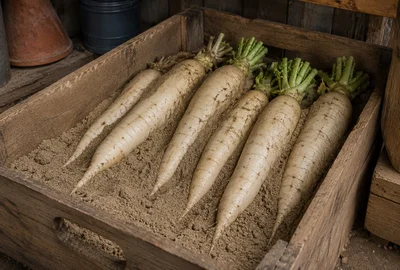
Winter radishes (Mooli, Black Spanish, China Rose) store far better than summer types. Lift before hard frost, remove tops, and store in barely damp sand in a cool shed or garage — they keep for several weeks. All three are excellent pickled.
Summer radishes sown in July almost always bolt — they run to seed before forming usable roots. This is not a watering or soil problem, it is a day-length and temperature response. Pause sowing in July and resume in August. The August–September window produces some of the best radishes of the year: the conditions are ideal and there is less flea beetle pressure than in spring.
Radishes are perfect gap-fillers. Sow them between rows of slow-maturing crops like parsnips, leeks, or brassicas — the radishes will be harvested before the main crop needs the space. This is one of the most efficient uses of space in a small kitchen garden. It also helps mark the rows of slow-germinating crops like parsnips, which can take 3 weeks to emerge.
Rather than pulling radishes by date, check by gently pushing soil aside to see the shoulder of the root. Once you can see a good-sized root, pull one and taste it. Don't rely on the seed packet timing — soil temperature, watering, and weather all affect development. Early pulling beats late every time: a small, perfect radish is far better than a large, pithy, over-hot one.