01 About
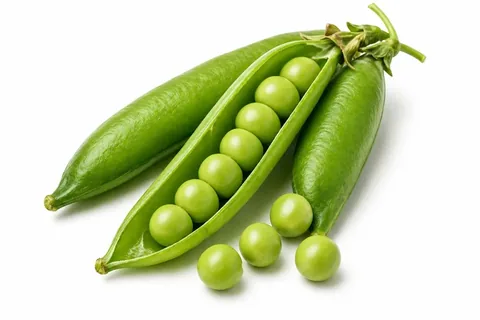
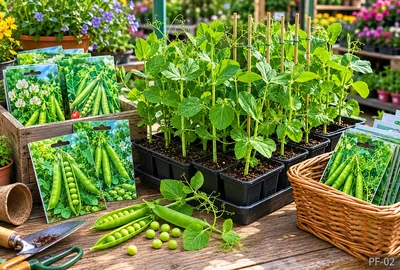
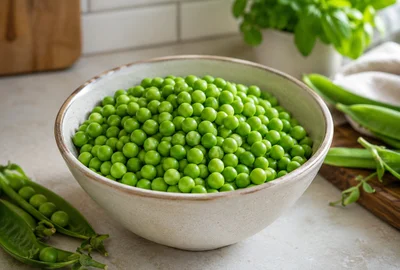
Freshly picked peas eaten straight from the pod in the garden are one of the best things about growing your own. The sugar begins converting to starch the moment you pick them — homegrown peas eaten on the spot are a completely different food from anything in a shop.
02 What to Grow
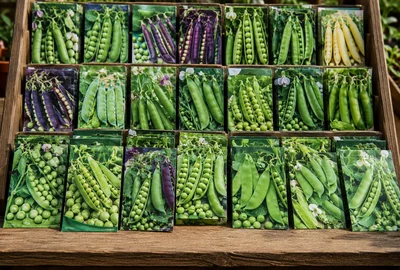
Peas divide into five main eating types: shelling peas (pods removed, seeds eaten), sugarsnap (thick-walled pods eaten whole with swollen peas inside), mangetout (flat pods eaten whole before peas develop), semi-leafless afila types (masses of tendrils, very self-supporting), and dwarf patio types for containers. Heritage and coloured varieties — purple and yellow-podded — add drama to the kitchen garden and are just as good to eat.
03 Varieties
The number of varieties shown for each crop is based on UK consumption data (2025/26) — the more popular the crop, the more variety choices we include.
🌱 Early Round-Seeded
The first peas of the season. Round-seeded varieties tolerate cold, wet soil better than wrinkled types and can be sown from late February in mild areas.
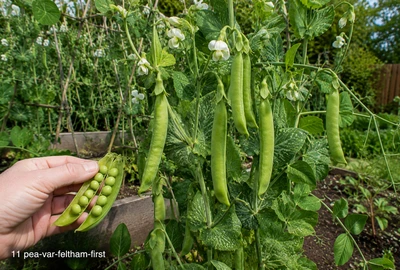
Feltham First
Round-Seeded · Early
The most widely grown early round-seeded pea in the UK. Compact plants to 45cm with short, well-filled dark green pods. Outstanding cold tolerance — can be sown in autumn for a very early spring crop. The benchmark early variety.
- Direct Sow
- Early
- Cold Hardy
- Beginners
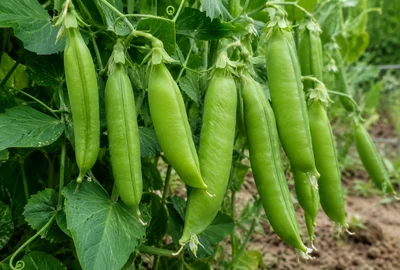
Meteor
Round-Seeded · Early
Extremely dwarf variety reaching just 30–40cm — one of the shortest peas available. Laden with plump round-seeded pods and highly resistant to cold. Ideal for exposed sites, containers, and early sowing under cloches.
- Direct Sow
- Early
- Dwarf
- Cold Hardy
- Containers
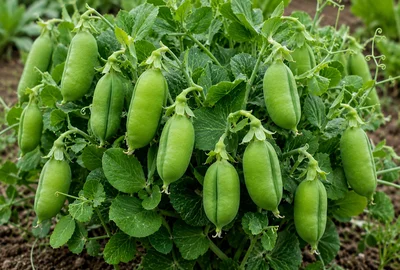
Douce Provence
Round-Seeded · Early
A French round-seeded variety with plump, smooth pods and excellent flavour for an early pea. Reliable in cold conditions and popular for autumn sowing under glass or in a cold frame for an extra-early spring harvest.
- Direct Sow
- Early
- Cold Hardy
- Autumn Sowing
🟢 Maincrop Garden Peas
The classic British garden peas — wrinkled varieties with higher sugar content than round-seeded types. Sown from March onwards, these produce the main summer harvest. Kelvedon Wonder and Hurst Green Shaft hold the RHS Award of Garden Merit.
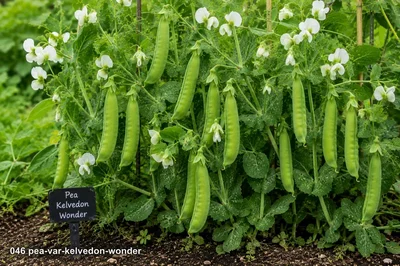
Kelvedon Wonder
Wrinkled · Maincrop
Britain's most popular garden pea and arguably the best all-round variety for UK gardens. Compact dwarf plant with bright green, tightly packed pods of outstanding sweetness. Early to mid-season. Suitable for successional sowing.
- AGM
- Direct Sow
- Maincrop
- Beginners
- ⭐ Flavour
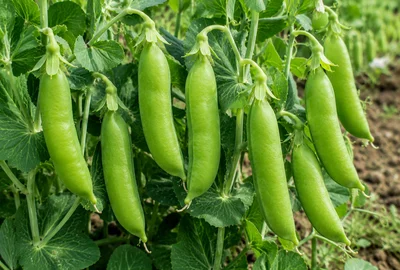
Onward
Wrinkled · Maincrop
A classic British maincrop pea and one of the most reliable varieties ever bred. Round, plump pods closely spaced on the vine with 7–8 peas per pod. Mid-season. Good resistance to fusarium wilt. A standard variety for allotments.
- Direct Sow
- Maincrop
- Disease Resistant
- ⭐ Yield
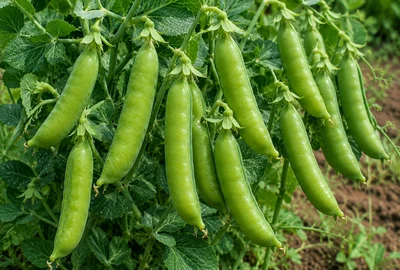
Hurst Green Shaft
Wrinkled · Maincrop
Long, elegant pointed pods produced in pairs along the stem — one of the most beautiful peas to look at. AGM variety with 8–10 peas per pod on tall plants to 75cm. Mid to late season. Outstanding flavour and yield.
- AGM
- Direct Sow
- Maincrop
- ⭐ Flavour
- ⭐ Yield
🏔️ Tall Climbing Heritage
Traditional tall climbing peas reaching 120–180cm, needing substantial support. Heritage varieties with exceptional flavour and a long picking season.
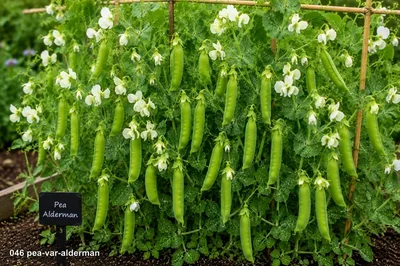
Alderman
Climbing · Heritage
The most celebrated tall climbing heritage pea. Reaches 150cm or more on canes with long, dark-green pods of exceptional flavour. Heavy cropper over a long season. A traditional allotment stalwart grown in British gardens for over a century.
- Direct Sow
- Heritage
- Tall Climber
- ⭐ Flavour
- ⭐ Yield
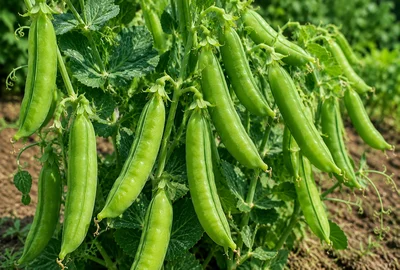
Ne Plus Ultra
Climbing · Heritage
Tall heritage climbing variety with long pointed pods of excellent flavour. Traditional appearance on bamboo canes — an authentic allotment or heritage kitchen garden variety. Heavy cropper over a long season.
- Direct Sow
- Heritage
- Tall Climber
- ⭐ Flavour
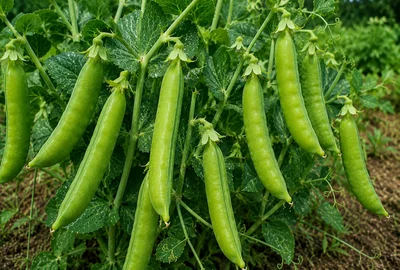
Telephone
Climbing · Heritage
Very tall old heritage variety reaching 180cm with large, dark-green pointed pods containing 8–10 large peas. Strong vigorous vines needing tall cane support. Outstanding flavour and a generous cropper — a heritage showpiece variety.
- Direct Sow
- Heritage
- Tall Climber
- ⭐ Flavour
🍬 Sugarsnap
Thick-walled pods eaten whole — pods and peas together. The sugary crisp texture when eaten raw straight from the plant is one of the finest things in a summer kitchen garden.
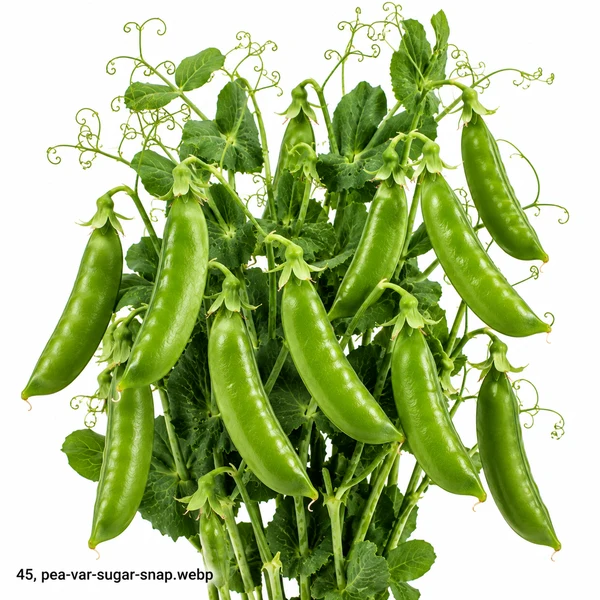
Sugar Snap
Sugarsnap · Classic
The original sugarsnap pea and still one of the best. Plump, glossy, thick-walled green pods eaten whole with visibly swelling peas inside. Outstanding eaten raw or lightly cooked. Reaches 150cm — needs support. The definitive variety.
- Direct Sow
- Sugarsnap
- ⭐ Flavour
- Classic
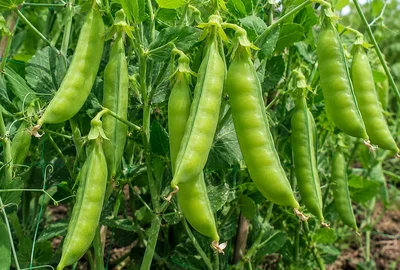
Cascadia
Sugarsnap · Disease Resistant
Reliable AGM sugarsnap with excellent disease resistance including powdery mildew. Medium-sized plants laden with glossy, crisp, sweet pods. One of the most dependable sugarsnap varieties for UK gardens — combines excellent flavour with strong garden performance.
- AGM
- Direct Sow
- Sugarsnap
- Disease Resistant
- ⭐ Flavour
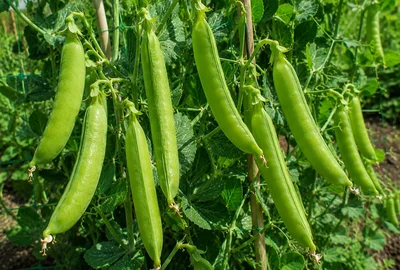
Sugar Ann
Sugarsnap · Compact
Early compact sugarsnap reaching just 60cm — the most container-friendly of the sugarsnap types. Plump, glossy pods with that characteristic thick-walled crunch. One of the earliest sugarsnap varieties to crop. Ideal for raised beds and smaller gardens.
- AGM
- Direct Sow
- Sugarsnap
- Compact
- Early
- Containers
🥬 Mangetout & Snow Peas
Flat pods harvested before the peas swell and eaten whole — pod and all. The French kitchen garden essential.
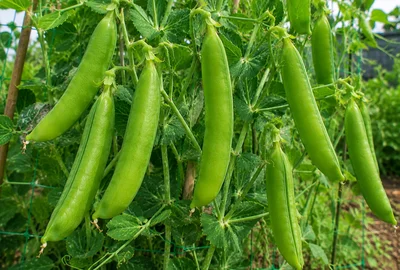
Oregon Sugar Pod
Mangetout · Classic
The most widely grown mangetout in UK gardens. Flat, wide, bright green pods with a classic mangetout profile — tender, sweet and crisp when harvested young. Medium-height plants to 90cm. Reliable and productive.
- Direct Sow
- Mangetout
- Beginners
- ⭐ Yield
Carouby de Maussane
Mangetout · Heritage
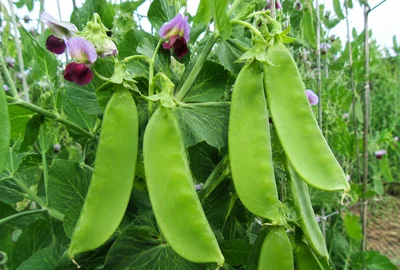
A French heritage giant mangetout producing very large, wide flat pods — up to 12cm long — with beautiful purple-tinged flowers. Tall climbing variety to 180cm needing substantial support. Dramatic, productive, and delicious.
- Direct Sow
- Mangetout
- Heritage
- Tall Climber
- ⭐ Wow Factor
Golden Sweet
Mangetout · Yellow
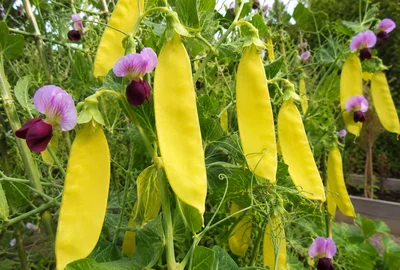
Striking yellow-gold flat pods with beautiful purple bicolour flowers — one of the most decorative edible plants in the kitchen garden. Unusual yellow colouring makes pods very easy to spot for harvesting. Excellent flavour when picked young.
- Direct Sow
- Mangetout
- Ornamental
- Yellow Pod
- ⭐ Wow Factor
🌀 Semi-Leafless Afila
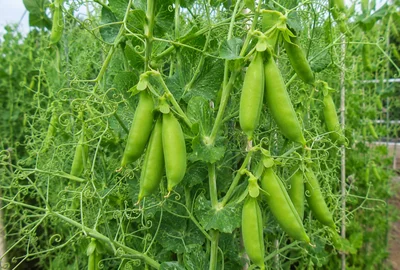
Modern semi-leafless afila varieties replace most leaves with masses of curling tendrils. The plants interlock and support each other, reducing the need for staking. Pods are highly visible among the open tendril growth.
Bikini
Afila · Semi-Leafless
Semi-leafless afila variety with masses of curling tendrils and clusters of plump pods clearly visible among the open growth. Self-supporting and compact. Very popular for modern allotments where minimal staking is preferred.
- Direct Sow
- Afila
- Self-Supporting
- Beginners
Canoe
Afila · Multi-Pod
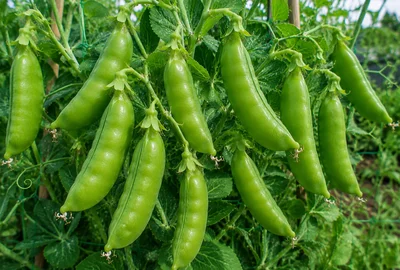
Exceptional variety producing pods in clusters of 2–3 at each node — a characteristic unique to Canoe. This double or triple podding at each joint gives exceptionally heavy yields from a compact plant. One of the most productive peas available.
- Direct Sow
- Afila
- Self-Supporting
- ⭐ Yield
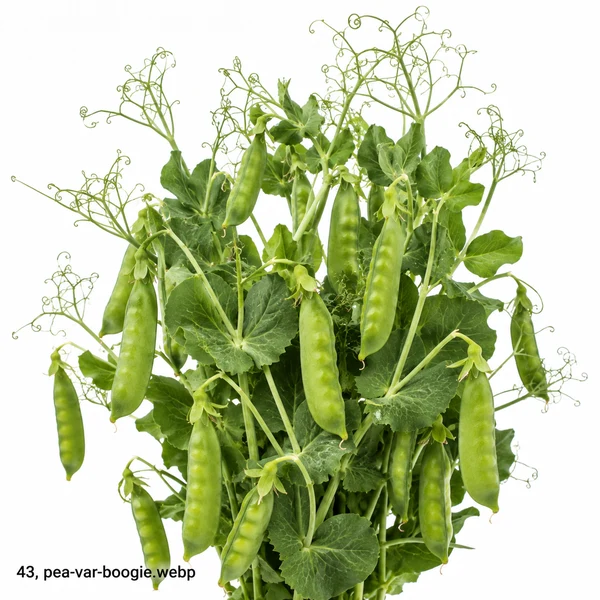
Boogie
Afila · Semi-Leafless
Semi-leafless afila type with masses of curling tendrils and multiple plump pods hanging clearly in the open growth. Modern variety combining the self-supporting habit of afila types with reliable yield and good flavour.
- Direct Sow
- Afila
- Self-Supporting
- ⭐ Yield
🪴 Dwarf & Patio
Compact varieties specifically suited to containers, raised beds, windowboxes, and small gardens. Plants reach just 25–45cm and need little or no support.
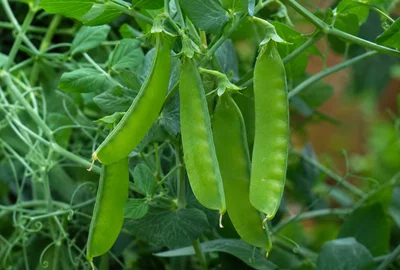
Little Marvel
Dwarf · Patio
Very compact dwarf pea reaching just 45cm. Heavily laden with short, blunt pods of excellent sweet flavour. Ideal for small gardens, raised beds, and large containers. One of the most reliable dwarf peas for UK growing.
- Direct Sow
- Dwarf
- Containers
- Beginners
- ⭐ Flavour
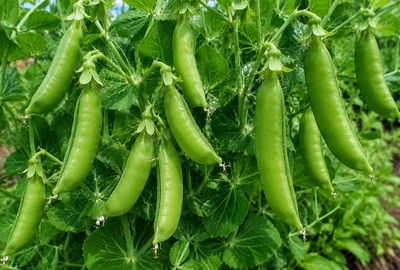
Tom Thumb
Dwarf · Miniature
Tiny compact plants reaching just 20–25cm — one of the smallest peas in cultivation. Small, sweet pods with excellent flavour. Ideal for window boxes, pots, and very small raised beds. Charming and productive for its size.
- Direct Sow
- Dwarf
- Containers
- Windowbox
- ⭐ Compact
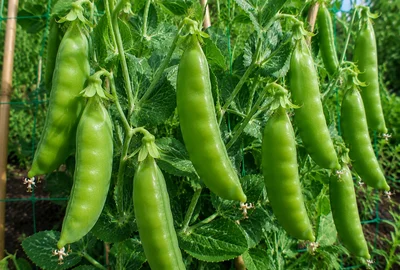
Half Pint
Dwarf · Container
Tiny compact plant to 30–35cm covered in small plump pods — bred specifically for containers and pots. Perfect for patio growing where space is extremely limited. Productive for its miniature size with sweet, good-flavoured pods.
- Direct Sow
- Dwarf
- Containers
- Patio
- ⭐ Compact
💜 Purple & Coloured Pod
Heritage varieties with striking purple or dark pods that turn green on cooking. Highly ornamental, equally good to eat, and the pods are very easy to spot at harvest.
Shiraz
Purple Pod
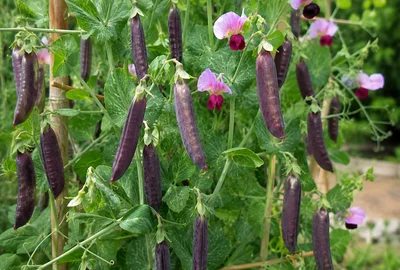
Outstanding heritage variety with deep burgundy-purple pods against bright green foliage — one of the most decorative edible plants available. Pods turn green on cooking. Outstanding flavour.
- Direct Sow
- Purple Pod
- Heritage
- Ornamental
- ⭐ Wow Factor
Purple Podded
Purple Pod · Climbing
Heritage climbing variety with deep violet-purple pods creating a dramatic contrast against green foliage. Tall plants to 150cm on supports with very heavy yields. Pods are easy to spot for harvesting.
- Direct Sow
- Purple Pod
- Heritage
- Tall Climber
- ⭐ Yield
Blauwschokker
Purple Pod · Dutch Heritage
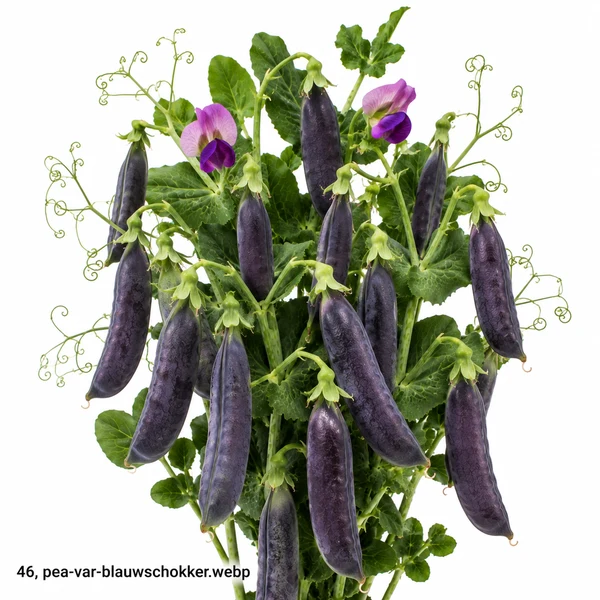
Dutch heritage variety with striking blue-purple pods and beautiful bicolour flowers. Vigorous tall climber to 150cm. One of the oldest coloured-pod peas in cultivation — grown in Dutch kitchen gardens for centuries. Excellent flavour and very heavy crops.
- Direct Sow
- Purple Pod
- Heritage
- Dutch
- Tall Climber
- ⭐ Flavour
🌟 Yellow Pod & Unusual
Unusual varieties with yellow or gold pods, plus the highly visible EZ Pick afila type. Grown as much for their distinctive appearance as their excellent flavour.
Golden Sweet Climbing
Yellow Mangetout · Climbing
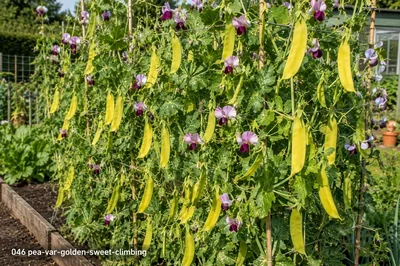
Tall variety with striking yellow-gold flat mangetout pods and beautiful purple bicolour flowers. A climbing plant reaching 150cm on supports with a long season of yellow pods that are easy to spot at harvest. Outstanding visual impact.
- Direct Sow
- Yellow Pod
- Mangetout
- Tall Climber
- Ornamental
EZ Pick
Afila · Easy Harvest
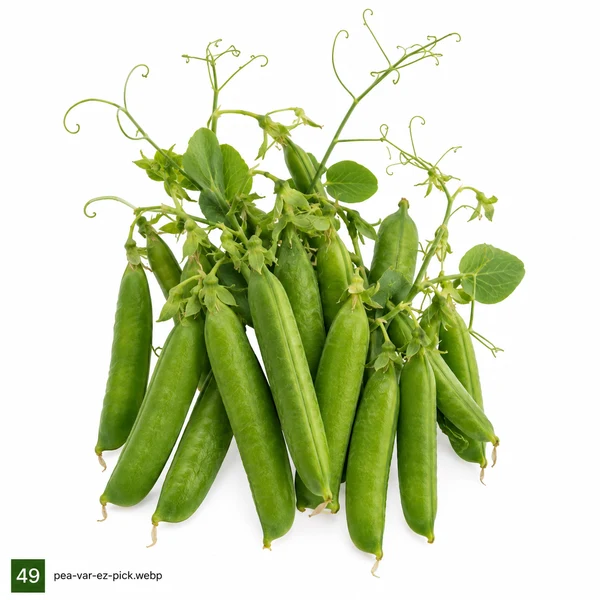
Semi-leafless afila variety where the open tendril growth makes pods extremely visible and easy to spot and pick. Bred specifically for ease of harvest. Compact self-supporting plants. Very popular on allotments.
- Direct Sow
- Afila
- Self-Supporting
- Easy Harvest
- Beginners
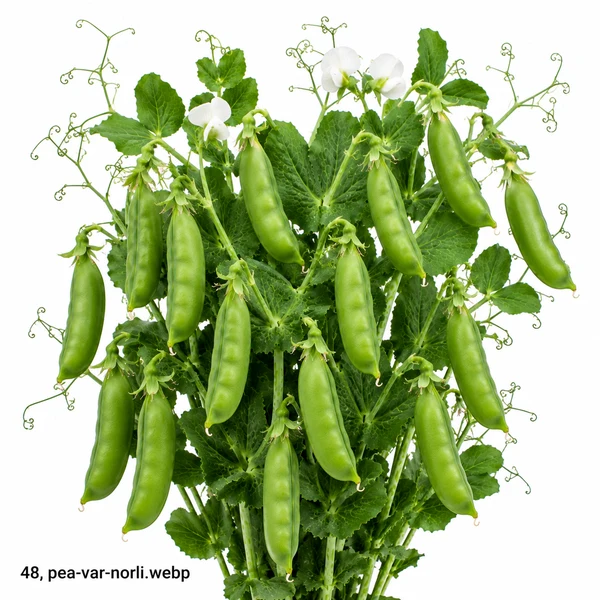
Norli
Round-Seeded · French
Fast-maturing French variety popular on the continent. Compact dwarf plants with smooth round-seeded pods. Reliable and consistent in UK growing conditions.
- AGM
- Direct Sow
- French
- Early
- Compact
- Beginners
🎩 Victorian Heritage
Tall climbing heritage varieties with a history stretching back to the Victorian era. These are the peas that filled the kitchen gardens of country houses — large pods, superb flavour, and impressive plants.
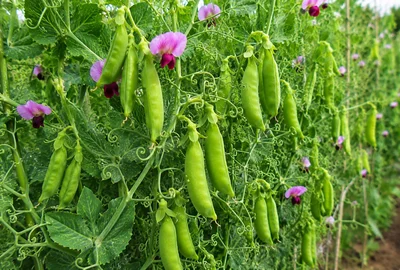
Champion of England
Victorian · Climbing
A tall Victorian climbing heritage pea from the 1840s. Large wrinkled peas in long pods on tall vigorous vines to 180cm. Outstanding flavour — one of the reasons it dominated British gardens for over a century. Needs tall cane or netting support.
- Direct Sow
- Heritage
- Victorian
- Tall Climber
- ⭐ Flavour
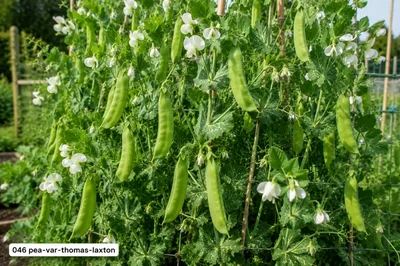
Thomas Laxton
Victorian · Climbing
Victorian heritage variety named for the renowned 19th-century plant breeder. Tall vigorous growth with large, well-filled pods and classic heritage pea flavour. A historically important variety that remains outstanding in the modern garden.
- Direct Sow
- Heritage
- Victorian
- Tall Climber
- ⭐ Flavour
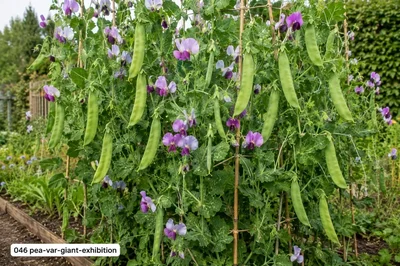
Giant Exhibition
Heritage · Mangetout
Tall vigorous heritage climbing pea with very long flat pods — an exhibition mangetout type grown for the show bench as well as the kitchen. Climbing to 180cm with impressive long flat pods. Excellent flavour when harvested young and tender.
- Direct Sow
- Heritage
- Mangetout
- Tall Climber
- Exhibition
🇫🇷 Continental & French
French and continental varieties with a distinctive character — typically smooth round-seeded types or elegant wrinkled pods suited to French kitchen garden traditions.
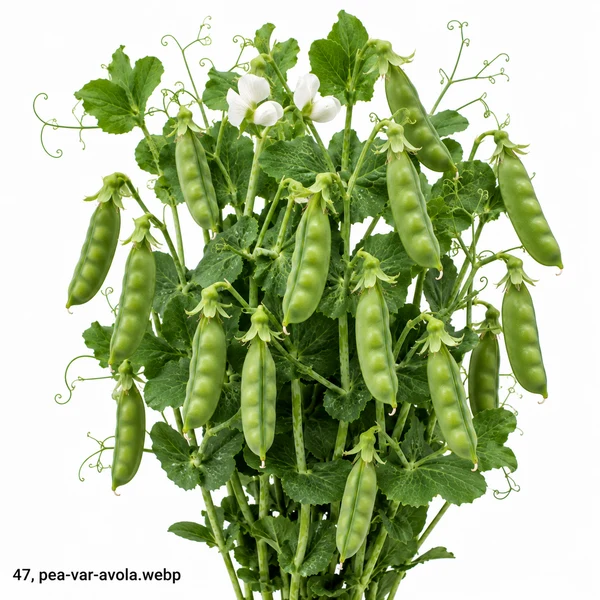
Avola
Round-Seeded · French
Early compact disease-resistant round-seeded variety popular for autumn sowing as well as spring. Well-filled pods on a tidy plant with good cold tolerance. Widely used in French kitchen gardens. Suitable for sowing in October–November under cloches.
- Direct Sow
- French
- Early
- Disease Resistant
- Cold Hardy
- Autumn Sowing
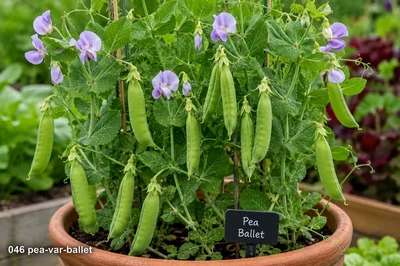
Ballet
Round-Seeded · French
Smooth round-seeded French variety with blunt-ended pods produced in pairs along the stem. Popular in French kitchen gardens for its reliability and flavour. Mid-season with sturdy compact growth. A very dependable continental variety for UK gardens.
- Direct Sow
- French
- Maincrop
- ⭐ Flavour
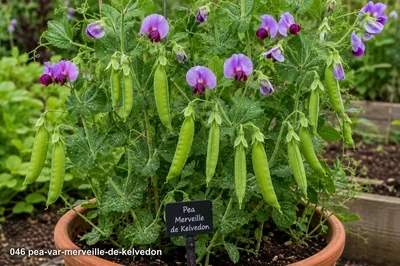
Merveille de Kelvedon
Wrinkled · Heritage
Classic French-British heritage wrinkled pea with pointed, elegant pods. A traditional continental variety with a long history in both British and French kitchen gardens. Good flavour and reliable cropping. The name means "Marvel of Kelvedon".
- Direct Sow
- Heritage
- French
- ⭐ Flavour
🛡️ Disease Resistant Modern
Modern varieties bred for high performance and strong disease resistance, especially powdery mildew. Jaguar holds the RHS Award of Garden Merit.
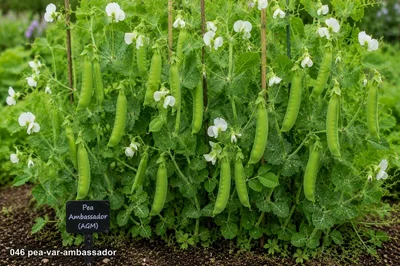
Ambassador
Modern · Mildew Resistant
Tall high-yielding powdery mildew-resistant variety. Large pods with 8–9 peas each on vigorous plants to 75cm needing support. One of the best modern peas for combining yield, disease resistance, and flavour. An excellent late-season choice.
- Direct Sow
- Mildew Resistant
- ⭐ Yield
- ⭐ Flavour
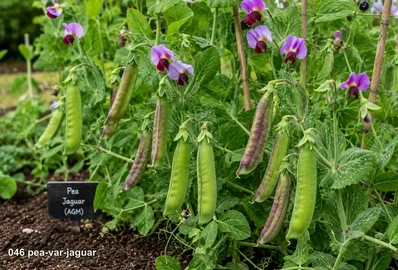
Jaguar
Modern · Maincrop
Reliable AGM modern disease-resistant maincrop with long, well-filled dark-green pods and good powdery mildew resistance. Strong, consistent performer on allotments and in gardens. Mid to late season with a long picking period.
- AGM
- Direct Sow
- Mildew Resistant
- Maincrop
- ⭐ Yield
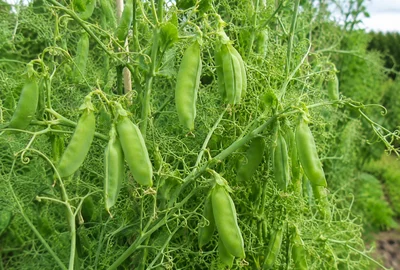
Providence
Modern · Semi-Leafless
Semi-leafless variety with excellent powdery mildew resistance and the self-supporting open growth that makes pods easy to spot and pick. One of the most modern and disease-resistant peas available. Outstanding for late sowings.
- Direct Sow
- Afila
- Mildew Resistant
- Self-Supporting
- ⭐ Yield
04 Where to Source
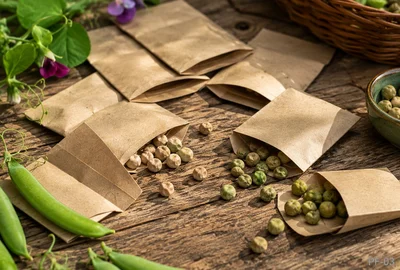
Peas are widely available as seed from all garden centres, supermarkets, and online seed companies from January. The full range of specialist varieties — heritage, coloured pod, and unusual types — is best ordered from specialist seed companies. Seed is inexpensive and a single packet sows a generous row.
📬 Seeds by Post
Specialist online seed companies carry the widest range including heritage, coloured-pod, and unusual varieties. Order from January — popular varieties sell out quickly.
🏪 Garden Centres
Most garden centres stock a good range of popular pea varieties from February. Standard varieties like Kelvedon Wonder, Onward, and Sugar Snap are reliably available. Some centres also stock plug plants from April.
🌿 Seed Libraries & Swaps
Heritage and unusual varieties — Purple Podded, Blauwschokker, Telephone, and Victorian types — are best sourced from seed libraries, allotment seed swaps, and specialist heritage suppliers.
Timing tip: Order seeds in January and February. Popular varieties sell out quickly. Garden centres and markets are a reliable backup from April onwards.
05 Planting Options
🌿 Open Ground / Drill
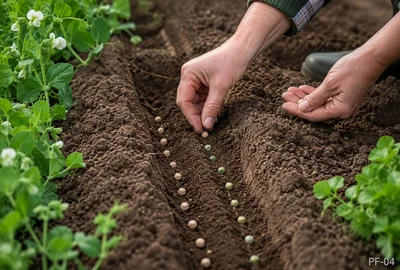
The standard method for all peas. Make a flat-bottomed drill 5cm deep and 20cm wide. Sow seeds 5–8cm apart in a double or triple row. Push in support immediately after sowing — peas begin climbing almost at once. Sow in succession every 3–4 weeks for a continuous harvest.
Suitable varieties: All varieties. Standard method for UK growing.
🪵 Raised Bed
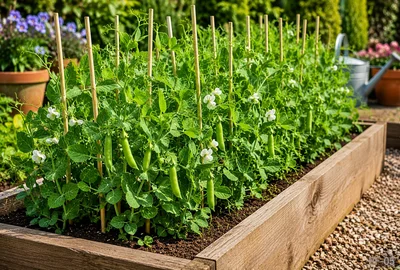
Raised beds suit peas well — the improved drainage and soil warmth help early sowings establish quickly. Dwarf and semi-leafless varieties are ideal for raised beds as their compact habit and self-supporting tendency keep the bed tidy. Push short pea sticks into the bed sides for climbing varieties.
Suitable varieties: Dwarf varieties (Little Marvel, Tom Thumb, Meteor) and semi-leafless afila types are ideal.
🪴 Containers & Pots
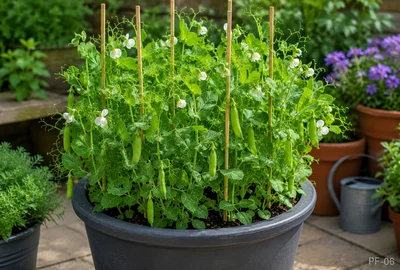
Dwarf varieties can be grown successfully in large, deep containers of at least 30cm depth. Use a good compost mixed with a little slow-release fertiliser. Push small canes or pea sticks into the container for support even for dwarf types. Water consistently — containers dry out quickly.
Suitable varieties: Dwarf varieties only: Tom Thumb, Half Pint, Little Marvel, Meteor. Standard varieties are too large.
06 Companion Planting
✅ Grow nearby
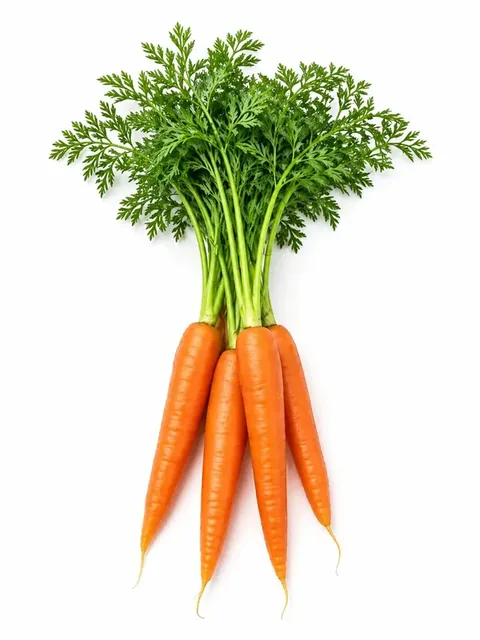
Peas and carrots are classic companions — peas fix nitrogen that benefits carrots, and their different root depths mean they don't compete for the same nutrients.
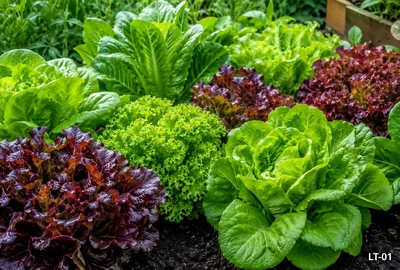
Low-growing lettuce fills the space between pea rows without competition. The pea plants provide useful light shade in summer, keeping lettuce from bolting.
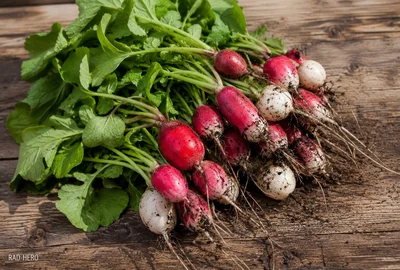
Radish can be interplanted with peas as a quick catch crop between rows. They mature before the peas need the space and may help deter aphids.
❌ Keep apart
- 🧅 Onions — Alliums inhibit the growth of legumes including peas when planted in close proximity. Maintain strict rotation.
- 🧄 Garlic — Garlic root secretions stunt pea growth. Keep alliums and legumes in separate beds.
- 🥬 Leeks — Leeks inhibit pea growth like all alliums. Rotate both crops away from the same bed each year.
07 Sowing — How To
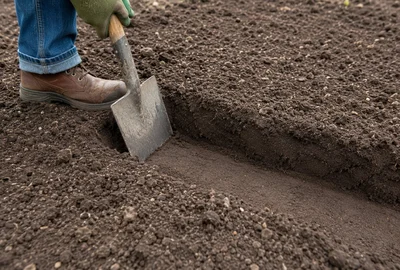
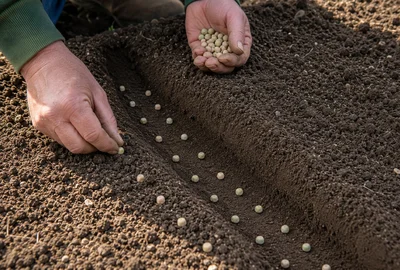
Peas are among the easiest vegetables to sow directly outside. Make a flat-bottomed drill 5cm deep and 20cm wide using the edge of a spade or a draw hoe. Sow seeds 5–8cm apart across the whole width of the drill in a staggered pattern — this gives the densest planting without competition. Cover with soil, firm gently, and water. Push in support immediately — peas climb from the moment they emerge.
Prepare the drill
Use the edge of a spade or draw hoe to make a flat-bottomed drill 5cm deep and 20cm wide. A flat bottom gives even germination depth across the whole row.
Sow across the drill
Sow seeds 5–8cm apart across the full width of the flat-bottomed drill in a staggered double or triple row. This gives a dense productive row from a single drill.
Cover and firm
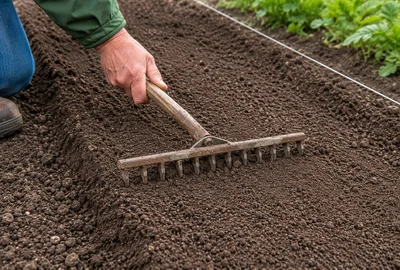
Cover the seeds with the excavated soil. Firm gently along the row with the back of a rake or your foot. Water the drill thoroughly after sowing.
Push in support
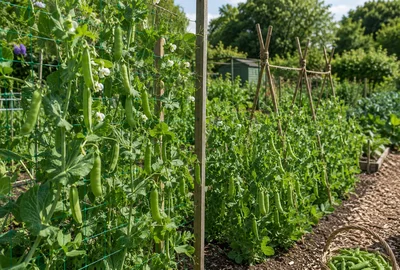
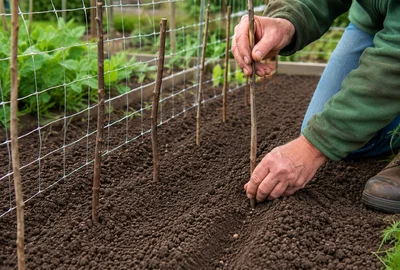
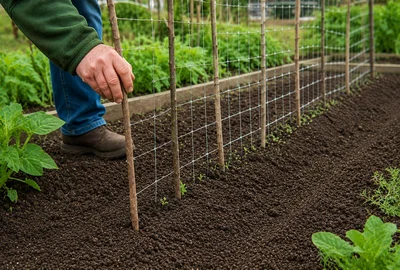
Immediately after sowing, push pea sticks (twiggy branches), netting, or wire mesh into the ground alongside the drill. Peas climb from the moment they emerge and need something to grip straight away.
Protect from mice
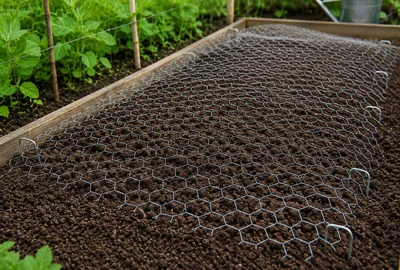
Mice are the main enemy of pea seeds — they will dig them up within hours. Cover fresh sowings with wire mesh, lay holly branches over the drill, or pre-germinate seeds on damp kitchen paper for 2–3 days before sowing.
Sow in succession
For a continuous harvest from June to September, sow a new row every 3–4 weeks rather than a single large sowing. When the first row flowers, sow the next.
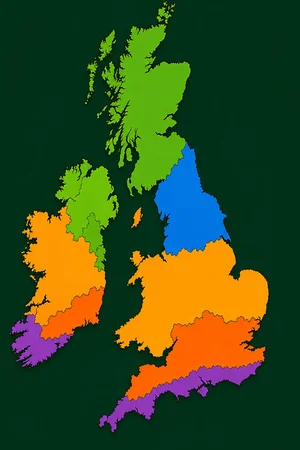
Regional sowing timing| Region | Sow / plant | Harvest | Notes |
|---|
| Scotland & Far North | Mar–May | Jul–Sep | Sow Mar–May; harvest Jul–Sep |
|---|
| Northern England | Mar–Jun | Jun–Sep | Sow Mar–Jun; harvest Jun–Sep |
|---|
| Midlands & Wales | Feb–Jun | Jun–Sep | Sow Feb–Jun; harvest Jun–Sep |
|---|
| Ireland & Isle of Man | Feb–Jun | Jun–Sep | Sow Feb–Jun; harvest Jun–Sep |
|---|
| South & SE England | Feb–Jun | May–Sep | Sow Feb–Jun; harvest May–Sep |
|---|
| South Coast & SW | Feb–Jun | May–Sep | Sow Feb–Jun; harvest May–Sep |
|---|
08 Using a Propagator
Peas are best sown directly outside and do not need a heated propagator. They are hardy enough to germinate in cool soil from March and prefer cool conditions to the warmth of a propagator.
Heated propagator
A heated propagator is not needed and is counterproductive for peas — they prefer cool conditions (10–15°C) and germinate better in the soil than in high heat. If you want to start early, a cold greenhouse or cold frame is better than a heated propagator.
Unheated propagator
An unheated propagator or cloche over the drill in late February to early March gives early sowings useful protection from heavy rain and cold snaps, bringing germination on by 1–2 weeks in the coldest regions — without one, direct sowing from March in well-prepared soil gives excellent results everywhere.
09 Soil Requirements
- pH
- 6.0–7.5
- Best
- Loam, Sandy loam
- Tolerates
- Clay loam
- Avoid
- Waterlogged, Compacted, Very acid
💡 Well-drained but moisture-retentive. Fix atmospheric nitrogen.
10 Ongoing Care
🎋 Supporting
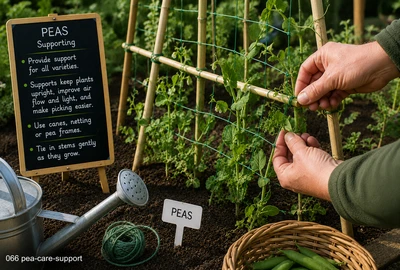
Peas need something to climb from the moment they emerge. Push pea sticks (twiggy branches), netting, or wire mesh in immediately at sowing — a row left without support for even a few days will tangle and never fully recover. Tall varieties (Alderman, Telephone) need support at least as tall as the expected plant height — canes with netting between them or purpose-made pea netting.
💧 Watering
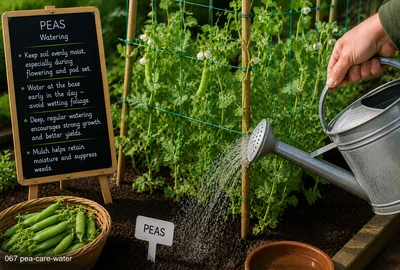
Peas are fairly drought-tolerant at most stages but need consistent moisture when flowering and when pods are swelling. Drought during flowering causes pods to set poorly or drop entirely. Water deeply at the base rather than overhead — overhead watering promotes powdery mildew in dry spells.
✂️ Picking
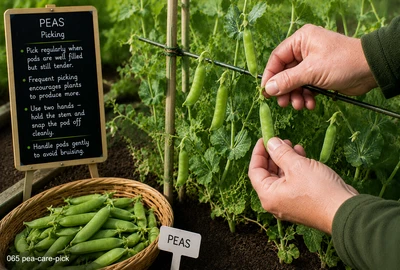
Pick from the bottom of the plant upwards, working up as pods ripen. Regular picking — every 2–3 days at peak season — is essential. Pods left on the plant signal to the plant that its reproductive job is done and it stops producing new pods. Eat sugarsnap and mangetout types as soon as possible — they deteriorate faster than shelling peas.
🍃 Powdery Mildew
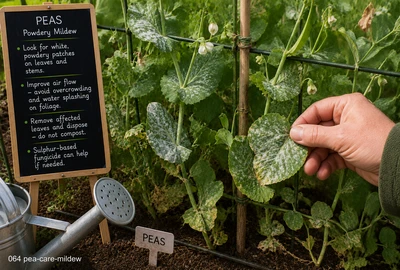
Powdery mildew (white powder on leaves) is common in hot, dry spells and mainly affects later sowings in July and August. Water at the base rather than overhead, give plants adequate space, and choose mildew-resistant varieties (Ambassador, Jaguar, Cascadia) for late sowings. Remove badly affected plants promptly to avoid spreading.
11 Watch Out For
WarningMice absolutely love pea seeds and will dig them up as fast as you sow them. Pre-germinate seeds on damp kitchen paper before sowing, or cover fresh sowings with wire mesh or holly branches to protect until germination.
🐛 Insects & pests
- 🐜 Aphids (Blackfly & Greenfly) — Curled, distorted, or stunted growing tips — aphids inject saliva that causes leaf curl to protect them
- 🐌 Slugs & Snails — Silver slime trails on leaves, soil, and pots — often the first sign before damage is found
- 🌿 Leaf Miner — Pale, winding tunnels or irregular blotches between leaf surfaces — visible when held up to light
🍄 Diseases to watch
- ⬜ Powdery Mildew — Powdery mildew is caused by a range of related fungi, each specific to its host plant — courgette mildew cannot infect peas, and vice versa. The characteristic white powdery coating on leaf surfaces appears in warm, dry conditions (unlike downy mildew which prefers cool and wet). Rarely kills plants but severely reduces yield and plant vigour.
- 🔵 Downy Mildew — Downy mildew is caused by oomycetes (water moulds) and is completely unrelated to powdery mildew despite the similar name. It thrives in cool, wet, humid conditions and is most damaging in spring and autumn. Each host plant has its own specific downy mildew species. Lettuce downy mildew can destroy an entire bed within days in the right conditions.
- 🌿 Fusarium Wilt — Fusarium wilt (Fusarium oxysporum) is a soil-borne vascular disease that invades root systems and blocks the water-conducting tissue of the plant. Infected plants die of internal drought even with adequate soil moisture. Different formae speciales (strains) target specific host plants — asparagus fusarium is different to tomato fusarium.
- 🩶 Botrytis (Grey Mould) — Botrytis cinerea (grey mould) is the most ubiquitous fungal pathogen in temperate gardens — present in virtually every garden soil and on plant debris. It becomes a disease only when conditions favour it: cool, humid, poorly ventilated environments with damaged or senescent plant tissue. In a greenhouse in autumn it can destroy an entire tomato or grape crop.
Full identification and treatment advice is in the Pests and Diseases sections.
12 Storage & Preserving
🫛 Fresh — Eat Immediately
Freshly picked peas eaten on the spot are incomparable. The sugar begins converting to starch the moment the pod is picked. Shell and eat within an hour for the sweetest flavour. The difference between pod-fresh and refrigerator peas is one of the most striking things about growing your own.
❄️ Freeze
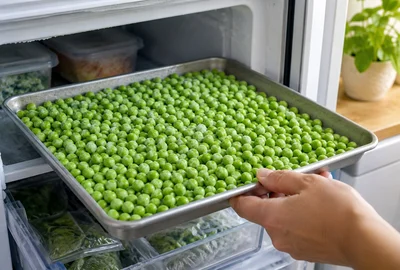
Peas freeze brilliantly — better than almost any other vegetable. Shell, blanch for 60–90 seconds in boiling water, cool immediately in iced water, drain, and freeze flat on a tray before bagging. Frozen within the hour of picking, homegrown peas are far superior to any supermarket bag.
🥗 Mangetout & Sugarsnap Fresh
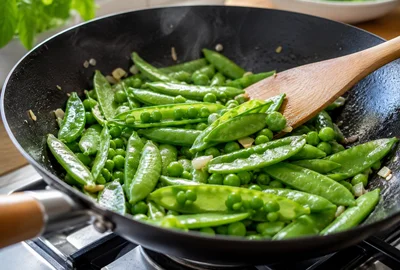
Mangetout and sugarsnap pods are best eaten raw or barely cooked — stir-fried for 60 seconds or blanched for 2 minutes. Pick young for maximum crunch and sweetness. They do not freeze as successfully as shelling peas — eat fresh within 2–3 days of picking, stored in a sealed bag in the fridge.
13 Expert Tips
💡 Protecting from Mice
Pre-germinate pea seeds on damp kitchen paper for 2–3 days before sowing if mice are a persistent problem. Seeds germinate indoors and are underground and growing faster when sown — mice cannot smell out germinated seeds as easily as dry ones.
💡 Early Sowing
Round-seeded varieties (Feltham First, Meteor, Avola) can be sown earlier than wrinkled types — from late February in mild areas. They tolerate colder, wetter soil at germination. Do not sow wrinkled varieties before mid-March as cold wet soil causes them to rot.
💡 Pinching Out
Pinch out the growing tips once plants reach their expected height. This redirects energy into the existing pods and gives a final flush of pods. It also removes the soft growing tip where blackfly colonies prefer to congregate.
💡 Tall Support
Tall climbing varieties benefit enormously from very tall support — at least as tall as the expected plant height. Peas that run out of support at the top fall over and tangle. Invest in proper tall netting, wire mesh or pea sticks cut to full height.
14 Common Mistakes
⚠ Sowing & Support
- Not putting in support at sowing time — peas need something to grip from day one.
- Sowing wrinkled varieties too early in cold wet soil — they rot rather than germinate; wait until mid-March.
- Making V-shaped drills rather than flat-bottomed ones — concentrates all seeds in one line.
- Ignoring mice — a freshly sown pea row can be completely emptied in one night.
⚠ Growing & Harvesting
- Not picking frequently enough — pods left on the plant halt further pod production within days.
- Watering overhead rather than at the base — promotes powdery mildew in dry spells.
- Leaving spent plants standing — they harbour pests and diseases for the next crop.
- Sowing all varieties at once rather than in succession — results in a glut followed by nothing.