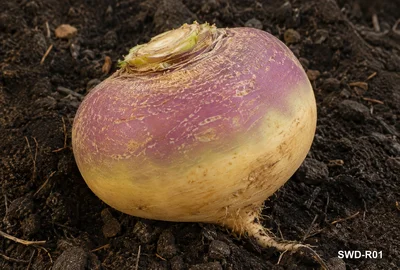
Marian
Purple-top · Seed
A garden favourite: purple-skinned roots whose yellow flesh has a nutty taste. It resists both clubroot and powdery mildew. Well suited to UK autumn and winter harvesting.
- Beginners
Brassica napus
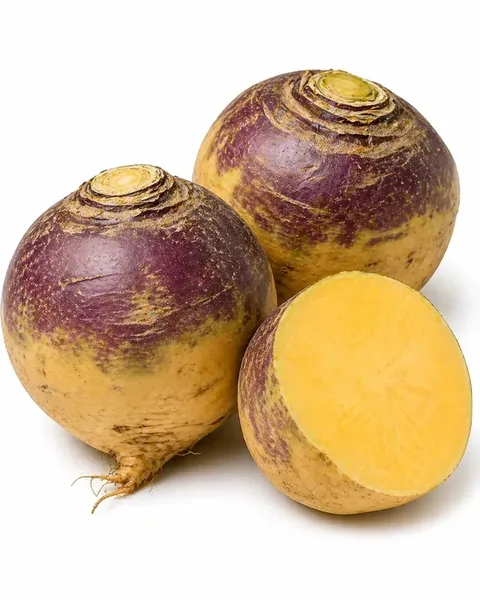
One of the most dependable winter roots. Swede is sown from late spring into early summer, is ready to lift from early autumn, and with a little cover the roots can wait in the ground well into winter.
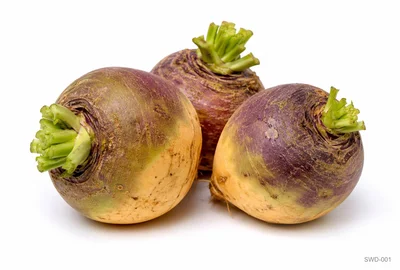
Most swede varieties share the classic purple-bronze top and creamy yellow flesh, but there are differences in disease resistance, flavour, and cold hardiness. Where clubroot is a worry, Invitation, Marian, Gowrie and Tweed all show some resistance to it. Gowrie and Brora are both noted for their flavour, and Gowrie and Magres for standing up well to winter. Marian has a nutty taste and also resists powdery mildew.
The number of varieties shown for each crop is based on UK consumption data (2025/26) — the more popular the crop, the more variety choices we include.
Dependable garden swedes — easy to grow and good keepers.
A garden favourite: purple-skinned roots whose yellow flesh has a nutty taste. It resists both clubroot and powdery mildew. Well suited to UK autumn and winter harvesting.
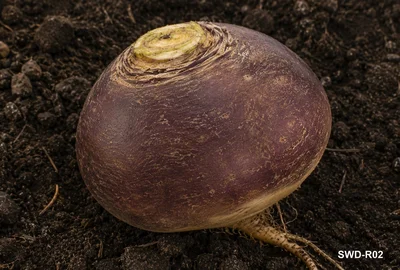
A hardy, easy variety giving medium-sized roots with purple skins and deep yellow flesh of mild flavour. Dependable winter crops.
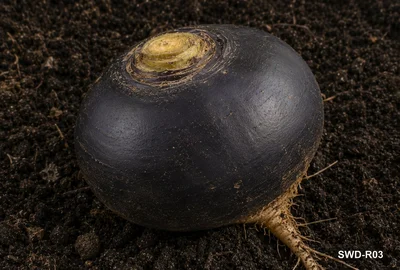
Round roots with very dark purple skin and cream-yellow flesh. Holds up well in winter and resists powdery mildew.
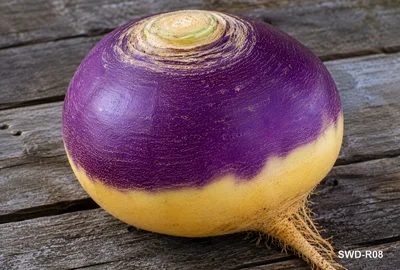
A large maincrop swede: the skin is a deep red and the flesh yellow and sweet. Spring sowings are usually ready to lift from October; stores well.
Gowrie and Brora hold the RHS Award of Garden Merit and perform consistently well in UK growing conditions.
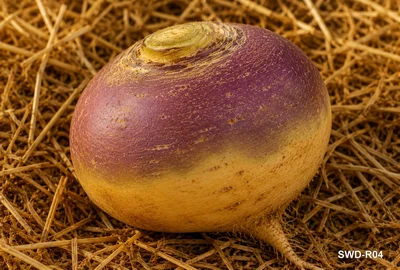
A purple-skinned swede of excellent flavour that stands hard winters well and keeps in good condition in the ground for a long time. Strongly resists powdery mildew and has some resistance to clubroot.
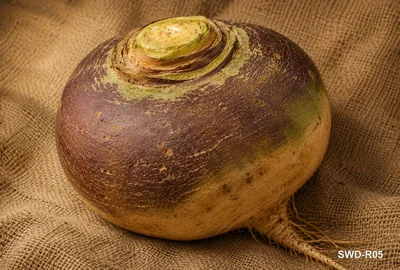
A fine-flavoured swede with reddish-purple skin and creamy yellow flesh. Bred for eating quality, stores well, useful for late autumn harvests.
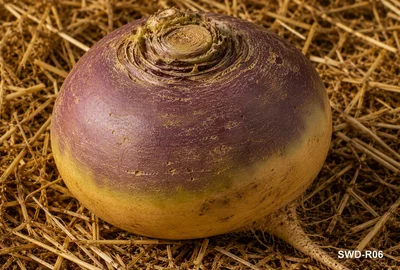
A vigorous, even F1 hybrid. Neat, round roots with purple shoulders and smooth cream flesh, plus some resistance to clubroot.
Varieties chosen for resistance to clubroot or mildew.
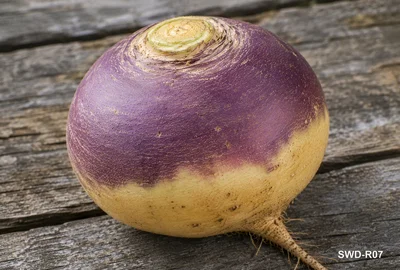
A good choice where clubroot has been a problem. Even, round, purple-skinned roots with yellow flesh. It resists clubroot as well as powdery mildew, and stands winter well.
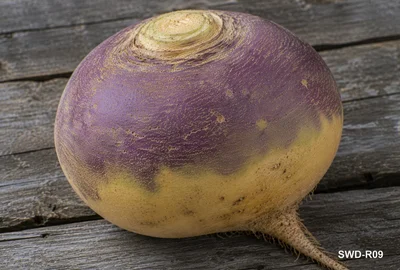
Purple-skinned, yellow-fleshed roots of a good, even shape, with a pleasant taste and no bitterness. Copes very well with winter, resists mildew, and stores well after lifting.
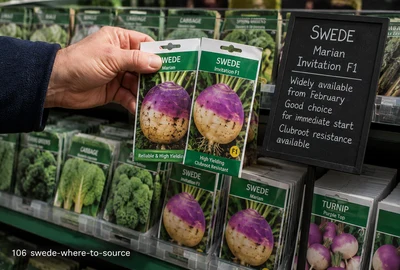
Swede is always grown from seed, available from garden centres and online. Choose clubroot-resistant varieties such as Invitation or Marian if brassica disease has been a problem in your garden.

Online seed companies offer the best range of swede varieties — including clubroot-resistant varieties and purple-topped modern types. Order from January. Seed is inexpensive and germinates reliably — buy several varieties to compare.
Garden centres stock reliable standard varieties — Marian and Invitation are widely available from February onwards. A good option for an immediate start, particularly if clubroot resistance is needed.
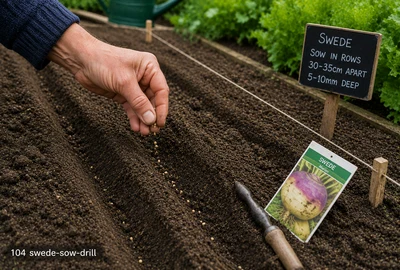
In open ground swede is sown direct from April to June, with May the main month. Sow thinly in 2cm drills, 38cm apart. Thin progressively — first to about 8cm, then to the final 20–25cm spacing as plants establish. Swede is a slow-growing crop that occupies the ground from late spring right through winter. Keep the bed weed-free in the early weeks while plants are small — they are slow to establish and easily overwhelmed.
Suitable varieties: All varieties. Marian, Invitation, and Gowrie perform well in open ground across all UK regions. Choose clubroot-resistant types on heavier, wetter soils.
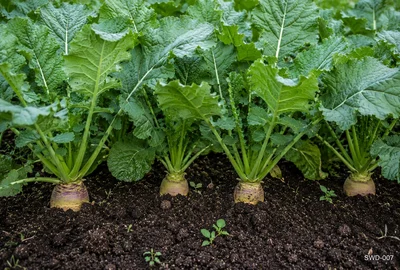
Swede can be grown in raised beds where the soil is free-draining and deep. The loose growing medium reduces compaction around the developing root. Sow and thin as for open ground. Raised beds on heavy clay sites dramatically improve drainage — a significant advantage as swede rots in waterlogged conditions. Ensure the bed is at least 30cm deep.
Suitable varieties: All varieties. Particularly useful on clay or poorly drained sites where open ground swede regularly fails.
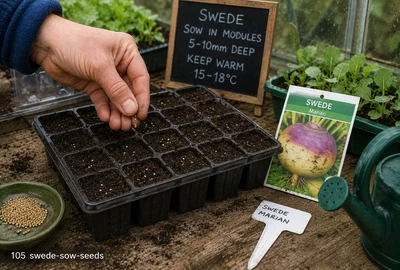
Module-sowing in a cool greenhouse in April gives swede a head start of a few weeks — particularly useful in Scotland and Northern England where the growing season is short. Sow 2 seeds per deep module at 12–15°C and remove the weaker seedling. Harden the young plants off and set them out in late May or June, before the main taproot starts to form. Handle the taproot carefully — disturbing it causes forking. Raising them in modules keeps root disturbance at planting out to a minimum.
Suitable varieties: All varieties. Particularly recommended for northern regions where the short season limits outdoor direct-sowing to a narrow window.
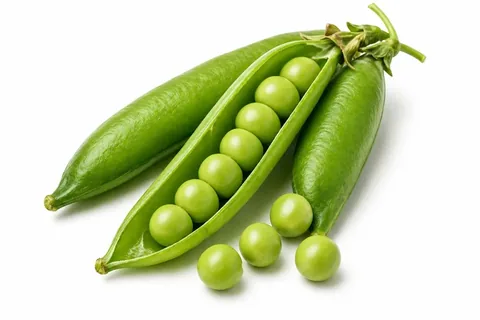
Peas fix nitrogen in the soil that benefits subsequent brassica crops including swedes. Growing peas before swedes in the rotation improves soil fertility naturally.
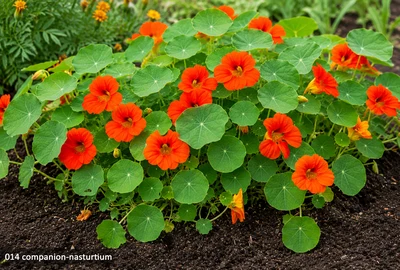
Nasturtiums at the bed perimeter act as a trap crop for aphids and help deter cabbage white butterflies from laying eggs on nearby brassica crops including swedes.
Swede is sown direct between late spring and early summer. May is the main month; sowings made very early can bolt, so cover any April sowing with fleece or cloches. It is a slow crop, taking up to about six months to reach full size. It is hardy, but roots left in the ground over winter are best covered with straw or fleece.
Draw drills 2cm deep, 38cm apart. Swede needs more space than turnip. A well-prepared, firm seedbed gives the best results — loose, freshly dug soil causes forked roots.
Sow seeds thinly along the drill. Swede seed is small and easy to over-sow — thin sowing makes thinning much easier and wastes less seed.
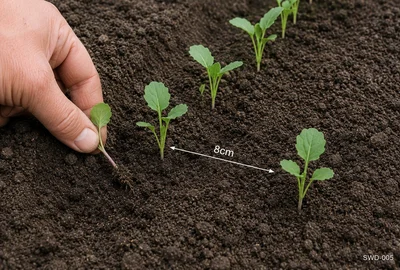
Thin to 8cm when seedlings are 5cm tall. Use thinnings as microgreens — the young leaves are edible. Keep the row weed-free at this stage.
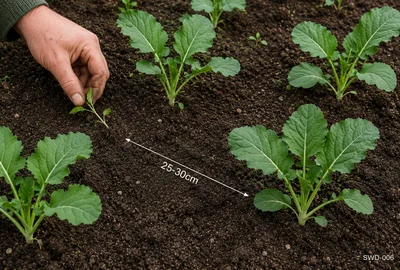
When plants are well-established, thin again to 20–25cm apart. Swede needs space to develop a full, round root.
Swede needs little attention through summer. Water in dry spells to prevent root splitting. A single midsummer top-dressing of a general fertiliser on poor soils can help.
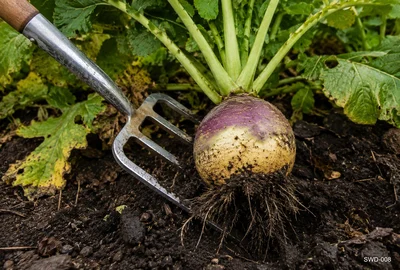
Lift from early autumn, usually once the roots are 10–15cm across, or earlier as baby roots. Swedes can stay put well into winter — cover them with straw or fleece, and where the soil is cold or wet, lift and store them instead.

| Region | Sow / plant | Harvest | Notes |
|---|---|---|---|
| Scotland & Far North | May–Jun | Sep–Jan | May is the safest month here — very early sowings can bolt. The long cool season suits swede; cover the roots or lift and store them before hard winter weather · May–Jun |
| Northern England | May–Jun | Sep–Jan | May to June is the main window — cover any late-April sowing with fleece. Excellent autumn and winter crop in northern gardens · May–Jun |
| Midlands & Wales | Apr–Jun | Sep–Feb | Sow late April to early June, with fleece over April sowings. A single sowing gives a full autumn and winter crop — no need for succession · Apr–Jun |
| Ireland & Isle of Man | Apr–Jun | Sep–Feb | May is the main month; April sowings need fleece. Cool Atlantic summers suit swede well — very reliable crop across Ireland · Apr–Jun |
| South & SE England | Apr–Jun | Sep–Feb | Sow from late April, mainly in May. Summer drought can be an issue — water in dry spells to prevent splitting. Harvest from September · Apr–Jun |
| South Coast & SW | Apr–Jun | Sep–Mar | May sowings work well, and April ones under fleece. Mild winters mean roots can stay in the ground right through to March if needed · Apr–Jun |
Swede is most commonly direct-sown but can benefit from an indoor module start in a cool greenhouse or unheated propagator, particularly in northern regions where the season is short. Keep temperatures low — swede is a cool-season brassica that germinates best between 10–15°C.
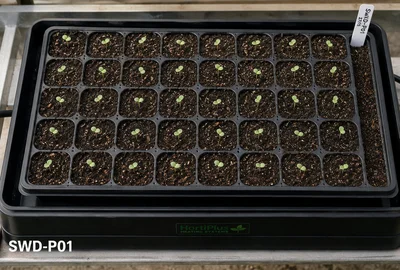
Set to 12–15°C maximum. Swede germinates readily in cool conditions — in 5–7 days at 15°C. Avoid higher temperatures which produce leggy, over-tender seedlings prone to damping off. Sow into deep root-trainer modules to minimise root disturbance at transplanting.
An unheated propagator in a cool greenhouse or cold frame is ideal. Place in late April. Ambient temperatures of 10–15°C are optimal. Harden off carefully over 10–14 days before planting out into open ground or raised beds in late May or June.
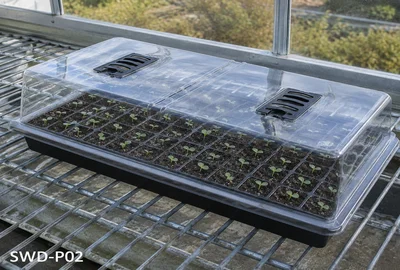
Standard unheated propagator — A lidded seed tray traps warmth and humidity around germinating seeds without electricity. Performance depends entirely on room temperature — best placed on a warm windowsill and used from March onwards. Replace the lid promptly after watering. Remove it completely the moment seedlings emerge to prevent damping off.
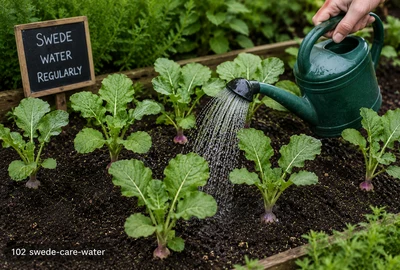
Water regularly during dry periods — swedes need consistent moisture throughout their long growing season to develop smooth, even-textured roots. Drought followed by rain causes the roots to split. Mulch around plants to retain moisture during summer.
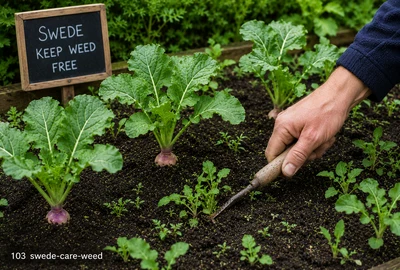
Keep the bed weed-free, especially in the first 6–8 weeks when swede seedlings are small and slow-growing. Hoe between rows carefully and hand weed close to plants. Swedes left in weedy ground develop poorly and produce misshapen roots.
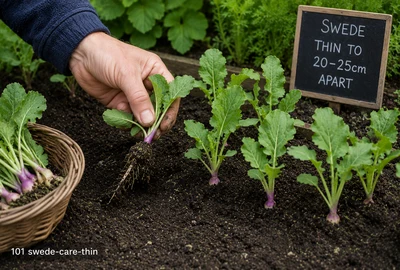
Once the seedlings are 5–7cm tall, thin them so the plants stand 20–25cm apart. Swedes need more space than turnips to develop their large, characteristic purple-shouldered roots. Overcrowded plants produce small, poorly formed roots.
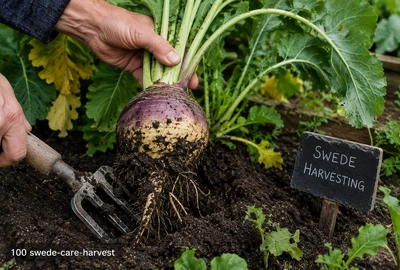
Swedes are ready from early autumn — as baby roots after a few weeks, or more usually at 10–15cm across. If you want bigger roots, grow a variety that does not go woody. Before winter, tuck straw or fleece over the roots left in the ground, or put cloches on top. In cold areas or soil that stays wet, dig them up in late autumn and keep them in boxes of moist sand or compost, stored in a shed that stays frost-free.
Club root can ruin a swede crop, and its spores can survive in the ground for as long as 20 years. Liming acid soil reduces it but does not cure it — rotate brassicas, keep drainage good and choose resistant varieties. Never grow brassicas in the same bed more than once in four years.
Full identification and treatment advice is in the Pests and Diseases sections.
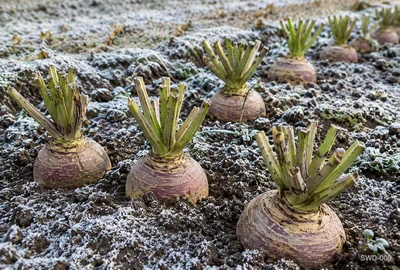
Swedes can stay where they grew and be lifted as needed until about March. So the soil does not freeze hard, spread straw or bracken about 15cm deep over the row and peg netting or fleece over it. In cold areas or wet soil, lift and store them instead.
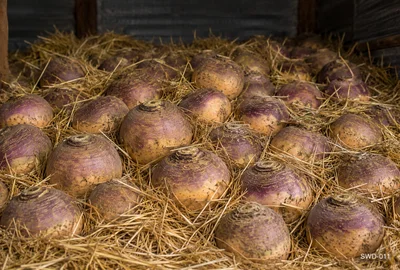
If the ground is needed, or your winters are cold or wet, dig the roots up late in autumn, twist off the leaves and bed them, one layer at a time, in boxes of damp sand or peat-free compost. Keep the boxes in a shed or garage that stays dark, cool and frost-free.

Boil, mash with butter and freeze in portions. Ready in minutes from frozen — ideal for Burns Night suppers and winter meals.
Flea beetles come out of winter shelter in mid-spring and go straight for brassica seedlings, leaving small round pits in the leaves. Cover newly sown rows with insect-proof mesh until the young plants are growing strongly.
Liming acid soil cuts clubroot down but will not get rid of it. Test the pH first; on acid ground use about 500g of lime per square metre, then lighter dressings of around 270g in later years. Good drainage and resistant varieties such as Marian and Gowrie help too.
Swedes left in the ground over winter are far easier to lift if the soil cannot freeze hard. Before the cold sets in, spread straw or bracken about 15cm deep along the row and hold it down with netting or fleece.
Where the soil stays wet in winter, or in cold districts, don’t leave the roots out — dig them up as autumn ends and put them in boxes of moist sand somewhere frost-free.