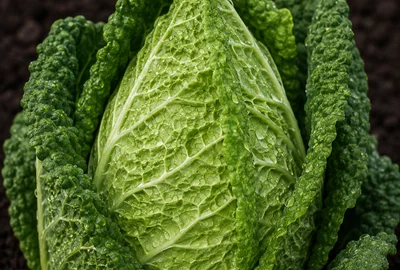
Hispi F1
Pointed · Spring/Summer
The UK's most popular pointed cabbage and deservedly so. Tight conical heads with sweet, tender leaves. Reliable, fast, and excellent raw or lightly cooked.
- F1
- Beginners
- ⭐ Flavour
Brassica oleracea (Capitata)
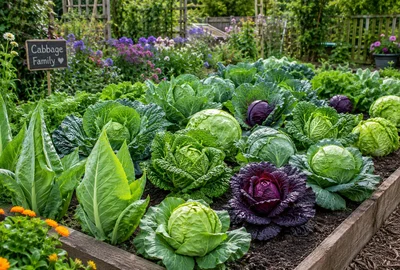
With the right varieties, you can harvest fresh cabbage every single month of the year. Spring cabbage, summer ball heads, winter savoy — plan your succession well and the kitchen is never without a cabbage.
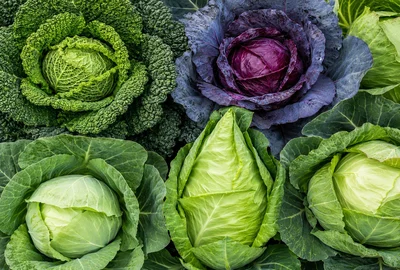
Cabbage divides into four main groups, each with a different season and purpose. Spring and pointed cabbages — including Hispi and Greyhound — are the earliest of the year, harvested from May to July, with sweet tender leaves perfect for fresh eating. Summer ball cabbages like Golden Acre and Stonehead produce the classic round green heads from June to September. Winter types — savoys and January King — are the most cold-hardy and provide the backbone of the brassica bed from October through to March. Red cabbages bring deep colour to the plot and the kitchen, harvesting from September to November and storing extremely well. Growing across all four families means a near year-round supply from a single bed rotation.
The number of varieties shown for each crop is based on UK consumption data (2025/26) — the more popular the crop, the more variety choices we include.
The first cabbages of the year. Pointed varieties are sweeter and faster-maturing than round types — ideal for fresh eating from May onwards. Sow indoors January to March for an early start.
The UK's most popular pointed cabbage and deservedly so. Tight conical heads with sweet, tender leaves. Reliable, fast, and excellent raw or lightly cooked.
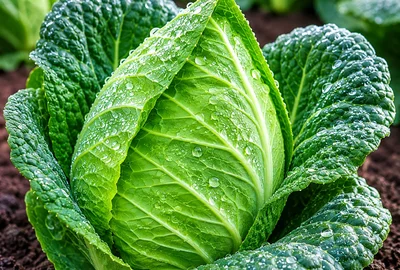
A classic pointed spring cabbage with pale green, very tender leaves. One of the earliest to mature. Slim conical head, delicate flavour — excellent in early summer slaws and salads.
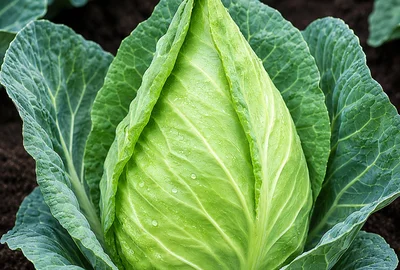
A compact, fast-maturing spring cabbage producing small round-headed hearts from an early sowing. One of the earliest spring cabbages available. Good flavour and reliable in most UK conditions.
The classic round green cabbage for summer and autumn. Dense, solid heads that store well and perform in any kitchen. Sow indoors February to April for planting out from late April onwards.
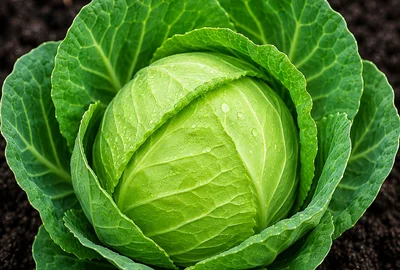
The classic compact summer ball cabbage. Small to medium solid heads, tight pale green wrapper leaves, excellent flavour. Ideal for smaller gardens. Matures 60–70 days from transplanting. Very reliable across all UK regions.
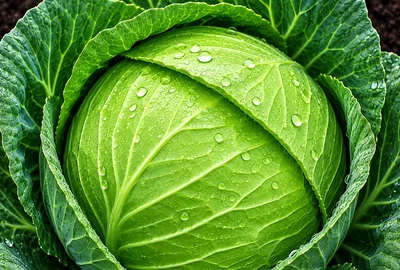
Extremely dense, rock-solid heads with smooth blue-green outer leaves. One of the firmest summer cabbages available — stores well after harvest. Very uniform and reliable. Good club root resistance.
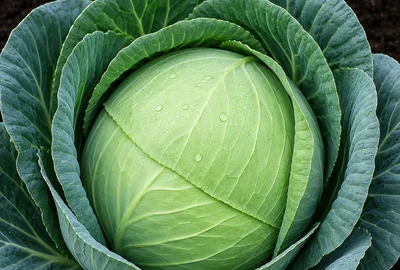
Large, solid round heads with vigorous outer leaves. Outstanding club root resistance — the best choice for plots with known club root problems. Heavy yields, good uniformity, excellent all-round performer.
The hardiest cabbages, standing through frost and providing fresh harvest from October to March. Savoy types have deeply crinkled, sweet leaves that improve with cold. Sow April to May for autumn and winter harvest.
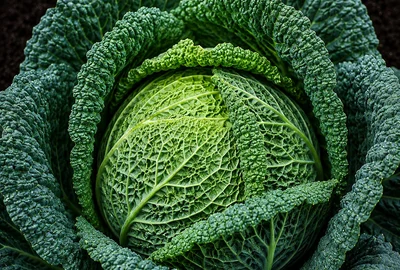
A superb large savoy with deeply crinkled dark blue-green leaves and exceptional frost hardiness. Stands well in the ground from November to February. Sweet, nutty flavour — one of the finest winter vegetables.
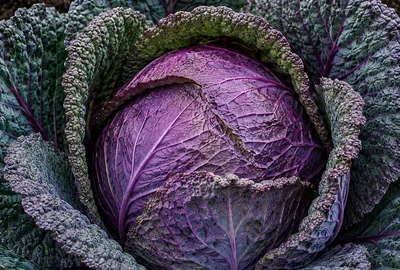
One of Britain's most beautiful vegetables. Semi-savoy heads flushed deep red and purple in cold weather. Incredibly hardy — stands through the hardest winters. Rich flavour and striking ornamental value.
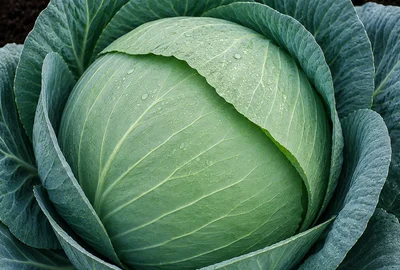
A very large, dense round winter cabbage with smooth blue-green outer leaves. Exceptional cold hardiness and standing ability — can be left in the ground from October to March without deteriorating. Heavy yields.
Striking deep red-purple heads for braising, pickling, and raw slaws. Red cabbages are slower to mature than green types but store exceptionally well — a single head can last months in a cool shed. Sow March to May.
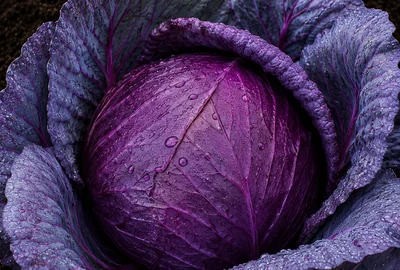
The classic British red cabbage. Tight, very dense dark purple-red heads with smooth wrapper leaves. Excellent for braising, pickling, and raw coleslaw. Stores for months in a cool place. A reliable, time-tested variety.
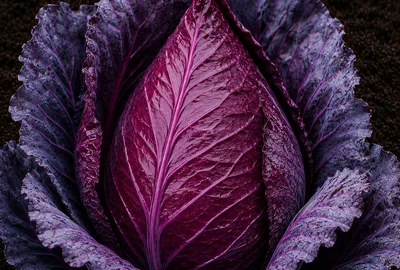
A striking red cabbage with a distinctive elongated pointed head — unlike any other red variety. Deep crimson colour, sweet mild flavour, excellent raw. The pointed shape makes it easy to slice thinly for slaws. Unusual and impressive.
A modern F1 red cabbage with very solid, dense, dark purple-red heads and exceptional uniformity. Good bolt resistance, strong outer wrapper leaves, long standing ability. The most reliable red cabbage for UK growing conditions.
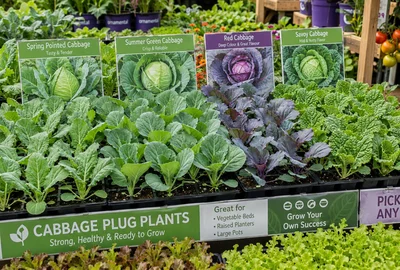
Cabbage seed is one of the most widely available and affordable vegetable seeds in the UK. Online specialist seed companies offer the fullest range across all four groups — spring, summer, winter, and red — including heritage and F1 types. Garden centres stock plug plants from late winter, which are worth considering for the first year or when sowing time has passed.
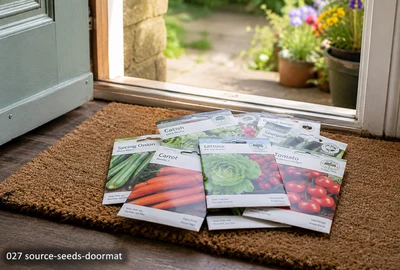
The widest variety selection — all four cabbage types and specialist varieties unavailable elsewhere. specialist seed companies carry excellent selections. Order from January for the earliest spring sowings. Cabbage seed is inexpensive — buy across all four groups for a year-round supply.
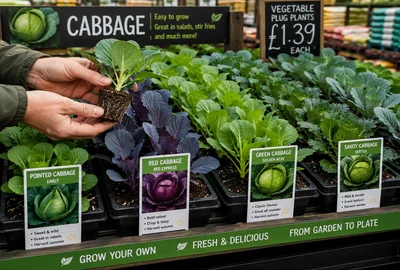
Most garden centres stock cabbage plug plants from March onwards, typically covering spring pointed, summer ball, and savoy types. Plug plants are a convenient shortcut — good quality and ready to transplant from April. Variety choice is narrower than online but plants are inspectable before purchase.
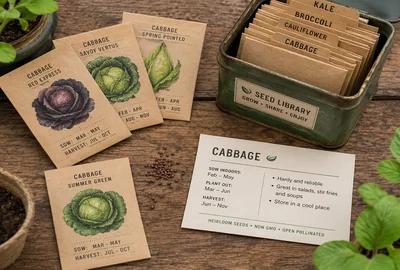
Heritage and open-pollinated cabbage varieties — including older types rarely seen in catalogues — are available through seed libraries, allotment seed swaps, and heritage seed libraries. An excellent source for unusual types and a great way to access free seed for non-F1 varieties.
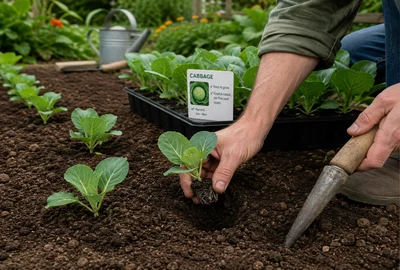
Open ground is the standard and best method for cabbages. They produce large root systems that need depth and room to anchor the substantial top growth. Prepare the bed well — firm soil is essential for all brassicas. Loose, fluffy soil produces loose-hearted, poorly anchored plants that blow over and bolt. Dig in well-rotted compost the autumn before planting. Check soil pH and lime if necessary to reach pH 6.5–7.5. On planting day, tread the bed firm before making planting holes.
Suitable varieties: All varieties. The standard method for maximum head size and yield.
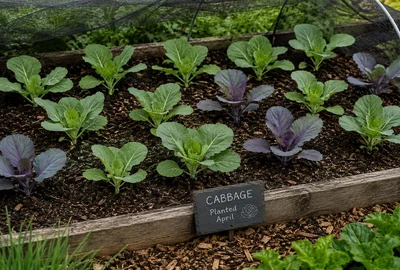
Raised beds suit cabbages well — the improved drainage prevents waterlogging and the loose, well-structured soil warms faster in spring. Firm the surface well before planting; raised bed compost is often too light and fluffy for brassicas straight from the bag. Mix in some garden soil or grit to firm it up. Space at the recommended distance even in a raised bed — overcrowding reduces head size and increases disease risk. A standard 1.2m × 2.4m bed will hold 12–15 cabbages comfortably.
Suitable varieties: All varieties. Compact summer types (Golden Acre, Hispi) particularly well suited.
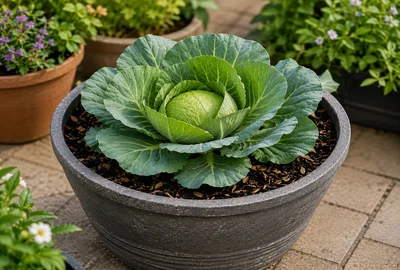
Container growing is viable for compact cabbage varieties — one plant per large pot of at least 35–40cm diameter. Use a rich, firm compost with some added soil or grit. Water daily in warm weather and feed with a balanced liquid fertiliser every two weeks once plants are established. Container cabbages are more vulnerable to drying out and to cabbage root fly — use brassica collars even in containers. Net with fine mesh to exclude butterflies.
Suitable varieties: Hispi F1, Golden Acre, Durham Early. Compact varieties only — large winter types are not suited to containers.
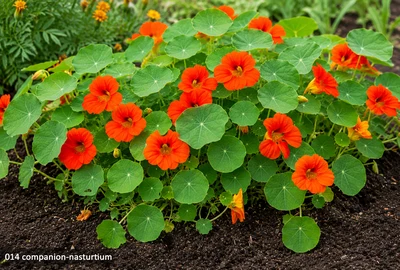
Trap crop for cabbage white butterflies and blackfly. Nasturtiums planted at the bed edge draw butterflies to lay eggs on them rather than on the brassicas. Check and remove caterpillars regularly.
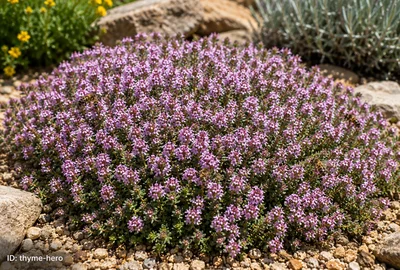
Thyme planted near brassicas is said to repel cabbage white butterfly and cabbage moth. The aromatic oils confuse egg-laying females searching for brassica-family plants.
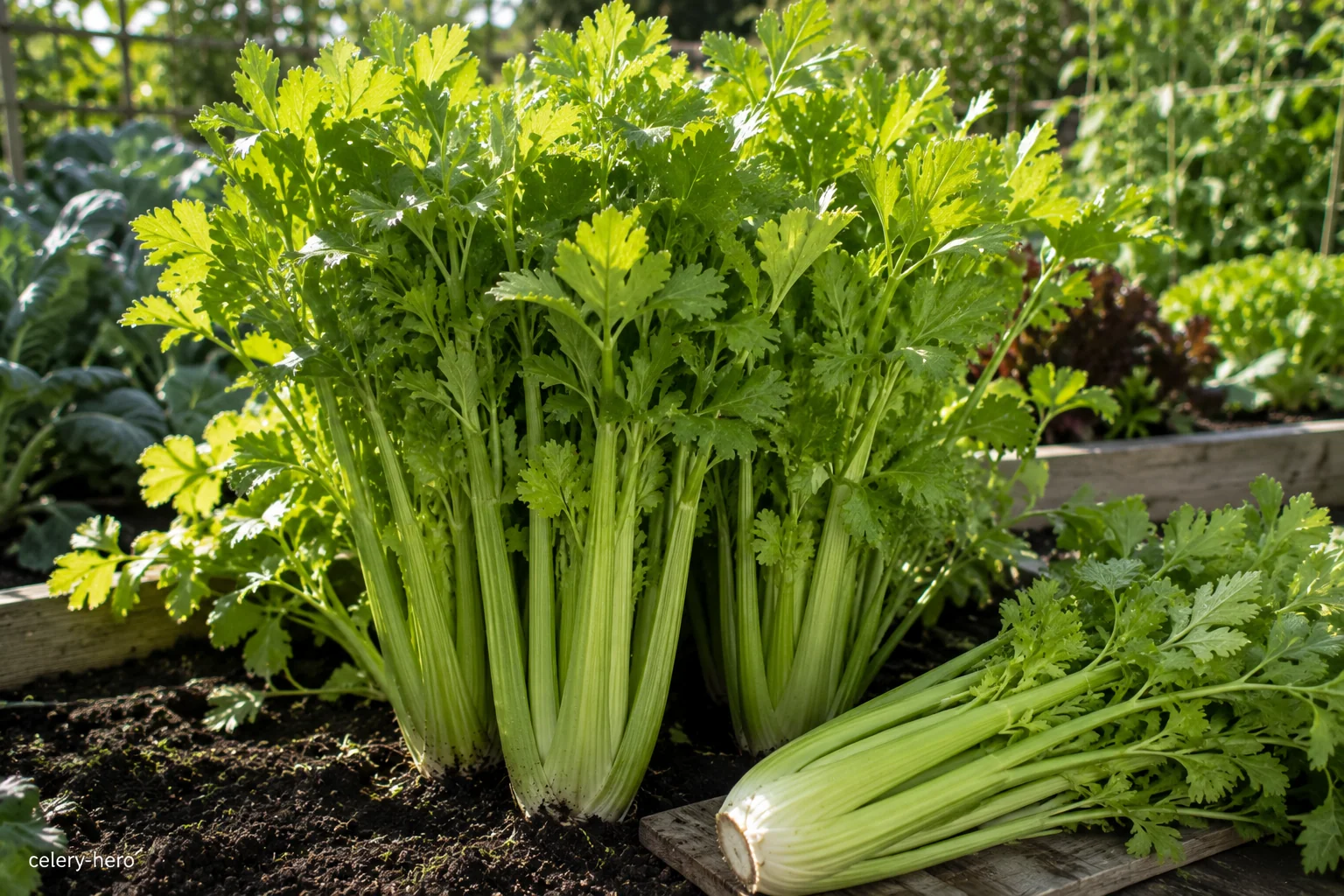
Celery planted alongside brassicas is thought to deter cabbage white butterflies. Its strong scent may help mask the presence of the brassica crop from egg-laying insects.
Cabbages are always raised in a seedbed or modules and transplanted — never sown direct into their final position. The sowing time depends entirely on which type you are growing: spring pointed types are sown January to March; summer ball types February to April; winter savoys April to May; red cabbages March to May. Module sowing is strongly preferred over open trays — each plant gets individual root space and transplants with minimal disturbance.
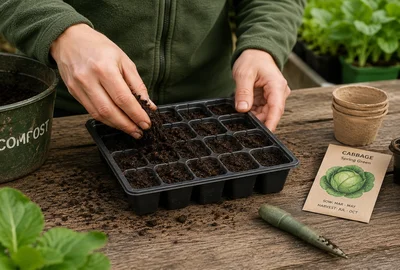
Fill a module tray with fresh seed compost, firming lightly to within 1cm of the rim. Water thoroughly before sowing — wet compost from below is more even than trying to water after.
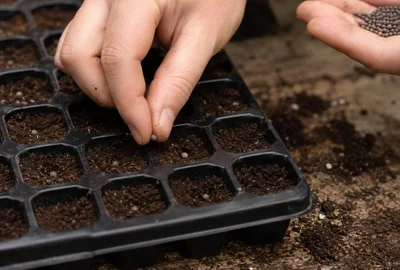
Sow one to two seeds per module at a depth of 1cm. Cabbage seeds are small but easy to handle with a little care. If two seeds germinate in one module, remove the weaker seedling at the first true leaf stage — do not pull, snip with scissors to avoid root disturbance.
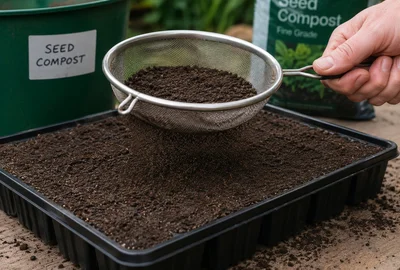
Sieve a thin layer of fine compost over the tray. 5mm is sufficient — cabbage seeds are small and need light cover only. Label each tray clearly with variety and sow date.
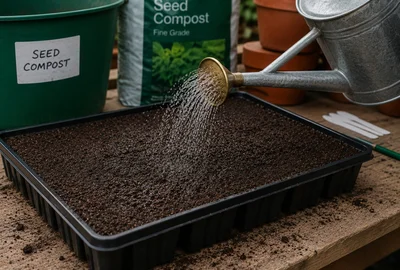
Water with a fine rose — a strong jet will displace seeds and unsettle compost. Keep consistently moist but never waterlogged. Germination takes 5–7 days at 15–20°C.
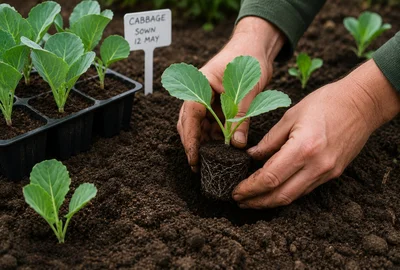
Transplant when seedlings have 4–5 true leaves and are 8–10cm tall. Make a hole with a dibber, lower the plant in, and firm the soil very thoroughly around the stem — loose planting is the most common mistake with brassicas. Water in well.
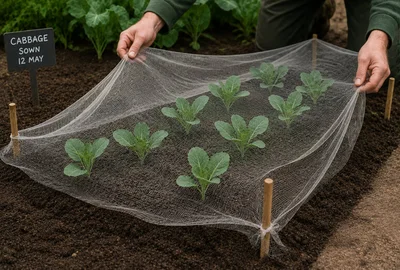
Net with fine insect mesh immediately after transplanting — the same day if possible. Cabbage white butterflies will find your plants within 24 hours and begin laying eggs at the base of the leaves. Do not delay netting even for a single day.
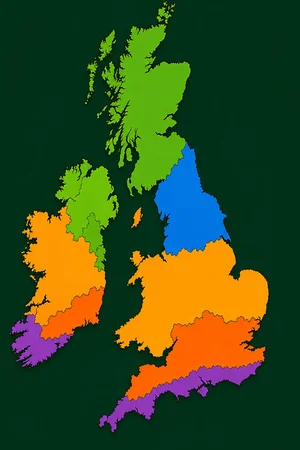
| Region | Sow / plant | Harvest | Notes |
|---|---|---|---|
| Scotland & Far North | Feb–Apr | May–Oct | Spring types Feb–Mar indoors; summer types Mar–Apr; winter/red types Apr–May · Feb–May (type dependent) |
| Northern England | Feb–Apr | May–Oct | Spring types Feb–Mar indoors; summer types Mar–Apr; winter/red types Apr–May · Feb–May (type dependent) |
| Midlands & Wales | Jan–Apr | May–Oct | Spring types from Jan indoors; summer types Feb–Apr; winter/red types Apr–May · Jan–May (type dependent) |
| Ireland & Isle of Man | Jan–Apr | May–Oct | Spring types from Jan indoors; summer types Feb–Apr; winter/red types Apr–May · Jan–May (type dependent) |
| South & SE England | Jan–Mar | Apr–Oct | Earliest spring sowings from January; summer types Feb–Apr; winter/red Apr–May · Jan–May (type dependent) |
| South Coast & SW | Jan–Mar | Apr–Oct | Earliest UK start; spring types from January; long season into late autumn · Jan–May (type dependent) |
Cabbages are cool-season crops and germinate well without heat. Spring types sown in January or February benefit from the consistent warmth of a heated propagator to get ahead of the season; types sown from March onwards need nothing more than a cold frame or sheltered windowsill.
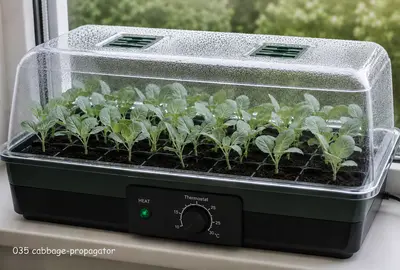
Useful only for the earliest spring sowings (January to mid-February) when room temperatures may be too variable. Set to 15–18°C — cabbage does not need high heat and excess warmth produces drawn seedlings. Move to a cooler spot as soon as germination occurs.
Suitable for all cabbage sowings from March onwards. A lidded module tray on a cool windowsill or in a cold frame gives reliable germination in 5–7 days. The cooler the conditions (within reason), the sturdier the resulting seedling.
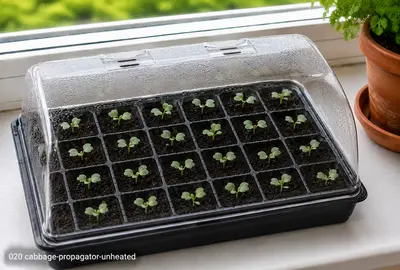
Standard unheated propagator — A lidded seed tray traps warmth and humidity around germinating seeds without electricity. Performance depends entirely on room temperature — best placed on a warm windowsill and used from March onwards. Replace the lid promptly after watering. Remove it completely the moment seedlings emerge to prevent damping off.
Fill a module tray with fresh seed compost. Firm lightly and water before sowing — pre-moistened compost gives more even germination than watering after sowing.
Press one seed per module to 1cm depth. If sowing two as insurance, remove the weaker seedling at the first true leaf stage — snip, do not pull.
Sieve a fine layer of compost over the surface (5mm). Label with variety and sow date — cabbage types look identical at seedling stage.
Set in a cold frame or on a windowsill. Keep compost moist but not waterlogged. Germination takes 5–7 days. Ventilate once seedlings are through.
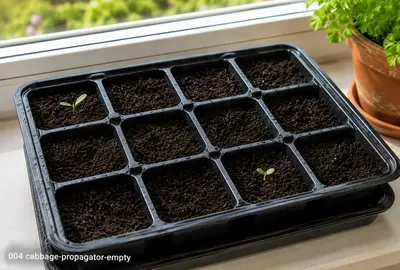
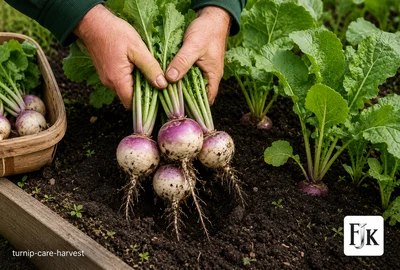
Water consistently throughout the growing season — cabbages need steady moisture to develop even, solid heads. Irregular watering after a dry period causes the heads to split. Water at the base rather than overhead. Young transplants need regular watering until established.
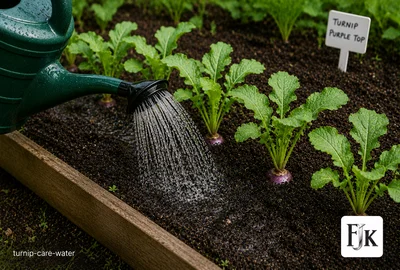
Apply a nitrogen-rich liquid feed 3–4 weeks after transplanting to support leafy growth and head development. Cabbages are hungry feeders, especially spring and summer varieties. Winter cabbages need less additional feeding if the soil was well prepared before planting.
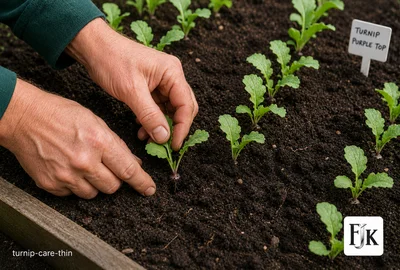
Cover with fine insect-proof mesh immediately after transplanting to exclude cabbage white butterflies, cabbage moths, and cabbage root fly. The mesh must be firmly secured at the edges. Check regularly for caterpillars and pick off any found on unprotected plants.
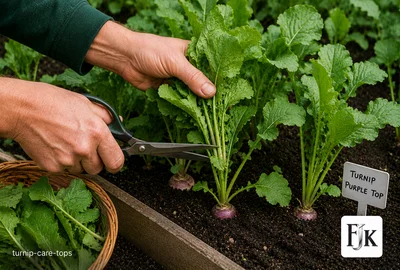
Harvest cabbages when heads are firm and solid — squeeze gently to test. Cut at the base with a sharp knife, leaving the outer leaves in place. For a second crop, cut a cross in the stump of harvested summer cabbages — several small secondary heads will develop.
Cabbage root fly can kill young plants. Use brassica collars around stems at planting to prevent egg-laying near the base.
Full identification and treatment advice is in the Pests and Diseases sections.
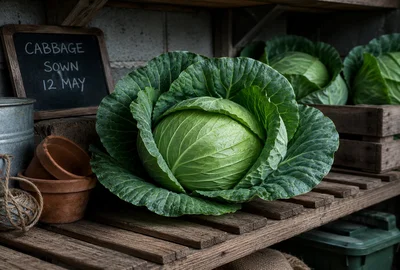
Whole cabbages store remarkably well in a cool, frost-free shed or garage. Remove any damaged outer leaves, leave the head dry, and place on a slatted shelf with good air circulation. Do not wrap or bag whole heads for shed storage — they need airflow. Summer types keep 2–4 weeks; winter savoys and red cabbage will keep 2–3 months or more in ideal conditions. Check weekly and remove any showing signs of rot.
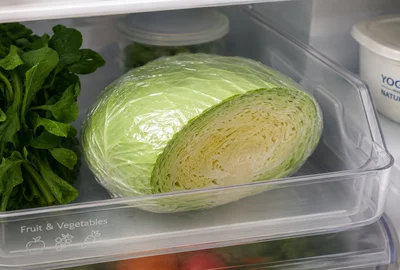
A cut or part-used cabbage should be wrapped tightly in cling film or placed cut-side down in a sealed container and refrigerated immediately. Use within 3–5 days — cut cabbage deteriorates quickly as the exposed surface oxidises and wilts. A whole unwashed head will keep in the salad drawer for 1–2 weeks. Do not wash before storing — moisture accelerates decay.
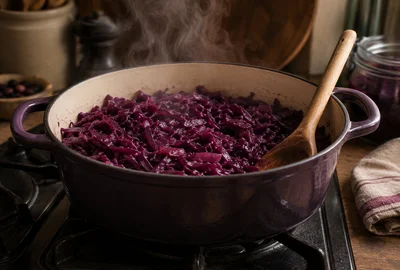
Red cabbage is outstanding braised with apple, vinegar, and spices — it reheats perfectly and actually improves over 2–3 days in the fridge. Make a large pot and refrigerate or freeze in portions. Green and savoy cabbages can be blanched, cooled, and frozen for up to 3 months — ideal for dealing with a large winter harvest. Sauerkraut (fermented cabbage) is another classic use for a glut.
Net on planting day — cabbage white butterflies locate brassicas within hours. The only effective defence is fine insect mesh applied immediately at transplanting. Check the edges weekly — a single gap allows a butterfly in and a full infestation within days.
Firm soil is non-negotiable. Tread the bed firm before planting, push the dibber in hard, and firm each plant in with your knuckles. A well-planted cabbage should resist a firm tug by the leaf.
Water prevents splitting — irregular watering, especially drought followed by heavy rain, causes heads to split suddenly. Water consistently and deeply in dry periods. Once a head splits it must be harvested immediately or it will rot.
Rotate every year — never grow brassicas in the same bed two years running. Club root survives in soil for up to 20 years and is almost impossible to eradicate once established. A minimum 3-year rotation is essential.
Brassica collars stop root fly — cabbage root fly lays eggs at the base of the stem and larvae eat the roots. A 15cm square of cardboard or felt laid flat around each stem at planting physically prevents egg-laying.