🌱 SowBuy as plant or take cuttings Apr–Sep
🌾 HarvestYear-round
☀ PositionFull sun, well-drained
📐 Spacing60–90cm
DifficultyEasy
⚡ Quick facts
- Difficulty
- Easy
- Crop type
- Hardy Evergreen Shrub
- Position
- Full Sun
- Soil
- Poor to Moderately Fertile, Well-Drained
- Container friendly
- Yes — excellent in terracotta pots
- Greenhouse recommended
- Not needed — fully hardy
- Outdoor suitable
- Yes — all UK, with some shelter in the north
- Frost hardy
- Yes — hardy to around -10°C when established
01 About
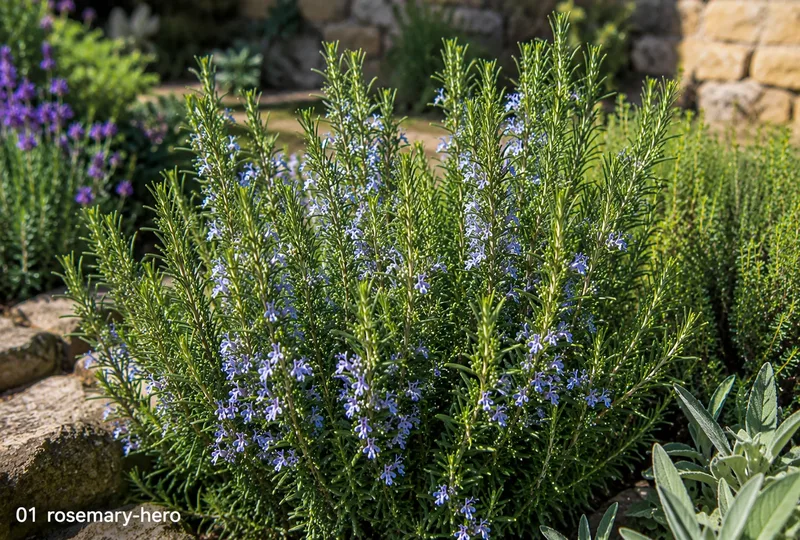
Rosemary is one of the most aromatic and architectural herbs in the garden. Hardy, evergreen, and intensely fragrant, it provides sprigs year-round — even in the depths of winter. A single well-grown plant will supply a household indefinitely. Given full sun and sharp drainage, rosemary asks for almost nothing and rewards with decades of harvest.
02 What to Grow
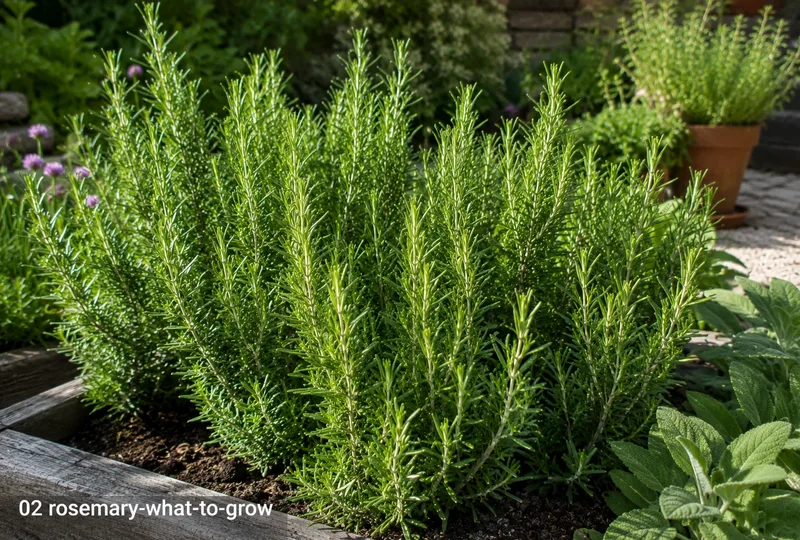
Rosemary divides naturally into two groups by habit: upright varieties that form architectural shrubs reaching 1–2m, ideal for hedging, topiary, and structural planting; and lower, spreading or prostrate varieties that cascade over walls and containers. Culinary quality is similar across all types — habit and hardiness differ most. For kitchen use, the upright varieties give the heaviest harvest. For walls and containers, the spreading forms are spectacular but need slightly more shelter in the north.
03 Varieties
The number of varieties shown for each crop is based on UK consumption data (2025/26) — the more popular the crop, the more variety choices we include.
🌿 Classic Upright Varieties
Tall, architectural forms growing to 1–2m. The best choice for hedging, topiary, and heavy kitchen use. Most are fully hardy across all UK regions.
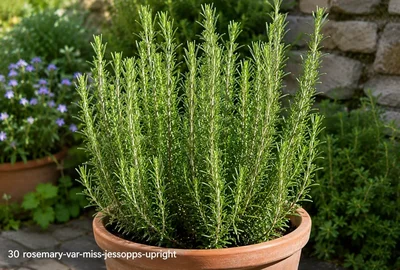
Miss Jessopp's Upright
Upright · Classic
The definitive culinary rosemary. Tall, strongly upright habit with dense narrow leaves and pale blue flowers. The variety most widely grown in British gardens for kitchen use and hedging. Fully hardy. Long-established favourite.
- AGM
- Classic
- Hedging
- Fully Hardy
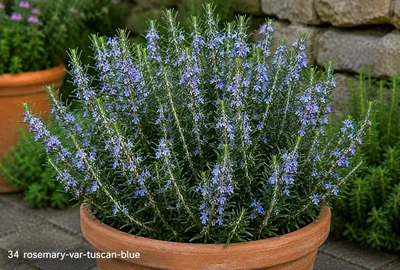
Tuscan Blue
Upright · Strong Flavour
Vigorous, upright form with broad leaves and rich blue flowers. Arguably the best-flavoured culinary rosemary — bold, resinous, and intensely aromatic. A favourite of chefs and specialist herb growers. Fully hardy in most of the UK.
- Best Flavour
- Vigorous
- Culinary
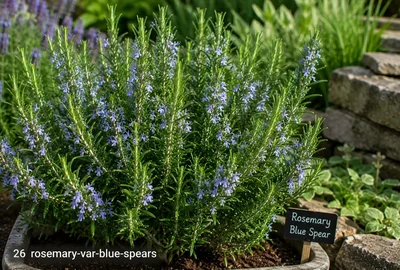
Blue Spears
Upright · AGM
RHS Award of Garden Merit 2021. Neat, upright habit with exceptionally deep blue flowers and good foliage density. Excellent for formal clipping and topiary. Strong culinary flavour. Fully hardy.
- AGM
- Deep Blue Flowers
- Topiary
🏆 AGM Award Varieties
All three awarded the RHS Award of Garden Merit in 2021 following rigorous UK garden trials. These are the highest-performing rosemary cultivars for British conditions.
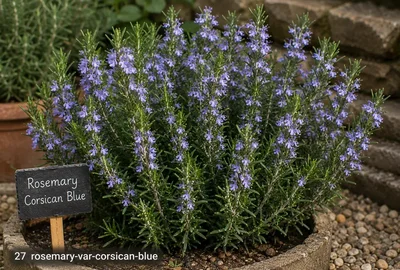
Corsican Blue
Spreading-Upright · AGM
RHS Award of Garden Merit 2021. Spreading-upright form with vivid mid-blue flowers and a relaxed, informal habit. Good fragrance and flavour. More drought-tolerant than average once established. Hardy across most of the UK.
- AGM
- Vivid Blue
- Drought Tolerant
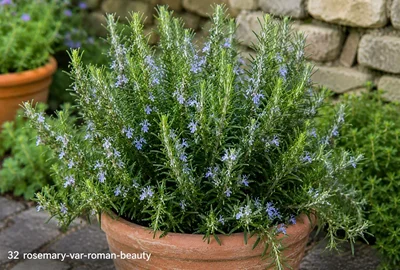
Roman Beauty
Compact-Upright · AGM
RHS Award of Garden Merit 2021. Compact, rounded habit reaching 60–90cm. Dense, dark foliage with blue-violet flowers. Ideal for smaller gardens, container growing, and clipping into neat shapes. Good kitchen flavour.
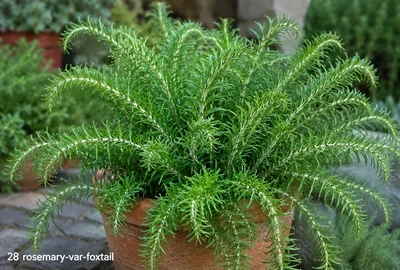
Foxtail
Upright · AGM
RHS Award of Garden Merit 2021. Distinctive variety with unusually dense, elongated flower spikes — more prominent than most rosemaries. Strongly upright. Excellent ornamental value alongside good culinary flavour.
🌸 Spreading & Coloured Forms
Lower, spreading or trailing varieties with coloured flowers. Excellent over walls, in containers, and as ornamental ground cover. Slightly less hardy than upright types — give a sheltered position in cold regions.
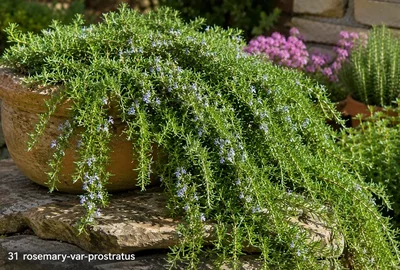
Prostratus Group
Prostrate · Trailing
A low-growing, trailing form that cascades beautifully over walls and out of containers. Pale blue flowers and the same aromatic leaves as upright types. Less hardy — needs a sheltered wall or cold greenhouse protection in cold winters.
- Trailing
- Wall Drape
- Shelter Needed
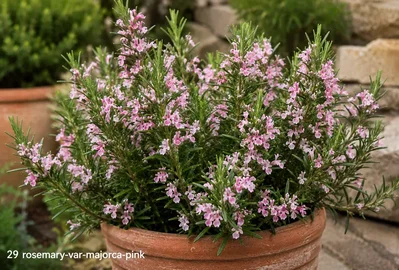
Majorca Pink
Upright · Pink-Flowered
One of the most attractive pink-flowered rosemaries. Upright habit with clear pink blooms in spring — unusual among a genus dominated by blues. Good culinary flavour. Slightly less hardy than blue-flowered types; benefits from a sheltered spot in cold regions.
- Pink Flowers
- Ornamental
- Shelter in North
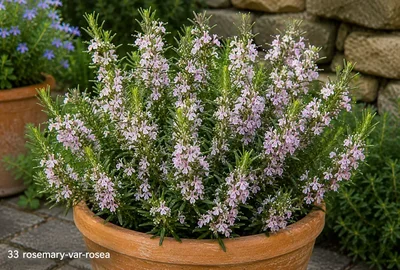
Rosea
Upright · Pink · AGM
RHS Award of Garden Merit 2021. Pink-flowered rosemary with a tidy upright habit. Reliable and garden-worthy — the best pink rosemary for UK conditions according to independent trials. Good fragrance and flavour. A beautiful combination of ornamental and culinary value.
04 Where to Source
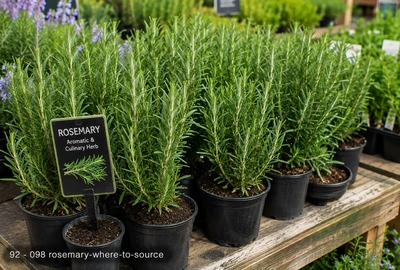
Rosemary plants are sold at virtually every garden centre and supermarket from March onwards. Standard culinary types are widely available; for AGM varieties and specialist forms, herb nurseries and online specialists offer the best selection. Rosemary is not reliably grown from seed — quality is variable and germination slow. Buy named cultivars as pot-grown plants for guaranteed performance. Buying British-grown plants reduces the risk of importing Xylella fastidiosa, a serious bacterial disease that affects rosemary.
05 Planting Options
🌿 In the Garden Bed
Rosemary's natural home is a sunny garden bed with sharp drainage and poor to moderate soil. A permanent position at the front of a border, along a path edge, or against a south-facing wall gives the best results. Once established, garden-grown rosemary needs minimal attention — no routine watering, no feeding, just an annual prune after flowering. Space plants 60–90cm apart for shrubs; 45cm apart for low hedging.
Suitable varieties: All upright varieties — Miss Jessopp's Upright, Tuscan Blue, Blue Spears, Corsican Blue, Roman Beauty, Foxtail. Prostratus Group for wall draping and ground cover.
🪴 In a Container
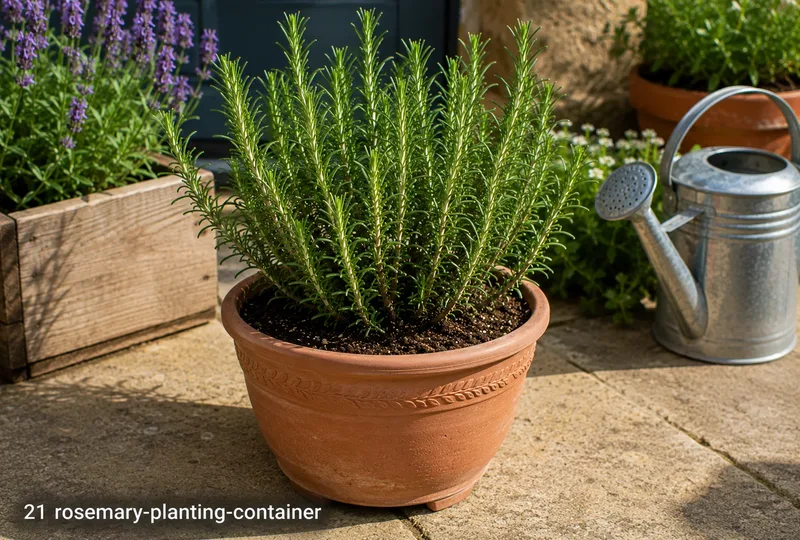
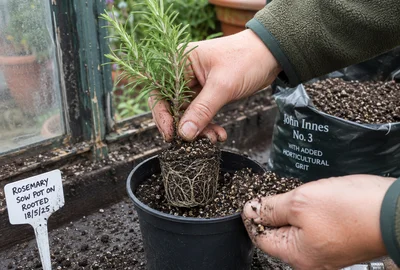
Rosemary grows very well in large containers — 35–45cm pots are ideal. Use free-draining compost (John Innes No. 3 with 20–30% added horticultural grit), ensure drainage holes are unblocked, and water only when the compost has nearly dried out. The main risk in containers is waterlogging in winter. Move pots under a porch or cold greenhouse in harsh weather. Container growing allows bringing plants indoors in the north, and positioning specimens by the kitchen for convenient harvesting.
Suitable varieties: All compact and spreading varieties excel in containers: Roman Beauty (AGM), Prostratus Group, Majorca Pink, Rosea (AGM). Upright varieties such as Tuscan Blue also work well in larger pots.
06 Companion Planting
✅ Grow nearby
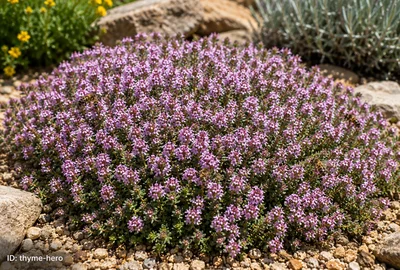
Perfect partner — identical growing requirements. Both Mediterranean herbs that thrive in full sun, excellent drainage, and poor soil. Plant together as a low-maintenance aromatic combination.
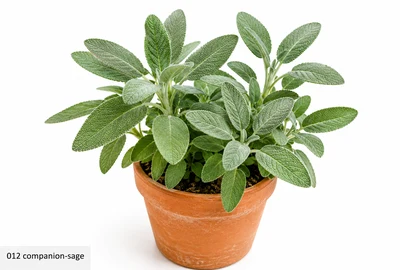
🌿 Sage
Another Mediterranean companion with the same sun and drainage requirements. Sage and rosemary grow happily together in a long-lived aromatic bed.

Rosemary is said to repel carrot root fly with its strong aromatic oils. Plant at the edge of the carrot bed as a border — it has no adverse impact on carrot growing conditions.
❌ Keep apart
- 🌿 Mint — Mint spreads aggressively by underground runners and will invade and overwhelm rosemary. Plant mint in a sunken container to prevent it colonising the herb bed.
- 🌿 Fennel — Fennel is allelopathic — it inhibits the growth of many nearby plants. Keep fennel in its own area of the garden, away from rosemary and other Mediterranean herbs.
07 Sowing — How To
🌱 Planting (Bought Plants)
Choose the right time
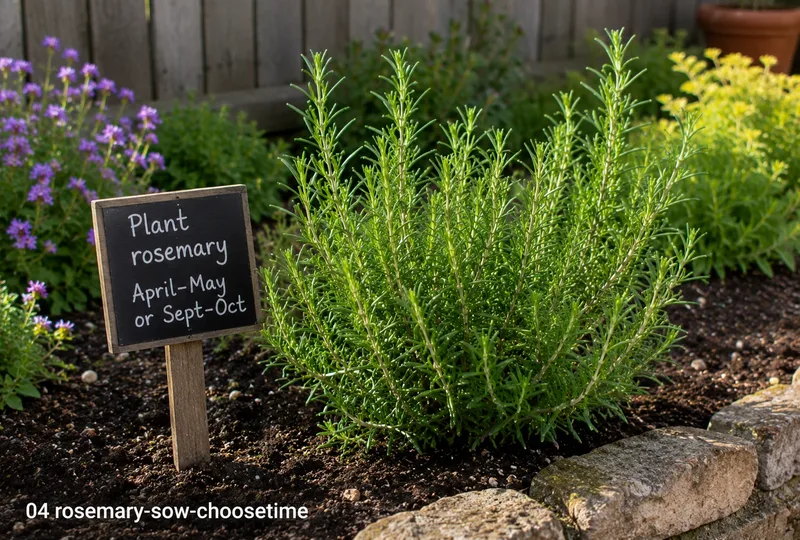
Late spring (April–May) is ideal — the soil is warming but not yet hot. Autumn planting (September–October) also works in mild regions. Avoid planting into frozen or waterlogged ground.
Prepare the site
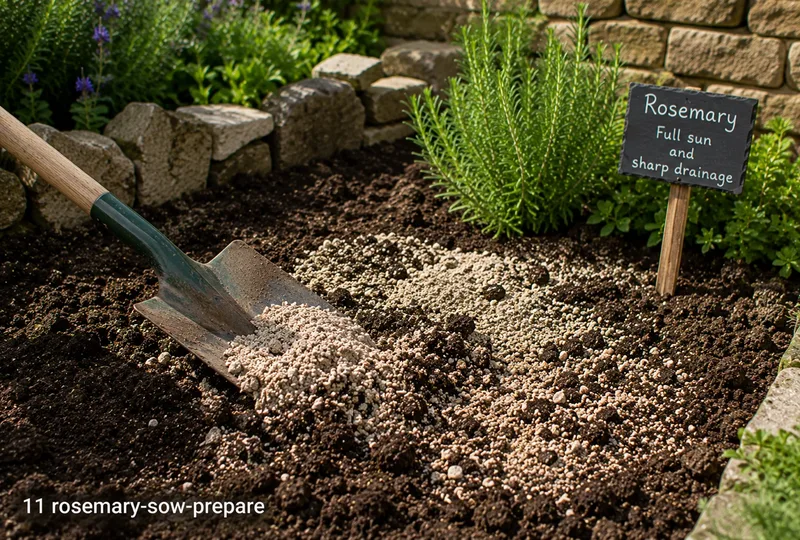
Rosemary demands full sun and sharp drainage above all else. On heavy clay, dig in plenty of horticultural grit before planting, or build a raised bed. A south or south-west facing slope or wall is ideal.
Plant at the right depth
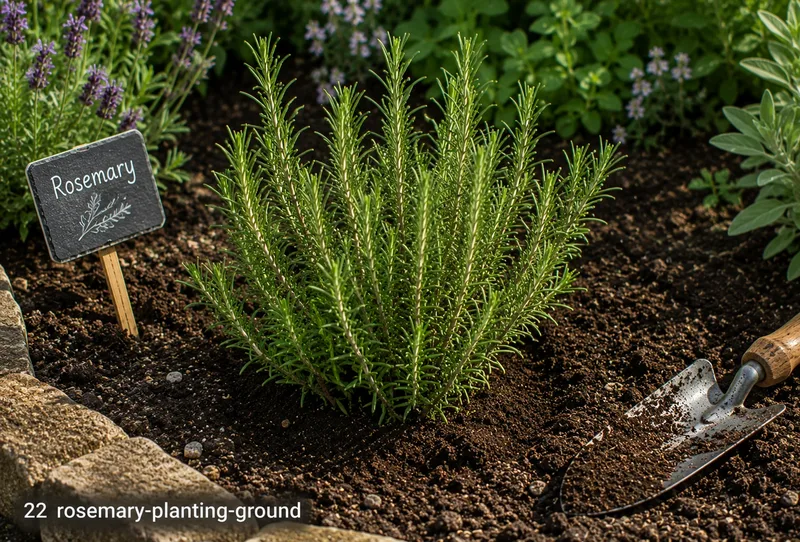
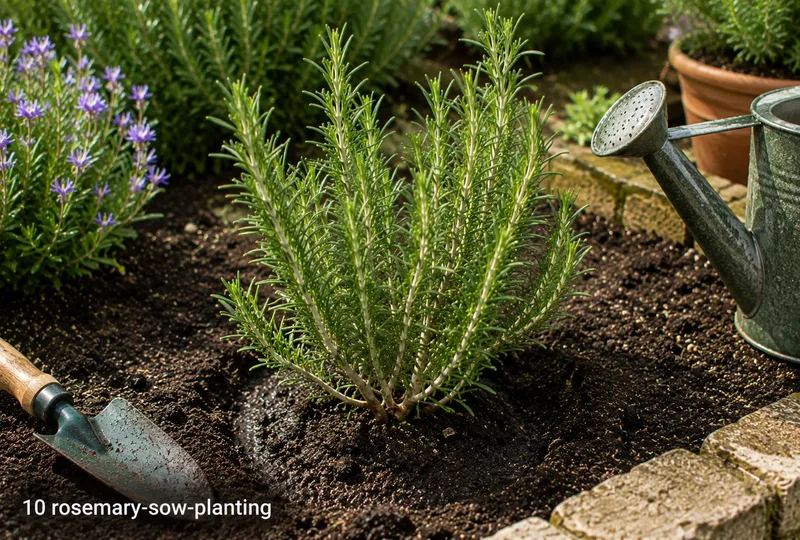
Plant at the same depth as in the pot — do not bury the stem. Firm in gently. Water once after planting to settle the roots, then allow the soil to dry between waterings.
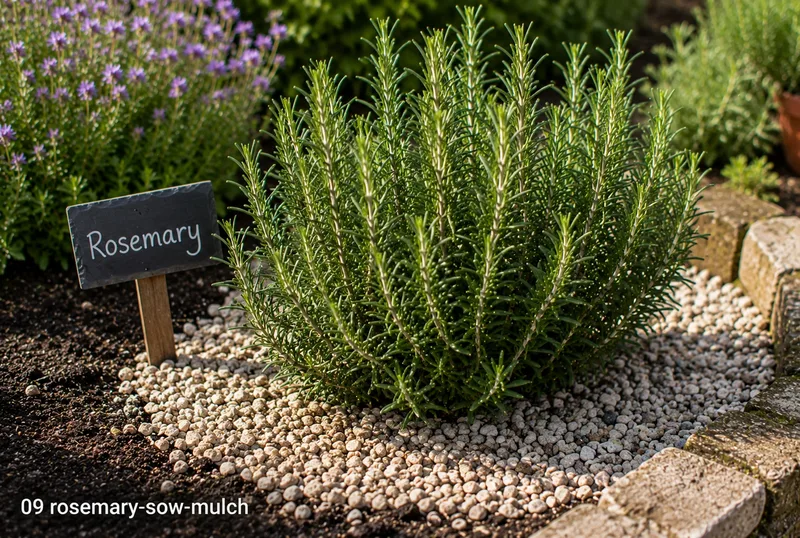
Mulch around the base
A thin gravel mulch around the base improves drainage, deters slugs, and reflects heat onto the plant. Never use moisture-retentive organic mulch around rosemary — it causes root rot.
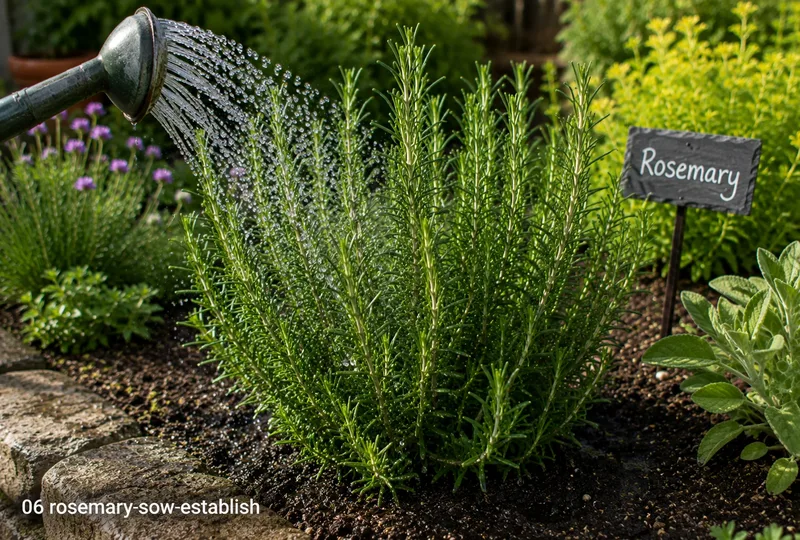
Establish with minimal watering
Water weekly in the first season during dry spells only. Once established (usually by the second year), rosemary is highly drought tolerant and rarely needs watering.
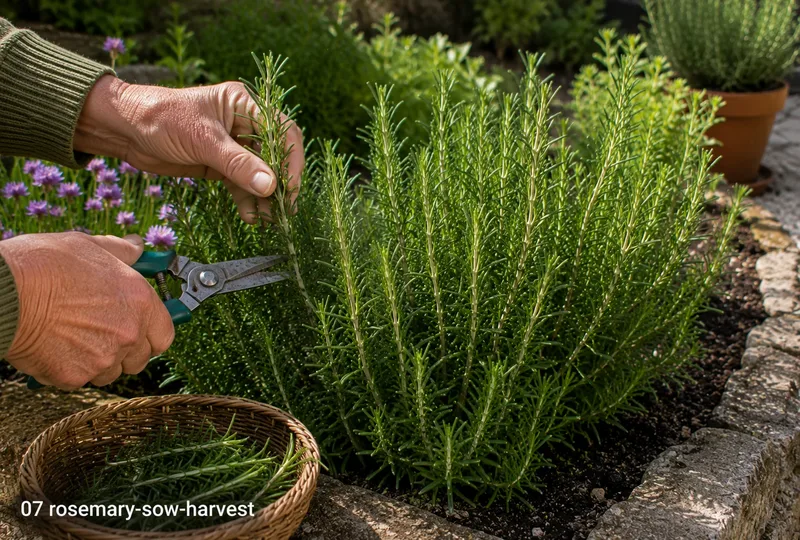
Harvest and prune from year one
Begin harvesting shoot tips from the first growing season. In the following spring, trim back by one third after flowering to keep the plant compact and bushy.

Planting (Bought Plants) — regional timing| Region | Sow / plant | Harvest | Notes |
|---|
| Scotland & Far North | May–Aug | Jun–Nov | Plant May–August in a sheltered, south-facing position. Avoid autumn planting — young plants can struggle through cold northern winters. Mulch the base with grit. · May–Aug |
|---|
| Northern England | Apr–Sep | May–Dec | Plant April–September. Choose the most sheltered, sunniest spot available. In exposed or elevated positions, plant in May once frosts have passed. · Apr–Sep |
|---|
| Midlands & Wales | Mar–Oct | Apr–Dec | Plant March–October. Spring planting gives the best establishment before winter. Autumn planting works in sheltered gardens. Avoid exposed, frost-prone positions. · Mar–Oct |
|---|
| Ireland & Isle of Man | Apr–Sep | May–Dec | Maritime climate is helpful but watch for waterlogging. Plant April–September in free-draining soil. Add extra grit on wetter soils. Shelter from Atlantic winds. · Apr–Sep |
|---|
| South & SE England | Mar–Nov | Apr–Dec | Excellent rosemary climate. Plant March–November. Even autumn planting establishes well. Full sun against a south-facing wall gives outstanding results. · Mar–Nov |
|---|
| South Coast & SW | Mar–Nov | Apr–Dec | The best UK climate for rosemary. Plant almost year-round. Mild winters mean plants rarely struggle. Main risk is excessive winter rainfall — ensure sharp drainage. · Mar–Nov |
|---|
✂️ Cuttings & Propagation
Choose the right time
Softwood cuttings in late spring (May–June) root fastest. Semi-ripe cuttings from late summer (July–September) are slightly slower but very reliable. Both methods produce excellent plants.
Take a 10cm cutting
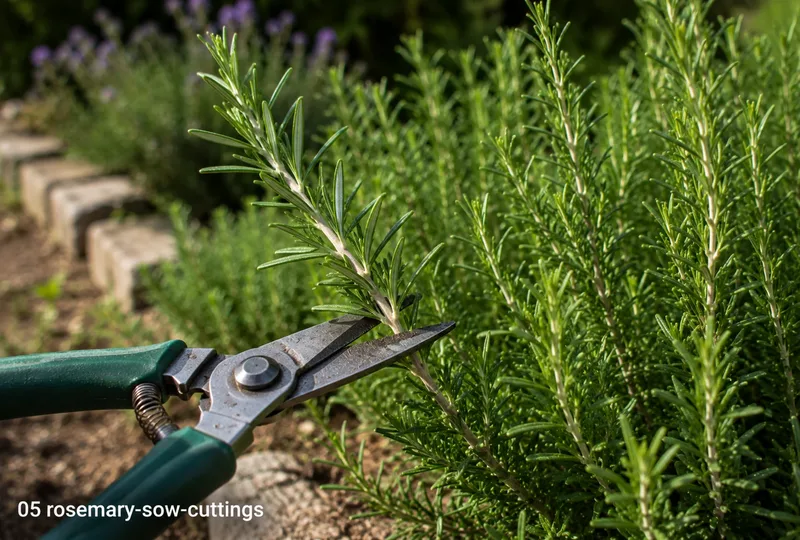
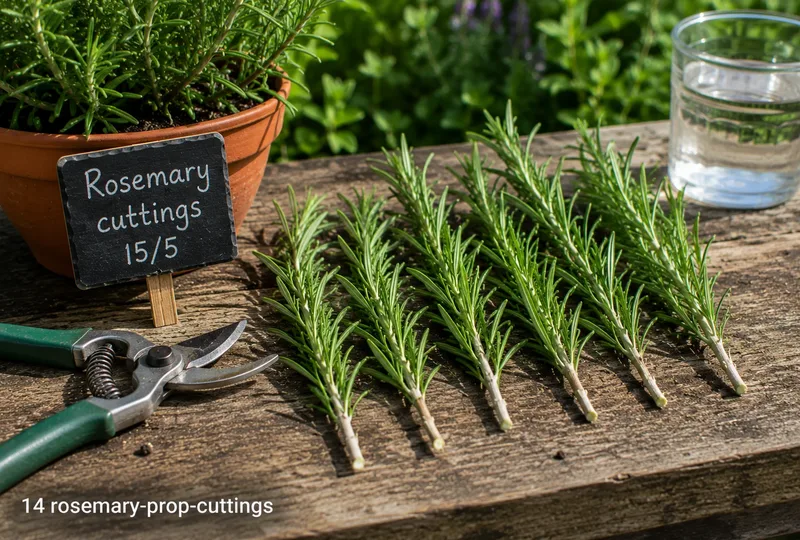
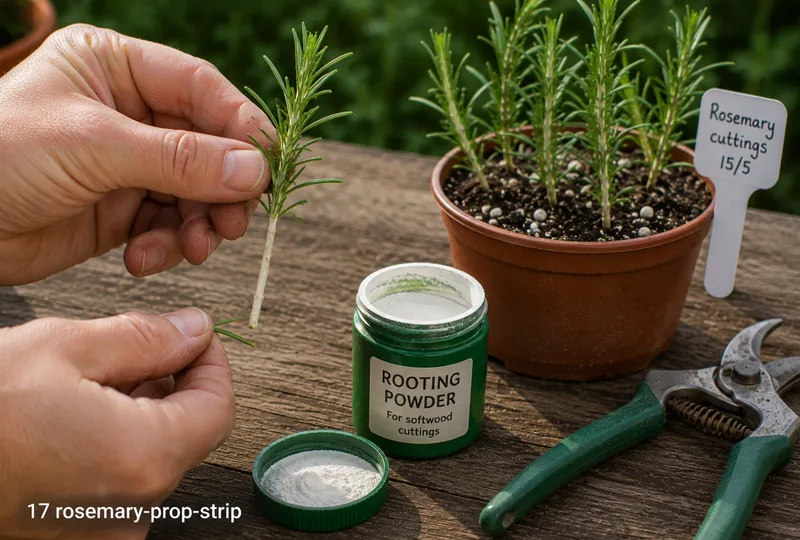
Cut a non-flowering shoot tip about 10–12cm long. Make the cut just below a node using clean, sharp scissors or secateurs. Take several cuttings — not all will root.
Prepare the cutting
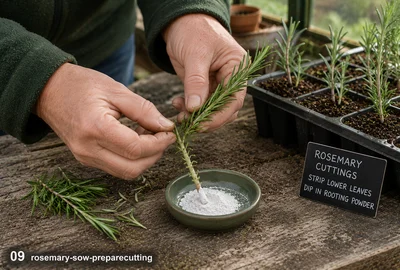
Strip leaves from the lower two-thirds of the cutting, leaving just a few leaves at the tip. Dipping the cut end in hormone rooting powder or gel improves rooting success.
Insert in gritty compost
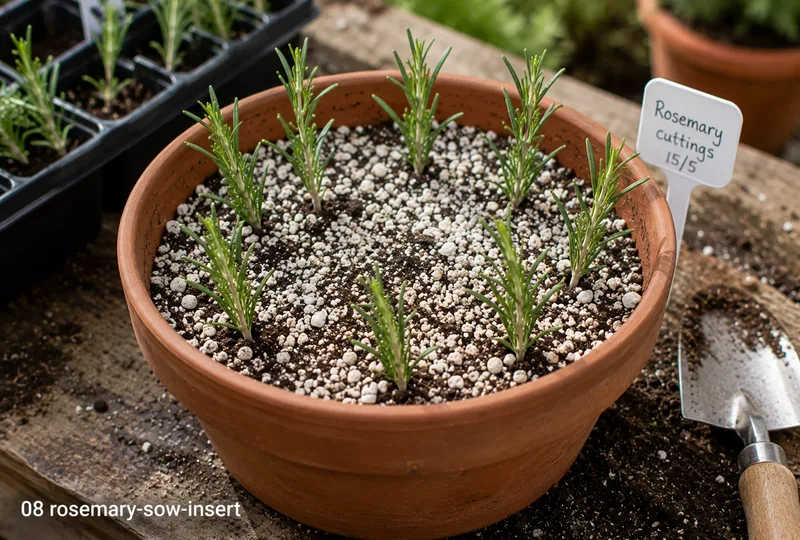
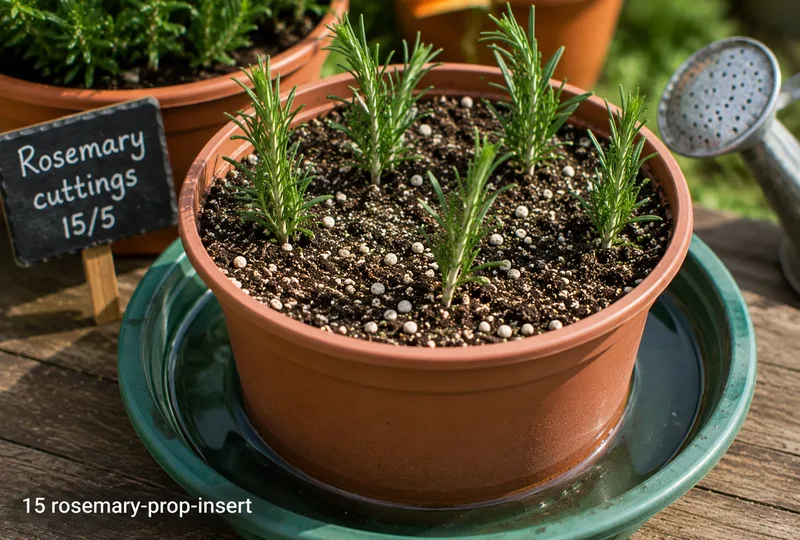
Insert cuttings around the edge of a pot filled with 50% compost and 50% perlite or horticultural grit. Firm gently and water in. Label clearly — rosemary is slow to root.
Keep warm and humid
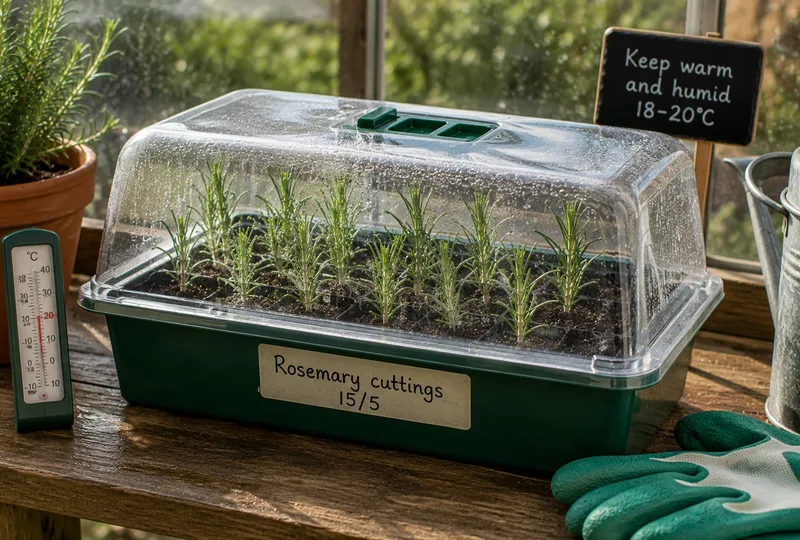
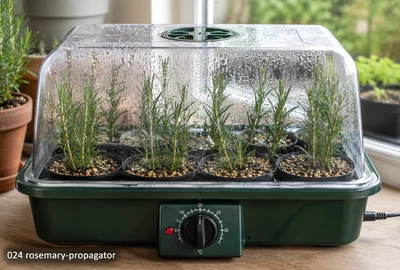
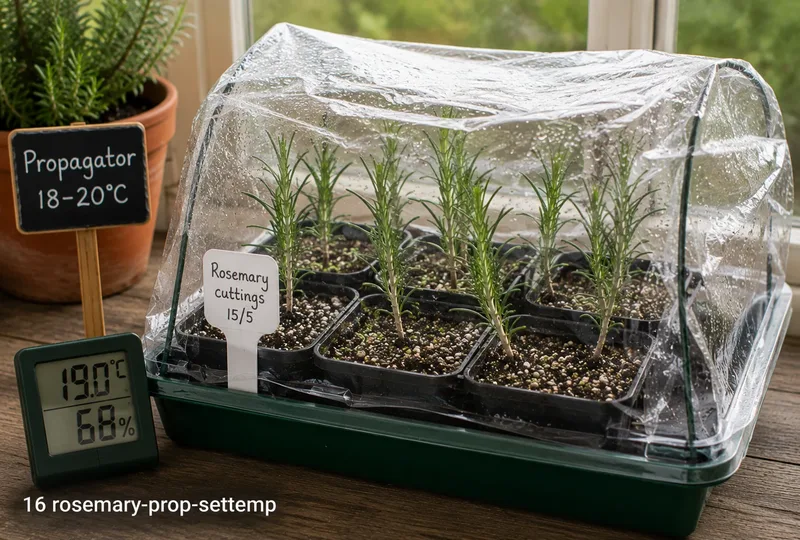
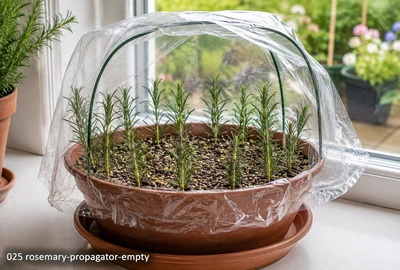
Place in a propagator at 18–20°C or on a warm windowsill covered with a clear plastic bag. For summer cuttings, a sheltered cold frame works well. Keep out of direct hot sun.
Pot on when rooted
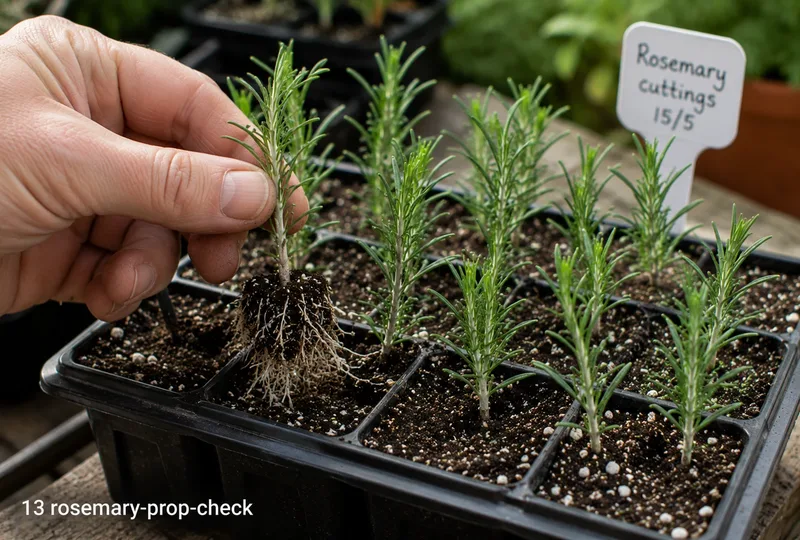
Rooting takes 4–8 weeks. Test gently with a light tug — resistance confirms roots. Once rooted, pot into individual 9cm pots of gritty compost. Grow on in a cold frame before planting out.
Cuttings & Propagation — regional timing| Region | Sow / plant | Harvest | Notes |
|---|
| Scotland & Far North | May–Aug | Jul–Oct | Take softwood cuttings May–June. Semi-ripe July–August. Use a heated propagator (18–20°C) for best results. Overwinter young plants in a cold greenhouse before planting out. · May–Aug |
|---|
| Northern England | May–Aug | Jul–Oct | Take cuttings May–August. A heated propagator greatly improves success for spring cuttings. Summer cuttings root reliably on a warm windowsill. · May–Aug |
|---|
| Midlands & Wales | May–Sep | Jul–Nov | Take cuttings May–September. Spring softwood and summer semi-ripe both reliable. Cold frame is adequate for July–September cuttings without added heat. · May–Sep |
|---|
| Ireland & Isle of Man | May–Sep | Jul–Nov | Take cuttings May–September. Use a propagator for spring softwood; summer cuttings root on a warm windowsill. Keep young plants in a sheltered spot over winter. · May–Sep |
|---|
| South & SE England | May–Sep | Jul–Nov | Cuttings May–September. Excellent success rate in the south — summer cuttings often root without heat on a windowsill. Plant out in autumn for establishment before winter. · May–Sep |
|---|
| South Coast & SW | Apr–Oct | Jun–Nov | Excellent rooting conditions. Cuttings April–October. Summer semi-ripe cuttings often root in a cold frame or under a cloche. The most reliable UK region for propagation. · Apr–Oct |
|---|
08 Using a Propagator
Rosemary is not grown from seed — it is propagated from cuttings. A heated propagator gives the fastest rooting for spring softwood cuttings; summer and autumn semi-ripe cuttings will root without bottom heat on a warm windowsill or in a cold frame. The key is gritty, free-draining compost and patience — rosemary roots more slowly than most herbs.
Heated propagator
Set a heated propagator to 18–20°C for spring softwood cuttings (May–June). Prepare 10cm non-flowering shoot tip cuttings, strip the lower leaves, dip in hormone rooting gel, and insert around the edge of a pot in 50:50 compost and perlite. Rooting takes 4–6 weeks. Remove the lid for ventilation once cuttings are clearly growing.
Unheated propagator
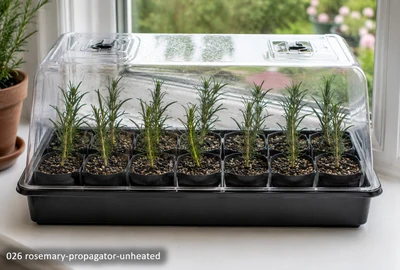
For summer semi-ripe cuttings (July–September), bottom heat is not required. Prepare cuttings as above and place in a lidded seed tray or cold frame. Keep out of direct hot sun — bright indirect light only. Mist once or twice a week. Rooting takes 6–8 weeks. A cold frame is ideal from August onwards.
Standard unheated propagator — A lidded seed tray traps warmth and humidity around germinating seeds without electricity. Performance depends entirely on room temperature — best placed on a warm windowsill and used from March onwards. Replace the lid promptly after watering. Remove it completely the moment seedlings emerge to prevent damping off.
Take shoot tip cuttings
Cut 10–12cm non-flowering shoot tips in May–June (softwood) or July–September (semi-ripe). Make a clean cut just below a leaf node. Take 5–6 cuttings per pot — not all will root.
Strip leaves and dip
Remove all leaves from the lower two-thirds of the cutting. Dip the cut end in hormone rooting powder or gel. This step genuinely improves rooting success — do not skip it.
Insert in gritty compost
Fill a 9cm pot with 50% compost and 50% horticultural perlite or grit. Insert cuttings around the edge, 2–3cm deep. Firm gently. Water from below by sitting the pot in a tray of water briefly.
Set temperature and cover
For spring cuttings, place in a heated propagator at 18–20°C. For summer cuttings, cover with a clear plastic bag over a wire hoop on a warm windowsill. Label clearly with date.
Check for rooting after 4 weeks
After 4 weeks, tug gently on each cutting. Resistance means roots are forming. Leave for a further 2–4 weeks until well rooted. Pot into individual 9cm pots when roots emerge from the drainage holes.
Windowsill alternative: A bright south-facing windowsill can substitute from late February. Place a clear polythene bag loosely over the pot during germination. Remove immediately once seedlings appear.
09 Soil Requirements
- pH
- 6.0–8.0
- Best
- Sandy, Sandy loam
- Tolerates
- Loam, Chalky
- Avoid
- Clay, Waterlogged, Rich acid
💡 Thrives in poor, dry, alkaline soil — the opposite of most vegetables.
10 Ongoing Care
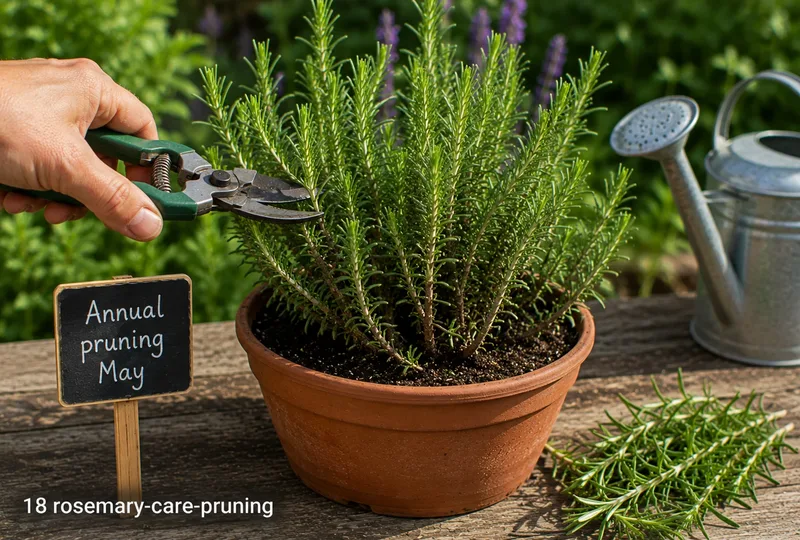
✂️ Annual Pruning — The Most Important Task
Rosemary must be trimmed every year after flowering — typically May or June in most UK regions. Cut back the flowered shoots by about one third, removing all the growth made in the current season. This keeps the plant compact, bushy, and well-flavoured. The single most critical rule: never cut back into old, bare, woody stems. Rosemary cannot regenerate from old wood. Cut into the bare grey wood and that branch is dead. Always leave green, leafy growth below the cut.
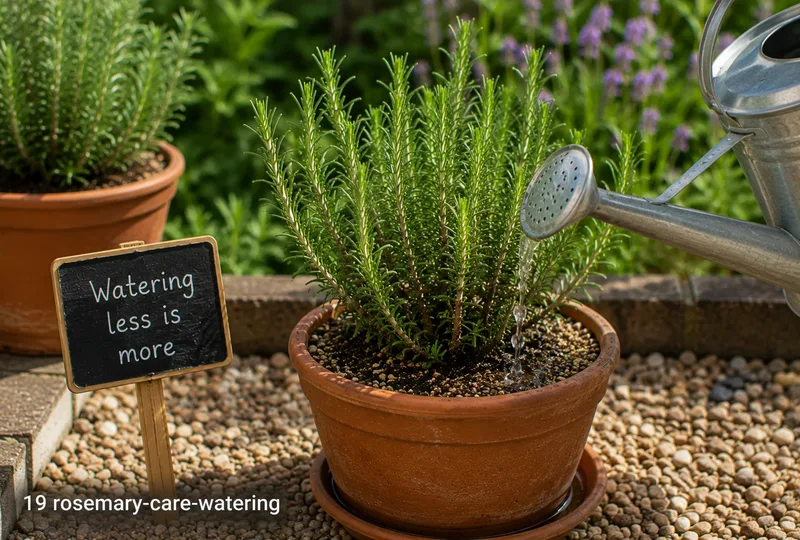
💧 Watering — Less Is More
Overwatering is the single most common cause of rosemary failure. Established plants are highly drought tolerant — in the ground they rarely need watering at all from year two onwards. In containers, allow the compost to dry out almost completely between waterings. In winter, reduce watering to near zero for container-grown plants — cold, wet compost is lethal. The classic symptom of overwatering is a plant that suddenly turns grey-brown and wilts despite apparently moist soil.
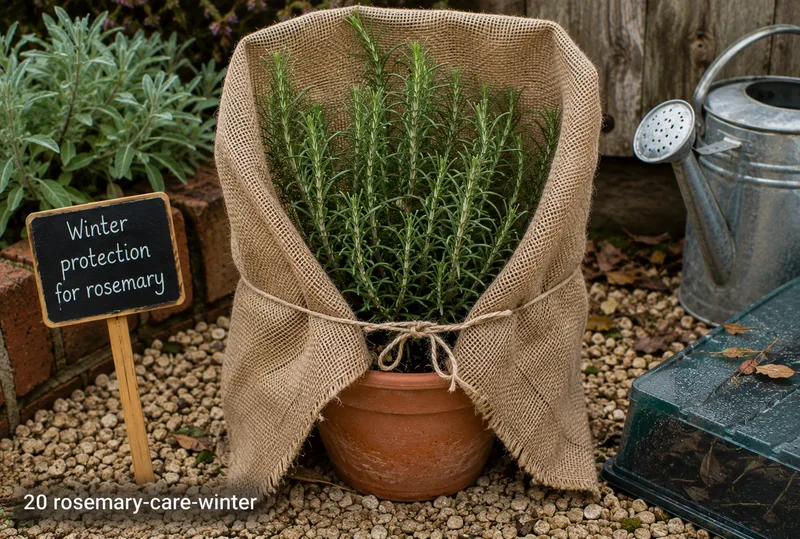
❄️ Winter Protection in Cold Regions
Established rosemary in the ground is hardy to around -10°C and rarely needs protection in most UK regions. However, young plants in their first winter, pot-grown specimens, and marginally hardy varieties like Prostratus may need help in Scotland, northern England, and exposed positions. Move containers to a cold greenhouse or sheltered porch. In the garden, a south-facing wall provides valuable reflected warmth. Avoid heavy fleece unless temperatures drop below -10°C — rosemary needs good air circulation to avoid fungal problems.
11 Watch Out For
WarningRosemary beetle — a striking metallic green and purple insect — feeds on rosemary, lavender, and sage. Adults and larvae both damage plants; pick off by hand or shake into soapy water. Phytophthora root rot causes sudden collapse in wet soils — the primary prevention is excellent drainage from planting day. Rosemary can cause skin irritation in sensitive individuals when handled repeatedly — wear gloves during heavy pruning. Xylella fastidiosa (a serious bacterial disease) can affect rosemary — buy British-grown plants to reduce any import risk. Xylella is a notifiable disease. If you suspect it, report it to the government plant health service where you live.
🐛 Insects & pests
- 🐜 Aphids (Blackfly & Greenfly) — Curled, distorted, or stunted growing tips — aphids inject saliva that causes leaf curl to protect them
- 🟤 Scale Insect — Small brown or grey bumps on stems, branches, and the underside of leaves — the scale covers themselves
🍄 Diseases to watch
- 🩶 Botrytis (Grey Mould) — Botrytis cinerea (grey mould) is the most ubiquitous fungal pathogen in temperate gardens — present in virtually every garden soil and on plant debris. It becomes a disease only when conditions favour it: cool, humid, poorly ventilated environments with damaged or senescent plant tissue. In a greenhouse in autumn it can destroy an entire tomato or grape crop.
Full identification and treatment advice is in the Pests and Diseases sections.
12 Storage & Preserving
🌿 Fresh — Harvest and Use
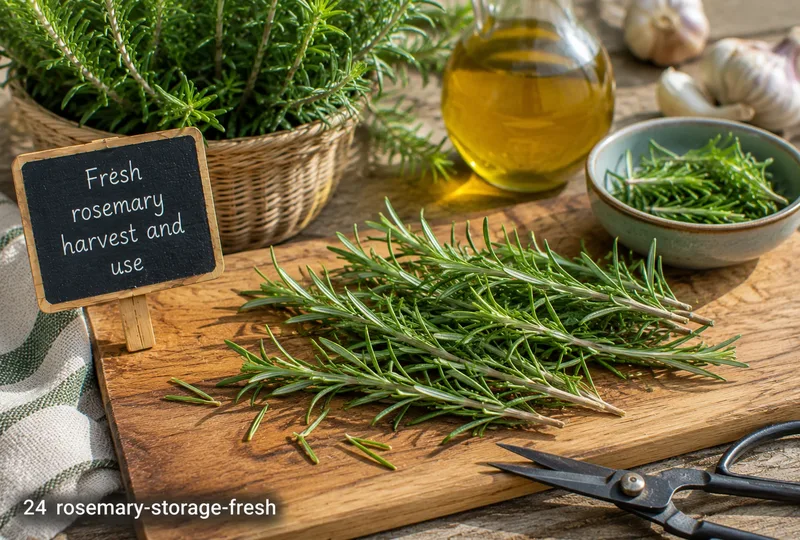
Rosemary is at its absolute best used fresh from the plant. Snip young shoot tips — the last 5–10cm of growth — rather than cutting whole branches. These are the most tender and highest in essential oils. Fresh rosemary keeps for up to two weeks in a glass of water on the windowsill, or refrigerated in a damp cloth inside a plastic bag. The flavour intensifies slightly as sprigs begin to dry, making even slightly aged fresh rosemary perfectly usable in cooking.
🌾 Dried — For Year-Round Use
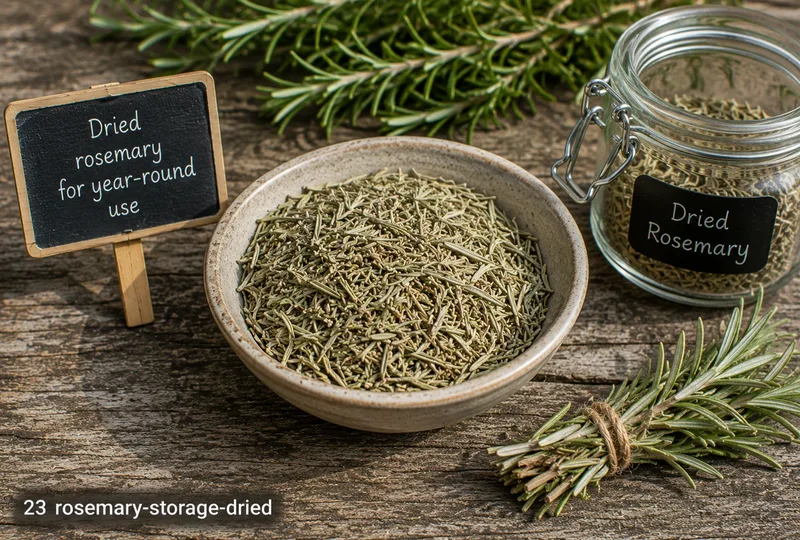
Rosemary dries exceptionally well and retains strong flavour for six months to a year. Cut long stems in late summer (July–August) just before the plant flowers — essential oil content is highest at this point. Tie in small bunches and hang upside down in a warm, airy place out of direct sunlight for two to three weeks. Once completely dry and crisp, strip leaves from the stems and store in an airtight jar. Dried rosemary is more concentrated than fresh — use roughly half the quantity in recipes.
🫙 Infused — Salts & Butters
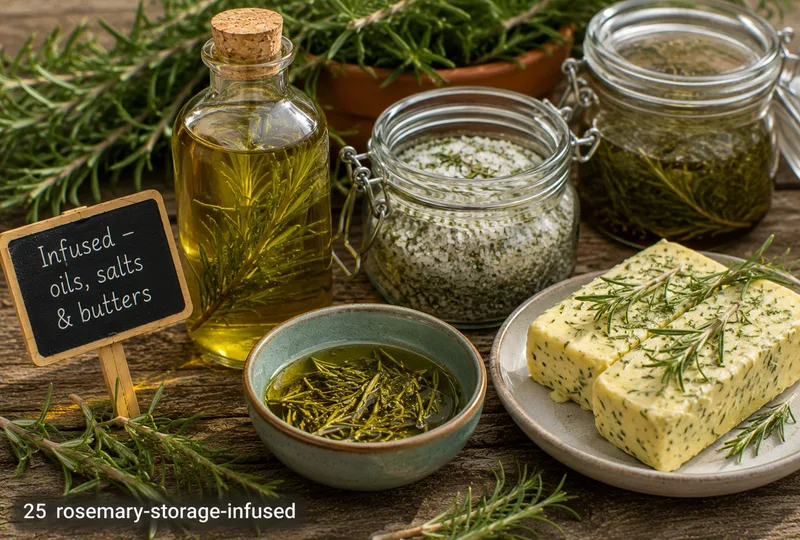
Rosemary infuses beautifully into salt and butter. For rosemary salt: pulse dried rosemary with coarse sea salt in a blender. For rosemary butter: blend softened butter with finely chopped fresh leaves, roll in clingfilm, and freeze. Slices make an instant sauce for grilled lamb, chicken, or vegetables.
13 Expert Tips
💡 Poor soil gives better flavour
Rosemary grown in rich, fertile soil produces lush, leafy growth with relatively weak flavour. The same plant in poor, sandy, well-drained soil produces smaller, denser leaves with a far more concentrated essential oil content. If your soil is good, resist any temptation to feed rosemary. A light top-dressing of horticultural grit around the base is beneficial; added fertiliser is not. This is true of almost all Mediterranean herbs — adversity concentrates flavour.
💡 Never cut into old wood — ever
This cannot be overstated. Rosemary is unusual among shrubby herbs in that it cannot regenerate from old, bare wood. Lavender will sometimes reshoot from old wood; rosemary will not. If you accidentally cut a branch back to grey, leafless wood, that branch will die. The fix is always to keep green foliage below any pruning cut. If a plant has become very woody and overgrown, it is better to replace it with a new cutting-grown plant than to attempt a hard cutback.
💡 Regular harvesting improves the plant
Unlike many plants where frequent cutting reduces vigour, rosemary actively benefits from regular harvesting. Snipping shoot tips stimulates the plant to produce more lateral shoots, increasing bushiness and total harvest capacity over the season. One well-maintained, regularly harvested plant can supply a household with more rosemary than they can use. Begin harvesting from the first season, and the plant will reward you with more every year.