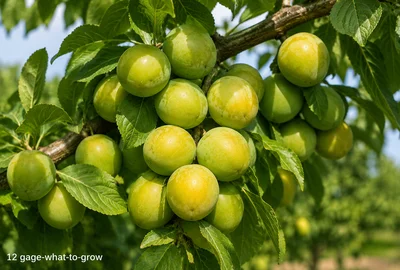
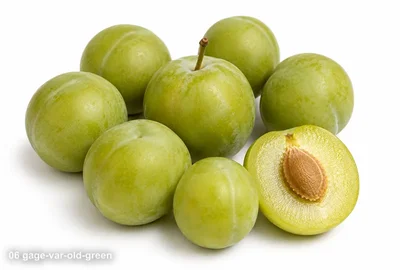
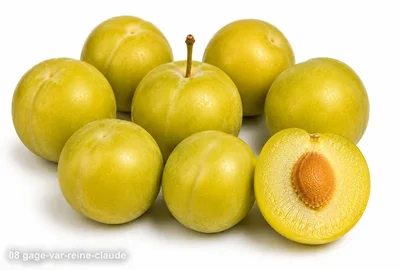
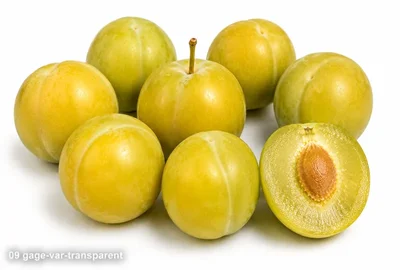
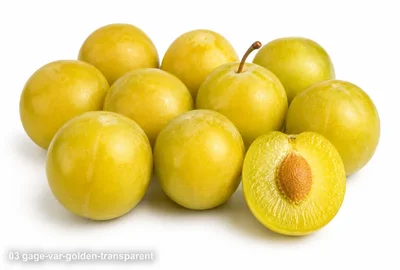
Greengages need a warm, sheltered position — a south-facing wall or well-drained sunny border in a mild region
Cambridge Gage is self-fertile and the most reliable outdoor gage for UK gardens; Reine Claude de Bavay is more productive with a pollinator
Plant on St Julien A rootstock for a manageable bush or fan; Pixy for a small space
Prune in summer (April–August) only to avoid silver leaf disease; remove dead wood cleanly
Gages ripen later than plums — harvest when the fruit softens slightly and parts easily from the branch with an upward twist
🌱 SowPlant bare-root Nov–Mar · Container Sep–May
🌾 HarvestAug–Sep
☀ PositionFull sun, warm and sheltered — south wall ideal
📐 Spacing2.5m (Pixy) to 5m (St Julien A)
DifficultyModerate
⚡ Quick facts
Sow
Plant bare-root Nov–Mar · Container Sep–May
Plant
Nov–Mar (bare-root) · Sep–May (container)
Harvest
Aug–Sep
Position
Full sun, warm and sheltered — south or south-west facing wall strongly recommended
Spacing
2.5m (Pixy) · 4–5m (St Julien A)
Height
2.5–3m (Pixy) · 3.5–4.5m (St Julien A)
Hardiness
Hardy · Blossom frost-sensitive — earlier than apples
Lifespan
30–50 years
Difficulty
Moderate
01 About
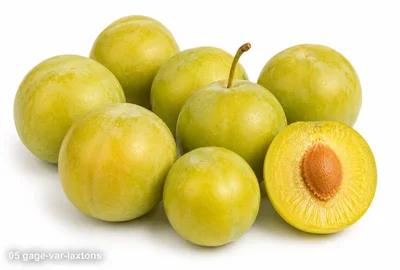
Greengages are simply the finest-flavoured fruit that can be grown in a British garden — sweet, honeyed, aromatic, and extraordinary when eaten sun-warm from the tree. They are grown exactly like plums, require the same summer-only pruning discipline, and on a sheltered south wall with a self-fertile variety like Cambridge Gage, they are more achievable than most gardeners believe.
02 Rootstock Guide
The rootstock controls the ultimate size of the tree. Choose it first — before the variety. All sizes below are approximate and depend on soil and management.
Greengages & Gages rootstocks
Rootstock
Size
Height
Spacing
Suitable for
Support & notes
Pixy
Dwarfing
2.5–3m
2.5–3m
Bush · Fan · Small garden
Permanent stake essential — Best for most domestic gardens. Fruits from year 3–4. Needs fertile soil and permanent stake.
St Julien A
Semi-vigorous
3.5–4.5m
4–5m
Bush · Half-standard · Less fertile soils
Stake for 5 years — More forgiving of poorer soils. Better for less ideal sites.
Brompton
Vigorous
5–7m
6–8m
Half-standard · Standard · Orchard
Minimal after establishment — Traditional orchard rootstock for large gardens only.
Pollination groups
Group 2 — Early flowering. Pollinate within group 2 or with groups 1/3.
Group 3 — Mid-season. Largest group. Pollinate with groups 2, 3, or 4. Also cross-pollinates with plums in the same group.
Group 4 — Late flowering. Pollinate with groups 3 or 4.
Group SF — Self-fertile — sets a good crop without a partner.
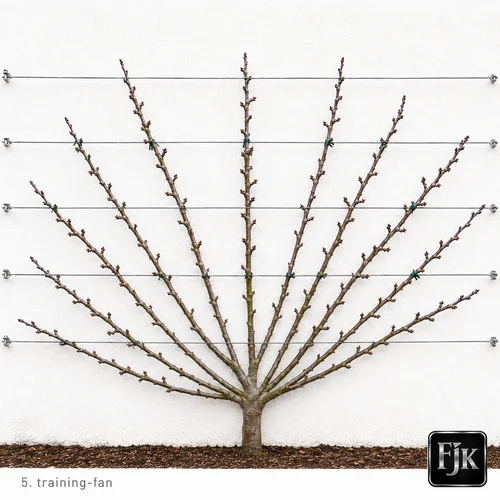
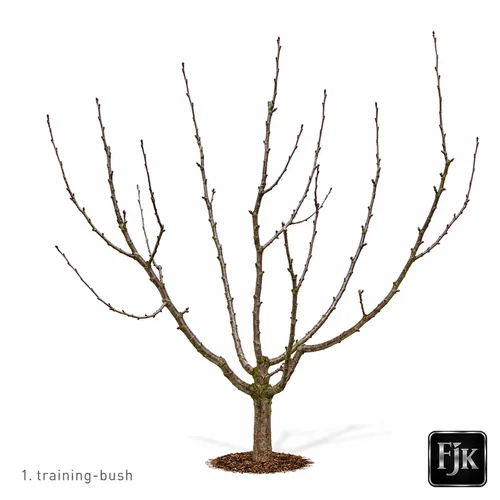
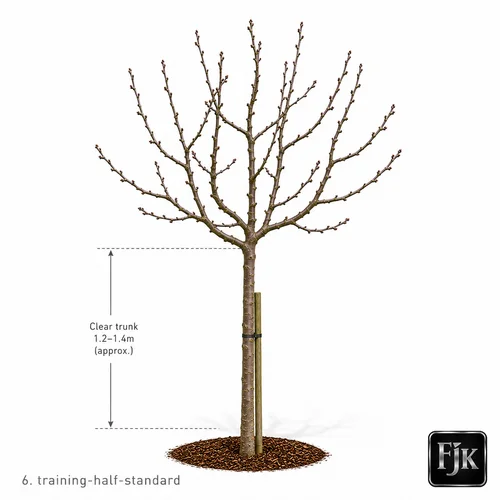
Training forms
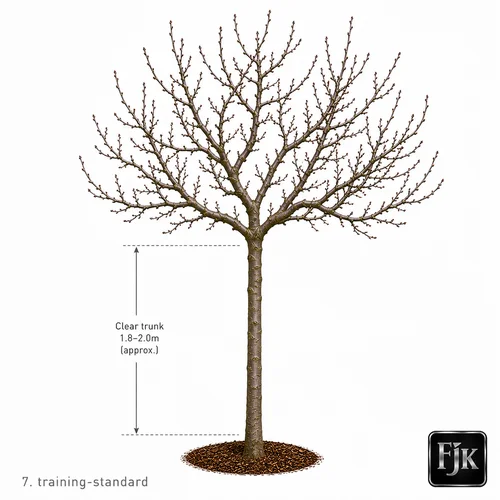
fanbushhalf-standardstandard
03 Varieties
The number of varieties shown for each crop is based on UK consumption data (2025/26) — the more popular the crop, the more variety choices we include.
Self-fertile & Reliable
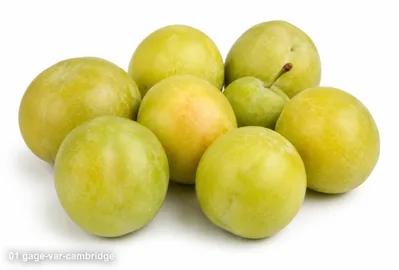
Cambridge Gage
Self-fertile · Mid
The benchmark greengage for UK gardens. Self-fertile, reliable, and consistently productive. Medium-sized green-yellow fruit with rich, classic gage flavour. The most reliable choice for any UK garden. AGM. Start here.
Harvest
Aug–Sep
Flavour
Rich, sweet, honeyed, complex
Fruit size
Medium
Yield
High
Disease resistance
Good
🏅 AGM
✓ Self-fertile
Group 3
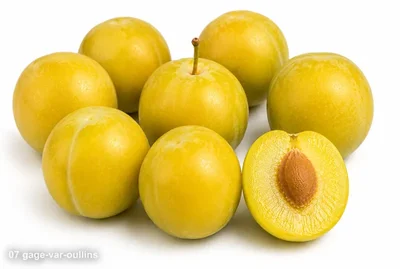
Oullins Golden Gage
Self-fertile · Early
The most productive gage — very heavy crops of large, golden-yellow fruit in July and August. Self-fertile and very reliable. Milder, less complex flavour than Cambridge Gage but considerably higher yield. Also an excellent pollinator for other gages and plums in group 3. AGM.
Harvest
Jul–Aug
Flavour
Sweet, mild, pleasant
Fruit size
Large
Yield
Very high
Disease resistance
Very good
🏅 AGM
✓ Self-fertile
Group 3
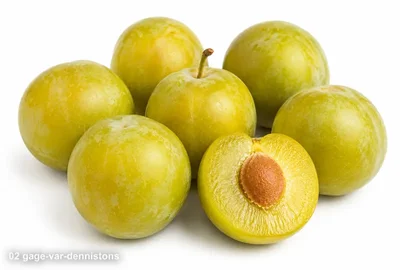
Denniston's Superb
Self-fertile · Mid
A reliable self-fertile gage with good crops of medium-large fruit and excellent flavour. AGM. Good disease resistance. One of the better choices where self-fertility and flavour quality are both priorities. Less widely available than Cambridge Gage but worth seeking.
Harvest
Aug
Flavour
Sweet, rich, excellent
Fruit size
Medium-large
Yield
High
Disease resistance
Good
🏅 AGM
✓ Self-fertile
Group 3
Finest Flavour
Old Green Gage
Not self-fertile · Late
Widely considered to have the finest flavour of any fruit that can be grown in Britain — honey-sweet, aromatic, almost tropical in warmth. Small, round, pale green fruit. Needs a warm wall and a pollinator (Cambridge Gage or plum). A significant commitment for a transcendent result.
Harvest
Sep
Flavour
Arguably the finest fruit flavour in the British garden
Fruit size
Small-medium
Yield
Moderate
Disease resistance
Moderate
Group 3
Reine Claude Dorée
Not self-fertile · Mid
The original French greengage from which most varieties descend. Exquisite honey-sweet flavour. Needs a warm wall and a compatible pollinator. Less productive than modern varieties but maintains a following among connoisseurs for its historical and flavour significance.
Harvest
Aug–Sep
Flavour
Exquisite, honeyed, French classic
Fruit size
Medium
Yield
Moderate
Disease resistance
Moderate
Group 3
Early Transparent Gage
Not self-fertile · Very early
One of the earliest gages — ripening in July. The fruit is so ripe when ready that it is nearly transparent — you can see the stone through the skin. Exceptional fresh flavour. Needs a pollinator but pairs well with Oullins Golden Gage in the same group.
Harvest
Jul–Aug
Flavour
Sweet, fresh, delicate, distinctive
Fruit size
Medium
Yield
High
Disease resistance
Good
Group 3
Yellow & Golden Gages
Golden Transparent Gage
Self-fertile · Mid
A beautiful self-fertile gage with golden-yellow translucent skin when ripe. Rich, complex flavour with good sweetness. Moderate disease resistance means it benefits from a warm, well-ventilated position. An ornamental as well as a productive variety.
Harvest
Aug
Flavour
Rich, golden, sweet, complex
Fruit size
Medium
Yield
Moderate
Disease resistance
Moderate
✓ Self-fertile
Group 3
Laxton's Gage
Self-fertile · Mid
A reliable British-bred gage with good crops of sweet, well-flavoured fruit. Self-fertile. Good disease resistance. Less complex flavour than Cambridge Gage but very reliable and productive. A good second tree to extend season alongside Cambridge.
Harvest
Aug
Flavour
Sweet, reliable, good
Fruit size
Medium
Yield
High
Disease resistance
Good
✓ Self-fertile
Group 3
Jubilee Gage
Not self-fertile · Mid
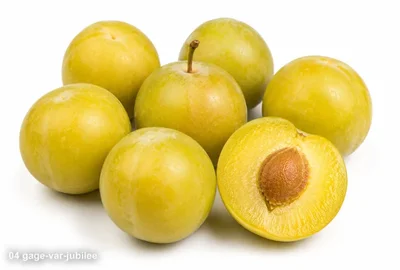
A newer variety producing larger fruit than most gages with very good sweet flavour. Not self-fertile — needs a pollinator from group 3. Good disease resistance. Valued for combining the larger fruit size of modern breeding with the flavour quality associated with heritage gages.
Harvest
Aug–Sep
Flavour
Very sweet, rich, notable quality
Fruit size
Large
Yield
High
Disease resistance
Good
Group 3
04 Where to Source
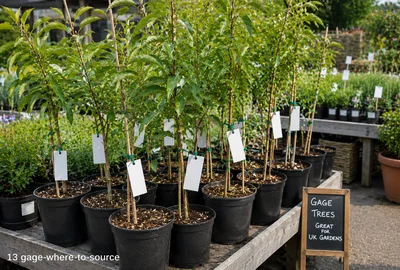
Greengages are sold as bare-root or container-grown trees through specialist fruit nurseries, usually grafted onto a size-controlling rootstock. Confirm the variety is self-fertile — such as Cambridge Gage — unless you have space and a pollination partner for a self-sterile type.
🌳 Specialist Fruit Nurseries
Named, grafted trees on a known rootstock give predictable eventual size and far more reliable cropping than an unnamed seedling tree.
Timing tip: Order seeds in January and February. Popular varieties sell out quickly. Garden centres and markets are a reliable backup from April onwards.
05 Planting Options
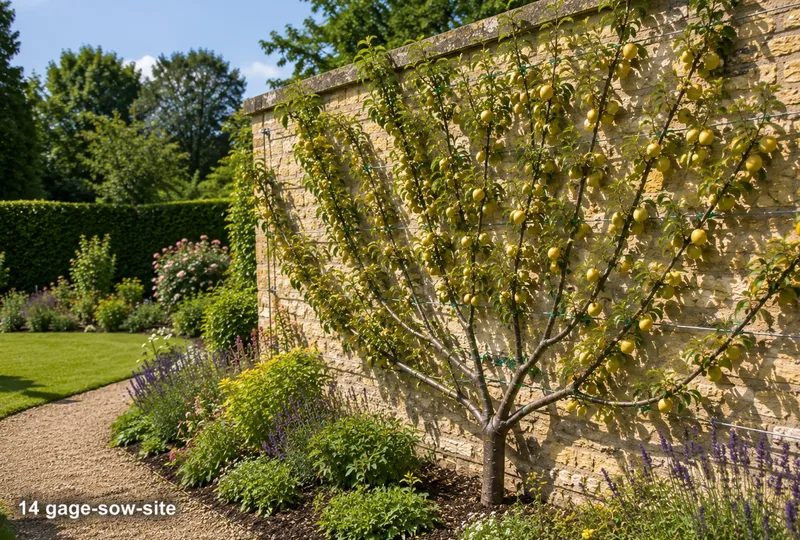
🌿 Fan-trained Against a South Wall (Strongly Recommended)
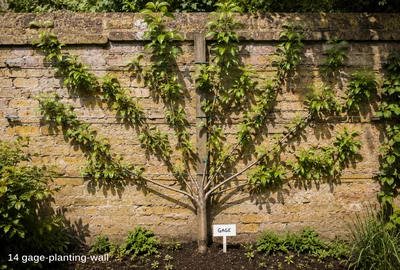
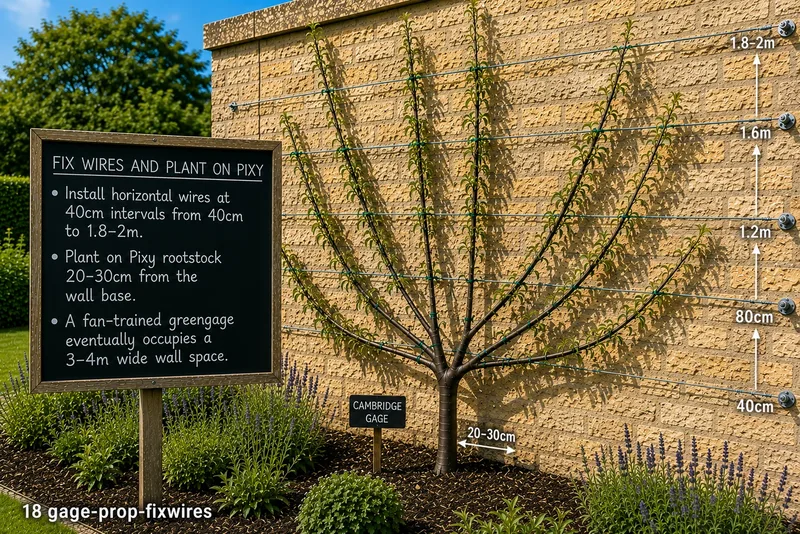
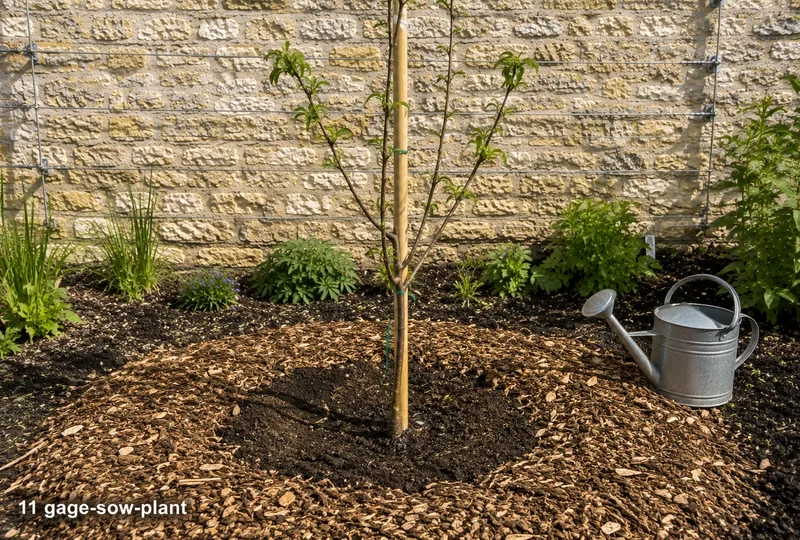
A south or south-west wall makes the single biggest difference to greengage quality of any tree fruit in this guide — outside the far south, it is genuinely the difference between fruit that develops its distinctive honeyed sweetness and fruit that stays disappointingly sharp. Install horizontal wires at 40cm intervals from 40cm up to 1.8–2m, and plant on Pixy rootstock 20–30cm out from the wall base to allow root room. Build the fan framework patiently over 3–4 years, tying ribs to canes as they extend, and prune only in summer (July–August) — winter cuts on a stone fruit like this are an open door for bacterial canker and silver leaf.
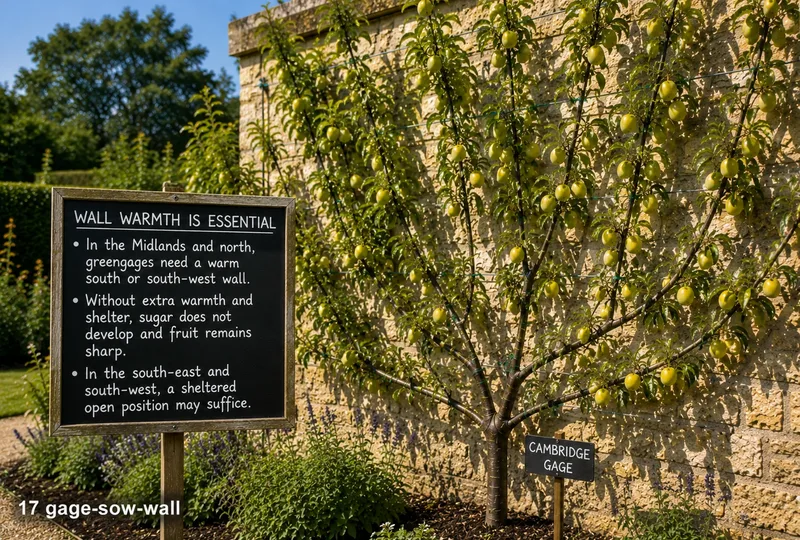
South or south-west wall is essential outside the south
In the Midlands and north, greengages need a warm wall to develop their full flavour. Without the additional warmth and shelter, the sugar content does not develop and the fruit remains disappointingly sharp. In the south-east and south-west, a sheltered open position may suffice.
Fix wires and plant on Pixy
Install horizontal wires at 40cm intervals from 40cm to 1.8–2m. Plant on Pixy rootstock 20–30cm from the wall base. A fan-trained greengage eventually occupies a 3–4m wide wall space.
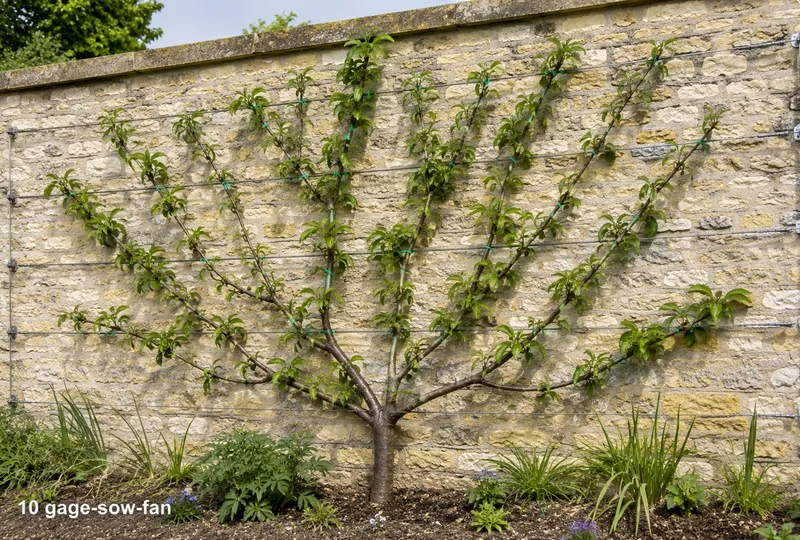
Develop fan over 3–4 years
Develop the fan framework progressively, tying ribs to canes attached to the wires. Summer prune sideshoots to 6 leaves in June, then to 3 leaves after harvest. Patient formative pruning produces a structure that crops for decades.
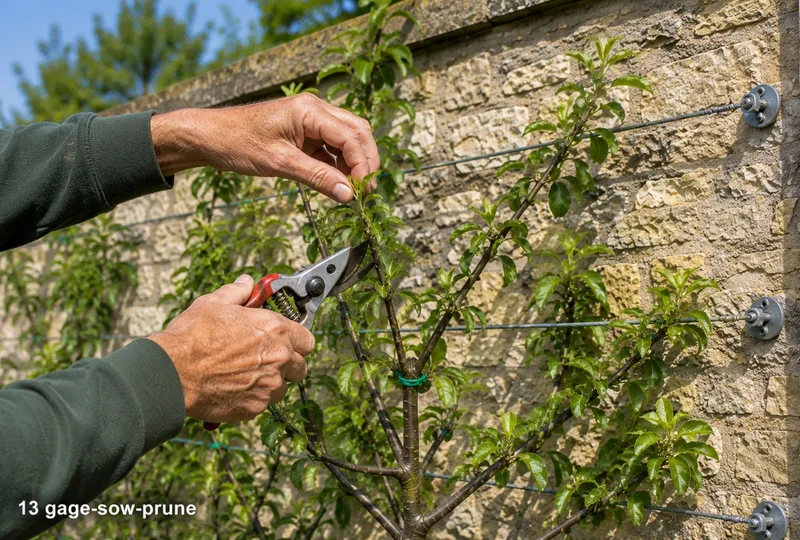
Summer prune only
All pruning of the fan must be done in summer (July–August). Never cut in winter — bacterial canker and silver leaf enter through winter pruning wounds.
🌳 Free-standing Bush
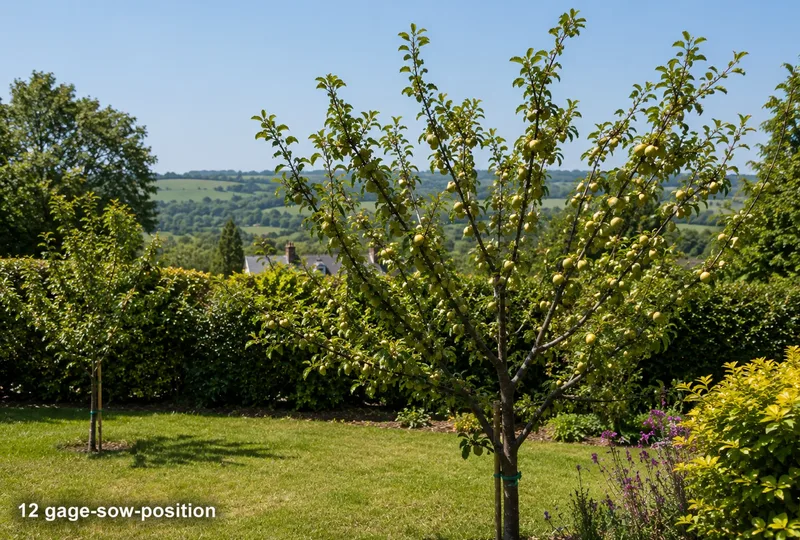
In the south-east and south-west, greengages can crop reliably as a free-standing bush without the extra warmth of a wall — a genuine option for gardeners without suitable wall space, though results become less dependable further north. Choose a reliably self-fertile variety such as Cambridge Gage or Oullins Golden Gage for an open position, plant with the graft union 10–15cm above soil level, and stake permanently on Pixy rootstock. Thin the developing crop to 5–8cm apart in June — this single step prevents branch splitting under a heavy load and produces noticeably larger, better-flavoured fruit.
Suitable for southern gardens only
Free-standing greengages (without wall warmth) crop reliably in the south-east and south-west but can be unreliable further north. Choose Cambridge Gage or Oullins Golden Gage — the most reliable self-fertile varieties for open positions.
Plant and permanently stake
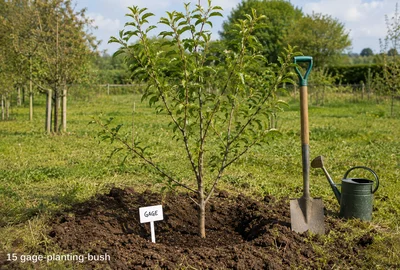
Plant with the graft union 10–15cm above soil. Install a permanent stake for Pixy trees. Firm well and water in. Mulch in a wide circle keeping clear of the trunk.
Thin the crop in June
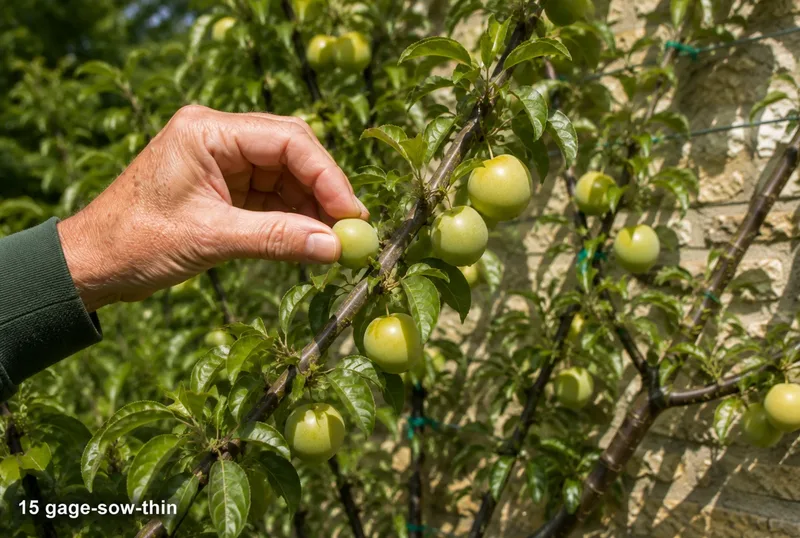
Thin developing fruits to 5–8cm apart in June to prevent branch splitting and develop larger, better-flavoured fruit. This is particularly important in a bumper crop year.
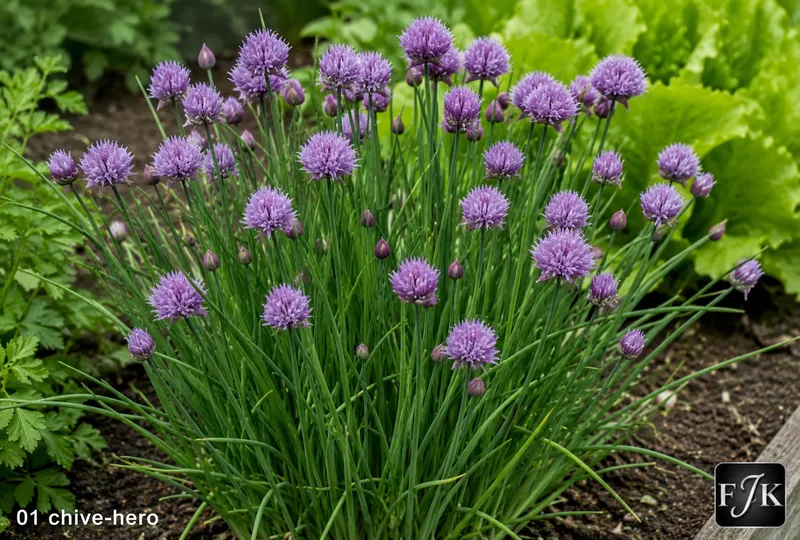
A mild allium companion said to help deter aphids and other pests with its strong scent.
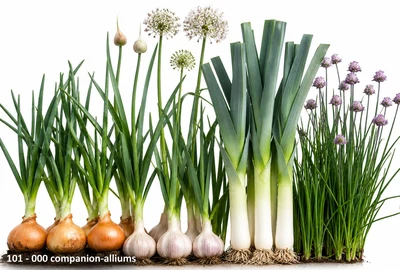
🧄 Alliums
Onion-family plants grown nearby are thought to help deter pests with their strong scent.
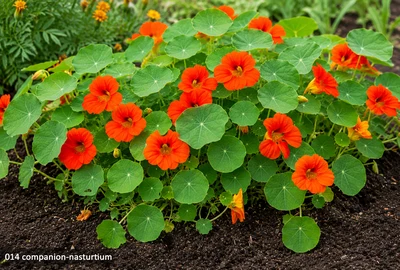
🌸 Nasturtium
Acts as a trap crop for aphids, drawing pests away from the main plant.
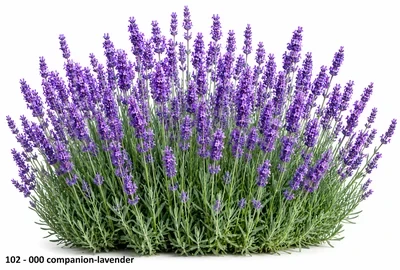
💜 Lavender
Attracts pollinators and adds a decorative, low-maintenance border nearby.
07 Sowing — How To
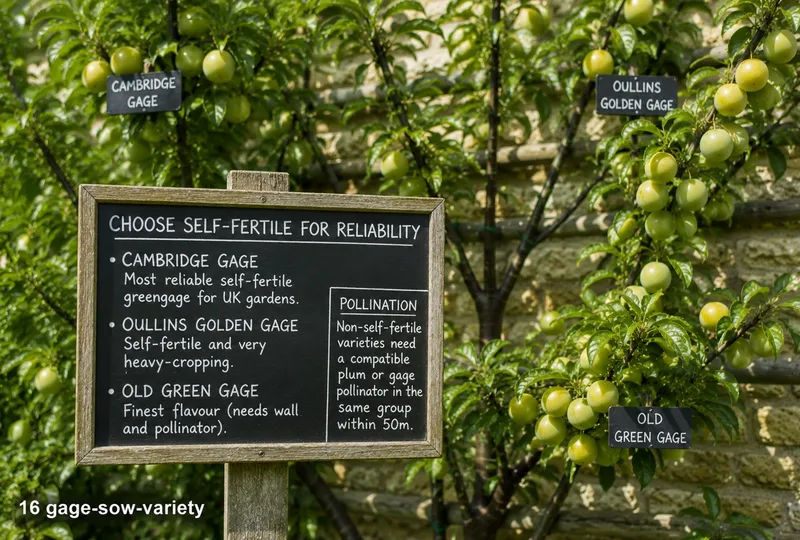
Choose self-fertile for reliability
Cambridge Gage is the most reliable self-fertile greengage for UK gardens. Oullins Golden Gage is self-fertile and very heavy-cropping. Non-self-fertile varieties need a compatible plum or gage pollinator in the same group within 50m.
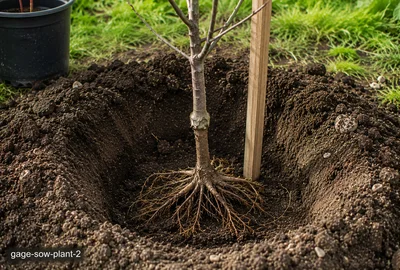
Plant Nov–Mar in dormancy
Bare-root trees must be planted while dormant. The graft union must remain 10–15cm above soil level after planting.
Best position is the key decision
The choice of position matters more for greengages than for almost any other tree fruit. A warm wall or sheltered south-facing position is not optional — it is the difference between regular good crops and unreliable disappointment.
Regional sowing timing
Region
Sow / plant
Harvest
Notes
Scotland & Far North
Nov–Mar
Aug–Sep
Northern England
Nov–Mar
Aug–Sep
Midlands & Wales
Nov–Mar
Aug–Sep
Ireland & Isle of Man
Nov–Mar
Aug–Sep
South & SE England
Nov–Mar
Aug–Sep
South Coast & SW
Nov–Mar
Aug–Sep
08 Using a Propagator
Greengages are grafted by specialist nurseries. Home propagation is not practical. Purchase named varieties on specified rootstocks from specialist fruit nurseries.
Heated propagator
Not Applicable — Purchase from specialist fruit nurseries.
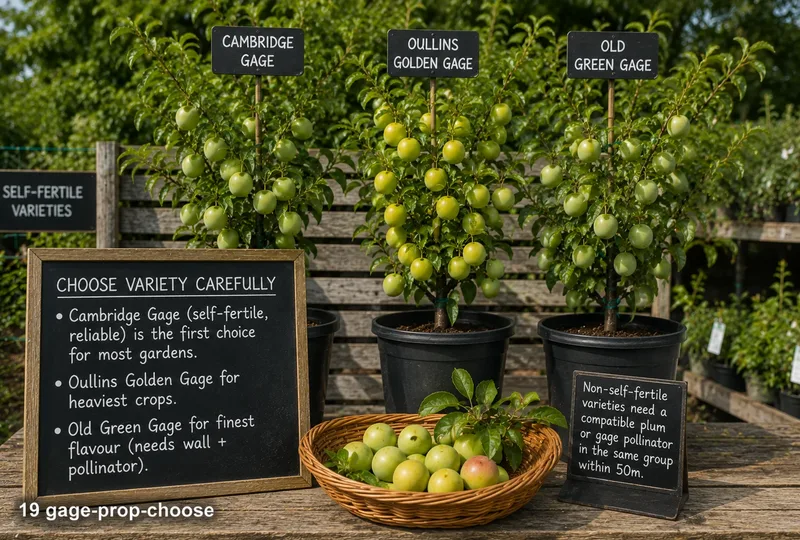
Choose variety carefully
Cambridge Gage (self-fertile, reliable) is the first choice for most gardens. Oullins Golden Gage for heaviest crops. Old Green Gage for finest flavour (needs wall + pollinator).
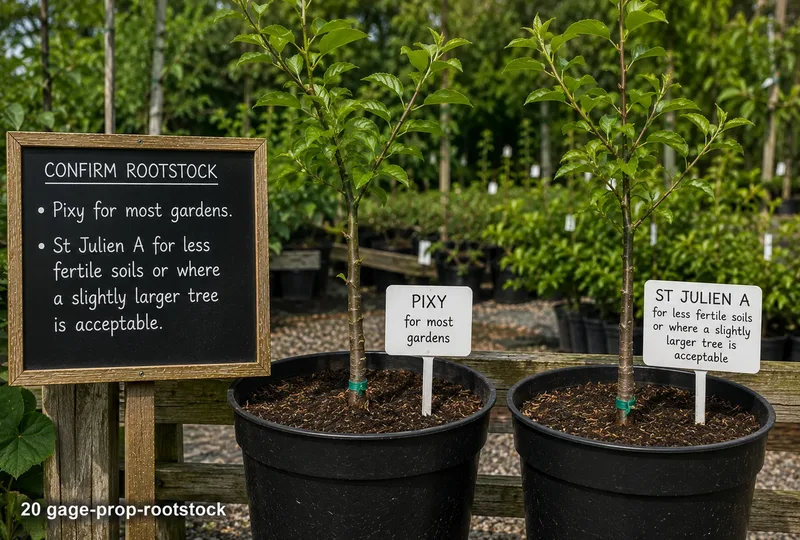
Confirm rootstock
Pixy for most gardens. St Julien A for less fertile soils or where a slightly larger tree is acceptable.
09 Soil Requirements
pH
6.0–7.0
Best
Loam, Clay loam
Tolerates
Sandy loam, Clay
Avoid
Waterlogged, Chalky, Very sandy
💡 Same requirements as plums. Rich, moisture-retentive soil preferred.
10 Ongoing Care
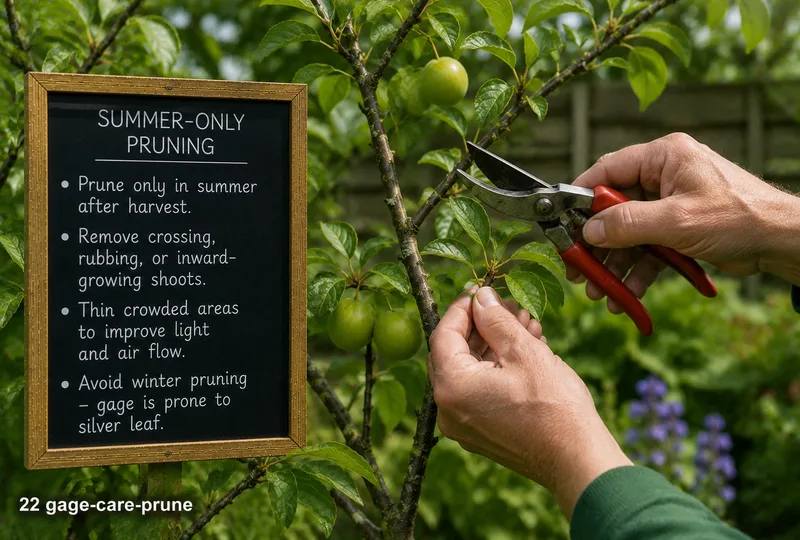
✂️ Summer-only Pruning
Like plums and cherries, greengages must be pruned only in summer — never in winter. The risk from bacterial canker and silver leaf entering winter pruning wounds is the same as for all stone fruits. All pruning — thinning of crowded branches, shortening of fan sideshoots, removal of dead wood — must be carried out in July or August. For fan-trained trees, shorten sideshoots to 6 leaves in June (summer pinching) and then to 3 leaves after harvest. Paint all cuts larger than 2cm with wound sealant.
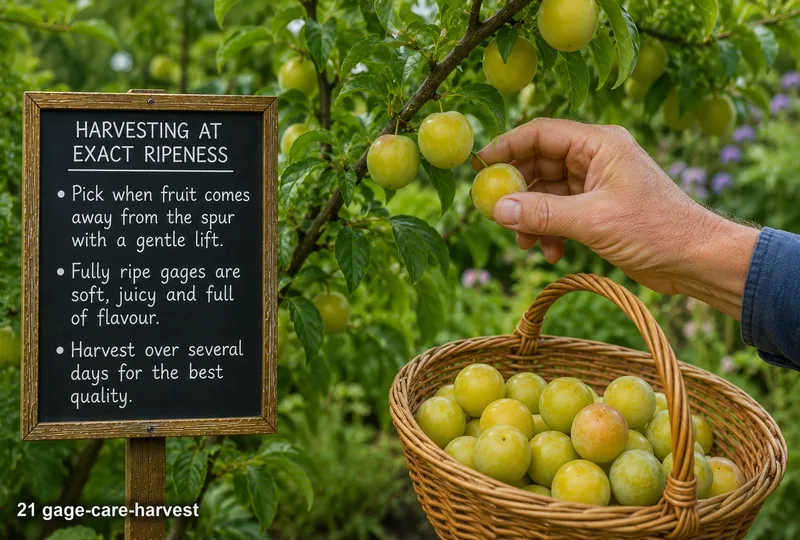
🟢 Harvesting at Exact Ripeness
The legendary flavour of a greengage is only present at precise peak ripeness — a day or two before this point, the fruit is sharper and less aromatic; a day or two after, it is overripe and slightly fermented. Pick when each fruit comes away from the spur with the gentlest upward twist — no pulling, no tugging. The flesh should yield slightly when pressed near the stalk. Check the tree every day during harvest season and pick each fruit at its individual moment of perfection. Eat immediately or within a day.
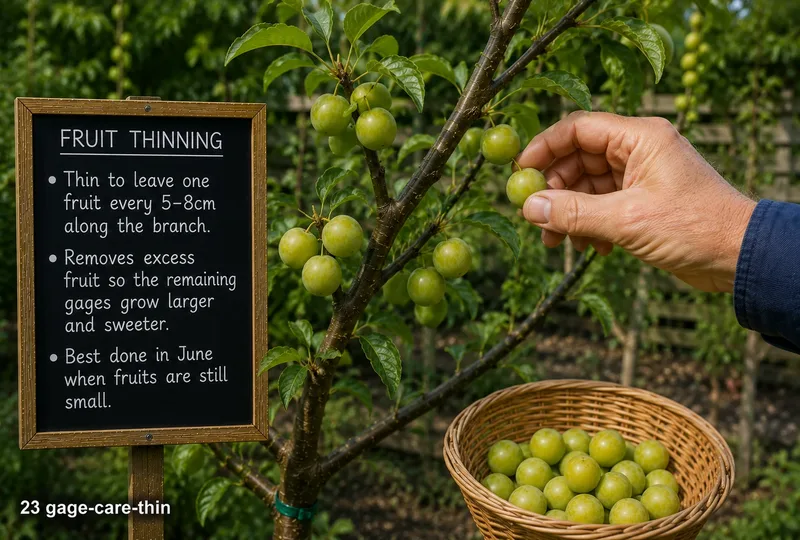
🌿 Fruit Thinning
In June, thin developing fruitlets to 5–8cm apart. Heavy crops of unthinned greengages produce many small, poorly flavoured fruit and risk branch splitting. Thinning is particularly important for gage trees because the flavour investment is high — a large, well-ripened gage is extraordinary; a small, crowded, under-resourced one is unremarkable. Remove thinned fruitlets completely — do not leave them on the ground as they attract wasps.
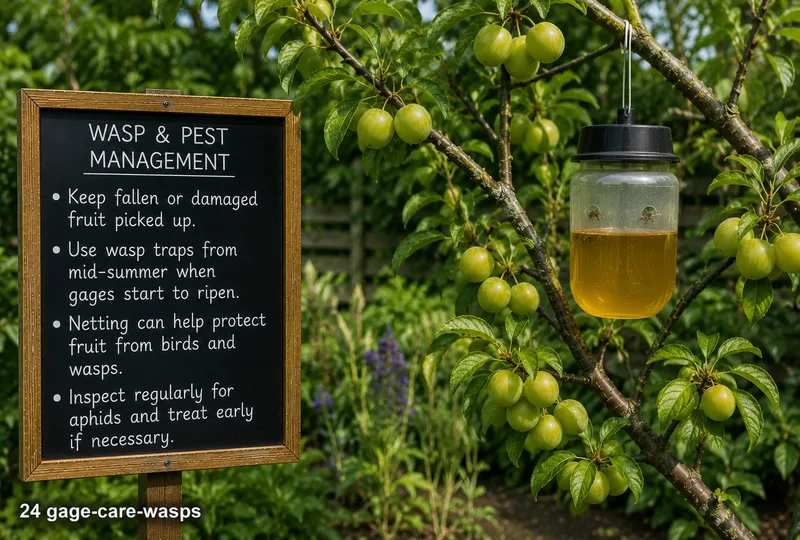
🐝 Wasp & Pest Management
Wasps are the most destructive pest of ripening greengages, attacking the sugar-rich fruit as it ripens and hollowing it out within hours. They are most active in August and September when their colonies are largest. Remove all fallen and damaged fruit immediately — rotting fruit attracts and feeds them. Wasp traps baited with sugar water or old jam can reduce populations around the tree. On a fan-trained tree, fine mesh netting draped over the fruit in the final 2 weeks before harvest is the most effective protection.
11 Watch Out For
Warning
Silver leaf disease (silvery leaf sheen, brown stain in wood) enters through winter pruning wounds — prune only in summer. Bacterial canker produces oozing lesions on bark — remove affected wood in summer. Wasps attack ripening fruit aggressively — remove fallen fruit promptly and net if needed. Plum moth larvae in fruit — use pheromone traps from May.
🐛 Insects & pests
🐜 Aphids (Blackfly & Greenfly) — Curled, distorted, or stunted growing tips — aphids inject saliva that causes leaf curl to protect them
🟤 Scale Insect — Small brown or grey bumps on stems, branches, and the underside of leaves — the scale covers themselves
🌀 Tortrix Moth — Leaves rolled or tied together with fine silk threads — the caterpillar shelter; unfold carefully to reveal the pest
🍄 Diseases to watch
🌿 Bacterial Canker — Bacterial canker (Pseudomonas syringae pv. morsprunorum) is the most serious disease of stone fruit trees in the UK. It kills whole branches and can destroy a young tree in 2–3 years if unchecked. The bacteria enter through winter pruning wounds, leaf scars, and bud scale scars — which is why pruning stone fruit in winter is so dangerous.
🌳 Apple & Pear Canker — Nectria canker (Neonectria ditissima) is the most serious fungal disease of apple and pear trees in the UK. It enters through wounds — particularly pruning cuts, leaf scars, and frost damage — and kills the bark in expanding elliptical lesions. Unchecked, a canker encircles a branch and kills everything above it.
🩶 Botrytis (Grey Mould) — Botrytis cinerea (grey mould) is the most ubiquitous fungal pathogen in temperate gardens — present in virtually every garden soil and on plant debris. It becomes a disease only when conditions favour it: cool, humid, poorly ventilated environments with damaged or senescent plant tissue. In a greenhouse in autumn it can destroy an entire tomato or grape crop.
Full identification and treatment advice is in the Pests and Diseases sections.
12 Storage & Preserving
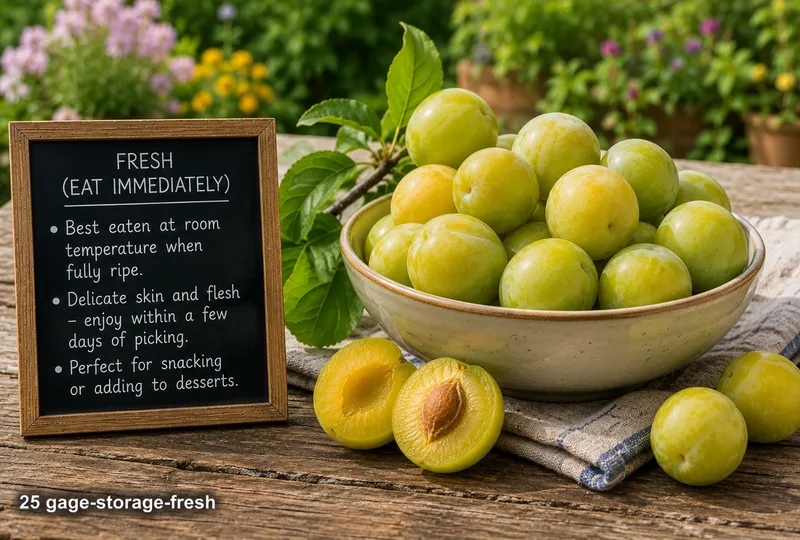
🟢 Fresh (Eat Immediately)
A perfectly ripe greengage should be eaten within hours of picking — the extraordinary flavour is at its peak for only a very short window. Refrigerate briefly if needed but serve at room temperature. They do not store well and were never designed to — they are a fleeting seasonal pleasure. The inability to store them is part of what makes them special: you must be there, in the garden, in August, to experience them at their best.
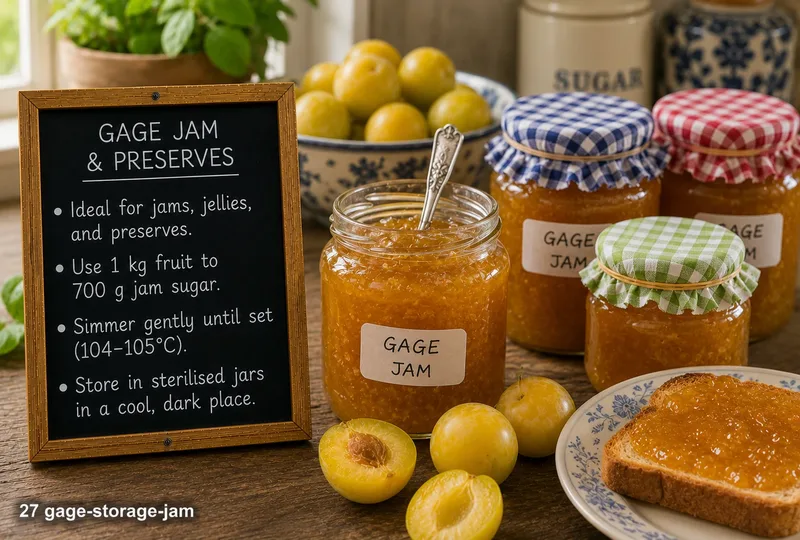
🫙 Gage Jam & Preserves
Gage jam captures some of the extraordinary flavour of the fruit — golden-amber, intensely sweet and aromatic, and among the finest fruit preserves that can be made in a UK kitchen. Greengages also preserve well in brandy. Follow a tested recipe.
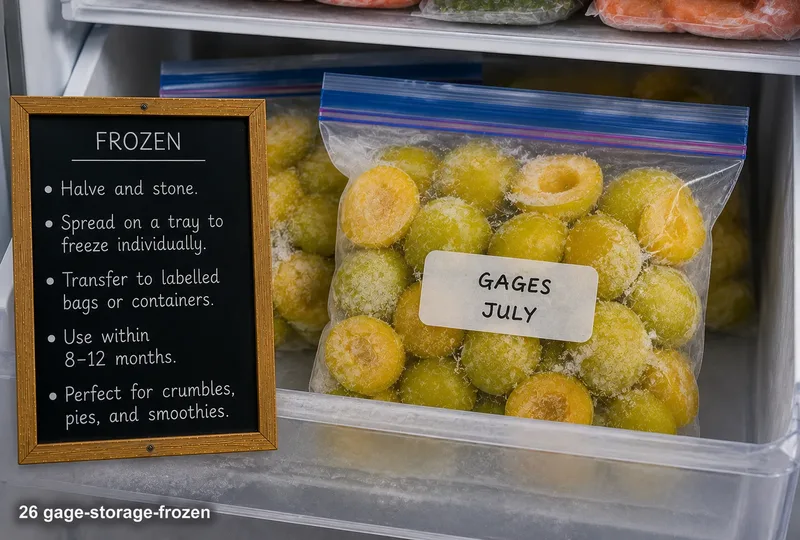
❄️ Frozen
Stone greengages before freezing. Halve and open freeze on a tray, then bag. Much of the subtle flavour is lost in freezing but frozen greengages are very usable in crumbles and pies. A surplus harvest is far better as jam than as frozen fruit.
13 Expert Tips
💡 Cambridge Gage on a south wall
Cambridge Gage on Pixy rootstock fan-trained against a south-facing wall is the most reliable greengage combination for UK gardens outside the far south-west. Self-fertile, compact, produceable in a modest space, and capable of extraordinary flavour in a good summer. This is the starting point for any greengage grower.
💡 Greengages pollinate plums
Most greengages are in pollination group 3 and will cross-pollinate with compatible plums in the same group. A Victoria plum nearby acts as pollinator for many gage varieties, and vice versa. In a garden with an existing Victoria, this opens the option of non-self-fertile gage varieties with exceptional flavour.
💡 The warm September
The quality of a greengage harvest is determined largely by the weather in August and early September. A warm, dry September produces fruit of astonishing quality; a cold, wet one produces sharp, watery fruit however good the management has been. This makes the south wall position even more valuable — the stored heat from the wall continues ripening the fruit long after the ambient temperature falls.