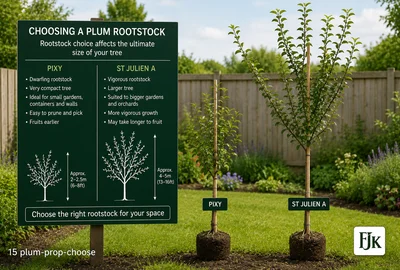
Grow on Pixy rootstock for a small garden tree; St Julien A for a standard bush or fan
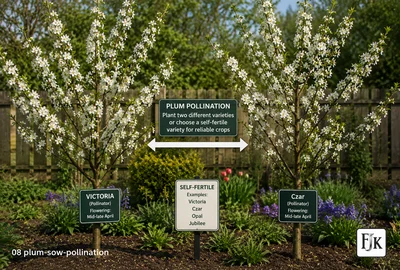
Most plums are self-fertile — Victoria, Czar, and Opal all crop well alone
Plums flower early and are frost-sensitive — avoid low-lying frost pockets; a south-facing wall gives the best results
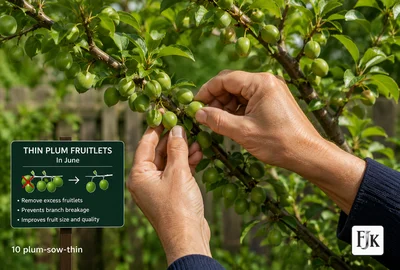
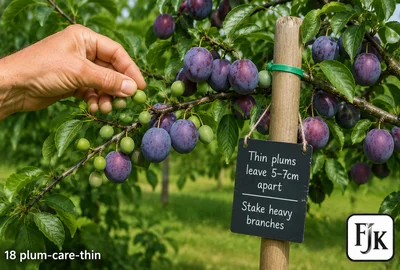
Thin fruitlets in June to 5–8cm apart to prevent branch-breaking crops and biennial bearing
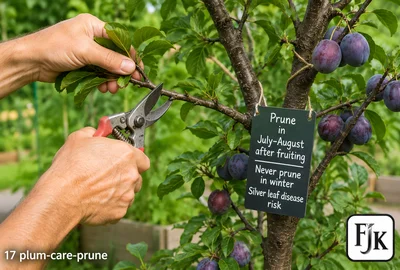
Prune in summer only — April–August — to reduce the risk of silver leaf disease
🌱 SowPlant bare-root Nov–Mar · Container Sep–May
🌾 HarvestAug–Oct (plums) · Sep–Oct (damsons)
☀ PositionFull sun, sheltered from spring frosts
📐 Spacing2.5m (Pixy) to 5m (St Julien A)
DifficultyEasy
⚡ Quick facts
Sow
Plant bare-root Nov–Mar · Container Sep–May
Plant
Nov–Mar (bare-root) · Sep–May (container)
Harvest
Aug–Oct (plums) · Sep–Oct (damsons)
Position
Full sun, warm and sheltered — avoid frost pockets
Spacing
2.5m (Pixy) · 3.5–4.5m (St Julien A)
Height
2.5–3m (Pixy) · 3.5–4.5m (St Julien A)
Hardiness
Hardy · Blossom frost-sensitive — earlier than apples
Lifespan
30–50 years
Difficulty
Easy
01 About
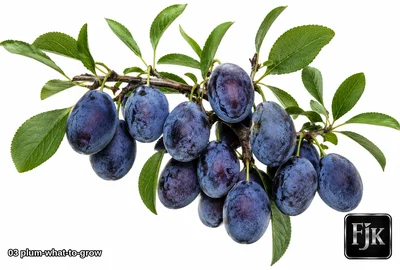
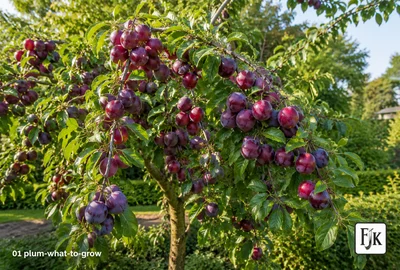
One of the most generous and low-maintenance tree fruits in the British garden. A Victoria plum in full crop is a spectacular sight — and the challenge is usually too much fruit, not too little. Damsons are even tougher, more prolific, and require almost no management at all. Both fruit on compact rootstocks that suit even modest gardens.
02 Rootstock Guide
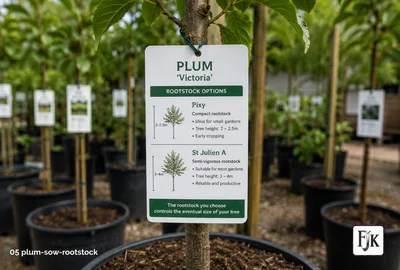
The rootstock controls the ultimate size of the tree. Choose it first — before the variety. All sizes below are approximate and depend on soil and management.
Plums & Damsons rootstocks
Rootstock
Size
Height
Spacing
Suitable for
Support & notes
Pixy
Dwarfing
2.5–3m
2.5–3m
Bush · Fan · Small garden
Permanent stake essential — Best for most domestic gardens. Fruits from year 3–4. Needs fertile, well-drained soil and permanent stake.
St Julien A
Semi-vigorous
3.5–4.5m
4–5m
Bush · Half-standard · Less fertile soils
Stake for 5 years — More tolerant of poorer soils than Pixy. Better for less ideal sites. More productive on thin soils.
Brompton
Vigorous
5–7m
6–8m
Half-standard · Standard · Orchard
Minimal after establishment — Traditional orchard rootstock. Long-lived. Not suitable for small gardens.
Myrobalan B
Very vigorous
6–9m
8m+
Standard · Large orchard
Not needed — Very large trees. Only for traditional orchards with ample space.
Pollination groups
Group 1 — Very early flowering — late March. Very few varieties. Pollinate with groups 1 or 2.
Group 2 — Early flowering — late March to early April. Pollinate with groups 1, 2 or 3.
Group 3 — Mid-season flowering — early to mid-April. Largest group. Pollinate with groups 2, 3, or 4.
Group 4 — Late flowering — mid to late April. Pollinate with groups 3 or 4.
Group SF — Self-fertile — sets a full crop without a pollinator, though a partner improves yields.
Training forms
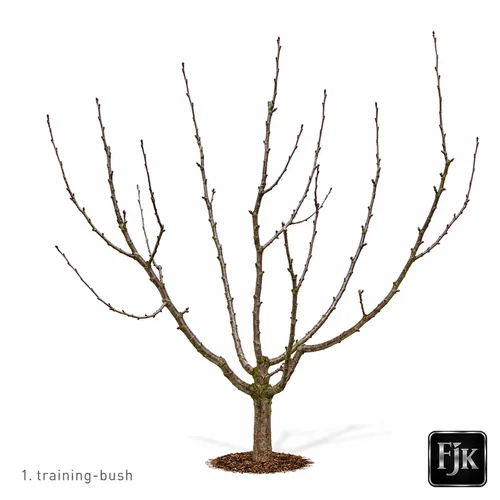
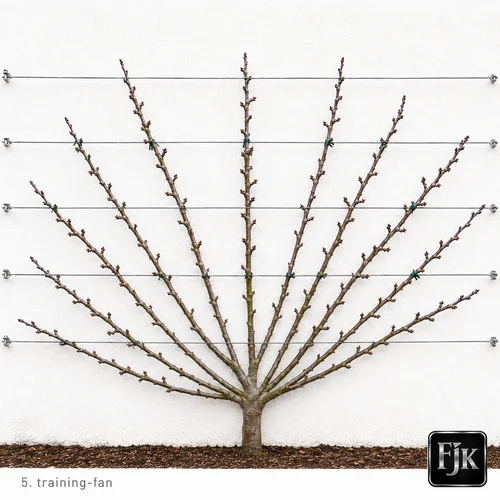
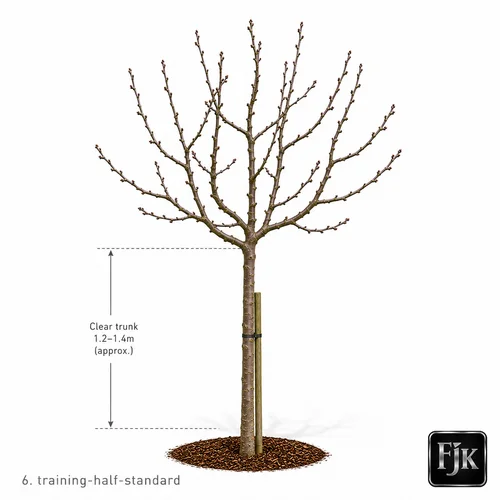
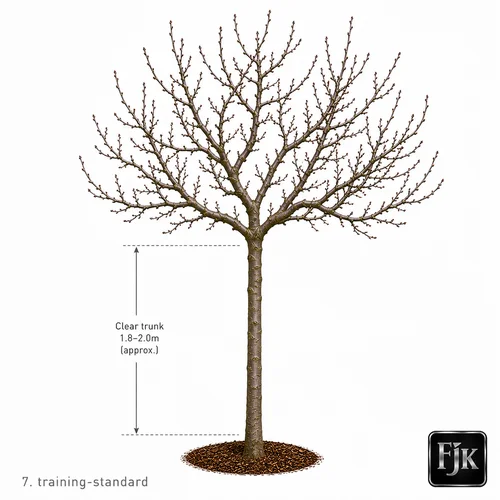
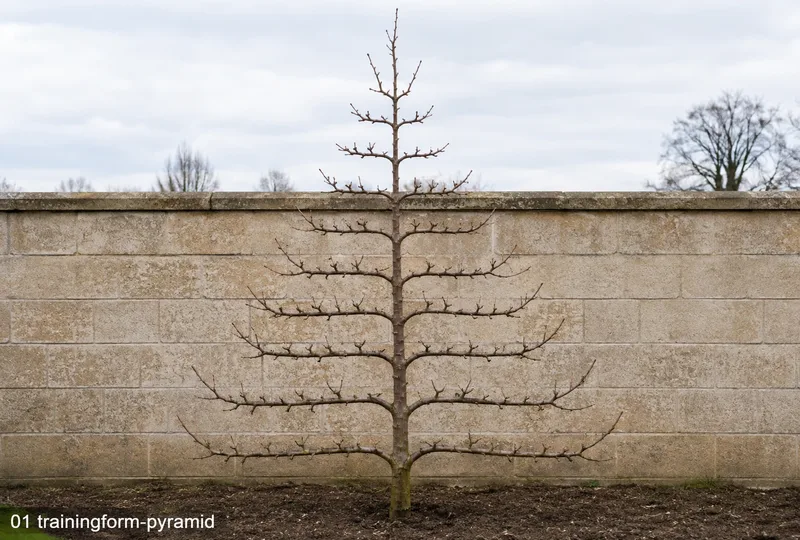
bushfanhalf-standardstandardpyramid
03 Varieties
The number of varieties shown for each crop is based on UK consumption data (2025/26) — the more popular the crop, the more variety choices we include.
Dessert Plums
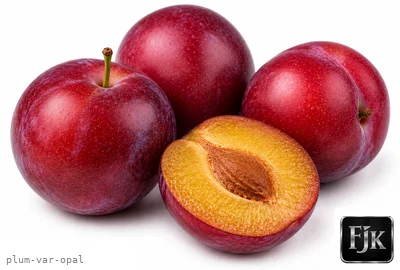
Opal
Dessert · Self-fertile · Early
One of the best early dessert plums — sweet, juicy, red-yellow fruit ripening in late July. Self-fertile and consistently productive. Good disease resistance. An excellent choice as a first plum or where an early-season harvest is wanted. AGM.
Harvest
Jul–Aug
Flavour
Sweet, rich, excellent fresh
Fruit size
Medium-large
Yield
High
Disease resistance
Good
🏅 AGM
✓ Self-fertile
Group 3
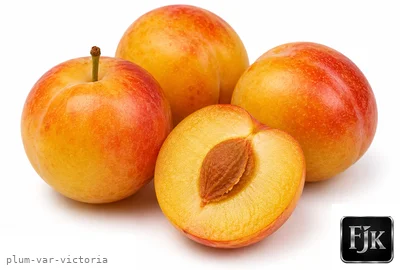
Victoria
Dessert/Cooking · Self-fertile · Mid
The definitive British plum — the most widely grown and most reliable variety in the UK. Very heavy, consistent crops of large, red-yellow fruit with excellent dual-purpose flavour. Self-fertile. Susceptible to silver leaf but manageable with summer-only pruning. AGM. The default first choice.
Harvest
Aug
Flavour
Classic sweet-tart British plum
Fruit size
Large
Yield
Very high
Disease resistance
Moderate
🏅 AGM
✓ Self-fertile
Group 3
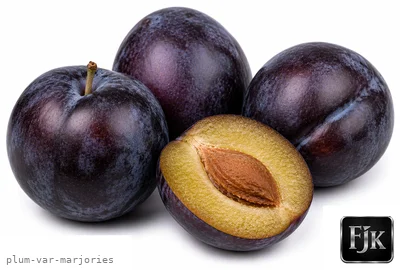
Marjorie's Seedling
Dessert/Cooking · Self-fertile · Late
The latest and one of the heaviest-cropping plums — extending the season into October. Self-fertile. Very large, purple-blue fruit with excellent rich flavour. Outstanding disease resistance. Valuable for extending the plum season well beyond the main August crop. AGM.
Harvest
Sep–Oct
Flavour
Rich, complex, excellent
Fruit size
Large
Yield
Very high
Disease resistance
Very good
🏅 AGM
✓ Self-fertile
Group 5
Cooking & Dual-Purpose
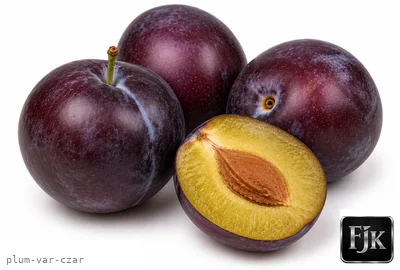
Czar
Cooking · Self-fertile · Mid
The most reliable cooking plum — extremely heavy-cropping, very good disease resistance, and self-fertile. Deep blue-black fruit with sharp, rich flavour when cooked. Outstanding for jam. Tolerates north-facing aspects and less-than-ideal conditions better than most plums.
Harvest
Aug
Flavour
Sharp raw · Rich when cooked
Fruit size
Large
Yield
Very high
Disease resistance
Very good
🏅 AGM
✓ Self-fertile
Group 3
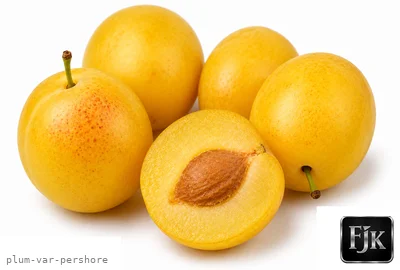
Pershore Yellow Egg
Cooking · Self-fertile · Mid
A traditional yellow cooking plum with extraordinary yields — trees can produce more fruit than can be processed. Cooks to a beautiful golden-yellow colour. Very good for jam and cooking. Less flavoursome raw but one of the most productive plum trees available.
Harvest
Aug
Flavour
Mild, cooks to golden pulp
Fruit size
Large
Yield
Very high
Disease resistance
Good
✓ Self-fertile
Group 3
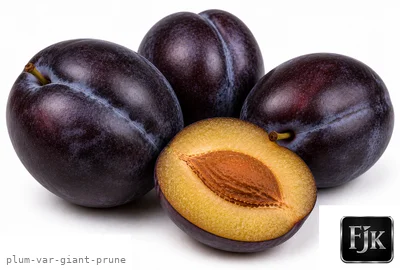
Giant Prune (Bittenfelder)
Dual-purpose · Self-fertile · Late
A large, late-ripening variety with firm, sweet flesh ideal for both fresh eating and drying. Can be dried on the tree in warm autumns. Very large fruit. Good flavour. A novelty in that it can genuinely be air-dried at home in a warm autumn.
Harvest
Sep–Oct
Flavour
Sweet, rich, excellent
Fruit size
Very large
Yield
High
Disease resistance
Good
✓ Self-fertile
Group 4
Damsons & Bullaces
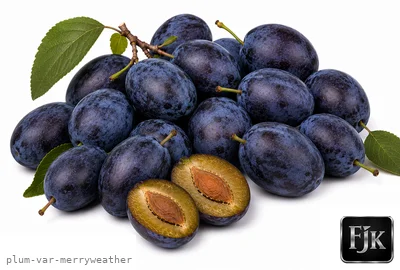
Merryweather Damson
Damson · Self-fertile
The largest-fruited damson and the standard recommendation for gardens. Very heavy, reliable crops of large blue-black fruits with intense, rich flavour. Outstanding for jam, gin, and all preserves. Virtually disease-free and requires almost no management. A tree that rewards for 50 years.
Harvest
Sep–Oct
Flavour
Intensely rich, sharp — outstanding for preserves
Fruit size
Large
Yield
Very high
Disease resistance
Excellent
🏅 AGM
✓ Self-fertile
Group 3
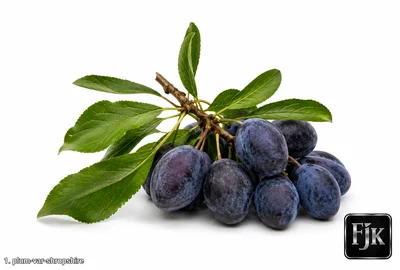
Shropshire Prune (Shropshire Damson)
Damson · Self-fertile
Considered the finest-flavoured damson by many growers. Smaller fruit than Merryweather but with more complex, aromatic flavour. Late-ripening into October. Extremely prolific. The variety of choice for those who prioritise flavour in preserves and damson gin.
Harvest
Oct
Flavour
Intensely rich, complex, aromatic
Fruit size
Medium
Yield
Very high
Disease resistance
Excellent
🏅 AGM
✓ Self-fertile
Group 3
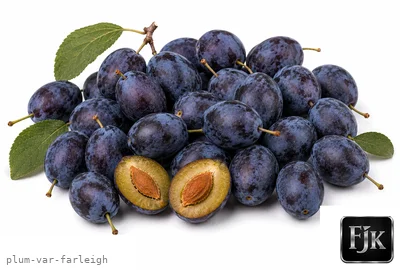
Farleigh Damson
Damson · Partially self-fertile
A traditional Kent damson producing very heavy crops of small, intensely flavoured fruit. Partially self-fertile but crops better with a pollinator. Outstanding for jam and damson cheese. One of the most disease-resistant and cold-tolerant of all damsons — well suited to northern gardens.
Harvest
Sep–Oct
Flavour
Sharp, intense, excellent for jam
Fruit size
Small-medium
Yield
Very high
Disease resistance
Excellent
🏅 AGM
Group 3
04 Where to Source
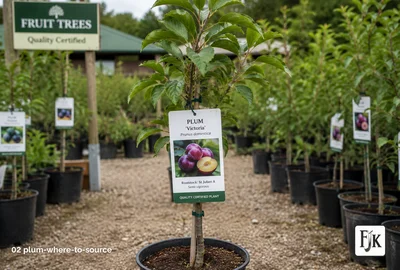
Plum and damson trees are widely available from garden centres and online fruit nurseries as container-grown stock (plantable year-round) or bare-root in winter (Nov–Mar, better value and wider variety choice). Victoria is stocked almost everywhere; damsons and less common varieties like Marjorie's Seedling or Farleigh are best sourced from specialist fruit nurseries. Always check the rootstock is clearly labelled — Pixy for small gardens, St Julien A for more vigorous trees.
05 Planting Options
🌳 As a Bush (Most Common)
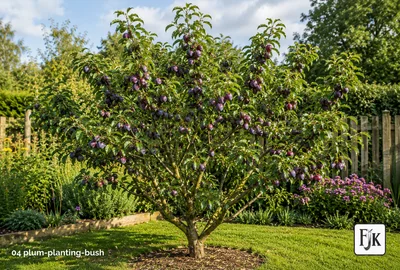
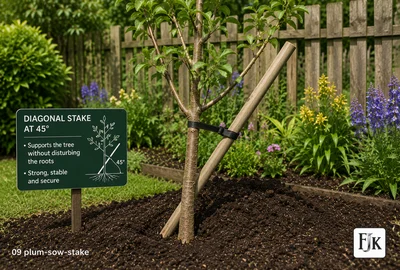
The rootstock choice shapes everything about a plum bush: Pixy keeps trees to a manageable 2.5m and fruiting from year three, while St Julien A gives a larger, longer-lived tree for more space. Dig a hole twice the spread of the roots, work in well-rotted compost, and drive the stake in at 45 degrees before backfilling so the tree is properly anchored from day one. In the first heavy-cropping year, thin developing fruit to 5-8cm apart in June — plums crop so generously that unthinned branches can snap under the weight. Prune only in summer, never winter: plums are vulnerable to silver leaf and bacterial canker, which enter through winter wounds.
Choose rootstock for your site
Pixy for most garden soils — it gives a manageable 2.5m tree that fruits from year 3. St Julien A for less fertile soils or where a slightly larger tree is wanted. On Pixy, the tree must be permanently staked throughout its life.
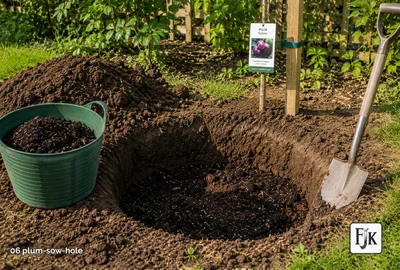
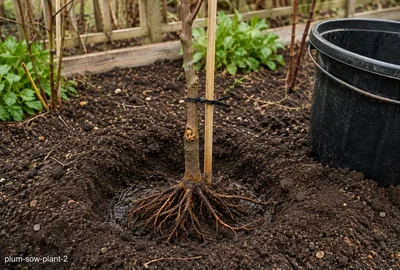
Prepare the planting hole
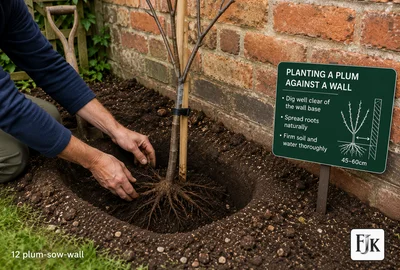
Dig a hole twice the root spread and the same depth. Incorporate well-rotted compost. The graft union must be 10–15cm above soil level after planting — planting too deep causes scion-rooting and loss of the dwarfing effect.
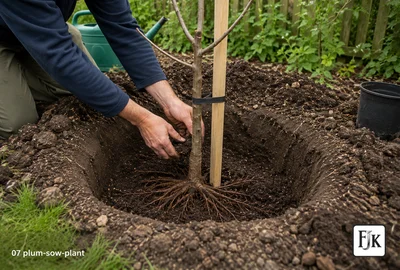
Plant, stake and mulch
Plant in the hole at the correct depth. Drive the stake in at 45 degrees before replacing soil. Firm in stages and water with 15 litres. Apply a 5cm mulch in a wide circle keeping clear of the trunk.
Thin the crop in June
In the first heavy crop year, thin developing fruits to 5–8cm apart in June. Heavy crops break branches and can split the trunk of young plum trees — particularly on Pixy. Thinning also produces larger, better-flavoured individual fruits.
Summer pruning only
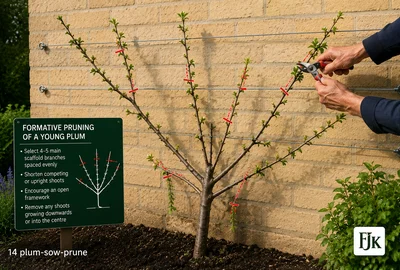
Like cherries, plums should not be pruned in winter — bacterial canker and silver leaf enter through winter wounds. Prune lightly in July–August after harvest.
🌿 Fan-trained Against a Wall
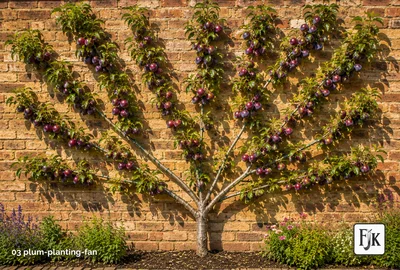
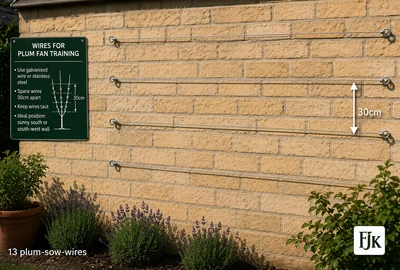
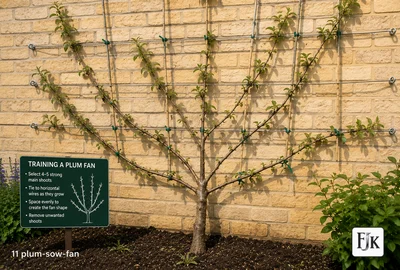
A south or south-west facing wall advances plum ripening by two to three weeks and noticeably improves fruit quality, while also giving useful protection from spring frost during flowering. Install horizontal wires at 40cm intervals and plant a Pixy-rootstock tree 20-30cm from the wall base, then build the fan gradually over three to four years by tying in the developing ribs as they extend — resist the temptation to rush a full fan in year one, since patient formative training gives a much stronger long-term framework.
South or south-west wall preferred
A warm wall advances ripening by 2–3 weeks and dramatically improves fruit quality. The wall also makes netting against birds and wasps practical — a significant advantage for plums.
Fix wires at 40cm intervals
Install horizontal wires from 40cm to 1.8–2m. Plant on Pixy rootstock 20–30cm from the wall base. Fan-trained plums eventually fill a 3–4m wide wall space.
Develop the fan over 3–4 years
Tie in the developing ribs of the fan progressively. Do not try to rush to a full fan — patient formative training produces a stronger, more productive permanent structure.
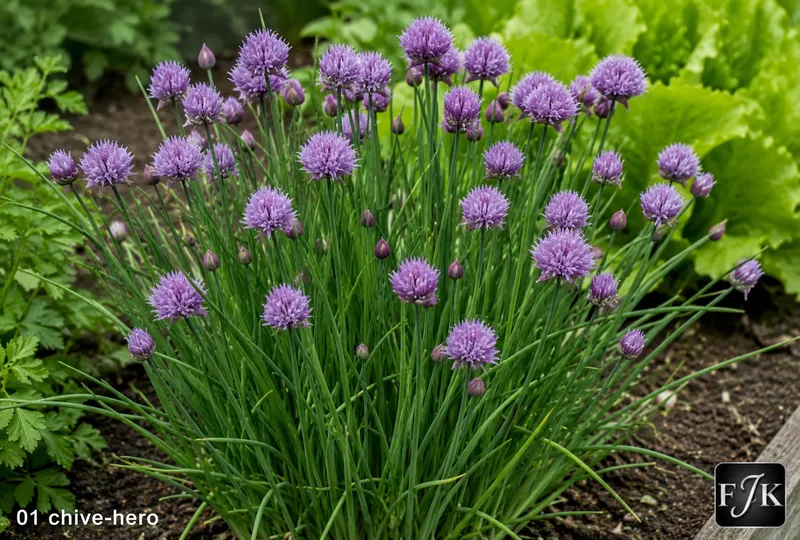
A mild allium companion said to help deter aphids and other pests with its strong scent.
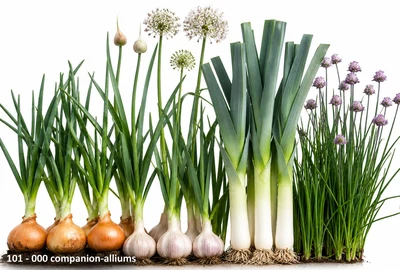
🧄 Alliums
Onion-family plants grown nearby are thought to help deter pests with their strong scent.
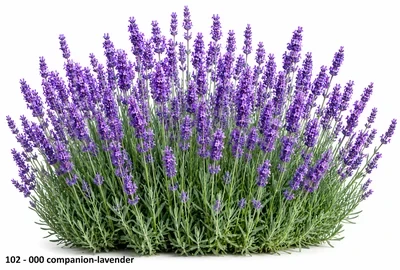
💜 Lavender
Attracts pollinators and adds a decorative, low-maintenance border nearby.
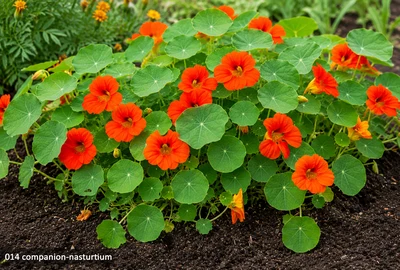
🌸 Nasturtium
Acts as a trap crop for aphids, drawing pests away from the main plant.
07 Sowing — How To
Confirm variety self-fertility
Victoria, Opal, Czar, Marjorie's Seedling, and all damsons are self-fertile. Non-self-fertile varieties need a compatible partner in the same pollination group within 50m.
Plant Nov–Mar in dormancy
Bare-root trees establish well through autumn and winter. The graft union must remain above soil after planting — measure carefully before firming in.
Permanent stake for Pixy trees
Trees on Pixy rootstock must be permanently staked. Install at planting and check the tree tie annually.
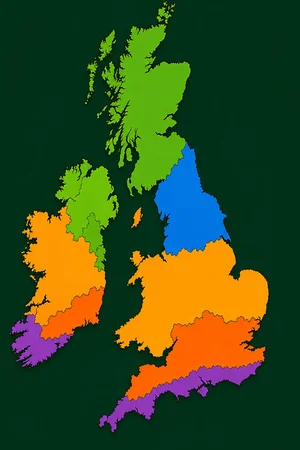
Regional sowing timing
Region
Sow / plant
Harvest
Notes
Scotland & Far North
Nov–Mar
Aug–Oct
Northern England
Nov–Mar
Aug–Oct
Midlands & Wales
Nov–Mar
Aug–Oct
Ireland & Isle of Man
Nov–Mar
Aug–Oct
South & SE England
Nov–Mar
Aug–Oct
South Coast & SW
Nov–Mar
Aug–Oct
08 Using a Propagator
Plums are grafted by specialist nurseries. Home propagation is not practical. Most gardeners buy container-grown trees, which can be planted at any time of year and establish reliably — bare-root trees remain available in winter from specialist fruit nurseries at lower cost, but container-grown is the easier, more widely available option.
Heated propagator
Not Applicable — Purchase from specialist fruit nurseries.
Choose self-fertile variety
For most gardens, choose a self-fertile variety (Victoria, Opal, Czar) so only one tree is needed. If planting two, check pollination group compatibility.
Confirm rootstock
Pixy for most gardens. St Julien A for less fertile sites or slightly larger trees. Confirm rootstock is clearly stated on the label.
09 Soil Requirements
pH
6.0–7.0
Best
Loam, Clay loam
Tolerates
Sandy loam, Clay
Avoid
Waterlogged, Chalky, Very sandy
💡 Heavy, moisture-retentive soil suits plums well. More tolerant than cherries.
10 Ongoing Care
🌿 Fruit Thinning
In June (the June drop), plums naturally shed some fruitlets. After this, thin remaining fruits to 5–8cm apart — this is one of the most important management tasks for plums. Unthinned crops produce many small, flavourless fruits, put excessive weight on branches causing breakage, and weaken the tree for the following year. Thinning feels wrong but the results are dramatic — larger fruit, better flavour, and a tree that does not crack under its own weight. In bumper years, support heavily laden branches with forked props to prevent branch splitting.
✂️ Summer Pruning Only
Like cherries, plums must only be pruned in summer — never in winter. Bacterial canker and silver leaf disease enter through pruning wounds when the tree cannot heal quickly, and both are most active in cool, wet winter conditions. All pruning — thinning of crowded branches, removal of crossing wood, shortening of sideshoots on fans, and removal of dead wood — must be carried out in July or August when wounds can callus over rapidly in summer warmth. Paint cuts larger than 2cm with wound sealant.
🐛 Plum Moth Control
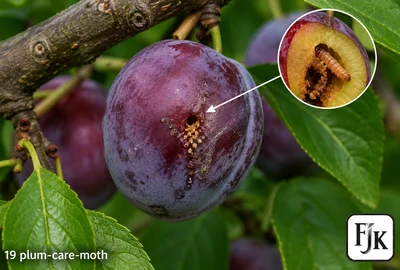
Plum moth is the most significant plum pest — the female moths lay eggs on developing fruitlets and the larvae tunnel into the flesh, causing maggoty fruit. Hang pheromone traps from late May to monitor and disrupt the breeding cycle. The traps catch male moths and break pollination, significantly reducing the infestation. One or two traps per tree are sufficient. This is an organic control method with no spray residue and is highly effective. The traps work by preventing female moths from finding males — no mating means no eggs.
💧 Watering & Feeding
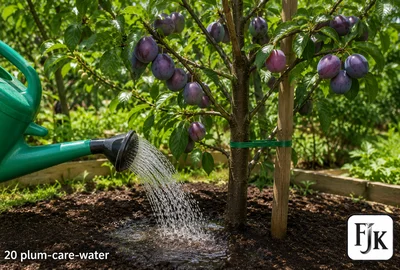
Water young trees (first 3 years) consistently through dry spells. Established plum trees are reasonably drought-tolerant but produce significantly better fruit with consistent moisture during swelling in July. Apply a balanced fertiliser in March and a generous mulch of compost annually. Do not over-feed with nitrogen — this produces excessive leafy growth at the expense of fruit. On Pixy rootstock, regular feeding is more important than on St Julien A.
11 Watch Out For
Warning
Silver leaf disease produces a distinctive silvery sheen on leaves — a dying branch with silvery leaves has a purple-brown stain in the wood when cut. Remove affected wood to 15cm below the stain and burn. Silver leaf enters through winter pruning wounds — summer pruning is the prevention. Bacterial canker produces oozing, sunken lesions on bark — remove affected wood in summer. Wasps attack ripening fruit — best managed by removing fallen fruit promptly. Bullfinches strip flower buds in winter in some areas.
🐛 Insects & pests
🟤 Scale Insect — Small brown or grey bumps on stems, branches, and the underside of leaves — the scale covers themselves
🐜 Aphids (Blackfly & Greenfly) — Curled, distorted, or stunted growing tips — aphids inject saliva that causes leaf curl to protect them
🌀 Tortrix Moth — Leaves rolled or tied together with fine silk threads — the caterpillar shelter; unfold carefully to reveal the pest
🍄 Diseases to watch
🌿 Bacterial Canker — Bacterial canker (Pseudomonas syringae pv. morsprunorum) is the most serious disease of stone fruit trees in the UK. It kills whole branches and can destroy a young tree in 2–3 years if unchecked. The bacteria enter through winter pruning wounds, leaf scars, and bud scale scars — which is why pruning stone fruit in winter is so dangerous.
Full identification and treatment advice is in the Pests and Diseases sections.
12 Storage & Preserving
🟣 Fresh
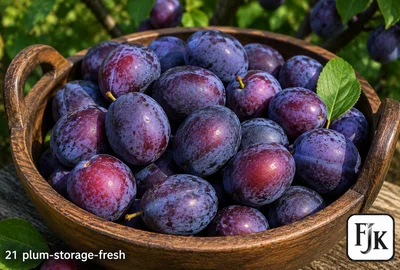
Ripe plums keep for 3–5 days refrigerated. Pick slightly under-ripe and ripen at room temperature — a plum that passes from firm to perfect to overripe within 24 hours at room temperature was at its ideal picking moment. Eat at room temperature for best flavour — cold plums taste flat.
🫙 Jam & Preserves
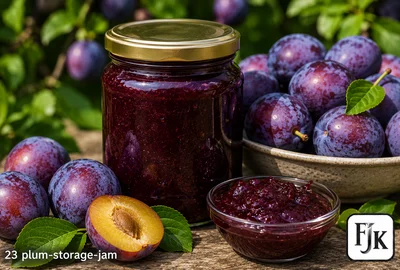
Victoria plum jam is one of the finest British preserves. Damson jam is richer, darker, and more intense — outstanding with cheese. Plum chutney with ginger is an excellent accompaniment to cold meats, and damsons make a traditional damson gin or damson vodka. Follow a tested recipe.
❄️ Frozen
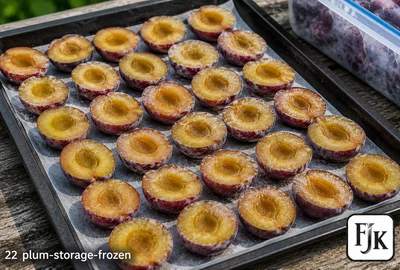
Stone plums before freezing. Halve, remove stones, open freeze on a tray then bag. Alternatively freeze as compote (cooked with a little sugar). Use within 12 months. Frozen plums are excellent for crumbles, pies, ice cream, and sauces. A bumper Victoria crop in August can be frozen in bulk with minimal effort — the resulting frozen plums are far superior to any commercial product.
13 Expert Tips
💡 Damsons for the easiest harvest
Damsons are even easier than plums — they are almost completely disease-free, require almost no management, and produce prolific crops of intensely flavoured fruit year after year with no thinning needed. A Merryweather or Shropshire Prune damson in the corner of a garden is one of the most productive and trouble-free decisions in fruit growing.
💡 Victoria is the default — but explore beyond it
Victoria is the most reliable, most widely grown, and most versatile British plum. It is the obvious starting choice. Once established, consider adding an early variety (Opal in July) or a late variety (Marjorie's Seedling in October) to extend the plum season from July through October.
💡 Support laden branches
A plum tree in a good year carries extraordinary weight. Check all major branches as the crop develops and support any that are straining with forked props or rope ties to the main trunk. Branch splitting from overloading is one of the most common plum losses — entirely preventable with a little attention in July.