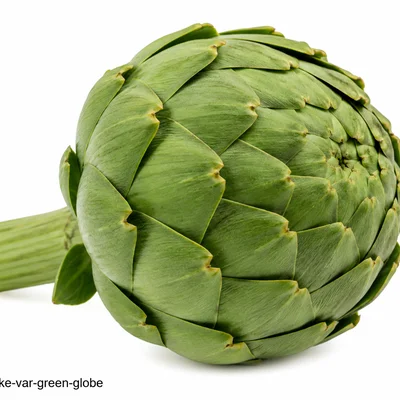
Green Globe
The classic globe artichoke and the most widely grown variety in the UK. Large, rounded heads with excellent flavour. Very productive once established. The benchmark green variety.
Cynara cardunculus (Scolymus)
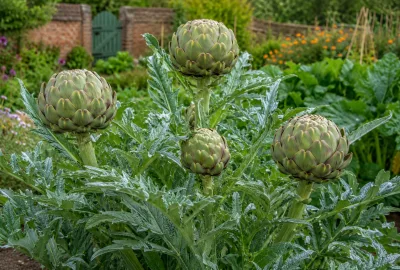
Globe artichokes are one of the most architecturally beautiful and rewarding plants in the kitchen garden. The enormous silvery-grey thistle plants are spectacular all season, and the tender flower buds — boiled and dipped in butter — are a genuine luxury. They are perennials that establish slowly but then produce prolifically for five to ten years from a single planting, requiring almost no attention beyond cutting back and a winter mulch.
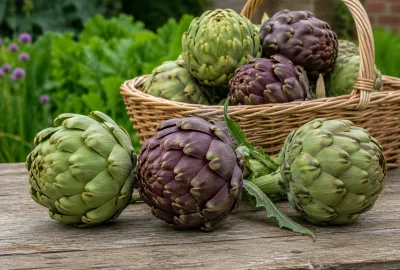
Globe artichokes divide into green types — large, meaty, and most widely grown in the UK — and purple types, which are smaller, more tender, and more ornamental. Green varieties such as Green Globe and Gros Vert de Laon are the most productive in British conditions. Purple types (Purple Globe, Violetto di Chioggia) have a more delicate flavour and are worth growing for variety and visual interest. Named varieties are always preferable to unnamed seed, which produces highly variable plants. Gros Vert de Laon and Violetto di Chioggia hold the RHS Award of Garden Merit.
The number of varieties shown for each crop is based on UK consumption data (2025/26) — the more popular the crop, the more variety choices we include.
Large, meaty, and most productive for UK conditions. The standard choice for kitchen gardeners wanting the best yield and flavour.
The classic globe artichoke and the most widely grown variety in the UK. Large, rounded heads with excellent flavour. Very productive once established. The benchmark green variety.
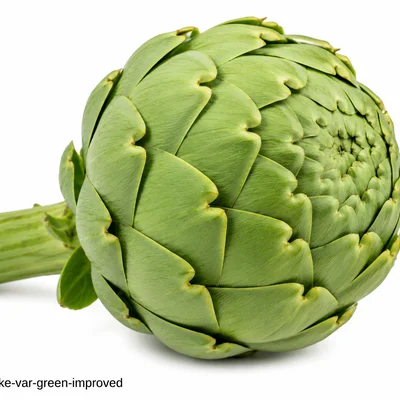
An improved selection of Green Globe with better uniformity, larger heads, and stronger disease resistance. Slightly more vigorous than the original. The recommended choice for new plantings.
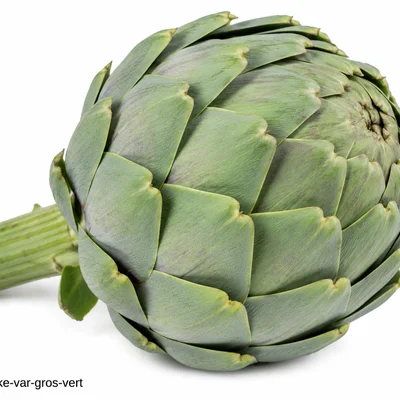
Heritage French variety. Very large heads with outstanding flavour. Long-established in UK gardens. Prolific secondary bud production extends the harvest season well into August.
Smaller, more tender, and more ornamental than green types. Excellent flavour; shorter cooking time. Worth growing alongside a green variety for diversity.
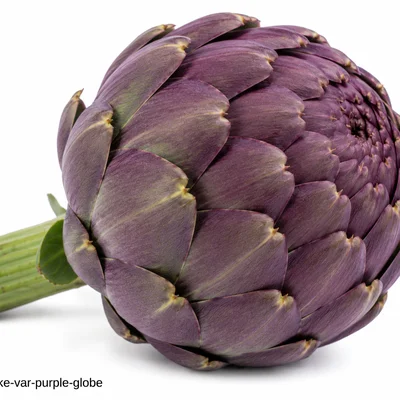
Smaller, more tender buds than green varieties with a slightly nuttier, less bitter flavour. Very ornamental — stunning in flower if any buds are left to open. Good for small gardens.
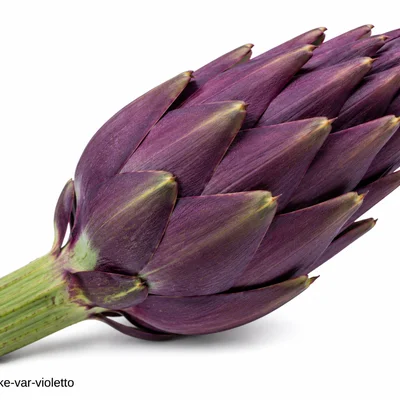
Italian heritage variety with elongated, deep purple buds. Particularly tender at the base. Mild, sweet flavour. Less productive than green types but outstanding quality.
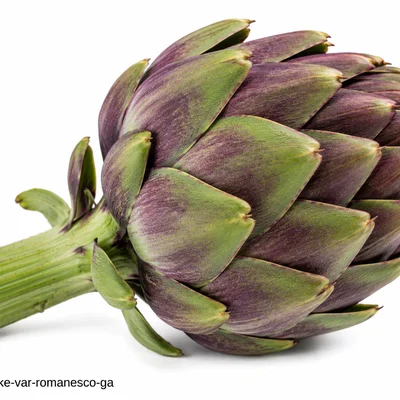
Large Italian variety with green-purple buds. Excellent flavour. Vigorous and productive. A good choice for gardeners who want larger heads with some purple character.
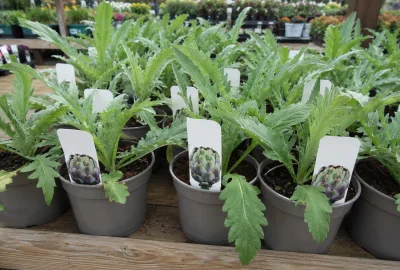
Globe artichoke offsets are available from specialist vegetable nurseries and some garden centres in April–May. Several mail-order suppliers offer named varieties as rooted offsets. Seed is available from most major suppliers — sow February–March indoors at 18°C. Established plants at allotment sites are a free and reliable source of offsets in spring — ask neighbours who grow them.
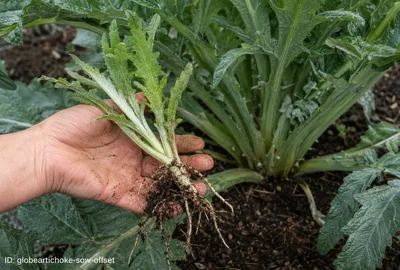
The fastest and most reliable method. Rooted offsets taken from established plants in April–May are planted directly into the permanent bed. Each offset should be 20–30cm tall with visible roots. Harvest begins from year two.
Suitable varieties: All named varieties. Offsets give identical plants to the parent and establish far faster than seed-raised plants.

| Region | Sow / plant | Harvest | Notes |
|---|---|---|---|
| Scotland & Far North | May | Jun–Jul | Offsets May |
| Northern England | Apr–May | Jun–Jul | Offsets Apr–May |
| Midlands & Wales | Apr–May | Jun–Aug | Offsets Apr–May |
| Ireland & Isle of Man | Apr–May | Jun–Aug | Offsets Apr–May |
| South & SE England | Apr–May | Jun–Sep | Offsets Apr–May |
| South Coast & SW | Apr | Jun–Sep | Offsets Apr |
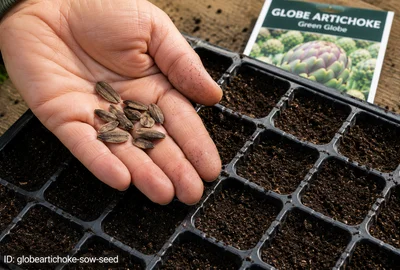
Slower than offsets — seed-raised plants take an extra year to establish. Sow individually in 9cm pots at 18°C from January to March. Harden off in May and plant out after last frost.
Suitable varieties: Green Globe and other seed-raised varieties.
| Region | Sow / plant | Harvest | Notes |
|---|---|---|---|
| Scotland & Far North | Mar–Apr | Jun–Jul | Sow Mar–Apr indoors |
| Northern England | Feb–Apr | Jun–Jul | Sow Feb–Apr indoors |
| Midlands & Wales | Feb–Mar | Jun–Aug | Sow Feb–Mar indoors |
| Ireland & Isle of Man | Feb–Mar | Jun–Aug | Sow Feb–Mar indoors |
| South & SE England | Jan–Mar | Jun–Sep | Sow Jan–Mar indoors |
| South Coast & SW | Jan–Feb | Jun–Sep | Sow Jan–Feb indoors |
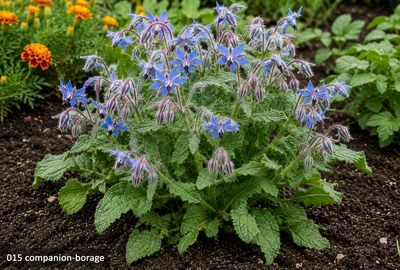
Borage attracts beneficial insects and pollinators which help deter blackfly, the main artichoke pest. Plant nearby but not close enough to compete for space.
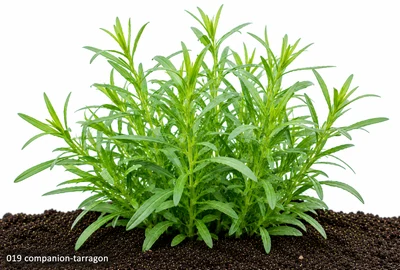
French tarragon is a traditional companion for artichokes in French kitchen gardens. Claimed to improve the flavour of nearby crops.
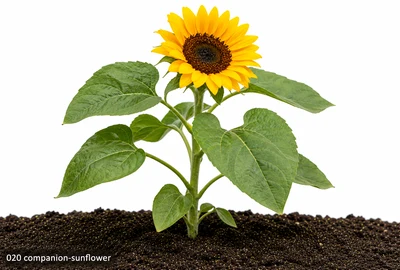
Tall sunflowers provide a windbreak for artichoke crowns in exposed positions, reducing wind damage to the large architectural leaves.
Globe artichokes are established either from rooted offsets (fastest, harvest from year 2) or from seed sown indoors in January–March (slower, harvest from year 3). Offsets are strongly preferred for kitchen gardeners. Seed raising is worthwhile if you want multiple plants at low cost or cannot source offsets.
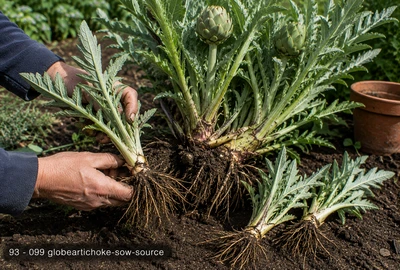
Select offsets 20–30cm tall with visible roots from an established plant. Each should be a complete rooted shoot. Reject offsets without roots or those that appear wilted.
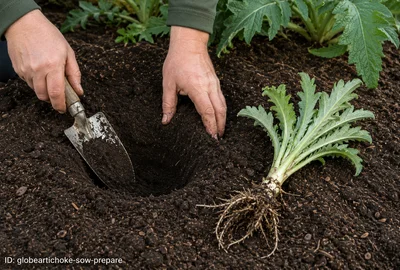
Dig 45cm deep, incorporating two buckets of well-rotted compost or manure per plant. Artichokes are hungry feeders that will occupy this position for 10+ years.
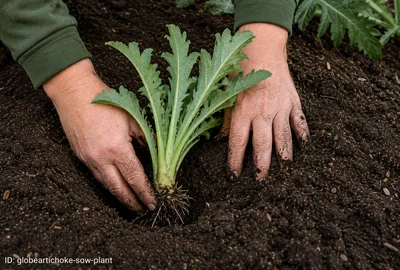
Set the offset 10cm below soil level. Firm thoroughly to eliminate air pockets. Water in well.
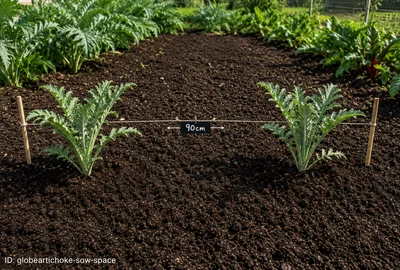
Allow at least 90cm between plants — 1.2m is better. Artichokes spread considerably by year two. Mark positions clearly.
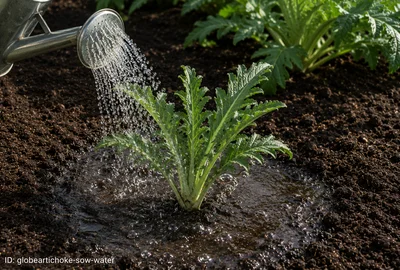
Keep consistently moist throughout the first growing season while roots establish. Do not feed heavily in year one.
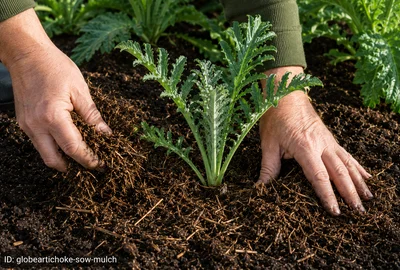
In November, cut foliage to the crown and mulch with 15–20cm of straw. Remove mulch in March and apply a balanced feed as new growth emerges.
Globe artichokes grown from seed need propagator warmth (18°C) for reliable germination. Sow January–March. Plants from seed take longer to establish than those from offsets and rarely produce a worthwhile harvest until year three.
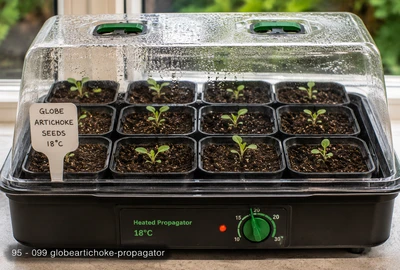
Sow seeds individually in 9cm pots in a heated propagator at 18°C. Germination in 14–21 days. Pot on to 1-litre pots once established and grow on in a frost-free greenhouse or cold frame before planting out in May–June.
Not suitable for unheated propagation — seeds require consistent warmth. Offsets are the recommended alternative for gardeners without a heated propagator.
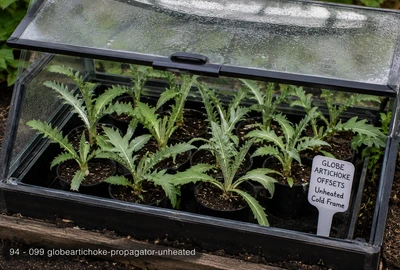
Standard unheated propagator — A lidded seed tray traps warmth and humidity around germinating seeds without electricity. Performance depends entirely on room temperature — best placed on a warm windowsill and used from March onwards. Replace the lid promptly after watering. Remove it completely the moment seedlings emerge to prevent damping off.
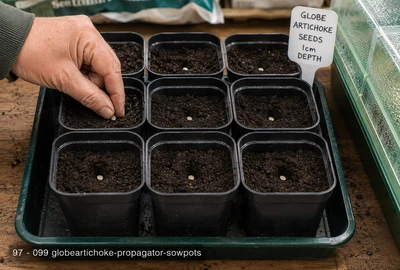
Sow one seed per 9cm pot at 1cm depth in seed compost. Set in heated propagator at 18°C.
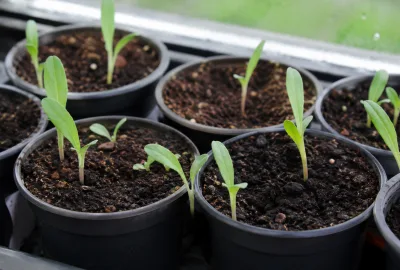
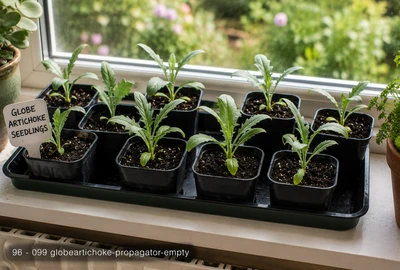
Seeds germinate in 14–21 days at 18°C. Move to a bright frost-free windowsill or greenhouse immediately once seedlings emerge.
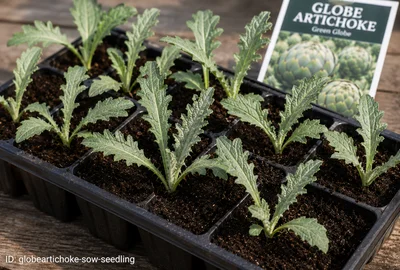
Once two true leaves are visible, pot on into 1-litre pots of general-purpose compost. Grow on in a frost-free space until May.
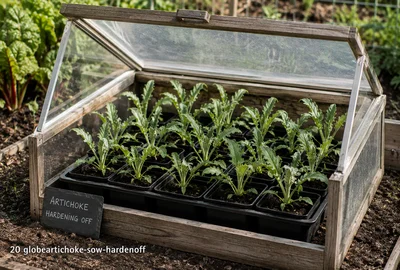
Harden off over two weeks in May. Plant out after the last frost, 90cm–1.2m apart, in a rich, well-drained permanent bed.
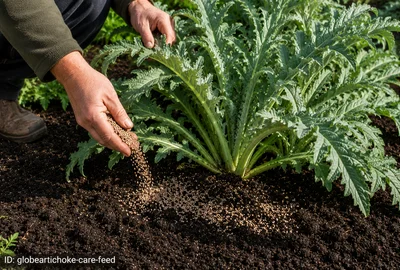
In spring as new growth emerges, apply a balanced granular fertiliser around each plant. From May, apply a liquid tomato fertiliser every two to three weeks through the growing season to maximise bud production.
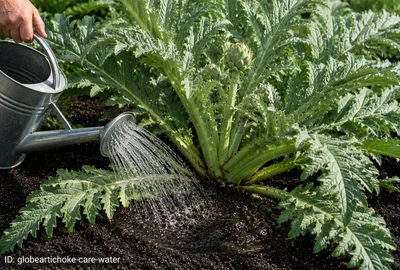
Established plants are moderately drought-tolerant but produce larger, more tender buds with consistent moisture. Water deeply once a week in dry spells. Avoid waterlogging — root rot is the main cause of plant loss.
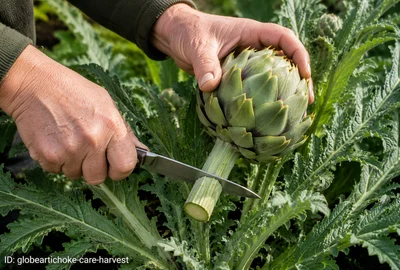
Harvest the central terminal bud first when it is plump and the scales are tight, before any purple shows at the tip. Cut with a 10–15cm stem. Side buds then develop on lateral shoots over the following 4–6 weeks — harvest these progressively.
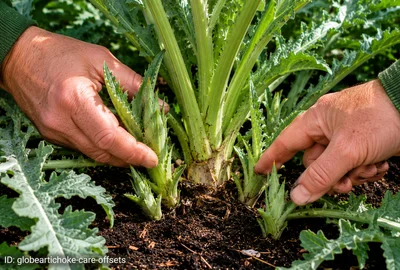
Each spring, plants produce offsets (rooted side-shoots) around the crown. Remove all but 2–3 of these to keep the plant productive. Excess offsets can be potted up and replanted or given away. Retaining too many offsets reduces bud size.
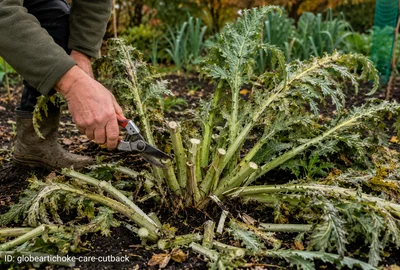
After the last buds are harvested, cut all stems back to 30cm. In November, cut all top growth down to the crown before mulching for winter. Do not cut too early as the leaves continue feeding the plant through autumn.
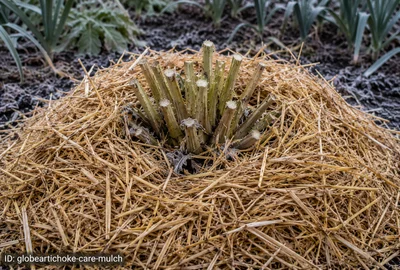
Apply a 15–20cm thick mulch of straw, compost, or bracken over the crown after cutting back in November. Secure with netting or horticultural fleece in cold areas. Remove in March before new growth emerges.
Globe artichokes resent waterlogging in winter — the most common cause of plant loss in UK gardens. Ensure excellent drainage at planting time. In the far north and in heavy clay areas, grow in a raised bed. Blackfly commonly colonise flower stems and bracts in early summer — check regularly and blast off with a strong jet of water or apply insecticidal soap early. Crowns need winter protection in all but the mildest UK regions.
Full identification and treatment advice is in the Pests and Diseases sections.
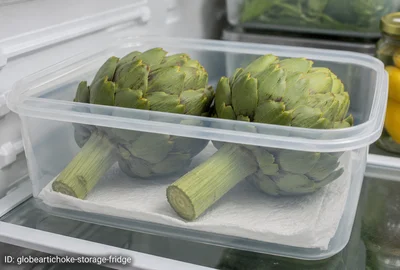
Place unwashed heads in a plastic bag with a few drops of water in the vegetable drawer. The cut stem end can be wrapped in damp paper towel to delay browning. Best eaten within 3–5 days of harvest for finest flavour.
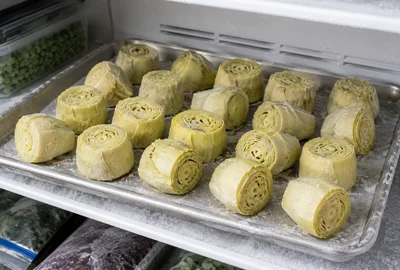
Cook artichoke hearts until just tender, cool completely, and freeze in a single layer before bagging. Frozen hearts keep for up to 6 months and are excellent in pasta, risotto, and stews.
Unless you specifically want to raise many plants cheaply, always start from offsets rather than seed. Offsets give you harvest a year earlier, come true to variety, and establish more reliably. Seed-raised plants vary considerably and may take three years to produce a worthwhile crop.
The terminal bud (the first and largest bud on each stem) must be harvested before the scales begin to open or show any purple at the tip. Once the scales start to separate, the flesh quickly becomes tough and fibrous. When in doubt, harvest early.