Never sow before mid-June — Florence fennel bolts (runs to seed without forming a bulb) from cold temperatures, short days, and root disturbance. Do not sow before mid-June regardless of the weather. July sowings are often the most reliable.
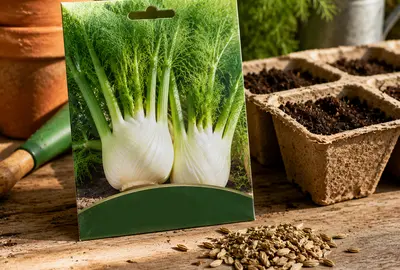
Sow direct only — Fennel cannot be transplanted — root disturbance triggers immediate bolting. Draw shallow drills 1cm deep, sow 3–4 seeds together every 25cm, and thin to the strongest seedling.
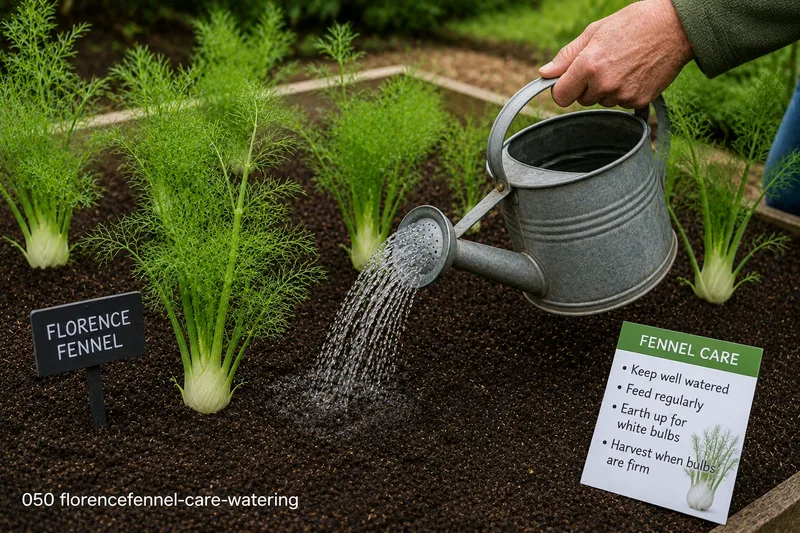
Water consistently — Irregular watering causes stress which promotes bolting. Keep the soil consistently moist throughout the growing season, especially as bulbs begin to swell.
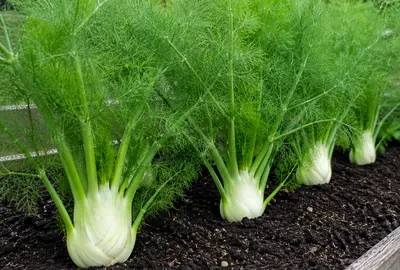
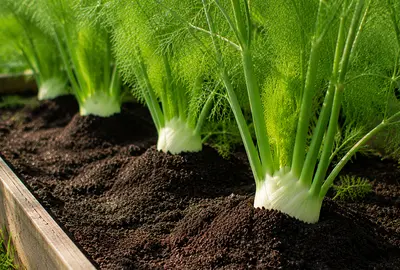
Earth up as bulbs form — When the swelling base reaches the size of a golf ball, draw soil up around it to the level of the lowest leaf joints. Blanching whitens and sweetens the bulb.
Harvest promptly — Harvest when bulbs reach the size of a tennis ball — typically August to October. Do not leave in the ground too long; over-mature bulbs become tough and may bolt in warm spells.
🌱 SowJun–Jul (direct only)
🌾 HarvestAug–Oct
☀ PositionFull sun, warm, well-drained
📐 Spacing25–30cm
DifficultyChallenging
⚡ Quick facts
Difficulty
Challenging
Crop type
Hardy Annual
Position
Full Sun, Warm, Sheltered
Soil
Light, well-drained, fertile — not waterlogged
Container friendly
Poor — needs deep soil and resents root disturbance
Greenhouse recommended
Not needed — sow direct outdoors only
Outdoor suitable
Yes — direct sow only, June–July
Frost hardy
Not frost-hardy — harvest before first frosts in October
01 About
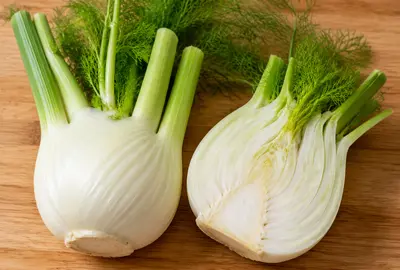
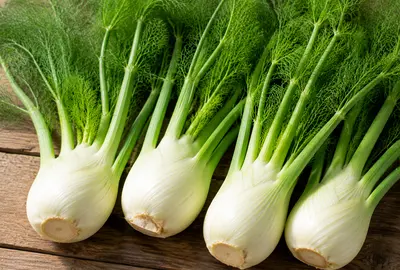
Florence fennel produces a swollen, aniseed-flavoured bulb at the base of its feathery foliage. Roasted or raw in salads, it is one of the great Italian kitchen vegetables. It bolts at the slightest provocation, which makes timing everything — sow too early and the plants run to seed before forming a bulb. Get the timing right and you are rewarded with one of the most elegant and versatile vegetables the kitchen garden produces.
02 What to Grow
Florence fennel (Foeniculum vulgare var. azoricum) is a distinct vegetable crop, unrelated to herb fennel though sharing the same aniseed character. The swollen stem base — the 'bulb' — is the edible part, though the feathery leaves and seeds are also excellent. All UK-suitable varieties are bolt-resistant F1 hybrids or named open-pollinated selections; avoid generic unnamed seed which has poor bolt resistance. The key decision is sowing date: mid-June to mid-July gives the most reliable results across most UK regions, as shortening days from late July reduce the photoperiodic trigger for bolting.
03 Varieties
The number of varieties shown for each crop is based on UK consumption data (2025/26) — the more popular the crop, the more variety choices we include.
🟢 Bolt-Resistant Heritage Varieties
Open-pollinated varieties that have proven themselves in UK kitchen gardens over many years. Large, flavourful bulbs with reliable bolt resistance. Good for gardeners who prefer saving seed or sourcing from heritage suppliers.
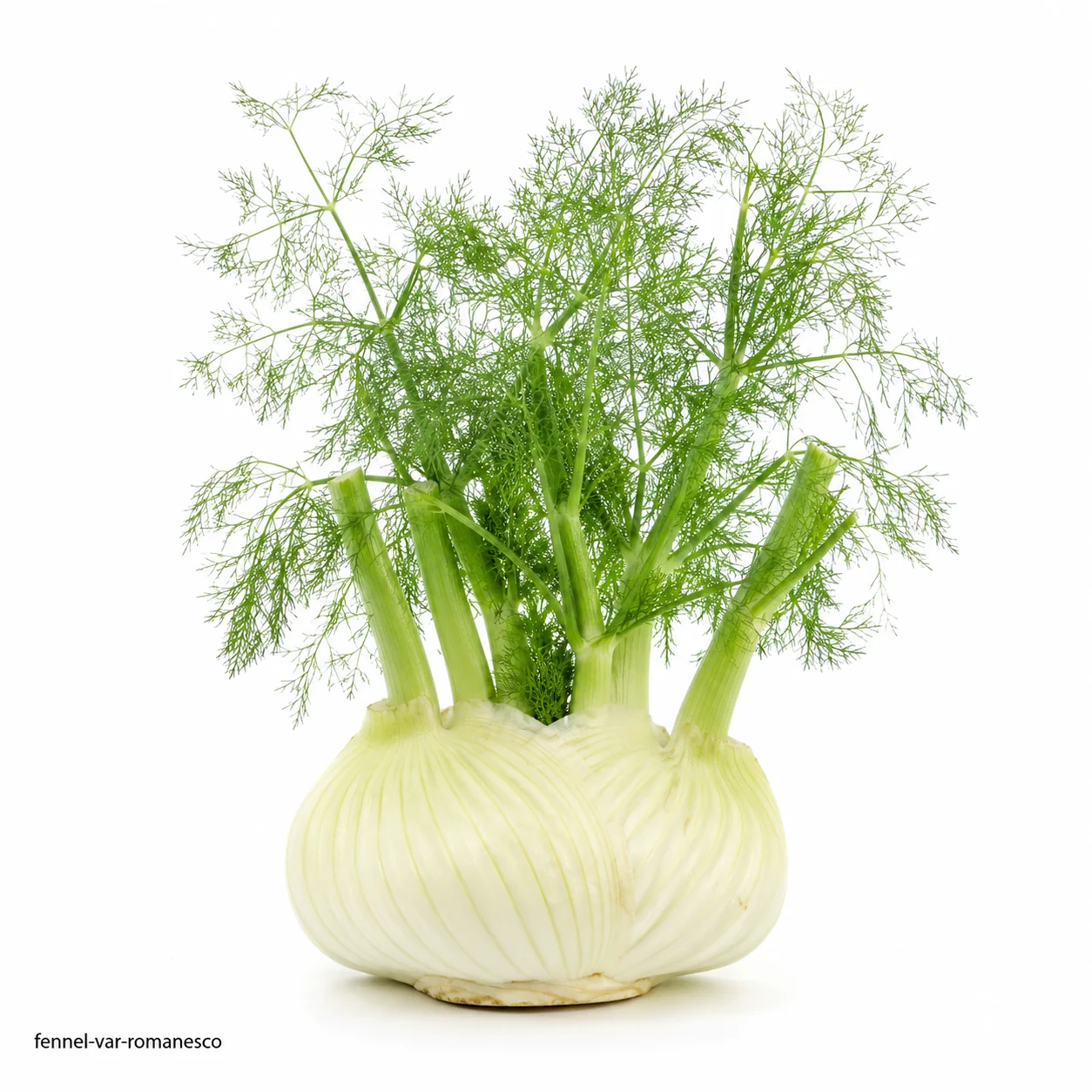
Romanesco
The most widely grown Florence fennel in the UK. Very large, round, pure-white bulbs with outstanding bolt resistance. Vigorous and reliable across all UK regions. The benchmark bolt-resistant open-pollinated variety and the first choice for most UK kitchen gardeners.
Sirio
Small, round, compact white bulbs. Among the most bolt-resistant varieties available for UK conditions. Good for gardeners who have struggled with fennel bolting in previous seasons. The compact size suits smaller plots and closer spacing.
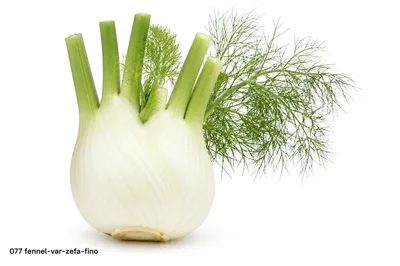
Zefa Fino
An early-maturing open-pollinated variety with particularly good bolt resistance for a heritage type. Produces compact, well-rounded, pure white bulbs with excellent anise flavour. One of the most widely recommended heritage fennels for UK conditions. Reliable from June sowings onwards.
Heritage
Bolt Resistant
Early
🌿 Modern F1 Hybrid Varieties
Bred specifically for maximum bolt resistance, uniformity, and reliable performance in UK summer conditions. Essential for June and July sowings where day length and temperature fluctuations present the greatest bolting risk. Consistent shape and size.
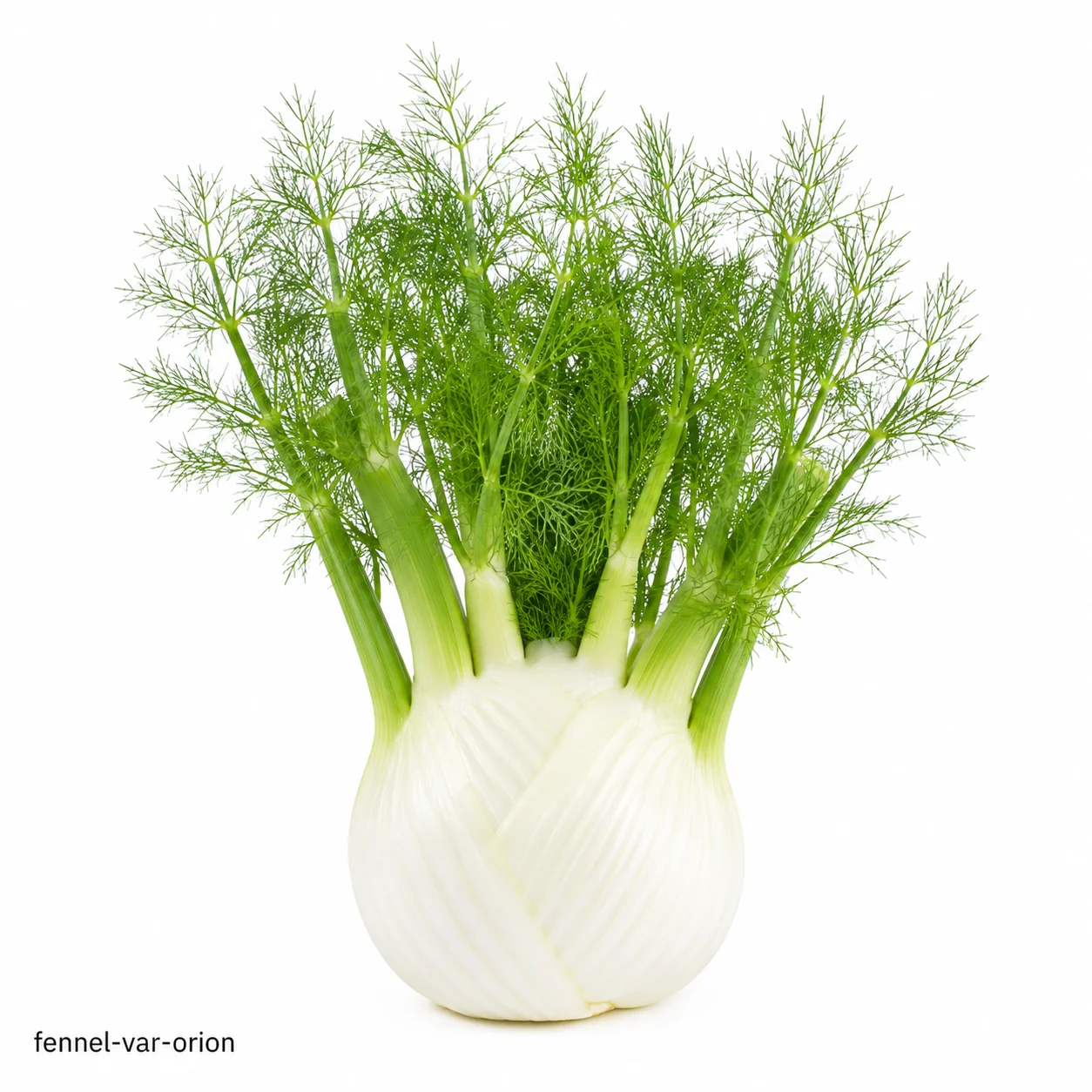
Orion F1
Modern F1 hybrid with very uniform, large bulbs and strong bolt resistance. Particularly good for late sowings (July). Consistent shape makes it attractive for exhibition and market growers. One of the most widely available F1 fennels in UK seed catalogues.
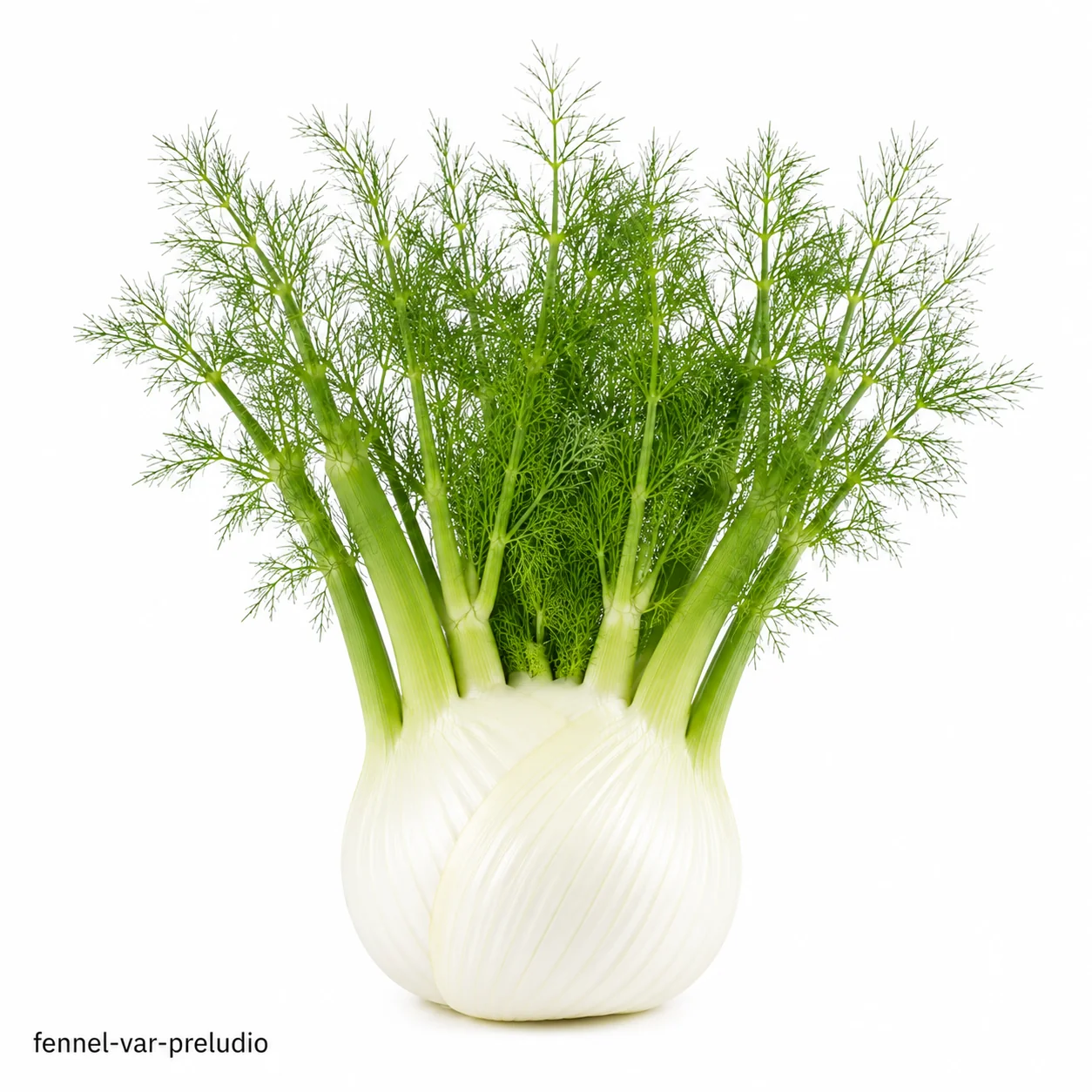
Preludio F1
Compact, early-maturing F1 variety with good bolt resistance. Smaller and rounder than Orion, making it a good choice for smaller garden plots and successional sowings. Reliable performance across a range of UK conditions.
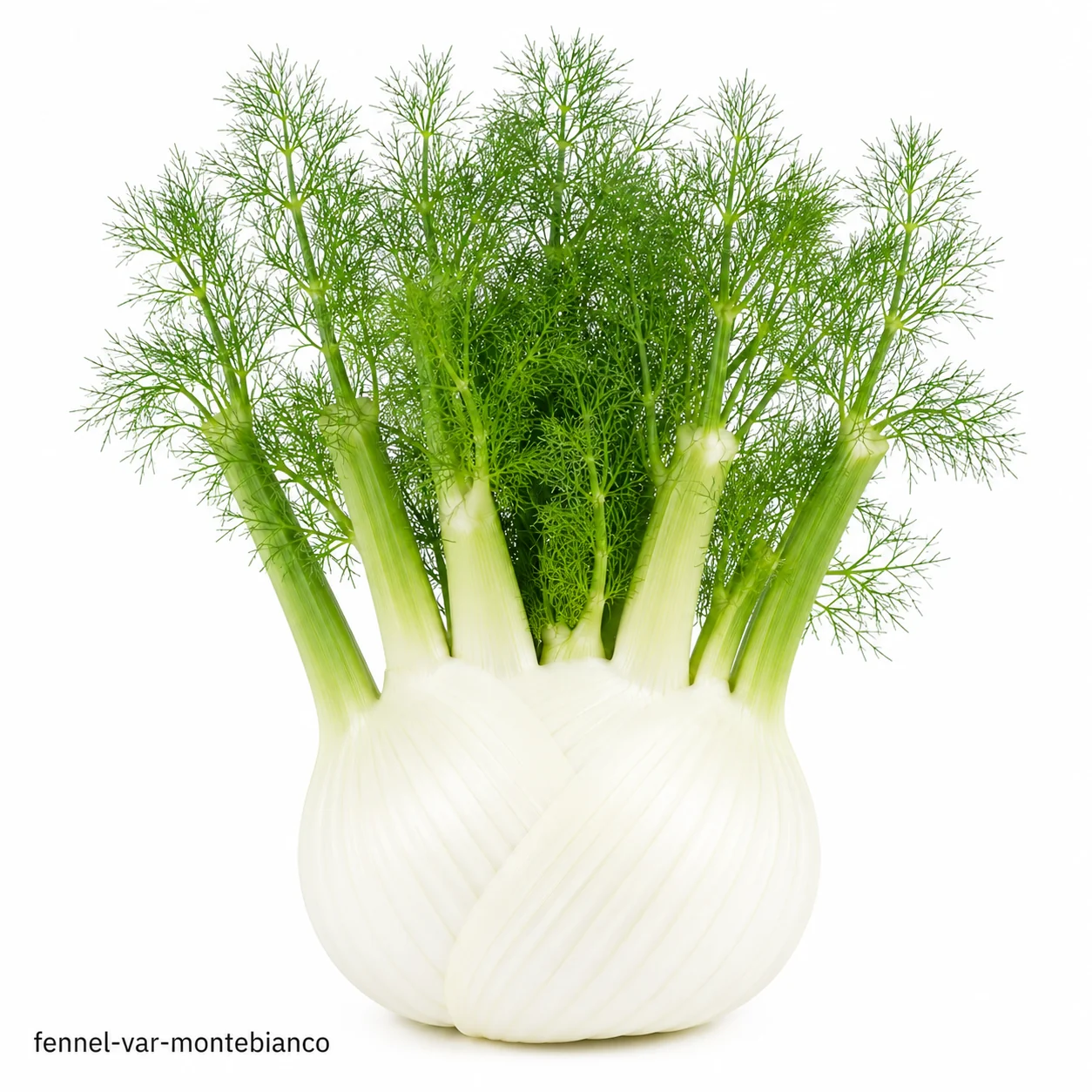
Montebianco F1
Very white, smooth, well-rounded bulbs with good bolt resistance for UK summer sowing. Uniform, clean appearance. A reliable commercial-grade variety that also performs well in the kitchen garden. Good choice for late June to mid-July sowings.
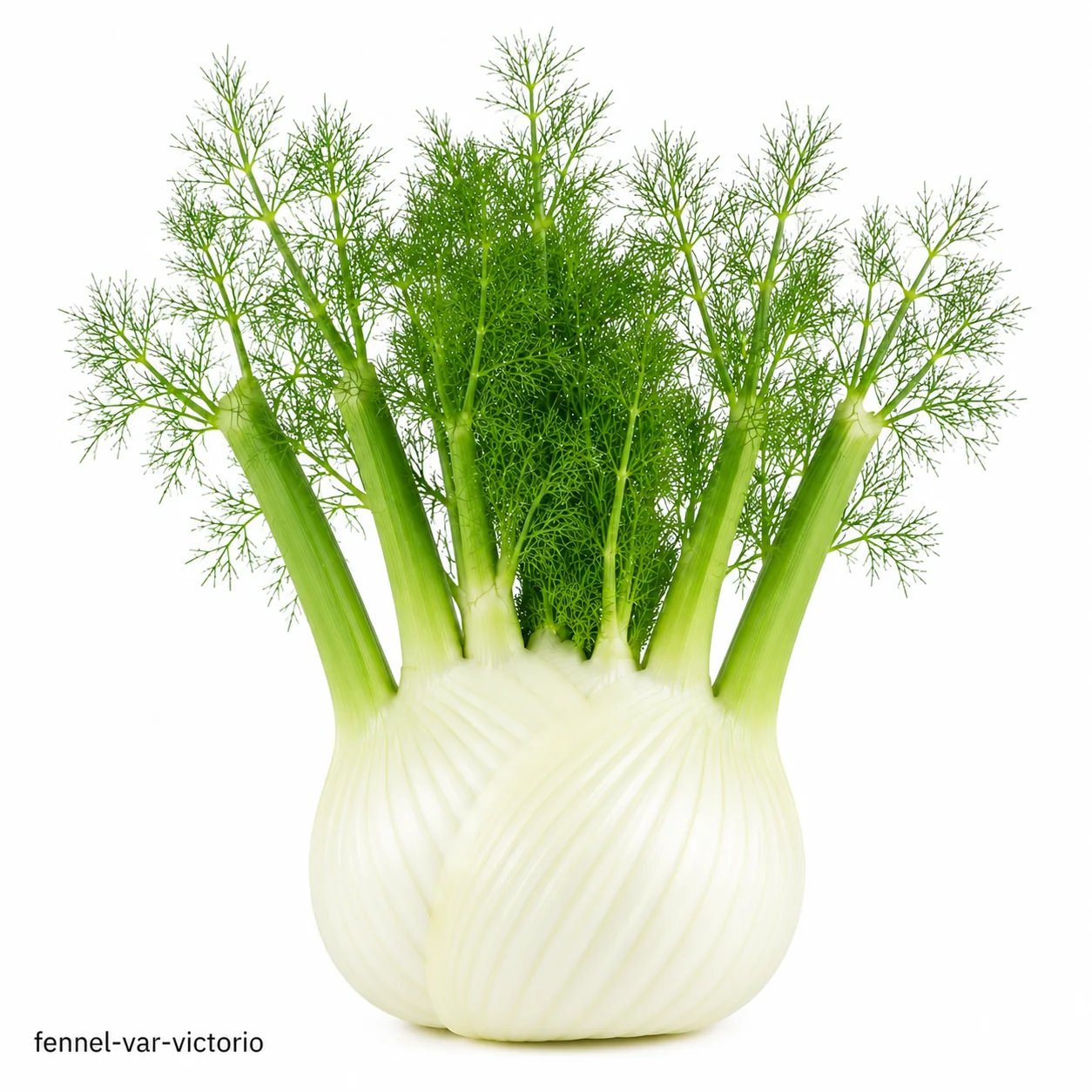
Victorio F1
Upright, slightly elongated white bulbs with particularly good bolt resistance. One of the most reliable varieties for later UK sowings (mid-July). Consistent cropper in variable summers and well suited to northern regions where the growing season is shorter.
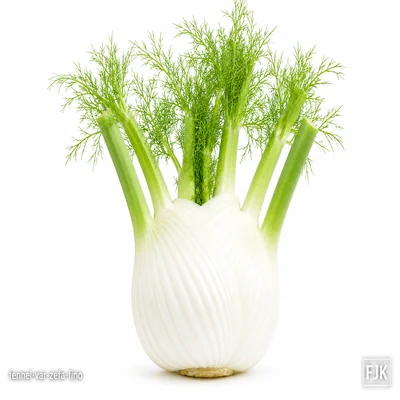
Fino F1
Very smooth, pure white rounded bulbs with tight form. Excellent uniformity and strong bolt resistance. Particularly good for successional sowing through June and July. Clean appearance and reliable performance across UK conditions.
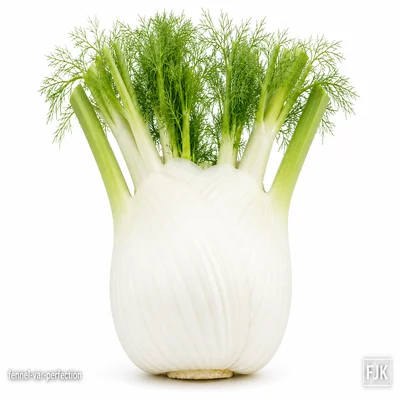
Perfection F1
Large, uniform white bulbs with outstanding roundness and commercial-grade consistency. Strong bolt resistance. One of the most reliable performers for later UK sowings. Upright feathery tops make for an attractive and productive plant.
04 Where to Source
Florence fennel seed is widely available from all major UK seed companies. Named bolt-resistant varieties such as Romanesco, Zefa Fino, and Orion F1 are widely stocked. Specialist seed companies carry heritage open-pollinated varieties. Plug plants are occasionally sold by garden centres in May — resist the temptation, as these are almost always sown too early and will bolt.
05 Companion Planting
❌ Keep apart
🌿 Dill — Cross-pollinates with fennel and produces inferior hybrid seed from both crops.
🌿 Coriander — Inhibits fennel germination when grown nearby.
🫘 Beans & Peas — Fennel inhibits the growth of all legumes, including beans and peas.
🥦 Brassicas — Mutual growth suppression with most brassica crops.
06 Sowing — How To
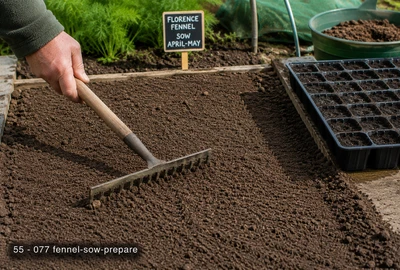
Prepare the bed
Rake to a fine tilth and incorporate a balanced general fertiliser. Florence fennel prefers a light, well-drained soil — on heavy clay, work in horticultural grit and compost to improve drainage. Avoid recently manured ground.
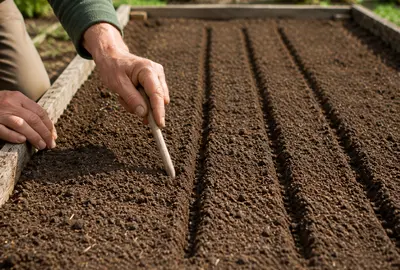
Draw shallow drills
Draw drills 1cm deep, 30cm apart. Water the drills before sowing if the soil is dry. Fennel germinates best in warm soil at 18–20°C — sowing into dry soil delays germination and stresses seedlings.
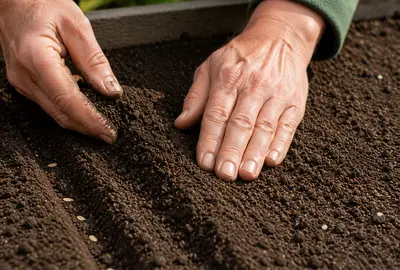
Sow and cover
Sow 3–4 seeds together at 25cm intervals. Cover with fine soil and firm gently. Germination takes 7–14 days in warm conditions. Do not cover with fleece — fennel needs warmth but also air circulation.
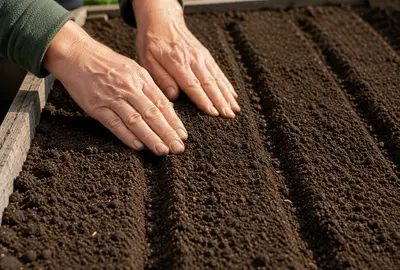
Firm the surface
Firm the soil surface gently along the row with the flat of your hand. Water in with a fine rose. Mark the row ends with canes — young fennel seedlings are thread-fine and easy to miss amongst weeds.
Seedlings emerge
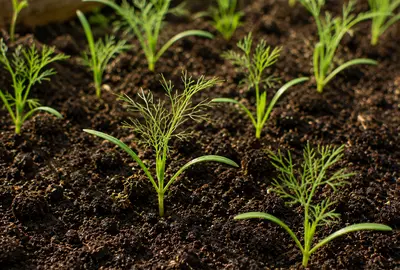
Germination takes 7–14 days at 18–20°C. The first seedlings appear as tiny thread-like feathery shoots. Keep the seedbed evenly moist during this period — any drying out can kill germinating seeds.
Thin to one plant
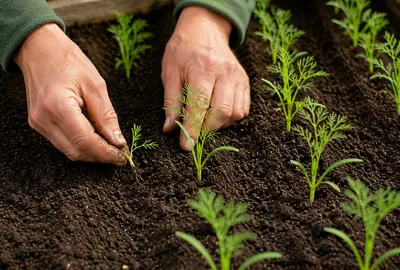
Once seedlings reach 5cm, thin to the strongest plant at each station. Cut unwanted seedlings at soil level with scissors — pulling risks disturbing the roots of the plant you wish to keep.
Earth up as bulbs swell
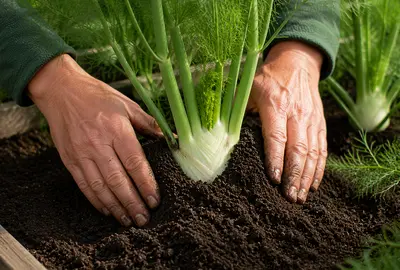
When the swelling base becomes visible above the soil, draw soil up around it to the height of the lowest leaf joints. Repeat every 10 days. This blanches the bulb, making it whiter and sweeter.
Harvest at 10–12 weeks
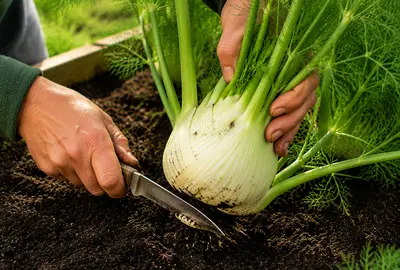
Harvest when bulbs reach tennis-ball size, typically August to October. Cut just below the soil surface with a sharp knife. The feathery fronds can be used as a herb.
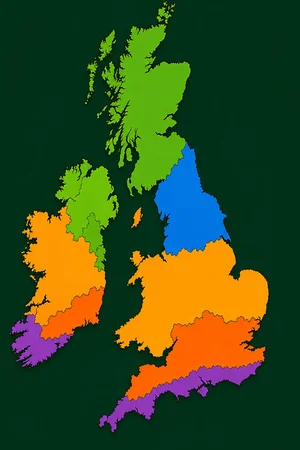
07 Regional Timing
Regional sowing & harvest timing
Region
Sow / plant
Harvest
Notes
Scotland & Far North
Jul
Jul–Sep
Short season makes Florence fennel marginal. Sow early July only; fleece from September to extend harvest. · Jul only (direct)
Northern England
Jun–Jul
Jul–Oct
July sowings most reliable. Harvest September–October before first frosts. · Late Jun – mid-Jul (direct)
Similar to Midlands. Choose the most sheltered, warmest spot available. · Mid-Jun – mid-Jul (direct)
South & SE England
Jun–Jul
Aug–Nov
Best conditions in the UK for Florence fennel. June to late July sowing; harvest August to November. · Jun – late Jul (direct)
South Coast & SW
Jun–Aug
Aug–Nov
Longest season. Harvest can extend into November. Still avoid spring sowings. · Jun – early Aug (direct)
08 Using a Propagator
Florence fennel should never be started in a propagator or indoors — it must be sown direct in its final position. Any root disturbance at transplanting stage triggers bolting. A propagator is not used for this crop.
Heated propagator
Not applicable — sow direct outdoors only from mid-June.
Unheated propagator
Not applicable — sow direct outdoors only from mid-June.
09 Soil Requirements
pH
6.5–7.5
Best
Sandy loam, Loam
Tolerates
Chalky
Avoid
Waterlogged, Cold heavy clay
💡 Free-draining, warm soil. Tolerates chalky conditions better than most crops.
10 Ongoing Care
💧 Watering
Consistent moisture is critical. Irregular watering is one of the main triggers of bolting. Water deeply once or twice a week in dry weather rather than shallow daily watering. Do not let the soil dry out as bulbs are forming.
🌿 Earthing up
When the swelling base is visible above the soil (golf-ball size), draw soil up around it every 10 days until covered to leaf-joint level. This blanches the bulb, making it whiter and sweeter. Do not bury the leaves.
✂️ Harvesting
Cut just below the soil surface when bulbs reach tennis-ball size. Leaving them too long risks bolting in warm spells. After harvest, the stump will sometimes resprout producing small secondary buds worth cutting and using.
11 Watch Out For
Warning
Bolting is the defining challenge of Florence fennel. It is triggered by cold temperatures, root disturbance, drought stress, or sowing too early. Once a plant bolts the bulb will not develop — harvest immediately and use in cooking even if small. Never transplant fennel; always sow direct. Keep fennel isolated from the main vegetable garden where possible as it is allelopathic to many crops.
🐛 Insects & pests
🐌 Slugs & Snails — Silver slime trails on leaves, soil, and pots — often the first sign before damage is found
🐜 Aphids (Blackfly & Greenfly) — Curled, distorted, or stunted growing tips — aphids inject saliva that causes leaf curl to protect them
🍄 Diseases to watch
🩶 Botrytis (Grey Mould) — Botrytis cinerea (grey mould) is the most ubiquitous fungal pathogen in temperate gardens — present in virtually every garden soil and on plant debris. It becomes a disease only when conditions favour it: cool, humid, poorly ventilated environments with damaged or senescent plant tissue. In a greenhouse in autumn it can destroy an entire tomato or grape crop.
Full identification and treatment advice is in the Pests and Diseases sections.
12 Storage & Preserving
❄️ Refrigerator
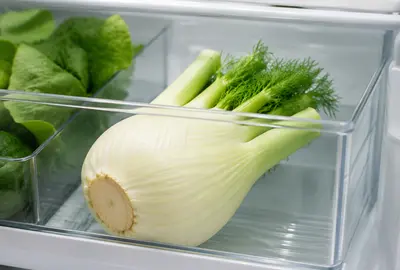
Wrap bulbs in damp paper towel and place in a sealed bag or container in the vegetable drawer. Trim any discoloured outer layers before use. Use within 5–7 days — fennel loses its sweetness quickly after harvest.
🔪 Raw & Sliced
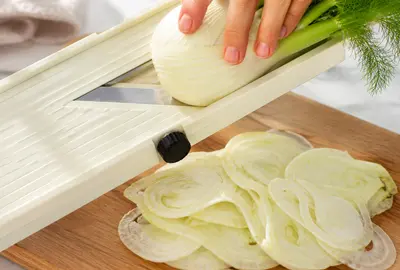
Florence fennel is outstanding eaten raw. Slice paper-thin on a mandoline with fronds for a classic Italian salad with orange and olive oil. The aniseed flavour mellows dramatically when sliced thinly.
🍳 Cooked
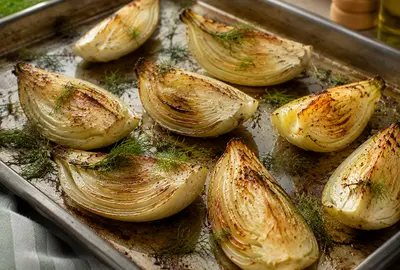
Cooked fennel — braised, roasted, or griddled — keeps well in the fridge for 3 days and reheats excellently. Cooking mellows the aniseed flavour considerably. Roasted wedges at 200°C for 30–35 minutes is the simplest and finest preparation.
13 Expert Tips
💡 July sowings outperform June
Counterintuitively, sowing in early-to-mid July produces better results than sowing in June across most UK regions. Longer, warmer days in late July and August support faster, more reliable bulb swelling, and the shortening days from August reduce the photoperiodic bolting trigger. If June sowings have let you down in previous years, move the whole operation to the first week of July.
💡 Keep fennel strictly isolated
Florence fennel is one of the few vegetable garden crops that is genuinely allelopathic — its root exudates suppress the germination and growth of most neighbouring plants. Grow it in its own bed or at the very edge of the vegetable garden, well away from tomatoes, legumes, and brassicas. This is not a companion planting preference — it is a chemical effect that will reduce yields of neighbouring crops regardless of care.
💡 Use the fronds — they are exceptional
The feathery green fronds cut at harvest are outstanding as a herb — stronger and more aromatic than anything sold commercially, with a clean, fresh aniseed character. Scatter over grilled fish, stir through salad dressings, or use as a garnish for roasted vegetables. The fronds deteriorate quickly after harvest so use immediately. A second flush of fronds sometimes regrows from the cut stump and is equally good.
14 Common Mistakes
⚠ Sowing & Establishment
Sowing before mid-June — cool temperatures and long days in May and early June trigger bolting before any bulb forms; no variety can overcome this
Transplanting from modules or pots — any root disturbance causes immediate bolting; fennel must always be sown direct in its final position
Sowing into dry soil — fennel seed germinates poorly in dry conditions; always water the drill before sowing if the soil is dry
⚠ Ongoing Care
Irregular watering — drought stress is one of the main bolting triggers; keep the soil consistently moist throughout the growing season
Forgetting to earth up — blanching the swelling base is not optional decoration; it whitens and sweetens the bulb significantly and is part of correct fennel cultivation
Growing near other vegetables — fennel suppresses most neighbouring crops through allelopathic root chemicals; always grow in an isolated bed
⚠ Harvest & Storage
Leaving bulbs in the ground after they reach tennis-ball size — over-mature fennel bolts in any warm spell and the bulb becomes tough and pithy; harvest promptly
Discarding the fronds — the feathery green tops are excellent as a herb and deteriorate quickly; use immediately at harvest rather than composting them