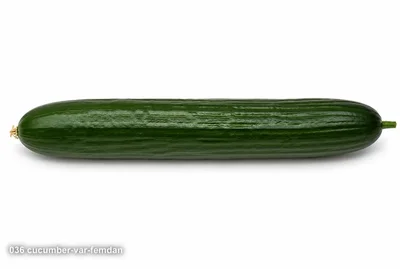
Femdan F1
Greenhouse · All-female
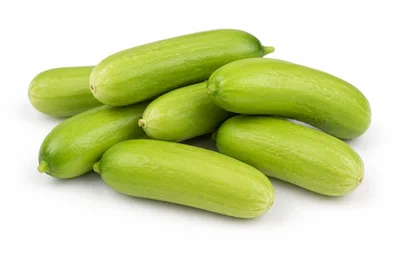
Reliable, high-yielding all-female variety. Long smooth fruits to 35cm. Excellent disease resistance. One of the best-performing greenhouse cucumbers for UK growers.
- F1
- Greenhouse
- All-female
- Beginners
Cucumis sativus
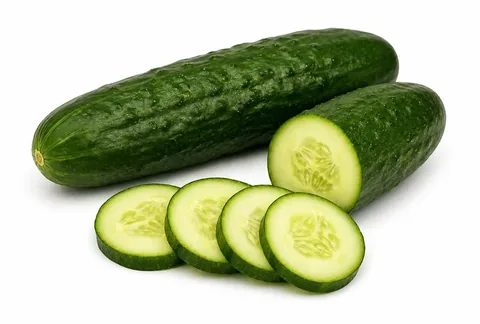
The cucumber is one of the most rewarding crops you can grow with access to a greenhouse or a warm sheltered garden. Nothing from the supermarket compares to a freshly cut home-grown cucumber — crisp, fragrant, and tasting of summer. Modern all-female varieties have transformed cucumber growing in the UK, producing generous crops of smooth, long fruits without the need to remove male flowers. Outdoor ridge types are tougher and more compact, producing well in a sunny sheltered spot. With the right variety, consistent watering, and reasonable warmth, cucumbers will crop prolifically from midsummer through to September.
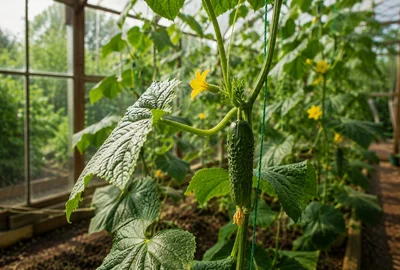
Cucumbers divide into two distinct groups and choosing the right one for your growing situation is the most important decision you make. Greenhouse (indoor) varieties produce long, smooth, near-seedless fruits and must remain under glass throughout the UK season — they lack the resilience to thrive outdoors. Outdoor ridge varieties are shorter, sometimes slightly knobbled, more tolerant of British summer conditions, and are the right choice for growing in a sunny sheltered border or large container. Within those groups, there are also mini and snacking types — compact, prolific, and ideal for pots, patios, and smaller gardens.
The number of varieties shown for each crop is based on UK consumption data (2025/26) — the more popular the crop, the more variety choices we include.
All-female F1 varieties producing long, smooth, bitter-free fruits. Must be grown under glass in the UK. Remove any male flowers that appear to prevent bitterness.
Reliable, high-yielding all-female variety. Long smooth fruits to 35cm. Excellent disease resistance. One of the best-performing greenhouse cucumbers for UK growers.
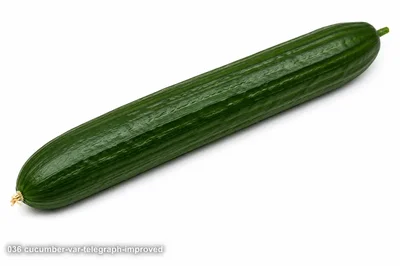
The classic British greenhouse cucumber. Long, straight, dark green fruits with excellent flavour. An open-pollinated heritage variety — thin-skinned and prolific.
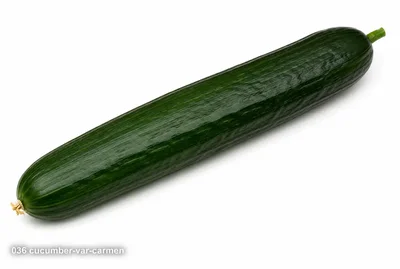
Outstanding all-female variety. Long, dark green fruits with crisp white flesh and superb flavour. Heavy crops over a long season. Widely regarded as one of the finest UK greenhouse cucumbers.
Tougher, more compact varieties bred for outdoor growing in a warm sheltered spot. Produce shorter, sometimes ribbed or knobbled fruits with excellent flavour — often better than indoor types for eating fresh.
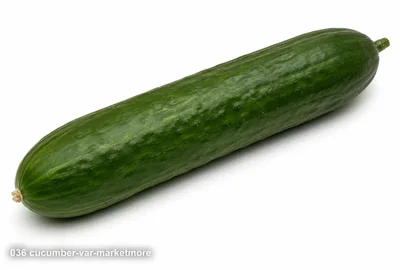
The most reliable outdoor cucumber for UK gardens. Medium-length, dark green, slightly ribbed fruits with firm crisp flesh. Very heavy yields in a warm spot.
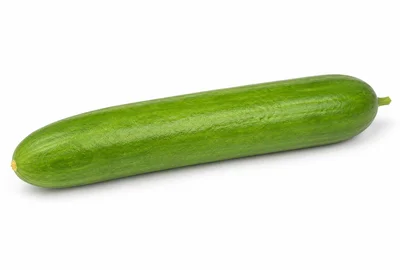
Thin-skinned, virtually seedless fruits with no bitterness. Long and straight for a ridge type. One of the finest outdoor cucumbers for fresh eating.
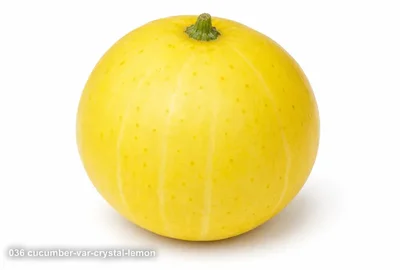
Distinctively round, pale yellow fruits the size of a lemon. Mild, crisp, sweet flesh with no bitterness. Prolific and unusual — a real talking point in the garden and on the plate.
Compact, prolific varieties producing small fruits 10–15cm long, ideal for eating whole. Well suited to containers, grow bags, and smaller gardens.
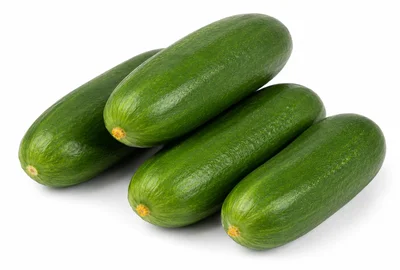
Extremely prolific little cucumber producing clusters of stubby, dark green fruits. Crisp, sweet, no bitterness. Can be grown outdoors or in a greenhouse. Excellent for children and snacking.
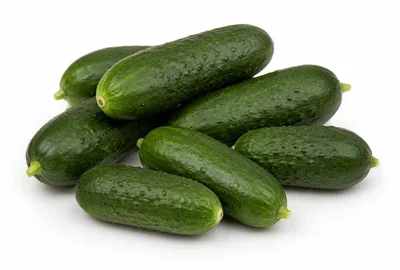
A compact Turkish variety producing masses of smooth, thin-skinned fruits 12–15cm long. Good flavour and very productive outdoors. Well suited to UK conditions.
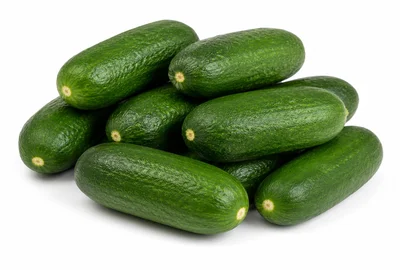
Bred specifically for patio and container growing. Compact bushy plants producing generous quantities of smooth 12–15cm fruits. Good flavour, thin skin. Reliable outdoors.
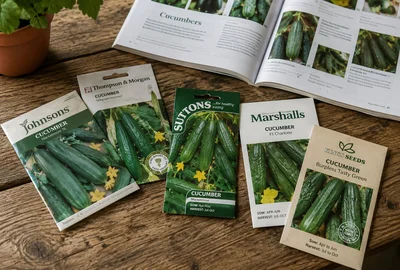
Cucumber seeds, plug plants, and young plants are available through several routes. Specialist seed companies offer the widest range of greenhouse, outdoor, and mini varieties — including heritage types unavailable in garden centres.

Online specialist seed companies offer the widest variety selection, including heritage types and the latest all-female F1 greenhouse varieties. Order from January — popular varieties like Carmen and Femdan sell out early. Read packet information carefully and note whether a variety is suited to greenhouse or outdoor growing.
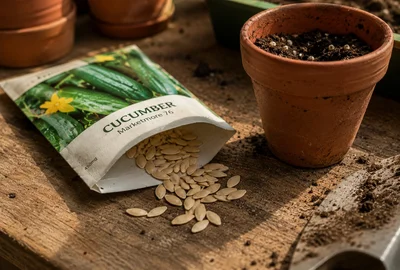
Most garden centres stock a reliable range of cucumber seeds from February and plug plants or young plants from April. Selection is narrower than online but quality is inspectable and staff advice is available. Look for plants with short internodal length — compact, stocky plants establish far better than tall, leggy ones.
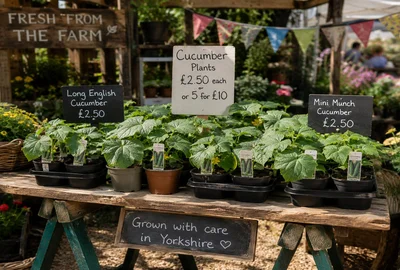
Farmers markets, community plant sales, and local garden shows are an excellent source of locally-grown cucumber plug plants in May and June. Many specialist growers sell named varieties at competitive prices. A well-grown locally-produced plant in late May is often better than an early purchase from a garden centre.
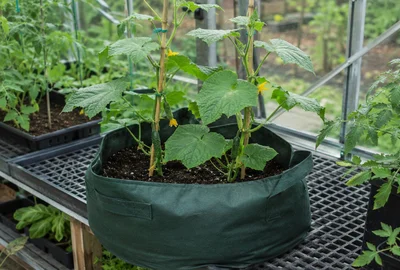
A greenhouse is the gold standard for indoor cucumber varieties. Greenhouse cucumbers need consistent warmth — minimum 16°C at night, ideally 20–25°C during the day. Plant into grow bags (2 per bag) or large containers of at least 30cm diameter. Train the main stem vertically up a wire or cane, tying in every 25–30cm. Pinch out the growing tip when it reaches the top of its support. For all-female varieties, remove any male flowers (those without a tiny cucumber behind the petals) immediately — a single male flower pollinating females causes bitter, seedy fruits.
Suitable varieties: Femdan F1, Telegraph Improved, Carmen F1. All-female varieties strongly recommended for greenhouse growing.
Grow bags are the classic British method for greenhouse cucumbers. Use one bag for 2 plants — do not overcrowd. Knead the bag thoroughly before cutting planting holes. Use watering rings inserted into the planting holes — without them water runs off the surface without reaching roots. Grow bag compost runs low in nutrients after 4–6 weeks; begin a high-potash liquid feed every 7–10 days once cucumbers start to form.
Suitable varieties: All varieties. Two plants per standard 40-litre bag. Indoor varieties in greenhouse; ridge varieties outdoors in a sheltered spot.
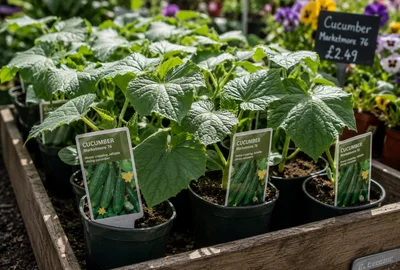
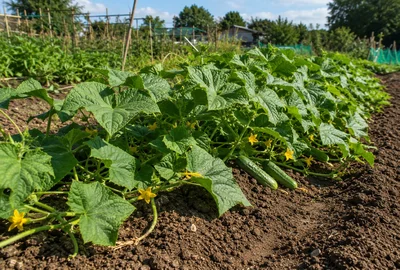
Outdoor ridge cucumbers perform excellently in a warm, sheltered, south-facing position in a good UK summer. Dig in plenty of well-rotted manure or garden compost before planting. Harden off plants grown indoors for 10–14 days before planting out, and do not plant until after the last frost — usually late May to early June. A warm south-facing wall or fence significantly improves results. Pinch out the growing tip after 6–8 leaves to encourage bushy, branching growth. Water consistently at the base and feed weekly once fruits begin to form.
Suitable varieties: Marketmore, Burpless Tasty Green, Crystal Lemon, Mini Munch F1, Iznik F1, Cucino F1. Do not grow greenhouse varieties outdoors.
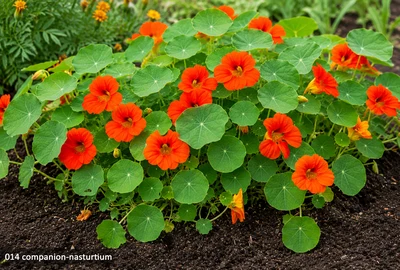
Trap crop that draws aphids and blackfly away from cucumbers. Nasturtiums also attract beneficial insects including hoverflies and ground beetles.
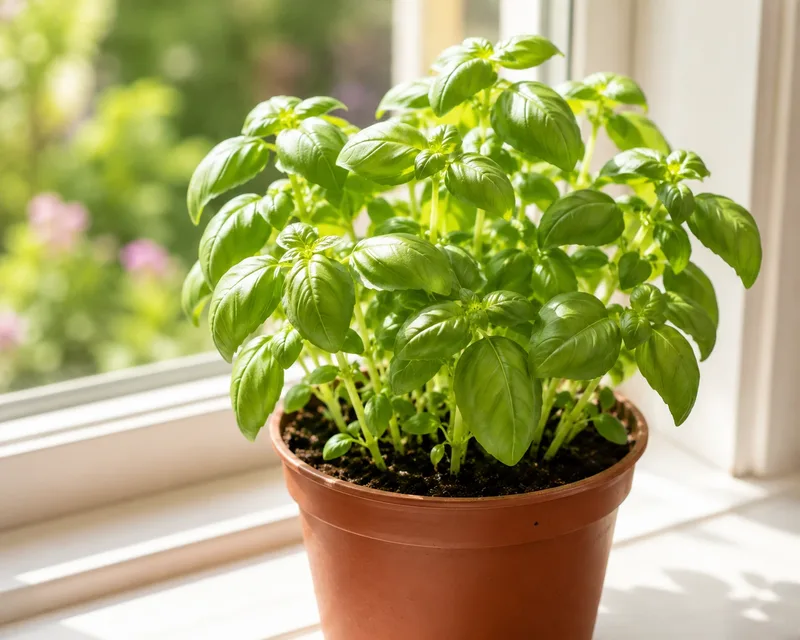
Thought to repel aphids and whitefly when grown near cucumbers. Basil and cucumbers share similar growing requirements — warmth, water, and shelter.
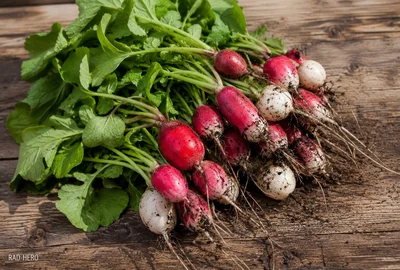
Quick-growing radishes can be interplanted as a catch crop between cucumber plants, making use of space while cucumbers establish. May deter cucumber beetle.
Cucumbers need warmth to germinate — a minimum of 18°C, ideally 21–24°C. Sow in individual 9cm pots rather than open trays; cucumbers resent root disturbance. Sow seeds on their side or edge — this reduces the risk of the seed tip rotting before germination. Sow from mid-March to late April indoors. Germination is rapid at the correct temperature — usually 3–5 days.
Fill individual 9cm pots to within 1cm of the rim with moist seed compost. Firm gently. One pot per seed.
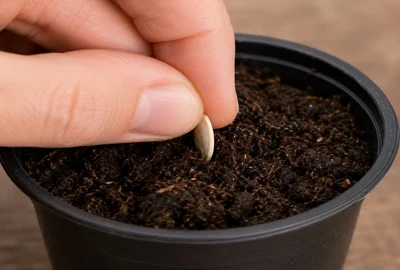
Push one seed per pot, sowing on its side or edge, approximately 1cm deep. Sideways sowing prevents the seed tip from sitting in moisture and rotting before germination.
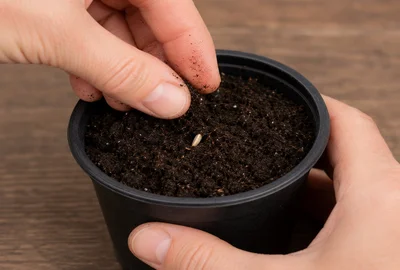
Cover with 1cm of fine compost or vermiculite. Firm gently. Vermiculite is preferable — it retains moisture without compacting or forming a crust.
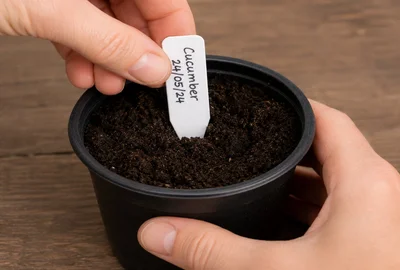
Label each pot with the variety name and sowing date. If growing more than one variety — especially a mix of indoor and outdoor types — clear labelling is essential.
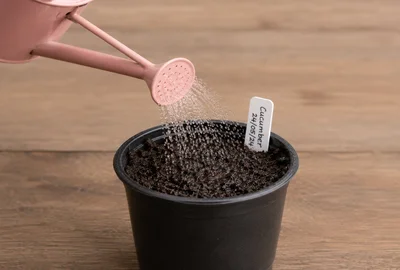
Water with a fine rose. The compost should be evenly moist but not waterlogged. Soggy compost at this stage causes rot before germination.
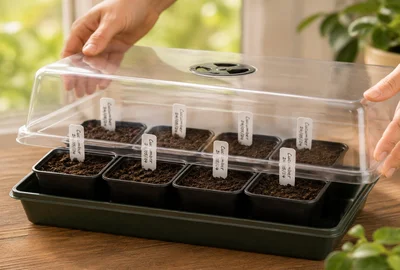
Place a propagator lid or cling film over the pots. Position in a warm spot — 21–24°C is ideal. Check daily. Germination should occur within 3–5 days at the correct temperature.
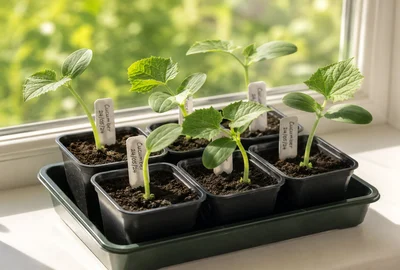
Remove the cover the moment seedlings emerge and move immediately to the brightest available windowsill. Cucumbers in low light become leggy and weak within days of germination.
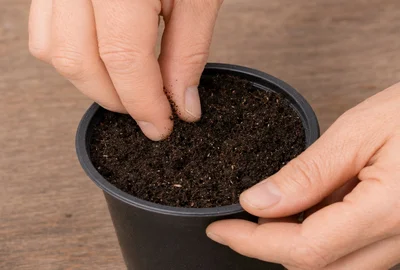
Keep the lid off once seedlings are up. Good airflow prevents damping off, which can wipe out cucumber seedlings rapidly in warm, humid conditions.

| Region | Sow / plant | Harvest | Notes |
|---|---|---|---|
| Scotland & Far North | Mar–Apr | Jun–Sep | Heated propagator essential; sow April for late May greenhouse planting · Early to mid-April |
| Northern England | Mar–Apr | Jun–Sep | Propagator strongly recommended; windowsill viable from late March · Late March to mid-April |
| Midlands & Wales | Mar–Apr | May–Sep | Good results from heated propagator from mid-March · Mid-March to early April |
| Ireland & Isle of Man | Mar–Apr | May–Sep | Good results from heated propagator from mid-March · Mid-March to early April |
| South & SE England | Mar | May–Sep | Earliest reliable start; greenhouse growers can sow mid-March · Mid-March to early April |
| South Coast & SW | Mar | May–Sep | Most favourable UK region; greenhouse planting possible late April · Mid-March to late March |
Cucumbers need genuine warmth to germinate reliably — 21–24°C is the sweet spot. A heated propagator is by far the most reliable way to provide this in a UK home. Unheated propagators placed on a warm windowsill can work from April, but germination is slower and less consistent.
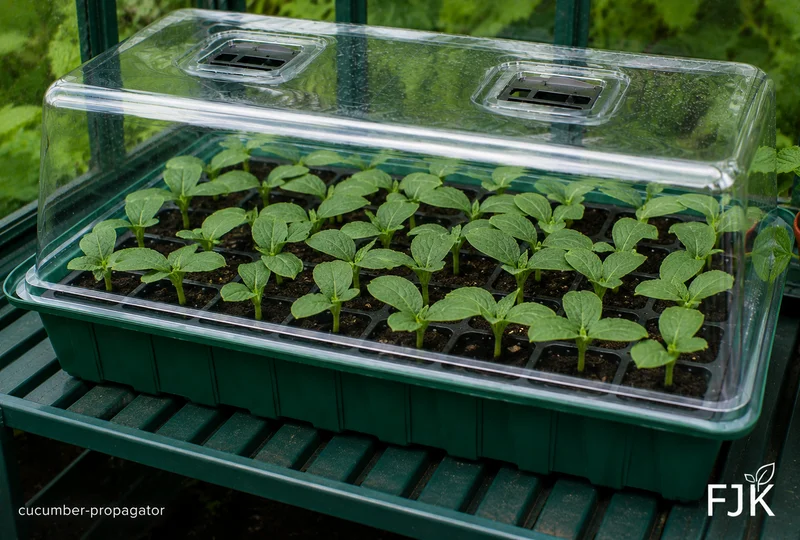
Provides consistent bottom heat regardless of room temperature. Set to 21–24°C for cucumbers. Germination in 3–5 days. Remove the lid the moment seedlings appear — cucumbers are very susceptible to damping off in warm, humid conditions.
A lidded tray that traps ambient warmth around the pots. Placed on a warm south-facing windowsill it can work from April onwards when room temperatures are reasonable. Performance is inconsistent — a cold night can delay germination significantly. Remove the lid promptly once seedlings emerge.
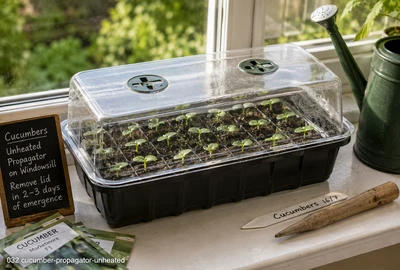
Standard unheated propagator — A lidded seed tray traps warmth and humidity around germinating seeds without electricity. Performance depends entirely on room temperature — best placed on a warm windowsill and used from March onwards. Replace the lid promptly after watering. Remove it completely the moment seedlings emerge to prevent damping off.
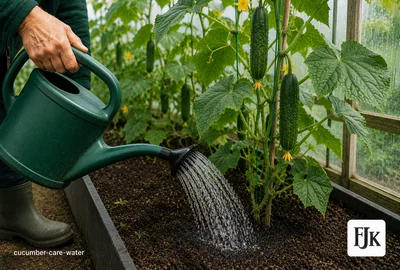
Keep cucumbers consistently moist — they have a very high water requirement, especially in a greenhouse. Erratic watering causes bitter fruits and root problems. Water at the base and avoid wetting foliage, which encourages mildew. Daily watering may be needed in summer heat.
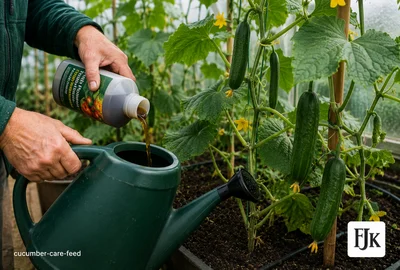
Once the first fruits develop, feed weekly with a balanced liquid fertiliser, switching to a high-potash feed as fruiting peaks. Cucumbers are hungry crops — feeding every week sustains yield and fruit quality throughout the season.
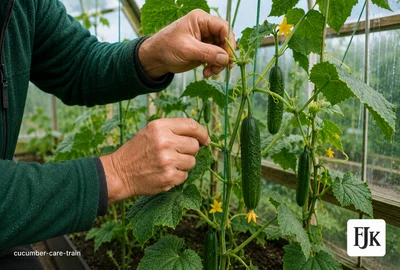
Train the main stem up a vertical cane or string. Pinch out the growing tip when it reaches the top of the support. Pinch out sideshoots of indoor cucumbers to 2 leaves beyond each fruit. Remove all male flowers on all-female varieties to prevent bitter fruits.
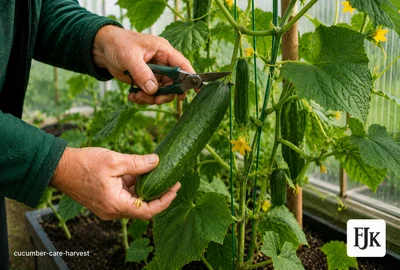
Harvest cucumbers before they yellow — pick when deep green and firm. Regular picking encourages continued production. Cut cleanly with a knife rather than pulling, which can damage the stem. Outdoor varieties can be left slightly longer than indoor types.
Red spider mite is the greatest threat to greenhouse cucumbers — look for pale mottling on the upper leaf surface and fine webbing beneath. Mist the foliage daily to raise humidity and keep the greenhouse well ventilated. Powdery mildew appears in late summer, especially in dry conditions — maintain consistent watering and remove affected leaves promptly.
Full identification and treatment advice is in the Pests and Diseases sections.
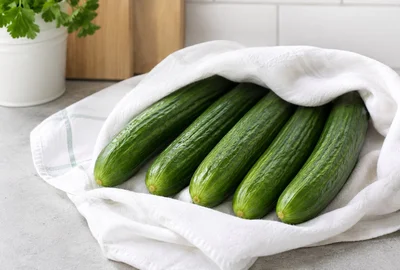
Cucumbers are best eaten on the day of harvest. Store unwashed in the salad drawer of the fridge for up to 4–5 days. Once cut, wrap the cut end tightly in cling film and refrigerate — exposed flesh dries and deteriorates rapidly. Do not store near apples or bananas — ethylene gas accelerates yellowing. Home-grown cucumbers kept at room temperature keep for no more than 1–2 days.
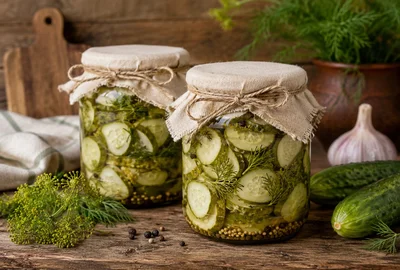
Pickling is a classic way to use a cucumber glut. Pickled cucumbers are excellent alongside cold meats, in sandwiches, or as part of a salad board. Follow a tested recipe.
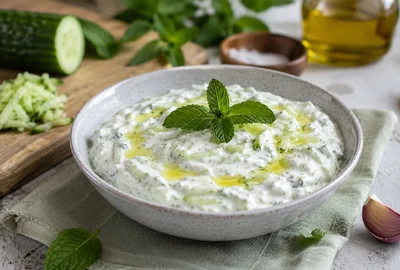
Tzatziki is the simplest and most satisfying use for a freshly harvested cucumber. Grate the cucumber, salt and squeeze out as much moisture as possible — this step is non-negotiable or the result is watery. Combine with thick Greek yoghurt, crushed garlic, fresh dill, a squeeze of lemon, and good olive oil. Refrigerate for at least an hour before serving. Keeps for 3–4 days covered in the fridge.
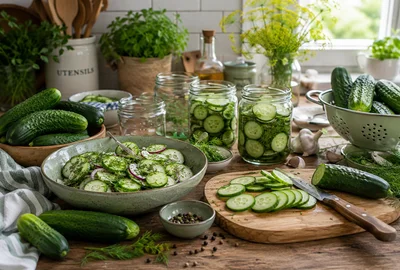
Cucumbers do not freeze well raw — the high water content turns to ice crystals, leaving a mushy texture on thawing. Best strategies for a genuine glut: give surplus to neighbours; make a large batch of quick pickles; use excess in cold soups such as chilled cucumber soup with mint and yoghurt; or make cucumber jam — an underrated preserve with a clean, light flavour. Plan your sowing to stagger the harvest over several weeks.
Sow one seed per pot from the very beginning — cucumbers transplant very poorly from open trays. The root system is sensitive to disturbance at all stages. Pot on without disturbing the rootball.
Temperature is the critical variable at germination. At 22–24°C, cucumber seeds germinate in 3–5 days. At 15°C the same seeds may take 2–3 weeks or fail entirely. A heated propagator earns its cost on the first batch.
For all-female greenhouse varieties, inspect for male flowers every 2–3 days and remove immediately. A single missed male flower pollinating female flowers causes a batch of bitter, swollen, seedy fruits — the most common cause of disappointing indoor cucumbers.
Cucumbers in a greenhouse become stressed rapidly in high heat — above 30°C, flowers drop and fruit set fails. Open vents and doors as soon as the temperature rises in the morning. Shading paint on the glass from late May significantly extends the productive season.