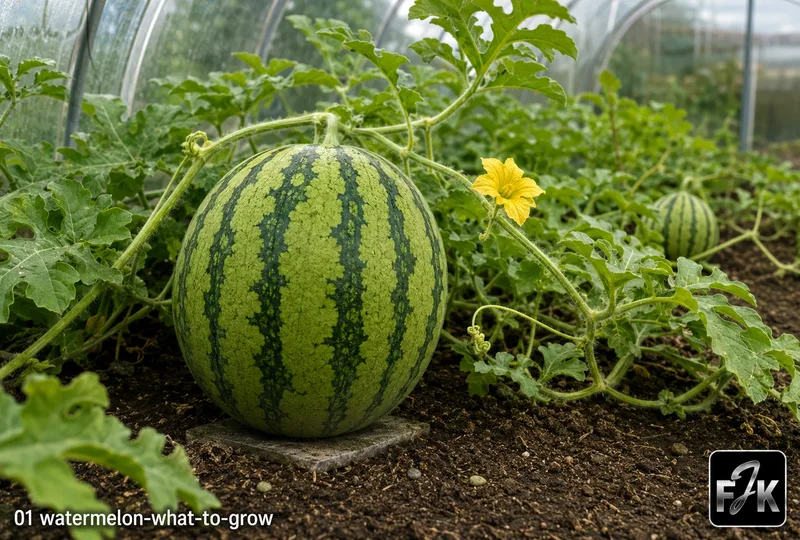
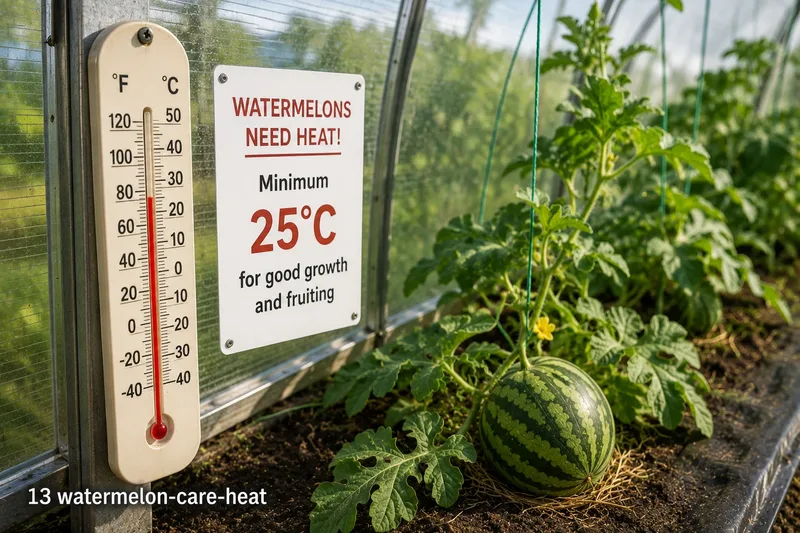
Watermelons need a heated greenhouse in the UK — they require sustained heat (minimum 25°C) that outdoor conditions cannot reliably provide
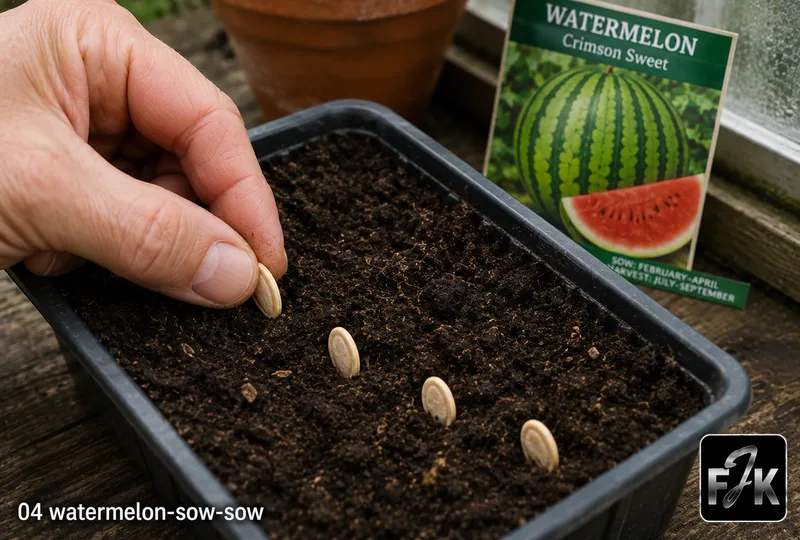
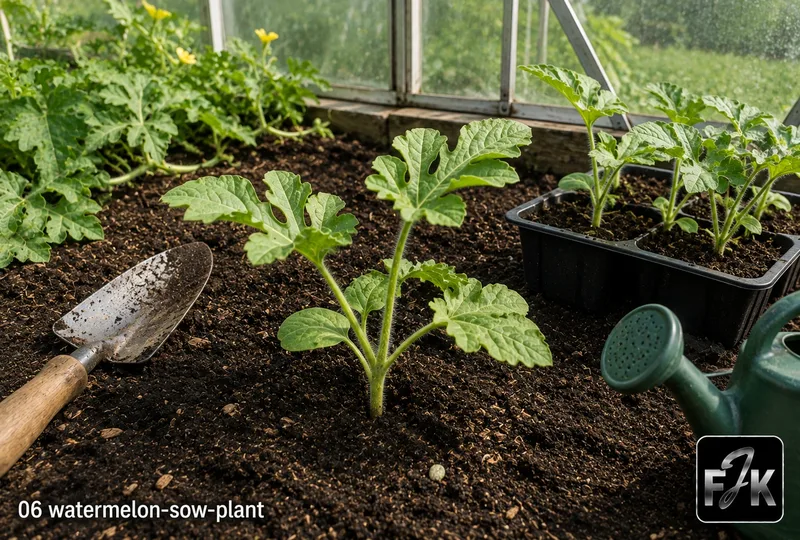
Sow at 25°C in April, one seed per pot; transplant into the largest available container or greenhouse bed in May
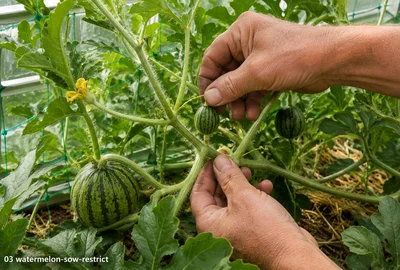
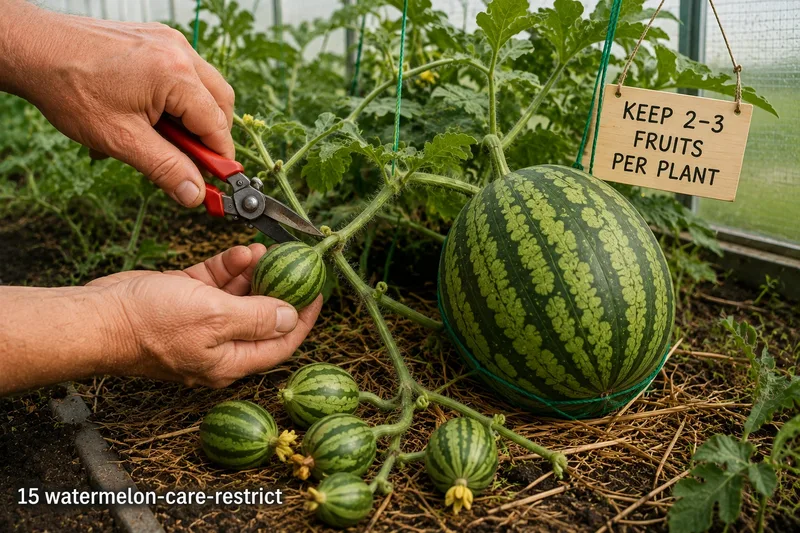
Restrict the plant to 3–4 fruits maximum — remove any additional flowers to concentrate energy into the developing fruits
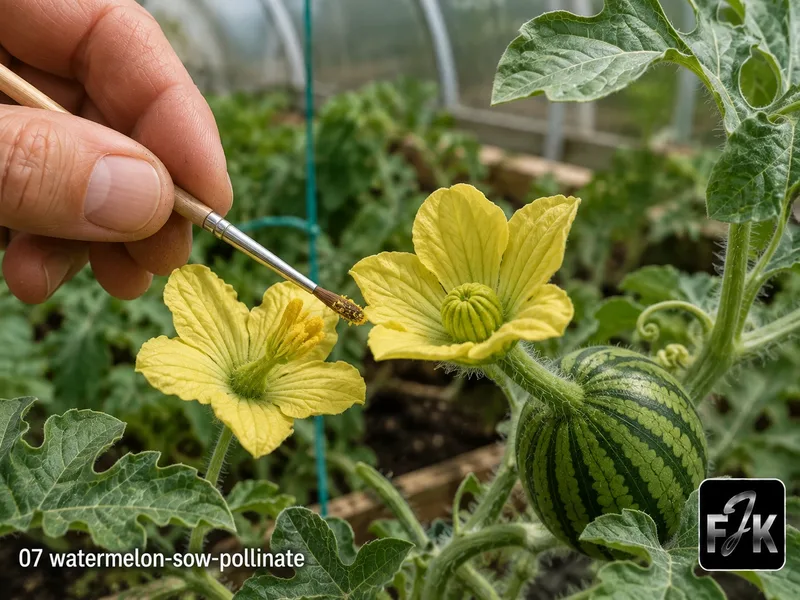
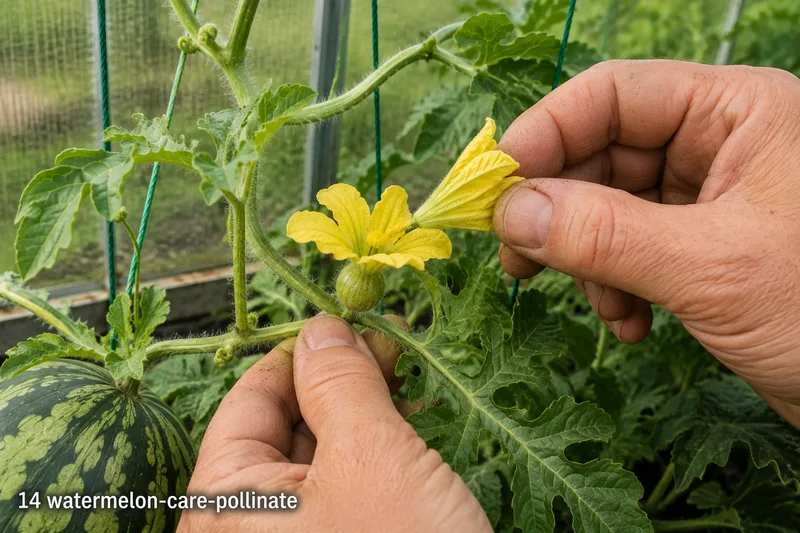
Pollinate by hand on sunny mornings; female flowers have a small swelling at the base
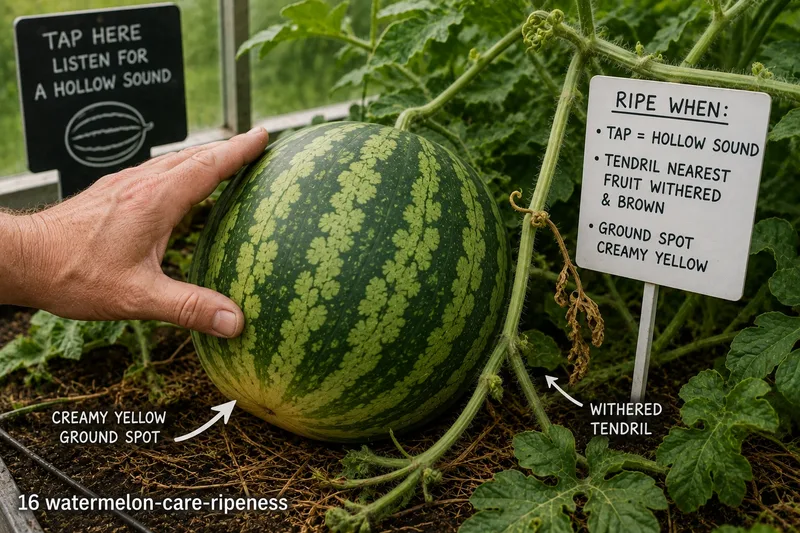
Harvest when the tendril nearest the fruit withers completely and the underside of the fruit turns from white to cream-yellow
🌱 SowApr–May (heated propagator, 25–30°C)
🌾 HarvestAug–Sep
☀ PositionFull sun, heated or very warm polytunnel/greenhouse only
📐 Spacing1–1.5m
DifficultyChallenging
⚡ Quick facts
Sow
Apr–May (heated propagator at 25–30°C)
Plant
May–Jun (into warm greenhouse or polytunnel)
Harvest
Aug–Sep
Position
Full sun, warmest greenhouse or polytunnel position available
Spacing
1–1.5m between plants
Height
Train vertically to 1.5–2m
Hardiness
Not frost hardy — sustained warmth essential
Lifespan
Annual
Difficulty
Challenging
01 About
Watermelons are the most ambitious crop a UK gardener can attempt — requiring sustained high temperatures, a long season, and considerable attention. But the reward of a home-grown watermelon split open still warm from the vine in August is genuinely extraordinary. Small icebox varieties are significantly more achievable than full-sized types and are the recommended starting point for UK growers.
02 Varieties
The number of varieties shown for each crop is based on UK consumption data (2025/26) — the more popular the crop, the more variety choices we include.
Icebox Types (Most Reliable for UK)
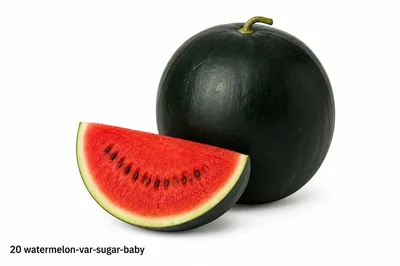
Sugar Baby
Icebox · Round
The most widely grown and most reliable watermelon for UK conditions. Small, round, dark-green-skinned fruits with deep red flesh and high sugar content. Compact plant. Shorter growing season than full-sized varieties. The standard starting point for UK watermelon growing.
Harvest
Aug–Sep
Flavour
Sweet, classic watermelon, very good
Fruit size
Small (2–4kg)
Yield
High
Disease resistance
Good
✓ Self-fertile
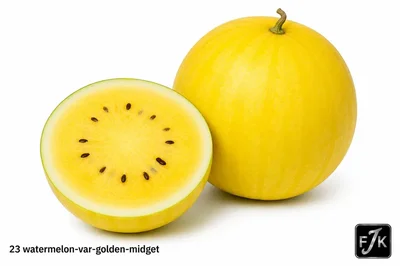
Golden Midget
Icebox · Golden skin
The earliest-ripening watermelon variety — skin turns from green to golden when ripe, providing an unmistakeable ripeness indicator. Very small but reliably sweet pink flesh. The best choice for northern UK gardens and short-season situations. Easy to judge ripeness.
Harvest
Aug
Flavour
Sweet, pleasant, early ripening
Fruit size
Very small (1–2kg)
Yield
High
Disease resistance
Good
✓ Self-fertile
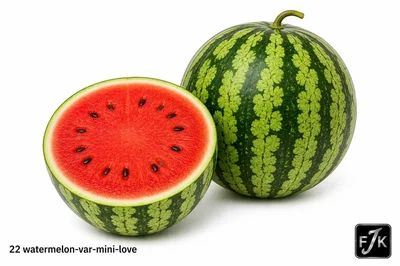
Mini Love F1
Icebox · Seedless
A compact, early, seedless watermelon with very sweet, crisp red flesh. F1 hybrid giving reliable performance. One of the most recommended varieties for UK polytunnel growing. The seedless quality is a significant practical advantage.
Harvest
Aug
Flavour
Very sweet, excellent
Fruit size
Small (1.5–3kg)
Yield
High
Disease resistance
Good
✓ Self-fertile
Standard Size
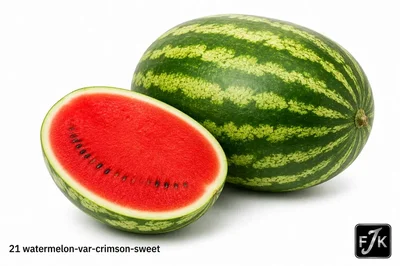
Crimson Sweet
Standard · Striped
The classic striped American watermelon. Good flavour with high sugar content. Needs a longer warm growing season than icebox types — best in the south or in a heated greenhouse. A satisfying achievement when it ripens fully, producing a recognisable full-sized watermelon.
Harvest
Aug–Sep
Flavour
Classic sweet watermelon, good depth
Fruit size
Medium-large (4–8kg)
Yield
Moderate
Disease resistance
Good
✓ Self-fertile
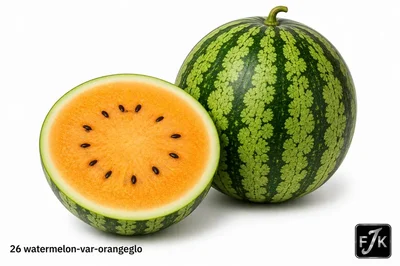
Orangeglo
Standard · Orange flesh
An unusual heirloom watermelon with bright orange flesh — visually striking and quite different in flavour from red-fleshed types, with a honey-melon character. Needs a full warm season. Grown as much for its novelty and striking appearance as for culinary use.
Harvest
Sep
Flavour
Distinctive, sweet, honey-like
Fruit size
Large (4–8kg)
Yield
Moderate
Disease resistance
Good
✓ Self-fertile
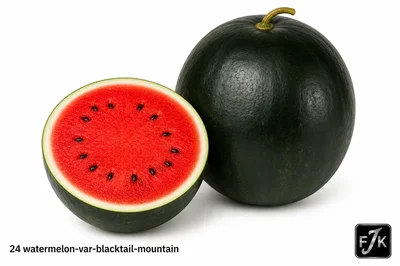
Blacktail Mountain
Standard · Hardy
Bred in the mountains of Idaho for short growing seasons and cooler temperatures — one of the most cold-tolerant standard watermelons available. Deep green-black skin, red flesh, good flavour. The best choice for attempting a full-sized watermelon in UK conditions.
Harvest
Aug
Flavour
Sweet, good depth
Fruit size
Medium (3–5kg)
Yield
High
Disease resistance
Good
✓ Self-fertile
Novelty & Specialist
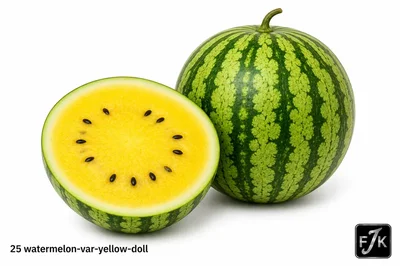
Yellow Doll F1
Icebox · Yellow flesh
A yellow-fleshed watermelon with pale ivory-yellow flesh and very sweet, mild, honey-like flavour quite different from red varieties. Early ripening. Birds and insects are sometimes confused by the yellow flesh and leave it longer. A striking novelty with genuine flavour quality.
Harvest
Aug
Flavour
Sweet, mild, unusual, honey-like
Fruit size
Small (2–4kg)
Yield
High
Disease resistance
Good
✓ Self-fertile
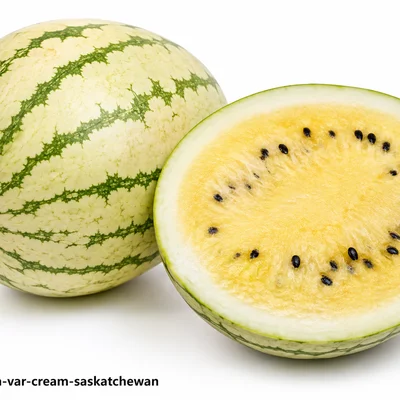
Cream of Saskatchewan
Heritage · Pale flesh
A heritage variety from Saskatchewan, Canada — bred for short northern growing seasons. Cream to pale pink flesh with very sweet, delicate flavour. Early ripening. Of historical interest as well as practical value for UK growers wanting a heritage variety with cold tolerance.
Harvest
Aug
Flavour
Sweet, delicate, unusual
Fruit size
Small (2–3kg)
Yield
Moderate
Disease resistance
Moderate
✓ Self-fertile
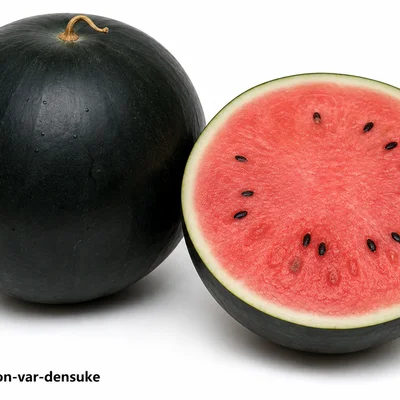
Densuke
Specialist · Japanese
The famous Japanese premium watermelon — black-skinned, unusually crisp texture, and exceptionally sweet flavour. A specialist choice for the most ambitious UK growers with a heated greenhouse. Difficult to ripen in UK conditions but remarkable when achieved.
Harvest
Sep
Flavour
Exceptionally sweet, unique texture
Fruit size
Large (5–8kg)
Yield
Moderate
Disease resistance
Good
✓ Self-fertile
03 Where to Source
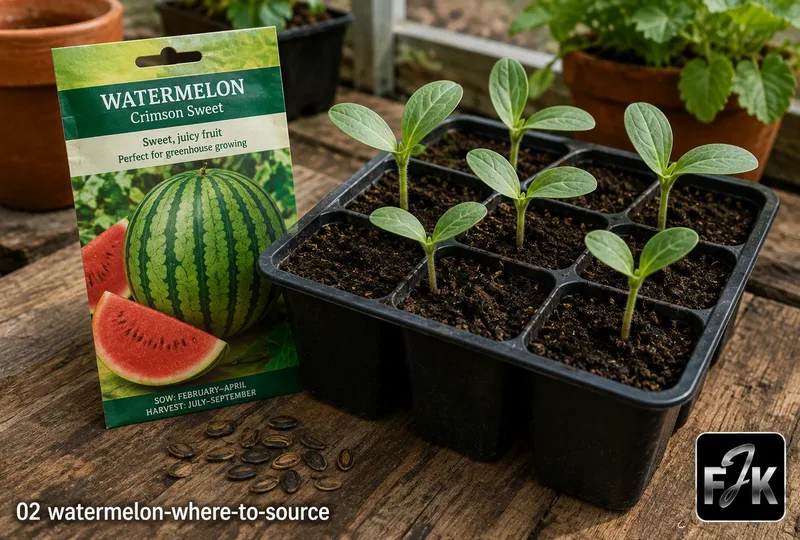
Watermelon seed is available from most major UK seed suppliers, though the choice for icebox varieties suited to UK conditions (Sugar Baby, Golden Midget, Mini Love F1) is best from specialist greenhouse-crop or heirloom seed companies. Full-sized varieties like Crimson Sweet or the novelty Densuke are more often found through specialist online suppliers than general garden centres.
04 Planting Options
🏠 In a Heated Greenhouse or Warm Polytunnel
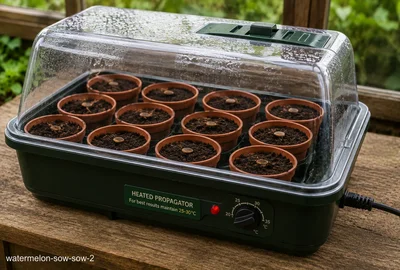
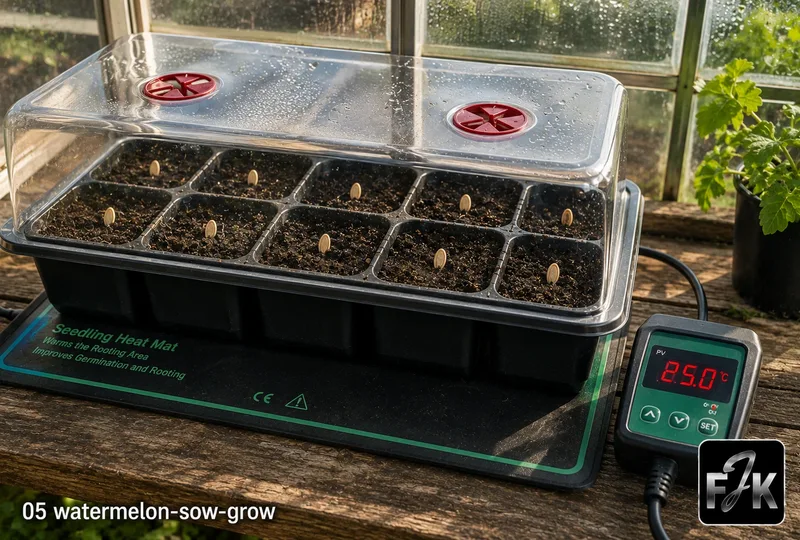
Sow in April in a heated propagator at 25–30°C
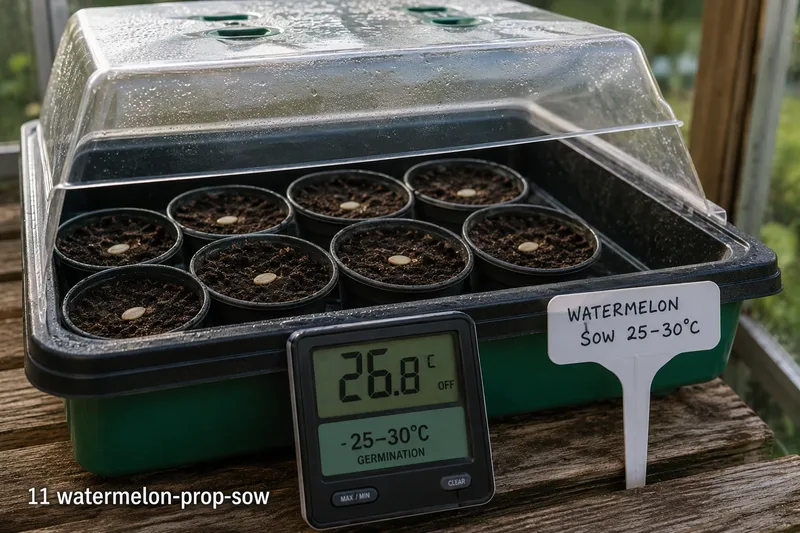
Watermelons need higher germination temperatures than ordinary melons. A thermostatically controlled propagator at 25–30°C is strongly recommended. Sow one seed per 9cm pot on its side. Germination 5–8 days. Grow on at minimum 20°C.
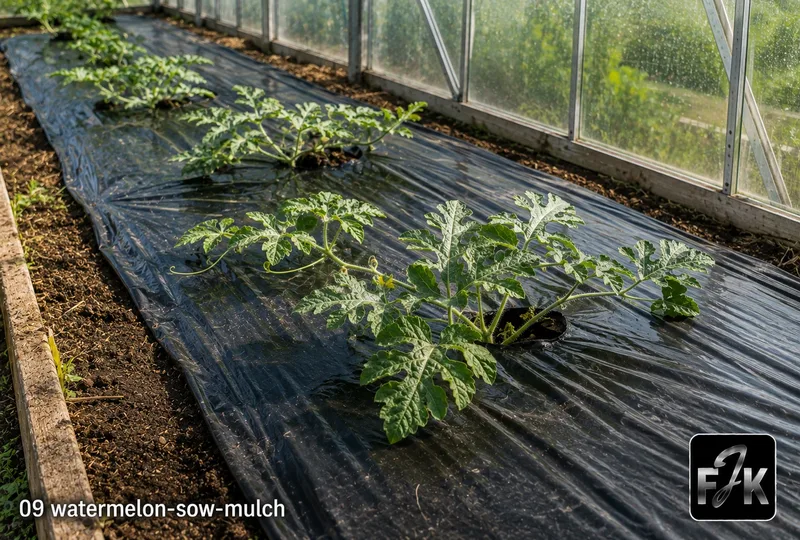
Lay black polythene over the soil before planting
Black polythene mulch over the greenhouse bed absorbs heat and raises soil temperature significantly — this is particularly important for watermelons which need soil temperatures of 20°C+ throughout. Warm soil speeds ripening and prevents root stress.
Plant into the warmest position in the greenhouse
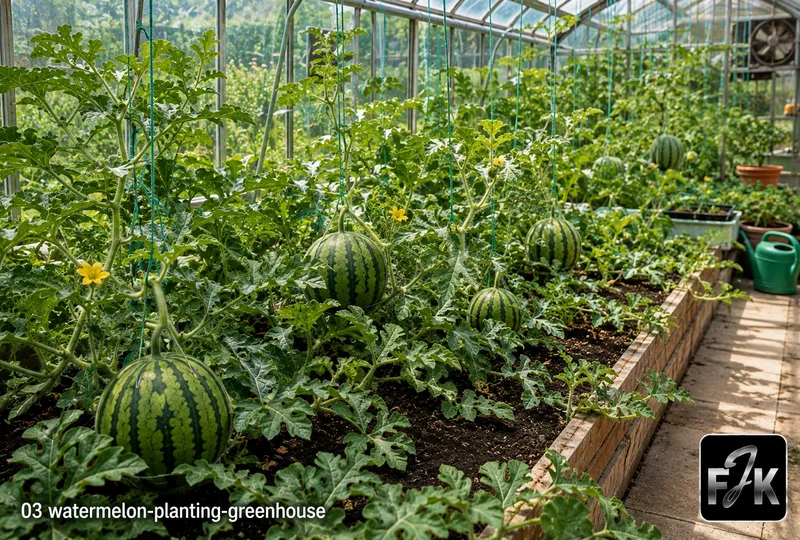
Plant 1–1.5m apart into fertile, well-drained beds enriched with compost. Choose the sunniest corner of the greenhouse — even within a single structure, positions vary in temperature.
Train vertically and hand pollinate
Tie the main stem vertically. Pinch out when 5 leaves form to encourage laterals. Female flowers (tiny striped embryo behind the petals) appear on the laterals. Hand pollinate daily at midday — transfer pollen from male to female with a soft brush.
Allow only 1–2 fruits per plant
A UK-grown watermelon plant can ripen 1–2 fruits in a good summer. Remove all other developing fruits decisively. Attempting more means none ripen. One perfectly ripened home-grown watermelon is the goal.
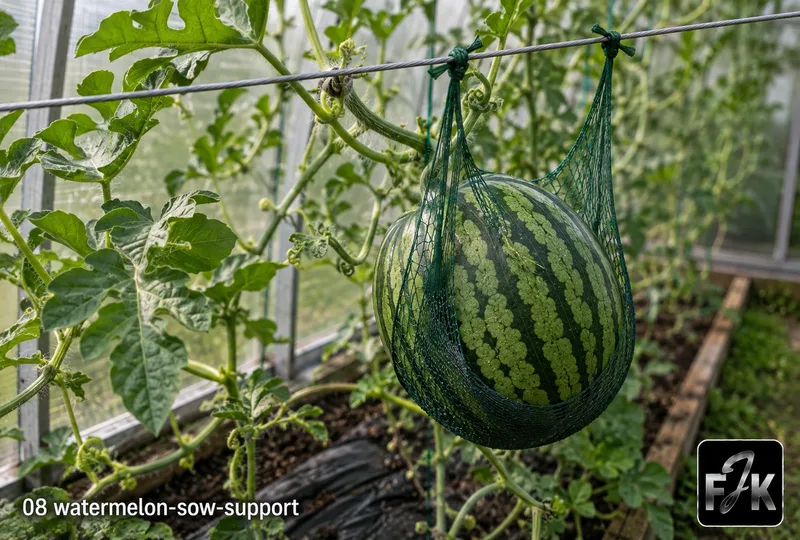
Support fruits in strong nets from tennis-ball size
Watermelons reach 2–6kg. Every developing fruit must be supported in a strong string hammock or netting bag from when it reaches the size of a tennis ball. Without support, the stem breaks under the weight.
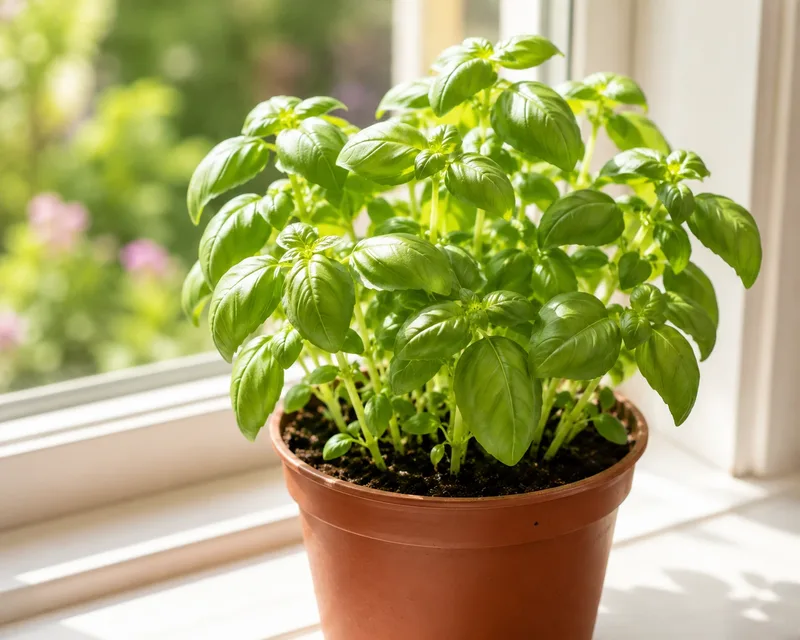
Thought to repel aphids and whitefly, and improve the flavour of neighbouring plants.
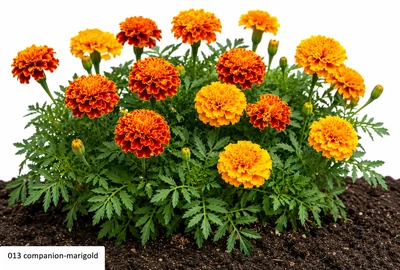
🌸 Marigold
Marigolds are thought to deter nematodes and attract pollinators and predatory insects.
06 Sowing — How To
Sow April at 25–30°C
Higher temperatures than standard melons. A heated propagator with a thermostat is important. One seed per 9cm pot on its side. Do not water excessively — keep compost moist but not wet.
Grow on at 20°C minimum
After germination, maintain 20°C minimum. Lower temperatures cause stunted growth that the plant never fully recovers from. A consistently warm environment is more important than high peak temperatures.
Regional sowing timing
Region
Sow / plant
Harvest
Notes
Scotland & Far North
Apr–May
Aug–Sep
Northern England
Apr–May
Aug–Sep
Midlands & Wales
Apr–May
Aug–Sep
Ireland & Isle of Man
Apr–May
Aug–Sep
South & SE England
Apr–May
Aug–Sep
South Coast & SW
Apr–May
Aug–Sep
07 Using a Propagator
Watermelons are always grown from seed annually. A heated propagator at 25–30°C is necessary for reliable germination. They cannot be propagated vegetatively.
Heated propagator
Heated Propagator Essential — Sow at 25–30°C in a thermostatically controlled propagator. Without reliable heat at this level, germination is erratic and slow. Grow on at minimum 20°C after germination.
Unheated propagator
Not Reliable — Watermelon germination at temperatures below 20°C is unreliable. A heated propagator is strongly recommended. A very warm windowsill above a radiator may achieve adequate temperatures but cannot be relied upon.
Sow on its side at 25–30°C
Place the flat seed horizontally in a 9cm pot of moist compost. One seed per pot. Set propagator to 25–30°C. Germination in 5–8 days.
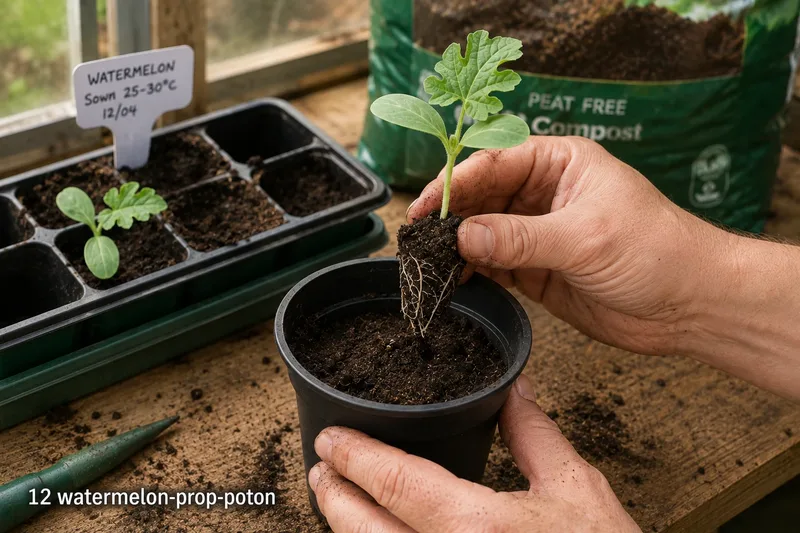
Pot on carefully
Watermelon roots are sensitive to disturbance. Handle root balls very carefully when potting on. Never allow serious pot-binding.
08 Soil Requirements
pH
6.0–7.0
Best
Sandy loam, Loam
Tolerates
Sandy
Avoid
Waterlogged, Cold, Clay, Chalk
💡 Light, warm, free-draining soil with excellent heat retention. Rich compost essential. Greenhouse only in UK.
09 Ongoing Care
🌡️ Sustained Warmth — the Critical Factor
Watermelons need sustained temperatures of 25–30°C during the day and minimum 20°C at night to develop and ripen successfully. A UK summer that stays consistently below 20°C — common in poor years and in the north — will not produce ripe watermelons regardless of any other management. In such conditions, even the most cold-tolerant varieties (Sugar Baby, Golden Midget) will fail to ripen. A heated greenhouse maintains these temperatures regardless of outdoor conditions; an unheated polytunnel depends entirely on the summer being warm. This temperature dependency is what makes watermelons the most challenging fruit in this guide.
🍉 Detecting Ripeness — The Hardest Skill
Judging watermelon ripeness is the defining challenge of growing them — the fruit gives very few external clues. Use all of these indicators together: the tendril nearest the fruit dries out and turns brown (the most reliable single indicator); the ground spot (where the fruit rests) changes from pale white to creamy yellow; tapping the fruit produces a dull thud rather than a hollow ring when unripe; the skin loses some of its shine and becomes slightly dull. Do not cut too early — an underripe watermelon is white-fleshed, unsweet, and deeply disappointing. Patience for an extra week is almost always rewarded.
🌸 Hand Pollination
Watermelons in UK greenhouse conditions must be hand-pollinated. Identify male flowers (slender stalk, no embryo fruit) and female flowers (visible striped embryo watermelon behind the petals). At midday, collect pollen from a fully open male flower using a soft brush and transfer to the stigma of the female flower. In a good summer with bees occasionally entering the greenhouse, natural pollination may occur, but hand pollination every day during the flowering period ensures maximum fruit set. A single successful pollination per flower is sufficient.
🍉 Restricting Fruit Number
This is the most important management decision: allow only 1–2 fruits per plant to develop. Remove all other developing fruits as they form — this requires decisive action, as every small embryo watermelon looks promising. A UK-grown watermelon plant trying to ripen 4 or 5 fruits will fail to ripen any of them fully. A plant allowed to concentrate on a single fruit consistently produces a ripe, sweet result. This restriction is even more critical for watermelons than for ordinary melons because watermelon fruits require a longer ripening period.
10 Watch Out For
Warning
Powdery mildew attacks foliage in warm, dry conditions — ensure ventilation and water at the base. Aphids and red spider mite in hot greenhouse conditions — inspect weekly and treat with soap spray or predatory insects. Root rot from overwatering is rapidly fatal. Failure to ripen before autumn is the most common outcome in cool UK summers — accept this and grow smaller, earlier varieties next time.
🐛 Insects & pests
🐜 Aphids (Blackfly & Greenfly) — Curled, distorted, or stunted growing tips — aphids inject saliva that causes leaf curl to protect them
🕷 Spider Mite — Fine, silky webbing on the underside of leaves and between growing tips — the definitive identification sign
🐌 Slugs & Snails — Silver slime trails on leaves, soil, and pots — often the first sign before damage is found
🍄 Diseases to watch
⬜ Powdery Mildew — Powdery mildew is caused by a range of related fungi, each specific to its host plant — courgette mildew cannot infect peas, and vice versa. The characteristic white powdery coating on leaf surfaces appears in warm, dry conditions (unlike downy mildew which prefers cool and wet). Rarely kills plants but severely reduces yield and plant vigour.
🌿 Mosaic Virus (TMV / CMV) — Tobacco mosaic virus (TMV) and Cucumber mosaic virus (CMV) are among the most widespread plant viruses affecting vegetable crops worldwide. TMV is extraordinarily stable — it can remain viable on contaminated hands and tools for years, and even survives in processed tobacco. There is no cure; infected plants must be destroyed.
🩶 Botrytis (Grey Mould) — Botrytis cinerea (grey mould) is the most ubiquitous fungal pathogen in temperate gardens — present in virtually every garden soil and on plant debris. It becomes a disease only when conditions favour it: cool, humid, poorly ventilated environments with damaged or senescent plant tissue. In a greenhouse in autumn it can destroy an entire tomato or grape crop.
🔵 Downy Mildew — Downy mildew is caused by oomycetes (water moulds) and is completely unrelated to powdery mildew despite the similar name. It thrives in cool, wet, humid conditions and is most damaging in spring and autumn. Each host plant has its own specific downy mildew species. Lettuce downy mildew can destroy an entire bed within days in the right conditions.
Full identification and treatment advice is in the Pests and Diseases sections.
11 Storage & Preserving
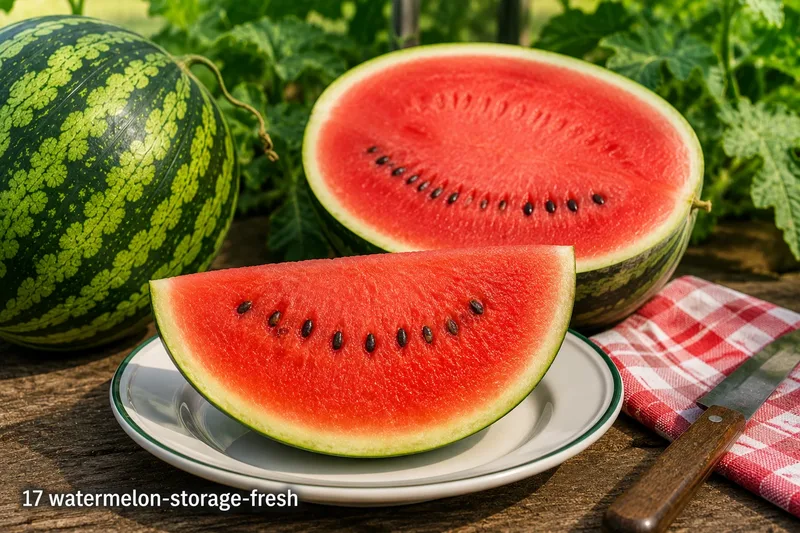
🍉 Fresh (Split at the Vine)
A ripe home-grown watermelon should be eaten as soon as possible after cutting — ideally shared immediately with family. Refrigerate cut watermelon for up to 3 days. Serve at room temperature rather than cold for maximum flavour. The experience of splitting a fully ripe home-grown watermelon — the crack of the rind, the fragrance, the deep red flesh — is one of the most satisfying moments in kitchen garden growing.
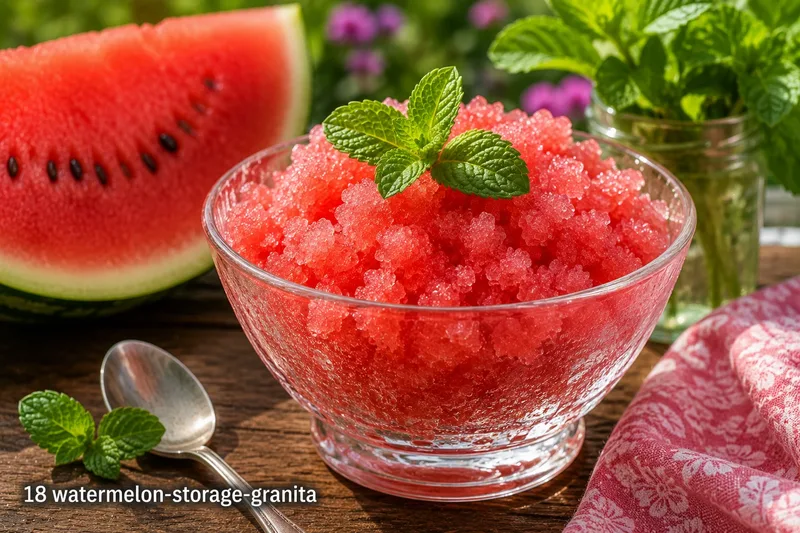
❄️ Granita & Sorbet
Surplus watermelon blends into an outstanding granita — purée the flesh, add a little lime juice and icing sugar, freeze in a shallow tray and fork through regularly as it freezes to create ice crystals. Watermelon and mint granita is one of the finest summer desserts. Also excellent: watermelon, feta, and mint salad — the classic Turkish combination.
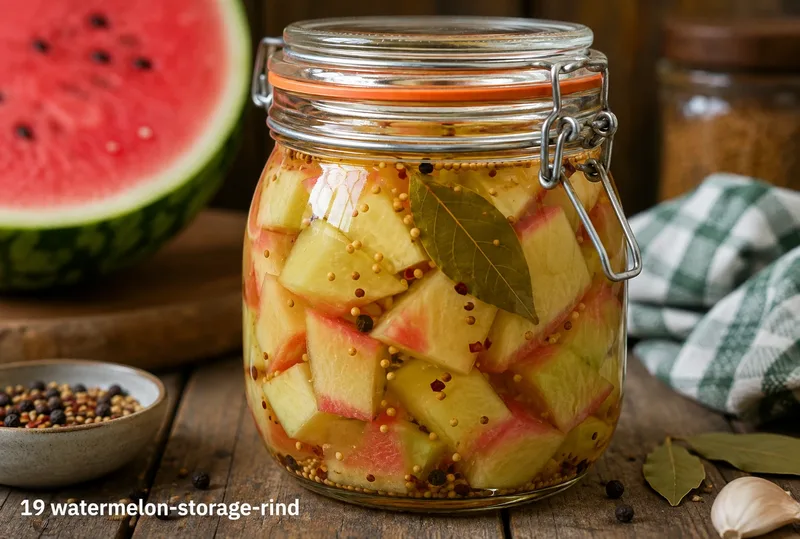
🫙 Rind Pickle
Watermelon rind pickle is a traditional American preserve — the white rind beneath the green skin becomes a sweet-sour condiment. An excellent way to use the entire fruit with minimal waste. Follow a tested recipe.
12 Expert Tips
💡 Start with Sugar Baby or Golden Midget
Both are icebox-type watermelons with small to medium fruit that require a shorter growing season than full-sized varieties. Sugar Baby is the most widely grown and reliable UK watermelon. Golden Midget is the earliest of all and the most achievable in northern gardens. Start with these before attempting larger varieties.
💡 Black polythene mulch
Laying black polythene over the greenhouse or polytunnel bed significantly raises soil temperature — sometimes by 5°C or more compared to bare soil. This simple step is particularly important for watermelons and genuinely improves fruit development and ripening. Combine with drip irrigation under the polythene for consistent watering without losing the heat benefit.
💡 Celebrate the attempt
Growing a ripe watermelon in the UK is a genuine achievement. Some summers simply do not provide adequate heat regardless of everything the grower does. Accept this as part of the challenge, choose the most cold-tolerant early variety, maintain the heating, wait patiently for ripeness, and when it works — it is deeply satisfying.