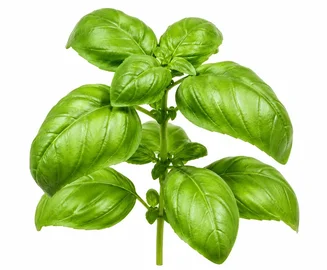
Sweet Genovese
Culinary · Classic
The definitive Italian basil. Large, smooth, intensely aromatic leaves with a sweet clove-and-anise scent. The essential variety for pesto, Caprese salad, and pasta. Best harvested young before any flowering begins.
Ocimum basilicum
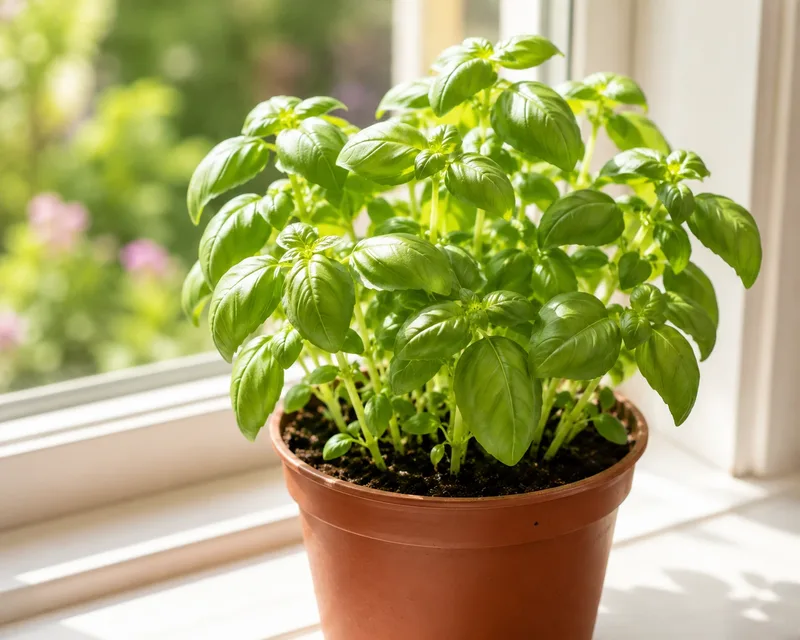
The smell of summer itself. Basil is frost-tender and intensely temperature-sensitive — but grow it right and it rewards with armfuls of fragrant leaves all summer long. It demands warmth, dislikes cold water on its leaves, and bolts the moment it flowers. Master those three rules and basil becomes one of the most productive and satisfying herbs in the garden.
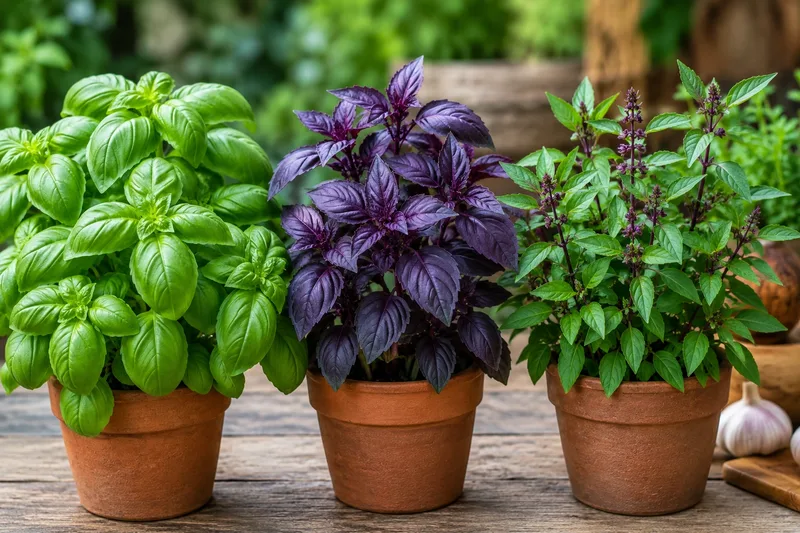
Basil is the defining herb of Italian cooking and one of the most aromatic plants you can grow. Sweet Genovese is the gold standard for pesto and salads; Thai Basil unlocks the flavour of South-East Asian dishes; Purple Ruffles adds dramatic colour to the garden and plate alike. Growing your own delivers a freshness and intensity completely absent from shop-bought basil, which is almost always chilled, stressed, and partly composted by the time it reaches you. The key varieties cover culinary, ornamental, and specialist cooking uses — six plants in a sunny spot will supply a household generously all summer.
The number of varieties shown for each crop is based on UK consumption data (2025/26) — the more popular the crop, the more variety choices we include.
The definitive Italian basil. Large, smooth, intensely aromatic leaves with a sweet clove-and-anise scent. The essential variety for pesto, Caprese salad, and pasta. Best harvested young before any flowering begins.
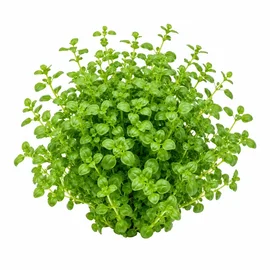
Forms a perfect tight mound of tiny, intensely flavoured leaves. Very slow to bolt compared to Genovese. Excellent in pots and as an edging plant. Brilliant for adding whole small leaves to dishes as a garnish.
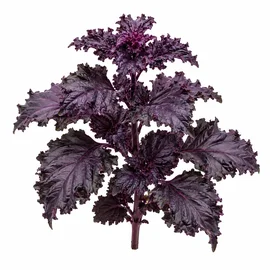
Dramatically dark purple, frilly leaves with a slightly spicy, clove-like flavour. Stunning in the garden and on the plate. Makes a beautiful purple basil vinegar. Slightly less vigorous than green types — needs extra warmth.
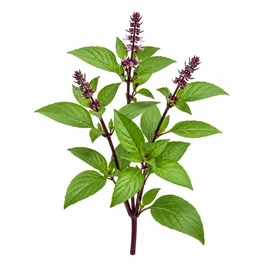
Smaller, firmer leaves with a distinctive aniseed and liquorice flavour quite different from Italian basil. Holds its flavour when cooked — essential in Thai green curry, Vietnamese pho, and stir-fries. More heat-tolerant than Genovese.
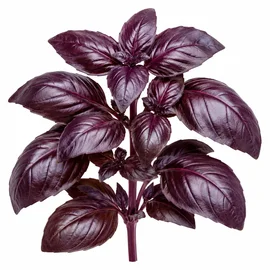
Deep burgundy-red leaves, even more intensely coloured than Purple Ruffles. Strong, spicy flavour. Excellent for infused oils and vinegars, which turn a vivid pink colour. One of the most striking herbs in the ornamental kitchen garden.
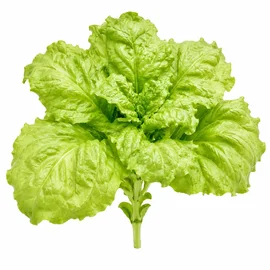
Enormous, crinkled leaves — sometimes 15cm across — with a mild, sweet flavour. Perfect for wrapping around food, lining serving dishes, or making into large individual pesto portions. Very productive and impressive-looking in the garden.
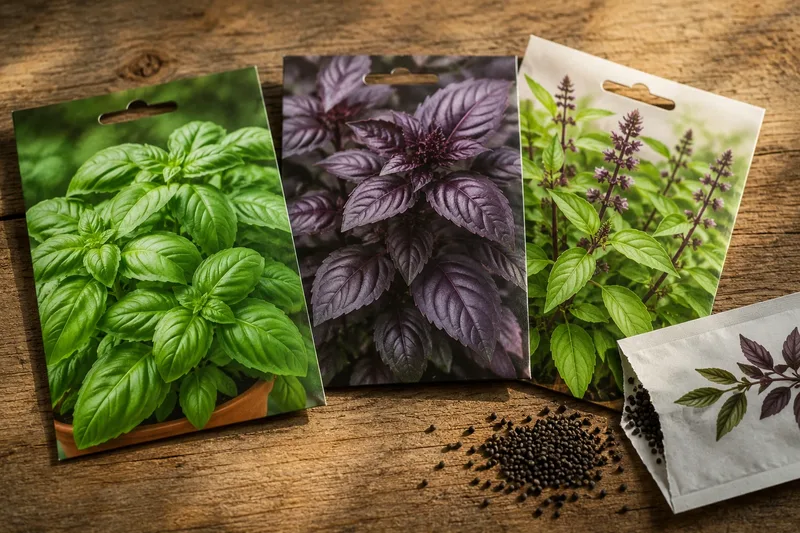
Sweet Genovese and Greek Basil are available as seeds from all major UK seed suppliers. Thai Basil, Purple Ruffles, Red Rubin, and Lettuce Leaf are best sought from specialist herb seed companies. Ready-grown plug plants appear in garden centres from May and offer a useful head start, though they are nearly always Genovese only. Supermarket pot basil (sold as a living herb) can be split into 3–4 individual plants and repotted — these are seed-grown at high density and will thrive once given space.
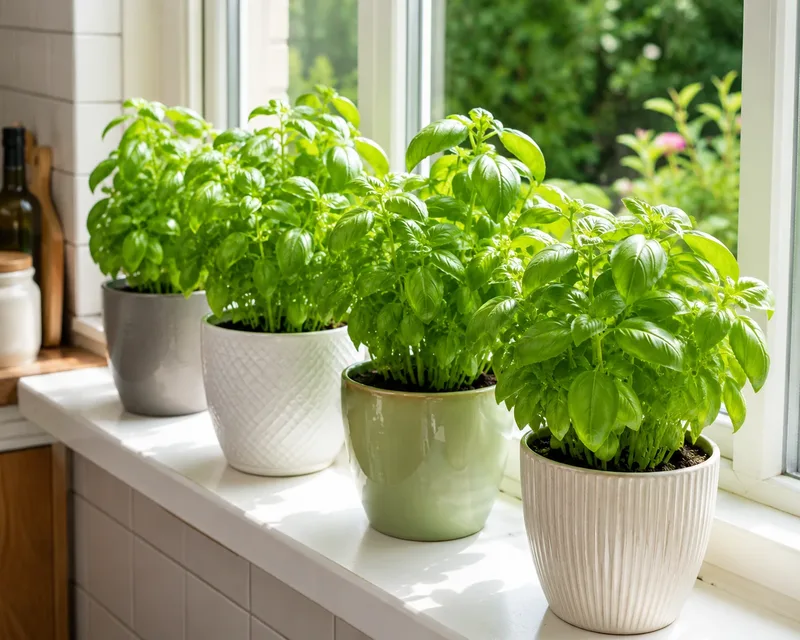
The most reliable method in the UK. A south-facing windowsill at 20°C+ produces lush basil without the risk of cold nights outdoors. Keep pots away from cold glass overnight. One large pot (15cm+) per person is the minimum for regular harvesting.
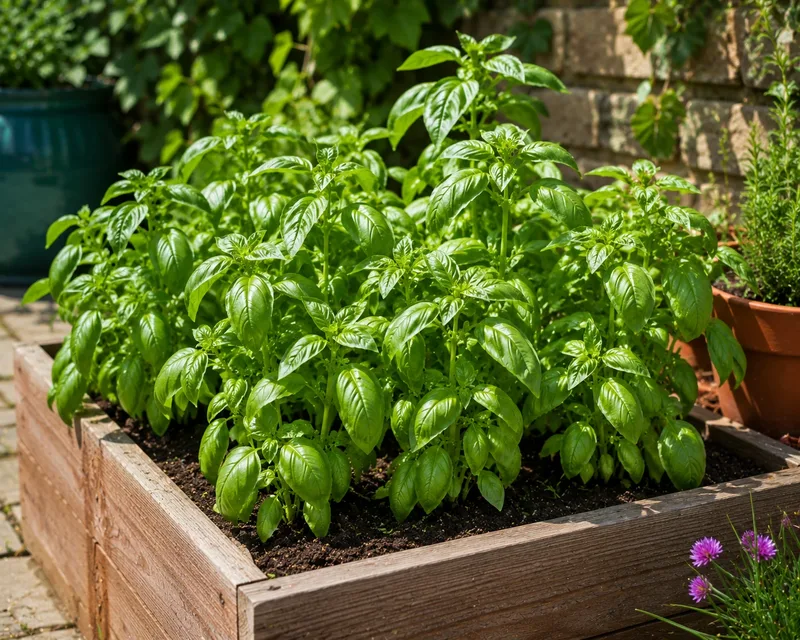
Basil can be grown outdoors in the UK but only during the warmest months, and only in the most sheltered, sun-baked spots. A south-facing wall that retains heat is ideal. Even one cold night below 10°C causes irreversible blackening — always be ready to bring pots back inside.
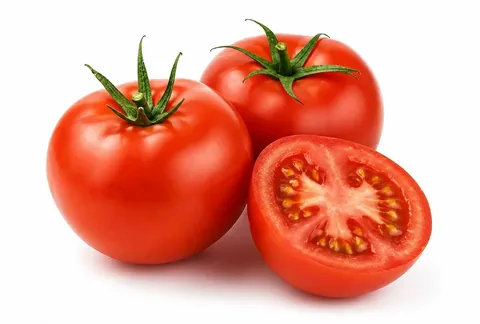
The classic pairing — basil is thought to repel aphids and whitefly and improve the flavour of neighbouring tomatoes.
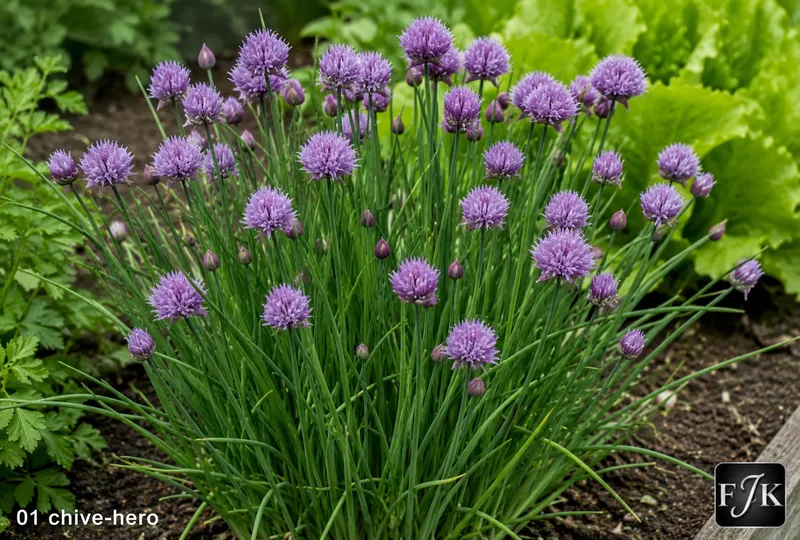
Chives planted near basil help deter aphids without competing for space.
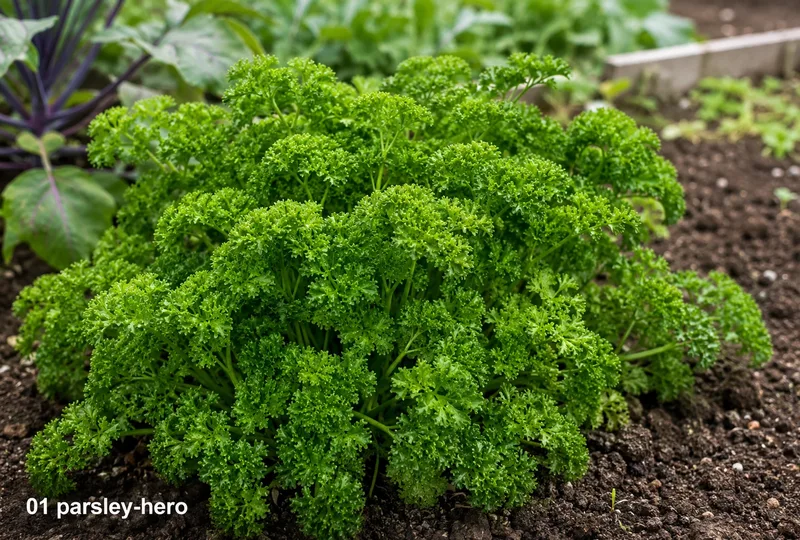
Both enjoy similar sun and soil conditions, making efficient use of a shared bed.
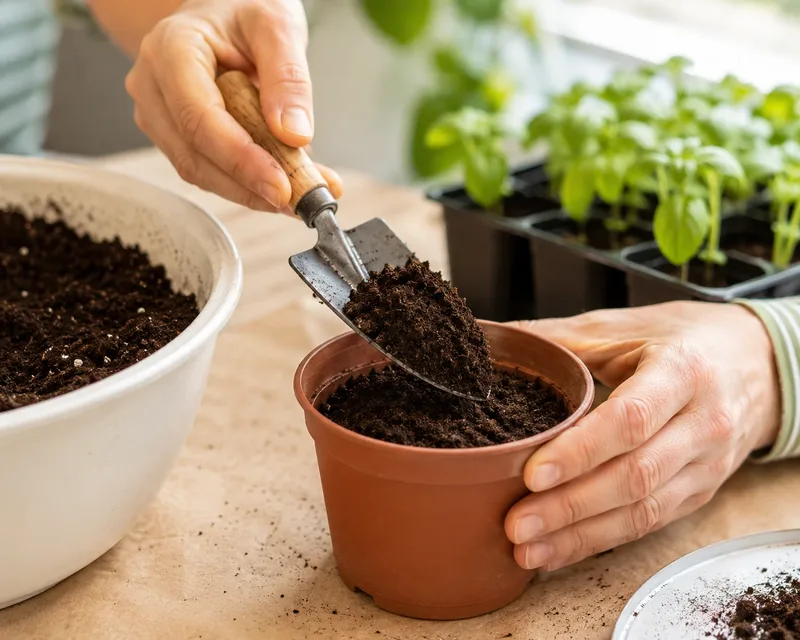
Use a fine seed compost or multi-purpose compost sieved to remove lumps. Firm lightly and water well before sowing. Basil resents soggy compost — the surface should be damp, not wet.
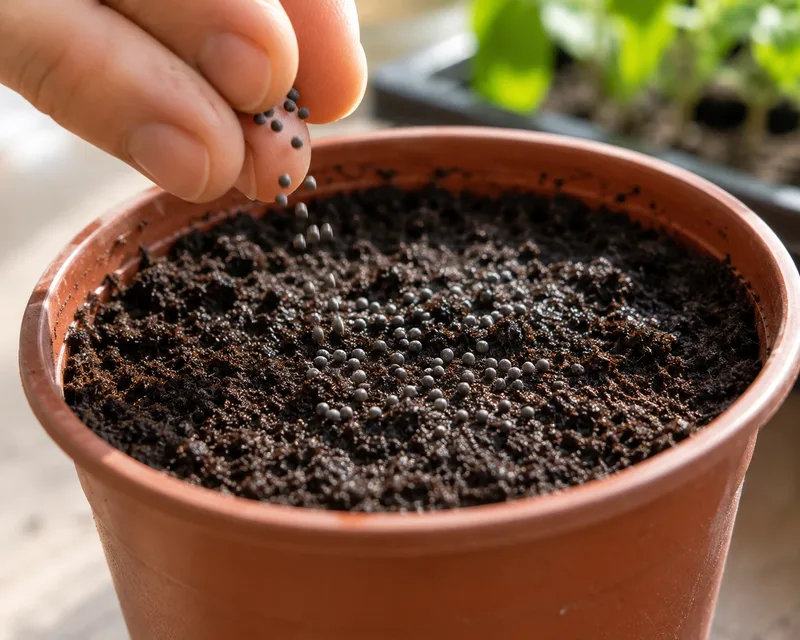
Scatter seeds thinly on the compost surface. Do not cover — basil seeds need light to germinate. A few seeds per 9cm pot is sufficient. Overcrowding causes damping off disease.
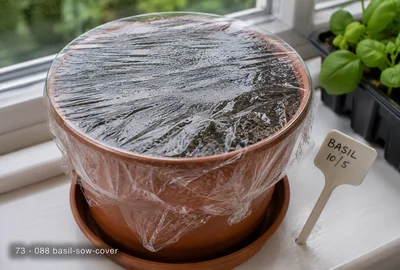
Cover the pot with a sheet of glass or clear cling film to retain humidity. Place somewhere consistently warm — at least 20°C, ideally 22–24°C. A propagator is ideal. On a boiler cupboard floor works well.
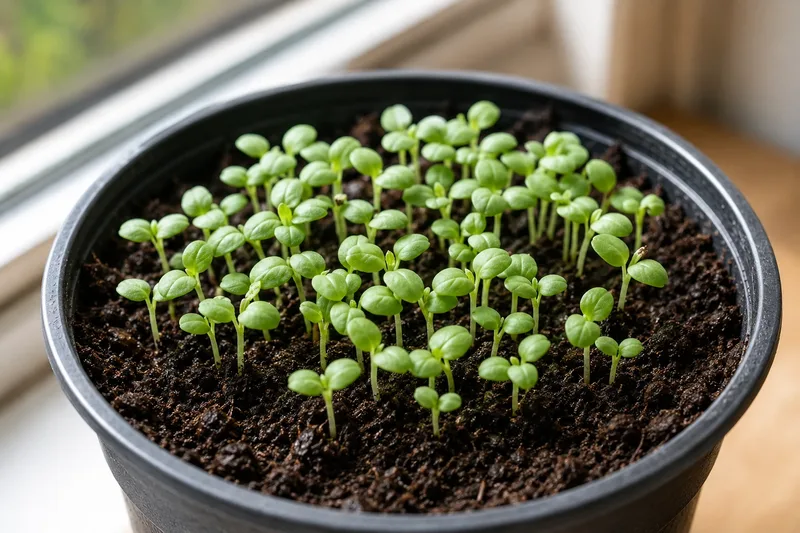
Seeds germinate in 5–10 days at 20°C+. Remove the cover as soon as seedlings emerge and move to a bright, warm windowsill. Cold or draughts at this stage cause collapse.
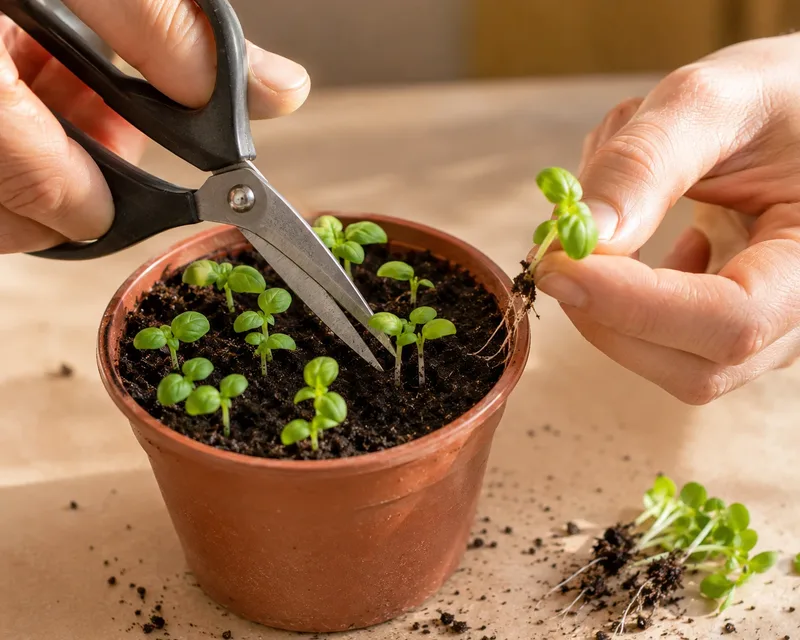
Once seedlings have two true leaves, thin to the strongest 2–3 per pot by snipping unwanted ones at soil level — do not pull, as root disturbance causes collapse in remaining seedlings.
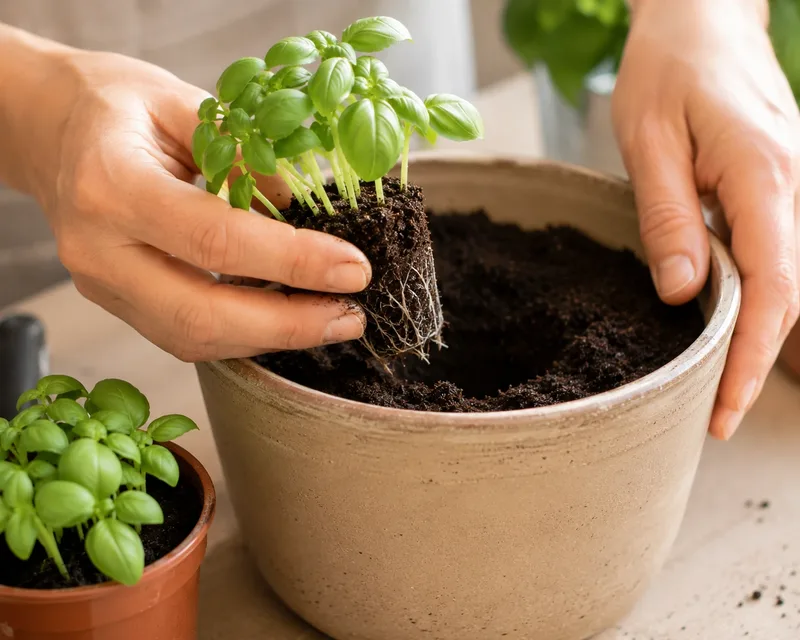
When roots fill the pot, move into a 15cm pot of rich compost. If growing outdoors, harden off over 2 weeks by taking outside only on warm, still days. Never leave out overnight until nights are above 15°C.

| Region | Sow / plant | Harvest | Notes |
|---|---|---|---|
| Scotland & Far North | May–Jun | Jul–Sep | May · Plant: Late Jun · Harvest: Jul–Sep |
| Northern England | Apr–Jun | Jun–Sep | Apr–May · Plant: Jun · Harvest: Jun–Sep |
| Midlands & Wales | Apr–Jun | Jun–Sep | Apr–May · Plant: Jun · Harvest: Jun–Sep |
| Ireland & Isle of Man | Apr–Jun | Jun–Sep | Apr–May · Plant: Jun · Harvest: Jun–Sep |
| South & SE England | Apr–Jun | Jun–Sep | Apr · Plant: Jun · Harvest: Jun–Sep |
| South Coast & SW | Apr–May | Jun–Sep | Apr · Plant: Late May · Harvest: Jun–Sep |
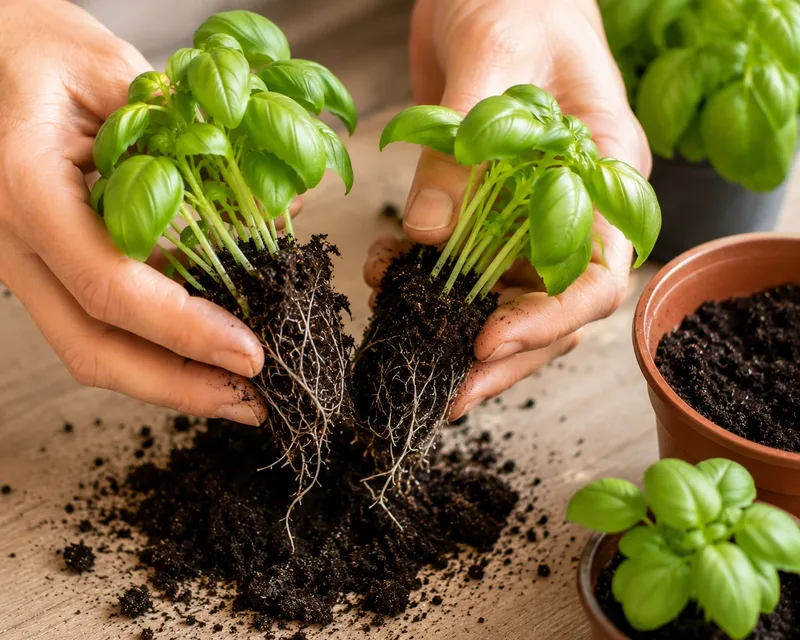
A supermarket basil pot typically contains 20–40 seedlings crammed together. Carefully tease apart into 3–4 clumps, each with several stems and roots. These will re-establish rapidly in individual pots.
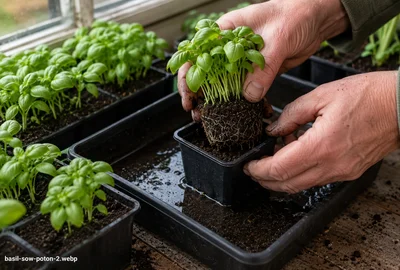
Plant each clump into a 12–15cm pot of peat-free multi-purpose compost. Water from below by sitting the pot in a tray of water for 30 minutes, then drain. Never water overhead.
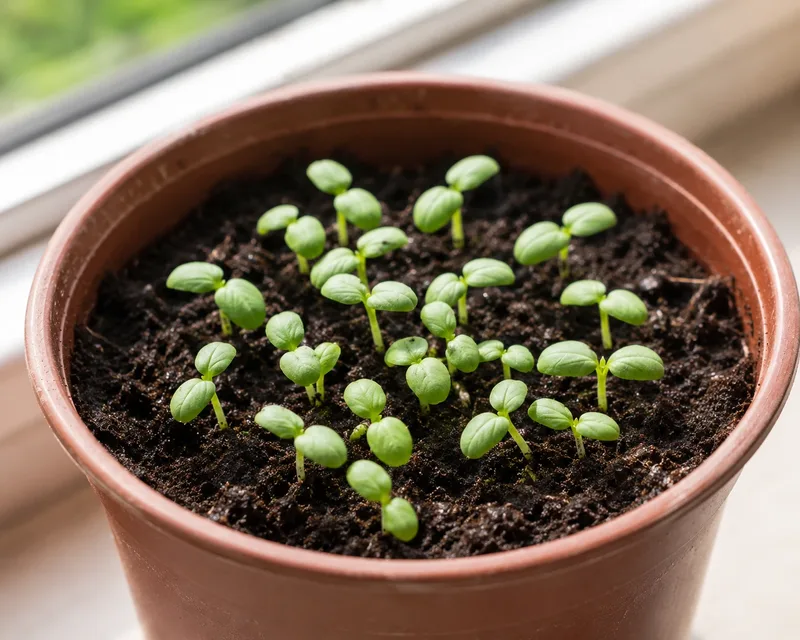
Place on the warmest, sunniest windowsill available — south-facing is ideal. Keep away from cold glass at night. Rotate the pot 180° every few days so all sides receive equal light.
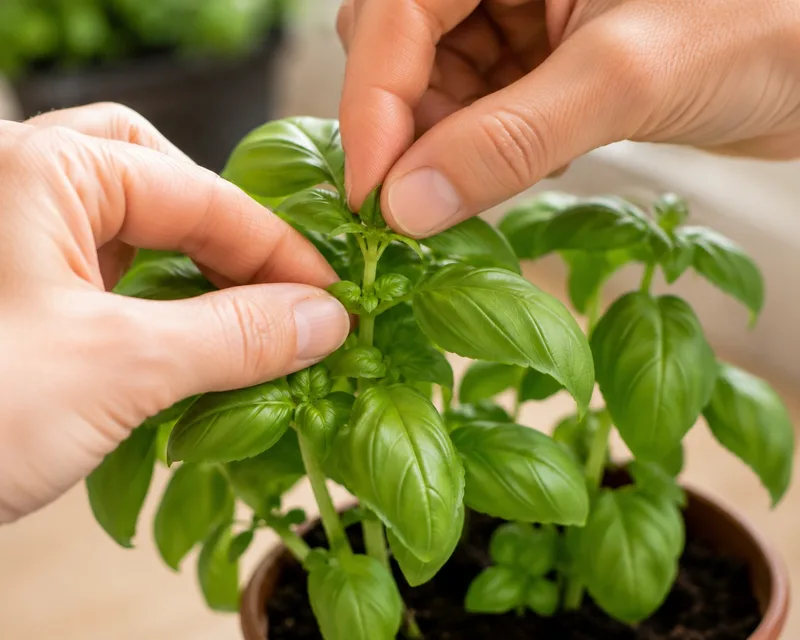
Once plants are growing strongly (new leaves appearing), begin harvesting by pinching out stem tips just above a pair of leaves. This encourages branching and doubles the harvest.
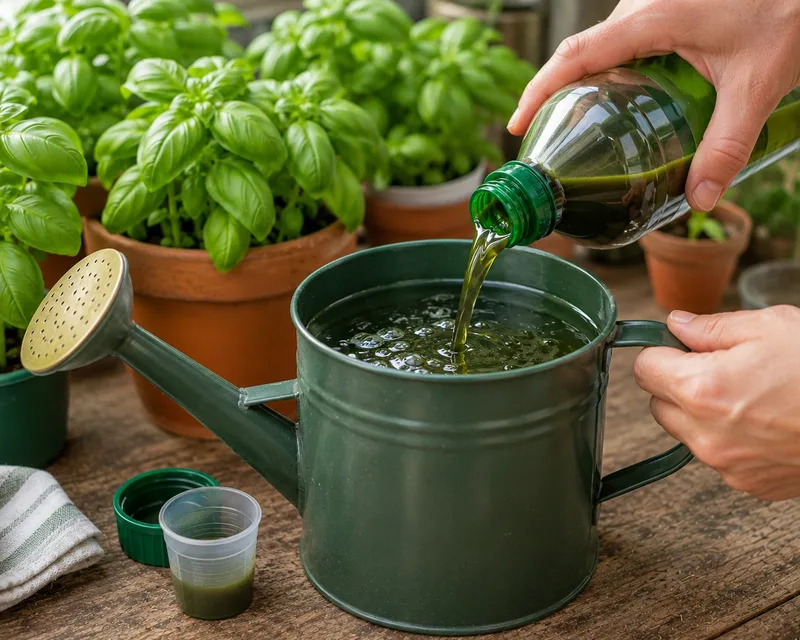
Feed with a balanced liquid fertiliser every 2 weeks once plants are established. Basil grown in containers exhausts compost nutrients quickly — regular feeding is the difference between a productive plant and a struggling one.
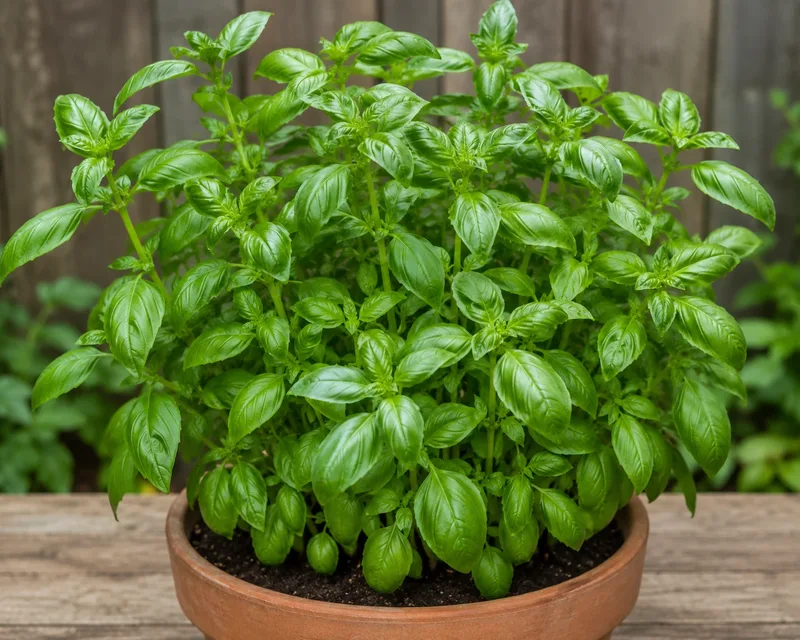
Check plants every 2–3 days and pinch out any flower buds the moment they appear. Once a plant flowers, leaf production slows dramatically and the flavour becomes bitter. Ruthless pinching extends the harvest by weeks.
| Region | Sow / plant | Harvest | Notes |
|---|---|---|---|
| Scotland & Far North | Jun | Jul–Sep | N/A · Plant: Jun (indoors) · Harvest: Jul–Sep |
| Northern England | May–Jun | Jun–Sep | N/A · Plant: May–Jun · Harvest: Jun–Sep |
| Midlands & Wales | May–Jun | Jun–Sep | N/A · Plant: May–Jun · Harvest: Jun–Sep |
| Ireland & Isle of Man | May–Jun | Jun–Sep | N/A · Plant: May–Jun · Harvest: Jun–Sep |
| South & SE England | May | Jun–Sep | N/A · Plant: May · Harvest: Jun–Sep |
| South Coast & SW | May | Jun–Sep | N/A · Plant: May · Harvest: Jun–Sep |
Basil is one of the herbs that genuinely benefits from a heated propagator — it requires a consistent 20°C+ to germinate and resents any chill. A propagator with a thermostat set to 22°C gives the fastest, most reliable germination. Without bottom heat, germination is erratic and seedlings are prone to damping off.
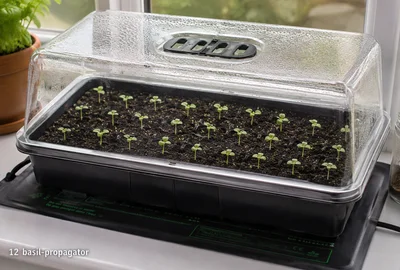
Set to 22°C for fastest germination. Sow on the surface of moist compost — basil needs light to germinate, so do not cover seeds. Keep the lid on until seedlings appear (5–10 days). Ventilate immediately on germination to prevent damping off.
Temperature: 22°C
An unheated propagator is not recommended for basil — the crop needs consistent 20°C+ for reliable germination. On a very warm south-facing windowsill in May or June an unheated lid may suffice, but germination will be slower and less reliable than with bottom heat.
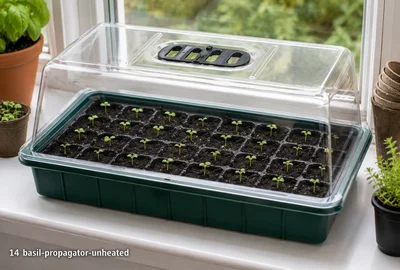
Standard unheated propagator — A lidded seed tray traps warmth and humidity around germinating seeds without electricity. Performance depends entirely on room temperature — best placed on a warm windowsill and used from March onwards. Replace the lid promptly after watering. Remove it completely the moment seedlings emerge to prevent damping off.
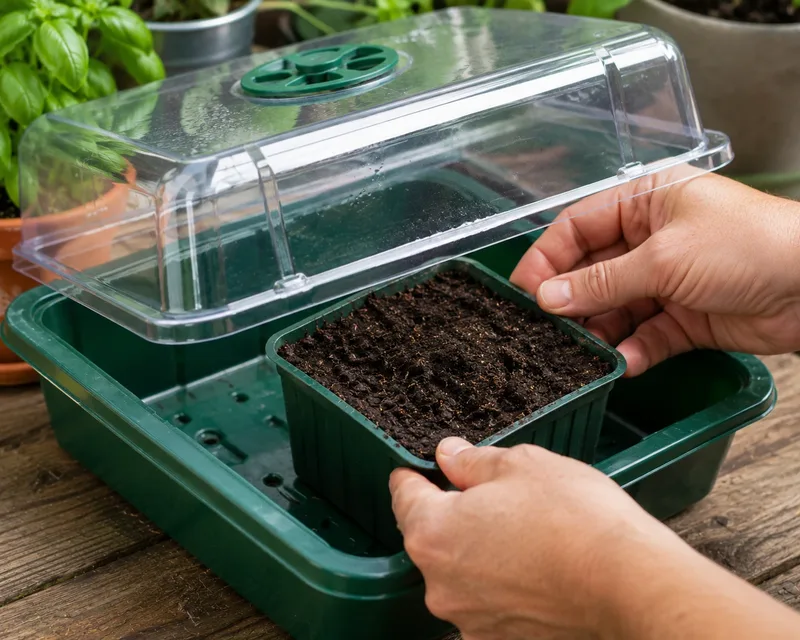
Fill 9cm pots with fine seed compost and water well. Place inside the heated propagator and allow the compost to reach the propagator temperature before sowing — cold compost defeats the purpose.
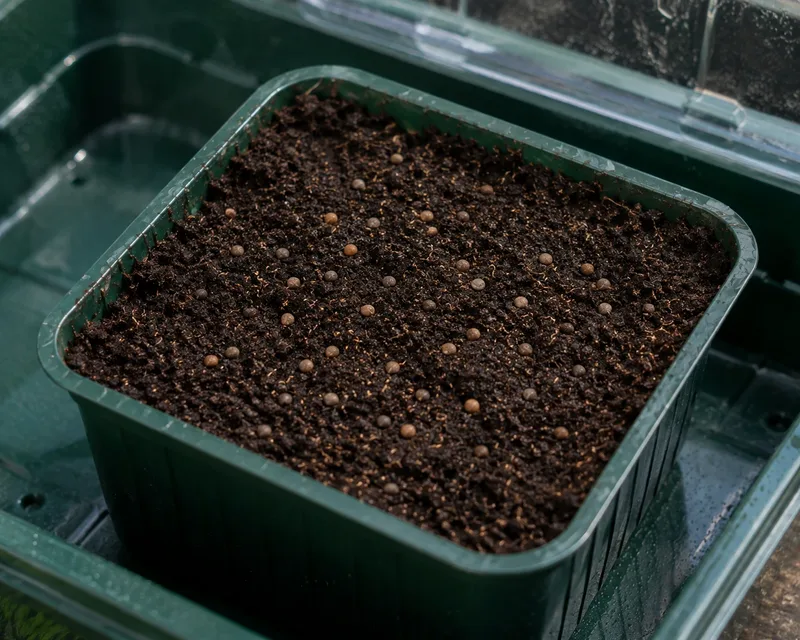
Scatter 5–8 seeds on the surface of each pot. Do not cover. Close the propagator lid. Seeds need both warmth and light — place the propagator on a bright windowsill, not in a dark corner.
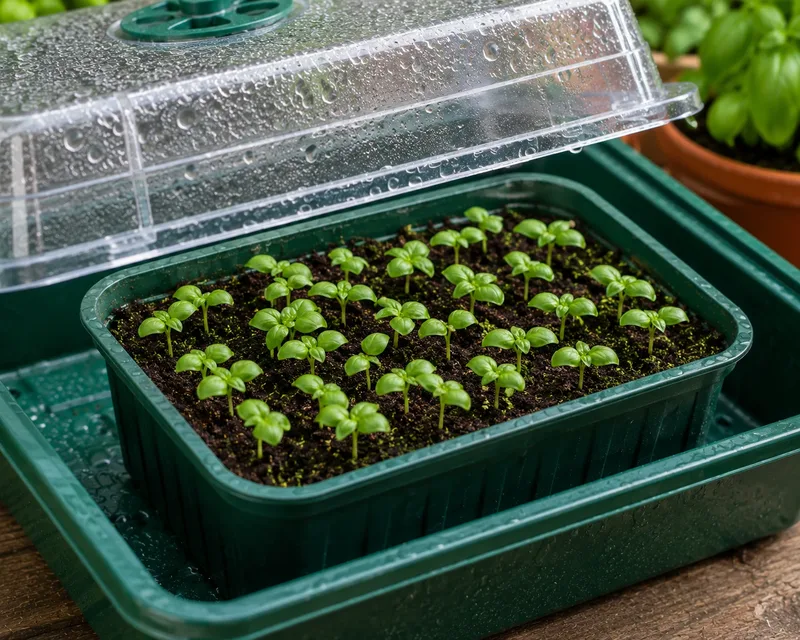
At 22°C, basil germinates in 5–7 days. Open the propagator vents once seedlings emerge to prevent damping off. Remove the lid entirely after 3–4 days of growth.
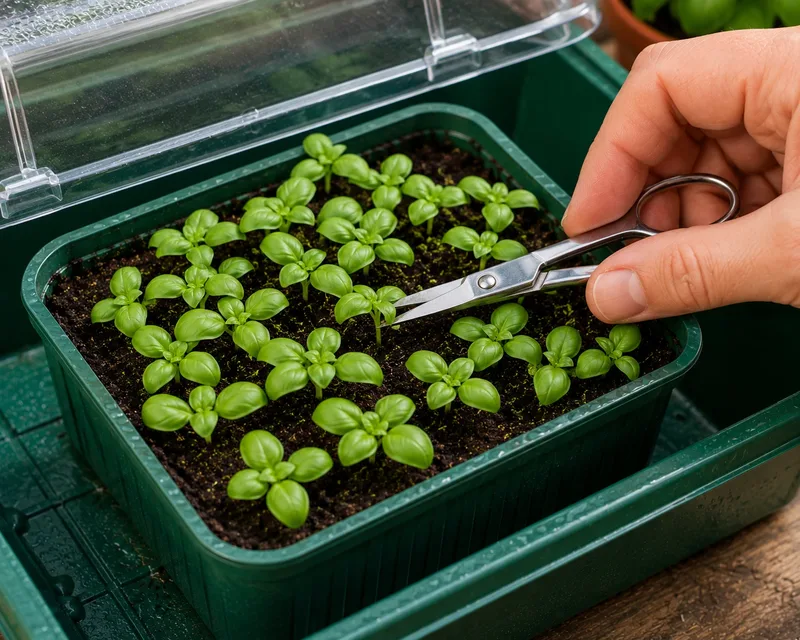
Thin to the strongest 2–3 seedlings per pot as soon as they have their first true leaves. Use scissors — do not pull. Overcrowded seedlings collapse to damping off within days.
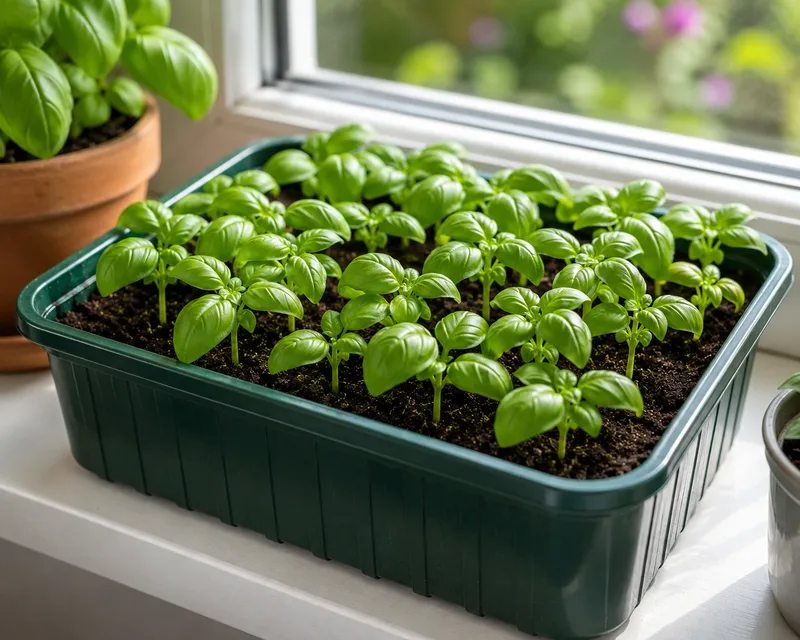
Once thinned, move pots to the warmest available windowsill. Do not return to the propagator — the higher humidity encourages disease in established seedlings. Maintain 18–20°C minimum.
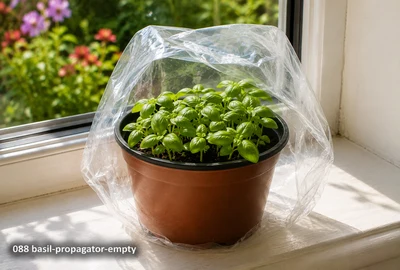
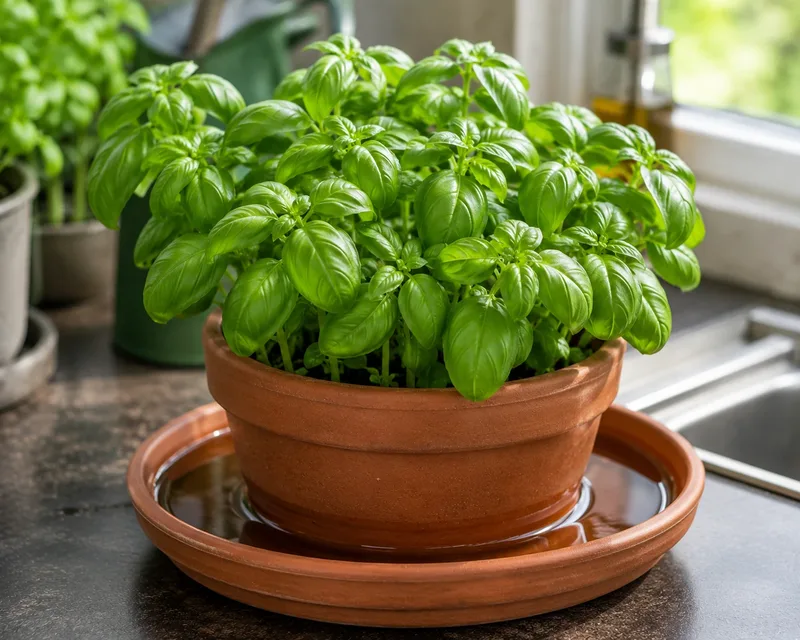
Always water basil from below — stand the pot in a saucer of water for 20–30 minutes, then remove. Overhead watering wets the leaves and causes downy mildew within 24–48 hours in humid conditions. Allow the top centimetre of compost to dry out between waterings. In hot weather, outdoor basil may need watering daily. Use tepid water — cold tap water can shock the roots and cause wilting even in warm conditions.
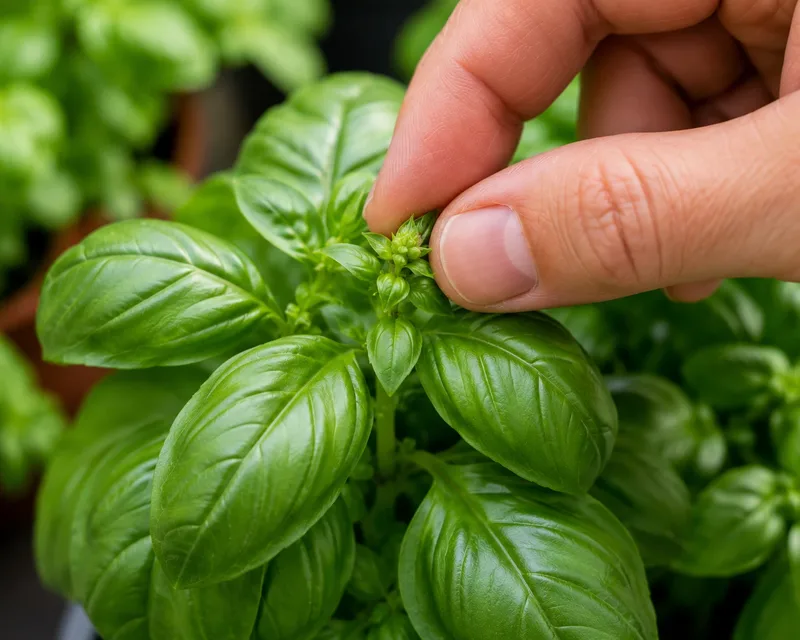
Pinch out stem tips regularly — always cutting just above a pair of leaves. This causes the plant to branch at that point, producing two new shoots where there was one. The more you harvest, the more the plant produces. Remove every flower bud the moment it appears — flowering triggers a hormonal change that reduces leaf size and increases bitterness. A well-pinched plant in a large pot can produce leaves continuously for 3–4 months.
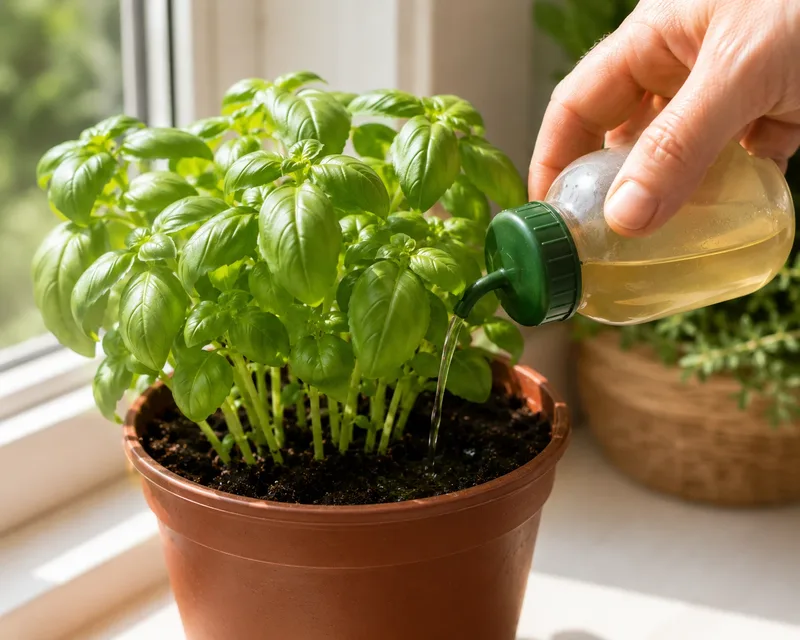
Feed with a balanced liquid fertiliser (e.g. seaweed feed or tomato feed diluted to half strength) every 2 weeks from the moment the plant is actively growing. Basil is a hungry plant that quickly exhausts the nutrients in compost — particularly nitrogen for leaf production. Signs of deficiency include pale, yellowing leaves and stunted growth. Do not over-feed with high-nitrogen fertiliser as it produces lush, soft growth that is more susceptible to disease.
Basil is extremely cold-sensitive. Even a single cold night below 10°C causes irreversible blackening and collapse of the leaves — there is no recovery. In the UK, always treat basil as a tender annual that needs protection until summer is firmly established.
Full identification and treatment advice is in the Pests and Diseases sections.
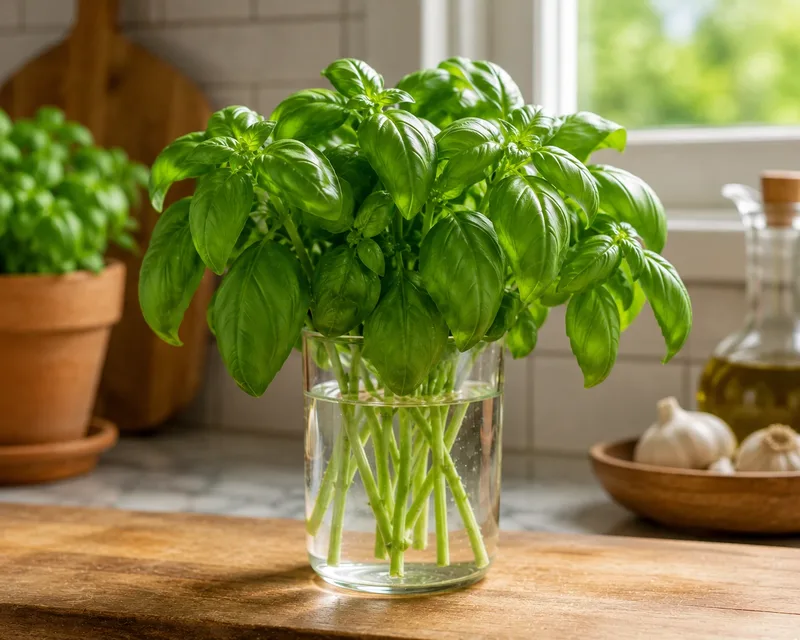
Store fresh basil at room temperature — never in the fridge. Cold causes blackening within hours. Stand cut stems in a small jar of water like a posy. Cover loosely with a plastic bag to retain humidity. Kept this way on a warm kitchen worktop, basil stays fresh for 5–7 days. Change the water every 2 days.
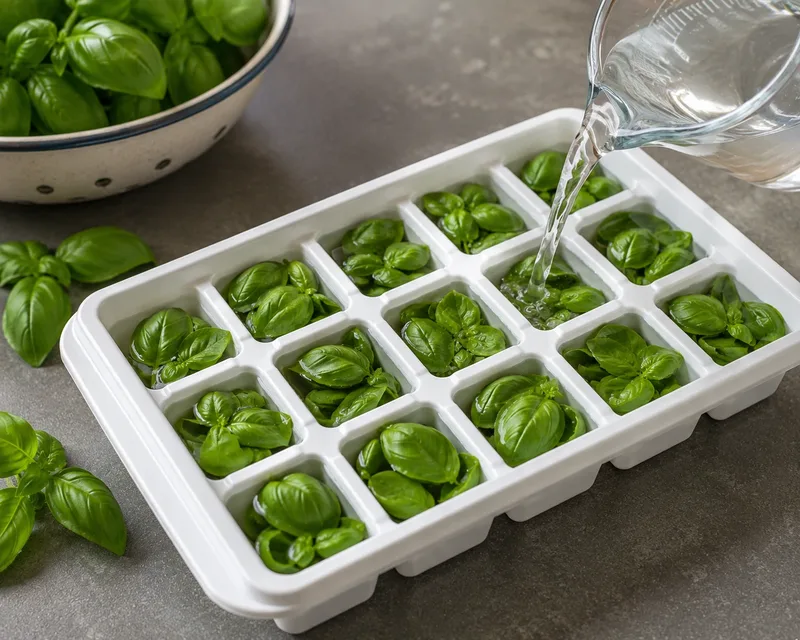
Basil freezes well as pesto — blend leaves with olive oil and freeze in ice cube trays, then transfer to freezer bags. Each cube is a single-portion pesto base. Alternatively, blanch whole leaves for 5 seconds in boiling water, plunge into ice water, dry, and freeze flat on a tray before bagging. Frozen basil loses texture but retains excellent flavour for 6 months.
Sow a second batch of basil in early June — the first sowing often gets leggy by August, and the second batch comes in just as it fades.
Split a supermarket basil pot into 3–4 plants and repot immediately — it costs less than a seed packet and you get harvestable plants within a fortnight.
💡 Basil and tomatoes are perfect companion plants both in the garden and on the plate — plant them together in the same sunny bed or greenhouse border.