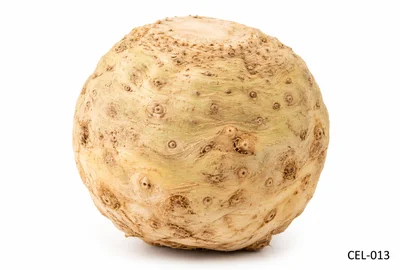
Prinz
Maincrop · Seed
A large, round celeriac with a smooth stem base and crisp white flesh. Strong celery taste, good raw or cooked, and slow to bolt. Lift from September.
- AGM
- Beginners
Apium graveolens (Rapaceum)

Celeriac is a slow, demanding crop that rewards patience with one of the most complex, celery-like flavours in the vegetable garden. Grated raw in remoulade or roasted in chunks, it is sublime.

Prinz, Monarch and Ibis all hold the RHS Award of Garden Merit. Prinz and Ibis make round, smooth roots and are slow to bolt; Monarch is a little flatter, with creamy flesh. Brilliant has white flesh that stays white once cut, and Giant Prague is an heirloom dating from 1871. Newer kinds are generally smoother and less knobbly than old ones, so they are easier to peel. Whichever you pick, the method is the same: sow early under cover, plant out with care and keep the soil moist.
The number of varieties shown for each crop is based on UK consumption data (2025/26) — the more popular the crop, the more variety choices we include.
Two varieties holding the RHS Award of Garden Merit, given for reliable performance in trials.
A large, round celeriac with a smooth stem base and crisp white flesh. Strong celery taste, good raw or cooked, and slow to bolt. Lift from September.

Smooth, slightly flattened roots with creamy, tender flesh and a gentle nutty taste. A good keeper; lift from September.
Varieties valued for easier preparation or traditional character.
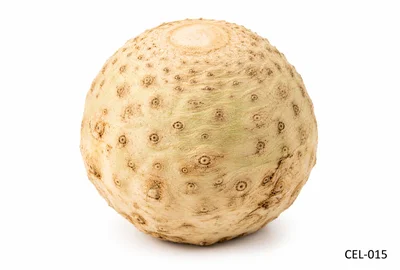
A strong, quick-growing variety with smooth, round, white-skinned roots and a nutty celery taste. Resists bolting and disease, and holds well both in the ground and in store. Ready from October.

Smooth-skinned roots whose white flesh stays white after cutting. A good keeper.
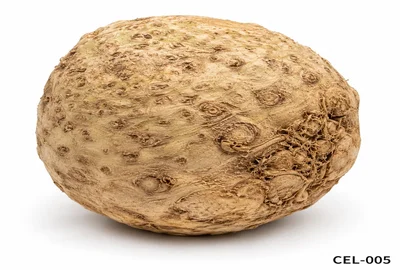
An heirloom dating from 1871. Grows strongly, with fairly smooth skin and a base that is a little flattened. Keeps well in store.
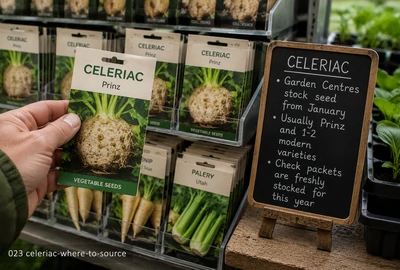
Most gardeners raise celeriac from seed, which garden centres and online seed companies sell. If you need just a handful, young plug plants appear in spring, mostly from the bigger online suppliers — they cost more than seed and the choice of variety is small. The seed is tiny, so handle it with care when sowing.

Online seed companies carry the widest choice, from smooth modern kinds such as Prinz and Ibis to the heirloom Giant Prague. Order over winter so the seed is in hand for a March sowing. The seed is tiny, so a single packet goes a long way.
Many garden centres sell celeriac seed, though often only one or two varieties. Check the packet is dated for the current year.
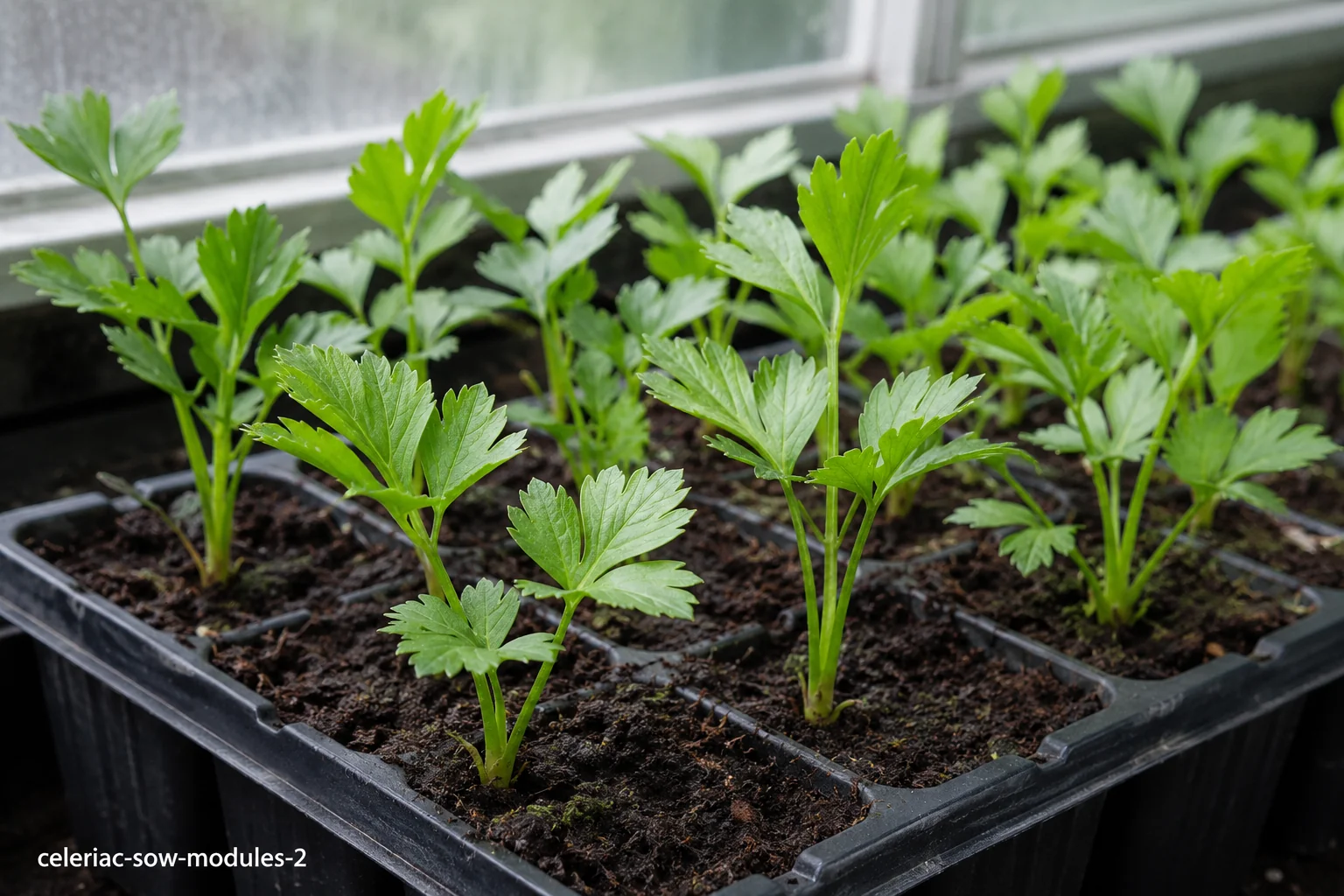
Celeriac has to be started indoors — it takes six months or more to grow to full size, and the seed and young plants dislike cold. Sow in March or April in small pots or module trays, giving the seed only a light dusting of compost. A heated propagator at about 15°C is the easiest way to get it going; germination is slow and patchy and can take as long as three weeks. Once the seedlings can be handled, prick them out to one per module or pot. Grow them on in good light at 10°C or warmer, then harden off and plant out from late May.
Suitable varieties: All varieties. The long indoor start (March to late May) cannot be skipped — sown outdoors in the UK, celeriac would not have time to mature before winter.
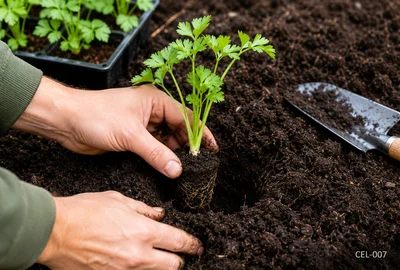
Celeriac is always raised indoors and then planted out — it is not sown direct. Plant out between late May and early June, once frosts are over and the weather has warmed; if it is still cold, wait. Space plants 30cm apart in rows 40–45cm apart, giving them room and air. Keep the crown at soil level, never buried. Water in well, then cover with cloches or fleece for the first few weeks to keep the plants warm and lessen the risk of bolting. Keep the soil steadily moist all season.
Suitable varieties: All varieties. The largest roots develop in moisture-retentive, fertile, open ground with consistent watering. Do not allow the soil to dry out at any stage.
Raised beds work well for celeriac on poorly drained sites — the crop hates waterlogging and a raised bed ensures free drainage. The moisture-retentive compost-rich growing medium also helps maintain the consistent moisture celeriac requires. Plant out between late May and early June, spacing as for open ground. Raised beds warm slightly earlier than open ground, giving a small advantage at the start of the season.
Suitable varieties: All varieties. Particularly recommended on clay or poorly drained sites where open ground planting regularly causes root rot.
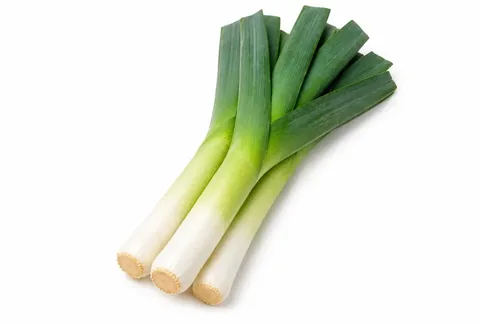
Leeks and celeriac grow well together — both are long-season crops requiring similar conditions and sharing no significant pests or diseases. They make efficient use of bed space together.
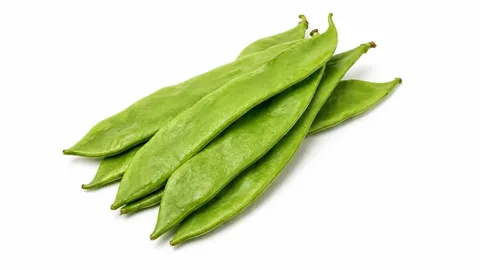
Beans fix nitrogen that benefits the hungry celeriac plants. Runner or French beans grown alongside celeriac improve soil fertility and the two crops complement each other well.
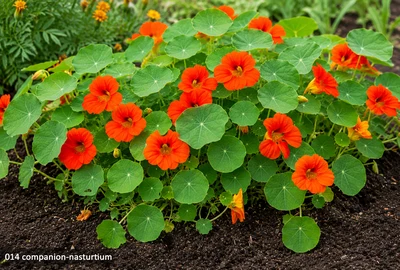
Nasturtiums are a cheerful, easy flower for the edge of the bed. They are grown here for colour — do not rely on them to keep aphids off the celeriac.
Celeriac takes six months or more to grow to full size, and both the seed and young plants dislike cold, so it is sown indoors in March or April and planted out between late May and early June. Sow thinly and cover the seed with only a light dusting of compost; a heated propagator at about 15°C helps. Growth is slow at first, but once planted out in moist, rich soil it carries on steadily through summer and autumn.
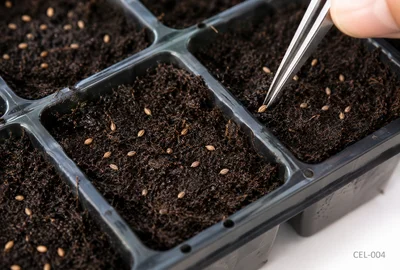
Sow thinly into module trays or small pots of moist seed compost in March or April, at about 15°C. Sift just a light dusting of compost over the seed — barely enough to hide it. Germination is slow and can take up to 3 weeks.
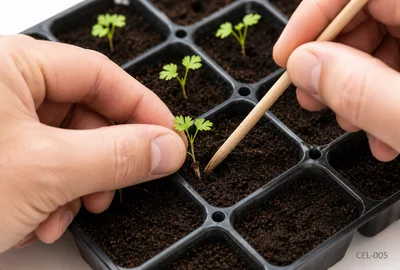
Once the seedlings are big enough to handle, thin those in modules to one per cell and move those in pots into pots of their own. Hold them by a leaf, never by the fragile stem.
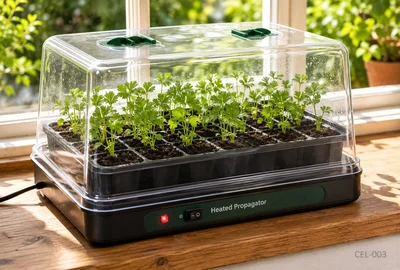
Once the seedlings are up, keep them somewhere bright that stays above 10°C until they go outside from late May. A colder spell now can make the plants bolt later in the year.
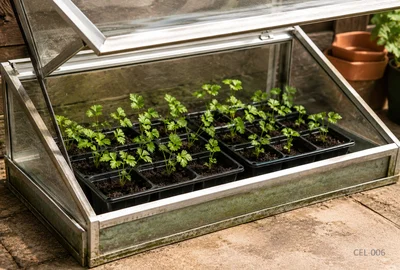
In the week or two before planting out, harden the plants off — set them outdoors on mild days and bring them in at night. Bring them in if it turns cold, as chilling below 10°C can trigger bolting.
Plant out between late May and early June, once frosts are over. Space 30cm apart in rows 40–45cm apart, in moisture-retentive soil enriched with compost. Keep the stem base at soil level, never buried, and cover with fleece or cloches at first.
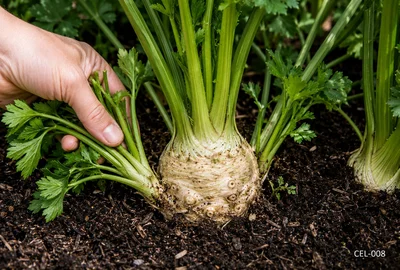
Through summer, take off outer leaves as they flop down to the horizontal, along with any side shoots and any leaves showing dry patches or spots. This opens up the crown so it can develop.
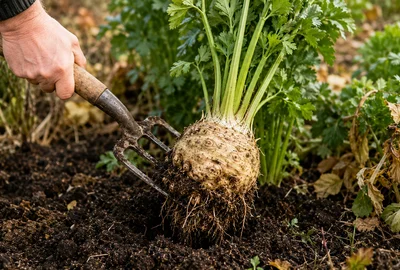
Lift from October as needed, easing each root out with a fork (Prinz and Monarch can be ready in September). Celeriac is very hardy — leave it in the ground and lift it right through to March, with straw round the plants in cold areas.

| Region | Sow / plant | Harvest | Notes |
|---|---|---|---|
| Scotland & Far North | Mar–Apr | Oct–Mar | Sow indoors in March–April and keep above 10°C. Plant out in June once frosts have passed, under fleece at first. In winter, spread straw round the plants so the soil does not freeze hard. · Mar–Apr (indoors) |
| Northern England | Mar–Apr | Oct–Mar | Sow indoors in March–April. Plant out late May to June, under fleece if nights are cold. Lift from October; straw round the plants helps in hard winters. · Mar–Apr (indoors) |
| Midlands & Wales | Mar–Apr | Oct–Mar | Sow indoors in March–April. Plant out late May to early June. Lift from October through to March. Keep the soil moist all summer. · Mar–Apr (indoors) |
| Ireland & Isle of Man | Mar–Apr | Oct–Mar | Sow indoors in March–April. Plant out late May to early June. Cool, damp summers suit celeriac well. · Mar–Apr (indoors) |
| South & SE England | Mar–Apr | Oct–Mar | Sow indoors in March–April. Plant out late May. Water well in dry summers — celeriac must not dry out. Lift from October. · Mar–Apr (indoors) |
| South Coast & SW | Mar–Apr | Oct–Mar | Sow indoors in March–April. Plant out late May. In mild winters the roots can usually stay in the ground until March. · Mar–Apr (indoors) |
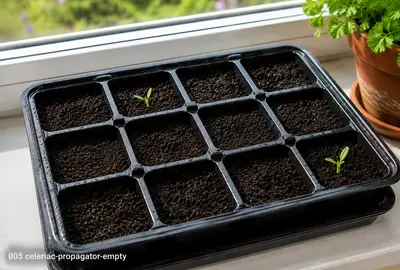
A heated propagator makes celeriac much easier to start. The tiny seed needs steady warmth (about 15°C) and good light, and a March sowing gives the crop the long season it needs.
Set to about 15°C. Keep the tray in good light under the lid, with the vent part open. Germination is slow and often uneven, and can take as long as three weeks. When the seedlings are up, move them somewhere bright that stays above 10°C — a sunny windowsill, conservatory or greenhouse.
Without a heated propagator, cover the pot or tray with a clear lid, or slip it into a clear polythene bag, then stand it somewhere warm and bright indoors. Expect germination to be slower and less even than with bottom heat. Keep the seedlings above 10°C once they are up.
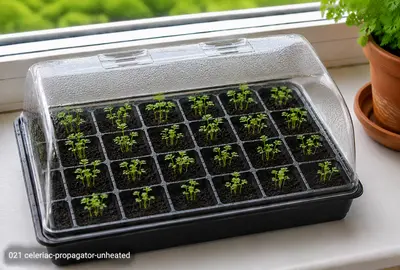
Standard unheated propagator — A lidded seed tray traps warmth and humidity around germinating seeds without electricity. Performance depends entirely on room temperature — best placed on a warm windowsill and used from March onwards. Replace the lid promptly after watering. Remove it completely the moment seedlings emerge to prevent damping off.
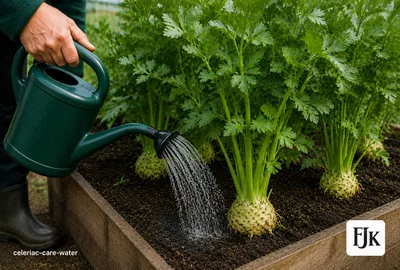
Celeriac needs soil that stays damp all season and will not tolerate drought. Uneven watering can make the swollen root split and turn hollow in the middle. Should the soil dry out, give it a thorough soaking rather than frequent light sprinkles, and spread a deep mulch of compost over the soil to hold moisture — keeping it clear of the crown.
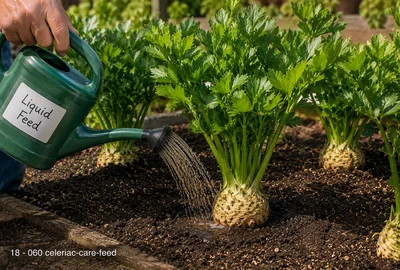
Celeriac is a hungry, long-season crop, so most of its food comes from the compost or well-rotted manure dug in before planting and the compost mulch on top. On poorer soil, or if plants look pale and slow, a balanced liquid feed every 2–3 weeks in summer will help.
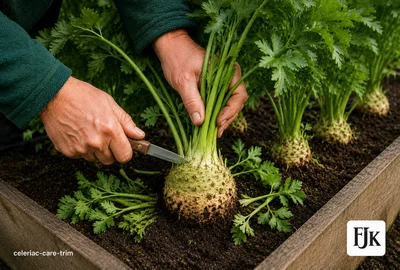
As the plants grow, remove outer leaves once they flop down to the horizontal, together with any side shoots from around the base of the swelling root. Take off any leaves that are spotted or have dry, brown patches too — these can be signs of celery leaf spot or the celery leaf miner. Leave the upright central leaves, which feed the root.
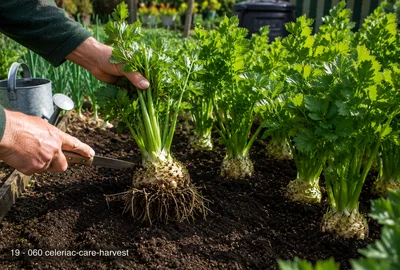
Celeriac is ready from October and can be lifted right through to March. The swollen stems usually grow to about 12cm across and stay tender even when large. Ease each one out with a fork rather than cutting it. In cold areas, tuck straw round the plants so the ground does not freeze hard.
Slugs and carrot fly can damage young roots. Protect with fine mesh from planting. Watch for pale blotches on the leaves from celery leaf miner and pick off affected leaves. Never let the soil dry out — irregular watering causes splitting.
Full identification and treatment advice is in the Pests and Diseases sections.
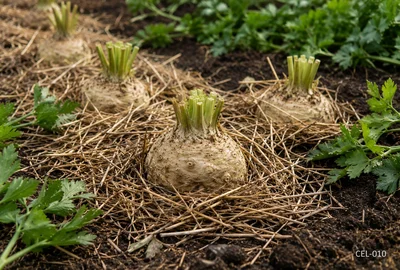
Celeriac can stay in the ground all winter and be lifted as needed from October to March. In cold spots, tuck a deep layer of straw round the plants so the soil does not freeze hard. On heavy or waterlogged ground, lift in late autumn, twist off the leaves and keep the roots in a box of peat-free compost or coir in a cool shed.

Grated raw and mixed with mustard mayonnaise. Keep it covered in the fridge and eat within 2 days. The classic French way to serve celeriac raw.

Roast in chunks, cool, then keep in the fridge and eat within 2 days — or freeze in portions for soups and stews and use within 3 months.
Celeriac seed is tiny and must not be buried deeply. Sow it thinly and sift no more than a light dusting of compost over the top — just enough to hide it. Keep the surface moist while you wait, as germination can take up to three weeks.
Prick out once the seedlings are big enough to hold by a leaf — one per module, or each into its own small pot. Crowded seedlings grow weak and are hard to separate without damaging the roots.
Through summer, take off the outer leaves as they drop to the horizontal, along with any side shoots. This keeps the crown open so it can develop, and gives you a chance to remove any spotted or blotched leaves early.
Celeriac is very hardy and can stay in the ground through winter, to be lifted as needed until March; its flavour grows stronger the longer it stands. In cold areas, tuck a deep layer of straw round the plants so the soil does not freeze hard. On heavy or waterlogged soil, lift the roots in late autumn and store them instead.