🌱 SowMay (indoors) or May–Jun (direct)
🌾 HarvestJul–Oct
☀ PositionFull sun, sheltered
📐 Spacing15cm
DifficultyEasy
⚡ Quick facts
- Difficulty
- Easy
- Crop type
- Tender Annual Climber
- Position
- Full Sun, Sheltered from Strong Wind
- Soil
- Rich, Deep, Moisture-Retentive
- Container friendly
- Large containers — dwarf varieties only
- Greenhouse recommended
- No
- Outdoor suitable
- Yes — all UK regions
- Frost hardy
- No — frost kills plants at any stage
01 About
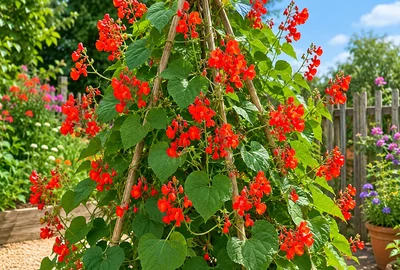
Runner beans are one of the great joys of the British kitchen garden — fast, spectacular, and almost absurdly productive. A wigwam of scarlet-flowered runners is as ornamental as it is edible, and a single sowing in late May will feed a family continuously from July to October. They are forgiving, easy to grow, and produce generous harvests with minimal effort. The key is picking consistently and watering well at flowering — get those two things right and the plant will reward you abundantly all season.
02 What to Grow
Runner beans all produce the same long flat pods, but they differ significantly in pod length, stringiness, flower colour, plant height, and performance in dry conditions. The three broad groups cover the full range: classic red-flowered heritage types bred for flavour and spectacle; bicolour and white-flowered varieties that perform better in hot, dry spells; and dwarf runner beans that need no support at all and work well in containers and smaller gardens. All produce excellent pods — the choice depends on your space, conditions, and aesthetic preference.
03 Varieties
The number of varieties shown for each crop is based on UK consumption data (2025/26) — the more popular the crop, the more variety choices we include.
🔴 Classic Red-Flowered
The traditional British runner bean — tall, spectacular, and productive. Vivid scarlet flowers make them as ornamental as they are edible.

Scarlet Emperor
Classic · Heritage
The most famous British runner bean. Vigorous, tall to 3m+. Long, flat, deep green pods with outstanding flavour. Beautiful scarlet flowers. An open-pollinated heritage variety grown in UK gardens for over 100 years.
Enorma
Classic · Modern
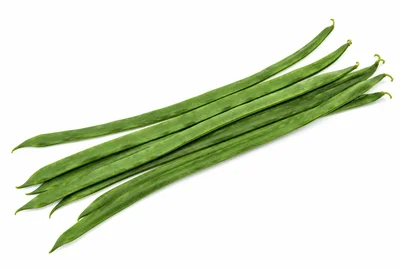
Produces exceptionally long, smooth, stringless pods — one of the longest available. Heavy yields over a long season. The standard allotment runner bean.

Polestar
Classic · Modern
Stringless, smooth pods to 30cm. Heavy, reliable crops throughout summer. Good resistance to halo blight. A popular alternative to Enorma.
🌸 Bicolour & White-Flowered
White or bicolour flowers. Generally more reliable than red-flowered types in hot, dry summers — better pod set when temperatures are high.

Painted Lady
Bicolour · Heritage
A beautiful heritage variety with distinctive red and white bicolour flowers. Less vigorous than modern types but produces excellent flavoured pods. One of the oldest cultivated runner beans, recorded in UK gardens since the 17th century.
White Lady
White-flowered
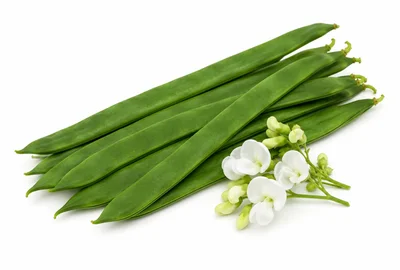
RHS Award of Garden Merit. White flowers. Said to set pods more reliably than red-flowered types in hot, dry conditions. Long, smooth, stringless pods. One of the most popular white-flowered varieties.

Moonlight
White-flowered
White flowers, creamy-white seeds. Very heavy yielder with a long cropping season. Stringless, tender pods. A reliable modern variety that performs consistently across UK regions.
🌿 Dwarf Runner Beans
Compact, self-supporting plants reaching only 40–60cm. No canes or wigwams needed. Ideal for containers, small gardens, and exposed sites.
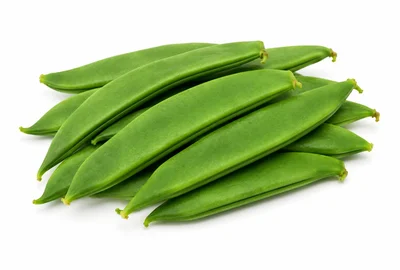
Hestia
Dwarf · Bicolour
Only 40–45cm tall. Beautiful red and white bicolour flowers. Crops prolifically with short, tender stringless pods. The best dwarf runner bean for containers and small spaces.
- Dwarf
- Container
- Stringless
- Beginners

Pickwick
Dwarf · Bush
Compact dwarf bush habit reaching only 45cm. Stringless pods of good length. Very reliable and productive for its size. Excellent in exposed, windy gardens where tall beans struggle.
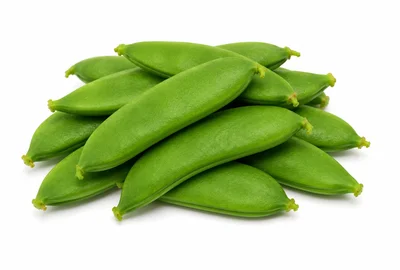
Hammonds Dwarf Scarlet
Dwarf · Heritage
One of the original dwarf runner beans. Classic scarlet flowers, short compact habit to 50cm. Open-pollinated heritage variety. Reliable and productive — a good choice where space or wind exposure prevents growing tall types.
04 Where to Source
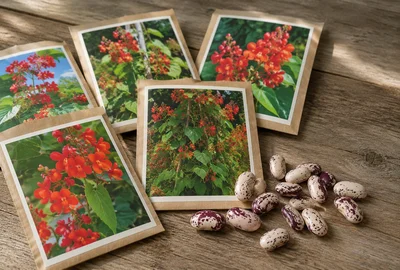
Runner bean seeds are widely available from garden centres, supermarkets, and online seed companies. Varieties like Scarlet Emperor and Enorma are found everywhere. For heritage types like Painted Lady and specialist dwarf varieties, online seed companies offer much wider choice.
📬 Seeds by Post
Online seed companies offer the full range including heritage types and specialist dwarf varieties. Runner bean seeds are large and inexpensive — good value in larger packets. Order from January. Seeds remain viable for 3–4 years if stored cool and dry.
🏪 Garden Centres
Most garden centres carry a solid selection from February and ready-to-plant young plants from late April. Scarlet Emperor, Enorma, and White Lady are the standard stock. For anything beyond the mainstream, order online.
Timing tip: Order seeds in January and February. Popular varieties sell out quickly. Garden centres and markets are a reliable backup from April onwards.
05 Planting Options
🎋 Wigwam
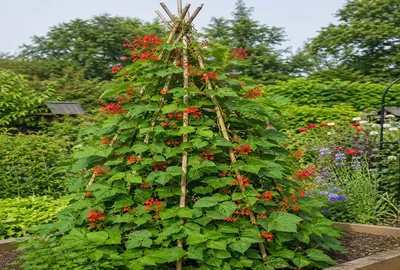
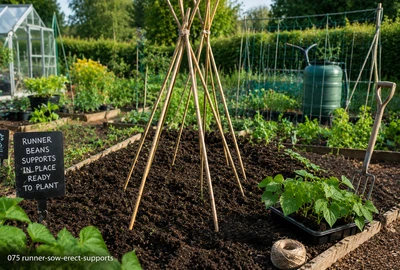
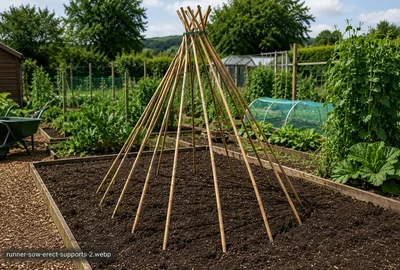
The classic wigwam of 6–8 canes is the most elegant and practical way to grow runner beans. Push 6–8 canes of at least 2.4m length into the ground in a circle approximately 60cm across. Lean them inward to meet at the top and tie firmly. Sow or plant one bean per cane. The wigwam acts as its own windbreak and allows easy picking from all sides. Leave a small gap on one side to access the interior. Wigwams are genuinely ornamental when covered in flowers.
Suitable varieties: All tall varieties. Allow at least 60cm diameter per wigwam and 90cm between wigwams.
🌿 Double Row
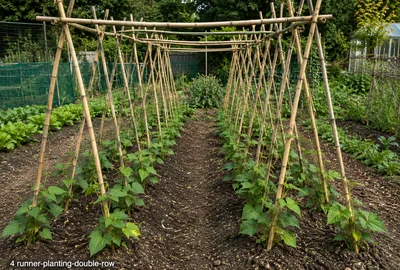
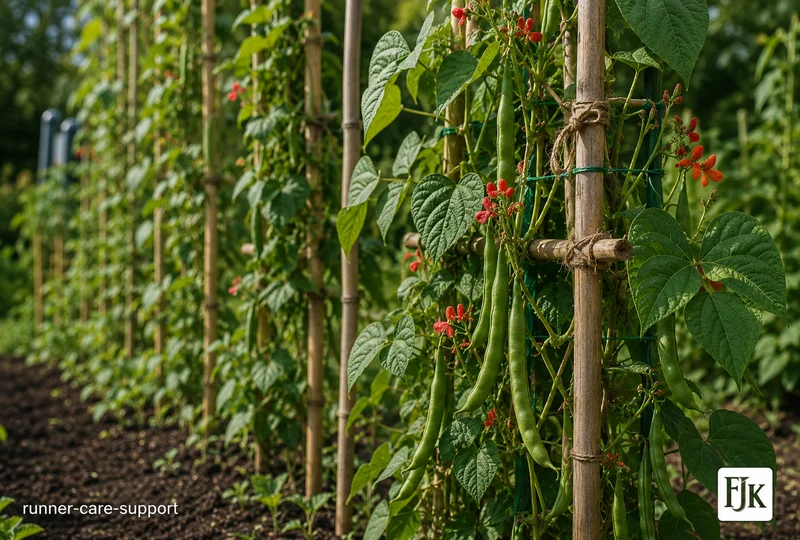
A double row of crossed canes is the traditional allotment method and maximises production per square metre. Push canes in pairs at 15cm intervals, crossing them at about 2m height and tying at the cross-point. Secure a horizontal cane along the top. Sow or plant one bean at the base of each cane. A double row 3m long provides continuous picking for a family of four from July to October. Erect the support structure before sowing.
Suitable varieties: All tall varieties. Rows need at least 60cm between them. Ideal for allotments and larger gardens.
🪣 Container — Dwarf Types
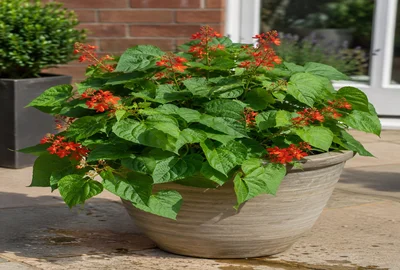
Dwarf runner beans are well suited to large containers and are the only practical option for pot growing. Use a container of at least 40cm diameter and 35cm deep. Fill with peat-free multipurpose compost mixed with added grit for drainage. Plant 4–5 beans around the edge. Dwarf types need no support, but a short wigwam of 60cm canes looks attractive. Water daily in warm weather. Begin feeding with a high-potash liquid feed once flowers appear.
Suitable varieties: Hestia, Pickwick, Hammonds Dwarf Scarlet only. Standard tall varieties are not suitable for containers.
06 Companion Planting
✅ Grow nearby

Sweetcorn and runner beans are classic companions. The corn provides a natural windbreak and the beans fix nitrogen that benefits neighbouring crops.
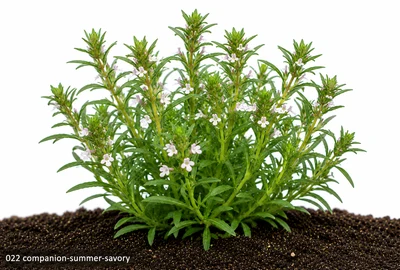
🌿 Summer Savory
Summer savory is traditionally grown alongside beans — said to improve flavour and deter bean aphids (blackfly). A reliable companion in the kitchen garden.

Carrots and beans make good neighbours — their root depths differ so they don't compete, and beans fix nitrogen that benefits the following carrot crop.
❌ Keep apart
- 🧅 Onions — Alliums inhibit the growth of legumes when planted in close proximity. Keep all alliums well away from bean crops.
- 🧄 Garlic — Like onions, garlic produces root secretions that inhibit bean growth. Maintain rotation and never follow garlic with beans without a gap.
- 🌿 Fennel — Fennel root chemicals stunt the growth of most neighbouring plants including beans. Grow fennel in an isolated bed.
07 Sowing — How To
🌡️ Indoors — 9cm Pots
Fill pots
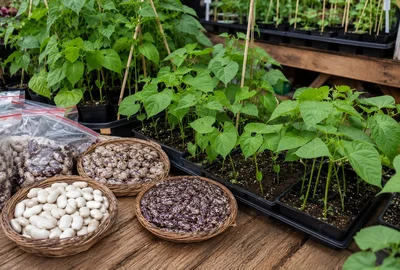
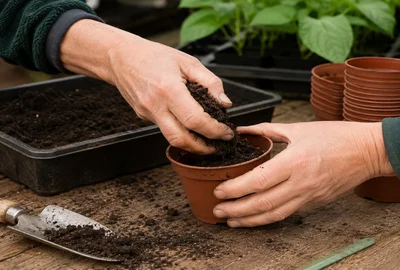
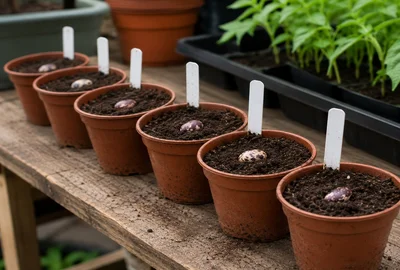
Fill 9cm pots with peat-free multipurpose compost. Runner beans have large root systems and need individual pots — do not sow in seed trays. One pot per seed.
Sow seeds
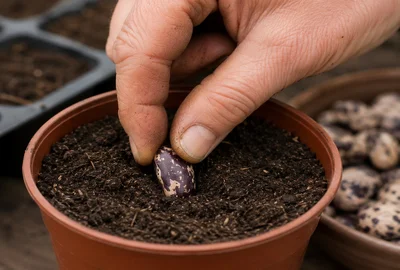
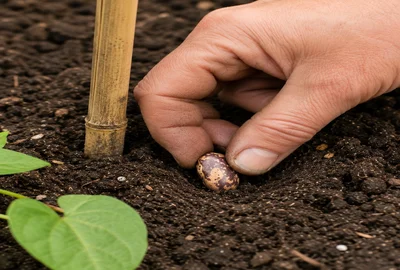
Push one seed per pot to a depth of 5cm. Runner bean seeds are large and easy to handle — no thinning required. Sow with the eye (the small scar) facing downward.
Label and water
Label clearly with variety and date. Water thoroughly after sowing. Keep compost consistently moist but not waterlogged.
Harden off
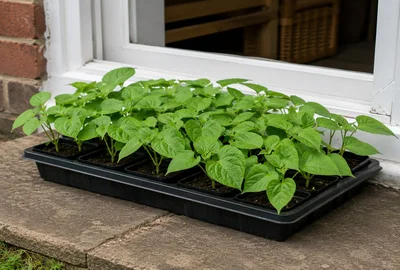
Before planting out, harden off indoor-raised plants over 7–10 days. Place outside in a sheltered spot during the day and bring back in at night. Do not plant out until all frost risk has passed.
Erect supports
Put the support structure in place before planting — pushing canes into the soil around established plants damages roots. Wigwams, crossed double rows, and netting are all effective.
Sow direct
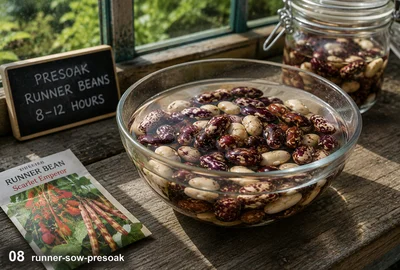
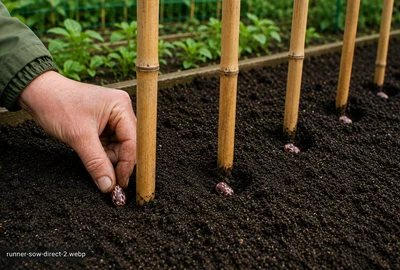
From late May onwards, sow direct into prepared soil, 5cm deep and 15cm apart at the base of supports. Pre-soak seeds for 12 hours in warm water to speed germination and outwit bean seed fly.
Indoors — 9cm Pots — regional timing| Region | Sow / plant | Harvest | Notes |
|---|
| Scotland & Far North | Apr–May | Jul–Oct | Early May (indoors) |
|---|
| Northern England | Apr–May | Jul–Oct | Early May (indoors) |
|---|
| Midlands & Wales | Apr–May | Jul–Oct | Late Apr (indoors) |
|---|
| Ireland & Isle of Man | Apr–May | Jul–Oct | Late Apr (indoors) |
|---|
| South & SE England | Apr–May | Jul–Oct | Late Apr (indoors) |
|---|
| South Coast & SW | Apr–May | Jul–Oct | Late Apr (indoors) |
|---|
🌱 Direct Sow — Outdoors
Prepare the site
Prepare a rich, deeply dug bed. Erect the support structure first — wigwam, crossed canes, or netting frame. Runner beans need something to twine around from the moment they are planted.
Pre-soak seeds
Soak seeds in warm water for 12 hours before sowing. They visibly swell and often show a protruding radicle. Pre-soaking speeds germination by 2–3 days and reduces the risk of bean seed fly attack.
Sow at base of supports
Push seeds 5cm deep at the base of each cane or support, one seed per position, 15cm apart. Firm the soil gently over each seed. Water in well.
Direct Sow — Outdoors — regional timing| Region | Sow / plant | Harvest | Notes |
|---|
| Scotland & Far North | Apr–May | Jul–Oct | Late May–early Jun |
|---|
| Northern England | Apr–May | Jul–Oct | Late May |
|---|
| Midlands & Wales | Apr–May | Jul–Oct | Mid-May |
|---|
| Ireland & Isle of Man | Apr–May | Jul–Oct | Mid-May |
|---|
| South & SE England | Apr–May | Jul–Oct | Early May |
|---|
| South Coast & SW | Apr–May | Jul–Oct | Early May |
|---|
08 Using a Propagator
Runner beans need warmth to germinate but not high heat — they do best in a reasonably warm spot rather than a heated propagator at full temperature.
Heated propagator
A propagator set to 18–20°C is ideal for early May indoor sowings — if you don't have one, a warm windowsill or the top of a boiler works equally well. Move seedlings to a bright, cool spot as soon as they emerge to prevent them becoming leggy.
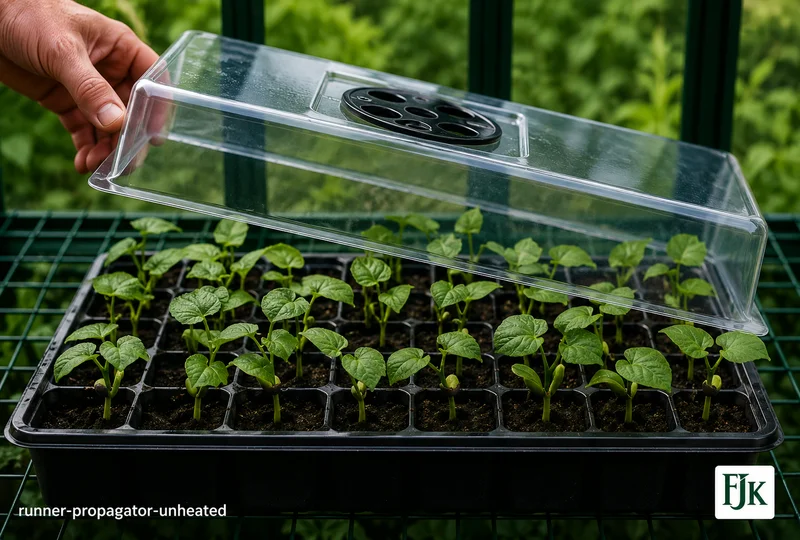
Unheated propagator
An unheated propagator on a warm windowsill is ideal from mid-May onwards when conditions are naturally warmer — without one, a clear polythene bag over each pot until germination gives the same humidity and warmth retention.
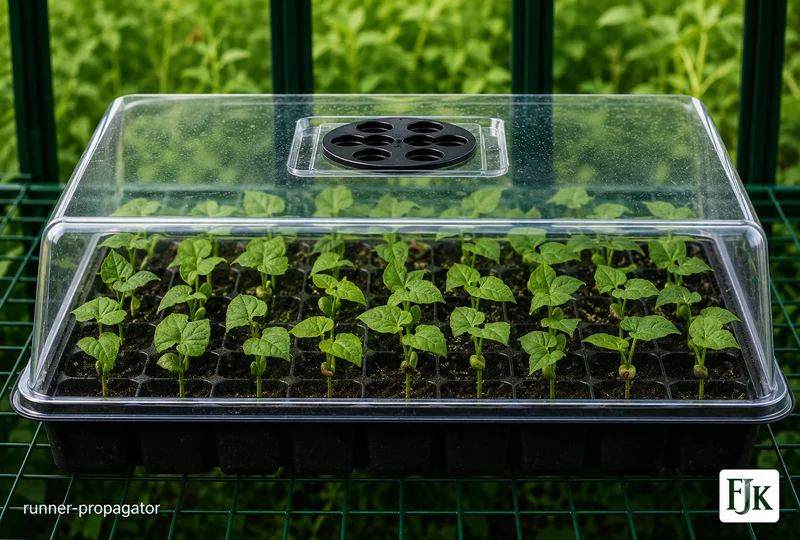
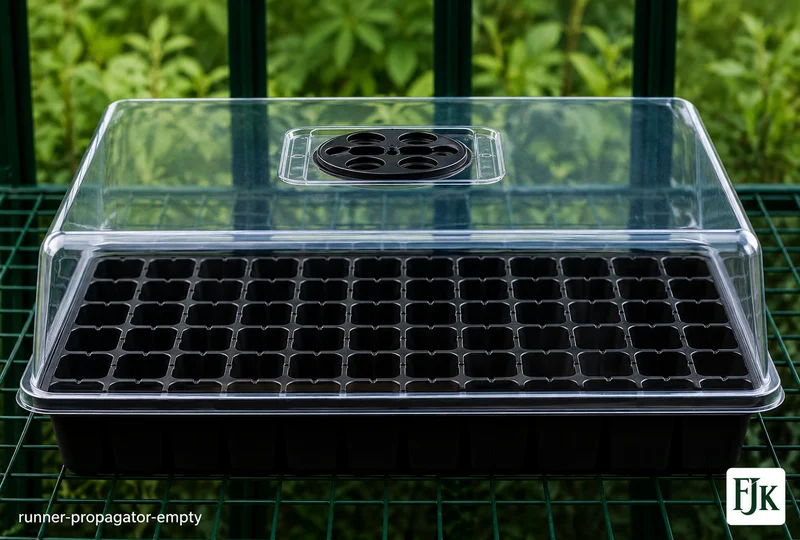
Standard unheated propagator — A lidded seed tray traps warmth and humidity around germinating seeds without electricity. Performance depends entirely on room temperature — best placed on a warm windowsill and used from March onwards. Replace the lid promptly after watering. Remove it completely the moment seedlings emerge to prevent damping off.
Windowsill alternative: A bright south-facing windowsill can substitute from late February. Place a clear polythene bag loosely over the pot during germination. Remove immediately once seedlings appear.
09 Soil Requirements
- pH
- 6.0–7.0
- Best
- Loam, Clay loam
- Tolerates
- Sandy loam
- Avoid
- Waterlogged, Very sandy
💡 Deep, moisture-retentive soil. Dig a bean trench with compost in winter.
10 Ongoing Care
💧 Watering
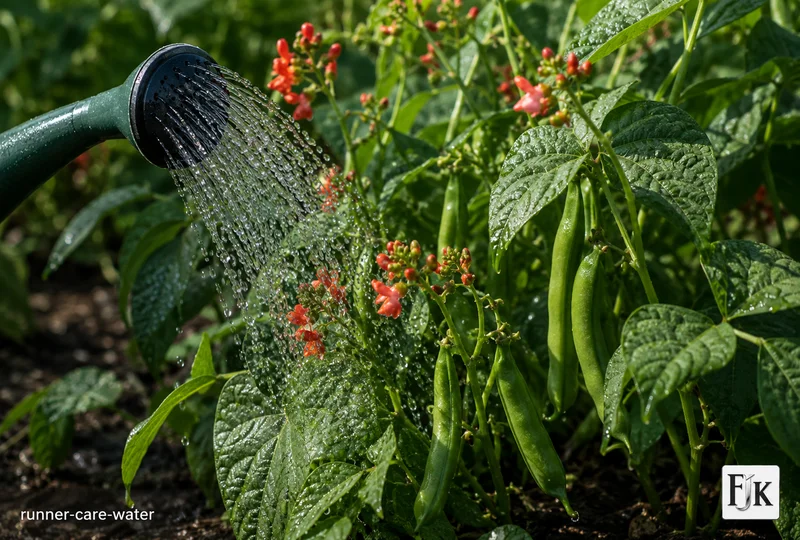
Consistent watering is most critical when flowers are forming and pods are swelling. Drought at flowering causes flowers to drop without setting — the most common reason for poor crops. Water deeply at the base every 2–3 days in normal weather, daily in hot spells. Mulching around plants retains moisture significantly.
🌿 Feeding
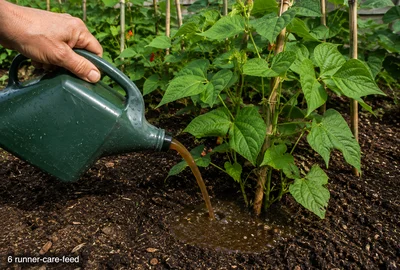
Begin a high-potash liquid feed every 10–14 days once the first flowers open. Runner beans fix their own nitrogen through root nodules, so high-nitrogen feeds are counterproductive. Use a balanced or high-potash fertiliser throughout the season.
✂️ Picking
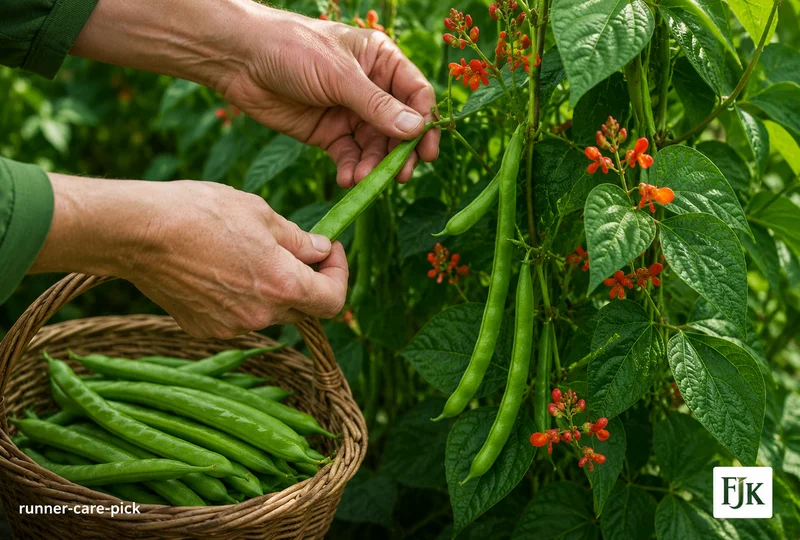
Pick every 2–3 days without exception once pods reach 15–20cm. A pod left to mature fully signals the plant to stop producing flowers. One missed harvest at peak season can noticeably reduce subsequent yields. Young pods at 15–18cm have better flavour and texture than older ones.
🎋 Supporting
Runner beans on tall supports are vulnerable to wind rock. Ensure supports are firmly anchored and check ties regularly. If the wigwam rocks, earth up around the base of the canes and add extra ties. Train wayward shoots back onto the support as they grow.
11 Watch Out For
WarningBean seed fly is the most damaging pest at germination — larvae eat germinating seeds before they emerge. Pre-soak seeds before sowing or raise plants indoors as the best protection. Halo blight causes pale-ringed brown spots on leaves and pods — remove and destroy affected material immediately and never compost it. Slugs attack young plants — protect with copper rings, grit, or nematode drench.
🐛 Insects & pests
- 🐜 Aphids (Blackfly & Greenfly) — Curled, distorted, or stunted growing tips — aphids inject saliva that causes leaf curl to protect them
- 🐌 Slugs & Snails — Silver slime trails on leaves, soil, and pots — often the first sign before damage is found
🍄 Diseases to watch
- 🟠 Rust — Rust diseases are caused by a large family of obligate parasitic fungi, each specific to its host or a narrow range of hosts. Leek rust (Puccinia allii) is the most common in UK vegetable gardens, producing vivid orange pustules on leek leaves in summer and autumn. While rarely fatal, severe infections significantly weaken plants and reduce yields.
- 🩶 Botrytis (Grey Mould) — Botrytis cinerea (grey mould) is the most ubiquitous fungal pathogen in temperate gardens — present in virtually every garden soil and on plant debris. It becomes a disease only when conditions favour it: cool, humid, poorly ventilated environments with damaged or senescent plant tissue. In a greenhouse in autumn it can destroy an entire tomato or grape crop.
- 🌿 Mosaic Virus (TMV / CMV) — Tobacco mosaic virus (TMV) and Cucumber mosaic virus (CMV) are among the most widespread plant viruses affecting vegetable crops worldwide. TMV is extraordinarily stable — it can remain viable on contaminated hands and tools for years, and even survives in processed tobacco. There is no cure; infected plants must be destroyed.
- ⬜ Sclerotinia (White Mould) — Sclerotinia sclerotiorum causes a sudden, dramatic collapse of apparently healthy plants. It produces dense white cotton-wool-like mycelium and large black resting bodies (sclerotia) that persist in soil for up to 10 years. A single severely affected bed can remain a reservoir for re-infection for a decade.
Full identification and treatment advice is in the Pests and Diseases sections.
12 Storage & Preserving
🫘 Fresh Storage
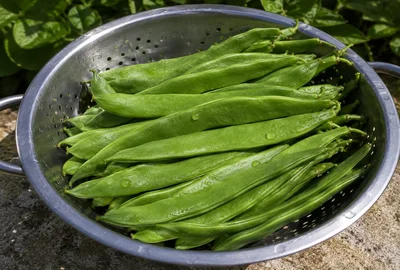
Freshly picked runner beans keep in the fridge for 3–5 days. Store unwashed in a paper bag or perforated plastic bag in the salad drawer. For the very best flavour, eat on the day of picking. Young pods at 15–18cm are significantly better than older, larger ones.
❄️ Blanch & Freeze
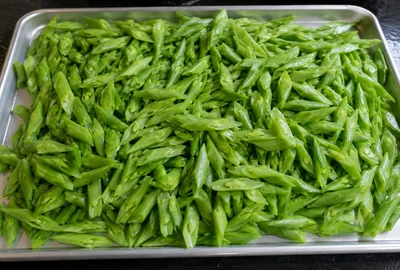
Freezing is the best way to deal with a glut. String and slice beans diagonally, blanch in boiling water for 2–3 minutes, then plunge into iced water. Drain thoroughly. Freeze in a single layer on a tray first then bag up in portions. Use within 12 months. Best used in cooked dishes — stir-fries, curries, soups, and casseroles.
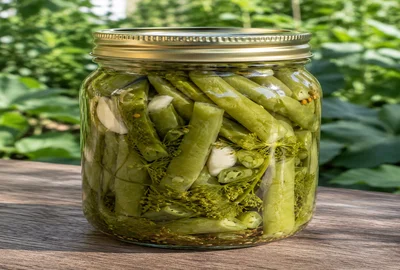
🫙 Pickled Beans
Runner beans make good pickles, excellent alongside cold meats, strong cheese, and charcuterie. Follow a tested recipe.
13 Expert Tips
💡 Pre-Soaking Seeds
Pre-soaking runner bean seeds in warm water for 12 hours before sowing dramatically speeds germination and reduces the risk of bean seed fly damage. The seeds swell noticeably and the radicle (root tip) is often already emerging before the seed goes into the compost.
💡 Indoor Raising
Raise plants indoors in individual 9cm pots rather than direct sowing if bean seed fly has been a problem in your garden. Established seedlings transplant with minimal disturbance and are far more resistant to larvae than germinating seeds.
💡 Picking Frequency
The single most productive thing you can do for runner beans is to pick every 2–3 days without exception. A single mature pod left on the plant sends a signal to reduce flower production. During peak season, check plants daily.
💡 Nitrogen Nodules
Runner beans fix atmospheric nitrogen through root nodules. When clearing at season end, cut the plants down but leave the root systems in the ground. The nodules release nitrogen slowly over autumn and winter — effectively a free fertiliser for the following season's brassicas.
14 Common Mistakes
⚠ Sowing & Planting
- Sowing before the last frost — a single frost kills young runner bean plants outright.
- Sowing into cold, wet soil below 12°C — seeds rot rather than germinate.
- Erecting supports after planting — canes pushed in around established plants damage roots.
- Sowing too many at once — small sowings 2–3 weeks apart extend the harvest and avoid glut.
⚠ Ongoing Care
- Not picking frequently enough — pods left to mature on the plant stop further flower production immediately.
- Under-watering at flowering — the single most common cause of poor pod set.
- Picking pods too old — once beans swell visibly in the pod, texture and flavour decline significantly.
- Composting diseased material — halo blight survives composting; always bin or burn infected plants.