⚡ Quick facts
- Difficulty
- Moderate
- Crop type
- Tender Annual
- Position
- Full Sun, Sheltered from Strong Wind
- Soil
- Rich, Well-Drained, Moisture-Retentive
- Container friendly
- Not recommended — needs block planting for pollination
- Greenhouse recommended
- No
- Outdoor suitable
- Yes — all UK in a warm position
- Frost hardy
- No — plant after last frost
01 About
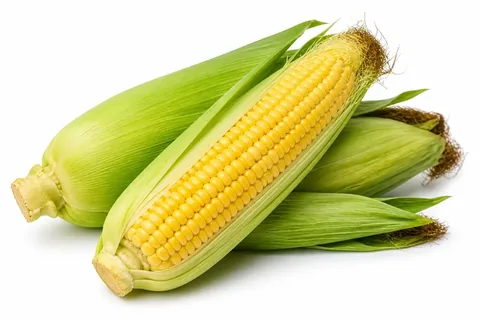
Nothing from the garden tastes more intensely of summer than a cob of sweetcorn eaten within minutes of picking. The sugar in the kernels begins converting to starch the moment the cob is harvested — homegrown corn eaten immediately is a completely different food from anything in a supermarket.
02 What to Grow
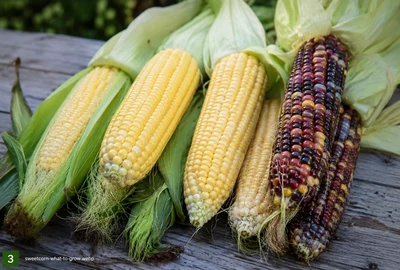
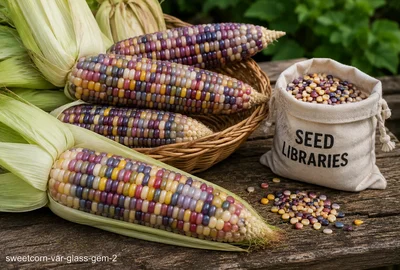
Sweetcorn divides into three main groups — standard, supersweet (SH2 types), and bicolour. Standard varieties have excellent flavour but convert sugar to starch quickly. Supersweet types are notably sweeter and hold their sweetness for longer after harvest, making them more forgiving. Bicolour and heritage varieties offer visual drama and interesting flavours — Painted Mountain and Glass Gem are grown more for ornament than eating.
03 Varieties
The number of varieties shown for each crop is based on UK consumption data (2025/26) — the more popular the crop, the more variety choices we include.
⚡ Early & Traditional
Traditional sweetcorn varieties and early-maturing types that are reliable across the whole of the UK. These varieties perform well even in cooler summers and shorter growing seasons — the safest choice for northern growers.
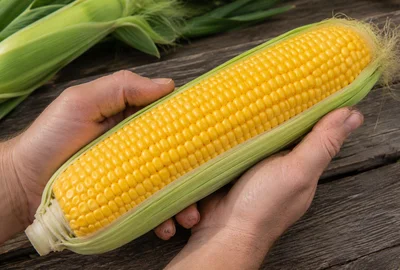
Earlibird F1
Standard · Early
One of the earliest maturing sweetcorn varieties available in the UK. Compact plants producing well-filled cobs with rich, traditional sweetcorn flavour. Reliable in northern gardens where the season is short.
- AGM
- Outdoors
- F1
- Early
- Beginners
- Northern UK
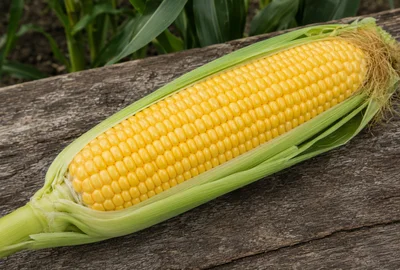
Lark F1
Standard · Mid
RHS Award of Garden Merit variety. Very sweet, extremely tender kernels with exceptional flavour — widely regarded as one of the best-tasting standard sweetcorn varieties for the UK garden.
- Outdoors
- F1
- AGM
- ⭐ Flavour
- Beginners
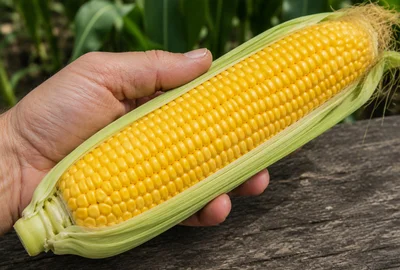
Kelvedon Glory
Standard · Traditional
A long-established heritage variety developed for UK conditions. Medium-sized, well-filled cobs with classic sweetcorn flavour. Open-pollinated — you can save seed from this variety year after year.
- Outdoors
- Heritage
- Open-Pollinated
- Traditional
🍬 Supersweet F1
SH2 supersweet varieties with significantly higher sugar content than standard types. The sweetness is retained longer after harvest, giving you more flexibility. Supersweet varieties must not be grown near other sweetcorn types as cross-pollination ruins the sweetness of both.
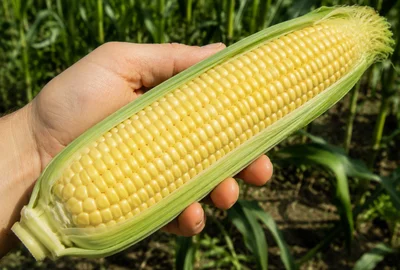
Sundance F1
Supersweet · SH2
A reliable mid-season supersweet variety and one of the most popular in UK gardens. Good disease resistance, sturdy plants, and cobs with outstanding sweetness that holds well after harvest.
- Outdoors
- F1
- Supersweet
- Beginners
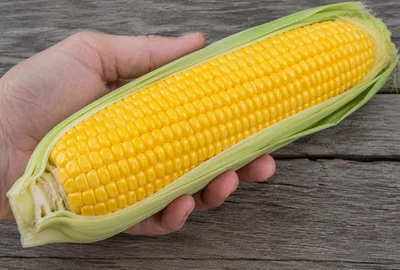
Swift F1
Supersweet · SH2 Early
An early-maturing supersweet F1 with excellent performance in northern UK gardens. RHS Award of Garden Merit. Long, well-filled cobs with very high sugar content and good flavour.
- Outdoors
- F1
- Supersweet
- AGM
- Early
- Northern UK
- ⭐ Flavour
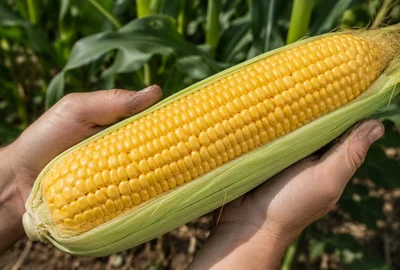
Incredible F1
Supersweet · SH2
A well-named large-cob supersweet variety. Produces impressively long, heavy cobs with tightly-packed golden kernels and exceptional sweetness. One of the most productive supersweet varieties available.
- Outdoors
- F1
- Supersweet
- ⭐ Yield
- ⭐ Flavour
🌈 Bicolour & Tender
Bicolour varieties combine yellow and white kernels in the same cob, giving a visually striking result and a subtler, more complex flavour. Tender-sweet types bridge the gap between standard and supersweet in both sweetness level and holding time.
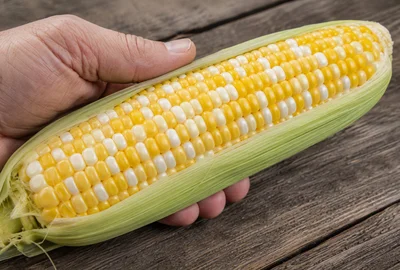
Mirai F1
Bicolour · Tender-Sweet
A Japanese-bred bicolour tender-sweet variety with alternating yellow and white kernels and an exceptionally silky, tender texture. Lower starch content gives a uniquely creamy mouthfeel. Highly regarded by chefs.
- Outdoors
- F1
- Bicolour
- ⭐ Flavour
- Tender-Sweet
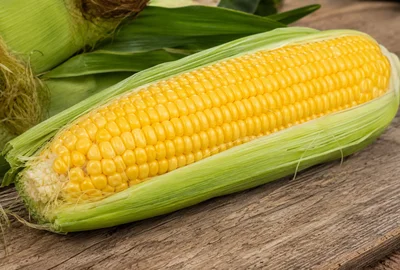
Bodacious F1
Tender-Sweet · Yellow
A tender-sweet golden sweetcorn with larger, plumper kernels than standard supersweet types. Combines the sweetness of SH2 types with the creamy texture of traditional varieties. Excellent fresh or lightly cooked.
- Outdoors
- F1
- Tender-Sweet
- ⭐ Flavour
- ⭐ Yield
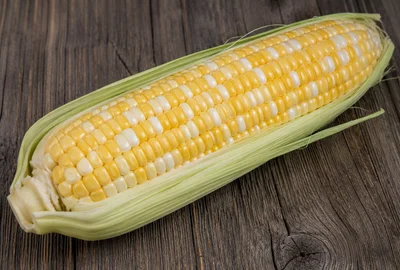
Ambrosia F1
Bicolour · Tender-Sweet
A classic bicolour tender-sweet variety with yellow and white kernels in a milky, creamy row pattern. Superb fresh eating quality with a balanced sweetness that does not become cloying. Very popular in the USA and increasingly grown in UK.
- Outdoors
- F1
- Bicolour
- Tender-Sweet
- ⭐ Flavour
🎨 Heritage & Novelty
Heritage and ornamental varieties grown as much for their extraordinary appearance as their culinary qualities. Painted Mountain, Strawberry Popcorn, and Glass Gem are the most visually dramatic plants in the kitchen garden — and an excellent way to introduce children to growing.

Painted Mountain
Heritage · Multicolour
A Native American heritage variety bred for cold tolerance in the Rocky Mountains. Produces stunning cobs with kernels in deep reds, oranges, purples and yellows. Can be ground into polenta or eaten fresh when young.
- Outdoors
- Heritage
- Heritage
- Open-Pollinated
- Ornamental
- Cold-Tolerant
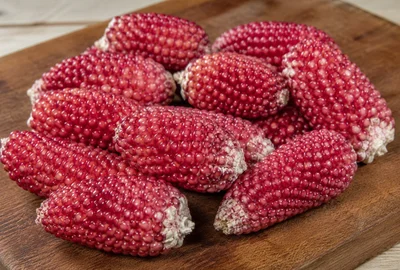
Strawberry Popcorn
Popcorn · Miniature
Compact plants producing clusters of small, rounded cobs with deep strawberry-red kernels. Primarily a popcorn variety — the dried kernels pop brilliantly. Also outstanding as a dried decoration. Very popular with children.
- Outdoors
- Heritage
- Popcorn
- Ornamental
- Open-Pollinated
- Fun Crop

Glass Gem
Flint · Rainbow
Perhaps the most visually spectacular food plant in cultivation. Produces cobs with jewel-like translucent kernels in every colour — purple, teal, pink, orange, yellow and red. A flint corn used for grinding or popcorn. The seeds must be seen to be believed.
- Outdoors
- Heritage
- Ornamental
- Open-Pollinated
- ⭐ Wow Factor
04 Where to Source
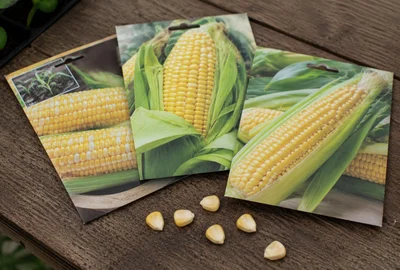
Sweetcorn is widely available as seed from most garden centres and online seed companies. F1 supersweet and tender-sweet varieties are best ordered from specialist seed companies to ensure freshness and a wide selection. Heritage varieties like Painted Mountain and Glass Gem are usually only available from specialist heritage seed suppliers or seed libraries.
📬 Seeds by Post
Specialist online seed companies offer the widest range including heritage and rare varieties. Order from January — popular F1 supersweet varieties sell out early. specialist seed companies are reliable UK sources.
🏪 Garden Centres
Most garden centres stock a small range of sweetcorn plants from May. Plug plants are a good option if you miss the sowing window. Look for sturdy, deep green plants — avoid root-bound trays.
🌱 Seed Libraries
For heritage varieties like Glass Gem, Painted Mountain and Strawberry Popcorn, check seed libraries, allotment groups, and specialist heritage seed suppliers and heritage seed libraries.
Timing tip: Order seeds in January and February. Popular varieties sell out quickly. Garden centres and markets are a reliable backup from April onwards.
05 Planting Options
🌿 Garden Bed / Block
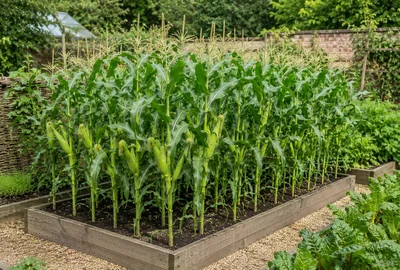
The standard method — plant in a grid pattern at 45cm spacing after the last frost. A minimum block of 16 plants (4×4) is essential for reliable wind pollination. Sweetcorn planted in a single row may produce malformed cobs with missing kernels due to poor pollination.
Suitable varieties: All varieties. The only reliable method for standard and supersweet types.
🪵 Raised Bed
Raised beds are excellent for sweetcorn — the improved drainage and soil warmth benefit germination and establishment. Plant in blocks of at least 4×4 even in a raised bed. The height of mature plants means raised bed sweetcorn makes a dramatic visual feature.
Suitable varieties: All varieties, especially supersweet types that benefit from warm soil.
06 Companion Planting
✅ Grow nearby
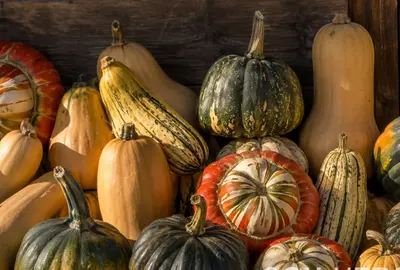
Part of the Three Sisters combination. Squash spreads at ground level, suppressing weeds and retaining moisture around sweetcorn roots. Both crops thrive in rich, warm conditions.
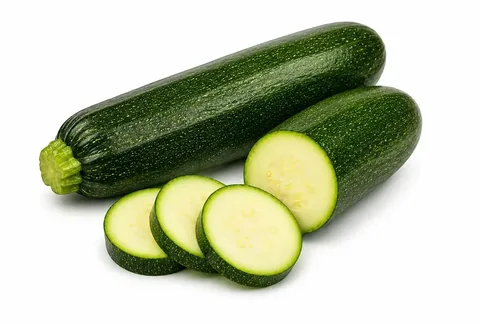
Courgettes grow low and wide beneath sweetcorn, acting as living mulch to suppress weeds and retain soil moisture. The combination makes excellent use of vertical and horizontal space.
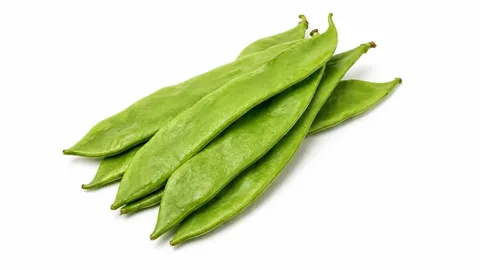
The third element of the Three Sisters — beans fix nitrogen in the soil that feeds the hungry sweetcorn plants. Climbing beans use the sweetcorn as a natural support structure.
❌ Keep apart
- 🍅 Tomatoes — Tall sweetcorn blocks can cast heavy shade on neighbouring crops. Site carefully to avoid shading lower-growing plants to the south.
- 🎃 Squash — Squash can work as a Three Sisters companion but vigorous trailing plants can swamp young sweetcorn. Only use compact bush types.
- 🫧 Beetroot — Sweetcorn is wind-pollinated and produces large quantities of pollen. This can affect nearby crops that rely on clean open flowers for pollination.
07 Sowing — How To
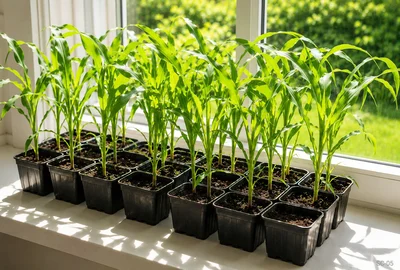
Sweetcorn dislikes root disturbance — sow one seed per 9cm pot rather than in module trays. This means each seedling can be transplanted with its root ball intact. Sow in April or May; earlier sowing risks leggy seedlings sitting indoors waiting for frost-free conditions.
Fill pots with compost
Fill 9cm pots with fresh multipurpose compost. Firm gently and water before sowing. One pot per plant — sweetcorn hates root disturbance.
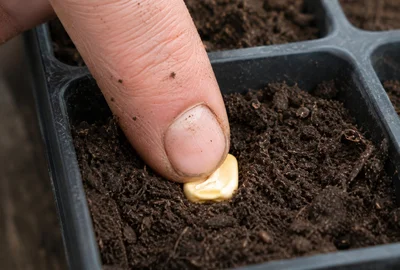
Sow one seed per pot
Push one large sweetcorn seed 2–3cm deep into the centre of each pot, pointed end down. Cover and firm gently.
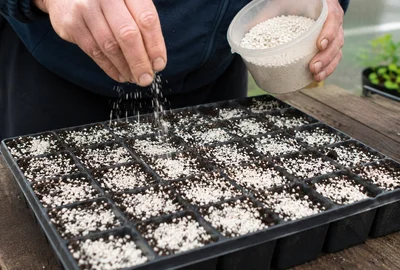
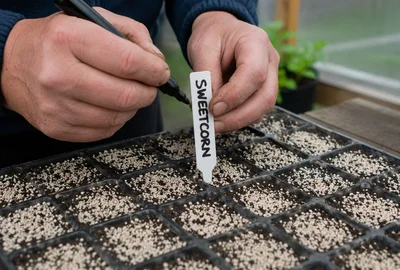
Cover and label
Cover with vermiculite or fine compost. Label with variety and date. Place on a warm windowsill at 18°C+ — no heated propagator needed.
Label the tray
Write variety name and sowing date clearly on labels. Different sweetcorn varieties look identical as seedlings but must not be mixed.
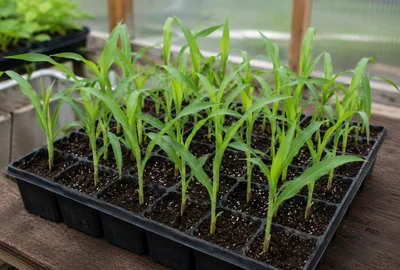
Grow on until plant out
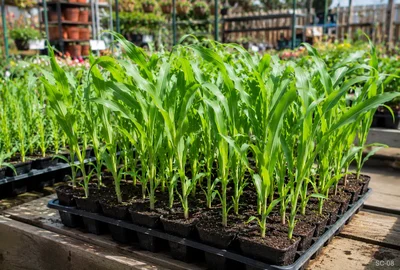
Seedlings grow fast once germinated. Grow on at a bright, warm windowsill until they are 15–20cm tall with 3–4 leaves, then harden off for 7–10 days before planting out.
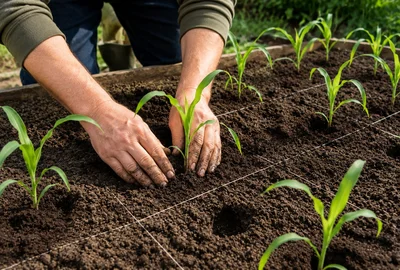
Plant out in a block
After hardening off, plant in a grid pattern at 45cm spacing. Plant the whole root ball without disturbing roots. Water in well and protect from late frosts with fleece if needed.
Regional sowing timing| Region | Sow / plant | Harvest | Notes |
|---|
| Scotland & Far North | Apr–May | Aug–Sep | Sow May; plant out early Jun after last frost |
|---|
| Northern England | Apr–May | Aug–Sep | Sow Apr–May; plant out late May–early Jun |
|---|
| Midlands & Wales | Apr–May | Aug–Sep | Sow Apr–May; plant out late May |
|---|
| Ireland & Isle of Man | Apr–May | Aug–Sep | Sow Apr–May; plant out late May |
|---|
| South & SE England | Apr–May | Aug–Sep | Sow Apr–May; plant out mid-May in a warm position |
|---|
| South Coast & SW | Apr–May | Jul–Sep | Sow Apr; plant out mid-May in sheltered position |
|---|
08 Using a Propagator
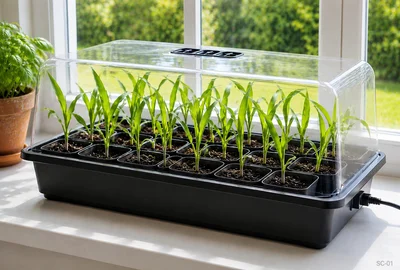
Sweetcorn can be started indoors 3–4 weeks before the last frost date, giving plants a head start in a UK spring. A propagator is not essential — sweetcorn germinates readily at 18–22°C — but it helps in early April when room temperatures are variable overnight.
Heated propagator
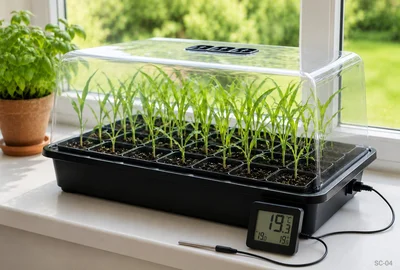
A heated propagator set to 18–20°C gives reliable germination from early April. Sweetcorn does not need high temperatures — avoid settings above 25°C, which can impair germination. The main benefit is consistent overnight warmth during a cold snap.
Unheated propagator
An unheated propagator or a polythene bag draped loosely over the pots works well from mid-April onwards when rooms are reliably warm. Remove the cover immediately once seedlings emerge — sweetcorn grows quickly and needs good airflow and light from the start.
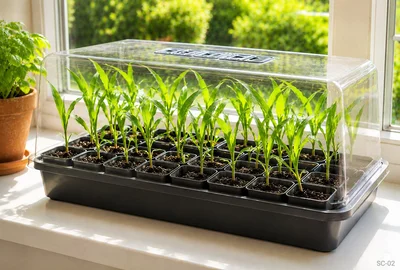
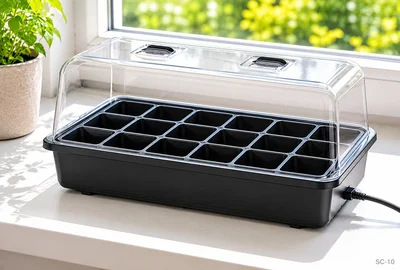
Standard unheated propagator — A lidded seed tray traps warmth and humidity around germinating seeds without electricity. Performance depends entirely on room temperature — best placed on a warm windowsill and used from March onwards. Replace the lid promptly after watering. Remove it completely the moment seedlings emerge to prevent damping off.
Fill pots
Use 7–9cm pots filled with moist seed compost. Sow one seed per pot, 2.5cm deep, pointed end down if visible. Sweetcorn resents root disturbance so individual pots are important.
Set temperature
Place in a propagator at 18–20°C, or in a warm spot indoors. Germination takes 5–10 days. Do not overwater — moist but not wet compost is ideal.
Move to light promptly
Move seedlings to a bright windowsill as soon as they emerge. Sweetcorn grows fast and becomes drawn and weak without good light within days of germination.
Harden off carefully
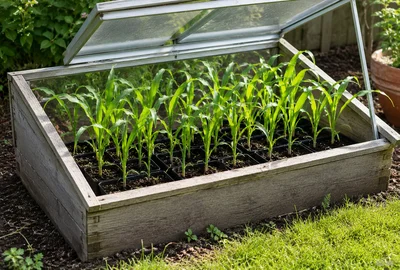
Sweetcorn is frost-tender. Begin hardening off in late May — a cold frame or sheltered spot outdoors during the day, brought in at night for 10–14 days before planting out.
Windowsill alternative: A bright south-facing windowsill can substitute from late February. Place a clear polythene bag loosely over the pot during germination. Remove immediately once seedlings appear.
09 Soil Requirements
- pH
- 5.8–7.0
- Best
- Loam, Sandy loam
- Tolerates
- Clay loam
- Avoid
- Waterlogged, Poor sandy
💡 Needs warmth and moisture-retentive, fertile soil.
10 Ongoing Care
💧 Watering
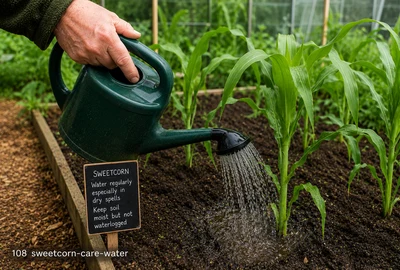
Water regularly, especially during flowering and when cobs are swelling. Sweetcorn has a high water requirement during its growing season — dry conditions at flowering prevent pollination and cause gappy cobs. Water at the base rather than overhead.
🌿 Feeding
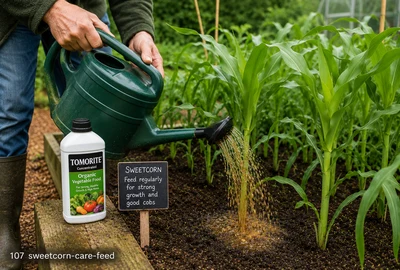
Apply a balanced general fertiliser when plants are 30cm tall. Sweetcorn is a hungry crop — a nitrogen-rich feed in early growth supports strong stem development. Switch to a balanced feed once tassels appear.
⛏️ Earthing Up
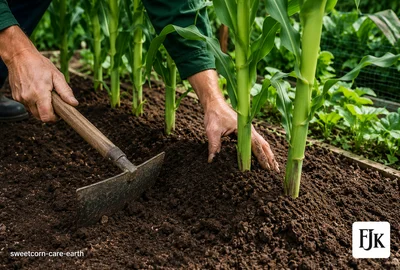
When plants reach 30–40cm, mound soil up around the base of each stem to a depth of 10–15cm. This encourages the development of brace roots which anchor the tall plants against wind and improve stability throughout the season.
🌾 Pollination — The Tassel
The tassel at the top of the plant is the male flower, releasing pollen on the wind. This is why sweetcorn is planted in blocks rather than single rows — a block gives pollen a far better chance of reaching neighbouring plants than a single long row does.
🌽 Pollination — The Silk
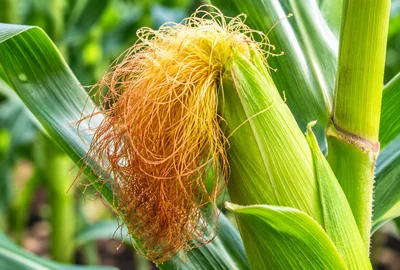
The silks emerging from each cob are the female flowers — each individual strand connects to a single kernel. Wind-blown pollen from nearby tassels needs to land on the silks for kernels to form, so poor pollination in a small or sparse planting means gappy, patchy cobs.
🌽 Harvesting
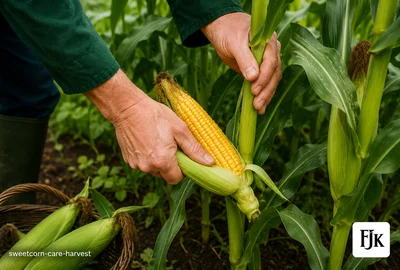
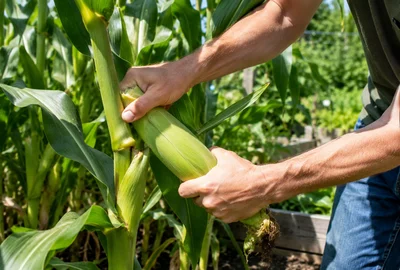
Cobs are ready when the silks have turned dark brown and a squeezed kernel produces a milky juice — clear juice means under-ripe, no juice means over-ripe. Twist cobs downward and pull sharply. Cook immediately — sweetcorn starts converting sugar to starch within hours of picking.
11 Watch Out For
WarningSweetcorn needs warmth to germinate and ripen. In a cold summer it may not mature in time — choose early varieties in northern gardens, and consider a fleece cover after planting out to give plants a warm start.
🐛 Insects & pests
- 🐜 Aphids (Blackfly & Greenfly) — Curled, distorted, or stunted growing tips — aphids inject saliva that causes leaf curl to protect them
- 🐌 Slugs & Snails — Silver slime trails on leaves, soil, and pots — often the first sign before damage is found
🍄 Diseases to watch
- 🩶 Botrytis (Grey Mould) — Botrytis cinerea (grey mould) is the most ubiquitous fungal pathogen in temperate gardens — present in virtually every garden soil and on plant debris. It becomes a disease only when conditions favour it: cool, humid, poorly ventilated environments with damaged or senescent plant tissue. In a greenhouse in autumn it can destroy an entire tomato or grape crop.
Full identification and treatment advice is in the Pests and Diseases sections.
12 Storage & Preserving
🌽 Fresh — Eat Immediately
Sweetcorn is at its absolute peak within 30 minutes of harvest. The sugar in the kernels begins converting to starch immediately — this is irreversible. If you cannot eat it at once, refrigerate unhusked and cook within 24 hours. The difference between field-fresh and 24-hour corn is significant.
🔥 BBQ & Grilling
Grilling or barbecuing sweetcorn over direct heat is one of the finest things you can do with a homegrown cob. Leave the husks on and soak in cold water for 20 minutes before grilling — the steam cooks the corn while the husk chars and imparts a smoky flavour. Butter, salt, and fresh herbs are the only accompaniments needed.
❄️ Freezing
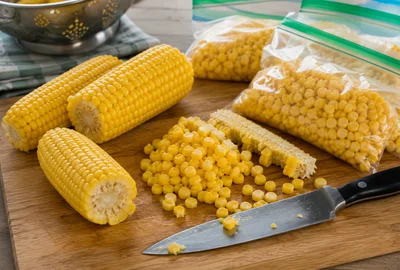
Sweetcorn freezes exceptionally well and is one of the best crops to batch-freeze. Blanch whole cobs for 4–5 minutes in boiling water, cool in ice water, then freeze whole or strip kernels with a sharp knife. Frozen sweetcorn from the garden in January tastes far better than anything from a shop.
13 Expert Tips
💡 Supersweet varieties must be isolated from all other sweetcorn types by at least 10 metres, or grown in separate blocks with their flowering periods staggered. Cross-pollination with a standard variety ruins the sweetness of both.
💡 Sow into individual 9cm pots rather than modules or trays. Sweetcorn develops a large, spreading root system very quickly and resents transplantation with disturbed roots. Moving the whole root ball intact from pot to soil is the key to rapid establishment.
💡 The tassel (the plume at the top of the plant) produces pollen. The silk (the brown threads at the tip of the cob) is the stigma. Each silk strand connects to one kernel — any silk that is not pollinated produces a missing kernel on the cob. Block planting solves this.
💡 Ripeness testing is an art, not a science. Learn to read the silk — fully brown and dry silks are the cue to start checking. Press a kernel firmly with your thumbnail: watery juice = too early; milky white juice = perfect; no juice and doughy texture = past its best.
14 Common Mistakes
⚠ Planting & Spacing
- Planting in a single row — wind pollination requires a block of at least 4×4 plants
- Mixing supersweet varieties with standard types without isolation — cross-pollination ruins sweetness
- Planting out too early before the last frost — a single frost kills young plants outright
- Disturbing roots at transplant time — plant the complete root ball without breaking it up
⚠ Growing & Harvesting
- Not earthing up stems — plants become top-heavy and topple in wind once cobs develop
- Harvesting too early — clear juice from pressed kernels means several more days are needed
- Leaving cobs on the plant too long after ripeness — quality deteriorates rapidly
- Not cooking immediately after harvest — the sugar-to-starch conversion cannot be reversed