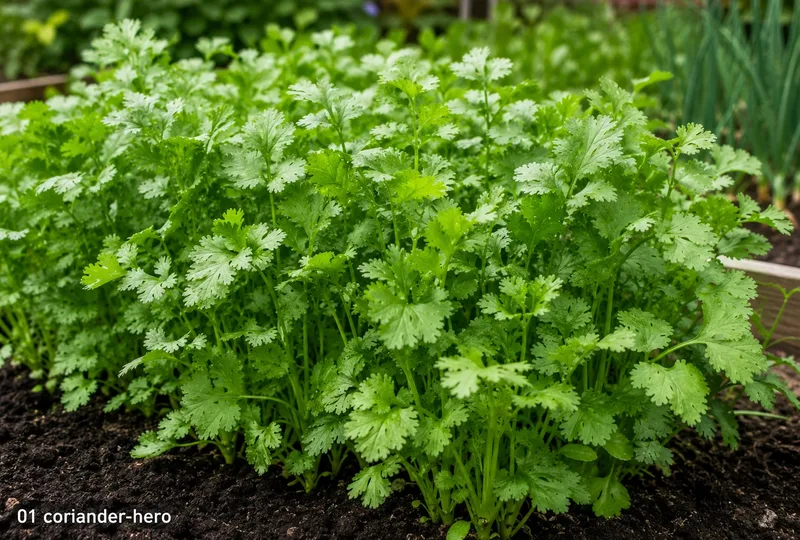
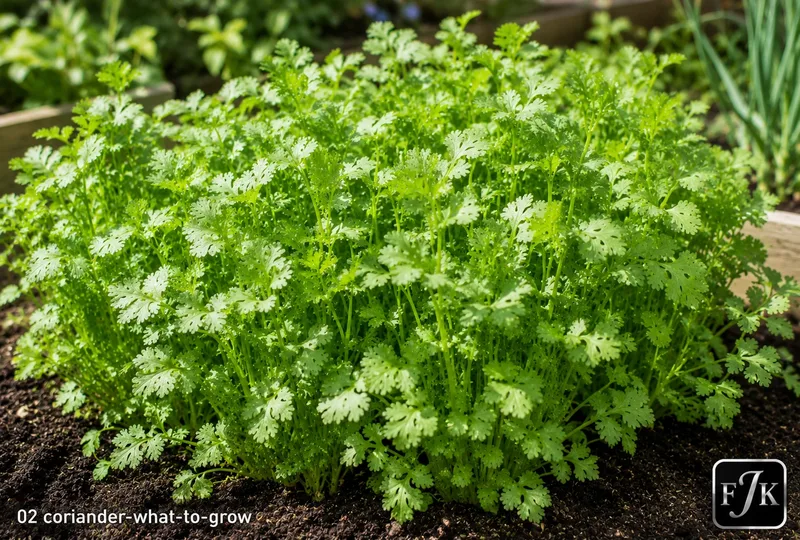
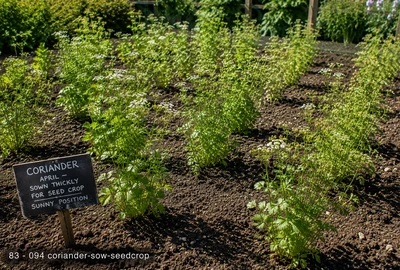
Sow direct only — coriander bolts almost immediately when its taproot is disturbed by transplanting
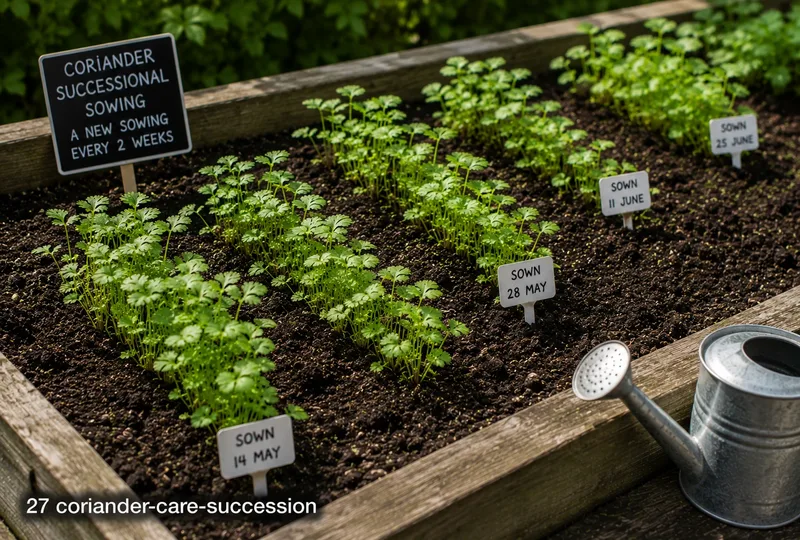
Sow a short row every 2–3 weeks for a continuous supply — each sowing lasts only 4–6 weeks
The best sowings are spring (Mar–May) and late summer (Aug–Sep) when days are shorter and cooler
In summer, sow in part shade to reduce heat stress and delay bolting by 1–2 weeks
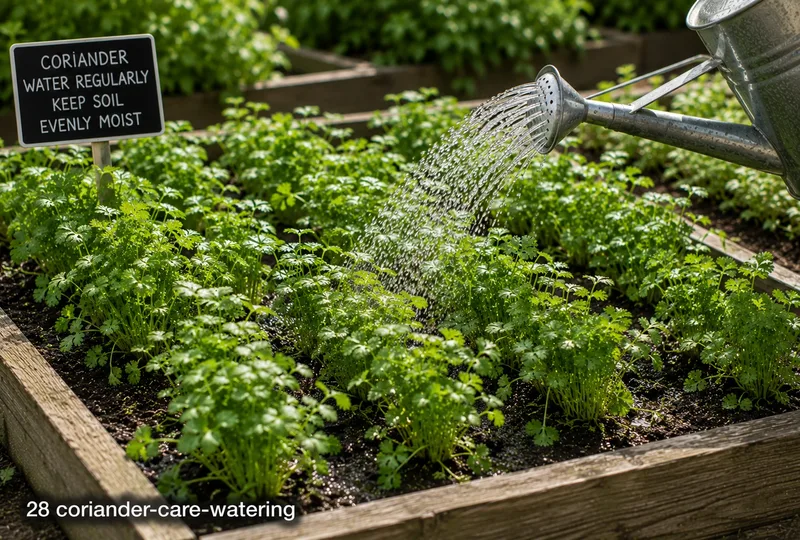
Keep well watered — drought stress is the fastest trigger for bolting
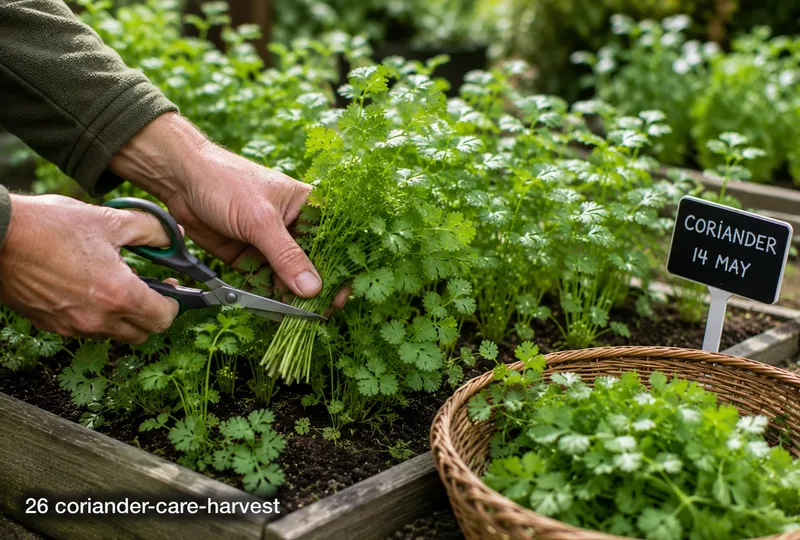
Harvest outer leaves when plants are 15cm tall, leaving the growing centre intact
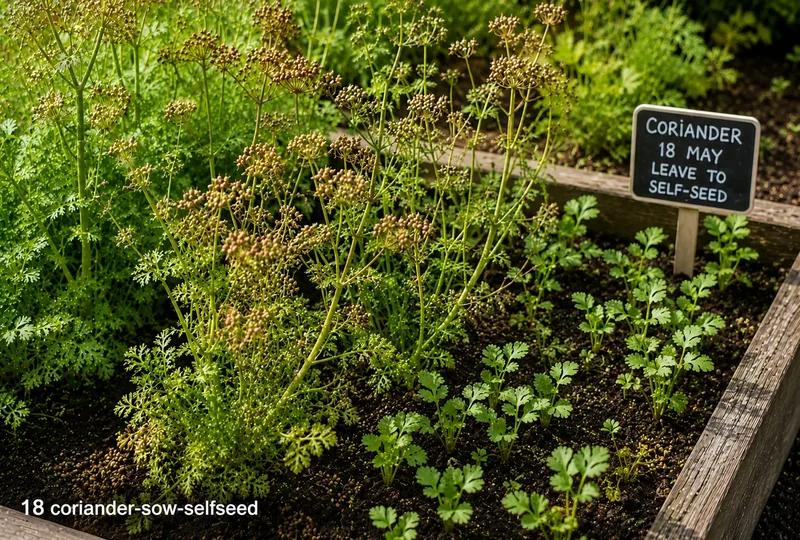
Let a few plants bolt for seed — coriander seed is a spice in its own right and self-seeding gives free autumn crops
🌱 SowMar–Sep (direct, successional)
🌾 Harvest6–8 weeks after sowing
☀ PositionSun or part shade
📐 Spacing15cm
DifficultyModerate
⚡ Quick facts
Difficulty
Moderate (bolts easily)
Direct sow
Mar–May and Aug–Sep (best seasons) · Jun–Jul (avoid if possible)
Harvest
6–8 weeks after sowing (leaves) · 3–4 months (seed)
Position
Sun or part shade — part shade in summer reduces bolting
Spacing
15cm (or scatter-sow thickly for cut-and-come-again)
Height
30–60cm (to flower)
Type
Annual (hardy)
Water
Moderate — consistent moisture reduces bolting
01 About
Coriander is one of the most used herbs in global cooking — Indian, Thai, Mexican, and Middle Eastern cuisines are built on it. Growing your own delivers a freshness and intensity utterly absent from shop-bought bunches, which are almost always chilled, stressed, and half-composted by the time they reach you. The challenge is its relentless urge to bolt the moment conditions turn warm or dry. The solution is simple: sow little, sow often, sow direct, and keep the roots cool.
02 What to Grow
Leisure and Calypso are the bolt-resistant leaf varieties — the ones to grow if continuous leaf harvest is the goal. Santos is a reliable mid-season choice. Confetti has unusual feathery leaves perfect for garnishing. Moroccan (Cilantro) bolts fast but produces the most aromatic seed — grow it specifically for the spice crop. Lemon Coriander is a different flavour experience with a bright citrus note alongside the classic coriander character, excellent in Thai and Southeast Asian cooking.
03 Varieties
The number of varieties shown for each crop is based on UK consumption data (2025/26) — the more popular the crop, the more variety choices we include.
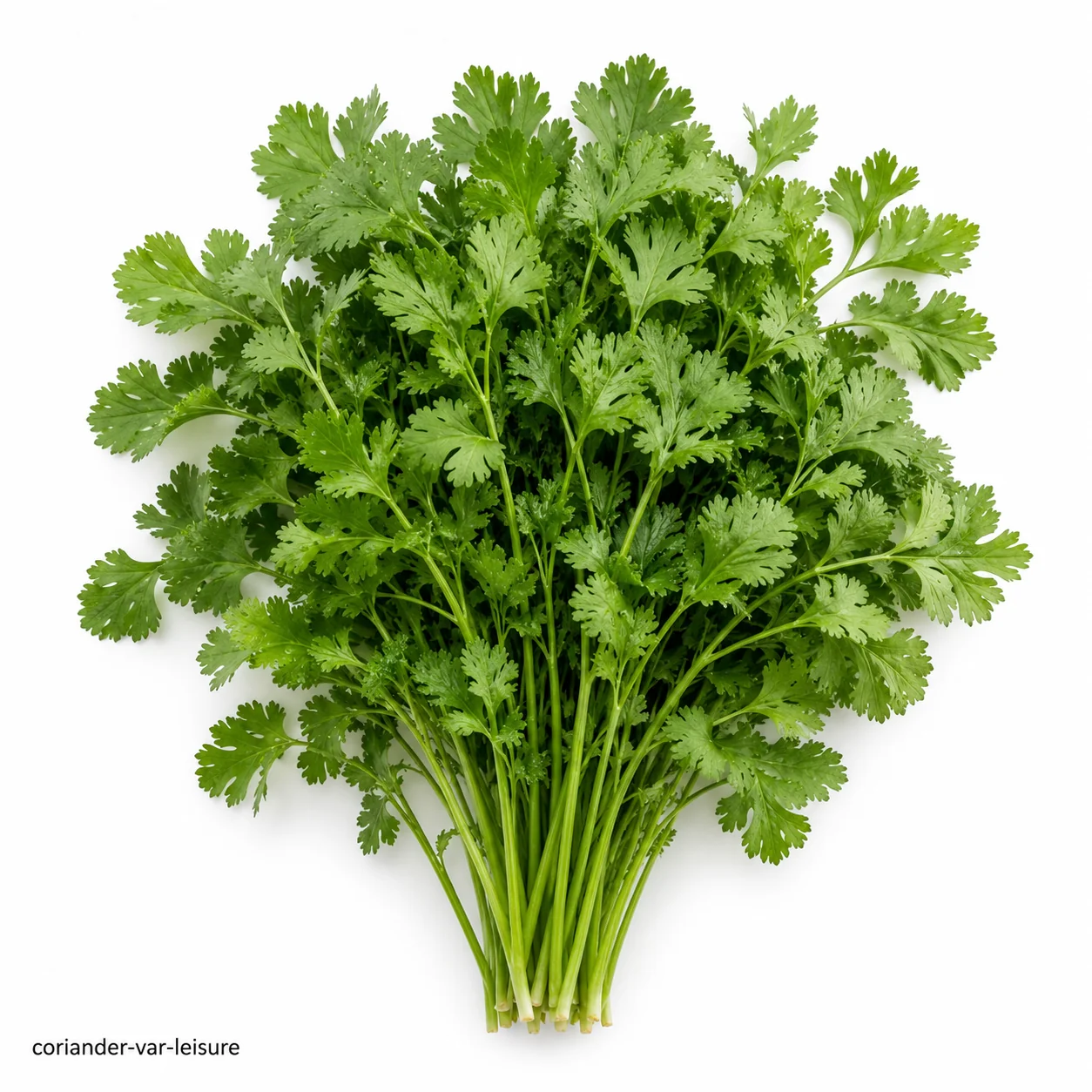
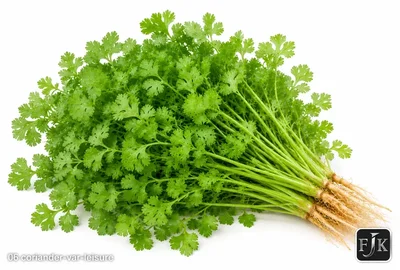
Leisure
Leaf · Bolt-Resistant
A variety bred specifically for slow bolting and maximum leaf production. Significantly more productive than standard coriander in summer conditions. The best choice for gardeners who want repeated leaf harvests over an extended season. Strong, classic coriander flavour. The go-to variety for the kitchen garden.
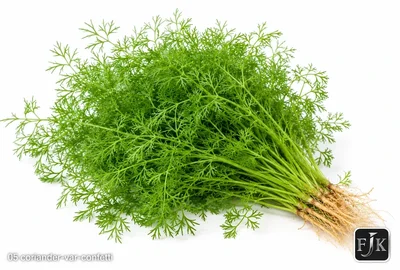
Confetti
Leaf · Decorative · AGM
Unusually fine, thread-like feathery leaves that are more delicate in appearance than standard coriander. The flavour is excellent — full coriander character with a slightly lighter texture. Beautiful as a garnish and in salads where the delicate leaf shape adds visual interest. Same growing requirements as other varieties but slightly more decorative.
AGM
Santos
Leaf · Reliable
A reliable, consistently performing coriander variety with good bolt resistance and strong leaf production through spring and autumn. Performs well across a range of conditions and is a dependable choice when a specific bolt-resistant variety is unavailable. Good classic flavour. One of the most widely available varieties in UK seed catalogues.
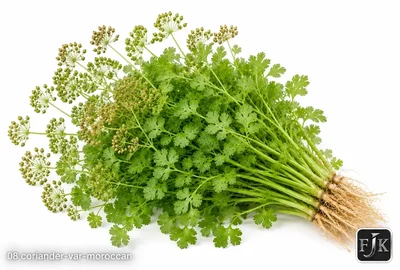
Moroccan (Cilantro)
Seed Spice
Grown primarily for its highly aromatic seed rather than its leaves. Vigorous, upright growth with early bolting — which is actually desirable in this case. The seeds are larger, rounder, and more intensely fragrant than standard varieties. Leave the plant to flower and set seed, then harvest the dry seed heads in late summer. The seeds are a spice in their own right — whole in curries, ground in blends.
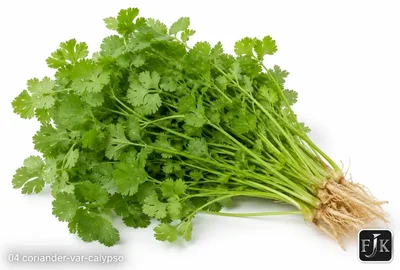
Calypso
Leaf · Bolt-Resistant · AGM
One of the most bolt-resistant coriander varieties available — developed for leaf production in warm conditions where standard types run immediately to seed. Compact, upright habit with abundant leaf production. An excellent variety for summer sowing in the South and Midlands where heat pressure is greatest. Maintains good flavour throughout its extended leaf-producing period.
AGM
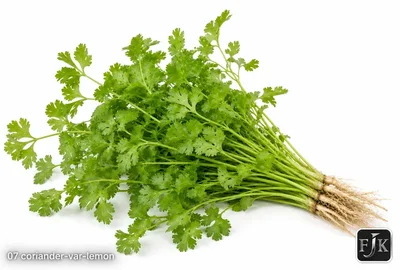
Lemon Coriander
Leaf · Citrus Flavour
A distinct coriander variety with a pronounced lemon-citrus note alongside the classic coriander flavour. Outstanding in Thai, Vietnamese, and Southeast Asian cooking where citrus and coriander naturally combine. Different in character from standard coriander and worth growing alongside it for variety. Slightly more delicate in flavour — use more generously than standard coriander in cooked dishes.
04 Where to Source
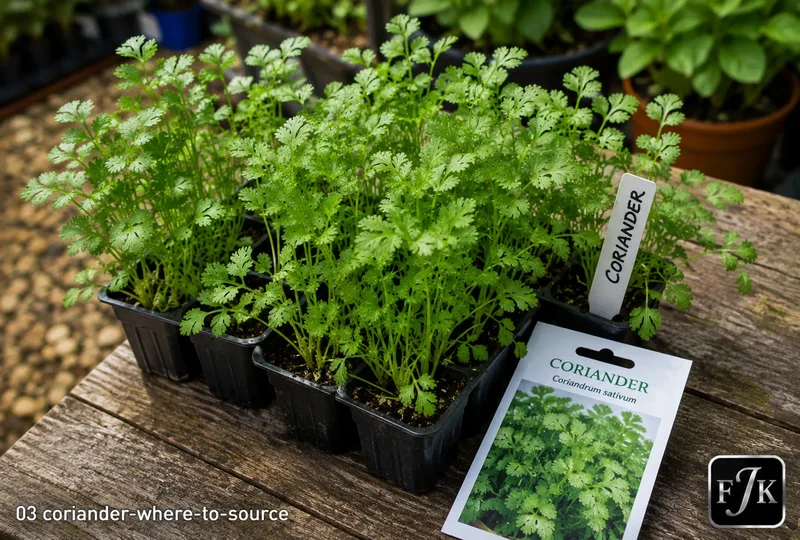
Leisure, Santos, and Confetti are available from most major UK seed suppliers. Calypso and Lemon Coriander are stocked by specialist herb and vegetable seed companies. Moroccan coriander is widely available under various names — look for varieties described as being grown for seed. Coriander is not available as garden centre plants — it must be sown direct and plants bought in pots will bolt almost immediately on planting out.
05 Planting Options
🌿 In the Ground (Recommended)
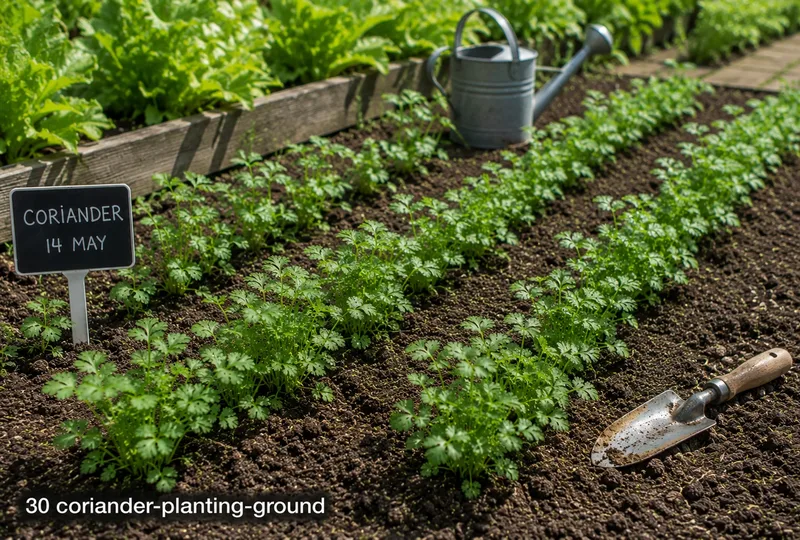
Open ground is by far the best growing method for coriander. The unrestricted root run significantly delays bolting compared to containers. Sow in part-shaded areas of the garden in summer — under taller crops, along a north-facing fence, or in the shadow of a bean frame. Full sun in July–August triggers bolting within days of germination.
🪴 In a Container (Emergency Method)
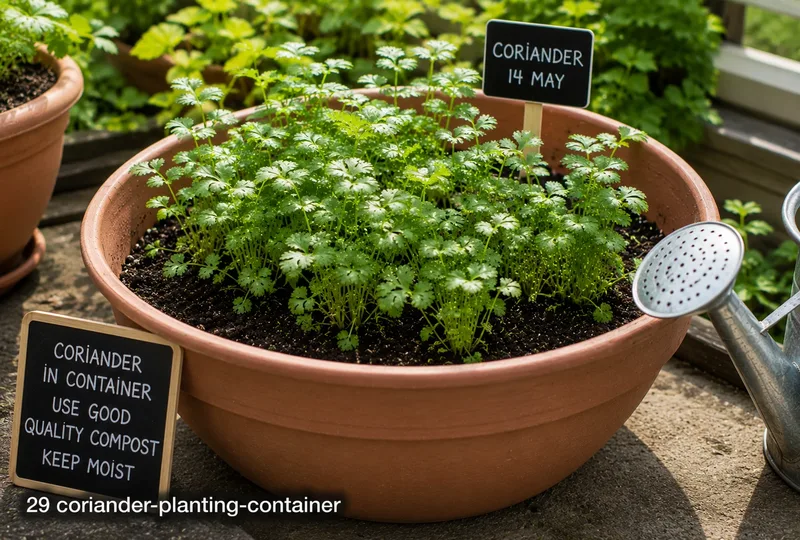
Coriander can be grown in containers but bolts significantly faster than in the ground due to root restriction and faster temperature fluctuations. Use the deepest container available (at least 20cm), sow direct, keep in part shade during summer, and water daily. Accept that each container sowing will last 3–4 weeks rather than 6–8.
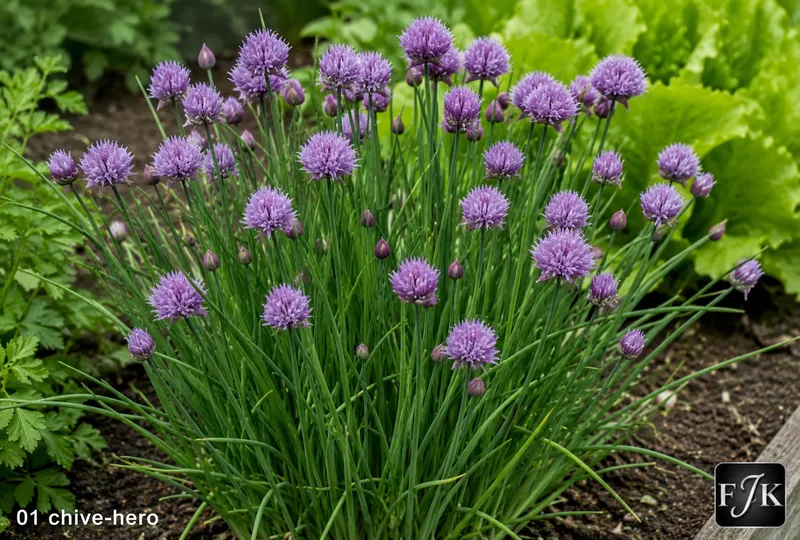
Chives' scent is thought to help deter aphids from nearby coriander.
❌ Keep apart
🌿 Fennel — Fennel is allelopathic and its root secretions suppress the germination and growth of coriander.
🌿 Dill — Coriander and dill readily cross-pollinate when both are left to flower, spoiling seed for either crop.
07 Sowing — How To
🌱 Direct Sowing (Only Method)
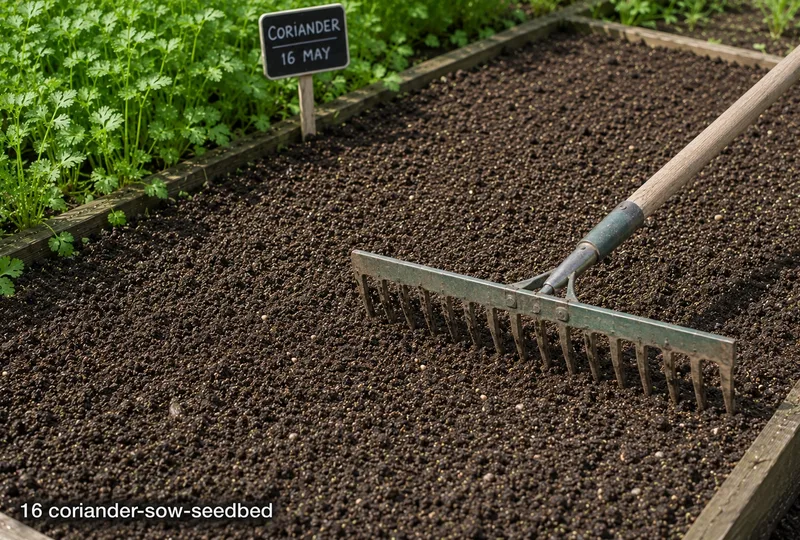
Prepare a fine seedbed
Rake the soil to a fine tilth and remove any large stones or clumps. Coriander germinates in the top 1cm of soil and needs good contact with fine compost or earth. On heavy clay, incorporate a little grit to prevent surface capping.
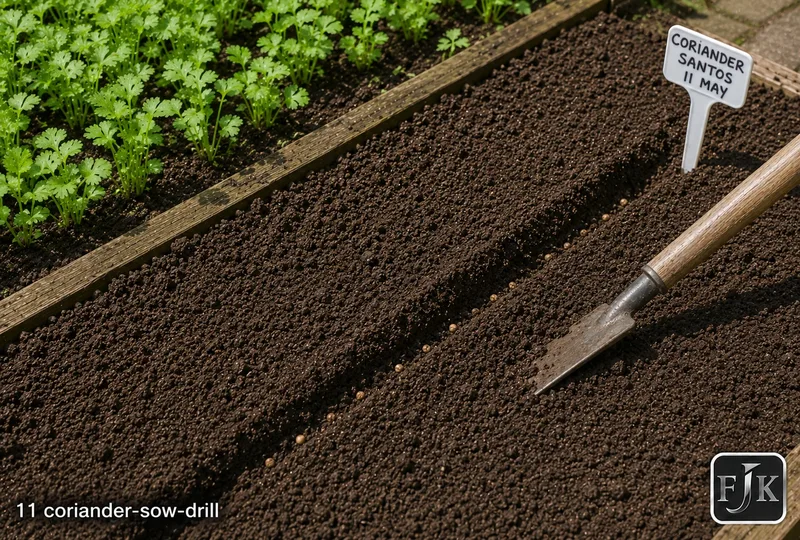
Make a shallow drill
Draw a shallow drill 1–2cm deep. For scatter-sowing (cut-and-come-again style), rake the area level and scatter seeds across the surface. Space seeds 2cm apart in the drill — do not sow too thickly or the seedlings compete and bolt faster.
Cover and firm
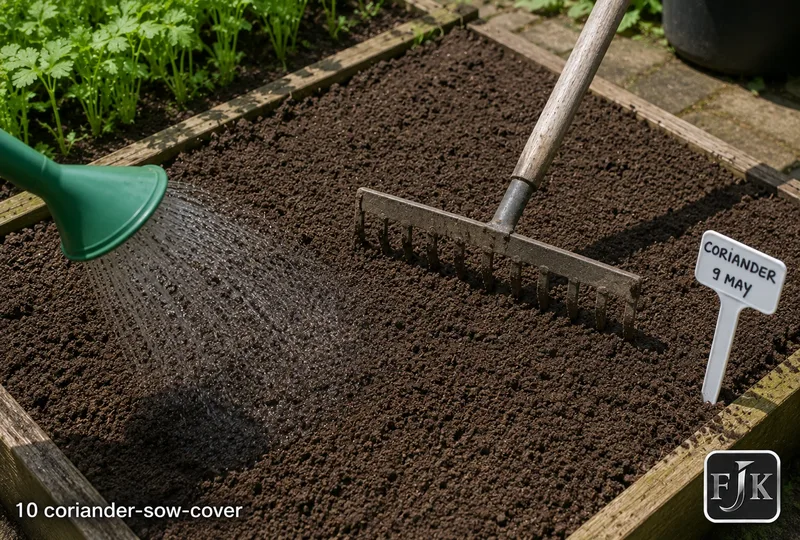
Cover with 1–1.5cm of fine soil and firm gently with the back of a rake. Water carefully using a fine rose watering can — heavy watering washes seeds out of position. Label with variety and date.
Germinate in 7–14 days
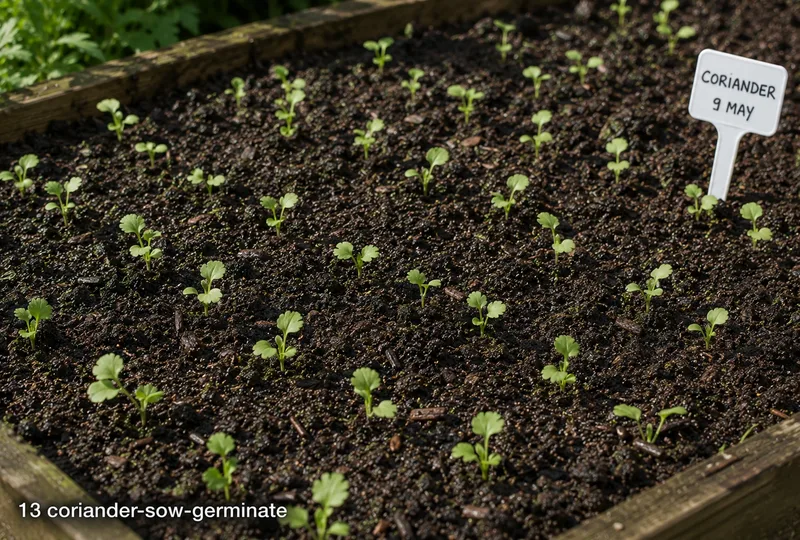
Coriander germinates in 7–14 days in warm soil. If sowing early in spring when soil is cold, germination may take up to 3 weeks. Keep the surface moist during germination — never let it crust.
Thin when 5cm tall
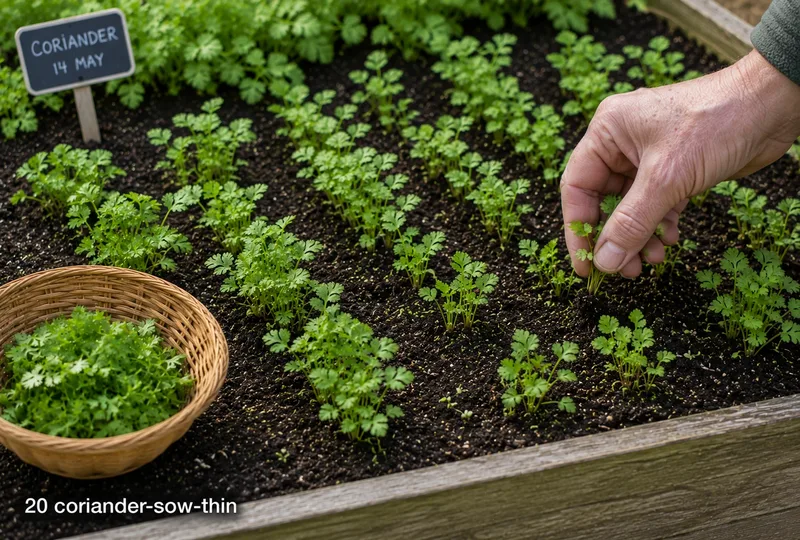
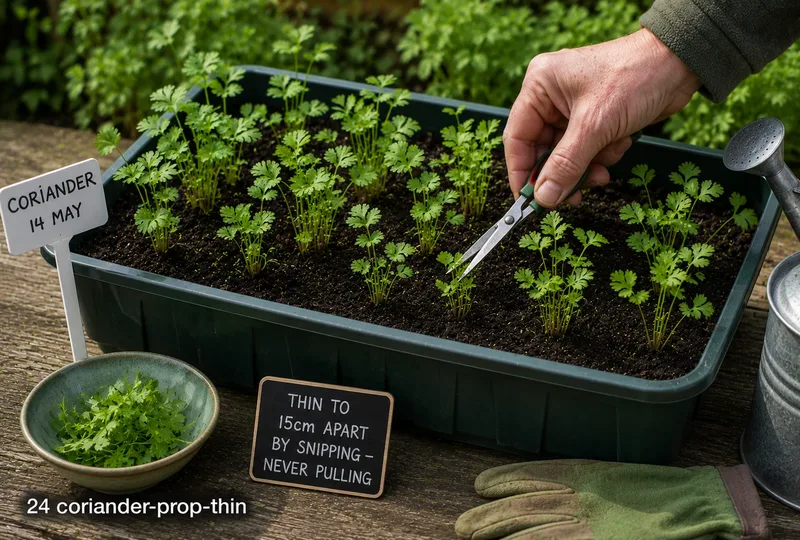
Thin seedlings progressively to 15cm apart when they reach 5cm. Use thinnings immediately as microherbs — they are full of flavour. Avoid disturbing remaining plants during thinning.
Begin harvesting and sow the next batch
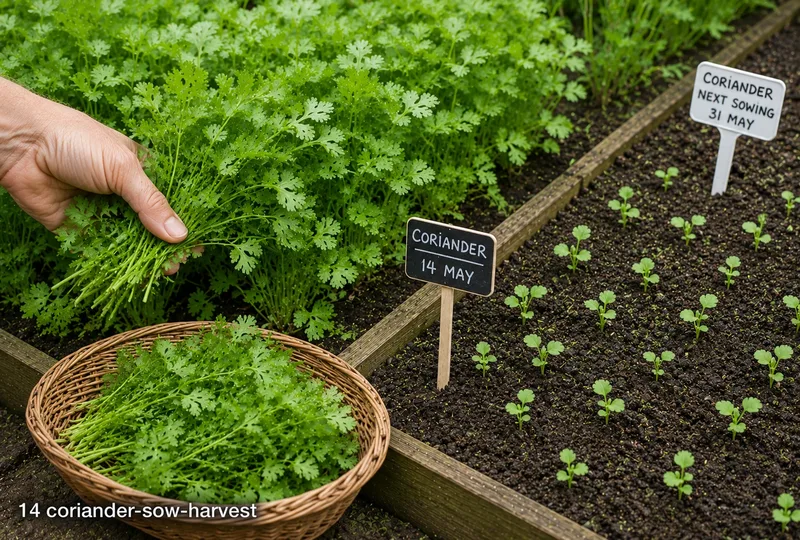
Harvest outer leaves when plants are 15–20cm tall. At the same time, sow the next batch — staggering by 2–3 weeks gives a continuous supply. Never wait until the current planting has bolted before sowing the next.
Direct Sowing (Only Method) — regional timing
Region
Sow / plant
Harvest
Notes
Scotland & Far North
May–Aug
Jul–Oct
May–Aug · Plant: N/A · Harvest: Jul–Oct
Northern England
Apr–Sep
Jun–Nov
Apr–Sep · Plant: N/A · Harvest: Jun–Nov
Midlands & Wales
Mar–Sep
May–Nov
Mar–Sep · Plant: N/A · Harvest: May–Nov
Ireland & Isle of Man
Apr–Sep
Jun–Nov
Apr–Sep · Plant: N/A · Harvest: Jun–Nov
South & SE England
Mar–Sep
May–Nov
Mar–Sep · Plant: N/A · Harvest: May–Nov
South Coast & SW
Mar–Oct
May–Dec
Mar–Oct · Plant: N/A · Harvest: May–Dec
🌾 Growing for Seed (Spice)
Sow earlier and more thickly
For a seed crop, sow from April in a sunny position and do not worry about bolting — you want the plant to flower and set seed. Sow slightly more thickly than for leaf production and thin to 20cm to give each plant space to develop a full seed head.
Allow to flower
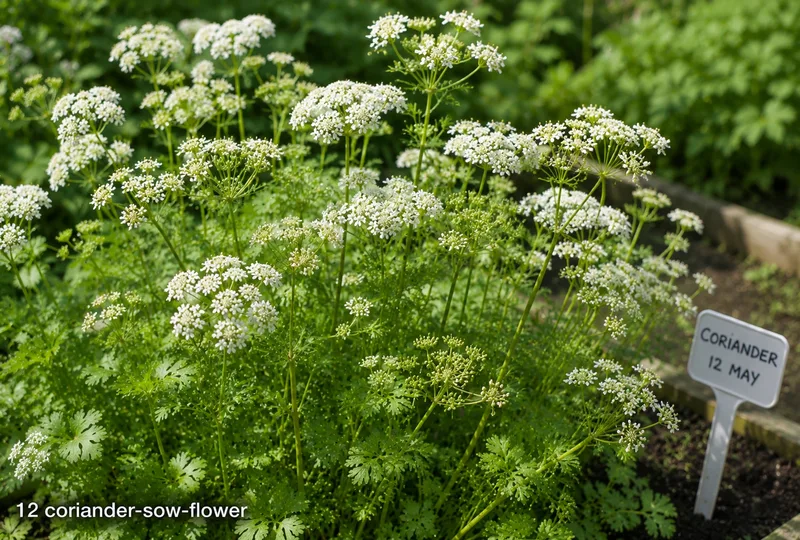
Do not pinch out flower stems — let the plant bolt and produce its white, lacy umbel flowers. The flowers are attractive and valuable to pollinators. This is when the plant transitions from herb to spice crop.
Watch the seed heads
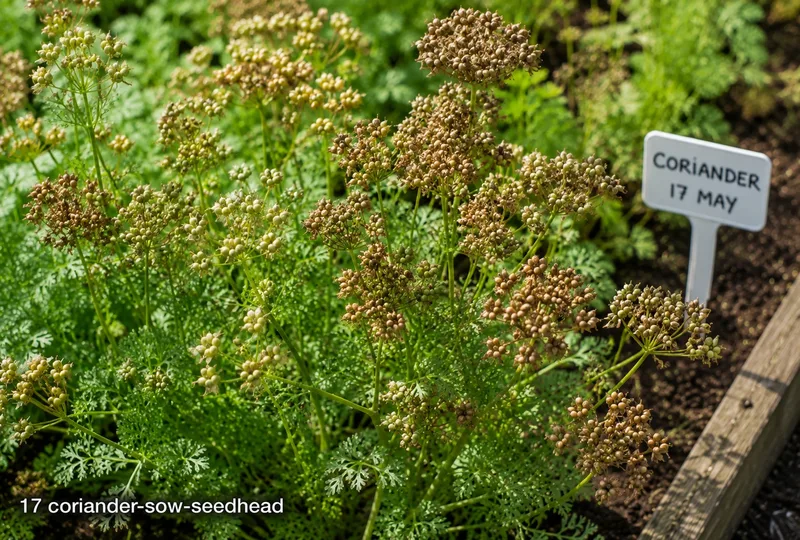
After flowering, the round green seeds develop on the stems. Watch them carefully — they change from green to brown over 2–3 weeks. Harvest before they fall from the plant naturally.
Harvest when half-ripe
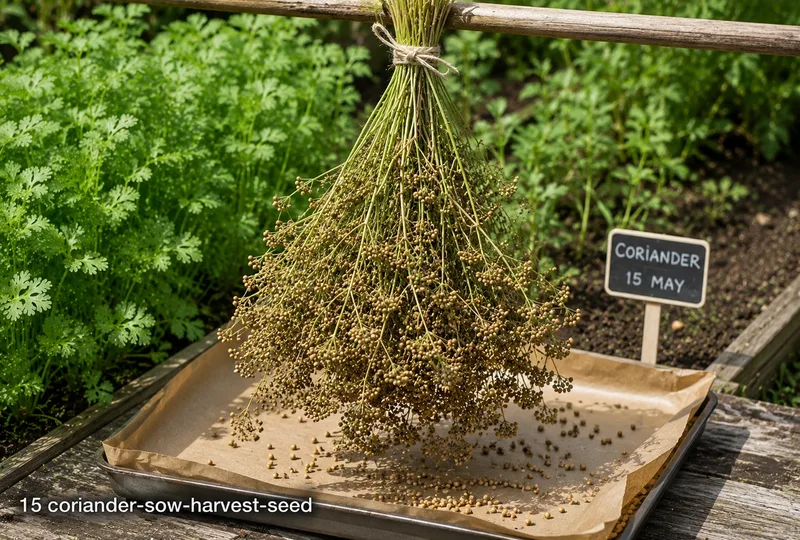
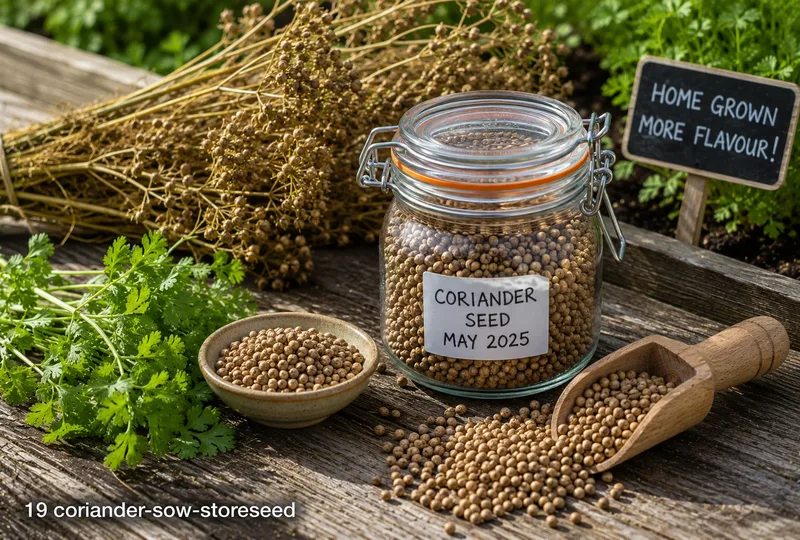
Cut the whole stem when the majority of seeds are brown but before they start falling. Tie several stems together and hang upside down over a paper bag or tray — the remaining seeds dry and fall off over 2 weeks.
Dry and store
Once fully dry, store whole seeds in an airtight jar away from light. Use whole in curries and pickles, or grind fresh for spice blends. Home-grown coriander seed has a distinctly more complex flavour than bought seed.
Leave some to self-seed
Leave a few seed heads on the plant to drop naturally — coriander self-seeds prolifically and gives a completely free autumn crop that will appear without any effort in subsequent seasons.
Growing for Seed (Spice) — regional timing
Region
Sow / plant
Harvest
Notes
Scotland & Far North
May
Sep–Oct
May · Plant: N/A · Harvest: Sep–Oct (seed)
Northern England
Apr–May
Aug–Sep
Apr–May · Plant: N/A · Harvest: Aug–Sep (seed)
Midlands & Wales
Apr
Aug–Sep
Apr · Plant: N/A · Harvest: Aug–Sep (seed)
Ireland & Isle of Man
Apr–May
Aug–Sep
Apr–May · Plant: N/A · Harvest: Aug–Sep (seed)
South & SE England
Apr
Aug
Apr · Plant: N/A · Harvest: Aug (seed)
South Coast & SW
Mar–Apr
Aug
Mar–Apr · Plant: N/A · Harvest: Aug (seed)
08 Using a Propagator
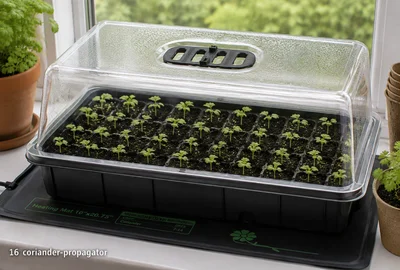
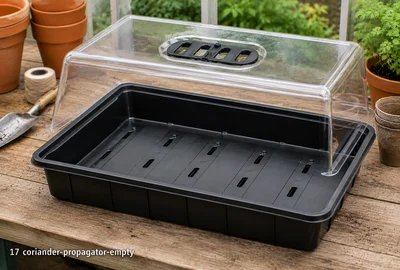
Coriander should not be started in a propagator for transplanting — it bolts the moment its taproot is disturbed. A propagator is useful only for warming a seed tray of compost for direct container sowing in early spring, when soil or compost is too cold for reliable germination. Set to a modest 15°C and sow direct into the final container, then remove to a sheltered outdoor position once germinated.
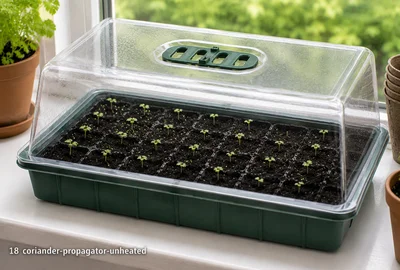
Unheated propagator
Not useful for coriander. The crop must be direct-sown to avoid transplant shock, and an unheated lid offers no meaningful temperature benefit for outdoor or windowsill direct sowings from April onwards.
Standard unheated propagator — A lidded seed tray traps warmth and humidity around germinating seeds without electricity. Performance depends entirely on room temperature — best placed on a warm windowsill and used from March onwards. Replace the lid promptly after watering. Remove it completely the moment seedlings emerge to prevent damping off.
Use a deep container
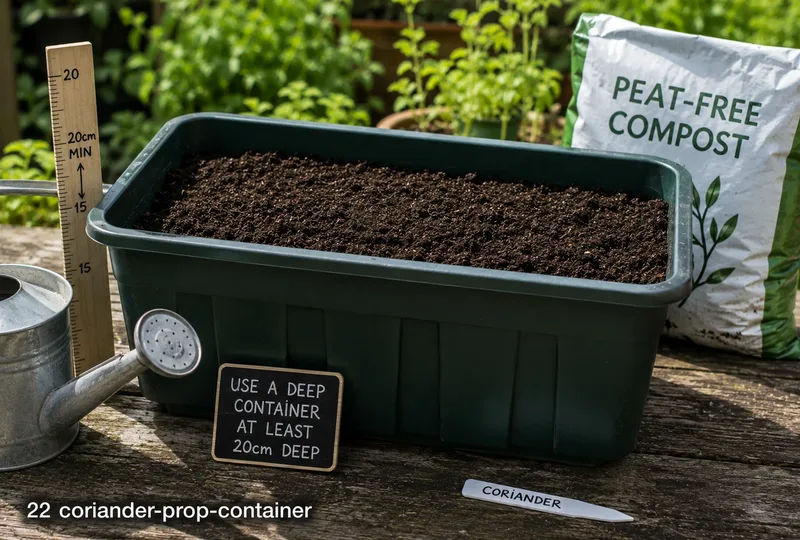
For container sowing, use a deep pot or trough (at least 20cm deep) to give the taproot maximum room. Fill with peat-free compost and water well before sowing.
Sow direct into the final container
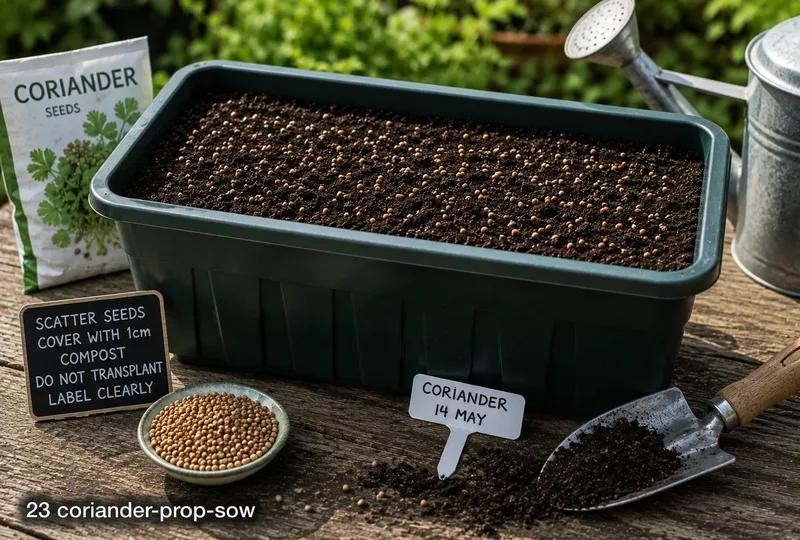
Scatter seeds on the surface and cover with 1cm of compost. Do not plan to transplant — these seeds stay where they are sown. Label clearly.
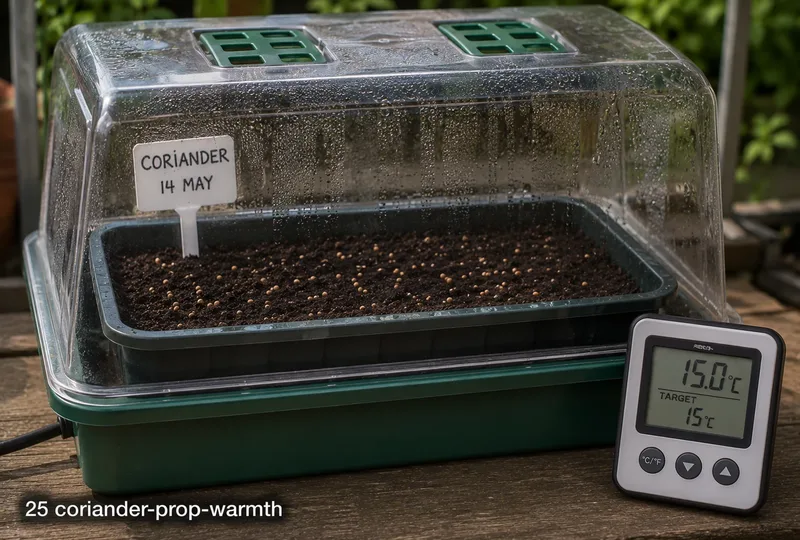
Warm in a propagator at 15°C (early spring only)
If sowing in March when indoor temperatures are cool, place the sown container in a propagator set to 15°C until germination — usually 7–10 days. Remove immediately once seedlings appear.
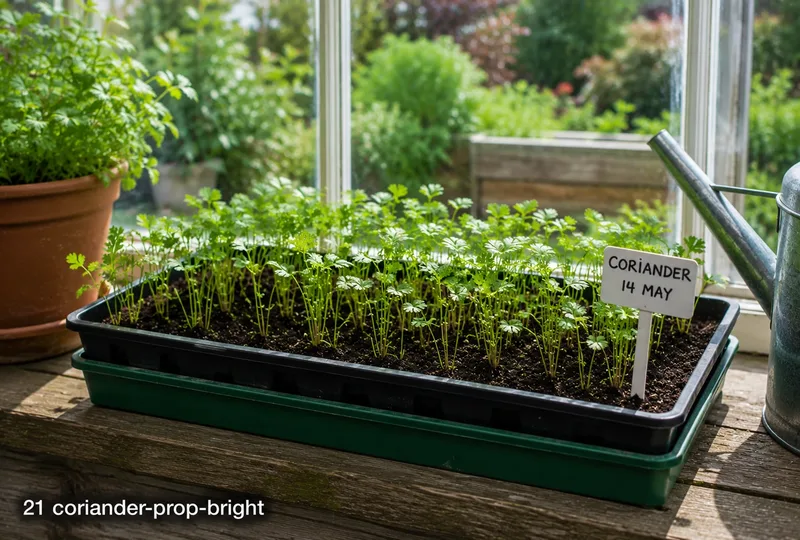
Move to a bright, cool position
Once germinated, move to the brightest available position in a cool room or sheltered outdoor spot. Coriander grows best in cool conditions — avoid hot windowsills.
Thin but do not transplant
Thin to 15cm spacing by snipping — never pulling — unwanted seedlings. Use the thinnings in the kitchen. Do not attempt to transplant any seedlings to a different container.
Windowsill alternative: A bright south-facing windowsill can substitute from late February. Place a clear polythene bag loosely over the pot during germination. Remove immediately once seedlings appear.
09 Soil Requirements
pH
6.0–7.0
Best
Loam, Sandy loam
Tolerates
Most soils
Avoid
Waterlogged, Compacted
💡 Well-drained, moisture-retentive soil. Bolts from dry, hot or disturbed conditions.
10 Ongoing Care
📅 Successional Sowing
The single most important care action for coriander is not care at all — it is the next sowing. Sow a short row or scatter a handful of seeds every 2–3 weeks from March to September. Each sowing produces a crop for 4–6 weeks before bolting. Never rely on a single sowing; always have the next generation germinating before the current crop flowers. This discipline is the entire secret to year-round coriander.
💧 Watering
Keep the soil or compost consistently moist at all times. Drought is one of the fastest triggers for bolting — even a single day of severe water stress can send coriander to flower prematurely. In summer, water daily in the evening. Never let the soil crust or dry out between waterings. This is especially critical in the 2–3 weeks immediately after germination when the plants are most vulnerable.
✂️ Harvesting
Harvest outer leaves only when plants are 15–20cm tall, leaving the central growing point intact. Never strip all the leaves from a plant — it immediately directs energy into flowering. For cut-and-come-again harvesting, use scissors to cut the whole plant to 5cm above ground — it will regrow once or twice before bolting. Harvest in the morning when the leaves are most aromatic and flavourful.
11 Watch Out For
Warning
Coriander bolts from any stress — root disturbance, heat, drought, or pot-bound conditions. Never transplant. Grow in the ground rather than containers for best results. Sow successionally every 2–3 weeks rather than relying on a single sowing.
🐛 Insects & pests
🐜 Aphids (Blackfly & Greenfly) — Curled, distorted, or stunted growing tips — aphids inject saliva that causes leaf curl to protect them
🐌 Slugs & Snails — Silver slime trails on leaves, soil, and pots — often the first sign before damage is found
🍄 Diseases to watch
🌱 Damping Off — Damping off is a collective term for seedling death caused by several soil-borne pathogens including Pythium, Phytophthora, and Rhizoctonia. It is the most common cause of seedling failure in the propagation stage. Entire trays of seedlings can collapse and die overnight — there is no cure once symptoms appear.
⬜ Powdery Mildew — Powdery mildew is caused by a range of related fungi, each specific to its host plant — courgette mildew cannot infect peas, and vice versa. The characteristic white powdery coating on leaf surfaces appears in warm, dry conditions (unlike downy mildew which prefers cool and wet). Rarely kills plants but severely reduces yield and plant vigour.
Full identification and treatment advice is in the Pests and Diseases sections.
12 Storage & Preserving
🌿 Fresh (Very Short Term)
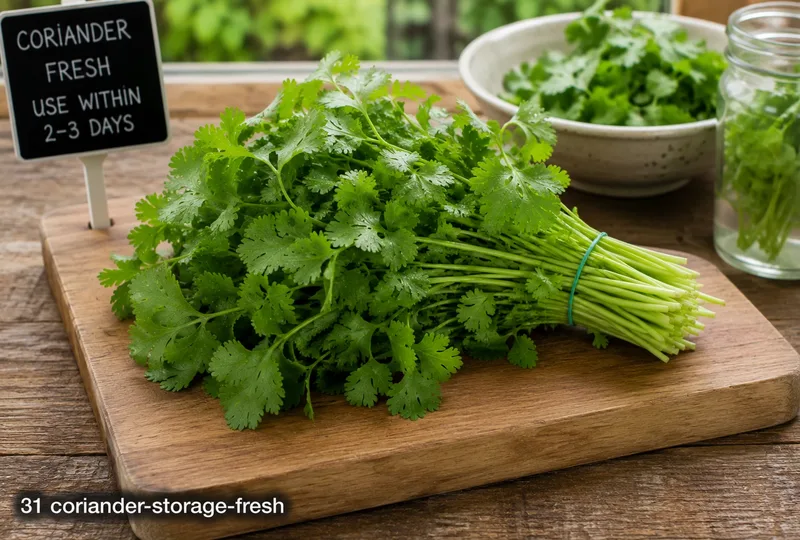
Fresh coriander is best used immediately after harvesting — it deteriorates faster than almost any other herb. To extend shelf life, wrap in a damp paper towel, place in a sealed bag or container, and refrigerate. Use within 3–4 days. Alternatively, stand stems in a small glass of water in the fridge. The key is keeping the leaves cool and humid — coriander wilts and yellows very quickly at room temperature.
🧊 Frozen
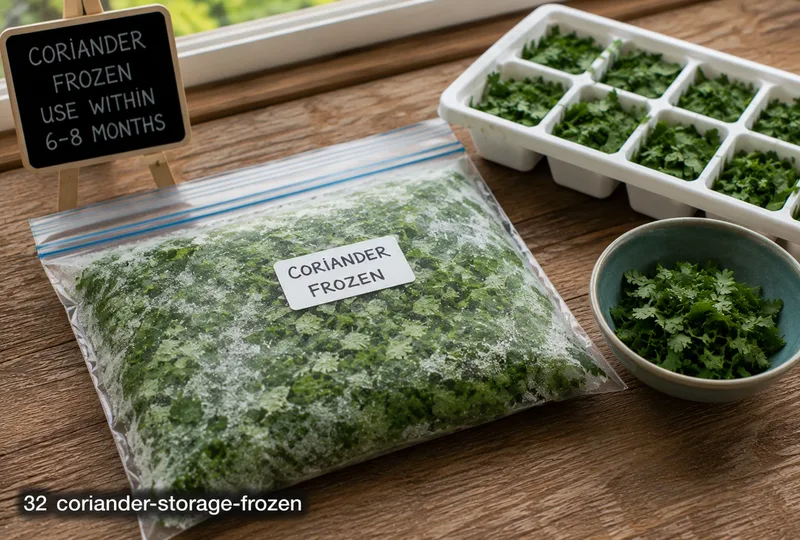
Coriander freezes surprisingly well for use in cooked dishes. Wash and dry thoroughly, then blend with a small amount of water or olive oil and freeze in ice cube trays. Each cube is a portion of coriander for curries, soups, and sauces. Alternatively, chop finely, freeze flat on a tray, and bag in small portions. Frozen coriander loses its texture and brightness but retains good flavour for up to 3 months.
🌾 Coriander Seed (Spice)
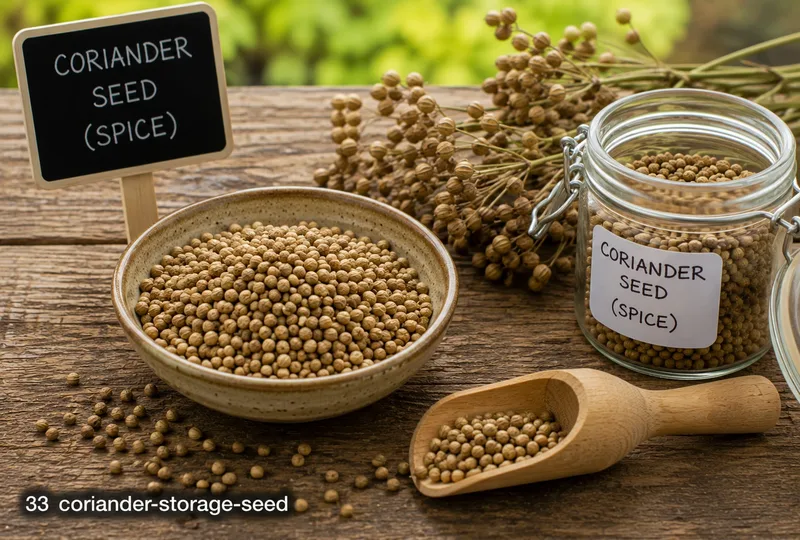
Ripe coriander seeds — collected when brown and dry from plants allowed to bolt — are a spice in their own right. Store whole in an airtight jar away from light for up to 2 years. Grind freshly as needed — pre-ground coriander loses its flavour within weeks. Use whole in pickling, Indian cooking, and spice blends; ground in curries, marinades, and baked goods. Home-grown seed has a far more complex, citrusy flavour than shop-bought.
13 Expert Tips
💡 Two Best Sowing Windows
The best two coriander seasons are April–May and August–September when days are shorter and temperatures moderate — plan your heaviest sowings around these windows.
💡 Let It Self-Seed
Allow a few plants to self-seed each year — coriander self-seeds prolifically and the autumn self-seeded crop often gives the best, most sustained harvest of the year.
💡 Grow Leisure or Calypso in summer and Moroccan for seed — this combination covers both the herb and spice use of the plant from one season's growing.