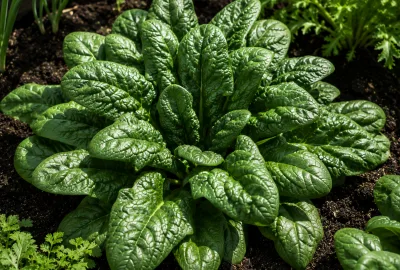
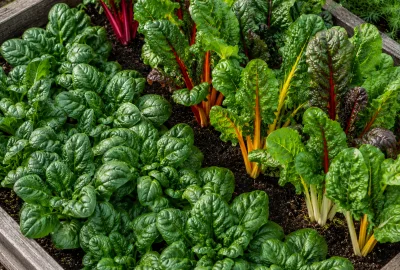
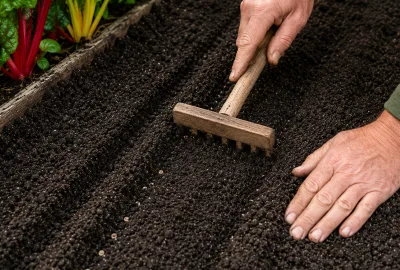
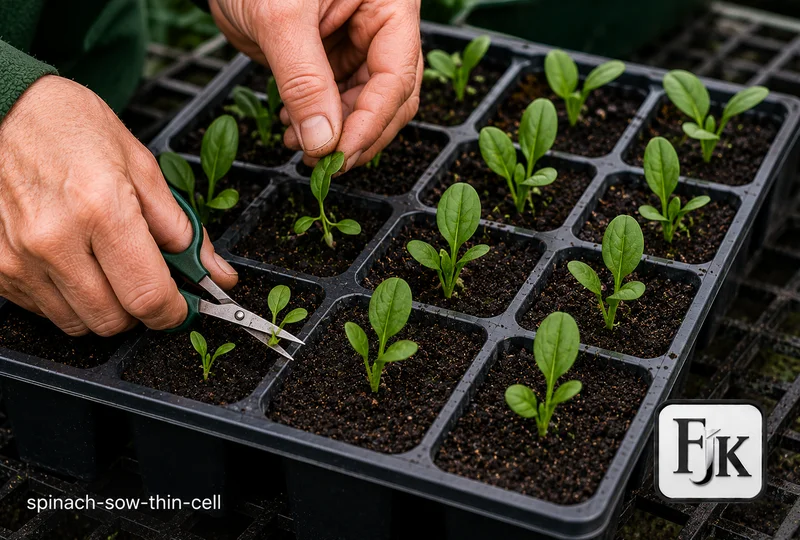
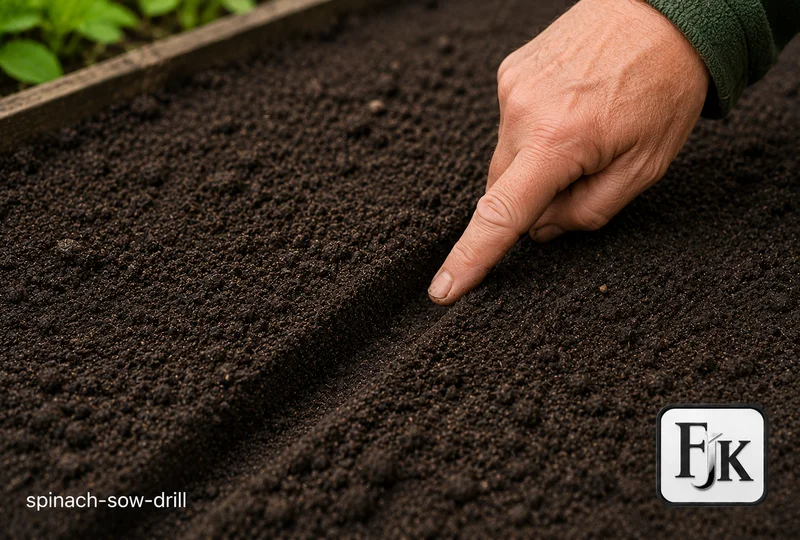
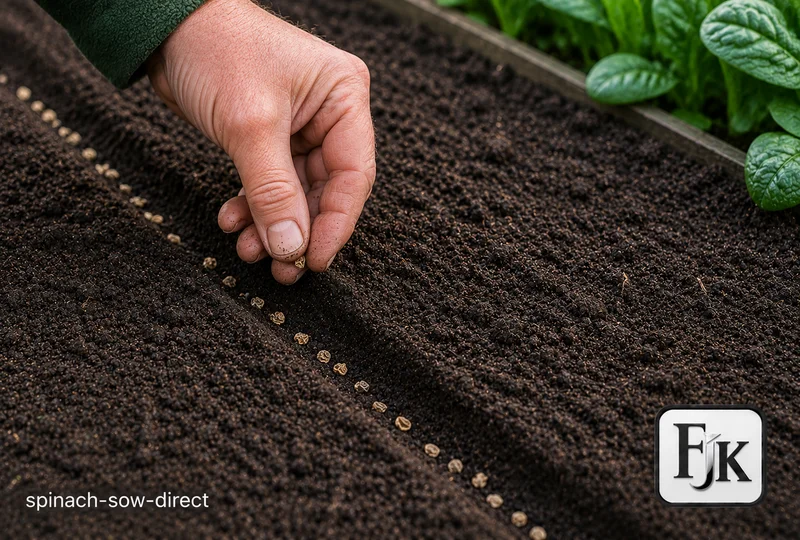
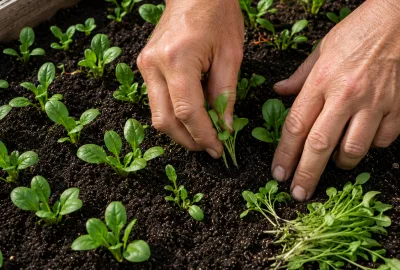
Sow spinach direct 1cm deep in short rows from March — thin to 15cm
Spinach bolts in heat — sow in part shade in summer, or switch to chard
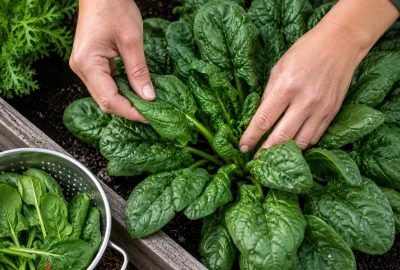
Both crops are cut-and-come-again: harvest outer leaves, never the central crown
Sow in succession every 3 weeks for a continuous supply from May to June
Water consistently through dry spells to prevent premature bolting
Make an August–September sowing for an autumn and winter harvest
Choose bolt-resistant F1 varieties for summer sowings in any warm situation
🌱 SowMar–May & Aug–Sep (direct)
🌾 HarvestMay–Jun & Oct–Apr
☀ PositionSun or part shade
📐 Spacing15cm
DifficultyModerate
⚡ Quick facts
Difficulty
Easy–Moderate
Crop type
Hardy Annual
Position
Full Sun or Part Shade
Soil
Fertile, Moisture-Retentive, Well-Drained Loam
Container friendly
Yes — large pots and deep troughs
Greenhouse recommended
For earliest spring and year-round cropping
Outdoor suitable
Yes — all UK regions
Frost hardy
Yes — hardy to -5°C; fleece extends further
01 About
True spinach is the fastest, most nutrient-dense leafy crop in the British kitchen garden. Dark, iron-rich leaves are ready to pick in just five to six weeks, and a well-timed succession of sowings in spring and autumn delivers fresh leaves from May through to April. Sow in cool conditions, harvest regularly, and spinach rewards you generously — the flavour of homegrown leaves far surpasses anything from a bag.
02 What to Grow
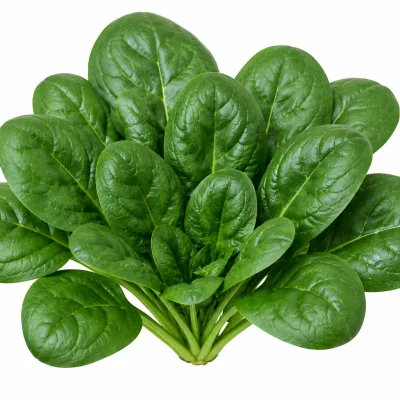
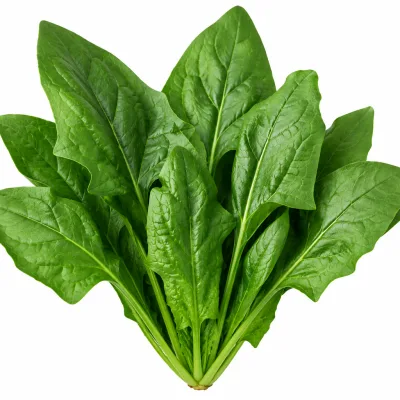
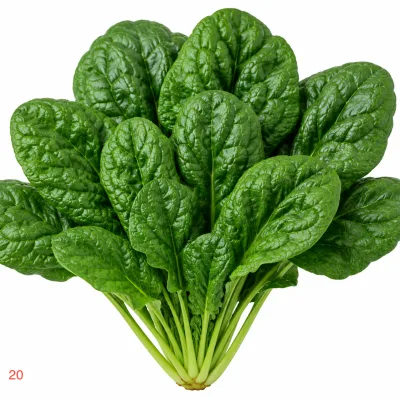
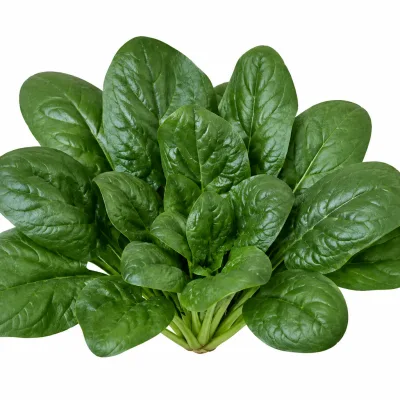
True spinach (Spinacia oleracea) is a fast, cool-season crop that excels in spring and autumn. It is best known for its dark, iron-rich leaves which are superb raw in salads or briefly wilted with butter. Spinach bolts readily in heat or drought and needs cool, moist conditions for best results. For this reason the UK season is best treated in two windows: a spring sowing from March to May that produces from May to June before the heat; and an autumn sowing from August to September that crops through to April. Choose smooth-leaved varieties for fresh salads, savoy (crinkled) types for cooking, and bolt-resistant F1 varieties for any sowing when temperatures will be higher.
03 Varieties
The number of varieties shown for each crop is based on UK consumption data (2025/26) — the more popular the crop, the more variety choices we include.
🌿 Smooth-Leaved (Salad Types)
Flat, smooth leaves. Fastest-growing. Best eaten raw in salads or lightly wilted. Modern bolt-resistant F1 varieties dominate this group.
Medania
Smooth · F1 · Bolt Resistant
Outstanding bolt-resistant F1 variety with smooth, dark green leaves and upright, easy-to-pick growth habit. Very productive over a long season. AGM holder. One of the most reliable spinach varieties currently available for UK gardens. Suitable for both spring and autumn sowings.
AGM
F1
Bolt Resistant
Spring & Autumn
Space F1
Smooth · F1 · Vigorous
A widely grown F1 variety with smooth, rounded, dark green leaves on an upright plant that keeps the leaves clean and easy to pick. Slow to bolt, with good resistance to several strains of downy mildew. Very productive for both baby leaves and full-size leaves from spring and autumn sowings.
F1
High Yield
Disease Resistant
Reliable
Emilia F1
Smooth · F1 · Versatile
A modern F1 with excellent bolt resistance and very good downy mildew resistance. Smooth, deep green leaves. Reliable across the full season from early spring to late autumn. A versatile variety that performs consistently in varied UK conditions.
F1
Bolt Resistant
Mildew Resistant
Versatile
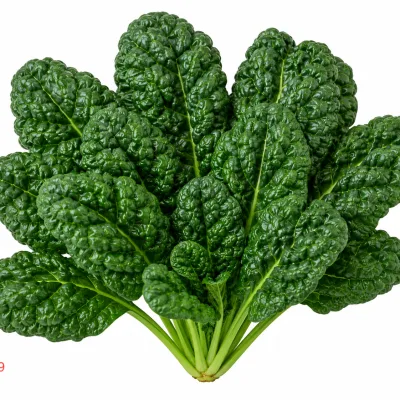
🥬 Savoy (Crinkled) Types
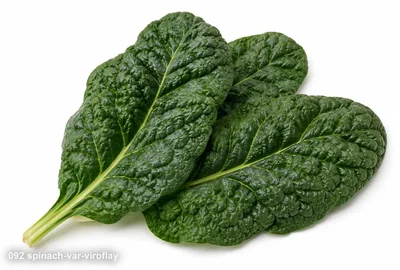
Crinkled, blistered leaves. More cold-hardy than smooth types. Best for cooking — the crinkled surface traps more sauce and flavour. Some heritage varieties.
Monstrueux de Viroflay
Savoy · Heritage · Large
A magnificent heritage spinach from 19th-century France — the leaves can reach 30cm in length. Large, deeply crinkled, dark green leaves with excellent flavour. Best for cooking. Not bolt-resistant, so best in spring or autumn. Grown for over 150 years in French kitchen gardens.
Heritage
French
Large Leaf
Cooking
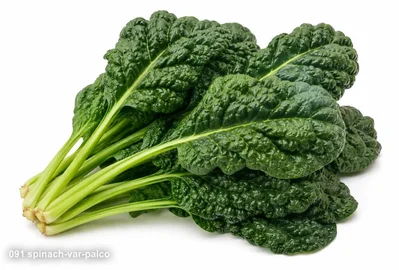
Palco F1
Savoy · F1 · Bolt Resistant
Modern F1 savoy-type with good bolt resistance and strong mildew resistance. Deeply crinkled, dark green leaves. Suitable for spring, summer (with shade), and autumn sowings. More reliable than heritage savoy types in warm conditions.
F1
Bolt Resistant
Mildew Resistant
Savoy
Bloomsdale
Savoy · Heritage · Classic
American heritage savoy spinach from the early 19th century — one of the oldest spinach varieties still in cultivation. Deeply crinkled, glossy dark green leaves with outstanding flavour. Slower to bolt than most heritage types. Excellent raw or cooked. A living piece of kitchen garden history.
Heritage
American
Classic
Flavour
🌱 Perpetual Spinach (Spinach Beet)
Beta vulgaris — related to chard, not true spinach. Far more heat and cold tolerant. Produces leaves year-round with minimal bolting. Excellent low-maintenance alternative.
Perpetual Spinach
Spinach Beet · Year-Round
The most reliable year-round spinach substitute. Spinach beet has a similar leaf flavour to true spinach but is far more tolerant of heat, cold, and drought. Grows as a cut-and-come-again crop for up to 18 months without bolting. The ideal choice where true spinach has failed due to bolting.
AGM
Year-Round
Bolt Resistant
Hardy
Reliable
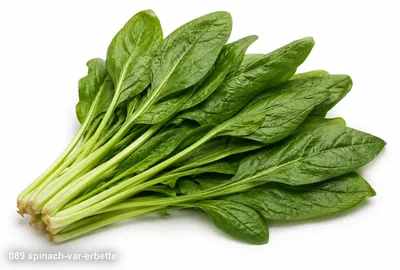
Erbette
Spinach Beet · Italian
Italian variety of spinach beet with narrower, more tender leaves than standard perpetual spinach. Softer texture, milder flavour. Popular in Italian kitchen gardens for quick cooking and wilting. Very productive with multiple cuts per season.
AGM
Italian
Tender
Mild
Productive
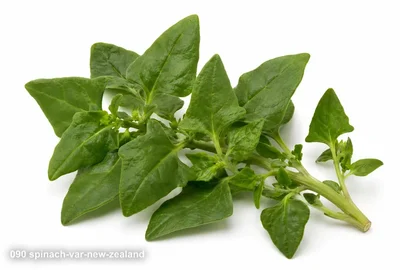
New Zealand Spinach
Tetragonia · Summer
Tetragonia tetragonioides — not related to true spinach but produces similar small, thick leaves with a mild flavour. Outstanding heat tolerance — thrives in summer conditions where true spinach bolts immediately. Grows as a low sprawling plant. Harvest young shoot tips for best flavour.
Heat Tolerant
Summer
Low Growing
Alternative
04 Where to Source
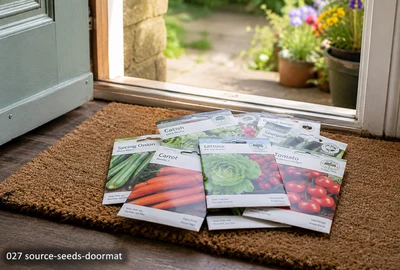
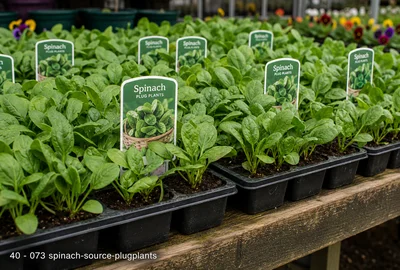
Spinach seed is widely available from all major seed companies, garden centres, and supermarkets from January. For the best bolt-resistant F1 varieties such as Medania, Space, and Emilia, specialist online seed companies offer the widest choice and freshest seed. Both packet seeds and plug plants are available in spring from most garden centres.
📬 Seeds by Post
Online seed companies offer the widest range including bolt-resistant F1 varieties and heritage types. Spinach seed is inexpensive and fresh seed germinates far more reliably than old stock. Order from January.
🏪 Garden Centres
Most garden centres stock spinach seeds from February. A limited range of standard varieties is available in person; for F1 bolt-resistant types, order from specialist suppliers.
🌱 Plug Plants
Spinach plug plants are occasionally available from garden centres in spring — a useful shortcut if you miss the early sowing window. Quality varies; fresh seed from a reputable company is usually a better choice.
Timing tip: Order seeds in January and February. Popular varieties sell out quickly. Garden centres and markets are a reliable backup from April onwards.
05 Planting Options
🌿 Open Ground
The standard method. Sow direct in shallow drills in a prepared bed. Thin progressively to 15cm for full-sized plants, or sow more densely and harvest as baby leaves. Sow in succession every 3 weeks for a continuous spring supply; pause in the peak of summer heat and resume in August for an autumn harvest.
Suitable varieties: All varieties. Best method for main-season spring and autumn crops.
🪴 Container / Large Pot
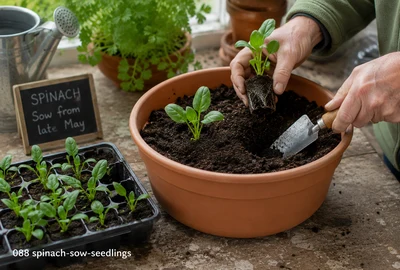
Spinach grows well in large, deep containers — a minimum depth of 20cm. Use a rich, moisture-retentive compost. Sow thinly and water daily. Containers in partial shade produce more reliable spinach through the season as they stay cooler than open ground. A 40cm pot gives a generous cut-and-come-again crop.
Suitable varieties: All spinach varieties. Bolt-resistant F1 types are best for container growing where heat stress is more likely.
Spinach makes excellent ground cover under strawberry plants, suppressing weeds and retaining soil moisture around the fruits. The two crops do not compete.
Peas fix nitrogen that benefits spinach. Low-growing spinach fills the space between pea rows without competition. Both are cool-season crops with compatible timing.
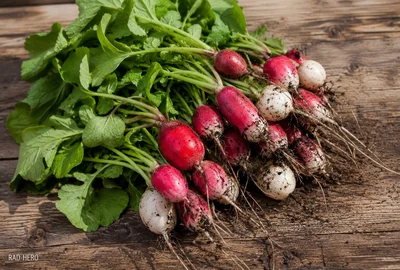
Radish can be interplanted as a catch crop between spinach rows. They mature before spinach needs the space and the different leaf shapes make good use of available light.
❌ Keep apart
🌈 Chard — Chard and spinach share the same family and the same pest and disease pressures. Avoid growing in adjacent rows and rotate them together as a group in a 4-year plan.
🟣 Beetroot — Beetroot shares the same family as spinach (Chenopodiaceae) and the same pests. Grow in separate beds and include both in the same rotation block.
07 Sowing — How To
🌱 Spring Direct Sow
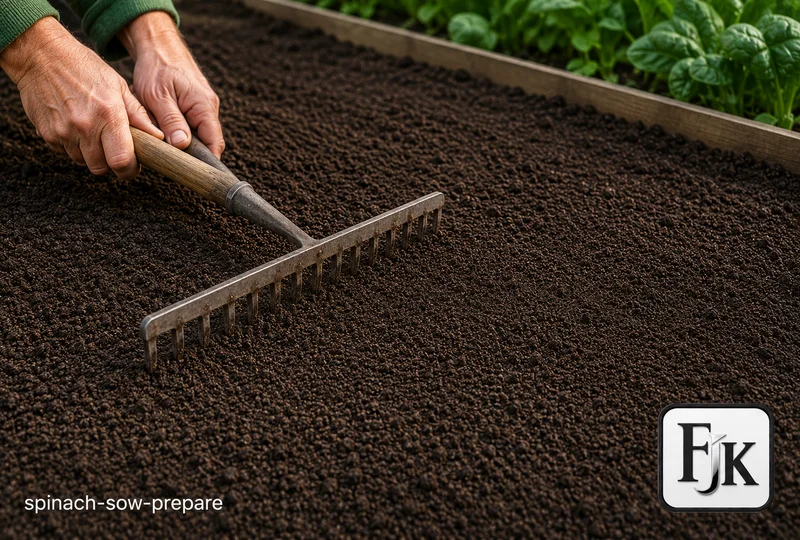
Prepare a fine seedbed
Rake the soil to a fine, crumbly tilth in a well-prepared bed. Spinach needs a fertile, moisture-retentive soil — incorporate compost if the soil is poor. Choose a position with light shade for summer sowings; full sun is fine for spring and autumn.
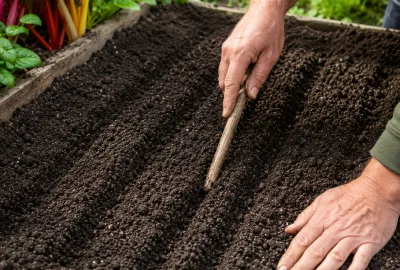
Draw shallow drills
Use a cane or hoe corner to draw drills 1cm deep and 30cm apart. Water the drill before sowing if the soil is dry — spinach germinates much more reliably in moist conditions.
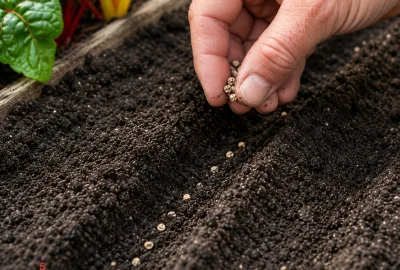
Sow thinly
Sow spinach seeds thinly along the drill — 2–3cm between seeds. Overcrowded spinach produces drawn, weak plants that bolt rapidly. Label with variety and date.
Cover and water
Cover with fine soil to a depth of 1cm and firm gently. Water with a fine rose. Keep evenly moist until seedlings emerge in 7–14 days.
Thin progressively
Thin seedlings to 7cm when large enough to handle, then to 15cm as plants grow. Use thinnings in salads — they are tender and delicious. Never allow spinach to become overcrowded.
Harvest regularly
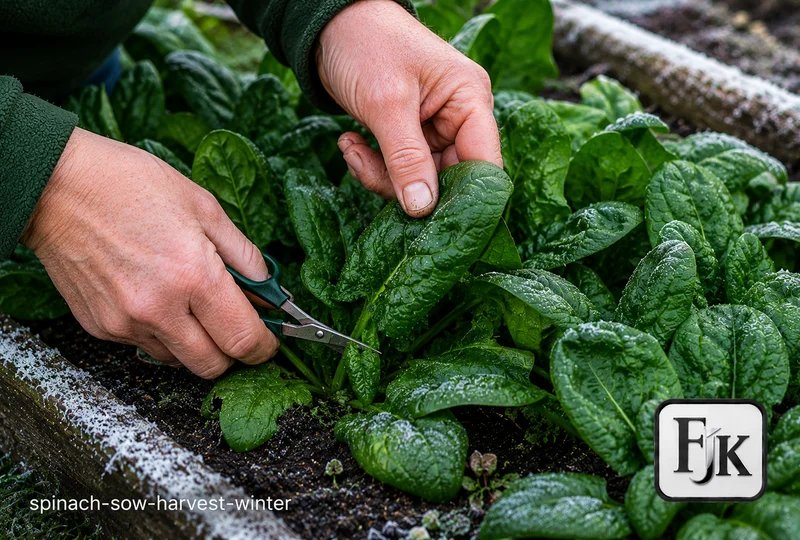
Begin cutting outer leaves when plants are 10–15cm tall. Cut with scissors 3–4cm above soil level for cut-and-come-again regrowth, or pull whole plants for larger leaves. Regular harvesting delays bolting.
Spring Direct Sow — regional timing
Region
Sow / plant
Harvest
Notes
Scotland & Far North
Mar–May
May–Jul
Mar–May
Northern England
Mar–May
May–Jun
Mar–May
Midlands & Wales
Mar–May
May–Jun
Mar–May
Ireland & Isle of Man
Mar–May
May–Jun
Mar–May
South & SE England
Feb–May
Apr–Jun
Feb–May
South Coast & SW
Feb–May
Apr–Jun
Feb–May
🍂 Autumn Direct Sow
Prepare the seedbed
August–September sowings follow summer crops. Clear the bed of old plants, rake to a fine tilth, and water thoroughly before sowing. Autumn soil is often dry — pre-watering the drill is essential for good germination.
Sow in drills
Draw drills 1cm deep and 30cm apart. Sow thinly and cover with 1cm of fine soil. Autumn sown spinach germinates in 7–10 days. Label with variety and date.
Grow on and thin
Thin to 15cm spacing when seedlings are established. Autumn plants grow slowly but steadily. By late October they are established enough to withstand light frosts. Cover with fleece below -3°C.
Harvest through winter
Harvest outer leaves regularly from October onwards. The plants grow very slowly in winter but remain productive during mild spells. The finest harvest comes in March–April when growth accelerates as days lengthen.
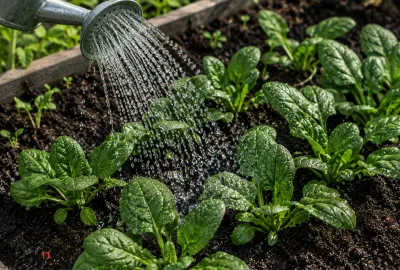
Consistent moisture is critical for spinach — drought is the primary trigger for bolting. Water every 5–7 days in dry weather, or more frequently in hot spells. Never allow the soil to dry out completely. Container spinach needs daily watering in warm weather. A mulch of compost around plants retains moisture and keeps roots cool.
🌡️ Preventing Bolt
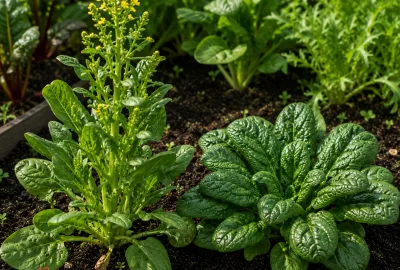
Bolting (running to seed) is the main challenge with spinach. Prevention strategies: sow in part shade for summer crops; choose bolt-resistant F1 varieties; water consistently; sow in the correct windows (spring before heat, autumn after); and harvest regularly — plants that are regularly picked bolt more slowly than those left untouched.
✂️ Thinning & Harvest
Thin seedlings progressively to avoid competition, which causes bolting. Harvest outer leaves regularly from established plants — the cut-and-come-again method of cutting 3–4cm above soil level encourages the central crown to produce new growth. Pick in the morning for the most turgid, fresh leaves.
10 Watch Out For
Warning
Downy mildew is the most common disease of spinach — pale yellow patches on upper leaf surfaces, grey-purple mould beneath. Improve spacing and airflow, avoid overhead watering, and remove affected leaves promptly. Bolting is the primary frustration — choose bolt-resistant F1 varieties, sow in partial shade in summer, and keep plants consistently moist. Leaf miner creates pale, papery tunnels in leaves — remove affected leaves immediately. Slugs target seedlings particularly in cool, damp spring conditions; protect with nematodes or copper barriers.
🐛 Insects & pests
🐌 Slugs & Snails — Silver slime trails on leaves, soil, and pots — often the first sign before damage is found
🐜 Aphids (Blackfly & Greenfly) — Curled, distorted, or stunted growing tips — aphids inject saliva that causes leaf curl to protect them
🌿 Leaf Miner — Pale, winding tunnels or irregular blotches between leaf surfaces — visible when held up to light
🍄 Diseases to watch
🔵 Downy Mildew — Downy mildew is caused by oomycetes (water moulds) and is completely unrelated to powdery mildew despite the similar name. It thrives in cool, wet, humid conditions and is most damaging in spring and autumn. Each host plant has its own specific downy mildew species. Lettuce downy mildew can destroy an entire bed within days in the right conditions.
🩶 Botrytis (Grey Mould) — Botrytis cinerea (grey mould) is the most ubiquitous fungal pathogen in temperate gardens — present in virtually every garden soil and on plant debris. It becomes a disease only when conditions favour it: cool, humid, poorly ventilated environments with damaged or senescent plant tissue. In a greenhouse in autumn it can destroy an entire tomato or grape crop.
Full identification and treatment advice is in the Pests and Diseases sections.
11 Storage & Preserving
🌿 Use Fresh
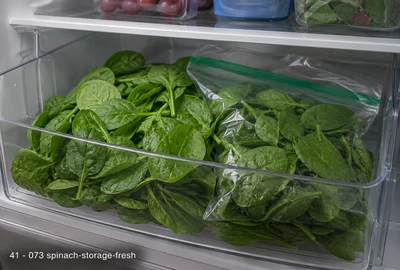
Spinach is best eaten within hours of picking — it wilts quickly and loses vitamin content rapidly. Store dry and unwashed in a breathable bag in the fridge for up to 3 days. Wash immediately before use. Raw baby spinach is superb in salads; mature leaves are best cooked.
🍳 Cook & Wilt
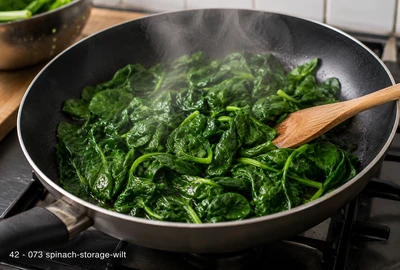
Spinach wilts down to roughly one tenth of its raw volume. Cook large quantities by briefly wilting in a dry pan over high heat — no water needed from the leaves themselves. Drain thoroughly and press to remove excess liquid before using in quiche, pie fillings, or pasta. Season generously with nutmeg and salt.
❄️ Freeze
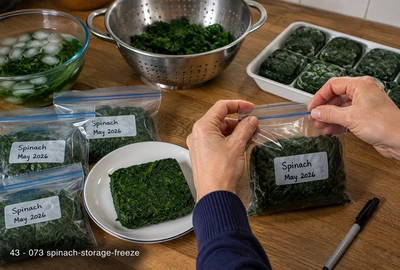
Spinach freezes well for cooked dishes. Blanch briefly in boiling water for 1 minute, plunge into iced water, drain and squeeze out thoroughly before freezing in portions. Frozen spinach keeps for up to 12 months. Not suitable for salads but excellent in soups, curries, pasta sauces, and pie fillings.
12 Expert Tips
💡 Two Windows
Spinach is best treated as a two-window crop: a spring sowing from March to May that crops from May to June before the heat arrives, and an autumn sowing from August to September that crops right through to April. Trying to bridge the midsummer gap with spinach rarely succeeds — grow chard instead for that period.
💡 Bolt-Resistant Varieties
Modern bolt-resistant F1 varieties (Medania, Space, Emilia, Fiorano) are significantly more reliable than older open-pollinated types. If you have had disappointing results with spinach in the past, switching to a current F1 variety makes a very noticeable difference, especially for late spring and early summer sowings.
💡 Part Shade Trick
Moving summer spinach sowings into the partial shade of a taller crop — the north side of climbing beans, beneath sweetcorn, or in a spot that receives shade from 2pm onwards — meaningfully extends the harvest by keeping roots cooler and reducing the day-length signal that triggers bolting.
13 Common Mistakes
⚠ Sowing & Timing
Sowing too late in spring — May sowings in warm, exposed positions will bolt before producing much leaf; switch to chard or choose bolt-resistant F1 varieties.
Not thinning adequately — overcrowded spinach plants compete, become drawn, and bolt within weeks of germinating.
Sowing in midsummer heat without shade — spinach cannot cope with temperatures consistently above 25°C; it will bolt regardless of watering.
⚠ Ongoing Care
Allowing drought stress — even a brief dry spell in warm weather triggers bolting; consistent moisture is the single most important factor.
Harvesting too little — plants that are rarely picked bolt faster than those harvested regularly; pick outer leaves every 7–10 days.
Trying to grow spinach through summer — use chard instead from June to August, which tolerates heat far better and provides the same type of leaf.