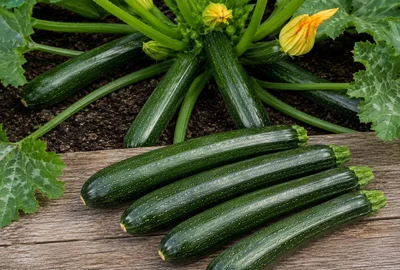
Defender F1
Standard Bush
The most widely grown courgette in the UK. Virus-resistant, extremely reliable, and a consistent heavy cropper from June to October. The first choice for beginners.
- AGM
- Outdoors
- Beginners
- ⭐ Reliable
Cucurbita pepo
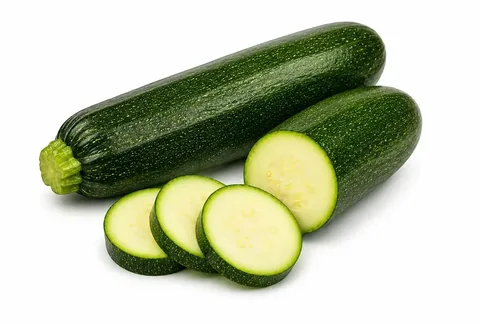
One plant can feed a family — and more. Courgettes are the most productive crop in the British kitchen garden, capable of producing dozens of fruits throughout summer from a single plant. They are fast, generous, and forgiving to grow, with the main challenge being to harvest regularly enough to keep pace with production. Left unpicked for even a few days a courgette becomes a marrow. But harvested young and often, they are among the finest vegetables you can grow — sweet, tender, and nothing like the oversized specimens found in shops.
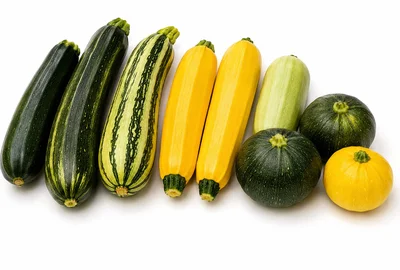
Courgettes divide into two broad groups: standard green-fruited types and the increasingly popular coloured varieties — yellow, striped, and pale green. There are also compact bush forms bred specifically for container and patio growing. Understanding the differences helps you choose the right variety for your space, and the right harvest timing for the best flavour. All types produce both male flowers (on long straight stems) and female flowers (with a tiny fruit at the base) — both must be present for fruit to set.
The number of varieties shown for each crop is based on UK consumption data (2025/26) — the more popular the crop, the more variety choices we include.
The classic British courgette — dark green, prolific, and reliable in all UK conditions. The most widely grown group.
The most widely grown courgette in the UK. Virus-resistant, extremely reliable, and a consistent heavy cropper from June to October. The first choice for beginners.
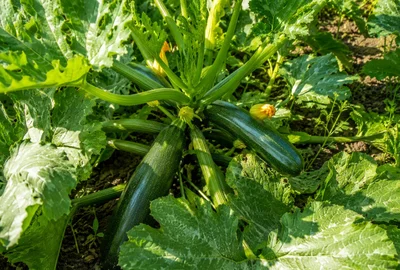
The classic Italian open-pollinated type. Slender dark green fruits with a mild, sweet flavour. An excellent choice for heritage and organic growing — seed can be saved true-to-type.
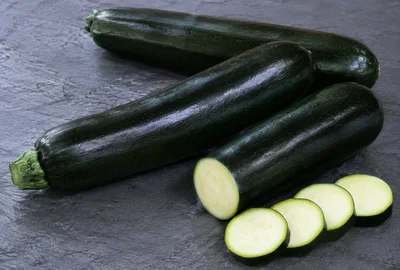
Unusual semi-climbing habit — can be trained up a trellis or support, saving ground space. Very dark, almost black-green fruits. Ideal for small gardens where space is limited.
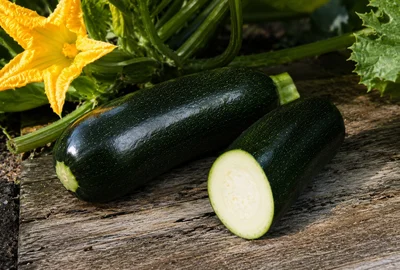
Very dark, glossy almost-black-green fruits. Good yields and reliable performance across the season. A striking variety at the table and in the garden.
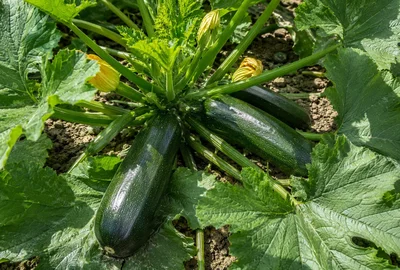
One of the most popular allotment courgettes in the UK. Vigorous and prolific, with smooth mid-green fruits and excellent disease resistance. Easy for beginners.
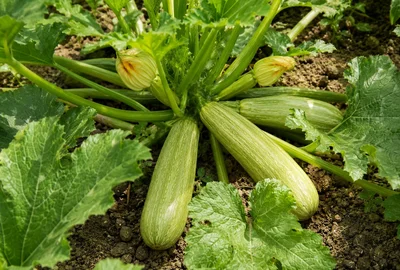
Traditional Italian heritage variety with dark-speckled green skin and a rich, nutty flavour. Open plant habit makes harvesting easy. A fine heritage choice.
Bright yellow fruits with a slightly milder, sweeter flavour than green types. Equally productive and considerably easier to spot when harvesting.
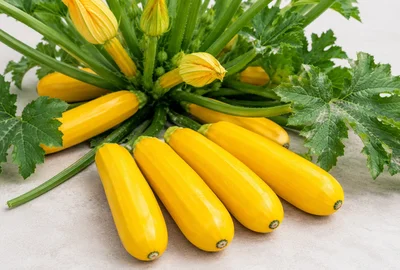
Bright golden-yellow fruits with crisp texture and sweet flavour. Very reliable F1 hybrid with strong disease resistance. Highly decorative on the plant and in the kitchen.
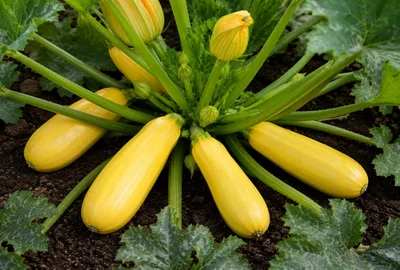
Compact plant producing lemon-yellow fruits of excellent flavour. RHS Award of Garden Merit winner. Particularly good eaten raw in salads when harvested at 10–12cm.
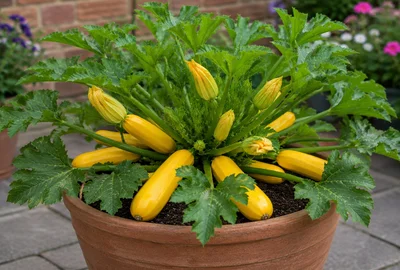
Dwarf plant bred specifically for patio containers. Bright yellow fruits on a compact, self-contained plant. Very ornamental and practical.
Traditional Italian and heritage varieties with striking striped or pale green skins. Often considered the finest flavoured of all courgette types.
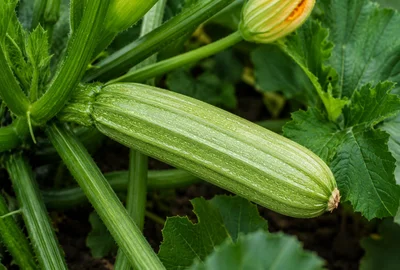
Italian heritage variety with distinctive pale green, ridged fruits and a rich, nutty flavour considered by many cooks to be the finest of all courgettes. Prolific and reliable.
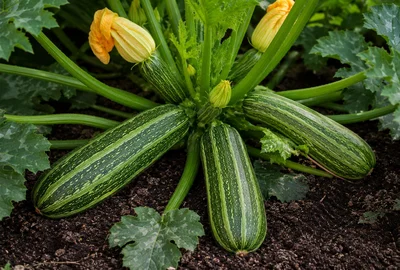
Classic Italian striped variety with pale and dark green marbling. Excellent mild flavour and open habit that makes harvesting easy. A traditional favourite.
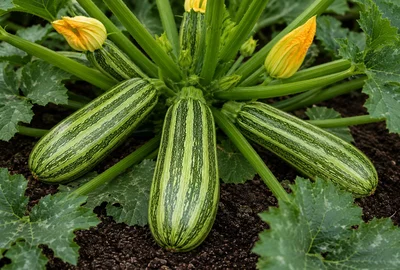
One of the oldest Italian courgette varieties. Dark and light green stripes. Outstanding flavour at 12–15cm. A genuine kitchen garden classic.
Dwarf and compact varieties bred specifically for patio containers, raised beds, and small gardens where standard varieties would be too vigorous.
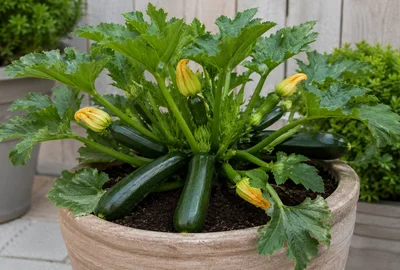
Extremely compact plant that performs well in large containers. Dark green fruits. The benchmark variety for patio and small garden growing.
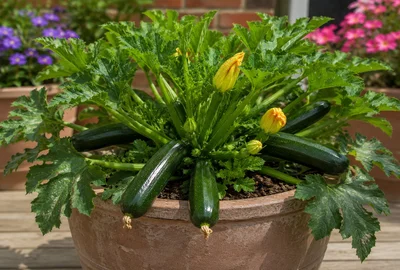
One of the most compact courgettes available — genuinely container-suitable in a large (40cm+) pot. Dark green fruits with good yields for its size.
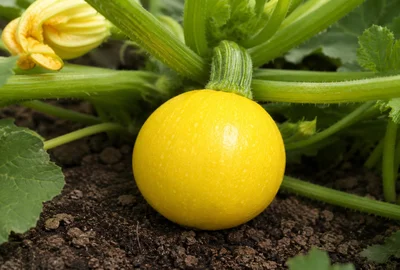
Round, tennis-ball shaped yellow fruits on a compact plant. Harvest when apple-sized for the finest flavour. Striking, unusual, and very practical for small spaces.
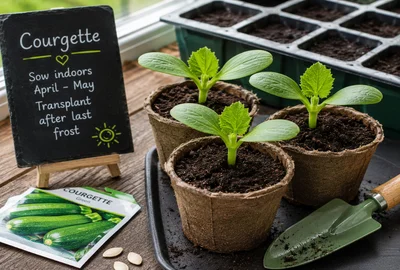
Courgette seeds are widely available, inexpensive, and highly reliable to germinate. Because they grow so fast, sourcing is simple — the main priority is selecting the right variety for your space before ordering.
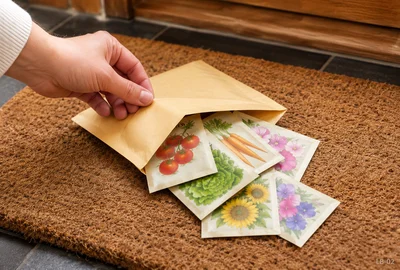
The best source for variety choice. Specialist seed companies carry the full range including Italian heritage types, coloured varieties, and compact container forms. Order from January. Because courgettes are fast-growing there is no pressure to order as early as tomatoes — March is perfectly fine for most UK growers.
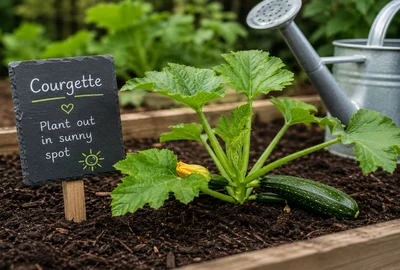
Garden centres stock a reliable range of courgette seeds from February and young plants from May. Variety choice is narrower than online — typically Defender F1, a yellow type, and perhaps Romanesco — but plants are easy to assess before purchase and staff are usually helpful.
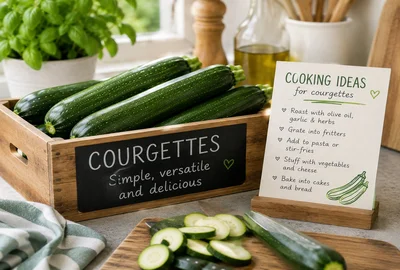
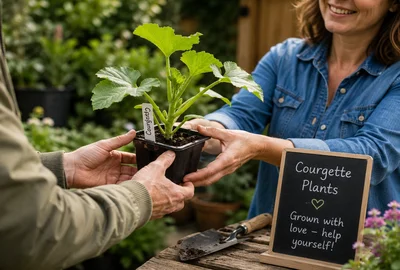
Community plant sales, farmers' markets, and allotment swaps are an excellent source of young courgette plants in May. Because courgettes are fast to produce from seed, locally grown plug plants are usually excellent quality and very keenly priced.
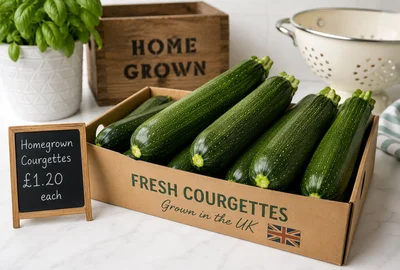
Courgettes produce prolifically and most growers end up with surplus seed. Ask at your allotment or growing community — you are unlikely to need to buy seed at all after your first year if you grow open-pollinated types like Romanesco or Zucchini and save a little seed.
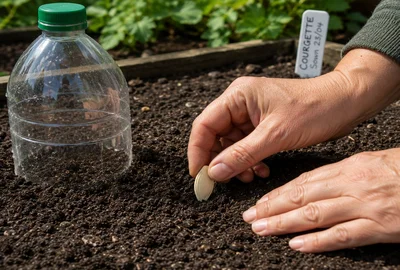
The simplest and most reliable method from May onwards. Sow two seeds on their side, 2–3cm deep, in a prepared planting hole enriched with compost and well-rotted manure. If both germinate, remove the weaker seedling at soil level. Cover with a cloche or cut plastic bottle for the first few weeks for protection from late frosts and slugs. Direct-sown plants often catch indoor-sown ones within a fortnight, as they avoid any transplant check.
Suitable varieties: All varieties. Best from late April in southern UK, mid-May northwards.
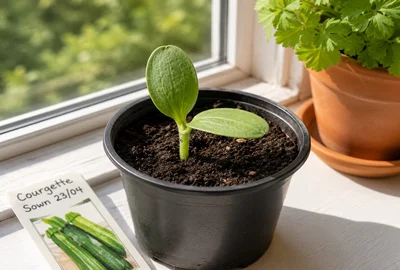
Starting courgettes indoors gives a 2–3 week head start over direct sowing. Sow in 9cm pots — one seed per pot placed on its side — in late April or early May. Keep warm (minimum 20°C). Germination is rapid, usually within 5–7 days. Do not sow too early: courgettes grow very fast and plants left too long in pots become pot-bound and difficult to establish. Harden off over 7–10 days before planting out — do not rush this step after frost.
Suitable varieties: All varieties. Particularly useful in northern UK where the outdoor season is shorter.
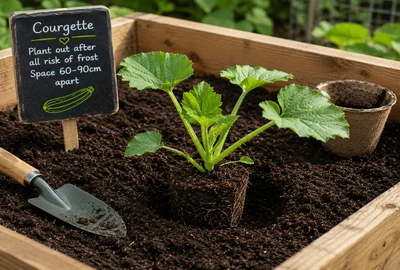
Courgettes thrive in raised beds — improved drainage, faster soil warming in spring, and easier access for the daily harvesting they need. Prepare the bed by mixing generous quantities of well-rotted manure or garden compost into the top 30cm. Allow at least 90cm per plant — courgettes spread widely. Plant with the rootball slightly proud of the surrounding soil surface to prevent crown rot. Water in well after planting.
Suitable varieties: All varieties. A standard 1.2–1.5m wide raised bed comfortably holds one plant at each end.
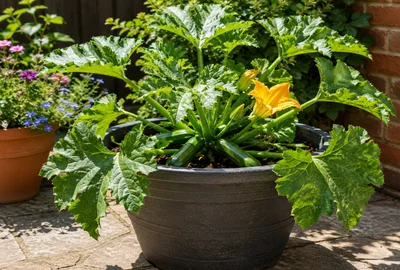
Courgettes can be grown in large containers but require a minimum 40–50 litres of compost — a 45–50cm diameter pot. Use peat-free multipurpose compost enriched with slow-release fertiliser granules at planting time. Watering is critical: courgettes in pots may need watering twice daily in warm weather. Regular liquid feeding (weekly high-potash feed from first flower) is essential — container compost runs out of nutrients within 4–6 weeks.
Suitable varieties: Patio Star F1, Astia F1, One Ball F1, Yellow Patio F1. Standard varieties are too vigorous for most containers.
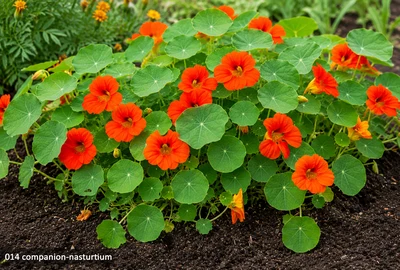
Sacrificial trap crop — aphids flock to nasturtiums instead of courgettes. Also attract hoverflies that prey on blackfly. Plant at the bed perimeter or between plants.
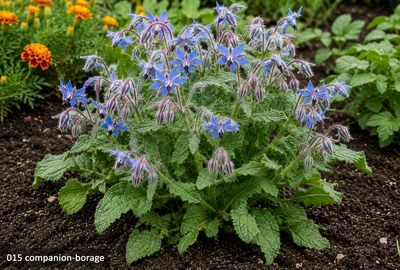
Borage is said to deter tomato hornworm and improve the flavour of neighbouring plants. Its blue flowers attract pollinators essential for courgette fruit set.
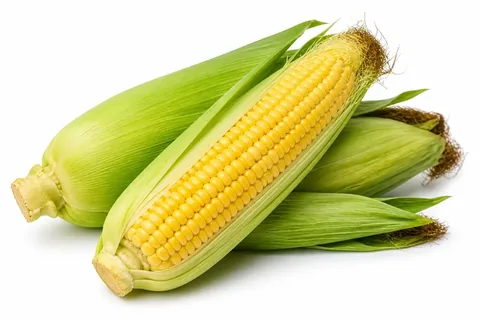
The traditional Three Sisters combination. Sweetcorn provides height, courgettes provide ground cover suppressing weeds. Both thrive in rich, warm soil.
Courgettes are one of the easiest crops to sow. The main risk is sowing too early — plants grow so fast that they outgrow their pots before conditions allow planting out. Aim for late April to early May for indoor sowing in most UK regions. No heated propagator is needed — a warm windowsill at 18–22°C is sufficient.
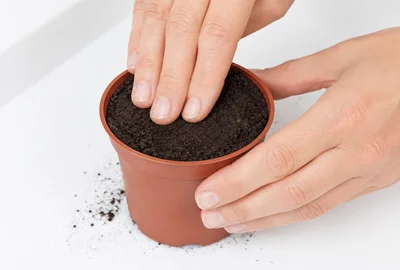
Use a 9cm pot filled to within 1cm of the rim with moist seed compost. One pot per seed — courgettes dislike root disturbance and do not transplant as well from shared trays.
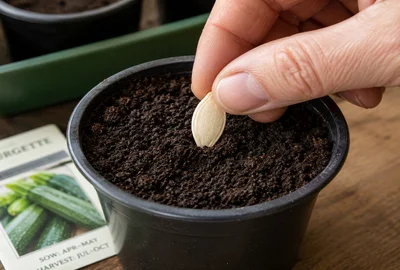
Place one seed on its side in the centre of the pot at a depth of 2–3cm. Sowing on edge prevents the seed sitting flat in a puddle, which can cause rotting before germination.
Cover with 2–3cm of compost or vermiculite. Firm gently — do not compress.
Label each pot with variety name and sowing date. If growing more than one type, this step is essential.
Water with a fine rose and place somewhere warm — 20°C minimum. A windowsill above a radiator works well. No propagator is needed for courgettes.
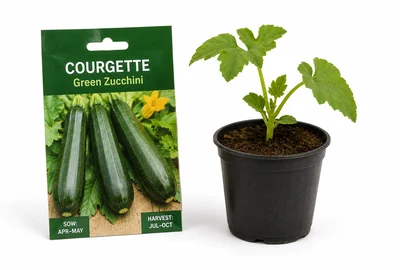
Germination typically occurs within 4–7 days in warmth. Move immediately to the brightest south-facing windowsill once the seedling emerges — courgettes go leggy in low light within days.
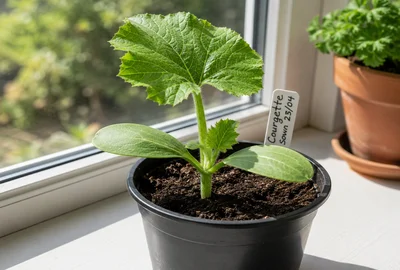
Keep in a bright spot. Water when the surface is dry. Do not overwater — soggy compost causes damping off. Plants are ready to plant out when the first true leaves have opened fully, usually 2–3 weeks after germination.
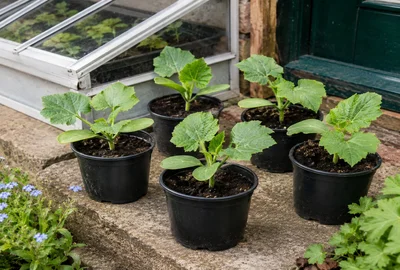
One week before planting out, begin hardening off — place pots outside in a sheltered spot during the day, bring in at night. Gradually increase outdoor exposure over 7–10 days. Do not rush this step.

| Region | Sow / plant | Harvest | Notes |
|---|---|---|---|
| Scotland & Far North | Mar–May | Jun–Sep | Direct sow outdoors from late May under cloche protection · Early May indoors |
| Northern England | Mar–May | Jun–Sep | Direct sow outdoors from mid-May with fleece protection · Late April–early May indoors |
| Midlands & Wales | Feb–Apr | May–Sep | Direct sow from early May in sheltered spots · Mid-April–early May |
| Ireland & Isle of Man | Feb–Apr | May–Sep | Direct sow from early May in sheltered spots · Mid-April–early May |
| South & SE England | Feb–Apr | May–Oct | Direct sow from late April in warm, sheltered spots · Early–mid April |
| South Coast & SW | Feb–Apr | May–Oct | Earliest reliable UK start — direct sow from mid-April · Late March–early April |
Courgettes do not require a heated propagator — they germinate readily in a warm room at 18–22°C. A propagator or a loosely draped polythene bag over the pot is useful mainly to maintain humidity during germination and prevent the compost surface drying out.
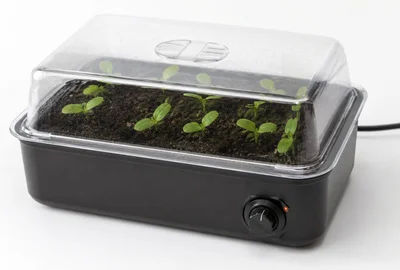
A heated propagator works well for courgettes but is not essential. If using one, set to 20–22°C. Because courgettes germinate in just 4–7 days, the main advantage is reliability in early spring when room temperatures are variable — it ensures consistent warmth overnight.
An unheated propagator or a loosely draped polythene bag over the pot is ideal and perfectly adequate. It traps warmth and humidity around the seed without electricity. Remove the cover immediately when the seedling appears — courgettes grow very fast and rapidly outgrow any enclosed space.
Standard unheated propagator — A lidded seed tray traps warmth and humidity around germinating seeds without electricity. Performance depends entirely on room temperature — best placed on a warm windowsill and used from March onwards. Replace the lid promptly after watering. Remove it completely the moment seedlings emerge to prevent damping off.
Fill a 9cm pot with moist seed compost. Place the seed on its side, cover with 2–3cm of compost, and firm lightly.
Place the pot in the propagator or cover loosely with a polythene bag. Set heated types to 20–22°C. A warm shelf or airing cupboard also works well for the germination period.
Check moisture daily — compost should remain moist but never waterlogged. Courgette seeds rot readily in cold, wet compost.
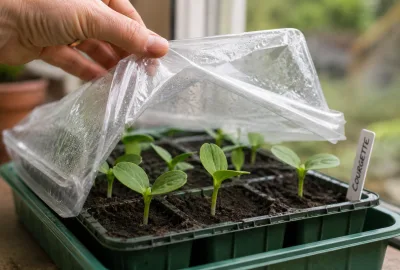
Remove the lid or bag the moment the seedling appears — typically within 4–7 days. Do not delay: courgettes grow very fast and quickly become drawn and weak in restricted space.
Transfer immediately to the brightest spot available — a south-facing windowsill is ideal. Without good light, courgette seedlings become leggy and weak within days.
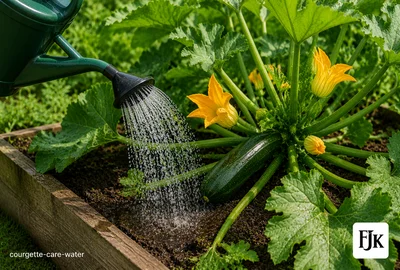
Water deeply and consistently at the base of the plant — never overhead. Courgettes need significant water once fruiting begins, particularly in dry spells. Inconsistent watering causes bitter fruits and blossom end problems. Mulch around plants to retain moisture.
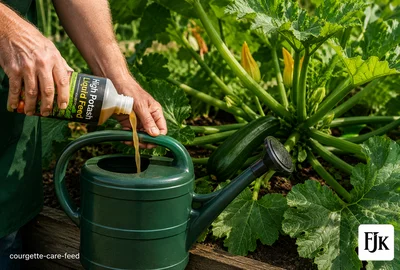
Once the first fruits begin to swell, feed every two weeks with a high-potash liquid fertiliser. Courgettes are hungry plants — regular feeding sustains the heavy cropping over a long season. A balanced general feed earlier in the season supports leafy establishment.
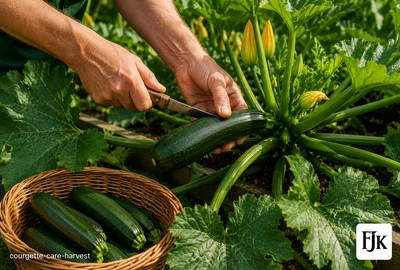
Harvest courgettes when 10–15cm long — never let them grow into marrows. Picking regularly is the single most important care task: a plant that is regularly harvested keeps producing prolifically. Check plants every 1–2 days in peak summer. Cut cleanly with a sharp knife.
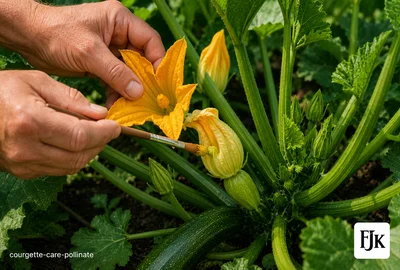
Poor fruit set is almost always a pollination failure. In cool or wet weather, transfer pollen from a male flower (no swelling at the base) to a female flower (small courgette visible behind the petals) using a soft brush or your fingertip. Do this in the morning when flowers are open.
Powdery mildew arrives reliably in late summer — white powdery patches spreading across the leaves. It rarely affects the harvest but steadily weakens plants. Improve airflow, water only at the base, and remove badly affected leaves. Courgette mosaic virus causes distorted, mottled leaves and poor stunted fruits — spread by aphids. Control aphid colonies early and remove infected plants promptly to stop spread.
Full identification and treatment advice is in the Pests and Diseases sections.
Freshly harvested courgettes keep in the fridge for up to a week. Store unwashed in the salad drawer. Do not attempt to store raw courgettes at room temperature for more than 1–2 days — they deteriorate quickly. For the best flavour cook or eat on the day of harvest. Courgettes at 10–15cm are far superior in flavour and texture to larger specimens — once they pass 20cm, the skin toughens and seed cavities enlarge.
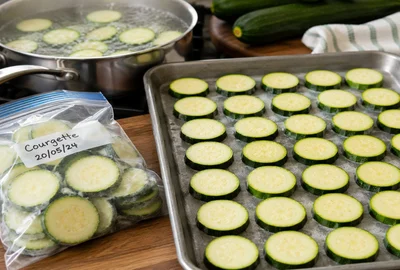
Courgettes freeze adequately when blanched first. Slice into 1cm rounds, blanch for 2 minutes in boiling water, refresh immediately in ice water, drain thoroughly, then freeze in a single layer on a tray before bagging. Frozen courgettes are soft on thawing and best used in soups, ratatouille, fritters, courgette cake, and baked dishes. Use within 3 months for best quality.
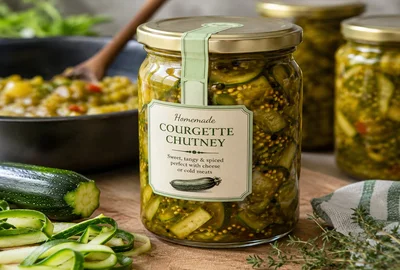
Courgette chutney is the most satisfying way to use a mid-season glut, and pickled courgette ribbons with dill and garlic are excellent with cold meats and cheese. Both are rewarding preserves that make excellent gifts. Follow a tested recipe.
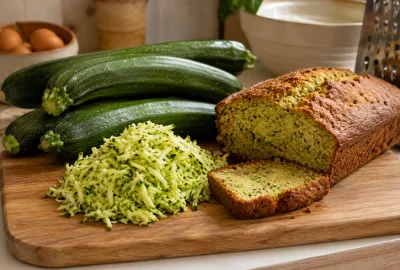
Courgette cake is one of the finest uses of a mid-season glut — grated courgette keeps bakes extraordinarily moist and adds virtually no flavour. Courgette, mint, and lemon soup is a summer standard. Ratatouille, fritters, tempura, stuffed courgette flowers, and courgette pasta are all excellent. Overgrown courgettes that have become marrows are superb stuffed with meat, rice or breadcrumbs, baked, and finished with cheese.
Courgettes resent root disturbance. Sow into individual 7cm or 9cm pots and pot on without disturbing the rootball. Module trays work well but open seed trays do not — pricking out sets courgettes back significantly.
Sowing courgettes on their side rather than flat reduces the risk of the seed rotting at the tip before germinating. Push the seed in vertically with the pointed end down, or simply on its edge.
The single most common reason courgettes disappoint is irregular harvesting. A fruit left to swell beyond 20cm diverts all the plant’s energy into that one marrow and suppresses new flower production. Harvest at 10–15cm and the plant responds with new fruits within days.
Male flowers appear first and are often mistaken for a problem. Female flowers follow within a week or two — identified by the tiny immature courgette behind the petals. In cold or wet weather, hand-pollinate by transferring pollen from a male flower to a female using a soft brush or by removing a male flower and touching it directly to the female.