Nectarines are genetically identical to peaches in all cultural requirements — treat exactly as a peach
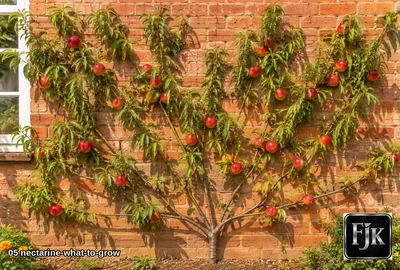
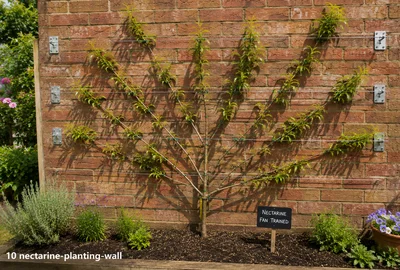
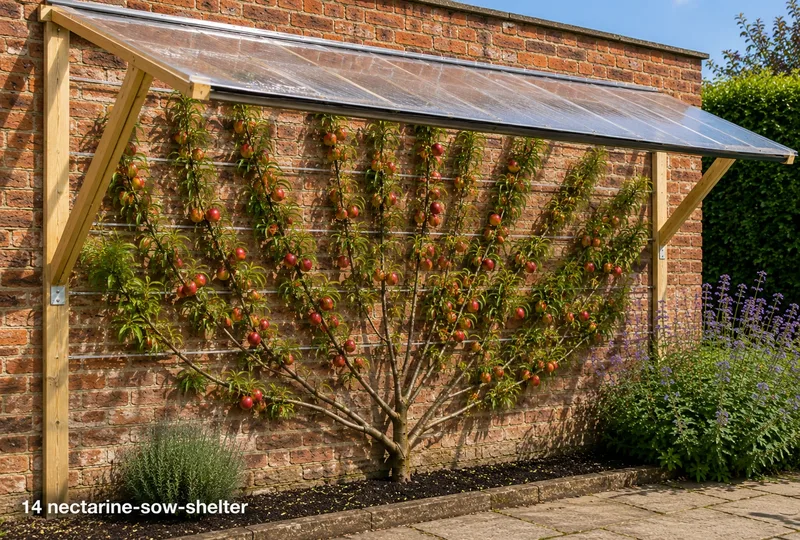
Fan-train against a south-facing wall; Fantasia and Lord Napier are the most reliable UK outdoor varieties
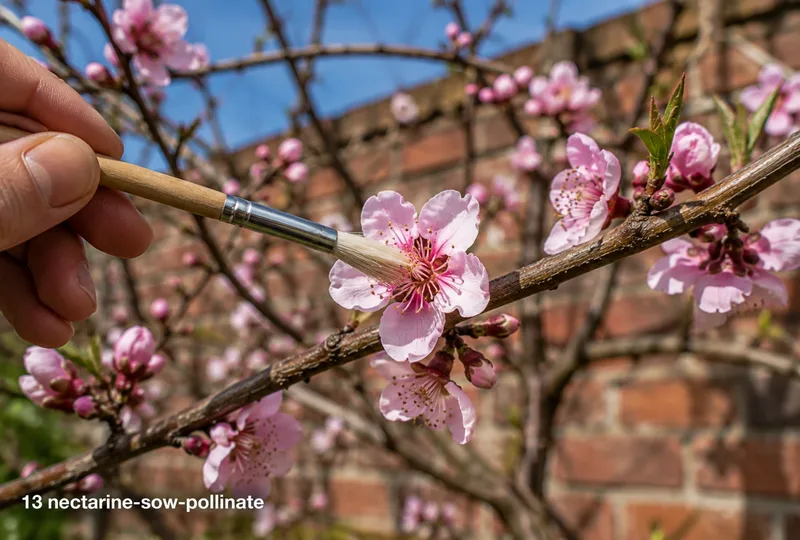
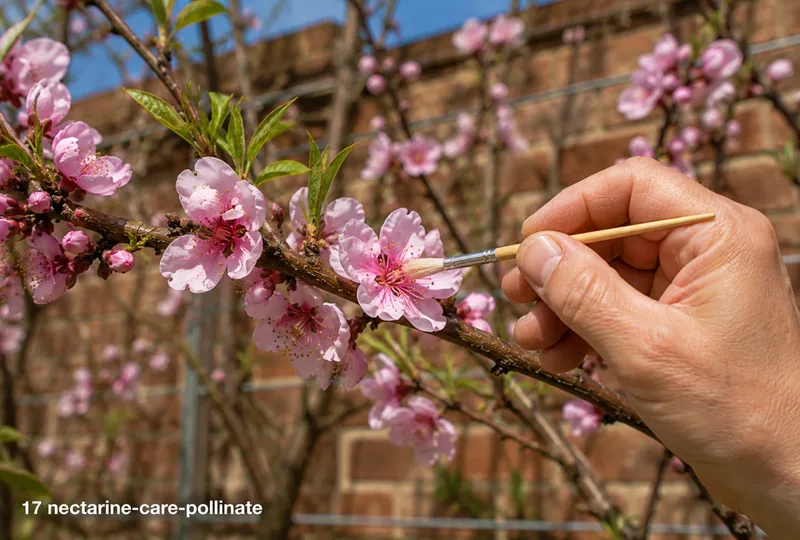
Protect February–May blossom from frost with fleece; hand-pollinate in cold or wet weather
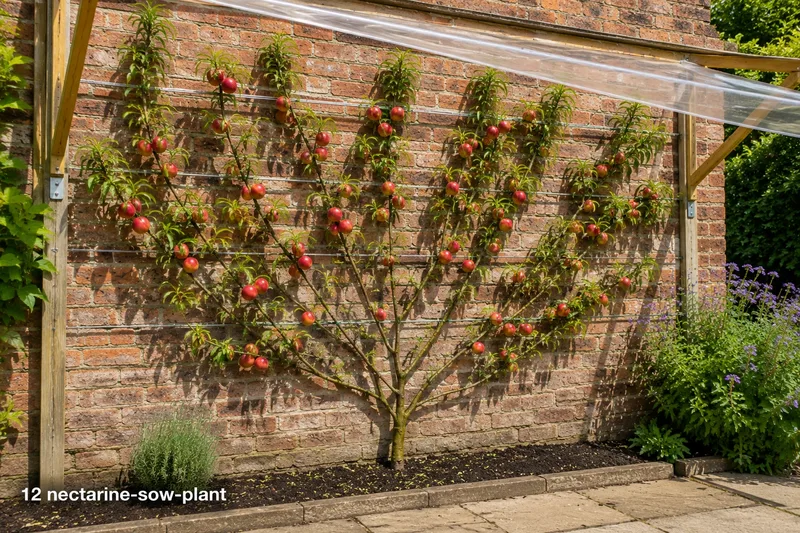
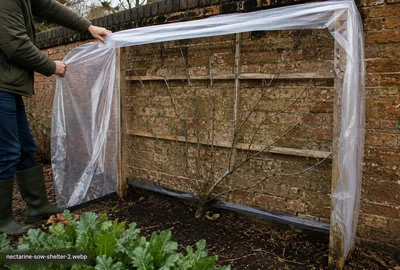
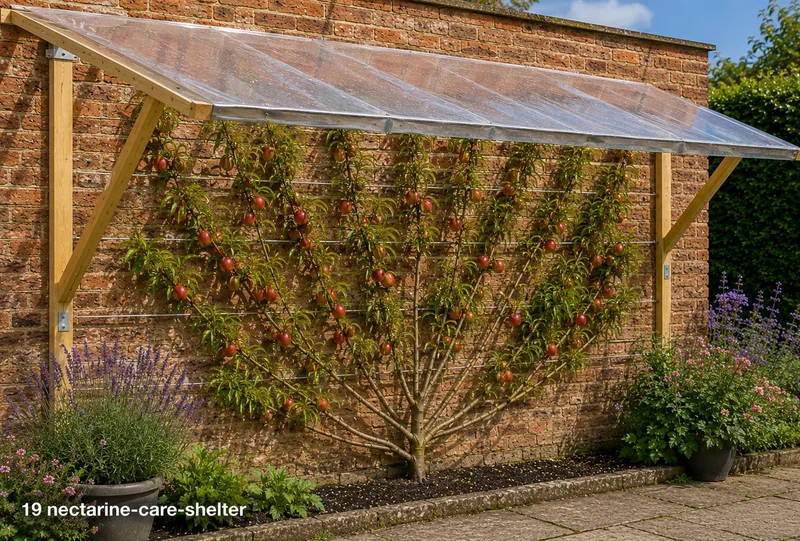
Cover with polythene rain shelter February–May to prevent peach leaf curl — nectarines are slightly more susceptible than peaches
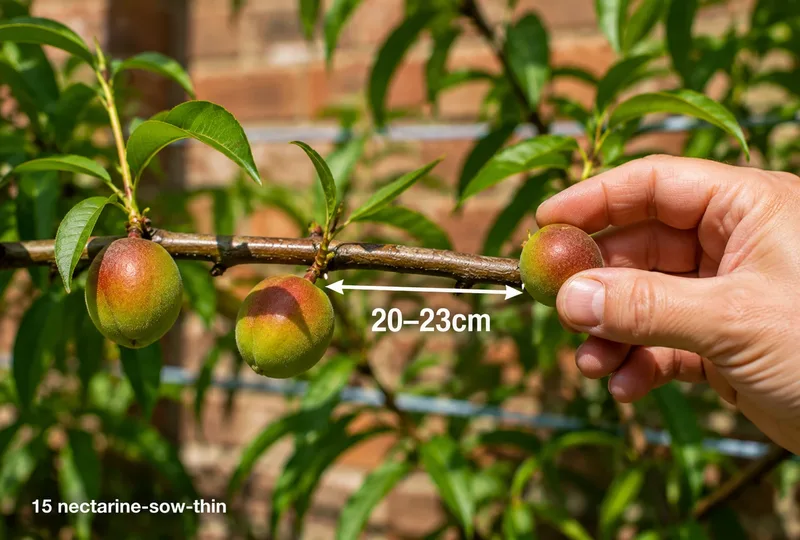
Thin fruits to one per 15cm of branch in June for large, well-flavoured nectarines
🌱 SowPlant bare-root Nov–Mar · Container Sep–May
🌾 HarvestAug–Sep
☀ PositionSouth-facing wall in full sun — rain shelter essential
📐 Spacing3.5–4.5m (fan) · 50L+ container
DifficultyModerate
⚡ Quick facts
Sow
Plant bare-root Nov–Mar · Container Sep–May
Plant
Nov–Mar (bare-root) · Sep–May (container)
Harvest
Aug–Sep
Position
South-facing wall in full sun — even more critical than for peaches
Spacing
3.5–4.5m (wall fan) · 50L+ container
Height
2–3m (fan-trained) · 1.0–1.5m (container dwarf)
Hardiness
Hardy wood · More cold-sensitive than peaches
Lifespan
20–30 years
Difficulty
Moderate
01 About
Nectarines are genetically a smooth-skinned variant of peaches and are grown in exactly the same way — fan-trained on a south wall with rain exclusion against leaf curl and hand pollination in February. The smooth skin concentrates the flavour differently from a peach — firmer, more aromatic, more intensely sweet. They require slightly more warmth than peaches and are best in the south or under glass further north.
02 Rootstock Guide
The rootstock controls the ultimate size of the tree. Choose it first — before the variety. All sizes below are approximate and depend on soil and management.
Nectarines rootstocks
Rootstock
Size
Height
Spacing
Suitable for
Support & notes
St Julien A
Semi-vigorous
3–4m
4m
Fan · Most nectarines
Stake for 5 years — Standard rootstock for wall-trained nectarines.
Pixy
Dwarfing
2–3m
3m
Compact fan · Container
Permanent stake — Good for containers and compact fans.
Pollination groups
Group SF — Self-fertile — all UK nectarine varieties are self-fertile. Hand pollination is strongly recommended as flowers open before bees are active.
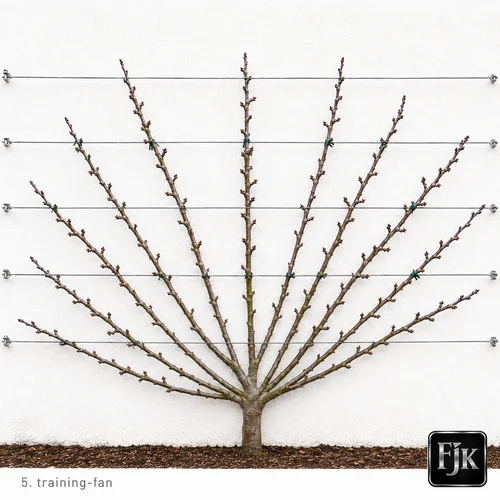
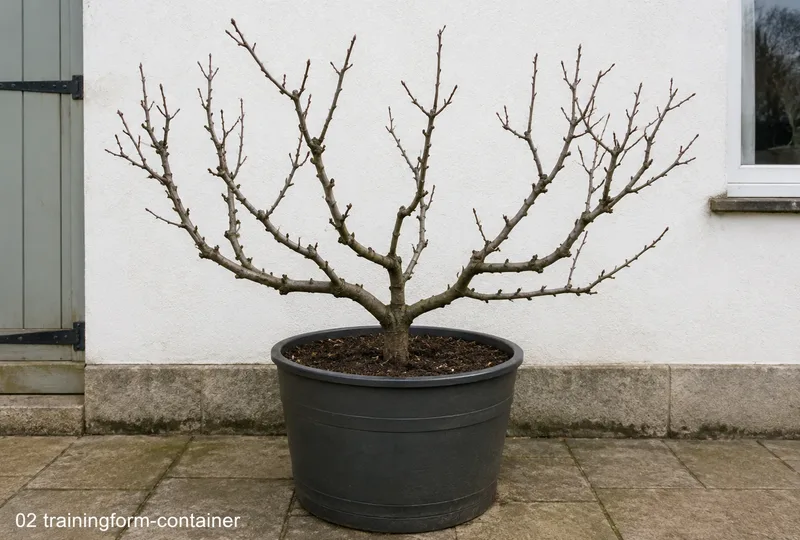
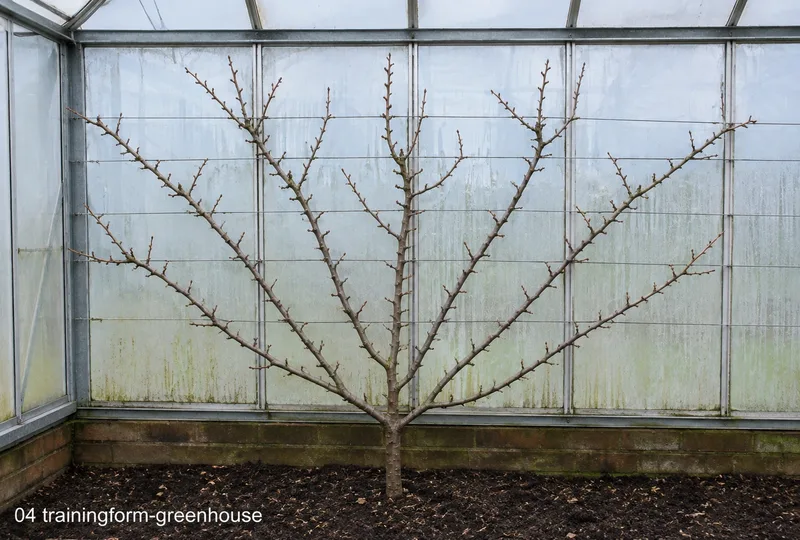
Training forms
fancontainergreenhouse
03 Varieties
The number of varieties shown for each crop is based on UK consumption data (2025/26) — the more popular the crop, the more variety choices we include.
Wall-trained Varieties
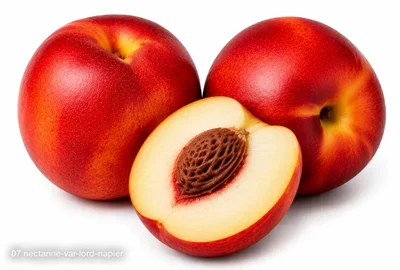
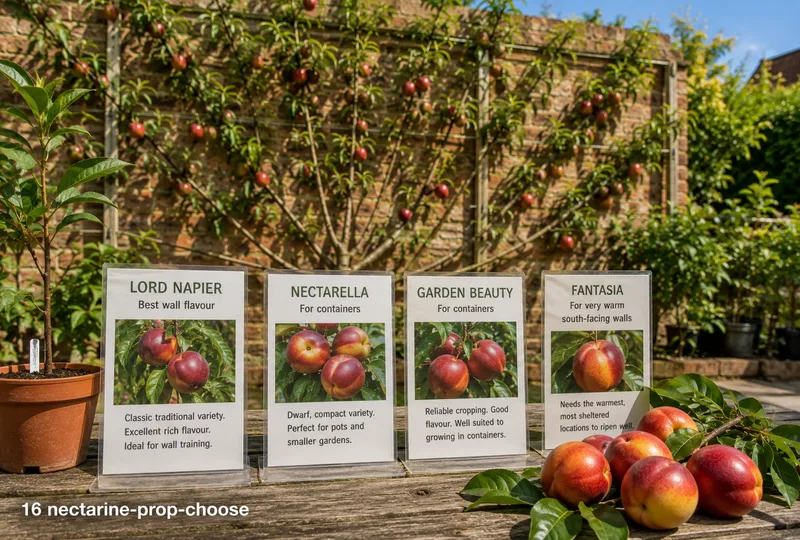
Lord Napier
White-fleshed · Mid
The benchmark UK nectarine for wall training. Very large, red-flushed fruit with exceptional white flesh and rich, aromatic flavour. Heavy, reliable crops on a warm south wall. The default choice for any wall-trained nectarine.
Harvest
Aug
Flavour
Outstanding — rich, aromatic, complex
Fruit size
Very large
Yield
High
Disease resistance
Good
✓ Self-fertile
🪴 Container
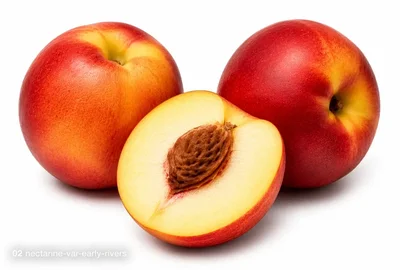
Early Rivers
Yellow-fleshed · Very early
One of the earliest nectarines — ripening in late July on a warm wall. Pale yellow flesh with juicy, sweet flavour. One of the most cold-tolerant nectarines. Good for extending the season before Lord Napier ripens. Useful paired with Lord Napier for a longer harvest.
Harvest
Jul
Flavour
Sweet, juicy, early season
Fruit size
Large
Yield
High
Disease resistance
Good
✓ Self-fertile
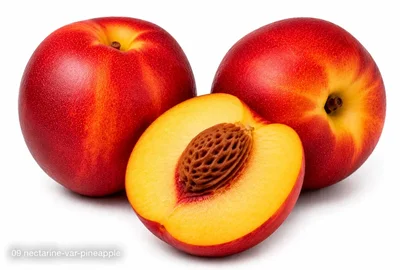
Pineapple
Yellow-fleshed · Mid-late
A unique nectarine with a distinctly pineapple-like aromatic quality to its flavour — quite different from the peach-nectarine standard. Yellow flesh. Late season. Needs maximum wall warmth to develop its characteristic flavour. An interesting specialist choice.
Harvest
Aug–Sep
Flavour
Rich, distinctive, pineapple notes
Fruit size
Large
Yield
High
Disease resistance
Moderate
✓ Self-fertile
Container & Compact
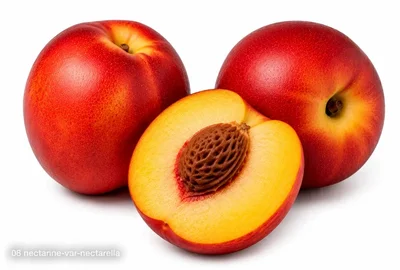
Nectarella
Genetic dwarf · Orange-yellow
A genetic dwarf nectarine bred specifically for containers. Reaches only 1.2–1.5m. Good crops of orange-yellow fruit with sweet flavour. Ideal for patios and balconies where wall space is unavailable. Can be moved into a greenhouse for winter protection.
Harvest
Aug–Sep
Flavour
Sweet, pleasant, good for a dwarf
Fruit size
Medium
Yield
High
Disease resistance
Good
✓ Self-fertile
🪴 Container
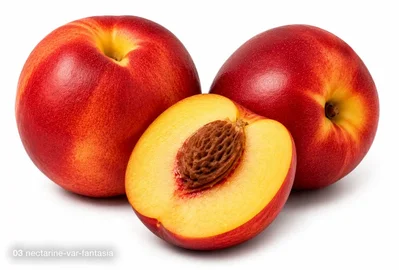
Fantasia
Yellow-fleshed · Late
A large-fruited late nectarine with outstanding flavour when fully ripe. Very juicy and very sweet. Needs maximum wall warmth and a long, warm autumn to fully develop — best in the south and south-west. A premium quality variety for the best south wall positions.
Harvest
Sep
Flavour
Very juicy, very sweet, excellent
Fruit size
Very large
Yield
High
Disease resistance
Moderate
✓ Self-fertile
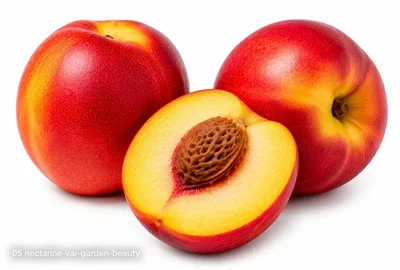
Garden Beauty
Genetic dwarf · Red-yellow
A compact container nectarine with attractive red-flushed yellow fruit and good flavour. Slightly larger than Nectarella. Good for large patio containers. Reliable in containers moved under cover for winter. An ornamental as well as productive plant.
Harvest
Aug
Flavour
Sweet, aromatic, good quality
Fruit size
Medium-large
Yield
High
Disease resistance
Good
✓ Self-fertile
🪴 Container
Specialist & Greenhouse
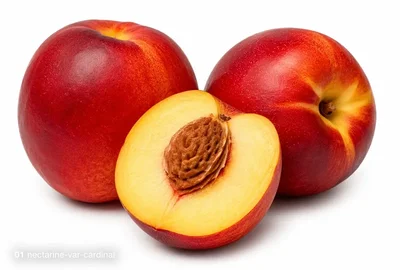
Cardinal
White-fleshed · Early
An early nectarine with excellent rich flavour. Good for greenhouse growing where the protected environment allows full flavour development earlier than wall-trained trees. The reliable choice for those with greenhouse space.
Harvest
Jul–Aug
Flavour
Rich, intense, excellent
Fruit size
Large
Yield
High
Disease resistance
Good
✓ Self-fertile
🪴 Container
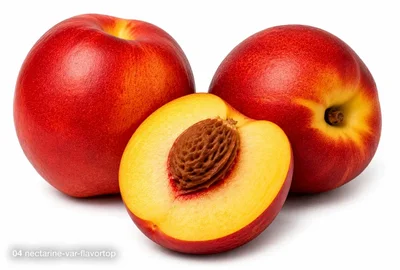
Flavortop
Yellow-fleshed · Mid
An American variety with excellent flavour and very good productivity. Large, red-flushed yellow fruit with very sweet flesh. A popular choice in southern European production and increasingly grown in UK greenhouse and polytunnel settings.
Harvest
Aug
Flavour
Very sweet, rich, outstanding
Fruit size
Large
Yield
High
Disease resistance
Good
✓ Self-fertile
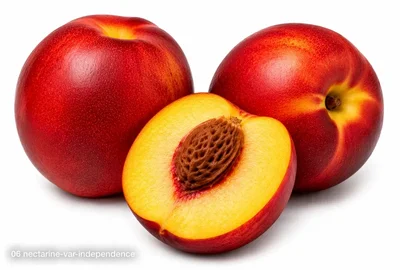
Independence
Yellow-fleshed · Late
A late-season nectarine with very good disease resistance and excellent rich flavour. Large, attractive fruit. Extends the nectarine season into September on the best south walls. Good resistance to leaf curl relative to other varieties.
Harvest
Aug–Sep
Flavour
Rich, complex, excellent
Fruit size
Large
Yield
High
Disease resistance
Very good
✓ Self-fertile
04 Where to Source
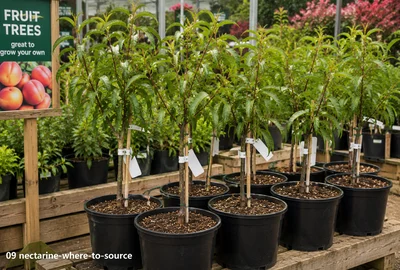
Nectarine trees are sold as container-grown (plantable year-round) or bare-root (Nov–Mar) stock from specialist fruit nurseries, always on St Julien A rootstock for wall training or a dwarfing rootstock for containers. Lord Napier is the standard wall-trained choice and widely available; genetic dwarf varieties for containers, such as Nectarella, are best sourced from nurseries specialising in patio fruit.
05 Planting Options
🌿 Fan-trained Against a South Wall
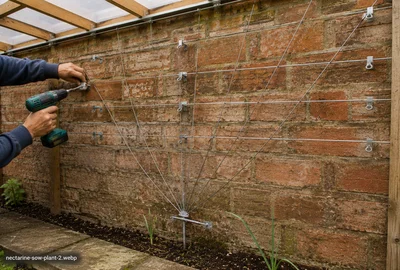
A warm south-facing wall is the classic and most reliable position for nectarines in the UK, giving the reflected heat and shelter needed to ripen the fruit and, just as importantly, making it practical to fit a removable rain shelter over the fan. Because nectarines have smooth skin with less natural resistance to fungal spores than peaches, they are more vulnerable to peach leaf curl, so the polythene rain cover from December to April is non-negotiable rather than optional. Wall preparation, wire spacing, and fan training follow the same method as peaches; hand pollinating with a soft brush at midday through February–March, while flowers are open and before insects are reliably active, makes a real difference to the eventual crop.
Identical method to peach
All planting, wall preparation, wire installation, and fan training methods are identical to peaches. See the peach guide for full step-by-step detail. The same rain shelter framework and polythene cover are essential.
Rain shelter is critical
Nectarines are slightly more susceptible to peach leaf curl than peaches due to their smooth skin. The polythene rain shelter from December to April is absolutely non-negotiable for nectarines — without it, repeated defoliation will progressively kill the tree.
Hand pollinate in February–March
Nectarines flower at the same time as peaches. Use a soft brush to transfer pollen between open flowers at midday on dry days. Essential for good fruit set.
Thin to 20–23cm
Thin to 20–23cm between fruits when they reach marble size. This is slightly wider than for peaches — nectarines can produce heavy crops and branch breakage is a real risk without thinning.
🪴 In a Large Container
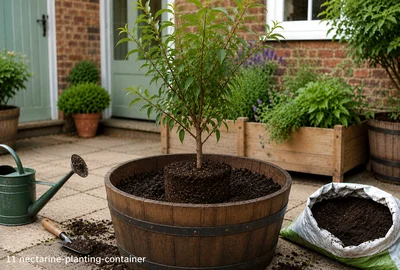
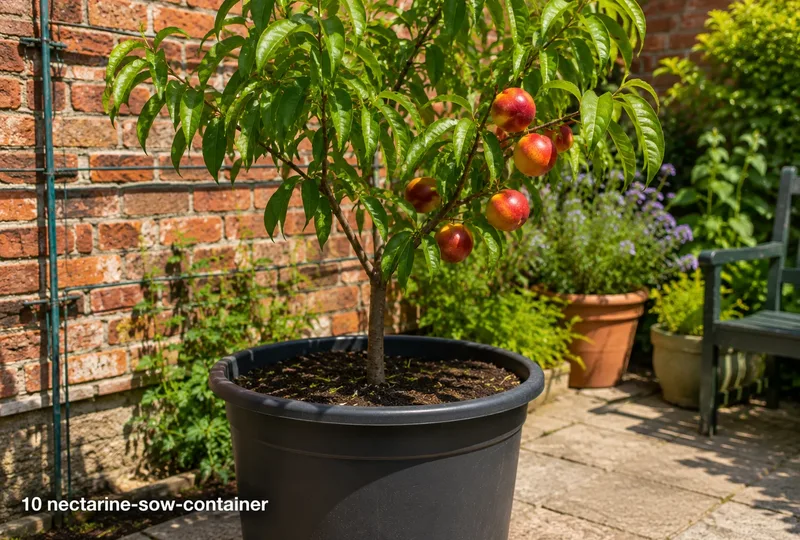
A large container is a genuinely reliable way to grow nectarines outside the warmest parts of the UK, since the whole tree can be moved to shelter exactly when it needs it — something a wall-trained fan can never do. Use a minimum 50-litre container of free-draining compost, positioned in the warmest, most sheltered patio spot available through summer, since nectarines need maximum heat accumulation to ripen well. Bringing the container into an unheated greenhouse or cool conservatory over winter protects the tree from both frost and the rain splash that spreads peach leaf curl, making container growing the single most effective method for the Midlands and further north.
50L+ container, sunny patio
Plant in a minimum 50-litre container in free-draining compost. Position in the warmest, most sheltered spot available — nectarines need maximum heat accumulation.
Move under cover for winter
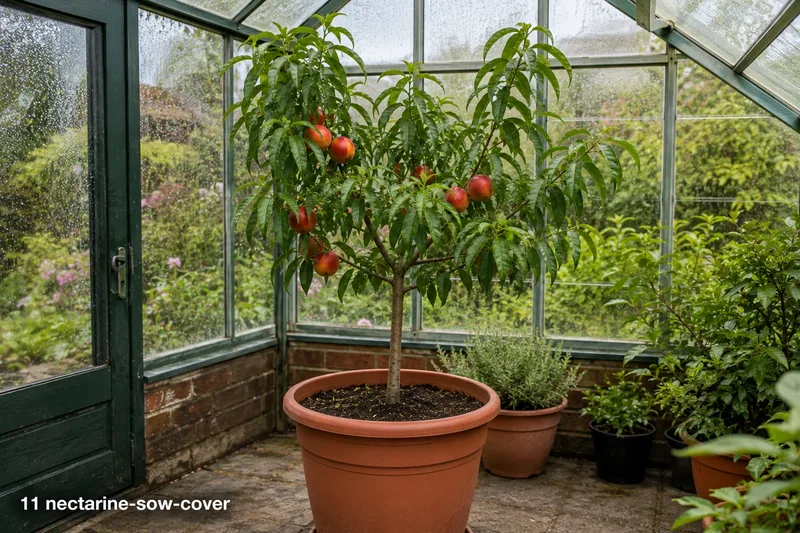
A container nectarine brought into an unheated greenhouse or cool conservatory for winter is protected from both frost and leaf curl rain splash. This is the single most effective way to grow nectarines in the UK Midlands and north.
06 Companion Planting
✅ Grow nearby
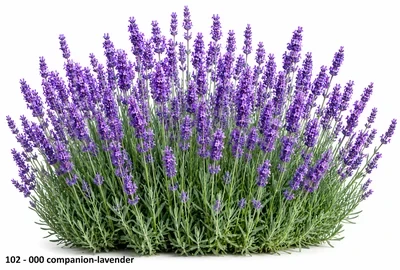
💜 Lavender
Attracts pollinators and adds a decorative, low-maintenance border nearby.
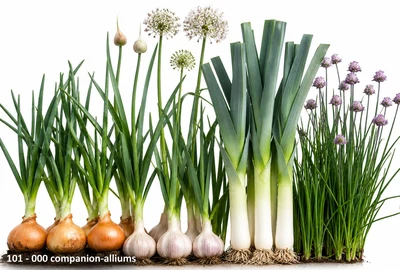
🧄 Alliums
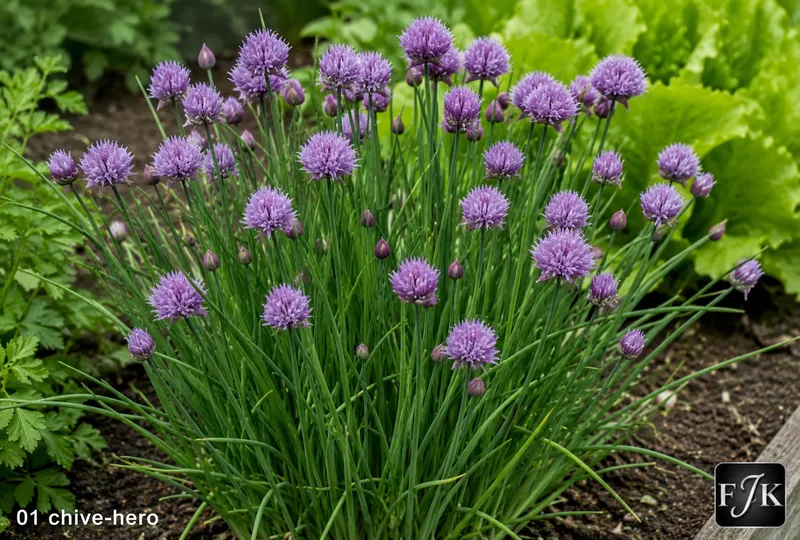
Onion-family plants grown nearby are thought to help deter pests with their strong scent.
A mild allium companion said to help deter aphids and other pests with its strong scent.
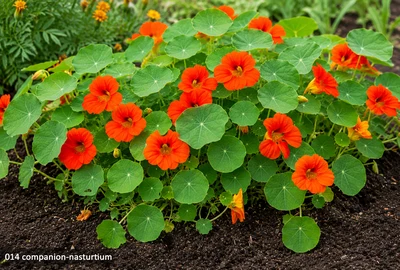
🌸 Nasturtium
Acts as a trap crop for aphids, drawing pests away from the main plant.
07 Sowing — How To
Plant on prepared wall
Wall wires and rain shelter framework must be in place before planting. Identical to peach planting method.
Install shelter by December
The rain shelter must be in place by December of the first winter after planting. Leaf curl infection in the first spring severely setbacks establishment.
Regional sowing timing
Region
Sow / plant
Harvest
Notes
Scotland & Far North
Nov–Mar
Aug–Sep
Northern England
Nov–Mar
Aug–Sep
Midlands & Wales
Nov–Mar
Aug–Sep
Ireland & Isle of Man
Nov–Mar
Aug–Sep
South & SE England
Nov–Mar
Aug–Sep
South Coast & SW
Nov–Mar
Aug–Sep
08 Using a Propagator
Nectarines are grafted by specialist nurseries. Container-grown trees are the standard way to buy a nectarine and can be planted year-round, on St Julien A rootstock for wall training or Pixy/genetic dwarfs for containers — bare-root trees on the same rootstocks are also available in winter.
Heated propagator
Not Applicable — Purchase from specialist fruit nurseries.
Choose variety
Lord Napier for best wall flavour. Nectarella or Garden Beauty for containers. Fantasia for very warm south-facing walls in mild areas.
09 Soil Requirements
pH
6.0–7.0
Best
Sandy loam, Loam
Tolerates
Clay loam
Avoid
Waterlogged, Very heavy clay
💡 Identical requirements to peach. Free-draining, fertile soil.
10 Ongoing Care
🌧️ Rain Shelter — Non-negotiable
Peach leaf curl is more severe on nectarines than peaches due to the smooth skin offering less physical resistance to the fungal spores. The polythene rain shelter from December to April is absolutely essential for nectarines grown outdoors. A tree that is not sheltered will be repeatedly defoliated, lose vigour progressively, and stop fruiting within 3–4 years. Container nectarines moved under cover for winter are automatically protected. This is the primary reason container growing is particularly well-suited to nectarines in the UK.
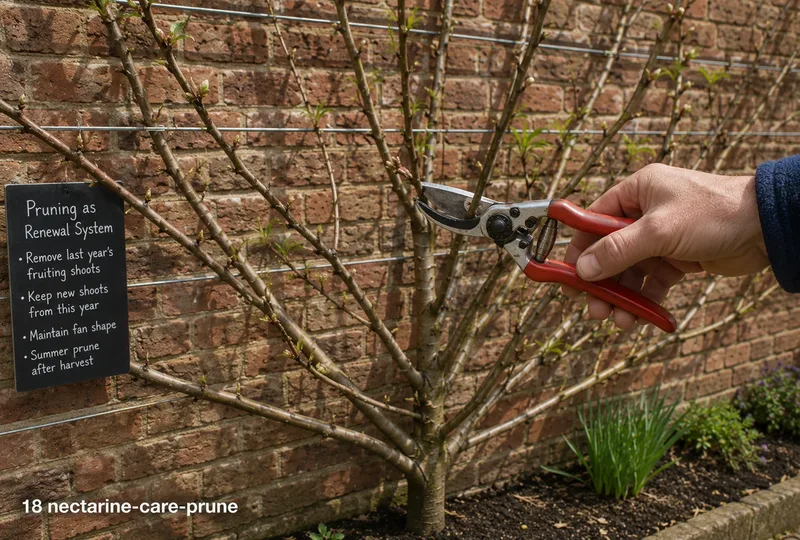
✂️ Pruning as Renewal System
As with peaches, nectarines fruit on the previous year's wood and are managed as a renewal system — not as a permanent spur system like apples. After harvest, remove the old wood that has fruited. The current year's young shoots are tied in as next year's fruiting wood. In June, pinch out any shoots not needed for fruiting to 2 leaves to encourage embryo fruit formation. The objective is always to have a supply of young, vigorous replacement shoots ready to fill the space left by the removed old wood.
🌸 Hand Pollination
Identical to peaches — use a soft brush to transfer pollen between open flowers at midday on dry days in February and March. Daily visits during the 2–3 week flowering period are ideal. Under the rain shelter, no bees can access the flowers at all, making hand pollination even more critical for nectarines than for exposed peach fans.
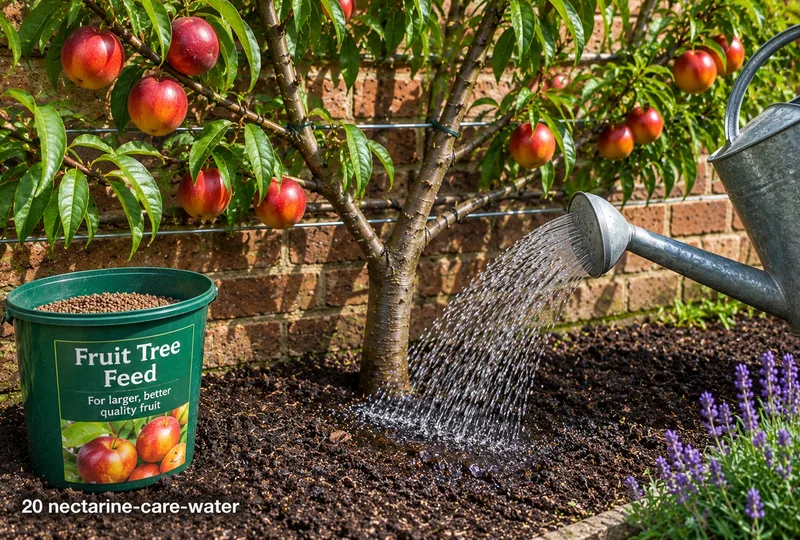
💧 Watering & Feeding
Identical requirements to peaches. Water consistently at the base through the growing season — nectarines in the drip shadow of a wall need irrigation even in average UK summers. Feed with balanced fertiliser in March and high-potash from June. Container nectarines need daily checking in summer. Do not over-feed with nitrogen — this promotes excessive leafy growth at the expense of fruit.
11 Watch Out For
Warning
Peach leaf curl is the primary disease — rain exclusion Dec–Apr is essential, particularly for nectarines whose smooth skin offers less resistance. Aphids and red spider mite are common under cover — inspect regularly and treat with soap spray. Birds peck ripening fruit — net if necessary. Silver leaf can enter pruning wounds — prune in summer only. Frost damage to flowers in March is a significant risk in cold districts.
🐛 Insects & pests
🟤 Scale Insect — Small brown or grey bumps on stems, branches, and the underside of leaves — the scale covers themselves
🐜 Aphids (Blackfly & Greenfly) — Curled, distorted, or stunted growing tips — aphids inject saliva that causes leaf curl to protect them
🍄 Diseases to watch
🍑 Peach Leaf Curl — Peach leaf curl (Taphrina deformans) is the most damaging disease of peaches and nectarines in the UK. It infects the developing leaves in spring, causing them to blister, redden, and fall prematurely. Repeated defoliation over several years progressively weakens and eventually kills the tree. Rain exclusion is the only reliable prevention.
🌿 Bacterial Canker — Bacterial canker (Pseudomonas syringae pv. morsprunorum) is the most serious disease of stone fruit trees in the UK. It kills whole branches and can destroy a young tree in 2–3 years if unchecked. The bacteria enter through winter pruning wounds, leaf scars, and bud scale scars — which is why pruning stone fruit in winter is so dangerous.
Full identification and treatment advice is in the Pests and Diseases sections.
12 Storage & Preserving
🍑 Fresh (Eat Immediately)
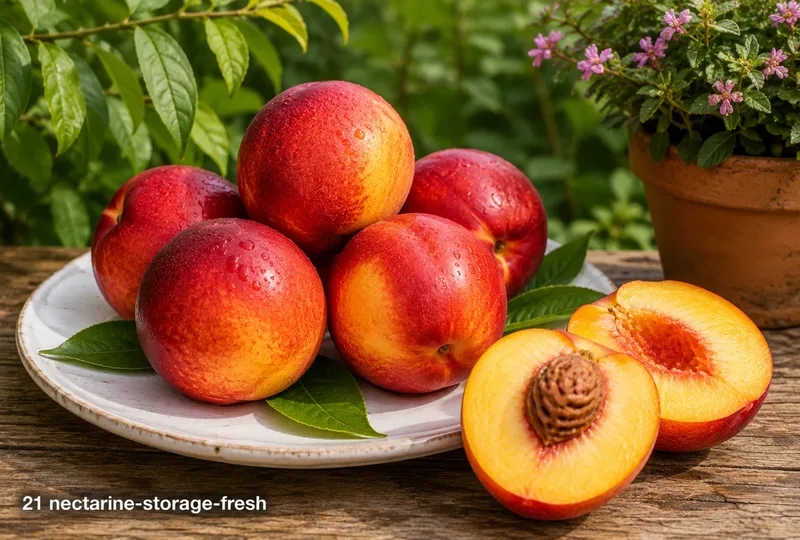
Home-grown nectarines eaten within hours of picking are extraordinary — smooth, intensely sweet, firm-fleshed, and deeply aromatic. They do not keep well — 2–3 days maximum at room temperature, 4–5 days refrigerated. Eat at room temperature for full flavour. The nectarine's smooth skin and denser flesh make it slightly better as a fresh eating fruit than for cooking compared to the peach.
❄️ Frozen & Preserved
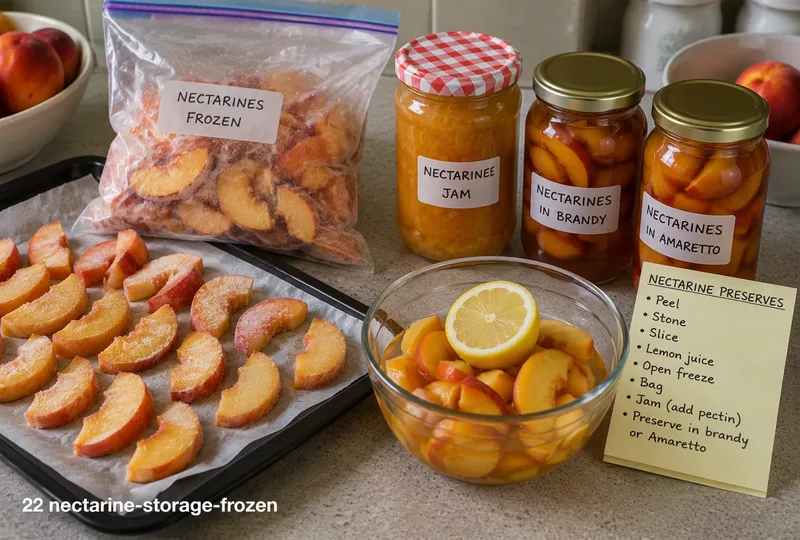
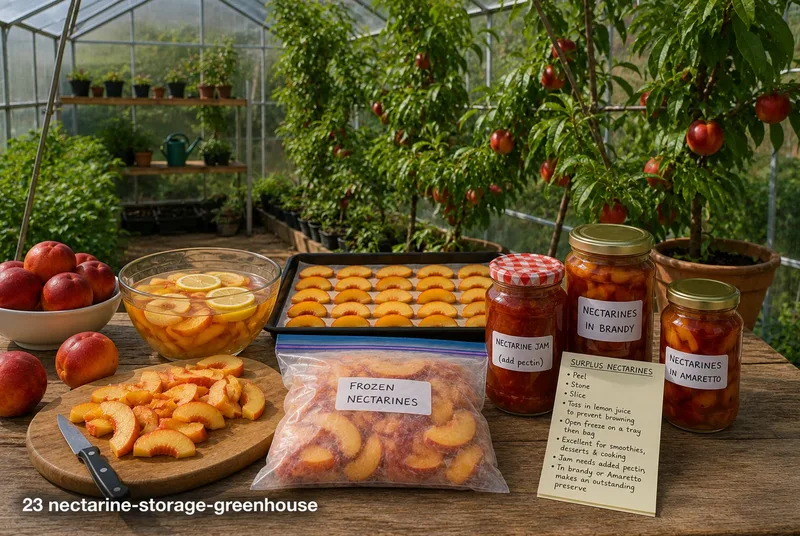
Peel, stone, and slice surplus nectarines. Toss in lemon juice to prevent browning. Open freeze on a tray then bag. Frozen nectarines are excellent for smoothies, desserts, and cooking. Nectarine jam, and nectarines in brandy or Amaretto, make outstanding preserves. Follow a tested recipe.
🏠 Greenhouse Season Extension
A container nectarine in a cool greenhouse can be advanced by 3–4 weeks compared to an outdoor wall-trained tree. By controlling the growing environment, a greenhouse nectarine can begin flowering in late January in a heated house, producing ripe fruit from mid-July — significantly extending the fresh season and providing fruit during a period when outdoor peaches and nectarines are not yet ripe.
13 Expert Tips
💡 Container growing is the UK solution
For gardeners in the Midlands, north of England, and Scotland, a container nectarine is substantially more reliable than a wall-trained tree. The container can be moved under cover for winter (eliminating leaf curl risk), brought indoors for early flowering, and positioned in the warmest patio spot in summer. Lord Napier in a 75-litre pot in a south-facing conservatory or cold greenhouse is a highly achievable, reliable proposition anywhere in the UK.
💡 Nectarines in a polytunnel
A nectarine fan-trained inside a polytunnel or unheated greenhouse is perhaps the most reliable way to grow nectarines in the UK Midlands and north. The shelter provides automatic leaf curl protection, advanced warmth for early flowering and fruit ripening, and protection from late spring frosts. Many specialist fruit growers now recommend this as the primary growing method for stone fruits further north than the south-east.
💡 Flavour difference from peaches
Nectarines and peaches have the same genetic base — a nectarine is a peach with a mutation preventing fuzz development. But the smooth skin does alter the eating experience: the flesh is slightly firmer, the flavour slightly more concentrated and aromatic, and the sweetness more immediately apparent. Neither is objectively superior — they are pleasantly different, and growing both on a south wall gives a combined harvest of 6–8 weeks.