Olives are grown primarily as ornamental and architectural plants in the UK — fruit production requires long hot summers not reliably available except in the far south-west
Arbequina and Frantoio are the hardiest varieties for UK growing; both are self-fertile
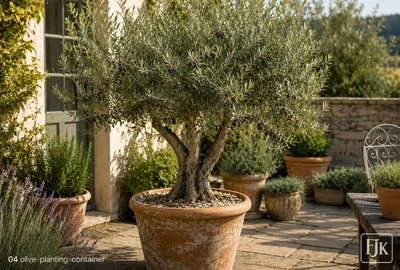
Plant in a large container in well-drained, gritty compost — containerised olives can be moved indoors in severe winters
Olives are drought-tolerant once established but need excellent drainage — waterlogging kills them rapidly
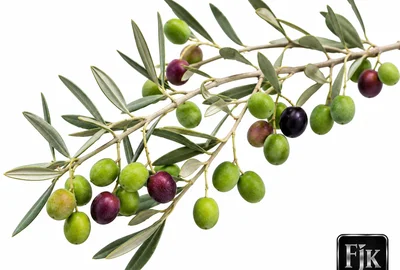
In mild areas (Cornwall, Scilly Isles), olives may fruit — harvest when green for oil or black-purple for eating, October–November
🌱 SowPlant container-grown Apr–Jun (avoid hard frost periods)
🌾 HarvestOct–Nov (south only)
☀ PositionFull sun, excellent drainage, sheltered from cold winds
Full sun, maximum drainage, sheltered from cold north and east winds
Spacing
3–5m open ground · 60L+ container
Height
3–8m open ground (very slow) · 1.5–3m container (managed)
Hardiness
Hardy to -10°C (dry conditions) · Less hardy in wet winters
Lifespan
100–1000 years
Difficulty
Moderate
01 About
Olives are grown throughout the warmer parts of the UK as much for their outstanding silvery-green ornamental foliage as for their fruit. In the South and South West, reliable fruiting is achievable in most years. Further north, container-grown olives brought under cover for winter provide ornamental and culinary rewards. The tree itself is among the most beautiful and architectural in British gardens.
02 Rootstock Guide
The rootstock controls the ultimate size of the tree. Choose it first — before the variety. All sizes below are approximate and depend on soil and management.
Olives rootstocks
Rootstock
Size
Height
Spacing
Suitable for
Support & notes
Own roots (standard)
Variable — very slow
3–8m (decades to reach)
4–6m
Open ground · Large containers · Long-term specimens
Stake for first 3 years — All UK olives are grown on their own roots. Growth is slow but the eventual plant is magnificent and extremely long-lived.
Pollination groups
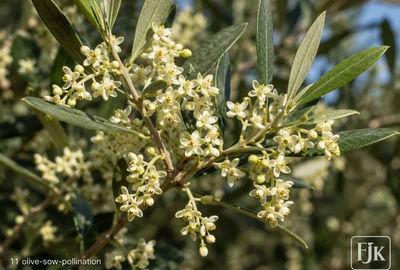
Group SF — Arbequina is reliably self-fertile. Most other varieties crop better with a pollinator — plant two different varieties within 10m for reliable fruiting.
Group X — Cross-pollinated — Frantoio, Leccino, Picual, and most varieties produce significantly more fruit with a compatible partner nearby.
Training forms
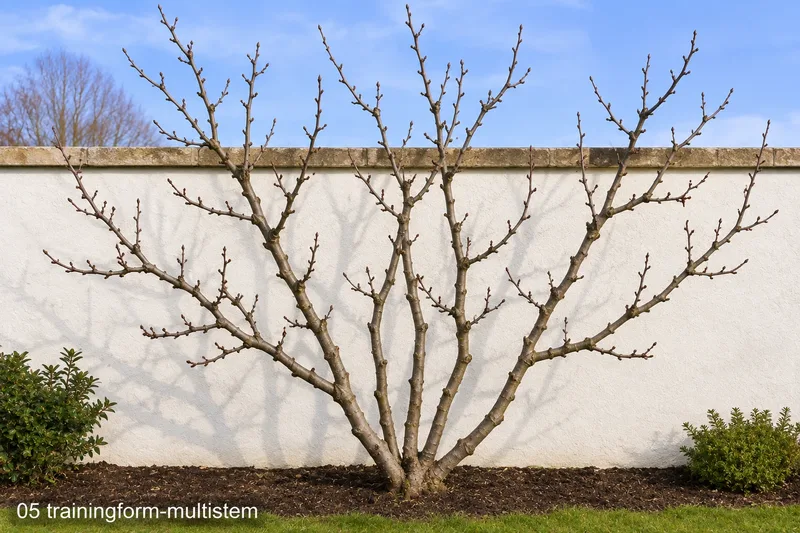
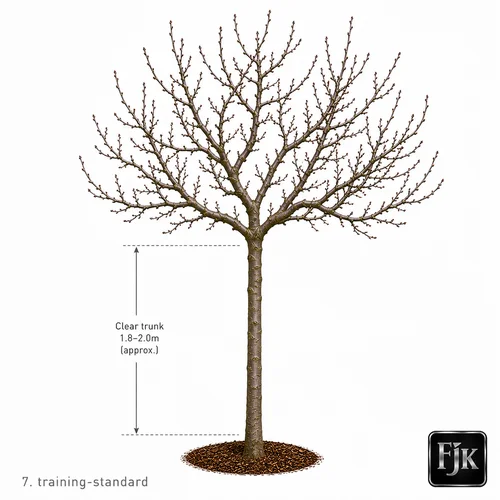
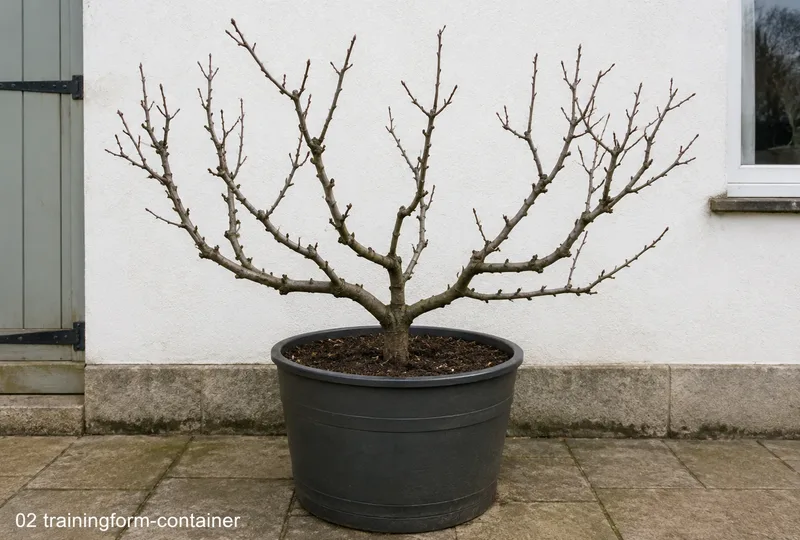
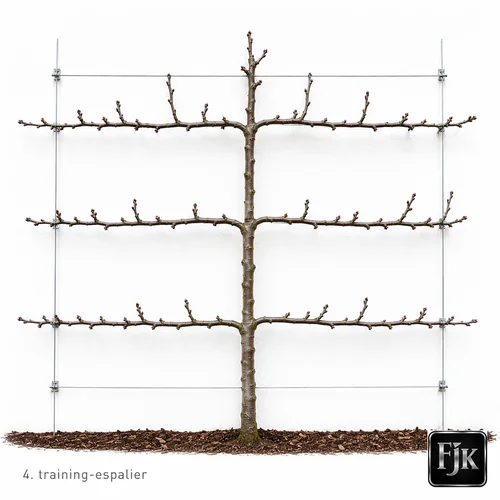
multi-stemstandardcontainerespalier
03 Varieties
The number of varieties shown for each crop is based on UK consumption data (2025/26) — the more popular the crop, the more variety choices we include.
Hardy & Self-fertile
Arbequina
Self-fertile · Oil olive
The most widely recommended UK olive. Self-fertile, very cold-tolerant, and reliable for both ornamental and fruiting use. Small fruits with excellent oil quality. The first choice for any UK grower wanting a fruiting olive. Outstanding in containers.
Harvest
Oct–Nov
Flavour
Mild, fruity oil · Small table olive
Fruit size
Small
Yield
High
Disease resistance
Very good
✓ Self-fertile
🪴 Container
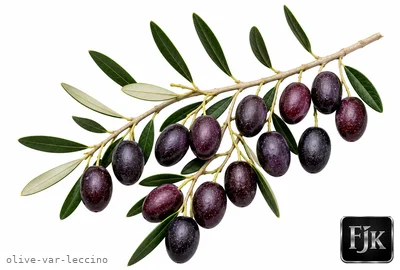
Leccino
Cross-pollinated · Mild oil
One of the hardiest and most disease-resistant olives — tolerates UK wet winters better than most varieties. Good pollinator for other varieties. Mild-flavoured oil. Consistently productive. An excellent partner for Arbequina.
Harvest
Oct–Nov
Flavour
Mild, delicate oil · Small table olive
Fruit size
Small-medium
Yield
High
Disease resistance
Excellent
🪴 Container
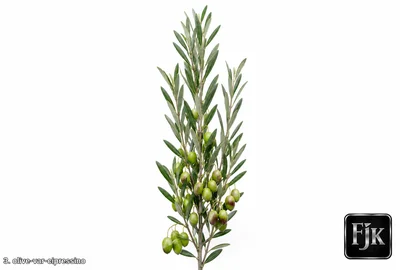
Cipressino
Partly self-fertile · Compact
A compact, columnar olive with upright growth habit — ideal for containers and smaller spaces where the spreading form of other varieties would be too large. Partly self-fertile. Good yield in suitable UK positions.
Harvest
Oct–Nov
Flavour
Fruity, medium oil
Fruit size
Small
Yield
High
Disease resistance
Good
✓ Self-fertile
🪴 Container
Oil Olives — Fine Flavour
Frantoio
Cross-pollinated · Premium oil
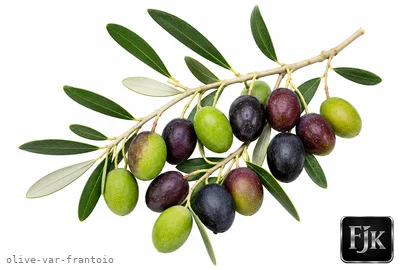
The classic Tuscan oil olive — producing outstanding, peppery, complex oil with excellent flavour character. Hardy to approximately -10°C when dry. Requires a pollinator (Leccino is ideal). For open-ground planting in the south. The choice for those prioritising oil quality.
Harvest
Oct–Nov
Flavour
Excellent oil — peppery, complex, premium
Fruit size
Small-medium
Yield
High
Disease resistance
Good
Koroneiki
Cross-pollinated · Intense oil
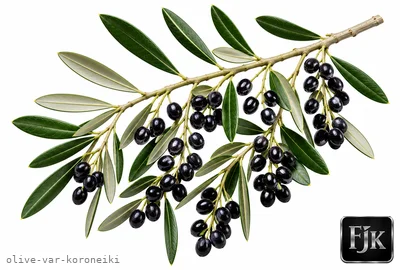
The primary Greek oil olive — very small fruit but intensely flavoured, robust, peppery oil with exceptional character. Very high yielding. Less cold-hardy than northern European varieties — best in the south and south-west of England.
Harvest
Oct–Nov
Flavour
Intensely flavoured, robust, complex
Fruit size
Very small
Yield
Very high
Disease resistance
Good
Picual
Partly self-fertile · Spanish
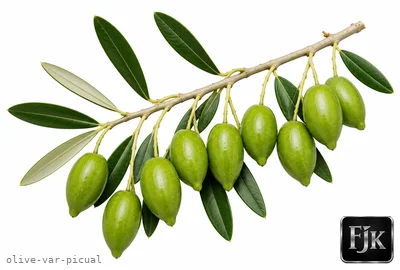
The most widely grown olive in Spain. High oil content. Vigorous tree. Partly self-fertile but crops better with a pollinator. Hardy. Good disease resistance. The practical choice for those wanting maximum oil production from a UK garden olive.
Harvest
Oct–Nov
Flavour
Robust, slightly bitter, high oil content
Fruit size
Medium
Yield
Very high
Disease resistance
Very good
✓ Self-fertile
Table Olives & Ornamental
Kalamata
Cross-pollinated · Table olive
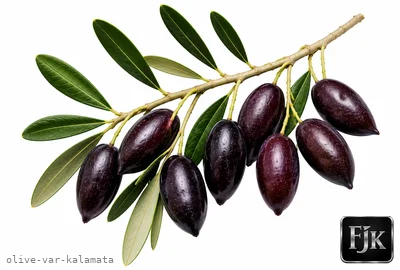
The most famous Greek table olive — large, purple-black fruit with rich, fruity, classic olive flavour when cured. Requires a pollinator. Less cold-hardy than northern European varieties — container growing or very sheltered positions in the south are recommended.
Harvest
Oct–Nov
Flavour
Classic Greek table olive, rich and fruity
Fruit size
Large
Yield
Moderate
Disease resistance
Moderate
🪴 Container
Manzanilla
Self-fertile · Table olive
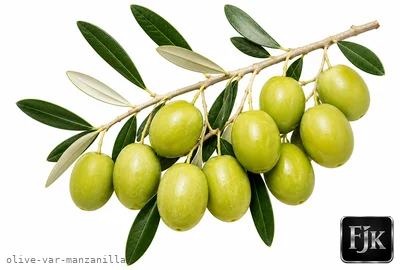
The most widely grown table olive worldwide. Large, round, mild-flavoured fruit — the classic cocktail and table olive. Self-fertile. Good cold tolerance. Excellent in containers. Well-suited to UK conditions where maximum fruit size is wanted.
Harvest
Oct–Nov
Flavour
Classic mild Spanish table olive
Fruit size
Large
Yield
High
Disease resistance
Good
✓ Self-fertile
🪴 Container
Pendolino
Cross-pollinated · Weeping ornamental
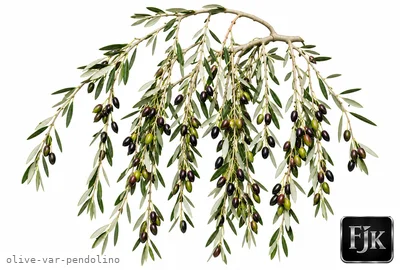
An ornamental weeping olive with graceful, pendant foliage — the most striking in appearance of any commonly available olive. Grown as much for its exceptional ornamental character as for fruit. Good pollinator for other varieties. Outstanding in large containers as a specimen plant.
Harvest
Oct–Nov
Flavour
Light, pleasant oil
Fruit size
Small
Yield
Moderate
Disease resistance
Good
🪴 Container
04 Planting Options
🌳 In Open Ground (South & SW England)
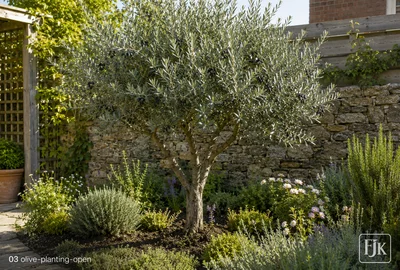
Open-ground olives are only reliably hardy in the warmest parts of the UK — full sun, shelter from cold north and east winds, and maximum drainage are non-negotiable site requirements. Work 30-40% coarse horticultural grit into the planting area, since olives tolerate poor, stony soil far better than they tolerate wet feet, and plant in April-June while the soil is warming so the tree can establish through summer before its first winter. Plant two different varieties within 10m of each other — Arbequina and Leccino are a reliable pairing — for consistent fruiting. Wrap the canopy for protection through the first two winters while the tree is still building the cold tolerance it will have once mature.
Choose the warmest, most sheltered spot
Full sun, shelter from cold north and east winds, and maximum drainage are the essential site requirements. A south-facing courtyard, sheltered terrace, or walled garden are ideal. The position matters enormously — an olive in a frost pocket or exposed site will not thrive or fruit reliably.
Prepare very free-draining soil
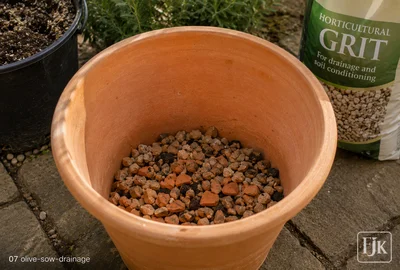
Dig in 30–40% coarse horticultural grit throughout the planting area. Olives tolerate poor, stony soil far better than rich, moisture-retentive ground. Waterlogged roots are rapidly fatal — drainage is the primary requirement.
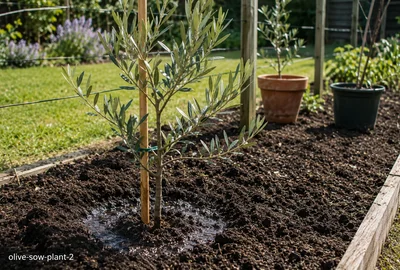
Plant in spring when soil is warming
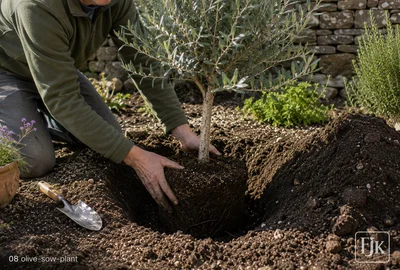
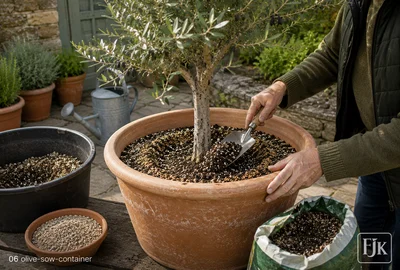
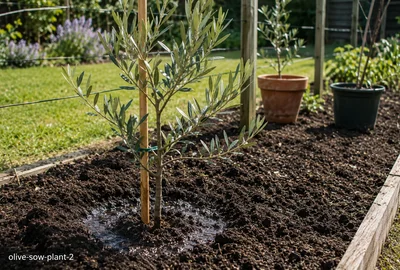
Plant in April to June when the soil is warm and the tree can establish through summer before winter. Stake for the first 3 years — young olive trunks are not robust. Mulch with gravel around the base (not organic mulch, which retains moisture).
Plant two varieties for fruiting
For reliable fruiting, plant two different varieties within 10m of each other. Arbequina and Leccino together provide reliable cross-pollination. A single tree produces some fruit but yields are significantly improved with a pollinator.
Protect in the first winter
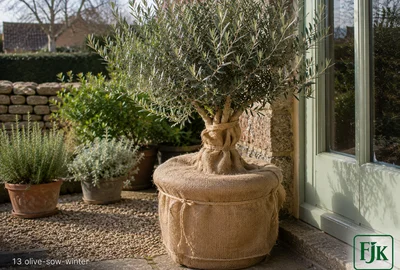
Young olives are less frost-hardy than established specimens. In the first 2 winters, wrap the canopy with horticultural fleece in prolonged cold spells and mulch the root area with gravel or grit.
🪴 In a Large Container (All UK Regions)
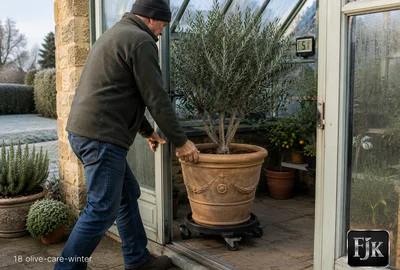
A container makes olive-growing possible anywhere in the UK, since the whole plant can be moved under cover for winter regardless of local climate. Use a minimum 50-litre container — 75-100 litres is better for a long-term specimen — with the same free-draining 30-40% grit mix used for open-ground planting. Position in full sun from April to October, then move into a cool, frost-free greenhouse, conservatory, or garage from November to March; this single seasonal move is what makes olives reliable in the UK, regardless of region. Water sparingly through the growing season — overwatering, not cold, is the most common cause of container olive death, so let the compost dry out well between waterings.
Large container with exceptional drainage
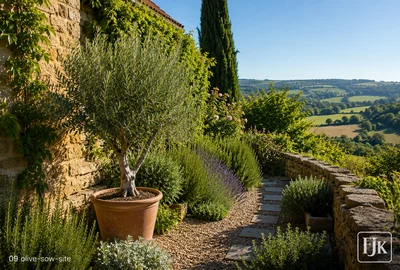
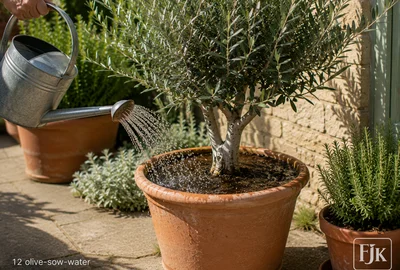
Use a minimum 50-litre container — 75–100 litres is better for a long-term specimen. Mix 30–40% coarse grit into the compost. Ensure multiple large drainage holes. A terracotta pot or heavy stone planter provides ideal conditions.
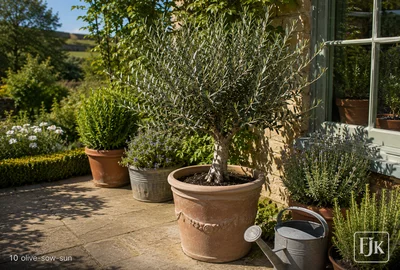
Position in full sun from April to October
Place the container in the sunniest, most sheltered position available during the growing season. Olives in containers can be moved to maximise sun exposure — unlike open-ground trees, this mobility is a significant advantage.
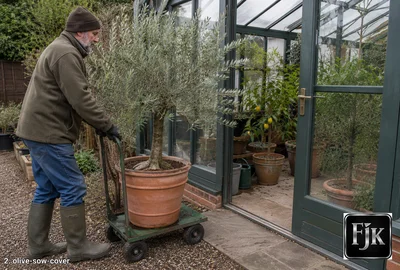
Move under cover for winter
Bring the container into a cool, frost-free greenhouse, conservatory, or garage from November to March. Water very sparingly during this period — once every 3–4 weeks is sufficient. Never allow waterlogging in winter.
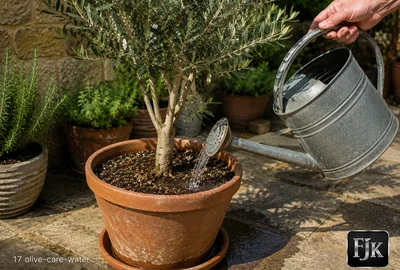
Water sparingly — less than you think
Overwatering is the most common cause of olive death in containers. During the growing season, allow the top half of the compost to dry out between waterings. In winter under cover, water once a month at most.
05 Companion Planting
✅ Grow nearby
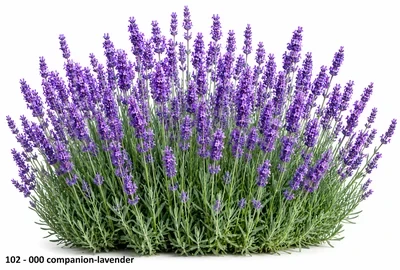
💜 Lavender
Attracts pollinators and adds a decorative, low-maintenance border nearby.
A low-growing aromatic companion that shares similar sun and drainage requirements.
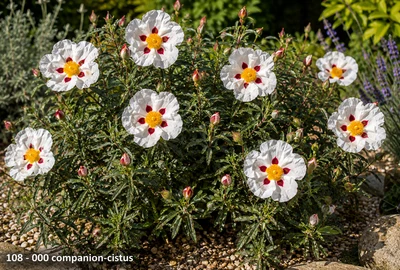
🌸 Cistus
A Mediterranean shrub with matching sun and drainage requirements, good as a border planting.
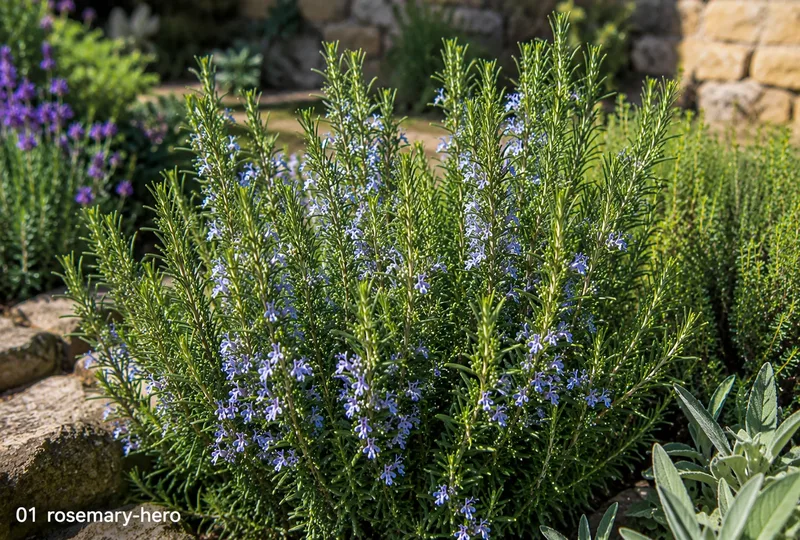
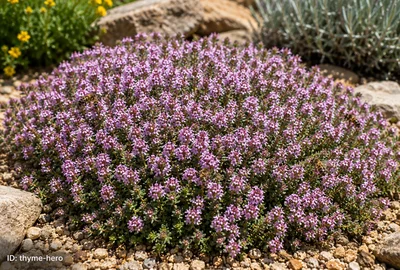
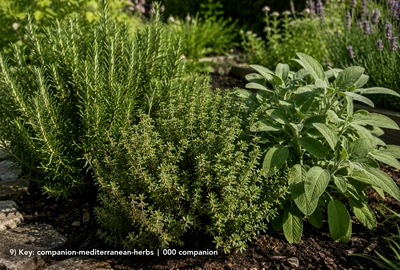
🌿 Mediterranean herbs generally
Herbs with matching sun and drainage requirements make good border companions.
06 Sowing — How To
Buy established specimens
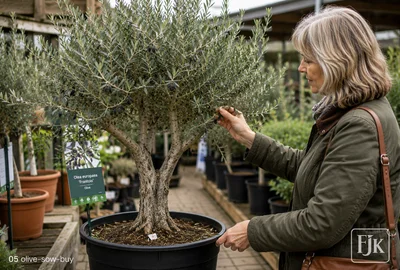
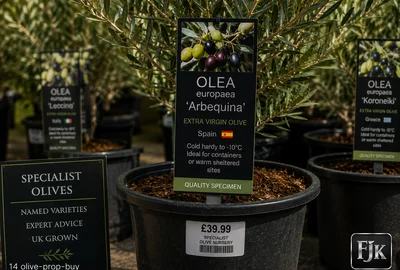
Purchase 2–3 year old plants from a specialist nursery for best establishment. Older specimens are available but expensive. Confirm variety if fruiting is a priority.
Spring planting preferred
April to June is the best planting time — soil is warm and the plant has a full growing season to establish before winter. Avoid autumn planting for open-ground olives in the UK.
Water in thoroughly
Water generously immediately after planting to settle the soil around the roots and remove air pockets. Stake young trees against wind rock, and keep the base well watered through the first summer while roots establish.
Regional sowing timing
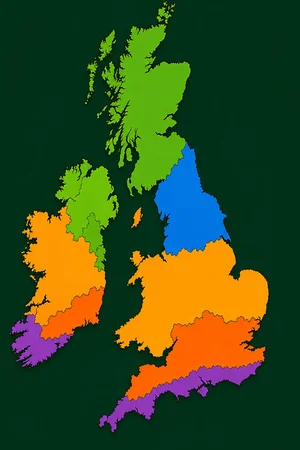
Region
Sow / plant
Harvest
Notes
Scotland & Far North
May–Jun
Oct–Nov
Northern England
May–Jun
Oct–Nov
Midlands & Wales
Apr–Jun
Oct–Nov
Ireland & Isle of Man
Apr–Jun
Oct–Nov
South & SE England
Apr–Jun
Oct–Nov
South Coast & SW
Apr–Jun
Oct–Nov
07 Using a Propagator
Olives can be propagated from semi-ripe cuttings in summer or from hardwood cuttings in winter, but success rates are variable and the process is slow. For most gardeners, purchasing established container-grown specimens is far more practical.
Heated propagator
Semi-ripe Cuttings — In July–August, take 10–15cm semi-ripe cuttings with a heel of old wood. Insert in a 50:50 compost and grit mix with bottom heat (20°C). Rooting is slow — 8–12 weeks. Pot individually when rooted and grow on for 2 years before planting out.
Buy rather than propagate
For most gardeners, purchasing established 2–3 year old container olive plants is significantly faster and more reliable than home propagation. Specialist olive nurseries offer named varieties at reasonable cost.
08 Soil Requirements
pH
6.5–8.0
Best
Sandy loam, Chalky, Stony
Tolerates
Sandy
Avoid
Waterlogged, Heavy clay, Acid
💡 Very well-drained, lean, alkaline soil. Excellent on chalk. Waterlogging is fatal.
09 Ongoing Care
💧 Watering — Less is More
Overwatering is the single most common cause of olive death in UK gardens, particularly in containers. Olives are adapted to Mediterranean dry summers and winter rains — the UK pattern of year-round rainfall is quite different from their natural conditions. In containers, allow the top half of the compost to dry out between waterings through summer. In winter under cover, water once every 3–4 weeks — the minimal moisture prevents complete desiccation without causing root rot. In open ground, established olives rarely need watering. Never allow standing water around the roots.
✂️ Annual Spring Pruning
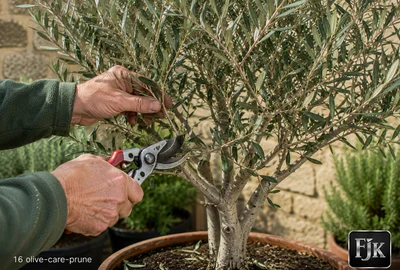
Prune olives lightly in April or May as growth begins. Remove dead, damaged, or crossing branches. Thin any areas of congestion to maintain an open, airy structure — good airflow reduces the risk of fungal disease. Olives flower and fruit on the previous year's wood, so avoid heavy pruning which removes potential fruiting shoots. The natural multi-stemmed or standard form requires only light shaping to maintain its characteristic architectural beauty. Do not prune in winter when wounds heal slowly.
❄️ Winter Protection
Established olives in open ground in the UK survive to approximately -10°C when conditions are dry. Wet cold is far more damaging than dry cold — a wet winter is more damaging to an olive than a dry one with lower temperatures. In prolonged severe frost, wrap the canopy with 2–3 layers of horticultural fleece and mulch the root area with gravel (not organic mulch). Container olives should be moved under cover (frost-free greenhouse, cool conservatory, or insulated garage) from November to March.
🫒 Fruiting in the UK
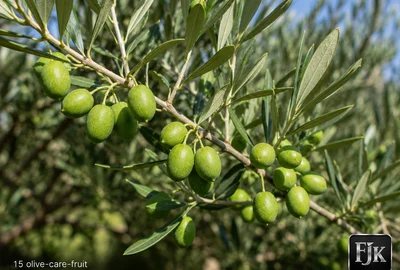
UK-grown olives fruit reliably in the South and South West in most years — the long, warm summers and mild winters of these regions approximate Mediterranean conditions closely enough for regular cropping. In the Midlands and north, open-ground olives may not fruit in cooler years. Container olives moved under cover for winter and into maximum sun in summer will fruit more reliably. Olives need a period of cold (but not freezing) temperatures in winter to set flower buds — this chilling requirement is usually met in UK conditions. Fruits ripen slowly from October onwards, going from green through yellow to purple-black.
10 Watch Out For
Warning
Olive leaf spot (Cycloconium oleagineum) causes brown spots on leaves and premature leaf drop in wet conditions — ensure good drainage and airflow. Overwatering in containers causes root rot which is rapidly fatal — water sparingly. Olive moth larvae (in southern England) attack developing fruits in warm years — check for infestations from June. In prolonged hard frost, the trunk can split — wrap young trees or container plants.
🐛 Insects & pests
🟤 Scale Insect — Small brown or grey bumps on stems, branches, and the underside of leaves — the scale covers themselves
🤍 Mealybug — White, fluffy or mealy patches in leaf axils, stem joints, and under leaves — the insects themselves
🍄 Diseases to watch
🩶 Botrytis (Grey Mould) — Botrytis cinerea (grey mould) is the most ubiquitous fungal pathogen in temperate gardens — present in virtually every garden soil and on plant debris. It becomes a disease only when conditions favour it: cool, humid, poorly ventilated environments with damaged or senescent plant tissue. In a greenhouse in autumn it can destroy an entire tomato or grape crop.
🌿 Fusarium Wilt — Fusarium wilt (Fusarium oxysporum) is a soil-borne vascular disease that invades root systems and blocks the water-conducting tissue of the plant. Infected plants die of internal drought even with adequate soil moisture. Different formae speciales (strains) target specific host plants — asparagus fusarium is different to tomato fusarium.
Full identification and treatment advice is in the Pests and Diseases sections.
11 Storage & Preserving
🫒 Curing UK-grown Olives
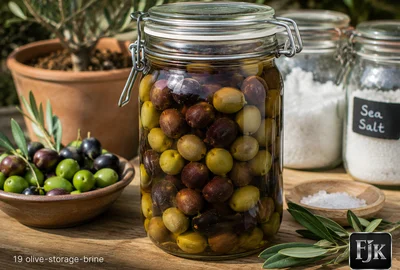
Raw olives are extremely bitter and inedible. UK-grown fruits must be cured before eating. The simplest method is water curing: slit each olive, submerge in cold water changing daily for 2 weeks to remove bitterness, then transfer to brine (10% salt solution — 100g salt per litre water). Keep them covered in brine in the fridge. Flavour with garlic, lemon, herbs, and olive oil before serving. The olives produced from UK gardens tend to be smaller and less oily than commercial varieties but have genuine flavour.
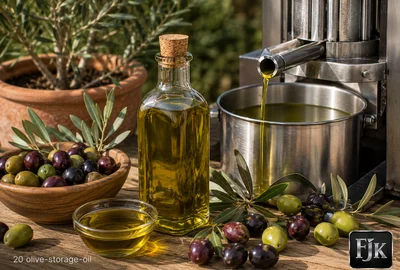
🫙 Pressing for Oil
Pressing home-grown olives for oil requires substantial quantities — roughly 5–8kg of olives to produce 1 litre of oil. In a good year, an established UK olive tree may yield enough for a small batch pressing. Specialist micro-press services accept small quantities from UK growers. The oil from UK olives is genuine extra-virgin olive oil with interesting character — lighter and less pungent than typical Mediterranean oils, reflecting the cooler growing conditions.
🌿 Ornamental Value
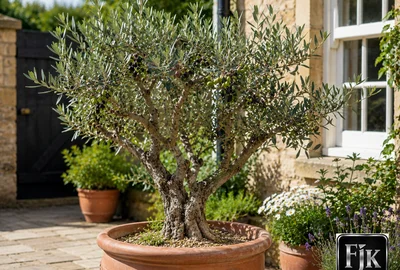
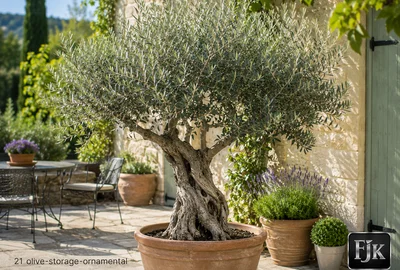
The primary value of UK-grown olives is ornamental rather than culinary in most parts of the country. The silvery-green foliage, architectural form, and beautiful twisted trunks of mature specimens make olives among the most attractive plants for sheltered courtyards, south-facing terraces, and walled gardens. A well-established olive in a terracotta pot is one of the most desirable container specimens available for a sheltered UK garden.
12 Expert Tips
💡 Arbequina is the most reliable UK olive
Of all olive varieties, Arbequina is the most widely recommended for UK growing — it is self-fertile, very cold-tolerant (to approximately -12°C when dry), small-fruited, and reliable in producing both flowers and fruit in UK conditions. It is the first choice for anyone wanting a fruiting olive.
💡 The container approach for fruiting
A container olive — Arbequina or Leccino in a 100-litre terracotta pot — on a south-facing patio from April to October, brought into a frost-free greenhouse from November to March, is the most reliable way to achieve fruiting crops of UK-grown olives regardless of region. The mobility eliminates the winter wet damage problem and allows the tree to experience the required cold period without frost risk.
💡 Ornamental investment
An old, multi-stemmed olive specimen in a very large container or open ground in a sheltered UK courtyard is a magnificent long-term investment. Unlike most fruiting plants, olives improve in ornamental character with age — the gnarled, silver-trunked form of a 20-year-old specimen is genuinely breath-taking and impossible to replicate quickly.