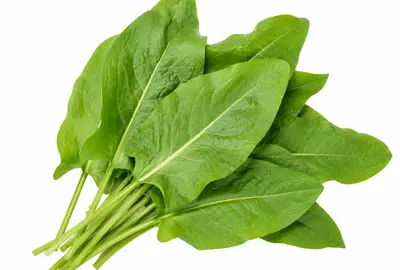
Common Sorrel
The species type. Large, bold, arrow-shaped mid-green leaves with characteristic basal lobes. Very sharp and acidic. Most productive type for cooking. Classic soupe à l'oseille sorrel.
Rumex acetosa / R. scutatus
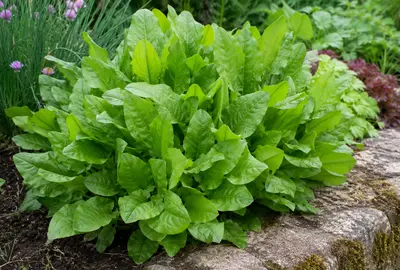
Sorrel is one of the most underrated and underused perennial vegetables in the British kitchen garden — and one of the most rewarding once established. Its intensely lemony, sharp, acidic leaves are unlike any other vegetable: clean, bright, and extraordinarily refreshing. They dissolve to a silky green purée when briefly wilted, making them perfect for the classic French soupe à l'oseille, cream sauces for fish, or as a flavouring for omelettes and risottos. Used raw and sparingly in salads, sorrel adds a vivid citrus sharpness that transforms even the simplest leaf mix. Sow or plant it once, and it returns faithfully every spring for years — often decades — with almost no attention.
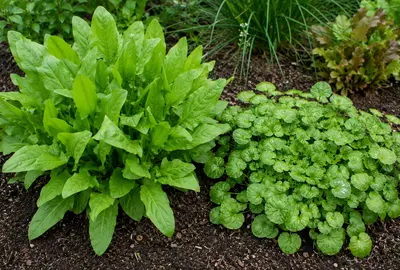
Sorrel (Rumex acetosa) is the large-leaved British species — bold, arrow-shaped leaves with a sharp, intensely acidic flavour driven by high oxalic acid content. This is the traditional soup sorrel of French cuisine and the most productive type for cooking. Buckler-leaved sorrel (Rumex scutatus) is smaller and more refined — round, shield-shaped leaves with a noticeably milder, more nuanced lemon flavour that is superb raw in salads. Red-veined and blood-red ornamental sorrels are equally edible with milder flavours and bring colour to both the garden and the plate. The wisest approach is to grow common sorrel for cooking and buckler-leaved for salads — together they give a year-round, zero-maintenance source of sharp, bright flavour.
The number of varieties shown for each crop is based on UK consumption data (2025/26) — the more popular the crop, the more variety choices we include.
Rumex acetosa. Large, arrow-shaped leaves. Intensely acidic. The classic cooking sorrel for soups and sauces.
The species type. Large, bold, arrow-shaped mid-green leaves with characteristic basal lobes. Very sharp and acidic. Most productive type for cooking. Classic soupe à l'oseille sorrel.
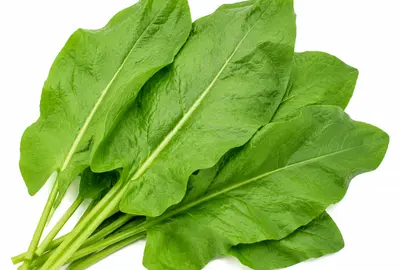
Heritage French variety selected for large, broad leaves and high productivity. Particularly vigorous. The traditional market garden type grown for generations in French cuisine. Outstanding for sorrel sauce.
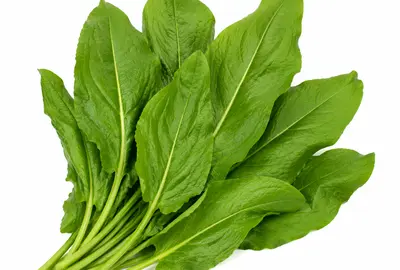
Improved selection of common sorrel with larger leaves and vigorous clump-forming habit. Slow to bolt. Very productive over a long season. Good choice for first-time sorrel growers.
Rumex scutatus and ornamental forms. Smaller, milder, more refined. Best for raw use in salads and as ornamental edibles.
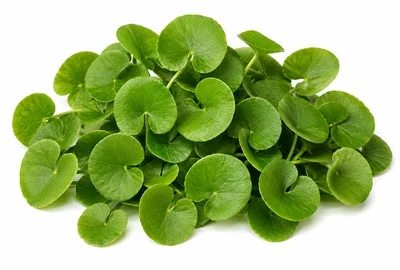
Rumex scutatus. Small, rounded, shield-shaped leaves. Milder, more nuanced lemon flavour than common sorrel. Superb raw in salads. Lower oxalic acid content. A favourite of Michelin-starred chefs.
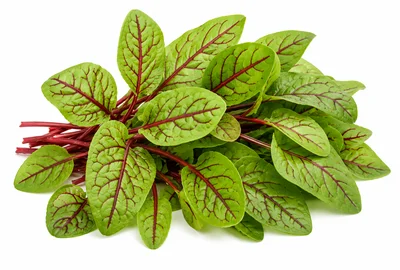
Striking dark green leaves with vivid red veins and stems. Milder flavour than common sorrel with good lemon acidity. Beautiful in salads. Excellent ornamental edible for beds and containers.
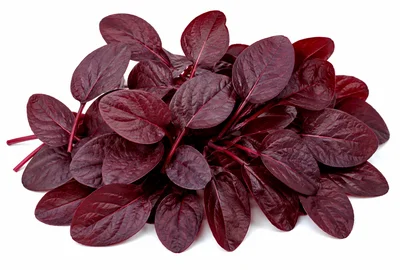
Deep red-purple leaves throughout. Very ornamental. Mild sorrel flavour. Excellent as a colour contrast in mixed salad plantings. Lower acidity than common sorrel — good for those who find the standard type too sharp.
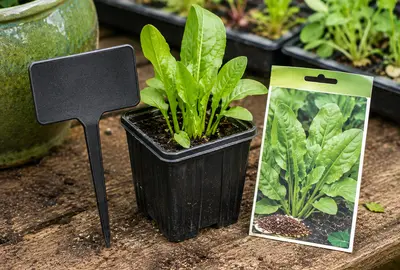
Common sorrel seed is available from most UK seed companies and specialist herb nurseries. Buckler-leaved sorrel is increasingly available from herb specialists and online seed companies. Red-veined and ornamental sorrels are best sourced from herb nurseries or specialist online suppliers. Pot-grown sorrel plants are sold in herb sections of most large garden centres in spring — a single pot plant divided immediately on purchase gives 3–4 new plants for the cost of one. The fastest way to get established sorrel is always to obtain a division from a fellow gardener, as established clumps divide extremely readily.
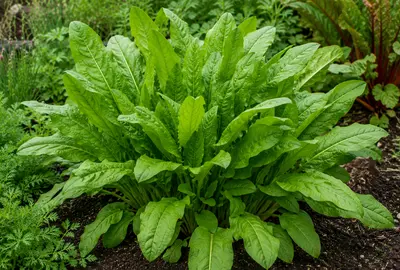
Sorrel is a perennial and should be planted in a permanent position where it can grow undisturbed for many years. Choose a spot in full sun or part shade with reasonably fertile, moisture-retentive soil. Sow direct from March, or plant divisions or pot-grown plants in spring or autumn. Space plants 30cm apart; a group of 3–5 plants provides ample harvest for most households. Incorporate compost into the planting hole and mulch around established plants annually with garden compost.
Suitable varieties: All sorrel varieties. Common sorrel best for cooking; buckler-leaved for raw salad use.
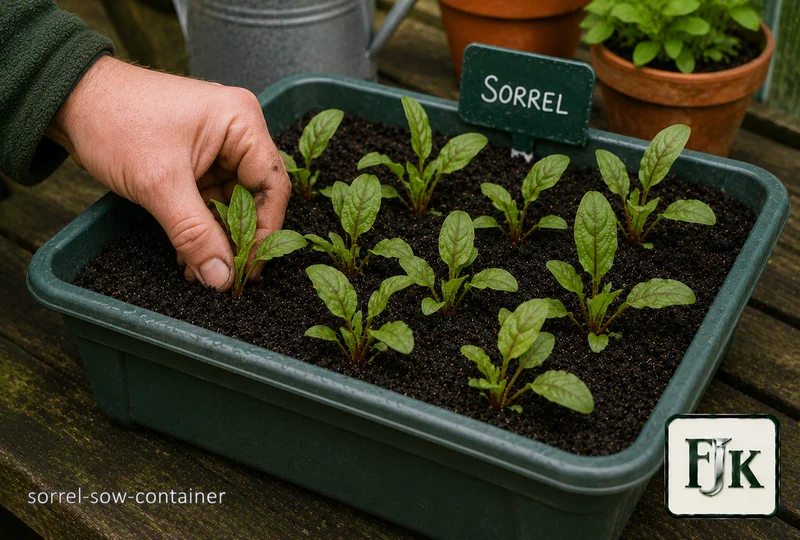
Sorrel grows well in large containers — a 30–40cm diameter pot per plant is ideal. Use good multipurpose compost mixed with a little garden soil for weight. Container-grown sorrel needs more frequent watering than ground-grown plants but is otherwise equally productive. The perennial root system means the same container plant can be kept for years, topdressed with fresh compost each spring. An excellent option for patios, balconies, and small gardens without dedicated growing beds.
Suitable varieties: All varieties; red-veined and blood sorrel particularly ornamental in containers.
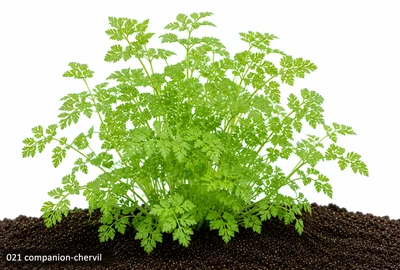
Chervil and sorrel are classic French herb garden companions — both prefer part shade, both provide early spring flavour, and both are used together in the traditional fines herbes combination.
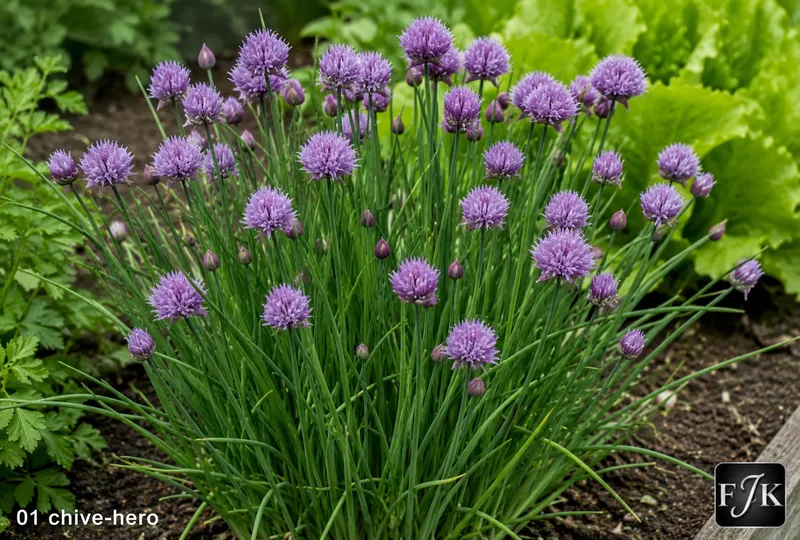
Both are perennial, both tolerate part shade, and both provide early spring harvests. Chives repel aphids that can occasionally affect sorrel in midsummer.
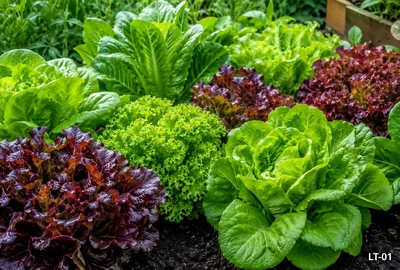
Sorrel planted at the edge of a lettuce bed provides light dappled shade that benefits lettuce in summer, while sorrel's deep perennial roots do not compete with lettuce's shallow root system.
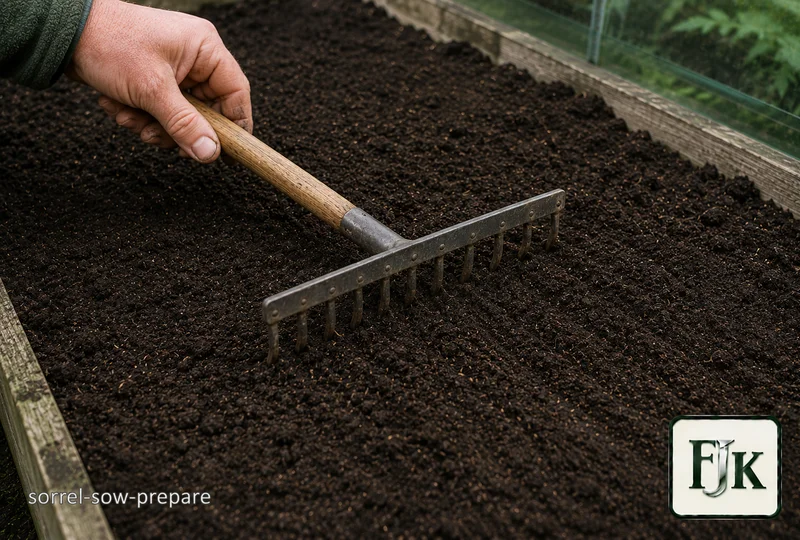
Choose the permanent position carefully — sorrel grows in the same spot for many years, so preparation is worth the effort. Dig in a bucketful of garden compost per square metre, remove any perennial weed roots thoroughly, and rake to a fine tilth. Sorrel grows in most soils but responds well to good initial preparation.
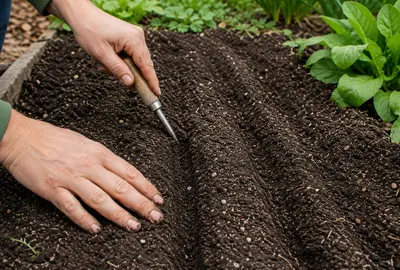
Draw drills 1cm deep and 30cm apart. Sow sorrel seeds thinly — they are larger than most salad seeds and easy to space individually. Cover lightly and firm with the back of a rake. Water gently. Germination takes 10–14 days in warm spring conditions.
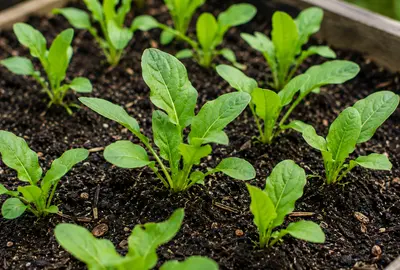
When seedlings are 5–8cm tall, thin to one plant every 30cm. Sorrel does not transplant well, so thin by cutting at soil level rather than pulling. The removed seedlings can be eaten immediately as microgreens. Final spacing of 30cm gives sufficient air circulation and leaf access.
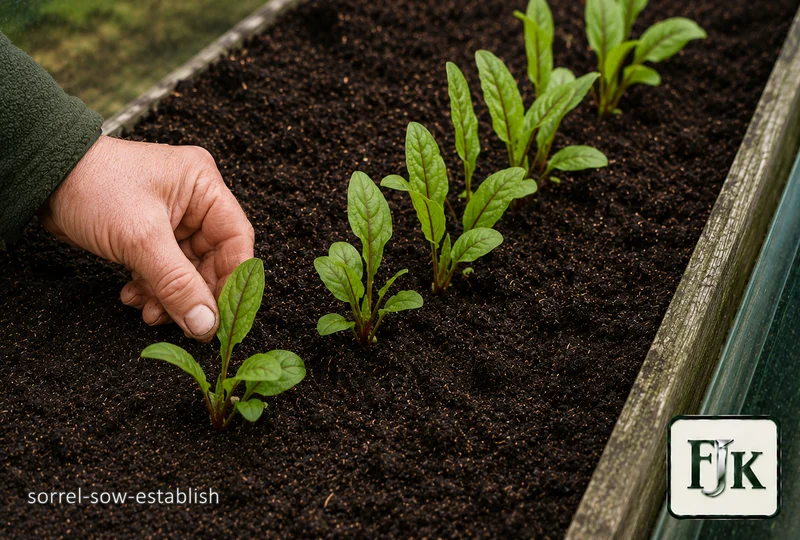
In the first year, allow the plants to establish without heavy harvesting. Take a few outer leaves from June onwards but do not cut heavily until year two. Remove any flower stems that appear in the first summer — this channels energy into root development rather than seed production.
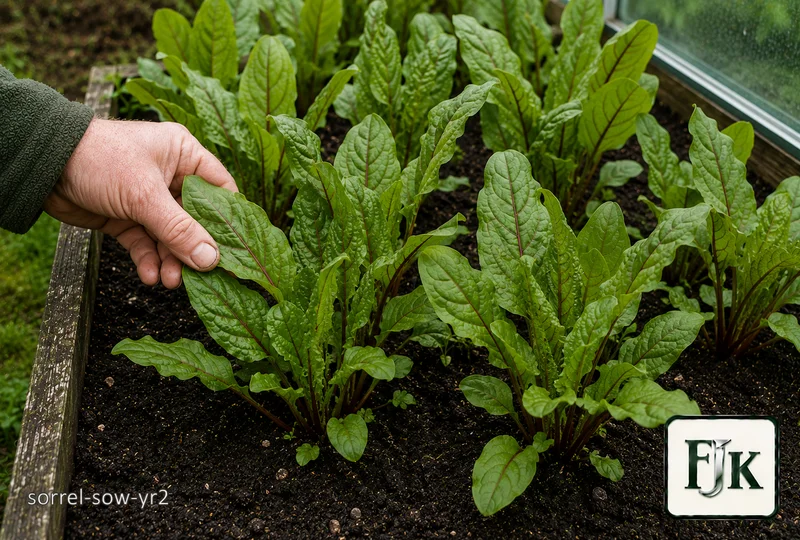
From the second year onwards, sorrel is fully productive from March to November. Harvest outer leaves regularly from March, working inward. Remove flower stems promptly in June–July. The more regularly you harvest and deadhead, the more productive the plant becomes.

| Region | Sow / plant | Harvest | Notes |
|---|---|---|---|
| Scotland & Far North | Mar–May | Apr–Oct | Mar–May direct · Plant: N/A · Harvest: Apr–Oct (yr2+) |
| Northern England | Mar–May | Apr–Nov | Mar–May direct · Plant: N/A · Harvest: Apr–Nov (yr2+) |
| Midlands & Wales | Mar–May | Mar–Nov | Mar–May direct · Plant: N/A · Harvest: Mar–Nov (yr2+) |
| Ireland & Isle of Man | Mar–May | Mar–Nov | Mar–May direct · Plant: N/A · Harvest: Mar–Nov (yr2+) |
| South & SE England | Mar–May | Mar–Nov | Mar–May direct · Plant: N/A · Harvest: Mar–Nov (yr2+) |
| South Coast & SW | Feb–May | Mar–Nov | Feb–May direct · Plant: N/A · Harvest: Feb–Nov (yr2+) |
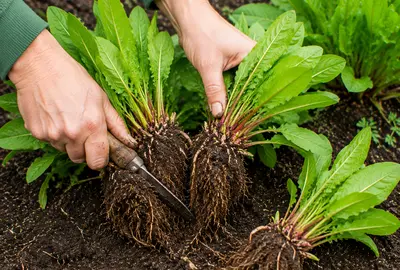
Divisions from an established sorrel clump are the fastest way to get productive plants. Lift an established clump in spring or autumn and split it into sections with a sharp spade or knife, each with at least 3–4 leaves and a good root system. Replant the freshest outer sections and discard the woody centre.
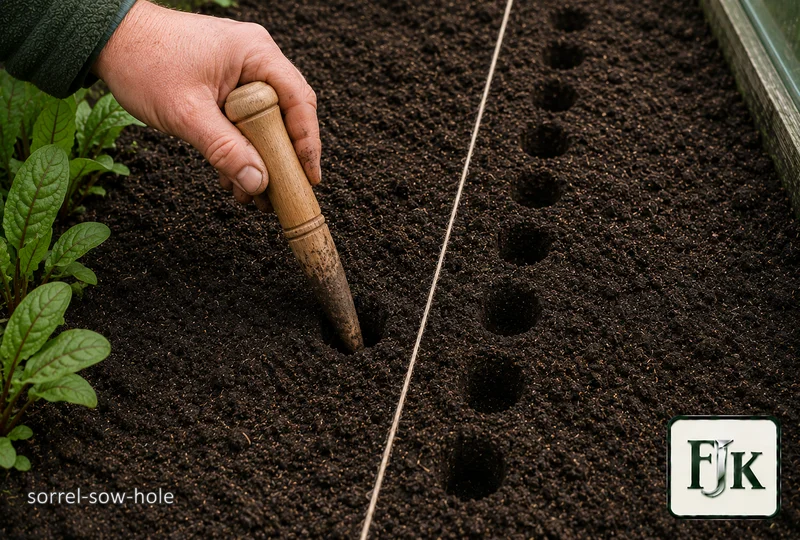
Dig a hole slightly larger than the root system of the division. Incorporate a handful of garden compost. Position the division so that the crown sits at the same depth it was growing previously — too deep can cause rotting; too shallow exposes roots to drying out.
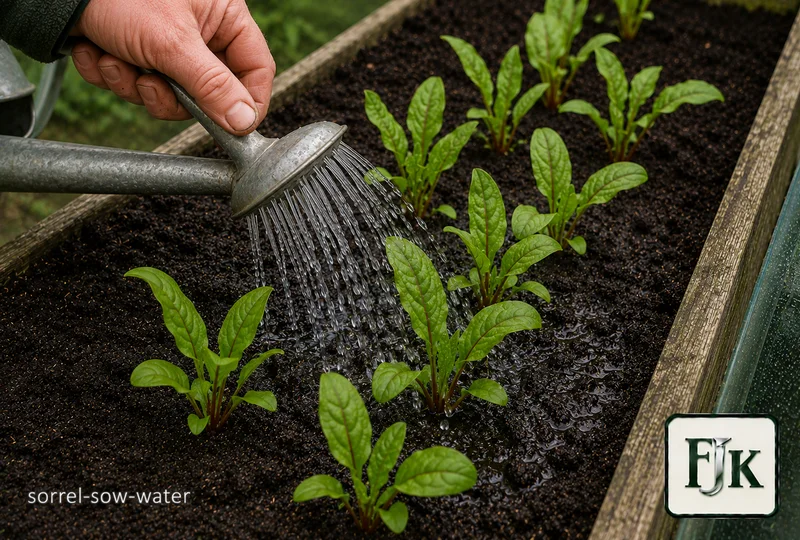
Firm the soil around the division and water thoroughly. Apply a light mulch of garden compost around the plant, keeping it clear of the central crown. Divisions establish quickly in spring — plants begin producing harvestable leaves within 3–4 weeks of planting.
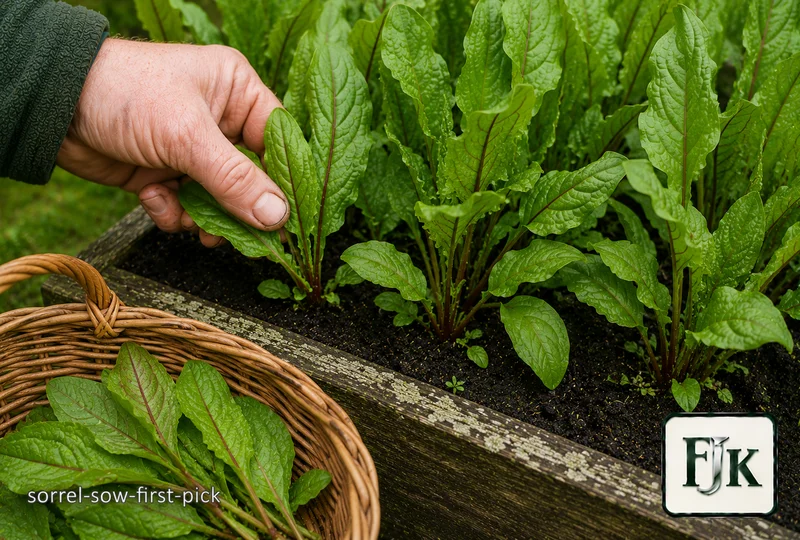
Divisions produce harvestable leaves in their first season, making them far faster than seed-raised plants. Begin picking outer leaves 3–4 weeks after planting once the division is clearly growing away strongly. Remove any flower stems that appear in the first season to build plant vigour.
| Region | Sow / plant | Harvest | Notes |
|---|---|---|---|
| Scotland & Far North | Mar–May | Apr–Oct | N/A · Plant: Mar–May or Sep–Oct · Harvest: Mar–Oct (same yr) |
| Northern England | Mar–May | Apr–Nov | N/A · Plant: Mar–May or Sep–Oct · Harvest: Mar–Nov (same yr) |
| Midlands & Wales | Mar–May | Mar–Nov | N/A · Plant: Mar–May or Sep–Oct · Harvest: Mar–Nov (same yr) |
| Ireland & Isle of Man | Mar–May | Mar–Nov | N/A · Plant: Mar–May or Sep–Oct · Harvest: Mar–Nov (same yr) |
| South & SE England | Mar–May | Mar–Nov | N/A · Plant: Mar–May or Sep–Oct · Harvest: Mar–Nov (same yr) |
| South Coast & SW | Feb–May | Mar–Nov | N/A · Plant: Feb–May or Sep–Nov · Harvest: Feb–Nov (same yr) |
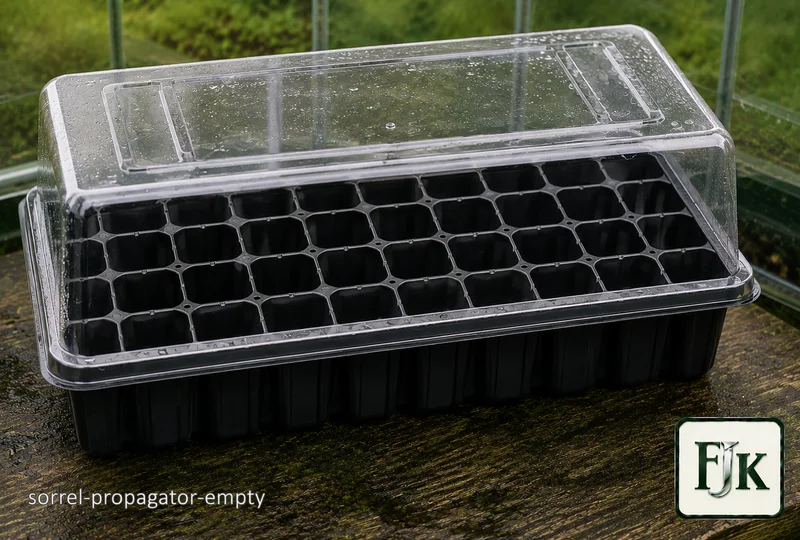
Sorrel does not require a propagator at any stage. It germinates readily outdoors in spring soil without any indoor starting. A propagator actually offers no advantage for sorrel — the plant is not frost-tender and does not need bottom heat. The fastest and most effective way to establish sorrel is always from divisions of existing plants rather than from seed. If sowing from seed, direct outdoor sowing in March is the standard and recommended method.
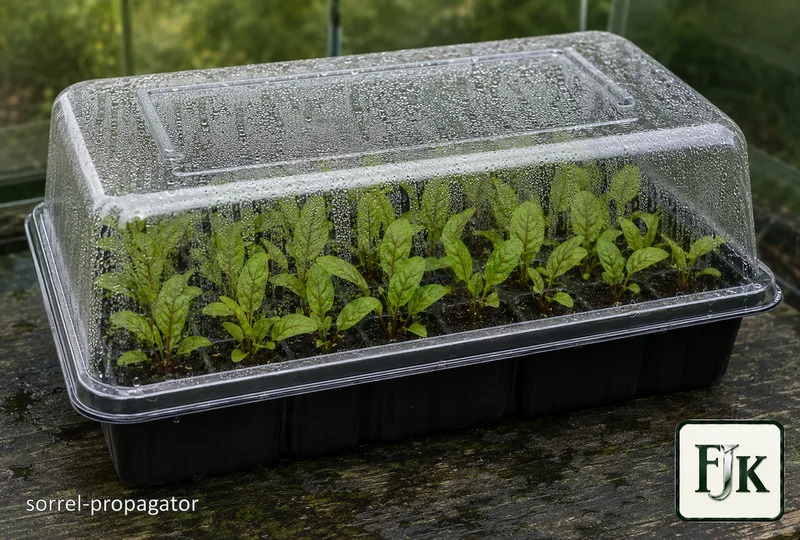
An unheated propagator offers no practical benefit for sorrel. If raising from seed indoors, simply place a module tray on a cool windowsill — no cover or heat is required. Germination takes 10–14 days at room temperature.
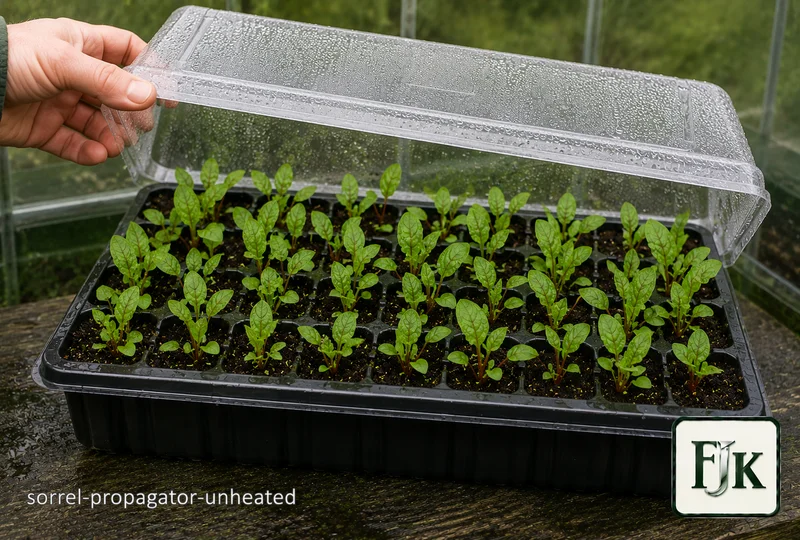
Standard unheated propagator — A lidded seed tray traps warmth and humidity around germinating seeds without electricity. Performance depends entirely on room temperature — best placed on a warm windowsill and used from March onwards. Replace the lid promptly after watering. Remove it completely the moment seedlings emerge to prevent damping off.
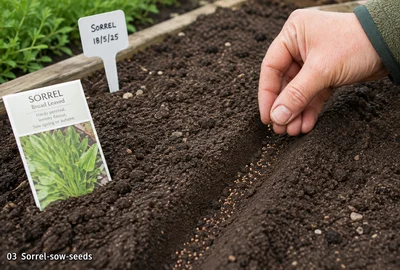
Sorrel germinates reliably in outdoor spring soil from March onwards at temperatures above 7°C. Sow direct in a prepared seedbed 1cm deep. Germination takes 10–14 days. There is no advantage to indoor starting for this fully hardy perennial crop — direct sowing is always the recommended method.
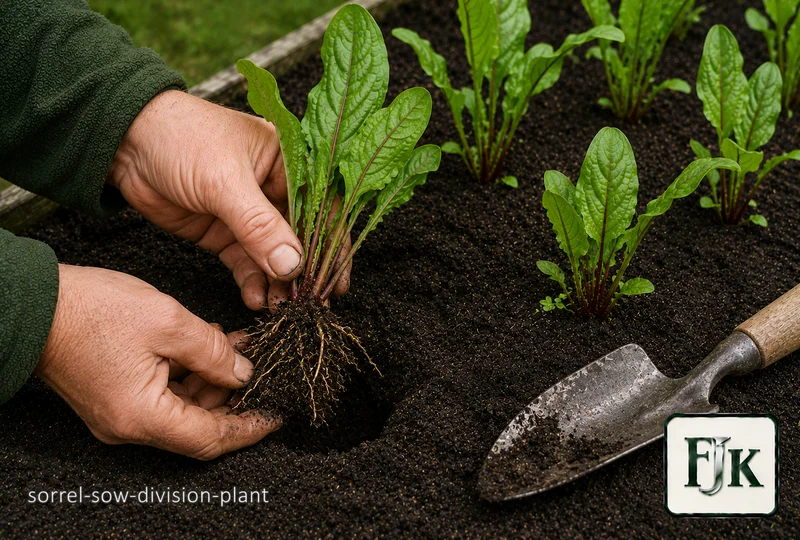
If establishing sorrel from scratch, the most reliable shortcut is to obtain a division from an established clump or buy a pot-grown plant in spring. Divisions planted in March begin producing harvestable leaves within 3–4 weeks. Seed-raised plants in their first year are smaller and less productive than divisions; full productivity comes in year two from seed.
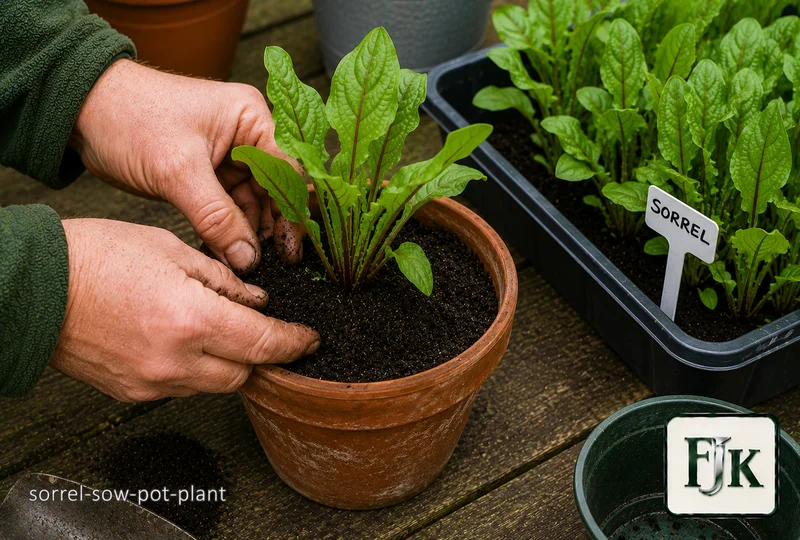
Pot-grown sorrel plants bought from garden centres in spring can be planted directly into their permanent position outdoors without any hardening off — sorrel is fully hardy and needs no acclimatisation. Water in well and apply a light mulch of compost. A single pot plant can be divided immediately on purchase into 3–4 individual plants.
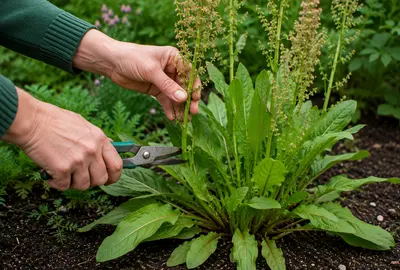
Removing flower stems the moment they appear is the single most important management task for productive sorrel. Flower stems typically emerge in June and July — tall, erect stems rising well above the leaf rosette. If left, the plant pours all its energy into seed production, dramatically reducing leaf output and making remaining leaves tougher and more intensely acid. Cut flower stems off at the base as soon as they appear — do not let them develop further. After removing flower stems, give the plant a generous watering and a handful of garden compost as a mulch, and it will respond with a flush of fresh, tender new leaves within a fortnight.
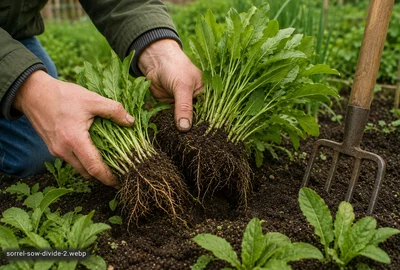
Established sorrel clumps become congested and progressively less productive over 3–4 years as the root system becomes woody at the centre. Division every 3–4 years in spring or autumn rejuvenates the plant and simultaneously provides new plants for extending the sorrel bed or giving to other gardeners. Lift the whole clump with a fork, split it into sections with a sharp spade, replant the freshest outer sections with good roots, and discard the woody, unproductive centre. Spring division is preferable as plants re-establish quickly in warming soil.
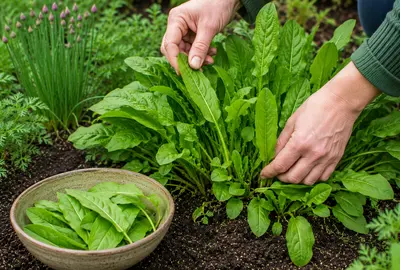
Harvest sorrel outer leaves from March onwards, working inward toward the central crown. Never remove the central growing point — this is what produces next season's leaves. Young, smaller leaves are milder in flavour and best raw in salads; larger outer leaves are more intensely acidic and best for cooking (soup, sauce, omelettes). Harvest regularly — even if you cannot use all the leaves, removing outer leaves stimulates new growth. The flavour is most delicate in spring (March–May) and again in autumn (September–November); midsummer leaves can be stronger. Always harvest before flower stems develop for the best leaf quality.
Sorrel leaves contain oxalic acid — the same compound found in spinach, rhubarb, and chard. It is perfectly safe in normal dietary quantities but people with kidney stones, gout, or rheumatism should avoid eating large amounts. Never cook in aluminium or uncoated cast-iron pans — the oxalic acid reacts and produces an unpleasant metallic flavour and grey colour. Slugs can damage young spring growth; protect emerging leaves with nematodes or copper barriers in early spring. Remove flower stems promptly — this is the essential annual management task for productive sorrel.
Full identification and treatment advice is in the Pests and Diseases sections.
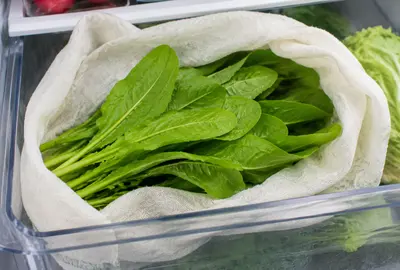
Sorrel wilts quickly after picking and is best used on the day of harvest for raw use in salads. For short-term storage, loosely wrap leaves in a damp cloth or paper towel and place in a sealed bag in the salad drawer — this extends freshness to 2–3 days. Do not wash before storing. Larger leaves for cooking can be stored for up to 4 days refrigerated in this way, as their flavour and acidity are not significantly affected by brief wilting. To revive wilted leaves, plunge briefly into cold water.

The classic culinary use of sorrel is in sauce and soup. For sorrel sauce — the perfect accompaniment to salmon, trout, and eggs — wilt a large handful of leaves in butter for 60 seconds, add a splash of cream, season, and serve immediately. The leaves dissolve to a silky, intensely flavoured green purée in seconds. For the classic soupe à l'oseille, wilt sorrel in butter, add stock and cream, and blend briefly. Both preparations take under 10 minutes and demonstrate sorrel's extraordinary culinary value. The bright acidity needs no lemon juice — sorrel provides its own.
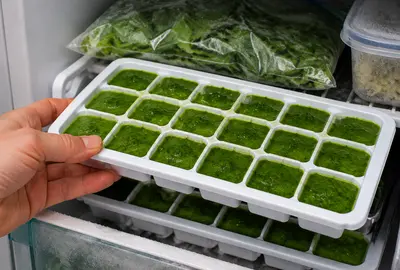
Sorrel freezes well for use in cooked dishes and is an excellent way to preserve a summer surplus. Wash and roughly chop the leaves, then blanch briefly in boiling water for 30 seconds. Drain, cool in ice water, and squeeze out excess moisture. Pack in ice cube trays with a little water, freeze, then transfer frozen cubes to labelled bags. Each cube is a ready-to-use portion for soup, sauce, or risotto. Frozen sorrel keeps for up to 6 months. Do not freeze sorrel intended for raw use in salads — the texture deteriorates completely on freezing.
The most practical approach to sorrel for most UK kitchen gardens is to grow two plants of common sorrel for cooking and two plants of buckler-leaved sorrel for salads. This gives a permanent, zero-effort supply of both culinary types from a footprint of less than one square metre. Plant in a semi-shaded corner that would otherwise be unproductive — sorrel is one of the very few vegetables that genuinely thrives in partial shade and produces reliable harvests in positions where little else would grow.
Sorrel is one of the first vegetables to emerge in spring, often producing its first harvestable leaves in February in mild UK regions. This early emergence is one of its greatest virtues — at a time when almost nothing else is ready in the kitchen garden, sorrel is providing fresh, vivid, intensely flavoured leaves. Use them to enliven winter salads, add to the first spring omelettes, and make the earliest sorrel sauce of the year with the season's first salmon.
A technique used by experienced sorrel growers is the midsummer cut-back: when flower stems appear and the leaves become large and coarse in June–July, cut the whole plant back to 5cm above the soil. Water generously and apply a mulch of compost. The plant will produce a flush of fresh, tender new leaves within 2–3 weeks — effectively giving a second spring of mild, delicate sorrel in the heart of summer. This single action doubles the usable leaf harvest from each plant across the season.