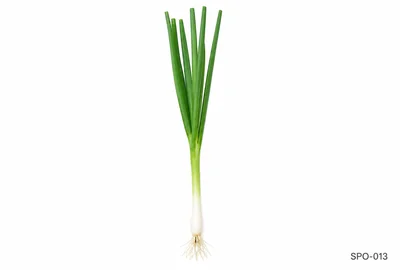
White Lisbon
White salad onion · Seed
The classic UK spring onion. Quick-growing with white stems and green tops. Reliable and ideal for succession sowing.
- AGM
- Beginners
- Fast
- Classic
Allium fistulosum
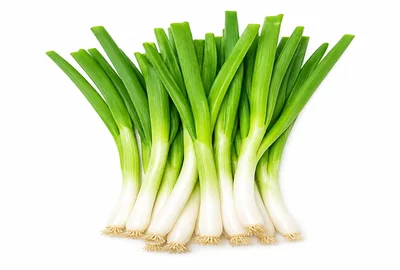
One of the easiest and most useful crops in the kitchen garden. Spring onions are ready in just 8 weeks from sowing and can be succession-sown throughout the growing season for a constant supply.
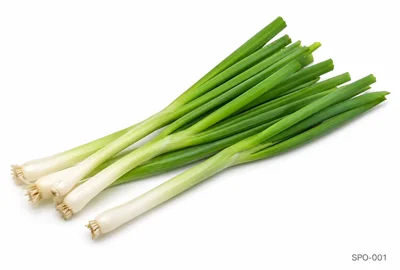
Spring onions are best grown from seed and are ideal for quick, repeat sowings through the UK growing season. Choose classic white-stemmed types for reliable salad crops, bunching types for upright growth, and red-skinned types for extra colour. Some varieties are better for summer sowing, while hardy types can be used for autumn and overwintering crops in milder areas. Grow several short rows rather than one large sowing to keep harvests steady.
The number of varieties shown for each crop is based on UK consumption data (2025/26) — the more popular the crop, the more variety choices we include.
White-stemmed types for reliable salad crops. Fast, mild, and ideal for repeat sowing through the season.
The classic UK spring onion. Quick-growing with white stems and green tops. Reliable and ideal for succession sowing.
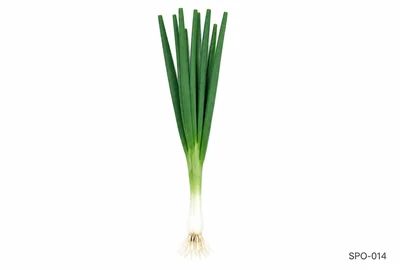
A neat, upright variety producing clean, straight stems. Good uniformity and well suited to close spacing in drills.
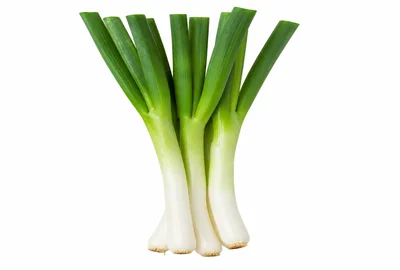
A vigorous bunching type with strong growth and good uniformity. Well suited to succession sowing for steady harvests.
Long-stemmed, red-skinned and bunching varieties for extra colour and different kitchen uses.
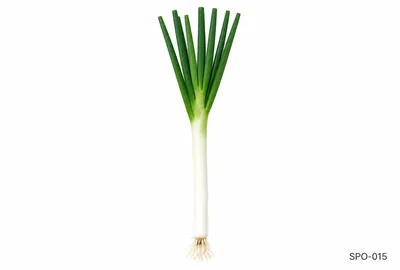
A long-stemmed bunching onion that does not form a bulb. Excellent for stir-fries and Asian cooking. Produces thick, upright stems.
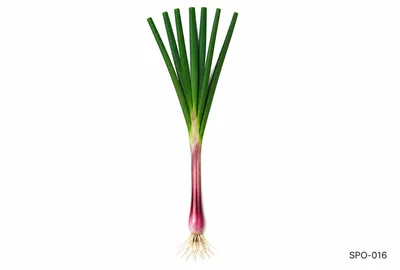
A striking red-skinned spring onion with a stronger flavour. Adds colour to salads and mixed harvest bunches.
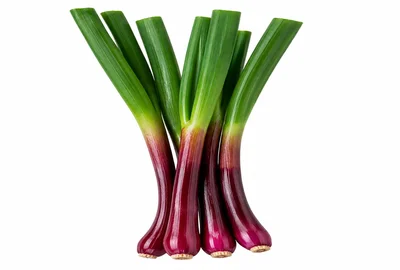
A colourful red spring onion suited to salads, garnishes and mixed sowings. Good colour and reliable growth.
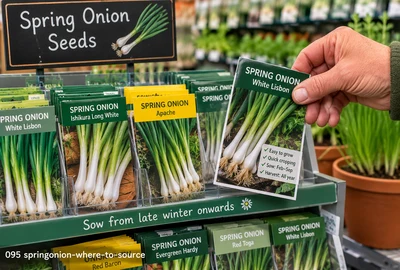
Spring onion seed is widely available by post and from local garden retailers. Choose fresh seed each season for the best germination.

Postal seed ordering gives a good choice of white, red and bunching spring onion varieties. Order before the main sowing season so seed is ready for succession sowing.
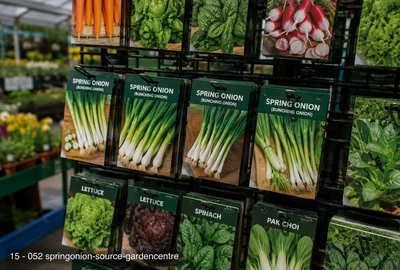
Garden centres usually stock spring onion seed from late winter onwards. Choose fresh packets and check sowing dates for the variety.
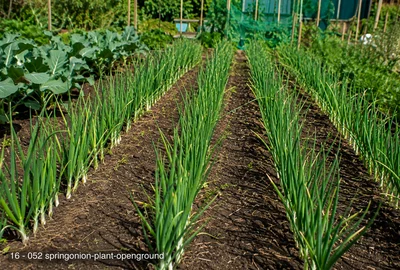
Open ground is ideal for short rows of spring onions. Sow thinly in shallow drills and repeat every few weeks for regular harvests.
Suitable varieties: Best for steady crops, succession sowing and larger kitchen garden beds.
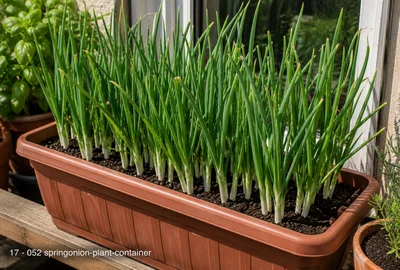
Containers and windowboxes are excellent for spring onions because they need little depth and can be kept close to the kitchen. Use fresh compost and keep it evenly moist.
Suitable varieties: Best for patios, small gardens, balconies and quick salad harvests.
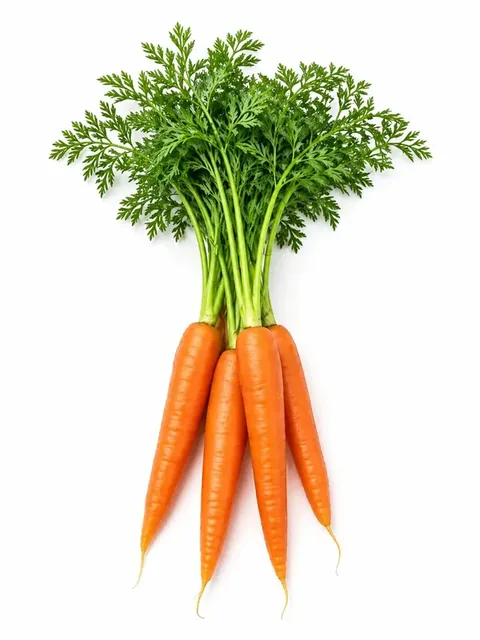
Spring onions and carrots are classic companions — spring onion scent deters carrot fly while carrot scent deters onion fly. Interplanting alternating rows provides mutual pest protection.
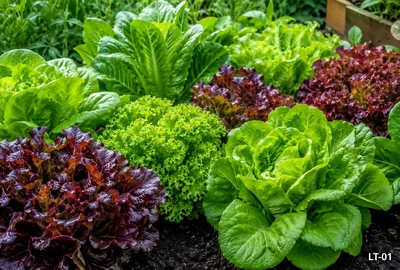
Spring onions and lettuce make excellent bed companions — both are quick-growing, cool-season crops that can be interplanted to make maximum use of limited space.
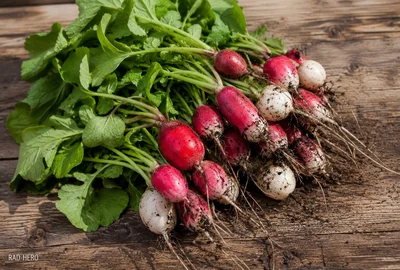
Radish can be sown alongside spring onions as a quick catch crop. Both are fast-maturing crops that work well in succession sowing plans and share similar growing conditions.
Spring onions are usually direct sown where they are to grow. They germinate well in fine, moist soil and are best sown little and often for a steady supply.
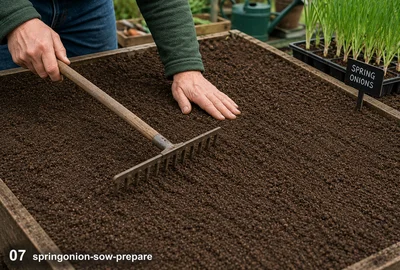
Choose a sunny or lightly shaded spot and rake the soil to a fine surface. Remove stones and weeds before sowing.
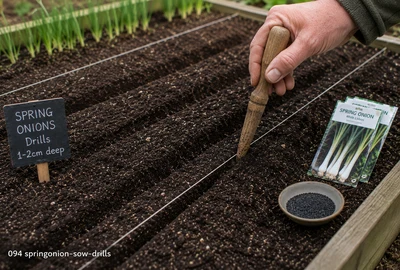
Make shallow drills in short rows. Keep rows close enough for efficient use of space but wide enough to weed between.
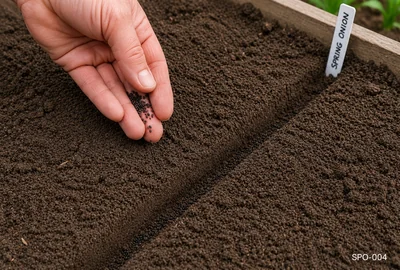
Scatter seed thinly along the drill. Thin sowing reduces crowding and helps produce straight, clean stems.
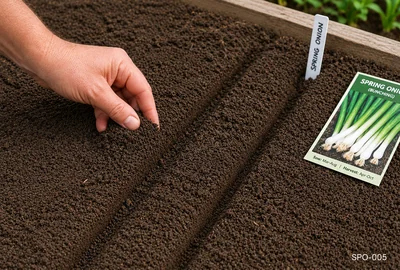
Cover with a fine layer of soil or compost and firm gently. Water carefully using a fine rose.
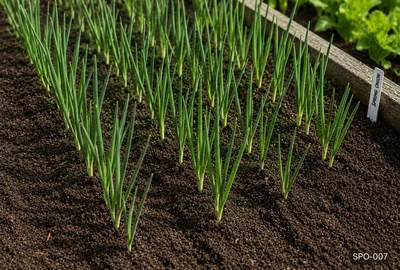
Keep the soil evenly moist and weed-free. Thin if seedlings are very crowded.
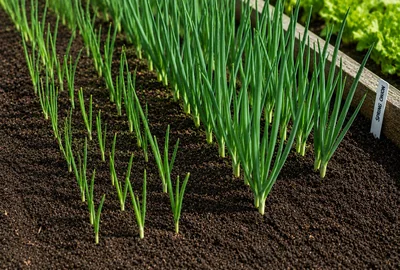
Sow small batches every few weeks from spring to late summer. Harvest young before stems become coarse.

| Region | Sow / plant | Harvest | Notes |
|---|---|---|---|
| Scotland & Far North | Apr–Aug | May–Oct | Start once soil has warmed; use sheltered sites for early sowings · Apr–Aug (direct) |
| Northern England | Mar–Aug | Apr–Oct | Main outdoor sowing begins as soil becomes workable · Mar–Aug (direct) |
| Midlands & Wales | Mar–Sep | Apr–Oct | Succession sow for steady crops through summer and early autumn · Mar–Sep (direct) |
| Ireland & Isle of Man | Mar–Aug | Apr–Oct | Avoid very wet ground and choose free-draining beds or containers · Mar–Aug (direct) |
| South & SE England | Feb–Sep | Mar–Nov | Early sowings are possible in mild, sheltered gardens · Feb–Sep (direct) |
| South Coast & SW | Feb–Sep | Mar–Nov | Mild areas can crop over a long season with repeat sowings · Feb–Sep (direct) |
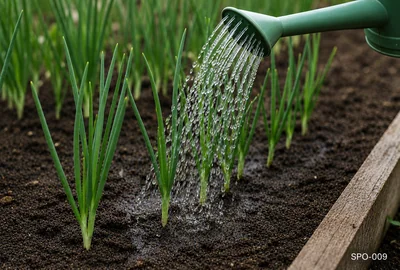
Water regularly to maintain even moisture — spring onions need consistent watering to develop straight, tender stems. Dry conditions cause thin, tough, fibrous stems with a harsh flavour. Water gently at the base with a fine rose to avoid washing away the fine seedbed.
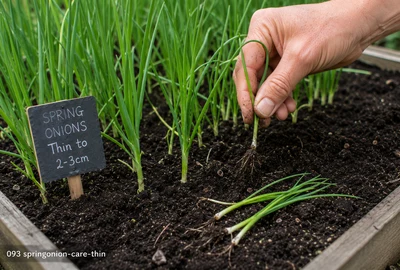
Thin spring onions to 2.5cm apart when seedlings are 5cm tall. The thinnings are perfectly edible as micro-onions. Without thinning, overcrowded plants produce very thin, weak stems. Sow in succession every 3 weeks for a continuous supply.
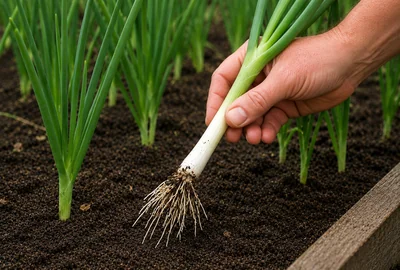
Harvest spring onions when the stems are pencil-thick and 15–20cm tall, before the bulb develops significantly. Pull from the ground by hand — the root system is very shallow. Harvest from a sowing over 6–8 weeks for the best flavour and texture.
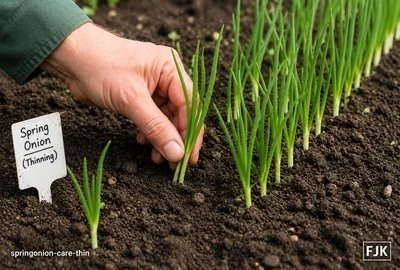
The key to a continuous spring onion supply is succession sowing every 3 weeks from March to August. Each sowing provides harvest for a few weeks before becoming too strong. Mark your sowings with dated labels — spring onions from different sowings look identical until harvest time.
White rot can affect spring onions just as it does onions and garlic. Never grow alliums in infected soil — the disease persists for decades.
Full identification and treatment advice is in the Pests and Diseases sections.
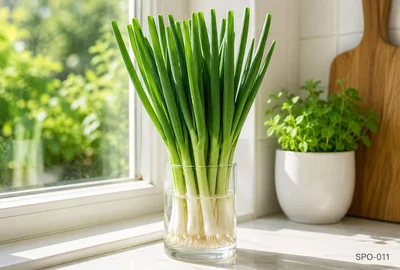
Spring onions are at their best pulled fresh and used soon after harvest. Harvest only what you need for the crispest stems and green tops.
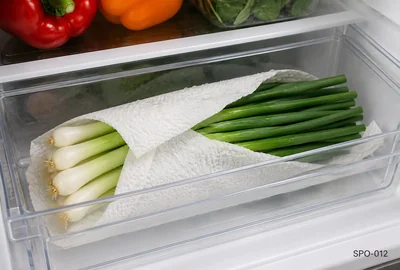
Store freshly pulled spring onions in the fridge for a few days. Keep them lightly wrapped or in a container to stop them drying out.
Sow short rows every few weeks rather than one long row, so you always have tender stems ready to pull. A single large sowing produces a glut that is difficult to use before the plants become coarse.
Cover seed very lightly — spring onions germinate best in fine, moist soil without being buried too deeply. A 5mm covering is plenty.
Keep the crop evenly moist in dry weather, especially in containers where compost dries quickly. Drought stress produces small, hot-flavoured bulbs.
Harvest young and often — leaving plants too long makes stems tougher and less sweet. Pull when pencil-thick for the best kitchen quality.