01 About
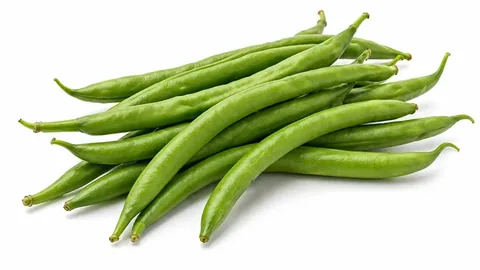
French beans are among the most rewarding crops for any UK garden or allotment. Quicker to mature than runner beans, more compact, and just as productive, they deliver generous harvests from midsummer through to September with very little effort. Climbing varieties scale wigwams and trellises to produce long, elegant pods over a long season. Dwarf varieties need no support at all and are ideal for raised beds, containers, and smaller gardens. Both types produce tender, stringless pods with excellent flavour when picked young.
02 What to Grow
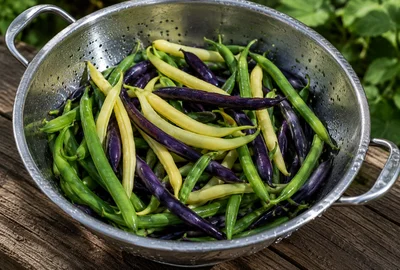
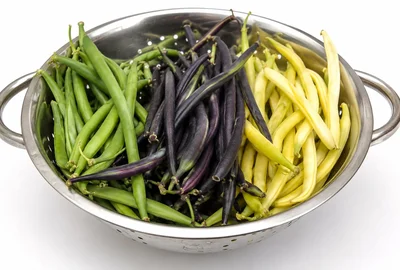
French beans divide into two distinct growing types: climbing (pole) varieties that reach 1.5–2m and need support, and dwarf (bush) varieties that reach only 40–50cm and need none. Within those groups, pod colour ranges from the familiar green through yellow (wax beans) and purple — the purple types turn green when cooked but are spectacular raw. All produce tender, stringless pods with sweet, buttery flavour when picked young. Choose climbing types for maximum yield from a small footprint; dwarf types for containers, raised beds, and gardens without support infrastructure.
03 Varieties
The number of varieties shown for each crop is based on UK consumption data (2025/26) — the more popular the crop, the more variety choices we include.
🌿 Climbing French Beans
Tall climbers to 1.5–2m needing canes, trellis, or netting. Heavy yields over a long season. The most productive French beans per square metre. Real-life photography.
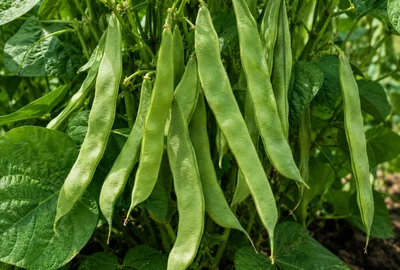
Cobra
Climbing · Green
The most popular climbing French bean in the UK. Long, smooth, stringless green pods with exceptional flavour. Very heavy crops over a long season. RHS Award of Garden Merit. The benchmark climbing French bean.
- AGM
- Climbing
- ⭐ Flavour
- Beginners
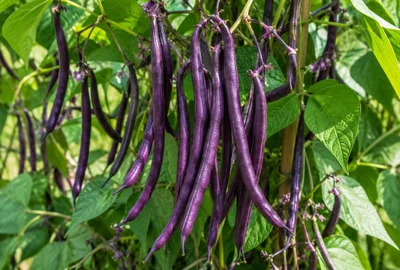
Blauhilde
Climbing · Purple
Dramatic purple pods to 25cm that turn green on cooking. Exceptionally productive climber with outstanding flavour. Easy to spot among the foliage when picking. One of the finest climbing French beans available.
- Climbing
- Heritage
- ⭐ Flavour
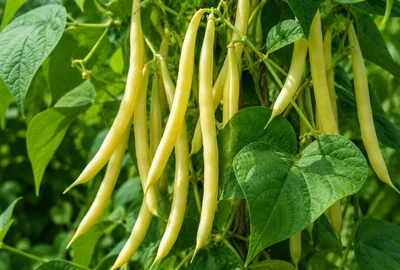
Goldmarie
Climbing · Yellow
Beautiful golden-yellow wax bean. Long, flat, stringless pods with a rich buttery flavour distinctly different from green types. Very reliable climber with heavy yields. Excellent raw in salads.
🌱 Dwarf Bush Beans
Compact self-supporting plants to 45cm. No canes needed. Ready in as little as 8 weeks from sowing. Ideal for raised beds, containers, and smaller gardens. Real-life photography.
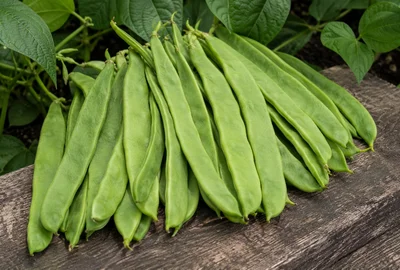
The Prince
Dwarf · Green
The classic British dwarf French bean. Flat, wide pods to 15cm with superb flavour. One of the most reliable dwarf beans for UK conditions. Excellent for exhibition and the kitchen.
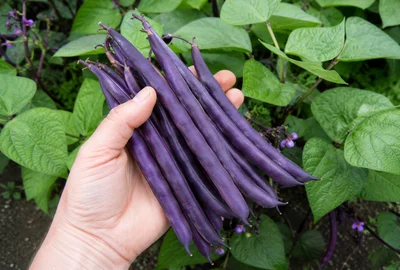
Purple Teepee
Dwarf · Purple
Deep purple pods held above the foliage, making harvesting very easy. Stringless, tender, sweet. Turns green on cooking. One of the most ornamental and productive dwarf beans.
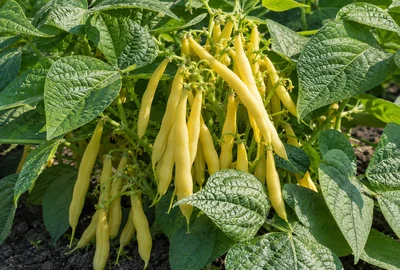
Sonesta
Dwarf · Yellow
Compact dwarf yellow wax bean producing masses of straight, round, stringless pods. Rich buttery flavour. One of the best yellow dwarf beans for UK growing — reliable, early, and prolific.
🫘 Specialty & Heritage
Borlotti, flageolet, and heritage varieties grown for drying or semi-ripe shelling. Ornamental and highly flavourful. Real-life photography.
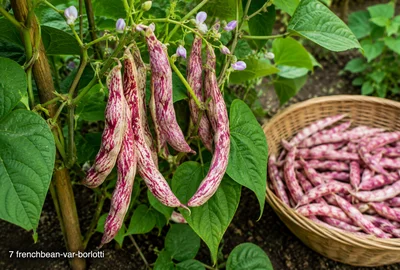
Borlotti Lingua di Fuoco
Climbing · Borlotti
The spectacular Italian fire-tongue bean. Cream pods heavily splashed with crimson red, with matching seeds. Best eaten fresh as a shelling bean or dried for winter soups and stews. Ornamental and delicious.
- Climbing
- Heritage
- ⭐ Flavour
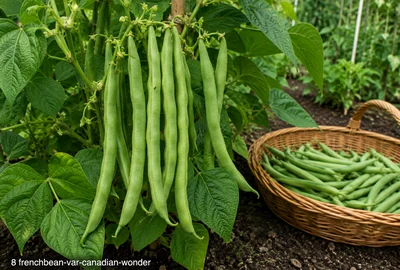
Canadian Wonder
Dwarf · Heritage
Victorian heritage dwarf bean still popular over 130 years after introduction. Flat, wide pods with excellent flavour. Also excellent dried as haricot beans. Good disease resistance for an older variety.
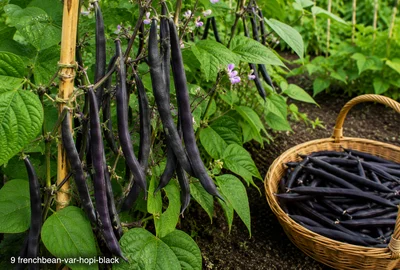
Hopi Black
Dwarf · Heritage
Ancient Native American variety with jet-black seeds. Flat green pods eaten fresh when young, or dried for their beautiful glossy black beans. Rich earthy flavour when dried. A living piece of horticultural history.
04 Where to Source
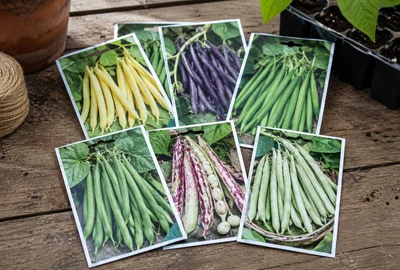
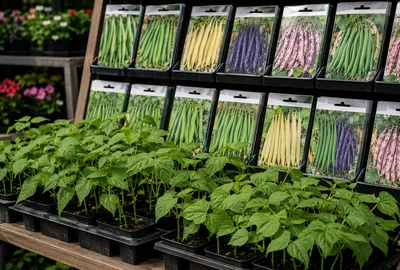
French bean seeds are widely available from garden centres, supermarkets, and online seed companies. Popular varieties like Cobra and The Prince are found everywhere. For heritage, borlotti, and specialist yellow and purple types, online seed companies offer a far wider range.
📬 Seeds by Post
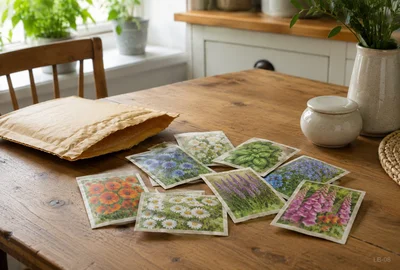
Online seed companies carry the full range including climbing, dwarf, yellow, purple, and heritage varieties. Seeds are inexpensive and fresh seed germinates more reliably than older stock. Order from January — most varieties available until April. French bean seeds remain viable for 3–4 years stored cool and dry.
🏪 Garden Centres
Garden centres stock seeds from February and young plants from late April. Cobra, The Prince, and a handful of coloured varieties are standard. Young plants from a garden centre give a 3–4 week head start, which can be worthwhile if sowing space is limited.
Timing tip: Order seeds in January and February. Popular varieties sell out quickly. Garden centres and markets are a reliable backup from April onwards.
05 Planting Options
🎋 Wigwam / Support
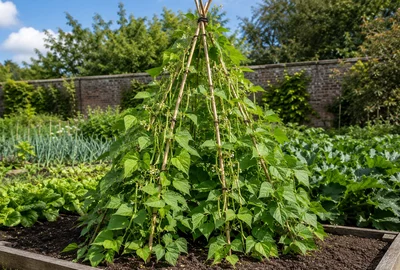
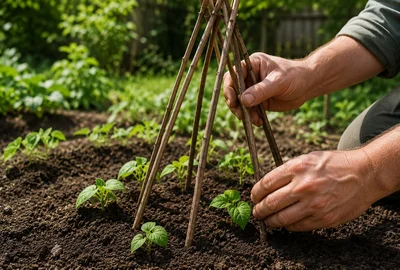
Climbing French beans are trained up canes, netting, or trellis in the same way as runner beans. A wigwam of 6–8 canes or a net stretched between posts gives excellent results. Unlike runner beans, climbing French beans do not need removing — they twine naturally and are self-supporting once established. Sow or plant one bean per cane. Supports need not be as tall as for runners — 1.5–1.8m is sufficient for most climbing varieties.
Suitable varieties: Cobra, Blauhilde, Goldmarie, Borlotti. All climbing varieties.
🌱 Raised Beds
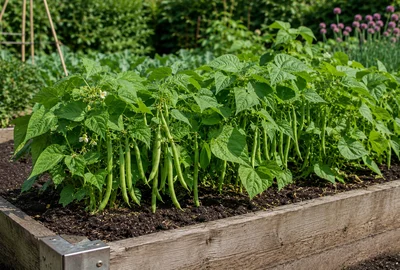
Dwarf French beans are ideal for raised beds — compact, productive, and needing no support infrastructure. Sow in blocks rather than rows for best pod set, as the plants benefit from being close together for cross-pollination. A 1.2m × 1.2m bed sown with dwarf beans produces a very generous harvest. Dwarf beans are also excellent for succession sowing — sow every 3 weeks from late May to early July for a continuous harvest from July to October.
Suitable varieties: The Prince, Purple Teepee, Sonesta, Canadian Wonder. All dwarf varieties.
🪣 Containers
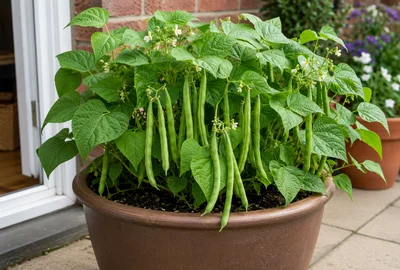
Dwarf French beans perform excellently in containers of 30cm diameter or larger. Use peat-free multipurpose compost and position in the sunniest available spot. Water daily in warm weather — containers dry rapidly. Begin feeding with a high-potash liquid feed every 10–14 days once flowers appear. A single 40cm container with 4–5 dwarf beans produces a surprisingly generous harvest.
Suitable varieties: Purple Teepee, Sonesta, The Prince. Dwarf varieties only — climbing types are not suited to containers.
06 Companion Planting
✅ Grow nearby
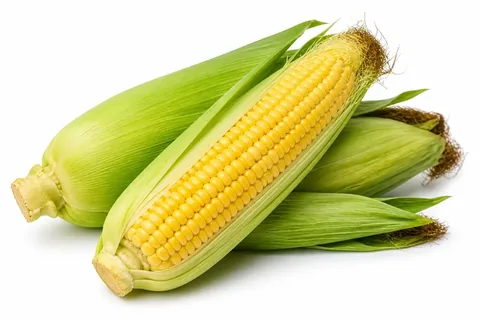
Beans fix nitrogen that feeds the hungry sweetcorn plants. Climbing French beans can use sweetcorn stems as support, creating a productive and space-efficient combination.

French beans and carrots grow well together — beans fix nitrogen that benefits carrots, and their different root depths mean the two crops do not compete for the same nutrients.
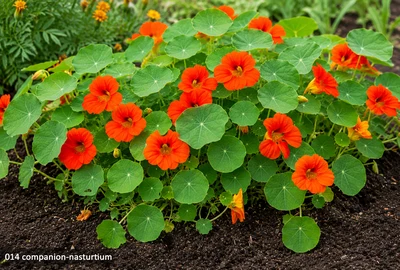
🌸 Nasturtiums
Nasturtiums planted at the bed edge act as a trap crop for blackfly — a major French bean pest — drawing aphids away from the beans and attracting beneficial insects.
❌ Keep apart
- 🧅 Onions — Alliums inhibit the growth of legumes when planted in close proximity.
- 🧄 Garlic — Root secretions from garlic are thought to stunt bean growth.
- 🌿 Fennel — Fennel root chemicals inhibit most neighbouring vegetables including beans.
07 Sowing — How To
French beans are straightforward to sow — large seeds, rapid germination, no special heat requirements. The key constraint is frost: never sow or plant out before the last frost has passed. From mid-May onwards, direct sowing into warm soil is the simplest and most reliable method. For an earlier start, sow in individual 9cm pots indoors from early May.
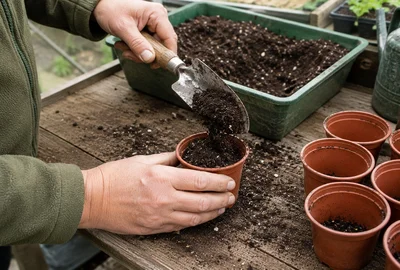
Fill pots
For indoor sowing, fill 9cm pots with peat-free multipurpose compost. One pot per seed — French beans have large root systems and dislike root disturbance.
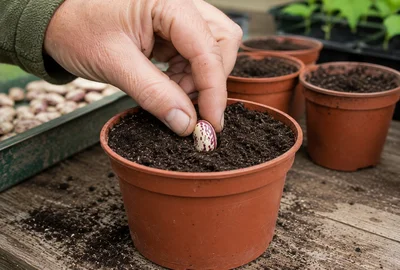
Sow seeds
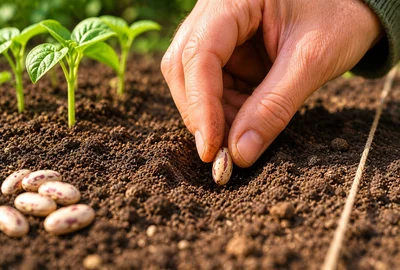
Push one seed per pot to a depth of 5cm. The eye (small scar on the seed) should face downward. Pre-soaking in warm water for 12 hours before sowing speeds germination and helps deter bean seed fly.
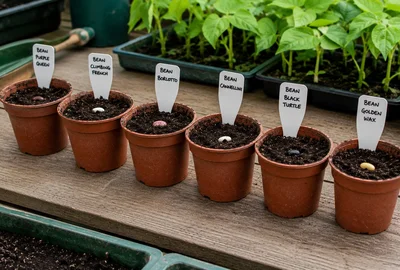
Label and water
Label every pot with variety and date. Water thoroughly and keep consistently moist but not waterlogged. No heat required — a bright windowsill or unheated greenhouse is ideal.
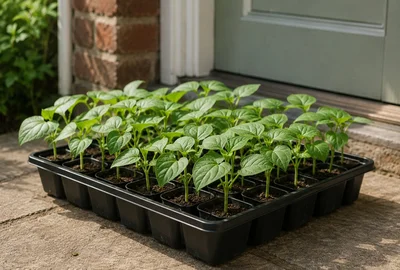
Harden off
Before planting out, harden off indoor-raised plants over 7–10 days — place outside in a sheltered spot during the day and bring back in at night. Do not plant out until all frost risk has passed.
Erect supports
For climbing varieties, put supports in place BEFORE planting — pushing canes into the soil around established plants damages roots. Wigwams, crossed double rows, and netting all work well.
Sow direct
From mid-May, sow direct into prepared soil 5cm deep and 15cm apart. Pre-soak seeds for 12 hours first. Direct-sown beans often overtake indoor-raised plants sown at the same time.
Regional sowing timing| Region | Sow / plant | Harvest | Notes |
|---|
| Scotland & Far North | May–Jun | Aug–Sep | Direct sow from late May; frost risk into early June — indoor start worthwhile · Late May to early June |
|---|
| Northern England | May–Jun | Jul–Sep | Last frost typically mid-May; harden off carefully before planting out · Mid-May to early June |
|---|
| Midlands & Wales | May–Jun | Jul–Sep | Direct sow from mid-May in a sheltered spot · Early to mid-May |
|---|
| Ireland & Isle of Man | May–Jun | Jul–Sep | Direct sow from mid-May in a sheltered spot · Early to mid-May |
|---|
| South & SE England | Apr–Jun | Jul–Sep | Earliest reliable direct sowing in UK · Early May |
|---|
| South Coast & SW | Apr–May | Jul–Sep | Mildest UK region; direct sowing from late April viable · Late April to early May |
|---|
08 Using a Propagator
French beans do not need a heated propagator — they germinate readily at room temperature in May. A simple windowsill in a warm room is all that is needed for indoor sowing. The main advantage of starting indoors is gaining 3–4 weeks on the season and avoiding bean seed fly on germinating seeds.
Heated propagator
Not required for French beans. If using a heated propagator for other crops, beans can be germinated at 15–18°C, but this offers no advantage over a warm windowsill in May.
Unheated propagator
A lidded seed tray on a warm windowsill works well from early May. Seeds germinate in 7–10 days at 15°C+. Remove the lid as soon as seedlings appear to prevent damping off.
09 Soil Requirements
- pH
- 6.0–7.0
- Best
- Sandy loam, Loam
- Tolerates
- Loam
- Avoid
- Heavy clay, Waterlogged, Cold
💡 Light, well-drained soil. Cold heavy clay delays germination and rots seed.
10 Ongoing Care
💧 Watering
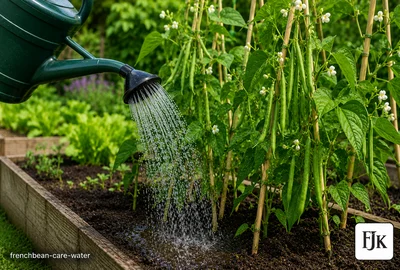
Water regularly once plants are flowering and pods are developing — dry conditions at this stage cause pods to be stringy and seeds to fail to develop properly. Water at the base rather than overhead to reduce the risk of fungal disease. A thorough weekly watering is better than frequent light watering.
🎋 Supporting Climbers
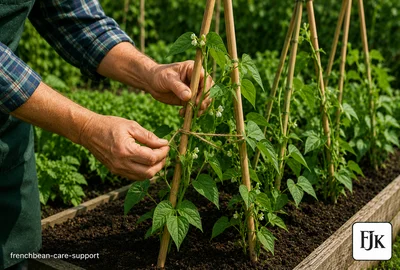
Climbing French beans need canes, netting, or a wigwam of poles at least 1.8m tall. Put supports in place before sowing or immediately after planting out — beans grow fast and can become tangled without early training. Tie in the first shoots to get plants climbing in the right direction.
🫘 Harvesting
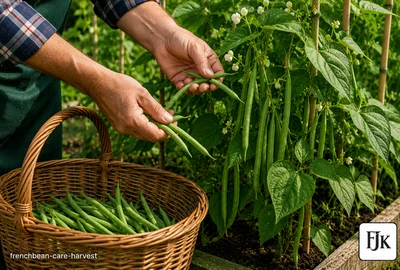
Pick French beans when pods are 10–12cm long and snap cleanly — before the seeds inside swell significantly. Regular picking is essential: pods left to mature signal to the plant to stop producing. Pick every 2–3 days at the peak of the season.
🌿 Feeding
French beans fix their own nitrogen and need relatively little feeding. A general balanced fertiliser applied at planting is usually sufficient. Once pods are forming, a single high-potash liquid feed helps sustain the crop. Avoid high-nitrogen feeds which promote leafy growth at the expense of pods.
11 Watch Out For
WarningBean seed fly is the most damaging pest — larvae eat germinating seeds and young roots before plants emerge. Pre-soak seeds for 12 hours before sowing and raise plants indoors to plant out as established seedlings. Halo blight causes pale-ringed spots on leaves and pods — remove and destroy affected material, never compost. Slugs attack young plants — protect with copper rings, grit, or nematode drench at planting time.
🐛 Insects & pests
- 🐜 Aphids (Blackfly & Greenfly) — Curled, distorted, or stunted growing tips — aphids inject saliva that causes leaf curl to protect them
- 🐌 Slugs & Snails — Silver slime trails on leaves, soil, and pots — often the first sign before damage is found
🍄 Diseases to watch
- 🟠 Rust — Rust diseases are caused by a large family of obligate parasitic fungi, each specific to its host or a narrow range of hosts. Leek rust (Puccinia allii) is the most common in UK vegetable gardens, producing vivid orange pustules on leek leaves in summer and autumn. While rarely fatal, severe infections significantly weaken plants and reduce yields.
- 🩶 Botrytis (Grey Mould) — Botrytis cinerea (grey mould) is the most ubiquitous fungal pathogen in temperate gardens — present in virtually every garden soil and on plant debris. It becomes a disease only when conditions favour it: cool, humid, poorly ventilated environments with damaged or senescent plant tissue. In a greenhouse in autumn it can destroy an entire tomato or grape crop.
- 🌿 Mosaic Virus (TMV / CMV) — Tobacco mosaic virus (TMV) and Cucumber mosaic virus (CMV) are among the most widespread plant viruses affecting vegetable crops worldwide. TMV is extraordinarily stable — it can remain viable on contaminated hands and tools for years, and even survives in processed tobacco. There is no cure; infected plants must be destroyed.
- ⬜ Sclerotinia (White Mould) — Sclerotinia sclerotiorum causes a sudden, dramatic collapse of apparently healthy plants. It produces dense white cotton-wool-like mycelium and large black resting bodies (sclerotia) that persist in soil for up to 10 years. A single severely affected bed can remain a reservoir for re-infection for a decade.
Full identification and treatment advice is in the Pests and Diseases sections.
12 Storage & Preserving
🟩 Fresh Storage
Freshly picked French beans keep for 3–5 days in the fridge. Store unwashed in a paper bag or perforated plastic bag in the salad drawer. For best flavour and texture, eat on the day of picking. Young beans at 10–12cm are significantly better than older ones — once seeds swell visibly in the pod, flavour and tenderness decline quickly.
❄️ Blanch & Freeze
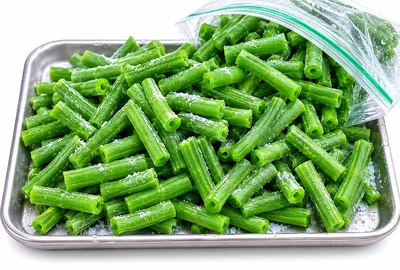
French beans freeze excellently. Top and tail, then blanch in boiling water for 2–3 minutes. Plunge immediately into iced water to halt cooking. Drain thoroughly and freeze in a single layer before bagging. Use within 12 months. Frozen French beans are best used in cooked dishes — stir-fries, curries, soups, pasta. They retain good texture and flavour after freezing, better than most vegetables.
🫙 Pickled Beans
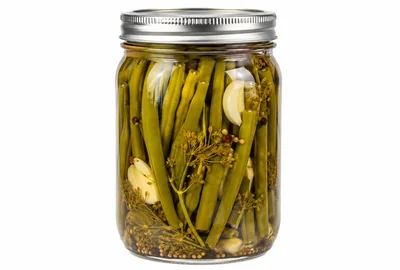
French beans pickle beautifully, and purple varieties make spectacular purple pickles. Excellent served alongside cold meats, strong cheese, and charcuterie. Follow a tested recipe.
🍲 Cooking a Glut
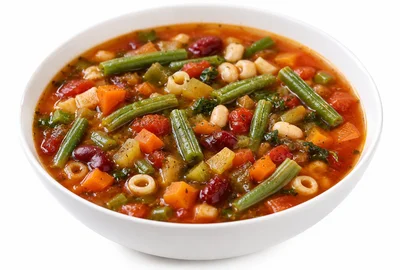
A French bean glut is best managed with daily picking — never let beans mature on the plant. For surplus beans: add to minestrone, pasta dishes, and stir-fries; sauté with garlic, lemon, and toasted almonds; or make a Provençal niçoise-style salad with hard-boiled eggs, tuna, and olives. The borlotti and heritage varieties are excellent dried — leave pods on the plant until papery and dry, shell, and store in airtight jars for winter soups and cassoulets.
13 Expert Tips
💡 Pre-soaking French bean seeds for 12
Pre-soaking French bean seeds for 12 hours in warm water significantly speeds germination and dramatically reduces bean seed fly damage. The seed swells visibly and the root tip is often already emerging before sowing. This one step is the most effective pest prevention available.
💡 Sow in blocks rather than rows
Sow in blocks rather than rows for dwarf varieties — the plants benefit from being close enough together to assist cross-pollination. A block of 16 plants in a 60cm × 60cm square outperforms a single row of the same number.
💡 Climbing French beans are more drought-tolerant
Climbing French beans are more drought-tolerant than runner beans and less prone to flower drop in hot weather. However, consistent watering during pod fill dramatically improves pod quality — drought at this stage produces tough, stringy pods regardless of how good conditions were earlier.
💡 Borlotti and heritage varieties grown for
Borlotti and heritage varieties grown for drying should be left on the plant until pods are completely papery and dry. Cut the whole plant and hang upside down in a dry shed if autumn weather is wet. Shell when fully dry and store in airtight jars.
14 Common Mistakes
⚠ Sowing
- Planting out before the last frost — a single frost kills French bean plants outright
- Sowing into cold wet soil below 12°C — seeds rot rather than germinate
- Not erecting supports before planting climbing varieties — damages roots
- Ignoring bean seed fly — sowing without pre-soaking in gardens with a history of the pest leads to poor stands
⚠ Ongoing Care
- Not picking frequently enough — mature pods on the plant stop further flowering immediately
- Picking pods too old — once seeds swell visibly, flavour and tenderness decline significantly
- Growing climbing varieties in containers — they need open ground or very large deep containers
- Composting diseased material — halo blight survives composting; always bin or burn infected plants