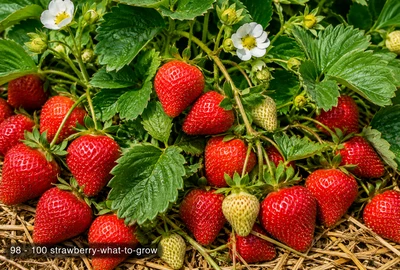
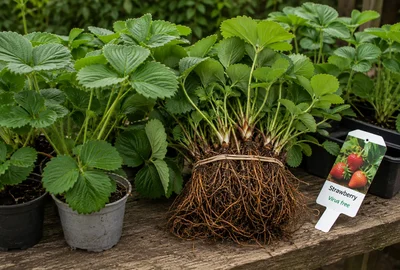
Plant bare-root runners November–March or pot-grown plants April–May — runners establish faster and are cheaper
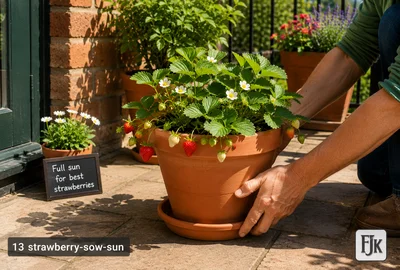
Choose a sunny, well-drained spot; strawberries in shade produce poor fruit and more disease
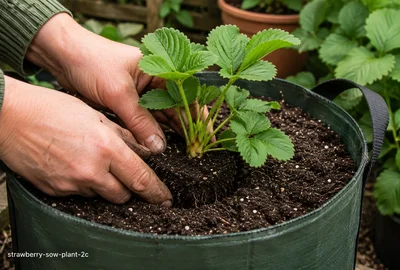
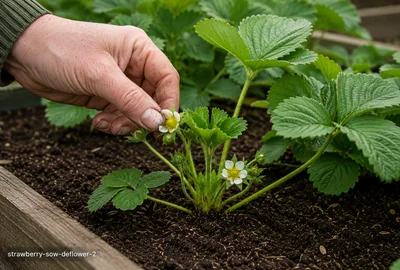
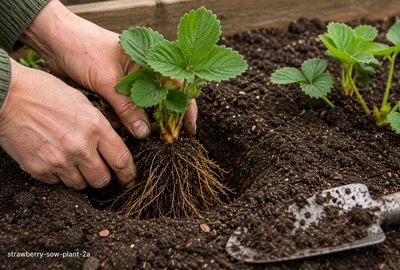
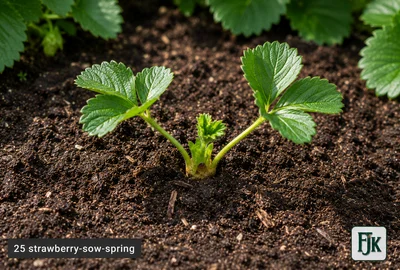
Plant so the crown sits at soil level — too deep rots the crown, too high dries it out
Remove all flowers in the first year to build root strength — harvest begins year two
Replace plants every 3–4 years using your own runners to keep the bed productive
🌱 SowPlant runners Aug–Sep or crowns Mar–Apr
🌾 HarvestJun–Oct (variety dependent)
☀ PositionFull sun
📐 Spacing30–45cm
DifficultyEasy
⚡ Quick facts
Sow
Plant runners Aug–Sep or buy crowns Mar–Apr
Plant
Aug–Sep (runners) / Mar–Apr (crowns)
Harvest
Jun–Sep (summer) / Jun–Oct (perpetual)
Position
Full sun — 6+ hours daily
Spacing
30–45cm in rows 75cm apart
Height
20–30cm
Hardiness
Hardy (crowns survive frost; protect flowers from late frost)
Lifespan
3–4 years per plant — replace from own runners
Difficulty
Easy
01 About
The most popular fruit in the UK kitchen garden. Strawberries deliver a better flavour from your own garden than anything sold in a supermarket — the sugars begin converting to starch within hours of picking. Plant once and propagate from runners indefinitely. Every garden, balcony, and windowsill can grow them.
02 Varieties
The number of varieties shown for each crop is based on UK consumption data (2025/26) — the more popular the crop, the more variety choices we include.
Early Season (May–Jun)
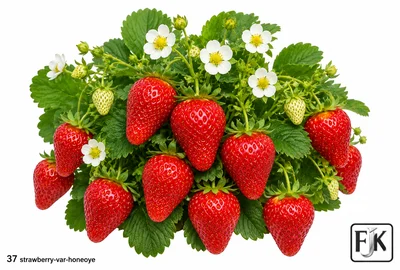
Honeoye
Early · Summer-fruiting
One of the earliest summer strawberries. Large, wedge-shaped, glossy red fruit with a classic sweet-sharp flavour. Heavy-cropping and reliable. Good choice for forcing under cloches for the earliest possible harvest.
Harvest
May–Jun
Flavour
Sweet, classic, slightly sharp
Fruit size
Large
Yield
High
Disease resistance
Medium
Form
Crown
🏅 AGM
✓ Self-fertile
🪴 Container
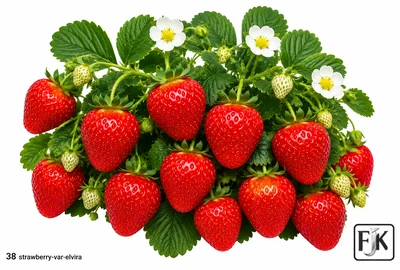
Elvira
Early · Summer-fruiting
Very early, reliable, and productive. Excellent flavour for an early variety. Large, bright red fruits. Good disease resistance for an early type. Popular with commercial growers as well as home gardeners.
Harvest
May–Jun
Flavour
Sweet, mild, aromatic
Fruit size
Large
Yield
High
Disease resistance
Medium
Form
Crown
✓ Self-fertile
🪴 Container
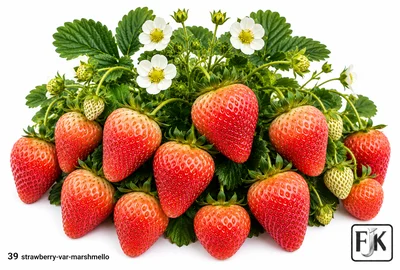
Marshmello
Early–Mid · Summer-fruiting
Outstanding flavour — widely considered one of the sweetest strawberries available. Large, pale red fruit with an unmistakable honeyed sweetness. High disease resistance. One of the best all-round choices for UK gardens.
Harvest
Jun
Flavour
Exceptionally sweet, honeyed
Fruit size
Large
Yield
High
Disease resistance
High
Form
Crown
✓ Self-fertile
🪴 Container
Mid Season (Jun–Jul)
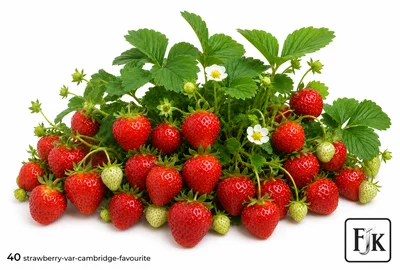
Cambridge Favourite
Mid · Summer-fruiting
The classic British garden strawberry — grown since the 1940s and still exceptional. Reliable, prolific, and flavourful. Medium-sized, round, glossy red fruit with perfect classic strawberry flavour. AGM. Exceptionally reliable in all UK conditions.
Harvest
Jun–Jul
Flavour
Classic, sweet, well-balanced
Fruit size
Medium
Yield
Very high
Disease resistance
Medium
Form
Crown
🏅 AGM
✓ Self-fertile
🪴 Container
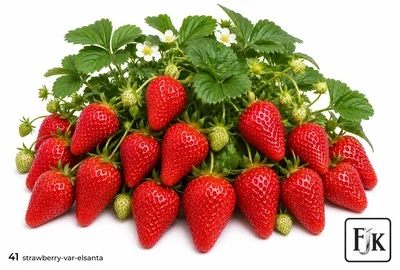
Elsanta
Mid · Summer-fruiting
The most widely grown commercial strawberry in Europe. Large, firm, glossy red conical fruit. Very sweet with good shelf life. Susceptible to Phytophthora root rot in wet conditions. Best in well-drained beds. The benchmark mid-season variety.
Harvest
Jun–Jul
Flavour
Sweet, firm, supermarket-style
Fruit size
Large
Yield
Very high
Disease resistance
Low
Form
Crown
✓ Self-fertile
🪴 Container
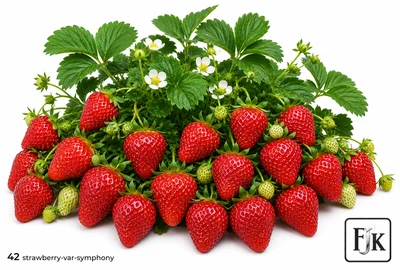
Symphony
Mid–Late · Summer-fruiting
Bred in Scotland. Outstanding disease resistance combined with excellent flavour. Large, uniform, bright red fruit with rich taste. Performs particularly well in Scotland and northern England. AGM. One of the best all-round choices.
Harvest
Jun–Jul
Flavour
Rich, sweet, aromatic
Fruit size
Large
Yield
High
Disease resistance
High
Form
Crown
🏅 AGM
✓ Self-fertile
🪴 Container
Late Season (Jul–Aug)
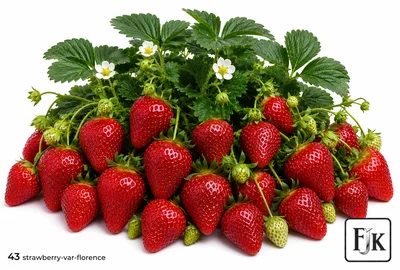
Florence
Late · Summer-fruiting
The finest late summer strawberry for UK conditions. Crops when other varieties have finished. Large, firm, dark red fruits with outstanding flavour. Excellent disease resistance including to crown rot. AGM. Extends the season by 3–4 weeks beyond mid-season varieties.
Harvest
Jul–Aug
Flavour
Sweet, excellent, classic
Fruit size
Large
Yield
High
Disease resistance
High
Form
Crown
🏅 AGM
✓ Self-fertile
🪴 Container
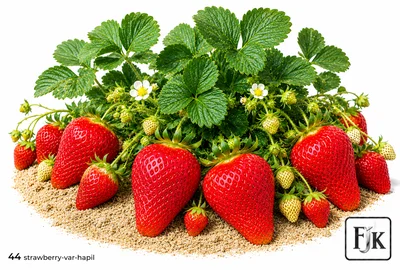
Hapil
Late · Summer-fruiting
Produces very large, attractive fruits over a relatively long period. Excellent for sandy or free-draining soils where it performs particularly well. Very sweet with firm flesh. Good commercial and garden performer. One of the highest-yielding late varieties.
Harvest
Jul
Flavour
Sweet, firm, good flavour
Fruit size
Very large
Yield
Very high
Disease resistance
Medium
Form
Crown
🏅 AGM
✓ Self-fertile
🪴 Container
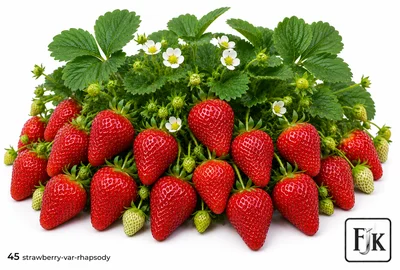
Rhapsody
Late · Summer-fruiting
Outstanding late variety with superb flavour and excellent disease resistance. Bright red, firm, large fruits. Performs well in all soil types. Bred in Kent. AGM. Highly recommended for gardeners who want a late crop of quality fruit.
Harvest
Jul–Aug
Flavour
Sweet, aromatic, excellent
Fruit size
Large
Yield
High
Disease resistance
High
Form
Crown
🏅 AGM
✓ Self-fertile
🪴 Container
Perpetual / Everbearing (Jun–Oct)
Mara des Bois
Perpetual · Everbearing
The finest perpetual strawberry for flavour. French variety with an unmistakable wild-strawberry (fraise des bois) intensity in a larger fruit. Produces from June right through to October frosts. Exceptional in pots and baskets. Smaller yield than summer types but incomparable flavour.
Harvest
Jun–Oct
Flavour
Intense, wild-strawberry, aromatic
Fruit size
Small–Medium
Yield
Medium
Disease resistance
Medium
Form
Crown
✓ Self-fertile
🪴 Container
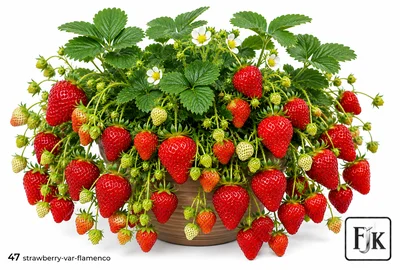
Flamenco
Perpetual · Everbearing
The most reliable and heavy-cropping perpetual variety. Large, bright red fruits from June to October. Good disease resistance. Excellent for both garden beds and containers. The best choice for gardeners who want a long-season heavy cropping perpetual.
Harvest
Jun–Oct
Flavour
Sweet, good, consistent
Fruit size
Large
Yield
High
Disease resistance
High
Form
Crown
✓ Self-fertile
🪴 Container
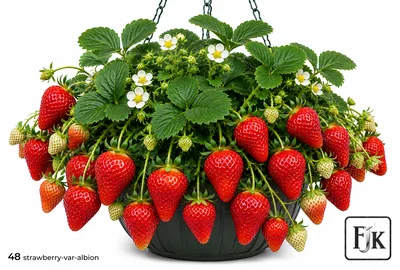
Albion
Perpetual · Everbearing
Premium Californian perpetual variety that has become popular in UK gardens. Large, conical, very sweet fruits over a very long season. Excellent disease resistance. Firm flesh holds well after picking. Outstanding in containers and hanging baskets.
Harvest
Jun–Oct
Flavour
Very sweet, firm, excellent
Fruit size
Large
Yield
High
Disease resistance
High
Form
Crown
✓ Self-fertile
🪴 Container
Alpine & Wild Strawberries
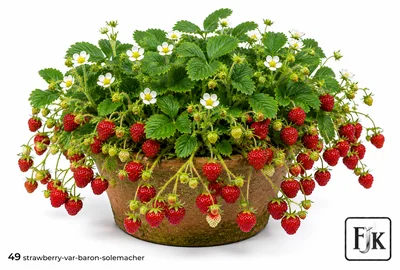
Baron Solemacher
Alpine · Wild-type
The classic Alpine (fraises des bois) strawberry. Tiny, intensely flavoured red fruits over a very long season. No runners — stays where planted. Thrives in partial shade where other strawberries fail. Ideal for edging paths and woodland gardens. Self-seeds freely.
Harvest
Jun–Sep
Flavour
Intense, wild, aromatic
Fruit size
Very small
Yield
Medium
Disease resistance
High
Form
Crown
✓ Self-fertile
🪴 Container
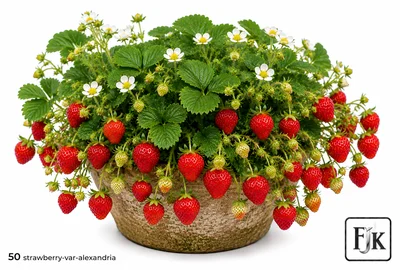
Alexandria
Alpine · Wild-type
One of the best Alpine strawberries for flavour. Slightly larger fruits than Baron Solemacher. No runners. Grows well in part-shade. Exceptional flavour punch in a tiny fruit. Easily grown from seed as well as crowns.
Harvest
Jun–Sep
Flavour
Very intense, sweet, complex
Fruit size
Very small
Yield
Medium
Disease resistance
High
Form
Crown
✓ Self-fertile
🪴 Container
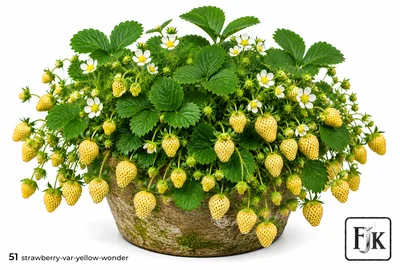
Yellow Wonder
Alpine · White-fruited
White/yellow-fruited Alpine strawberry with an extraordinary pineapple-vanilla flavour. Invisible to birds (who associate red with ripe). Conversation piece and genuine culinary curiosity. No runners. Part-shade tolerant. Grows easily from seed.
Harvest
Jun–Sep
Flavour
Pineapple-sweet, unusual, delicate
Fruit size
Very small
Yield
Medium
Disease resistance
High
Form
Crown
✓ Self-fertile
🪴 Container
03 Planting Options
🌿 In a Garden Bed or Raised Bed
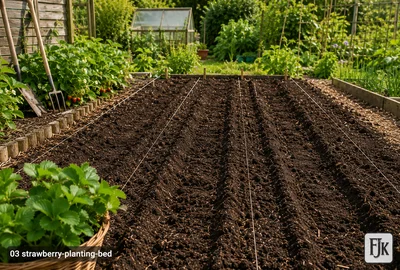
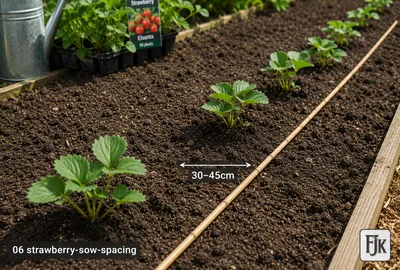
Plant in a sunny, well-drained bed enriched with compost. Space plants 30–45cm apart in rows 75cm apart, crown at soil level. Mulch with straw once plants establish. Beds remain productive for 3–4 years — replace with runners from your own plants.
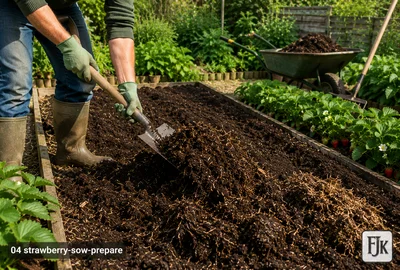
Prepare the bed
Dig in plenty of well-rotted compost or manure 4–6 weeks before planting. Strawberries are hungry feeders. Avoid ground where potatoes, tomatoes, or other strawberries have grown in the last 3 years — soil-borne diseases persist.
Plant at the right depth
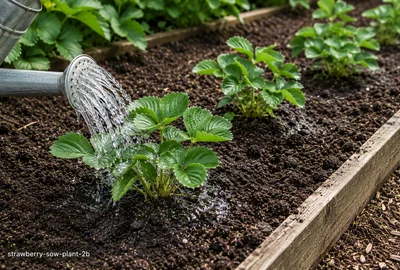
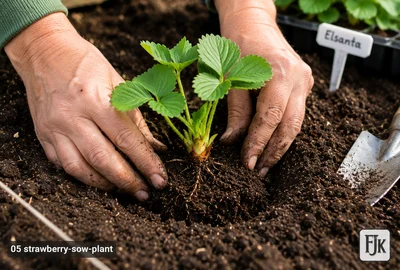
The crown (the knobby growing point at the centre) must sit exactly at soil level. Too deep causes crown rot; too shallow exposes roots to drying. Spread the roots out in the planting hole and firm soil well around them.
Space correctly
Plant 30–45cm apart in rows 75cm apart. Closer spacing increases yield short-term but reduces airflow and increases disease. Rows running north–south maximise sun exposure to all plants.
Water in and mulch
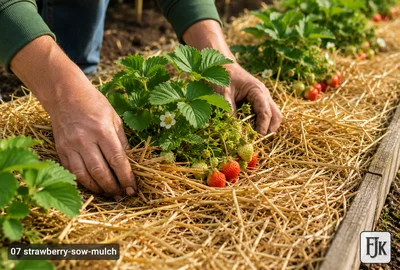
Water thoroughly after planting. Apply a mulch of straw, landscape fabric, or black polythene between rows to suppress weeds, retain moisture, and keep fruit clean later in the season.
Remove first-year flowers
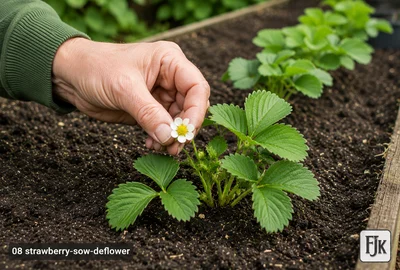
In the planting year, remove all flowers as they appear. This redirects energy into root and crown development, producing a much stronger plant that crops heavily the following year.
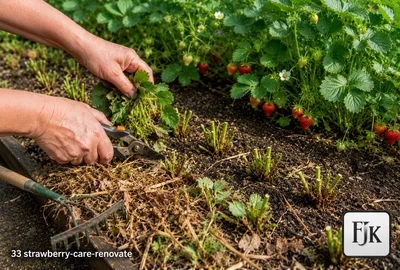
Renovation after harvest
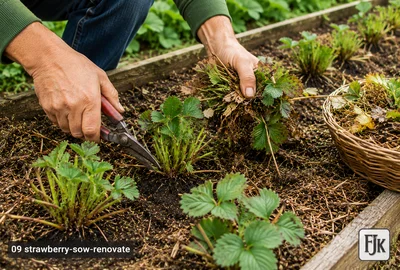
Once fruiting ends, cut all foliage back to 10cm above the crown. Remove old straw and debris. This removes overwintering pests and diseases and encourages strong new growth before winter.
🪴 In Containers, Baskets & Grow Bags
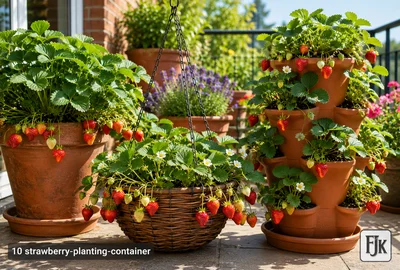
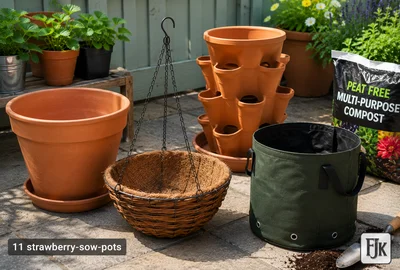
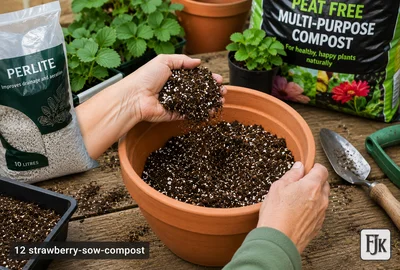
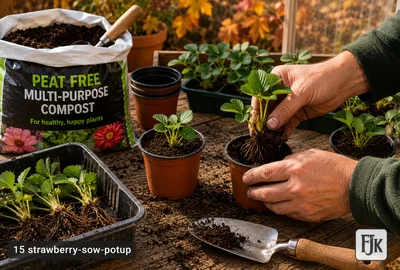
Strawberries thrive in terracotta pots, hanging baskets, grow bags, and strawberry towers. Use peat-free compost mixed with 20% perlite. Position in full sun. Feed weekly with high-potash liquid feed once flowering begins. Water daily in warm weather.
Choose the right container
Strawberries thrive in terracotta pots (30cm+), hanging baskets, strawberry towers, grow bags, or window boxes. Any container with good drainage works — waterlogged roots are fatal. Ensure at least 6–8 drainage holes.
Use the right compost
Fill with peat-free multi-purpose compost mixed with 20% perlite or horticultural grit for drainage. Add slow-release granular fertiliser at sowing. Don't use garden soil — it compacts in containers and harbours disease.
Plant at correct depth
As for bed planting — crown at soil level. In strawberry towers, work from the bottom up. Fill compost in stages as you plant each level, firming gently to avoid air pockets around roots.
Position in full sun
Containers can be moved to maximise sun exposure. Aim for 6+ hours of direct sun daily. Move under cover if a late frost threatens once flowers appear — container plants are more vulnerable than ground-planted ones.
Water daily in summer
Container strawberries dry out fast — check daily in warm weather. Water at the base to avoid wetting fruit. A self-watering container or reservoir pot makes a significant difference in summer.
Feed weekly once flowering
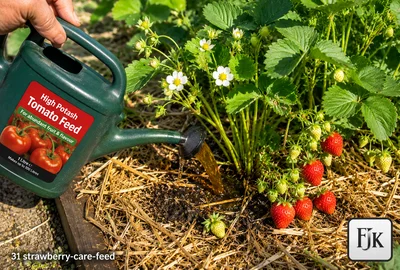
From first flower to last fruit, feed weekly with a high-potash liquid feed (tomato feed is ideal). Containers exhaust nutrients quickly — feeding is not optional.
🏠 Under Cover (Earlier Crop)
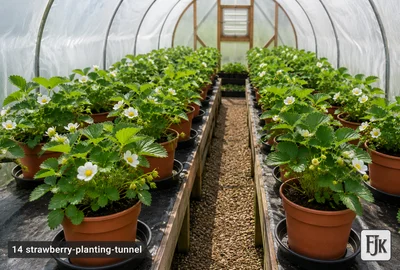
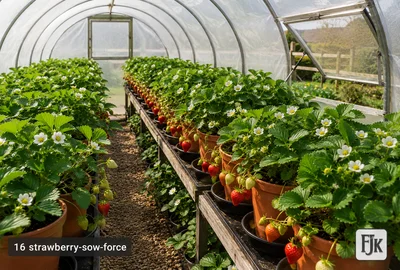
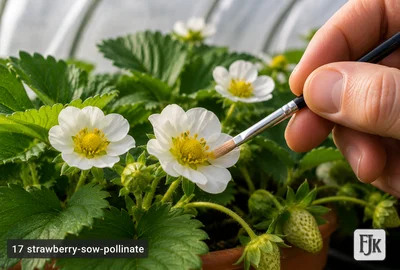
Pot crowns in autumn and leave outside to vernalise before bringing into the tunnel in January–February. Ventilate well to prevent Botrytis. Hand-pollinate flowers with a soft brush. Expect harvest 4–6 weeks ahead of outdoor crops.
Pot up crowns in autumn
Pot established crowns into 15cm pots in September–October and leave outside to experience the cold — strawberries need a cold period (vernalisation) to flower well. Bring into the tunnel in January–February.
Force under cover
Once under cover in January–February, temperatures rise and growth accelerates. Ventilate well on warm days — good airflow is essential to prevent Botrytis (grey mould), which devastates crops in humid conditions.
Hand pollinate
Early in the season, few pollinators are active. Use a small soft paintbrush or your fingertip to transfer pollen between flowers, working across all open flowers daily for 7–10 days.
Watch for pests
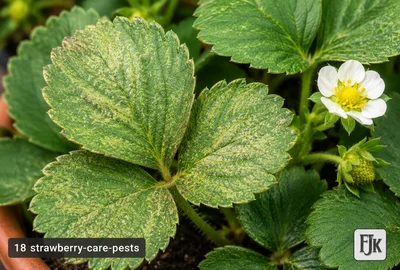
Red spider mite thrives in warm, dry tunnel conditions — the first sign is pale mottling on leaves. Introduce predatory mite Phytoseiulus persimilis as soon as temperatures allow. Aphids also build up quickly — inspect weekly.
Harvest 4–6 weeks early
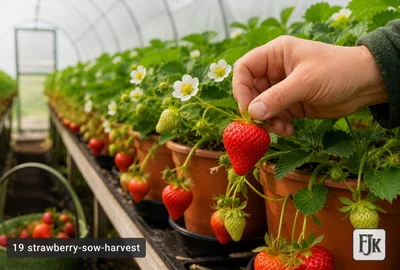
Tunnel-grown strawberries typically crop 4–6 weeks before outdoor plants. Pick when fully red all over and the stalk separates cleanly. Pick every day — fruit left on the plant deteriorates rapidly under cover.
04 Companion Planting
✅ Grow nearby
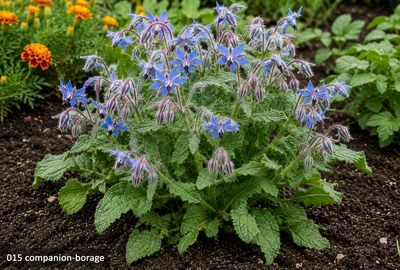
🌿 Borage
Borage attracts pollinators that improve strawberry fruit set, and is said to boost flavour.
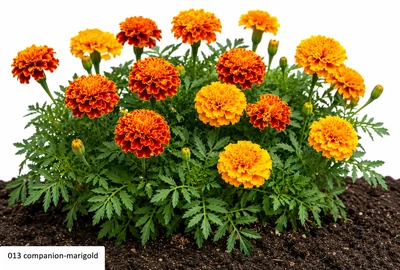
🌸 Marigold
Marigolds are thought to deter nematodes and aphids from the strawberry bed.
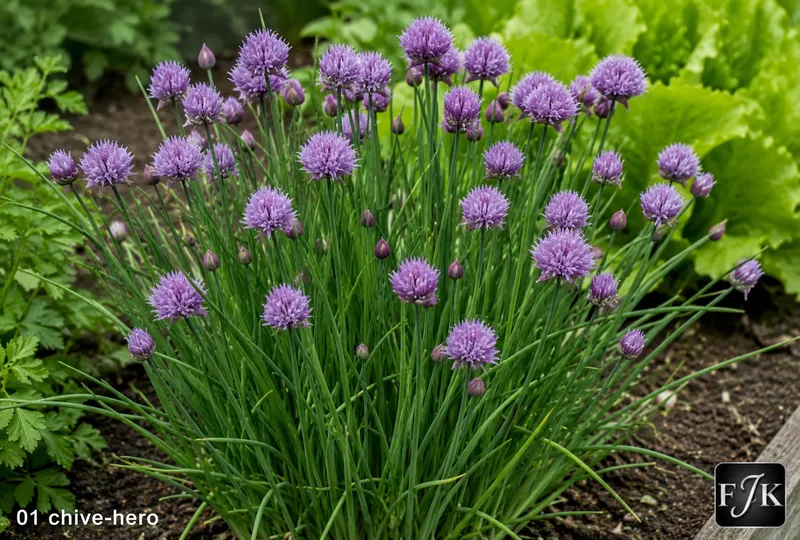
Chives' scent is thought to deter aphids without competing for space in the strawberry bed.
❌ Keep apart
🌿 Fennel — Fennel's allelopathic root secretions stunt the growth of strawberries planted nearby.
🥦 Brassicas — Brassicas are heavy feeders that compete strongly with strawberries for soil nutrients.
05 Sowing — How To
🌿 From Runners (Own Plants)
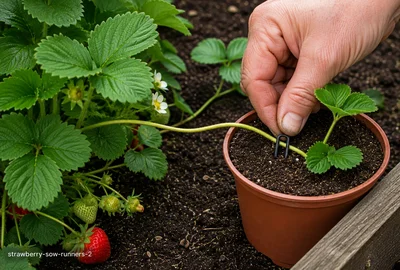
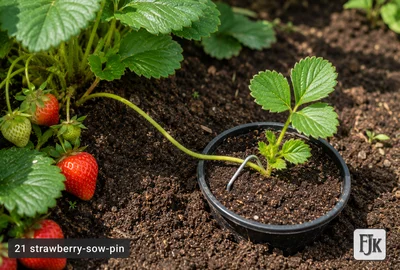
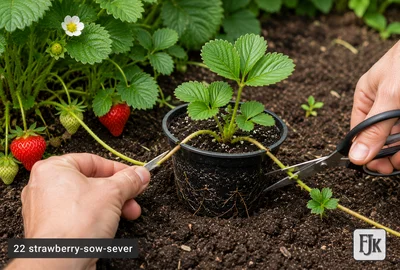
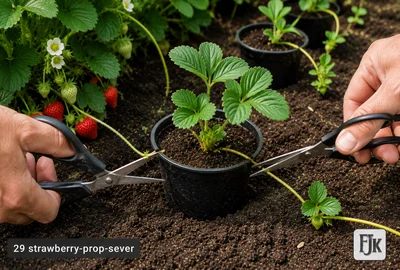
After fruiting, pin the first plantlet on each healthy runner into a 9cm pot of compost sunk into the ground. Sever from the parent once well-rooted (4–6 weeks). Plant out in August–September for strong crops the following year. Free propagation from your own plants.
Identify strong runners
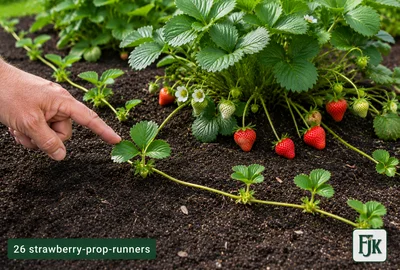
After fruiting, strawberry plants send out long arching stems (runners) with plantlets at intervals. Select runners from healthy, virus-free plants. Use only the first plantlet on each runner — subsequent ones are weaker.
Pin into pots
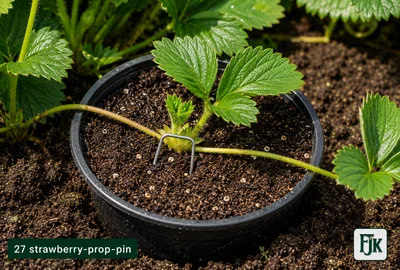
Pin the plantlet into a 9cm pot of compost sunk into the ground beside the parent plant — use a bent wire or hairpin. The plantlet will root into the pot within 4–6 weeks while still attached to the parent plant.
Sever the runner
Once well rooted (test by gently tugging — there should be resistance), cut the runner cleanly at both sides of the plantlet. Leave the rooted plant in its pot for 2 more weeks before planting out.
Plant out Aug–Sep
Plant rooted runners into prepared beds in August or September. This is the best planting time — roots establish in warm soil before winter and plants crop strongly the following June.
Remove flowers in year one
Remove all flowers in the first summer after planting. It feels wrong but produces a dramatically stronger plant and a much better crop in year two.
From Runners (Own Plants) — regional timing
Region
Sow / plant
Harvest
Notes
Scotland & Far North
Aug–Sep
Jun–Aug
Northern England
Aug–Sep
Jun–Sep
Midlands & Wales
Aug–Sep
Jun–Sep
Ireland & Isle of Man
Aug–Sep
Jun–Sep
South & SE England
Aug–Sep
Jun–Sep
South Coast & SW
Aug–Sep
Jun–Oct
🌱 From Bought Crowns or Plants
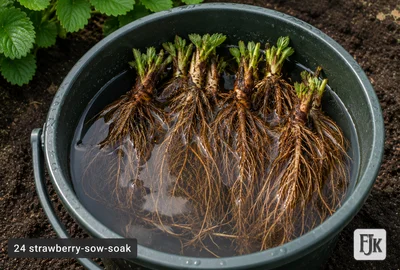
Always buy certified virus-free crowns. Soak bare roots in water for 30 minutes before planting. Spring-planted crowns (March–April) will produce some fruit in their first summer. Remove a proportion of early flowers to strengthen the crown.
Buy certified stock
Always buy strawberry plants from a certified virus-free source — strawberries accumulate viruses over time that drastically reduce yield. Certified runners or cold-stored crowns give clean, vigorous plants. Avoid using plants from unknown garden sources.
Soak roots before planting
If planting bare-root crowns, soak roots in water for 30 minutes before planting. This rehydrates dried roots and significantly improves establishment. Do not soak for longer than an hour.
Plant at correct depth
Crown at soil level — neither buried nor proud. Spread roots in the planting hole. Firm well and water in. Mark the row clearly — the crown may not be visible until new growth appears.
Spring-planted crowns
March–April crowns will produce some fruit in their first summer. Remove a proportion of early flowers to strengthen the crown, but light cropping in year one is acceptable.
From Bought Crowns or Plants — regional timing
Region
Sow / plant
Harvest
Notes
Scotland & Far North
Mar–May
Jun–Aug
Northern England
Mar–May
Jun–Sep
Midlands & Wales
Mar–May
Jun–Sep
Ireland & Isle of Man
Mar–May
Jun–Sep
South & SE England
Mar–May
Jun–Sep
South Coast & SW
Mar–May
Jun–Oct
06 Using a Propagator
Strawberries do not require a propagator and are not grown from seed in normal garden practice. They are propagated from runners (the most reliable method) or planted as bought crowns. A propagator may be used to root runners more quickly early in the season, but is entirely optional.
Heated propagator
Not Required — Strawberries propagate easily from runners at ambient temperature. A propagator speeds things up marginally in cool conditions but offers no significant advantage over the standard runner-pegging method.
Select the best runners
After fruiting, identify the healthiest plants in your bed. Choose only the first plantlet on each runner from plants showing strong growth, large fruit, and no signs of virus (puckered, distorted, or yellowed leaves). Discard runners from infected plants entirely.
Pin into compost
Fill 9cm pots with moist multi-purpose compost. Sink the pots into the ground or position beside the parent plant. Pin the runner plantlet onto the compost surface using a bent wire. The roots will find the compost and establish within 4–6 weeks.
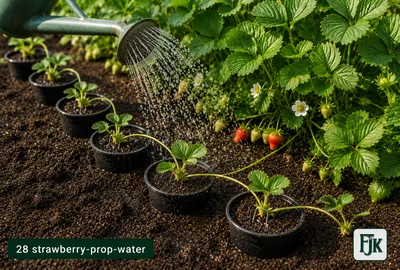
Keep moist
Water the pots regularly — they dry out quickly in summer. The plantlet is still drawing some resources from the parent via the runner but benefits from its own moisture supply.
Sever and grow on
After 4–6 weeks, cut the runner on both sides of the pot. Leave for 2 more weeks to become fully independent. The plants are now ready to plant out into a prepared bed.
07 Soil Requirements
pH
5.5–6.5
Best
Sandy loam, Loam
Tolerates
Clay loam
Avoid
Waterlogged, Heavy clay, Chalky
💡 Slightly acid, well-drained, fertile soil. Raised beds ideal on heavy clay.
08 Ongoing Care
💧 Watering
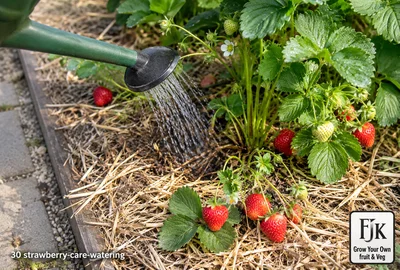
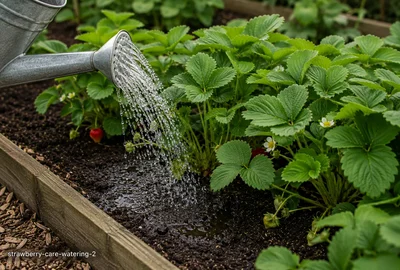
Water consistently from flowering through to the end of harvest — irregular watering causes misshapen fruit and reduces sweetness. Always water at the base, never overhead; wet foliage and wet fruit invite Botrytis (grey mould), which can destroy an entire crop within 48 hours in humid conditions. In dry spells, water every 2–3 days. Once fruit starts colouring, reduce watering slightly — this concentrates sugars. Container plants need daily checking in summer.
🌱 Feeding
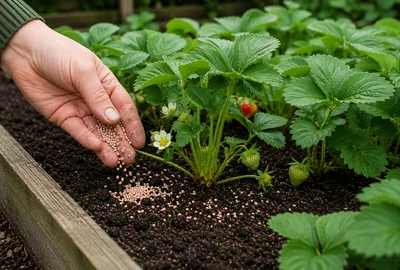
Feed with a balanced general fertiliser in early spring as growth begins. Once flowers appear, switch to a high-potash feed (tomato fertiliser) applied weekly until the last fruit is picked. High potash promotes flowering, fruiting, and disease resistance. Do not feed with a high-nitrogen fertiliser in summer — this produces lush leaves and poor, watery fruit. In autumn after renovation, a final balanced feed supports crown development before winter.
🍓 Protecting Fruit
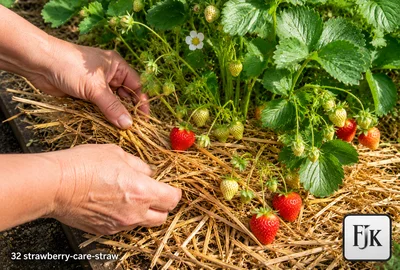
Once fruits begin swelling, tuck straw, landscape fabric, or strawberry mats under the developing trusses. This keeps fruit off damp soil, prevents slug damage, and significantly reduces Botrytis. Bird netting supported on hoops is essential once the first fruit begins to colour — birds will strip a row bare in a single day. Keep netting taut and securely pegged at the edges; a loose net causes more harm than no net as birds become trapped.
✂️ Renovation & Replacement
After the last fruit, cut all foliage back to 10cm above the crown using shears or scissors. Remove and dispose of all old straw, debris, and the cut foliage — do not compost, as this harbours pests and disease. This renovation removes overwintering spider mites, aphid eggs, and Botrytis spores, dramatically improving health the following year. Replace beds every 3–4 years using your own rooted runners — plants older than 4 years yield progressively less and accumulate virus.
09 Watch Out For
Warning
Botrytis (grey mould) is the most destructive strawberry disease — fluffy grey mould on fruit that spreads rapidly in humid conditions. Remove affected fruit immediately and improve airflow. Vine weevil grubs eat roots from below causing sudden plant collapse in late summer — treat with nematodes (Steinernema kraussei) in late August. Powdery mildew on leaves indicates dry roots combined with humid air — improve watering consistency.
🐛 Insects & pests
🪲 Vine Weevil — Irregular, rounded notches cut from leaf margins — the work of adult beetles feeding at night
🐌 Slugs & Snails — Silver slime trails on leaves, soil, and pots — often the first sign before damage is found
🐜 Aphids (Blackfly & Greenfly) — Curled, distorted, or stunted growing tips — aphids inject saliva that causes leaf curl to protect them
🕷 Spider Mite — Fine, silky webbing on the underside of leaves and between growing tips — the definitive identification sign
🍄 Diseases to watch
🩶 Botrytis (Grey Mould) — Botrytis cinerea (grey mould) is the most ubiquitous fungal pathogen in temperate gardens — present in virtually every garden soil and on plant debris. It becomes a disease only when conditions favour it: cool, humid, poorly ventilated environments with damaged or senescent plant tissue. In a greenhouse in autumn it can destroy an entire tomato or grape crop.
🟣 Violet Root Rot — Violet root rot (Helicobasidium purpureum) is a soil-borne fungal disease causing a distinctive purple-violet feltlike coating on roots and crowns. It can devastate asparagus beds and severely damage root vegetable crops. Asparagus is particularly vulnerable as it cannot be rotated — an infected bed must be abandoned.
Full identification and treatment advice is in the Pests and Diseases sections.
10 Storage & Preserving
🍓 Fresh (Best Use)
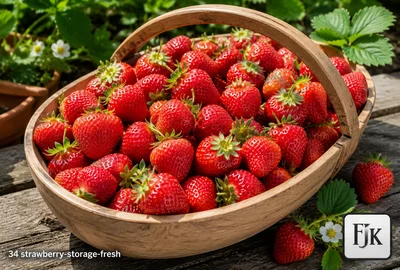
Homegrown strawberries are at their absolute peak within 30 minutes of picking. The flavour compounds that distinguish a garden strawberry from a supermarket one are volatile and begin degrading immediately after harvest. Pick in the cool of the morning. If not eating immediately, refrigerate unwashed in a single layer and consume within 24–48 hours. Never wash until immediately before eating — washing accelerates deterioration rapidly.
❄️ Frozen
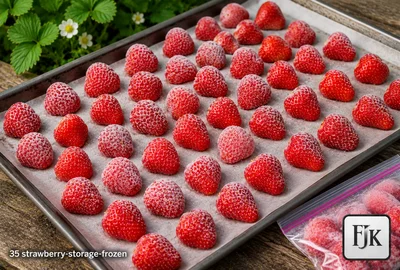
Freeze surplus strawberries whole on a tray in a single layer until solid, then transfer to bags. Frozen strawberries lose their texture completely on thawing but are excellent for smoothies, coulis, jam, and baking. Hull before freezing. Use within 12 months for best flavour. Frozen then puréed strawberries make a superior sorbet with far better flavour than shop-bought — add a little lemon juice and icing sugar to taste.
🫙 Jam & Preserves
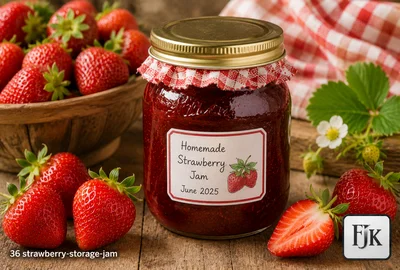
Strawberry jam is one of the most rewarding preserves — an abundant summer crop becomes a year-round kitchen staple. Small-batch jam using very ripe fruit gives the finest flavour. Follow a tested recipe. Strawberry coulis (purée + sugar + lemon juice, no pectin) freezes beautifully and keeps in the fridge for a week.
11 Expert Tips
💡 Pick in the Morning
Strawberries picked in afternoon heat deteriorate within hours. Pick in the morning when fruits are cool and eat within the hour for the full garden strawberry experience.
💡 Mix Early, Mid & Late Varieties
Plant a mix of early, mid, and late-season varieties rather than one variety only — this spreads harvest over 6–8 weeks and reduces the risk of losing the entire crop to a single late frost or disease outbreak.
💡 Add Perpetual Varieties
Perpetual (everbearing) varieties produce lighter yields than summer types but keep fruiting until October. Plant a row alongside summer varieties for a true season-long supply.