⚡ Quick facts
- Difficulty
- Easy
- Crop type
- Bulb — Hardy Perennial grown as Annual
- Position
- Full Sun
- Soil
- Well Drained, Fertile, Firm
- Container friendly
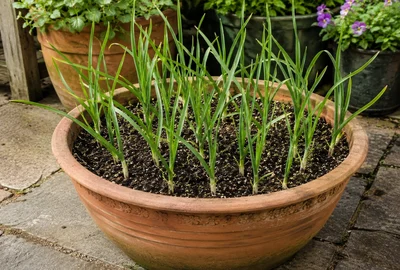
- Yes — deep pots and troughs
- Greenhouse recommended
- No
- Outdoor suitable
- Yes — all UK regions
- Frost hardy
- Yes — fully hardy once established
01 About
Garlic is one of the most rewarding and lowest-effort crops in the kitchen garden. Plant in autumn, leave through winter, harvest in summer — the cold period is essential for proper bulb development. A single bulb splits into cloves, each clove becomes a new full bulb: the mathematics are extraordinary. Homegrown garlic has a depth of flavour completely unlike anything available in supermarkets, and the Isle of Wight Wight varieties represent the finest UK-grown certified seed garlic available.
02 What to Grow
Garlic divides into two main types: softneck and hardneck. Softneck varieties are the most widely grown in the UK — they produce tight, multi-cloved bulbs with a long central soft neck that can be plaited, and they store for up to a year. Hardneck varieties produce a woody central stem (the scape) and fewer, larger cloves arranged in a single ring — they have richer, more complex flavour but shorter storage life of 4–6 months. Elephant garlic is not true garlic but a close relative of the leek, producing enormous mild cloves with a gentle flavour.
03 Varieties
The number of varieties shown for each crop is based on UK consumption data (2025/26) — the more popular the crop, the more variety choices we include.
🧄 Softneck Varieties
The most widely grown type in the UK. Tight, multi-layered bulbs with numerous cloves and a flexible central neck that can be plaited for storage. Long shelf life — up to 12 months.
Solent Wight
Softneck · English
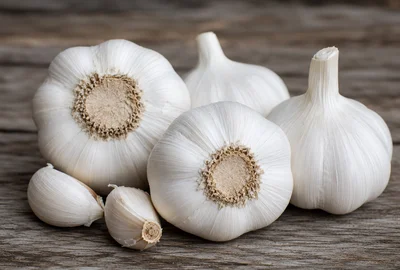
The finest English softneck garlic and the benchmark Isle of Wight variety. Large creamy white bulbs with excellent flavour and outstanding storage — keeps reliably for 10–12 months when properly cured. AGM holder and the most popular softneck in UK kitchen gardens.
- AGM
- ⭐ Flavour
- Long Storage
- Outdoors
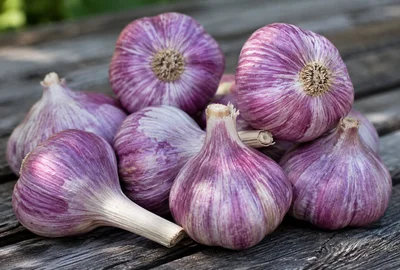
Germidour
Softneck · French
A classic French softneck with attractive rosy-pink tinged skin and a pleasant rounded flavour. Extremely reliable in UK conditions. Good storage life of 6–8 months.
- AGM
- Softneck
- Outdoors
- ⭐ Flavour
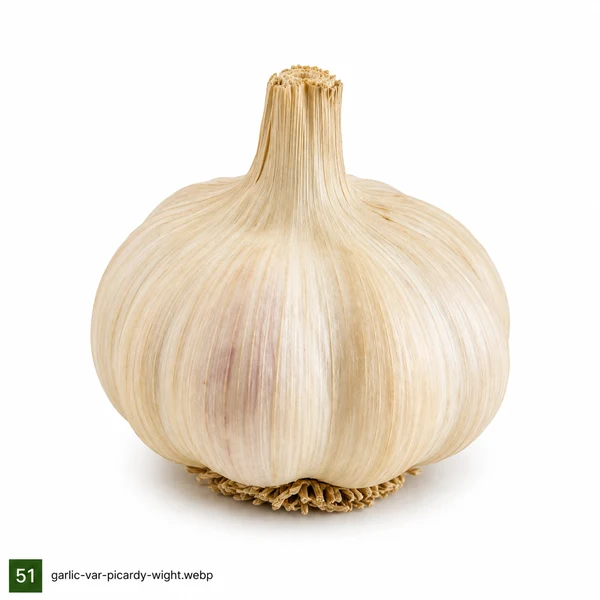
Picardy Wight
Softneck · English
An early-season Isle of Wight softneck that matures before most other types. Pale straw-coloured skin, compact bulbs, and mild clean flavour. Keeps for 6–8 months.
- Softneck
- Early
- ⭐ Flavour
- Outdoors
🟣 Hardneck Varieties
Fewer, larger cloves in a single ring around a woody central stem. Richer, more complex flavour than softneck types. Produce edible scapes in early summer. Shorter storage life of 4–6 months.
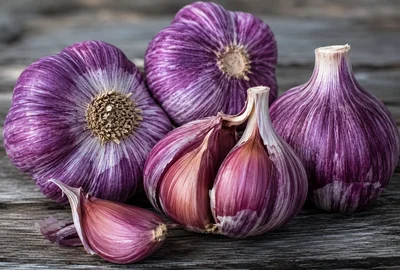
Chesnok Red
Hardneck · Rocambole
A classic Russian hardneck with distinctive deep purple-red striped skin and rich complex flavour. Widely regarded as one of the finest-tasting garlic varieties in the UK. Firm, easy-to-peel cloves. Best used within 4–5 months.
- Hardneck
- Heritage
- ⭐ Flavour
- Outdoors
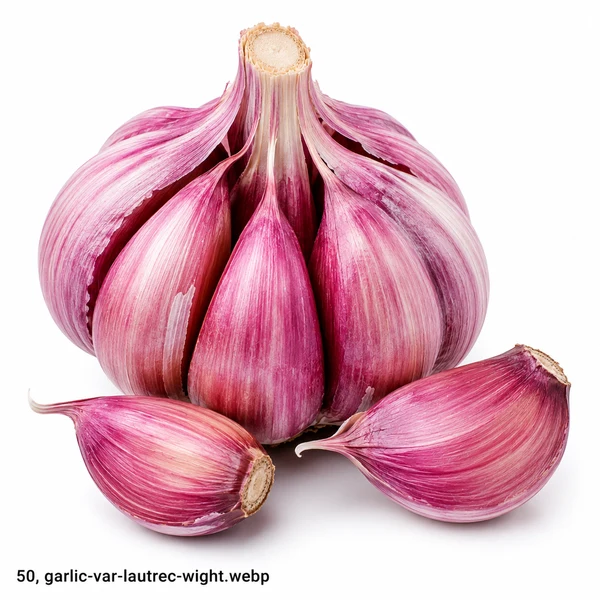
Lautrec Wight
Hardneck · French
Named after Lautrec in south-west France where it has PDO status. Vivid pink-purple skin, large firm cloves, and intense sweet flavour. Exceptional for roasting. Stores for 5–6 months.
- Hardneck
- Heritage
- ⭐ Flavour
- Outdoors
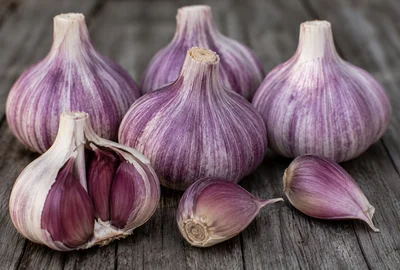
Purple Wight
Hardneck · English
A beautiful Isle of Wight hardneck with striking deep purple outer skin and large fat easy-to-peel cloves. Very strong rich garlic flavour. Excellent for cooking and roasting whole. Use within 4–5 months.
- Hardneck
- ⭐ Flavour
- Outdoors
- Heritage
🌱 Elephant & Heritage
Elephant garlic produces enormous mild bulbs — technically a leek relative. Cristo is a reliable long-storing softneck. Albigensian Wight is a prized French heritage hardneck.
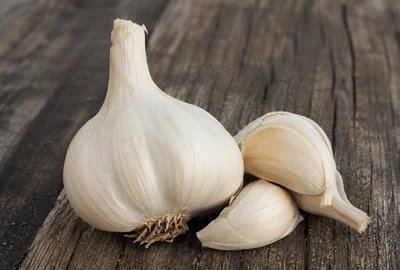
Elephant Garlic
Leek relative · Mild
Not true garlic but a close relative of the leek, producing enormous bulbs with just 4–6 very large easy-to-peel cloves. Flavour is mild, sweet, and gentle — excellent roasted whole. Stores for 3–4 months.
- Elephant
- Mild
- ⭐ Flavour
- Outdoors
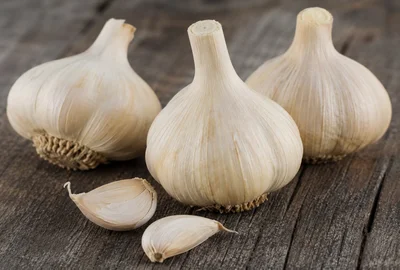
Cristo
Softneck · White
A clean white softneck with excellent disease resistance and outstanding storage — one of the longest-keeping garlic varieties available, staying perfect for up to 12 months when properly cured.
- AGM
- Softneck
- Long Storage
- Outdoors
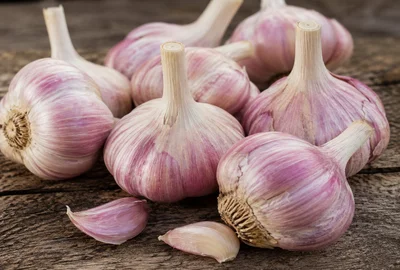
Albigensian Wight
Hardneck · French Heritage
A rare and prized French heritage hardneck from the Albi region. Purple-streaked skin, large firm cloves, and a rich complex slightly spicy flavour. Use within 5 months.
- Hardneck
- Heritage
- ⭐ Flavour
- Outdoors
04 Where to Source
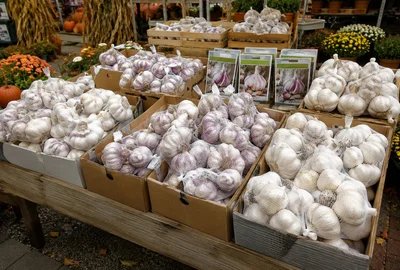
Certified seed garlic is essential — never plant supermarket bulbs, which are often treated to suppress sprouting and may carry viruses. UK seed suppliers stock a wide range of softneck and hardneck types from late summer ready for autumn planting. Order from August for October planting — stocks sell out quickly.
🧄 Seed Garlic by Post
Online suppliers offer certified virus-free seed garlic in the widest range of softneck and hardneck varieties. Order from August for the best selection before autumn planting stocks sell out.
🏪 Garden Centres
Garden centres stock seed garlic bulbs from late summer through autumn — convenient for picking up a few reliable varieties in person, though the range is usually narrower than by post.
✂️ Breaking Bulbs into Cloves
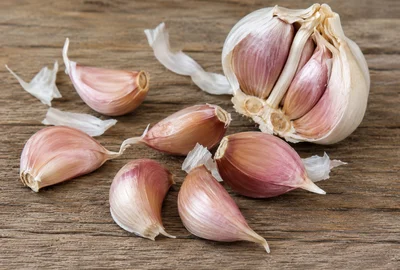
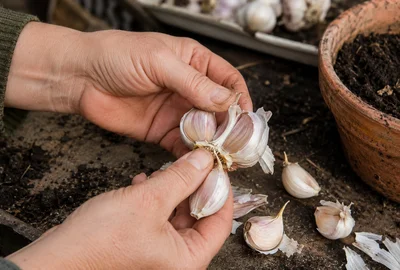
Each certified seed bulb splits into several cloves, and each clove grows into a full new bulb. Break bulbs apart just before planting — separate cloves dry out faster than whole bulbs, so don't split them too far in advance.
Timing tip: Order seeds in January and February. Popular varieties sell out quickly. Garden centres and markets are a reliable backup from April onwards.
05 Planting Options
🧄 Kitchen Garden Bed
The classic method. Prepare a firm, well-drained bed in a sunny position. Garlic needs firm soil — do not plant in freshly dug or very loose ground. Plant cloves 15cm apart in rows 30cm apart, pointed end up, with the tip 2cm below the soil surface. Firm each clove in well. Plant Oct–Nov for the best yields.
Suitable varieties: All varieties. The standard growing method for maximum yields.
🪵 Raised Bed
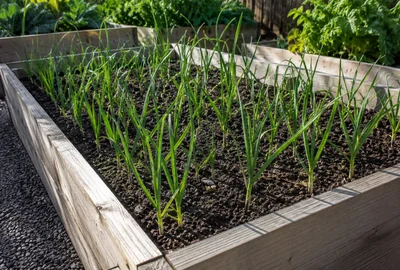
Garlic performs very well in raised beds — the excellent drainage is ideal since garlic dislikes sitting in wet soil over winter. Fill with a mix of loam, grit, and well-rotted compost. Particularly recommended on heavy clay soils.
Suitable varieties: All varieties. Particularly recommended for heavier soils.
🪣 Container / Pot
Garlic grows well in large, deep containers — a minimum of 30cm deep. Use a loam-based compost with added grit for drainage. Plant at 10cm spacing to fit more cloves. Containers must have excellent drainage holes — waterlogged compost over winter rots cloves.
Suitable varieties: Solent Wight, Germidour, Cristo — reliable softneck varieties.
06 Companion Planting
✅ Grow nearby

A classic combination — the strong scent of garlic confuses carrot fly. Interplanting garlic at the edges of carrot beds is a traditional companion technique.
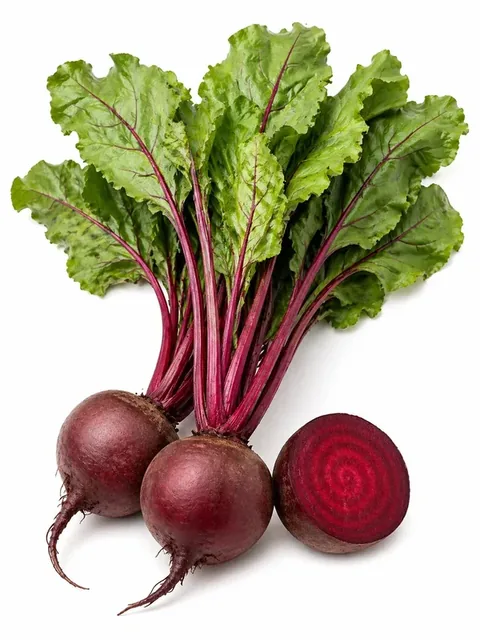
Garlic and beetroot complement each other in terms of soil use and are said to benefit from proximity. Both are efficient users of space.
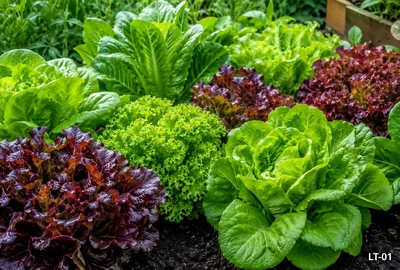
Garlic planted at the edges of salad beds is said to deter aphids. A low-maintenance companion for any salad growing area.
❌ Keep apart
- 🫘 Beans — Alliums including garlic inhibit the growth of legumes when planted in close proximity. Keep garlic well away from French, runner, and broad beans.
- 🫙 Peas — Garlic root secretions are thought to inhibit pea growth. Maintain strict rotation and keep alliums and legumes in separate beds.
07 Sowing — How To
Garlic is planted as individual cloves, not seeds. There is no sowing as such — each clove is the planting unit. Split the bulb just before planting, select the largest outer cloves, and push them into prepared soil. Autumn planting (October–November) gives the best results; spring planting (February–March) is possible but yields smaller bulbs.
Split the bulb
Just before planting, break the bulb into individual cloves. Keep the papery skin on each clove. Use only the largest outer cloves — small inner cloves produce small bulbs. One bulb gives 8–12 planting cloves.
Prepare the soil
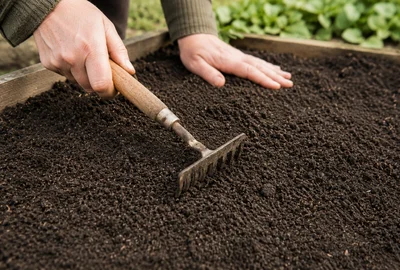
Rake the bed to a firm, fine surface. Garlic needs firm soil — loose, freshly dug ground gives poor results. Incorporate well-rotted compost if the soil is poor. Do not add fresh manure.
Plant each clove
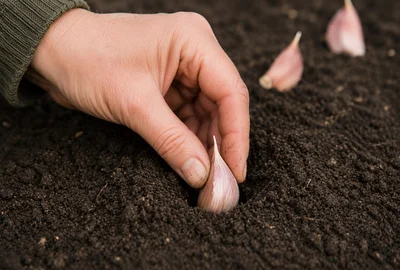
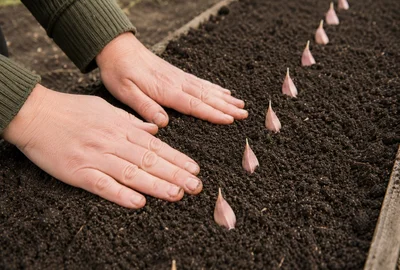
Push each clove into the soil, pointed end up, so the tip is about 2cm below the surface. In very light soil, use a dibber to make a hole first — pushing into hard soil can damage the basal plate.
Firm in and space
Firm the soil gently around each clove. Space cloves 15cm apart in rows 30cm apart. Overcrowded garlic produces smaller bulbs.
Label the row
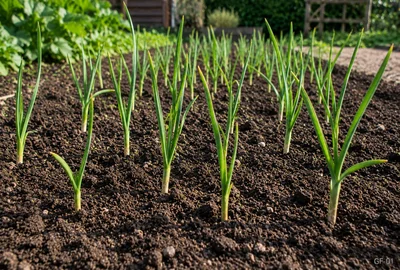
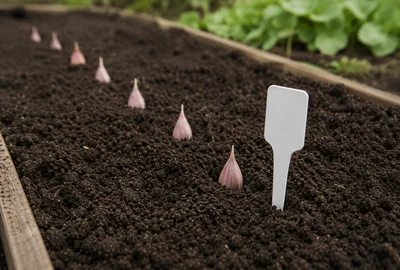
Label immediately with variety name and planting date. Different varieties look identical as young shoots and mature at different times.
Mulch over winter
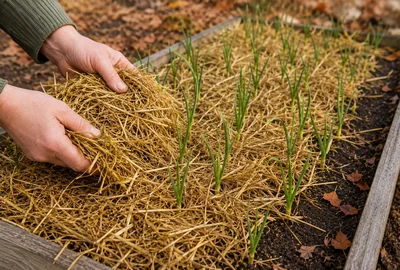
In colder regions, or on light sandy soils, apply a thin layer of straw or leaf mould mulch after planting to insulate cloves and suppress early weed growth.
Regional sowing timing| Region | Sow / plant | Harvest | Notes |
|---|
| Scotland & Far North | Oct–Nov | Jun–Jul | Autumn planting essential — cold period critical for bulb development. · Oct to early Nov |
|---|
| Northern England | Oct–Nov | Jun–Jul | Plant before ground freezes; established cloves survive winter well. · Oct to early Nov |
|---|
| Midlands & Wales | Oct–Nov | Jun–Jul | Ideal conditions; both softneck and hardneck perform well. · Oct to Nov |
|---|
| Ireland & Isle of Man | Oct–Nov | Jun–Jul | Ideal conditions; both softneck and hardneck perform well. · Oct to Nov |
|---|
| South & SE England | Oct–Nov | Jun–Jul | Spring planting possible but autumn gives significantly larger bulbs. · Oct to Nov |
|---|
| South Coast & SW | Oct–Nov | May–Jun | Milder winters; autumn planting still strongly preferred for best yields. · Oct to Nov |
|---|
08 Using a Propagator
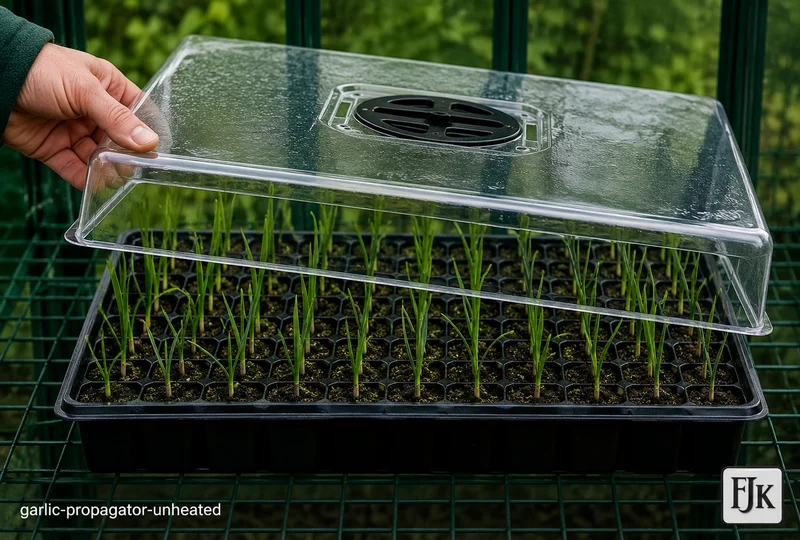
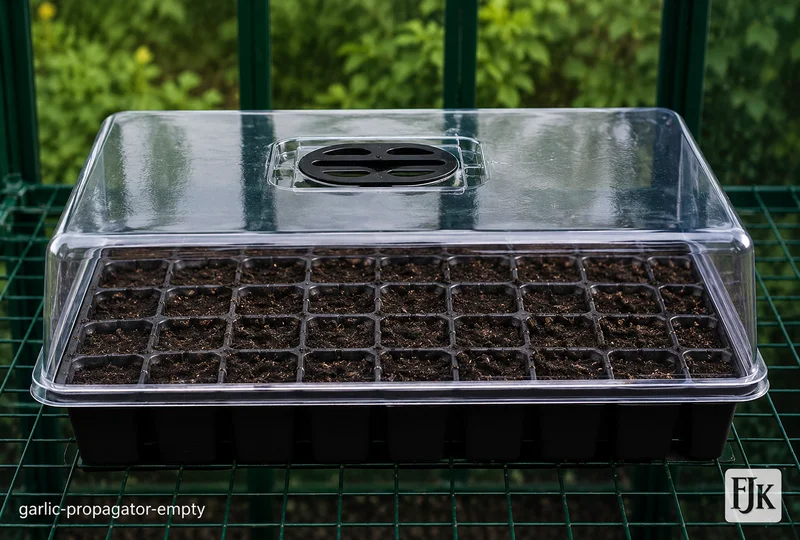
Garlic is planted as individual cloves directly into the ground — there is no seed sowing or propagation stage. The equivalent of a propagator for garlic is a module tray of gritty compost, used only when outdoor soil conditions are too wet or cold to plant directly in October. Modules allow cloves to root before being transplanted into the bed in November or early spring.
Heated propagator
Not applicable — garlic cloves must experience cold temperatures (vernalisation) to develop properly into bulbs. A heated environment actively prevents this. Never start garlic in a heated propagator.
No heated propagator
An empty tray of gritty compost is as far as garlic ever needs to go indoors. There is no seed stage to raise under heat — warmth actively works against garlic, which needs a period of cold to trigger proper bulb division.
Use it only as a cold module tray
If October ground is too wet or heavy to plant into directly, cloves can be pushed into modules like this and kept somewhere cold and frost-free — a cold frame or unheated greenhouse bench — until the bed is workable. This is the only role a propagator plays for garlic.
09 Soil Requirements
- pH
- 6.0–7.5
- Best
- Sandy loam, Loam
- Tolerates
- Loam
- Avoid
- Waterlogged, Heavy clay, Acid
💡 Free-draining soil is essential — standing water rots bulbs.
10 Ongoing Care
🌿 Weed Control
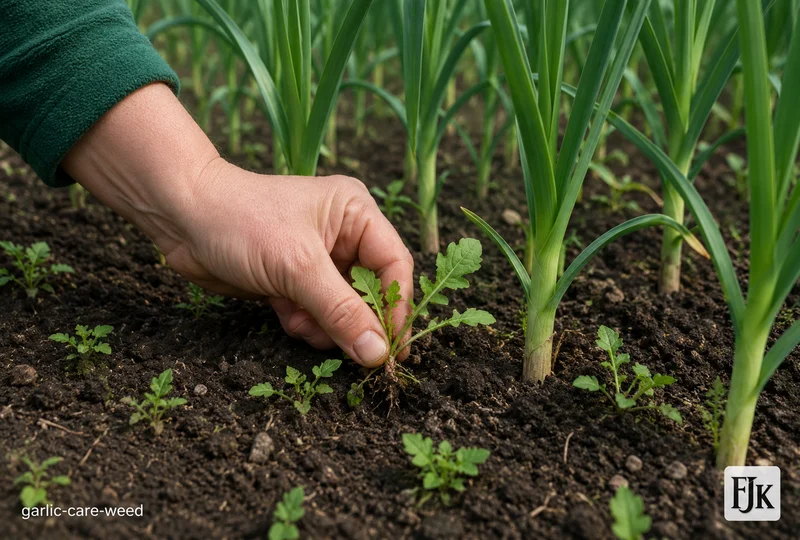
Garlic is a poor competitor against weeds. Hand-weed regularly through winter and spring. Hoe very carefully in early spring as garlic roots are shallow and easily damaged. Once foliage is tall in May–June it naturally suppresses weeds.
✂️ Scape Removal
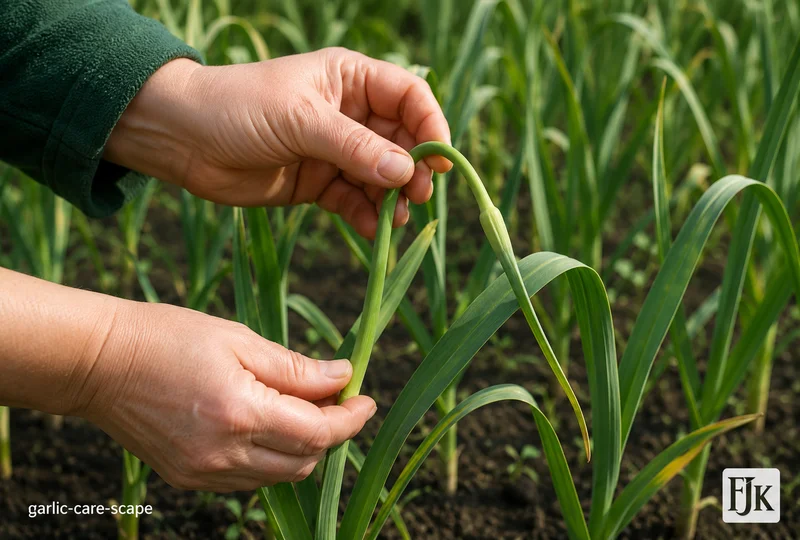
Hardneck varieties produce curly flower stems (scapes) in May–June. Remove these promptly — they divert significant energy from bulb development. Scapes are a genuine delicacy — harvest when still coiled and tender, and use in stir-fries, pesto, or wilted in butter. Each plant produces only one scape so timing matters.
🧄 Harvest & Cure
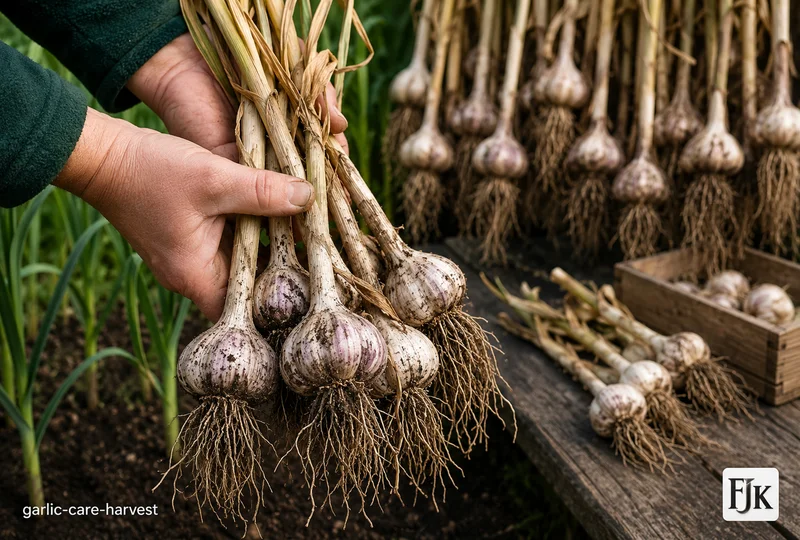
Lift when 50% of the leaves have yellowed and begun to dry — do not wait for all leaves to die back. Use a fork to loosen soil and lift carefully to avoid bruising. After lifting, dry bulbs in a warm, airy place for 3–4 weeks until outer skins are completely papery and the neck is bone-dry. Any moisture in the neck causes rot during storage.
11 Watch Out For
WarningAvoid planting garlic bought from supermarkets — it may carry viruses and is often treated to suppress sprouting. Always use certified seed garlic from reputable UK suppliers.
🐛 Insects & pests
- 🐌 Slugs & Snails — Silver slime trails on leaves, soil, and pots — often the first sign before damage is found
- 🐜 Aphids (Blackfly & Greenfly) — Curled, distorted, or stunted growing tips — aphids inject saliva that causes leaf curl to protect them
🍄 Diseases to watch
- 🧅 Allium White Rot — Allium white rot (Sclerotium cepivorum) is one of the most persistent and devastating soil-borne diseases in UK gardens. The sclerotia (resting bodies) persist in soil for up to 20 years, and are stimulated to germinate specifically by the scent of growing alliums. Once present, a bed is effectively lost for all allium crops for a generation.
- 🟠 Rust — Rust diseases are caused by a large family of obligate parasitic fungi, each specific to its host or a narrow range of hosts. Leek rust (Puccinia allii) is the most common in UK vegetable gardens, producing vivid orange pustules on leek leaves in summer and autumn. While rarely fatal, severe infections significantly weaken plants and reduce yields.
- 🔵 Downy Mildew — Downy mildew is caused by oomycetes (water moulds) and is completely unrelated to powdery mildew despite the similar name. It thrives in cool, wet, humid conditions and is most damaging in spring and autumn. Each host plant has its own specific downy mildew species. Lettuce downy mildew can destroy an entire bed within days in the right conditions.
Full identification and treatment advice is in the Pests and Diseases sections.
12 Storage & Preserving
☀️ Curing & Long-Term Storage
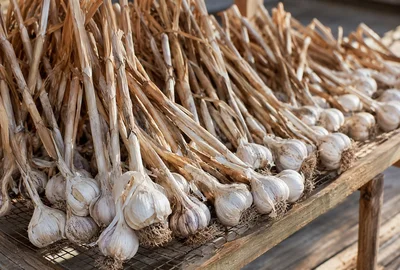
Properly cured garlic stores for 6–12 months depending on variety. After lifting, spread bulbs in a warm, airy, dry place for 3–4 weeks until outer skins are completely papery and the neck is dry. Store in net bags or loose in slatted trays in a cool (10–15°C), dark, dry, well-ventilated space. Check monthly and remove any showing softness.
🧵 Plaiting & Rope
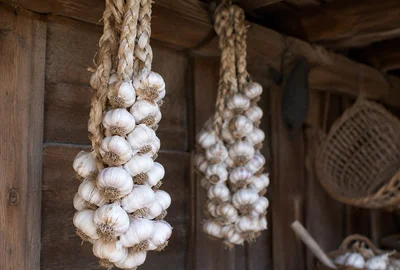
Softneck varieties are the only type that can be plaited — hardnecks have a rigid woody stem. Use bulbs with stems still intact. Plait three stems together and weave new bulbs in as you go. Hang in a cool, dry, airy place. A well-made plait is a practical and beautiful storage method. Keeps for 6–8 months.
🧄 Roasting
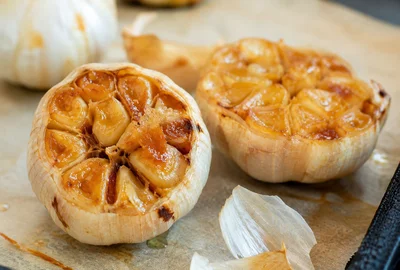
Whole roasted garlic is one of the great kitchen garden rewards. Slice the top off a whole bulb, drizzle with olive oil, wrap in foil, and roast at 180°C for 40–45 minutes until the cloves are soft, golden, and sweet. The flesh squeezes out like butter. Roasted garlic freezes well.
13 Expert Tips
💡 Pointed end up — always
The most common planting mistake is putting cloves in upside down. Always plant pointed-end up. A clove planted tip-down will eventually right itself but wastes energy and produces a noticeably smaller bulb.
💡 Use modules on heavy or wet soils
Autumn planting in cold, wet soils can cause clove rot before rooting. If your soil is very heavy or poorly drained, plant in modules of gritty compost in October and transplant established shoots into the bed in November. A raised bed with excellent drainage eliminates this problem entirely.
💡 Scapes are a seasonal treat
Hardneck scapes are one of the great seasonal treats of the kitchen garden — harvest them in June when still coiled and tender. They taste intensely of garlic and are superb in stir-fries, as a pesto base, or wilted in butter. Each plant produces only one scape.
💡 Perfect curing is the key to storage
The key to long garlic storage is perfect curing. Garlic with even a trace of moisture in the neck will rot within weeks regardless of storage temperature. In a wet summer, bring lifted garlic indoors immediately and cure in a warm, dry room or airing cupboard for 3–4 weeks.
14 Common Mistakes
⚠ Planting
- Planting supermarket garlic — it may carry virus and is often treated to suppress sprouting; always use certified seed garlic
- Planting cloves upside down — the pointed tip must face up; a clove planted tip-down wastes energy and produces a smaller bulb
- Planting too shallow — tips should be 2cm below the surface, not just resting on the soil
- Planting in waterlogged or freshly manured ground — both cause clove rot
⚠ Ongoing Care
- Waiting too long to harvest — lift when 50% of leaves yellow; over-ripe garlic deteriorates in the ground
- Poor curing — the single most common cause of storage failure; any moisture in the neck causes rot within weeks
- Not removing hardneck scapes — they divert significant energy from bulb development; remove promptly in June
- Overwatering in late spring — stop watering completely once leaves begin to yellow