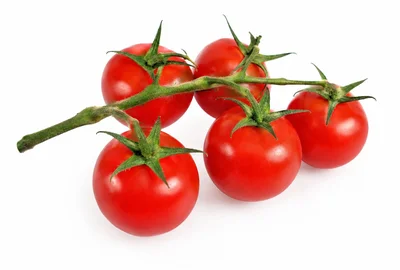
Gardener's Delight
Cherry · Cordon
The most popular UK garden tomato. Prolific, reliable, and sweet. Performs well outdoors and under glass.
- Outdoor
- Container
- ⭐ Flavour
- Beginners
Solanum lycopersicum
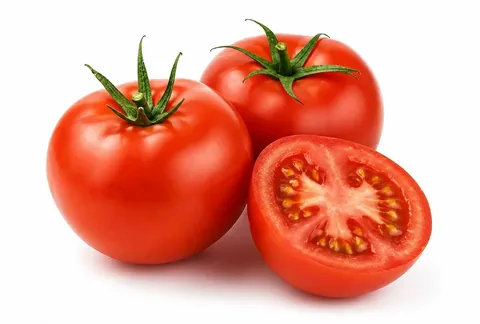
The tomato is one of the most widely grown and rewarding crops in the British kitchen garden. Technically a fruit, used as a vegetable in cooking, the range of flavours, colours, sizes, and uses available to the home grower far exceeds anything found in a supermarket. Tomatoes are tender perennials grown as annuals in the UK climate — frost will kill them outright, and they need reliable warmth to grow well and ripen. With the right variety, attentive watering and feeding, they will reward you with harvests from midsummer right through to the first frosts of autumn.
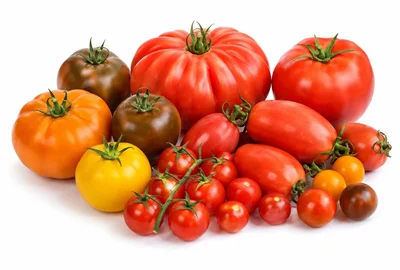
Tomatoes come in an extraordinary range of types, and choosing the right one for your growing space and skill level makes the difference between a bumper harvest and a season of frustration. They fall into two growth habits: cordon (indeterminate) varieties that grow tall and need regular side-shooting and support, and bush (determinate) varieties that are more compact and require little or no training. Within those habits, there are seven distinct families — each with different fruit sizes, flavours, and ideal uses.
The number of varieties shown for each crop is based on UK consumption data (2025/26) — the more popular the crop, the more variety choices we include.
Small, sweet, and prolific. The easiest to ripen outdoors in the UK.
The most popular UK garden tomato. Prolific, reliable, and sweet. Performs well outdoors and under glass.
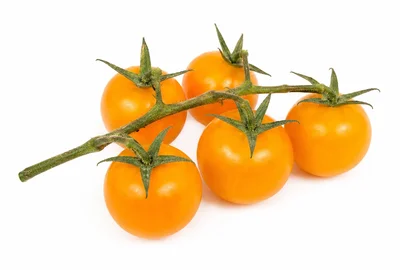
Orange fruits with outstanding sweetness. Crops prolifically under glass. One of the most praised UK varieties.
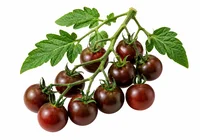
Deep mahogany fruits with a rich, complex flavour. Striking on the vine and in the kitchen. Best under glass.
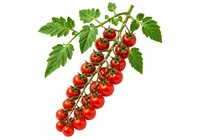
Exceptionally long trusses of small, bright red fruits. Very high yields with good crack resistance.
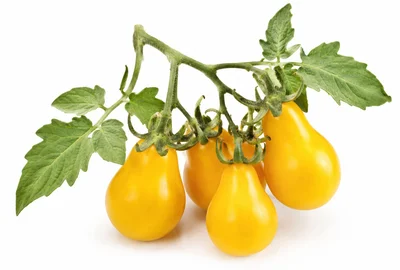
Distinctive pear-shaped fruits in golden yellow. Sweet, mild flavour and eye-catching in salads. Prolific and easy to grow.
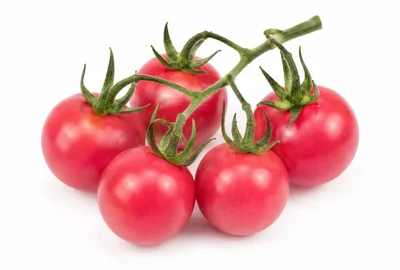
Deep rose-pink cherry fruits with a rich, complex flavour. Striking colour on the vine and outstanding in the kitchen.
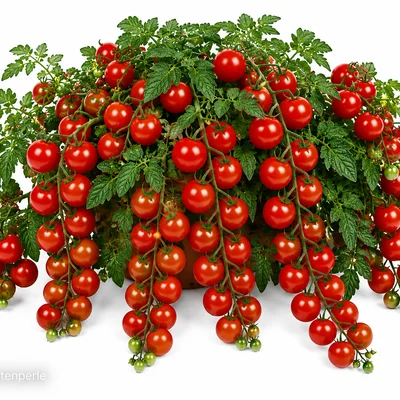
Compact trailing cherry tomato bred for hanging baskets and window boxes. Tiny round deep-red fruits in prolific clusters. No pinching needed — the naturally bushy habit stays neat all season. Outstanding for balconies and small spaces.
A prolific Italian cherry tomato producing enormous trusses of tiny, oval, pale yellow-gold fruits. Exceptionally sweet and mild. One of the most productive cherry tomatoes available — a single truss can carry 50+ fruits. Outstanding for greenhouse growing.
A compact-growing cherry tomato producing heavy trusses of small, round, deep-red fruits with excellent rich tomato flavour. Outstanding reliability in UK greenhouses and polytunnels. Very popular with commercial growers for its consistent cropping and long season.
Medium round fruits — the classic tomato. Reliable and versatile, performing well both outdoors and under glass.
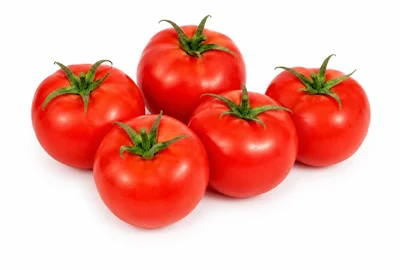
A classic reliable variety with medium-sized, well-flavoured fruits. One of the best performers for UK outdoor conditions.
Disease-resistant F1 variety. Highly regarded by commercial and amateur growers alike. Consistent heavy yields.
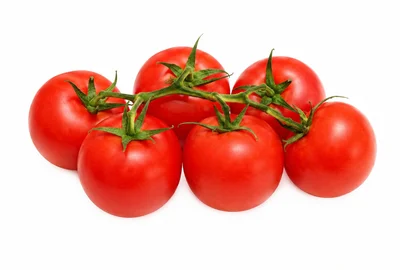
The traditional British greenhouse tomato. Reliable and consistent — a timeless classic for first-time growers.
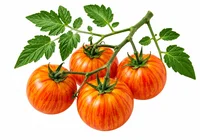
Orange and red striped fruits with a tangy, complex flavour. One of the most visually striking heritage tomatoes.
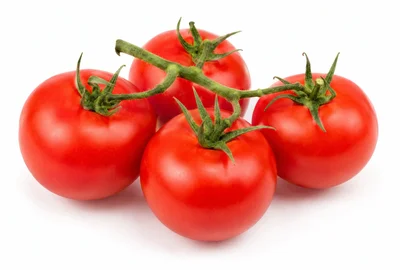
Classic Scottish heritage variety. Medium round fruits with thin skin, sweet flavour and excellent yields. A British garden staple.
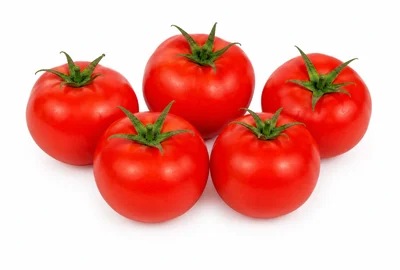
One of the earliest British varieties to ripen. Medium round fruits, reliable outdoors. Ideal for short growing seasons.
Large, meaty fruits with fewer but impressive harvests. Require greenhouse warmth in the UK to ripen reliably.
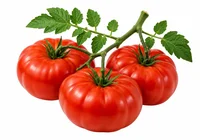
Large, smooth, bright red fruits of excellent quality. Requires greenhouse warmth. Fewer but impressive fruits per plant.
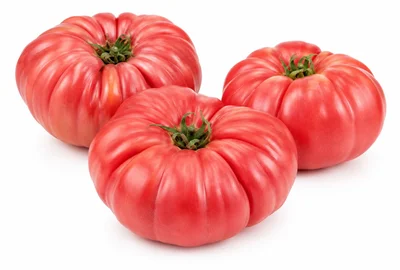
Large pink-red fruits with extraordinary flavour widely considered among the finest of all heritage tomatoes.
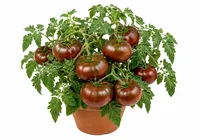
Deep purple-brown fruits with a rich, smoky flavour. Unusual and impressive. Originating from the Crimea region.
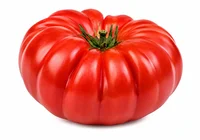
A classic French beefsteak, widely grown in UK gardens. Deeply ribbed and irregular, with outstanding flavour and size. Superb for slicing.
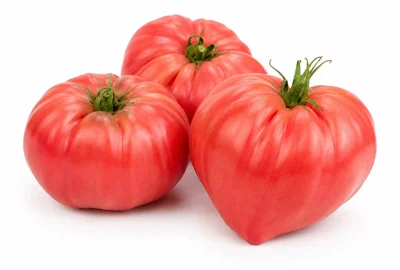
Dramatic heart-shaped fruits with dense meaty flesh and very few seeds. Deep pinkish-red. Outstanding for slicing.
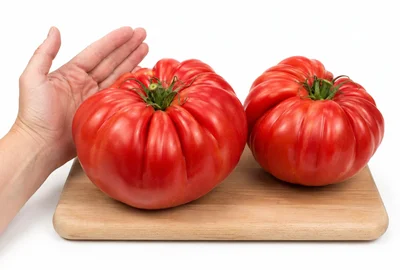
One of the largest tomatoes you can grow. Single fruits regularly reach 500–700g. Deep red, smooth skin. Greenhouse recommended.
Oval, dense, and low in water — the kitchen gardener's choice for sauces, passatas, and preserving.
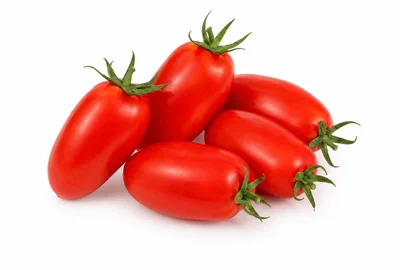
The classic paste tomato. Meaty, low in water, perfect for passata, sauces, and drying. Reliable and productive.
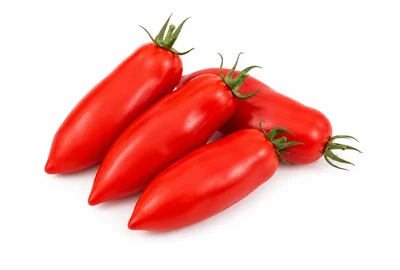
The Italian culinary classic — elongated, sweet, and intensely flavoured. Best under glass in the UK.
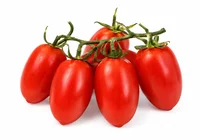
Traditional Italian drying tomato with small oval fruits and thin, flavour-rich skin. Ideal for sun-drying and passata.
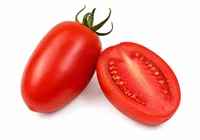
Polish heritage variety with exceptionally dense, meaty flesh and minimal seed cavities. One of the finest sauce tomatoes available.
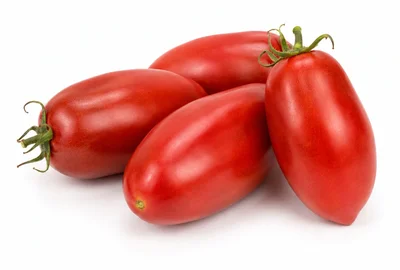
American heritage plum with large chunky fruits — bigger and meatier than San Marzano. Outstanding for passata and sauces.
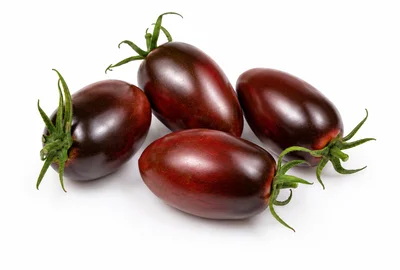
Deep burgundy-black oval fruits with rich complex flavour. Striking in appearance and outstanding roasted or in sauces.
Compact, self-supporting, no side-shooting required. Bred for outdoor UK conditions.
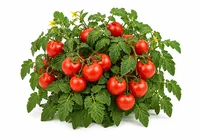
Compact, early-ripening bush variety. One of the best outdoor performers in the UK. Good flavour for a bush type.
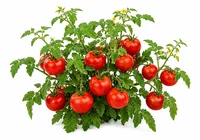
Bred specifically for UK outdoor conditions. Early and reliable. Medium round fruits with solid flavour.
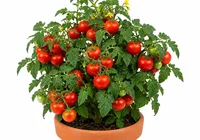
Compact spreading habit, no staking required. Consistent heavy yields of well-flavoured fruits outdoors.
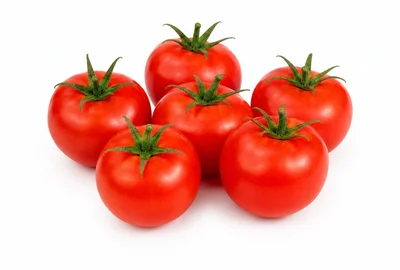
Exceptionally compact upright bush, ideal for pots and patios. Tidy, self-supporting and loaded with medium red fruits.
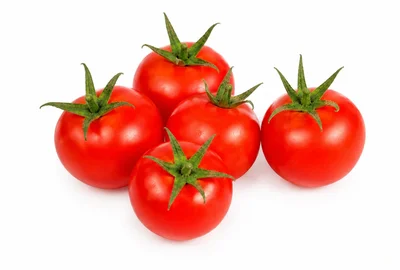
Compact blight-resistant bush variety. Generous clusters of medium-small red fruits. Reliable outdoors even in wet summers.
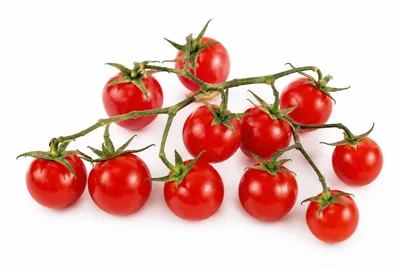
Ultra-compact dwarf — only 30cm tall. Perfect for windowsills, window boxes and small pots. No staking required.
Compact trailing types bred specifically for hanging baskets and small containers. No training required.
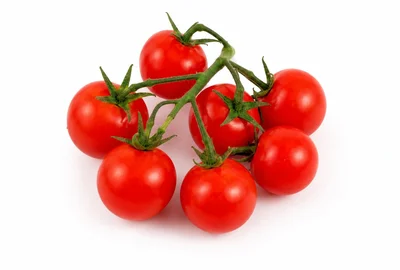
The most popular hanging basket tomato. Red cherry fruits on cascading stems. Excellent flavour.

Identical habit to the red version but with golden yellow fruits. Milder flavour. Striking in a basket.
Vigorous trailing variety producing masses of small red fruits. Good for baskets and window boxes.
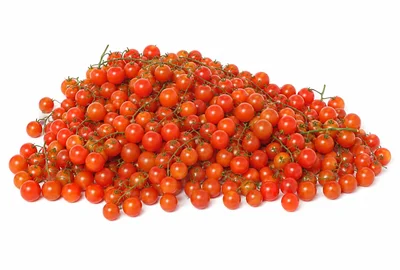
Tiny, intensely sweet fruits in enormous quantities on trailing stems. Perfect for baskets and children's growing.
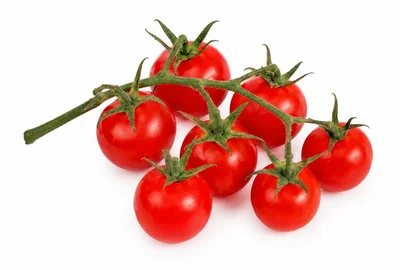
Bred specifically for hanging baskets. Long cascading stems loaded with clusters of small sweet red fruits all season.
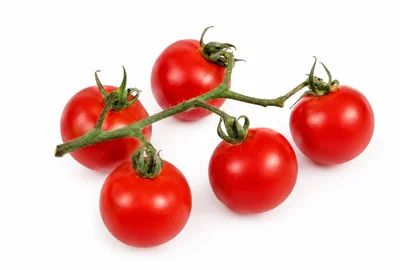
Compact trailing F1 ideal for hanging baskets. Neat habit, generous red cherry fruits, no training required.
Ultra-compact plants for small spaces, windowsills, and growing with children.
One of the smallest tomato varieties — plants grow to just 15-20cm. Perfect for windowsills and novelty growing.
A reliable dwarf variety growing to just 20cm. Produces masses of tiny red cherry tomatoes. Ideal for pots and windowsills.
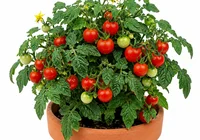
French dwarf variety, compact and bushy with clusters of small sweet fruits. Well suited to window boxes and small pots.
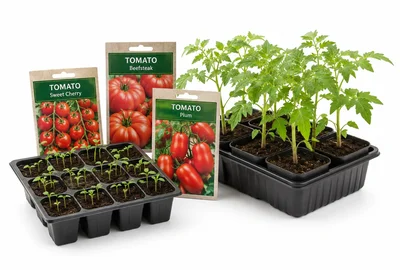
Tomato seeds and plants are available through several routes, each with advantages in variety selection, cost, and timing. Knowing where to look — and when — is as important as knowing what to grow.
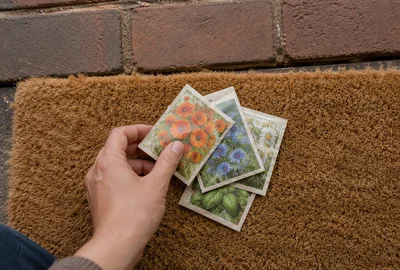
Far wider variety selection than any garden centre. Specialist seed companies online carry hundreds of varieties including heritage and open-pollinated types unavailable in shops. Check each packet for sow date, germination temperature, days to maturity, and outdoor or greenhouse suitability. Order from January — popular varieties sell out early.
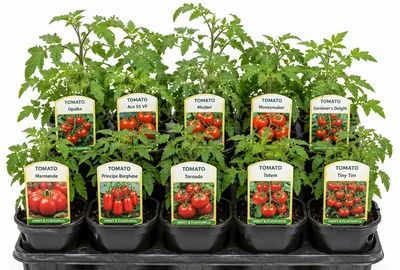
Most garden centres stock a solid range of tomato seeds from February, and plug plants or young tomatoes from April. Variety selection is narrower than online but you can inspect quality in person and take advice from staff.
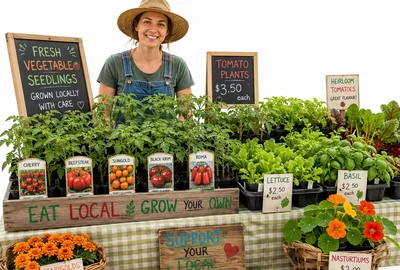
Local markets, farmers' markets, and community plant sales are an excellent source of locally-grown plug plants in May and June — often at lower prices. Church fetes, school plant sales, and open-garden charity days frequently feature excellent plants.

Do not overlook the value of a friend's spare plug plant or locally saved seed. Many allotment communities and gardening clubs run annual seed swaps where members trade named varieties, including rare heritage types.
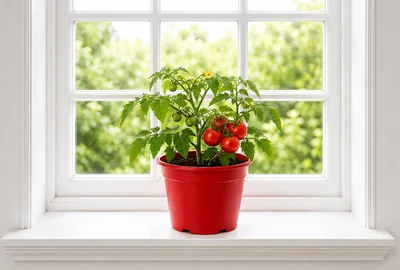
Growing tomatoes on a windowsill is a practical option for those without outdoor space or a greenhouse, and is well suited to compact bush and tumbling types that trail attractively without needing support. A south-facing window is essential. Use a pot at least 20-25cm in diameter with good drainage. Use peat-free compost with 20-25% perlite. Rotate the pot a quarter turn every day or two to prevent uneven growth. Check compost daily and water when the top centimetre is dry. Begin a high-potash liquid tomato feed every 7-10 days once the first flowers appear.
Suitable varieties: Tumbling Tom Red, Tumbling Tom Yellow, Micro Tom, Red Alert, Maskotka. Cordon varieties are not suitable.
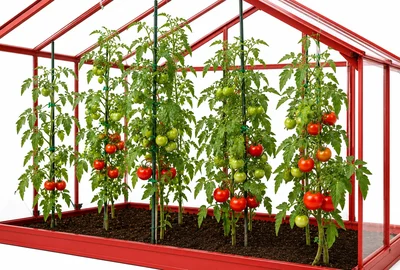
A greenhouse extends the season at both ends and allows varieties that would struggle to ripen outdoors in most of the UK. It is the gold standard for growing tomatoes in Britain, delivering consistently heavier crops with better fruit quality than any outdoor method. Almost all cordon types thrive under glass. Cordon plants need a vertical cane or string — tie or twist the main stem every 30-40cm. Remove all side shoots when under 2-3cm long. On warm days above 25C open vents and the door — poor ventilation causes blossom drop above 30C.
Suitable varieties: Gardener's Delight, Alicante, Sungold, Black Cherry, Tigerella, Shirley F1, Brandywine.
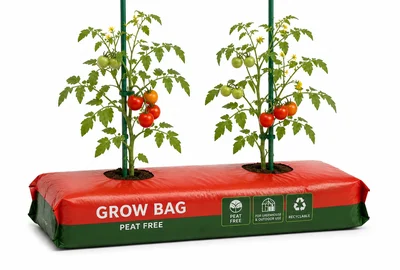
Grow bags are the classic British tomato growing method — affordable, practical, and effective. A standard bag contains approximately 40 litres of growing medium, sufficient for two cordon plants or three bush types. Knead the bag thoroughly before cutting planting holes. Plant deeply, burying the stem to the lowest leaves. Use watering and feeding rings (collars) in the planting holes — without them, water runs off the surface without reaching the roots. Grow bag compost exhausts its nutrients after 4-6 weeks; begin a high-potash liquid tomato feed every 7-10 days after that. Never skip feeding in grow bags.
Suitable varieties: Cordon varieties (2 per bag) or bush types (3 per bag). Works well in greenhouse, polytunnel, sheltered porch, or against a warm south-facing wall outdoors.
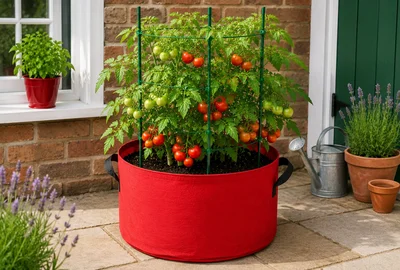
Large containers offer more root space and better moisture retention than grow bags, and the advantage of being moveable. For cordon varieties, use a pot of at least 30-35cm diameter — 40cm is better. Bush varieties manage in 25-30cm pots. Use peat-free multi-purpose compost mixed with 20-25% perlite. Add a slow-release granular fertiliser at planting time. Raise pots on feet to improve drainage and air circulation. Containers with a built-in water reservoir are particularly effective — they maintain consistent moisture and reduce blossom end rot and fruit splitting.
Suitable varieties: All types. Cordons need a minimum 35cm pot and a sturdy cane. Trailing types are excellent in wide shallow containers.
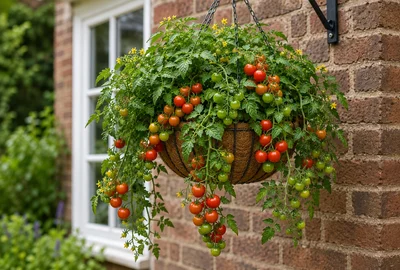
Trailing and tumbling varieties produce a striking cascade of small, sweet fruits throughout summer. Use the largest basket you can manage — 40cm is ideal. Line with a coco fibre liner. Fill with peat-free compost mixed with water-retaining gel crystals, which make a significant practical difference in a basket that dries out rapidly in warm weather. Plant one plant in a 30cm basket, two in a 40cm basket. Hang in full sun. Water once or twice daily in warm summer weather. Begin a weekly high-potash liquid feed once the first flowers appear.
Suitable varieties: Tumbling Tom Red, Tumbling Tom Yellow, Hundreds & Thousands, Maskotka, Balconi Red only. Do not use standard or upright bush varieties.
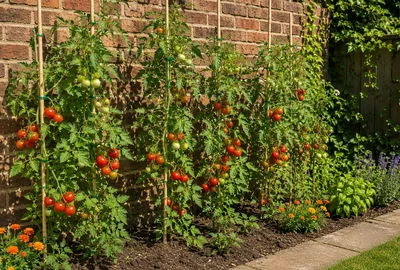
Growing tomatoes in open ground gives plants the most root space and, in a warm summer, can produce superb results. Choose the sunniest, most sheltered spot available — ideally against a south-facing wall or fence. Dig in plenty of well-rotted manure or garden compost. Plants raised indoors must be hardened off over 10-14 days before planting out. A south-facing brick or stone wall significantly increases effective temperature — storing heat by day and releasing it at night.
Suitable varieties: Gardener's Delight, Alicante, Outdoor Girl, Tigerella, Red Alert. Beefsteak varieties will struggle to ripen outdoors north of the Midlands.
Potatoes and tomatoes share the same family (Solanaceae) and the same diseases — most critically blight, which can devastate both simultaneously.
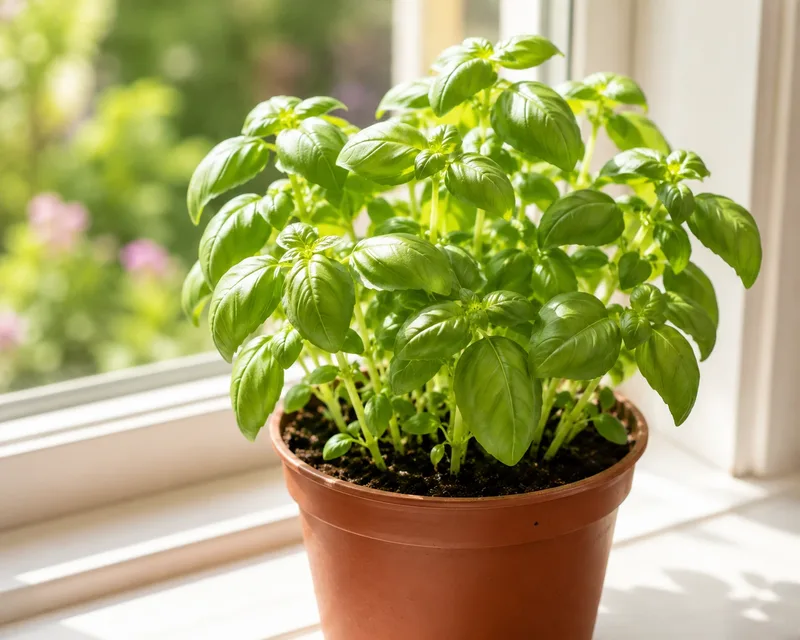
The classic tomato companion. Basil is thought to repel aphids and whitefly and improve the flavour of neighbouring tomatoes. Grow at the base of plants in the greenhouse or outdoors.
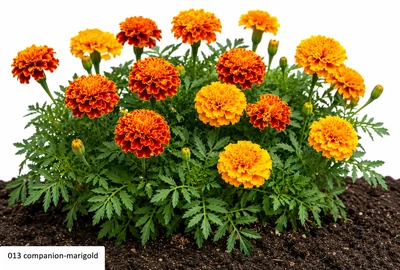
French marigolds (Tagetes) deter whitefly in the greenhouse — one of the most reliably effective companion planting combinations. Plant in the same bed or in pots alongside.
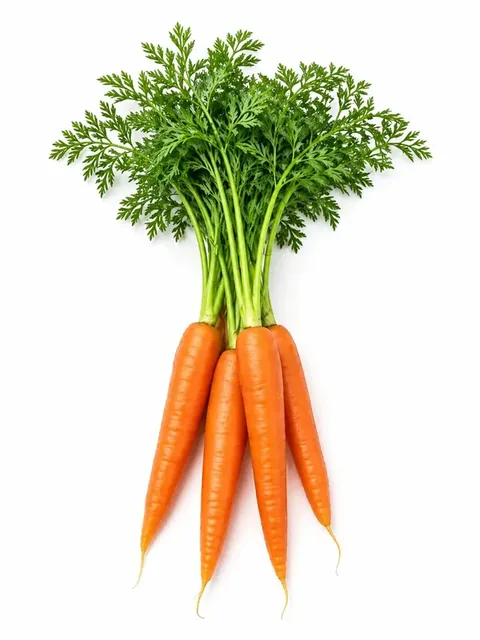
Carrots loosen the soil around tomato roots and the two crops coexist well without competing. Tomatoes shade carrots beneficially in hot weather.
Timing is everything with tomatoes. Sow too early and seedlings become tall and leggy before conditions allow planting out; sow too late and the season is cut short before all fruits ripen. The ideal sowing window falls between late January and mid-March for most UK growers.
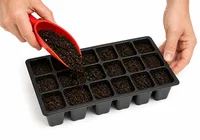
Fill seed trays or modules to within 1cm of the rim with moist seed compost. Firm lightly but do not compress hard — seeds need air pockets to germinate well.
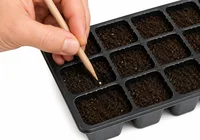
Place one seed per module, or sow thinly in an open tray. Tomato seeds are large enough to handle individually.
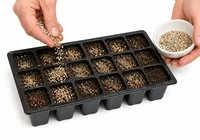
Cover with a 3-5mm layer of vermiculite or fine-sieved compost. Vermiculite retains moisture and resists forming a crust.
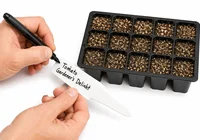
Write the variety name and sowing date on each label. If growing more than one variety, this step is not optional.

Water with a fine rose. Moisten without disturbing seeds or creating waterlogged patches.
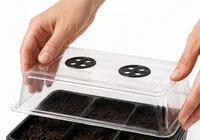
Place a propagator lid or cling film over the tray. Position in a warm location — bottom heat of 18-25C is ideal. Check daily.
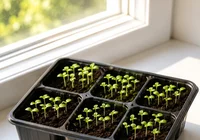
Germination occurs in 5-10 days. Move seedlings immediately to a bright south-facing windowsill. Seedlings in low light become weak and spindly within days.
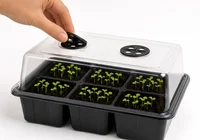
Remove the cover as soon as seedlings appear to allow airflow and prevent damping off.

When seedlings have their first true leaves, prick out into individual 7-9cm pots. Handle by a seed leaf, never the stem.

| Region | Sow / plant | Grow / harvest | Notes |
|---|---|---|---|
| Scotland & Far North | Feb–Mar | Apr–Sep | Heated propagator essential; low day length before March limits seedling quality · Late Feb – mid-March |
| Northern England | Feb–Mar | Apr–Sep | Propagator strongly recommended; windowsill viable from late Feb · Mid-Feb – mid-March |
| Midlands & Wales | Feb–Mar | Apr–Sep | Good results from heated propagator in early Feb · Early Feb – mid-March |
| Ireland & Isle of Man | Feb–Mar | Apr–Sep | Good results from heated propagator in early Feb · Early Feb – mid-March |
| South & SE England | Jan–Mar | Apr–Oct | Heated propagator allows reliable late January start · Late Jan – early March |
| South Coast & SW | Jan–Feb | Mar–Oct | Earliest reliable UK start; greenhouse growers can try early January · Late Jan – late Feb |
A propagator is a miniature heated greenhouse — a tray with a close-fitting clear lid that traps warmth and humidity around germinating seeds. For tomatoes, a good propagator dramatically improves germination rates and allows you to start sowing earlier than would otherwise be possible.
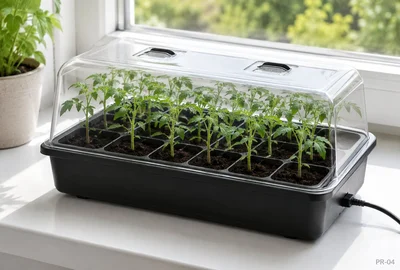
Has a built-in electric heating element providing consistent bottom heat regardless of room temperature. The single most useful piece of equipment for an early start. Look for a model with a thermostat. Set to 20-22C for tomatoes.
Simply a lidded tray that traps ambient warmth. Placed on a sunny windowsill it helps, but performance depends entirely on room temperature. Better than nothing — significantly less reliable than a heated model. Best from March onwards.
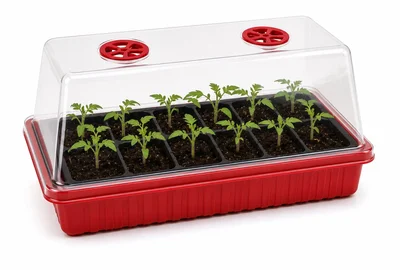
Standard unheated propagator — A lidded seed tray traps warmth and humidity around germinating seeds without electricity. Performance depends entirely on room temperature — best placed on a warm windowsill and used from March onwards. Replace the lid promptly after watering. Remove it completely the moment seedlings emerge to prevent damping off.
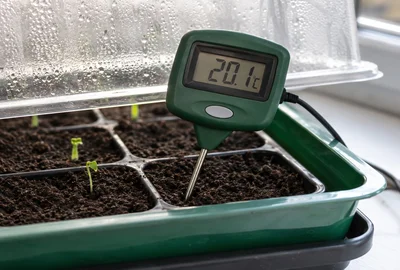
Set thermostat to 20-22C and allow 30 minutes to warm before sowing.
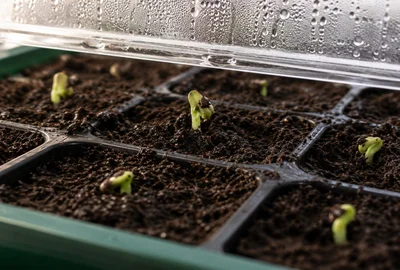
The compost should remain consistently moist but never waterlogged.
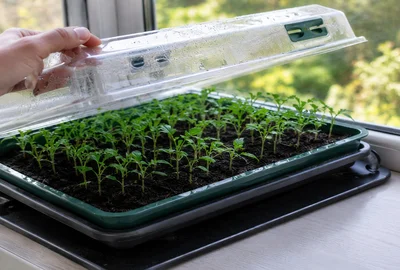
Once most seedlings are up, reduce to 16-18C to encourage compact, sturdy growth.
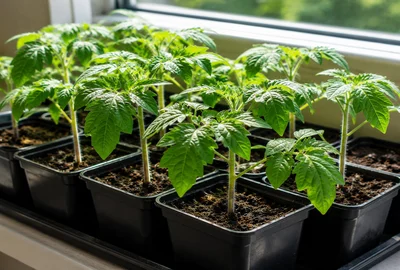
Transfer seedlings to a bright windowsill promptly after germination. The lid reduces light transmission.
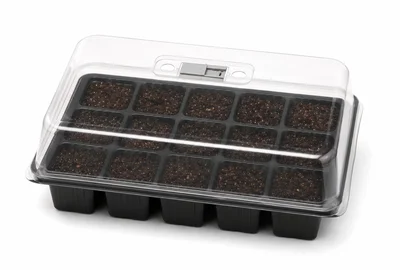
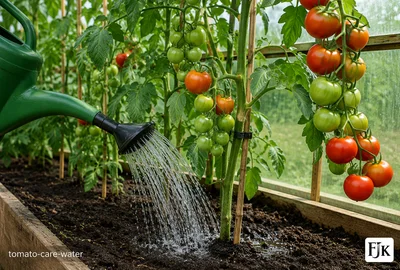
Water deeply and consistently — erratic watering causes blossom end rot and fruit splitting. In a greenhouse, water daily in summer; outdoors every 2–3 days. Always water at the base, never over the foliage. Consistent soil moisture is more important than quantity.
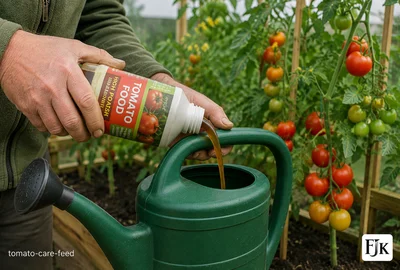
Begin a high-potash liquid tomato feed weekly once the first truss of flowers appears. Continue every 7–10 days throughout the season. Do not use high-nitrogen feeds during fruiting — they promote leafy growth at the expense of fruit.
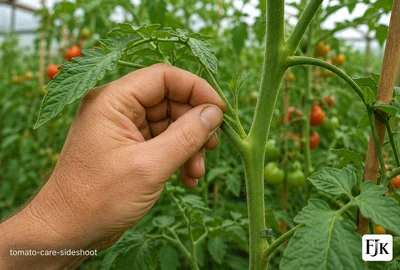
For cordon (indeterminate) varieties, remove side shoots weekly when they are under 2–3cm long — the wound closes quickly and the risk of disease is minimal. Bush and tumbling varieties need no side-shooting. Removing side shoots when small is always better than leaving them to grow large.
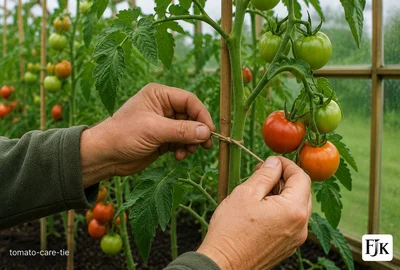
Tie the main stem to its support every 20–30cm as it grows using soft twine or purpose-made tomato clips. Cordon tomatoes can reach 1.8m or more — ensure supports are firmly anchored. Check ties regularly and loosen any that are cutting into the stem.
Watch for blight in warm, humid weather — brown patches on leaves and stems spreading rapidly. Remove affected material immediately and never compost it. Keep tomatoes and potatoes apart across the whole garden. Tomato brown rugose fruit virus is a notifiable disease. If you suspect it (mottled, wrinkled leaves and yellow or brown patches on the fruit), report it to the government plant health service where you live.
Full identification and treatment advice is in the Pests and Diseases sections.
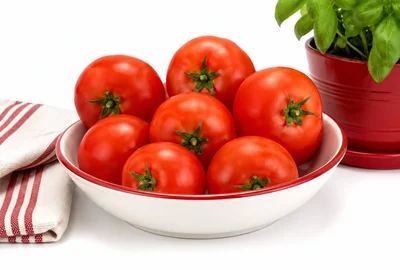
Store ripe tomatoes at room temperature, never in the fridge — cold destroys the volatile compounds responsible for flavour and texture irreversibly. A bowl on a sunny windowsill keeps ripe tomatoes in perfect condition for 3–5 days. Use slightly underripe tomatoes immediately after picking for best flavour.
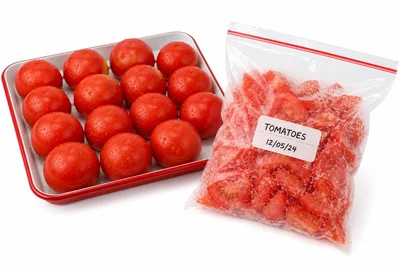
Tomatoes freeze well and it is the best way to deal with a glut. Freeze whole, halved, or as passata. Once frozen they lose their texture and are only suitable for cooked dishes — soups, sauces, and stews. Freeze spread on a tray to keep fruits free-flowing, then bag. Use within 12 months.
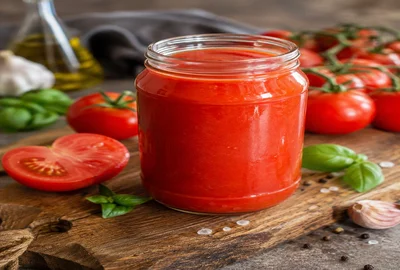
The best use of a large glut. Simmer roughly chopped tomatoes for 20 minutes, push through a mouli or sieve, season, then let it cool and freeze it in tubs or bags. Homegrown passata is incomparably better than shop-bought. A single row of cordon tomatoes can produce enough passata to last through winter.
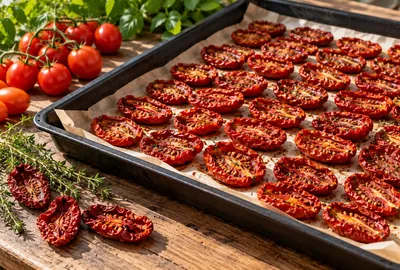
Slow-dry small and plum varieties at 100°C for 4–6 hours until semi-dried and intensely flavoured. Semi-dried tomatoes still hold some moisture, so they do not keep: put them in a covered container in the fridge and eat them within a few days, or freeze them. For tomatoes that keep for months, carry on drying until they are leathery and dry right through, then store them in airtight jars. Cherry and plum types are best for drying — large beefsteak varieties contain too much water.
Sow into individual modules rather than open trays wherever possible — roots in open trays are disturbed at pricking out and seedlings set back by 1–2 weeks. Module-grown plants go on faster and stronger.
Germination temperature is the single biggest variable in your control. Seeds at 22°C germinate in 5–7 days. The same seeds at 15°C take 3 weeks, if they germinate at all. A heated propagator earns its cost in the first season.
Remove cordon side shoots when they are under 2–3cm long — the wound closes within a day. Leave a side shoot to reach 10–15cm and you create a slow-healing wound and risk introducing disease.
Consistent watering prevents blossom end rot more reliably than any calcium supplement. BER is almost always a symptom of irregular watering, not a mineral deficiency in the soil.