Sow in modules indoors at 18°C — germination takes 3–6 weeks, do not give up
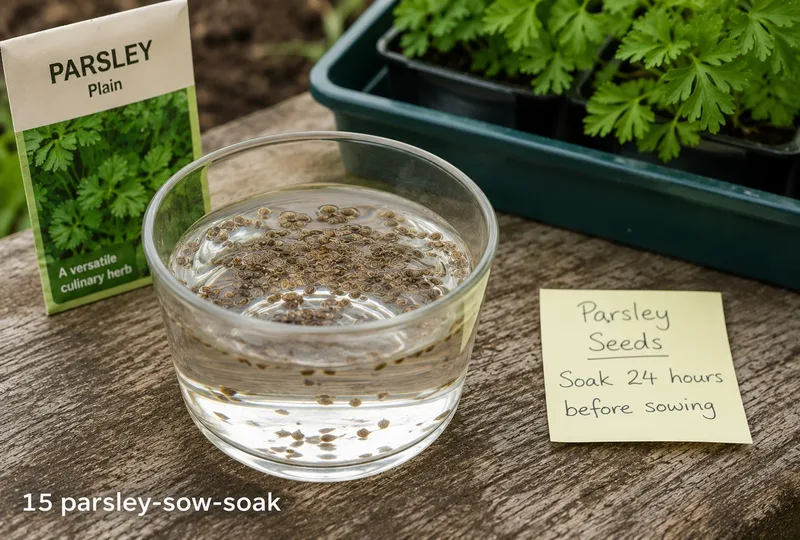
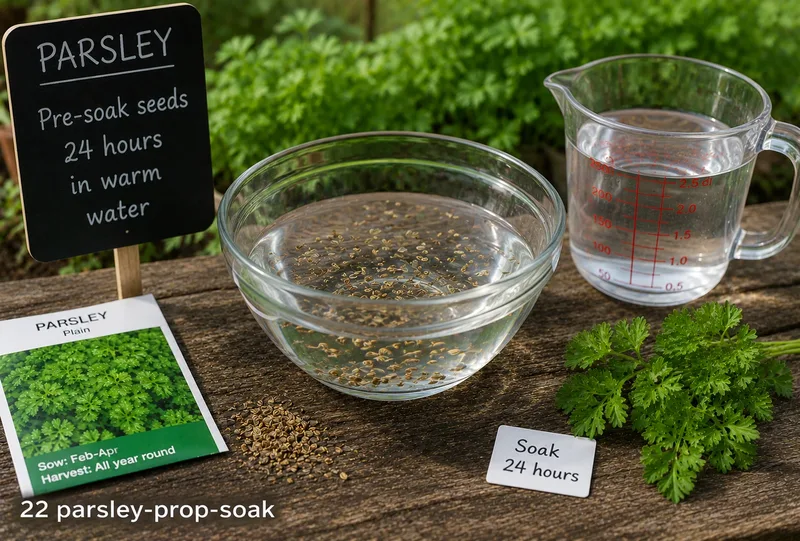
Pre-soak seeds in warm water for 24 hours before sowing to speed germination
Never let the compost dry out during germination — moisture loss aborts seeds
Sow successionally: March for summer supply, June–July for autumn and winter
Parsley is biennial — it flowers and dies in year two, so sow fresh each season
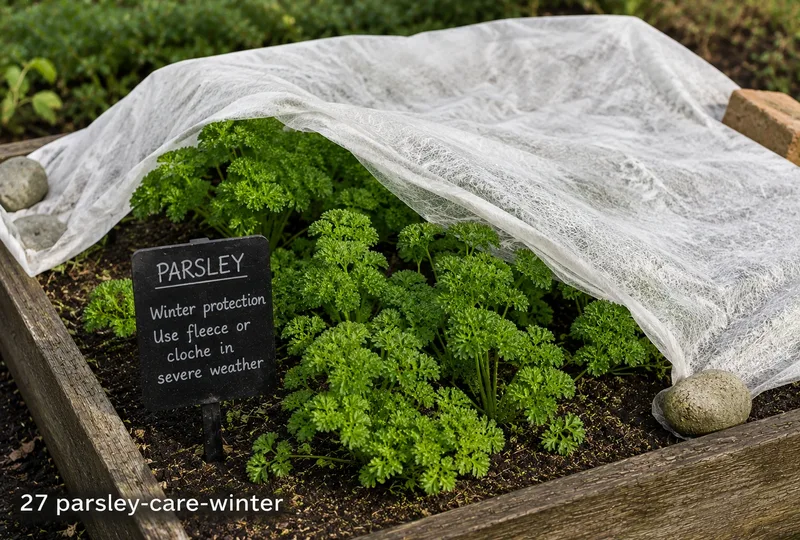
Protect autumn-sown plants with a cloche or fleece for year-round harvesting
Harvest outer stems only, leaving the central growing crown intact
🌱 SowMar–Jul (indoors or direct)
🌾 HarvestJun–Mar (protected)
☀ PositionSun or part shade
📐 Spacing20cm
DifficultyModerate
⚡ Quick facts
Difficulty
Moderate (germination is slow)
Start indoors
Mar–May (modules, 18°C)
Direct sow
Apr–Jul (warm soil, pre-soaked seeds)
Harvest
Jun–Mar (with cloche protection)
Position
Sun or part shade
Spacing
20–25cm
Height
30–50cm
Type
Biennial (grown as annual)
Water
Moderate — keep consistently moist during germination
01 About
Parsley is the cornerstone of the British herb garden and one of the most versatile ingredients in the kitchen. It grows easily once established — the challenge lies entirely in germination, which is notoriously slow and tests the patience of every gardener. Master the germination conditions and parsley rewards with months of productive harvesting. Flat-leaf types deliver the best flavour for cooking; curled types are hardier and prettier; Hamburg rooted gives a bonus vegetable as well as leaves.
02 What to Grow
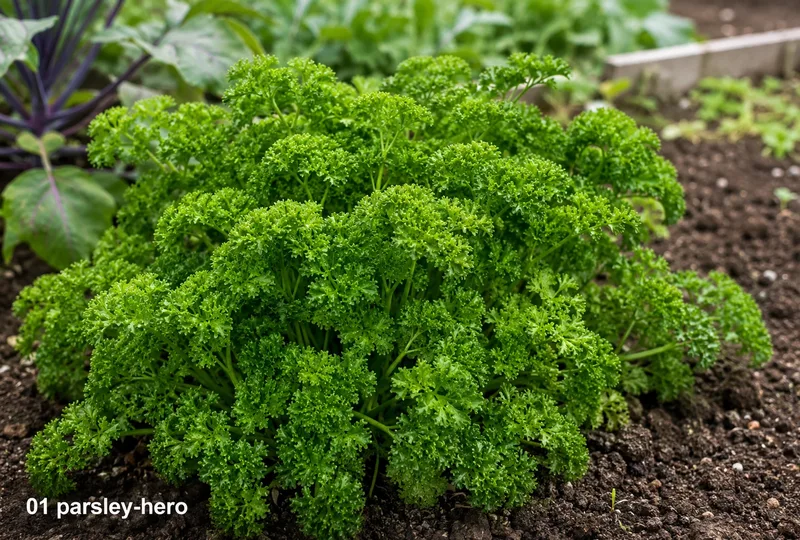
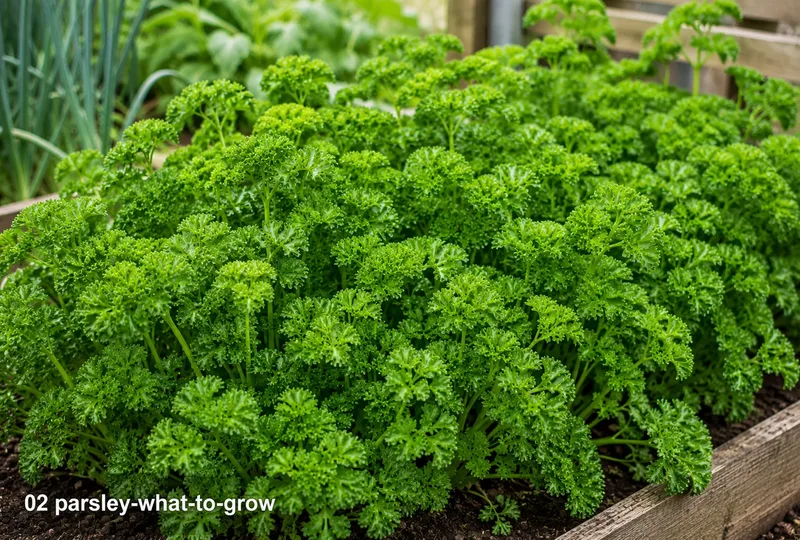
Flat-leaf (French) parsley is the cook's choice — stronger, cleaner flavour that survives moderate cooking and is essential in stocks, sauces, salads, and tabbouleh. Curled parsley is hardier, more decorative, and the better choice for winter harvesting under a cloche. Gigante d'Italia is the outstanding flat-leaf variety for yield and flavour. Hamburg parsley is a dual-purpose plant grown both for its large parsley-flavoured root (like a white carrot) and its leaves — an unusual and productive vegetable that is still underused in UK gardens. Bravour is the reliable AGM curled variety for year-round use.
03 Varieties
The number of varieties shown for each crop is based on UK consumption data (2025/26) — the more popular the crop, the more variety choices we include.
Flat-leaf (French)
Culinary · Flavour
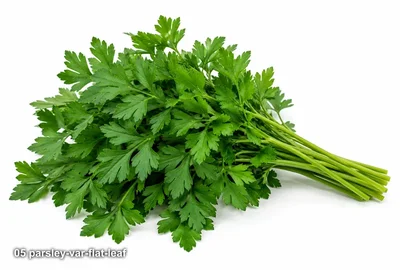
The preferred culinary parsley with a strong, clean flavour that survives light cooking. Flat, deeply cut leaves. Less hardy than curled types — protect in hard winters. Essential for stocks, salsa verde, chimichurri, and tabbouleh. The definitive French parsley — the one to choose if flavour is the priority.
Moss Curled
Culinary · Hardy · AGM
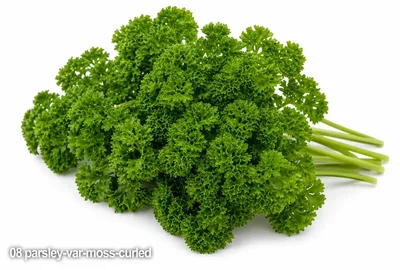
Tightly frilled, densely curled leaves with a mild, clean parsley flavour. Very hardy — the best choice for winter harvesting under a cloche. More decorative than flat-leaf and excellent as an edging plant. Slightly milder flavour than flat-leaf varieties but much more reliable in cold, wet UK winters.
AGM
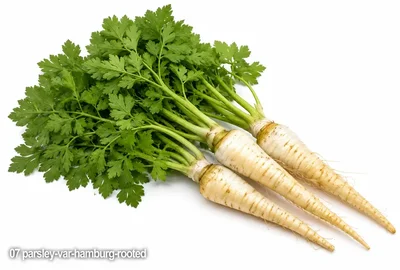
Hamburg Rooted
Dual Purpose · Root & Leaf
Grown for its large, fleshy, parsley-flavoured root as well as its leaves. The root resembles a white carrot or small parsnip and can be roasted, braised, or added to soups and stews. A dual-purpose crop that is still underused in UK gardens. Harvest roots from October onwards. The leaves can be used throughout the growing season.
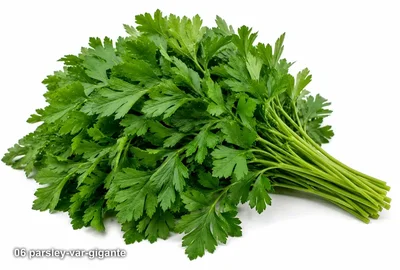
Gigante d'Italia
Culinary · High Yield
The finest flat-leaf variety for kitchen garden use. Very large, deeply cut leaves with outstanding flavour and aroma. Vigorous and productive — one of the highest-yielding parsley varieties available. Widely used by professional growers for its generous harvest and exceptional flavour. Slightly less hardy than curled types; protect in hard winters.
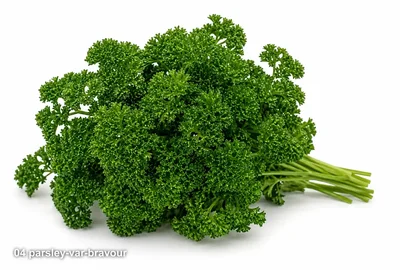
Bravour
Culinary · Hardy · AGM
RHS Award of Garden Merit curled parsley selected for consistent performance, productivity, and flavour across a wide range of conditions. Very dark green, tightly curled leaves. Excellent disease resistance and cold hardiness — one of the most reliable curled varieties for year-round UK use. The top choice for gardeners who want a dependable all-season curled parsley.
AGM
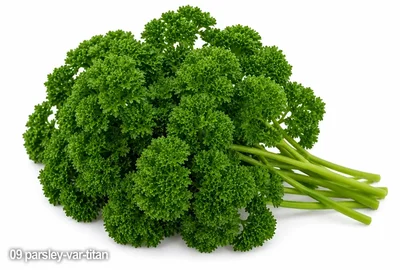
Titan
Culinary · Vigorous · AGM
A vigorous flat-leaf parsley with an upright habit and large, deeply cut leaves. Strong flavour. Produces a generous harvest over a long season and shows good resistance to bolting in its first year. A reliable, high-performing variety for picking all season.
AGM
04 Where to Source
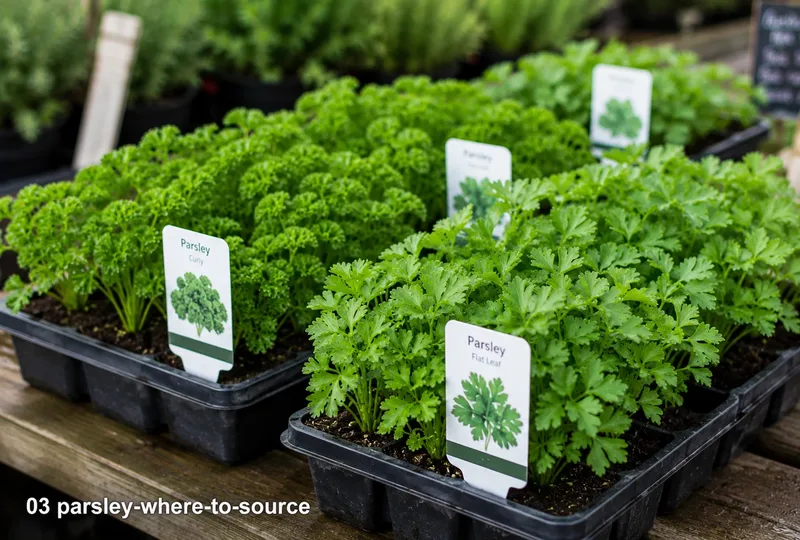
Flat-leaf and moss curled parsley are available from all major UK seed suppliers. Gigante d'Italia, Bravour, and Titan are stocked by specialist vegetable seed companies. Hamburg Rooted parsley is less commonly found — seek it from heritage seed suppliers or specialist vegetable seedsmen. Ready-grown parsley plugs are available from garden centres from April, though the variety range is usually limited to one curled and one flat-leaf type.
05 Planting Options
🌿 In the Garden Border
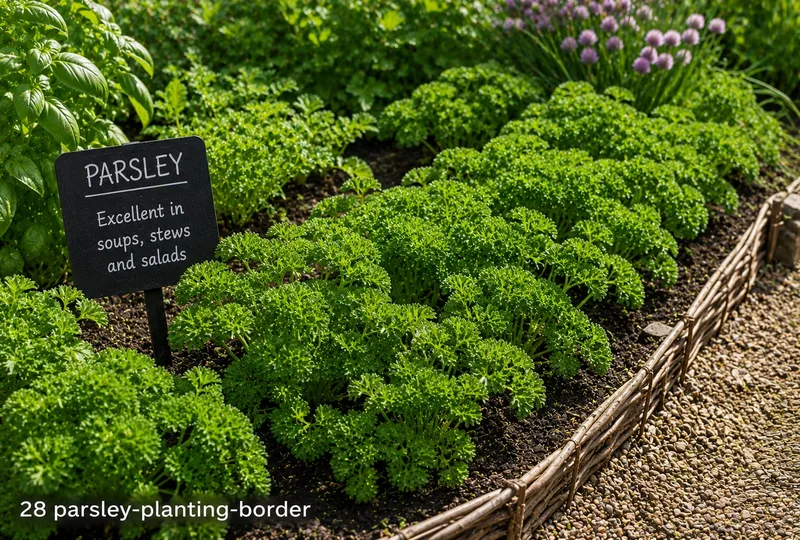
Parsley in the garden border provides the largest, most productive plants with the best flavour. It grows well in most positions including part shade — useful under taller crops. Sow or plant in blocks of 6+ plants for a useful harvest. Protect with cloches from October for continued winter harvesting.
🪴 In a Container
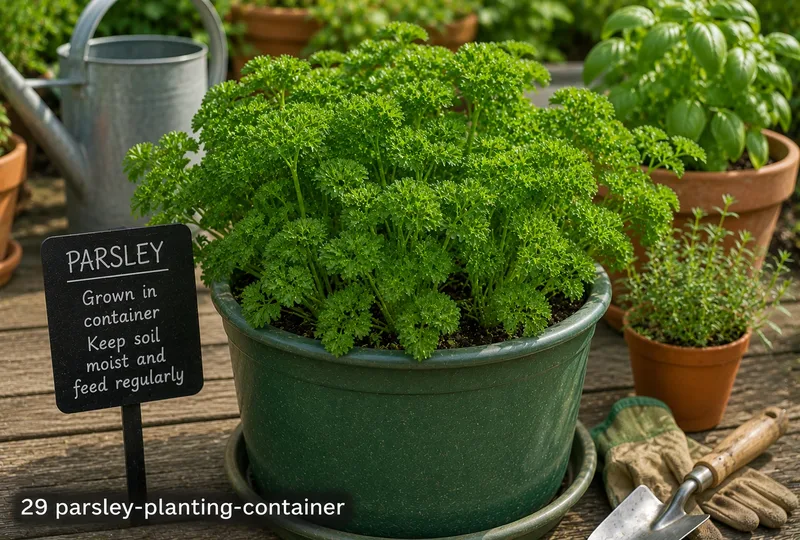
Parsley in a large container (25cm+ diameter) is excellent for patios and doorsteps. Use rich peat-free compost and keep consistently moist — parsley in containers dries out faster than border plants and will abort growth if it desiccates. Move under shelter in hard frosts for continued winter harvesting.
Both are compact herbs that make efficient use of the same bed or container.
❌ Keep apart
🌱 Mint — Mint's vigorous spreading roots will quickly crowd out and smother slower-growing parsley.
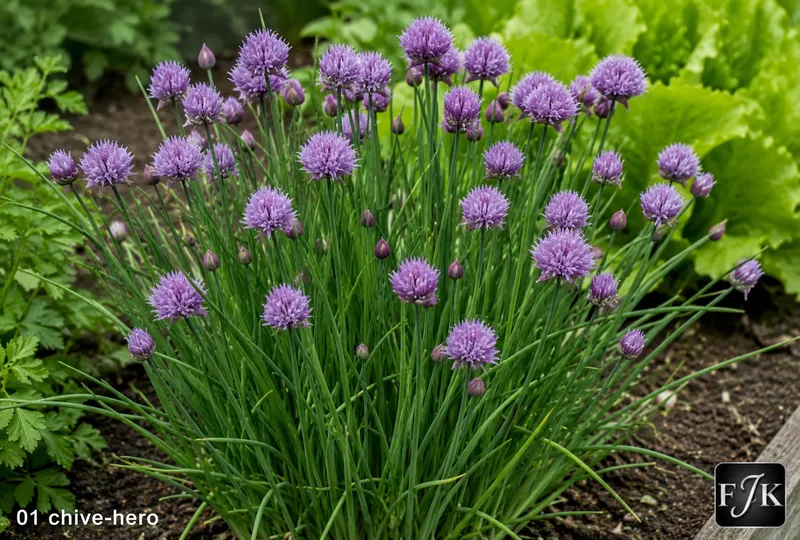
🧅 Alliums — Onions and other alliums are thought to stunt parsley growth when planted in the same bed.
07 Sowing — How To
🌱 Sowing Indoors (Recommended)
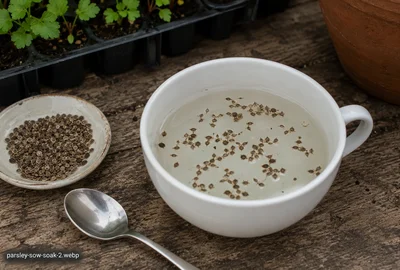
Pre-soak seeds for 24 hours
Place parsley seeds in a small cup of warm water and leave for 24 hours before sowing. This softens the tough seed coat and can reduce germination time from 6 weeks to 3–4 weeks. Drain before sowing.
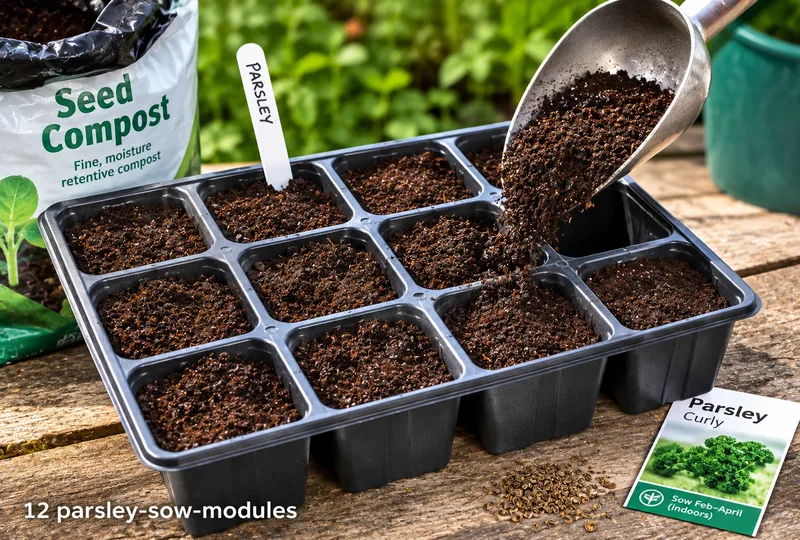
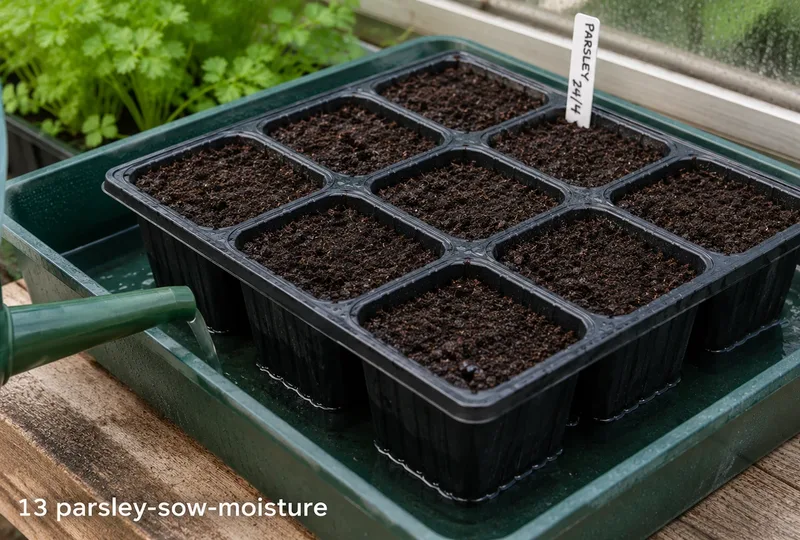
Fill modules with moist seed compost
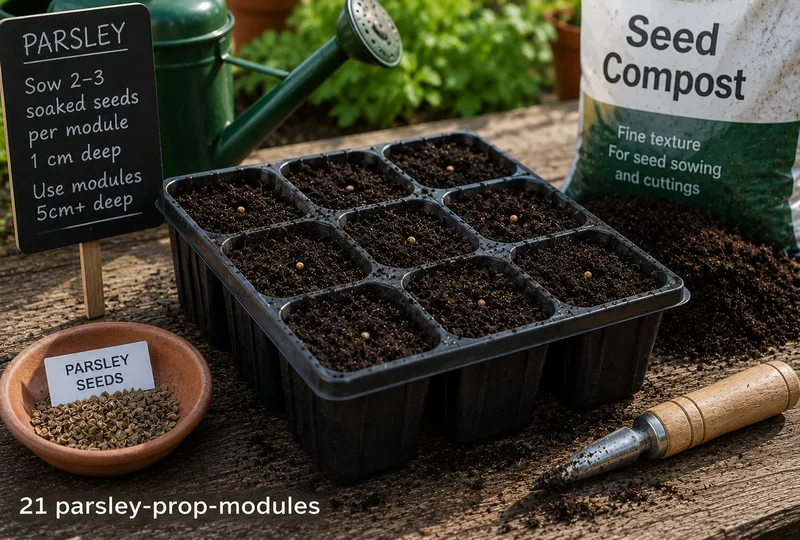
Fill module trays with seed compost moistened before sowing. Parsley has a long tap root — use modules at least 5cm deep rather than shallow seed trays. Sow 2–3 seeds per module at 1cm depth.
Maintain 18°C consistently
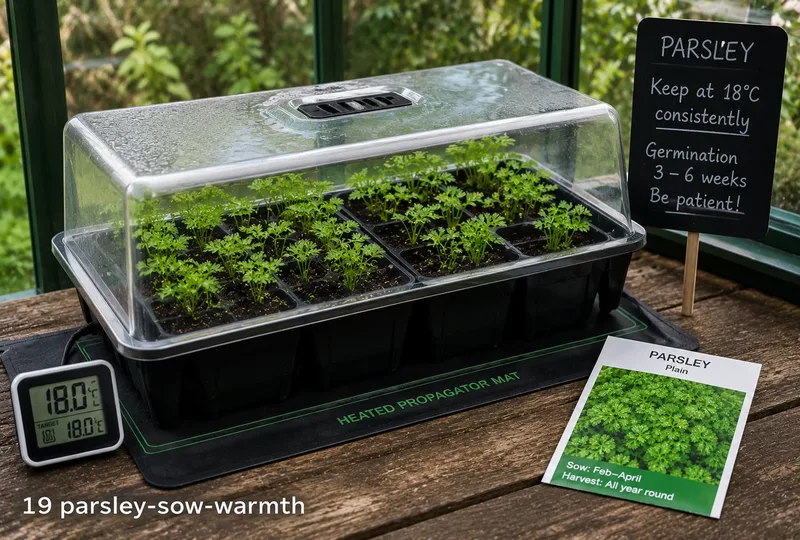
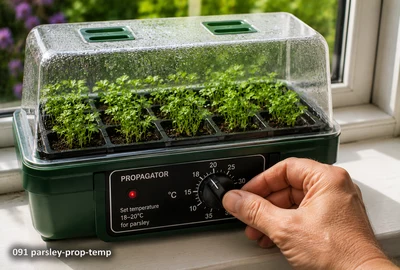
Parsley needs a consistent 18°C to germinate reliably. Place modules on a heated propagator mat or in a propagator set to 18°C. Temperature fluctuations are the primary cause of poor germination. Be patient — 3–6 weeks is normal.
Keep consistently moist
Check moisture daily. The compost must never dry out during the germination period — even brief desiccation aborts the germinating seeds and they will not recover. Water gently from below if possible.
Thin to one seedling per module
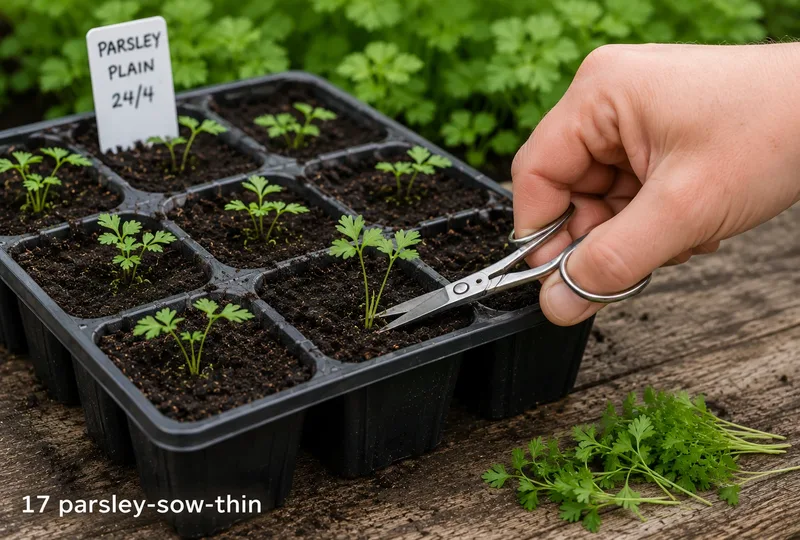
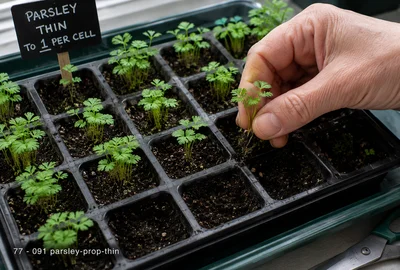
When seedlings reach 2cm, thin to the strongest one per module by snipping the others at soil level. Do not pull — root disturbance sets back the remaining seedling significantly. Parsley resents any root interference.
Plant out when 8–10cm tall
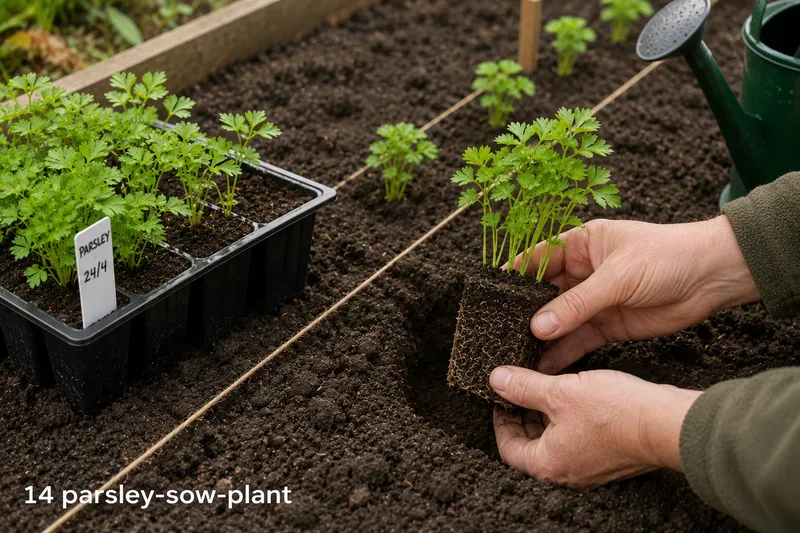
Plant out modules when plants are 8–10cm tall and nights are above 5°C. Disturb the roots as little as possible — slide the whole plug out and plant directly without breaking it apart. Space 20–25cm apart. Water in well.
Sowing Indoors (Recommended) — regional timing
Region
Sow / plant
Harvest
Notes
Scotland & Far North
Apr–Jun
Aug–Feb
Apr–May · Plant: Jun · Harvest: Aug–Feb
Northern England
Mar–Jun
Jul–Mar
Mar–May · Plant: May–Jun · Harvest: Jul–Mar
Midlands & Wales
Mar–May
Jun–Mar
Mar–May · Plant: May · Harvest: Jun–Mar
Ireland & Isle of Man
Mar–May
Jun–Mar
Mar–May · Plant: May · Harvest: Jun–Mar
South & SE England
Mar–Jun
Jun–Mar
Mar–Jun · Plant: Apr–Jun · Harvest: Jun–Mar
South Coast & SW
Mar–Jul
Jun–Mar
Mar–Jul · Plant: Apr–Jul · Harvest: Jun–Mar
🌿 Direct Sowing Outdoors
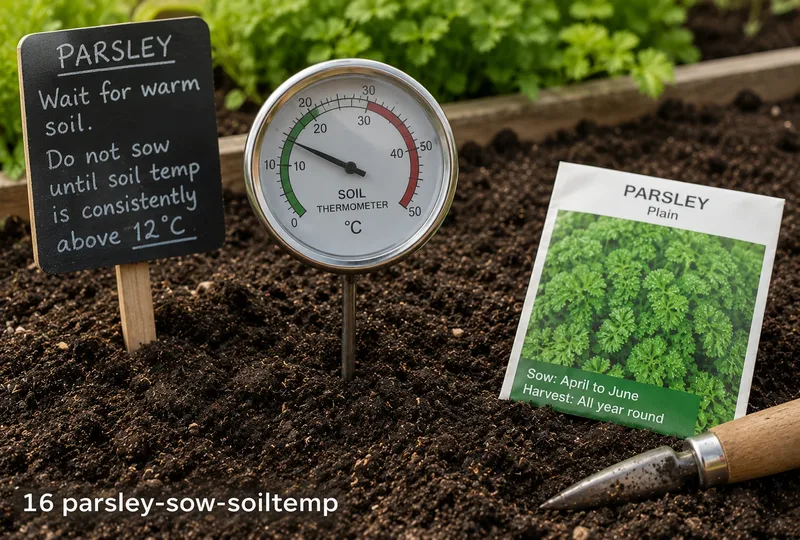
Wait for warm soil
Do not sow direct until soil temperature is consistently above 12°C — this is usually late April in the South, May or June in Scotland. Cold soil is the primary cause of direct sow failure. Check with a soil thermometer if in doubt.
Pre-soak seeds
Soak seeds in warm water for 24 hours before sowing to soften the seed coat. Prepare the drill while seeds are soaking.
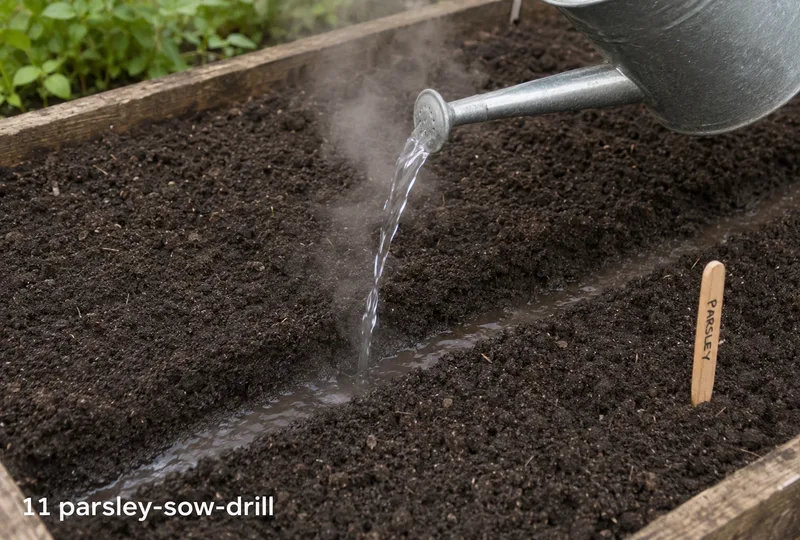
Pour boiling water along the drill
Make a drill 1cm deep. Pour boiling water along it and allow to cool for 10 minutes. This warms the soil at seed depth and kills surface weed seeds that would compete with slow-germinating parsley.
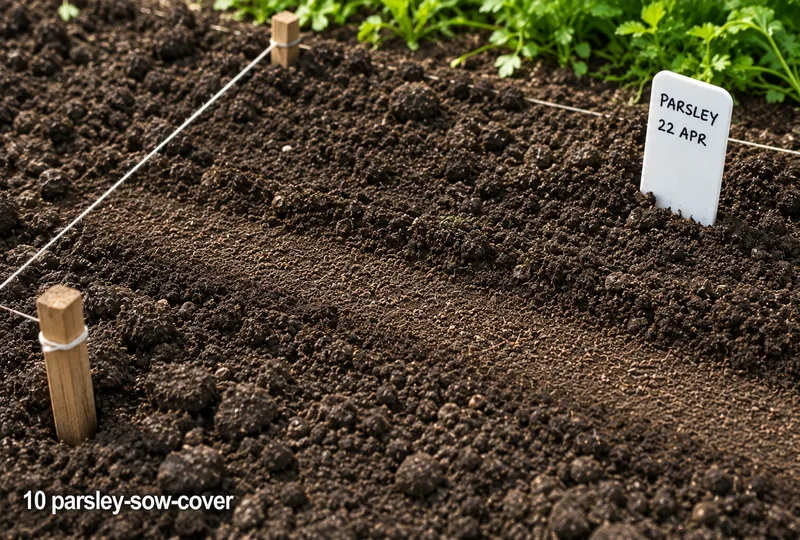
Sow thinly and cover
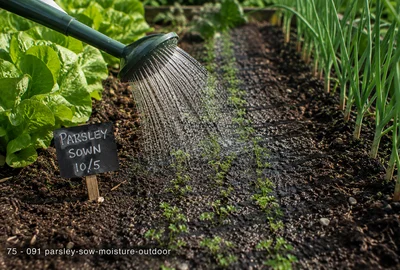
Sow seeds thinly along the prepared drill and cover with 1cm of fine soil. Firm gently. Mark the drill clearly — parsley takes so long to germinate that you may forget exactly where you sowed. Label with date.
Keep moist throughout germination
Water the drill gently every day if no rain falls. Never allow the surface to crust or dry out. Germination takes 3–6 weeks — continue watering even if nothing is visible. The seeds are germinating underground.
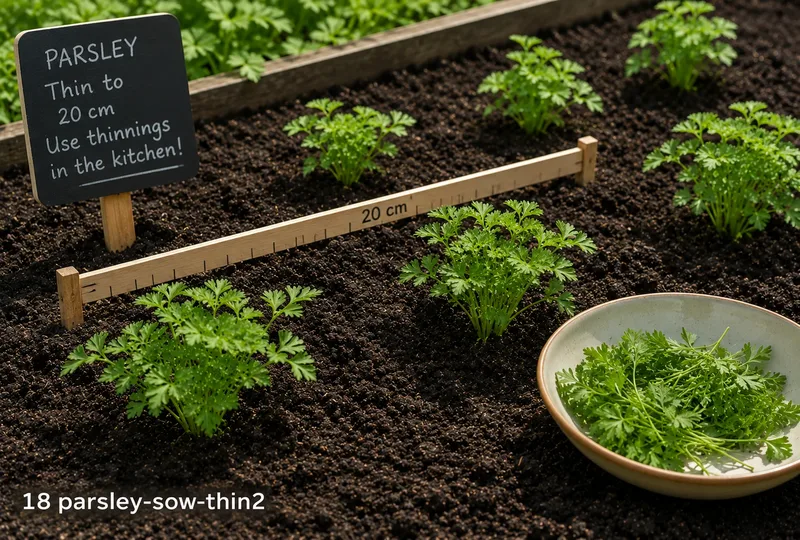
Thin to 20cm when 5cm tall
Once seedlings are 5cm tall, thin progressively to 20cm spacing. Thin in stages over 2–3 weeks rather than all at once. Use thinnings in the kitchen immediately — they are full of flavour.
Direct Sowing Outdoors — regional timing
Region
Sow / plant
Harvest
Notes
Scotland & Far North
May–Jun
Aug–Jan
May–Jun · Plant: N/A · Harvest: Aug–Jan
Northern England
Apr–Jun
Jul–Feb
Apr–Jun · Plant: N/A · Harvest: Jul–Feb
Midlands & Wales
Apr–Jul
Jul–Mar
Apr–Jul · Plant: N/A · Harvest: Jul–Mar
Ireland & Isle of Man
Apr–Jun
Jul–Feb
Apr–Jun · Plant: N/A · Harvest: Jul–Feb
South & SE England
Apr–Jul
Jun–Mar
Apr–Jul · Plant: N/A · Harvest: Jun–Mar
South Coast & SW
Apr–Aug
Jun–Mar
Apr–Aug · Plant: N/A · Harvest: Jun–Mar
08 Using a Propagator
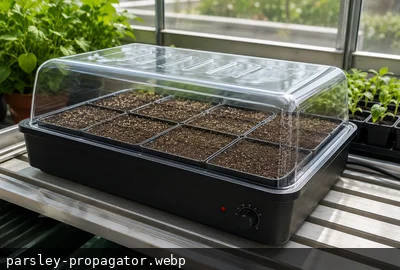
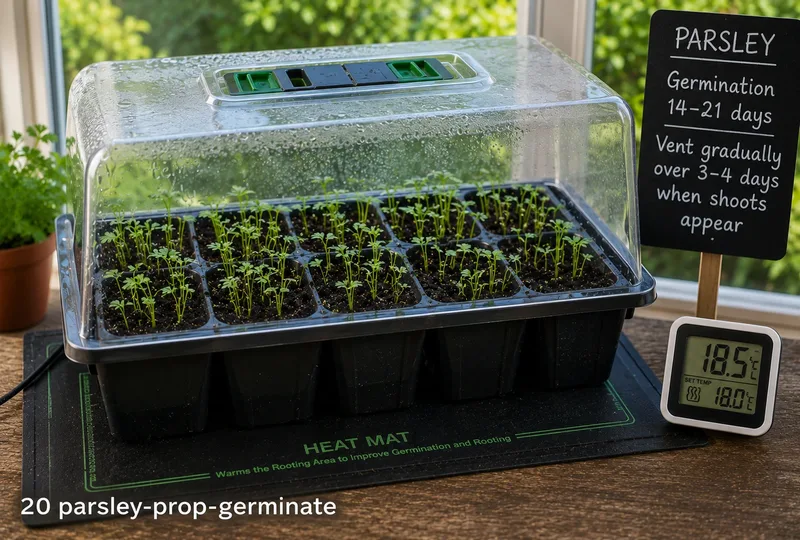
A heated propagator is the single best tool for reliable parsley germination. The consistent 18–20°C that a thermostatically controlled propagator provides removes the main variable in parsley growing. Without one, germination is erratic and often disappointing. Parsley in a propagator at 18°C germinates in 2–3 weeks rather than 5–6 on a cool windowsill.
Heated propagator
Set to 18–20°C. Sow seeds 5mm deep in moist compost. Keep the lid on throughout germination (2–3 weeks). Keep compost consistently moist. Remove the lid the moment seedlings appear.
Temperature: 18–20°C
Unheated propagator
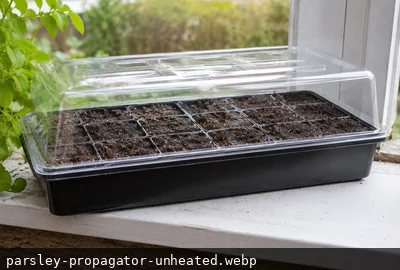
An unheated propagator on a warm windowsill (above 18°C) can work from May onwards but expect slower, more erratic germination (3–6 weeks). For earlier sowings or more reliable results, a heated propagator is strongly recommended for parsley.
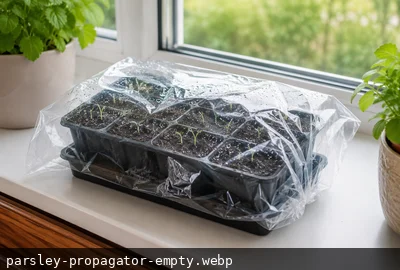
Standard unheated propagator — A lidded seed tray traps warmth and humidity around germinating seeds without electricity. Performance depends entirely on room temperature — best placed on a warm windowsill and used from March onwards. Replace the lid promptly after watering. Remove it completely the moment seedlings emerge to prevent damping off.
Pre-soak seeds before propagating
Soak seeds in warm water for 24 hours before placing in the propagator. This softens the hard seed coat and gives a meaningful reduction in germination time even with bottom heat.
Sow in deep modules
Use modules at least 5cm deep — parsley develops a long tap root from early on. Fill with moist seed compost, sow 2–3 pre-soaked seeds per module at 1cm depth, and cover with fine compost.
Set propagator to 18–20°C
Place modules in the propagator and close the lid. Set to 18–20°C — do not exceed 22°C as this can inhibit germination. Check moisture every 2 days; never allow compost to dry out.
Germination in 14–21 days
With consistent bottom heat, parsley germinates in 14–21 days. Once shoots appear, open the propagator vents progressively over 3–4 days, then remove the lid and move to a bright, warm windowsill at 15°C+.
Thin and grow on
Thin to the strongest seedling per module when 2cm tall. Grow on in good light without check — parsley hates root disturbance at any stage. Plant out when 8–10cm tall, disturbing the root plug as little as possible.
Windowsill alternative: A bright south-facing windowsill can substitute from late February. Place a clear polythene bag loosely over the pot during germination. Remove immediately once seedlings appear.
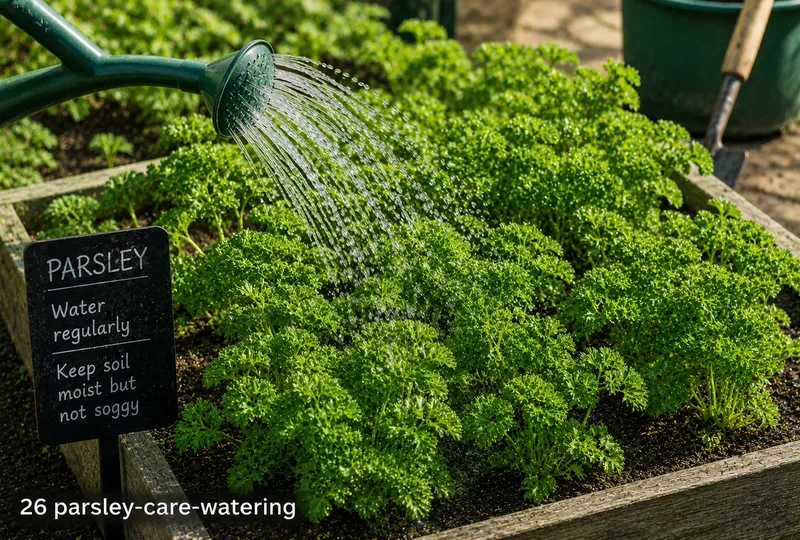
Keep the soil consistently moist throughout the growing season. Parsley wilts quickly in dry conditions and the subsequent stress can trigger premature bolting. This is especially important during germination and the first weeks after transplanting. In containers, check moisture daily in summer. In the border, water deeply once or twice per week in dry spells rather than daily shallow watering.
✂️ Harvesting
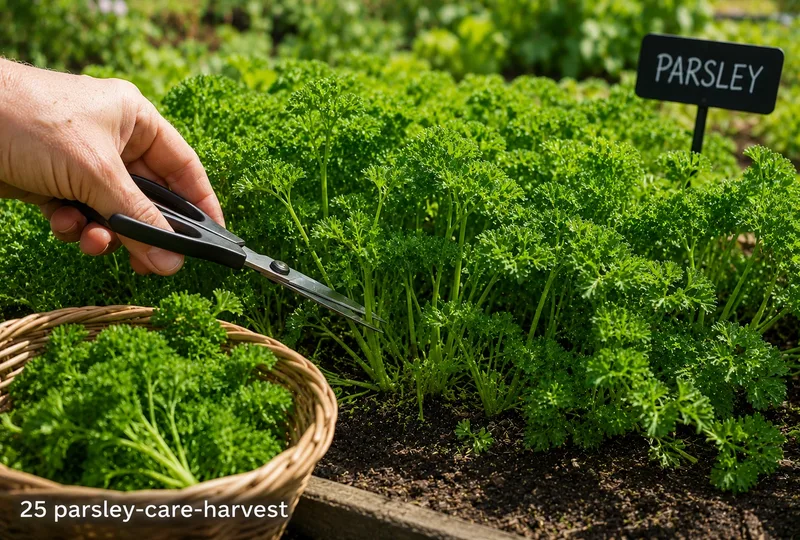
Always harvest outer stems first, cutting at the base of the stem rather than snipping the tips. Leave the central growing crown intact — this is the source of new growth. Never harvest more than one-third of the plant at once. Regular harvesting keeps the plant productive and delays flowering. In the second year, plants flower and the leaves become bitter — harvest any remaining good leaves before the flower stalk appears and then pull the plant.
🌡️ Winter Protection
Curled parsley is remarkably hardy and often survives mild UK winters without protection. Flat-leaf varieties are less cold-tolerant and benefit from cloche cover from October. A simple glass or polythene cloche over a row of parsley extends the harvest season by 2–3 months into the winter. In very cold regions, pot a few plants and bring indoors to a bright windowsill for year-round supply.
11 Watch Out For
Warning
Parsley is very slow to germinate — 3 to 6 weeks at 18°C is entirely normal. Do not re-sow too soon. Parsley is biennial — plants sown in spring will flower in their second year and must be replaced with a new sowing. Hamburg parsley roots can be left in the ground over winter and harvested as needed, like parsnips.
🐛 Insects & pests
🪰 Carrot Root Fly — Reddish-brown rusty tunnels running through the outside of carrot and parsnip roots — larval feeding channels
🐜 Aphids (Blackfly & Greenfly) — Curled, distorted, or stunted growing tips — aphids inject saliva that causes leaf curl to protect them
🐌 Slugs & Snails — Silver slime trails on leaves, soil, and pots — often the first sign before damage is found
🍄 Diseases to watch
🩶 Botrytis (Grey Mould) — Botrytis cinerea (grey mould) is the most ubiquitous fungal pathogen in temperate gardens — present in virtually every garden soil and on plant debris. It becomes a disease only when conditions favour it: cool, humid, poorly ventilated environments with damaged or senescent plant tissue. In a greenhouse in autumn it can destroy an entire tomato or grape crop.
Full identification and treatment advice is in the Pests and Diseases sections.
12 Storage & Preserving
🌿 Fresh (Short Term)
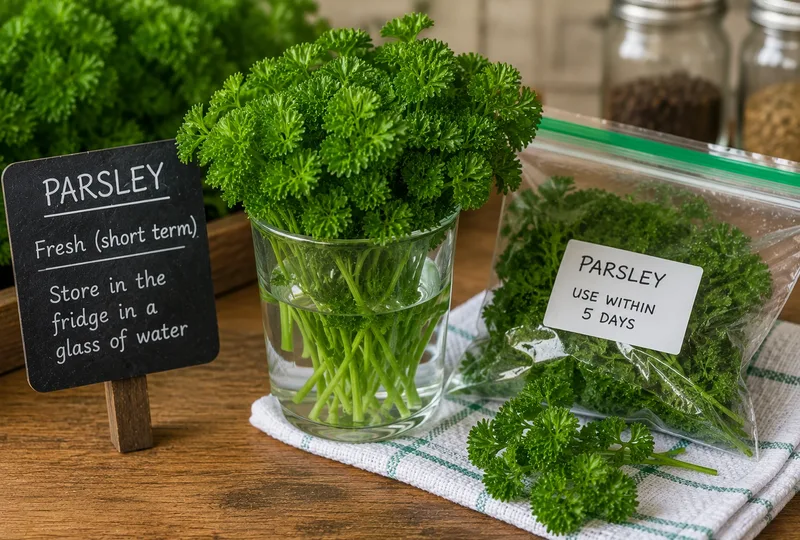
Stand cut parsley stems upright in a glass of cold water on the kitchen worktop — it stays fresh and bright green for 5–7 days. Alternatively, wrap in a damp paper towel and store in a sealed bag in the fridge for up to 10 days. Re-cut the stem ends every 2–3 days and change the water to extend freshness. Flat-leaf parsley stores slightly better than curled in water.
🧊 Frozen
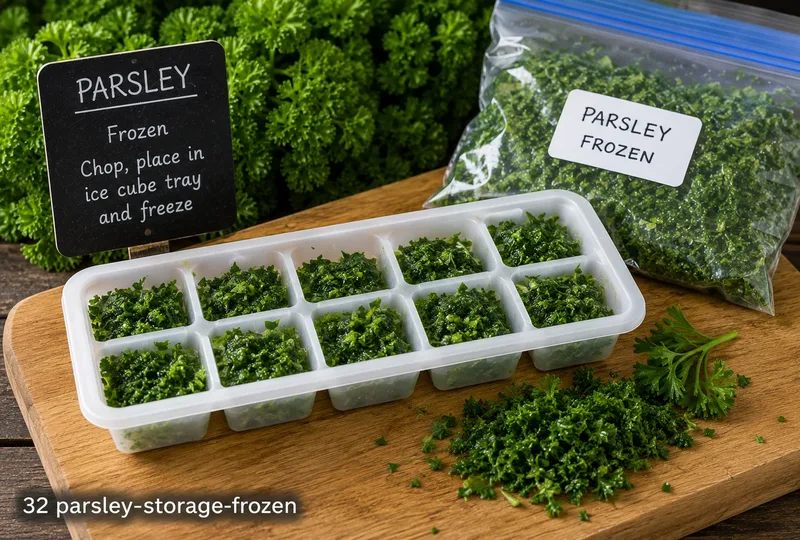
Parsley freezes well and this is the best method for preserving large quantities from a summer harvest. Wash and dry thoroughly, then chop finely and freeze flat on a tray before bagging in small portions. Alternatively, blend with olive oil and freeze in ice cube trays — each cube is a ready-made base for sauces, pasta, and risotto. Frozen parsley retains excellent flavour for 6 months but loses its texture and colour — use straight from frozen in cooked dishes.
☀️ Dried
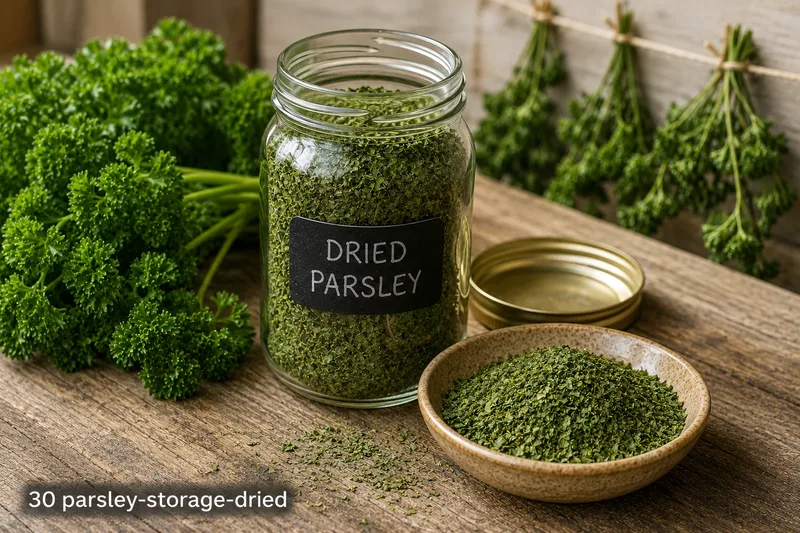
Dried parsley is significantly less flavourful than fresh or frozen, but is a useful standby for winter cooking. Wash and dry stems, then spread leaves on a rack or tray and dry in the oven at its lowest setting with the door ajar for 1–2 hours. Cool completely and store in an airtight jar. Flat-leaf parsley dries more successfully than curled. Use within 6 months while there is still some flavour remaining.
13 Expert Tips
💡 Three Sowing Windows
Sow parsley at three different times: March (for early summer), June (for autumn), and August (for winter harvesting under cloches) — this gives a genuine year-round supply.
💡 Overwinter Hamburg Roots
Hamburg parsley roots can be left in the ground and harvested through winter — treat them exactly like parsnips and the flavour actually improves after the first frost.
💡 Beat Slow Germination
To break parsley slow germination: pre-soak in warm water for 24 hours, then sow in a propagator at 18°C on moist compost. This combination routinely gives germination in 14 days rather than 6 weeks.
14 Common Mistakes
⚠ Giving up on germination too soon
⚠ Allowing the compost to dry out during germination