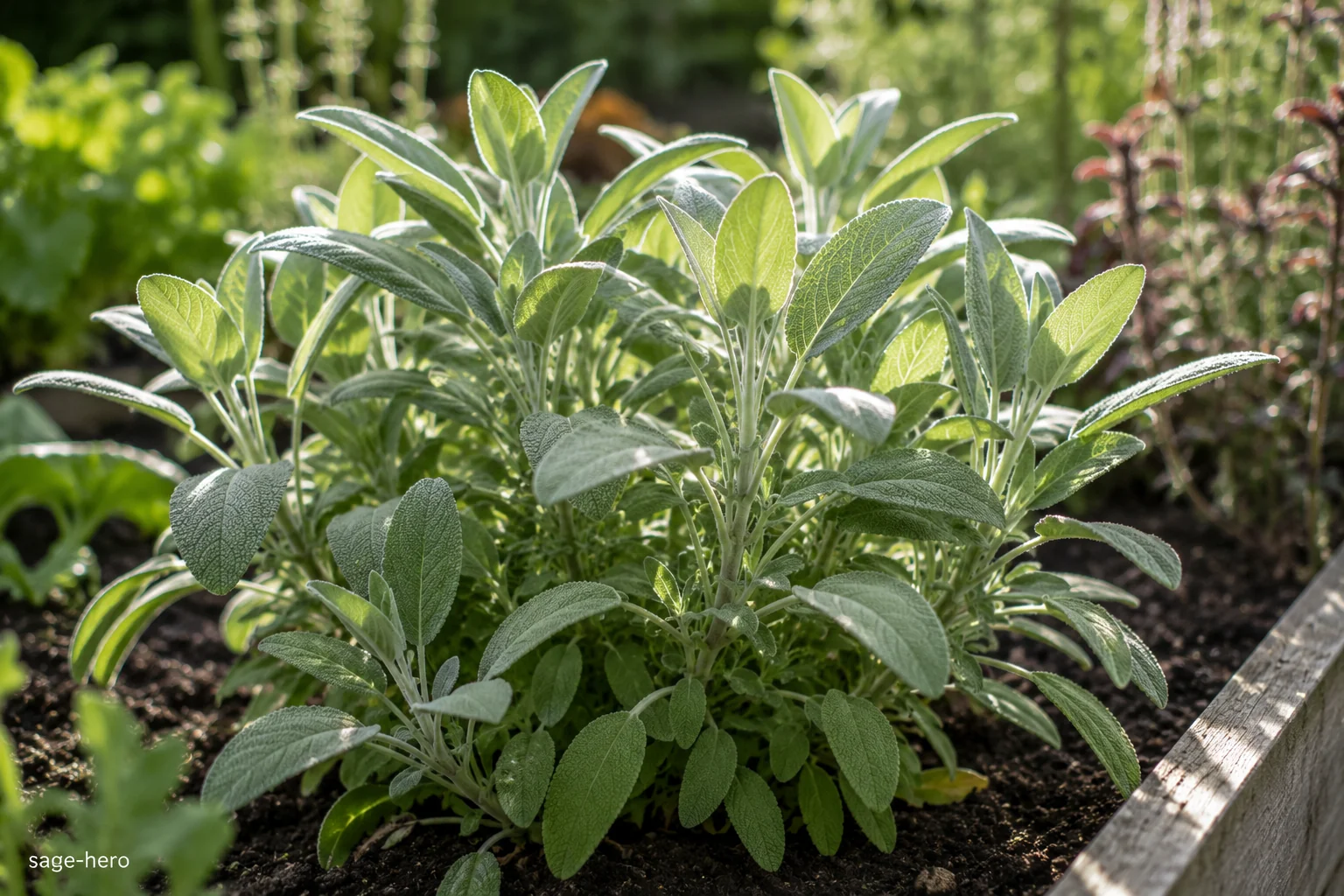
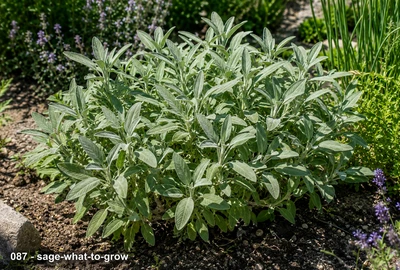
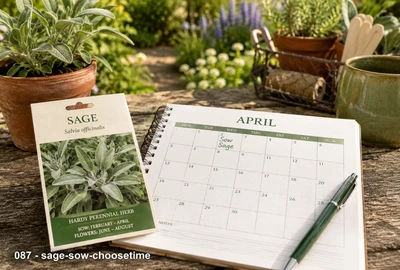
Buy as a pot-grown plant, or sow seed indoors March–May
Plant in full sun with sharp drainage — sage hates wet feet
On heavy clay: add grit or grow in a raised bed or large pot
Trim lightly in spring and again after flowering to keep plants bushy
Replace plants every 4–5 years as they become woody and leggy
Harvest leaves year-round — established plants tolerate regular picking well
Watch for powdery mildew in damp, crowded conditions — improve air flow
🌱 SowSow Mar–May or buy as plant; cuttings Jun–Aug
🌾 HarvestYear-round (best Apr–Oct)
☀ PositionFull sun, well-drained
📐 Spacing45–60cm
DifficultyEasy
⚡ Quick facts
Difficulty
Easy
Crop type
Hardy Evergreen Sub-Shrub
Position
Full Sun
Soil
Poor to Moderately Fertile, Well-Drained
Container friendly
Yes — does well in terracotta pots
Greenhouse recommended
Not needed — fully hardy
Outdoor suitable
Yes — all UK, with shelter for coloured-leaf forms in the north
Frost hardy
Yes — hardy to around -15°C when established
01 About
Sage is a robust, aromatic Mediterranean perennial with soft, velvety grey-green leaves and a warm, savoury flavour that is central to British and European cooking — from sage and onion stuffing to brown butter sauces. Hardy, evergreen, and undemanding, a single well-grown plant will supply a household for years. Like its Mediterranean relatives rosemary and thyme, sage thrives on neglect: poor soil and full sun produce the best flavour and the longest-lived plants.
02 What to Grow
Common sage is the classic culinary variety — strong, dependable, and the best choice for heavy kitchen use, particularly stuffing and sauces. Broad-Leaved Sage offers bigger leaves and a slightly milder flavour, useful where large whole leaves are wanted. The coloured-leaf forms — golden, purple, and tricolor — are all fully culinary as well as highly ornamental, though the tricolor form is noticeably less hardy and benefits from a sheltered spot in cold regions. Berggarten is prized for its rounded, compact leaves and reluctance to flower, which keeps the plant productive and tidy for longer.
03 Varieties
The number of varieties shown for each crop is based on UK consumption data (2025/26) — the more popular the crop, the more variety choices we include.
🌿 Classic Culinary Varieties
Strong, dependable green-leaved forms — the backbone of the herb garden for cooking. Fully hardy across the UK.
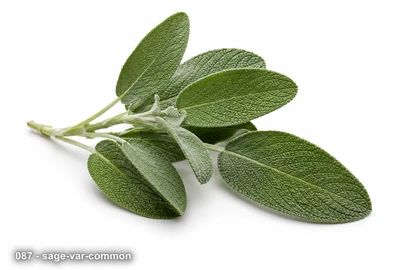
Common Sage
Culinary · Classic
The definitive culinary sage. Soft, grey-green, velvety leaves with a strong, warm, savoury flavour. The variety of choice for stuffing, sausages, and brown butter sauces. Fully hardy and long-lived. The backbone of any herb garden.
Classic
Kitchen Staple
Fully Hardy
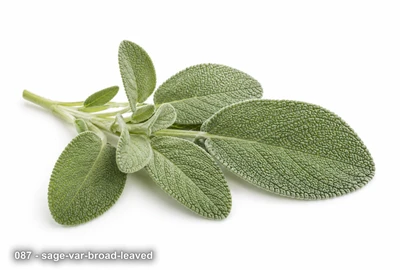
Broad-Leaved Sage
Culinary · Large Leaf
A vigorous form with noticeably larger leaves than common sage and a slightly milder flavour. Useful where whole leaves are wanted — fried sage leaves, wrapping, or garnish. Robust and reliable across UK gardens.
Large Leaf
Robust
Culinary
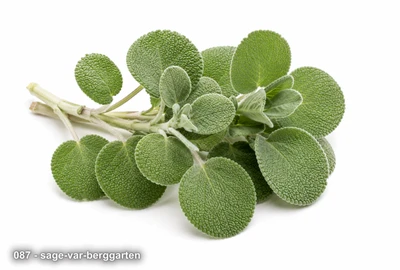
Berggarten
Compact · AGM
RHS Award of Garden Merit. Compact, rounded habit with broad, rounded leaves and excellent flavour. Flowers less freely than common sage, which keeps the plant producing good leaf for longer through the season. Reliable and tidy.
AGM
Compact
Long Productive Season
🎨 Coloured & Ornamental-Leaf Varieties
Fully culinary as well as highly decorative, these coloured-leaf forms bring colour to the herb bed year-round. Slightly less hardy than common sage — a sheltered spot helps in cold regions.
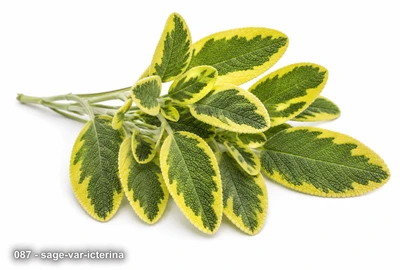
Icterina (Golden Sage)
Variegated · AGM
RHS Award of Garden Merit. Soft green leaves broadly edged in gold, giving a bright, variegated effect. Good culinary flavour, slightly milder than common sage. Fully hardy in most UK gardens. Excellent for brightening a herb border.
AGM
Golden Variegation
Ornamental
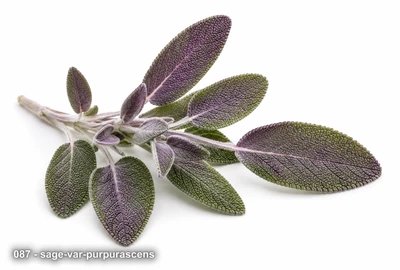
Purpurascens (Purple Sage)
Coloured Leaf · AGM
RHS Award of Garden Merit. Leaves flushed deep purple-red, especially strong in young growth. Excellent culinary flavour, very close to common sage. Handsome contrast plant in a herb or mixed border. Reliably hardy.
AGM
Purple Leaves
Culinary
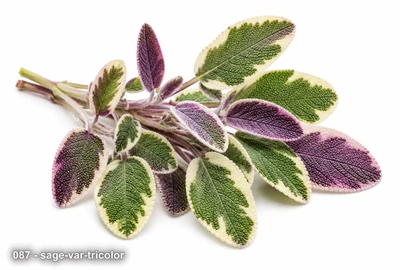
Tricolor Sage
Variegated · Less Hardy
Striking cream, pink, and purple-green variegated leaves — the most ornamental sage available. Good but slightly milder flavour than common sage. Noticeably less hardy than other forms; benefits from a sheltered spot or container growing with winter protection in cold regions.
Most Ornamental
Shelter in North
Containers
04 Where to Source
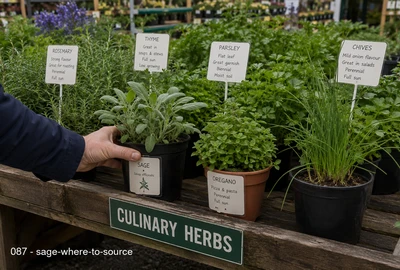
Sage plants are widely available at garden centres and supermarkets from spring onwards. Common sage grows readily from seed, making it economical to raise several plants; the coloured-leaf cultivars (Icterina, Purpurascens, Tricolor, Berggarten) do not come true from seed and should be bought as named plants or grown from cuttings. Herb specialists and online nurseries offer the widest choice of named varieties.
05 Planting Options
🌿 In the Garden Bed
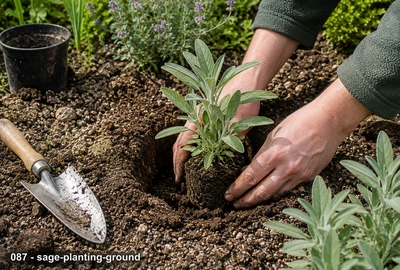
Sage is happiest in a sunny border with sharp drainage and poor to moderate soil — the same conditions that suit rosemary and thyme. A permanent spot at the front of a bed, along a path, or against a warm wall gives the best results. Once established, garden-grown sage needs very little attention: no routine watering, no feeding, and just a light trim in spring and after flowering. Space plants 45–60cm apart.
Suitable varieties: All varieties do well in the open garden. Common Sage and Broad-Leaved Sage are the most robust; Purpurascens and Icterina are fully hardy garden plants. Give Tricolor a sheltered spot.
🪴 In a Container
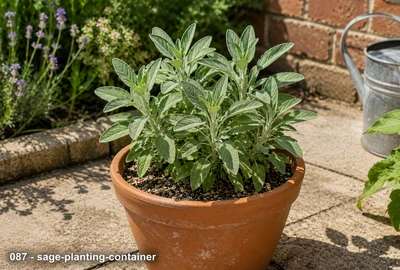
Sage grows well in pots — a 30–40cm container is ample for a mature plant. Use a free-draining compost mix (peat-free multi-purpose with 20–30% added horticultural grit), and water only when the compost has nearly dried out. Container growing is the easiest way to give the less hardy coloured-leaf varieties winter shelter, and keeps a plant handy by the kitchen door for picking.
Suitable varieties: Coloured-leaf forms — Icterina, Purpurascens, Tricolor, Berggarten — are ideal for containers, where they can be moved to shelter in winter. Common Sage also does well in a large pot.
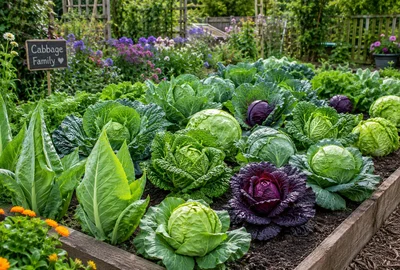
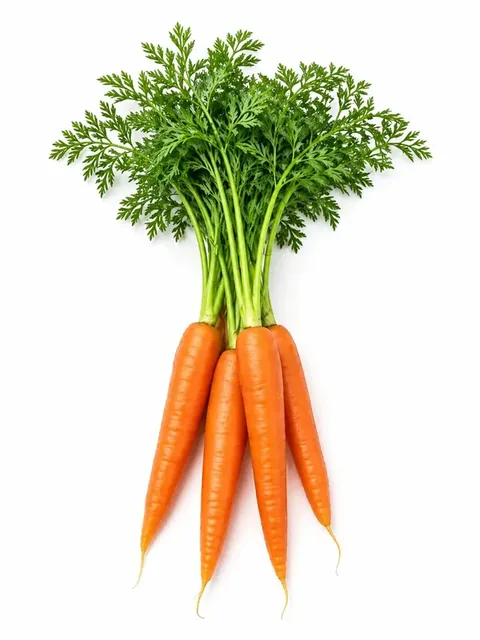
Sage is thought to help repel carrot root fly with its aromatic oils. Plant at the edge of the carrot bed as a border.
❌ Keep apart
🌿 Mint — Mint spreads aggressively by underground runners and will invade and overwhelm sage. Plant mint in a sunken container to prevent it colonising the herb bed.
🥒 Cucumber — Sage is traditionally said to inhibit cucumber growth when planted nearby. Keep sage in a separate part of the vegetable garden from cucumbers.
07 Sowing — How To
🌱 Sowing From Seed
Choose the right time
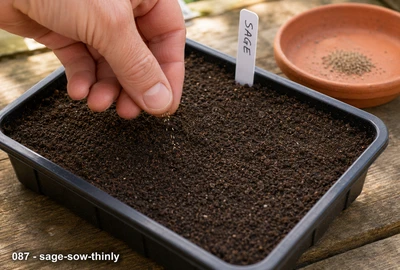
Sow indoors March–May at 15–18°C. Sage germinates slowly and somewhat unevenly — patience is needed. Only common sage is reliably true from seed; coloured forms should be bought as plants or grown from cuttings.
Sow thinly into trays
Sow seed thinly onto the surface of free-draining seed compost and cover with a very light dusting of vermiculite — sage seed needs some light to germinate. Water gently from below.
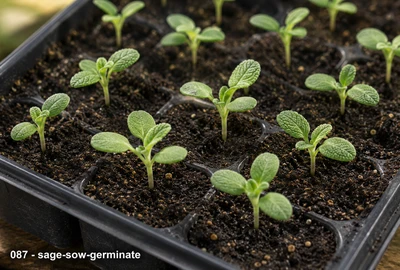
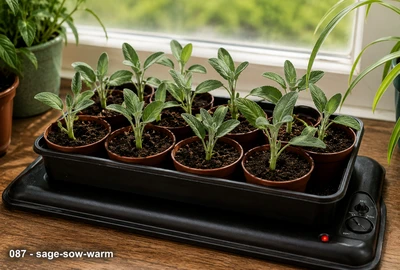
Germinate on a warm windowsill
Keep at 15–18°C in bright, indirect light. Germination is slow and can take 2–4 weeks — do not give up too early. Keep compost just moist, never waterlogged.
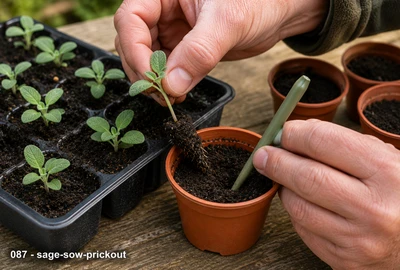
Prick out seedlings
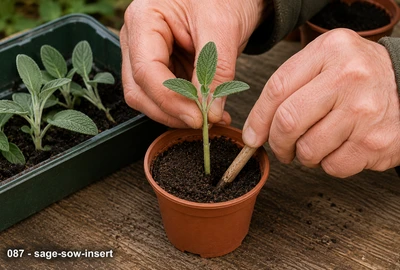
Once seedlings have their first true leaves, prick out individually into 9cm pots of peat-free compost with added grit for drainage.
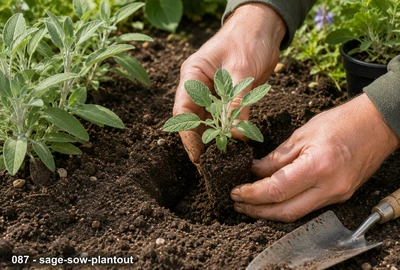
Harden off and plant out
Harden off over 7–10 days once frosts have passed, then plant out into the final position 45–60cm apart in full sun.
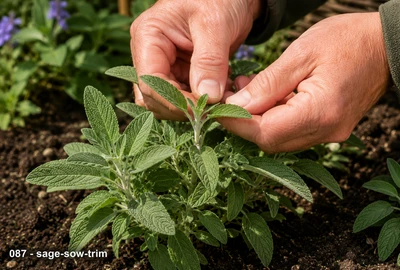
Trim young plants to bush out
Pinch out the growing tips of young plants once established to encourage a bushy, compact habit rather than a single leggy stem.
Sowing From Seed — regional timing
Region
Sow / plant
Harvest
Notes
Scotland & Far North
Apr–May
Jun–Nov
Sow indoors April–May at 15–18°C. Plant out June once frosts are over. Choose the sunniest, most sheltered spot available. Mulch with grit for winter. · Apr–May
Northern England
Mar–May
May–Nov
Sow indoors March–May. Plant out May–June. Give a sheltered, sunny position — an exposed site checks growth in the first year. · Mar–May
Midlands & Wales
Mar–Apr
May–Dec
Sow indoors March–April. Plant out May. Reliable UK sage territory given good drainage and a sunny spot. · Mar–Apr
Ireland & Isle of Man
Mar–May
May–Nov
Sow indoors March–May. Watch for waterlogging on wetter soils — add extra grit. Plant out May–June. · Mar–May
South & SE England
Mar–Apr
Apr–Dec
Sow indoors March–April. Plant out April–May. Excellent sage climate — plants establish quickly and flower well. · Mar–Apr
South Coast & SW
Feb–Apr
Apr–Dec
The mildest UK region for sage. Sow indoors February–April. Plant out April. Main risk is excessive winter wet — ensure sharp drainage. · Feb–Apr
✂️ Cuttings & Division
Choose the right time
Softwood cuttings in late spring (May–June) root fastest. Semi-ripe cuttings from summer (July–August) are slightly slower but very reliable — the best route to true-to-type coloured varieties.
Take a 8–10cm cutting
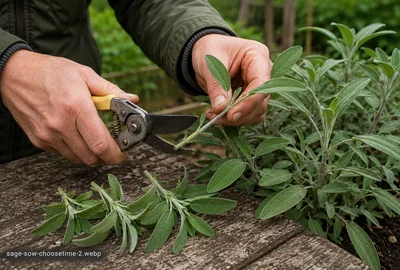
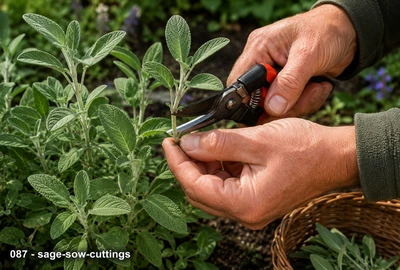
Cut a non-flowering shoot tip about 8–10cm long, just below a leaf node, using clean, sharp scissors or secateurs. Take several — not all will root.
Prepare the cutting
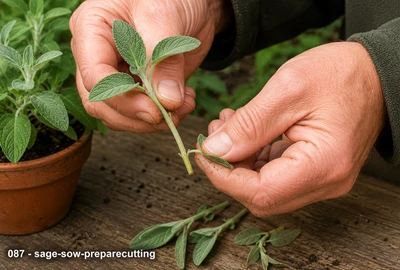
Strip leaves from the lower half of the cutting, leaving a few leaves at the tip. Dip the cut end in hormone rooting powder or gel to improve rooting success.
Insert in gritty compost
Insert cuttings around the edge of a pot filled with 50% compost and 50% perlite or horticultural grit. Firm gently and water in. Label clearly.
Keep warm and humid
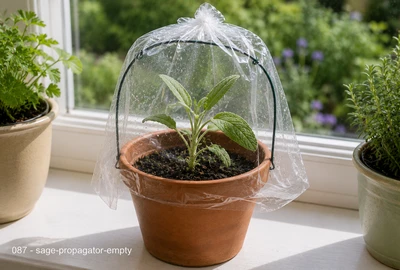
Place in a propagator at 18–20°C or on a warm windowsill covered with a clear plastic bag. Keep out of direct hot sun.
Pot on when rooted
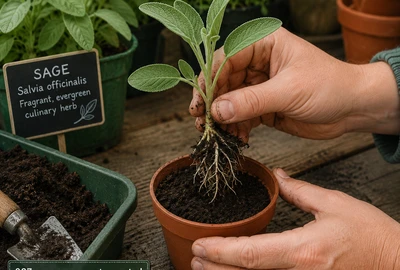
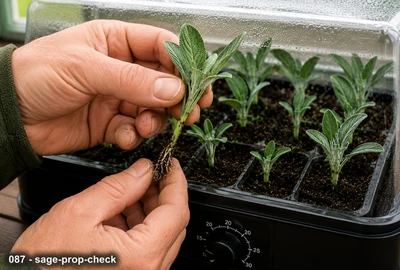
Rooting takes 4–6 weeks. Test with a gentle tug — resistance confirms roots. Pot into individual 9cm pots of gritty compost and grow on before planting out.
Cuttings & Division — regional timing
Region
Sow / plant
Harvest
Notes
Scotland & Far North
May–Aug
Jul–Oct
Take softwood cuttings May–June, semi-ripe July–August. Use a heated propagator (18–20°C) for best results. Overwinter young plants under cover before planting out. · May–Aug
Northern England
May–Aug
Jul–Oct
Take cuttings May–August. A heated propagator improves success for spring cuttings; summer cuttings root reliably on a warm windowsill. · May–Aug
Midlands & Wales
May–Sep
Jul–Nov
Take cuttings May–September. Spring softwood and summer semi-ripe both reliable. A cold frame is adequate for later cuttings without added heat. · May–Sep
Ireland & Isle of Man
May–Sep
Jul–Nov
Take cuttings May–September. Use a propagator for spring softwood; summer cuttings root on a warm windowsill. Shelter young plants over winter. · May–Sep
South & SE England
May–Sep
Jul–Nov
Cuttings May–September. Good success rate — summer cuttings often root without added heat on a windowsill. · May–Sep
South Coast & SW
Apr–Oct
Jun–Nov
Excellent rooting conditions. Cuttings April–October. Semi-ripe cuttings often root in a cold frame without added heat. · Apr–Oct
08 Using a Propagator
Sage can be raised from seed, but named coloured-leaf varieties are propagated from cuttings to guarantee true-to-type plants. A heated propagator gives the fastest, most reliable rooting for spring softwood cuttings; summer semi-ripe cuttings will root without bottom heat on a warm windowsill or in a cold frame.
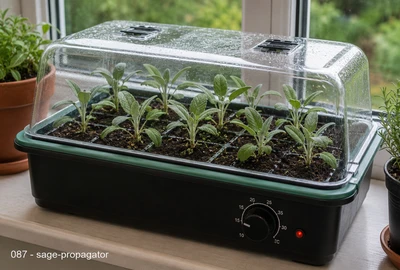
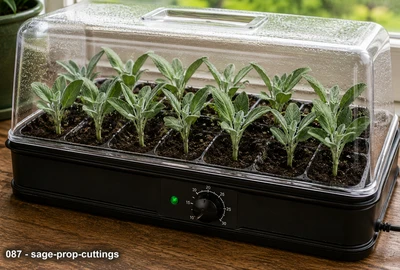
Heated propagator
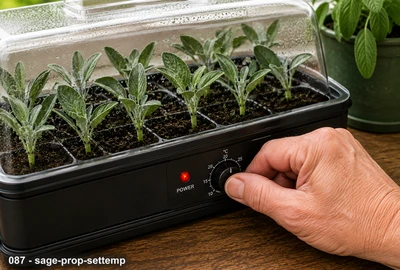
Set a heated propagator to 18–20°C for spring softwood cuttings (May–June) or for sowing seed. Prepare 8–10cm non-flowering shoot tip cuttings, strip the lower leaves, dip in hormone rooting gel, and insert around the edge of a pot in 50:50 compost and perlite. Rooting takes 4–6 weeks.
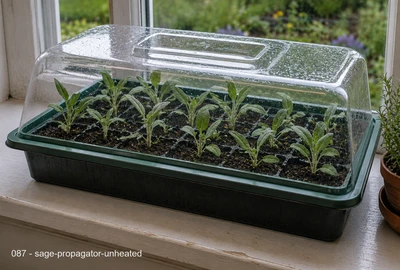
Unheated propagator
For summer semi-ripe cuttings (July–August), bottom heat is not required. Prepare cuttings as above and place in a lidded seed tray or cold frame. Keep out of direct hot sun. Mist once or twice a week. Rooting takes 6–8 weeks.
Standard unheated propagator — A lidded seed tray traps warmth and humidity around germinating seeds without electricity. Performance depends entirely on room temperature — best placed on a warm windowsill and used from March onwards. Replace the lid promptly after watering. Remove it completely the moment seedlings emerge to prevent damping off.
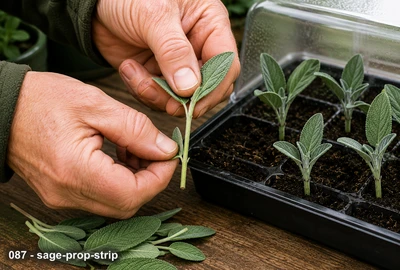
Take shoot tip cuttings
Cut 8–10cm non-flowering shoot tips in May–June (softwood) or July–August (semi-ripe). Make a clean cut just below a leaf node. Take 5–6 cuttings per pot.
Strip leaves and dip
Remove leaves from the lower half of the cutting. Dip the cut end in hormone rooting powder or gel.
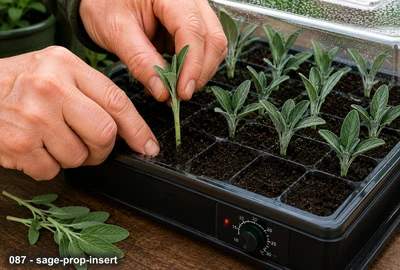
Insert in gritty compost
Fill a 9cm pot with 50% compost and 50% horticultural perlite or grit. Insert cuttings around the edge, 2–3cm deep. Firm gently and water from below.
Set temperature and cover
For spring cuttings, place in a heated propagator at 18–20°C. For summer cuttings, cover with a clear plastic bag over a wire hoop on a warm windowsill. Label with the date.
Check for rooting after 4 weeks
Tug gently on each cutting — resistance means roots are forming. Pot into individual 9cm pots once roots emerge from the drainage holes.
Windowsill alternative: A bright south-facing windowsill can substitute from late February. Place a clear polythene bag loosely over the pot during germination. Remove immediately once seedlings appear.
09 Soil Requirements
pH
6.0–7.5
Best
Sandy, Sandy loam
Tolerates
Loam
Avoid
Clay, Waterlogged, Rich
💡 Mediterranean sub-shrub — thrives in poor, lean, free-draining soil. Rich or waterlogged ground causes soft growth, disease, and winter losses.
10 Ongoing Care
✂️ Annual Pruning — Keep It Bushy
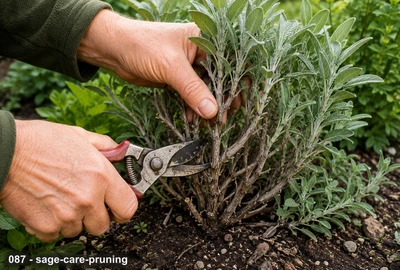
Trim sage lightly in spring as new growth begins, and again after flowering, to prevent the plant becoming woody and sparse in the centre. Cut back by around a third, always leaving green growth below the cut — sage, like rosemary, does not reshoot reliably from old bare wood. Replace plants every 4–5 years once they become permanently woody, using cuttings taken from healthy growth.
💧 Watering — Keep It Lean
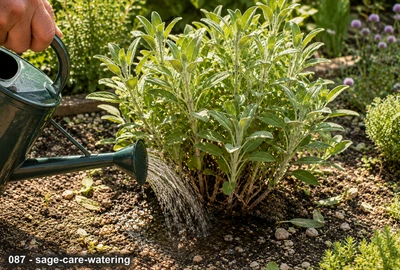
Established sage is drought tolerant and rarely needs watering once in the ground. In containers, allow the compost to dry out between waterings. Overwatering, particularly in winter, is the most common cause of failure — soggy compost leads to root rot. The classic warning sign is a plant that suddenly wilts and turns grey despite apparently moist soil.
🍄 Watch for Powdery Mildew
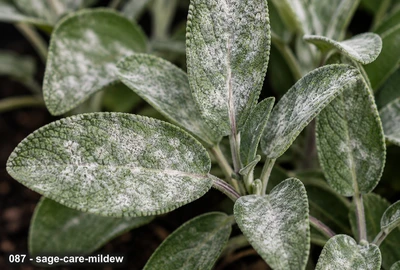
Sage can develop powdery mildew — a white, dusty coating on leaves — in humid, crowded, or poorly ventilated conditions. Improve air flow by spacing plants generously and avoiding overhead watering. Trim out affected growth promptly. Well-drained soil and full sun are the best long-term prevention, as they are for most sage problems.
11 Watch Out For
Warning
Powdery mildew can affect sage in humid or crowded conditions — improve air circulation and trim out affected growth promptly. Sage is generally trouble-free from pests, though rosemary beetle occasionally feeds on it alongside rosemary and lavender. Sage contains thujone, and large or concentrated quantities (such as essential oil) should be avoided during pregnancy and by those with epilepsy — ordinary culinary use in cooking is not a concern.
🐛 Insects & pests
🐜 Aphids (Blackfly & Greenfly) — Curled, distorted, or stunted growing tips — aphids inject saliva that causes leaf curl to protect them
🕷 Spider Mite — Fine, silky webbing on the underside of leaves and between growing tips — the definitive identification sign
🍄 Diseases to watch
⬜ Powdery Mildew — Powdery mildew is caused by a range of related fungi, each specific to its host plant — courgette mildew cannot infect peas, and vice versa. The characteristic white powdery coating on leaf surfaces appears in warm, dry conditions (unlike downy mildew which prefers cool and wet). Rarely kills plants but severely reduces yield and plant vigour.
🩶 Botrytis (Grey Mould) — Botrytis cinerea (grey mould) is the most ubiquitous fungal pathogen in temperate gardens — present in virtually every garden soil and on plant debris. It becomes a disease only when conditions favour it: cool, humid, poorly ventilated environments with damaged or senescent plant tissue. In a greenhouse in autumn it can destroy an entire tomato or grape crop.
Full identification and treatment advice is in the Pests and Diseases sections.
12 Storage & Preserving
🌿 Fresh — Harvest and Use
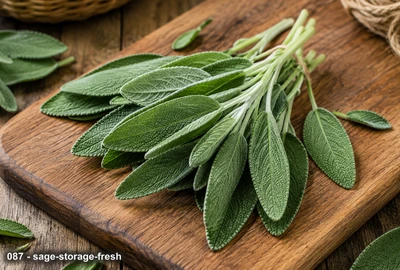
Sage is excellent used fresh, and established plants can be picked year-round. Snip individual leaves or young shoot tips as needed — flavour is strongest just before flowering. Fresh sage keeps for about a week refrigerated in a damp cloth inside a plastic bag, or a few days in a glass of water on the windowsill.
🌾 Dried — For Year-Round Use
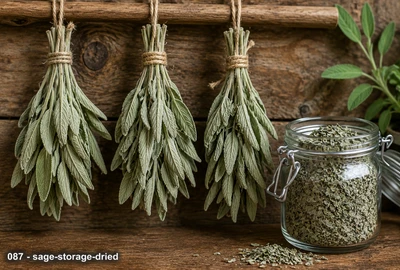
Sage dries well and keeps its flavour for six months to a year. Cut stems in mid-summer before flowering, when essential oil content is highest. Tie in small bunches and hang upside down somewhere warm, airy, and out of direct sun for two to three weeks. Once crisp and dry, strip the leaves and store whole or crumbled in an airtight jar — dried sage is more concentrated than fresh, so use around half the quantity in recipes.
🍃 Air-Dry — Individual Leaves
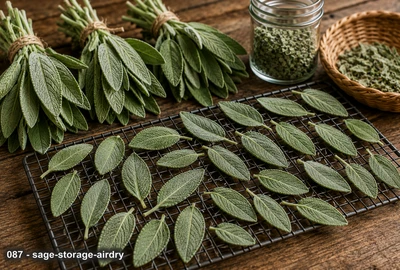
For a faster alternative to bunch-drying, spread individual leaves in a single layer on a wire rack or baking tray. Leave somewhere warm, airy, and out of direct sun, turning occasionally, until crisp — this usually takes several days to a week, quicker than hanging whole bunches. Useful for drying a flush of leaves picked during pruning. Store crumbled or whole in an airtight jar, away from light.
🧊 Freeze — For Long-Term Storage
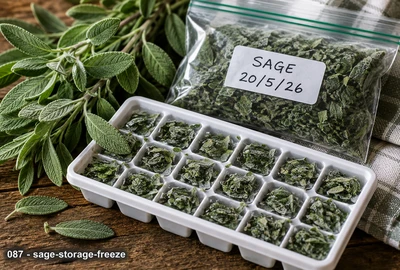
Freezing keeps sage closer to its fresh flavour than drying. Finely chop leaves and pack into ice cube tray compartments, topping up with a little water or olive oil, then freeze and transfer the cubes to a labelled freezer bag — drop a cube straight into a pan when cooking. Whole leaves or chopped sage can also be frozen loose in a labelled bag for up to a year; there's no need to thaw before use.
🫙 Infused — Butter
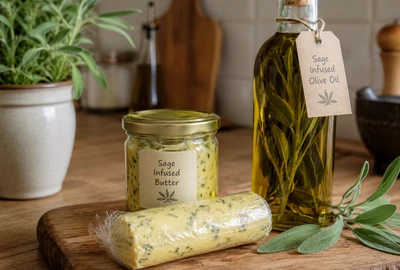
Sage infuses beautifully into butter. For sage butter: blend softened butter with finely chopped fresh leaves, roll in clingfilm, and freeze — perfect for brown butter sauces or finishing roasted squash.
13 Expert Tips
💡 Poor soil concentrates the flavour
As with rosemary and thyme, sage grown hard — in lean, well-drained soil and full sun — develops a stronger, more concentrated flavour than sage grown soft in rich, moist conditions. Resist feeding established plants; a top-dressing of grit is far more useful than fertiliser.
💡 Replace plants before they get too woody
Sage plants become increasingly woody and less productive after four or five years, with fewer leaves and more bare stem. Rather than fighting an old plant with hard pruning it may not survive, take cuttings from the best remaining growth each summer and have young replacements ready to go in.
💡 Pick before flowering for the strongest flavour
Leaf flavour is at its most concentrated just before the plant flowers, typically early summer. Regular picking of shoot tips also delays flowering and encourages bushier growth, so a well-harvested plant tends to stay more productive for longer.