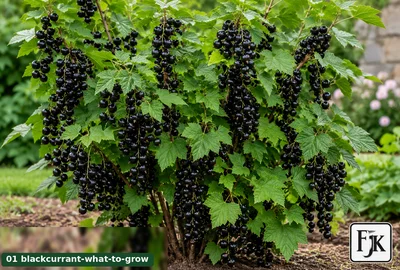
Plant bare-root bushes November–March, 1.5m apart — blackcurrants grow large and need space
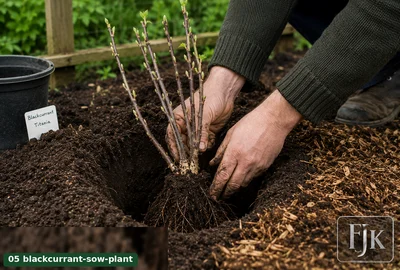
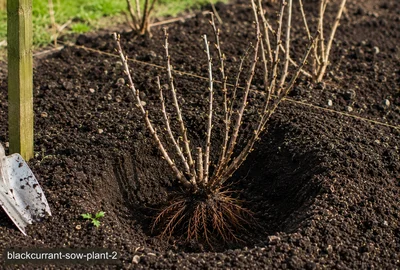
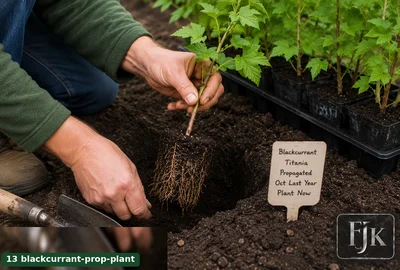
Plant 5cm deeper than the nursery mark to encourage shoots to arise from below ground
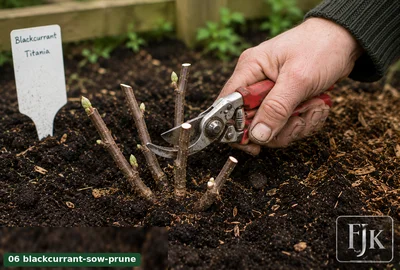
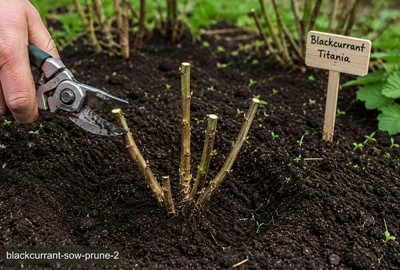
After planting, cut all stems to one bud above ground — this sacrifices the first year's fruit but builds a much stronger bush
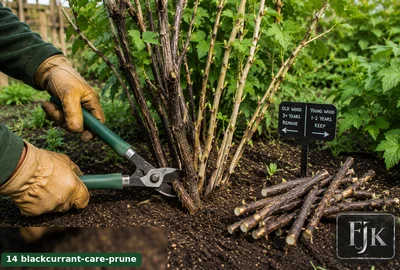
Prune after harvest: remove one third of the oldest darkest stems each year to keep the bush young and productive
Blackcurrants fruit on new wood — the more young stems you have, the better the crop
🌱 SowPlant bare-root Nov–Mar
🌾 HarvestJul–Aug
☀ PositionFull sun or light shade
📐 Spacing1.5m
DifficultyEasy
⚡ Quick facts
Sow
Plant bare-root Nov–Mar
Plant
Nov–Mar (bare-root) · Mar–Apr (container)
Harvest
Jul–Aug
Position
Full sun preferred · Tolerates light shade
Spacing
1.5m between bushes
Height
1.2–1.5m
Hardiness
Fully hardy — flowers are frost-sensitive in severe late frosts
Lifespan
15–20 years
Difficulty
Easy
01 About
The most productive soft fruit in the UK kitchen garden for its size. Blackcurrants are extraordinarily vigorous, virtually indestructible, and yield more vitamin C per kilo than almost any other fruit you can grow. A single established bush produces 4–5kg of fruit per year. They thrive in British conditions, tolerate heavy soil, and need nothing more than an annual prune and a generous mulch.
02 Varieties
The number of varieties shown for each crop is based on UK consumption data (2025/26) — the more popular the crop, the more variety choices we include.
High Yield
Ben Connan
Mid-season
The most compact blackcurrant bush available, making it ideal for smaller gardens and even large containers. Very large berries — among the largest of any variety — with excellent flavour. Good mildew resistance. AGM winner.
Harvest
Jul
Flavour
Rich, intense blackcurrant
Fruit size
Very large
Yield
Very high
Disease resistance
Good
🏅 AGM
✓ Self-fertile
🪴 Container
Ben Lomond
Mid-season
The commercial standard for UK production. Very heavy cropping with large berries in long strigs — easy to pick. Moderately compact bush. The benchmark variety against which all others are measured for reliability and yield.
Harvest
Jul–Aug
Flavour
Classic, sharp blackcurrant
Fruit size
Large
Yield
Very high
Disease resistance
Good
✓ Self-fertile
Ben Sarek
Mid-season
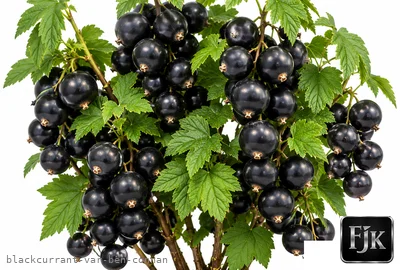
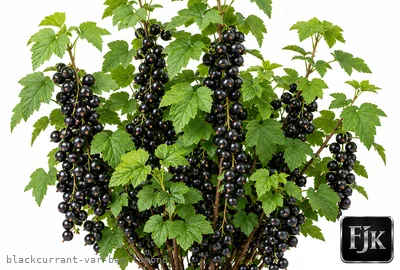
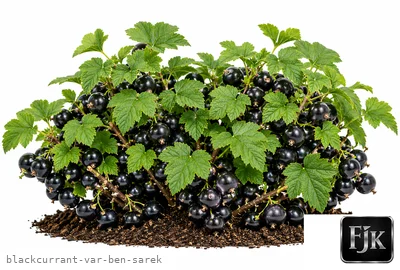
A compact, spreading bush well suited to smaller gardens. Excellent mildew and frost resistance. Large berries in heavy clusters. One of the best all-round choices for the domestic kitchen garden.
Harvest
Jul
Flavour
Rich, sweet
Fruit size
Large
Yield
High
Disease resistance
Very good
✓ Self-fertile
🪴 Container
Disease Resistant
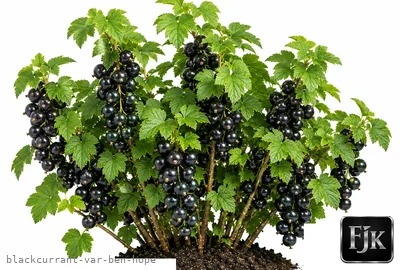
Ben Hope
Mid-late season
Bred specifically for resistance to big bud mite and reversion virus — the two most damaging problems in blackcurrant growing. An excellent choice where these pests have been a problem. Good flavour and reliable yield.
Harvest
Jul–Aug
Flavour
Rich, full blackcurrant
Fruit size
Large
Yield
High
Disease resistance
Excellent
✓ Self-fertile
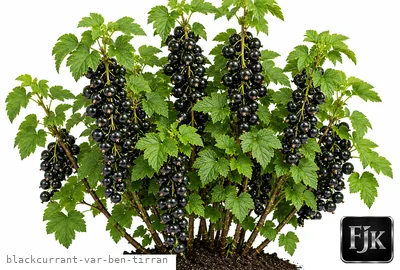
Ben Tirran
Late season
The latest-ripening of the Ben series, extending the blackcurrant harvest into August. Large berries with a milder, sweeter flavour than earlier varieties. Useful for extending the picking season when grown alongside an earlier variety.
Harvest
Aug
Flavour
Mild, sweet
Fruit size
Large
Yield
High
Disease resistance
Good
✓ Self-fertile
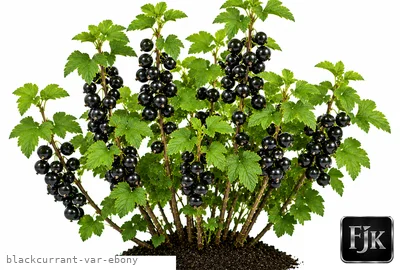
Ebony
Late season
Very late-ripening variety that extends the blackcurrant season well into August, often the last to be harvested. Very sweet berries — milder and less acidic than most varieties. Useful where a long season is wanted.
Harvest
Aug
Flavour
Very sweet, rich
Fruit size
Large
Yield
Moderate
Disease resistance
Good
✓ Self-fertile
Heritage & Culinary
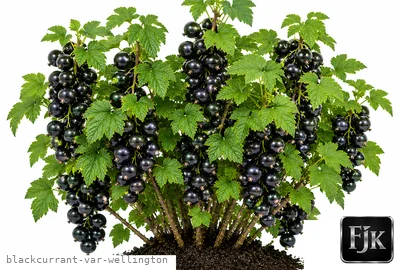
Wellington XXX
Mid-season
A heritage variety long favoured for its intensely sharp, traditional blackcurrant flavour that produces outstanding jam and cordial. Less vigorous than modern Ben varieties but retained by enthusiasts for its flavour quality. The variety used for decades before the Ben series arrived.
Harvest
Jul
Flavour
Intensely sharp, classic
Fruit size
Medium
Yield
High
Disease resistance
Moderate
✓ Self-fertile
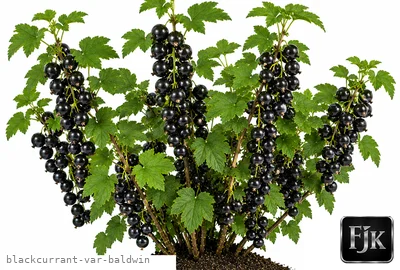
Baldwin
Late season
A traditional variety widely grown before modern introductions. Very high vitamin C content. Late ripening, compact habit. Strong, full flavour preferred by many for cordial and jam making over the milder modern varieties. Still valued by preservers for intensity.
Harvest
Aug
Flavour
Rich, sharp, complex
Fruit size
Medium
Yield
Moderate
Disease resistance
Moderate
✓ Self-fertile
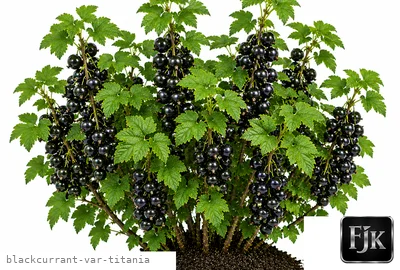
Titania
Mid-season
Swedish-bred variety with exceptional disease resistance including good tolerance of white pine blister rust. Vigorous, upright growth. Large berries with a slightly sweeter, milder flavour than most British varieties. Good choice for organic growing systems.
Harvest
Jul
Flavour
Sweet, mild, distinctive
Fruit size
Large
Yield
High
Disease resistance
Excellent
✓ Self-fertile
03 Planting Options
🌿 In Open Ground
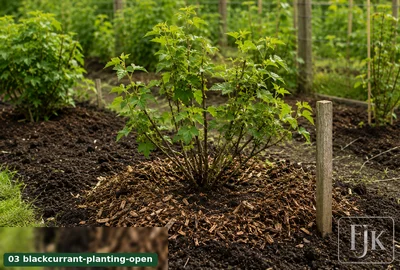
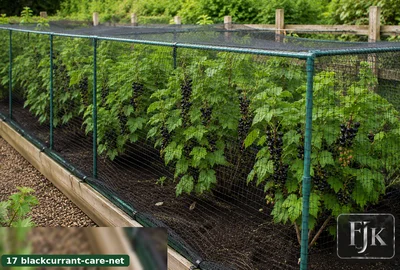
Unlike almost every other fruit bush, blackcurrants should be planted 5cm deeper than the soil mark visible on the stem — this encourages new shoots to grow from below ground level, building a much denser, more productive bush over time. Prepare the site with plenty of well-rotted compost or manure first, then, immediately after planting, cut every single stem back to within 2-3 buds of the ground. This feels counter-intuitive on a young bush but is essential: it forces strong new growth from the base rather than a weak crop on old wood. Mulch generously in a wide circle and net against birds from July, when starlings, blackbirds, and thrushes will otherwise strip a laden bush within days.
Prepare with compost
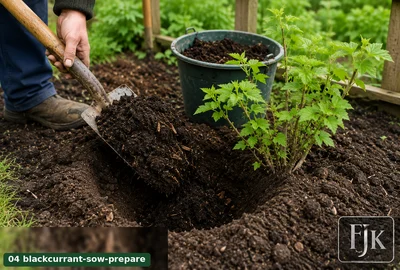
Dig the planting site thoroughly and incorporate a generous amount of well-rotted compost or manure — blackcurrants are heavy feeders and the soil improvement done at planting sustains them for many years. Remove all perennial weeds from the area.
Plant 5cm deeper than the nursery mark
Unlike most plants, blackcurrants should be planted 5cm deeper than the soil mark visible on the stem. This unique requirement encourages additional stems to develop from below ground level, building a multi-stemmed, productive bush rather than a single-stemmed one. Lean the plant slightly to encourage outward-spreading growth.
Hard prune immediately after planting
Cut every stem to within 2–3 buds of the ground immediately after planting. This feels drastic but is essential — it sacrifices the first year's fruit in exchange for a dramatically stronger, more productive long-term bush. Without this hard prune, plants become leggy and unproductive.
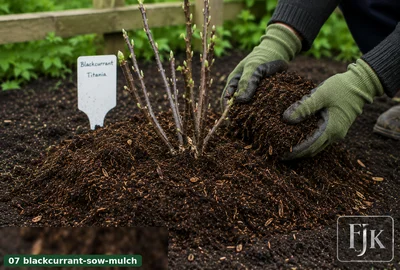
Mulch generously
Apply a thick mulch of compost, woodchip, or straw around the base in a wide circle — at least 60cm radius. Keep clear of the stems. Blackcurrants are shallow-rooted and benefit enormously from moisture retention and weed suppression.
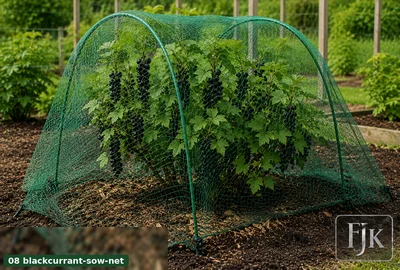
Net against birds
As fruit ripens in July, birds — particularly starlings, blackbirds, and thrushes — will strip a bush bare overnight. Install a cage or drape netting firmly over the bush from late June. Without protection, a full crop can be lost within 24 hours.
04 Companion Planting
✅ Grow nearby
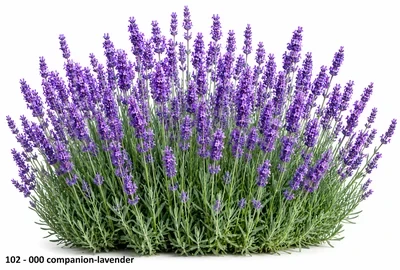
💜 Lavender
Attracts pollinators and adds a decorative, low-maintenance border nearby.
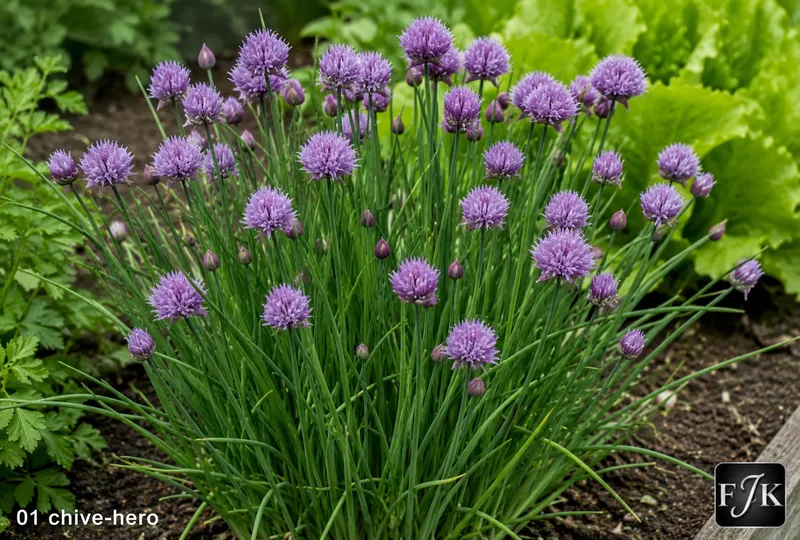
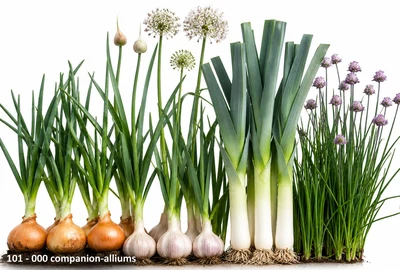
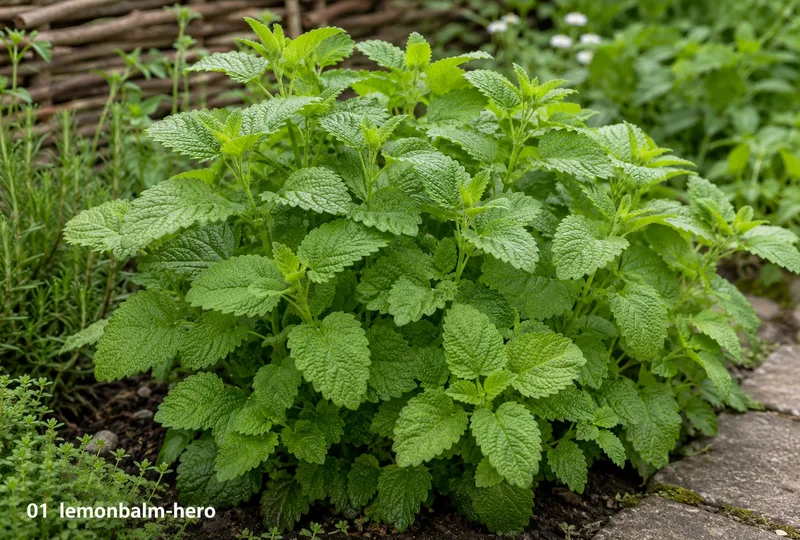
Attracts pollinators and beneficial insects into the fruiting area.
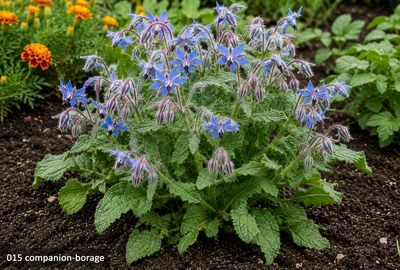
🌸 Borage
Attracts pollinators and beneficial insects, and is said to improve nearby fruit set.
05 Sowing — How To
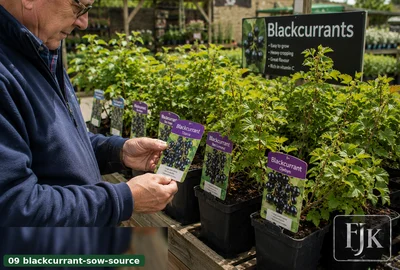
Buy certified stock
Always buy blackcurrant plants certified free of reversion virus, which causes gradual but irreversible yield decline. Certified plants are tested and labelled — look for the official government certification label.
Plant Nov–Mar in dormancy
Bare-root blackcurrants must be planted when dormant — November to March. Plant in prepared ground at the deeper-than-nursery-mark depth described above. Firm well and water in even in winter if conditions are dry.
Prune hard at planting
Cut all stems to 2–3 buds from the ground. This is non-negotiable for long-term productivity. Label the plant and resist the temptation to let it fruit in year one.
Regional sowing timing
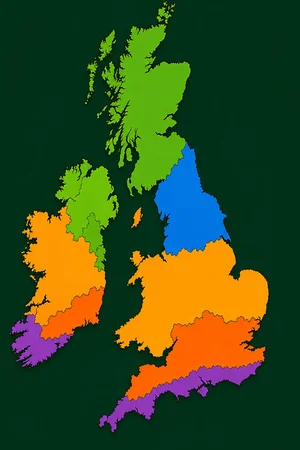
Region
Sow / plant
Harvest
Notes
Scotland & Far North
Nov–Mar
Jul–Aug
Northern England
Nov–Mar
Jul–Aug
Midlands & Wales
Nov–Mar
Jul–Aug
Ireland & Isle of Man
Nov–Mar
Jul–Aug
South & SE England
Nov–Mar
Jul–Aug
South Coast & SW
Nov–Mar
Jul–Aug
06 Using a Propagator
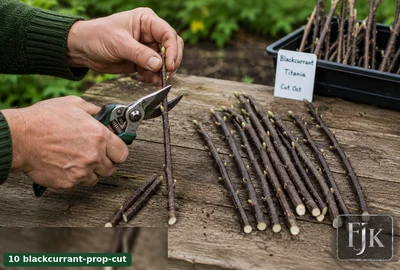
Blackcurrants are propagated from hardwood cuttings taken in autumn — this is one of the simplest and most reliable propagation methods of any fruit crop. No propagator, heat, or special equipment is needed.
Heated propagator
Not Required — Blackcurrants root readily from hardwood cuttings in open ground. No heat assistance is needed.
Take cuttings in autumn
Cut 20–25cm lengths of pencil-thick current-season growth in October–November. Make the top cut just above a bud and the bottom cut just below a bud. Remove all buds except the top two — buds left underground will produce suckers, not a clean multi-stemmed bush.
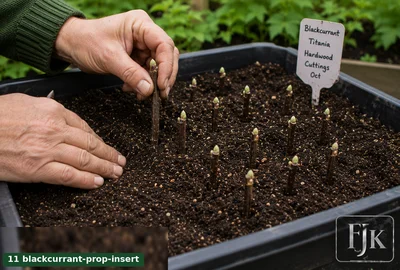
Insert in open ground
Push cuttings vertically into a slit trench with only the top two buds showing above ground. Firm soil around them. They will root through winter and begin growing in spring with very high success rates.
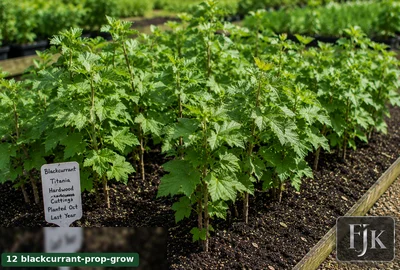
Leave for a full year
Leave undisturbed through the summer. Water in dry spells. By autumn, cuttings will have rooted and produced their first season's growth. At this point they are ready to move to their permanent positions.
Plant deeply in final position
Move rooted cuttings to their permanent positions the following autumn, again planting 5cm deeper than the existing soil mark. Prune hard as per new plants.
07 Soil Requirements
pH
6.0–6.5
Best
Loam, Clay loam
Tolerates
Sandy loam, Clay
Avoid
Waterlogged, Chalky, Very sandy
💡 Rich, moisture-retentive soil. Heavy feeders — mulch generously every year.
08 Ongoing Care
✂️ Annual Pruning
Blackcurrants fruit on the previous year's wood — the younger and more vigorous the stems, the better the crop. Each winter (November to February), remove approximately one third of the oldest stems at the base. Old stems are darker, thicker, and less productive. Aim to keep a balanced mix of 1-year, 2-year, and 3-year wood. After 3 years, a stem is past its best. Never cut into a spur system as with gooseberries or redcurrants — blackcurrants are managed as a stool (multi-stemmed bush) by removing complete old stems and letting new ones grow from the base.
🌱 Feeding
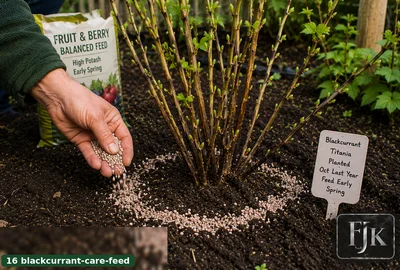
Blackcurrants are the hungriest soft fruit crop. Apply a high-nitrogen fertiliser in early March (sulphate of ammonia or a balanced granular feed) to support the vigorous growth that produces next year's fruiting wood. Follow with a high-potash feed in May as flowers develop. Apply a generous mulch of well-rotted compost or manure in spring — this is the single most effective maintenance task for keeping a blackcurrant bush productive. Without annual feeding, yields decline noticeably within 2–3 years.
💧 Watering
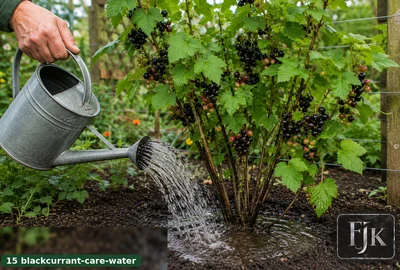
Blackcurrants need consistent moisture from flowering through to harvest. The berries develop from July onwards and swell significantly in the final weeks before picking — irregular watering during this period causes splitting and reduced yield. Water deeply at the base every 7–10 days in dry weather from June onwards. Avoid overhead watering, which promotes mildew. The mulch applied each spring greatly reduces watering requirements by retaining soil moisture.
🐦 Bird Protection
Birds are the greatest single threat to a blackcurrant crop — a flock of starlings can strip an entire bush in minutes once the berries begin to colour. Protect with a fruit cage or drape fine-mesh netting over the bush from late June, securing it firmly at ground level. Do not use very fine netting — it traps birds and insects. A 25mm mesh is ideal: it excludes birds while allowing pollinating insects access during flowering. Remove netting promptly after harvest to allow natural pruning of pests by birds.
09 Watch Out For
Warning
Reversion virus causes leaves to develop fewer lobes and yields to drop steadily — no cure, remove and destroy affected plants and replace with certified stock. Big bud mite causes rounded, swollen buds in early spring (normal buds are pointed and narrow) — remove and burn affected wood, or choose resistant varieties like Ben Hope. Powdery mildew produces white coating on new growth in dry periods — ensure good airflow and consistent watering. American gooseberry mildew can also affect blackcurrants.
🐛 Insects & pests
🐜 Aphids (Blackfly & Greenfly) — Curled, distorted, or stunted growing tips — aphids inject saliva that causes leaf curl to protect them
🟤 Scale Insect — Small brown or grey bumps on stems, branches, and the underside of leaves — the scale covers themselves
🪲 Vine Weevil — Irregular, rounded notches cut from leaf margins — the work of adult beetles feeding at night
🍄 Diseases to watch
🩶 Botrytis (Grey Mould) — Botrytis cinerea (grey mould) is the most ubiquitous fungal pathogen in temperate gardens — present in virtually every garden soil and on plant debris. It becomes a disease only when conditions favour it: cool, humid, poorly ventilated environments with damaged or senescent plant tissue. In a greenhouse in autumn it can destroy an entire tomato or grape crop.
⬜ Powdery Mildew — Powdery mildew is caused by a range of related fungi, each specific to its host plant — courgette mildew cannot infect peas, and vice versa. The characteristic white powdery coating on leaf surfaces appears in warm, dry conditions (unlike downy mildew which prefers cool and wet). Rarely kills plants but severely reduces yield and plant vigour.
Full identification and treatment advice is in the Pests and Diseases sections.
10 Storage & Preserving
🖤 Fresh
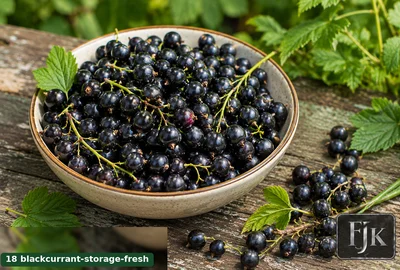
Fresh blackcurrants keep better than most soft fruit — their natural acidity inhibits spoilage. Refrigerate unwashed in a shallow container and they will keep for 3–5 days. Eat fresh as a sharp accompaniment to yoghurt, cream, or ice cream. The raw fruit is an acquired taste — strongly acidic and intensely flavoured — but this same intensity makes homegrown blackcurrant juice, cordial, and jam incomparably superior to any commercial product.
🫙 Jam & Cordial
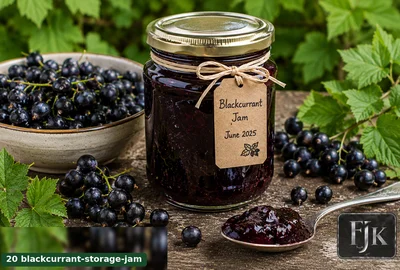
Blackcurrants make outstanding jam and cordial — their sharp intensity is what makes homemade blackcurrant cordial, diluted with sparkling water, so much better than anything in the shops. A bottle of homemade blackcurrant cordial is the most rewarding product of any kitchen garden. Follow a tested recipe.
❄️ Frozen
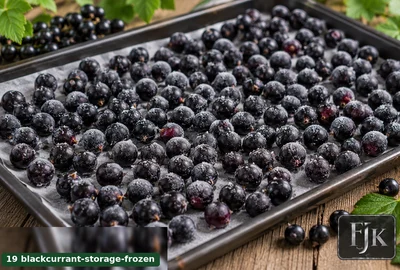
Blackcurrants freeze exceptionally well, retaining almost all their flavour and nutritional value. Strip from strigs, wash, dry, and freeze on a tray before bagging. They can also be frozen in strigs and stripped later when partially thawed — the berries fall off cleanly. Use within 18 months. Frozen blackcurrants are outstanding in crumbles, ice cream, cheesecakes, and smoothies. Their high vitamin C content makes them a valuable winter ingredient.
11 Expert Tips
💡 Grow for cordial
One large blackcurrant bush produces enough fruit for a full summer's supply of homemade cordial. Blackcurrant cordial diluted with sparkling water is genuinely superior to any commercial product and almost impossible to buy. A single harvest from 2–3 established bushes provides enough concentrate to see a family through to the following July.
💡 The deep planting technique
No other fruit crop is planted below the nursery soil mark. The deep planting of blackcurrants (5cm below the mark) is a long-established technique that encourages multiple new shoots to develop from below ground, producing the characteristically multi-stemmed bush shape that makes the crop so productive and long-lived. It also improves frost resistance by protecting the crown.
💡 Renovating neglected bushes
A severely neglected or unproductive blackcurrant bush can be cut entirely to the ground in late winter — every stem, completely. This drastic renovation stimulates vigorous regrowth from the base. It sacrifices two years of fruit but completely renews a bush that would otherwise require replacement. Only attempt this on a bush that is fundamentally healthy (no reversion virus).