Plant bare-root bushes November–March; gooseberries establish very readily and crop reliably from year two
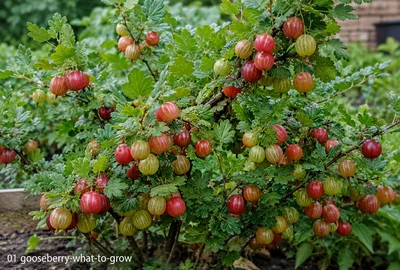
Grow as an open-centred bush with 5–6 main branches — good airflow reduces mildew, the main disease problem
Prune in winter: shorten main branches by half, cut sideshoots to 2–3 buds, remove any crossing or low branches
Pick some fruits early (marble size) for cooking — thinning improves size of remaining fruits for dessert
Use gooseberry jelly nets from flowering to protect against birds and sawfly caterpillars
🌱 SowPlant bare-root Nov–Mar
🌾 HarvestJun–Aug
☀ PositionSun or part shade
📐 Spacing1.2–1.5m
DifficultyEasy
⚡ Quick facts
Sow
Plant bare-root Nov–Mar
Plant
Nov–Mar (bare-root) · Mar–Apr (container)
Harvest
Jun (green thinnings) · Jul–Aug (ripe)
Position
Sun or part shade — one of few fruits tolerating north-facing aspect
Spacing
1.2–1.5m between bushes
Height
1.0–1.5m
Hardiness
Fully hardy — flowers are frost-sensitive in severe late frosts
Lifespan
20–30 years
Difficulty
Easy
01 About
One of the most underrated fruits in the British kitchen garden. Gooseberries tolerate shade, thrive in all UK regions, and fruit reliably for 20 or more years with minimal attention. A single established bush produces 4–6kg of fruit per year in two distinct harvests — small green thinnings in June for cooking, and fully ripened sweet berries in July and August.
02 Varieties
The number of varieties shown for each crop is based on UK consumption data (2025/26) — the more popular the crop, the more variety choices we include.
Dessert
Invicta
Dual-purpose
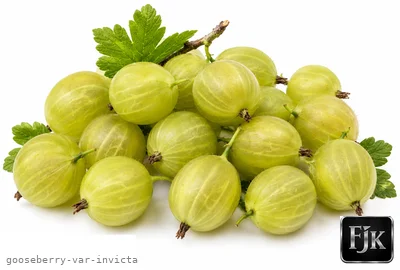
The most reliable gooseberry in the UK — very heavy-cropping, large pale green berries, and excellent resistance to American gooseberry mildew. The default choice for most gardens. Thorny canes. Suitable for both culinary and dessert use. AGM.
Harvest
Jun–Aug
Flavour
Sharp-sweet, full
Fruit size
Large
Yield
Very high
Disease resistance
Excellent
🏅 AGM
✓ Self-fertile
Hinnonmaki Red
Dessert
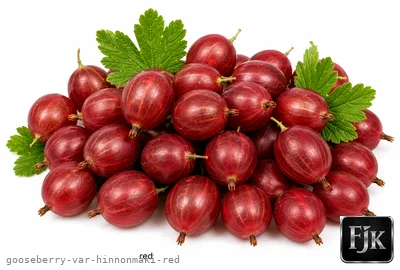
Finnish-bred variety with excellent mildew resistance and outstanding eating quality. The berries ripen to a deep red-pink and are sweet enough to eat raw from the bush — a completely different experience from culinary gooseberries. Compact, manageable bush.
Harvest
Jul–Aug
Flavour
Very sweet, rich, complex
Fruit size
Medium-large
Yield
High
Disease resistance
Excellent
🏅 AGM
✓ Self-fertile
🪴 Container
Leveller
Dessert
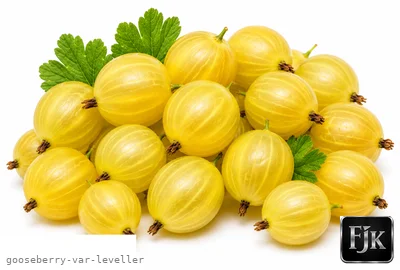
The connoisseur's gooseberry — a heritage variety with arguably the finest flavour of any British gooseberry. Very large, golden-yellow berries with extraordinary sweetness and complexity. Requires good soil and careful management but the quality justifies the effort.
Harvest
Jul–Aug
Flavour
Exceptional — honey-sweet, complex
Fruit size
Very large
Yield
Moderate
Disease resistance
Moderate
🏅 AGM
✓ Self-fertile
Culinary
Careless
Culinary
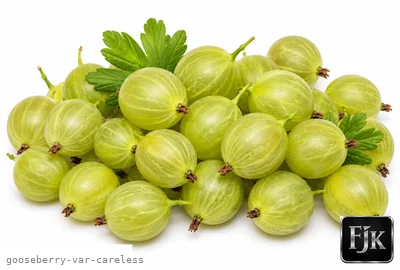
The classic culinary gooseberry — extremely prolific with large, pale green berries ideal for cooking, jam, and the June thinning harvest. One of the oldest varieties still widely grown. Somewhat susceptible to mildew but its exceptional yield compensates.
Harvest
Jun–Jul
Flavour
Sharp, acidic
Fruit size
Large
Yield
Very high
Disease resistance
Moderate
🏅 AGM
✓ Self-fertile
Lord Derby
Culinary/Dessert
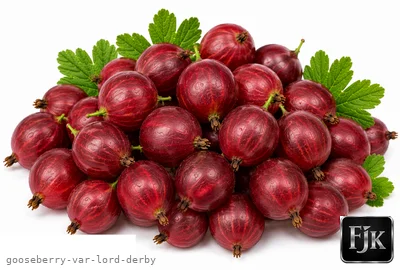
Very large, deep red berries — among the biggest of any gooseberry variety. Excellent for cooking and jam making. Can be eaten raw when fully ripe. Vigorous, reliable bush with good constitution. A heritage variety that has remained popular since the Victorian era.
Harvest
Jul–Aug
Flavour
Rich, slightly sharp
Fruit size
Very large
Yield
High
Disease resistance
Good
✓ Self-fertile
Whinham's Industry
Culinary/Dessert
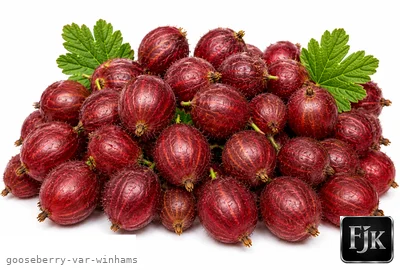
An outstanding heritage variety from the 1850s. Large, dark red, hairy berries with rich, complex flavour. One of the best gooseberries for shade — it succeeds on north-facing aspects where other varieties struggle. Excellent for cooking and preserves.
Harvest
Jul–Aug
Flavour
Rich, sub-acid
Fruit size
Large
Yield
High
Disease resistance
Moderate
🏅 AGM
✓ Self-fertile
Disease Resistant
Pax
Dessert
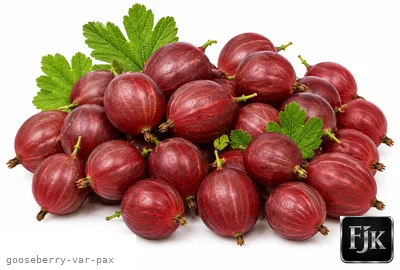
Virtually thornless, which makes harvesting far more pleasant than most gooseberries. Good mildew resistance. Large, dark red berries with pleasant sweet flavour. An ideal choice for families with children, where the thorns of traditional varieties can be a deterrent.
Harvest
Jul–Aug
Flavour
Sweet, mild
Fruit size
Large
Yield
High
Disease resistance
Excellent
✓ Self-fertile
🪴 Container
Rokula
Dessert
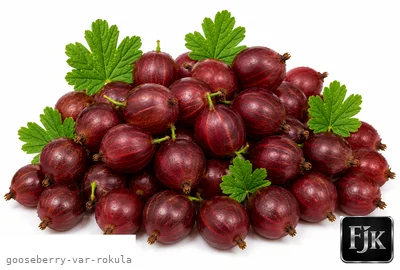
A German-bred variety with outstanding mildew resistance — one of the most reliable choices for organic gardeners and those who want minimal intervention. Dark red berries with pleasant flavour. Compact, well-behaved bush.
Harvest
Jul–Aug
Flavour
Sweet, balanced
Fruit size
Medium-large
Yield
High
Disease resistance
Excellent
✓ Self-fertile
🪴 Container
Captivator
Dessert
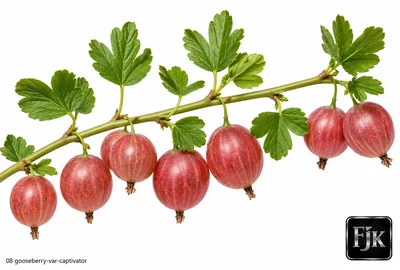
Canadian-bred variety that is almost completely thornless — making it perhaps the most comfortable gooseberry to harvest. Moderate mildew resistance. Pink-red berries with sweet flavour. Best choice where ease of picking is the primary consideration.
Harvest
Jul–Aug
Flavour
Sweet, mild
Fruit size
Medium
Yield
High
Disease resistance
Very good
✓ Self-fertile
🪴 Container
03 Planting Options
🌿 In Open Ground
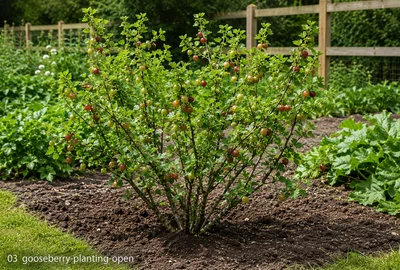
Gooseberries are traditionally grown on a short "leg" — a clear stem of 10-15cm below the first branches — which keeps the fruiting wood up off the ground and makes picking easier. After planting at the same depth as the nursery mark, prune hard: shorten each main branch by half to an outward-facing bud, which builds an open, goblet-shaped bush that resists mildew and makes harvesting straightforward. Mulch around the base annually, keeping it clear of the stem, and net against bullfinches from late winter — they can strip every developing bud from an unprotected bush before spring even arrives.
Create a short leg at planting
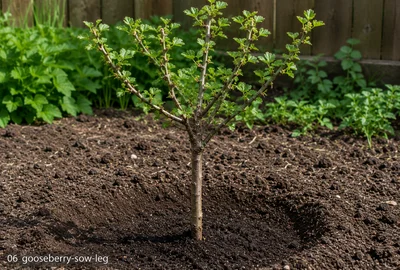
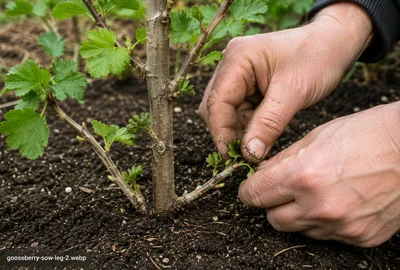
Gooseberries are traditionally grown on a short clear stem called a leg — typically 10–15cm of bare trunk below the first branches. At planting, rub off any sideshoots or buds below the lowest branch junction to establish this clear leg. The leg keeps fruit off the ground, improves airflow, and makes picking easier.
Plant and firm well
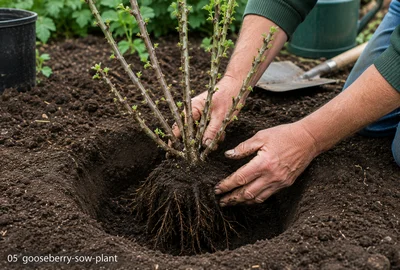
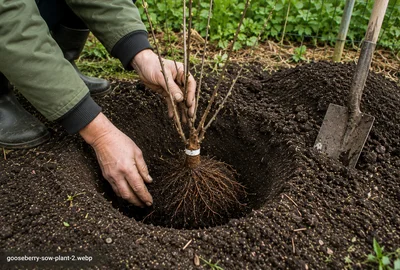
Dig a hole twice the width of the root system. Plant at the same depth as the nursery mark. Firm well in stages to eliminate air pockets around the roots. Water in with a full 10 litres even in winter if conditions are dry.
Formative pruning at planting
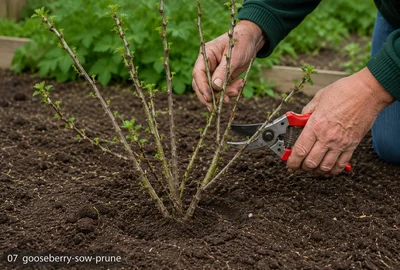
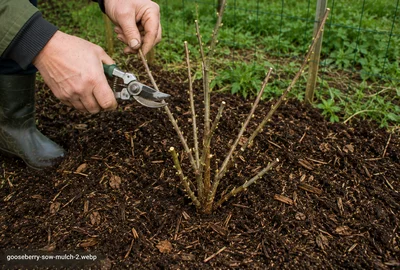
After planting, shorten each main branch by half to a healthy outward-facing bud. This encourages the goblet-shaped open-centred form that is the hallmark of a well-grown gooseberry bush. A clear, open centre improves airflow and dramatically reduces mildew problems.
Mulch around the base
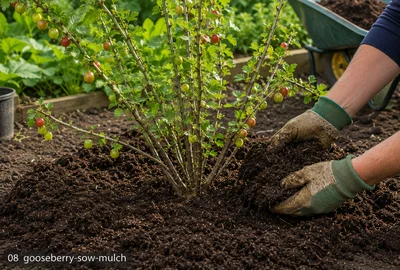
Apply a 5–7cm mulch of compost or woodchip in a wide circle around the bush, keeping it clear of the leg and main stem. Gooseberries are shallow-rooted and benefit greatly from moisture retention and weed suppression.
Net against birds
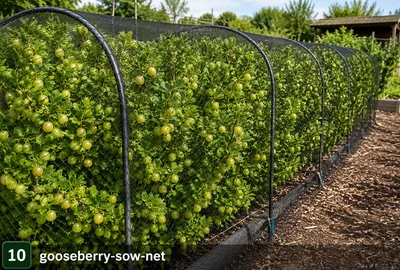
Bullfinches attack gooseberry buds in late winter and early spring — they can remove every bud on an unprotected bush in a single morning. Net early in the year in areas where bullfinches are present. As fruit ripens, all birds must be excluded.
🌿 As a Cordon (Space-saving)
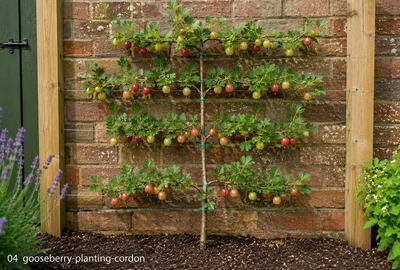
Training as a single, double, or triple cordon against a wall, fence, or wire system is the way to fit gooseberries into a small garden without sacrificing the crop — a row of cordons takes a fraction of the space of open bushes. The technique is built around two prunings a year: in June-July, pinch back all sideshoots to five leaves, which is the single most important management step for cordons; in winter, reduce those same sideshoots further to 2-3 buds and extend the leading shoot. This double pruning rhythm builds short fruiting spurs along the length of the cordon rather than a sprawling bush.
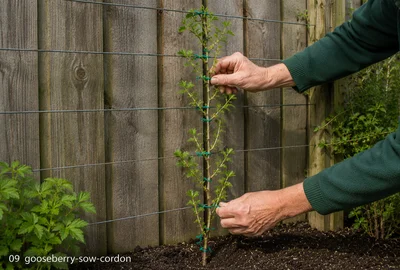
Train as a single upright stem
Gooseberries can be trained as single, double, or triple cordons against a fence, wall, or wire system. A single cordon is just 30cm wide and produces a surprisingly generous crop. Plant against wires at 30cm, 60cm, and 90cm high, or against a fence with horizontal wires at these heights.
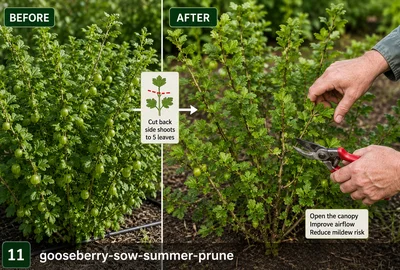
Summer pruning
In June–July, pinch out all sideshoots to 5 leaves. This summer pruning is the key management technique for cordons — it restricts growth, channels energy into fruit development, and makes a second growth flush less likely.
Winter pruning
In winter, reduce the sideshoots pruned in summer back to 2–3 buds. Extend the leader (the central stem) by one-third of its annual growth until the cordon reaches the desired height, then treat the leader as a sideshoot.
04 Companion Planting
✅ Grow nearby
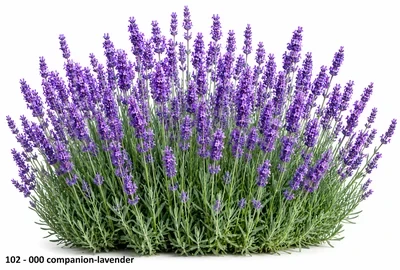
💜 Lavender
Attracts pollinators and adds a decorative, low-maintenance border nearby.
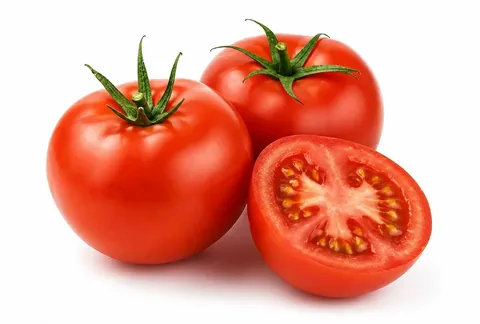
Some trials suggest nearby tomatoes help deter sawfly, though evidence is mixed.
05 Sowing — How To
Plant in dormancy
Bare-root gooseberries should be planted between November and March while dormant. They establish readily in cool, moist winter conditions. Avoid planting when the ground is frozen or waterlogged.
Establish the leg
Remove any buds or sideshoots from the lower 15cm of the stem before planting to create the clear leg. This is the most important structural decision at planting.
Prune and mulch
Shorten all branches by half after planting. Apply a generous mulch. Water if conditions are dry. The bush will establish through winter and begin producing a light crop in its first summer.
Regional sowing timing
Region
Sow / plant
Harvest
Notes
Scotland & Far North
Nov–Mar
Jun–Aug
Northern England
Nov–Mar
Jun–Aug
Midlands & Wales
Nov–Mar
Jun–Aug
Ireland & Isle of Man
Nov–Mar
Jun–Aug
South & SE England
Nov–Mar
Jun–Aug
South Coast & SW
Nov–Mar
Jun–Aug
06 Using a Propagator
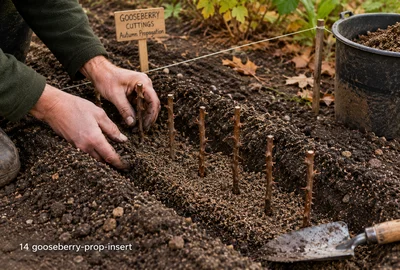
Gooseberries propagate readily from hardwood cuttings taken in autumn — the same method as blackcurrants. No propagator or heat is needed. A cutting taken in October can be producing fruit within two to three years.
Heated propagator
Not Required — Gooseberries root reliably from hardwood cuttings in open ground through winter. No heated propagator is needed.
Take cuttings in autumn
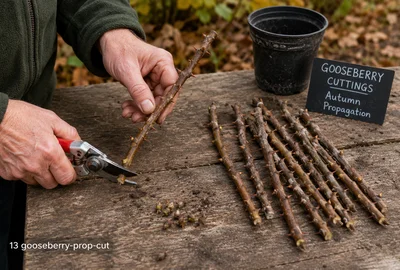
Cut 25–30cm lengths of pencil-thick current-season growth in October–November. Make cuts cleanly with sharp secateurs just above and just below a bud. Remove all buds EXCEPT the top 4–5 — the cleared lower portion will become the leg.
Insert in open ground
Push cuttings vertically into a prepared trench, leaving only the top 4–5 buds above ground. Firm soil around each cutting. They will root through winter with very high success rates.
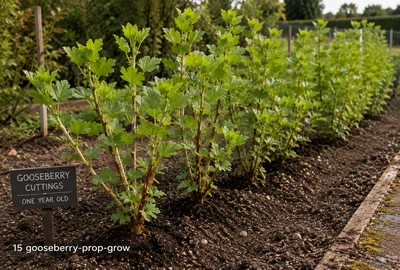
Grow on for a year
Water during dry spells through summer. By autumn, well-rooted cuttings will have put on their first season of growth. They are now ready to move to permanent positions.
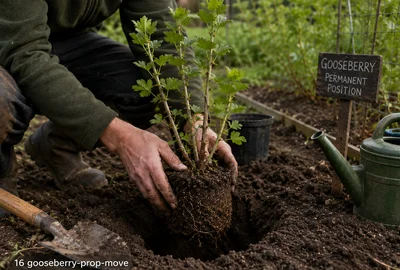
Move to final position
Transplant in autumn or early spring. Plant at the same depth, maintaining the clear leg. Shorten branches by half to encourage well-balanced growth from the start.
07 Soil Requirements
pH
6.0–6.5
Best
Loam, Sandy loam, Clay loam
Tolerates
Most well-drained soils
Avoid
Waterlogged, Very poor sandy
💡 The most tolerant of all fruit bushes. Handles partial shade and most soils.
08 Ongoing Care
✂️ Annual Pruning
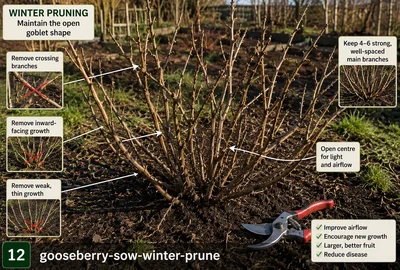
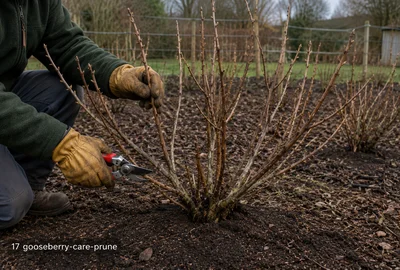
Prune gooseberries in winter to maintain the open goblet shape that is fundamental to good airflow and mildew prevention. Each year, remove crossing or rubbing branches, anything growing into the centre of the bush, and the weakest of any parallel branches. Shorten the main framework branches by a third to a healthy outward-facing bud. Also shorten all sideshoots to 2–3 buds in winter. Unlike blackcurrants, gooseberries fruit on old wood as well as new — do not remove entire old branches unless they are clearly unproductive. The goal is an open, balanced, airy bush with a clear 10–15cm leg.
🐛 Gooseberry Sawfly Control
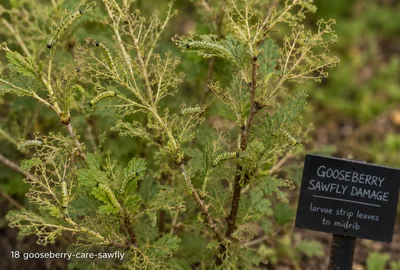
Gooseberry sawfly caterpillars can strip a bush to bare stems within days — they are the single most damaging gooseberry pest and must be checked for regularly from April onwards. The caterpillars are pale green with black spots and begin feeding in the centre of the bush where they are easily missed. Inspect the inner parts of the bush weekly from April. Pick off caterpillars by hand as soon as found — biological control with nematodes is effective, or spray with insecticide as a last resort. Early detection is critical; a heavy infestation missed for even a few days can defoliate an entire bush.
🌿 Mildew Prevention
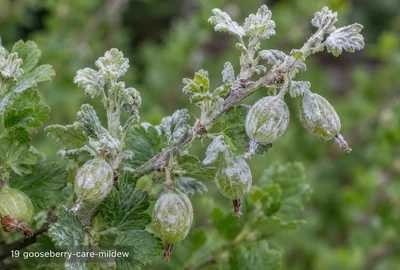
American gooseberry mildew is the most widespread gooseberry disease in the UK, producing a white powdery coating on young shoots and fruit. It spreads rapidly in humid, still conditions. Prevention is far more effective than treatment: maintain the open goblet shape to maximise airflow; avoid high-nitrogen feeds that produce lush, disease-prone growth; mulch to prevent drought stress; and choose resistant varieties such as Invicta, Hinnonmaki Red, or Rokula. If mildew appears, remove and destroy affected shoot tips. Several organic treatments (potassium bicarbonate, sulphur) have some effect when applied early.
🍓 The Double Harvest
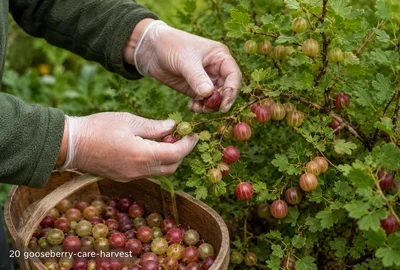
Gooseberries offer two distinct harvest opportunities from a single bush. From late May to mid-June, thin the developing berries by picking every other one — these small, hard, sour green thinnings are excellent for cooking, making gooseberry fool, crumbles, and jam. The thinning also allows the remaining berries to swell to full size. Leave these remaining berries until they are fully ripe — July to August for most varieties — when they develop their full sweetness and, in coloured varieties, their mature colour. Ripe dessert gooseberries eaten warm from the bush are one of the finest tastes in the kitchen garden.
09 Watch Out For
Warning
Gooseberry sawfly can completely defoliate a bush within days — inspect weekly from April. American gooseberry mildew produces white coating on shoots and fruit in humid conditions — choose resistant varieties and maintain open pruning. Bullfinches attack buds in late winter in some areas — net early. Aphids, particularly gooseberry aphid, curl the leaves at shoot tips — pick off or treat with soft soap spray. Botrytis (grey mould) can affect fruit in wet summers.
🐛 Insects & pests
🐜 Aphids (Blackfly & Greenfly) — Curled, distorted, or stunted growing tips — aphids inject saliva that causes leaf curl to protect them
🪲 Vine Weevil — Irregular, rounded notches cut from leaf margins — the work of adult beetles feeding at night
🟤 Scale Insect — Small brown or grey bumps on stems, branches, and the underside of leaves — the scale covers themselves
🍄 Diseases to watch
⬜ Powdery Mildew — Powdery mildew is caused by a range of related fungi, each specific to its host plant — courgette mildew cannot infect peas, and vice versa. The characteristic white powdery coating on leaf surfaces appears in warm, dry conditions (unlike downy mildew which prefers cool and wet). Rarely kills plants but severely reduces yield and plant vigour.
🩶 Botrytis (Grey Mould) — Botrytis cinerea (grey mould) is the most ubiquitous fungal pathogen in temperate gardens — present in virtually every garden soil and on plant debris. It becomes a disease only when conditions favour it: cool, humid, poorly ventilated environments with damaged or senescent plant tissue. In a greenhouse in autumn it can destroy an entire tomato or grape crop.
Full identification and treatment advice is in the Pests and Diseases sections.
10 Storage & Preserving
🟢 Fresh (Ripe Dessert)
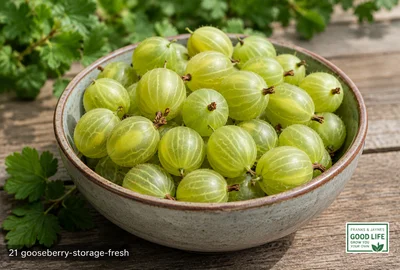
Fully ripe gooseberries can be eaten straight from the bush — sweet, complex, and utterly different from the sour green berries sold in shops. They keep for up to a week in the refrigerator. Eat within 3–4 days of picking for best flavour. Green thinnings used immediately for cooking require no storage — cook directly after picking.
🫙 Gooseberry Fool & Preserves
Gooseberry fool — cooked, sweetened, and puréed gooseberries folded into cream — is one of the great British summer desserts and makes excellent use of the June thinnings. Gooseberry jam makes a beautiful amber preserve. Gooseberry chutney pairs well with cheese. Green-stage gooseberries make an unusual savoury sauce for mackerel — a traditional British pairing.
❄️ Frozen
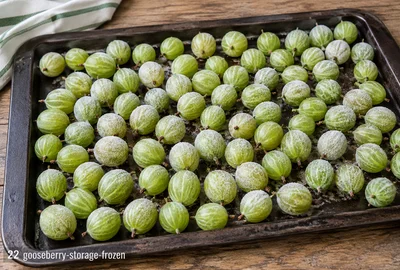
Gooseberries freeze exceptionally well. Top and tail, wash, dry, and open freeze on a tray before bagging. Both green and ripe gooseberries freeze well — the green cooking ones particularly benefit from freezing as it softens the skin slightly, reducing cooking time. Use within 12 months. Excellent for crumbles, pies, and jam made through winter.
11 Expert Tips
💡 Grow as a cordon
A single-stemmed gooseberry cordon takes just 30cm of wall or fence space and produces a surprisingly generous crop of large, easily accessible fruit. Three cordons in 90cm of fence space yield as much as a full-sized bush, are completely mildew-free due to perfect airflow, and are picked in minutes. This is the best growing method for most gardens.
💡 The second harvest approach
The double harvest — cooking thinnings in June, dessert berries in August — makes a single gooseberry bush twice as productive in terms of kitchen use. Many gardeners pick all fruit green in June and miss the extraordinary sweetness of fully ripened red or golden gooseberries in late summer. Leave at least half the crop to ripen fully.
💡 Heritage varieties for flavour
Modern disease-resistant varieties are excellent but some heritage gooseberries have flavour that surpasses anything commercially available. Leveller (golden-yellow, exceptional dessert quality), Langley Gage (transparent-skinned, intensely sweet), and Lord Derby (large red, superb jam) are all worth seeking from specialist nurseries.