Plant bare-root canes November–March, 45cm apart in rows 1.8m apart — summer and autumn fruiting varieties need different pruning
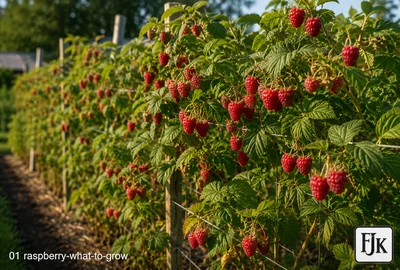
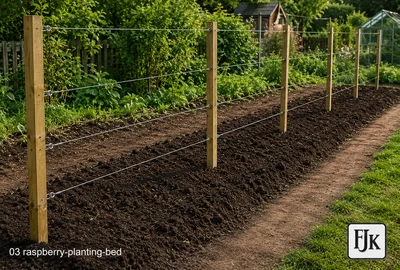
Erect posts and horizontal wires before planting — raspberries must be supported from day one
Cut all canes to 25cm after planting to encourage strong new growth from the base
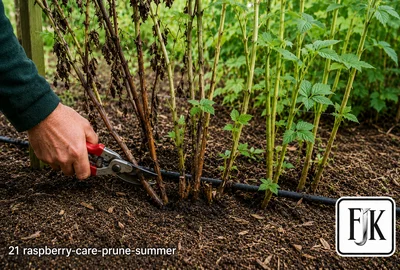
Summer raspberries: prune out all canes that fruited in autumn; keep new green canes for next year
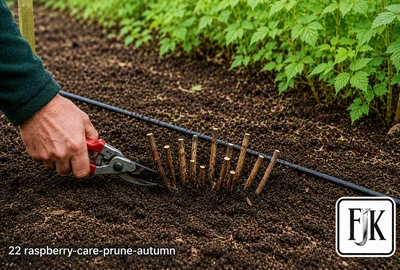
Autumn raspberries: cut all canes to ground level in February — new canes fruit the same year
🌱 SowPlant bare-root canes Nov–Mar
🌾 HarvestJun–Aug (summer) / Sep–Oct (autumn)
☀ PositionFull sun or part shade
📐 Spacing45cm in rows 1.8m apart
DifficultyModerate
⚡ Quick facts
Sow
Plant bare-root canes Nov–Mar
Plant
Nov–Mar (bare-root) · Mar–Apr (container)
Harvest
Jun–Aug (summer) / Sep–Oct (autumn)
Position
Full sun or part shade — tolerates more shade than most fruits
Spacing
45cm in rows 1.8m apart
Height
1.2–1.8m (summer) · 1.0–1.5m (autumn)
Hardiness
Fully hardy — canes withstand hard frost
Lifespan
10–15 years from one planting
Difficulty
Moderate
01 About
Few fruits reward as generously as raspberries. Plant once and harvest for 10 or more years. Choose summer varieties for June and July, autumn varieties for September and October, or grow both for a season that runs from June to the first frosts. Raspberries thrive throughout the UK and demand little once established beyond an annual prune.
02 Varieties
The number of varieties shown for each crop is based on UK consumption data (2025/26) — the more popular the crop, the more variety choices we include.
Summer Fruiting
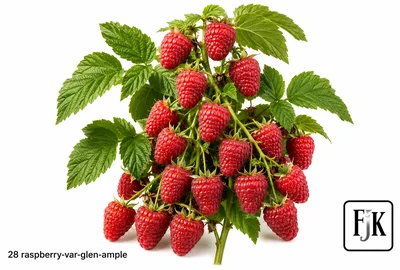
Glen Ample
Summer
The most widely grown summer raspberry in the UK. Spine-free canes make harvesting comfortable. Very heavy cropper with large, firm berries that hold their shape well. AGM.
Harvest
Jul–Aug
Flavour
Rich, sweet, classic raspberry
Fruit size
Large
Yield
Very high
Disease resistance
Good
🏅 AGM
✓ Self-fertile
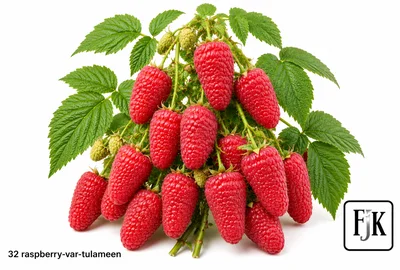
Tulameen
Summer
The connoisseur's raspberry. Exceptionally large, long berries with a flavour that surpasses all other summer varieties. Thorned canes but the quality justifies the discomfort. Excellent for freezing.
Harvest
Jul–Aug
Flavour
Outstanding — complex, rich, fragrant
Fruit size
Very large
Yield
High
Disease resistance
Moderate
🏅 AGM
✓ Self-fertile
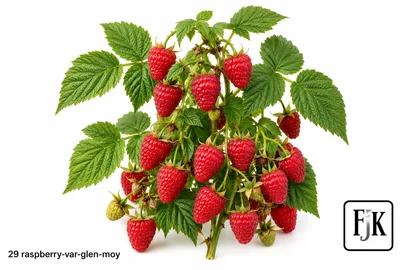
Glen Moy
Summer
An early summer variety producing spine-free canes and a reliable crop of medium-sized berries. Excellent disease resistance. Good for northern gardens where the season is shorter.
Harvest
Jun–Jul
Flavour
Sweet, mild
Fruit size
Medium
Yield
Good
Disease resistance
Very good
✓ Self-fertile
Autumn Fruiting
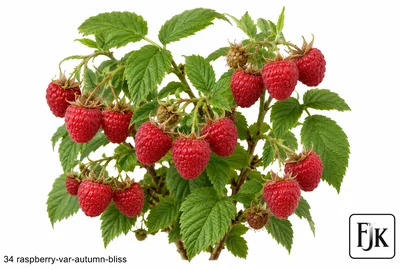
Autumn Bliss
Autumn
The benchmark autumn raspberry. Bred in the UK, suited to UK conditions, and reliably productive even in poor summers. Short, sturdy canes need minimal support. The standard against which all others are judged.
Harvest
Aug–Oct
Flavour
Rich, sharp-sweet balance
Fruit size
Medium-large
Yield
Very high
Disease resistance
Very good
✓ Self-fertile
🪴 Container
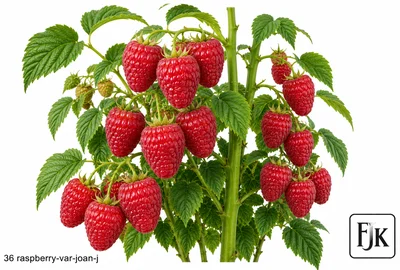
Joan J
Autumn
Spine-free autumn variety with an exceptionally long picking season from August into October. Large, attractive berries. One of the best choices for small gardens and containers. AGM.
Harvest
Aug–Oct
Flavour
Sweet, full flavour
Fruit size
Large
Yield
Very high
Disease resistance
Excellent
🏅 AGM
✓ Self-fertile
🪴 Container
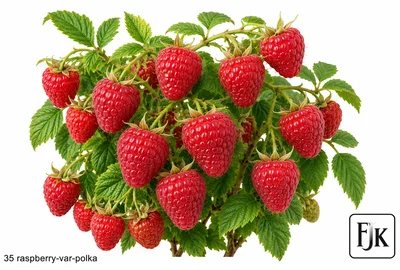
Polka
Autumn
Polish-bred autumn variety with very sweet, large berries. Compact canes. Crops reliably and consistently. Popular with growers who prefer a sweeter, milder flavour over the sharper tang of Autumn Bliss.
Harvest
Aug–Oct
Flavour
Very sweet, mild
Fruit size
Large
Yield
High
Disease resistance
Good
🏅 AGM
✓ Self-fertile
🪴 Container
Heritage & Primocane
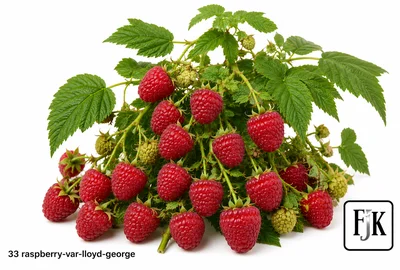
Lloyd George
Summer
A heritage variety dating to 1919. Intensely flavoured berries with the classic sharp-sweet raspberry taste. Less vigorous than modern varieties but treasured by enthusiasts for its outstanding flavour. Hard to find but worth seeking out.
Harvest
Jul–Aug
Flavour
Rich, classic, intense
Fruit size
Medium
Yield
Good
Disease resistance
Moderate
✓ Self-fertile
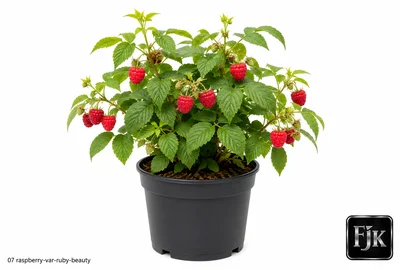
Ruby Beauty
Autumn
Bred specifically for containers and small spaces. Very compact habit, reaching only 60–80cm. Spine-free. The ideal variety for patio pots and balconies where full-sized canes would be impractical.
Harvest
Aug–Oct
Flavour
Sweet, pleasant
Fruit size
Medium
Yield
Moderate
Disease resistance
Good
✓ Self-fertile
🪴 Container
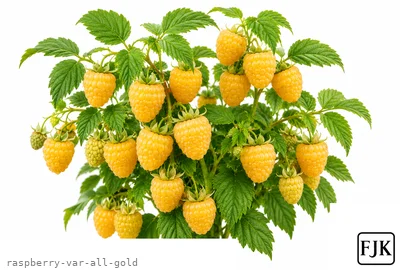
All Gold
Autumn
A yellow-fruited autumn raspberry with an unusually sweet, honey-like flavour quite different from red varieties. Birds tend to ignore yellow fruits, reducing losses significantly. A genuine curiosity that earns its place for flavour alone.
Harvest
Aug–Oct
Flavour
Honey-sweet, mild, distinctive
Fruit size
Medium
Yield
Moderate
Disease resistance
Good
🏅 AGM
✓ Self-fertile
🪴 Container
Scottish Varieties
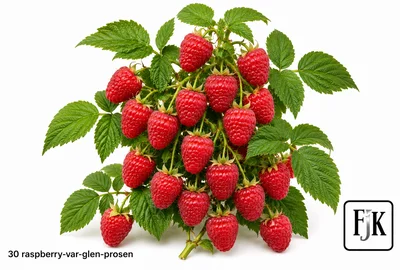
Glen Prosen
Summer
Bred in Scotland. Spine-free canes, excellent disease resistance, and reliable performance in northern gardens and exposed sites. Highly recommended for Scotland and northern England.
Harvest
Jul–Aug
Flavour
Well-balanced, sweet
Fruit size
Medium
Yield
High
Disease resistance
Excellent
✓ Self-fertile
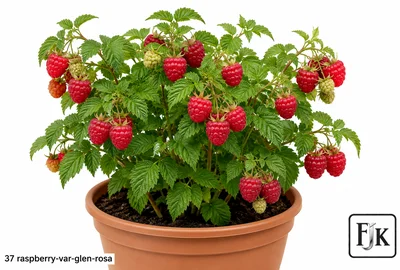
Glen Rosa
Summer
Another Scottish-bred variety. Large, well-flavoured berries on spine-free canes. Good resistance to the main cane diseases. A newer variety gaining recognition from growers across the UK.
Harvest
Jul–Aug
Flavour
Sweet, aromatic
Fruit size
Large
Yield
High
Disease resistance
Good
✓ Self-fertile
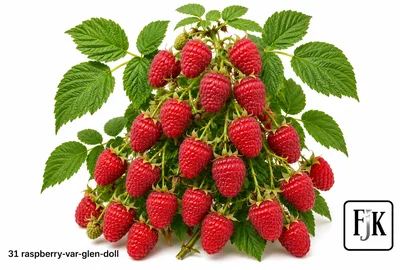
Glen Doll
Summer
An early summer variety that extends the season. Cropping begins in late June in the south. Reliable yield in all regions including Scotland. Good virus tolerance. Suits growers wanting to start the raspberry season as early as possible.
Harvest
Jul
Flavour
Sweet, mild
Fruit size
Medium
Yield
High
Disease resistance
Very good
✓ Self-fertile
03 Planting Options
🌿 In a Garden Bed or Raised Bed
Raspberries are a genuinely long-term planting — a well-prepared row will crop reliably for 10-15 years, so it pays to get the groundwork right from the start. Deep-dig the bed and incorporate plenty of well-rotted organic matter before planting, then erect sturdy posts and three horizontal support wires immediately, since canes need training from their first season. Plant bare-root canes with roots spread horizontally, 45cm apart, then cut all newly planted canes hard back to 25cm — it feels drastic, but it forces strong new growth rather than a weak first crop. Mulch generously and keep well watered through the first summer while the root system establishes.
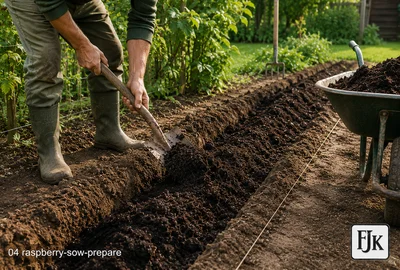
Prepare the bed thoroughly
Raspberries are a permanent planting — they will occupy the same ground for 10–15 years. Dig deeply, at least 45cm, and incorporate a generous layer of well-rotted compost or manure. Remove all perennial weeds, particularly couch grass and bindweed, as they are almost impossible to remove once canes are established.
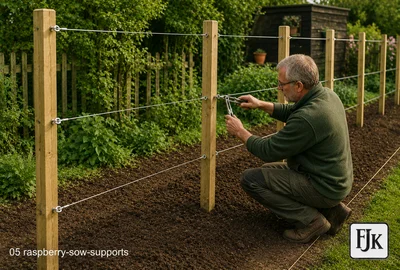
Erect support wires before planting
Fix strong posts at 1.8m intervals along the row and run three horizontal wires at 60cm, 90cm, and 120cm. The wires must be in place before canes go in — retrofitting a support frame around established canes causes root damage. Use 10–12 gauge galvanised wire and strain it tightly.
Plant canes at correct depth
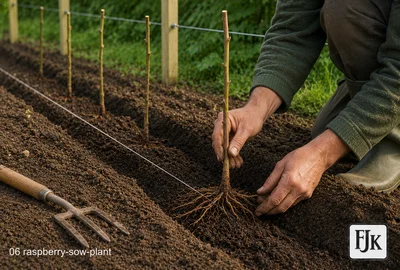
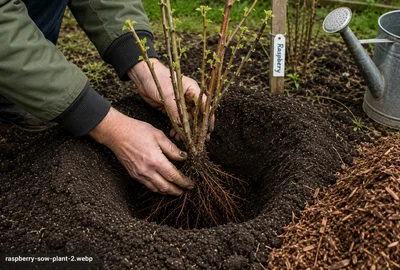
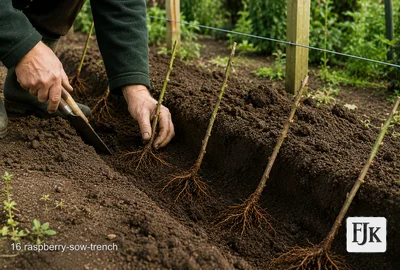
Plant bare-root canes with the roots spread out horizontally in the planting trench, 45cm apart. Plant at the same depth as they were originally grown — a visible soil mark on the cane shows the correct level. Too deep restricts new cane emergence; too shallow exposes roots to drying.
Cut canes to 25cm after planting
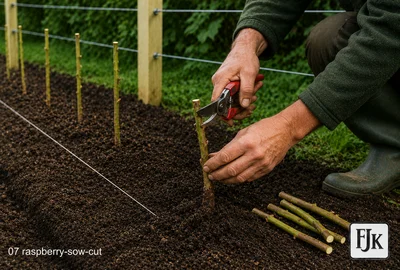
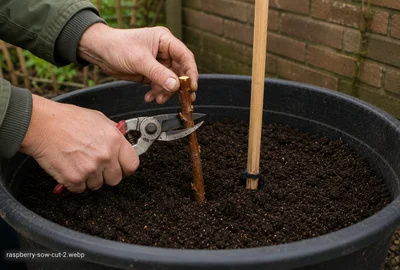
This feels drastic but is essential — cut all newly planted canes back to 25cm immediately after planting. This prevents the top from drawing water from roots that have not yet re-established. New canes will emerge from the base through spring. You will not harvest fruit in the first year.
Mulch generously
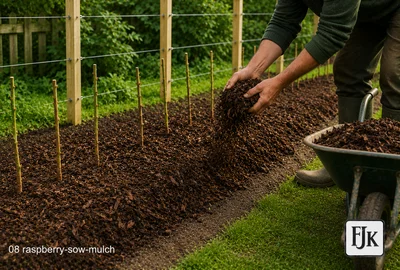
Apply a 7–10cm mulch of compost, woodchip, or straw along the length of the row. Keep it clear of the cane bases. Raspberries are shallow-rooted and drought-sensitive — mulch is not optional, it is the single most effective thing you can do for a healthy cane crop.
Water through first summer
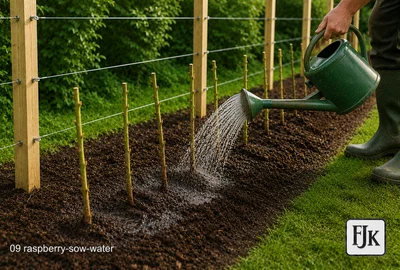
Newly planted canes need consistent moisture through their first growing season. Water deeply and regularly during dry spells. Once established after year one, raspberries are largely self-sufficient except in prolonged drought.
🪴 In Large Containers
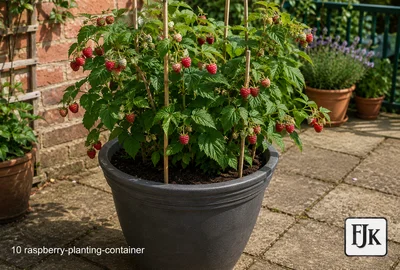
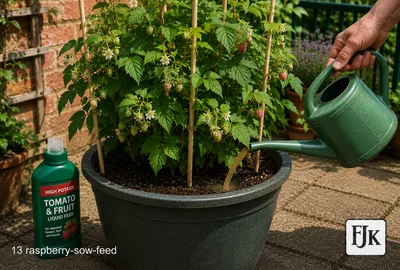
A dwarf primocane (autumn-fruiting) variety such as Ruby Beauty makes raspberries genuinely practical for a patio or balcony, where a full-sized summer-fruiting cane would be impractical. Use a substantial container — minimum 40-50cm wide and deep — filled with a rich, moisture-retentive mix of peat-free compost and John Innes No.3, since raspberries in containers dry out fast and are hungrier than most fruit. Push in a stake or small support at planting time, and check pots daily through summer, watering deeply whenever the top 2-3cm of compost dries out. Regular feeding through the season keeps container plants cropping well despite the restricted root run.
Choose the right container
Raspberries need a substantial container — minimum 40–50cm wide and deep per cane, or a large trough for 3–4 canes. Primocane (autumn) varieties are far better suited to containers than summer varieties, which produce taller, more sprawling canes. Dwarf primocane varieties such as Ruby Beauty are ideal.
Use a rich, moisture-retentive compost
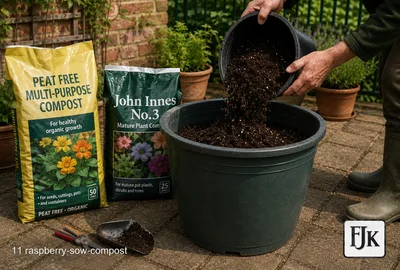
Fill with a mix of peat-free multi-purpose compost and John Innes No.3 in equal parts. The weight of John Innes helps stabilise tall canes in wind. Avoid pure multi-purpose — it dries out too quickly and deteriorates too fast for a long-term planting.
Plant and support
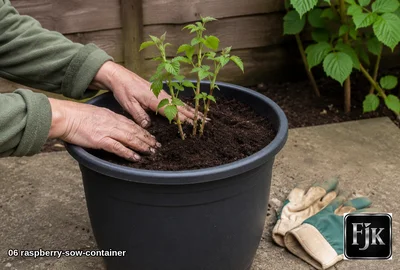
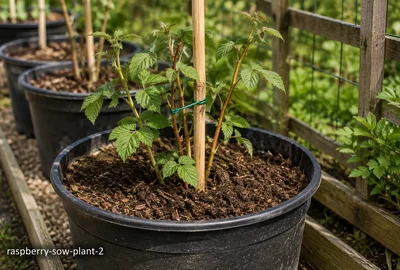
Plant one cane per 40cm diameter pot or three per large trough. Push a cane or small stake in at planting — container-grown raspberries need support even for compact varieties. Tie loosely as canes develop to prevent wind rock.
Water and feed consistently
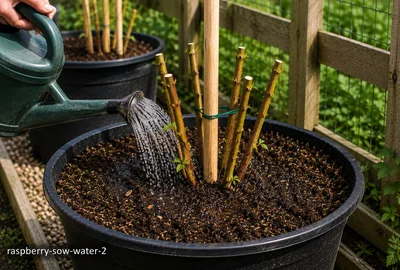
Container canes need daily checking in summer. Water deeply when the top 2–3cm of compost is dry. From first flower to last fruit, apply a high-potash liquid feed weekly. Top dress with fresh compost each spring and repot or divide every 3–4 years.
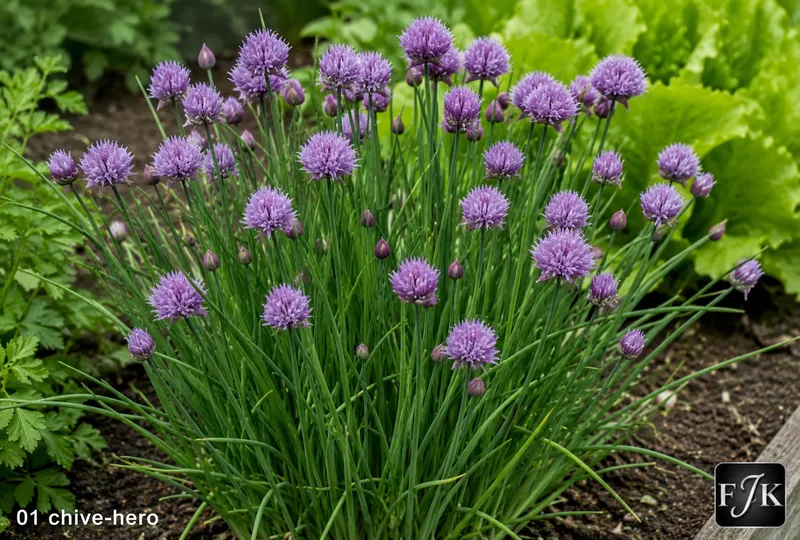
A milder allium companion with the same pest-deterrent reputation as garlic, without competing significantly for space at the base of the canes.
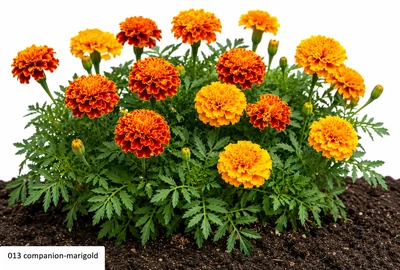
🌸 Marigold (Tagetes)
Marigolds are thought to deter nematodes and attract pollinators and predatory insects into the raspberry row.
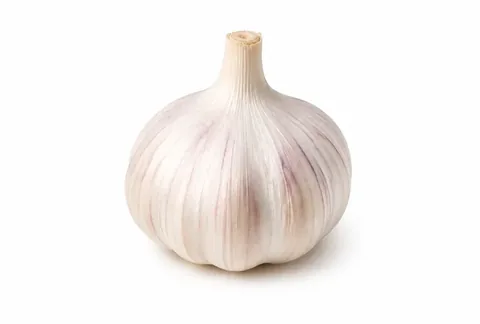
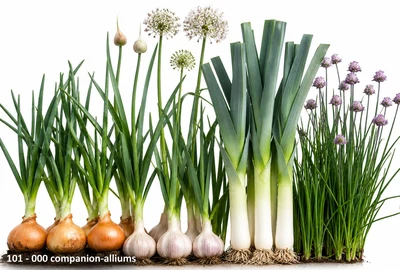
🧄 Alliums generally
Any onion-family plant grown nearby is thought to help mask the scent of ripening fruit from pests seeking it out.
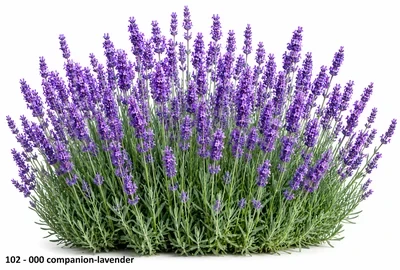
💜 Lavender at row ends
Planted at the ends of raspberry rows, lavender attracts pollinators and adds a decorative, low-maintenance border.
05 Sowing — How To
🌿 Bare-root Canes (Nov–Mar)
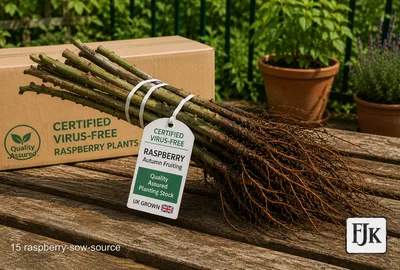
Buy certified virus-free stock
Raspberries accumulate viruses over time that reduce yield and vigour. Always buy certified virus-free canes from a reputable nursery. Never accept canes from a neighbour or unknown garden — viruses are invisible at planting and reveal themselves only as progressively weaker crops.
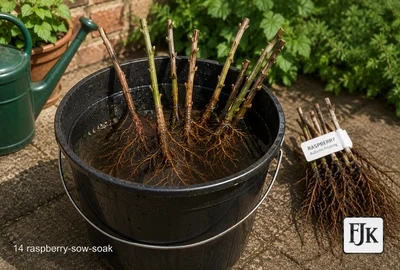
Soak roots before planting
If canes have dried in transit, soak the roots in water for 1–2 hours before planting. Rehydrated roots establish far more reliably than dry ones.
Plant in a trench
Dig a shallow trench 8–10cm deep along the support wire. Spread roots out horizontally rather than allowing them to curl. Space canes 45cm apart. Backfill and firm gently.
Cut back immediately
Cut all canes to 25cm above ground immediately after planting. This is the most important step — do not skip it. The cut material will not fruit; it should be removed and composted.
Bare-root Canes (Nov–Mar) — regional timing
Region
Sow / plant
Harvest
Notes
Scotland & Far North
Nov–Mar
Jul–Sep
Northern England
Nov–Mar
Jul–Oct
Midlands & Wales
Nov–Mar
Jun–Oct
Ireland & Isle of Man
Nov–Mar
Jul–Oct
South & SE England
Nov–Mar
Jun–Oct
South Coast & SW
Nov–Mar
Jun–Oct
🌱 Container-grown Plants (Mar–Apr)
Plant when soil workable
Container-grown canes can go in from March to April when the soil is workable and not waterlogged. They require less drastic cutting back than bare-root — reduce cane height by half rather than to 25cm.
Water in thoroughly
Container canes need a full 10 litres of water at planting. Firm soil well around the root ball to eliminate air pockets. Mulch immediately after planting.
Raspberries do not require a propagator. They are planted as bare-root canes in winter or container-grown plants in spring. Propagation from your own plants is done by dividing root suckers in autumn — cut rooted suckers from around established canes and transplant immediately.
Heated propagator
Not Required — No propagator is needed. Raspberries are hardy plants propagated by division or purchased as dormant canes.
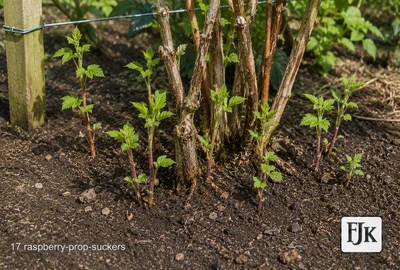
Identify rooted suckers
In September–October, raspberry plants send up suckers from the root system around the main cane. Identify suckers that are well-rooted (they resist a gentle tug) and at least 30cm tall.
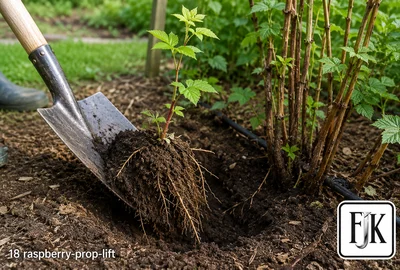
Lift with a spade
Cut down into the soil 15cm from the sucker to sever the connecting root cleanly. Lever up with a spade, retaining as much root as possible. Work quickly — exposed roots should not dry out.
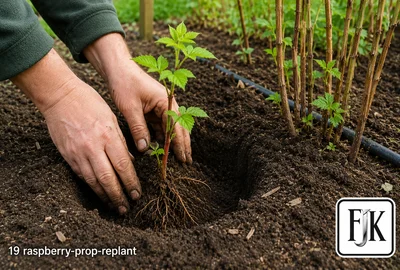
Replant immediately
Plant the sucker in its new position at the same depth it was growing. Firm, water, and mulch. Only propagate from plants showing vigorous growth and good yield — do not perpetuate virus-infected stock.
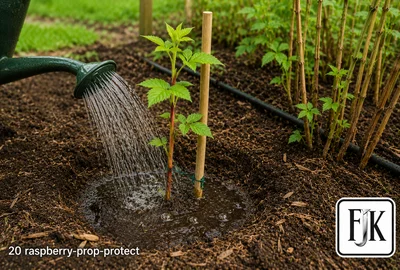
Protect through winter
Newly moved suckers are vulnerable in their first winter. Apply extra mulch around the base. In exposed gardens, a temporary windbreak reduces dessication damage from cold winds.
07 Soil Requirements
pH
6.0–6.5
Best
Sandy loam, Loam
Tolerates
Loam
Avoid
Chalk, Waterlogged, Heavy clay
💡 Well-drained, slightly acid soil. Will not tolerate chalk or waterlogging.
08 Ongoing Care
✂️ Pruning Summer Raspberries
Immediately after the last fruit is picked (typically August), cut all the canes that have just fruited to ground level. These will not fruit again. The new green canes that grew up through the summer are next year's crop — select the strongest 6–8 per metre of row, tie them to the wires at 10cm intervals, and remove all the others. In February, tip prune these retained canes by cutting the top 15cm to just above a healthy bud. Do not cut back further — the top of the cane produces the first and most productive flowers.
✂️ Pruning Autumn Raspberries
Autumn raspberry pruning is dramatically simpler than summer varieties. In late February, cut every single cane in the entire row to ground level — no selection, no tying in, no complexity. New canes emerge from the base in spring, grow to full height through summer, and fruit on their tips from late August to October. This complete annual cut also eliminates all overwintering pests and diseases. The simplicity of autumn raspberry management makes them the best choice for new growers.
🌱 Feeding & Mulching
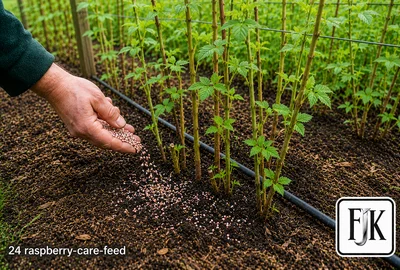
Apply a balanced general fertiliser (fish, blood and bone or similar) along the row in early March as growth begins. In late May, switch to a high-potash feed as flowers develop. Apply a 7–10cm mulch of well-rotted compost or woodchip along the entire row in spring — keep it clear of cane bases but otherwise as generous as possible. The mulch suppresses weeds (hoeing between raspberry canes damages shallow roots), retains moisture, and feeds the soil. Repeat annually. Without mulch, raspberries in dry summers produce fewer and smaller fruit.
💧 Watering
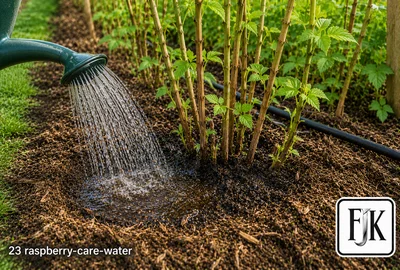
Established raspberry canes are reasonably drought-tolerant once the root system is deep, but consistent moisture through flowering and fruiting significantly improves yield and fruit size. Water deeply every 7–10 days during dry spells from May through harvest — shallow daily watering encourages surface rooting. A drip irrigation system along the row is the ideal solution for a productive raspberry bed and pays for itself in improved yields within one season.
09 Watch Out For
Warning
Raspberry beetle is the most common pest — grubs develop inside maturing fruit. Cultivate soil around canes in winter to expose pupae. Botrytis (grey mould) attacks fruit in wet summers — improve airflow by not overcrowding canes. Cane blight causes sudden wilting of individual canes at harvest; cut to the base and burn. Spur blight produces dark purple patches on canes in late summer — remove and destroy affected canes. Virus diseases (mosaic, leaf curl) cause progressively weaker plants — no cure, remove and replace with certified stock.
🐛 Insects & pests
🐜 Aphids (Blackfly & Greenfly) — Curled, distorted, or stunted growing tips — aphids inject saliva that causes leaf curl to protect them
🪲 Vine Weevil — Irregular, rounded notches cut from leaf margins — the work of adult beetles feeding at night
🕷 Spider Mite — Fine, silky webbing on the underside of leaves and between growing tips — the definitive identification sign
🐌 Slugs & Snails — Silver slime trails on leaves, soil, and pots — often the first sign before damage is found
🍄 Diseases to watch
🩶 Botrytis (Grey Mould) — Botrytis cinerea (grey mould) is the most ubiquitous fungal pathogen in temperate gardens — present in virtually every garden soil and on plant debris. It becomes a disease only when conditions favour it: cool, humid, poorly ventilated environments with damaged or senescent plant tissue. In a greenhouse in autumn it can destroy an entire tomato or grape crop.
🟠 Rust — Rust diseases are caused by a large family of obligate parasitic fungi, each specific to its host or a narrow range of hosts. Leek rust (Puccinia allii) is the most common in UK vegetable gardens, producing vivid orange pustules on leek leaves in summer and autumn. While rarely fatal, severe infections significantly weaken plants and reduce yields.
Full identification and treatment advice is in the Pests and Diseases sections.
10 Storage & Preserving
🫐 Fresh (Use Same Day)
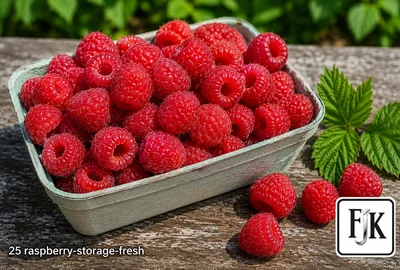
Raspberries deteriorate faster than almost any other fruit — they begin losing quality within hours of picking. Pick in the cool of the morning and use the same day wherever possible. If refrigerating, spread in a single layer on a tray lined with kitchen paper and keep for no more than 24 hours. Never wash until immediately before eating. The soft skin of a raspberry is not designed for storage — it is designed to be eaten immediately, which is the fundamental reason homegrown raspberries taste so vastly superior to shop-bought ones.
❄️ Frozen
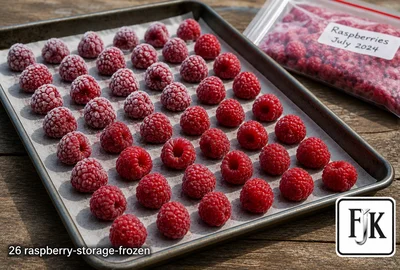
Raspberries freeze exceptionally well — better than most soft fruits. Spread in a single layer on a tray and freeze until solid (about 2 hours), then transfer to bags or containers. Tray-frozen raspberries remain separate and can be taken in handfuls as needed. Use within 12 months. Frozen raspberries are outstanding for coulis, smoothies, jam, baking, and desserts. A raspberry coulis made from frozen homegrown fruit is incomparably better than any commercial product.
🫙 Jam & Preserves
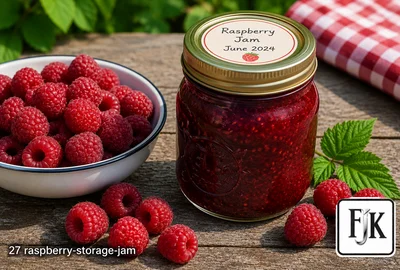
Raspberry jam is one of the simplest and most rewarding preserves to make. Raspberry vinegar, raspberry curd, and fruit cheeses are further options for a large glut. Follow a tested recipe.
11 Expert Tips
💡 Grow both summer and autumn varieties
Summer and autumn raspberries occupy the same space at different times of year. Plant a summer variety on one side of a post and an autumn variety on the other, with separate wires. You will harvest from June through October with almost no additional effort or ground space.
💡 The first-year sacrifice
In the first year after planting, cut all flowers from summer varieties as they appear and accept no fruit. This redirects energy into root and cane development. A plant that is not allowed to fruit in year one will produce double the yield in year two compared to one that was allowed to fruit immediately.
💡 Autumn varieties for simplicity
If you are new to soft fruit, grow autumn raspberries first. The management is completely straightforward — cut everything to the ground in February, mulch in March, feed in May, water in dry spells, and pick from late August. They require no tying in, no selective pruning, and no complex decision-making. Joan J or Autumn Bliss are the best starting varieties.