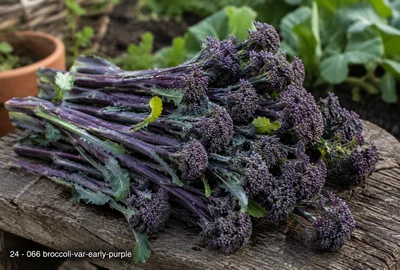
Early Purple Sprouting
PSB
The classic PSB variety, ready from February. Produces masses of slender purple shoots over a long season. Essential for any UK plot looking to fill the hungry gap. Very cold hardy.
- Hardy
- ⭐ Flavour
- Hungry Gap
Brassica oleracea (Italica)
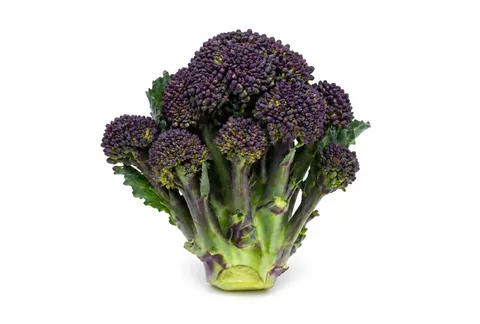
Two quite different crops share the broccoli name. Calabrese gives you large green summer heads in 10–12 weeks from sowing. Purple Sprouting Broccoli (PSB) is a completely different beast — sown in spring, it overwinters as a large plant and then produces a cascade of sweet purple shoots from February through to May, filling the hungry gap when almost nothing else is available. Both are nutritional powerhouses and among the most rewarding brassicas for any UK garden or allotment.
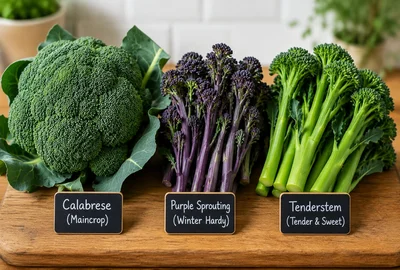
Calabrese is the familiar green-headed broccoli from the supermarket — fast-growing, rewarding, and ready in 10–12 weeks from sowing. Cut the central head first, then harvest side shoots for weeks. Purple Sprouting Broccoli (PSB) is a long-season crop that overwinters and produces masses of slender purple shoots from February to May. Long-stemmed types — selected for their long, sweet stalks — are the restaurant favourite and work as either calabrese or PSB depending on the variety.
The number of varieties shown for each crop is based on UK consumption data (2025/26) — the more popular the crop, the more variety choices we include.
Overwintering crop that produces masses of sweet purple shoots from February to May. Fills the hungry gap like nothing else. Real-life photography.
The classic PSB variety, ready from February. Produces masses of slender purple shoots over a long season. Essential for any UK plot looking to fill the hungry gap. Very cold hardy.
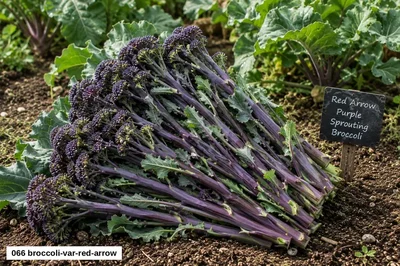
A variety with uniform, erect shoots and outstanding flavour. One of the most productive PSB varieties available. Ready from March. Very good resistance to downy mildew.
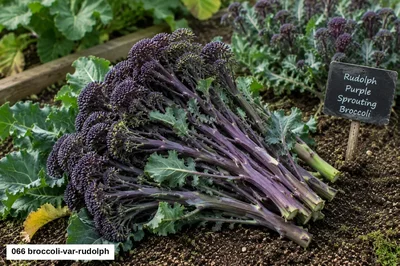
Very early PSB — shoots from December in mild areas. The earliest-cropping PSB variety and the best choice for extending the season. Compact habit suitable for smaller gardens.
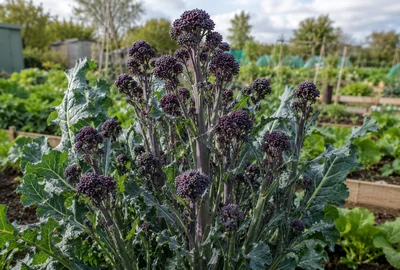
Extends the PSB season into May and beyond. Taller than early types with generous side shoot production. Ideal for filling the hungry gap into late spring. Good cold hardiness.
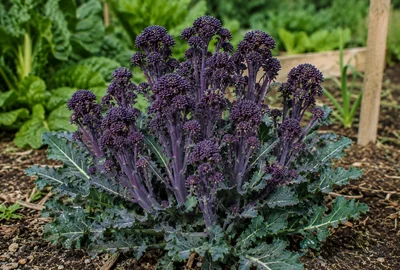
Compact, vigorous PSB suited to smaller gardens. Deep purple shoots with excellent flavour. Ready from late February. Good clubroot tolerance and consistent performance in UK conditions.
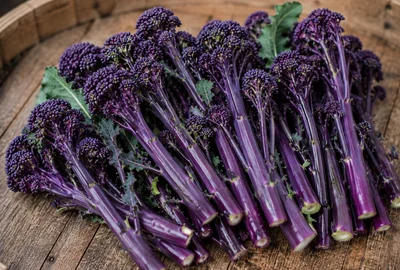
Mid-season PSB with outstanding uniformity. Rich purple shoots of good length and excellent flavour. Ready March–April. Reliable and consistent — one of the best performing varieties in independent trials.
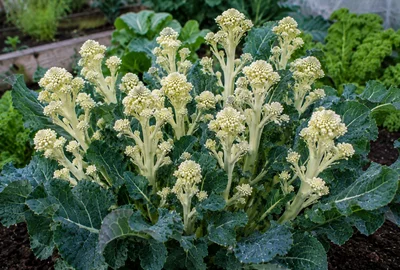
Unusual white-sprouting PSB with excellent flavour. Less common than purple types but very rewarding. Ready April–May. The white shoots are striking on the plate and have a slightly milder, sweeter taste than purple PSB.
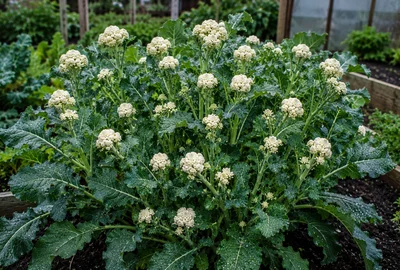
A unique perennial broccoli that produces multiple white heads year after year if the small heads are cut promptly. Needs a permanent bed position. Long-lived — plants can crop for 3–4 years with good care.
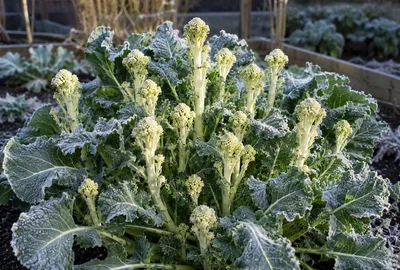
White-headed early PSB — less common but highly regarded for its mild, sweet flavour. Produces masses of small white shoots from February. Excellent cold hardiness and good disease resistance.
Long-stalked, sweet-stemmed broccoli eaten stalk and all. A cross between calabrese and Chinese kale. Restaurant favourite and outstanding flavour. Real-life photography.
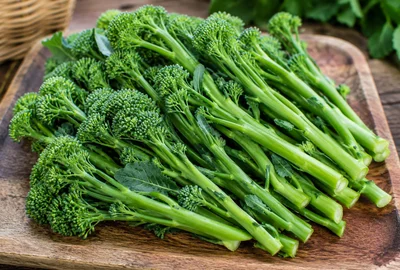
A cross between calabrese and Chinese kale, grown for long, sweet, tender stems with small heads — eat the whole shoot. Ready in about 12 weeks from sowing and very productive; keep cutting and more side shoots follow. Superb lightly steamed or stir-fried. Seed is sold under several names, so look for long-stemmed broccoli.
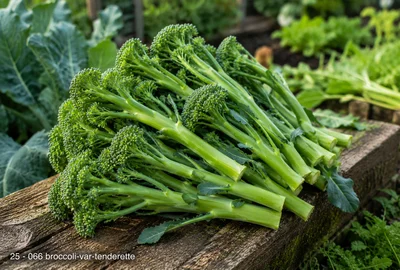
A modern long-stemmed hybrid with a naturally branching habit, producing multiple slender, sweet stems topped with small mini-florets. Gives 2–3 harvests over a month from a single plant — good for a steady, ongoing supply rather than one big cut.
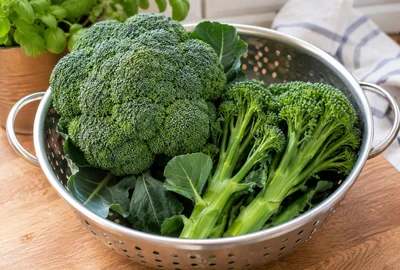
Both types of broccoli are widely available as seed. Calabrese seed is sold by all main online seed companies and garden centres. PSB is more specialist — order online in January for the best selection. Plug plants of both types appear in garden centres from April and market stalls in May.
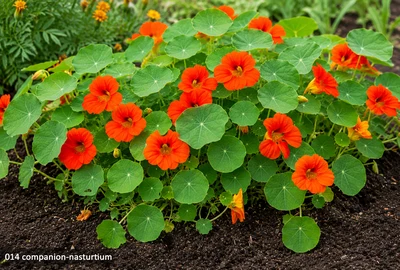
Trap crop for cabbage white butterfly and aphids. Nasturtiums planted at the perimeter of brassica beds draw pests away from the broccoli plants and attract beneficial insects.
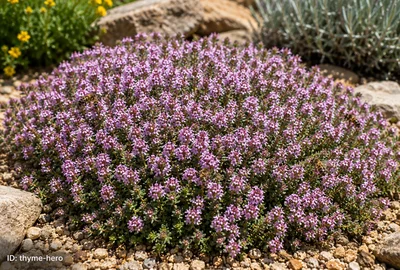
Thyme is thought to repel cabbage white butterfly when planted near brassicas. The aromatic oils in thyme confuse egg-laying insects searching for brassica host plants.
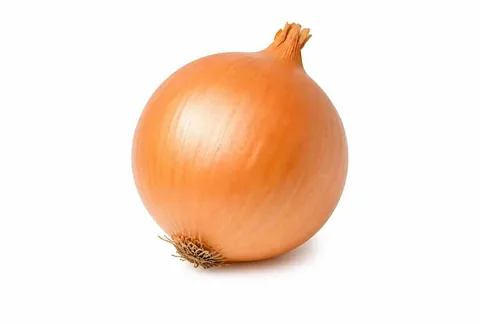
Onions and brassicas are good companions — onion scent may help mask the presence of broccoli from cabbage white butterflies and other brassica pests.
Calabrese and PSB have quite different sowing requirements — calabrese is sown direct and dislikes root disturbance, while PSB is best raised in modules and transplanted.
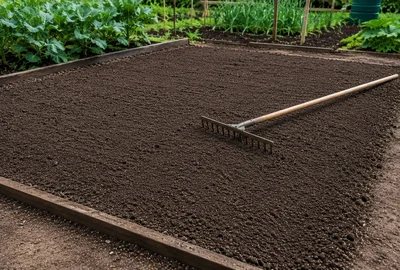
Rake to a fine tilth for calabrese direct sowing. For PSB, tread the bed firmly — PSB needs firm soil just like other brassicas.
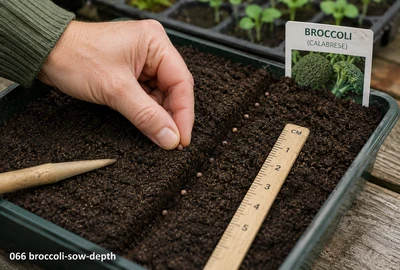
Sow at 1cm depth. For calabrese, make stations 30cm apart with 3 seeds each. For PSB modules, one seed per cell.
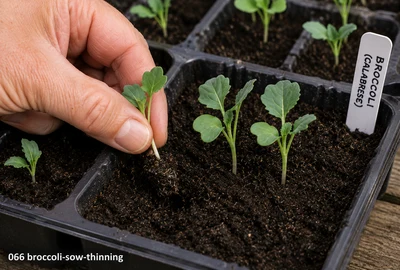
Thin calabrese to the strongest seedling per station. Grow PSB modules on until they have 4–5 true leaves.
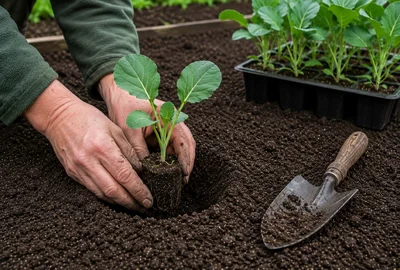
Transplant PSB at 45cm spacing (60cm for large varieties). Firm the soil very well around each plant.
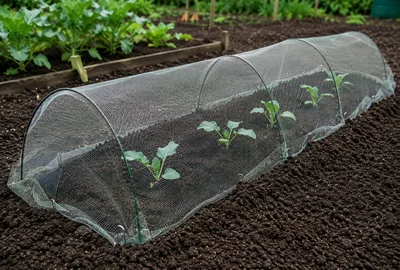
Cabbage white butterfly will lay eggs on any unprotected brassica. Net straight after sowing or transplanting.
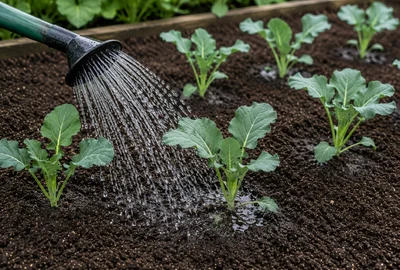
Both types need steady moisture throughout growth. Any check — from drought or heat — can trigger premature bolting in calabrese.

| Region | Sow / plant | Harvest | Notes |
|---|---|---|---|
| Scotland & Far North | Apr–May | Jul–Apr | Sow PSB in modules April–May; transplant June. Calabrese sow direct May–Jun. PSB harvests Feb–Apr; calabrese Jul–Sep. · Apr – May |
| Northern England | Apr–May | Jul–Apr | Sow PSB modules April–May; transplant by end June. Calabrese direct Apr–Jun. PSB Feb–Apr; calabrese Jul–Sep. · Apr – May |
| Midlands & Wales | Mar–Jun | Jul–Apr | PSB modules March–May; calabrese direct Mar–Jun. PSB harvest Feb–Apr; calabrese Jul–Oct. · Mar – Jun |
| Ireland & Isle of Man | Mar–Jun | Jul–Apr | PSB modules March–May; calabrese direct Mar–Jun. PSB harvest Feb–Apr; calabrese Jul–Oct. · Mar – Jun |
| South & SE England | Mar–Jun | Jul–Apr | PSB from March indoors; calabrese direct Mar–Jun. PSB Feb–Apr (some Dec in sheltered spots); calabrese Jul–Oct. · Mar – Jun |
| South Coast & SW | Mar–Jun | Jul–Apr | Earliest PSB sowings March. Calabrese direct Mar–Jun. Mild winters extend PSB harvest — Dec–Apr possible. Calabrese Jul–Oct. · Mar – Jun |
Neither calabrese nor PSB requires heat to germinate — both are cool-season brassicas that perform best without artificial warmth. Calabrese is sown direct outdoors from March, so no propagator is involved. PSB is raised in modules from April in a cold frame or unheated greenhouse.
Not needed or recommended for either type. Calabrese and PSB germinate reliably at 10–18°C without heat. A heated propagator risks producing drawn, soft seedlings that bolt early or transplant poorly.
The right choice for PSB module raising. A lidded module tray in a cold frame or unheated greenhouse from April gives reliable germination in 7–10 days. Calabrese is sown direct outdoors — no propagator of any kind is used.
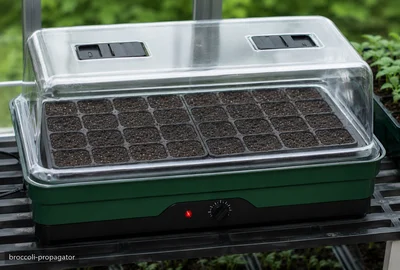
Fill a module tray with fresh seed compost. Sow one seed per cell at 1cm depth. Do not use heat — place in a cold frame or unheated greenhouse.
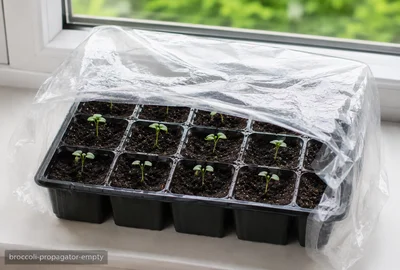
Calabrese is never raised in a propagator. Sow direct into prepared soil outdoors from March, 3 seeds per station at 30cm spacing, thinning to the strongest.
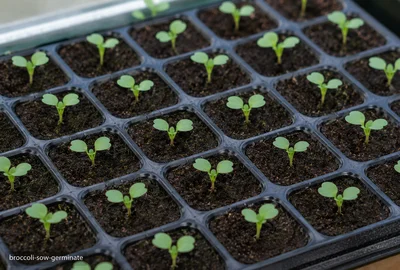
PSB germinates in 7–10 days at 10–18°C. Ventilate once seedlings are through to prevent damping off.
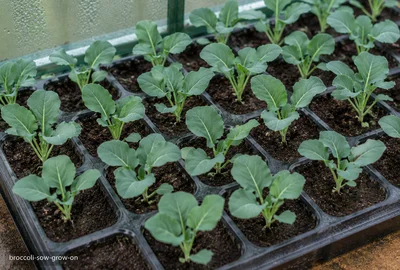
Grow PSB modules on in the cold frame until 10–15cm tall before transplanting. Do not allow to become root-bound.
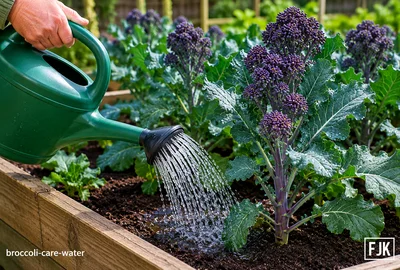
Water consistently throughout the growing season, especially during dry spells in summer. Purple sprouting broccoli grows through winter and spring — water is less critical then but important during establishment. Consistent moisture during the growing season produces larger, better-formed spears.
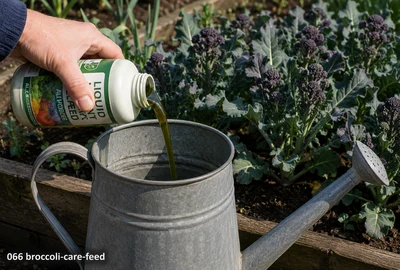
Apply a nitrogen-rich liquid feed in late summer to support strong growth before winter. A balanced fertiliser in early spring encourages strong spear production. Avoid heavy feeding in autumn — soft growth is more vulnerable to winter damage.
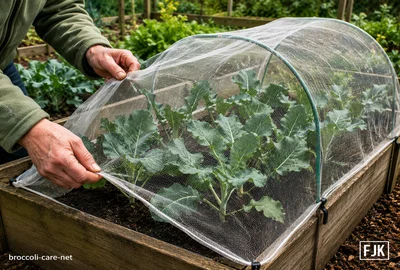
Cover with fine insect-proof mesh throughout the growing season to exclude cabbage white butterflies and cabbage moths. Purple sprouting broccoli stands in the ground for many months and needs continuous protection. Check plants regularly and remove caterpillars by hand from any unprotected plants.
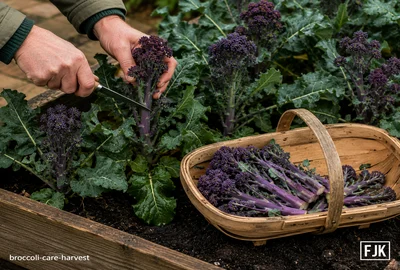
Harvest spears when the florets are tightly formed and before any flowers open — once flowering begins the spears become bitter and tough. Cut with a sharp knife leaving 10–15cm of stem. Regular harvesting encourages a continuous succession of sideshoots over many weeks.
Cabbage white butterfly and aphids are the two main threats. Net all brassicas immediately after planting and keep nets in place throughout the season. Check leaf undersides weekly for aphid colonies — they multiply rapidly in warm weather and can devastate young plants.
Full identification and treatment advice is in the Pests and Diseases sections.
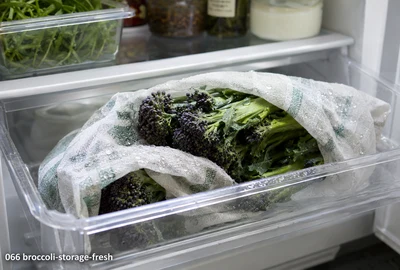
Store unwashed broccoli in the fridge for up to 3 days. Wrap loosely in a damp cloth to retain moisture. PSB shoots are more delicate — use within 2 days of cutting.
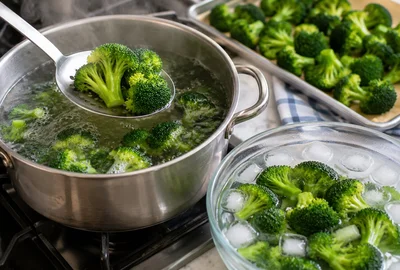
Blanch florets or PSB shoots for 2–3 minutes in boiling water, plunge into ice water, drain and freeze flat on a tray, then bag. Keeps for up to 12 months. Texture softens slightly.
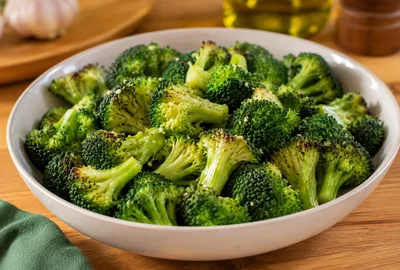
Roast at 200°C with olive oil and garlic until the edges char slightly — outstanding flavour. PSB shoots are superb simply steamed and served with butter or hollandaise. Both work well in stir-fries and pasta.
💡 Do not try to transplant calabrese — it almost always bolts or produces tiny, poor heads when its roots are disturbed. Sow direct into its final position and thin to one plant per station.
💡 Cut the central calabrese head while it is still tight and dark green — before any yellowing starts. The plant will then produce side shoots for several more weeks, dramatically extending the harvest.