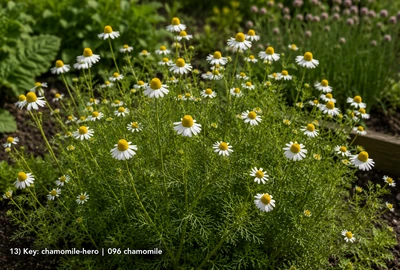
Sow on the surface of compost — seeds are tiny and need light to germinate
German chamomile is annual: sow fresh each year or allow self-seeding
Roman chamomile is perennial: plant once and it returns each year
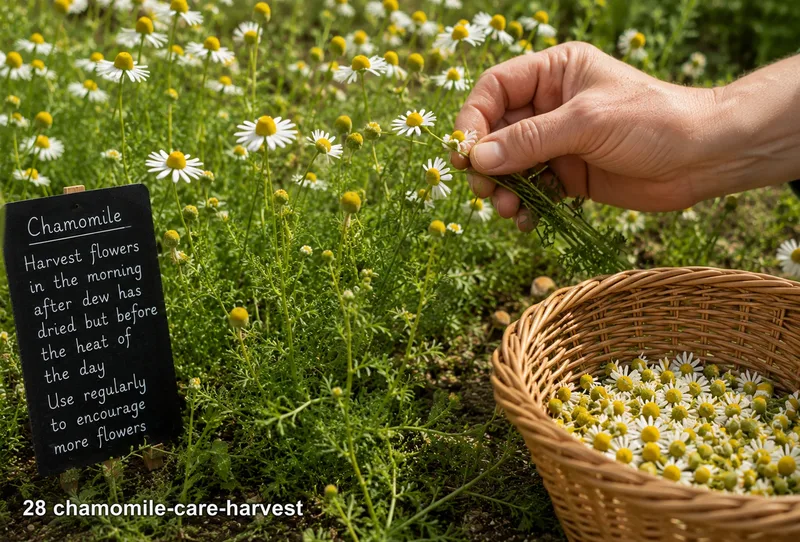
Harvest flowers when petals are fully open and horizontal — not when they reflex back
Pick on a dry morning after dew has dried for the best essential oil content
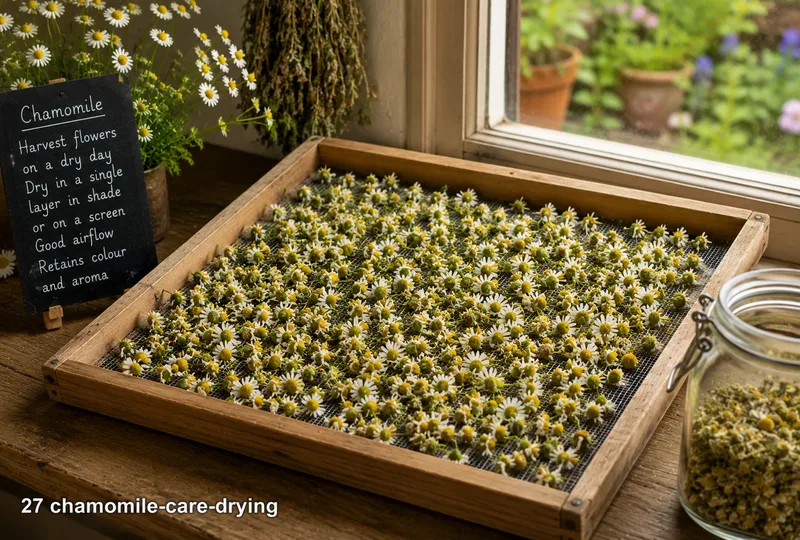
Dry flowers in a single layer in a warm, airy spot away from direct light for 1–2 weeks
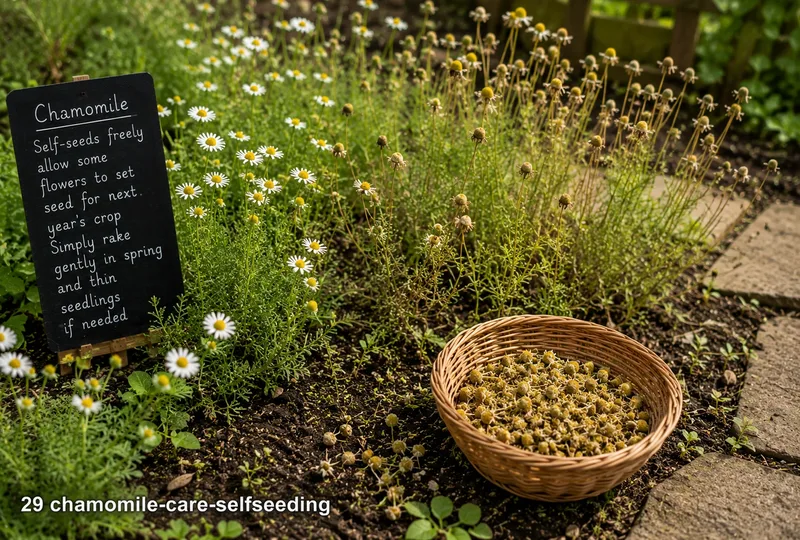
Allow German chamomile to self-seed for a permanent, self-renewing supply
🌱 SowMar–May (surface sow, needs light)
🌾 HarvestJun–Aug (flowers at peak)
☀ PositionFull sun, well-drained
📐 Spacing15–30cm
DifficultyEasy
⚡ Quick facts
Difficulty
Easy
Start indoors
Mar–Apr (18°C, surface sow)
Direct sow
Apr–May (warm soil)
Harvest
Jun–Aug (flowers at peak — petals horizontal)
Position
Full sun, well-drained
Spacing
15–20cm (German) · 20–30cm (Roman)
Height
20–60cm (German) · 10–30cm (Roman)
Type
German = annual · Roman = hardy perennial
Water
Low — drought-tolerant once established
01 About
Chamomile is one of the most beautiful and useful herbs in the garden. The white daisy flowers with their warm apple fragrance are beloved by bees and butterflies, and the dried flowers make the world's most widely consumed herbal tea. German chamomile (annual) is the finest for tea production; Roman chamomile (perennial) makes the famous fragrant chamomile lawn. Both are easy to grow and flower generously in a sunny, well-drained position.
02 What to Grow
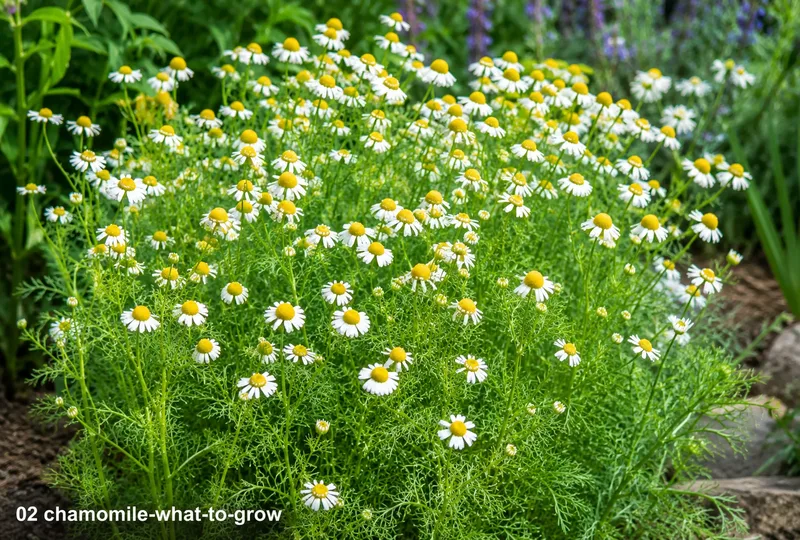
German chamomile is the tea-maker: highly aromatic, prolific, and outstanding dried. Bodegold and Zloty Lan are the finest selected varieties for essential oil and flavour. Roman chamomile is the lawn-maker: a low, spreading perennial that smells of apples when walked upon. Treneague is the non-flowering variety used for the classic chamomile seat or lawn — it requires no mowing and creates the finest-textured carpet. The double-flowered Roman chamomile is mainly ornamental. All forms attract bees in remarkable numbers.
03 Varieties
The number of varieties shown for each crop is based on UK consumption data (2025/26) — the more popular the crop, the more variety choices we include.
German Chamomile (Matricaria)
Annual · Tea Production
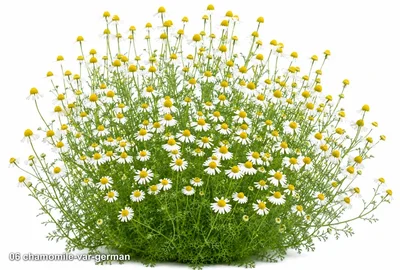
Matricaria chamomilla. The premier tea chamomile — annual, highly aromatic, with the highest essential oil content of all chamomile types. Tall, upright stems (50–60cm) with masses of white daisy flowers. Self-seeds prolifically. The classic herb garden chamomile. Pick flowers as the petals are fully open for the most flavourful tea. The fragrance is the characteristic warm, apple-honey scent of chamomile tea.
Roman Chamomile (Chamaemelum)
Perennial · Lawn
Chamaemelum nobile. A spreading, low-growing perennial that forms a fragrant mat. Less aromatic than German chamomile for tea but invaluable as a ground cover and lawn substitute. Hardy perennial that returns each year. Excellent between stepping stones and path edges. Single white flowers in June–August. The parent species of the famous chamomile lawn.
Treneague
Perennial · Lawn · Non-Flowering
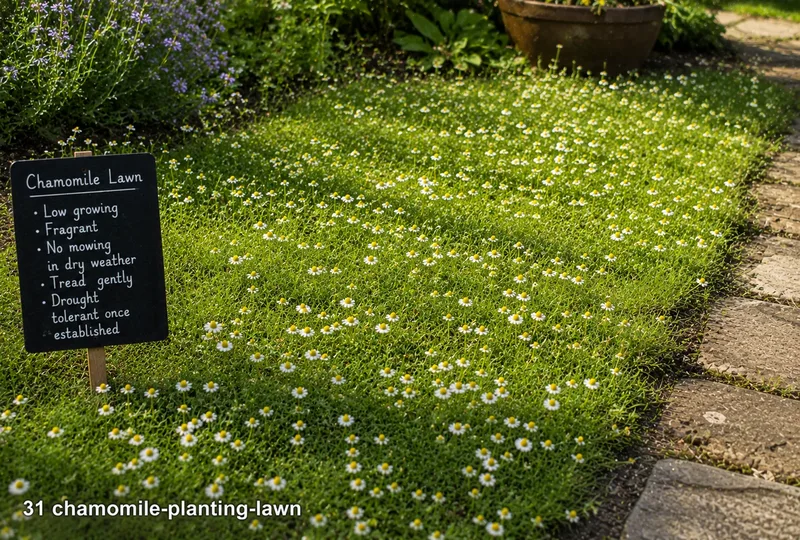
The non-flowering form of Roman chamomile, selected specifically for chamomile lawns and seats. Produces no flowers, only a dense, low, fragrant mat of feathery green foliage. Releases a powerful apple-chamomile fragrance when walked on or sat upon. The correct variety for a traditional chamomile lawn — it requires no mowing. Must be planted as plugs, not grown from seed.
Double-Flowered Roman
Ornamental · Perennial
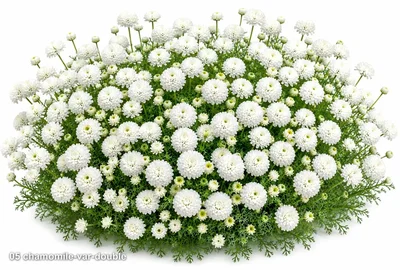
A Roman chamomile variety with fully double, button-like white flowers rather than the typical daisy form. Very ornamental and long-lasting as a cut flower. Less aromatic than single-flowered forms — not the best choice for tea production. Spreads to form a compact mat. Excellent as an ornamental ground cover in a sunny, free-draining position where the double flowers provide extended visual interest.
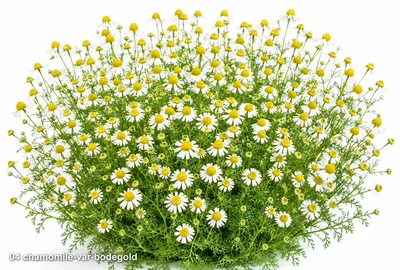
Bodegold
Annual · High Oil Content
A selected German chamomile variety bred for high essential oil content — developed for commercial chamomile production in Germany. The flowers have a stronger, more concentrated fragrance than standard German chamomile and produce a richer, more flavourful tea. Upright, vigorous growth. An outstanding variety for anyone who grows chamomile primarily for tea or for therapeutic use. One of the finest chamomile varieties available.
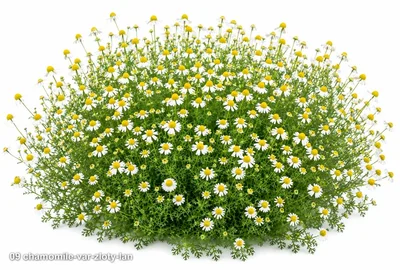
Zloty Lan
Annual · Heritage · High Yield
A Polish heritage German chamomile variety with centuries of cultivation history. Selected for high flower yield and good essential oil content. Vigorous, free-flowering, and productive over a long season. The flowers are similar in appearance to standard German chamomile but produced in greater abundance. An excellent choice for gardeners who want a historically significant, productive chamomile with good flavour characteristics.
04 Where to Source
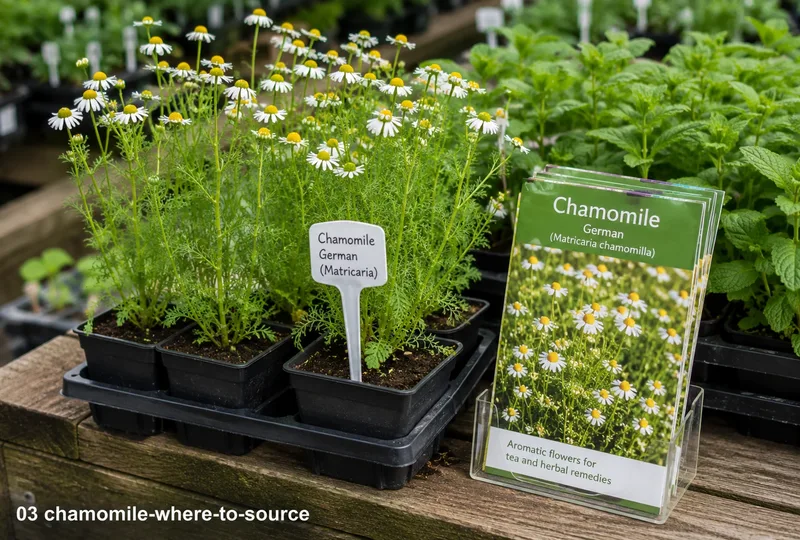
German chamomile is available as seed from virtually all UK seed suppliers. Roman chamomile is available as seed and as plants from garden centres in spring. Treneague is only available as plug plants from specialist herb nurseries — it sets no seed. Bodegold is stocked by specialist herb and medicinal plant seed companies. Zloty Lan is available from heritage seed suppliers and specialist herb seed companies. Double-Flowered Roman chamomile is available from specialist herb nurseries as plants.
05 Planting Options
🌼 In the Garden Border
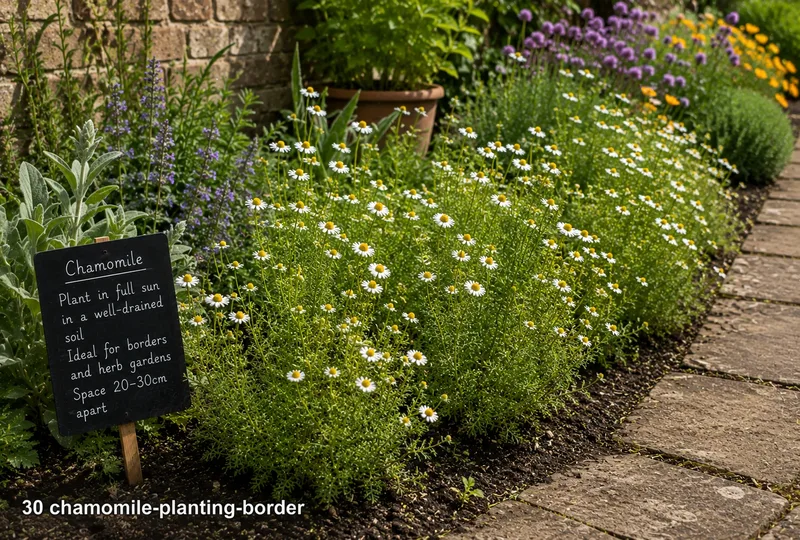
German chamomile is an excellent border annual, producing masses of flowers from June to August. It self-seeds prolifically if allowed to, giving a permanent free supply in subsequent years. Roman chamomile spreads to form a low, fragrant mat in a sunny, free-draining border — excellent at the edge of a path or between stepping stones.
🌿 Chamomile Lawn or Seat
Use Treneague (non-flowering) Roman chamomile for a traditional chamomile lawn or seat. Plant plugs 10–15cm apart in well-prepared, free-draining soil. Keep moist until established. Hand-weed until the chamomile spreads to fill the gaps — this takes one full growing season. Once established, the lawn needs only occasional trimming and releases an intoxicating apple fragrance when walked on.
Both attract pollinators and beneficial insects to the herb bed.
❌ Keep apart
🌱 Mint — Mint's vigorous spreading roots will quickly overrun chamomile's shallow, delicate root system.
🌿 Fennel — Fennel's allelopathic root secretions inhibit the growth of most nearby plants, including chamomile.
07 Sowing — How To
🌱 From Seed (German Chamomile)
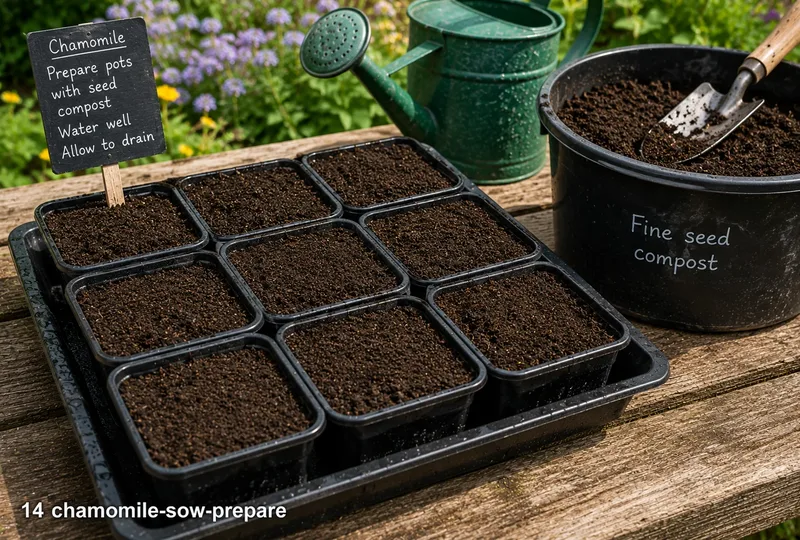
Prepare pots with seed compost
Fill modules or 9cm pots with fine seed compost, water well, and allow to drain. The compost surface should be level and firm — chamomile seeds are tiny and need good surface contact.
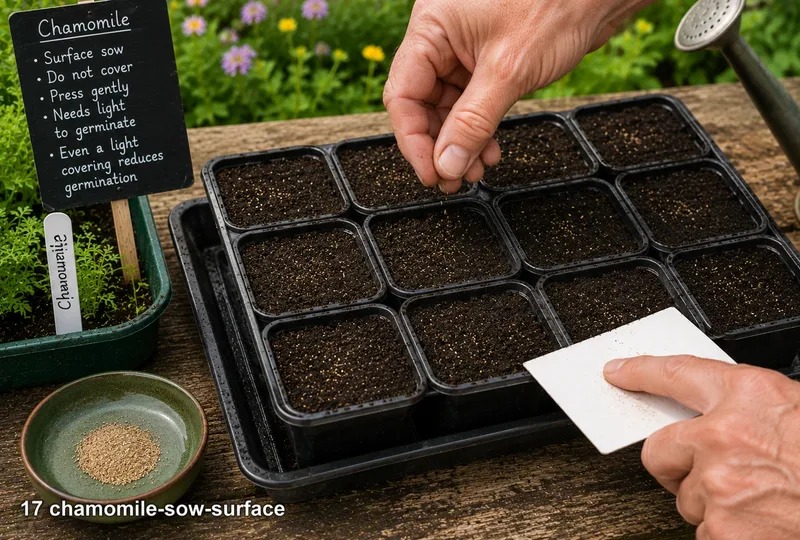
Surface sow — do not cover
Scatter seeds very thinly on the compost surface. Press gently with a flat piece of card or your finger. Do not cover with compost or vermiculite — chamomile seeds need light to germinate. Even a light covering significantly reduces germination rates.
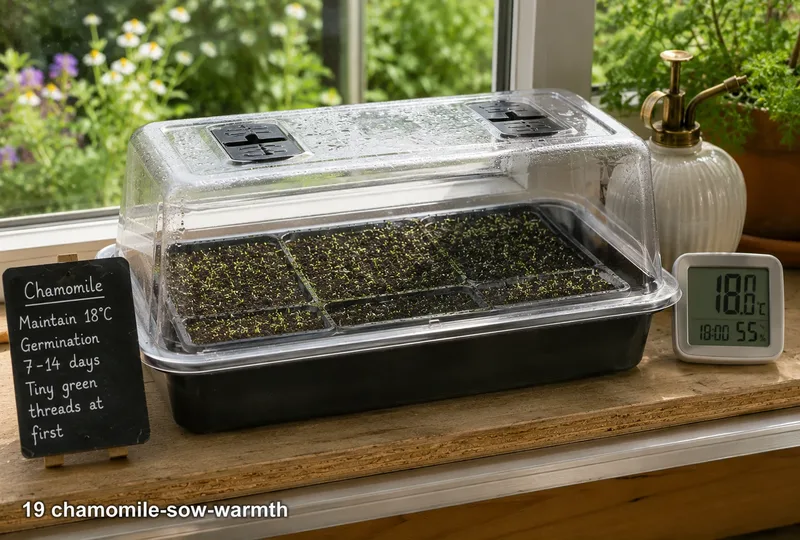
Maintain 18°C
Place in a propagator at 18°C or on a bright, warm windowsill. Germination takes 7–14 days. The seedlings emerge as tiny green threads — almost invisible at first.
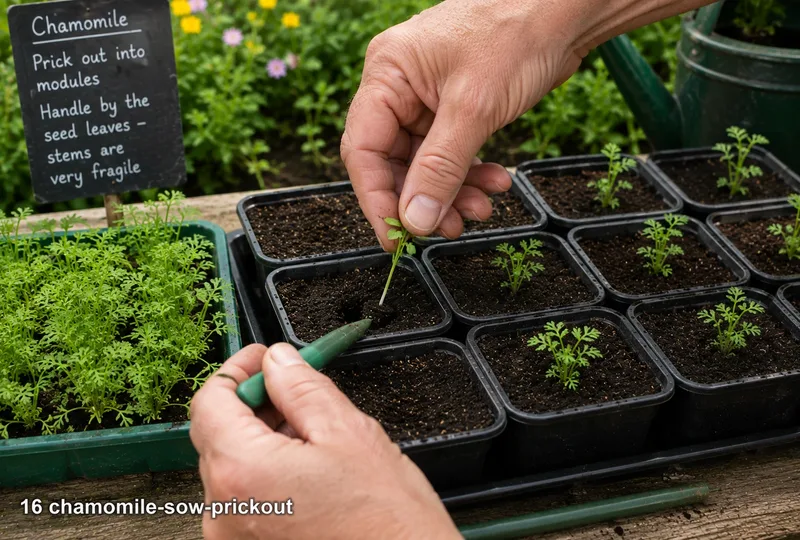
Prick out into modules
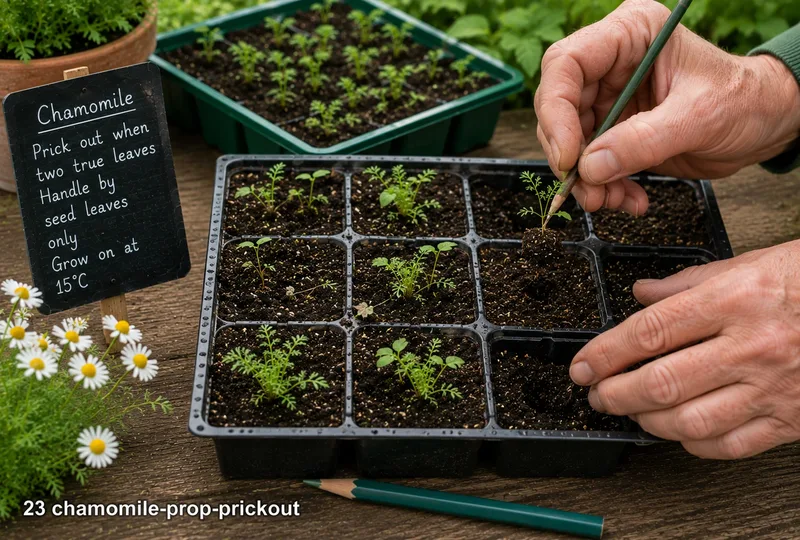
Once seedlings have two pairs of true leaves (usually 3–4 weeks after sowing), prick out into individual modules. Handle by the seed leaves — the stems are very fragile at this stage.
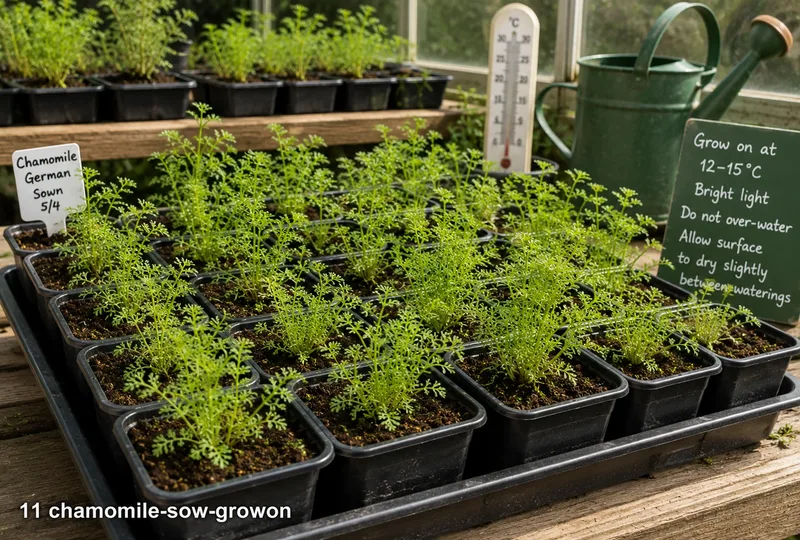
Grow on in good light
Grow on at 12–15°C in the brightest available position. Chamomile seedlings grow quickly once they have their own module. Do not over-water — allow the surface to dry slightly between waterings.
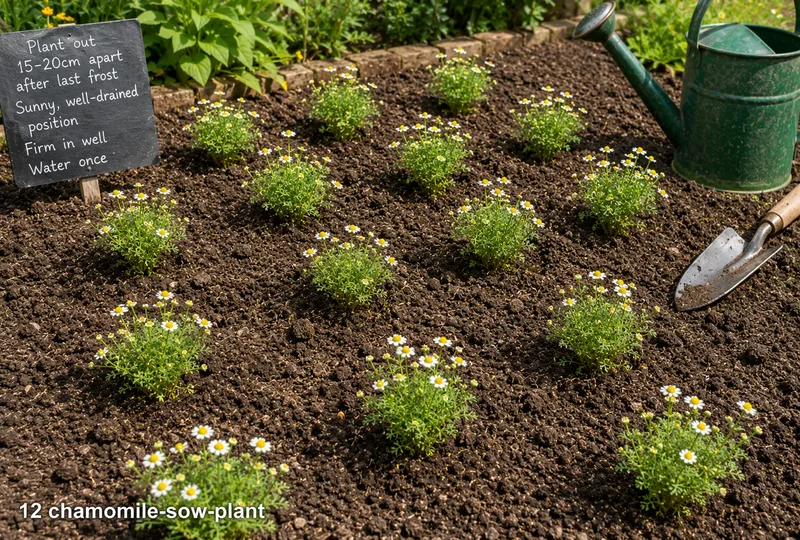
Plant out after frosts
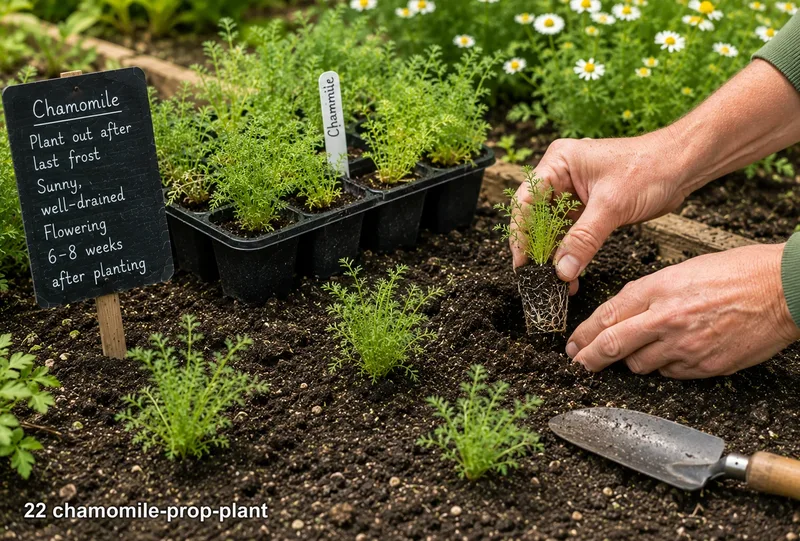
Plant out 15–20cm apart after the last frost in a sunny, well-drained position. Firm in well and water once. German chamomile establishes quickly and begins flowering 6–8 weeks after planting.
From Seed (German Chamomile) — regional timing
Region
Sow / plant
Harvest
Notes
Scotland & Far North
May–Jun
Jul–Aug
May · Plant: Jun · Harvest: Jul–Aug
Northern England
Apr–Jun
Jun–Aug
Apr–May · Plant: May–Jun · Harvest: Jun–Aug
Midlands & Wales
Apr–May
Jun–Aug
Apr · Plant: May · Harvest: Jun–Aug
Ireland & Isle of Man
Apr–May
Jun–Aug
Apr · Plant: May · Harvest: Jun–Aug
South & SE England
Mar–May
Jun–Aug
Mar–Apr · Plant: Apr–May · Harvest: Jun–Aug
South Coast & SW
Mar–May
May–Aug
Mar–Apr · Plant: Apr–May · Harvest: May–Aug
🌿 Roman Chamomile from Plugs
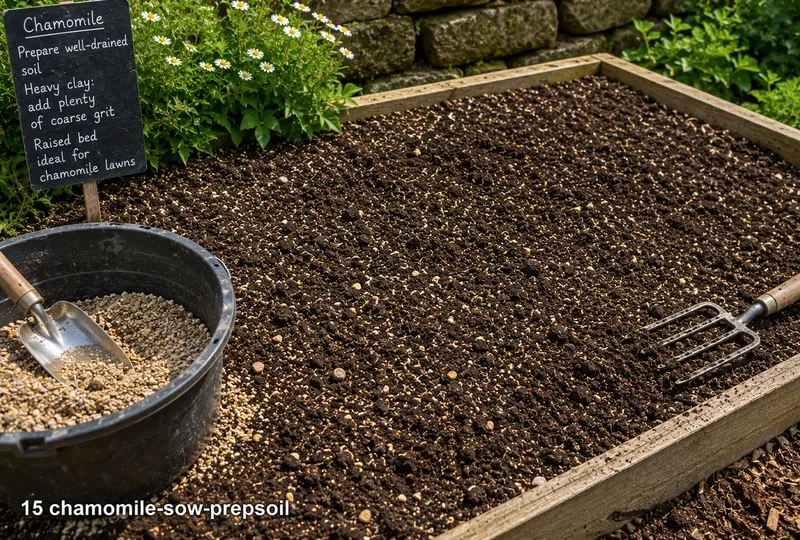
Prepare well-drained soil
Roman chamomile is long-lived and a permanent planting — prepare the site well. On heavy clay, incorporate plenty of coarse grit. In sandy or chalky soil, no preparation is needed. A raised bed is ideal for chamomile lawns.
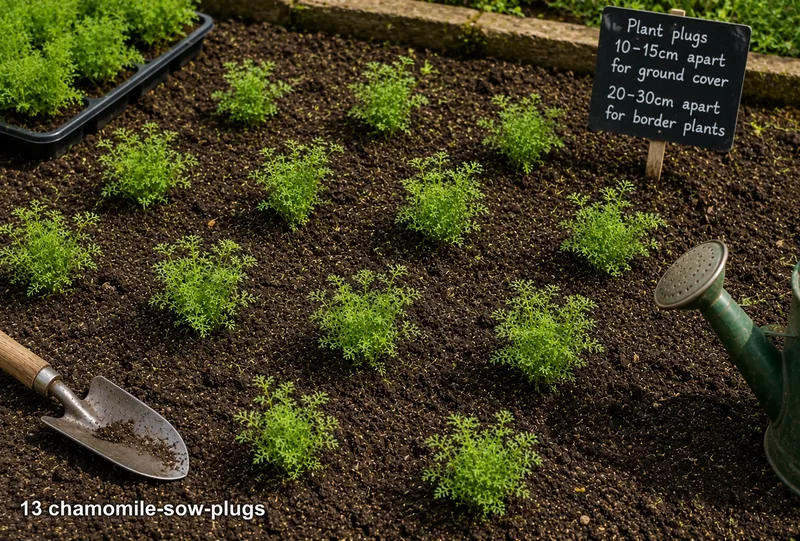
Plant plugs 10–20cm apart
For ground cover or a lawn, plant plugs 10–15cm apart. For a border plant, space 20–30cm apart. Plant at the same depth as in the plug tray. Firm in gently and water well.
Keep moist until established
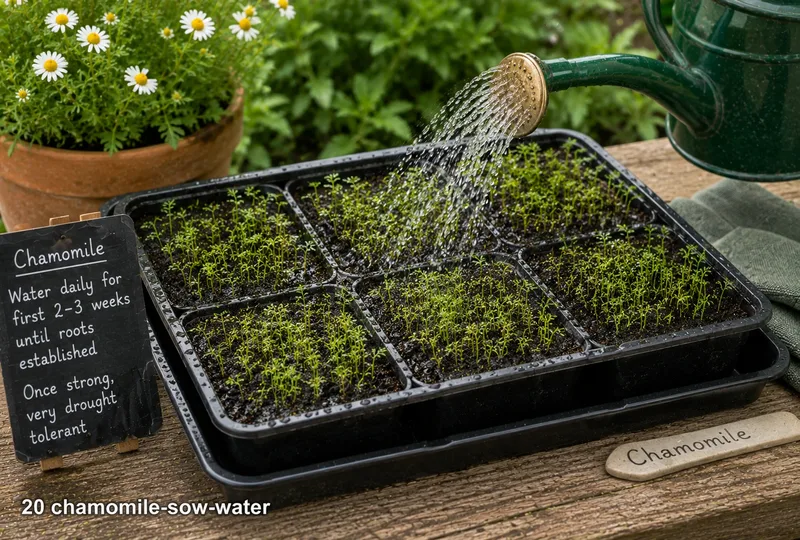
Water daily for the first 2–3 weeks until the roots are established. Once Roman chamomile is growing strongly, it is very drought-tolerant and needs little supplemental watering.
Hand-weed the first season
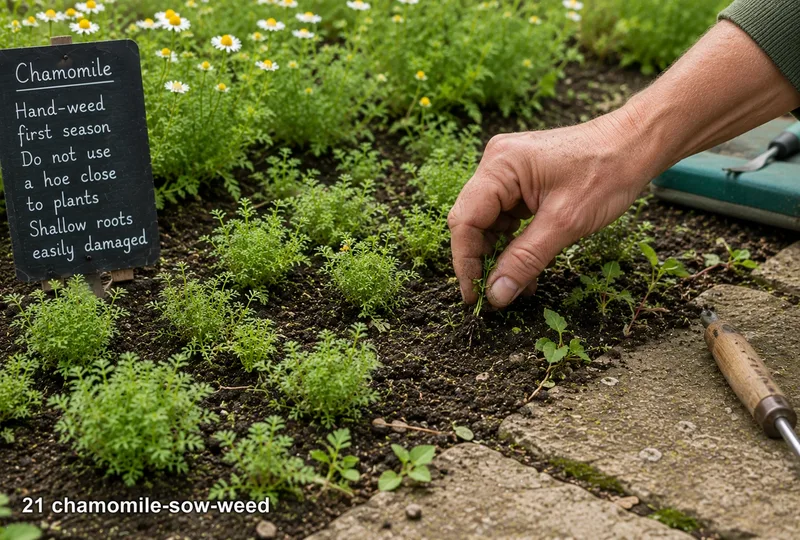
Hand-weed around plugs until the chamomile spreads to fill the gaps — usually within one growing season. Do not use a hoe close to the plants as the shallow roots are easily damaged.
Trim if needed
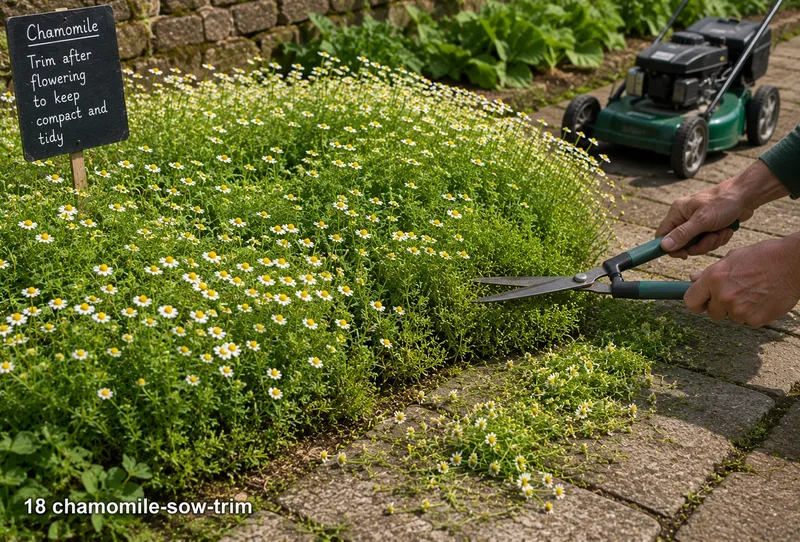
Roman chamomile benefits from a light trim after flowering to keep it compact. Use shears or a mower on a high setting for larger plantings. Treneague (non-flowering) lawns need only occasional trimming with hand shears.
Divide every 3–4 years
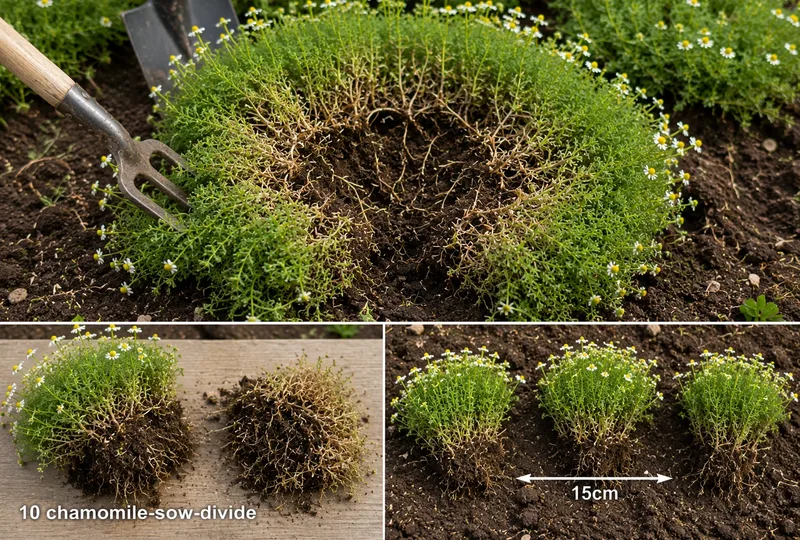
Roman chamomile clumps become bare in the centre after 3–4 years. Lift and divide in spring, discarding the central section and replanting the vigorous outer sections 15cm apart.
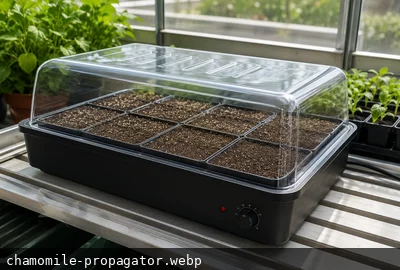
A heated propagator is the most reliable way to germinate chamomile seed, which needs both consistent warmth (18°C) and light simultaneously. The main risk is damping off — chamomile seedlings are fine and fragile and collapse quickly in stagnant, humid conditions. Good ventilation after germination is critical.
Heated propagator
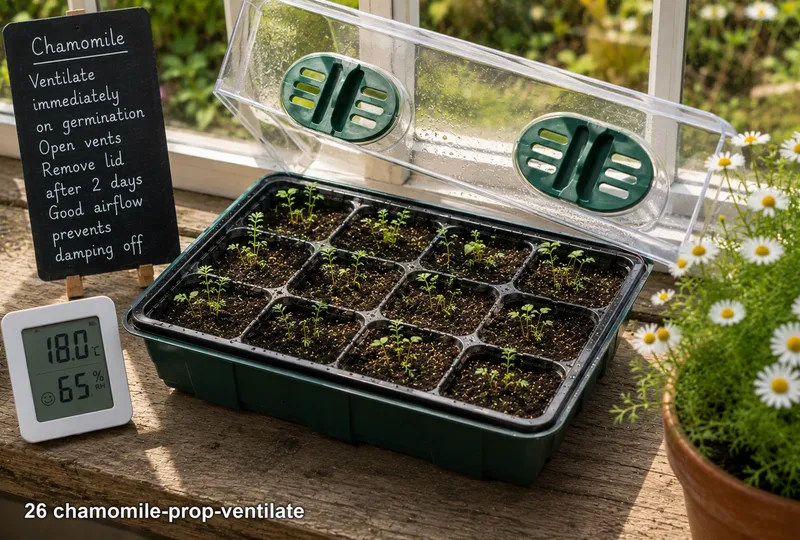
Set to 18°C. Sow seeds on the surface of moist compost — chamomile needs light to germinate so do not cover seeds. Germination takes 7–14 days. Remove the lid immediately seedlings appear — chamomile seedlings are very susceptible to damping off in humid conditions.
Temperature: 18°C
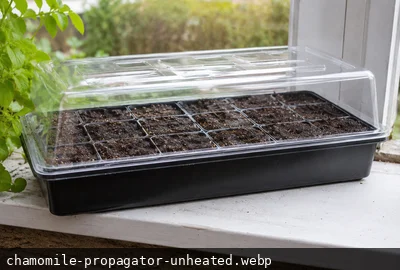
Unheated propagator
Adequate from late April onwards. An unheated propagator maintains humidity around the tiny seeds during germination. Ventilate daily and remove the lid completely the moment seedlings emerge.
Standard unheated propagator — A lidded seed tray traps warmth and humidity around germinating seeds without electricity. Performance depends entirely on room temperature — best placed on a warm windowsill and used from March onwards. Replace the lid promptly after watering. Remove it completely the moment seedlings emerge to prevent damping off.
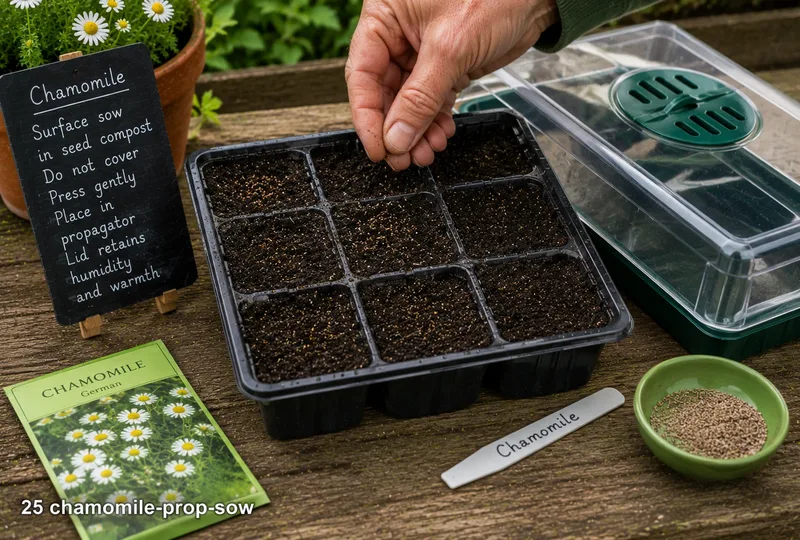
Surface sow in seed compost
Scatter seeds thinly on the surface of moist seed compost in modules or 9cm pots. Do not cover. Press gently. Place in the propagator — the lid retains humidity and warmth.
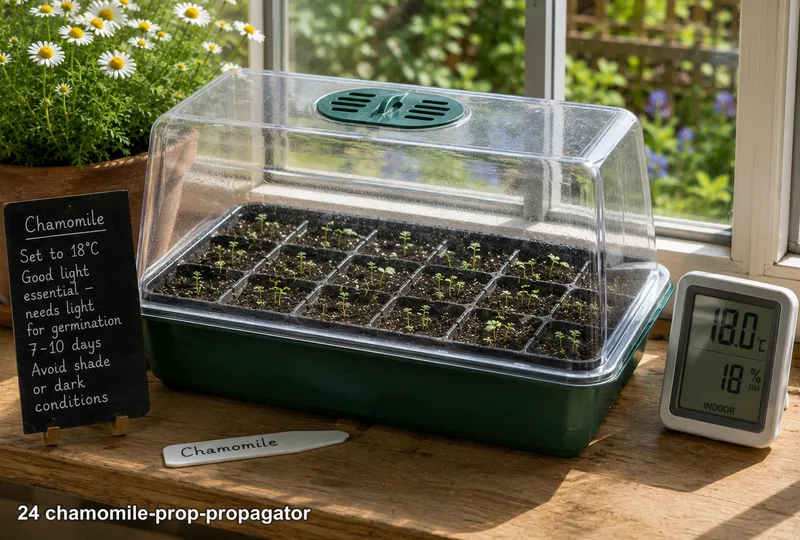
Maintain 18°C with good light
Set to 18°C. Position in good light — chamomile needs light for germination. Dark propagators or propagators in shaded positions give poor results. Germination in 7–10 days.
Ventilate immediately on germination
Open the propagator vents the moment seedlings emerge. Remove the lid entirely after 2 days. Damping off strikes chamomile seedlings very rapidly in stagnant humid air — good airflow is essential.
Prick out carefully
When seedlings have two true leaves, prick out into individual modules. The seedlings are very small — handle only by the seed leaves with a fine dibber or pencil point. Grow on in bright conditions at 15°C.
Plant out after hardening off
Harden off over 7–10 days. Plant out after the last frost in a sunny, well-drained position. German chamomile will begin flowering 6–8 weeks after planting.
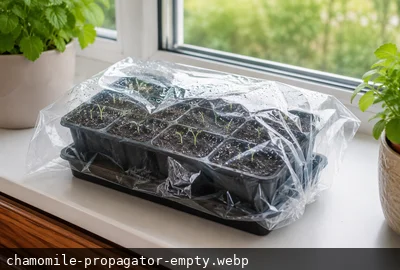
Windowsill alternative: A bright south-facing windowsill can substitute from late February. Place a clear polythene bag loosely over the pot during germination. Remove immediately once seedlings appear.
09 Soil Requirements
pH
5.6–7.5
Best
Sandy loam, Loam
Tolerates
Poor sandy, Chalky
Avoid
Waterlogged, Rich heavy
💡 Tolerates poor, dry soils. German chamomile thrives on disturbed, fairly infertile ground.
10 Ongoing Care
🌼 Harvesting Flowers
Harvest flowers when the white petals are fully open and horizontal — not when they reflexed back (too late) or still partially closed (too early). The horizontal petal position coincides with peak essential oil content and the most flavourful tea. Pick on a dry morning after the dew has dried and before midday. Regular picking extends the flowering season significantly — the plant continues producing new buds for weeks if harvested consistently.
☀️ Drying Flowers
Spread freshly picked flowers in a single layer on a muslin-covered rack, a fine mesh tray, or a clean tea towel. Place in a warm, airy spot away from direct sunlight — a warm kitchen, airing cupboard, or covered porch. Dry for 1–2 weeks until the flowers feel completely dry and papery. Store in an airtight, opaque jar away from light. Well-dried chamomile retains good flavour for up to 18 months.
🌱 Self-Seeding & Continuity
Allow a few German chamomile plants to self-seed at the end of the season for a perpetual free supply. Shake the mature seed heads over prepared soil in late summer and they will germinate the following spring without any further effort. However, self-seeded plants in unwanted locations (paths, neighbouring beds) should be removed when small. Balance the free supply against the nuisance of unwanted seedlings by choosing one designated spot for self-seeding.
11 Watch Out For
Warning
German chamomile can self-seed aggressively in bare soil. It is not invasive but can produce many uninvited seedlings in subsequent years. Remove unwanted seedlings promptly when small. Do not confuse with ornamental mayweed — true chamomile always has a strong apple fragrance when a flower or leaf is crushed.
🐛 Insects & pests
🐜 Aphids (Blackfly & Greenfly) — Curled, distorted, or stunted growing tips — aphids inject saliva that causes leaf curl to protect them
🐌 Slugs & Snails — Silver slime trails on leaves, soil, and pots — often the first sign before damage is found
🍄 Diseases to watch
🌱 Damping Off — Damping off is a collective term for seedling death caused by several soil-borne pathogens including Pythium, Phytophthora, and Rhizoctonia. It is the most common cause of seedling failure in the propagation stage. Entire trays of seedlings can collapse and die overnight — there is no cure once symptoms appear.
🩶 Botrytis (Grey Mould) — Botrytis cinerea (grey mould) is the most ubiquitous fungal pathogen in temperate gardens — present in virtually every garden soil and on plant debris. It becomes a disease only when conditions favour it: cool, humid, poorly ventilated environments with damaged or senescent plant tissue. In a greenhouse in autumn it can destroy an entire tomato or grape crop.
Full identification and treatment advice is in the Pests and Diseases sections.
12 Storage & Preserving
🍵 Dried Flowers for Tea
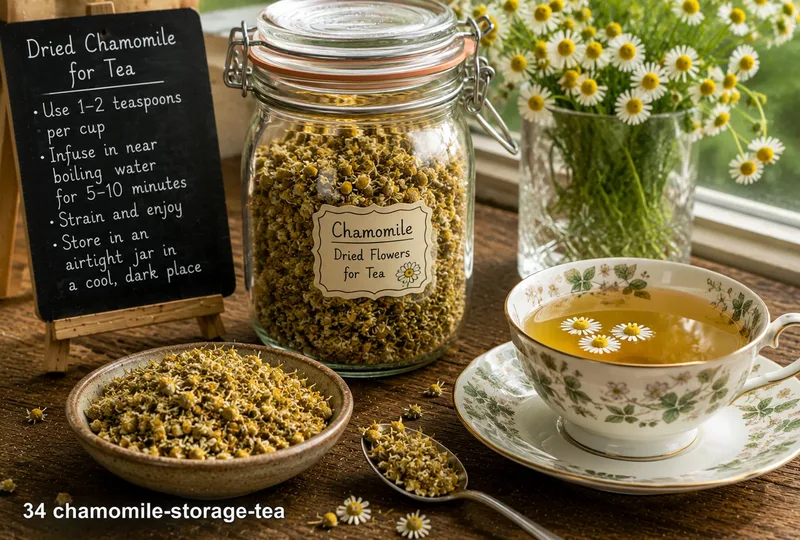
Dry freshly picked flowers in a single layer in a warm, airy place away from light for 1–2 weeks. Store in an airtight, dark jar. For tea, use 1–2 teaspoons of dried flowers per cup, steep in just-boiled water for 5 minutes, then strain. Home-grown chamomile tea from Bodegold or Zloty Lan varieties is significantly more flavourful and aromatic than any commercial chamomile tea product. Well-stored dried flowers retain good flavour for up to 18 months.
🌼 Fresh Flowers
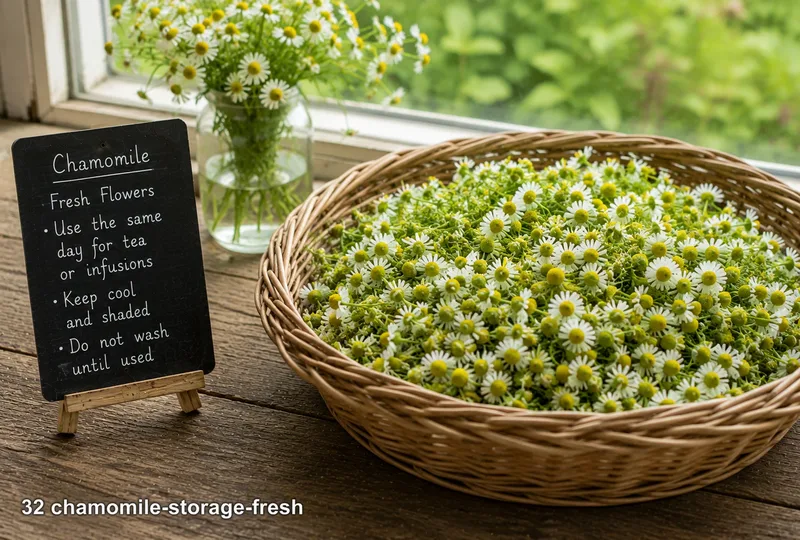
Fresh chamomile flowers can be used immediately in teas, salads, and as garnishes. They do not store well fresh — use within 1–2 days of picking. For immediate use, place freshly picked flowers on a clean cloth in a cool place until needed. In salads, the flowers have a mild, apple-honey flavour. As a garnish they are beautiful alongside pale-coloured desserts and summer drinks.
13 Expert Tips
💡 Let It Self-Seed
Grow German chamomile in a dedicated spot and allow it to self-seed freely — after the first year you will never need to sow it again, and the self-seeded plants are often even more vigorous than the original.
💡 Harvest Mid-Morning
Harvest chamomile flowers at 9–10am on a dry, sunny day — this is when essential oil content is highest and the resulting tea will be most flavourful and aromatic.
💡 Bodegold and Zloty Lan are the varieties to grow if chamomile tea is your primary goal — their higher essential oil content makes them dramatically superior to standard German chamomile for this purpose.