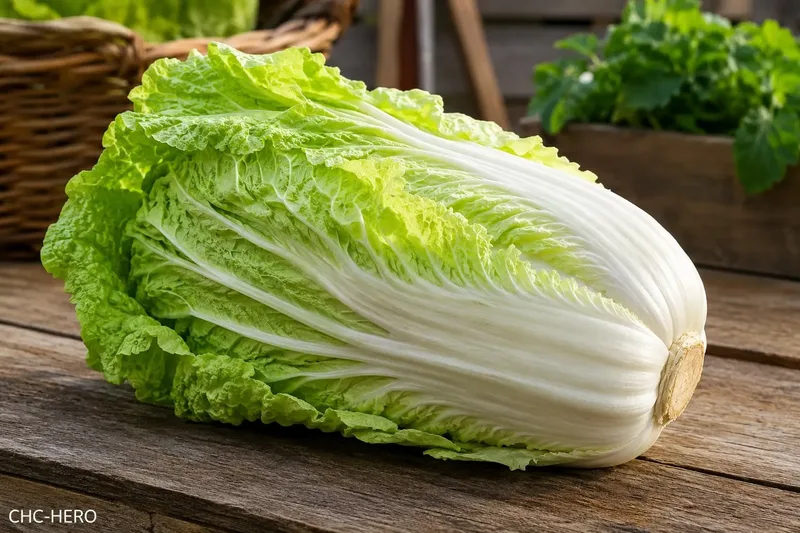
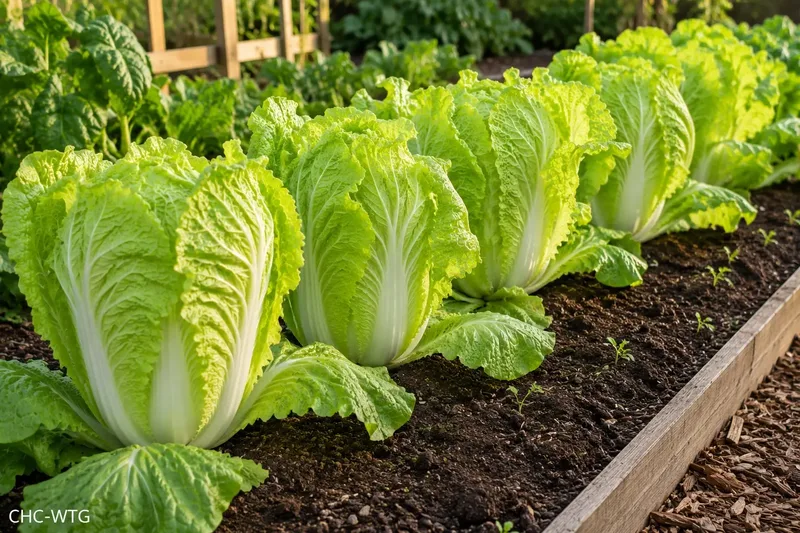
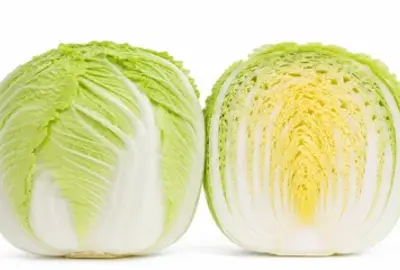
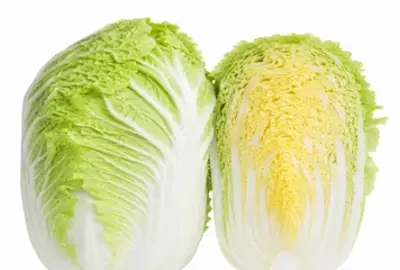
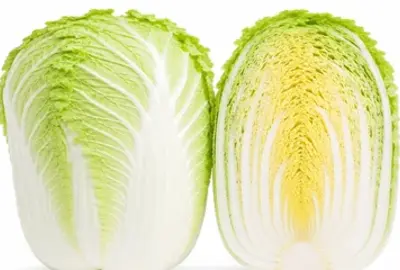
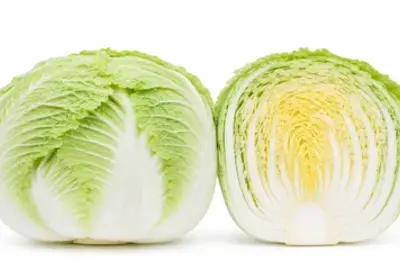
Chinese cabbage forms large, dense heads — barrel-shaped or tall and cylindrical depending on variety — with crisp, sweet, pale inner leaves and a remarkably mild flavour for a brassica. It is the essential ingredient in kimchi and the backbone of many East Asian salads and stir-fries. In the UK kitchen garden it delivers a substantial, productive autumn crop from a midsummer sowing, filling the gap when summer crops are finishing and the season is turning.
02 What to Grow
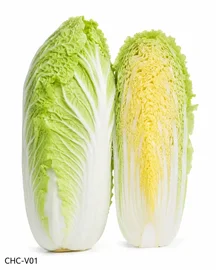
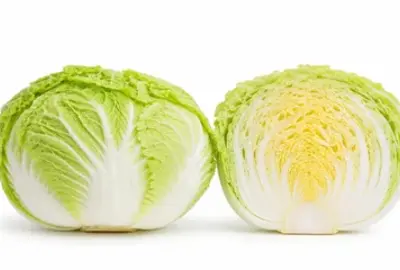
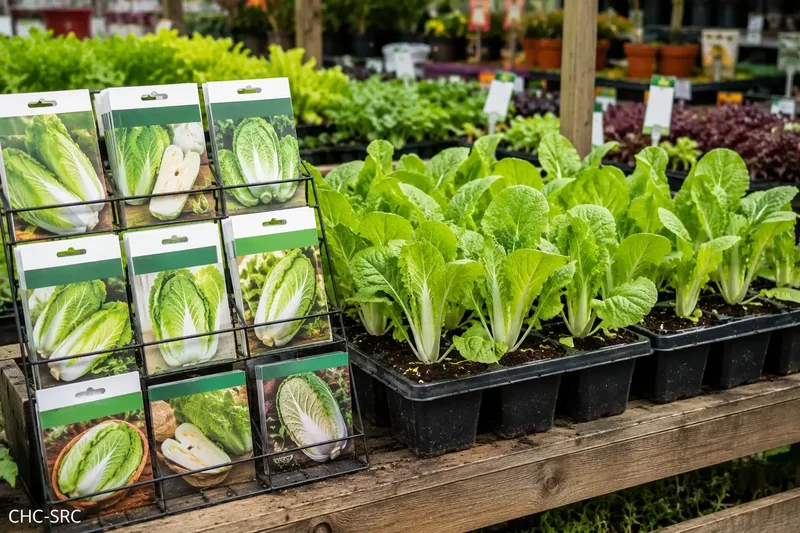
Chinese cabbage divides into two main forms: barrel types (compact, rounded heads with pale, tightly packed inner leaves — the most common supermarket form) and cylindrical types (tall, upright, denser heads with a firmer texture and stronger flavour). Both are harvested in autumn from a midsummer sowing. Barrel types are faster and somewhat more bolt-tolerant; cylindrical types produce larger heads and store better. Always choose bolt-resistant F1 varieties for UK growing.
03 Varieties
The number of varieties shown for each crop is based on UK consumption data (2025/26) — the more popular the crop, the more variety choices we include.
🥬 Barrel & Compact Types
Rounded, compact barrel-headed varieties — the classic Chinese cabbage form. Dense pale inner leaves, quick to mature, and the most bolt-resistant group. Best choice for UK growing and first-time growers.
Bilko F1
Barrel
The most widely recommended Chinese cabbage for UK growing. Dense, firm barrel heads with excellent bolt resistance. Pale, crisp inner leaves with outstanding sweetness. A proven reliable performer for autumn harvest.
Best for UK
Bolt Resistant
Beginners
Richi F1
Barrel · Compact
A compact barrel type producing smaller, firm heads ideal for smaller plots and those who want single-serving heads. Good downy mildew resistance. Reliable bolt resistance for a compact variety.
Compact
Mildew Resistant
Small Plot
Minuet F1
Barrel · Mini
A miniature Chinese cabbage producing tight, dense little heads ideal for containers and small gardens. Excellent for households where a full-sized head is too large. Harvest one at a time over several weeks. Very firm texture.
Mini
Container
Successional
🌿 Cylindrical & Upright Types
Tall, upright cylindrical varieties with tightly furled inner leaves, firm texture, and a slightly stronger flavour. Larger heads than barrel types and excellent storage. Best for kimchi and recipes requiring substantial leaf volume.
Kasumi F1
Cylindrical · Tall
A tall, cylindrical Chinese cabbage with a very tight, firm head and excellent disease resistance. Produces large heads with a high proportion of pale, sweet inner leaf. One of the best varieties for kimchi-making and longer storage.
Disease Resistant
Large Head
Stores Well
Kimchi
Tokyo F1
Cylindrical · Classic
Classic tall cylindrical type with densely packed, pale inner leaves and a firm, upright structure. Reliable bolt resistance. Excellent flavour — sweet and mild with a satisfying crunch. Good all-round variety for cooking and salads.
Classic
Bolt Resistant
Versatile
Scarlette F1
Cylindrical · Red-Tipped
An unusual cylindrical variety with distinctly red-tinged outer leaves contrasting with pale inner leaves. Decorative in both the garden and the kitchen. Good bolt resistance. Adds colour to salads and kimchi.
Decorative
Unusual
Colourful
04 Where to Source
Chinese cabbage seed is not widely available in garden centres — specialist online vegetable seed companies are the main source. F1 varieties offer the best bolt resistance and reliability for UK conditions. Seeds are affordable and a single packet provides far more than most kitchen gardens need. Order in late winter or early spring for July sowing; most seed companies stock named F1 varieties including Bilko, Kasumi, Tokyo, Richi, Minuet, and Scarlette.
05 Planting Options
🪴 From Modules
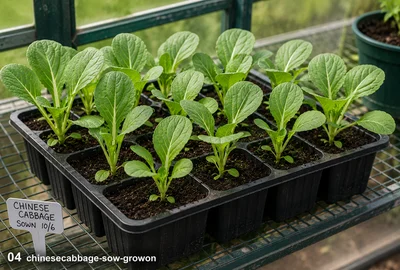
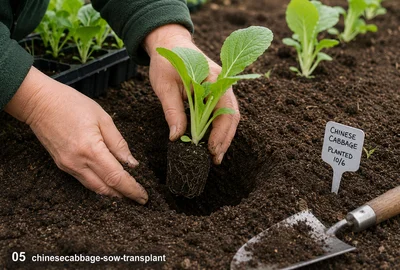
Modules allow an early start and careful transplanting. Sow in late July in 5–7cm modules. Transplant at 4–5 leaves (2–3 weeks after sowing) before roots fill the module. Handle the rootball with great care — root disturbance is a primary bolt trigger. Firm in well and net immediately.
Suitable varieties: All varieties. Best for Scotland, Northern England, and gardeners who want maximum control.
From Modules — regional timing
Region
Sow / plant
Harvest
Notes
Scotland & Far North
Jul–Aug
Sep–Oct
Northern England
Jul–Aug
Sep–Nov
Midlands & Wales
Jul–Aug
Sep–Nov
Ireland & Isle of Man
Jul–Aug
Sep–Nov
South & SE England
Jul–Aug
Oct–Dec
South Coast & SW
Jul–Aug
Oct–Dec
🌱 Direct Sowing
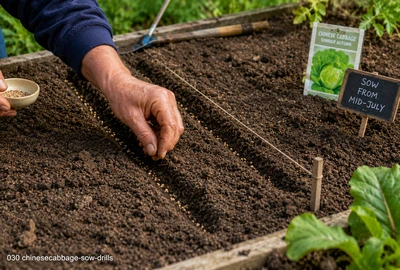
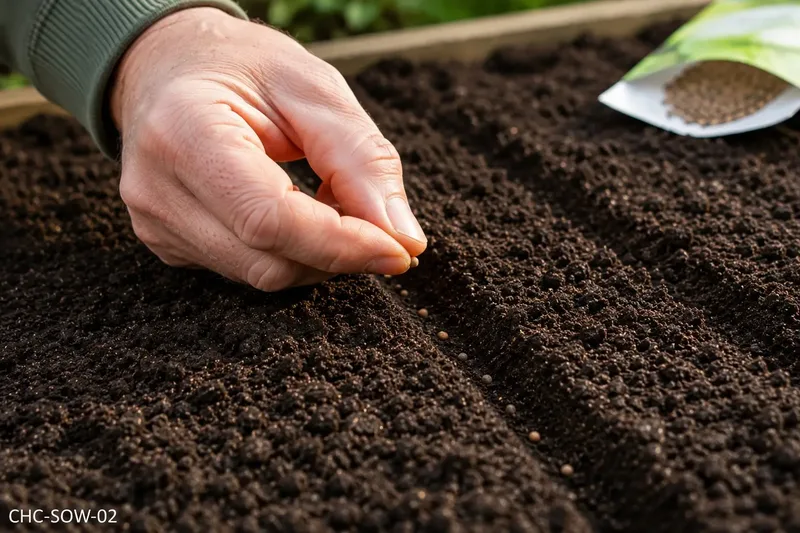
Sow direct into well-prepared, fertile soil from mid-July. Make drills 1cm deep, 35–40cm apart. Sow 2–3 seeds every 30–35cm and thin to the strongest. Cover immediately with fine insect-proof mesh. Direct sowing avoids transplant shock and is equally reliable from mid-July onwards in all UK regions.
Suitable varieties: All varieties. Simplest and lowest-risk method from July onwards.
Direct Sowing — regional timing
Region
Sow / plant
Harvest
Notes
Scotland & Far North
Jul
Sep–Oct
Northern England
Jul–Aug
Sep–Nov
Midlands & Wales
Jul–Aug
Sep–Nov
Ireland & Isle of Man
Jul–Aug
Sep–Nov
South & SE England
Jul–Aug
Oct–Dec
South Coast & SW
Jul–Aug
Oct–Dec
06 Companion Planting
✅ Grow nearby
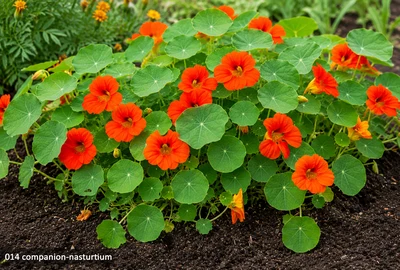
🌺 Nasturtiums
Excellent aphid and flea beetle trap crop. Plant at the bed perimeter — pests preferentially attack nasturtiums, protecting the Chinese cabbage.
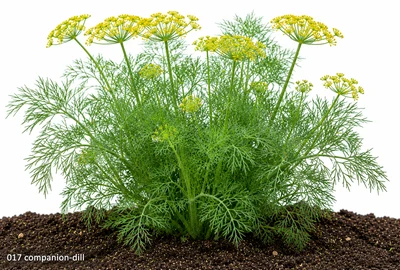
🌿 Dill
Attracts parasitic wasps that parasitise cabbage white caterpillars. A valuable companion alongside all brassica crops.
Ideal catch crop between Chinese cabbage plants — shallow-rooted, matures before Chinese cabbage needs the full space.
❌ Keep apart
🌿 Fennel — Fennel is allelopathic and inhibits the growth of all brassicas including Chinese cabbage. Keep at least a bed width apart.
🍓 Strawberries — Brassicas suppress strawberry root development — keep in separate beds or at least 60cm apart.
🍅 Tomatoes — Heavy mutual competition for nutrients; different rotation groups. Keep in separate beds and rotate annually.
07 Sowing — How To
🪴 Sow in Modules
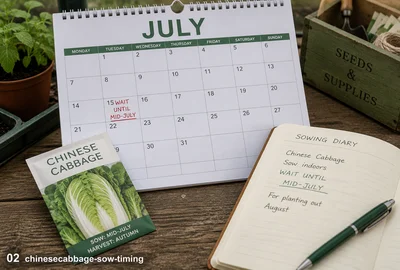
Wait until mid-July
Do not sow before mid-July in most UK regions — earlier sowings almost always bolt before forming a head. The decreasing day length after the summer solstice is the key trigger for head formation.
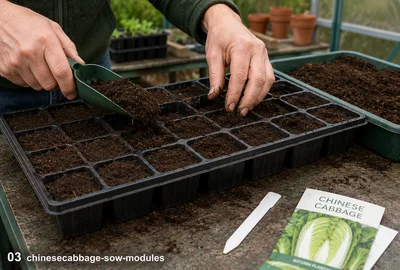
Fill modules with compost
Use a good-quality seed compost in 5–7cm modules. Sow 2–3 seeds per cell at 5mm depth. Thin to the strongest seedling. Keep moist and in a warm, bright spot — germination in 3–5 days.
Grow on carefully
Grow on in good light for 2–3 weeks until seedlings have 4–5 leaves. Do not allow roots to become pot-bound — transplant promptly. Root disturbance is a major bolt trigger.
Transplant with care
Water modules thoroughly an hour before transplanting. Plant into well-prepared, fertile soil, disturbing roots as little as possible. Space 30–35cm apart in rows 35–40cm apart. Net immediately after planting.
Water in and mulch
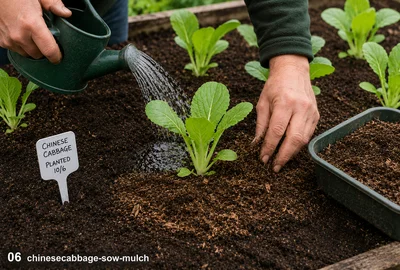
Water generously after transplanting and apply a light mulch around plants to retain moisture. Consistent water is critical — stress triggers bolting. Check nets are secure against cabbage whites.
🌱 Sow Direct
Prepare a firm, fine seedbed
Rake soil to a fine, firm tilth. Incorporate a general fertiliser or well-rotted compost before sowing. Chinese cabbage is hungry — do not skimp on soil preparation.
Sow in drills
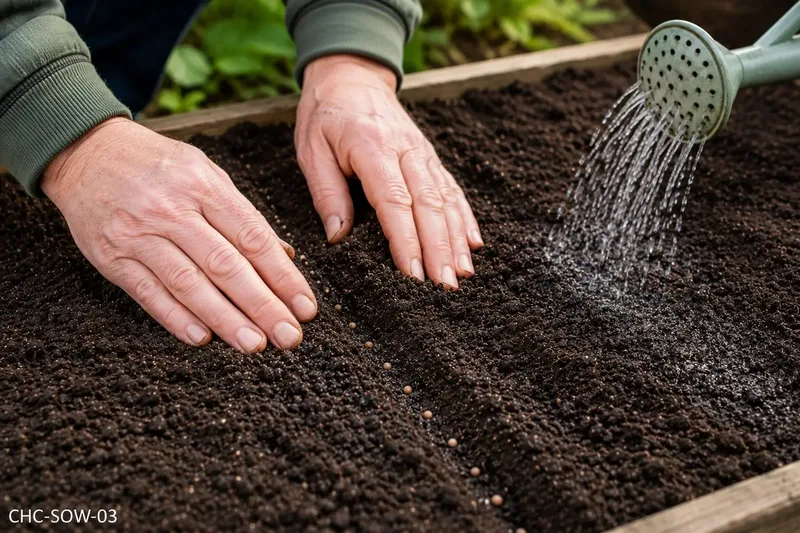
Draw drills 1cm deep, 35–40cm apart. Sow 2–3 seeds every 30–35cm. Cover and firm gently. Water using a fine rose. Germination in 3–5 days in warm soil.
Cover immediately
Apply fine insect-proof mesh (0.8mm) immediately after sowing. Do not leave plants unprotected even for a day — cabbage white butterflies and flea beetles find them within hours.
Thin to final spacing
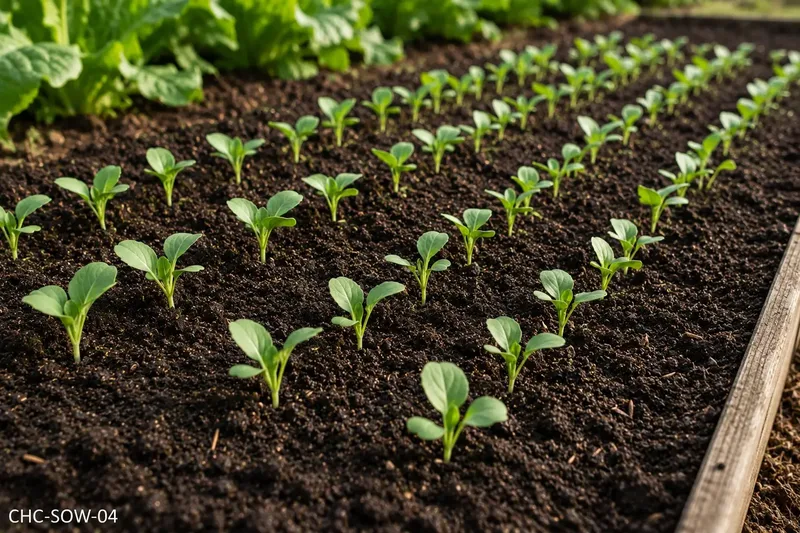
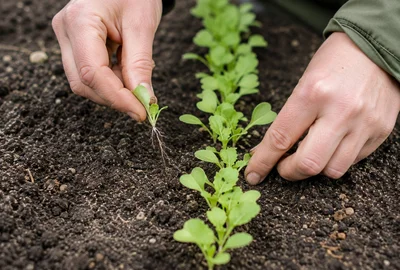
Thin to the strongest seedling at each station (30–35cm apart) when seedlings have 3–4 true leaves. Remove thinnings cleanly — they are excellent in salads.
Water and feed consistently
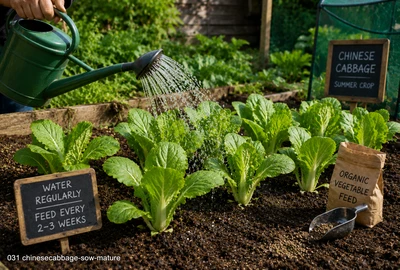
Keep soil consistently moist — dry spells cause bolting and loose, open heads. Apply a liquid feed every 2–3 weeks once plants are established. Heads develop from September onwards.
Net from day one — Chinese cabbage attracts every brassica pest in the garden. Cabbage white butterfly caterpillars can strip a plant overnight; flea beetles riddle seedlings with holes in hot weather; slugs attack at soil level. Use fine insect-proof mesh (0.8mm or finer) from sowing or transplanting and keep it on until harvest. Check nets are weighted or buried at the edges — butterflies are remarkably adept at finding gaps.
💧 Watering & Feeding
Consistent watering is essential — Chinese cabbage is a thirsty, hungry crop that bolts or produces loose open heads under stress. Water deeply twice a week in dry weather rather than little and often. Apply a balanced liquid feed every 2–3 weeks from establishment through head formation. Avoid high-nitrogen feeds once heads begin to form — they produce soft, disease-prone growth.
🔪 Harvesting
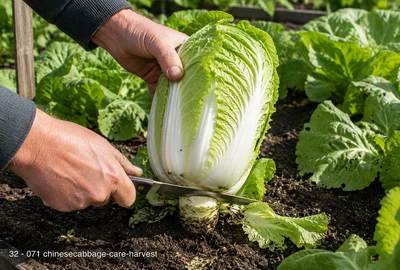
Harvest when the head feels dense and firm under gentle pressure — tap the top and listen for a solid sound. Cut at the base with a sharp knife, leaving a 3–4cm stump. Some varieties re-sprout loose leaves from the stump. Heads can be left in the ground for several weeks once mature if protected from hard frost — cover with fleece below -3°C. Harvest all heads before the first hard frost in colder northern regions.
10 Watch Out For
Warning
Bolting (running to seed before forming a head) is the most common failure — almost always caused by sowing before mid-July. Chinese cabbage is also susceptible to all brassica pests: net from day one against cabbage white butterfly, flea beetle, and slugs. Clubroot can persist in soil for 20 years — rotate all brassicas and lime acidic soil above pH 6.5 to reduce risk.
🐛 Insects & pests
🦋 Cabbage Moth Caterpillar — Wilting or collapse of the central growing point of cabbages and Brussels sprouts
🦋 Cabbage White Caterpillar — Yellow, ribbed, skittle-shaped eggs in neat clusters on the underside of leaves in summer
🐜 Aphids (Blackfly & Greenfly) — Curled, distorted, or stunted growing tips — aphids inject saliva that causes leaf curl to protect them
🐌 Slugs & Snails — Silver slime trails on leaves, soil, and pots — often the first sign before damage is found
🍄 Diseases to watch
🥦 Clubroot — Clubroot (Plasmodiophora brassicae) is arguably the most feared soil-borne disease in UK kitchen gardens. It persists in the soil as resting spores for up to 20 years — meaning a bed that becomes infected is effectively lost for brassica growing for two decades without extraordinary intervention. Crop rotation is the most critical preventive measure.
🔵 Downy Mildew — Downy mildew is caused by oomycetes (water moulds) and is completely unrelated to powdery mildew despite the similar name. It thrives in cool, wet, humid conditions and is most damaging in spring and autumn. Each host plant has its own specific downy mildew species. Lettuce downy mildew can destroy an entire bed within days in the right conditions.
Full identification and treatment advice is in the Pests and Diseases sections.
11 Storage & Preserving
❄️ Refrigerator
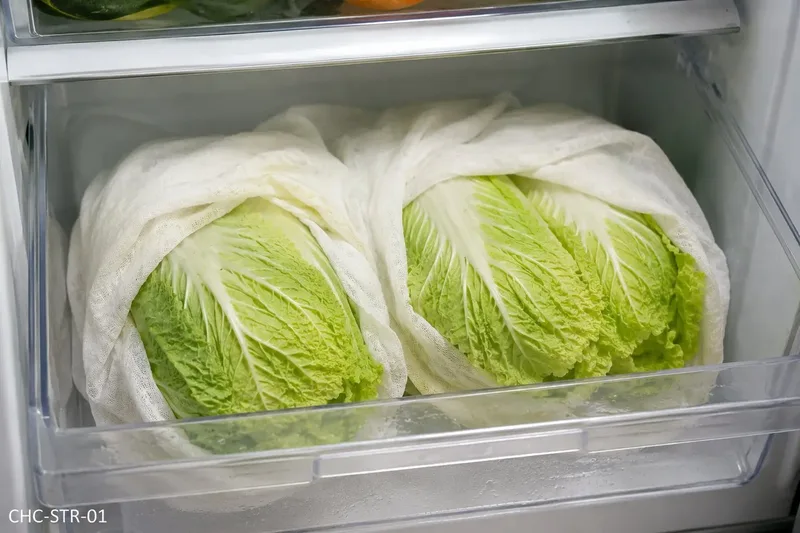
Chinese cabbage keeps excellently in the refrigerator — far better than summer lettuces. Remove any damaged outer leaves, wrap loosely in a damp cloth or place in a breathable bag, and store in the crisper drawer. A whole head keeps for 1–2 weeks. Do not wash until just before use — excess moisture accelerates decay.
🏡 Cool Store
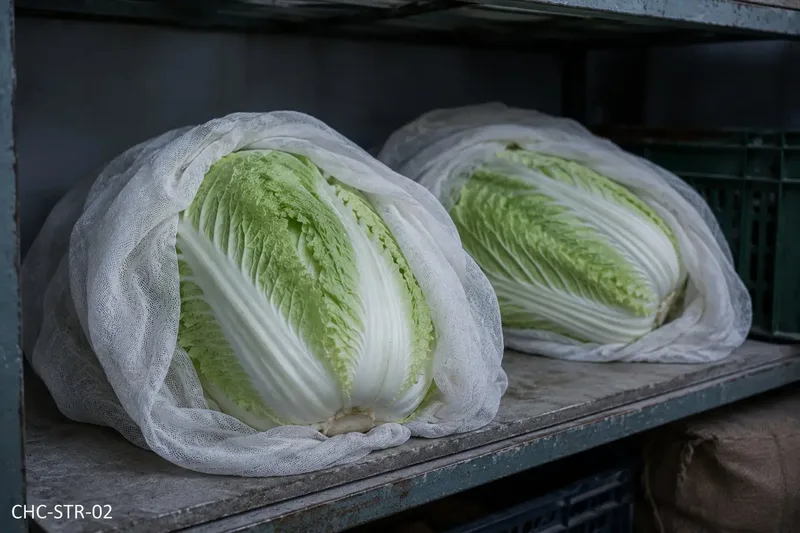
Chinese cabbage stores well in a cool, frost-free shed, garage, or cellar at 1–5°C. Wrap individual heads in newspaper and place in a crate or on a shelf. Inspect weekly and remove any showing signs of softening. Stored this way, firm heads keep for 3–4 weeks. Cylindrical types with tight, dense heads generally store better than looser barrel types.
🥢 Kimchi & Cooking
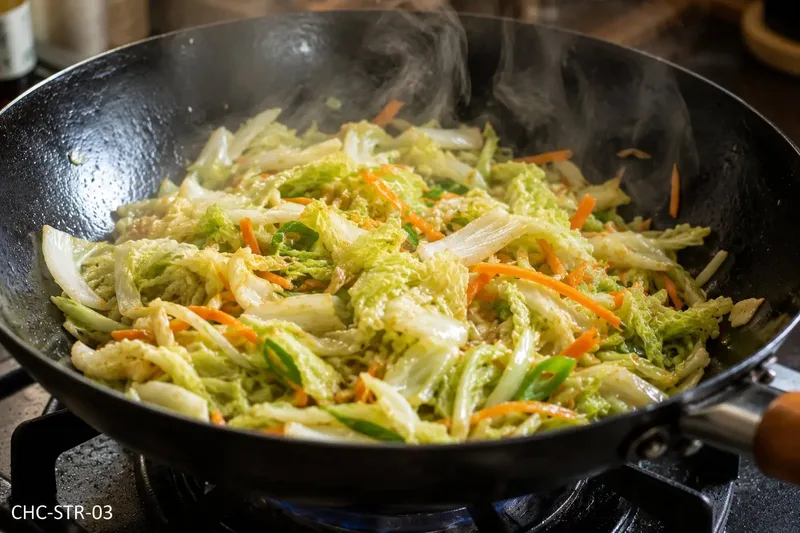
Chinese cabbage is the foundation of kimchi. Stir-fried, braised, or used raw in Asian slaws, the mild sweet flavour makes it one of the most versatile autumn vegetables.
12 Expert Tips
💡 The mid-July rule is non-negotiable
Chinese cabbage bolts in response to both high temperatures and long day-length — both apply before the summer solstice. The sweet spot is mid-July to early August. Sow too early and the plant flowers before forming a head every time. In Scotland and the far north, stick to the later end of this window. In the South, late-July sowings are usually the most productive.
💡 Net on day one — not day three
Cabbage white butterflies find brassicas within hours of planting or germination. A single day without netting in summer is enough for eggs to be laid. Apply fine insect-proof mesh (0.8mm) the moment plants are in the ground and do not lift it until harvest. Weigh or bury the edges — butterflies find gaps very quickly.
💡 A light frost improves the flavour
Chinese cabbage, like many brassicas, converts starches to sugars in response to cold — a light frost genuinely makes the leaves sweeter and more tender. Do not rush to harvest at the first frost. Protect with fleece once temperatures fall below -3°C and harvest through November and into December in mild areas.
13 Common Mistakes
⚠ Sowing & Timing
Sowing before mid-July — plants bolt and run to flower before forming a head; this is the single most common Chinese cabbage failure in UK gardens
Planting without netting — cabbage white caterpillars, flea beetles, and slugs cause severe damage within days; apply mesh at sowing or planting, not after damage appears
Disturbing roots at transplanting — handle modules with great care; any root disturbance is a bolt trigger
⚠ Ongoing Care
Inconsistent watering — plants produce loose, open heads rather than tight dense ones; water deeply and consistently throughout
Overfeeding with nitrogen once heads form — encourages soft, disease-prone growth; switch to a balanced feed as heads develop
Leaving unprotected in hard frost — harvest all heads before -3°C or protect with fleece; prolonged hard frost damages heads in the ground