🌱 SowMar–Sep (modules or direct)
🌾 Harvest4–8 weeks after sowing
☀ PositionFull sun or part shade
📐 Spacing20–25cm
DifficultyEasy
⚡ Quick facts
- Difficulty
- Easy
- Crop type
- Annual
- Position
- Full Sun to Part Shade
- Soil
- Moist, Fertile, Free-Draining
- Container friendly
- Yes — large pots and troughs
- Greenhouse recommended
- Autumn and winter extension
- Outdoor suitable
- Yes — all UK regions
- Frost hardy
- Light frost only — protect below -2°C
01 About
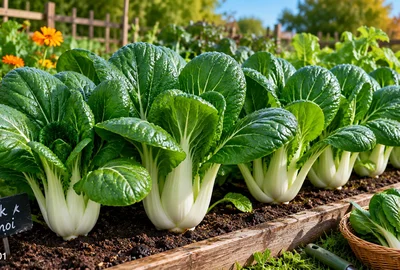
Pak choi is one of the most rewarding Oriental vegetables for the UK garden — fast, productive, and beautiful on the plate. It is ready as baby leaves in as little as four weeks, or as a full head in eight. Unlike many brassicas, it asks for very little: well-drained soil, even moisture, and protection from flea beetle. Avoid midsummer sowings when heat triggers bolting; pak choi belongs in spring and autumn, where it thrives in the cooler, moister conditions that brassica pests find less hospitable.
02 What to Grow
Pak choi divides broadly into white-stemmed types (the classic supermarket form), green-stemmed types (more delicate flavour), red and purple-stemmed varieties (decorative and nutritious), and flat-rosette forms like Tatsoi. White-stemmed varieties are the most bolt-resistant and best for beginners. Red forms add drama to the garden and the kitchen. Mini varieties are ideal for containers and successional sowing.
03 Varieties
The number of varieties shown for each crop is based on UK consumption data (2025/26) — the more popular the crop, the more variety choices we include.
⬜ White-Stemmed
Classic barrel-headed pak choi with thick white stems and dark green leaves. The most bolt-resistant and widely grown type. White background images.
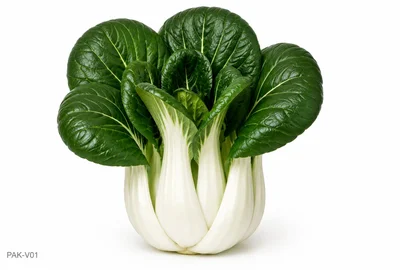
Joi Choi F1
White-Stemmed
The most widely recommended UK pak choi variety. Large, vigorous, barrel-shaped heads with thick white stems and glossy dark green leaves. Exceptional bolt resistance — the most reliable white-stemmed variety for UK conditions.
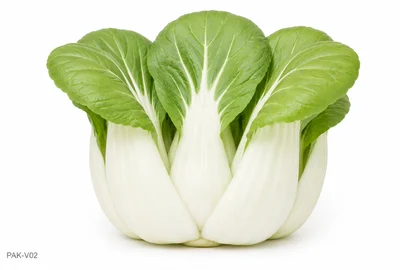
Canton White
White-Stemmed
Traditional Chinese pak choi with very broad, flat white stems dominating the plant. Squat, wide form. Fast-maturing and productive. Excellent in stir fries where the thick white stem is the prized element.
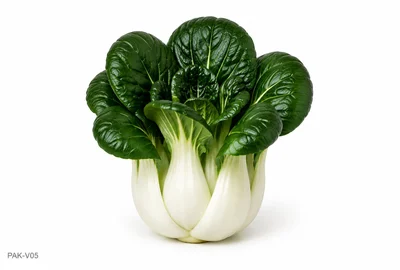
Hanakan F1
Mini · White-Stemmed
A miniature pak choi producing very small, compact barrel heads ideal for single servings. Grows to just 10–12cm. Perfect for container growing, successional sowing, and cut-and-come-again harvesting. Matures in 4–5 weeks.
🔴 Red and Purple
Pak choi with red or purple stems and leaf colouring. Decorative and nutritious — high in anthocyanins. White background images.
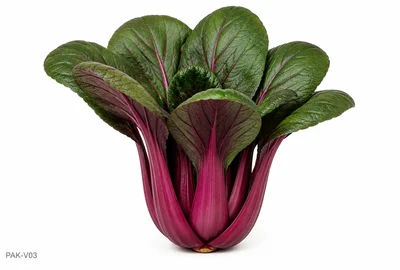
Red Choi F1
Red-Stemmed
Striking pak choi with deep wine-red stems and dark green upper leaves with red undersides. Very decorative in the garden and on the plate. Good flavour — slightly more peppery than white-stemmed types. One of the most ornamental vegetables available.
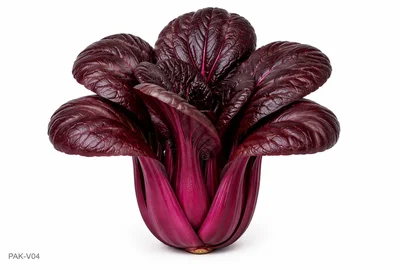
Rubi F1
Purple
Intensely coloured pak choi with deep burgundy-red leaves and stems throughout. One of the most richly coloured forms available. Compact head, strong colour that holds in cooking. High anthocyanin content.
Scarlette F1
Red · Compact
A compact red pak choi with vivid scarlet-red outer leaves and green inner leaves. Fast-maturing and bolt-tolerant for a red type. Excellent as a baby leaf or small head. Strong colour holds well in cooking and salads.
🌿 Specialist
Flat rosette forms and unusual types with distinct growth habits. Ideal for salads, cold-season growing, and cut-and-come-again harvests. White background images.
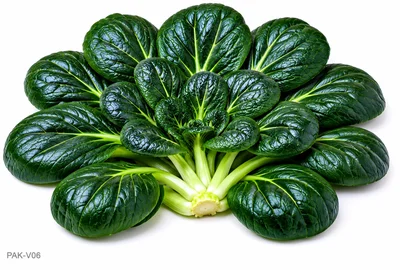
Tatsoi
Rosette
A flat, spreading rosette pak choi with very dark, glossy, spoon-shaped leaves. Grows at ground level rather than forming an upright head. Exceptionally cold hardy — survives light frosts. Superb raw in salads or briefly wilted. A different growing habit from all other pak choi types.
- Frost Hardy
- Salad
- ⭐ Flavour
Vitalia F1
Green-Stemmed
A green-stemmed pak choi with good mildew resistance and reliable autumn performance. Performs particularly well under cover from September onwards. Slightly more tender flavour than white-stemmed types. A good choice for extending the season into late autumn.
Canton Dwarf
Compact
A compact, fast-maturing pak choi ideal for successional sowing and small spaces. Produces small, neat heads in as little as 4 weeks. Excellent for baby leaf harvest or mini heads. Very productive for its size.
04 Where to Source
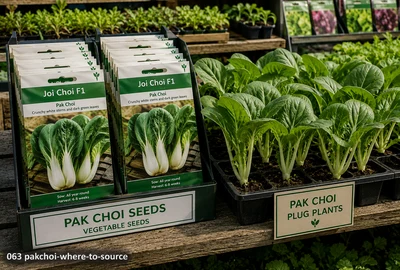
Pak choi seed is widely available from garden centres and online seed companies. Most garden centres stock Joi Choi F1 or a similar white-stemmed variety. For red, purple, and specialist forms including Tatsoi, specialist online seed companies offer the widest selection. Plug plants occasionally appear in garden centres in spring but seed is better value and germinates reliably.
05 Planting Options
🌱 Modules (Recommended)
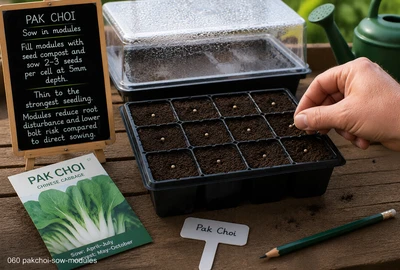
Sow 2–3 seeds per module cell at 5mm depth and thin to the strongest. Modules reduce root disturbance, lower bolt risk, and allow transplanting without setback. Ideal for March–May and September sowings. Transplant at 3–4 weeks when 5–8cm tall.
Suitable varieties: All varieties and all seasons. Especially important for early spring and late summer sowings.
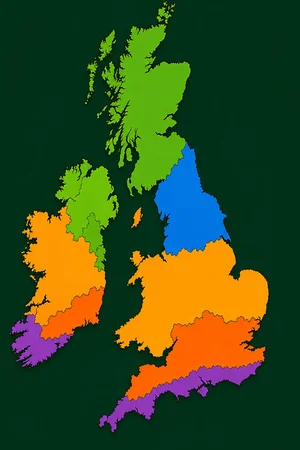
Modules (Recommended) — regional timing| Region | Sow / plant | Harvest | Notes |
|---|
| Scotland & Far North | Mar–Apr | May–Oct | Sow Mar–Apr, plant Apr–May; sow again Jul–Aug for Sep–Oct harvest |
|---|
| Northern England | Mar–May | May–Oct | Sow Mar–May, plant Apr–Jun; sow again Jul–Aug for Sep–Oct |
|---|
| Midlands & Wales | Mar–May | May–Nov | Sow Mar–May, plant Apr–Jun; sow again Jul–Sep for Sep–Nov |
|---|
| Ireland & Isle of Man | Mar–May | May–Oct | Sow Mar–May, plant Apr–Jun; sow again Jul–Sep |
|---|
| South & SE England | Mar–May | May–Nov | Sow Mar–May, plant Apr–Jun; sow again Jul–Sep for Oct–Nov |
|---|
| South Coast & SW | Feb–May | Apr–Nov | Sow Feb–May and Aug–Sep; harvest Apr–Jun and Oct–Nov |
|---|
🌍 Direct Sowing
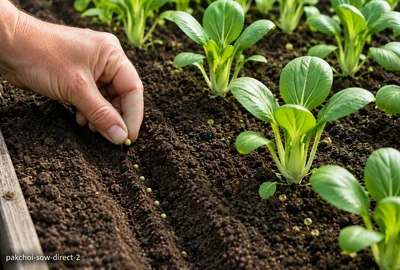
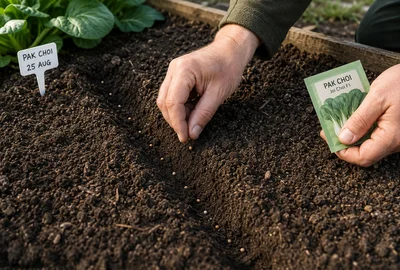
Draw drills 1cm deep, sow thinly, cover and firm. Thin to 20cm as seedlings develop. Best reserved for late July onwards when temperatures are dropping — spring direct sowing in open ground is more bolt-prone than modules.
Suitable varieties: All standard varieties from late July onwards. Not recommended for spring or early summer.
Direct Sowing — regional timing| Region | Sow / plant | Harvest | Notes |
|---|
| Scotland & Far North | Jul–Aug | Aug–Oct | Direct sow Jul–Aug only |
|---|
| Northern England | Jul–Aug | Aug–Oct | Direct sow Jul–Aug |
|---|
| Midlands & Wales | Jul–Sep | Aug–Nov | Direct sow Jul–Sep |
|---|
| Ireland & Isle of Man | Jul–Aug | Aug–Oct | Direct sow Jul–Aug |
|---|
| South & SE England | Jul–Sep | Aug–Nov | Direct sow Jul–Sep |
|---|
| South Coast & SW | Jul–Sep | Aug–Nov | Direct sow Jul–Sep |
|---|
06 Companion Planting
✅ Grow nearby
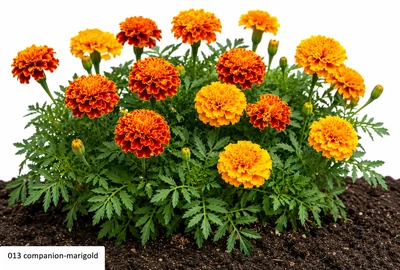
🌼 Marigolds
French marigolds deter aphids and whitefly around pak choi. Their strong scent confuses pests searching for brassicas.
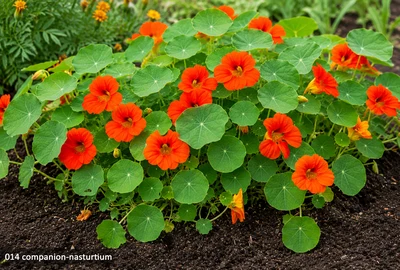
🌸 Nasturtiums
Nasturtiums act as a trap crop, drawing aphids and caterpillars away from pak choi.
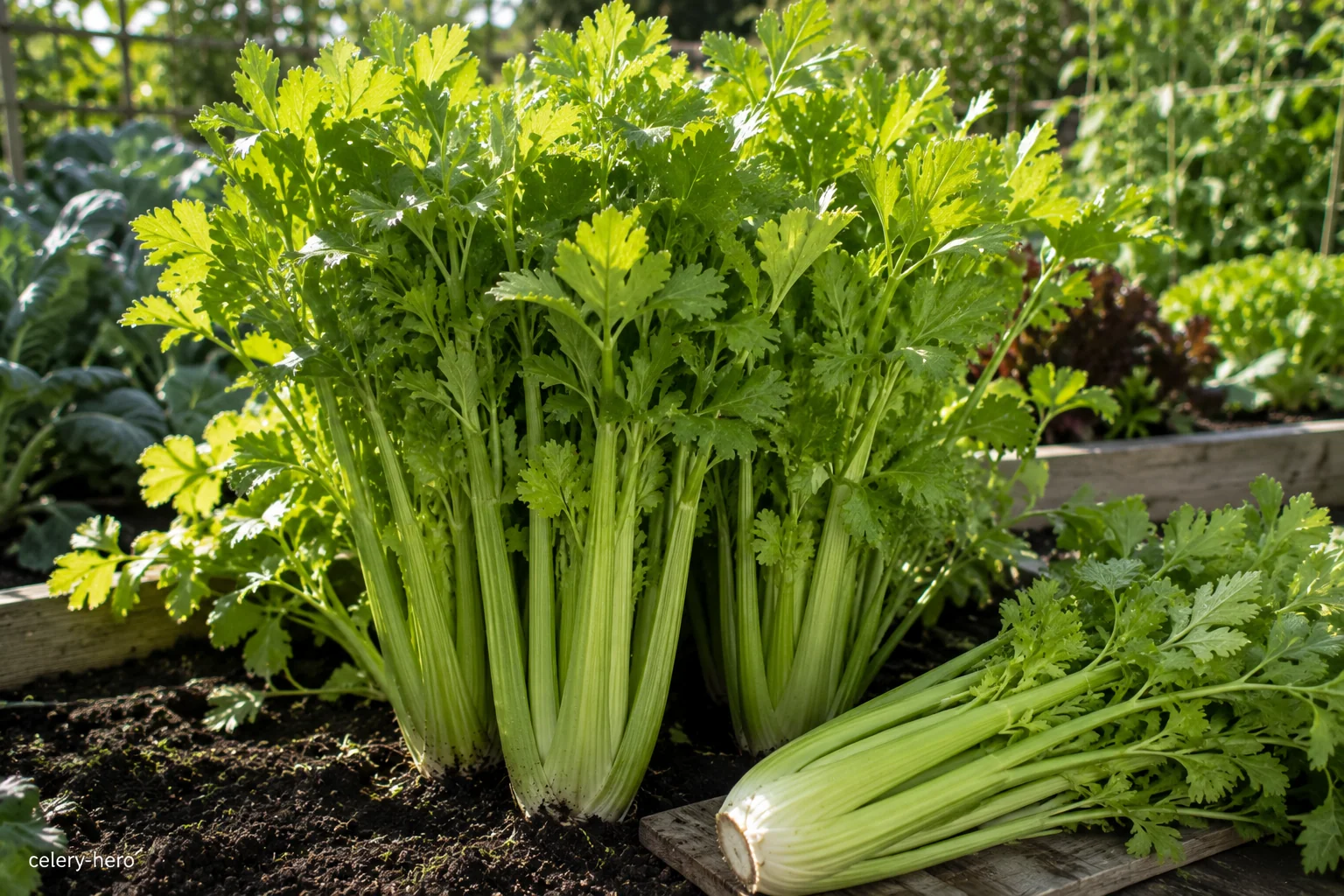
Celery is believed to repel cabbage white butterflies. Plant at the edges of pak choi beds.
❌ Keep apart
- 🍓 Strawberries — Brassicas, including pak choi, suppress strawberry growth when planted in close proximity. Keep a clear gap of at least one bed width between them.
- 🍅 Tomatoes — Nightshades and brassicas compete for similar nutrients and can inhibit each other. Rotate both groups away from the same bed each year.
07 Sowing — How To
Pak choi is sown from March through to early September. The key is to avoid the peak of midsummer — high temperatures and long days trigger bolting within days of germination. Concentrate sowings in spring and late summer for best results.
Sow in modules
Fill modules with seed compost and sow 2–3 seeds per cell at 5mm depth. Thin to the strongest seedling. Modules reduce root disturbance and lower bolt risk compared to direct sowing.
Sow direct outdoors
From late July onwards, direct sowing into fine, moist soil works well — cooler conditions reduce bolt risk. Draw drills 1cm deep, sow thinly, cover, and firm. Thin to 20cm.
Net immediately
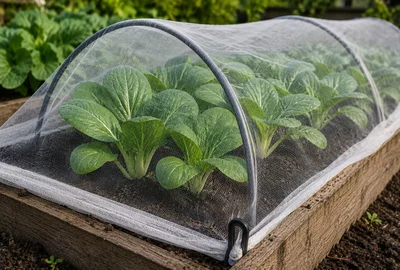
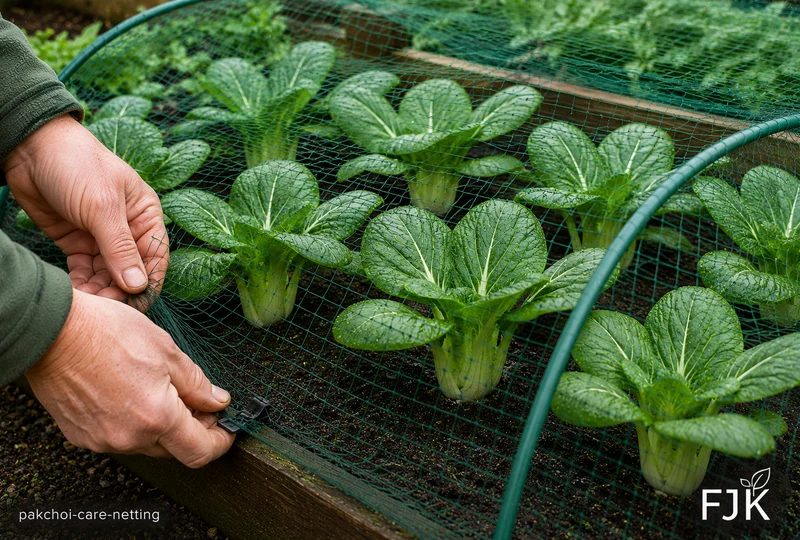
Apply fine insect mesh (0.8mm or finer) at sowing or transplanting. Flea beetle will devastate unprotected seedlings overnight. Edges must be buried or weighted securely.
Harvest whole
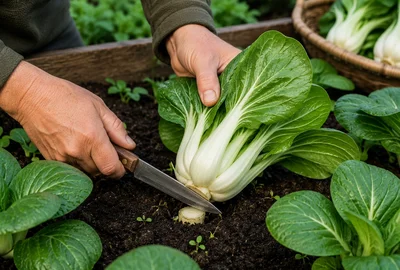
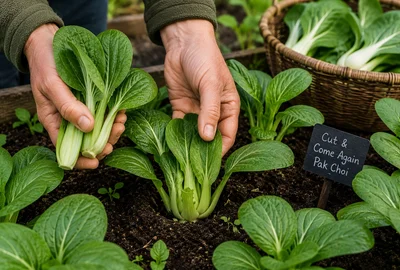
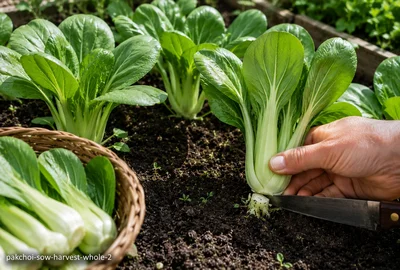
Cut the whole head at the base when hearts are firm — usually 6–8 weeks from sowing. Leave a 2cm stump and many varieties will re-sprout for a second cut.
Cut-and-come-again
Remove outer leaves from 4 weeks onward, leaving the central growing point intact. This extends the harvest window and is ideal for salad use.
08 Using a Propagator
Pak choi does not need a heated propagator. It germinates rapidly at cool temperatures (10–15°C) and excess warmth actually increases bolt risk. A cold frame or sheltered windowsill is all that is needed for spring sowings. Summer sowings need no protection at all.
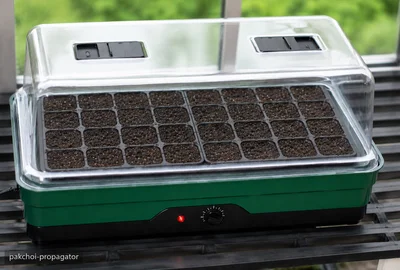
Heated propagator
Not recommended for pak choi. Heat above 18°C at germination increases bolt risk significantly. If a heated propagator is used, set it to no more than 15°C and move seedlings to a cooler location the moment they germinate.
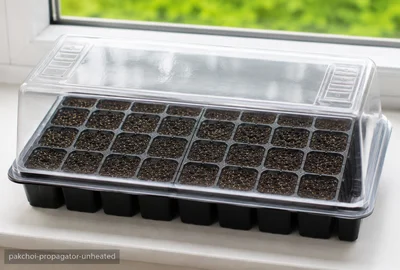
Unheated propagator
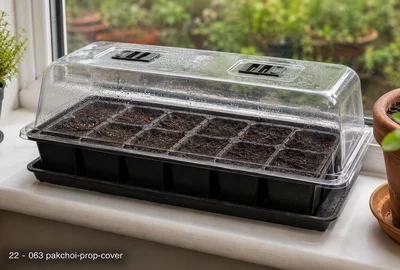
The right choice for pak choi. A lidded module tray on a cool windowsill or in a cold frame is sufficient for March sowings. From April onwards, no cover is needed at all. Cool conditions produce compact, bolt-resistant seedlings.
Standard unheated propagator — A lidded seed tray traps warmth and humidity around germinating seeds without electricity. Performance depends entirely on room temperature — best placed on a warm windowsill and used from March onwards. Replace the lid promptly after watering. Remove it completely the moment seedlings emerge to prevent damping off.
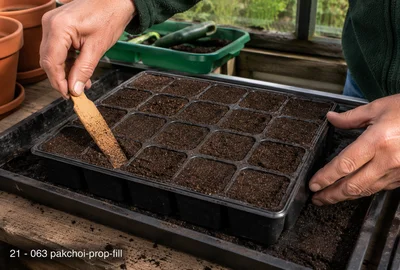
Fill modules
Fill a module tray with seed compost. Sow 2–3 seeds per cell at 5mm depth. Water lightly with a fine rose.
Cover and place
Put the lid on or cover with glass. Place on a cool windowsill or in a cold frame. No heat required.
Germination
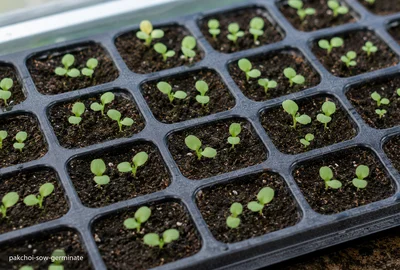
Pak choi germinates in 4–7 days at 10–15°C. Remove the lid immediately once seedlings emerge.
Thin and grow on
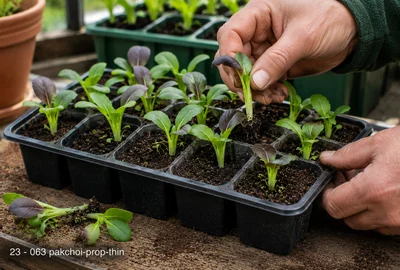
Thin to one seedling per cell at the first true leaf stage. Grow on in a cool bright spot. Plant out at 20–25cm spacing as soon as conditions allow.
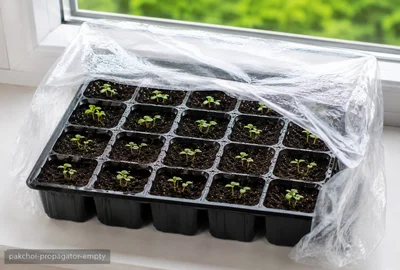
Windowsill alternative: A bright south-facing windowsill can substitute from late February. Place a clear polythene bag loosely over the pot during germination. Remove immediately once seedlings appear.
09 Soil Requirements
- pH
- 6.0–7.0
- Best
- Loam, Sandy loam
- Tolerates
- Clay loam
- Avoid
- Waterlogged, Very acid
💡 Fertile, well-drained soil. Very adaptable but benefits from moisture retention.
10 Ongoing Care
💧 Water Consistently
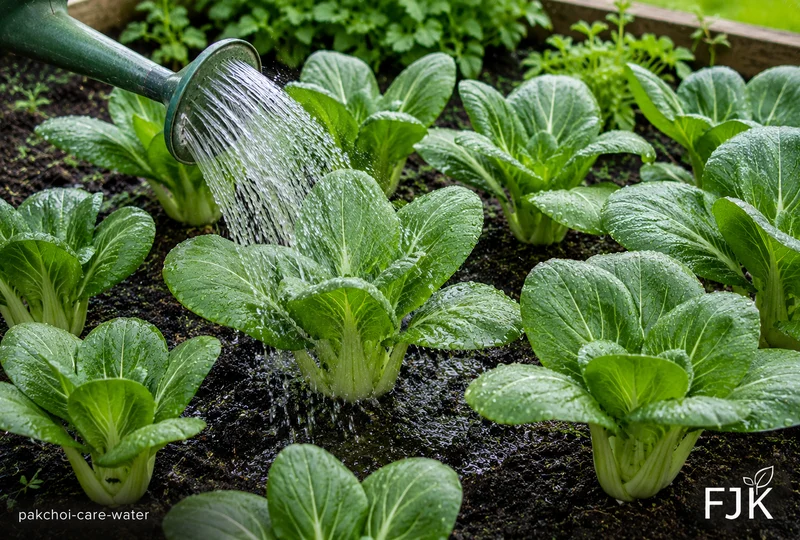
Pak choi needs consistently moist soil — drought stress triggers bolting almost as quickly as heat. Water at the base, not overhead. In dry spells, water every 2–3 days. Mulch around plants to retain moisture and keep roots cool. Never let the soil dry out completely between waterings.
🕸️ Keep Netting On
Fine insect mesh (0.8mm or finer) must stay in place from sowing until harvest. Flea beetle, cabbage white butterfly, and cabbage root fly are all threats. Check the edges weekly — even a small gap allows pests in. Remove only briefly to harvest, then replace immediately.
🌡️ Manage Bolt Risk
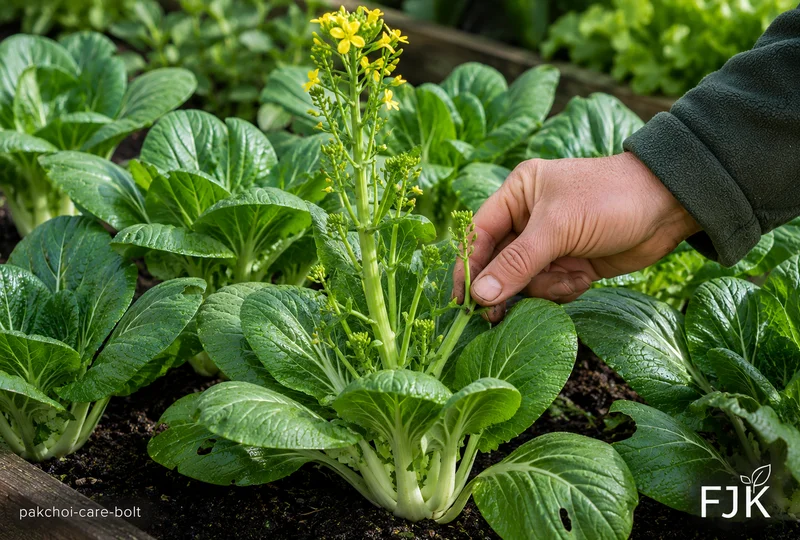
Bolting is the main failure mode for pak choi. Watch for the central stem elongating or the growing point rising — harvest immediately if this begins. Avoid water stress, heat, and root disturbance. Choosing bolt-resistant varieties (Joi Choi F1) and sowing at the right time reduces risk significantly.
✂️ Harvest and Re-cut
Cut whole heads at 6–8 weeks when hearts are firm, leaving a 2cm stump. Many varieties re-sprout for a second cut. For cut-and-come-again, remove outer leaves from 4 weeks onwards, always leaving the central growing point intact. Baby pak choi can be harvested from 3 weeks.
11 Watch Out For
WarningFlea beetle is the single biggest threat to pak choi. Tiny round holes appearing overnight on seedling leaves are the tell-tale sign. Always grow under fine insect-proof mesh from day one. In warm weather, water in the morning so foliage dries by evening.
🐛 Insects & pests
- 🦋 Cabbage Moth Caterpillar — Wilting or collapse of the central growing point of cabbages and Brussels sprouts
- 🦋 Cabbage White Caterpillar — Yellow, ribbed, skittle-shaped eggs in neat clusters on the underside of leaves in summer
- 🐜 Aphids (Blackfly & Greenfly) — Curled, distorted, or stunted growing tips — aphids inject saliva that causes leaf curl to protect them
- 🐌 Slugs & Snails — Silver slime trails on leaves, soil, and pots — often the first sign before damage is found
🍄 Diseases to watch
- 🥦 Clubroot — Clubroot (Plasmodiophora brassicae) is arguably the most feared soil-borne disease in UK kitchen gardens. It persists in the soil as resting spores for up to 20 years — meaning a bed that becomes infected is effectively lost for brassica growing for two decades without extraordinary intervention. Crop rotation is the most critical preventive measure.
- 🔵 Downy Mildew — Downy mildew is caused by oomycetes (water moulds) and is completely unrelated to powdery mildew despite the similar name. It thrives in cool, wet, humid conditions and is most damaging in spring and autumn. Each host plant has its own specific downy mildew species. Lettuce downy mildew can destroy an entire bed within days in the right conditions.
Full identification and treatment advice is in the Pests and Diseases sections.
12 Storage & Preserving
❄️ Refrigerate
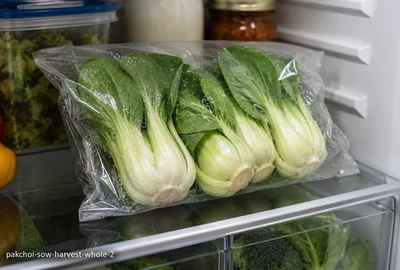
Unwashed pak choi keeps for 4–5 days in the fridge. Place in a loosely sealed bag or wrap in a damp cloth. Do not wash until just before use — excess moisture accelerates decay.
🍳 Stir Fry
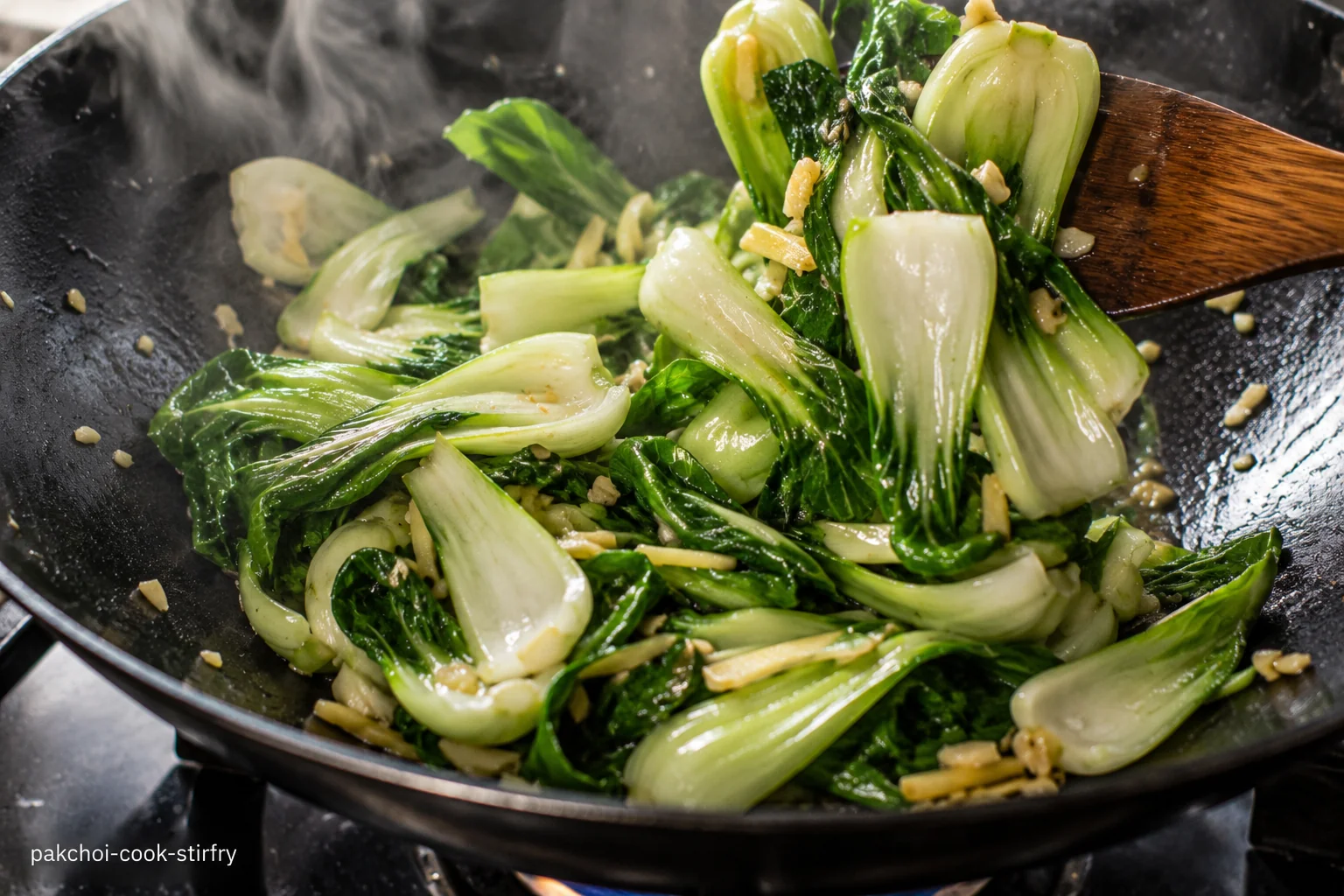
Pak choi is at its finest stir-fried in a very hot wok with garlic and ginger for 2–3 minutes. Both stems and leaves cook at different rates — add stems first, then leaves. Avoid overcooking.
🥗 Raw and Salad
Young leaves and baby pak choi are excellent raw. Thinly slice stems and dress with sesame oil and rice vinegar. Baby varieties and Tatsoi are particularly good as salad leaves.
13 Expert Tips
💡 Sow into the gap, not the heat
The best pak choi comes from sowings that avoid midsummer entirely. Sow in March–May for spring crops, then wait until late July before sowing again. This gap-sowing approach gives you two reliable seasons and avoids the bolt-prone June–July window entirely.
💡 Tatsoi for winter — it is a different plant
Tatsoi is flat-rosette pak choi that behaves completely differently from headed types — it grows low to the ground, tolerates hard frosts, and thrives under cloches through winter. Grow it as a separate winter salad crop rather than as a pak choi substitute.
14 Common Mistakes
⚠ Getting Started
- Sowing in midsummer — avoid June and early July, high temperatures cause bolting within days of germination
- No netting at sowing — flea beetle devastates unprotected seedlings overnight; net from day one
- Direct sowing in spring — modules are far safer than open-ground spring sowing, less bolt risk
⚠ Ongoing Care
- Overwatering — keep soil evenly moist but not waterlogged, wet conditions cause stem rot at the base
- Removing netting too early — all brassica pests are active all season; keep mesh on until harvest
- Letting it bolt — harvest promptly when heads are firm; a plant that begins to elongate must be cut immediately