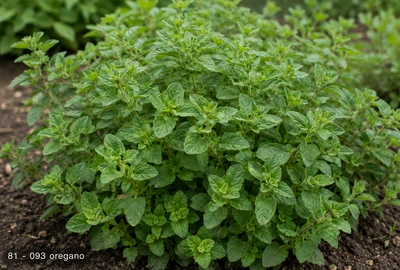
Oregano is the herb of pizza, pasta, and the Mediterranean — warm, intensely aromatic, and a fundamentally different herb fresh versus dried. Its close relative sweet marjoram is sweeter, more delicate, and outstanding used fresh. Together they cover every culinary need from a slow-cooked tomato sauce to a fresh herb salad. Both thrive in lean, sunny conditions and produce some of the most prolific harvests of any herb in the garden.
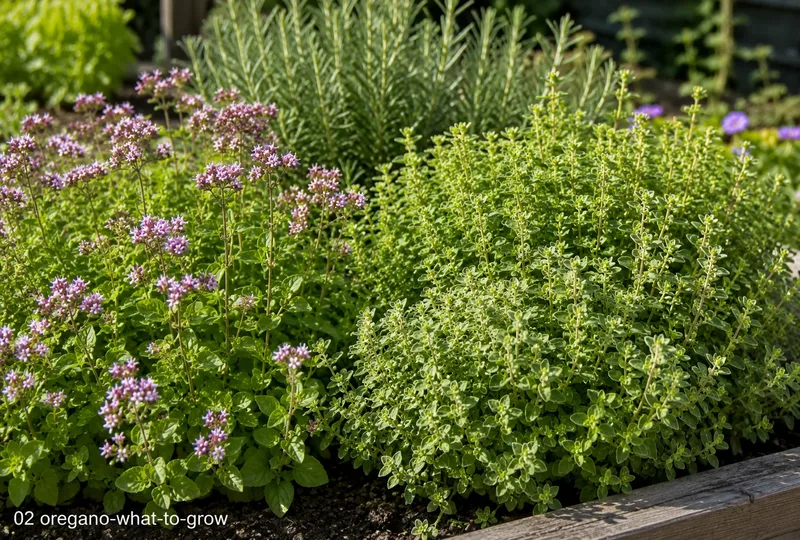
02 What to Grow
Common oregano is the backbone of Italian and Greek cooking — pungent, warm, and at its best dried. Greek oregano is stronger still, the authentic herb of pizza. Sweet marjoram is a different character entirely — sweeter, more floral, and best used fresh where its delicate flavour shines in salads, with eggs, and in sauces. Golden oregano and the new French oregano AGM varieties bring ornamental value alongside genuine culinary use. French oregano (AGM 2023) has outstanding flavour; Hot and Spicy (AGM 2023) adds a warming peppery edge perfect for meat and marinades.
03 Varieties
The number of varieties shown for each crop is based on UK consumption data (2025/26) — the more popular the crop, the more variety choices we include.
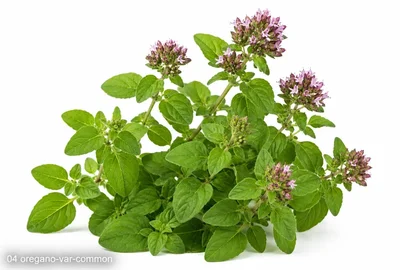
Common Oregano
Culinary · Classic
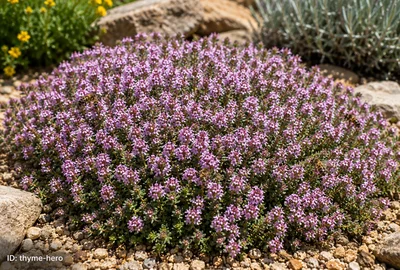
The standard culinary oregano. Strong, warm, aromatic flavour that intensifies dramatically on drying. Spreads vigorously by runners and self-seeds. Pink flowers in midsummer are attractive to bees. The most productive variety for kitchen use — one plant produces more dried herb than a household can use. Hardy perennial.
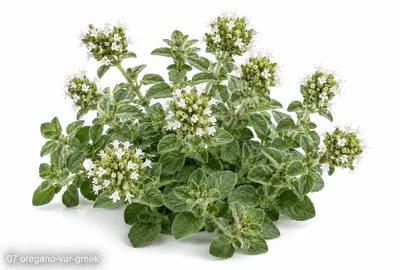
Greek Oregano
Culinary · Strong Flavour
Origanum vulgare subsp. hirtum. Stronger, more pungent and resinous than common oregano — the authentic herb of Greek cuisine and the pizza herb of Naples. White flowers. Hairier, greyer leaves. More compact than common oregano. Slightly less hardy in very cold UK winters — give a sheltered position. Outstanding dried.
Sweet Marjoram
Culinary · Fresh Use
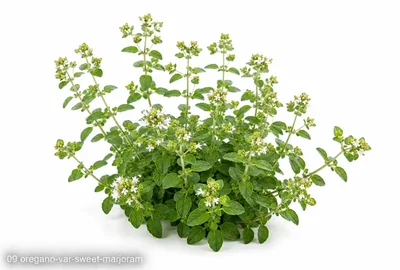
Origanum majorana. RHS Award of Garden Merit. A different character entirely — sweeter, more floral, and more delicate than oregano. Best used fresh where its subtle flavour is not overwhelmed by cooking. Essential in classic French cooking and outstanding with eggs, fish, and fresh sauces. Tender perennial — grown as an annual in the UK. Sow fresh each spring at 18°C.
AGM
Golden Oregano
Ornamental · Culinary
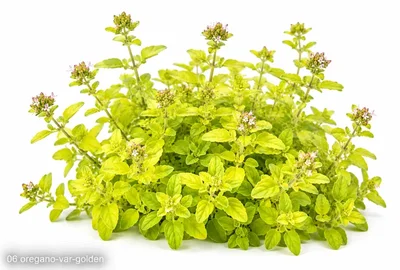
A gold-leaved form of common oregano with bright chartreuse-yellow foliage that provides striking ornamental value in the border. The flavour is milder than common oregano but still fully culinary. The gold colouration is most intense in full sun. An excellent dual-purpose plant for kitchen gardens where beauty and productivity are equally valued.
AGM
French Oregano
Culinary · AGM 2023
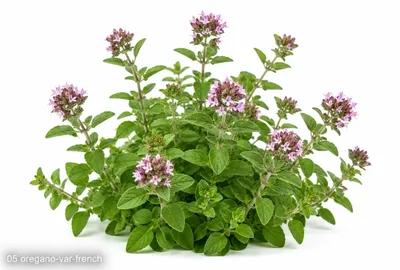
RHS Award of Garden Merit 2023. An outstanding culinary variety selected for superior flavour and productivity. Compact, upright habit with attractive foliage and excellent essential oil content. Consistently outperforms common oregano in flavour trials. The finest variety for kitchen garden use where maximum culinary quality is the priority. Hardy perennial. Pink flowers.
AGM
Hot and Spicy
Culinary · AGM 2023
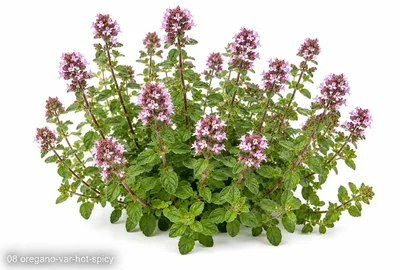
RHS Award of Garden Merit 2023. A vigorous oregano variety with an unusual warming, peppery heat alongside the classic oregano flavour — outstanding for meat marinades, spice rubs, and pizza. The spicy note is most pronounced in freshly dried herb. Bold ornamental presence with strong upright stems and abundant pink flowers. Excellent for drying.
AGM
04 Where to Source
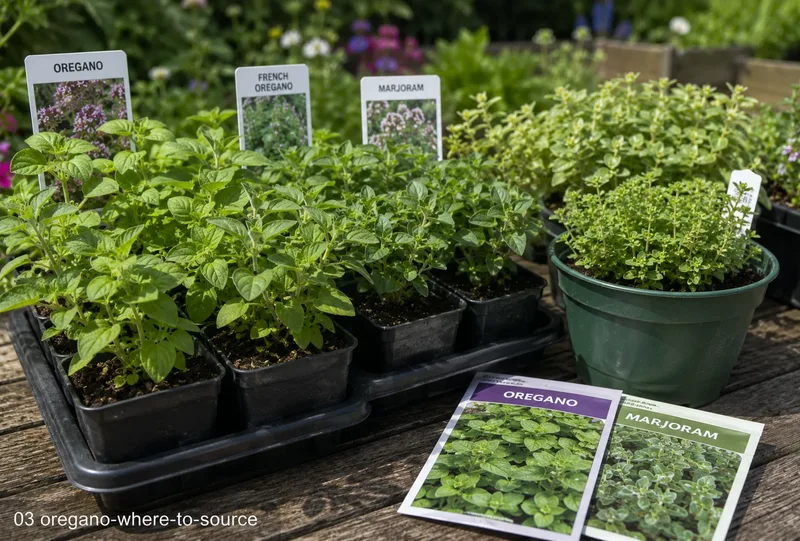
Common oregano, Greek oregano, and sweet marjoram are available from most garden centres as plants in spring and from all major seed suppliers. Golden oregano and French oregano are stocked by specialist herb nurseries. Hot and Spicy oregano is best sought from specialist vegetable and herb seed companies. All oregano varieties can be propagated from cuttings taken in May–July, rooting easily in gritty compost. Sweet marjoram must be raised from seed each year as it does not overwinter reliably in the UK.
05 Planting Options
🌿 In the Garden Border
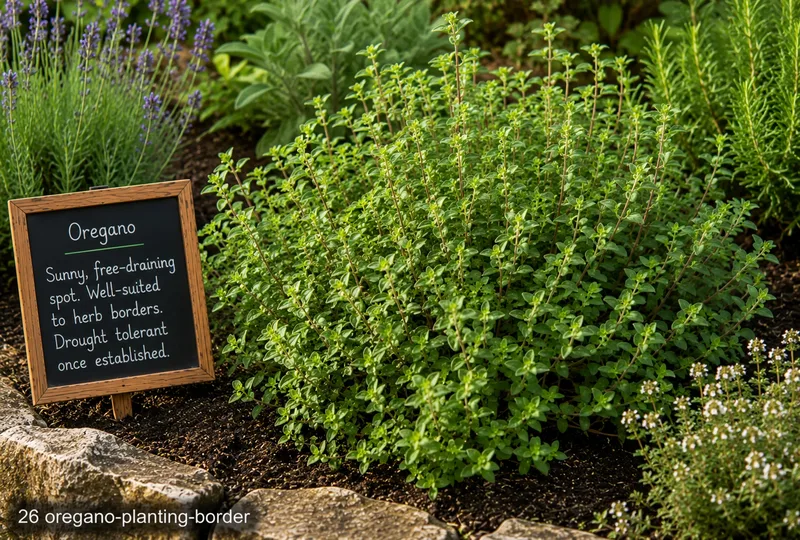
Oregano thrives in a free-draining sunny border, particularly on light sandy or chalky soils. It spreads by underground runners and self-seeds freely — plant where it has room to spread or sink a pot into the ground to contain roots. Makes an excellent low-maintenance border plant with attractive pink flowers in midsummer that bees adore.
🪴 In a Container
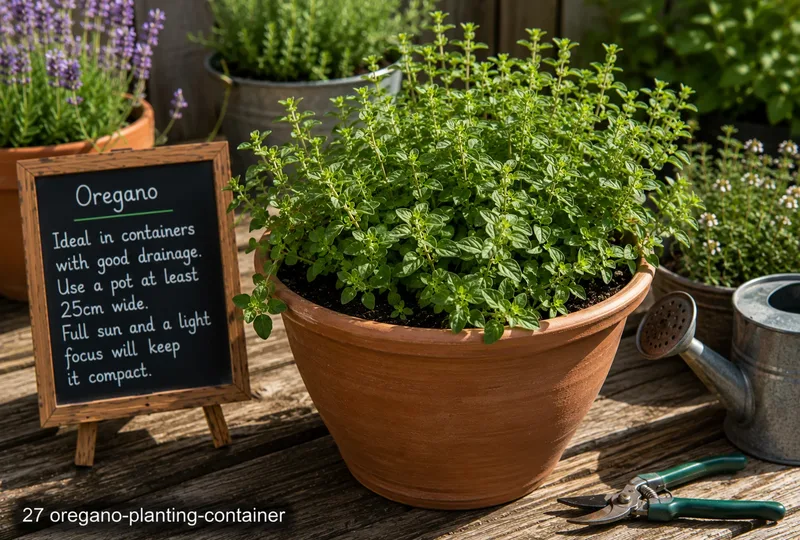
Container growing is the best way to control oregano spread while keeping it close to the kitchen. Use a large pot (30cm+) with very gritty, free-draining compost. No feeding required — fertile compost reduces flavour. Water only when the compost is dry. Sweet marjoram is particularly well suited to container growing as it can be moved indoors to extend the season.
Both are drought-tolerant perennial herbs suited to the same dry, sunny spot.
❌ Keep apart
🌱 Mint — Mint's invasive spreading roots will overwhelm oregano if not physically contained.
🌿 Fennel — Fennel is allelopathic and its root secretions inhibit the growth of most nearby herbs, including oregano.
07 Sowing — How To
🌱 From Seed (Oregano)
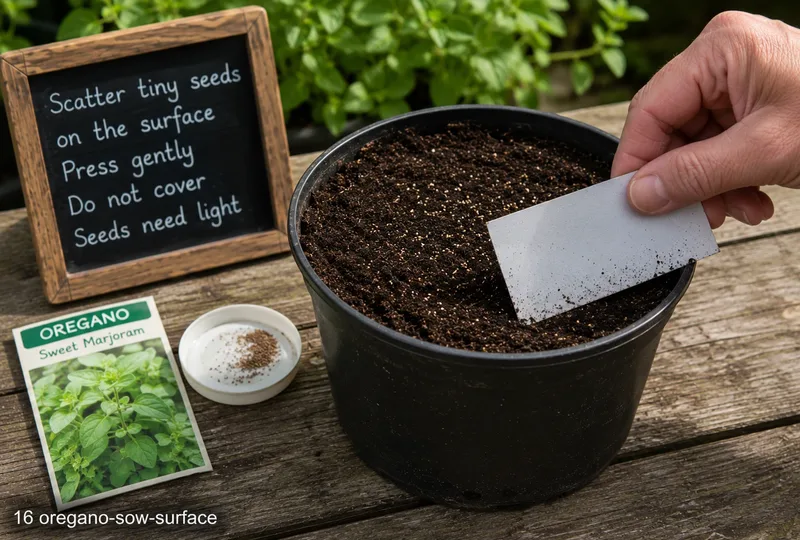
Sow on the surface
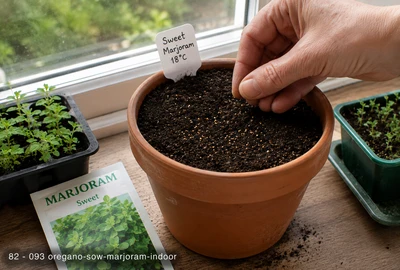
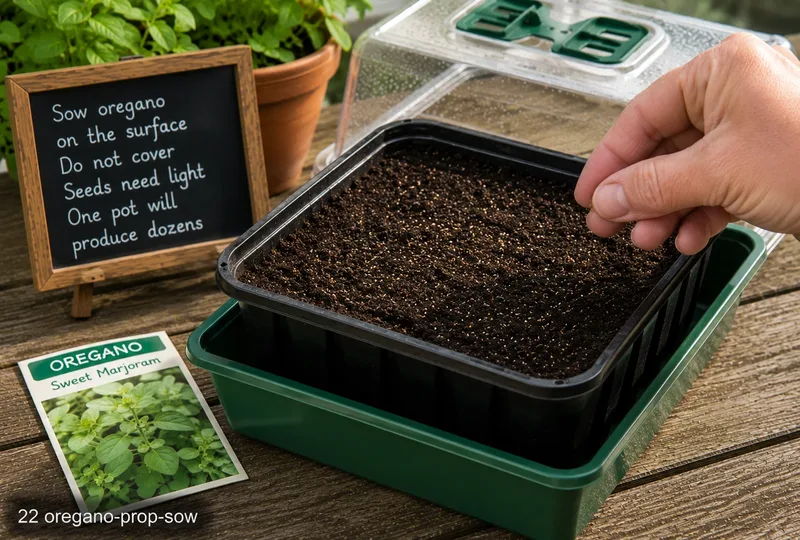
Oregano seeds are tiny — scatter on the surface of moist seed compost and press gently with a flat piece of card. Do not cover with compost or vermiculite. Seeds need light to germinate. A few pinches of seed in a 9cm pot is plenty.
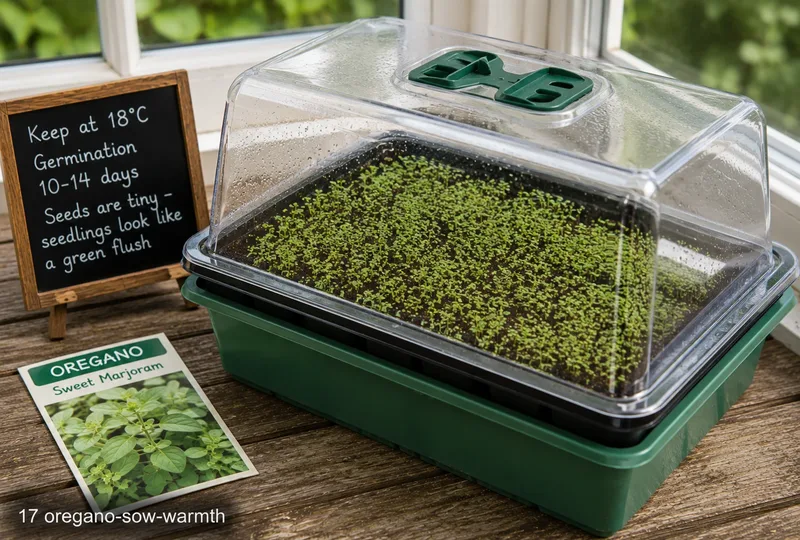
Keep at 18°C
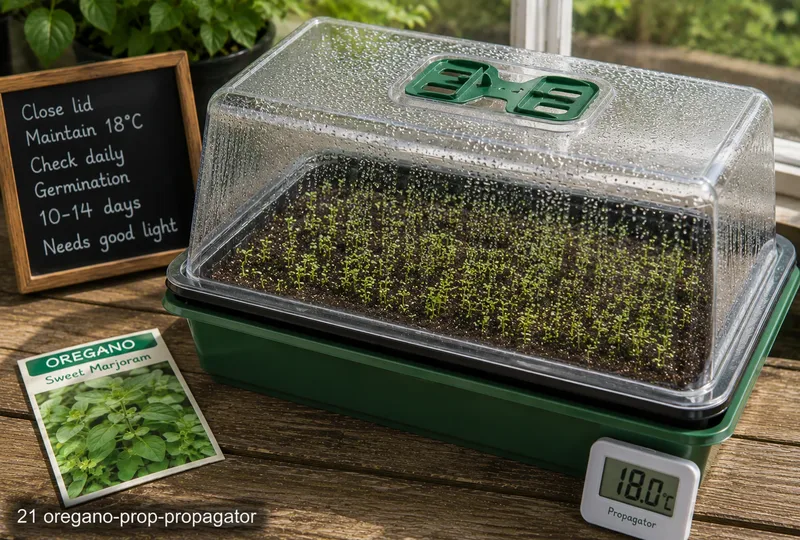
Place in a propagator at 18°C or on a warm windowsill. Germination takes 10–14 days. Seeds are very fine and the emerging seedlings will look like a green flush across the compost surface.
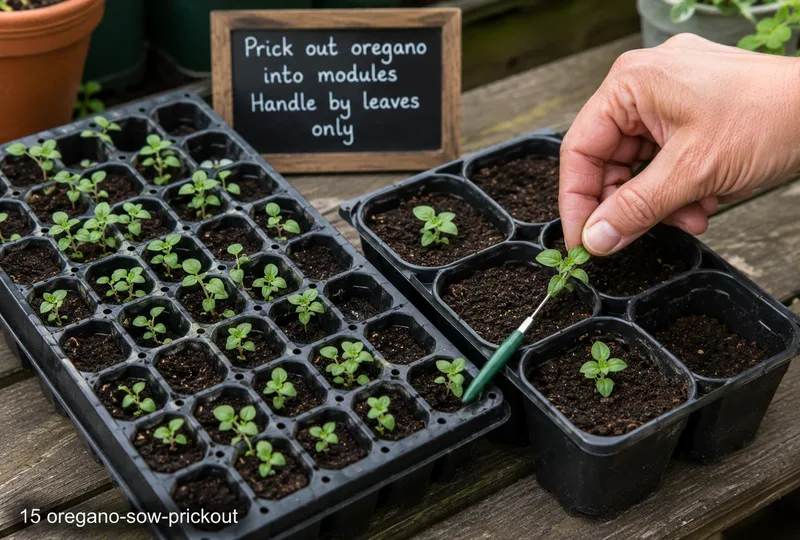
Prick out into modules
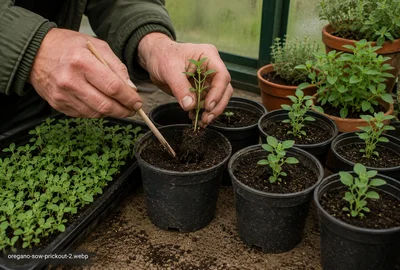
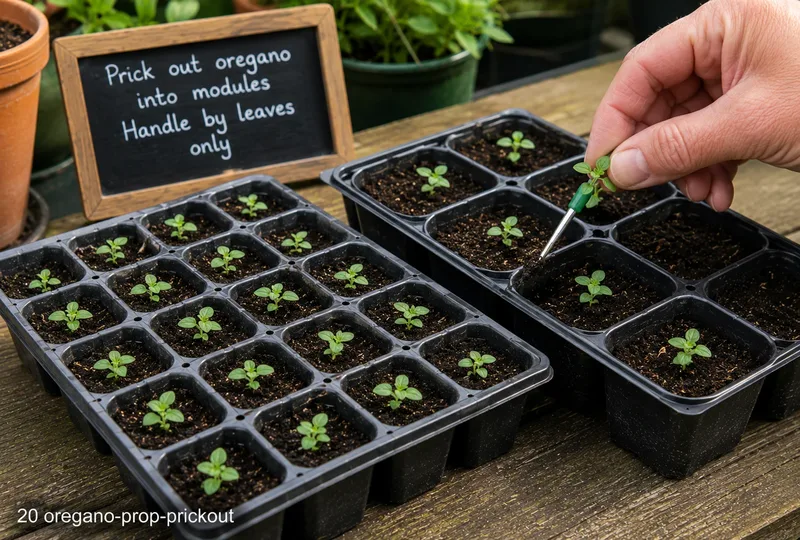
Once seedlings have two true leaves (3–4 weeks), carefully prick out into individual modules. Oregano seedlings are small and delicate at this stage — handle by the seed leaves only, never the stem.
Grow on in good light
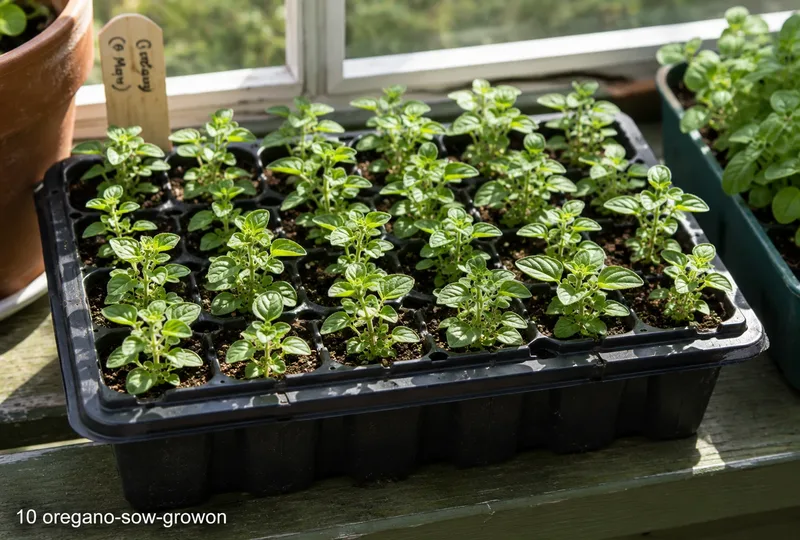
Grow on in bright conditions at 15°C+. Avoid over-watering — allow the compost surface to dry between waterings. Oregano seedlings grow slowly at first but accelerate once established in individual modules.
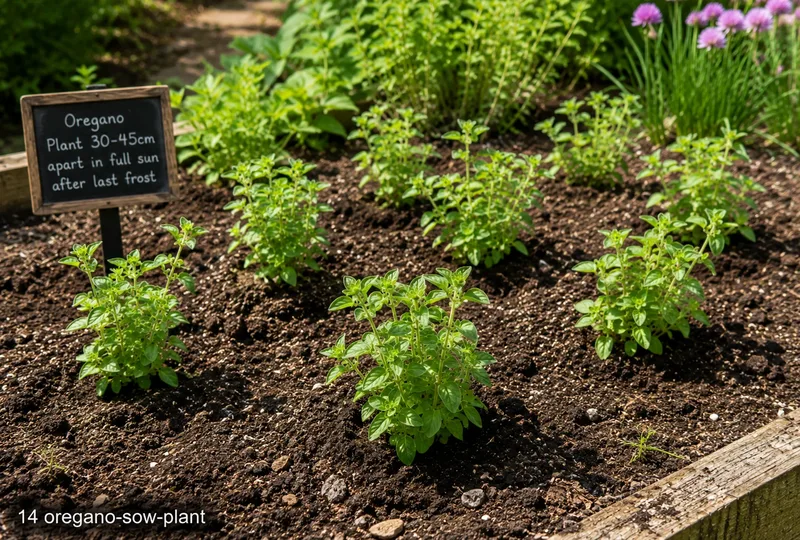
Plant out after frosts
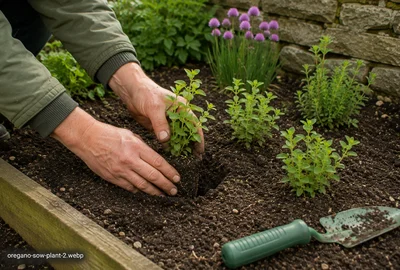
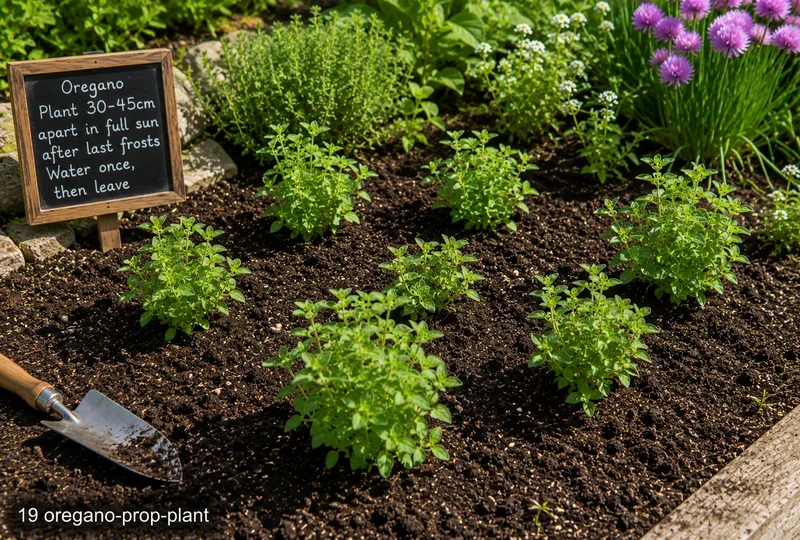
Plant out 30–45cm apart in full sun after the last frost has passed. Firm in well and water once. After this initial watering, leave to establish without additional water unless conditions are exceptionally dry.
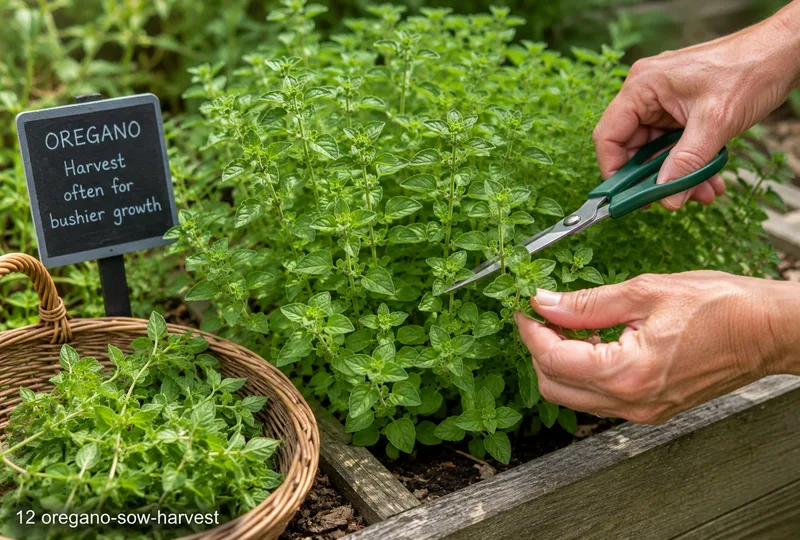
First harvest in 6–8 weeks
Begin harvesting shoot tips once plants are 15cm tall and actively growing. The more you harvest, the more the plant produces. First-year plants in the garden will spread significantly — leave adequate space.
From Seed (Oregano) — regional timing
Region
Sow / plant
Harvest
Notes
Scotland & Far North
May–Jun
Jul–Sep
May · Plant: Jun · Harvest: Jul–Sep
Northern England
Apr–Jun
Jun–Oct
Apr–May · Plant: May–Jun · Harvest: Jun–Oct
Midlands & Wales
Apr–May
Jun–Oct
Apr · Plant: May · Harvest: Jun–Oct
Ireland & Isle of Man
Apr–May
Jun–Oct
Apr · Plant: May · Harvest: Jun–Oct
South & SE England
Mar–May
May–Oct
Mar–Apr · Plant: Apr–May · Harvest: May–Oct
South Coast & SW
Mar–May
May–Oct
Mar–Apr · Plant: Apr–May · Harvest: May–Oct
🌿 Sweet Marjoram (Annual)
Sow indoors at 18°C
Sweet marjoram needs consistent warmth to germinate. Sow on the surface of moist seed compost (seeds need light) and maintain 18°C. Germination takes 10–14 days. Treat exactly like oregano for the sowing stage.
Prick out and pot on
Prick out into individual 9cm pots when seedlings have two true leaves. Grow on at 15°C+ in good light. Sweet marjoram is less vigorous than oregano as a seedling — handle carefully and do not over-water.
Harden off before planting
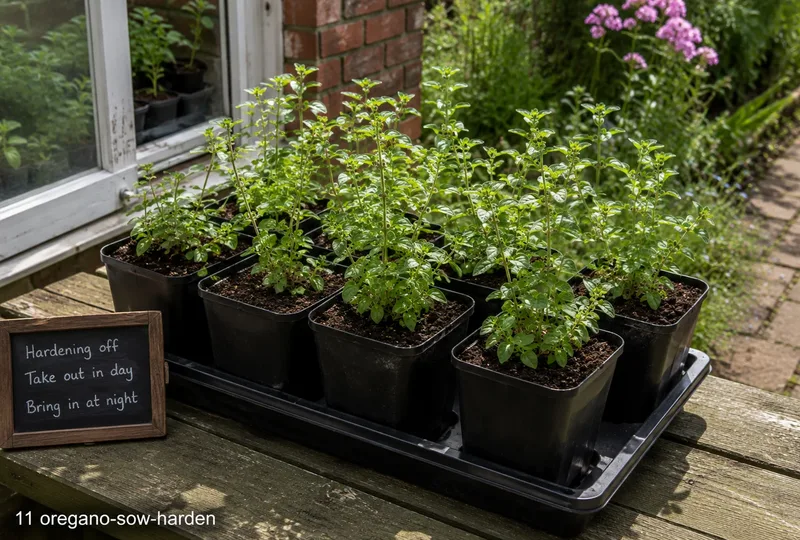
Sweet marjoram is tender — do not rush planting out. Spend 10 days gradually acclimatising plants to outdoor conditions by taking out during the day and bringing back in at night. Plant out only when night temperatures are reliably above 10°C.
Plant in the warmest spot available
Choose the sunniest, most sheltered position — a south-facing wall or warm raised bed is ideal. Sweet marjoram performs significantly better in warm microclimates than in exposed positions. Space 25–30cm apart.
Harvest before flowering
Sweet marjoram is at its best before flowering — harvest shoot tips regularly to delay the flower. Once it flowers, the leaves become less aromatic. Use fresh immediately for the finest flavour.
Overwinter indoors as perennial
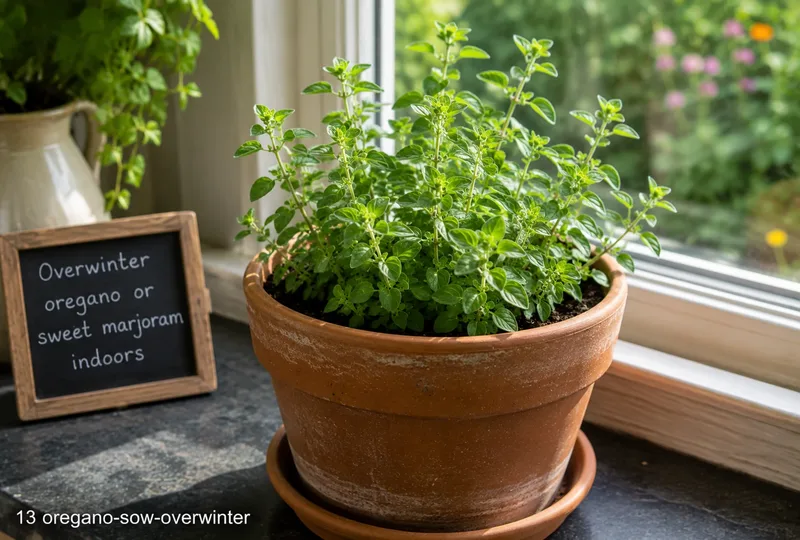
In mild areas or with protection, sweet marjoram may survive winter as a perennial. Pot up a plant in September and bring indoors to a bright, frost-free windowsill — it will continue producing fresh leaves through winter.
Sweet Marjoram (Annual) — regional timing
Region
Sow / plant
Harvest
Notes
Scotland & Far North
May–Jun
Jul–Sep
May · Plant: Jun · Harvest: Jul–Sep
Northern England
Apr–Jun
Jun–Sep
Apr–May · Plant: Jun · Harvest: Jun–Sep
Midlands & Wales
Apr–Jun
Jun–Oct
Apr · Plant: May–Jun · Harvest: Jun–Oct
Ireland & Isle of Man
Apr–Jun
Jun–Oct
Apr · Plant: May–Jun · Harvest: Jun–Oct
South & SE England
Mar–May
May–Oct
Mar–Apr · Plant: May · Harvest: May–Oct
South Coast & SW
Mar–May
May–Oct
Mar–Apr · Plant: May · Harvest: May–Oct
08 Using a Propagator
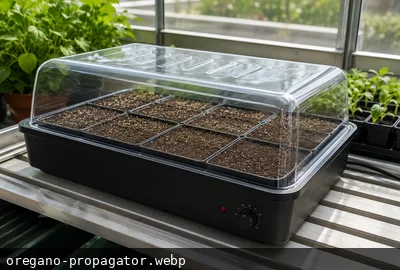
Oregano seed is tiny and the seedlings delicate — a heated propagator set to 18°C gives the most consistent germination. The main benefit is maintaining steady temperature, as oregano germination is very sensitive to temperature fluctuations. Cuttings, by contrast, need no heat and root well in a cold frame or sheltered spot in May–July.
Heated propagator
Set to 18°C for seed germination. Sow seeds on the surface of moist compost — oregano is a light germinator, so do not cover. Germination takes 10–14 days at 18°C. Keep the lid on and ventilate daily. Remove immediately on germination to prevent damping off.
Temperature: 18°C
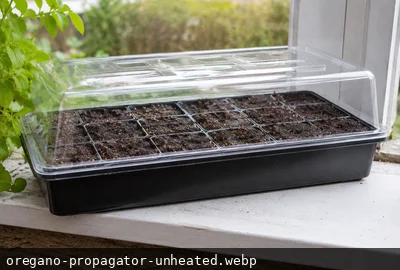
Unheated propagator
Not recommended for seed germination — temperature consistency is critical. For cuttings (June–August), an unheated lid in a sheltered position is entirely adequate. Roots develop in 4–6 weeks without any bottom heat.
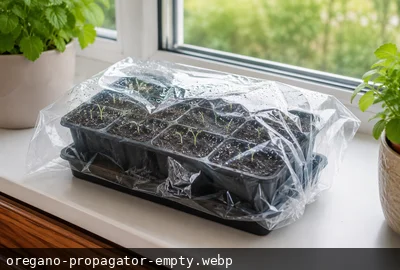
Standard unheated propagator — A lidded seed tray traps warmth and humidity around germinating seeds without electricity. Performance depends entirely on room temperature — best placed on a warm windowsill and used from March onwards. Replace the lid promptly after watering. Remove it completely the moment seedlings emerge to prevent damping off.
Sow on the surface
Scatter seed very thinly on the surface of moist seed compost. Do not cover — these seeds are tiny and need light. A single pot in the propagator will produce dozens of seedlings.
Close lid and maintain 18°C
Close the propagator lid and set to 18°C. Check daily for germination — the seedlings are tiny green threads at first. Good light is important even in the propagator — do not place in a dark corner.
Ventilate on germination
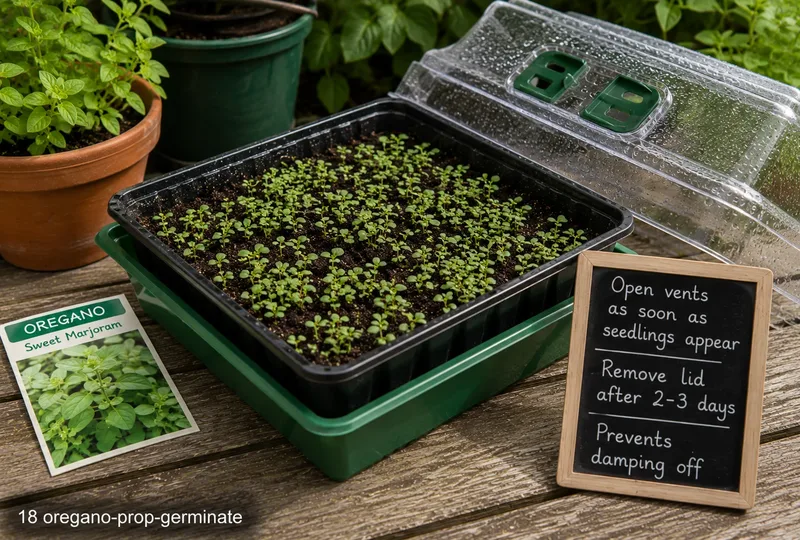
Open the propagator vents as soon as seedlings appear. Remove the lid entirely after 2–3 days. Damping off is a significant risk with tiny oregano seedlings in humid, stagnant conditions.
Prick out when large enough to handle
Prick out into individual modules when seedlings have two true leaves — at about 4 weeks. Handle only by the seed leaves. Grow on in bright conditions at 15°C.
Plant out after hardening off
After 10 days hardening off, plant out 30–45cm apart in full sun. Oregano plants from seed in their first year are small but grow rapidly to fill their space by late summer.
Windowsill alternative: A bright south-facing windowsill can substitute from late February. Place a clear polythene bag loosely over the pot during germination. Remove immediately once seedlings appear.
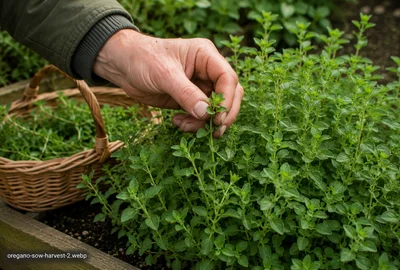
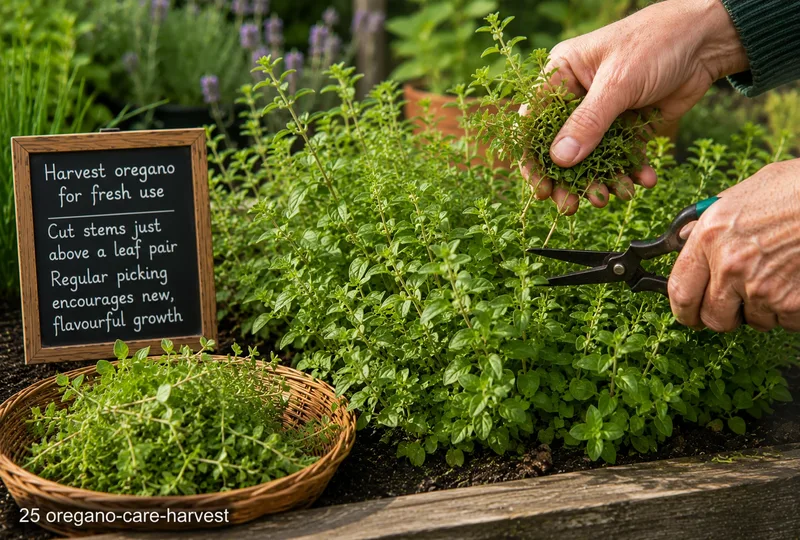
Harvest by cutting shoot tips regularly — this delays flowering, keeps the plant bushy, and produces the most aromatic young growth. Cut above a pair of leaves, not to the bare stem. The more you harvest, the more the plant produces. Stop harvesting about 4 weeks before the first frost in your region to allow the plant to harden before winter.
☀️ Drying at Peak Flavour
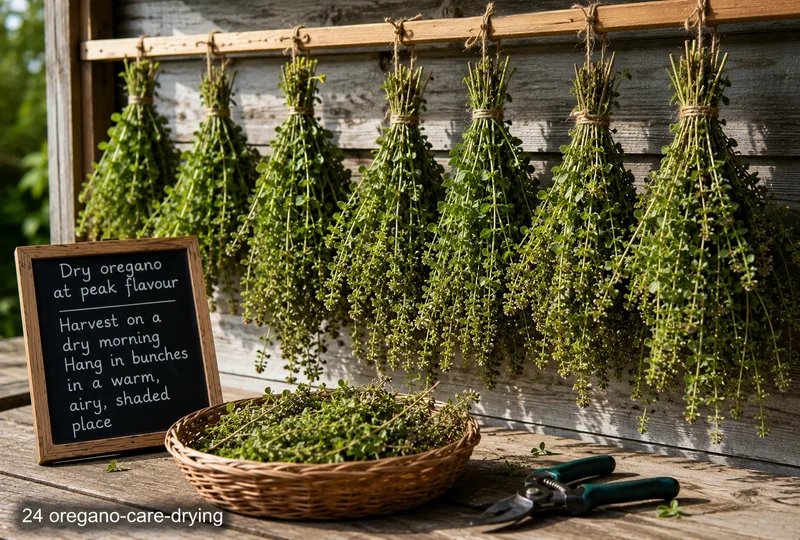
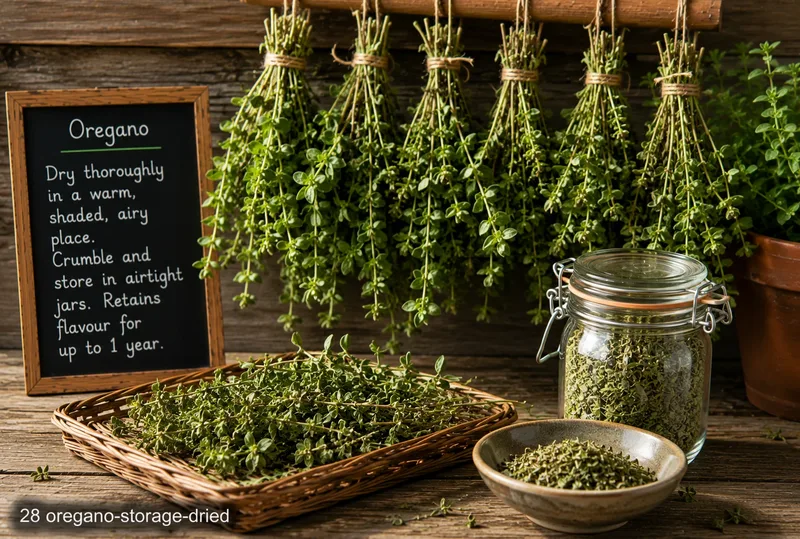
Cut long stems in July–August just before the flowers fully open — this is when the essential oil content is highest and dried oregano will have the strongest flavour. Tie in small bunches and hang upside down in a warm, dry, airy spot away from direct light for 2–3 weeks. Strip dried leaves from the stems and store in an airtight jar. Dried oregano grown at home is dramatically more flavourful than shop-bought.
🌱 Autumn Cut-Back & Division
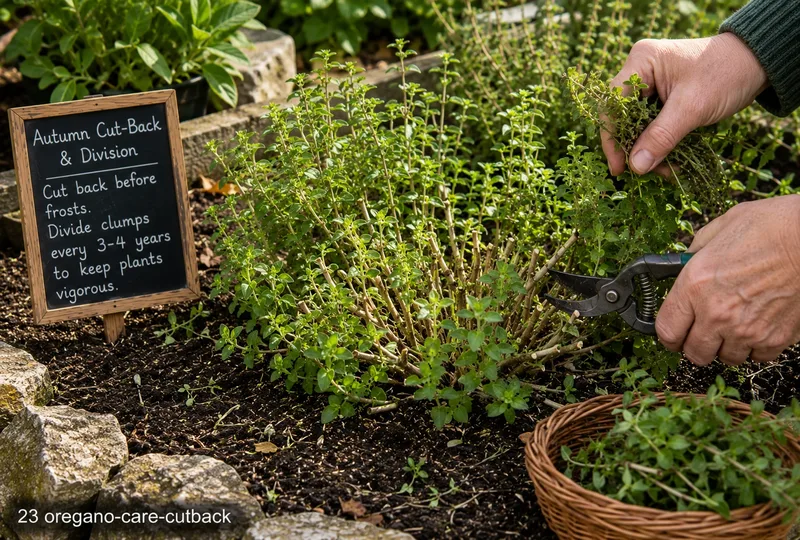
Cut all stems back to 5cm in October after the growing season ends. This prevents the plant becoming woody, removes disease-prone old growth, and encourages a strong flush of fresh growth the following spring. Divide spreading clumps every 2–3 years in spring to control the plant and maintain vigour. Divisions can be replanted elsewhere or given away — one plant divides into many.
11 Watch Out For
Warning
Common oregano can spread aggressively by underground runners and becomes invasive in some garden borders. Plant in a container sunk into the ground to contain roots, or grow in a raised bed where spreading is less problematic. Divide every 2–3 years to keep in check.
🐛 Insects & pests
🕷 Spider Mite — Fine, silky webbing on the underside of leaves and between growing tips — the definitive identification sign
🐜 Aphids (Blackfly & Greenfly) — Curled, distorted, or stunted growing tips — aphids inject saliva that causes leaf curl to protect them
🍄 Diseases to watch
🩶 Botrytis (Grey Mould) — Botrytis cinerea (grey mould) is the most ubiquitous fungal pathogen in temperate gardens — present in virtually every garden soil and on plant debris. It becomes a disease only when conditions favour it: cool, humid, poorly ventilated environments with damaged or senescent plant tissue. In a greenhouse in autumn it can destroy an entire tomato or grape crop.
⬜ Powdery Mildew — Powdery mildew is caused by a range of related fungi, each specific to its host plant — courgette mildew cannot infect peas, and vice versa. The characteristic white powdery coating on leaf surfaces appears in warm, dry conditions (unlike downy mildew which prefers cool and wet). Rarely kills plants but severely reduces yield and plant vigour.
Full identification and treatment advice is in the Pests and Diseases sections.
12 Storage & Preserving
☀️ Dried (Best Method)
Oregano is one of the finest herbs for drying — the flavour actually concentrates on drying, making dried home-grown oregano dramatically more flavourful than any shop-bought alternative. Cut stems in July–August before flowers open, tie in small bunches, and hang for 2–3 weeks. Strip leaves and store in airtight jars. Home-dried oregano retains excellent flavour for up to 2 years.
🌿 Fresh (Short Term)
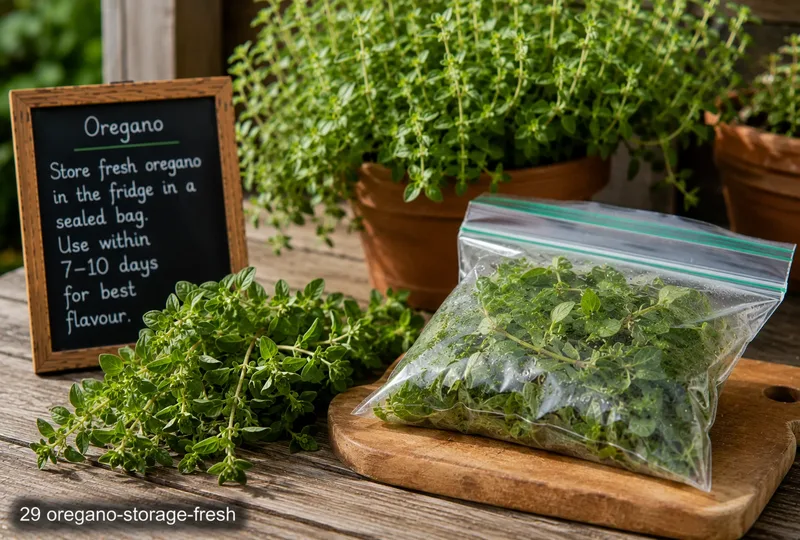
Fresh oregano keeps well for 7–10 days. Wrap cut stems in a damp paper towel, place in a sealed bag, and refrigerate. Alternatively, stand stems in a small glass of water on the worktop and use within 5 days. Fresh oregano has a much more delicate flavour than dried — use generous quantities in fresh preparations where its subtlety can be appreciated.
🍳 Using Fresh in Cooking
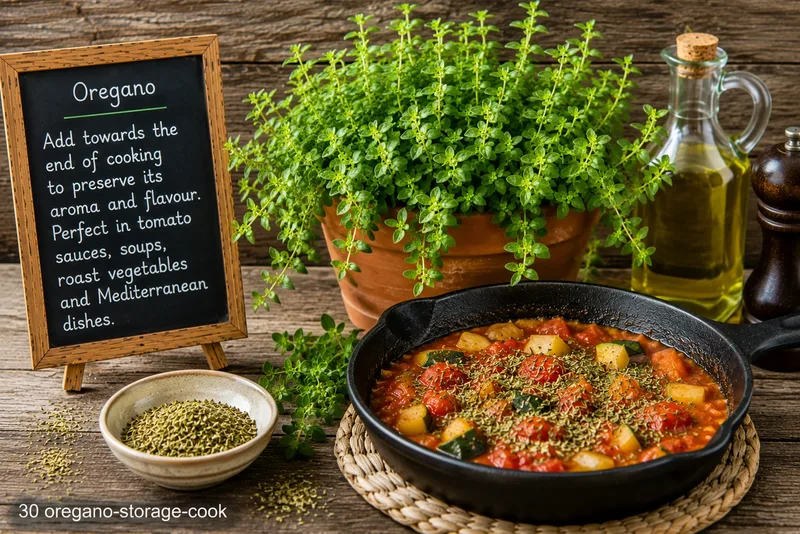
Add oregano towards the end of cooking to preserve its aroma and flavour — long cooking dulls its punch. It is a natural match for tomato-based sauces, roasted vegetables, and Mediterranean dishes, and works well both fresh and dried straight into the pan.
13 Expert Tips
💡 Dry a Full Season's Batch
Dry a large batch of oregano in July–August and you will not need to buy dried oregano for at least 2 years — home-dried is incomparably better than anything available commercially.
💡 Overwinter Marjoram Indoors
Grow sweet marjoram in a pot and bring it inside in September — it will continue producing fresh leaves on a bright windowsill well into winter.
💡 Plant Greek oregano specifically for drying — its higher essential oil content makes it significantly more flavourful dried than common oregano.