⚡ Quick facts
- Difficulty
- Moderate
- Crop type
- Tender Annual
- Position
- Full Sun — Greenhouse or Sheltered Patio
- Soil
- Rich, Well-Drained, Moisture-Retentive
- Container friendly
- Yes — excellent in pots
- Greenhouse recommended
- Yes, especially for chillies
- Outdoor suitable
- South UK only, warm summers
- Frost hardy
- No
01 About
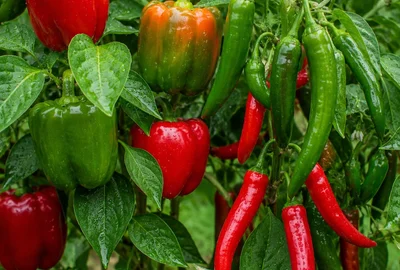
Growing your own peppers and chillies transforms them from supermarket commodities into something genuinely exciting. A sun-warmed sweet pepper picked at full colour tastes nothing like the pallid alternatives in a shop. Chillies are even more satisfying — dozens of varieties exist that never appear commercially, from the sweet smokiness of a Padrón to the fierce, fruity heat of a Ring of Fire. Both are tender plants that need warmth, but with a propagator, a sunny windowsill, and patience, they are well within reach of any UK grower.
02 What to Grow
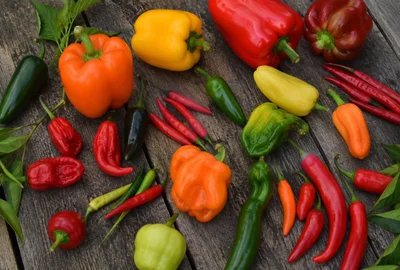
Peppers and chillies are the same species — Capsicum annuum — and are grown in exactly the same way. The distinction is one of heat. Sweet peppers (bell peppers and pointed types) contain no capsaicin and can be eaten raw, roasted, or stuffed. Chillies range from mildly warm to ferociously hot, measured on the Scoville scale. Within each group, variety choice determines colour, size, heat level, and how well the plant performs in UK conditions. The golden rule: match the variety to the warmth you can reliably provide.
03 Varieties
The number of varieties shown for each crop is based on UK consumption data (2025/26) — the more popular the crop, the more variety choices we include.
🫑 Sweet Bell & Pointed
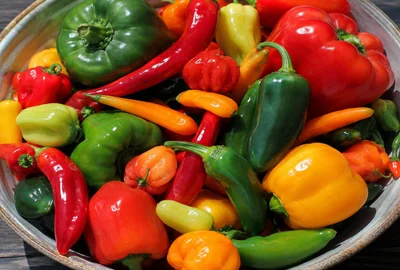
No heat whatsoever. Rich, sweet flavour that intensifies as fruits ripen from green through yellow, orange, and red. Harvest green for a sharper taste or leave to fully colour for maximum sweetness. All real-life photography.
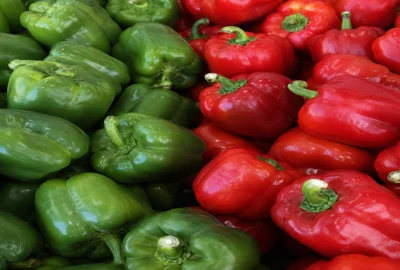
California Wonder
Sweet Bell
The classic thick-walled square bell pepper. Green to deep red. Reliable in a greenhouse. Large, meaty fruits with excellent sweet flavour when fully ripened. A heritage variety and the benchmark for bell peppers.
- Greenhouse
- Heritage
- ⭐ Flavour
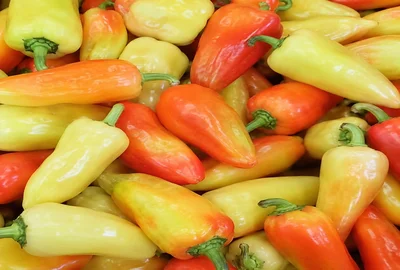
Gypsy F1
Sweet Pointed
Early, prolific, and one of the most reliable sweet peppers for UK growing. Thin-walled, pale yellow ripening to orange-red. Outstanding flavour. Performs outdoors in a sheltered spot in southern UK.
- F1
- Outdoor
- ⭐ Flavour
- Beginners
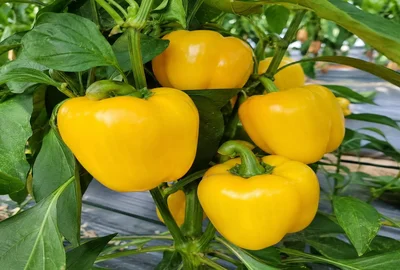
Mohawk F1
Sweet Bell · Compact
Very early-maturing compact plant ideal for containers and sheltered patios. Yellow fruits with a sweet, mild flavour. One of the most reliable outdoor sweet peppers for cooler UK regions including the North.
- AGM
- F1
- Container
- Outdoor
- Beginners
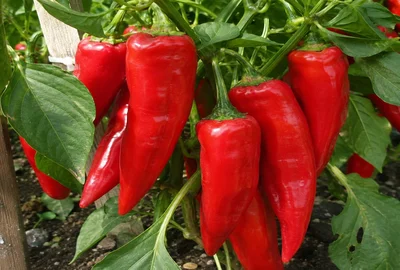
Marconi Rosso
Sweet Italian · Long
Long, tapered Italian sweet pepper ripening to deep red. Thin-skinned with outstanding flavour when roasted. One of the finest sweet peppers for the table — superb grilled, stuffed, or in antipasti. Needs greenhouse warmth in UK.
- Greenhouse
- Heritage
- ⭐ Flavour
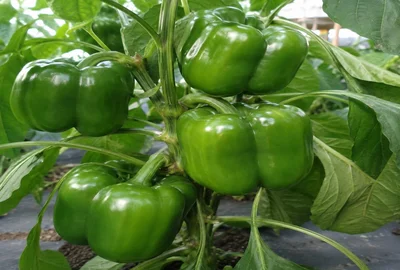
Bell Boy F1
Sweet Bell
Reliable, high-yielding bell pepper producing blocky four-lobed fruits that ripen from green to red. Good disease resistance. A solid all-rounder for greenhouse growing and one of the most productive bell pepper varieties for UK growers.
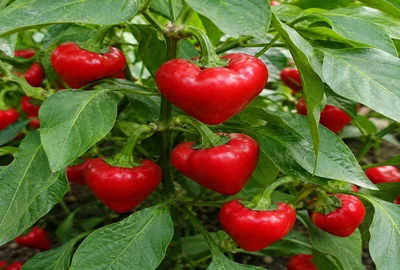
Lipstick
Sweet Pimento
Small, heart-shaped pimento-type pepper, deep red at maturity. Exceptionally sweet, thick-walled flesh with almost no seeds. One of the sweetest peppers you can grow. Matures earlier than most bell types. Superb eaten raw or roasted.
- Container
- Outdoor
- ⭐ Flavour
🌶 Mild & Medium Chillies
Mild warmth to medium heat (500–15,000 SHU). The most versatile chillies for cooking — roasting, stuffing, pickling, and preserving. Suitable for those who want flavour with manageable heat. All real-life photography.
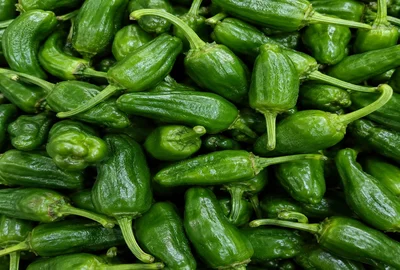
Padrón
Mild Chilli
The famous Spanish tapas pepper. Small, dark green, and mostly mild — but roughly one in ten is searingly hot without warning. Fried whole in olive oil and sea salt. Fast-growing, prolific, and easy to grow in a pot on a sunny patio.
- Container
- ⭐ Flavour
- Greenhouse
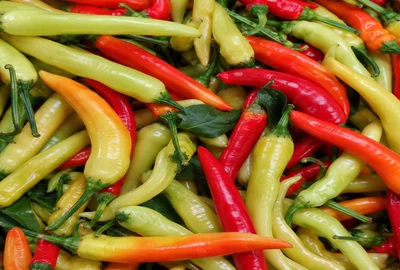
Hungarian Hot Wax
Medium Chilli
Long, waxy, pale yellow fruits ripening through orange to red. Medium heat (5,000–10,000 SHU). Incredibly prolific and reliable in UK conditions — one of the easiest chillies to grow outdoors. Excellent for pickling, roasting, and stuffing.
- AGM
- Outdoor
- Greenhouse
- Container
- ⭐ Flavour
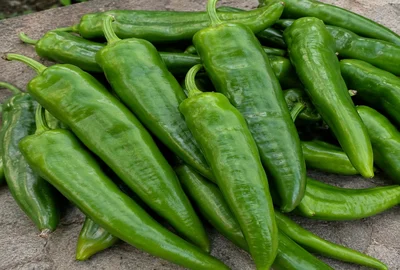
Anaheim
Mild Chilli
Large, mild New Mexico chilli (500–2,500 SHU). Long green fruits to 20cm, ripening red. Outstanding for roasting, stuffing, and making chilli verde. The workhorse of New Mexican cuisine. Needs greenhouse warmth in the UK.
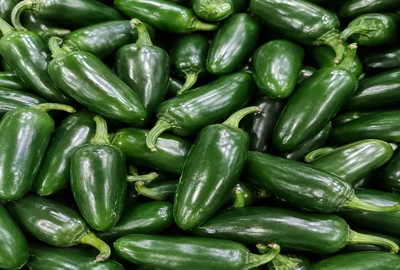
Jalapeño
Medium Chilli
The world's most recognised chilli. Dark green, thick-walled, medium heat (2,500–8,000 SHU). Harvest green for classic heat or leave to ripen red for a sweeter, fuller flavour. Prolific and reliable in UK containers and greenhouse. Essential for salsas and nachos.
- Greenhouse
- Container
- ⭐ Flavour
- Beginners
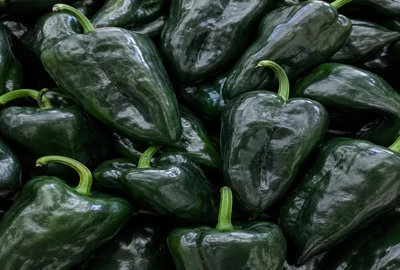
Poblano
Mild Chilli · Large
Large, dark green, heart-shaped mild chilli (1,000–2,000 SHU). The traditional Mexican chilli for stuffing — chiles rellenos and mole poblano. Meaty, thick walls with complex earthy flavour. Dried, it becomes the ancho chilli. Needs greenhouse warmth in UK.
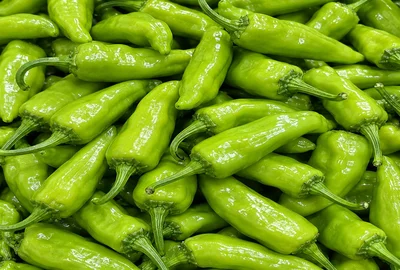
Friggitello
Sweet Frying Chilli
The classic Italian frying pepper — small, thin-walled, pale green, very mild to almost sweet (100–500 SHU). Fried whole in olive oil until blistered and served as an antipasto or side dish. Very prolific and reliable in UK greenhouse or container. Exceptionally good flavour.
- AGM
- Greenhouse
- Container
- ⭐ Flavour
🔥 Hot & Very Hot Chillies
High heat (20,000 SHU and above) up to extreme heat. For serious chilli growers and heat enthusiasts. All produce prolifically in a UK greenhouse or sunny container. All real-life photography.
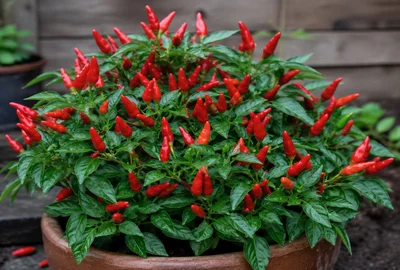
Apache F1
Hot Chilli
RHS Award of Garden Merit. Compact, bushy plant smothered in small, conical, fiery fruits (80,000 SHU). Outstanding for containers and patios — one of the best all-round hot chilli varieties for UK growing. Very prolific over a long season.
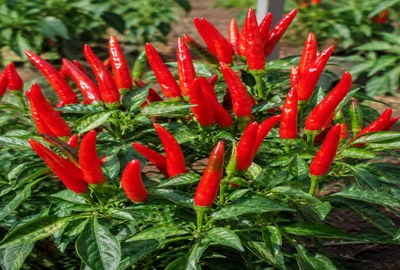
Ring of Fire
Hot · Cayenne
A prolific cayenne-type chilli producing masses of slender, upright fruits that ripen from green to bright red. Very hot (70,000–80,000 SHU). Dries superbly — string into a ristra or dry whole for chilli flakes and powder.
- Outdoor
- Container
- Greenhouse
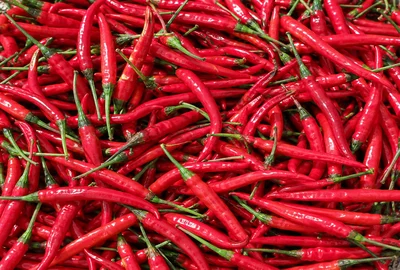
Cayenne
Hot · Classic
The classic long red chilli. Thin-walled, very hot (30,000–50,000 SHU), prolific, and one of the easiest hot chillies to grow in UK conditions. Dries well whole or ground into powder. The basis of most commercial hot sauces.
- Outdoor
- Container
- Greenhouse
- Beginners
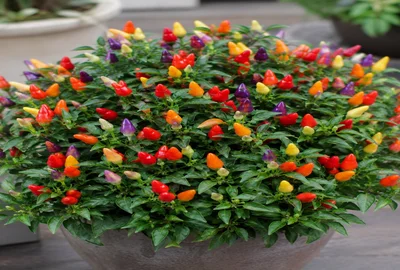
Prairie Fire
Very Hot · Ornamental
Extraordinarily prolific compact plant producing masses of tiny upright fruits that colour from cream through yellow, orange, and red simultaneously. Very hot (70,000–80,000 SHU). Highly ornamental — makes a spectacular pot plant as well as a productive chilli.
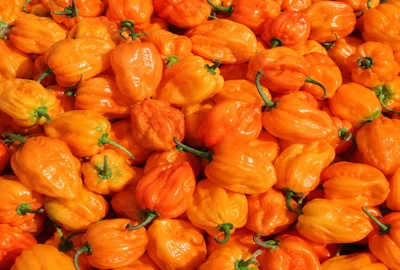
Habanero
Very Hot · Fruity
Small, lantern-shaped fruits with a distinctive fruity, floral aroma and extreme heat (100,000–350,000 SHU). The habanero is one of the most flavourful as well as hottest chillies. Orange or red at maturity. Needs a greenhouse in UK for reliable cropping.
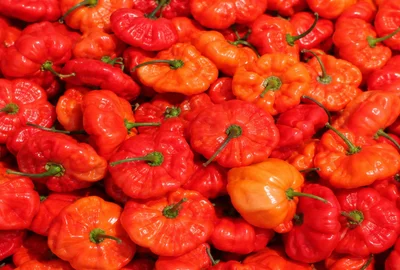
Scotch Bonnet
Very Hot · Caribbean
The fiery heart of Caribbean cooking — jerk seasoning, hot sauces, and pepper sauce. Distinctive flattened, bonnet-shaped fruits in red, orange, or yellow. Extreme heat (100,000–350,000 SHU) with a characteristic fruity sweetness. Needs greenhouse warmth in UK.
04 Where to Source
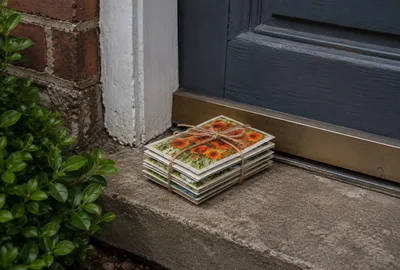
Pepper and chilli seeds are available through online specialist seed companies, garden centres, and increasingly at farmers markets and plant sales. The widest variety selection — including hundreds of chilli varieties — is only available by post.
📬 Seeds by Post
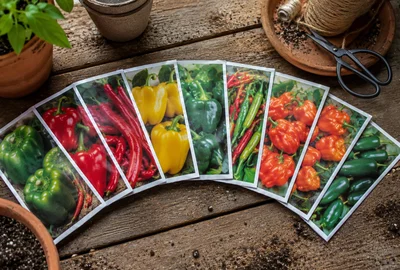
Online specialist seed companies offer extraordinary variety selection — particularly for chillies. Companies like specialist chilli seed companies carry varieties unavailable anywhere else. Order in December or January — popular varieties sell out early. Read packets carefully for heat level and UK growing suitability.
🏪 Garden Centres
Most garden centres stock seeds from February and plug plants from April. Selection focuses on reliable, popular varieties — Apache, Gypsy, and a few supermarket-style bell peppers. Plug plants offer a 4–6 week head start and suit growers without a heated propagator.
Timing tip: Order seeds in January and February. Popular varieties sell out quickly. Garden centres and markets are a reliable backup from April onwards.
05 Planting Options
🏠 Greenhouse
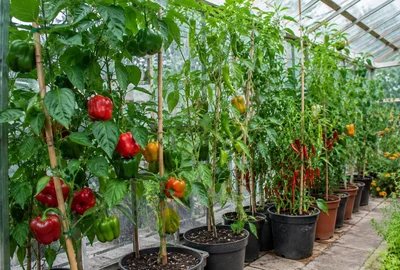
A greenhouse provides the most reliable results for all peppers and chillies in the UK. Consistent warmth — minimum 15°C at night, 20–25°C in the day — produces bigger plants, heavier crops, and allows varieties that would struggle outdoors. Plant into grow bags (2 per bag), large containers, or greenhouse border soil enriched with compost. Ensure excellent ventilation in hot weather — above 30°C, flowers drop without setting fruit. Maintain high humidity around plants to deter red spider mite.
Suitable varieties: All varieties. Particularly recommended for California Wonder, Padrón, Anaheim, and all hot chilli varieties.
🪣 Containers & Patio
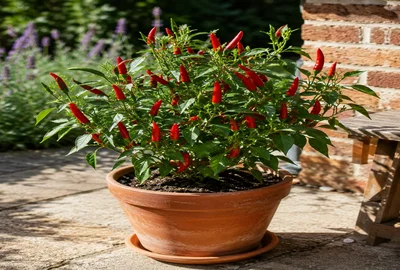
Peppers and chillies are ideally suited to container growing. A 25–30cm pot holds one plant comfortably. Use peat-free multipurpose compost mixed with 20% perlite for good drainage and aeration. Place in the sunniest, most sheltered spot available — south-facing wall is ideal. The great advantage of containers is mobility: move plants under cover on cold nights or when temperatures dip. Water daily in warm weather and feed weekly with a high-potash liquid feed once flowers appear.
Suitable varieties: All compact varieties — Apache F1, Mohawk F1, Gypsy F1, Ring of Fire, Cayenne, Padrón. All perform excellently in 25–30cm pots.
🌍 Outside in Ground
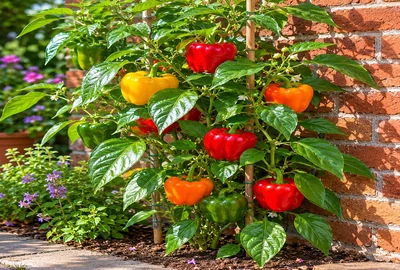
Growing peppers directly in open ground is feasible in the South and South-West of England in a warm summer, but requires a very sheltered, south-facing position — ideally against a warm wall. Dig in plenty of well-rotted compost and use black polythene mulch to warm the soil. Harden off thoroughly over 2 weeks before planting out. Even in favourable conditions, yields are generally lower than greenhouse or container-grown plants. This method is not recommended north of the Midlands.
Suitable varieties: Gypsy F1, Mohawk F1, Cayenne, Ring of Fire. South UK and South-West only. Not recommended for Scotland or Northern England.
06 Companion Planting
✅ Grow nearby
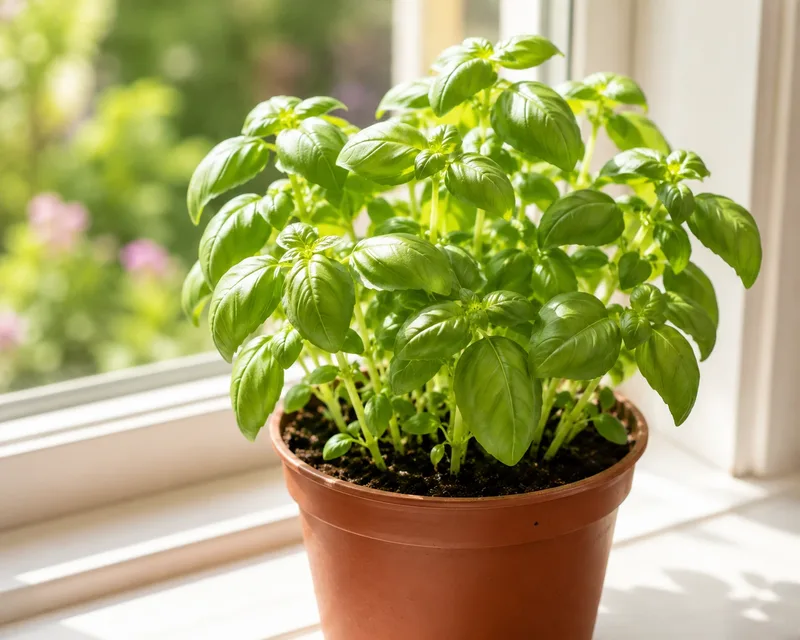
Classic Mediterranean companion. Basil is thought to repel aphids and improve the flavour of peppers grown nearby. Both share a love of warmth, shelter, and consistent watering.
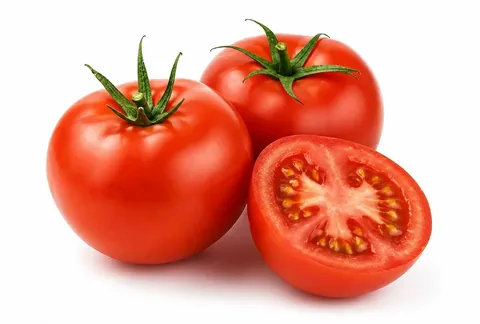
Peppers and tomatoes share similar growing requirements and can be grown together in a greenhouse or polytunnel. They share no significant pests or diseases.
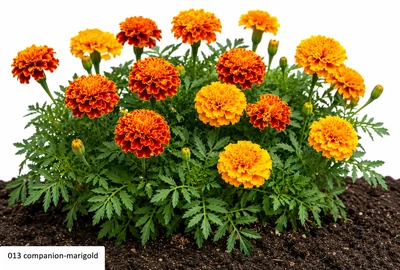
🌸 Marigolds
French marigolds (Tagetes) deter whitefly and aphids in the greenhouse — highly effective when planted alongside peppers and tomatoes in protected conditions.
❌ Keep apart
- 🌿 Fennel — Root chemicals from fennel inhibit growth of most nearby vegetables including peppers.
- 🥔 Potatoes — Same family — Solanaceae. Share diseases including blight. Keep well apart and rotate each year.
- 🍑 Apricots — Allelopathic — apricot root secretions are toxic to many solanaceous plants including peppers.
07 Sowing — How To
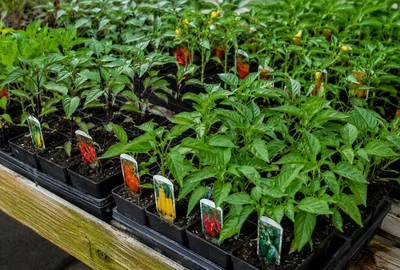
Peppers and chillies need the earliest possible start and the most warmth of any UK vegetable crop. Sow in February or early March — even late January for chillies, which need a longer growing season to ripen fully. A heated propagator at 21–24°C is not optional; it is the difference between reliable germination in 7–10 days and patchy results over 3–4 weeks. Sow into module trays or individual 7cm pots.
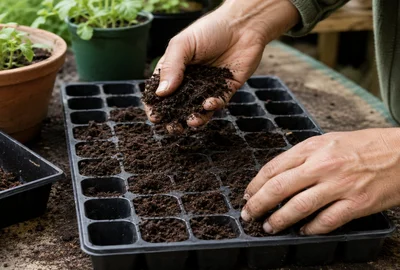
Fill trays
Fill module trays or 7cm pots to within 1cm of the rim with moist seed compost. Firm gently. Modules give each seed individual space and avoid root disturbance later.
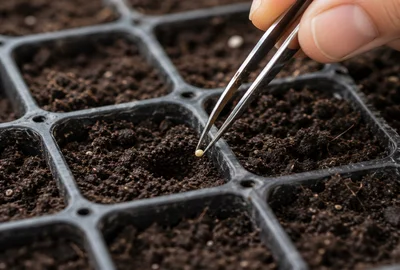
Sow seeds
Place one seed per module, 5mm deep. Pepper seeds are small — handle with tweezers or a damp fingertip. Chilli seeds in particular benefit from soaking in warm water for 12 hours before sowing.
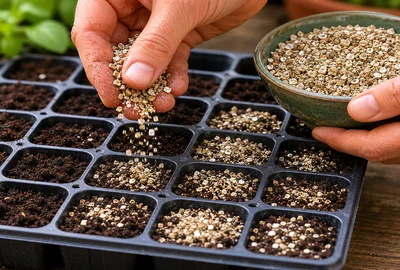
Cover lightly
Cover with a 5mm layer of vermiculite. This retains moisture without forming a crust that seedlings struggle to push through.
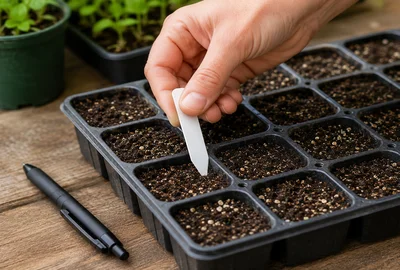
Label clearly
Label every tray with variety name and sowing date. When growing multiple chilli varieties with similar-looking seedlings, labelling is essential.
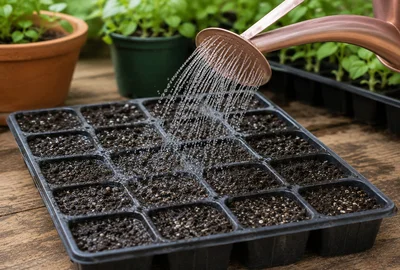
Water gently
Moisten with a fine rose. The compost should be uniformly damp but not waterlogged — soggy conditions cause seed rot before germination.
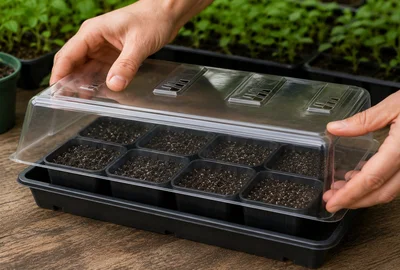
Cover and warm
Place in a heated propagator at 21–24°C. This is the critical step — peppers germinate poorly below 18°C and very slowly at 15°C. Check daily.
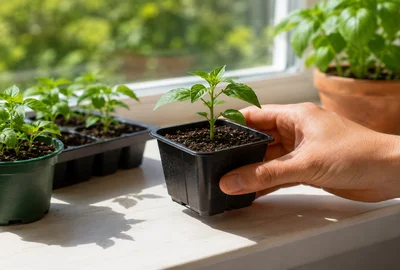
Move to light
Once seedlings emerge (7–14 days), move immediately to the brightest available windowsill. Low light causes spindly, weak seedlings that never fully recover.
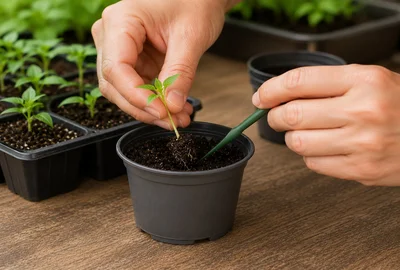
Prick out
When seedlings have their first true leaves (2–3 weeks after germination), prick out into individual 7cm pots. Handle by a seed leaf, never the stem — pepper stems are fragile.
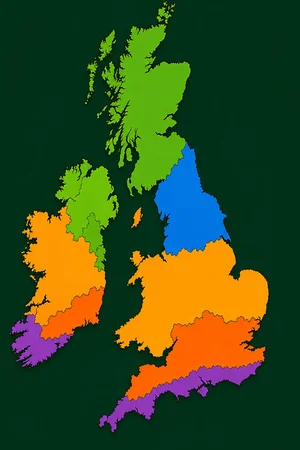
Regional sowing timing| Region | Sow / plant | Harvest | Notes |
|---|
| Scotland & Far North | Feb–Mar | Jun–Oct | Heated propagator essential; long season needed for chillies to ripen · Late Feb to mid-March |
|---|
| Northern England | Feb–Mar | Jun–Oct | Propagator at 21°C+ essential; window sill viable from late Feb · Mid-Feb to early March |
|---|
| Midlands & Wales | Feb–Mar | May–Oct | Chillies benefit from a late-January start for a longer season · Early Feb to early March |
|---|
| Ireland & Isle of Man | Feb–Mar | May–Oct | Chillies benefit from a late-January start for a longer season · Early Feb to early March |
|---|
| South & SE England | Jan–Feb | May–Oct | Earliest reliable UK start; chillies can begin late January · Late Jan to late Feb |
|---|
| South Coast & SW | Jan–Feb | May–Oct | Best UK region for peppers; earliest start worthwhile · Late Jan to mid-Feb |
|---|
08 Soil Requirements
- pH
- 6.0–6.8
- Best
- Loam, Sandy loam
- Tolerates
- Clay loam
- Avoid
- Waterlogged, Pure sand
💡 Similar to tomatoes — warm, fertile, well-drained.
09 Ongoing Care
💧 Watering
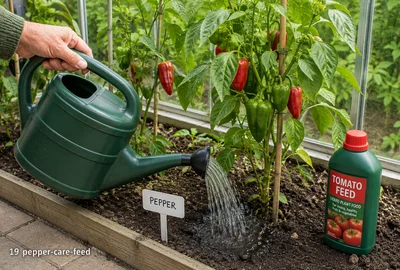
Keep peppers consistently moist — erratic watering causes fruit to drop and blossom end rot. Water at the base in the morning. In a greenhouse or polytunnel, daily watering may be needed in summer. Allow the compost surface to dry slightly between waterings to prevent waterlogging.
🌿 Feeding
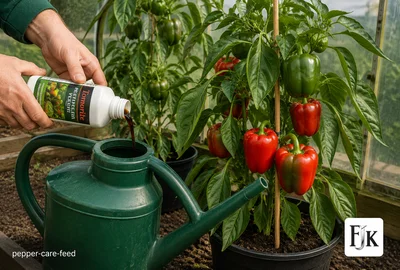
Once the first flowers appear, feed every two weeks with a high-potash liquid feed (tomato fertiliser). Peppers are hungry when fruiting — regular feeding sustains yield and encourages even ripening from green to red, yellow, or orange.
🎋 Supporting
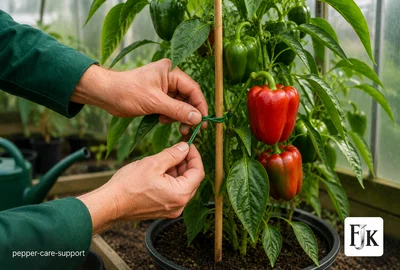
Stake pepper plants with a cane as they develop — heavy fruit loads will cause branches to snap. Use soft ties and check regularly as plants grow. In a greenhouse, plants can reach 60–90cm and need firm support to carry a full crop.
🌶️ Harvesting
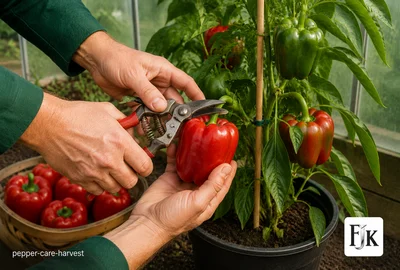
Pick peppers green for an earlier, larger harvest, or leave to ripen to red, yellow, or orange for sweeter, more nutritious fruits. Ripening takes 2–3 weeks longer. Use scissors or a sharp knife — never pull, which damages the plant. Regular picking encourages more fruit to set.
10 Watch Out For
WarningRed spider mite is the most serious greenhouse pest for peppers and chillies. Look for pale, mottled stippling on the upper leaf surface and fine webbing on the undersides. Mist foliage daily to maintain humidity and ensure good ventilation. Introduce biological controls (Phytoseiulus persimilis) early in the season for reliable management. Aphids colonise growing tips in spring — check weekly and remove colonies by hand or with a blast of water before populations build.
🐛 Insects & pests
- 🐜 Aphids (Blackfly & Greenfly) — Curled, distorted, or stunted growing tips — aphids inject saliva that causes leaf curl to protect them
- 🕷 Spider Mite — Fine, silky webbing on the underside of leaves and between growing tips — the definitive identification sign
- 🤍 Mealybug — White, fluffy or mealy patches in leaf axils, stem joints, and under leaves — the insects themselves
- 🐌 Slugs & Snails — Silver slime trails on leaves, soil, and pots — often the first sign before damage is found
🍄 Diseases to watch
- 🌿 Mosaic Virus (TMV / CMV) — Tobacco mosaic virus (TMV) and Cucumber mosaic virus (CMV) are among the most widespread plant viruses affecting vegetable crops worldwide. TMV is extraordinarily stable — it can remain viable on contaminated hands and tools for years, and even survives in processed tobacco. There is no cure; infected plants must be destroyed.
- 🩶 Botrytis (Grey Mould) — Botrytis cinerea (grey mould) is the most ubiquitous fungal pathogen in temperate gardens — present in virtually every garden soil and on plant debris. It becomes a disease only when conditions favour it: cool, humid, poorly ventilated environments with damaged or senescent plant tissue. In a greenhouse in autumn it can destroy an entire tomato or grape crop.
Full identification and treatment advice is in the Pests and Diseases sections.
11 Storage & Preserving
🫑 Fresh Storage
Sweet peppers keep in the fridge for up to a week. Store whole and unwashed in the salad drawer. Cut peppers deteriorate rapidly — wrap cut surfaces tightly in cling film and use within 2–3 days. Chillies keep for 2–3 weeks refrigerated. At room temperature, sweet peppers last 3–5 days in a cool spot. Do not store sweet peppers at temperatures below 7°C for extended periods — cold damage causes pitting and accelerated softening.
🔥 Roasting & Freezing
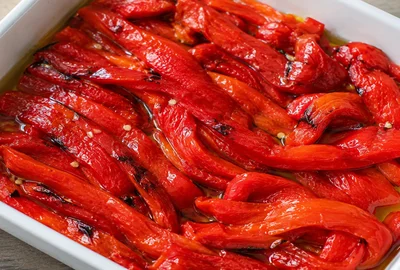
Roasting is the finest way to deal with a sweet pepper glut and transforms their flavour. Halve, deseed, brush with olive oil, and roast at 220°C until charred and collapsed. Peel off the skins while warm. Roasted peppers freeze excellently — pack flat in freezer bags, label, and freeze for up to 12 months. Use from frozen in pasta, sauces, and antipasti. Chillies also freeze whole without any preparation — simply bag, label, and freeze. Grate from frozen directly into dishes.
🫙 Preserves & Pickles
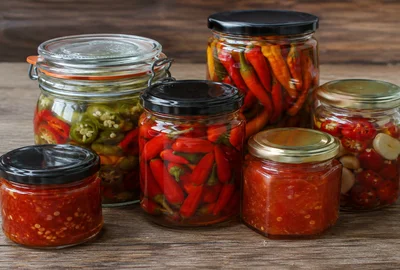
Pickled chillies are one of the most satisfying preserves, and sweet chilli jam is an excellent use of a mixed glut of chillies and sweet peppers. Follow a tested recipe.
🌶 Drying Chillies
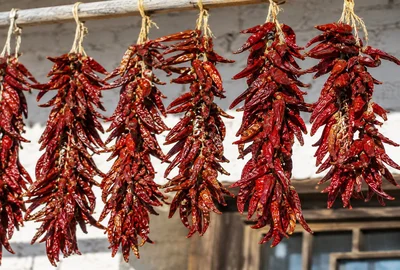
Drying is the best long-term preservation method for chillies and transforms them into a versatile pantry ingredient. String whole chillies on a length of thread and hang in a warm, airy spot for 3–6 weeks until fully dry and papery. Alternatively, dry in an oven at 60°C for 4–6 hours. Store whole in an airtight jar for up to 2 years. Grind dried chillies in a spice grinder for homemade chilli powder or flakes. Smoked paprika is made from dried, smoked red peppers — a wood-chip smoker produces superb results.
12 Expert Tips
💡 Chilli seeds in particular benefit significantly
Chilli seeds in particular benefit significantly from soaking in warm water for 12–24 hours before sowing. This softens the seed coat and can reduce germination time by several days. Use water at about 30°C and leave to cool naturally.
💡 The most common cause of poor
The most common cause of poor germination is insufficient heat. 21°C is the minimum; 24°C is better. If germination has not occurred within 3 weeks, the compost temperature was almost certainly below target throughout.
💡 Chilli plants are perennial and can
Chilli plants are perennial and can be overwintered on a frost-free windowsill. Cut back hard in October, reduce watering to almost nothing, and bring back into growth in February. Second-year plants are significantly larger and more productive than seedlings.
💡 Always wash hands thoroughly after handling
Always wash hands thoroughly after handling hot chillies — capsaicin is not water-soluble and transfers easily. Wear disposable gloves when processing large quantities or very hot varieties. Rubbing eyes after handling chillies is intensely painful.
13 Common Mistakes
⚠ Sowing
- Sowing too late — chillies especially need a long season; a March start produces poor crops
- Cold propagation — temperatures below 18°C cause patchy germination or complete failure
- Overwatering freshly sown trays — damp not wet; waterlogged compost rots seeds before germination
- Low light after germination — seedlings become irreversibly leggy within days on a dark windowsill
⚠ Ongoing Care
- Letting the compost dry out completely — causes flower drop and bitterness in sweet peppers
- Feeding with high-nitrogen fertiliser — promotes leaf growth at expense of fruit production
- Ignoring red spider mite until damage is severe — by the time webbing is obvious, the infestation is advanced
- Not hardening off before planting outdoors — tender seedlings placed outside without gradual acclimatisation suffer cold shock
- Harvesting all fruits at once — leaving some on the plant encourages continued production