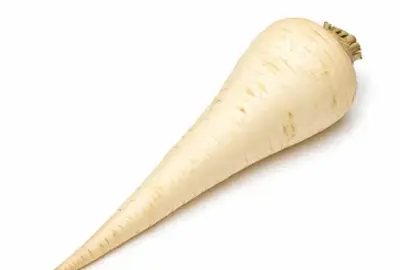
Gladiator F1
Hybrid · Seed
The most reliable parsnip for UK gardens. Vigorous hybrid with smooth white roots and good canker resistance. Excellent germination.
- AGM
- F1
- Beginners
Pastinaca sativa
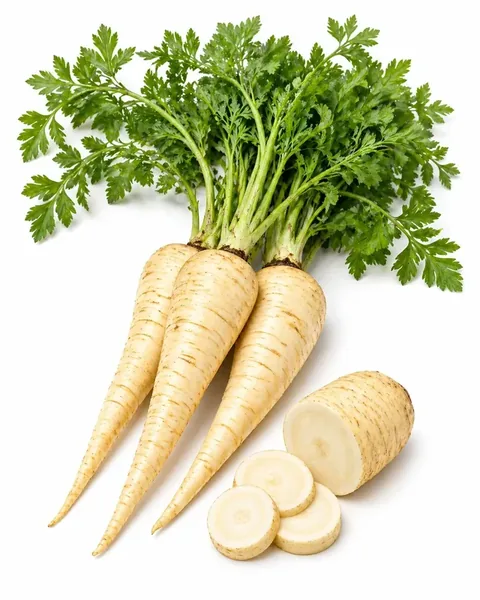
The most patient crop in the garden. Parsnips take all year but improve dramatically after the first frost, which converts their starches to sugars. Worth every minute of the wait.
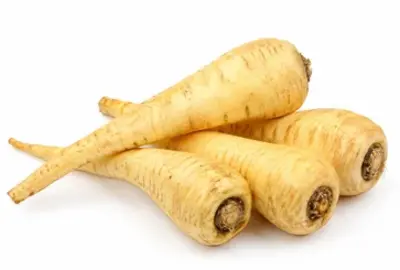
Modern F1 hybrids like Gladiator and Javelin offer the most reliable germination and uniform roots, making them the safest choice for most gardeners. Heritage varieties like Tender and True and The Student have exceptional flavour but need deeper, more carefully prepared soil. For shallow or stony ground, choose short-rooted White Gem. Canker-resistant varieties like Avonresister are worth considering in wetter gardens.
The number of varieties shown for each crop is based on UK consumption data (2025/26) — the more popular the crop, the more variety choices we include.
Modern F1 varieties with the best germination, uniformity, and disease resistance for UK gardens.
The most reliable parsnip for UK gardens. Vigorous hybrid with smooth white roots and good canker resistance. Excellent germination.

A smooth, refined hybrid with good uniformity and a clean white finish. Useful for kitchen use and show benches alike.
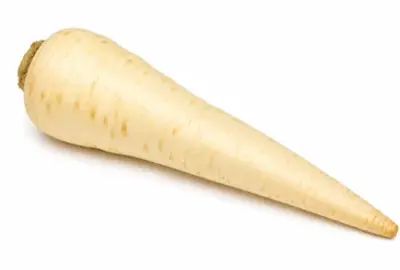
A modern hybrid producing very uniform, smooth-skinned roots with excellent autumn performance.
Older open-pollinated varieties with exceptional flavour, best in deep, well-prepared soils.

A long-established variety with long tapering roots and exceptional flavour. The finest-tasting parsnip for deep UK soils.
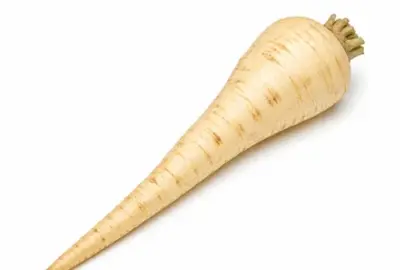
A classic heritage parsnip with long roots and strong traditional flavour. Suited to deep, stone-free soil.

A very old heritage variety with broad shoulders and excellent traditional flavour. Best in deep, well-prepared soil.
Varieties bred for resistance to parsnip canker, useful in wetter gardens and heavier soils.

A British-bred variety selected for resistance to parsnip canker. Medium-length roots with sweet flavour, useful in wetter UK gardens.
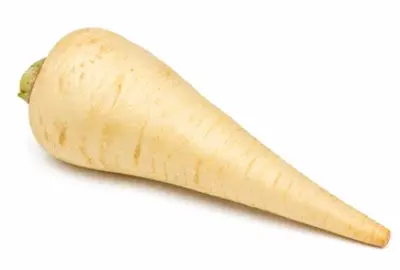
A high-quality hybrid with smooth wedge-shaped roots and good disease resistance. Sweet flavour after frost.
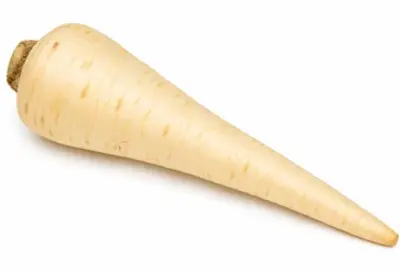
A shorter-rooted parsnip useful for shallower or heavier soils. Broader white roots with good flavour, easier to lift.
Newer hybrids and open-pollinated varieties combining reliability with excellent kitchen quality.

A uniform hybrid producing smooth, well-filled roots. Dependable main-season crop with good flavour.

A strong-growing hybrid with smooth white roots and good vigour. Performs well in fertile UK soils.

A modern variety producing smooth, clean roots with good uniformity. Sweet flavour after cold weather.
Parsnip seed must be bought fresh each year — old seed has notoriously poor germination. Widely available from garden centres and online from January. Never sow seed left over from the previous season.
Online seed companies offer the widest range of parsnip varieties — including F1 hybrids, canker-resistant selections, and heritage types unavailable in garden centres. Order in January. Always buy new seed — parsnip is the one vegetable where year-old stock genuinely fails.
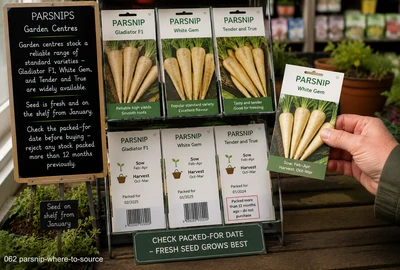
Garden centres stock a reliable range of standard varieties — Gladiator F1, White Gem, and Tender and True are widely available. Seed is fresh and on the shelf from January. Check the packed-for date before buying — reject any stock packed more than 12 months previously.
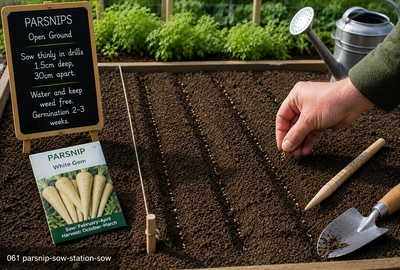
Open ground is the only truly appropriate method for parsnips — they need a long, uninterrupted root run of at least 30–45cm depth. Prepare the bed deeply in autumn, removing every stone and breaking up compaction. Apply well-rotted compost; never fresh manure. Station-sow 3 seeds per position, 15cm apart in rows 30cm apart. Thin to the strongest seedling at the 2–3 leaf stage. Germination takes 3–4 weeks — be patient.
Suitable varieties: All varieties. Long-rooted types like Tender and True and Gladiator F1 need the deepest, most stone-free soil. White Gem suits shallower beds.
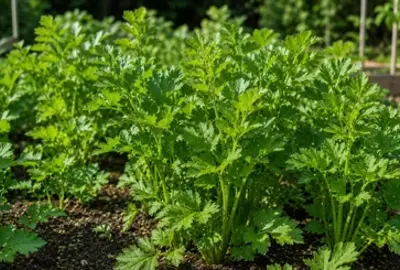
Raised beds filled with deep, stone-free growing medium are excellent for parsnips — they warm earlier and drain freely. Fill to at least 40cm depth with a 50/50 mix of topsoil and well-rotted compost. The loose, uniform medium produces straight, well-shaped roots that lift cleanly without breaking. Sow direct as for open ground from late March.
Suitable varieties: All varieties. F1 hybrids like Javelin and Gladiator perform particularly well in raised beds where soil preparation is more easily controlled.
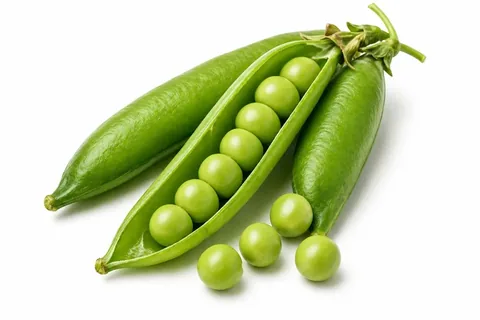
Peas fix nitrogen that benefits parsnips sown in the same bed. Both are early-season crops and their timing works well together in the same bed over successive years.
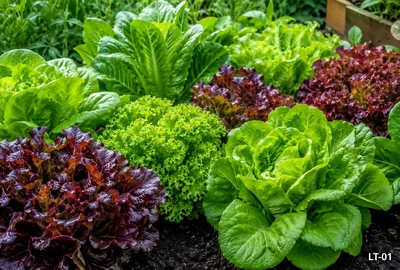
Slow-growing parsnips can be interplanted with quick lettuce which matures and is harvested before parsnips need the full space. A good use of ground during parsnip's long growing season.
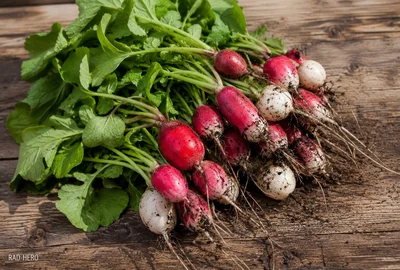
Fast-germinating radishes are sometimes used as row markers when sown with slow-germinating parsnip seed. The radishes mark the row, prevent crusting, and are harvested before the parsnips compete.
Parsnips are always sown direct — they cannot be transplanted. The critical rule is to use fresh seed every year without exception: viability drops sharply after the first season. Sow when soil temperature reaches 7°C, normally late March to April. Station sowing (3 seeds per position) wastes less seed than continuous drilling and gives better results.
Sow 3 seeds per station, 1cm deep, 10–15cm apart in rows 30cm apart. Station sowing uses less seed than drilling and makes thinning straightforward.
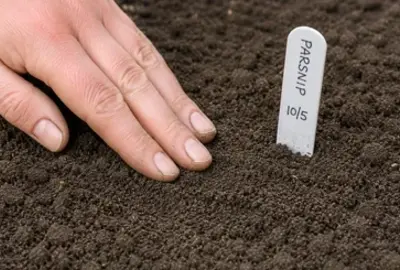
Cover to 1cm depth and firm gently. Label carefully — parsnips are notoriously slow to germinate (up to 4 weeks) and it is easy to disturb the row while waiting.
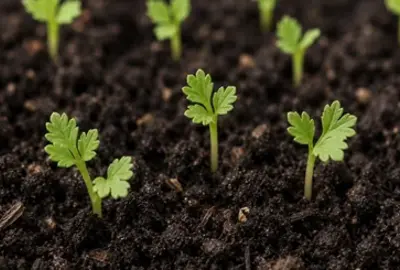
Germination takes 3–4 weeks in cool spring soils. Sow radishes in the same row as a marker crop — they germinate quickly, mark the row, and are harvested before parsnips need the space.
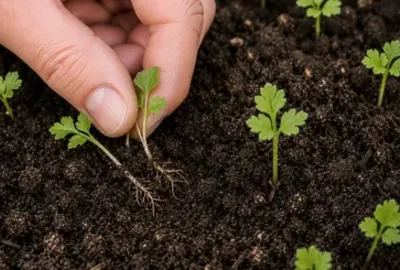
Once seedlings are large enough to handle, thin to the strongest seedling at each station. Remove weaklings cleanly at soil level — do not pull, which disturbs neighbouring roots.
Parsnips need little attention once established. Keep weed-free in early months — they are poor competitors when young. Avoid feeding with nitrogen, which promotes forked roots.
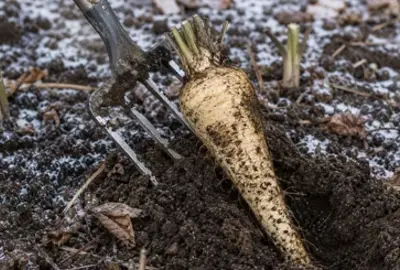
Parsnips are ready from October but taste dramatically sweeter after a hard frost, which converts starch to sugar. Leave in the ground and lift as needed through winter.

| Region | Sow / plant | Harvest | Notes |
|---|---|---|---|
| Scotland & Far North | Apr–May | Oct–Feb | Cold soils mean earlier sowing rarely succeeds — wait until April for reliable germination. Germination can take 4–5 weeks · Apr–May |
| Northern England | Mar–May | Oct–Feb | Late March to April most reliable. Soil often too cold before mid-March. Use cloches to warm ground for 2 weeks before sowing · Mar–May |
| Midlands & Wales | Mar–May | Oct–Feb | Sow from late March when soil reaches 7°C. Station sowing in March gives best establishment · Mar–May |
| Ireland & Isle of Man | Mar–May | Oct–Feb | Late March to April most reliable. Atlantic climate keeps soils cool — cloche warming helps early sowings · Mar–May |
| South & SE England | Mar–Apr | Oct–Feb | Earliest reliable sowings from mid-March. Long harvest season from October through to February · Mar–Apr |
| South Coast & SW | Mar–Apr | Oct–Mar | Mildest region — sow from mid-March, harvest through the winter months until February or March · Mar–Apr |
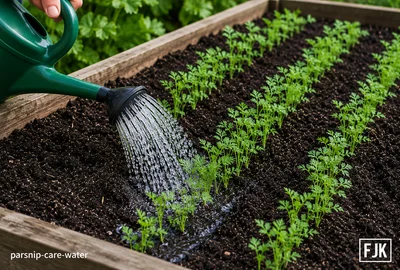
Water in dry spells during the growing season, but parsnips are more drought-tolerant than most root crops once established. Inconsistent watering after a dry period causes the roots to split. Water regularly during germination — parsnip seeds take up to 3 weeks to germinate and must not dry out.
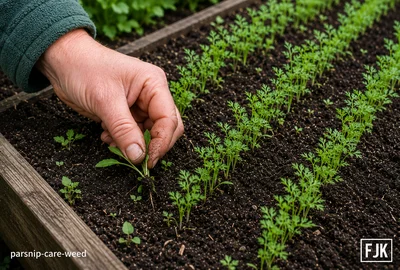
Keep the bed weed-free throughout the growing season — parsnips grow very slowly and are easily overwhelmed by weeds in their early weeks. Hoe carefully between rows and hand weed close to plants. Parsnips left in weedy ground produce poor, stunted roots.
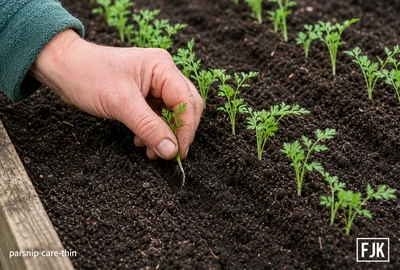
Thin seedlings to 15cm apart when they reach 2–3cm tall. Parsnips need space to develop full-sized, well-formed roots — overcrowded plants produce small, forked roots. Thin in stages rather than all at once to allow for any losses.
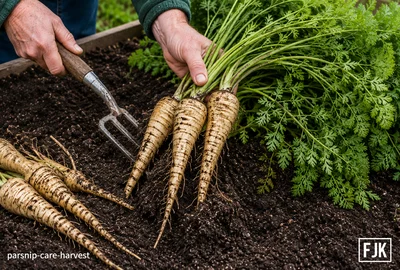
Parsnips can be harvested from autumn onwards but their flavour improves dramatically after the first hard frost — cold converts starches to sugars. Leave in the ground over winter and harvest as needed. Ease out with a fork rather than pulling, which breaks the long taproot.
Parsnip canker causes orange-brown patches near the crown. Choose resistant varieties and rotate beds each year. Always use fresh seed.
Full identification and treatment advice is in the Pests and Diseases sections.
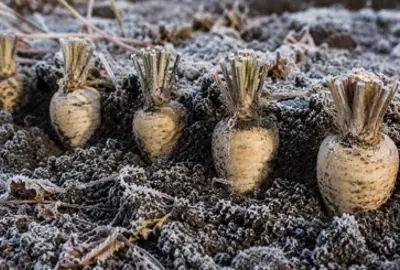
Parsnips are fully hardy and store best left in the ground until needed. Lift as required right through autumn and winter — flavour improves after frost.
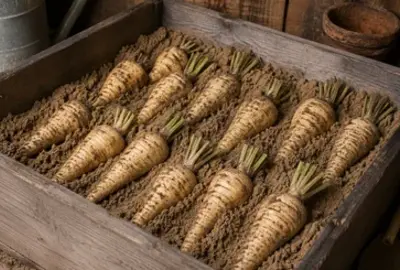
If the ground is needed, lift and store in boxes of barely damp sand in a cool, frost-free shed. Keeps for 2–3 months.
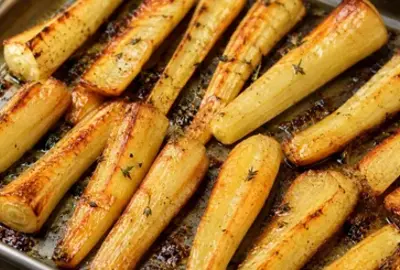
Par-boil, roast until golden and freeze in portions. Ready to finish straight from frozen — perfect for Sunday roasts.
Station sowing is far more reliable than continuous drilling for parsnips. Place 3 seeds per station, 15cm apart. This wastes less seed, produces better-spaced roots, and reduces the thinning work significantly compared to a continuous row.
Covering the row with a plank of wood after sowing retains moisture and accelerates germination — critical in dry springs when parsnip seed can fail to germinate if the surface dries out. Check daily and remove the plank the moment seedlings emerge.
Never harvest parsnips before the first hard frost. The cold converts starches to sugars and transforms the flavour entirely. A parsnip harvested in September is ordinary; the same root lifted in January after several frosts is exceptional.
Parsnip canker resistance matters most on heavy, wet soils. On free-draining, well-prepared beds, even less-resistant heritage varieties rarely suffer badly. Match variety to soil condition rather than always defaulting to the most disease-resistant F1.