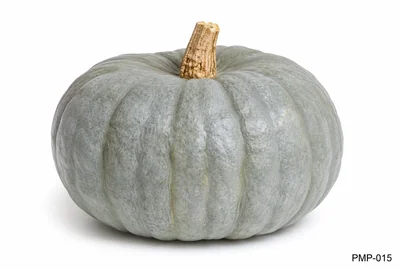
Crown Prince
Culinary squash · Seed
A superb blue-grey squash with dense orange flesh and a sweet, nutty flavour. Stores well — one of the best culinary choices for UK gardeners.
- AGM
- ⭐ Flavour
- Long Storage
Cucurbita maxima / C. pepo
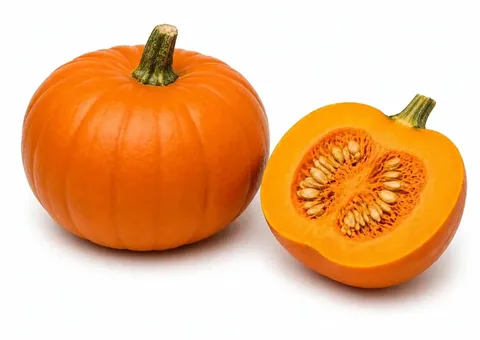
The most dramatic plant you can grow. A single pumpkin plant can spread 3–4 metres and produce spectacular fruits. Grow them for Halloween lanterns, winter soup, or the sheer spectacle of it.
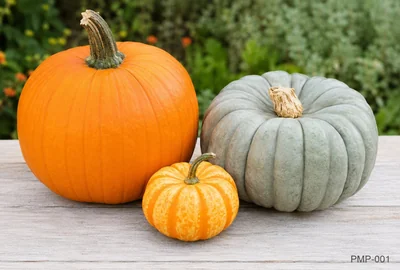
Crown Prince and Uchiki Kuri are the finest culinary choices for UK gardens — sweet, dense flesh that stores for months. Hunter F1 is the most reliable butternut for British summers. Jack O Lantern is the obvious Halloween choice. For spectacular size, Atlantic Giant needs the most space, richest soil, and most attention.
The number of varieties shown for each crop is based on UK consumption data (2025/26) — the more popular the crop, the more variety choices we include.
The finest-flavoured varieties for the kitchen — dense, sweet flesh that stores for months.
A superb blue-grey squash with dense orange flesh and a sweet, nutty flavour. Stores well — one of the best culinary choices for UK gardeners.
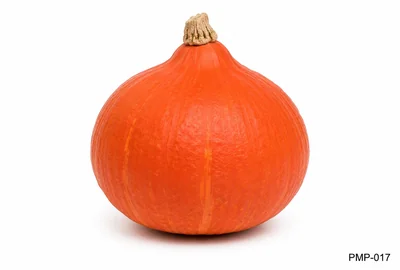
A reliable small squash with red-orange skin and sweet, chestnut-like flesh. Ripens well in UK summers and stores better than most soft-skinned pumpkins.
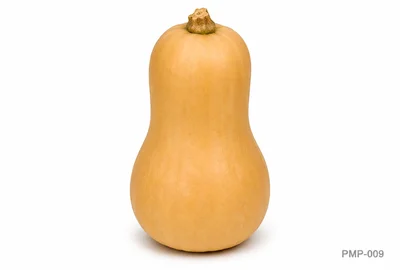
A compact butternut bred to crop in cooler UK conditions. Sweet orange flesh, good kitchen quality, more dependable than traditional butternuts.
Classic orange carving pumpkins and decorative mini types.
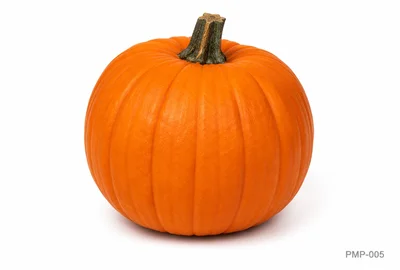
A dependable Halloween pumpkin with good size, classic orange skin and prominent ribs. Ideal for UK family gardens where carving quality matters.
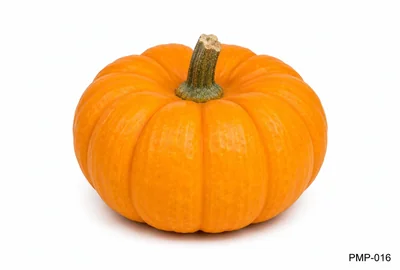
A small bright orange pumpkin that is decorative and edible. Suits smaller UK gardens and is useful for baking or autumn displays.
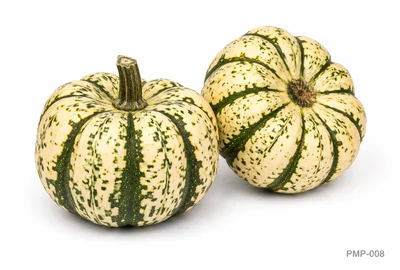
A small striped pumpkin with attractive fruits and sweet flesh. Useful for smaller plots, containers, and decorative edible harvests.
Varieties grown for impressive size, spectacular display, or heritage character.
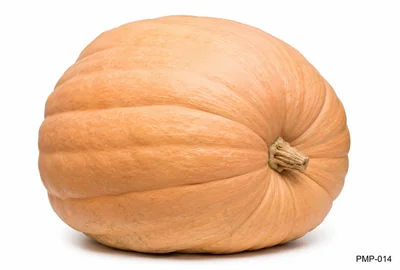
The classic exhibition pumpkin. Needs rich soil, warmth, and regular feeding in the UK, but rewards careful growing with spectacular size.
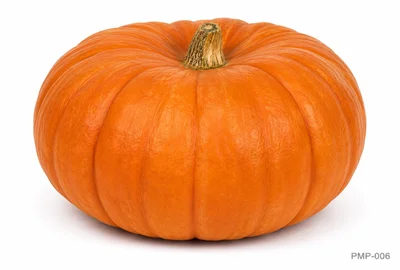
A traditional large pumpkin grown for impressive autumn fruits. Needs a warm, sheltered position and plenty of feeding. Flesh suitable for soups and baking.
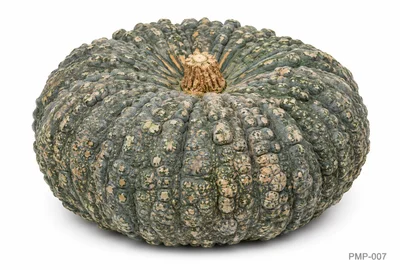
A heritage Italian squash with warty green skin and rich, sweet flesh. Excellent for soups and roasting, stores well after a warm UK summer.
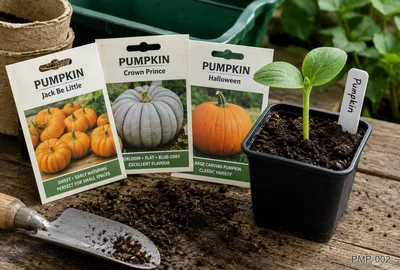
Pumpkins are always grown from seed. Buy from garden centres or online from January. Start indoors in April — outdoor sowing is too unreliable in most of the UK.
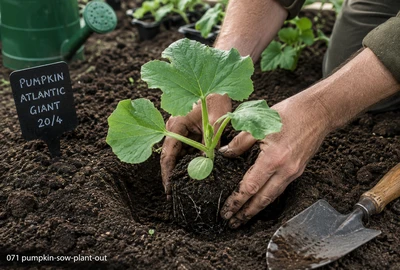
The standard method. Prepare a planting mound of well-rotted manure and topsoil — the richer the better. Plant after all frost risk has passed (late May to early June). Space at least 150–180cm apart in every direction. Train the main vine in a spiral to save space, or let it sprawl freely.
Suitable varieties: All varieties. Giant types need the most space — allow up to 3m.
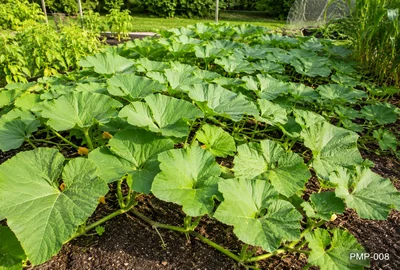
A raised mound of well-rotted manure — the traditional method for pumpkins and squash. Mound the manure and topsoil 30cm high, plant into the top, and allow vines to trail down. Excellent drainage and warmth at the root encourages rapid growth and heavy fruiting.
Suitable varieties: All pumpkin and squash types. Particularly good for Crown Prince and Uchiki Kuri.
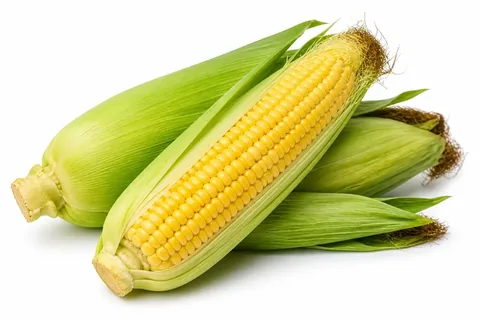
The Three Sisters combination — pumpkins spread at ground level suppressing weeds and retaining moisture around sweetcorn roots. Both are hungry, warm-season crops that thrive in rich soil.
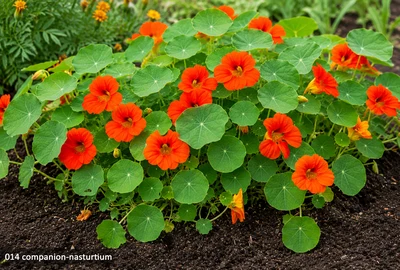
Nasturtiums planted at the edge of the pumpkin patch act as a trap crop for aphids and attract beneficial pollinating insects essential for pumpkin fruit set.
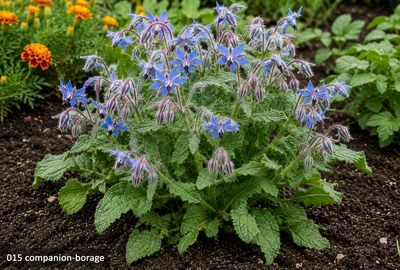
Borage attracts pollinators and predatory insects to the pumpkin patch. Its blue flowers are particularly attractive to bees, improving pollination and fruit set of pumpkin plants.
Pumpkins and winter squash need warmth to germinate and a long frost-free season to mature — in the UK that means sowing indoors in April to May and planting out only after all frost risk has passed in late May to early June. Sow one seed per pot on its side (to prevent rotting at the tip) at 20°C or above. Do not sow too early — plants grow very quickly and become pot-bound before it is safe to plant out.
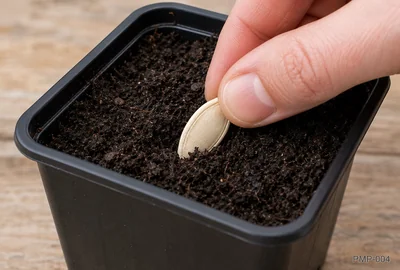
Fill 9cm pots with peat-free compost. Push one seed on its side to 2.5cm depth. Sowing on its side prevents water pooling on the flat end, which causes rotting before germination.
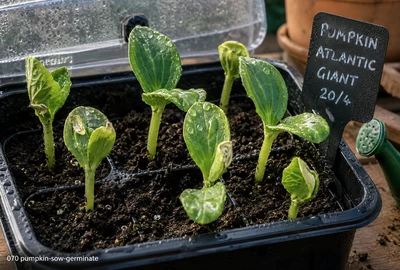
Germinate at 20°C or above — a heated propagator is ideal. Seeds germinate in 5–10 days in warmth. Move to a bright windowsill immediately on germination to prevent leggy growth.
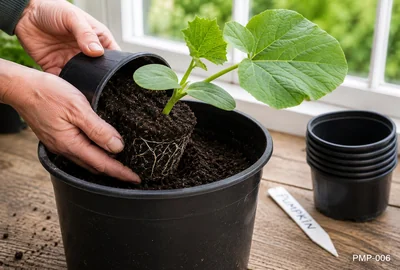
When roots fill the pot, move into a 1-litre or 2-litre pot. Pumpkins grow fast and will quickly become pot-bound if not potted on. Keep warm and in good light.
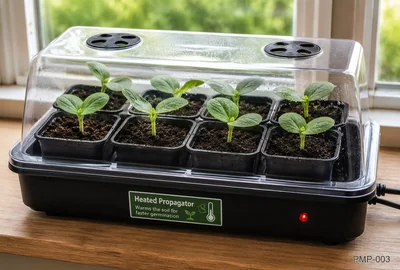
A heated propagator gives the most reliable germination. Once germinated, move out of the propagator immediately — seedlings need cool, bright conditions to stay compact.
Plant out after all frost risk has passed — late May to early June in most of the UK. Prepare a planting mound of well-rotted manure and topsoil. Plant deeply, burying the stem slightly if leggy.
Train the main vine in a spiral to save space, or let it sprawl if room allows. Pinch out the growing tip after 2–3 side shoots have formed to encourage fruiting.
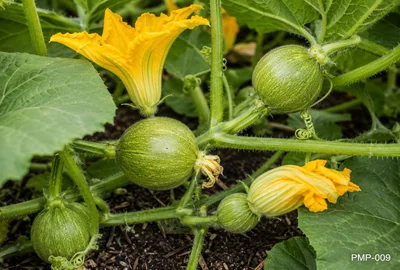
Hand-pollinate in poor weather — transfer pollen from a male flower (plain stem) to a female (with a tiny fruit at its base) using a soft brush or by removing a male flower and pressing it into the female.
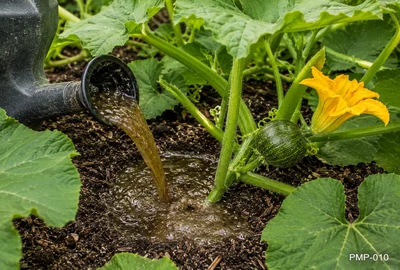
Once fruits begin to form, feed weekly with a high-potassium liquid feed. Water generously at the base — never overhead. Consistent moisture is critical while fruits are swelling.
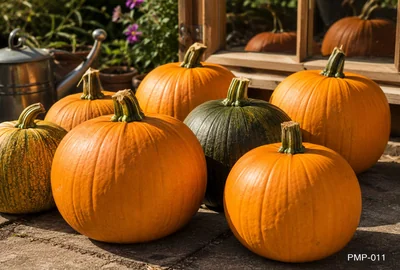
After the first frost blackens the foliage, cut fruits with a 5cm stalk. Cure in full sun for 10–14 days to harden the skin. This dramatically improves storage life.

| Region | Sow / plant | Harvest | Notes |
|---|---|---|---|
| Scotland & Far North | May | Sep–Oct | Sow in May only — earlier plants outgrow pots before safe planting. Plant out June. Short season suits fast-maturing types like Uchiki Kuri · May (indoors) |
| Northern England | Apr–May | Sep–Oct | Sow late April to May. Plant out late May to early June. Choose fast-maturing or smaller varieties for reliable harvest before October frosts · Apr–May (indoors) |
| Midlands & Wales | Apr–May | Sep–Oct | Sow April to early May. Plant out late May. Good growing season for most varieties. Crown Prince and Butternut perform well · Apr–May (indoors) |
| Ireland & Isle of Man | Apr–May | Sep–Oct | Sow April to May. Atlantic climate is cool — choose fast-maturing varieties. Plant out June after all frost risk in northern areas · Apr–May (indoors) |
| South & SE England | Apr–May | Sep–Nov | Sow from mid-April. Long warm season suits larger varieties. Harvest October to November. Butternut and Crown Prince excel in the south · Apr–May (indoors) |
| South Coast & SW | Apr–May | Sep–Nov | Earliest UK sowings from mid-April. Long season gives excellent results for all varieties including large exhibition types · Apr (indoors) |
A heated propagator is strongly recommended for pumpkins — germination is unreliable below 18°C and seeds sown into cold compost frequently rot rather than germinate. Pumpkins grow fast once up, so move seedlings to a bright windowsill immediately after germination.
Set to 20–25°C. Pumpkin seeds germinate in 5–7 days at this temperature. Remove the lid promptly once seedlings emerge and move to a bright spot to prevent leggy growth. A heated propagator is the single most useful piece of kit for starting pumpkins reliably.
Only reliable from late April onwards when room temperatures consistently exceed 18°C. Place in the warmest spot available — an airing cupboard is good for germination, but move immediately to bright light once seedlings show. Germination is slower and less reliable than with heat.
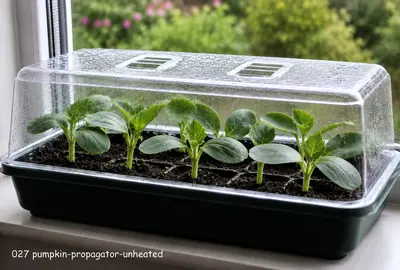
Standard unheated propagator — A lidded seed tray traps warmth and humidity around germinating seeds without electricity. Performance depends entirely on room temperature — best placed on a warm windowsill and used from March onwards. Replace the lid promptly after watering. Remove it completely the moment seedlings emerge to prevent damping off.
Set the propagator to 20–25°C and allow 30 minutes to reach temperature before sowing.
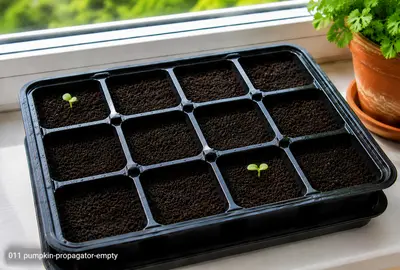
Push one seed per 9cm pot on its side to 2.5cm depth. Sowing on its side prevents water sitting on the flat seed tip, which causes rotting.
Seeds germinate in 5–10 days at 20°C+. Check daily — pumpkins emerge quickly and seedlings left in a dark propagator become leggy within hours.
Remove from the propagator the moment seedlings emerge. Place on the brightest windowsill available. Compact, stocky seedlings are essential for good establishment.
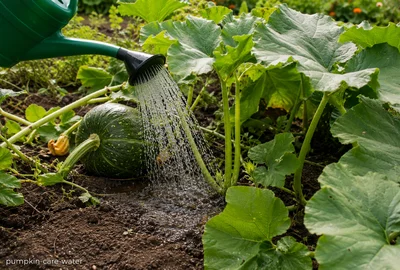
Water deeply at the base once or twice a week — never overhead. Wet foliage encourages powdery mildew. Once fruits are swelling (July–August), consistent moisture is critical — irregular watering causes poor fruit set and hollow or split fruits. In dry spells, a single deep watering is better than frequent shallow watering.
Once the first fruits begin to form, switch to a weekly high-potassium liquid feed. Before fruiting, a balanced general feed supports leaf and vine growth. Stop feeding once fruits reach full size and the skin begins to harden in September.
For the best individual fruit quality and size, restrict to 2–3 fruits per plant. Remove surplus developing fruits when they reach golf-ball size. For exhibition-sized pumpkins, restrict to a single fruit per plant and feed generously. Jack Be Little and mini types can carry more fruits.
After the first frost blackens the foliage, cut fruits with a 5cm stalk intact. Cure in full sun or a warm greenhouse for 10–14 days — the skin hardens and storage life extends dramatically. Uncured pumpkins deteriorate within weeks; properly cured fruits store for 3–6 months in a cool, dry, frost-free place.
Powdery mildew arrives in late summer — it rarely affects the harvest but makes plants look ragged. Water at the base and ensure good airflow to delay its onset.
Full identification and treatment advice is in the Pests and Diseases sections.
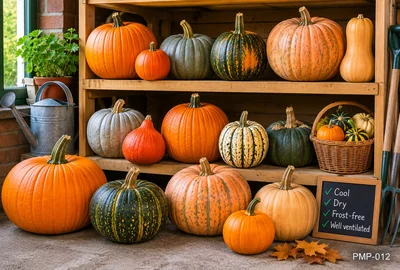
After harvest, cure pumpkins in a warm sunny spot for 10–14 days to harden the skin. Store in a cool, dry, frost-free place. Many varieties keep for 3–6 months.
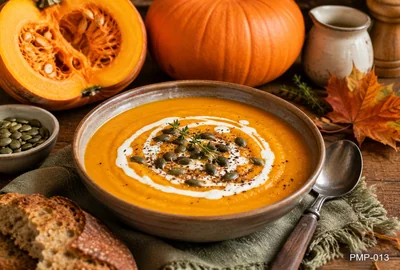
Make a large batch of pumpkin soup and freeze in portions. Keeps 3 months. Crown Prince and Uchiki Kuri make outstanding soup.
Sow pumpkin seeds on their side to prevent water pooling on the flat end of the seed, which causes rotting before germination. A single seed per pot sown this way germinates far more reliably than seeds sown flat.
Hand-pollination is worth doing in any year. Male flowers (plain stem) appear before females (stem with a tiny fruit at the base). On a warm dry morning, remove a male flower, peel back the petals, and press it gently into two or three open female flowers. Repeat over several days.