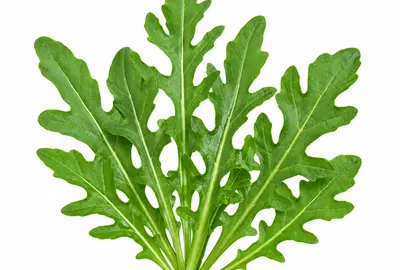
Apollo
Broad, deeply lobed dark green leaves. Slower to bolt than most annual types. Mild, well-balanced peppery flavour. Excellent for spring and autumn.
- Bolt Resistant
- Spring/Autumn
Eruca vesicaria
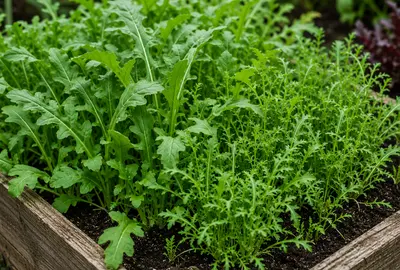
Rocket is one of the most instantly rewarding crops in the British kitchen garden — fast, bold in flavour, and productive over an exceptionally long season with almost no effort. Its peppery, complex bite transforms even the simplest salad into something special, and it can be growing on your plate within five weeks of sowing. Annual rocket (Eruca vesicaria) has large, lobed leaves and a full-bodied peppery heat; wild rocket (Diplotaxis tenuifolia) is slower, more finely cut, and delivers a more intense, complex, almost nutty flavour. Both are cut-and-come-again crops that regrow reliably after each harvest. Autumn sowings produce the finest-flavoured rocket of the year.
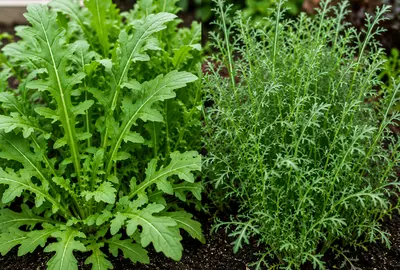
Rocket divides into two clear groups with very different characters. Annual rocket (Eruca vesicaria) is the fast, bold type — large, deeply lobed, bright green leaves with a hot, peppery kick. It bolts rapidly in summer heat. Wild rocket (Diplotaxis tenuifolia) is the perennial type — finer, more deeply cut grey-green leaves, slower to bolt, and with a more complex, aromatic flavour that intensifies with age. Both types are outstanding; the ideal approach is to grow both. A third category — oriental salad types including wasabi rocket and Turkish rocket — extends the season and flavour range further still.
The number of varieties shown for each crop is based on UK consumption data (2025/26) — the more popular the crop, the more variety choices we include.
Eruca vesicaria. Fast, bold, large-leaved. The classic supermarket type. Bolt-resistant modern varieties extend the season.
Broad, deeply lobed dark green leaves. Slower to bolt than most annual types. Mild, well-balanced peppery flavour. Excellent for spring and autumn.
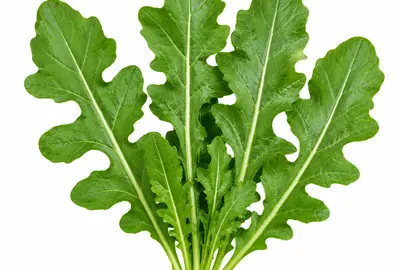
Large, broad, slightly glossy mid-green leaves. Vigorous and upright. Good bolt resistance. Reliable for successional sowing across the whole season.
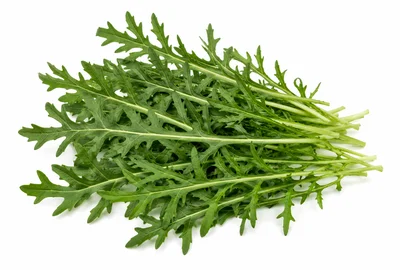
Compact, deeply cut dark green leaves. Uniform habit. Very fast-growing. Bred for bolt resistance in summer conditions. Outstanding for cut-and-come-again.
Diplotaxis tenuifolia. Perennial. Finer leaves, more complex and intense flavour. Far slower to bolt than annual types.
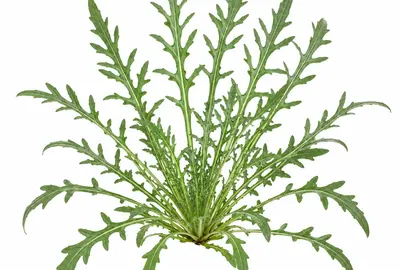
The species type. Narrow, deeply divided, grey-green leaves on a spreading plant. Strongly aromatic, complex peppery flavour that intensifies in cool weather. Perennial.
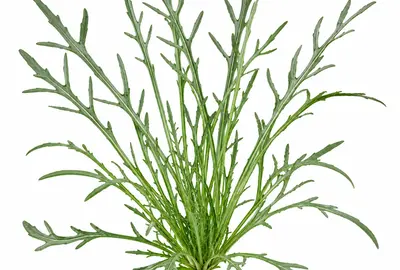
Very narrow, strap-like grey-green leaves. Strongly peppery and aromatic. Slower-growing perennial wild type. Outstanding flavour from autumn sowings.
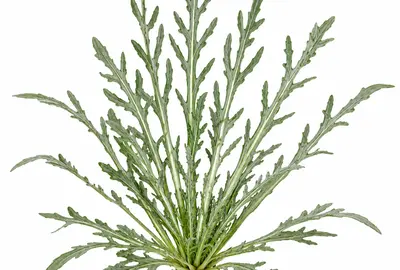
Deeply cut, narrow leaves with a silvery-grey tinge. Compact perennial wild rocket habit. Excellent disease resistance. Bold flavour.
Related species with different flavour profiles — from wasabi heat to mild Turkish rocket. Extends the flavour range and season.
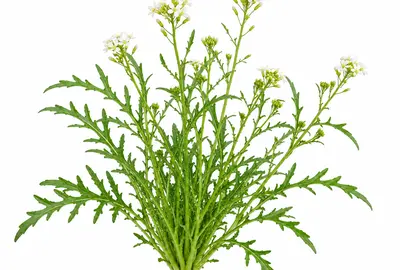
Diplotaxis erucoides. White-flowered species with narrow, deeply lobed leaves and intense, sinus-clearing heat reminiscent of wasabi. Finer leaved than annual rocket.
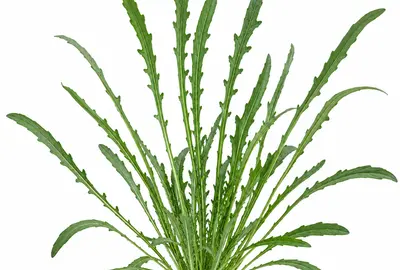
Bunias orientalis. Large, coarse, wavy-edged leaves with a milder, more earthy flavour. A perennial rocket relation that tolerates poor soils and shade well.

American land cress: small, rounded, dark green leaves with a peppery flavour close to watercress. Compact rosette. Outstanding for shady, moist positions where rocket bolts.
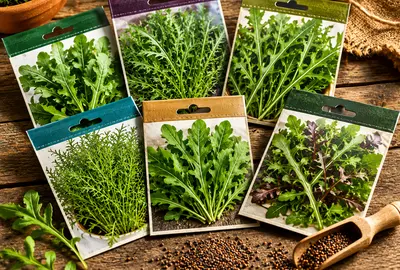
Rocket seed is among the cheapest and most widely available vegetable seed in the UK. Annual rocket varieties including Apollo and Runway are stocked by virtually every garden centre and seed company. Wild rocket is increasingly available, with named varieties like Victoria and Dragon's Tongue from specialist online suppliers. Oriental rocket types are best sourced from companies specialising in oriental vegetables.
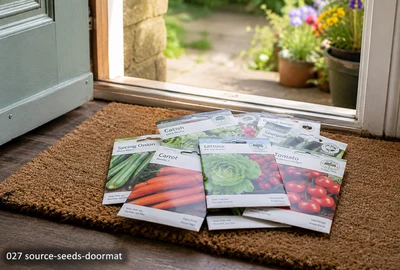
Specialist online seed companies carry the widest range including wild rocket, oriental types, and bolt-resistant modern varieties. Rocket seed is inexpensive and germinates reliably. Order from January.
Most garden centres stock annual rocket seeds from February. Apollo and standard annual rocket are universally available. For wild rocket named varieties and oriental types, order online.
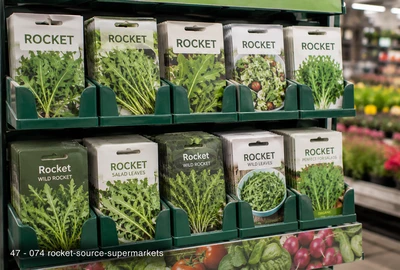
Basic annual rocket seed is often available in supermarkets from spring — convenient for a first sowing. For variety choice and bolt-resistant named varieties, specialist seed companies are a better source.
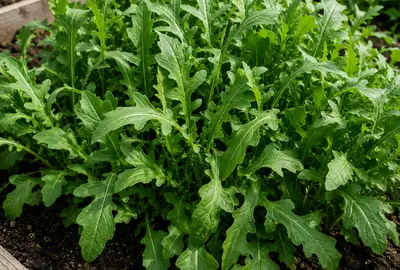
The definitive method for rocket. Sow directly into almost any soil without special preparation. Draw a very shallow 1cm drill, scatter seeds thinly, cover with fine soil and water gently. Rocket germinates in 5–7 days in warm conditions. Sow short rows of 30–50cm every 3 weeks for continuous supply. Autumn sowings from August to September give the longest-lasting, finest-flavoured crop.
Suitable varieties: All annual and wild rocket varieties. Oriental types also suit this method.
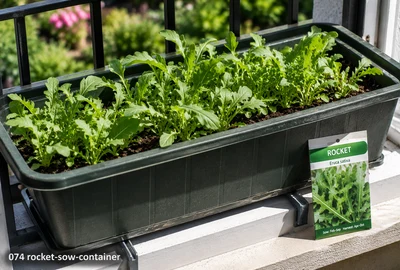
Rocket is one of the most productive container crops of any vegetable. A window box, a deep pot, or a grow bag on a sunny windowsill or balcony produces generous cut-and-come-again harvests from a tiny footprint. Use good multipurpose compost, sow thinly across the surface, cover lightly and water regularly. Container-grown rocket needs more frequent watering than ground-grown plants — daily in warm weather.
Suitable varieties: Annual rocket and wild rocket. Wild rocket especially suited to permanent container planting.
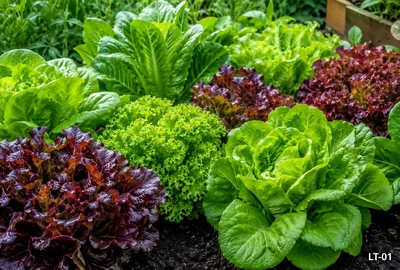
Classic salad bed companions — different growth habits and harvest timing complement each other. Lettuce provides light shade that helps slow rocket bolting in summer.
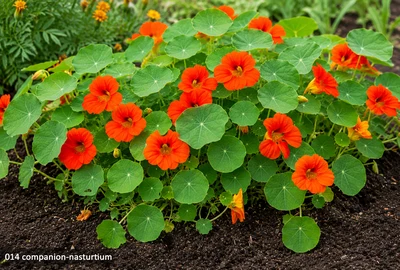
Nasturtiums act as a trap crop for aphids and cabbage white butterflies, drawing them away from rocket. Both are fast-growing and thrive in similar conditions.
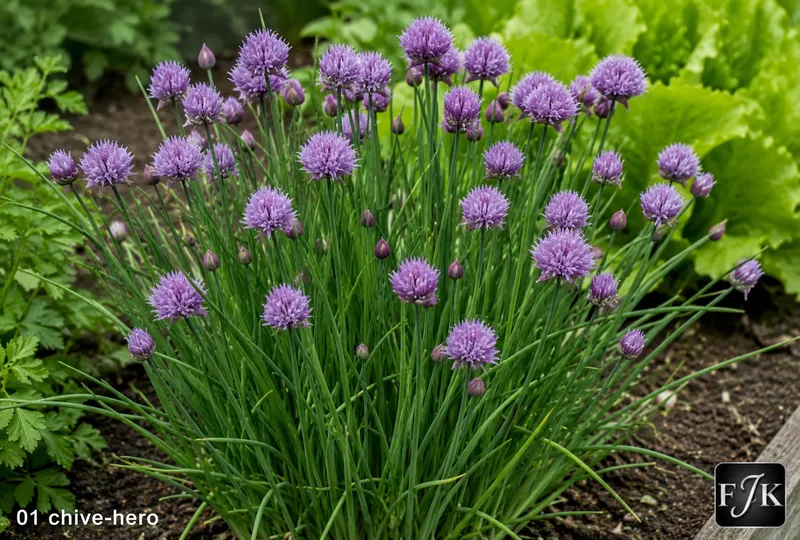
Chives repel aphids and carrot fly. Their mild allium scent deters some flea beetle species and they make excellent edging companions for rocket beds.
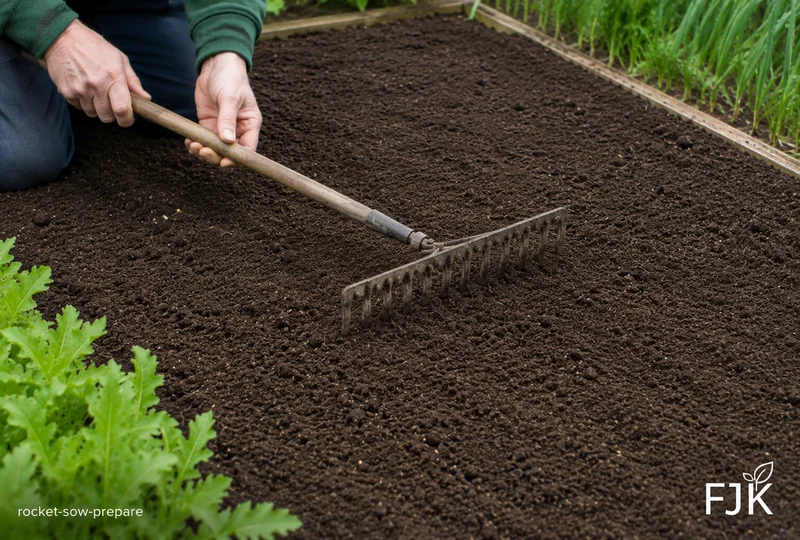
Rake the soil lightly — rocket is not fussy about soil preparation but a fine, weed-free surface makes sowing and thinning easier. No need to dig deeply or add fertiliser; rocket grows well in ordinary soil.
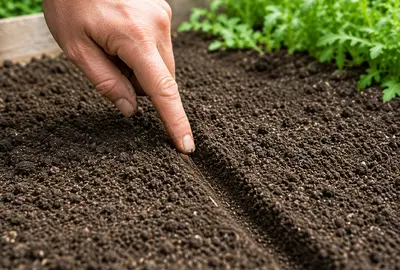
Use a cane or finger to mark a drill just 1cm deep. Rocket seeds are small and do not need depth — pressing them too deep reduces germination. Space drills 20–25cm apart for large plants, or scatter-sow broadcast for a dense baby leaf crop.
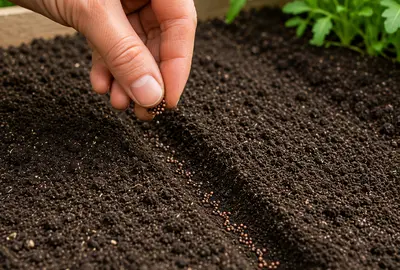
Rocket seeds are tiny — scatter along the drill very thinly. Overcrowded seedlings produce drawn, weak plants and increase flea beetle damage. Cover lightly with fine soil — barely 1cm — and firm gently. Water with a fine rose immediately after sowing.
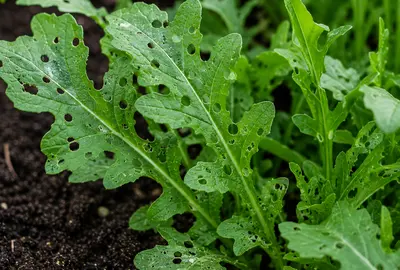
Apply fine insect mesh (0.8mm or smaller) immediately after sowing. Flea beetle is the single biggest threat to rocket — tiny round holes appear in leaves within days of germination in warm, dry weather. Mesh is the only fully reliable protection.
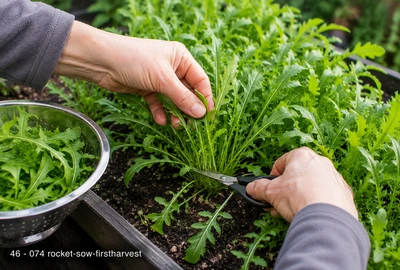
Cut leaves with scissors 3–4cm above the soil surface when plants are 10–15cm tall — typically 5–6 weeks from sowing. Do not pull plants. The cut stumps regrow within 10–14 days for a second harvest. Sow the next short row at this point.
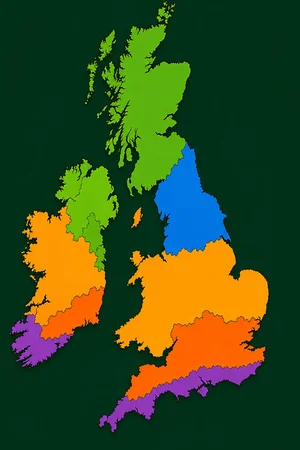
| Region | Sow / plant | Harvest | Notes |
|---|---|---|---|
| Scotland & Far North | Mar–Aug | May–Oct | Mar–Aug |
| Northern England | Mar–Aug | May–Oct | Mar–Aug |
| Midlands & Wales | Mar–Sep | May–Nov | Mar–Sep |
| Ireland & Isle of Man | Mar–Sep | May–Nov | Mar–Sep |
| South & SE England | Mar–Sep | May–Nov | Mar–Sep |
| South Coast & SW | Feb–Sep | Apr–Nov | Feb–Sep |
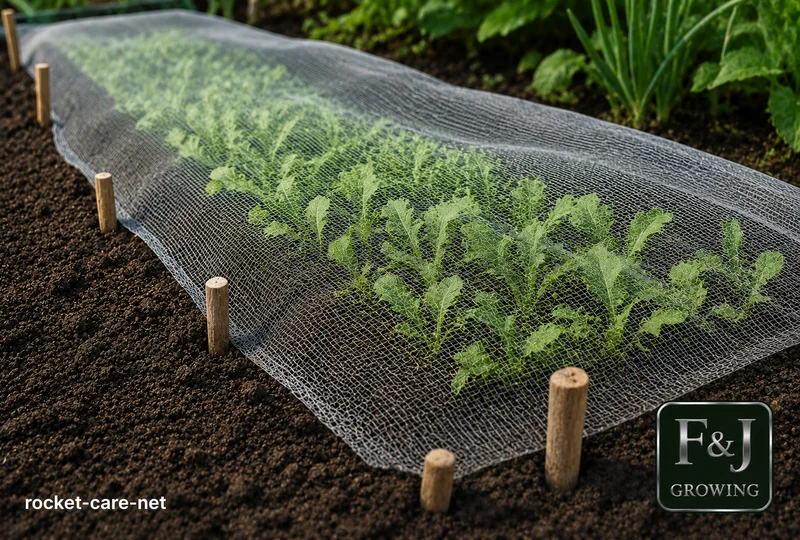
Flea beetle is the single most serious pest of rocket and all related brassica crops. Tiny metallic black beetles create characteristic round holes in leaves — in severe infestations, seedlings can be devastated within days. The most effective control by far is fine insect-proof mesh (0.8mm aperture or smaller) applied immediately after sowing and kept in place throughout the season. Remove it only for harvesting and replace immediately. Flea beetle is worst in hot, dry weather and on seedlings.
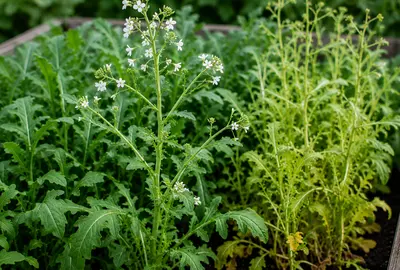
Annual rocket bolts rapidly in hot weather and long days. Prevention is far more effective than cure: sow little and often in short rows every 3 weeks; sow bolt-resistant varieties (Apollo, Runway, Skyrocket F1); move summer sowings into partial shade; and keep plants consistently moist. Wild rocket bolts far more slowly and is a better choice for summer growing. If plants do bolt, remove the flower stems promptly — this delays seed production and extends the harvest by a week or two.

The correct harvesting technique is what transforms rocket from a single meal into a weeks-long crop. Cut leaves with scissors 3–4cm above soil level — do not pull plants up. The cut stumps regrow from the base within 10–14 days, providing a second and third harvest. Annual rocket typically gives 2–4 cuts per sowing before quality declines; wild rocket regrows 4–6 times and, being perennial, will also regrow the following spring.
Flea beetle is the primary pest — apply fine insect mesh immediately at sowing and keep it on. Bolting in summer heat is the main management challenge: sow little and often, choose bolt-resistant varieties, and switch to wild rocket for summer crops. Downy mildew can appear in cool, wet, overcrowded conditions — improve spacing and airflow.
Full identification and treatment advice is in the Pests and Diseases sections.
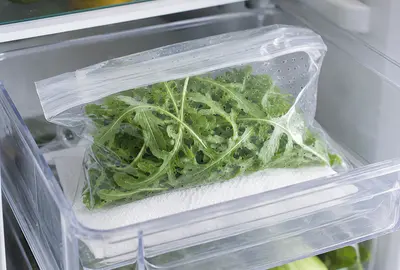
Store rocket leaves dry and unwashed in a loosely closed breathable bag or wrapped in a dry paper towel in the fridge salad drawer. Do not wash before storing — moisture dramatically shortens leaf life. Fresh rocket keeps for 3–4 days refrigerated; wild rocket lasts slightly longer at 4–5 days. To refresh wilted leaves, submerge briefly in ice-cold water for 5–10 minutes, then spin dry and use immediately.

Rocket is at its absolute best eaten raw within minutes of picking. The simplest preparation is the finest: rocket leaves dressed with good extra-virgin olive oil, sea salt, lemon juice, and shavings of Parmesan — the classic Italian insalata di rucola. Rocket is also outstanding on pizza, wilted briefly onto pasta, stirred into risotto at the last moment, or piled onto bruschetta.

If rocket is to be used within a few hours of picking, plunge leaves into a bowl of cold water immediately after harvest. Shake off excess water and spread on a clean tea towel to dry before using in salads. For harvests that need to wait, wrap dry leaves in a paper towel, place in a sealed bag, and refrigerate promptly. The paper towel absorbs condensation and keeps leaves in prime condition for up to 2 days longer.
The best rocket of the year comes from August and September sowings. As days shorten and temperatures drop, rocket grows more slowly, producing thicker, more intensely flavoured leaves with none of the bitterness that summer heat creates. A September sowing under a cloche or cold frame will continue producing right into November and sometimes December in milder UK regions.
Wild rocket is significantly underused in UK gardens. It is perennial — plant it once in a sunny, well-drained spot and it returns every year, producing leaves from March to November with minimal attention. The flavour is more complex and intense than annual rocket, with a nutty, almost wasabi-like quality in autumn. Established plants are also far more tolerant of summer heat than annual types.
For the finest rocket flavour, harvest in the morning before the heat of the day. Morning-harvested rocket has fully hydrated leaves with the highest concentration of the glucosinolate compounds that give the characteristic peppery bite. Autumn and winter rocket is always the most flavourful — cool nights concentrate the oils that produce the peppery heat.